R E S E A R C H A R T I C L E
Open Access
Aboriginal and Torres Strait Islander maternal and
child health and wellbeing: a systematic search of
programs and services in Australian primary
health care settings
Crystal Jongen, Janya McCalman
*, Roxanne Bainbridge and Komla Tsey
Abstract
Background:Persistent disparities in pregnancy and birth outcomes between Aboriginal and Torres Strait Islander and other Australians evidence a need to prioritise responsive practice in Maternal Child Health (MCH). This study reviewed the existing knowledge output on Aboriginal and Torres Strait Islander MCH programs and services with the objective to advance understanding of the current evidence base and inform MCH service development, including the identification of new research priorities.
Methods:A systematic search of the electronic databases Informit, Proquest, PubMed, Scopus, Wiley, and Cinahl, and 9 relevant websites was undertaken for the period 1993–2012. The reference lists of MCH program reviews were hand-searched for additional relevant studies which met the eligibility criteria. The study designs of included publications were classified and the characteristics extracted and categorized. Evaluation quality was assessed using the Effective Public Health Practice Project (EPHPP) Quality Assessment Tool for Quantitative Studies and the Critical Appraisal Skills Program (CASP) tool for qualitative studies.
Results:Twenty-three search results were identified for inclusion, with the majority published in 2003–2012. Fifty two percent of publications reported on programs and services operating out of Aboriginal Community Controlled Health Organisations, with antenatal and postnatal care the main intervention type/s, and health promotion/ education and advice/support the most common intervention component. Outcomes such as increased antenatal attendance and higher infant birth weights were reported in some intervention studies, however methodological quality varied considerably with quantitative studies typically rated weak.
Conclusion:The prevalence of community controlled and/or community-based programs is significant given the health and wellbeing implications of self-determination. While the literature highlights the promise of many intervention models and program components used there are some significant gaps in the documentation and implementation of important MCH interventions. Similarly, while positive health outcomes were reported there are issues with key measures used and study quality. This review highlights the need to improve the quality of evaluations of MCH programs for Aboriginal and Torres Strait Islander women and to address the key evidence gaps in responding to their health and wellbeing needs.
Keywords:Antenatal, Postnatal, Indigenous Australians, Pregnancy, Women’s health
* Correspondence:[email protected]
The Cairns Institute, James Cook University, PO Box 6811, Cairns QLD 4870, Australia
© 2014 Jongen et al.; licensee BioMed Central Ltd. This is an Open Access article distributed under the terms of the Creative Commons Attribution License (http://creativecommons.org/licenses/by/2.0), which permits unrestricted use, distribution, and reproduction in any medium, provided the original work is properly credited. The Creative Commons Public Domain Jongenet al. BMC Pregnancy and Childbirth2014,14:251
Background
Early life experiences, beginning with those of the devel-oping foetus, play an important role in creating the foundations for health and wellbeing throughout the life-time [1]. Due to the impact of Maternal and Child Health (MCH) on general population health, enhancing MCH is a key global health issue and a significant focus of world-wide public health strategies [2]. While improvements have been made in health outcomes for mothers and infants globally, Indigenous people worldwide still ex-perience much poorer MCH outcomes compared to non-indigenous populations [3]. The significant gaps in health and wellbeing equity between Indigenous and non-Indigenous populations in Australia, as in other settler colonial countries, have been well described; as has been evidence of achievement of health targets which has shown that it is possible to improve health [4].
There is a lack of a quality evidence base to guide In-digenous health and wellbeing programs globally, and particularly of intervention research focused on testing and analysing the effectiveness of potential solutions [5,6]. In contrast, reviews of Aboriginal and Torres Strait Is-lander MCH in Australia have identified literature docu-menting MCH responses and interventions. However, they also identified important gaps in the evidence base guiding Aboriginal and Torres Strait Islander primary health care MCH strategies. Prior to embarking on new initiatives in primary health care research or practice, it is important to assess the current state of evidence.
Two prominent early reviews of the literature provide a range of evidence on MCH issues and responses for Aboriginal and Torres Strait Islander women and babies [7,8]. Assessing studies of standout Aboriginal and Torres Strait Islander MCH programs, these reviews reported on outcomes identified in the literature, such as im-provements in antenatal attendance, decreased pre-term births and improvements in infant birth weight, associ-ated with MCH programs. Eades [8] provided informa-tion on factors affecting key poor birth outcomes most likely to be associated with primary health care, includ-ing genital infections, urinary tract infections (UTI’s), sexually transmitted infections (STI’s) and tobacco and alcohol consumption during pregnancy. Herceg [7] also identified a number of common factors present in suc-cessful Aboriginal and Torres Strait Islander MCH pro-grams, including programs being community-based and/or community controlled, the presence of Aboriginal and Torres Strait Islander and female staff, outreach, home-visiting and transport.
Importantly, the review by Herceg [7] identified evi-dence gaps for key MCH issues such as tobacco, alcohol and other drug use in pregnancy and effective health pro-motion interventions. This review highlighted the lack of quality evidence for interventions, and stressed the need
for high quality evaluations of programs. A later review extended this assessment in a review of evaluations of antenatal care programs for Aboriginal and Torres Strait Islander women [9]. This review found particular weak-ness in the diversity of evaluation designs and the quality of reported data in studies assessed. The authors reiterated the need to collect and report good quality longitudinal data about care programs to demonstrate clinically rele-vant differences in perinatal outcomes.
This systematic search was developed in response to the Queensland Government Centre for Social Science Innovation (QCSSI) research priority area of Aboriginal and Torres Strait Islander MCH. This review provides an overview of the literature describing or evaluating Aboriginal and Torres Strait Islander MCH programs and services in Australian primary health care settings from 1993–2012. Primary health care responses included in this review are first level health care services provid-ing antenatal and postnatal care, and maternal and child care. These primary care responses, operating out of mainstream community health services, government health services and Aboriginal Community Controlled Health Services, are increasingly being recognised as the preferred approach for effecting key MCH out-comes, such as reducing the prevalence of low infant birth weight and pre-term births [8]. The review aims to: 1) identify the number of publications on MCH pro-grams and services; 2) describe their main characteristics; 3) outline the reported outcomes; and 4) assess the meth-odological quality of intervention studies. The objective of this review is to advance understanding of the current evi-dence base guiding Aboriginal and Torres Strait Islander MCH and wellbeing practices and to informprimary health care MCH service development, including the identification of new research priorities.
Methods Search strategy
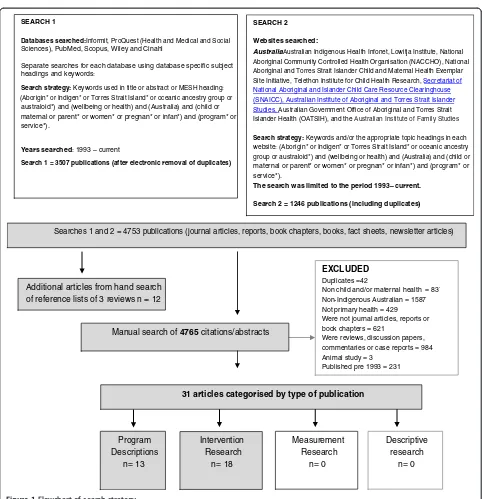
Figure 1 summarises the databases searched, the search terms used, the exclusion criteria, and classification of studies. Consistent with methods detailed in Cochrane guidelines for systematic reviews [10] and those used in previous systematic reviews [11,12], the search strategy comprised three steps. First, consultation with a quali-fied librarian identiquali-fied six electronic databases: Infor-mit, Proquest (Health and Medical and Social Sciences), PubMed, Scopus, Wiley, and Cinahl. The following terms were searched in either the title or abstract, article or MESH heading of publications: (Aborigin* or Indigen* or Torres Strait Island* or oceanic ancestry group or austral-oid*) and (wellbeing or health) and (Australia) and (child or maternal or parent* or women* or pregnan* or infan*) and (program* or service*) (n = 3507). Second, to maxi-mise coverage of the grey literature, the same librarian
searched 9 websites and clearinghouses related to Aborigi-nal and Torres Strait Islander child and materAborigi-nal health. Included were the Australian Indigenous Health Infonet, Lowitja Institute, National Aboriginal Community Controlled Health Organisation, National Aboriginal and Torres Strait Islander Child and Maternal Health Exemplar Site Initiative, Telethon Institute for Child Health Research, Secretariat of National Aboriginal and Islander Child Care Resource Clearinghouse, Australian Institute of Aboriginal and Torres Strait Islander Studies, Australian Government Office
Australian Institute of Family Studies (n = 1246). The date last searched was 17/05/2013. Third, a researcher (CJ) hand-searched the reference lists of reviews of Aboriginal and Torres Strait Islander health and wellbeing interven-tions identified by the electronic database search for rele-vant studies not yet identified (n = 12). The initial search yielded 4765 search results.
Step 1: Identification of studies for exclusion
Studies were excluded if they: (a) were duplicates (n = 42);
Searches 1 and 2 = 4753 publications (journal articles, reports, book chapters, books, fact sheets, newsletter articles)
Manual search of 4765 citations/abstracts
31 articles categorised by type of publication EXCLUDED
Duplicates =42
Non child and/or maternal health = 837 Non-Indigenous Australian = 1587 Not primary health = 429 Were not journal articles, reports or book chapters = 621
Were reviews, discussion papers, commentaries or case reports = 984 Animal study = 3
Published pre 1993 = 231 Additional articles from hand search
of reference lists of 3 reviews n = 12
Descriptive research
n= 0 Intervention
Research n= 18 Program
Descriptions n= 13
SEARCH 1
Databases searched:Informit, ProQuest (Health and Medical and Social
Sciences), PubMed, Scopus, Wiley and Cinahl
Separate searches for each database using database specific subject headings and keywords:
Search strategy: Keywords used in title or abstract or MESH heading: (Aborigin* or Indigen* or Torres Strait Island* or oceanic ancestry group or
australoid*) and (wellbeing or health) and (Australia) and (child or maternal or parent* or women* or pregnan* or infan*) and (program* or service*).
Years searched: 1993 – current
Search 1 = 3507 publications (after electronic removal of duplicates)
SEARCH 2
Websites searched:
Australia: Australian Indigenous Health Infonet, Lowitja Institute, National Aboriginal Community Controlled Health Organisation (NACCHO), National Aboriginal and Torres Strait Islander Child and Maternal Health Exemplar Site Initiative, Telethon Institute for Child Health Research, Secretariat of National Aboriginal and Islander Child Care Resource Clearinghouse (SNAICC), Australian Institute of Aboriginal and Torres Strait Islander Studies, Australian Government Office of Aboriginal and Torres Strait Islander Health (OATSIH), and the Australian Institute of Family Studies
Search strategy: Keywords and/or the appropriate topic headings in each website: (Aborigin* or Indigen* or Torres Strait Island* or oceanic ancestry group or australoid*) and (wellbeing or health) and (Australia) and (child or
maternal or parent* or women* or pregnan* or infan*) and (program* or service*).
The search was limited to the period 1993– current.
Search 2 = 1246 publications (including duplicates)
Measurement Research
n= 0
Figure 1Flowchart of search strategy.
Jongenet al. BMC Pregnancy and Childbirth2014,14:251 Page 3 of 20
outcomes or predictor variables did not include or specif-ically relate to child and/or maternal health (n = 837); (c) did not focus on Indigenous people in Australia (n = 1587); (d) were not on primary health care programs and services (n = 429); e) were not journal articles, re-ports or book chapters (n = 621); f ) were reviews, dis-cussion papers, commentaries or case reports (n = 984); g) were focused only on child health (n = 8) and h) were published pre 1993 (n = 234). Step 1 excluded 4726 ref-erences, leaving 23 search results.
Step 2: Classification of studies
The remaining 23 studies were examined to identify stud-ies that were; 1)Intervention research:defined as studies which test the effectiveness of public health Aboriginal and Torres Strait Islander child and maternal health re-sponses or examines the impact of interventions designed to alter health-related knowledge, attitudes or behaviours, or to improve health care delivery; or 2)Program descrip-tions: defined as literature which describes the methods or processes applied to implement a child and maternal health response, but in which no data-based evaluation was reported [6].
Data extraction
The characteristics of studies of Aboriginal and Torres Strait Islander child and maternal health responses were categorised by: 1) 1st author & year; 2) publication type and study type; 3) location and organisational setting; 4) intervention issue; 5) intervention types and components; 6) target group, sample; 7) outcomes or effects; and 8) study design and study quality (intervention studies only). Two researchers reviewed the publication character-istics and agreed on 22 out of 23, achieving 95.6% inter-rater reliability.
Study quality assessment
Methodological quality of quantitative studies were assessed using the Dictionary for Effective Public Health Practice Project (EPHPP) Quality Assessment Tool for Quantitative Studies [13]. Sections A to F (A. selection bias; B. study design; C. confounders; D. blinding; E. data collection methods; and F. withdrawal and drop-outs) were coded weak, moderate or strong, consistent with the component rating scale of the Dictionary. For Sections G (intervention integrity) and H (analyses) descriptive information will be recorded, in line with the Dictionary recommendations. For qualitative studies,the Critical Appraisal Skills Pro-gram (CASP) quality assessment tool was used [14]. This tool assesses the clarity of study objectives, the quality of the methodology, research design, data collection and ana-lyses, ethical considerations, whether there is a clear state-ment of findings and the value of the research. To assess the study quality of those using mixed-methods study
design, the qualitative and quantitative components were assessed separately using both of the aforementioned tools.
Results
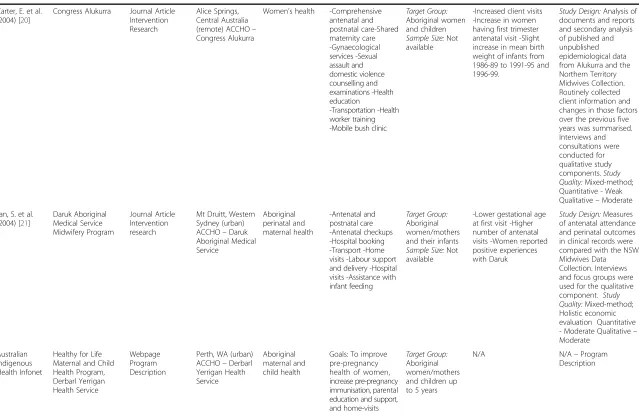
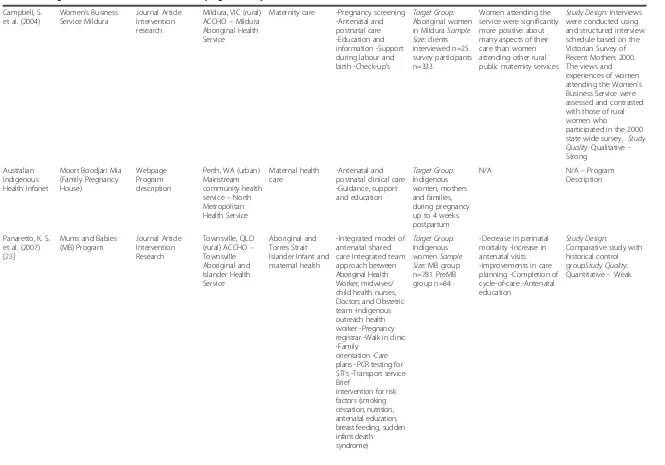
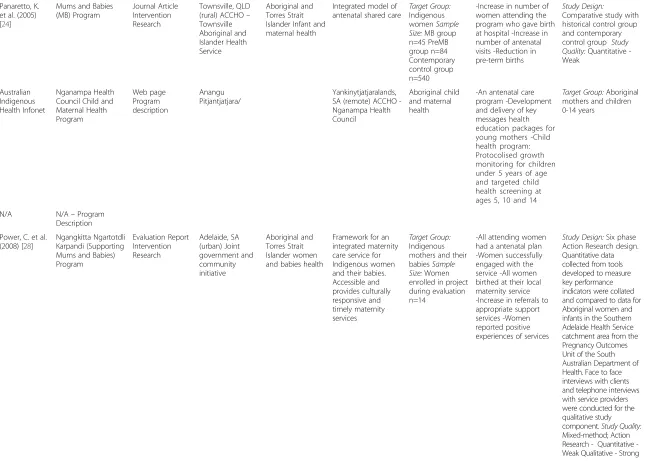
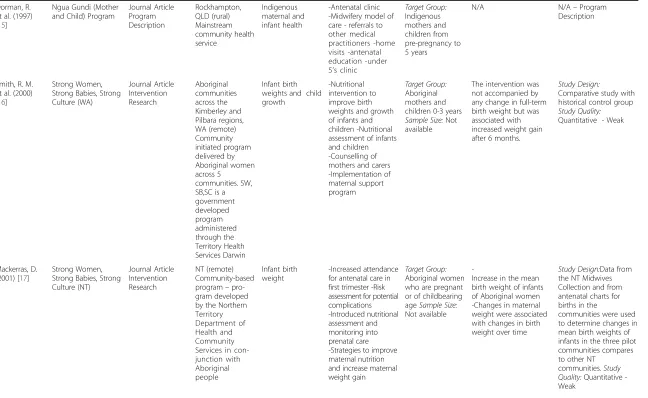
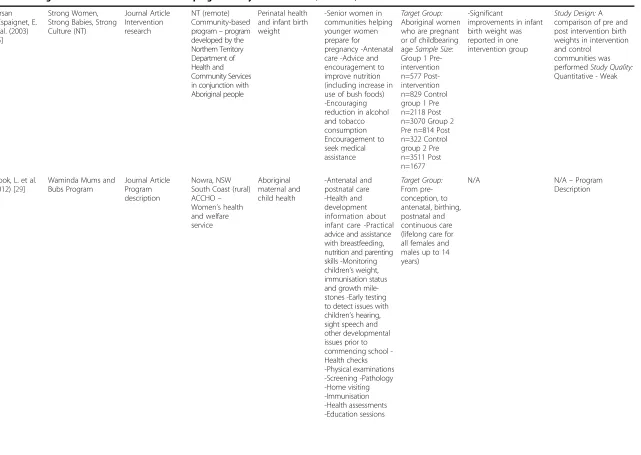
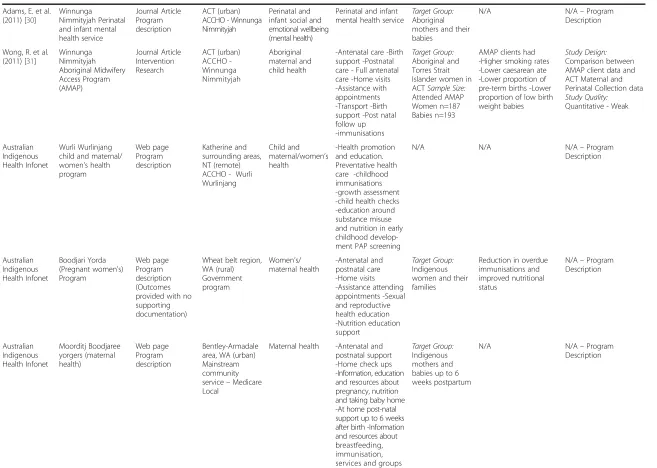
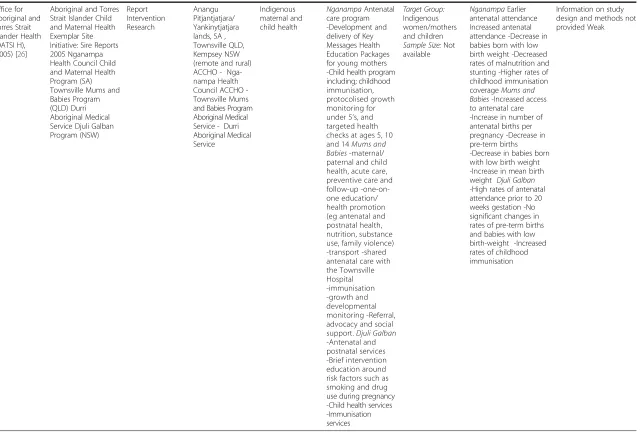
Table 1 summarises the characteristics of included studies.
Publication year and study design
From a low during the 1990’s, there was a significant in-crease in publications from 2003. With only three studies published in the period from 1993–2002 (13%) [15-17], the largest number of publications found were for the period 2003–2007 (9/23, 39%) [18-26] and another five (22%) were published in the period 2008-2012 [27-31]. Publication dates were not available for a further 6 (26%) search results as these were from websites and no dates were recorded [32-37]. Fifty two percent (12/23) of the publications were intervention studies i.e., evaluations of programs or services [16-18,20-26,28,31]. The other 48% (11/23) were program descriptions [15,19,27,29,30,32-37].
Location and organisation setting
The programs and services identified in the literature operated from a range of locations throughout Australia. The distribution of documented programs and services by state was Western Australia (5/23, 22%) [16,32-34,37], New South Wales (4/23, 17%) [18,21,27,29], the Northern Territory (4/23, 17%) [17,20,25,36], Queensland (3/23, 13%) [15,23,24], South Australia (3/23, 13%) [19,28,35], the Australian Capital Territory (2/23, 9%) [30,31] and Victoria (1/23, 4%) [22]. One additional publication re-ported on three programs operating in South Australia, New South Wales and Queensland [26].
The majority of publications reported on programs and services operating from Aboriginal Community Controlled Health Organisations (ACCHO) (12/23, 52%) [20-24,26,29-31,35-37]. There were 5 publications docu-menting government programs (22%) [17,18,25,27,32] and 3 documenting programs operating out of mainstream primary health services (13%) [15,33,34]. One study docu-mented a program delivered by an Aboriginal Maternal and Infant Care team across a range of sites, including local Aboriginal Health Service’s [19]. Another study was on a community initiated program operating across sev-eral communities using a government developed program delivered by local Aboriginal women [16]. There was also an evaluation of a joint government and community initia-tive [28].
Target population and intervention issue
Six of the publications stated the target group for pro-grams and services generally as Aboriginal and Torres Strait Islander mothers and their children/babies/families (6/23, 26%) [20,21,26,28,30,32] without specifying whether
Table 1 Aboriginal and Torres Strait Islander MIH program study characteristics and Study Type
Location and and Sample Size
Outcomes or Effects Study Design and Study Quality (intervention studies
only)
Murphey, E. et al. (2012) [27]
The Aboriginal Maternal and Infant Health Service (AMIHS)
Journal Article Program description (Outcomes based on previous evaluation of the NSW Aboriginal Maternal and Infant Health Strategy)
NSW State wide Government strategy delivered through local government areas (LGA) with care provided in the community and their babies, from conception
N/A–Program Description
NSW Health (2005) [18]
NSW Aboriginal Maternal and Infant Health Strategy (AMIHS)
Evaluation Report Intervention Research
NSW State wide Government strategy delivered through local government areas (LGA) with care provided in the community and their babies, from conception up to 8 weeks postpartum Sample Size: care provided to women in 2003 and 2004 n=689 people interviewed n=201
-Improved antenatal attendance prior to 20 weeks gestation-Improved breastfeeding rates -Decrease in low birth weight babies Decrease in perinatal deaths -No change in proportion of women smoking during pregnancy
Study Design: Prospective program specific quantitative data compared with population-based data from the NSW Midwives Data Collection. Qualitative data collected through Interviews and focus groups.Study Qual-ity:Mixed-method Quan-titative - Weak Qualitative - Weak
Port Augusta and Whyalla SA– Northern and Far Northern Regional Health Service SA (rural) Delivered in people’s homes and across a range of local services and organisations infant health, low antenatal model led by Aboriginal maternal and infant care workers supported by midwives, GP and obstetrician Pregnancy checkups -Assessing for risk factors and educa-tion about early warning signs of complications-Health promotion and education-Postnatal support up to 8 weeks after birth
Carter, E. et al. (2004) [20]
Congress Alukurra Journal Article Intervention Research
Alice Springs, Central Australia (remote) ACCHO– Congress Alukurra
Women’s health -Comprehensive antenatal and -Mobile bush clinic
Target Group: Aboriginal women and children Sample Size:Not available
-Increased client visits -Increase in women having first trimester antenatal visit -Slight increase in mean birth weight of infants from 1986-89 to 1991-95 and 1996-99.
Study Design:Analysis of documents and reports and secondary analysis of published and unpublished epidemiological data from Alukurra and the Northern Territory Midwives Collection. Routinely collected client information and changes in those factors over the previous five years was summarised. Interviews and Quantitative - Weak Qualitative–Moderate
Jan, S. et al.
Mt Druitt, Western Sydney (urban) ACCHO–Daruk Aboriginal Medical visits -Labour support and delivery -Hospital visits -Assistance with infant feeding
Target Group: Aboriginal women/mothers and their infants Sample Size:Not available
-Lower gestational age at first visit -Higher number of antenatal visits -Women reported positive experiences with Daruk
Study Design:Measures of antenatal attendance and perinatal outcomes in clinical records were compared with the NSW Midwives Data Collection. Interviews and focus groups were used for the qualitative component. Study Quality:Mixed-method; Holistic economic evaluation Quantitative - Moderate Qualitative– Moderate
Australian Indigenous Health Infonet
Healthy for Life Maternal and Child Health Program,
Perth, WA (urban) ACCHO–Derbarl Yerrigan Health Service
Aboriginal maternal and child health
Goals: To improve pre-pregnancy health of women, increase pre-pregnancy immunisation, parental education and support, and home-visits
Table 1 Aboriginal and Torres Strait Islander MIH program study characteristics(Continued)
Campbell, S. et al. (2004)
Women’s Business Service Mildura
Journal Article Intervention research
Mildura, VIC (rural) ACCHO–Mildura Aboriginal Health Service
Maternity care -Pregnancy screening -Antenatal and postnatal care -Education and information -Support during labour and birth -Check-up’s
Target Group: Aboriginal women in MilduraSample Size:clients interviewed n=25 survey participants n=333
Women attending the service were significantly more positive about many aspects of their care than women attending other rural public maternity services
Study Design:Interviews were conducted using and structured interview schedule based on the Victorian Survey of Recent Mothers 2000. The views and experiences of women attending the Women’s Business Service were assessed and contrasted with those of rural women who
participated in the 2000 state wide survey. Study Quality:Qualitative -Strong
Australian Indigenous Health Infonet
Moort Boodjari Mia (Family Pregnancy House)
Webpage Program description
Perth, WA (urban) Mainstream community health service–North Metropolitan Health Service
Maternal health care
-Antenatal and postnatal clinical care -Guidance, support
Panaretto, K. S. et al. (2007) [23]
Mums and Babies (MB) Program
Journal Article Intervention Research
Townsville, QLD (rural) ACCHO– Townsville Islander Infant and maternal health
-Integrated model of antenatal shared care Integrated team approach between Aboriginal Health Worker, midwives/ child health nurses, Doctors and Obstetric team -Indigenous outreach health worker -Pregnancy registrar -Walk in clinic -Family
orientation -Care plans -PCR testing for STI’s -Transport service Brief
intervention for risk factors (smoking cessation, nutrition, antenatal education, breast feeding, sudden infant death syndrome)
Target Group: Indigenous womenSample Size:MB group n=781 PreMB group n=84
-Decrease in perinatal mortality -Increase in antenatal visits -Improvements in care planning -Completion of cycle-of-care -Antenatal education
Study Design:
Comparative study with historical control groupStudy Quality: Quantitative - Weak
Panaretto, K. et al. (2005) [24]
Mums and Babies (MB) Program
Journal Article Intervention Research
Townsville, QLD (rural) ACCHO– Townsville Islander Infant and maternal health
Integrated model of antenatal shared care
Target Group: Indigenous womenSample Size:MB group n=45 PreMB group n=84 Contemporary control group n=540
-Increase in number of women attending the program who gave birth at hospital -Increase in number of antenatal visits -Reduction in pre-term births
Study Design:
Comparative study with historical control group and contemporary control group Study Quality:Quantitative -Weak
Australian Indigenous Health Infonet
Nganampa Health Council Child and Maternal Health SA (remote) ACCHO -Nganampa Health Council
Aboriginal child and maternal health
-An antenatal care program -Development and delivery of key messages health education packages for young mothers -Child health program: Protocolised growth monitoring for children under 5 years of age and targeted child health screening at ages 5, 10 and 14
Target Group:Aboriginal mothers and children 0-14 years Mums and Babies) Program and babies health
Framework for an integrated maternity care service for Indigenous women and their babies. Accessible and mothers and their babiesSample Size:Women enrolled in project during evaluation n=14
-All attending women had a antenatal plan -Women successfully engaged with the service -All women birthed at their local maternity service -Increase in referrals to appropriate support services -Women reported positive experiences of services
Study Design:Six phase Action Research design. Quantitative data collected from tools developed to measure key performance indicators were collated and compared to data for Aboriginal women and infants in the Southern Adelaide Health Service catchment area from the Pregnancy Outcomes Unit of the South Australian Department of Health. Face to face interviews with clients and telephone interviews with service providers were conducted for the qualitative study component.Study Quality: Mixed-method; Action Research Quantitative -Weak Qualitative - Strong
Table 1 Aboriginal and Torres Strait Islander MIH program study characteristics(Continued)
Dorman, R. et al. (1997) [15]
Ngua Gundi (Mother and Child) Program
Journal Article -Midwifery model of care - referrals to other medical Strong Babies, Strong Culture (WA) weights and child growth
-Nutritional intervention to improve birth weights and growth of infants and children -Nutritional assessment of infants and children -Counselling of mothers and carers -Implementation of children 0-3 years Sample Size:Not available
The intervention was not accompanied by any change in full-term birth weight but was associated with increased weight gain after 6 months.
Study Design:
Comparative study with historical control group Study Quality: Quantitative - Weak
Mackerras, D. (2001) [17]
Strong Women, Strong Babies, Strong Culture (NT) program– pro-gram developed by the Northern Territory Department of Health and Community Services in con-junction with for antenatal care in first trimester -Risk assessment for potential complications -Introduced nutritional assessment and monitoring into prenatal care -Strategies to improve maternal nutrition and increase maternal weight gain
Target Group: Aboriginal women who are pregnant or of childbearing ageSample Size: Not available
-Increase in the mean birth weight of infants of Aboriginal women -Changes in maternal weight were associated with changes in birth weight over time
Study Design:Data from the NT Midwives Collection and from antenatal charts for births in the
communities were used to determine changes in mean birth weights of infants in the three pilot communities compares to other NT
Tursan d’Espaignet, E. et al. (2003) [25]
Strong Women, Strong Babies, Strong Culture (NT) program–program developed by the Northern Territory Department of Health and Community Services in conjunction with Aboriginal people
Perinatal health and infant birth weight
-Senior women in communities helping younger women prepare for
pregnancy -Antenatal care -Advice and encouragement to improve nutrition (including increase in use of bush foods) -Encouraging reduction in alcohol and tobacco who are pregnant or of childbearing ageSample Size: Group 1 Pre-intervention n=577 Post-intervention n=829 Control group 1 Pre n=2118 Post n=3070 Group 2 Pre n=814 Post n=322 Control group 2 Pre n=3511 Post n=1677
-Significant
improvements in infant birth weight was reported in one intervention group
Study Design:A comparison of pre and post intervention birth weights in intervention and control
communities was performedStudy Quality: Quantitative - Weak
Crook, L. et al. (2012) [29]
Waminda Mums and Bubs Program
Journal Article Program description
Table 1 Aboriginal and Torres Strait Islander MIH program study characteristics(Continued)
Adams, E. et al. (2011) [30]
Winnunga
Nimmityjah Perinatal and infant mental health service
Journal Article Program description
ACT (urban) ACCHO - Winnunga Nimmityjah
Perinatal and infant social and emotional wellbeing (mental health)
Perinatal and infant mental health service
Target Group: Aboriginal mothers and their babies
-Antenatal care -Birth support -Postnatal care - Full antenatal care -Home visits -Assistance with appointments -Transport -Birth support -Post natal follow up -immunisations
Target Group: Aboriginal and Torres Strait Islander women in ACTSample Size: Attended AMAP Women n=187 Babies n=193
AMAP clients had -Higher smoking rates -Lower caesarean ate -Lower proportion of pre-term births -Lower proportion of low birth weight babies
Study Design: Comparison between AMAP client data and ACT Maternal and Perinatal Collection data Study Quality:
Quantitative - Weak
Australian Indigenous Health Infonet
Wurli Wurlinjang child and maternal/ women’s health program ACCHO - Wurli Wurlinjang
Child and maternal/women’s health -child health checks -education around substance misuse and nutrition in early childhood develop-ment PAP screening
N/A N/A N/A–Program (Pregnant women’s) Program
Web page Program description (Outcomes provided with no supporting documentation)
Wheat belt region, WA (rural) women and their families
Reduction in overdue immunisations and improved nutritional status
N/A–Program Description area, WA (urban) Mainstream community service–Medicare Local
Office for
Aboriginal and Torres Strait Islander Child and Maternal Health Exemplar Site Initiative: Sire Reports 2005 Nganampa Health Council Child and Maternal Health Program (SA) Townsville Mums and Babies Program (QLD) Durri Aboriginal Medical Service Djuli Galban Program (NSW) (remote and rural) ACCHO - Nga-nampa Health Council ACCHO -Townsville Mums and Babies Program Aboriginal Medical Service - Durri Aboriginal Medical delivery of Key Messages Health Education Packages for young mothers -Child health program including; childhood checks at ages 5, 10 and 14Mums and Babies-maternal/ paternal and child health, acute care, preventive care and follow-up -one-on-one education/ health promotion (eg antenatal and postnatal health, nutrition, substance use, family violence) -transport -shared antenatal care with the Townsville advocacy and social support.Djuli Galban -Antenatal and postnatal services -Brief intervention education around risk factors such as smoking and drug use during pregnancy -Child health services -Immunisation Sample Size:Not available
NganampaEarlier antenatal attendance Increased antenatal attendance -Decrease in babies born with low birth weight -Decreased rates of malnutrition and stunting -Higher rates of childhood immunisation coverageMums and Babies-Increased access to antenatal care -Increase in number of antenatal births per pregnancy -Decrease in pre-term births -Decrease in babies born with low birth weight -Increase in mean birth weight Djuli Galban -High rates of antenatal attendance prior to 20 weeks gestation -No significant changes in rates of pre-term births and babies with low birth-weight -Increased rates of childhood immunisation
care was provided pre-pregnancy and until what age after birth. Aboriginal and/or Torres Strait Islander or Indigen-ous women (4/23, 17%) [22-24,31], Aboriginal women who are pregnant or of childbearing age [17,25] and teen-age mothers and young Aboriginal mothers [19] were also stated target groups. Several of the studies documented programs and services which provide post natal and child health services for infants and children of ages varying from 4 weeks up to 14 years [24-31]. There were only three publications which specified that the service was for women prior to pregnancy [15,20,29].
Nineteen of studies reviewed (19/23, 83%) [15,18-24, 26-29,31-33,36,37] identified a general intervention issue (eg. ‘perinatal and maternal health’,‘maternity care’ and
‘child and maternal health’) which were grouped under the broad category of Aboriginal and Torres Strait Islander maternal and child health and wellbeing. This general cat-egorisation is underpinned by an extensive literature base outlining the key MCH needs of Aboriginal and Torres Strait Islander peoples targeted by programs and services. More specific or targeted intervention issues such as low antenatal attendance [19], low infant birth weight [16,17,19,25], high teenage pregnancy rates [19], poor child growth [16] and perinatal and infant social and emotional wellbeing (mental health) [30] were also re-ferred to in the literature.
Intervention type and components
Antenatal and postnatal care were identified as the main intervention types in 14 (61%) of the search documents [15,17,18,20-22,25,27,29,31-33]. Another 4 (17%) publi-cations identified an integrated or continuum model of maternity care as the main intervention [19,23,24,28]. One publication documenting a service targeting mothers and infants identified health promotion and education as the primary intervention [36], another identified advocacy, support and psychotherapy as the main interventions [30] and two did not state a main intervention type [16,37].
The most common component of interventions cited in the literature documenting MCH was health promotion/ education and advice/support (16/23, 70%) [15,16,19,20, 22,23,25,26,29,30,32,33,36,37]. Health promotion topics doc-umented included nutrition [23,25,32,33,36], breastfeeding [23,33], immunisation [33], infant care [33] and accessing groups and services [33]. Publications that described or evaluated these health promotion/education and advice/ support activities focused on the health issues of smoking cessation [23], sexual and reproductive health [32], sub-stance misuse [25,36], early warning signs of complica-tions [19] and Sudden Infant Death Syndrome (SIDS) [23]. Other common intervention components docu-mented in the literature include home visitation (8/23, 35%) [15,26,29,31-33,36,37], antenatal and postnatal
services (4/23, 17%) [20,23,31,36], labor/birth support (3/ 23, 13%) [22,31,36], assistance making or attending ap-pointments and hospital bookings (3/23, 13%) [21,31,32], pregnancy screening (2/23, 9%) [22,29], counseling/psy-chotherapy (2/23, 9%) [16,30], referrals (2/23, 9%) [15,26] and training and support for midwives and Aboriginal Health Workers (2/23, 9%) [20,27].
Outcomes and effects
Of the 23 publications, 14(61%) reported program out-comes and/or effects. These included the 12 intervention studies plus two program descriptions (one was based on an evaluation report [27] and the other simply claimed outcomes without providing evidence [32]). The outcomes and effects described in the literature on maternal and in-fant health services included an increase in antenatal at-tendance (6/23, 26%) [20,21,23,24,26,27], an increase in infant birth weights (5/23, 22%) [17,20,25-27], a decrease in, or lower proportion of, pre-term births (4/23, 17%) [24,26,27,31], earlier antenatal attendance (4/23, 17%) [18,20,21,26] and a decrease in, or lower proportion of, low birth weight babies [18,26,31]. Decreased perinatal mortality [18,23,27], reports of positive views and/or expe-riences of the service from service users [21,22], improved breastfeeding rates [18,27] and improved nutritional status such as decreased rates of stunting and malnutrition [26,32] were also reported. Other outcomes included higher rates of childhood immunisation coverage, im-provements in care planning [23], lower caesarean rates [31] and changes in birth weight associated with changes in maternal weight [17]. Completion of cycle of care [23] and reduction in overdue immunisations [32] were each cited as outcomes along with an increase in infant weight after six months [16]. One study reported the outcomes of all women having an antenatal plan, women having suc-cessfully engaged with the service, all women having birthed at their local maternity service and an increase in referrals to appropriate support services [28]. One evaluation study described no changes in the proportion of women smoking during pregnancy [18].
Methodological quality of intervention studies
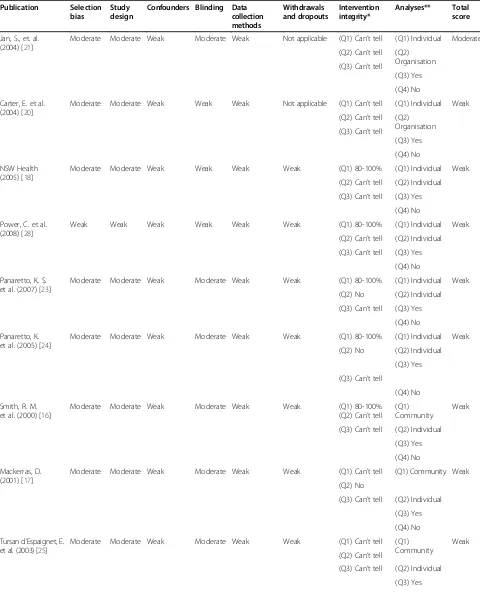
The 12 intervention studies were assessed for study quality. All 6 studies which employed solely quantitative methods were rated as weak. There were four mixed-method studies, three of which were rated as weak for the quantitative aspect, and the other moderate. Quanti-tative studies most commonly received weak ratings for confounders, data collection methods and withdrawals and drop outs (see Tables 2 and 3 for further details on study quality assessments). For the qualitative component of mixed-method evaluations, two were rated moderate, one weak, and the other strong. There was a further
quali-Jongenet al. BMC Pregnancy and Childbirth2014,14:251 Page 13 of 20
Table 2 Effective Public Health Practice Project (EPHPP) quality assessment of quantitative studies
Publication Selection bias
Study design
Confounders Blinding Data collection methods
Withdrawals and dropouts
Intervention integrity*
Analyses** Total score
Jan, S., et. al. (2004) [21]
Moderate Moderate Weak Moderate Weak Not applicable (Q1) Can’t tell (Q1) Individual Moderate
(Q2) Can’t tell (Q2) Organisation (Q3) Can’t tell
(Q3) Yes
(Q4) No
Carter, E. et al. (2004) [20]
Moderate Moderate Weak Weak Weak Not applicable (Q1) Can’t tell (Q1) Individual Weak
(Q2) Can’t tell (Q2) Organisation (Q3) Can’t tell
(Q3) Yes
(Q4) No
NSW Health (2005) [18]
Moderate Moderate Weak Weak Weak Weak (Q1) 80-100% (Q1) Individual Weak
(Q2) Can’t tell (Q2) Individual
(Q3) Can’t tell (Q3) Yes
(Q4) No
Power, C. et al. (2008) [28]
Weak Weak Weak Weak Weak Weak (Q1) 80-100% (Q1) Individual Weak
(Q2) Can’t tell (Q2) Individual
(Q3) Can’t tell (Q3) Yes
(Q4) No
Panaretto, K. S. et al. (2007) [23]
Moderate Moderate Weak Moderate Weak Weak (Q1) 80-100% (Q1) Individual Weak
(Q2) No (Q2) Individual
(Q3) Can’t tell (Q3) Yes
(Q4) No
Panaretto, K. et al. (2005) [24]
Moderate Moderate Weak Moderate Weak Weak (Q1) 80-100% (Q1) Individual Weak
(Q2) No (Q2) Individual
(Q3) Yes
(Q3) Can’t tell
(Q4) No
Smith, R. M. et al. (2000) [16]
Moderate Moderate Weak Moderate Weak Weak (Q1) 80-100%
(Q2) Can’t tell (Q1) Community
Weak
(Q3) Can’t tell (Q2) Individual
(Q3) Yes
(Q4) No
Mackerras, D. (2001) [17]
Moderate Moderate Weak Moderate Weak Weak (Q1) Can’t tell (Q1) Community Weak
(Q2) No
(Q3) Can’t tell (Q2) Individual
(Q3) Yes
(Q4) No
Tursan d’Espaignet, E. et al. (2003) [25]
Moderate Moderate Weak Moderate Weak Weak (Q1) Can’t tell (Q1)
Community
Weak
(Q2) Can’t tell
(Q3) Can’t tell (Q2) Individual
(Q3) Yes
was rated weak due to lack of information regarding the study design and methods used.
Discussion
This systematic literature review contributes detailed in-formation about the characteristics of programs and ser-vices for Aboriginal and Torres Strait Islander MCH. Results pertaining to the reported outcomes or effects and the lack of high quality evaluations mirror the find-ings of previous reviews of Aboriginal and Torres Strait Islander MCH programs and services. This paper ex-tends the existing knowledge base by updating the litera-ture search and contributing new findings about the organisational settings, program content and compo-nents, and reported outcomes of MCH programs and services. As well, our review of study quality draws at-tention to the gaps in evidence. Building on the know-ledge presented in previous reviews, the conclusions drawn here contribute to the broader understanding of what is required to improve the health and wellbeing of Aboriginal and Torres Strait Islander mothers and infants.
Organisation setting
The finding that over half of publications reviewed (52%) reported on MCH programs operating out of ACCHO’s is significant considering the connection be-tween the need for self-determination and Aboriginal and Torres Strait Islander health and wellbeing. A lack of power and control has long been recognised as con-tributing to the health inequality experienced by Abori-ginal and Torres Strait Islander peoples, hence the significance and continuing use of community control of decision-making processes and resources as a health im-provement strategy [38]. Along with the prevalence of community controlled MCH care programs, a further two studies reviewed documented a community-based program developed by the NT government in conjunction with Aboriginal people [17,25] and another one on a
com-the government [16]. These findings supports that of Herceg [7] which found that being community based and/or community controlled is one factor important in successful Aboriginal and Torres Strait Islander MCH programs around Australia. This strong presence of com-munity controlled and comcom-munity-based or initiated pro-grams is a positive indicator of efforts to enhance the overall wellbeing, not only of Aboriginal and Torres Strait Islander women and their babies, but also of the commu-nities in which they live. It is important to note, however, that 22% of publications being on government programs and services and 13% on programs operating out of main-stream community health services demonstrates the im-portant role that the mainstream primary health sector has an to play in addressing the health needs of Aboriginal and Torres Strait Islander mothers and infants.
Program content and components
In regards to the types of responses outlined, the main intervention type reported in the publications was ante-natal and postante-natal care (61%), however details of what this care entailed were not provided. There are currently no Australian national guidelines for the provision of antenatal care and research has found that, although protocols used in different antenatal care settings have common areas, there is significant variation in coverage and recommendations about schedules and tests [39]. In the absence of thorough documentation of tests, screen-ing procedures and treatments undertaken in the studies reviewed, it was impossible to assess quality of antenatal and postnatal care for Aboriginal and Torres Strait Is-lander women and infants. A further 17% of publications identified an integrated or continuum of care model as the main intervention type. A lack of continuity of care has been identified as a common issue affecting commu-nication and quality of care in antenatal and postnatal services for Aboriginal and Torres Strait Islander women [39]. Research shows that fragmented maternity care can Table 2 Effective Public Health Practice Project (EPHPP) quality assessment of quantitative studies(Continued)
Wong, R. et al. (2011) [31]
Moderate Moderate Weak Moderate Weak Weak (Q1) Can’t tell (Q1) Individual Weak
(Q2) Can’t tell (Q2) Individual
(Q3) Can’t tell (Q3) Can’t tell
(Q4) No
*Intervention Integrity.
Q1) What percentage of participants received the allocated intervention or exposure of interest. Q2) Was the consistency of the intervention measured?
Q3) Is it likely that participants received an unintended intervention (contamination or co-intervention) that may influence the result? **Analyses.
Q1) Unit of allocation. Q2) Unit of analyses.
Q3) Are the statistical methods appropriate for the study design?
Q4) Is the analyses performed by intervention allocation status (i.e. intention to treat) rather than the actual intervention received?
Jongenet al. BMC Pregnancy and Childbirth2014,14:251 Page 15 of 20
Table 3 Critical Appraisal Skills Program (CASP) quality assessment of qualitative studies Publication Clear
statement of research?
Qualitative methodology appropriate?
Research design appropriate for aims?
Recruitment strategy appropriate for aims?
Data collection addresses research issue?
Relationship between researcher and participant considered?
Ethical considerations accounted for?
Rigorous data analysis?
Clear statement of findings?
Research is valuable?
Total score
Jan, S., et. al. (2004) [21]
Yes Yes Can't tell Yes Yes No No Yes Yes Yes Moderate
Carter, E. et al. (2004) [20]
Yes Yes Yes Yes Yes Yes Can't tell Yes Yes Can't tell Moderate
Campbell, S. et al. (2004)
Yes Yes Yes Yes Yes Yes Yes Yes Yes Yes Strong
NSW Health (2005) [18]
Yes Yes No No No No Yes No Yes Yes Weak
Power, C. et al. (2008) [28]
Yes Yes Yes Yes Yes No Yes Yes Yes Yes Strong
et
al.
BMC
Pregnancy
and
Childbirth
2014,
14
:251
Page
16
of
20
w.biomedce
ntral.com/1
causing adverse outcomes for women and infants [40-42]. This focus on models of continuity of care demonstrates the efforts of several Aboriginal and Torres Strait Islander MCH programs to address these concerns and ensure quality care that meets the needs of the women using these services.
The most common component of MCH interventions, documented in 70% of the literature reviewed, was health promotion/education and advice/support, a finding not identified in previous reviews. Education and health pro-motion is a prominent MCH care strategy, particularly used by midwives who emphasise their role in promoting the health and wellbeing of pregnant women [43]. Brief health education interventions have been shown to reduce alcohol [44] and tobacco [45] consumption during preg-nancy and nutritional education and counseling has been associated with improved gestational weight gain, a re-duced risk of anaemia, an increase in infant birth weight and a decreased risk of pre-term birth [46]. Research has found that the provision of additional support for at-risk pregnant women reduced the likelihood of caesarean births and hospital admissions, however no impact was shown on the incidence of babies born with low birth weight, pre-term birth, perinatal deaths, maternal satisfac-tion with care or depression [47]. While there appears to be a lack of evidence documenting the effectiveness of health education/promotion and advice/support for preg-nant Aboriginal and Torres Strait Islander women, it has been suggested that, embedded within a broader antenatal program, these approaches can contribute to better birth outcomes by improving cultural safety and engagement [48].
Home visitation and transport services were other inter-vention components commonly found in the literature, consistent with the findings of Herceg [7]. However, while there were common program components seen across multiple studies, more apparent was the diversity of re-sponses in MCH programs. This may be a reflection of the focus of primary health care in Aboriginal and Torres Strait Islander contexts, which is on providing appropri-ate, holistic care to meet the unique health needs of each community [49]. However, this lack of consistency between Aboriginal and Torres Strait Islander MCH programs means it is difficult to assess the effects of particular com-ponents or combinations of comcom-ponents on the pregnancy and birth outcomes of mothers and infants. More rigorous evaluations which study the impact of specific program components would be needed to further explore this issue.
This review also identified some significant gaps in the literature. Consistent with previous research indicating the underutilisation of smoking cessation interventions with Aboriginal and Torres Strait Islander women who smoked during pregnancy [39], this review found docu-mentation of interventions targeting smoking during
preg-there is evidence that smoking cessation interventions cannot only help women reduce or stop smoking but also have an impact on birth weight and pre-term birth [45], a recent systematic review found that there is currently no evidence for effective smoking cessation interventions for pregnant Aboriginal and Torres Strait Islander women [50]. Given the current lack of evidence, there is a need for high quality evaluations of approaches to smoking ces-sation among pregnant Aboriginal and Torres Strait Is-lander women [50].
Another important factor found to be lacking in evalu-ations was women’s subjective views and experiences of their health care, with only two publications reporting on this [21,22]. The need to consider and prioritise the feelings, experiences and preferences of Aboriginal and Torres Strait Islander women regarding their pregnancy is consistently reiterated in the literature [39,51,52] and is something that needs to be addressed in future evalua-tions. There was also a lack of documentation on pro-grams which linked women’s pre-conception health to pregnancy and birth outcomes. Only three publications explicitly stated that the service was available for non-pregnant women [17,25,29], with only one program stat-ing goals to improve the pre-conception health of women and increase pre-conception immunisation [37]. This find-ing supports that of previous research which has shown that many women to do not receive pre-conception advice from health care professionals and that most women have low levels of knowledge about pre-conception health care, despite the strength of evidence on the positive benefits of this for MCH outcomes [53]. There is a strong imperative to enhance the pre-conception health of Aboriginal and Torres Strait Islander women given that many factors which contribute to the poor birth outcomes of Aboriginal and Torres Strait Islander are preventable, especially when addressed before pregnancy [54].
Outcomes and study quality
Similar to those reported by Eades [8] and Herceg [7], many of the publications reviewed reported positive out-comes. The main outcome identified across the studies on MCH programs was an increase in antenatal attend-ance (26%), with earlier antenatal attendattend-ance also reported in several evaluations (17%). This is an important outcome considering the late and low antenatal attendance rates typical of Aboriginal and Torres Strait Islander women [9,39] and concerns around poor management of compli-cations resulting in increased morbidity and mortality [27]. However, while equity in antenatal care utilisation is important, it should not be assumed that increased ante-natal coverage will necessarily impact on other maternal and infant health outcomes [55]. Hunt [39] demonstrated that when programs of enhanced antenatal attendance
Jongenet al. BMC Pregnancy and Childbirth2014,14:251 Page 17 of 20
factors such as socio-economic status, earlier and more fre-quent antennal care did not improve perinatal outcomes, such as low birth weight [39]. Equally important to ante-natal utilisation was a focus on aspects of quality care, such as ensuring that recommended brief interventions, vice, screening procedures and treatments were ad-hered to [56].
Other key outcomes reported includedan increase in infant birth weights after birth (22%) and a decrease in, or lower proportion of, infants born with low birth weight (13%). Although birth weight is a crucial measure of maternal and infant health being associated with a range of poor health outcomes throughout the lifetime [48,57], it is also a measure that requires further investi-gation. While pregnancy is important in determining the birth weight of babies, there are many other influencing factors, such as socio-economic status, generational ma-ternal nutrition, health risk behaviours, mama-ternal age and size, and medical conditions during pregnancy [52,55]. Not discounting the importance of these key indicators, it is necessary to critically examine the primary MCH mea-sures used to assess the effectiveness of MCH programs for enhancing the health and wellbeing of Aboriginal and Torres Strait Islander women and infants.
The outcomes reported in the literature reviewed paint a positive picture for progress in improving the health out-comes of Aboriginal and Torres Strait Islander mothers and infants. However it is impossible to conclusively state any cause and effect relationships between these and MCH programs due to issues of study quality. The methodological quality of intervention studies varied con-siderably, with quantitative evaluations and the quantita-tive components of mixed-method studies overwhelmingly rated as weak. Cluster Randomised Control Trials are an appropriate design for evaluations of interventions that naturally occur in groups of individuals [58] and should be explored further for use in evaluations of primary health care interventions. Multiple Baseline research designs have also been recommended as an alternative to Randomised Control Trials for methodologically rigorous and practical evaluations of population-based health interventions [59]. However we found no studies that utilised these higher level designs. As found in previous reviews of Aboriginal and Torres Strait Islander MCH care programs, good qual-ity longitudinal data on MCH care is needed to demon-strate clinically significant perinatal outcomes [9]. It is also important to consider that, given the disparities in health outcomes faced by Aboriginal and Torres Strait Islander women and children compared to non-Indigenous women and infants, significant improvements in MCH outcomes are unlikely to be achieved over a short period of time. For this reason, it is critical that a long term vision is taken for assessing the impact of antenatal care programs and services.
Limitations
Although a rigorous and thorough search strategy was employed, limitations include the possibility that the search did not locate all relevant studies. There is also a risk for publication bias in that programs and services which resulted in no overall benefit, or harmful effects may not have been reported on or published, and would therefore would not be included in this search. Other programs and services are likely to exist but were not included in this review because there was no publicly available literature concerning them. Since evaluations with statistically significant findings are more likely to be published, it is also possible that the published evalu-ations reviewed may over-estimate the true effectiveness of interventions [60]. The general weakness of quantita-tive studies is consistent with previous reviews of Indi-genous intervention research [12]. While this weakens the evidence base of reported outcomes, it also provides an opportunity for researchers to improve the quality of evaluations of Indigenous health and wellbeing pro-grams and services through the application of more rigorous study designs.
Conclusion
There has been a substantial increase in publications doc-umenting Aboriginal and Torres Strait Islander child and maternal health programs and services over the past dec-ade. These publications outline responses to a range of health and wellbeing issues relevant to Aboriginal and Torres Strait Islander mothers, infants and children, with the majority of studies documenting programs targeting mothers and their babies through antenatal and postnatal care. There was a significant difference in the components of programs and services outlined in the literature, with health promotion/education and advice/support reported across a majority of maternal and infant health publica-tions. The literature documents a serious underutilisation of tobacco smoking cessation interventions in antenatal care. Some improvements in health outcomes were re-ported on, however the true effectiveness of interventions documented in the quantitative studies is unclear due to poor study quality. Considering that it is unlikely that sig-nificant improvements in health outcomes will be achieved in the short term, research efforts need to focus on devel-oping good quality longitudinal data to assess the impact of Aboriginal and Torres Strait Islander child and maternal health programs and services over several decades.
Competing interests
The authors declare that they have no competing interests.
Authors’contributions
JM, RB and KT contributed to the search strategy. CJ took the lead role in the classification of studies, data extraction, study quality assessment drafting of the paper. All authors edited and revised the draft paper and approved the final manuscript.
Acknowledgements
This review was funded by the Queensland Centre for Social Science Innovation. The authors gratefully acknowledge Kathy Fowler for conducting the search of electronic databases.
Received: 19 December 2013 Accepted: 27 June 2014 Published: 30 July 2014
References
1. Wilkinson R, Marmot M:Social Determinants of Health: The Solid Facts.2nd edition. Denmark: World Health Organisation; 2003.
2. Ehiri J:Maternal and Child Health: Global Challenges, Programs, and Policies. New York: Springer US; 2010.
3. Nations U:The State of the World's Indigenous People.New York: United Nations; 2009.
4. Ring IT, Brown N:Indigenous health: chronically inadequate responses to
damning statistics.Med J Aust2002,177:629–631.
5. Paul CL, Sanson-Fisher R, Stewart J, Anderson AE:Being sorry is not enough: the sorry state of the evidence base for improving the health of indigenous populations.Am J Prev Med2010,38:566–568.
6. Sanson-Fisher RW, Campbell EM, Perkins JJ, Blunden SV, Davis BB: Indigenous health research: a critical review of outputs over time.Med J Aust2006,184:502–505.
7. Herceg A:Improving health in Aboriginal and Torres Strait Islander mothers, babies and young children: a literature review.Canberra: Department of Health and Ageing; 2005.
8. Eades S:Maternal and child health care services: Actions in the primary health care setting to improve the health of aboriginal and torres strait islander women of childbearing age, infants and young children.Commonwealth of Australia: Canberra; 2004.
9. Rumbold A, Cunningham J:A review of the impact of antenatal care for
Australian indigenous women and attempts to strengthen these services.Matern Child Health J2008,12:83–100.
10. Jackson N:Cochrane Collaboration Handbook on Systematic Reviews of Health Promotion and Public Health Interventions.Victoria: The Cochrane Collaboration, Victorian Health Promotion Foundation; 2007.
11. Clifford AC, Doran CM, Tsey K:A systematic review of suicide prevention interventions targeting indigenous peoples in Australia, United States, Canada and New Zealand.BMC Public Health2013,13:463.
12. McCalman J, Tsey K, Clifford A, Earles W, Shakeshaft A, Bainbridge R: Applying what works: a systematic search of the transfer and implementation of promising Indigenous Australian health services and programs.BMC Public Health2012,12:600.
13. McMaster University:Effective Public Health Practice Quality Assessment Tool for Quantitative Studies.McMaster University School of Nursing; 2008. http://www.ephpp.ca/PDF/Quality%20Assessment%20Tool_2010_2.pdf. 14. Critical Appraisal Skills Programme:Making sense of evidence about clinical
effectiveness: Qualitative Research studies.http://www.caspinternational.org/ mod_product/uploads/CASP_Qualitative_Studies%20_Checklist_14.10.10.pdf.
15. Dorman R:Ngua Gundi (Mother and Child) Program.Aborig Isl Health
Work J1997,21:2–6.
16. Smith RM, Smith PA, McKinnon M, Gracey M:Strong women strong
babies strong culture program (WA) - birthweights and growth of infants in five Aboriginal communities.Aust N Z J Public Health2000, 24:124–135.
17. Mackerras D:Strong women, strong babies, strong culture - birthweight changes in the pilot phase of the Strong Women Strong Babies Strong Culture Program in the Northern Territory.Aust N Z J Public Health2001,25:34–40. 18. Health NSW:NSW Aboriginal Maternal and Infant Health Strategy: Evaluation
Final Report.2005. http://www0.health.nsw.gov.au/pubs/2006/pdf/ evaluation_maternal.pdf.
19. Boles C, Stuart-Butler D, Foale A:Alternative birthing project - The birth of a new service.Northern and Far Western Regional Health Service: Port Augusta, South Australia; 2005.
20. Carter E, Lumley J, Wilson G, Bell S:‘Alukura…for my daughters and their daughters and their daughters’. A review of Congress Alukura.Aust N Z J Public Health2004,28:229–234.
21. Jan S, Conaty S, Hecker R, Bartlett M, Delaney S, Capon T:Daruk Aboriginal Medical Service - an holistic economic evaluation of an Aboriginal community-controlled midwifery programme in Western Sydney.
22. Campbell S, Brown S:Maternity care with the Women’s Business Service at the Mildura Aboriginal Health Service.Aust N Z J Public Health2004, 28:376–382.
23. Panaretto KS, Mitchell MR, Anderson L, Larkins SL, Manessis V, Buettner PG,
Watson D:Mums and Babies program - sustainable antenatal care
ser-vices in an urban Indigenous community: the Townsville experience. Med J Aust2007,187:18.
24. Panaretto KS, Lee HM, Mitchell MR, Larkins SL, Manessis V, Brettner PG, Watson D:Mums and Babies Program Townsville - impact of a collaborative shared antenatal care program for urban Indigenous women: a prospective cohort study.Med J Aust2005,182:514–519.
25. Tursan d’Espaignet E, Measey ML, Carnegie MA, Mackerras D:Strong Women, Strong Babies, Strong Culture Program - monitoring the‘Strong Women, Strong Babies, Strong Culture Program’: The first eight years. J Paediatr Child Health2003,39:668–672.
26. Office for Aboriginal and Torres Strait Islander Health:National Aboriginal and Torres Strait Islander Child and Maternal Health Exemplar Site Initiative: Site Reports 2005.Canberra: Commonwealth Government of Australia; 2005. 27. Murphey E, Best E:The Aboriginal Maternal and Infant Health Service: a
decade of achievement in the health of women and babies in NSW. N S W Pub Health Bull2012,23:68–72.
28. Power C, Nixon A:K OD: Evaluation of the Southern Aboriginal maternity care project:‘Ngangkitta Ngartotdli Karpandi’(supporting mums and babies).South Australia: Government of South Australia, Flinders University; 2008. 29. Crook L, Longbottom H, White K, Thompson M, Worner F, Board W:Waminda:
mums and bubs program.Aborig Isl Health Work J2012,36:17–19.
30. Adams E, Tongs J:Winnunga Nimmityjah Aboriginal Health Service
-starting a perinatal and infant mental health service at Winnunga Nimmityjah.Australas Psychiatry2011,19:20–22.
31. Wong R, Herceg A, Patterson C, Freebairn L, Baker A, Sharp P, Pinnington P,
Tongs J:Winnunga Nimmityjah Aboriginal Health Service Aboriginal
Midwifery Access Program (AMAP) - positive impact of a long-running urban Aboriginal medical service midwifery program.Aust N Z J Obstet Gynaecol2011,51:518–522.
32. Boodjari yorga program.http://www.healthinfonet.ecu.edu.au/key-resources/ programs-projects?pid=1689.
33. Moorditj boodjaree yorgers (maternal health program).http://www. healthinfonet.ecu.edu.au/key-resources/programs-projects?pid=1725. 34. Moort boodjari mia (Family pregnancy house).http://www.healthinfonet.ecu.
edu.au/key-resources/programs-projects?pid=936.
35. Nganampa Health Council Child and maternal health program.http://www. healthinfonet.ecu.edu.au/key-resources/programs-projects?pid=70. 36. Wurli Wurlinjang child and maternal/women’s health program.http://www.
healthinfonet.ecu.edu.au/key-resources/programs-projects?pid=1130. 37. Healthy for life maternal and child health program.http://www.healthinfonet.
ecu.edu.au/key-resources/programs-projects?pid=686.
38. Whiteside M, Tsey K, Cadet-James Y:Empowerment as a social determinant of Indigenous Australian health - the case of the Family Wellbeing Programme. InSocial Work and Global Health Inequalities.Edited by Bywaters P, McLeod E, Napier L. Bristol, UK: Policy Press; 2009:165–171.
39. Hunt J:Trying to make a difference: a critical analysis of health care during pregnancy for Aboriginal and Torres Strait Islander Women.Aust Aborig Stud2006,2:47–56.
40. Homer CSE, Davis GK, Cooke M, Barclay LM:Women’s experiences of
continuity of midwifery care in a randomised controlled trial in Australia. Midwifery2002,18:102–112.
41. Homer CS, Matha DV, Jordan LG, Wills J, Davis GK:Community-based
continuity of midwifery care versus standard hospital care: a cost analysis.Aust Health Rev2001,24:85–93.
42. Bar-Zeev SJ, Barclay L, Farrington C, Kildea S:From hospital to home: the quality and safety of a postnatal discharge system used for remote dwelling Aboriginal mothers and infants in the top end of Australia. Midwifery2012,28:366–373.
43. Beldon A, Crozier S:Health promotion in pregnancy: the role of the midwife.J R Soc Promot Health2005,125:216–220.
44. Manwell LB, Fleming MF, Mundt MP, Stauffacher EA, Barry KL:Treatment of problem alcohol use in women of childbearing age: results of a brief intervention trial.Alcohol Clin Exp Res2000,24:1517–1524.
45. Lumley J, Chamberlain C, Dowswell T, Oliver S, Oakley L, Watson L: Interventions for promoting smoking cessation during pregnancy.
Jongenet al. BMC Pregnancy and Childbirth2014,14:251 Page 19 of 20
46. Girard AW, Olude O:Nutrition education and counselling provided during pregnancy: effects on maternal, neonatal and child health outcomes. Paediatr Perinat Epidemiol2012,26(Suppl 1):191–204.
47. Hodnett ED, Fredericks S, Weston J:Support during pregnancy for women at increased risk of low birthweight babies.Cochrane Database Syst Rev2010,6. 48. Griew R, Tilton E, Stewart J, Eades S, Lea T, Peltola C, Livingstone L, Harmon K,
Dawkins Z:Family Centred Primary Health Care.Canberra: Office for Aboriginal and Torres Strait Islander Health, Department of Health and Ageing, Commonwealth of AustraliaOffice for Aboriginal and Torres Strait Islander Health, Department of Health and Ageing, Commonwealth of Australia; 2007. 49. National Aboriginal Community Controlled Health Organisation (NACCHO)
Definitions.http://www.naccho.org.au/aboriginal-health/definitions/. 50. Passey ME, Bryant J, Hall AE, Sanson-Fisher RW:How will we close the gap
in smoking rates for pregnant Indigenous women?Med J Aust2013, 199:39–41.
51. Hancock H:Low birth weight in Aboriginal babies: a need for rethinking
Aboriginal women's pregnancies and birthing.Women Birth2007, 20:77–80.
52. Hancock H:Aboriginal women’s perinatal needs, experiences and maternity services: A literature review to enable considerations to be made about quality indicators.Alice Springs, Northern Territory: Ngaanyatjarra Health Service; 2006.
53. Mazza D, Chapman A:Improving the uptake of preconception care and
periconceptional folate supplementation: what do women think? BMC Public Health2010,10:786–786.
54. Muscat M:Blackgammon: a grounded participatory design of a
preconception health promotion‘alternate reality game’for adolescent indigenous Australian women. InChanging Perspectives.Paris, France: ACM; 2013:1949–1952.
55. World Health Organisation:Reproductive health indicators: guidelines for their generation, interpretation, and analysis for global monitoring.Geneva: World Health Organization; 2006.
56. Rumbold A, Bailie R, Si D, Dowden M, Kennedy C, Cox R, O'Donoghue L,
Liddle H, Kwedza R, Thompson S, Burke H, Brown A, Weeramanthri T, Connors C:Delivery of maternal health care in Indigenous primary care services: baseline data for an ongoing quality improvement initiative. BMC Pregnancy Childbirth2011,11:16.
57. McHugh AM, Hornbuckle J:Maternal and Child Health Model of Care in the Aboriginal Community Controlled Health Sector.Western Australia.: Perth; 2011.
58. Barbui C, Cipriani A:Cluster randomised trials.Epidem Psychiatric Sci2011, 20:307–309.
59. Hawkins NG, Sanson-Fisher RW, Shakeshaft A, D’Este C, Green LW:The multiple baseline design for evaluating population-based research.Am J Prev Med 2007,33:162–168.
60. Easterbrook PJ, Berlin JA, Gopalan R, Matthews DR:Publication bias in clinical research.Lancet1991,337:867–872.
doi:10.1186/1471-2393-14-251
Cite this article as:Jongenet al.:Aboriginal and Torres Strait Islander maternal and child health and wellbeing: a systematic search of programs and services in Australian primary health care settings.BMC Pregnancy and Childbirth201414:251.
Submit your next manuscript to BioMed Central and take full advantage of:
• Convenient online submission
• Thorough peer review
• No space constraints or color figure charges
• Immediate publication on acceptance
• Inclusion in PubMed, CAS, Scopus and Google Scholar
• Research which is freely available for redistribution