R E S E A R C H A R T I C L E
Open Access
Creating an Optimality Index
–
Netherlands:
a validation study
Suzanne M. Thompson
1*, Marianne J. Nieuwenhuijze
1, Luc Budé
1, Raymond de Vries
2and Lisa Kane Low
3Abstract
Background:At present, the maternity care system in the Netherlands is being reorganized into an integrated model of care, shifting the focus of midwives to include increasing numbers of births in hospital settings and clients with medium risk profiles. In light of these changes, it is useful for midwives to have a tool which may help them in reflecting upon care practices that promote physiological childbirth practices. The Optimality Index-US is an evidence based tool, designed to measure optimal perinatal care processes and outcomes. It has been validated for use in the United States (OI-US), United Kingdom (OI-UK) and Turkey (OI-TR). The objective of this study was to adapt the OI-US for the Dutch maternity care setting (OI-NL).
Methods:Translation and back translation were applied to create the OI-NL. A panel of maternity care experts (n= 10) provided input for face validation items in the OI-NL. Assessment of inter-rater reliability and ease of use was also conducted. Following this, the OI-NL was used prospectively to collect data on 266 women who commenced intrapartum care under the responsibility of a midwife. Twice groups were compared, based on parity and on care-setting at birth. Mean scores between these groups, corrected for perinatal background factors were assessed for discriminant validity.
Results:Face validity was established for OI-NL on the basis of expert input. Discriminant validity was confirmed by conducting multiple regressions analyses for parity (β= 6.21,P= 0.00) and for care-setting (β= 12.1,p= 0.00). Inter-rater reliability was 98%, with one item (Apgar score) sensitive to scoring differences.
Conclusion:OI-NL is a valid and reliable tool for use in the Dutch maternity care setting. In addition to its value for assessing evidence-based maternity care processes and outcomes, there is potential for use for learning and reflection. Against the backdrop of a changing maternity care system, and due to the specificity of its items OI-NL may be of value as a tool for detecting subtle changes indicative of escalating medicalization of childbirth in the Netherlands.
Keywords:The Netherlands, Physiological childbirth, Optimality, Validation, Optimality Index-Netherlands
Background
In the Netherlands, midwives in primary care are respon-sible for care provision to healthy women with uncompli-cated pregnancies. Women are referred to obstetrician-led care (secondary care) by midwives when there are compli-cations or an increased risk of complicompli-cations. Increasingly, midwives are also working in hospitals under the supervi-sion of obstetricians, where they care for the majority of women who have been referred because of complications in pregnancy or birth [1,2].
A physiological approach to childbirth is considered a core midwifery competency [3] and Dutch midwives re-port viewing the promotion and supre-port of physiological childbirth as fundamental to their role [4]. However, this viewpoint appears at odds with quantitative studies from the Netherlands that demonstrate increasing numbers of non-urgent referrals to obstetric-led care in the intrapar-tum period and a broad diversity in referral rates between midwifery practices, varying between 9.7 and 63.7% [5]. It is unlikely that these differences are caused by risk of complications because of different population characteris-tics alone, but could also be related to differences in the ways midwives practice or to midwife perceptions of the likelihood of adverse events in birth [6, 7]. Moreover, * Correspondence:[email protected]
1Research Centre for Midwifery Science Maastricht, Zuyd University, Universiteitssingel 60, 6229ER Maastricht, The Netherlands Full list of author information is available at the end of the article
variations in specific areas of midwifery practice have been noted, including a high variation in the incidence of episi-otomy between Dutch primary care midwifery practices [8]. Another example of a less physiological approach to childbirth is the limited use of non-supine birthing posi-tions in hospital and, notably, primary care settings [9].
These examples suggest that Dutch midwives some-times find it challenging to promote and support physio-logical childbirth. Hospital settings may negatively impact on the ways in which midwives facilitate physio-logical childbirth [10]. Other challenges to physiological childbirth practice may include environmental factors such as medical hierarchy or nursing staff. Hospital mid-wives may feel inhibited in their role as promoters and supporters of physiological childbirth in the hospital set-ting, which is oriented towards a biomedical, rather than a holistic approach to childbirth. This is of concern as physiological childbirth, a complex biological and hor-monal process [11] which unfolds naturally when undis-turbed [12], can be empowering [13] and salutogenic [14]. While obstetric interventions are beneficial in cer-tain situations, the over-use of these can result in unin-tended consequences, including iatrogenic harm [15] to individual women and their babies and unsustainable economic costs for the wider society [16].
At present, the Dutch midwifery system is evolving to-wards an integrated model of care, and increasing num-bers of births take place in hospital settings. Integrated care includes an extended remit for midwives to provide care both medium risk and low risk women. Rates of ob-stetric interventions in the Netherlands remain still low compared to other industrialized countries [17], how-ever, there is concern among midwives and others that the change to an integrated model of care may lead to more interventions [18,19].
Against the backdrop of significant changes to the Dutch model of midwifery, it is helpful to have a tool that can be used to investigate developments in the intrapartum use of interventions and promote reflection on the evidence-based use of these interventions, and thereby prevent the escalation towards unnecessary dis-ruption of physiological childbirth. One such tool is the Optimality Index (OI).
Optimality and the Optimality Index
Optimality as a concept in perinatal health care, based on work done by Prechtl [20], can be defined as the maximal perinatal outcome, with minimal intervention, placed within the context of the woman’s social, medical, and obstetric history. In 1996, the Optimality concept was used as the basis for a tool developed to measure the quality of midwifery care in the Netherlands [21]. This work, in turn, was used as the foundation for the Optimality Index-United States (OI-US) [22]. The
OI-US has two components: 1) a Perinatal Background index (PBI) – 14 items on pre-existing maternal risk characteristics, such as age, partner status, lifestyle and previous obstetric history and, 2) the Optimality Index (OI) with 42 items on the prenatal, birth and postnatal domains. Optimal care practices are scored with a 1; non-optimal practices are scored as 0. This allows a care professional to calculate a percentage score for both perinatal background factors (PBI) and current preg-nancy, birth and postpartum and neonatal items (OI). The OI assumes that a risk free status without medical intervention is the most optimal and scores 100% [23]. The OI-US has been described as a tool in which profes-sionals involved in the provision of maternity care can appraise both processes and outcomes of maternity care for low- and medium risk women [24]. In addition, it may also have potential as an educational tool. A small study (n = 9) from the United States examined the OI-US specifically as a tool for learning [25]. The OI-US was used as the basis for a number of educational activ-ities with student midwives. Most students considered it a useful tool for assessing and reflecting on care given during childbirth and for supporting the awareness for evidence-based use of interventions. While these find-ings are from a small qualitative study and, as such, should be interpreted cautiously, they are of interest to midwifery educators when considering how (future) midwives can best be supported in their role as facilita-tors of physiological childbirth.
The OI has been validated for use in the United States (OI-US) [23] and, following tailoring to the specific care setting, it has also been validated for use in the United Kingdom [24] and Turkey [26].
Recently, the OI has also been adapted to fit recorded data in a large perinatal database in the Netherlands [27]
– this ‘lean’ version of the OI (OI-NL2015) was devel-oped specifically for use in the Dutch Birth Centre Study [28], in which data were used from the Dutch Perinatal Registry (PRN database). The tailoring of the Optimality Index to variables in the PRN database deviates from pre-existing versions of the Optimality Index (OI-US, OI-UK and OI-TR) by including only items available in that database (n = 31). While this may be a pragmatic choice aimed at ensuring availability of data, this ap-proach is less robust than a complete adaptation and validation of the Optimality Index specific to a country’s maternity care context, as demonstrated in the United Kingdom and Turkey [24, 26]. Importantly, as Hermus et al. also note, the OI-NL2015 has not been validated for use in the Netherlands [27].
childbirth in combination with maximal perinatal out-comes. However, the OI-US is not tailored to care in the Netherlands and has not been validated for use there.
Our study details the development and validation of the OI for the Dutch maternity care setting, creating an Optimality Index-Netherlands (OI-NL) that has face and discriminant validity and is a reliable instrument for measuring application of evidence based care to support healthy physiological childbirth and identifying the care practices that support and promote this physiology.
Methods
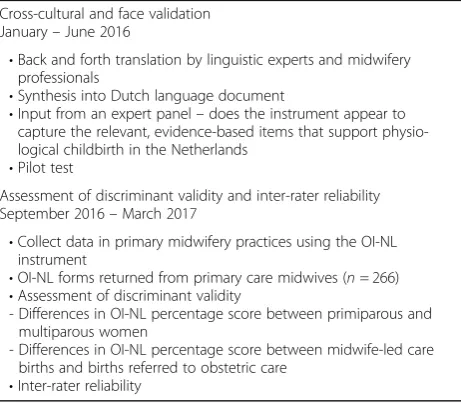
This study was conducted in two phases (a visual overview of these can be found in Appendix). In the first phase, back and forth translation and input for an expert panel (face validity) were used to create a Dutch language ver-sion. Subsequently, discriminant validity and inter-rater reliability of the Optimality Index-Netherlands (OI-NL) were assessed.
The study was approved by the ethics committee, Zuyderland Zuyd (16-N-69).
Development of the OI-NL
Following the steps for cross-cultural validation [29], the OI-US was translated from English to Dutch by two of the authors (ST and MN) both of whom have midwifery ex-pertise in the Dutch setting and are fluent in both lan-guages. Some small discrepancies in translation were resolved by discussion before synthesis into one docu-ment. The document was then translated back into Eng-lish by two linguistic experts and this translation was reviewed for faithfulness to the OI-US version by two of the authors (LKL and RdV), both of whom are familiar with the content and context of the OI-US. Additional file1 contains an overview of the items contained in both the OI-US and the OI-NL.
Face validation
A Dutch language translation was then presented to a panel of 10 experts in Dutch maternity care, consisting of community midwives (n= 2), hospital midwives (n= 2), obstetricians (n= 2), midwifery lecturers (n = 2) and midwife researchers (n= 2). They were requested to re-view all the items within the OI-NL to determine the relevance and accuracy of the items in relationship to care within the Netherlands. They were also invited to identify items that were not part of the OI-US but were relevant to the Dutch context. The feedback on the PBI (this comprises the first 15 items of the OI-NL) focused on the item pertaining to ethnicity, this was adapted to reflect ethnicity in the Netherlands and simplified for use. Both midwives and obstetricians pointed out the possibility of Body Mass Index (BMI) values being incor-rectly scored and suggested collating values for height
and weight and calculating the BMI once data was col-lected in order to reduce errors. The further feedback concerned a number of items which we adapted, it was decided to group previous birth by caesarean section into an item specifying ‘intrapartum complications’, add-ing‘instrumental birth’to the item‘intrapartum compli-cations’ as they considered these relevant to the obstetric history of multiparous women. They also sug-gested separating previous fetal death after 16 weeks gestation from previous antenatal complications, as de-tailed in the OI-US. We also opted to include the item
‘domestic/intimate partner violence’as a perinatal back-ground factor, adding detail to clarify that this item per-tains to both social history and current pregnancy.
For the OI items, the experts suggested the removal of the item‘non-stress test in pregnancy’as it is not part of midwife-led antenatal care in the Netherlands. Clarifica-tion was requested on the item ‘liquor’ as, without colour classification (clear/meconium stained) it was considered ambiguous. The item‘delayed cord clamping’ was added, as this is recommended practice in physio-logical births [30]. We adapted the quantity of blood loss (item postpartum haemorrhage) from 500 to 1000 ml, reflecting the Dutch definition of PPH [31]. A similar adaptation was made for the item on placenta retention, again bringing the duration of time for defining reten-tion in line with Dutch definireten-tions [31]. In addition to gestation at birth, our experts suggested that the index should reflect the certainty of gestation, as first trimester (dating) ultrasonography is a routine part of care in the Netherlands [32]. Following World Health Organiza-tion’s (WHO) recommendations for early infant feeding [33], we added early breastfeeding as an item and used the WHO guidelines to define the measure. Further to these suggestions, some minor linguistic feedback was given in order to ensure clarity of wording in the Dutch translation of the OI.
Pilot test
The OI-NL was then pilot tested in a primary midwifery practice in order to determine its feasibility as a data collection instrument in this environment. Three pri-mary care midwives in one midwifery practice used the OI-NL on 15 occasions. They reported both clarity of items and ease of use.
An English or Dutch language version of the OI-NL is available from the authors.
Discriminant validity Settings and participants
were invited to participate in this study and collect data on the women that started their birth under their care.
Data collection
In the midwifery practices that agreed to participate, women were approached for consent either during preg-nancy or shortly after birth. Once consent was given, the midwife completed the OI-NL data form in a de-identified manner using information about the pregnancy, labour and birth and early postpartum period recorded in the case notes of each individual client, shortly after each birth. Primiparous and multiparous women who were in midwifery care at the start of labour were included.
Power calculation and data analysis
For assessing discriminant validity of the OI-NL, we con-ducted our data analysis using completed OI-NL forms.
A sample size calculation indicated that 28 completed OI-NLs per defined group (n= 56 in total) would be ad-equate to demonstrate an effect size of 0.5 (α= < 0.05, 80% power) using an independent t-test to compare mean OI scores between two independent groups: prim-iparous and multprim-iparous women.
For each participant, percentages scores were calcu-lated for the total OI-NL and the PBI and OI part of the OI-NL. These were used for analysis. A priori, we estab-lished that forms with more than 10% missing would be excluded. When less than 10% of the items were missing the dominator would be reduced, in accordance with the instructions provided by the OI-US [22].
We assessed discriminant validity by testing two hy-potheses. We hypothesized that primiparous women in our data set will demonstrate a lower OI score than mul-tiparous women. This assumption is based on national data, which show that primiparous women have more in-terventions during birth than multiparous women [17]. This finding will demonstrate that the OI is sensitive to these intervention differences between primiparous and multiparous women. Furthermore, we examined the asso-ciation between birth-setting and the Optimality Index Score, hypothesizing that women cared for in either a home or out-patient (polyclinic) midwife-led setting will demonstrate significantly higher OI scores than women requiring intrapartum transfer to obstetric-led care [34].
Using SPSS version 24, we conducted multiple linear re-gressions analysis, using the OI percentage score as dependent variable and parity, PBI score and midwife-led births as independent variables. Parity was a dichotomous variable, coded as 0 for primiparous women and 1 for multiparous women, generating results that indicate the effect of parity, corrected for perinatal background factors. Midwife-led care was a dichotomous variable, coded as 0 for obstetric-led care and 1 for midwife-led care. Signifi-cance was set at 5% (two-tailed test).
Inter-rater reliability
Percentage agreement was measured in order to deter-mine inter-rater reliability between two raters. The first author of this study (ST) and a midwife working with the OI-NL scored a data set from 25 clients in one mid-wifery practice to examine reliability of the OI-NL as a whole and at item level. Agreement of more than 80% was considered evidence of reliability [35].
Results
The Optimality Index-Netherlands consisted of a PBI (15 items) and OI (42 items). Discriminant validity and inter-rater reliability were assessed.
Pilot test
The three midwives, based in a primary care midwifery practice, who tested the OI-NL, reported that the items were clear and easy to interpret. They estimated the time needed to complete the OI-NL at around 10 min and re-ported that completing the OI-NL in the early postpar-tum period was the most effective while they were still able to clearly remember details about the client, the care that had been given and while they still had easy ac-cess to the medical documentation of each client.
Confirmation of validity
The 15 midwifery practices that participated in the study were of mixed size, including solo and group practices. The practices were situated throughout the Netherlands covering both urban and rural areas. We sent 505 OI-NL forms to these midwifery practices; of these, 272 com-pleted forms were returned (53.8%). Seventy-six forms were returned with missing items. In 72 cases, missing items constituted no more than 10%. Four forms were ex-cluded as there was greater than 10% of data missing and another two forms were excluded, as these had been com-pleted for women who received obstetric care during pregnancy so were not under the care of the midwife at the start of labour. This left 266 completed forms, more than the a priori 56 forms required for sufficient power sample to assess discriminant validity and sufficient in number to detect differences between the groups, based on the power calculation.
The main characteristics of the participants are pre-sented in Table1.
Discriminant validity
scores were 90.61% (midwife-led) and 78.54% (obstetric-led) respectively (Table3).
In testing our hypotheses, the multiple linear regres-sions analysis demonstrates that parity is a significant predictor of the OI percentage score, also when cor-rected for perinatal factors (PBI score) with a β = 6.21 (p= .00) (Table4).
Furthermore, the professional providing care is a sig-nificant factor, with midwife-led care (either at home or out-patient (polyclinic) demonstrating significantly higher OI scores than obstetric-led births (β= 12.1, p = .00), when corrected for perinatal factors (Table5).
Inter-rater reliability
Overall rater agreement was calculated to be 98%. We also examined rater agreement per item. For the PBI, rater agreement ranged from 96 to 100%, with just two of the 15 items showing a difference in scoring. Of the 42 items comprising the OI, there were differences in scoring in 16 items, with agreement ranging from 88 to 100%. One item, Apgar score at 5 min, was outside this range, with an agreement rate of 76%. This result sug-gests that the item Apgar score is sensitive for incorrect scoring when using the OI-NL.
Discussion
Our study confirms that the OI-NL is a valid and reliable tool for use in the Dutch low risk maternity care setting. We tested the discriminant validity of the instrument by comparing the scores of primipar-ous and multiparprimipar-ous women and found that the OI-NL was sensitive to differences in obstetric
interven-tions during birth. Primiparous women had
significantly lower OI-NL percentage scores than multiparous women, also when corrected for peri-natal background factors. Our sample also showed that midwife-led care is associated with lower levels of obstetric intervention. This is line with our hy-pothesis as in the Dutch primary care settings mid-wives give care to healthy women with physiological pregnancies and refer women with complications or pathologies for obstetric-led care.
As we noted above, the OI-NL includes one item that is particularly susceptible to rater error. The
‘Apgar Score’ item was the only one with less than 80% rater agreement [34], − perhaps because the clin-ical record has scores for three different points in time (1, 5, and 10 min). It is likely that this issue can be addressed by emphasizing the use of the 5 min Apgar score in the OI-NL instructions and not the score at 1 or 10 min.
The OI-US has been described as a tool in which professionals involved in the provision of maternity care can appraise both processes and outcomes of maternity care for low- and medium risk women [24]. We consider that the OI-NL could be a useful tool for experienced midwives who may have more routinized care practices or who may be less ‘at home’ with evidence-based ways of working. Many care practices are deeply entrenched in midwifery practice and, as such, it may be difficult for profes-sionals to recognize these – Wagner described this phenomenon metaphorically, using the phrase ‘fish do not know that water exists’, meaning that profes-sional socialisation, particularly where birth is medicalised, can lead to difficulty in pinpointing a
Table 1Characteristics of women included in the sample
Age Participants No. (%)
Mean age 31.05 years
Parity
Primiparous 95 (35.7%)
Multiparous 171 (64.3%)
Ethnic origin
Dutch/Western 246 (92.5%)
Non Western 20 (7.5%)
Place of birth
Home 56 (21.0%)
Hospital–outpatient/polyclinic 59 (22.2%)
Hospital–referred to obstetrician led 81 (30.4%)
Not recorded 70 (26.3%)
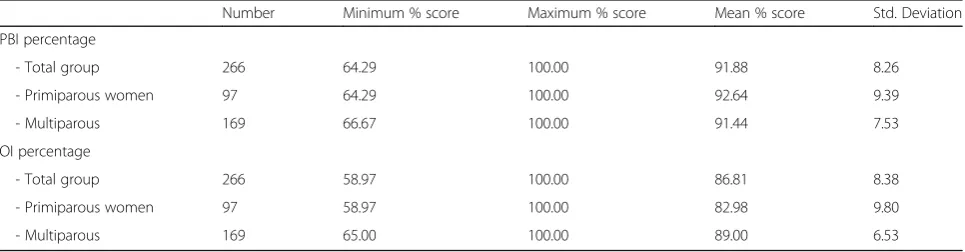
Table 2Descriptive statistics for parity of the women in our study
Number Minimum % score Maximum % score Mean % score Std. Deviation
PBI percentage
- Total group 266 64.29 100.00 91.88 8.26
- Primiparous women 97 64.29 100.00 92.64 9.39
- Multiparous 169 66.67 100.00 91.44 7.53
OI percentage
- Total group 266 58.97 100.00 86.81 8.38
- Primiparous women 97 58.97 100.00 82.98 9.80
‘normal’ birth [36]. The OI-NL is a tool that may help professionals to ‘see water’, recognize routinized care practices and re-examine and reflect upon these. Evidence-based guidelines that support physio-logical approaches to childbirth can empower mid-wives, particularly in medicalized care settings [4]. However, midwives appear to be influenced by fac-tors other than Evidence Based Medicine (EBM), including personal attitudes towards physiological childbirth and inter-professional collaboration with others with similar and differing perceptions of ob-stetric risk [37]. Midwives also report that in hos-pital settings, they feel they must ‘account’ for decisions regarding physiological childbirth and ex-perience limitations in the way they can ‘experiment’ with e.g. birthing positions [4]. Providing a validated, evidence-based tool can support midwives in identi-fying interventions that are evidence based compared to those that are debatable and not evidence-based. While recognizing non-evidence based care is im-portant, other skills, such as the ability to challenge non-evidence based practice and advocate practices that support and promote physiology, irrespective of care setting, will also be relevant. While the evidence is limited to one small study, the OI-NL has potential as an education tool, promoting reflection and discussion about the diversity of midwifery
prac-tice that student midwives may experience in
midwifery practices in the Netherlands [13] and be-cause it is a valid instrument that captures evidence-based physiological childbirth practices, specific to the Dutch context.
It is perhaps reflective of the dynamism of Dutch midwifery that two studies relating to the Optimality Index in the Netherlands have emerged at the same time [27]. While both of these studies focus on the concept of optimality within the Netherlands, they are fundamentally different, with different purposes. OI-NL2015 was developed for use as a research tool to use within a specific larger study of birth centres. It is linked to the PRN, a large perinatal database, which has both advantages and disadvantages. The link to the PRN allows immediate access to a large amount of data, but it also makes the OI-NL2015 a “lean” in-strument, capturing only 31 variables included in the database. The OI-NL is a broader tool with 57 vari-ables, comparable with OI-US [23], OI-UK [24] and OI-TR [26], capturing evidence-based physiological childbirth practices, tailored to the specific Dutch set-ting. It is valid and offers maternity care providers the opportunity to reflect on both care processes and outcomes from prospective, current data, while data from the PRN database are already 1 to 2 years old at publication. The OI-NL has the additional advan-tage of being a tool that could be used to evaluate different models of maternity care. The OI-NL2015 was designed to examine maternity care within birth centres. The OI-NL validated here, with the specificity of its 42 items and its attention to variables not avail-able in existing registries, could allow for the assess-ment and comparison of aspects of the delivery and outcomes of care in a variety of settings. However, an assessment of the effectiveness of the Dutch midwif-ery care model or comparisons between midwifmidwif-ery
Table 3Descriptive statistics for care-setting of the women in our study
Number Minimum % score Maximum % score Mean % score Std. Deviation
PBI percentage
- Total group 196 65.73 100.00 91.57 8.85
- Midwife-led 115 65.73 100.00 92.66 8.38
- Obstetric-led 81 66.67 100.00 90.02 9.31
OI percentage
- Total group 196 60.20 97.62 85.62 8.42
- Midwife-led 115 76.19 97.62 90.61 4.62
- Obstetric-led 81 60.20 92.86 78.54 7.48
Table 4Multiple linear regressions: Parity
Model Unstandardized Coefficients Standardized Coefficients t p 95.0% Confidence Interval for B
B Std. Error Beta Lower Upper
(Constant) 68.38 5.43 12.59 0.00 57.51 79.24
Parity 6.21 0.99 0.36 6.25 0.00 4.23 8.20
and obstetric led models of care were not the focus of this study.
Strength and weakness of the study
This study has a number of strengths, notably which, as far as we are aware, it is the first validation study of the OI that uses prospective data from midwives offering care for women with physiological pregnancies, rather than pre-existing data sets or clients with mixed risk profiles [26]. While a data set would have offered larger amounts of data for validation, an earlier validation study [24] indicated that the OI indicated potential as a prospective tool but was not tested as such. Our study operationalised this approach, with sufficient prospective data to meet the sample size calculation. This study of-fers a broad overview of the items relevant for reflection on the physiology of childbirth within the Dutch midwif-ery care setting, including an assessment of validity.
This study has some weaknesses, namely a large amount of missing data (n= 70) for the actual place of birth. The OI-US includes an item on the intended place of birth at the start of the intrapartum period but does not include an item detailing the actual place of birth. In our original translation, we followed the OI-US lead. Reflection and dis-cussion between the authors once data collection had com-menced led to a decision, 1 month into data collection, to request that midwives document the care setting (midwife-led home or out-patient (polyclinic) or transfer to obstetric care. While it was useful for us to collate information about the place of birth, it does not affect the assessment of valid-ity of the items contained within the OI-NL.
Conclusion
Our study confirms that the OI-NL is a valid and re-liable instrument that captures the relevant, evidence-based items that support physiological childbirth, tailored to the Dutch maternity care system. Import-antly, in a time in which there are concerns about the medicalization of childbirth – in the Netherlands and elsewhere - it brings an evidence-based, physio-logical approach to childbirth into sharp focus and offers potential as an instrument measuring detailed care processes and outcomes of physiological mater-nity care in the Dutch System.
Additional file
Additional file 1:The OI-US and the OI-NL instruments. This file con-tains the OI-US and the OI-NL presented together so that the reader is able to compare the similarities and differences following the creation and validation of the OI-NL. (DOCX 27 kb)
Abbreviations
EBM:Evidence Based Medicine; OI: Optimality Index; OI-NL: Optimality Index-Netherlands; OINL-2015: Optimality Index Netherlands-2015; OI-TR: Optimality Index Turkey; OI-UK: Optimality Index United Kingdom; OI-US: Optimality Index-United States; PBI: Perinatal Background Index; PPH: Postpartum Haemorrhage; PRN: Perinatal Registry Netherlands; SPSS: Statistical Package for the Social Sciences; WHO: World Health Organization
Acknowledgements
The authors would like to thank the midwives, obstetricians, researchers, and lecturers who shared their expertise in validating the items in the OI-NL. We are also grateful to the midwives and their clients who agreed to participate.
Funding
No external funding was received.
Availability of data and materials
The OI-NL plus supporting material and dataset is available from the authors on reasonable request.
Table 5Multiple linear regressions: Care-setting
Model Unstandardized coefficients Standardized coefficients t p 95.0% confidence interval for B
B Std. Error Beta Lower Upper
(Constant) 79.24 4.46 17.78 0.00 70.33 88.15
Care setting 12.09 0.88 0.71 13.78 0.00 10.34 13.84
PBI percentage −0.01 0.05 −0.01 −0.16 0.88 −0.11 0.09
Appendix
Table 6Steps in the validation process
Cross-cultural and face validation January–June 2016
•Back and forth translation by linguistic experts and midwifery professionals
•Synthesis into Dutch language document
•Input from an expert panel–does the instrument appear to capture the relevant, evidence-based items that support physio-logical childbirth in the Netherlands
•Pilot test
Assessment of discriminant validity and inter-rater reliability September 2016–March 2017
•Collect data in primary midwifery practices using the OI-NL instrument
•OI-NL forms returned from primary care midwives (n= 266)
•Assessment of discriminant validity
- Differences in OI-NL percentage score between primiparous and multiparous women
- Differences in OI-NL percentage score between midwife-led care births and births referred to obstetric care
•Inter-rater reliability
Authors’contributions
All authors (ST, MN, LB, RdV and LKL) contributed to the design of the study. ST, MN, RdV and LKL were involved in the creation of the OI-NL in the Dutch language. ST, MN and LB were responsible for data analysis with significant contributions to data interpretation from LKL, LB and RdV. ST conducted the literature review and wrote the article. Revisions of subsequent article drafts were contributed to by MN, RdV and LKL. All authors read and approved the final manuscript.
Ethics approval and consent to participate
The study was approved in March 2016 by the local ethics committee, Zuyderland Zuyd (16-N-69). Written informed consent was obtained from all participants.
Competing interests
The authors have no competing interests to declare.
Publisher’s Note
Springer Nature remains neutral with regard to jurisdictional claims in published maps and institutional affiliations.
Author details
1Research Centre for Midwifery Science Maastricht, Zuyd University, Universiteitssingel 60, 6229ER Maastricht, The Netherlands.2Care and Public Health Research Institute (CAPHRI), Maastricht University, Maastricht, The Netherlands.3University of Michigan, Ann Arbor, USA.
Received: 27 November 2017 Accepted: 8 April 2018
References
1. Amelink-Verburg MP, Buitendijk SE. Pregnancy and labour in the dutch maternity care system: what is normal? The role division between midwives and obstetricians. J Midwifery Womens Health. 2010;55:216–25.
2. Cronie D, Rijnders M, Buitendijk S. Diversity in the scope and practice of hospital-based midwives in the Netherlands. J Midwifery Womens Health. 2012;57(5):469–75.
3. International Confederation of Midwives. ICM definition of the midwife. In: ICM council; 2011.http://internationalmidwives.org/assets/uploads/ documents/Definition%20of%20the%20Midwife%20-%202011.pdf. Accessed 1 Aug 2017.
4. Thompson SM, Nieuwenhuijze MJ, Low LK, de Vries R. Exploring Dutch midwives’attitudes to promoting physiological childbirth: a qualitative study. Midwifery. 2016;42:67–73.
5. Offerhaus PM, Geerts C, de Jonge A, Hukkelhoven C, Twisk J, Lagro-Janssen A, et al. Variation in referrals to secondary obstetrician-led care among primary midwifery care practices in the Netherlands: a nationwide cohort study. BMC Pregnancy Childbirth. 2015;15(1):42.
6. Offerhaus PM, Hukkelhoven CWPM, de Jonge A, van der Pal-de Bruin KM, Scheepers PLH, Lagro-Janssen ALM. Persisting rise in referrals during labor in primary midwife-led care in the Netherlands. Birth. 2013;40(3):192–201. 7. Scamell M, Alaszewski A. Fateful moments and the categorisation of
risk: midwifery practice and the ever-narrowing window of normality during childbirth. Health Risk Soc. 2012;14(2):207–21.https://doi.org/10. 1080/13698575.2012.661041.
8. Seijmonsbergen-Schermers AE, Geerts CC, Prins M, van Diem MT, Klomp T, Lagro-Janssen ALM, et al. The use of episiotomy in a low-risk population in the Netherlands: a secondary analysis. Birth. 2013;40(4):247–55.
9. Nieuwenhuijze M, de Jonge A, Korstjens I, Lagro-Janssen T. Factors influencing the fulfillment of women’s preferences for birthing positions during second stage of labor. J Psychosom Obstet Gynecol. 2012;33(1):25–31.
10. Priddis H, Dahlen H, Schmied V. Juggling instinct and fear: an ethnographic study of facilitators and inhibitors of physiological birth positioning in two different birth settings. Int J Childbirth. 2011;1(4):227–41.
11. Buckley SJ. Executive summary of hormonal physiology of childbearing: evidence and implications for women, babies, and maternity care. J Perinat Educ. 2015;24(3):145–53.
12. Romano AM, Lothian JA. Promoting, protecting, and supporting normal birth: a look at the evidence. J Obstet Gynecol Neonatal Nurs. 2008;37(1):94–105. 13. Humenick SS. The life-changing significance of normal birth. J Perinat Educ.
2006;15(4):1–3.https://doi.org/10.1624/105812406X151330.
14. Downe S. Towards salutogenic birth in the 21st century. In: Essential midwifery practice: intrapartum care; 2010. p. 289–95.
15. Requejo J, Bryce J, Victora C. Building a future for women and children: the 2012 report. In: Unicef.org; 2012.https://www.unicef.org/eapro/Countdown_ to_2015.pdf. Accessed 1 Sept 2017.
16. Gibbons L, Belizán JM, Lauer J a, Betrán AP, Merialdi M, Althabe F. The global numbers and costs of additionally needed and unnecessary caesarean sections performed per year: overuse as a barrier to universal coverage. World Health Rep Backgr Pap 2010;1–31.
17. Perined. Perinatale Zorg in Nederland 2015. In: Jaarboeken Zorg in Nederland. https://assets.perined.nl/docs/980021f9-6364-4dc1-9147-d976d6f4af8c.pdf. Accessed 1 Oct 2017.
18. Perdok H, Jans S, Verhoeven C, et al. Opinions of maternity care professionals and other stakeholders about integration of maternity care: a qualitative study in the Netherlands. BMC Pregnancy Childbirth. 2016;16:188. https://doi.org/10.1186/s12884-016-0975-z.
19. Warmelink JC, de Cock TP, Combee Y, Rongen M, Wiegers TA, Hutton EK. Student midwives’perceptions on the organisation of maternity care and alternative maternity care models in the Netherlands - a qualitative study. BMC Pregnancy Childbirth. 2017;17:24.https://doi.org/10.1186/s12884-016-1185-4. 20. Prechtl H. The optimality concept. Early Hum Dev. 1980;4:201–5.
21. Wiegers TA, Keirse MJ, Berghs GA, van der Zee J. An approach to measuring quality of midwifery care. J Clin Epidemiol. 1996;49:319–25.
22. Murphy PA, Fullerton JT. Measuring outcomes of midwifery care: development of an instrument to assess optimality. J Midwifery Womens Health. 2001;46(5):274–84.
23. Low LK, Miller J. A clinical evaluation of evidence-based maternity care using the optimality index. J Obstet Gynecol Neonatal Nurs. 2006;35(6):786–93. 24. Sheridan M, Sandall J. Measuring the best outcome for the least
intervention: can the Optimality Index-US be applied in the UK? Midwifery. 2010;26(6):9–15.
25. van Olphen Fehr J. Using the optimality index-US to teach midwifery students to recognize and implement evidence-based practices that promote optimal outcomes in perinatal health. J Midwifery Womens Health. 2013;58(5):531–7. 26. Yucel C, Taskin L, Low LK. Validity and reliability of the Turkish version of the
Optimality Index-US (OI-US) to assess maternity care outcomes. Midwifery. 2015;31(12):1135–42.
27. Hermus M, Boesveld I, van der Pal-de Bruin K, Wiegers T. Development of the Optimality Index-NL2015, an instrument to measure outcomes of maternity care. J Midwifery Womens Health. 2017;62(5):580–8. 28. Hermus M, Wiegers TA, Hitzert MF, Boesveld IC, van den Akker-van Marle
ME, Akkermans HA, et al. The Dutch Birth Centre Study: study design of a programmatic evaluation of the effect of birth centre care in the Netherlands. BMC Pregnancy Childbirth. 2015;15(1):148. 29. Sousa VD, Rojjanasrirat W. Translation, adaptation and validation of
instruments or scales for use in cross-cultural health care research: a clear and user-friendly guideline. J Eval Clin Pract. 2011;17:268–74.
30. WHO. Guideline: delayed umbilical cord clamping for improved maternal and infant health and nutrition outcomes. Geneva: World Health Organization; 2014.http://www.who.int/nutrition/publications/guidelines/ cord_clamping/en/. Accessed 2 Nov 2017
31. Verloskundig vademecum. eindrapport van de Commissie Verloskunde van het College voor zorgverzekeringen. Diemen: CVZ; 2003.
32. NVOG Modelprotocol‘Daterering van de Zwangerschap’, 2011.https:// www.knov.nl/serve/file/knov.nl/knov_downloads/851/file/modelprotocol_ NVOG_Datering_van_de_Zwangerschap.pdf. Accessed 21 Oct 2017. 33. World Health Organization, UNICEF (United nations Children’s Fund). Global
Strategy for Infant and Young Child Feeding. World Heal Organ. 2003.http://www. paho.org/english/ad/fch/ca/GSIYCF_infantfeeding_eng.pdf. Accessed 1 Sep 2017. 34. Sandall J, Soltani H, Gates S, Shennan A, Devane D. Midwife-led continuity
models versus other models of care for childbearing women. Cochrane Database Syst Rev. 2016;(4):1–72.
35. McHugh ML. Interrater reliability: the kappa statistic. Biochem Med. 2012; 22(3):276–82.
36. Wagner M. Fish can’t see water: the need to humanize birth. Int J Gynecol Obstet. 2001;75(Suppl 1):S25–37.