Open Access
Research
Role of HIV-1 subtype C envelope V3 to V5 regions in viral entry,
coreceptor utilization and replication efficiency in primary
T-lymphocytes and monocyte-derived macrophages
Vasudha Sundaravaradan
†1, Suman R Das
†2,4, Rajesh Ramakrishnan
1,5,
Shobha Sehgal
3, Sarla Gopalan
3, Nafees Ahmad*
1and Shahid Jameel*
2Address: 1Department of Immunobiology, College of Medicine, University of Arizona, Tucson, AZ 85724, USA, 2Virology Group, International
Center for Genetic Engineering and Biotechnology, New Delhi, India, 3Departments of Pathology and Obstetrics and Gynecology, Post Graduate
Institute of Medical Education and Research, Chandigarh, India, 4NIAID, National Institutes of Health, Bethesda, MD 20892, USA and 5Department of Molecular Virology & Microbiology, Baylor College of Medicine, Houston, TX 77030, USA
Email: Vasudha Sundaravaradan - [email protected]; Suman R Das - [email protected]; Rajesh Ramakrishnan - [email protected]; Shobha Sehgal - [email protected]; Sarla Gopalan - [email protected]; Nafees Ahmad* - [email protected];
Shahid Jameel* - [email protected] * Corresponding authors †Equal contributors
Abstract
Background: Several subtypes of HIV-1 circulate in infected people worldwide, including subtype B in the United States and subtype C in Africa and India. To understand the biological properties of HIV-1 subtype C, including cellular tropism, virus entry, replication efficiency and cytopathic effects, we reciprocally inserted our previously characterized envelope V3–V5 regions derived from 9 subtype C infected patients from India into a subtype B molecular clone, pNL4-3. Equal amounts of the chimeric viruses were used to infect T-lymphocyte cell lines (A3.01 and MT-2), coreceptor cell lines (U373-MAGI-CCR5/CXCR4), primary blood T-lymphocytes (PBL) and monocyte-derived macrophages (MDM).
Results: We found that subtype C envelope V3–V5 region chimeras failed to replicate in T-lymphocyte cell lines but replicated in PBL and MDM. In addition, these chimeras were able to infect
U373MAGI-CD4+-CCR5+ but not U373MAGI-CD4+-CXCR4+ cell line, suggesting CCR5
coreceptor utilization and R5 phenotypes. These subtype C chimeras were unable to induce syncytia in MT-2 cells, indicative of non-syncytium inducing (NSI) phenotypes. More importantly, the subtype C envelope chimeras replicated at higher levels in PBL and MDM compared with subtype B chimeras and isolates. Furthermore, the higher levels subtype C chimeras replication in PBL and MDM correlated with increased virus entry in U373MAGI-CD4+-CCR5+.
Conclusion: Taken together, these results suggest that the envelope V3 to V5 regions of subtype C contributed to higher levels of HIV-1 replication compared with subtype B chimeras, which may contribute to higher viral loads and faster disease progression in subtype C infected individuals than other subtypes as well as rapid HIV-1 subtype C spread in India.
Published: 24 November 2007
Virology Journal 2007, 4:126 doi:10.1186/1743-422X-4-126
Received: 9 October 2007 Accepted: 24 November 2007 This article is available from: http://www.virologyj.com/content/4/1/126
© 2007 Sundaravaradan et al; licensee BioMed Central Ltd.
Introduction
The steepest increase in new cases of human immunode-ficiency virus type 1 (HIV-1) infection has taken place in South America [1] and South/Southeast Asia [2], of which India is experiencing a rapid and extensive spread of infec-tion. National surveys in India have shown that the spread in India is primarily heterosexual in the metropolitan and coastal cities, and via intravenous drug use in the North-east bordering Myanmar [3,4]. The HIV-1 sequences ana-lyzed from different cohorts from several regions in India suggests that HIV-1 subtype C is the predominant subtype found in India [3-8]. It has also been shown in several African and South American studies that subtype C rap-idly predominates over all the other HIV-1 subtypes after being introduced in those populations [1,9], suggesting that subtype C may soon become the prevalent subtype worldwide. However, the biological properties of HIV-1 subtype C viruses that may influence its rapid spread are not known.
HIV-1 envelope gp120 interacts with CD4 receptor and CXCR4 or CCR5 coreceptor [10-13] on T lymphocytes, monocytes/macrophages and other cell types [11,14,15] to enter target cells. Analysis of env gp120 sequences from a large number of HIV-1 isolates shows that gp120 is made up of five variable regions (V1 to V5) that are inter-spersed with conserved regions [16]. The potential patho-genic region of HIV-1 presumably lies within these variable regions, especially in the V3 region comprising of 35 amino acids arranged in a disulphide loop involving two cysteines [10]. The hypervariable region 3, the V3 region, is functionally important in virus infectivity [17-19], virus neutralization [13,20-22], replication efficiency and host cell tropism [10,23], whereas the V1–V2 regions influence replication efficiency in macrophages by affect-ing virus spread [24,25]. In addition, the variable loops V4 and V5 of gp120 are less flexible regions of the proteins and may play roles in CD4 binding and neutralizing anti-body responses [26,27]. The mechanisms by which the V3 domain and other regions of the env glycoprotein control cell tropism were described by identifying two distinct co-receptors, fusin (CXR4) and CCR5, for the entry of T-lym-photropic and macrophage-tropic HIV-1, respectively [11,15]. The region responsible for determining corecep-tor utilization was examined by Choe et al., [12] and showed that the V3 region was responsible for interacting with this co-receptor. Several studies have shown that a reciprocal transfer of an HIV-1 R5 clones' V3 region into an X4 molecular clone changed its tropism to allow infec-tion and replicainfec-tion in macrophages [10,19,23,28-30]. However, most of the data on viral infectivity, coreceptor utilization, replication efficiency and cytopathic effects have been obtained from HIV-1 subtype B, and very lim-ited information is available on subtype C viruses, espe-cially those from India.
In this study, we have characterized the biological proper-ties of HIV-1 subtype C envelope V3 to V5 regions by con-structing chimeric recombinant viruses containing subtype C envelope V3–V5 regions from nine infected patients from India [5] into subtype B infectious molecu-lar clone, pNL4-3. We show that the envelope V3–V5 regions of HIV-1 subtype C changed the tropism of HIV-1 NL4-3 from X4 to R5 and contributed to the increased virus entry and replication efficiency in primary blood T-lymphocytes (PBL) and monocyte-derived macrophages (MDM) compared with subtype B viruses. This higher rep-lication efficiency of subtype C compared with subtype B may contribute to a higher viral load and faster disease progression in patients infected with HIV-1 subtype C viruses in the Indian population.
Results
Characterization and comparison of subtype C envelope V3–V5 chimeras' sequences with known isolates
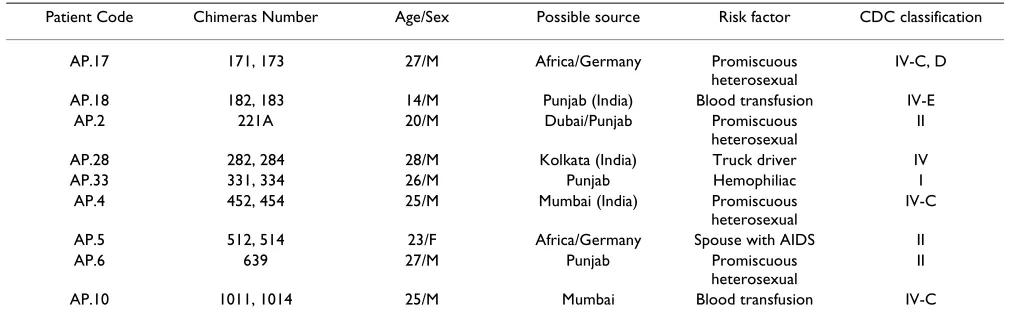
We confirmed the reciprocal insertion of the sixteen enve-lope V3–V5 region sequences (Fig. 1) from nine subtype C infected patients' isolates from India (Table 1) that were sequenced before [5] into pNL4-3 by nucleotide sequenc-ing. Two clones were selected from each patient for recip-rocal insertion. The patients harbored various stages of HIV disease (I to IVE) based on the 1987 CDC classifica-tion. We also compared the subtype C env V3 to V5 regions chimeras with HIV-1NL4-3, HIV-1BaL and a known
env V3–V5 region sequence of subtype C (Fig. 1). All the subtype C env V3–V5 clones showed a greater similarity to the R5 virus HIV-1BaL than HIV-1NL4-3. The amino acids
critical for the R5 phenotype, including the Y at position 283 and E or D at position 287 were present in all subtype C clones. The amino acid H at position 275 seen in
HIV-1Ba-L which is also important for determining R5 tropism
was present only in the clones from patient 17 (clones 171 and 173). The amino acid sequences between positions 310–315 and 350–373 were significantly different from HIV-1NL4-3 clone but were very similar to the previously known sequence of subtype C envelope region. It is inter-esting to note that a critical glycosylation site, which includes the first cysteine of the V3 loop, was mutated in all the clones except those obtained from patient 17 and 5 (clones 171, 173, 512, 514). The sequence analysis of all the clones indicate that these clones are different from HIV-1NL4-3 envelope sequences but very similar to enve-lope sequences from known subtype C clones and to R5 tropic viruses such as HIV-1BaL.
Computational prediction of coreceptor usage using V3 amino acid sequence of subtype C chimeras
Table 1: Patient demographics, possible source and risk factor of transmission and CDC disease classification.
Patient Code Chimeras Number Age/Sex Possible source Risk factor CDC classification
AP.17 171, 173 27/M Africa/Germany Promiscuous
heterosexual
IV-C, D
AP.18 182, 183 14/M Punjab (India) Blood transfusion IV-E
AP.2 221A 20/M Dubai/Punjab Promiscuous
heterosexual
II
AP.28 282, 284 28/M Kolkata (India) Truck driver IV
AP.33 331, 334 26/M Punjab Hemophiliac I
AP.4 452, 454 25/M Mumbai (India) Promiscuous
heterosexual
IV-C
AP.5 512, 514 23/F Africa/Germany Spouse with AIDS II
AP.6 639 27/M Punjab Promiscuous
heterosexual
II
AP.10 1011, 1014 25/M Mumbai Blood transfusion IV-C
CDC-Center for Disease Control and Prevention
[image:3.612.52.557.546.707.2]Comparison of envelope (V3 to V5 regions) from subtype C chimeras with subtype B (X4 and R5) and C envelope sequences
Figure 1
Comparison of envelope (V3 to V5 regions) from subtype C chimeras with subtype B (X4 and R5) and C envelope sequences. The sequences of subtype C env chimeras used in this study were analyzed by performing multiple sequence alignment with parental clone HIV-1NL4-3 as a reference and HIV-1BaL and known HIV-1 subtype C envelope regions for comparison. Subtype C chimeras are designated by numbers. Dots indicate a match with the reference sequence whereas substitutions are indicated by the single letter code for the changed amino acid. Gaps are shown as dashes. Structural elements of the envelope are indi-cated by spanning arrowheads and glycosylation sites are indiindi-cated by asterisk. Amino acid positions are indiindi-cated to denote the amino acid numbers of the complete envelope gp120.
*** *** V3 *** *** ***
NL43 RSANFTDNAK TIIVQLNTSV EINCTRPNNN TRKSIRIQRG PGRAFVTIGK -IGNMRQAHC NISRAKWNAT LKQIASKLRE QFGNNKTIIF KQSSGGDPEI VTHSFNC BAL ..E...N... ...E.. ... ...H.--. ...Y.T.E I..DI... .L...D. .NK.VI.... ...-....V. .H... ... HIV-1C ..E.L... ....HF.E.. Q...G.. ....V..--F ..Q..YAT.D I..DI.K.Y. ...KGE.AKV MQKVTG..K. H.P-K.N.T. QPP....L.. T... 171 ..E.L.N... ...VEP. T... ...H.--. ..Q..YAT.D L..DT.K.Y. TVNGTN..R. .HKV.EQ.GR H.--.R..N. TKP....L.. T... 173 ..E.L.N... ...VEP. T... ...H.--. ..Q..YAT.D L..DT.K.Y. TVNGTN..R. .HKV.EQ.GR H.--.R..N. TKP....L.. T... 182 ..E.L...V. ....H.DQP. ..V.I... ....V..--R ..QT.YAT.D I..DI.K.Y. ...E....E. .QKVGK..A. Y.P-....N. TL.A...L.. T... 183 ..E.L...V. ....H.DQP. ..V.I... ....V..--R ..QT.YAT.D I..DI.K.Y. ...E....E. .QKVGK..A. Y.P-....N. TL.A...L.. T... 221 ..E.L.N.V. ....H..Q.. ..M... ...--. ..QT.YAT.D I..DI.R... ...GD...E. .QRVGK..P. H.P-....K. AS...L.. T... 282 ..E.L.G.V. ....H..Q.. ..V....H.. ...--. ..QT.YAT.E I..DI... ...GD...E. .QRVGK..A. H.P-....K. NS...L.. T... 284 ..E.L.G.V. ....H..Q.. ..V....H.. ...--. ..QT.YAT.E I..DI... ...GD...E. .QRVGK..A. H.P-....K. NS...L.. T... 331 ..D.L.N.VN ....H..Q.A D.V....S.. ...--. S.QT.Y.T.E I..DI... ...ED..DE. .QRVGQ..A. H.P-....K. AS...L.. T... 334 ..D.L.N.VN ....H..Q.A D.V....S.. ...--. S.QT.Y.T.E I..DI... ...ED..DE. .QRVGQ..A. H.P-....K. AS...L.. T... 452 ..E.L.N... I...H.SQ.. ..V... ...--. ..QT.YAT.D I..DI.E.Y. ...QD...E. .QRVSK.VSR L.P-....K. NS...L.. T... 454 ..E.L.N... I...H.SQ.. ..V... ...--. ..QT.YAT.D I..DI.E.Y. ...QD...E. .QRVSK.VSR L.P-....K. NS...L.. T... 512 ..E.L.N... ...VEP. K... ....V..--. ..Q..YAT.E I..DI.K.Y. TVN.TD..R. .HKV.EQ..Q H.N-... TN...L.. T.L.... 514 ..E.L.N... ...VEP. K... ....V..--. ..Q..YAT.E I..DI.K.Y. TVN.TD..R. .HKV.EQ..Q H.N-... TN...L.. T.L.... 639 ..E.P.N.I. ....H..Q.. ..V... ...--. ..QT.YAT.D I..DI... ...KN...E. .QRVGK..P. H.P-....K. TS...L.. T... 1011 ..E.L.N.V. ....H..Q.. ..V... ...--. ..QT.YAT.E I... ...EK...E. .QRVGK..P. H.P-.R..K. AS...L.. T... 1014 ..E.L.N.V. ....H..Q.. ..V... ...--. ..QT.YAT.E I... ...EK...E. .QRVGK..P. H.P-.R..K. AS...L.. T...
V4 V5
*** *** ** * *** *** ** *
NL43 GGEFFYCNST QLFNSTWFNS TWSTEGSNNT EGSD-TITLP CRIKQFINMW QEVGKAMYAP PISGQIRCSS NITGLLLTRD GG---NNNNG SEIFRPGGGD MRDNWR BAL ... ...N-- --V..E.... VENN... ...I.... ....R... ..R... ... ...PED.K T.V... ... HIV-1C R...TS E...G--- -YN--.TD.N SN--K....L ...I..T. ....R.I... ..A.N.I.I. ... ...KT.DT.D T...N .K.... 171 ...DTS R...NWT GTNIKSTG.D N.VNGN.... .K.R.I.R.. .R..Q... ..Q.V.N.L. ... ....NS-S.. I... ... 173 ...DTS R...NWT GTNIKSTG.D N.VNGN.... .K.R.I.R.. .R..Q... ..Q.V.N.L. ... ....NS-S.. I... ... 182 ...T. G...G.YNST -YMPN.TASN SN--S...I. ...I.... ....R... ..A.N.T.K. ...V.. ...SLTS. T... ... 183 ...T. G...G.YNST -YMPN.TASN SN--S...I. ...I.... ....R... ..A.N.T.K. ...V.. ...SLTS. T... ... 221 R...TS N...YMPT -YMPN.TESG SN--S....L ...IV.L. ....R... ..E.N.T.K. ...V.. ...LKS.S T... ... 282 R...TS K...G.YMPT -YMPN.TESN S---SI..I. ...I.... ....R.I... ..E.N.T.K. ....I..V.. ..EGDTIK.D T... ... 284 R...TS K...G.YMPT -YMPN.TESN S---SI..I. ...I.... ....R.I... ..E.N.T.K. ....I..V.. ..KGDTIK.D T... ... 331 R...TS G...G----T -YMPN.TKSN SS--SI..I. ...I.... ....R... .VE.N.T.N. T... ...IGTEQ.D T... ... 334 R...TS G...G----T -YMPN.TKSN SS--SI..I. ...I.... ....R... .VE.N.T.N. T... ...IGTEQ.D T... ... 452 R...TS G....----T -YW.NATKSN SS--S.F.IY ...IV... ....Q... ..A.N.T.K. ...V.. ...SGQDGPK DLQTWRRRYE GQLE.. 454 R...TS G....----T -YW.NATKSN SS--S.F.IY ...IV... ....Q... ..A.N.T.K. ...V.. ...SGQDGPK DLQTWRRRYE GQLE.. 512 ...HTS G...PWN ---NTQ.S N-HTEN.... ...IVH.. .R..Q... ..P.V.N.V. ...N ....N..STE E...G....F L... 514 ...HTS G...PWN ---STQ.S N-HTEN.... ...R.IVH.. .R..Q... ..P.V.N.V. ...N ....N..STE E... ... 639 R...TS G...T--- -RLFNSTEGN SS--SF..I. ...I.... ....R... ..E.N.T.K. ..A....L.. ...IDP.N T... ... 1011 R...TS G....----T -YMPN.TK.N SN--SS..I. ...I.... ....R... ..A.N.T.K. ...V.. ...EGS--.D T... ... 1014 R...TS G....----T -YMPN.TK.N SN--SS..I. ...I.... ....R... ..A.N.T.K. ...V.. ...EGS--.D T...G... ...
-242 -300
-347 -430
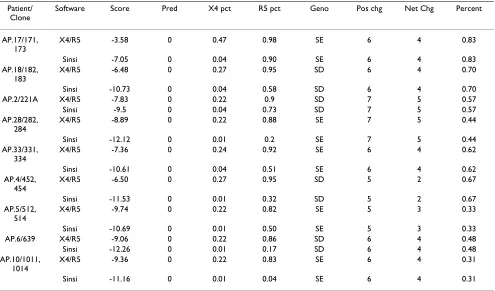
A score of -6.96 was used as a cut off for R5 strains and a score of -2.88 was used as a cutoff for X4 strains. Most of these scores were higher than -6.96 especially AP.17 sequence which showed a score of -3.58 clearly below the cut-off score for X4 strains. Thus, all the clones were clearly predicted to be R5 tropic. We also used the PSSM (sinsi) matrix to analyze these sequences and these scores were in the range of -7.5 to -11.53. This predicts high R5 tropism and a NSI phenotype for all the Indian isolates examined. Higher numbers of positively charged amino acids (R/K/H) have been correlated with the likelihood of CXCR4 use. In all of the Indian sequences in this study, lower numbers of positive charges, in the range of 5 to 7, were found (Table 2). Thus, in an in-silico prediction model, all of the V3–V5 sequences of HIV-1 Indian iso-lates were predicted to show R5-tropism.
Replication of subtype C chimeric viruses in T-Lymphocyte cell lines
We first sought to determine whether the subtype C env
chimeras retained the lymphotropic properties of the parental clone HIV-1NL4-3 by infecting the T cell line A3.01 with the subtype C chimeric viruses and parental virus, HIV-1NL4-3. The T-cell line A3.01 expresses CD4 and CXCR4 but no CCR5. Our results showed that the parental X4 tropic HIV-1NL4-3 productively infected and replicated in A3.01 over a 27-day infection period.
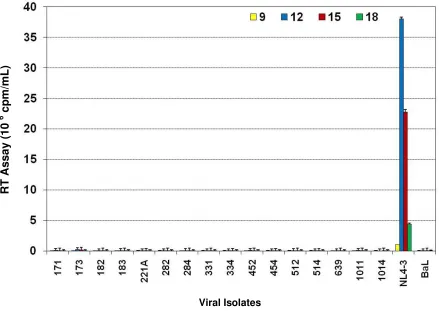
However, the subtype C chimeras did not replicate in A3.01 cell line (Fig. 2), suggesting that these chimeras were no longer T-cell line tropic, unlike the parental clone. These results further demonstrated that replace-ment of the V3–V5 regions of envelope of HIV-1NL4-3 with subtype C envelope from infected patients was responsible for the lack of capacity to use CXCR4 as a coreceptor for these chimeric viruses. These data also suggest that the integrated proviruses that were present in these subtype C infected patient samples were not X4 tropic.
Coreceptor utilization of chimeric subtype C viruses
[image:4.612.60.555.109.400.2]We then determined the coreceptor utilization of the sub-type C env chimeras (clone designation in Fig. 1 and Table 1) using U373-MAGI indicator cell lines. These cell lines express the CD4 receptor in conjunction with either CCR5 or CXCR4 as a coreceptor and can be infected with either macrophage tropic (R5) or lymphotropic (X4) viruses, respectively. These cells contain an inducible β -galactosi-dase reporter driven by HIV-1 LTR that can be used as an indicator for entry. The known SI isolate HIV-1NL4-3, NSI isolate HIV-1BaL, and primary isolates were used as con-trols. As shown in Table 3, all the subtype C env chimeras were able to infect the U373-MAGI-CCR5 cell line but were unable to infect the U373-MAGI-CXCR4 cell line. This data also correlates well with the insilico prediction Table 2: Prediction of coreceptor usage by Position Specific Scoring Matrix (PSSM) bioinformatics tool that predicts coreceptor usage.
Patient/ Clone
Software Score Pred X4 pct R5 pct Geno Pos chg Net Chg Percent
AP.17/171, 173
X4/R5 -3.58 0 0.47 0.98 SE 6 4 0.83
Sinsi -7.05 0 0.04 0.90 SE 6 4 0.83
AP.18/182, 183
X4/R5 -6.48 0 0.27 0.95 SD 6 4 0.70
Sinsi -10.73 0 0.04 0.58 SD 6 4 0.70
AP.2/221A X4/R5 -7.83 0 0.22 0.9 SD 7 5 0.57
Sinsi -9.5 0 0.04 0.73 SD 7 5 0.57
AP.28/282, 284
X4/R5 -8.89 0 0.22 0.88 SE 7 5 0.44
Sinsi -12.12 0 0.01 0.2 SE 7 5 0.44
AP.33/331, 334
X4/R5 -7.36 0 0.24 0.92 SE 6 4 0.62
Sinsi -10.61 0 0.04 0.51 SE 6 4 0.62
AP.4/452, 454
X4/R5 -6.50 0 0.27 0.95 SD 5 2 0.67
Sinsi -11.53 0 0.01 0.32 SD 5 2 0.67
AP.5/512, 514
X4/R5 -9.74 0 0.22 0.82 SE 5 3 0.33
Sinsi -10.69 0 0.01 0.50 SE 5 3 0.33
AP.6/639 X4/R5 -9.06 0 0.22 0.86 SD 6 4 0.48
Sinsi -12.26 0 0.01 0.17 SD 6 4 0.48
AP.10/1011, 1014
X4/R5 -9.36 0 0.22 0.83 SE 6 4 0.31
models and confirms the coreceptor usage of these viruses. This data suggests that the cloning of these chime-ras yielded functional envelope regions that can bind CD4/CCR5 and allow virus entry and production of early viral genes. As seen by the counts for infectivity of the MAGI-CCR5 line, the chimeras showed considerable dif-ferences in infectivity. Some chimeras (171, 173) demon-strated remarkably high levels of infectivity when compared to other chimeras and primary isolate controls indicating an increased rate of entry for these chimeras. The levels of entry using increasing virus counts (5000 and 10,000 RT counts) during infection showed increased level of entry for the same chimeras. This shows that the envelope region of subtype C HIV-1 obtained from the patient samples shows an R5 phenotype for the virus infecting the patient. These results also suggest that all the chimeric viruses obtained could have had different rates of entry when infecting target cells. This can be attributed to the differences in the V3 region of the subtype C
chimeric DNA, reflecting the differences found in patient samples. This also adds to previous work done by others [4,32,33] showing that the coreceptor utilization of sub-type C HIV-1 could be predominantly R5 even late in infection.
Syncytium inducing capacity of subtype C chimeras
We examined the syncytium-inducing ability of the sub-type C env chimeras by infecting MT-2 cell lines with the chimeric viruses. Viruses that produce a greater than four syncytia per field were denoted as syncytium inducing (SI) phenotype and the viruses that did not induce any syncytia were called as non-syncytium inducing (NSI) phenotype. As shown in the Table 3, all of the subtype C V3–V5 region chimeras failed to produce any syncytia in MT-2 cells and therefore are of the NSI phenotype (similar to known R5 isolates HIV-1BaL). The control parental virus HIV-1NL4-3 that has a known SI phenotype produced significant levels of syncytia (at least 10 per field of view). As expected, the
[image:5.612.75.514.93.404.2]Replication of HIV-1 subtype C env V3–V5 region chimeras in T-lymphocyte (A3.01) cell line
Figure 2
Replication of HIV-1 subtype C env V3–V5 region chimeras in T-lymphocyte (A3.01) cell line. A3.01 cells (1 × 10⁶ cells/well)
were infected with equal amounts (RT counts) subtype C env chimeras (171 to 1014), parental HIV-1NL4-3 and HIV-1BaL. Virus
production was measured by reverse transcriptase (RT) assay in culture media harvested every 3 days and the cells fed with appropriate media. The results are presented as cpm/ml ± SD of five separate triplicate experiments. The subtype C chimeras were unable to replicate in A3.01 cell line.
Viral Isolates
RT Assay (
10
6
cp
R5 viruses used as control also did not produce syncytia in culture. These data suggest that the envelope sequences from subtype C infected patient samples render them less cytopathic as compared to HIV-1NL4-3. We also confirmed virus production in MT-2 cells and the syncytium forma-tion correlated to virus producforma-tion in our partial env (V3– V5) region chimeras (NSI) and R5 isolates as measured by RT assay in the culture medium (not shown).
Replication of subtype C chimeras in primary peripheral blood T-lymphocytes
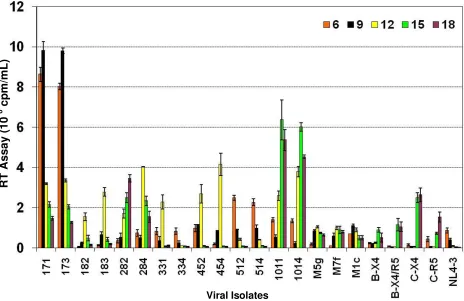
Primary T-lymphocytes from peripheral blood express CD4 and both chemokine receptors, CXCR4 and CCR5. Since PBL express both CCR5 and CXCR4, they are capable of supporting the replication of both R5 and X4 tropic viruses. All the subtype C env chimeras, which did not rep-licate in A3.01, were able to reprep-licate in PBL showing that there was no inherent defect in their replication as a results of the reciprocal insertion of the V3–V5 region from patient samples (Fig. 3). Although we have demonstrated the entry of these chimeric viruses using the MAGI cell experiments, the replication kinetics shown in Figure 3 confirm the capacity of these viruses to enter and replicate well in culture.
The replication kinetics of subtype C chimeras in PBL showed that these chimeras replicated at a higher
[image:6.612.55.556.98.380.2]efficiency as compared to subtype B chimeras (M5g, M7f, and M1c [34]) and subtype B isolates. Close observation showed that chimeras 171 and 173 replicated and peaked much earlier in infection as compared to the other chime-ras. The V3–V5 region of these chimeras came from a patient who demonstrated advanced disease (Table 1) [5]. Although some chimeras (284 and 331) peaked relatively late in infection, they peaked at higher levels than the sub-type B chimeras. All the subsub-type C chimeras also replicated at levels higher than the subtype B primary isolates. The replication data of the subtype C chimeras (Fig. 3) corre-lated well with the rate of entry seen in the MAGI cell line experiments (Table 3). The chimeras that scored higher numbers in MAGI cell experiments (Table 3) peaked ear-lier in viral infection experiments (Fig. 3). Comparative rates of entry of chimeras correspond with the peak of viral replication, where 171 and 173 with highest level of entry in MAGI cells showed very early and high peaks and 284 and 331 chimeras with much lower level of entry showed lower and/or more delayed peaks. It is interesting to note that chimeras 171, 173, 512 and 514, which retained the first proximal glycosylation site of the V3 region (Fig 1), peaked very early (Day 6–9) during replication (Fig 3). Comparison of the primary isolates of subtype B and sub-type C also showed that the subsub-type C primary isolates replicated better than the subtype B primary isolates. These data suggest that the envelope V3 to V5 regions of Table 3: Coreceptor usage by HIV-1 subtype C chimeras in U373-MAGI-CCR5 and U373-MAGI-CXCR4 cell lines.
MAGI-CCR5 MAGI-CXCR4
Infection counts → 5000 10000 5000 10000 Phenotype from
MT-2
CHIMERA_ No. of blue cells No. of blue cells
171 21 99 - - NSI
173 23 92 - - NSI
182 9 18 - - NSI
183 7 12 - - NSI
221A 0 2 - - NSI
282 9 30 - - NSI
284 2 6 - - NSI
331 13 31 - - NSI
334 1 2 - - NSI
452 23 65 - - NSI
512 1 3 - - NSI
514 1 4 - - NSI
639 1 2 - - NSI
1011 11 26 - - NSI
1014 16 33 - - NSI
2099 (B-R5) 8 19 - - NSI
2101 (B-X4/R5) 5 10 10 21 SI
3041 (C-R5) 7 34 - - NSI
5441 (C-X4) - - 23 38 SI
the subtype C influenced the rate of replication of HIV-1 in primary T-lymphocytes and determined the cellular tropism. Furthermore, there was a direct relationship between higher viral replication (Fig. 3) and advanced dis-ease status of the patients (Table 1).
Replication of subtype C chimeras in primary monocyte-derived macrophages
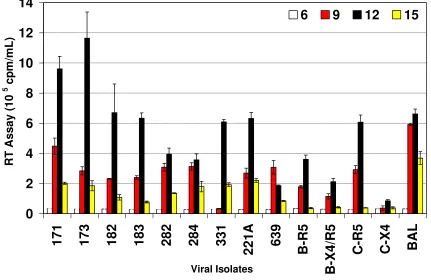
While primary monocyte derived macrophages (MDM) express CD4 and CCR5 and a low level of CXCR4, they support productive infection of R5 but not X4 viruses. As the subtype C chimeras showed a R5 phenotype (Table 3), replication kinetics of these chimeras were evaluated in MDM. Figure 4 shows the replication kinetics of subtype C chimeras in comparison with primary subtype B and C controls. The data clearly demonstrated that subtype C chi-meras replicated better than subtype B viruses. The rate of replication of the subtype C chimeras in MDM also corre-lated with the rate of entry of the chimeras in MAGI-CCR5
cell line, further supporting the hypothesis that the increase in the replication of these chimeras is due to increase in the rate of entry. Both subtype B (2099) and subtype C (3041) primary R5 isolates replicated in MDM and subtype B dual tropic (X4/R5) virus (2101) also showed adequate replication in MDM. In addition, com-parison of subtype B and subtype C primary isolates also showed that the subtype C primary isolates replicated better than subtype B primary isolates. These data suggest that the V3 to V5 regions of subtype C influenced increased replication of HIV-1 in MDM.
Discussion
We have provided evidence regarding the role of the HIV-1 envelope V3–V5 regions from subtype C infected patients from India in virus entry, coreceptor utilization and replication efficiency in primary T-lymphocytes and macrophages in comparison with those of subtype B viruses. Our data suggest that the reciprocal insertion of
[image:7.612.76.540.92.393.2]Replication of HIV-1 subtype C env V3–V5 region chimeras in primary peripheral blood T-lymphocytes (PBL)
Figure 3
Replication of HIV-1 subtype C env V3–V5 region chimeras in primary peripheral blood T-lymphocytes (PBL). PBL (1 × 10⁶
cells/well) were stimulated with PHA and infected with equal amounts (reverse transcriptase counts) of subtype C env V3–V5 region chimeras, subtype B env V3 region chimeras, primary subtype B isolates, primary subtype C isolates and parental HIV-1NL4-3. Cells were fed every 3 days with appropriate medium and virus production was measured in the culture supernatant by
RT assay. The data are presented as cpm/ml ± SD on triplicate experiments and are based on PBL from five different donors.
Viral Isolates
RT Assay (
10
6
cp
HIV-1 subtype C infected patients' envelope V3 to V5 regions [5] into subtype B molecular clone, contributed to utilization of CCR5 coreceptor (Table 3) as well as higher levels of HIV-1 entry and replication efficiencies in pri-mary T-lymphocytes (Fig. 3) and MDM (Fig. 4). The higher viral replication efficiencies of R5 phenotype of the chimeras correlated with advanced disease status of the patients (Table 1). Taken together, the increased replica-tion capabilities of HIV-1 subtype C in T-lymphocytes and MDM may contribute to a high viral load, rapid disease progression, and spread in infected individuals [35,36].
We have demonstrated that subtype C envelope V3–V5 region chimeras showed increased levels of virus entry that correlated with an increased rate of replication in pri-mary T-lymphocytes and MDM compared with subtype B chimeras and subtype B primary isolates. Careful observa-tion indicates that chimeras with higher rate of entry peaked earlier during infection in primary cells. Unlike the lymphotropic (X4) parental clone HIV-1NL4-3, the
subtype C env V3–V5 region chimeras were unable to rep-licate in T lymphocyte cell lines A3.01 (Fig. 2) and MT-2 (Table 3), suggesting that the chimeras had lost the T-cell line tropism of the parent clone NL4-3 because of recipro-cal insertion of the V3–V5 region from subtype C patient samples. In addition, all of the subtype C env chimeras failed to produce any syncytia in MT-2 cells (Table 3), denoting NSI phenotypes, similar to the R5 but not NL4-3 isolates. Infection of UNL4-37NL4-3-Magi-X4 and UNL4-37NL4-3-Magi-R5 cell lines indicate that all our chimeric viruses and the control R5-tropic isolate HIV-1BaL, utilized the CCR5 core-ceptor, whereas the parental HIV-1NL4-3 utilized the CXCR4 coreceptor (Table 3). These results are consistent with earlier reports that showed reciprocal insertion of the V3 region of an R5 isolate into an X4 molecular clone altered the tropism of an X4 isolate to an R5 phenotype [10,19,23,28-30].
Our in-silico analysis of the V3 sequences of the subtype C isolates from India predicted R5 tropism (Table 2). This
[image:8.612.74.505.362.642.2]Replication of HIV-1 subtype C env V3–V5 region chimeras in primary blood monocyte-derived macrophages (MDM)
Figure 4
Replication of HIV-1 subtype C env V3–V5 region chimeras in primary blood monocyte-derived macrophages (MDM). MDM (0.5 × 10⁶ cells/well) were infected with equal amounts (RT counts) of subtype C env V3–V5 region chimeras, primary subtype
B isolates, primary subtype C isolates and HIV-1BaL. Cells were fed every 3 days with appropriate medium and the virus pro-duction was measured in the culture supernatant by RT assay. The data are presented as cpm/ml ± SD on triplicate experi-ments and are based on MDM from five different donors.
0
2
4
6
8
10
12
14
171
173
182
183
282
284
331
221A
639
B-R5
B-X4
/R5
C-R5
C-X4
BAL
6
9
12
15
Viral Isolates
RT Assay (
10
5
cp
also explains why these viruses replicated in primary blood Tlymphocytes (Fig. 3) but failed to replicate in the T4 lymphocyte cell lines, A3.01 (Fig. 2) and MT-2 because primary T-lymphocytes express CCR5, whereas and A3.01 and MT-2 do not. This data further supports the predom-inance of R5 phenotype in subtype C infected patients [37,38] and its maintenance during symptomatic AIDS. Several of the patients that exhibited advanced stages of HIV disease (Table 1) also harbored R5 phenotype (Table 2, 3), rarely seen in subtype B infected adult patients. In addition, the chimeras from the patients with advanced disease status (III, IV) replicated more efficiently than the less advanced disease patients (I, II) [Table 1, Figs. 3 and 4]. Furthermore, it has also been found that the percent-age of CD4 T cells expressing CCR5 in Indian adults is higher than among Caucasian races [39]. It is, therefore, likely that due to the presence of this larger pool of CCR5 positive CD4 cells, the virus may not need a coreceptor switch during disease progression.
Our data showed that subtype C V3–V5 region chime-ras replicated better in primary blood T-lymphocytes (Fig. 3) and MDM (Fig. 4) compared with subtype B chimeras, HIV-1NL4-3 and subtype B primary isolates. In general, there was a correlation between higher virus entry, earlier replication peaks, and increased replica-tion efficiencies in primary T-lymphocytes and MDM. Examination of sequence data published earlier on these patients [5] and presented in Fig. 1 and Table show several features of subtype C chimeras, including number of positive charges, amino acid sequence vari-ation and number of glycosylvari-ation sites. One striking feature was that the chimeras from patient AP.17 (chi-meras # 171, 173) and AP.5 (chi(chi-meras # 512, 514) retained the N-linked glycosylation site that includes the first cysteine residue of V3 loop [10], whereas other chimeras had mutations in this site, contributing to the differences in replication efficiencies of these chimeras (Fig. 3). Our subtype V3–V5 region chimeras were in close resemblance with subtype C (HIV-1C) with V3 sequences similar to HIV-1BAL (R5), as shown in Fig. 1. The motif SIHIGPGRALYTTGEIIGDI that is important for R5 tropism as seen for HIV-1BAL in Fig. 1 was fairly conserved in our subtype C chimeras contributing to R5 tropism. Similarly subtype C chimeras V4–V5 region sequences show similarity to subtype C sequence but variability to subtype B (X4 and R5) sequences. The difference in amino acid sequences in V3 to V5 regions in subtype C chimeras as compared to subtype B sequences may be responsible for increased replication efficiencies of subtype C chimeras. Further studies on site directed mutagenesis of the V3–V5 regions and binding affinity of gp120 to CCR5 and/or gp120 incorporation into chimeric virions might pinpoint the major difference in replication efficiencies.
While a co-infection in vitro study with more fit subtype B and less fit subtype C viruses indicates more fitness of sub-type B over subsub-type C viruses [40], several in-vivo infection studies on rhesus macaques have shown that HIV-1 subtype C env chimeric viruses demonstrate greatly enhanced infec-tivity [41-43] and replication efficiency as compared to sub-type B and E viruses [44,45]. Our data on higher levels of HIV-1 entry and increased replication efficiencies of subtype C chimeras compared with subtype B viruses is consistent with the latter in vivo studies [41-43]. Increased replication efficiency of subtype C viruses has also been attributed to the presence of an extra NF-κB site in the LTR of subtype C viruses [46,47]. However, these viruses have shown not only to replicate efficiently but to also be transmitted and spread more efficiently than other HIV-1 subtypes [1,9]. During horizontal and vertical transmission subtype C viruses have been shown to spread more rapidly than other subtypes due to increased mucosal and vaginal shedding [36,48,49]. This increased transmission cannot solely be explained due to increased LTR activity as increased shed-ding of virus and increased transmission may be attributed to the envelope gene and others regions and functions of the virus.
While various HIV-1 subtypes prevalent in different regions of the world show variability in their replication kinetics and disease progression in infected individuals [32], HIV-1 subtype C is rapidly spreading and has already become the predominant subtype worldwide. The data presented in this paper indicate that HIV-1 envelope V3–V5 region of subtype C contributes to increased rates of replication as compared to subtype B. This would also explain higher viral loads and faster disease progression in patients infected with HIV-1 subtype C [35] as well as increased shedding of virus seen in subtype C infected population [36,48]. Our data shows the HIV-1 subtype C envelope V3– V5 region may be one of the determinants of increased virus entry and replication. These results provide another candidate gene to be responsible for the rapid spread of HIV-1 subtype C and its ability to dominate in populations that initially had higher incidence of other subtypes.
Methods
Construction of HIV-1 Chimeras
Sixteen previously characterized envelope V3–V5 region sequences (Fig. 1) from nine subtype C Indian isolates (Table 1) [5] were reciprocally substituted into pNL4-3 in
BglII-BglII sites flanking the region. The 650 bp fragment encompassing the V3–V5 region corresponds to amino acids 240–439 of gp120 of the HIV-INL4-3 sequence with the V3-loop positioned between amino acids 267 and 300. PCR primers were designed to amplify the V3–V5 region and to replace a similar region in pNL4-3 by engineering a
polymerase. The ~600 bp PCR product was digested with
BglII and cloned into pGEM (NL4-3) using the BglII sites [50]. The BglII-BglII fragment was reciprocally exchanged into the pGEM plasmid containing the EcoRI-BamHI fragment as there were no EcoRI or BamHI sites in this a region in any Indian isolate except AP.5 which contained an EcoRI site in the sequence. The recombinant clones were checked by digestion with BglII and the orientation was confirmed by DNA sequencing using primer (5'TCAACTGCTGTTAAATGGC3'). Finally, the modified
EcoRI-BamHI fragment containing the sporadic subtype C Indian isolate V3 to V5 region was reciprocally substituted into pNL4-3. Two clones were obtained from each patient sample and these are numbered with numerals of patient identification number followed by clone number. All the clones were again checked by digestion with EcoRI/SalI and BamHI and confirmed by sequencing.
Cell lines and primary cells
HeLa cells, U373-MAGI-CXCR4 and U373-MAGI-CCR5 cell lines were cultured in DMEM with 10% fetal bovine serum (FBS) and penicillin-streptomycin (Invitrogen). The MAGI cell media was also supplemented with 0.2 mg/ ml of G418, 0.1 mg/ml of hygromycin B and 1 μg/ml of puromycin. T-lymphocyte cell lines, A3.01 and MT-2 were cultured in RPMI 1640 supplemented with 10% FBS and penicillin-streptomycin. Peripheral blood mononuclear cells (PBMC) were obtained by single step density gradi-ent cgradi-entrifugation with Ficoll-Hypaque (Amersham) from whole blood of normal donors. The blood collections were made after informed consent, and were approved by the Human Subject Ethical committees of International Center for Genetic Engineering and Biotechnology (ICGEB) and the Human Subjects Committee of the Uni-versity of Arizona (Tucson, AZ) and were based on Indian Council of Medical Research (ICMR) and National Insti-tutes of Health (NIH) guidelines, respectively. PBMC were collected, washed twice with cold PBS and centrifuged at 1000 rpm for 10 min to avoid collecting platelets. Primary monocyte/macrophages and peripheral blood lym-phocytes (PBL) were separated from PBMC using mag-netic bead isolation protocols. Monocytes were isolated by CD14 magnetic bead isolation (Miltenyi biotech) according to the manufacturer's protocols. The cells bound to the CD14 bead were used as primary mono-cytes. The primary monocytes eluted from the CD14 iso-lation columns were counted and plated in 48 well plates at 1 × 10⁶ cells/well in RPMI 1640 with 15% human AB
serum (Gemini biotech) and MCSF (Sigma) for 7 days and were allowed to differentiate into macrophages in this media. The cells were fed every two days during differen-tiation. The cells collected as unbound flow through from the CD14 bead isolation protocol were used as PBL. PBL were cultured in RPMI 1640 with 10% FBS and penicillin-streptomycin. PBL were stimulated with 5 μg/ml of PHA
for 24–48 h. The stimulated cells were washed with PBS and resuspended in RPMI 1640 with 10% FBS and 20 U/ ml of recombinant human IL-2 (Invitrogen).
DNA Transfections
Subtype C chimeric proviral DNAs were transfected in HeLa cells by electroporation as described before [34] or by Lipofectamine 2000 (Invitrogen) [51]. For the Lipo-fectamine method, HeLa cells were grown in DMEM with 10% FBS and penicillin-streptomycin to about 80% con-fluency. The cells were then split and counted and plated in a 6-well plate at 105 cells/well in DMEM with 10% FBS
without antibiotics. The cells were transfected the next day with 3 μg DNA in DNA-lipofectamine complexes as per manufacturer's procedure. Chimeric viruses were har-vested by collecting culture supernatant from the wells 72 hrs post-transfections. Virus production was measured by a reverse transcriptase (RT) assay [34,51].
Infections
A3.01 cells (2 × 10⁶), MT-2 (2 × 10⁶), PBL (1 × 10⁶) and
MDM (0.5 × 10⁶) per well were cultured and infected with
equal amounts of subtype C env region chimeras, subtype B V3 region chimeras (M5g, M7f, M1c) [34,50], subtype B and C primary isolates, and virus production was meas-ured every 3 days. We used two subtype C (3041-R5 and 5441-X4) and two subtype B (2099-R5 and 2101-X4/R5) primary isolates that were obtained from AIDS Research and Reference Reagent Program as controls. Briefly, viruses were adsorbed in A3.01 cells, MT-2 and PBL for 90 min in serum free media at 37°C and 5% CO2. After
incu-bation, 500 μl of appropriate media containing serum and antibiotics were added. MDM were infected in media containing serum and polybrene (8 μg/ml) incubated at 37°C and 5% CO2 for 16 hrs. After incubation, the mac-rophages were washed in PBS to remove polybrene and resuspended in macrophage culture media.
Coreceptor utilization
U373-MAGI-CXCR4 and U373-MAGI-CCR5 cell lines were plated at ~6 × 10⁴ cells/well in 24 well plate in
PBS with Sodium Azide. Cells stained blue were counted immediately and counts were estimated as number of blue cells per well of infected cells.
Cytopathic effects (MT-2 assay)
The syncytium-inducing ability of the subtype C envelope chimeras was determined and compared to a known syncy-tium-inducing (SI) virus (HIV-1NL4-3) and a non-syncytium-inducing (NSI) viruses (HIV-1BaL and HIV-1Ada-M) by
infect-ing the MT-2 cell line with equal amounts of these viruses. Syncytium formation was monitored every day in the cul-tures up to 30 days post-infection. The viruses that formed more than four syncytia per field of view in the culture were designated as SI viruses (ACTG protocol), whereas viruses that failed to induce this number of syncytia in the culture were termed NSI viruses.
Competing interests
The author(s) declare that they have no competing interests.
Authors' contributions
VS and SRD contributed equally to this work. SRD carried out the PCR, cloning, and sequencing. VS performed all biological experiments, including T-cells lines and pri-mary cells infection experiments. RR contributed in trans-fections and infection experiments. SS and SG contributed to the collection of patients' samples and clinical data. VS, SRD, RR, NA and SJ participated in the experimental design, data interpretation and writing of the manuscript. All the authors read and approved the final manuscript.
Acknowledgements
This work was supported by an international collaborative grant to NA and SJ by Fogarty International Center, National Institutes of Health (TW 01345) and grants to NA by National Institute of Allergy and Infectious Diseases (AI 40378) and Arizona Biomedical Research Commission (ABRC 7002). Work in the SJ laboratory is also supported by internal funds from ICGEB, which in turn is supported by core funding provided by the Depart-ment of Biotechnology, GovernDepart-ment of India. SRD was supported by a Senior Research Fellowship from Council of Scientific and Industrial Research, India. We thank AIDS Reference and Reagent Program for providing HIV-1 isolates and cell lines and Roshni Mehta and Brian Wellensiek of Ahmad Lab for critically reviewing this manuscript.
References
1. Soares EA, Martinez AM, Souza TM, Santos AF, Da Hora V, Silveira J, Bastos FI, Tanuri A, Soares MA: HIV-1 subtype C dissemination in southern Brazil. Aids 2005, 19(Suppl 4):S81-86.
2. Esparza J, Bhamarapravati N: Accelerating the development and future availability of HIV-1 vaccines: why, when, where, and how? Lancet 2000, 355:2061-2066.
3. Mandal D, Jana S, Bhattacharya SK, Chakrabarti S: HIV type 1 sub-types circulating in eastern and northeastern regions of India. AIDS Res Hum Retroviruses 2002, 18:1219-1227.
4. Shankarappa R, Chatterjee R, Learn GH, Neogi D, Ding M, Roy P, Ghosh A, Kingsley L, Harrison L, Mullins JI, et al.: Human immuno-deficiency virus type 1 env sequences from Calcutta in east-ern India: identification of features that distinguish subtype C sequences in India from other subtype C sequences. J Virol
2001, 75:10479-10487.
analysis of HIV-1 from Punjab, India reveals the presence of multiple variants. Aids 1995, 9:685-690.
6. Ahmad KM, Mujtaba S, Das R, Zafrullah M, Sehgal S, Jameel S: nef sequences of primary HIV type 1 isolates from northern India. AIDS Res Hum Retroviruses 1998, 14:1491-1493.
7. Siddappa NB, Dash PK, Mahadevan A, Jayasuryan N, Hu F, Dice B, Keefe R, Satish KS, Satish B, Sreekanthan K, et al.: Identification of subtype C human immunodeficiency virus type 1 by subtype-specific PCR and its use in the characterization of viruses cir-culating in the southern parts of India. J Clin Microbiol 2004, 42:2742-2751.
8. Siddappa NB, Dash PK, Mahadevan A, Desai A, Jayasuryan N, Ravi V, Satishchandra P, Shankar SK, Ranga U: Identification of unique B/ C recombinant strains of HIV-1 in the southern state of Kar-nataka, India. Aids 2005, 19:1426-1429.
9. McCormack GP, Glynn JR, Crampin AC, Sibande F, Mulawa D, Bliss L, Broadbent P, Abarca K, Ponnighaus JM, Fine PE, et al.: Early evo-lution of the human immunodeficiency virus type 1 subtype C epidemic in rural Malawi. J Virol 2002, 76:12890-12899. 10. Shioda T, Levy JA, Cheng-Mayer C: Macrophage and T cell-line
tropisms of HIV-1 are determined by specific regions of the envelope gp120 gene. Nature 1991, 349:167-169.
11. Feng Y, Broder CC, Kennedy PE, Berger EA: HIV-1 entry cofactor: functional cDNA cloning of a seven-transmembrane, G pro-tein-coupled receptor. Science 1996, 272:872-877.
12. Choe H, Farzan M, Sun Y, Sullivan N, Rollins B, Ponath PD, Wu L, Mackay CR, LaRosa G, Newman W, et al.: The beta-chemokine receptors CCR3 and CCR5 facilitate infection by primary HIV-1 isolates. Cell 1996, 85:1135-1148.
13. Palker TJ, Clark ME, Langlois AJ, Matthews TJ, Weinhold KJ, Randall RR, Bolognesi DP, Haynes BF: Type-specific neutralization of the human immunodeficiency virus with antibodies to env-encoded synthetic peptides. Proc Natl Acad Sci USA 1988, 85:1932-1936.
14. Berger EA, Doms RW, Fenyo EM, Korber BT, Littman DR, Moore JP, Sattentau QJ, Schuitemaker H, Sodroski J, Weiss RA: A new classi-fication for HIV-1. Nature 1998, 391:240.
15. Alkhatib G, Combadiere C, Broder CC, Feng Y, Kennedy PE, Murphy PM, Berger EA: CC CKR5: a RANTES, MIP-1alpha, MIP-1beta receptor as a fusion cofactor for macrophage-tropic HIV-1. Science 1996, 272:1955-1958.
16. Starcich BR, Hahn BH, Shaw GM, McNeely PD, Modrow S, Wolf H, Parks ES, Parks WP, Josephs SF, Gallo RC, et al.: Identification and characterization of conserved and variable regions in the envelope gene of HTLV-III/LAV, the retrovirus of AIDS. Cell
1986, 45:637-648.
17. Ivanoff LA, Dubay JW, Morris JF, Roberts SJ, Gutshall L, Sternberg EJ, Hunter E, Matthews TJ, Petteway SR Jr: V3 loop region of the HIV-1 gpHIV-120 envelope protein is essential for virus infectivity. Virology 1992, 187:423-432.
18. Ivanoff LA, Looney DJ, McDanal C, Morris JF, Wong-Staal F, Langlois AJ, Petteway SR Jr, Matthews TJ: Alteration of HIV-1 infectivity and neutralization by a single amino acid replacement in the V3 loop domain. AIDS Res Hum Retroviruses 1991, 7:595-603. 19. Morris JF, Sternberg EJ, Gutshall L, Petteway SR Jr, Ivanoff LA: Effect
of a single amino acid substitution in the V3 domain of the human immunodeficiency virus type 1: generation of rever-tant viruses to overcome defects in infectivity in specific cell types. J Virol 1994, 68:8380-8385.
20. Rusche JR, Javaherian K, McDanal C, Petro J, Lynn DL, Grimaila R, Langlois A, Gallo RC, Arthur LO, Fischinger PJ, et al.: Antibodies that inhibit fusion of human immunodeficiency virus-infected cells bind a 24-amino acid sequence of the viral envelope, gp120. Proc Natl Acad Sci USA 1988, 85:3198-3202. 21. Javaherian K, Langlois AJ, McDanal C, Ross KL, Eckler LI, Jellis CL,
Profy AT, Rusche JR, Bolognesi DP, Putney SD, et al.: Principal neu-tralizing domain of the human immunodeficiency virus type 1 envelope protein. Proc Natl Acad Sci USA 1989, 86:6768-6772. 22. Lasky LA, Groopman JE, Fennie CW, Benz PM, Capon DJ, Dowbenko
DJ, Nakamura GR, Nunes WM, Renz ME, Berman PW: Neutraliza-tion of the AIDS retrovirus by antibodies to a recombinant envelope glycoprotein. Science 1986, 233:209-212.
24. Sullivan N, Thali M, Furman C, Ho DD, Sodroski J: Effect of amino acid changes in the V1/V2 region of the human immunodefi-ciency virus type 1 gp120 glycoprotein on subunit associa-tion, syncytium formaassocia-tion, and recognition by a neutralizing antibody. J Virol 1993, 67:3674-3679.
25. Toohey K, Wehrly K, Nishio J, Perryman S, Chesebro B: Human immunodeficiency virus envelope V1 and V2 regions influ-ence replication efficiency in macrophages by affecting virus spread. Virology 1995, 213:70-79.
26. Lee CN, Robinson J, Mazzara G, Cheng YL, Essex M, Lee TH: Con-tribution of hypervariable domains to the conformation of a broadly neutralizing glycoprotein 120 epitope. AIDS Res Hum Retroviruses 1995, 11:777-781.
27. Li B, Decker JM, Johnson RW, Bibollet-Ruche F, Wei X, Mulenga J, Allen S, Hunter E, Hahn BH, Shaw GM, et al.: Evidence for potent autologous neutralizing antibody titers and compact enve-lopes in early infection with subtype C human immunodefi-ciency virus type 1. J Virol 2006, 80:5211-5218.
28. Hwang SS, Boyle TJ, Lyerly HK, Cullen BR: Identification of the envelope V3 loop as the primary determinant of cell tropism in HIV-1. Science 1991, 253:71-74.
29. Chesebro B, Wehrly K, Nishio J, Perryman S: Mapping of inde-pendent V3 envelope determinants of human immunodefi-ciency virus type 1 macrophage tropism and syncytium formation in lymphocytes. J Virol 1996, 70:9055-9059.
30. Korber BT, MacInnes K, Smith RF, Myers G: Mutational trends in V3 loop protein sequences observed in different genetic lin-eages of human immunodeficiency virus type 1. J Virol 1994, 68:6730-6744.
31. Jensen MA, Li FS, van 't Wout AB, Nickle DC, Shriner D, He HX, McLaughlin S, Shankarappa R, Margolick JB, Mullins JI: Improved coreceptor usage prediction and genotypic monitoring of R5-to-X4 transition by motif analysis of human immunodefi-ciency virus type 1 env V3 loop sequences. J Virol 2003, 77:13376-13388.
32. Peeters M, Sharp PM: Genetic diversity of HIV-1: the moving target. Aids 2000, 14(Suppl 3):S129-140.
33. Zhang H, Orti G, Du Q, He J, Kankasa C, Bhat G, Wood C: Phylo-genetic and phenotypic analysis of HIV type 1 env gp120 in cases of subtype C mother-to-child transmission. AIDS Res Hum Retroviruses 2002, 18:1415-1423.
34. Matala E, Hahn T, Yedavalli VR, Ahmad N: Biological characteriza-tion of HIV type 1 envelope V3 regions from mothers and infants associated with perinatal transmission. AIDS Res Hum Retroviruses 2001, 17:1725-1735.
35. Mehendale SM, Bollinger RC, Kulkarni SS, Stallings RY, Brookmeyer RS, Kulkarni SV, Divekar AD, Gangakhedkar RR, Joshi SN, Risbud AR,
et al.: Rapid disease progression in human immunodeficiency virus type 1-infected seroconverters in India. AIDS Res Hum Retroviruses 2002, 18:1175-1179.
36. Overbaugh J, Kreiss J, Poss M, Lewis P, Mostad S, John G, Nduati R, Mbori-Ngacha D, Martin H Jr, Richardson B, et al.: Studies of human immunodeficiency virus type 1 mucosal viral shed-ding and transmission in Kenya. J Infect Dis 1999, 179(Suppl 3):S401-404.
37. Abebe A, Demissie D, Goudsmit J, Brouwer M, Kuiken CL, Pollakis G, Schuitemaker H, Fontanet AL, Rinke de Wit TF: HIV-1 subtype C syncytium- and non-syncytium-inducing phenotypes and coreceptor usage among Ethiopian patients with AIDS. Aids
1999, 13:1305-1311.
38. Peeters M, Vincent R, Perret JL, Lasky M, Patrel D, Liegeois F, Courg-naud V, Seng R, Matton T, Molinier S, et al.: Evidence for differ-ences in MT2 cell tropism according to genetic subtypes of HIV-1: syncytium-inducing variants seem rare among sub-type C HIV-1 viruses. J Acquir Immune Defic Syndr Hum Retrovirol
1999, 20:115-121.
39. Ramalingam S, Kannangai R, Vijayakumar TS, Subramanian S, Abraham OC, Rupali P, Jesudason MV, Sridharan G: Increased number of CCR5+ CD4 T cells among south Indian adults probably associated with the low frequency of X4 phenotype of HIV-1 in India. Indian J Med Res 2002, 116:90-95.
40. Marozsan AJ, Moore DM, Lobritz MA, Fraundorf E, Abraha A, Reeves JD, Arts EJ: Differences in the fitness of two diverse wild-type human immunodeficiency virus type 1 isolates are related to the efficiency of cell binding and entry. J Virol 2005, 79:7121-7134.
41. Chen Z, Huang Y, Zhao X, Skulsky E, Lin D, Ip J, Gettie A, Ho DD: Enhanced infectivity of an R5-tropic simian/human immuno-deficiency virus carrying human immunoimmuno-deficiency virus type 1 subtype C envelope after serial passages in pig-tailed macaques (Macaca nemestrina). J Virol 2000, 74:6501-6510. 42. Chen Z, Zhao X, Huang Y, Gettie A, Ba L, Blanchard J, Ho DD: CD4+
lymphocytopenia in acute infection of Asian macaques by a vaginally transmissible subtype-C, CCR5-tropic Simian/ Human Immunodeficiency Virus (SHIV). J Acquir Immune Defic Syndr 2002, 30:133-145.
43. Ndung'u T, Lu Y, Renjifo B, Touzjian N, Kushner N, Pena-Cruz V, Novitsky VA, Lee TH, Essex M: Infectious simian/human immu-nodeficiency virus with human immuimmu-nodeficiency virus type 1 subtype C from an African isolate: rhesus macaque model. J Virol 2001, 75:11417-11425.
44. Bogers WM, Dubbes R, ten Haaft P, Niphuis H, Cheng-Mayer C, Stahl-Hennig C, Hunsmann G, Kuwata T, Hayami M, Jones S, et al.: Comparison of in vitro and in vivo infectivity of different clade B HIV-1 envelope chimeric simian/human immunode-ficiency viruses in Macaca mulatta. Virology 1997, 236:110-117. 45. Himathongkham S, Halpin NS, Li J, Stout MW, Miller CJ, Luciw PA: Simian-human immunodeficiency virus containing a human immunodeficiency virus type 1 subtype-E envelope gene: persistent infection, CD4(+) T-cell depletion, and mucosal membrane transmission in macaques. J Virol 2000, 74:7851-7860.
46. Novitsky V, Smith UR, Gilbert P, McLane MF, Chigwedere P, William-son C, Ndung'u T, Klein I, Chang SY, Peter T, et al.: Human immu-nodeficiency virus type 1 subtype C molecular phylogeny: consensus sequence for an AIDS vaccine design? J Virol 2002, 76:5435-5451.
47. Munkanta M, Handema R, Kasai H, Gondwe C, Deng X, Yamashita A, Asagi T, Yamamoto N, Ito M, Kasolo F, et al.: Predominance of three NF-kappaB binding sites in the long terminal repeat region of HIV Type 1 subtype C isolates from Zambia. AIDS Res Hum Retroviruses 2005, 21:901-906.
48. John-Stewart GC, Nduati RW, Rousseau CM, Mbori-Ngacha DA, Richardson BA, Rainwater S, Panteleeff DD, Overbaugh J: Subtype C Is associated with increased vaginal shedding of HIV-1. J Infect Dis 2005, 192:492-496.
49. Renjufi B, Gilbert P, Chaplin B, Msamanga G, Mwakagile D, Fawzi W, Essex M: Preferential in-utero transmission of HIV-1 subtype C as compared to HIV-1 subtype A or D. Aids 2004, 18:1629-1636.
50. Ahmad N, Baroudy BM, Baker RC, Chappey C: Genetic analysis of human immunodeficiency virus type 1 envelope V3 region isolates from mothers and infants after perinatal transmis-sion. J Virol 1995, 69:1001-1012.
51. Sundaravaradan V, Saxena SK, Ramakrishnan R, Yedavalli VRK, Harris DT, Ahmad N: Differential HIV-1 replication in neonatal and adult blood mononuclear cells is influenced at the level of HIV-1 gene expression. Proc Natl Acad Sci USA 2006 in press.
Publish with BioMed Central and every scientist can read your work free of charge
"BioMed Central will be the most significant development for disseminating the results of biomedical researc h in our lifetime."
Sir Paul Nurse, Cancer Research UK
Your research papers will be:
available free of charge to the entire biomedical community
peer reviewed and published immediately upon acceptance
cited in PubMed and archived on PubMed Central
yours — you keep the copyright
Submit your manuscript here:
http://www.biomedcentral.com/info/publishing_adv.asp