Some Herbage Responses to Fire
on Pine- Wiregrass Range1
CLIFFORD E. LEWIS AND RICHARD H. HART2 Associate Range Scientist, Southeastern Forest Experiment
Station, Forest Service; and Research Agronomist, Agricultural Research Sewice, U. S. Department
of Agriculture, Tifton, Georgia.
Highlight
Protecting two sites on pine-wiregrass range from fsire caused a rapid reduction in herbage yields. Reintroducing fire on these sites resulted in significantly increased yields, but removal of old growth by hand clipping instead of burning caused a decrease in yield on the site with Olustee sand and an increase in yield on the site with Plummer sand. Although gallberry cover did not recover as rapidly after burning on the Olustee site as on the Plummer site, covariance analysis indicated that these differences in re- covery did not fully account for the disparity in yield between burned and clipped plots on the two sites.
The use of fire in land management has vacil- lated over the years between full acceptability and unacceptability. Indiscriminate or destructive use of fire has at times given it a bad name, although in other situations it is proclaimed as a valuable tool. No doubt these conflicting views arise be- cause of the way fire has been used and the differ- ing responses to burning of various plant commu- nities or plant species. A primary need, it seems, is
to examine plant responses to fire in differing plant communities.
For many years, prescribed burning has been suggested as a major factor in promoting and maintaining high forage yields in the South (Wahl- enberg et al., 1939; Halls et al., 1952; Duvall, 1962). And without it, many wiregrass species have been reported to become decadent with a reduction in ground cover (Halls et al., 1952 and 1956; Lemon, 1949; Hilmon and Hughes, 1965). Fire supposedly benefits plant growth by increasing organic mat- ter, mineral elements, and nitrogen in the soil (Metz et al., 1961; Ah&en and Ah&en, 1960; Heyward and Barnette, 1934). However, Grelen and Epps (1967) concluded that litter removal on pine-bluestem range, either by mowing and raking or by burning, was the major cause of increased
l Cooperative investigations conducted by the Southeastern Forest Experiment Station, Forest Service; Crops Research Division, Agricultural Research Service, U. S. Department of Agriculture; and the Georgia Coastal Plain Experiment Station. University of Georgia, College of Agriculture, Coastal Plain Experiment Station Journal Series Paper No. 8.57. Received July 21, 1971.
2Present address is Plant Industry Station, Beltsville, Mary- land.
. . .
yields and improved quality of forage, primarily pinehill bluestem (Andropogon divergens (Hack.) Andress. ex Hitcht.) and slender bluestem (A. tener ‘(Nees) Kunth.).
’ Fire has also proved valuable in slowing down gallberry (Ilex glabra (L.) A. Gray) growth (Hughes and Knox, 1964), killing understory hardwoods ‘(Lotti et al., 1960), and, in combination with herbi- cides, in killing saw-palmetto (Serenoa repens (Bartr.) Small) and gallberry (Burton and Hughes, 1961; Altobellis and Hough, 1968). These treat- ments increased forage yields, presumably by re- ducing canopy cover, which affects penetration of sunlight, and reducing plant competition for soil moisture and nutrients. Canopy cover, as a mea- sure of competition, has been shown to influence forage yields (Halls et al., 1956; Halls and Schuster, 1965; Hart et al., 1970). Shading alone has been found to reduce growth of many southern plants (Burton and Knox, 1959; Hart et al., 1970; Harsh- barger and Perkins, 1971). Without burning, gall- berry, a major noxious shrub in the pine-wiregrass type, becomes large and robust, thereby shading much of the ground. Therefore, burning to pro- vide temporary reduction in shading by gallberry and other shrubs could be expected to increase yields of herbaceous plants.
To further determine the effects of fire, an investigation was conducted on two south Georgia sites with differing soils and vegetation. Data was collected to measure (1) the trend in forage yields with fire exclusion for a number of years, (2) the effect on yields of reintroducing fire as compared to litter removal by hand clipping, and (3) the relationship between gallberry cover and herbage yield.
Study Area and Design
The investigation was conducted at two sites with pine- wiregrass vegetation on the Alapaha Experimental Range, Berrien County, Georgia, in the Lower Coastal Plain. The site with Olustee fine sand differed from that with Plummer sand by being wetter and devoid of pineland threeawn (Aristida stricta Michx.). Common forage plants occurring on both sites were Curtiss dropseed (Sporobolus curtissii (Vasey) Small ex Scribn.), bluestem grasses (Andropogon spp.), panicum grasses (Panicum spp.), toothachegrass (Ctenium aromaticum (Walt.) Wood), and several forbs and grasslikes. The elevation is about 290 feet, and rainfall averages about 46 inches per year, of which 32 inches fall during the growing season of March through September.
Both sites had previously been used for testing fire and herbicides to control gallberry. The last such treatment on the Olustee site was in 1956, and the last treatment on the Plummer site was in 1959. These treatments resulted in a wide range of brush densities on the various plots at each site, but the stands of gallberry were similar on both sites. Herbage that had been clipped periodically to determine yields had been returned to each plot in order to simulate buildup of litter.
210 LEWIS AND HART
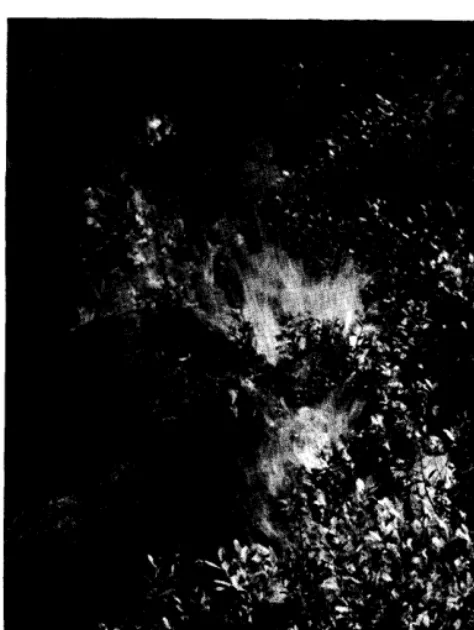
FIG. 1. Burning pine-wiregrass range on the site with Plummer
sand in 1965. All herbage was consumed and stems of gall- berry were burned to the ground.
Half of the study plots on each site were burned and half were left unburned but hand clipped to remove all herbaceous material. On the Olustee site, a completely randomized design of 38 burned and 38 unburned plots was used. On the Plummer site, a randomized complete block design with three replications was used. Half of each block was burned and the other half left unburned, and each contained 18 sample plots. These designs were re- quired because of the earlier fire-herbicide studies.
Fire was applied to assigned plots in February 1964 on the Olustee site and in January 1965 on the Plummer site
Table 1. Rainfall (inches) during the growing season (March through September) and annual herbage yields (lb./acre) during selected years while the two sites were protected from fire.1
Year
Olustee site Plummer site Years of Years of
Rainfall protection Yield protection Yield
1958 30.9 2
1960 29.3 4
1961 29.5 -
1962 21.2 6
1440a --
860” 1
- 2
84Ob 3
-
1760a 1640”
1360~
IYields within a column marked with different superscripts are significantly different (P < .Ol).
(Fig. 1). On the unburned plots, the litter (old dead growth and live topgrowth) of herbaceous plants was clipped 1 inch above ground and removed from the plot in order to facilitate easy recognition of the current year’s growth of herbage and to ensure that all plots were similar in relation to accumulated litter. Gallberry was left undisturbed on the clipped plots.
Measurements of vegetation were made in October after treatment. Herbage yield was sampled on permanent 9.6-f@ subplots established in the previous studies. The current growth of five species of categories was clipped about 1 inch above ground on each subplot. All samples were oven dried at 70 C to determine dry-matter yields. Before treatment and when yields were determined, average height of gall- berry was determined, stems per 9.6-f@ subplot were counted, and percentage of ground cover was estimated on each plot.
Results and Discussion
Fire Protection
Before fire was applied, increased gallberry cover and litter accumulation both contributed to re- duced herbage yields (Table 1). The reduction in yield between the second and fourth years on the Olustee site averaged 295 pounds per year, which was about the same that occurred between the second and third years on the Plummer site. There- fore, these data indicate that trends in yearly re- duction in yield were similar on both sites but that
the Plummer site was inherently more productive than the Olustee site.
Rainfall during the growing seasons when yields were measured was slightly less than average. How- ever, even though the rainfall in 1962 was con- siderably less, it did not have a drastic effect on yields.
Reintroduction of Fire
After reintroduction of burning, yields of total herbage increased significantly (P < .Ol) on both sites (Table 2) over those last measured under fire protection (Table 1). But litter removal by clip- ping produced a similar significant increase (P < .Ol) on the Plummer site, while on the Olustee site yields declined significantly (P < .05) after clipping. This lack of consistency on the two sites is puzzling and suggests that factors other than litter removal by clipping or burning influence yields. Rainfall during the growing season measured 42 inches in 1964 and 37 inches in 1965. That both accumulations were greater than the long-term average or the accumulation in 1962 could explain some of the increases in yields. However, the con- tinued decline after clipping on the Olustee site indicates that rainfall was not the major factor influencing yields.
HERBAGE RESPONSES TO FIRE 211
Table 2. Herbage yields (lb./acre) measured the following October after reintroducing fire and clipping in February 1964 on the Olustee site and in January 1965 on the Plummer site.
Species
Yield on Olustee site Yield on Plummer site
Burned Clipped Difference1 Burned Clipped Difference1
Pineland threeawn c2> c2> c2> 450 380 70n5
Curt& dropseed 460 360 1 eons 610 600 lOn*
Bluestem grasses 300 180 120’” 260 330 -7on5
0 ther grasses 80 80 On5 300 300 Ons
0 ther herbage 180 80 100x 300 220 80ns
Total 1020 700 320”” 1920 1830 90””
Ins = Not significant at P> JO. * = Significant at P< .07. ** = Significant at P < .Ol.
2Species too sparse to sample separately.
ping than after burning, but this response occurred only on the Plummer site.
Measurements of gallberry before treatment in- dicated that no significant differences in cover or number of stems existed between the plots selected for burning and those selected for clipping. Stands of gallberry were similar and of wide range on both sites, although the gallberry on the Olustee site was older and taller and had slightly greater ground cover and fewer stems. On both sites, the burned and clipped plots exhibited the same range of con- ditions in approximately equal proportions. When (1) gallberry cover before treatment, (2) gallberry cover after treatment, and (3) number of stems before treatment were used as covariates, adjusting yields by covariance analyses had little effect on yields; therefore, only the unadjusted means were presented in Table 2. These analyses indicated that the differences in yield between the burned and clipped plots were true effects and could not be attributed solely to differences in gallberry cover or number of stems.
Gallberry is a shrub which resprouts from under- ground rootstock. On both sites, all gallberry stems on the burned plots were killed to ground level,
Table 3. Height (inches), number of stems per 9.6.ft2 plot, and ground cover (%) of gallberry the following October after burning in February 1964 on the Olustee site and in January 1965 on the Plummer site.
Site Treatment Height’ Stems1 Cover1
Olustee Burned 15a 24a 18a
Unburned2 28” 1Ob 26”
Plummer Burned 18” 35a 22a
Unburned2 3Ob 24a 23a
1 Within a site, means marked with different superscripts in the same column are significantly different (P < .05).
2Herbage was hand clipped from these plots at the time of burning, but the gallberry was undisturbed.
but within 9 months they were about one-half as tall as the unburned stems (Table 3). On the Olustee site, number of stems was significantly greater and ground cover was significantly less on the burned than on the unburned plots. These changes in height, numbers, and cover followed the pattern observed by Hughes and Knox (1964). However, on the Plummer site, there were no sig- nificant differences in number of stems or ground cover; the gallberry had fully recovered the first year after burning.
Fire has only a temporary effect in controlling gallberry and the differing responses of gallberry on the two sites may offer a partial explanation for the differing yield responses on the two sites. Because gallberry cover is directly related to yields, as will be shown later, the more rapid recovery from burning may have prevented significant dif- ferences in yield from developing between the burned and clipped plots on the Plummer site.
Shrub-Herbage Relationships
Because the vegetation on the Plummer site was more typical of the upland areas of the pine-wire- grass type, the effects on herbage yield of gallberry cover and number of stems were analyzed by cor- relation-regression methods (Table 4). As gallberry cover increased, herbage yields decreased; the cor- relation coefficient from unburned plots was slightly better than that from burned plots. The regression equations for burned and unburned plots were similar but indicated the slightly greater yield obtained from burned plots.
Herbage yields were also significantly correlated with the number of gallberry stems on unburned plots but were not significantly correlated on burned plots. On both, yields decreased as the number of stems increased.
CONTROLLING
TALL
LARKSPUR
213
HILMON, J. B., AND R. H. HUGHES. 1965. Forest Service research on the use of fire in livestock management in the South. Fourth Annu. Tall Timbers Fire Ecol. Conf. Proc. 1965:260X75.
HUGHES, R. H., AND F. E. KNOX. 1964. Response of gall- berry to seasonal burning. Southeast. Forest Exp. Sta.,
IT. S. Forest Serv. Res. Note SE-21. 3 p.
LEMON, P. C. 1949. Successional responses of herbs in the longleaf-slash pine forest after fire. Ecology 30: 135-145.
Prescribed burning for understory control. U. S. Forest Serv. Southeast. Forest Exp. Sta. Pap. 116. 19 p.
METZ, L. J., T. LOTII, AND R. A. KLAWITTER. 1961. Some
effects of prescribed burning on Coastal Plain forest soil. U. S. Forest Serv., Southeast. Forest Exp. Sta. Pap. 133.
10 p.
WAHLENRERG, W. G., S. W. GREENE, AND H. R. REED. 1939.
Effects of fire and cattle grazing on longleaf pine lands as studied at McNeill, Mississippi. U. S. Dep. Agr. Tech. LOTTI, T., R. A.* KLAWI’ITER, AND W. P. LE&ANDE. 1960. Bull. 683. 52 p.
9 *
Controlling Tall Larkspur on Snowdrift Areas
in the Subalpine Zone1
E. H. CRONIN ,4ND D. B. NIELSEN
Plant Physiologist, Plant Science Division, Agricultural Research Service, U. S. Department of Agriculture, Logan, Utah; and Associate
Professor of Agriculture Economics, Utah State University, Logan, Utah.
Highlight
Repeated annual applications of 2,4,5-T [(2,4,5-trichlorophenoxy) acetic acid] or silvex 1%(2,4,5-trichlorophenoxy) propionic acid] reduced the density of tall larkspur (Delphinium barbeyi (Huth) Huth) below a level that is potentially dangerous to grazing cattle. Killing tall larkspur and other forbs resulted in a plant community dominated by grasses. The dominant species of grass depended on whether the treated plot was grazed by cattle. Letterman needle- grass (St@ Zettermanii Vasey) dominated on grazed plots and mountain brome (Bromus curinatus Hook. & Am.) dominated when plots were protected from grazing cattle. Reinvasion of treated areas by tall larkspur and the unpalatable weedy species occurred more rapidly on grazed plots than on ungrazed plots.
These studies were initiated for the purpose of developing effective methods of controlling tall larkspur
(Delphinium barbeyi (Huth) Huth)
on sites where the snowdrift persists and continue to melt for much of the growing season. These areas, relatively low in acreage, in- fluence vast areas of subalpine rang-eland in Western North Amer- ica (Cronin, 1971).
Tall larkspur is the dominant
species in the tall-forb commu- nities of the subalpine vegetation of the Wasatch Plateau in central Utah. Tall-forb communities exist around running water and at the
1 Cooperative investigations by the Plant Science Research Division, Agri- cultural Research Service, U. S. De- partment of Agriculture and Utah Agricultural Experiment Station, Logan, Utah. Utah Agricultural Ex- periment Station Paper 1105. Re- ceived June 3, 197 1.
edge of wet meadows. These com- munities thrive on sites where deep and late-melting snowdrifts accu- mulate each winter (Ellison, 1954). Grazing cattle are attracted by the superior palatable vegetation on sites where the late melting snowdrifts produce water for lux- uriant growth. These sites are ex- tremely dangerous for two reasons. First, the abundant tall larkspur contains the season’s highest con- centrations of poisonous alkaloids during this early growth (Marsh and Clawson, 19 16; and Williams and Cronin, 1963). Second, rela- tively small amounts of tall lark- spur can be lethal if it is eaten rapidly (Kingsbury, 1964). Cattle losses can be reduced by controlling densities of this poisonous plant. It is important that these sites with erosion prone soils not be stripped of their protective cover of vegeta- tion. Methods of controlling tall larkspur other than the use of selec-
tive herbicides have proved to be either impracticable or prohibitive because of costs (Cronin, 1971). Current information indicates that chemical control is both practical and economically beneficial.
Selective control of both tall lark- spur and duncecap larkspur (D.
occidentale (S. Wats.) S. Wats.) with
4 & 8 lb. acid equivalent/acre (2,4, 5-trichlorophenoxy) acetic acid (2, 4,5-T) and Z-(2,4,5-trichlorophen- oxy) propionic acid (silvex) have been achieved by Hervey and Klinger (196 1) and Torrel and Haas (1963). They applied effective treatments to vegetative plants of uniform development. Unfortu- nately these results cannot be di- rectly applied to the subalpine zone because of the deep persisting snow- drifts. Melting more rapidly in the shallow areas and around the periphery, the receding snowdrifts create zones of different stages of development in the plant com- munity. Some tall larkspur plants would be in flower before all the snow in the drift had melted. Thus all plants on a site are not at the most susceptible stage for treat- ment at the same time.