Running Head: Human Screening Model of Tobacco Abstinence
The development and validation of a human screening model of tobacco abstinence
Meryem Grabski 1,2,3,4, H. Valerie Curran 4, David J. Nutt 5, Stephen M. Husbands 6, Stuart G. Ferguson 7, Marcus R. Munafò 1,2,3
1. School of Experimental Psychology, University of Bristol, Bristol, UK.
2. MRC Integrative Epidemiology Unit (IEU) at the University of Bristol, Bristol, UK. 3. UK Centre for Tobacco and Alcohol Studies, University of Bristol, UK.
4. Clinical Psychopharmacology Unit, University College London, London, UK.
5. Neuropsychopharmacology Unit, Department of Medicine, Imperial College London, London, UK.
6. Department of Pharmacy and Pharmacology, University of Bath, Bath, UK. 7. College of Health and Medicine, University of Tasmania, Hobart, Australia.
Word Count: 4722
Current Address Corresponding Author: Meryem Grabski, Clinical Psychopharmacology Unit,
Abstract
Introduction Given the low efficacy of smoking cessation methods, an experimental medicine model indicating smoking abstinence would be of great benefit to the development of new treatments. Hence the sensitivity of cognitive tasks and ambulatory craving measures to smoking abstinence were investigated.
Methods Cognitive tasks and ambulatory ratings of craving were assessed for sensitivity to acute abstinence (experiment 1), and nicotine replacement therapy administration (NRT) (experiment 2).
Results In experiment 1 go/nogo performance was improved (Mean Difference [MD] -0.99, 95% CI: -1.90 to -0.08) and craving was lower (Regression Coefficient [RC] -33.39, 95% CI: -39.96 to -26.82) in satiated compared with abstinent smokers. There was no clear evidence that N-back (MD 0.64, 95% CI: -0.42 to 2.51), delay discounting (MD 0.01, 95% CI: 0.001 to 0.005) or dot probe performance (MD 0.61, 95% CI: -0.87 to 1.54) were sensitive to acute abstinence. In experiment 2 go/no-go performance was improved (MD 1.12, 95% CI: 0.16 to 2.08) and craving was lower (RC -18.59, 95% CI: -24.63 to -12.55) smokers abstinent overnight receiving NRT compared with placebo. There was no clear evidence that N-back (MD -0.25, 95% CI: -1.45 to 0.94), delay discounting (MD 0.01, 95% CI: -0.002 to 0.004) or dot probe performance (MD -0.49, 95% CI: -1.61 to -0.64) were sensitive to NRT.
The development and validation of a human screening model of tobacco abstinence
1. Introduction
Most smokers are aware of the negative health consequences of smoking, but many are unable to quit even when using the best treatments currently available (Cahill et al., 2013). Although the need for novel treatments is clear, their development is expensive and time-consuming. Experimental medicine models allow for the assessment of efficacy of novel compounds in healthy volunteers in a cost- and time-effective way (Lerman et al., 2007).
Cognitive tasks might be able to inform about specific performance deficits during abstinence and could furthermore act as a precise objective measure of changes to the abstinence state. Moreover, there is a wealth of literature on smoking abstinence and cognitive impairment (Munafo et al., 2003, Myers et al., 2008, Ashare and Hawk, 2012, Leventhal et al., 2010, Park et al., 2000, Field et al., 2004). We previously reviewed the literature on the effect of acute
abstinence on cognitive tasks (“acute abstinence studies”) and whether cognitive tasks can predict cessation attempt outcomes (“cessation studies”) (Grabski et al., 2016). The design of cessation studies was too heterogeneous to permit meta‐analysis, hampering definite conclusions about the predictiveness of cognitive tasks on cessation outcomes. In acute abstinence studies extensive variation in the tasks, methods and quality of study design were found as well, yet seven tasks were common enough in order to be meta-analysed. Meta-analyses revealed the following tasks to be sensitive to acute abstinence: delay discounting, response inhibition, recognition memory and mental arithmetic tasks, whereas several attentional bias measures based on manual reaction times were not (Grabski et al., 2016).
need consideration when assessing cigarette craving as an indicator of abstinence. First, it is not well captured by the assessment of one single time point (Adams and Munafo, 2013); second, retrospective assessments are prone to memory bias (Shiffman, 2009); third, the ability of craving to predict relapse is influenced by the abstinence state of the smoker (Gass et al., 2014); and, fourth, the evidence is mixed regarding the sensitivity of craving to approved smoking cessation medications, such as nicotine replacement therapy (NRT), in short-term laboratory procedures (Teneggi et al., 2002). Some of these pitfalls can be avoided by the employment of ecological momentary assessment (EMA) methods, where participants are equipped with a portable device that collects information in their natural environment (Shiffman and Stone, 1998, Stone and Shiffman, 1994), as this would allow for the repeated, real-time assessment of craving (Shiffman et al., 2002, Shiffman and Waters, 2004). However, the risk of self-report bias
remains. We therefore propose a screening model for tobacco abstinence including both, ambulatory measures of craving combined with cognitive performance measures, acting as a precise objective validation of the self-report measures
The identification of objective measures of smoking status in combination with
ambulatory craving assessments could be used to develop a time efficient screening model for novel smoking cessation treatments and could furthermore inform research efforts to use
enhancement of cognitive performance as a treatment intervention (Sofuoglu et al., 2013, Ashare et al., 2014).
In experiment 1, we manipulated acute withdrawal, and hypothesized that smokers would display worse working memory performance, impaired response inhibition, greater delay
discounting and greater attentional bias towards smoking related cues over neutral cues in acute abstinence as compared to smoking satiety. In experiment 2, we compared abstinent smokers receiving active nicotine replacement therapy (NRT)—a treatment known to effectively reduce withdrawal symptoms and craving—in one session and placebo NRT in the other. We
hypothesised that measures sensitive to acute abstinence in experiment 1 would be normalised in the active condition compared to placebo.
2. Experiment 1 2.1. Methods 2.1.1. Participants
Participants were recruited from the general population. Participants were required to be between 18-60 years of age, have normal visual acuity, smoke a minimum of 5 cigarettes a day, smoke for at least 6 months and smoke within the first hour of waking. Exclusion criteria were currently trying to give up smoking, pregnancy, currently breast feeding or trying to conceive, the use of psychoactive medication, and a response of ‘no’ to the following statement: “I have no current or previous substance or alcohol misuse or dependence (other than nicotine and cannabis)”. Approval was granted by the Faculty of Science Research Ethics Committee at the University of Bristol.
2.1.2. Materials
2018), an N-back task (assessing working memory of letters), a dot probe task (assessing attentional bias through eye-movements) (Field et al., 2004) and an EMA procedure to assess cigarette craving (Schüz et al., 2013) (for a detailed description of the tasks see Supplementary Material 1).
2.1.3. Procedure
Participants attended two test sessions, approximately one week apart. For one session participants were asked to abstain from smoking from midnight before the test day and
throughout the day, while for the other session they were asked to smoke as they usually would. In this way participants in the abstinent condition would be abstinent for a minimum of 8 hours at the start of the laboratory session. The laboratory session lasted approximately two hours and was scheduled to begin in the morning between 8 – 11 am. The order of the two sessions was counterbalanced across participants. In the abstinent condition, abstinence from smoking was confirmed with a breath carbon monoxide (CO) sample reading of ≤10 ppm at the start of the laboratory session and at the end of the test day. If a participant arrived to the abstinent session with a higher CO than the cut-off point the session was cancelled and re-arranged, if possible. In the satiated condition participants were asked to smoke a cigarette 20 minutes before the start of the laboratory session, in order to standardize baseline nicotine levels.
custom software running the EMA programme. They were instructed on how to use the device and to bring it back in the late afternoon (4-6 hours later). Participants in the abstinent condition were reminded to abstain from smoking until that time. On return to the laboratory participants were asked to provide another carbon monoxide reading and craving was assessed once more.
2.1.4. Statistical Analysis
Seventy participants were required to achieve 80% power and an alpha-level of 0.05 in order to detect the smallest effect size for the tasks included (d = 0.34 for the delay discounting task) as indicated by a meta-analysis of cognitive tasks sensitive to abstinence (Grabski et al., 2016).
For the go/no-go data, commission errors, omission errors and reaction times in the abstinent and satiated condition were analysed using dependent-samples t-tests. It was hypothesized that commission errors (i.e., false positives) would increase under acute abstinence, as previously reported (Grabski et al., 2016).
For the N-back data, commission errors, omission errors and reaction times in the abstinent and satiated condition were analysed, using dependent-samples t-tests. It was
hypothesised that omission errors (i.e., false negatives) would increase under acute abstinence (Grabski et al., 2016).
For the delay discounting task data, the logged discounting parameter k (Odum, 2011) was derived from the indifference points from abstinent and satiated smokers and analyzed using a dependent-samples t-test. It was hypothesised that discounting would increase under acute abstinence (Grabski et al., 2016).
across abstinent and satiated sessions. Overall dwell time as well as bias scores of first saccades were each analyzed using a 2 × 2 repeated measures ANOVA. Picture type (smoking, neutral) and abstinence (abstinent, satiated) were included as a within-subject factors for the analyses of both. It was hypothesised that abstinent smokers would spend more time looking at smoking pictures over neutral pictures than satiated smokers (Field et al., 2004).
For the EMA data, differences in craving measures between the abstinent and satiated state in the remote assessment component were analyzed using Generalized Estimating Equations (GEE). GEE are designed to account for the auto-correlation of data in repeated-measures designs (Zeger et al., 1988).
All analyses were conducted using R statistical software (Foundation for Statistical Computing, Vienna, Austria). The study protocol was pre-registered at the Open Science Framework (https://osf.io/5qgys/). The data that form the basis of the results presented here are available here: http://data.bris.ac.uk/data, doi XXXX.
2.2. Results
2.2.1. Characteristics of Participants
The final analysis of the sample therefore comprised 69 participants for the go/no-go task, 67 participants for the N-back and the delay discounting tasks, 60 participants for the dot probe task and 65 for the EMA assessment.
CO sample readings were markedly lower in the abstinence than in the satiated condition, confirming that participants adhered to the abstinence protocol (t[69] = 4.6, p<0.001). The QSU-Brief results show that participants experienced higher cravings during the abstinent than during the satiated condition. (t[69] = 4.8, p<0.001) (see Table 1).
2.2.2. Go/no-go task
There was evidence for higher commission error rates in the abstinent condition than in the satiated condition (t[68] = -2.16, p = 0.034) (see Table 2). Ad-hoc analysis revealed that there were no session – order effects for go/no-go task performance or ambulatory craving assessments. Go/no-go commission error rates and ambulatory measures of craving were not associated (RC = 0.002, p = 0.628), nor were go/no-go commission error rate and a craving x condition interaction (RC = <0.001, p = 0.918).
2.2.3. N-back task.
There was no clear evidence for a difference omission errors in the abstinent and satiated condition (t[66] = 1.42, p = 0.16) (see Table 2).
2.2.4. Delay discounting task.
2.2.5. Dot probe task
There was evidence of a main effect of dwell time on picture type (F[1, 59] = 53.87, p < 0.0001), with more time spent looking at smoking over neutral pictures, but no clear evidence of a main effect of session (F[1, 59] = 0.01, p = 0.91), or of a picture × session interaction effect (F[1,59] = 0.30, p = 0.58). The analysis of first saccade towards the stimuli revealed a main effect of dwell time on picture type (F[1, 59] = 55.45, p<0.0001), but no evidence of a main effect of session (F[1, 59] = 0.32, p = 0.57), or of a picture × session interaction effect (F[1,59] = 0.87, p = 0.35) (for mean differences see Table 2).
2.2.6. Ecological momentary assessment
Each participant received about 4.4 prompts (SD 1.35) per session and the duration between first and last prompt was 3.85 hours (SD 1.49) on average. The number of prompts received did not differ greatly between conditions (N[abstinent] = 298, N[satiated] = 305). Compliance was good with 92% of prompts answered, more prompts were missed in the satiated condition (N[abstinent] = 19, N[satiated] = 33). The mean craving score in the abstinent
condition was 75.0 (SD 24.1) and in the satiated condition 41.3 (SD 28.6). The mean craving score for the very first prompt received was 74.93 (SD) in the abstinent condition and 44.70 (SD 28.68) in the satiated condition.
2.3. Discussion Experiment 1
Response inhibition performance on the go/no-go task and ambulatory craving levels were sensitive to acute abstinence in regular smokers, whereas N-back, delay discounting and dot probe eye-tracking performance were not. In experiment 2, we investigated whether these results would be echoed when comparing abstinent smokers randomised to receive active NRT versus placebo.
3. Experiment 2
3.1. Methods
Methods were identical to those in experiment 1 unless indicated otherwise. Approval was granted by the Faculty of Science Research Ethics Committee at the University of Bristol.
3.1.1. Procedure
assessment lasted about 2 hours. After the completion of the laboratory assessments participants were instructed to use the spray throughout the day whenever they experienced cravings. On return to the test-site the patch was removed, the nicotine spray collected and times of use of the spray recorded.
3.1.2. Statistical Analysis
Analysis procedures were identical to those described for Experiment 1. The study protocol was pre-registered at the Open Science Framework (https://osf.io/apsjx/). The data that form the basis of the results presented here http://data.bris.ac.uk/data, doi XXXX.
3.2. Results
3.2.1. Characteristics of participants
We recruited 70 participants (38 female, 54%), with an average age of 22.5 years (SD 6.3). The average FTCD score (Heatherton et al., 1991) was 3.4 (SD 1.5), participants reported that they smoked 9.3 cigarettes per day (SD 3.5) and had a Contemplation Ladder score (Cox et al., 2001) of 4.4 (SD 1.0) (see Table 1).Participants in the placebo condition reported using the nasal spray 1.41 times on average and in the active condition 0.78 times over the course of the afternoon (Table 1).
The results of one participant for the delay discounting task, three participants for the go/no-go and the N-back tasks, and seven participants for the eye-tracking task were missing due to technical error. For the EMA assessment data from eight participants were missing for at least one of the two sessions and therefore excluded. The final sample for analysis therefore
comprised 69 participants for the delay discounting task, 67 participants for the N-back and the go/no-go task, 63 participants for the dot probe task and 62 for the EMA assessment. The results of the QSU-brief indicate that craving levels were comparable in both treatment conditions in the morning but increased in the afternoon only in the placebo condition, whereas they decreased slightly in the NRT condition (see Table 1).
3.2.2. Pharmacological intervention
The mean use of placebo nasal spray was 1.41 times (SD=1.0) and of the active nasal spray 0.78 (SD=0.84). Several participants reported the sensation of the active nasal spray to be unpleasant. The patch generally seemed to be tolerated well. Participants guessed administration of active NRT correctly most of the time (80%), but were less accurate when guessing allocation of placebo (60%).
3.2.3. Go/no-go task
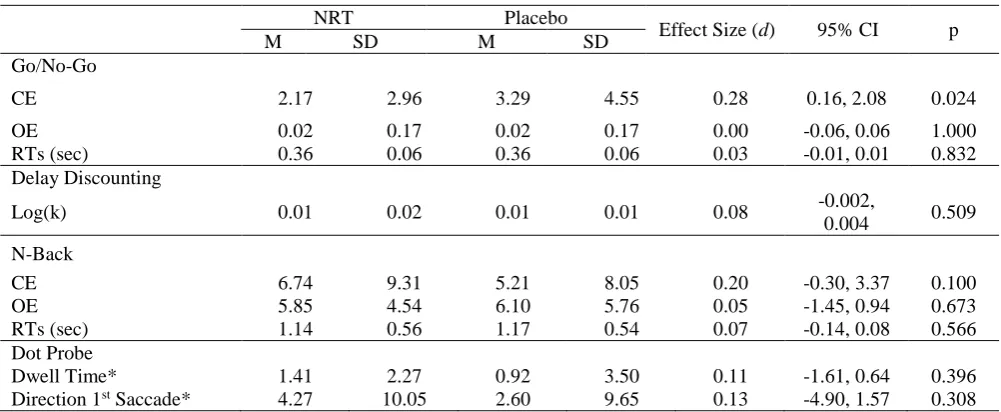
There was evidence for higher error rates in the placebo condition than in the active NRT condition (t[66 ] = 2.32, p = 0.024) (see Table 4.). Ad-hoc analysis revealed that there were no session – order effects for go/no-go task performance or ambulatory craving assessments. Go/no go commission error rates and ambulatory measures of craving were not associated (RC = 0.010, p = 0.192), and neither were go/no-go commission error rate and a craving x treatment
3.2.4. N-back task
There was no clear evidence of a difference between omission errors in the active NRT and placebo condition (t[66] = 0.42, p = 0.67) (see Table 4).
3.2.5. Delay discounting task
For the delay discounting task, there was no clear evidence of a difference between the logged values of the discounting parameter k in the active NRT and placebo conditions (t[68] = 0.66, p = 0.51) (see Table 4).
3.2.6. Dot probe task
There was strong evidence of a main effect of dwell time on picture type (F[1, 62] = 22.67, p < 0.0001), with more time spent looking at smoking over neutral pictures and of a main effect of session (F[1, 62] = 8.11, p = 0.006), with participants in the placebo condition spending more time looking at pictures regardless of type. There was no clear evidence of a picture × session interaction effect (F[1,62] = 0.73, p = 0.40). There was strong evidence of a main effect of picture type on direction of first saccade (F[1, 62] = 13.14, p < 0.001), but no clear evidence of a main effect of session (F[1, 62] = 0.05, p = 0.82), or of a picture × session interaction effect (F[1,62] = 1.10, p = 0.31) (for mean differences see Table 4).
3.2.7. Ecological momentary assessment
in the placebo condition was 73.5 (SD 20.4) and in the NRT active condition 54.4 (SD 27.5). The mean craving score for the very first prompt received was 74.72 (SD 20.45) in the placebo condition and 50.88 (SD 8.85) in the active NRT condition.
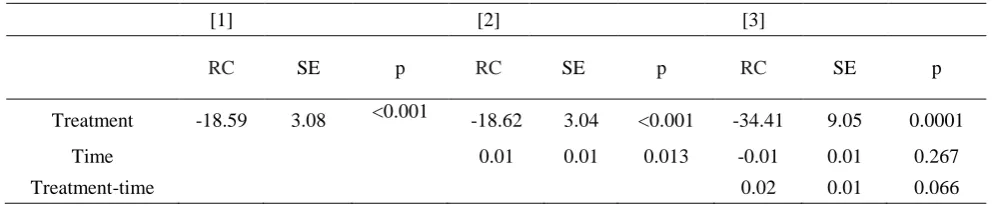
Treatment condition (active NRT versus placebo) was found to be highly predictive of craving levels (RC = -18.59, p < 0.0001) when included as the only predictor of craving in the model, with those in the NRT group reporting significantly lower levels of craving. Time was also found to weakly predict craving when added to the model (RC = 0.01, p = 0.013), by slightly increasing. There was weak evidence for an effect of the condition × time interaction term (RC = 0.02, p = 0.066). The decrease of the effect of treatment on craving in model 3 is likely due to multicollinearity, which inflated the standard error (see Table 5).
3.3 Discussion
Our go/no-go data indicated that commission error rate is sensitive to nicotine administration during smoking abstinence, while our EMA data indicated that ambulatory measures of cigarette craving are highly sensitive to nicotine administration during acute abstinence. There was no clear evidence that the N-back, delay discounting or dot probe task performance were sensitive to treatment.
4. General Discussion
working memory and attentional bias task performance were not found to be sensitive to either acute abstinence or nicotine administration.
The increase of ambulatory ratings of cigarette craving during tobacco abstinence and decrease during NRT administration is in line with previous findings (Shiffman et al., 2006). This supports the assumption that craving levels assessed by EMA might be more sensitive to NRT in a short-term abstinence setting than when assessed using other methods (Teneggi et al., 2002). However, contrary to our expectations we did not find a strong effect of time on craving levels in the abstinent condition in experiment 1 and in the placebo condition in experiment 2. One potential explanation for this is that craving levels might have reached a ceiling at the start of the EMA, due to the relatively late start in the day of the EMA assessment and the smoking cues used in the preceding task battery. This is supported by the observation that the first craving levels recorded were already close to mean craving levels in both the abstinent condition in experiment 1 and the placebo condition in experiment 2.
Interestingly go/no-go performance and craving levels were not associated with each other. This could be due to the fact that they represent different abstinence phenotypes, but generally the two measures described should be compared with caution as there were
considerable differences both in the number of assessments (single vs multiple time points) as well as the assessment methodology (lab-based vs experience sampling).
The effect of abstinence was much more pronounced for measures of craving than for go/no-go performance in both experiments. Despite this we would argue for retaining both of these components in the model: Firstly, the difference in magnitude might partially be driven by the differences in assessment method discussed above. Secondly, and more importantly, an objective validation of self-report measures is a crucial addition to a treatment screening model, especially given the difficulty of adequately blinding non-pharmacological as well as
pharmacological treatments (Bello et al., 2016). Arguably an objective performance measure is not as likely to be influenced by participants correctly guessing treatment allocation as a subjective performance measure.
Future studies might investigate ambulatory assessments of craving, and potentially other measures related to smoking withdrawal such as negative affect or stress, as well as go/no-go task performance, which will allow for a better comparisons between the two model
components. Furthermore, well-controlled studies assessing the relationship between the model components and smoking cessation outcomes would increase the model’s ecological validity. This could inform on whether increasing go/no-go task performance to aid cessation, similar to efforts of decreasing craving, might be a worthwhile target for interventions as proposed previously (Ashare et al., 2014; Sofuoglu, DeVito, Waters, & Carroll, 2013).
objective. Given the lack of a predominant theory predicting and explaining how specific cognitive domains might be affected during tobacco abstinence this was considered the ideal procedure to identify cognitive tasks reliably sensitive to changes in the withdrawal state.
on whether changes in task performance were due to withdrawal or an ‘offset effect’ (Hughes, 2007) (i.e., sustained changes following drug cessation, rather than the transient effects of withdrawal). Whether the effects of abstinence are transient is difficult to determine in a short-term study. Nevertheless, whether the changes in go/no-go task performance and craving observed are a direct result of withdrawal or an offset effect should not affect the value of our findings as they could both drive relapse, and could therefore act as an indicator of treatment results.
Novel smoking cessation treatments are an important way to improve population health. Our findings from two separate experimental studies converge to suggest that go/no go task performance as well as ambulatory cravings assessments are reliably sensitive to acute
abstinence in smokers. Future studies should investigate whether these changes in the abstinent state are predictive of smoking cessation success. This model might then be utilized to
References
Adams, S. and Munafo, M. R. 2013. Will peak provoked craving prove superior to cuereactivity? Addiction, 108, 1027-1028.
Ashare, R. L., Falcone, M. and Lerman, C. 2014. Cognitive function during nicotine withdrawal: Implications for nicotine dependence treatment. Neuropharmacology, 76, 581-591. Ashare, R. L. and Hawk, L. W., Jr. 2012. Effects of smoking abstinence on impulsive behavior
among smokers high and low in ADHD-like symptoms. Psychopharmacology (Berl.),
219, 537-47.
Bello, S., Wei, M., Hilden, J. and Hróbjartsson, A. 2016. The matching quality of experimental and control interventions in blinded pharmacological randomised clinical trials: a methodological systematic review. BMC Med. Res. Methodol., 16, 18.
Biener, L. and Abrams, D. B. 1991. The Contemplation Ladder: validation of a measure of readiness to consider smoking cessation. Health Psychol., 10, 360.
Cahill, K., Stevens, S., Perera, R. and Lancaster, T. 2013. Pharmacological interventions for smoking cessation: an overview and network meta‐analysis. The Cochrane Library. Cox, L. S., Tiffany, S. T., Christen, A. G. J. N. and Research, T. 2001. Evaluation of the brief
questionnaire of smoking urges (QSU-brief) in laboratory and clinical settings. 3, 7-16. Field, M., Mogg, K. and Bradley, B. P. 2004. Eye movements to smoking-related cues: effects of
nicotine deprivation. Psychopharmacology (Berl.), 173, 116-123.
Gass, J. C., Motschman, C. A. and Tiffany, S. T. 2014. The relationship between craving and tobacco use behavior in laboratory studies: A meta-analysis. Psychol. Addict. Behav., 28, 1162.
smoking cessation success: a systematic review and meta‐analysis. Addiction, 111, 2134-2144.
Heatherton, T. F., Kozlowski, L. T., Frecker, R. C. and Fagerström, K. 1991. The Fagerström test for nicotine dependence: a revision of the Fagerstrom Tolerance Questionnaire. Br. J. Addict., 86, 1119-1127.
Hindocha, C., Freeman, T., Grabski, M., Crudgington, H., Davies, A., Stroud, J., Das, R., Lawn, W., Morgan, C. and Curran, H. J. S. R. 2018. The effects of cannabidiol on impulsivity and memory during abstinence in cigarette dependent smokers. 8, 7568.
Hughes, J. R. 2007. Effects of abstinence from tobacco: valid symptoms and time course.
Nicotine & Tobacco Research, 9, 315-327.
Killen, J. D. and Fortmann, S. P. 1997. Craving is associated with smoking relapse: findings from three prospective studies. Exp. Clin. Psychopharmacol., 5, 137.
Lerman, C., Lesage, M. G., Perkins, K. A., O'malley, S. S., Siegel, S. J., Benowitz, N. L. and Corrigall, W. A. 2007. Translational research in medication development for nicotine dependence. Nature reviews Drug discovery, 6, 746-762.
Leventhal, A. M., Waters, A. J., Moolchan, E. T., Heishman, S. J. and Pickworth, W. B. 2010. A quantitative analysis of subjective, cognitive, and physiological manifestations of the acute tobacco abstinence syndrome. Addict. Behav., 35, 1120-30.
Munafo, M., Mogg, K., Roberts, S., Bradley, B. P. and Murphy, M. 2003. Selective processing of smoking-related cues in current smokers, ex-smokers and never-smokers on the modified Stroop task. Journal of Psychopharmacology, 17, 310-6.
Myers, C. S., Taylor, R. C., Moolchan, E. T. and Heishman, S. J. 2008. Dose-related enhancement of mood and cognition in smokers administered nicotine nasal spray.
Neuropsychopharmacology, 33, 588-98.
Park, S., Knopick, C., Mcgurk, S. and Meltzer, H. Y. 2000. Nicotine impairs spatial working memory while leaving spatial attention intact. Neuropsychopharmacology, 22, 200-9. Perkins, K. A., Stitzer, M. and Lerman, C. 2006. Medication screening for smoking cessation: a
proposal for new methodologies. Psychopharmacology (Berl.), 184, 628-636.
Piper, M. E., Schlam, T. R., Cook, J. W., Sheffer, M. A., Smith, S. S., Loh, W.-Y., Bolt, D. M., Kim, S.-Y., Kaye, J. T. and Hefner, K. R. 2011. Tobacco withdrawal components and their relations with cessation success. Psychopharmacology (Berl.), 216, 569-578. Schüz, N., Walters, J. A., Frandsen, M., Bower, J., Ferguson, S. G. J. N. and Research, T. 2013.
Compliance with an EMA monitoring protocol and its relationship with participant and smoking characteristics. 16, S88-S92.
Shiffman, S. 2009. How many cigarettes did you smoke? Assessing cigarette consumption by global report, time-line follow-back, and ecological momentary assessment. Health Psychol., 28, 519-526.
Shiffman, S., Ferguson, S. G., Gwaltney, C. J., Balabanis, M. H. and Shadel, W. G. 2006. Reduction of abstinence-induced withdrawal and craving using high-dose nicotine replacement therapy. Psychopharmacology (Berl.), 184, 637-644.
Shiffman, S., Gwaltney, C. J., Balabanis, M. H., Liu, K. S., Paty, J. A., Kassel, J. D., Hickcox, M. and Gnys, M. 2002. Immediate antecedents of cigarette smoking: an analysis from ecological momentary assessment. J. Abnorm. Psychol., 111, 531.
Shiffman, S. and Stone, A. A. 1998. Introduction to the special section: Ecological momentary assessment in health psychology. Health Psychol., 17, 3.
Shiffman, S. and Waters, A. J. 2004. Negative affect and smoking lapses: a prospective analysis.
Smith, J. L., Mattick, R. P., Jamadar, S. D., Iredale, J. M. J. D. and Dependence, A. 2014. Deficits in behavioural inhibition in substance abuse and addiction: a meta-analysis. 145, 1-33.
Sofuoglu, M., Devito, E. E., Waters, A. J. and Carroll, K. M. 2013. Cognitive enhancement as a treatment for drug addictions. Neuropharmacology, 64, 452-463.
Stone, A. A. and Shiffman, S. 1994. Ecological momentary assessment (EMA) in behavorial medicine. Ann. Behav. Med.
Sweitzer, M. M., Donny, E. C., Dierker, L. C., Flory, J. D. and Manuck, S. B. 2008. Delay discounting and smoking: Association with the Fagerström Test for Nicotine Dependence but not cigarettes smoked per day. Nicotine & Tobacco Research, 10, 1571-1575.
Teneggi, V., Tiffany, S. T., Squassante, L., Milleri, S., Ziviani, L. and Bye, A. 2002. Smokers deprived of cigarettes for 72 h: effect of nicotine patches on craving and withdrawal.
Psychopharmacology (Berl.), 164, 177-187.
Table 1. Participants’ Smoking Characteristics.
Experiment 1
Satiated Abstinent Effect Size
(d)
p-value
M SD M SD
CO (ppm)
Morning 15.62 5.6 7.73 2.65 1.64 <0.0001 Afternoon 14.35 6.02 5.27 2.89 1.75 <0.0001 QSU-Brief
Morning
QSU Total 16.10 9.95 26.06 9.02 1.04 <0.0001 QSU Factor 1 18.72 10.32 31.97 8.59 1.38 <0.0001 QSU Factor 2 13.48 10.64 20.14 10.70 0.63 <0.0001 Afternoon
QSU Total 19.39 11.58 31.13 7.99 1.17 <0.0001 QSU Factor 1 22.55 12.30 36.81 6.42 1.27 <0.0001 QSU Factor 2 16.23 12.05 25.88 11.24 0.83 <0.0001 Experiment 2
Placebo NRT Effect
Size (d)
p-value
M SD M SD
CO (ppm)
Morning 6.66 2.57 5.75 2.98 0.22 0.063
Afternoon 4.61 2.70 3.21 2.39 0.10 0.398
NS use 1.41 1.00 0.78 0.84 - -
M check 64 - 84 - - -
QSU-Brief Morning
QSU Total 26.95 7.65 26.33 7.38 0.10 0.388 QSU Factor 1 20.17 8.50 19.34 7,73 0.13 0.286 QSU Factor 2 33.74 8.46 33.31 8.49 0.06 0.636 Afternoon
QSU Total 22.85 5.70 28.69 7.08 0.89 <0.0001 QSU Factor 1 14.92 4.83 22.14 8.18 0.92 <0.0001 QSU Factor 2 30.78 8.09 35.25 0.76 0.62 <0.0001
Table 2. Test Battery Results (Experiment 1).
Satiated Abstinent Effect Size
(d)
95% CI p
M SD M SD
Go/no-go
CE 1.68 1.97 2.67 3.90 0.29 -1.89, -0.08 0.034
OE 0.09 0.41 0.19 0.79 0.15 -0.26, 0.06 0.211
RTs (sec) 0.83 0.06 0.83 0.08 0.09 -0.01, 0.02 0.471
Delay Discounting
-0.001, 0.005
Log (k) 0.013 0.023 0.012 0.018 0.10 0.250
N-Back
CE 5.85 7.42 6.60 7.39 0.22 -0.49, 1.97 0.228
OE 5.33 5.36 6.37 5.97 0.17 -0.42, 2.51 0.160
RTs (sec) 1.31 0.69 1.30 0.64 0.02 -0.11, 1.10 0.868
Dot Probe
Dwell Time* 2.35 3.69 2.69 3.39 0.07 -0.87, 1.54 0.584
Direction 1st Saccade* 5.67 8.50 6.97 8.48 0.12 -1.48, 4.07 0.353
Table 3. Results: Craving and Abstinence (EMA Experiment 1).
[1] [2] [3]
RC SE p RC SE p RC SE p
Condition -33.39 3.34 <0.0001 -33.21 2.15 <0.0001 -2.53 16.67 0.87
Time -0.02 0.01 0.16 0.04 0.03 0.19
Condition-time -0.04 0.02 0.06
Table 4. Test Battery Results (Experiment 2).
NRT Placebo
Effect Size (d) 95% CI p
M SD M SD
Go/No-Go
CE 2.17 2.96 3.29 4.55 0.28 0.16, 2.08 0.024
OE 0.02 0.17 0.02 0.17 0.00 -0.06, 0.06 1.000
RTs (sec) 0.36 0.06 0.36 0.06 0.03 -0.01, 0.01 0.832
Delay Discounting
Log(k) 0.01 0.02 0.01 0.01 0.08 -0.002,
0.004 0.509
N-Back
CE 6.74 9.31 5.21 8.05 0.20 -0.30, 3.37 0.100
OE 5.85 4.54 6.10 5.76 0.05 -1.45, 0.94 0.673
RTs (sec) 1.14 0.56 1.17 0.54 0.07 -0.14, 0.08 0.566
Dot Probe
Dwell Time* 1.41 2.27 0.92 3.50 0.11 -1.61, 0.64 0.396
Direction 1st Saccade* 4.27 10.05 2.60 9.65 0.13 -4.90, 1.57 0.308
Table 5. Results Craving and Treatment (EMA Experiment 2).
[1] [2] [3]
RC SE p RC SE p RC SE p
Treatment -18.59 3.08 <0.001 -18.62 3.04 <0.001 -34.41 9.05 0.0001
Time 0.01 0.01 0.013 -0.01 0.01 0.267
Treatment-time 0.02 0.01 0.066