New Method Development and Validation for the
Simultaneous Estimation of Sacubitril and Valsartan in
Abulk and Pharmaceutical Dosage Forms
Swathi Vaka
, PG STUDENTDr. P. PARTHIBAN
, M.Pharm., FIC, Ph.D.,Department of Pharmaceutical Chemistry,
NOVA COLLEGE OF PHARMACEUTICAL EDUCATION & RESEARCH, JUPUDI, VIJAYAWADA __________________________________________________________________________________________
ABSTRACT
A simple and selective LC method is described for the determination of Sacubitril and Valsartan in tablet dosage forms. Chromatographic separation was achieved on a c18 column using mobile phase consisting of a
mixture of 80 volumes of methanol and 20 volumes of water with detection of 241 nm. Linearity was observed in the range 60-140µg /ml for Sacubitril (r2 =0.997) and 61-155µg /ml for Valsartan (r2 =0.997) for the amount of drugs estimated by the proposed methods was in good agreement with the label claim.
The proposed methods were validated. The accuracy of the methods was assessed by recovery studies at three different levels. Recovery experiments indicated the absence of interference from commonly encountered pharmaceutical additives. The method was found to be precise as indicated by the repeatability analysis, showing %RSD less than 2. All statistical data proves validity of the methods and can be used for routine analysis of pharmaceutical dosage form.
Key Words: Buffer, UV spectrophotometer, high performance liquid chromatography, Acetonitrile, Sacubitril, Methanol, Triethayl amine, Valsartan, c18
column.
I.INTRODUCTION
Pharmaceutical analysis simply means analysis of pharmaceuticals. Webster’ dictionary defines a pharmaceutical is a medical drug. A more appropriate term for a pharmaceutical is active pharmaceutical ingredient (API) or active ingredient to distinguish it from a formulated product or drug product is prepared by formulating a drug substance with inert ingredient (excipient) to prepare a drug product that is suitable for administration to patients. Research and development (R&D) play a very comprehensive role in new drug development and follow up activities to ensure that a new drug product meets the established standards is stable and continue to approved by regulatory authorities, assuring that all batches of drug product are made to the specific standards utilization of approved ingredients and production method becomes the responsibility of
pharmaceutical analysts in the quality control (QC) or quality assurance department. The methods are generally developed in an analytical R&D department and transferred to QC or other departments as needed. At times they are transferred to other divisions.
By now it should be quite apparent that pharmaceutical analysts play a major role in assuring the identity, safety, efficacy, and quality of drug product, safety and efficacy studies required that drug substance and drug product meet two critical requirements.
1. Established identity and purity.
2. Established bio availability/dissolution.
II.AIM: To develop new RP HPLC method for the simultaneous estimation of Lamivudine and Tenofovir pharmaceutical dosage form.
PLAN OF WORK: Solubility determination of Lamivudine and tenofovir bromide various solvents and buffers. Determine the absorption maxima of both the drugs in UV–Visible region in different solvents/buffers and selecting the solvents for HPLC method development. Optimize the mobile phase and flow rates for proper resolution and retention times. Validate the developed method as per ICH guidelines.
III. DRUG PROFILE:
3.1. Sacubitril
STRUCTURE:
Description: Sacubitril is a neprilysin inhibitor and is used in combination with valsartan to reduce the risk of
cardiovascular events in patients with chronic heart
failure (NYHA Class II-IV). The combination drug,
sacubitril/valsartan is used in place of an ACE inhibitor or
ARB. It was approved under the FDA’s priority review
process for use in heart failure on July 7, 2015.
Mechanism of action:
Sacubitril is a prodrug that is activated to sacubitrilat
by de-ehylation via esterase Sacubitril inhibits the enzyme
neprilysin, which is responsible for the degradation of
atrial and brain natriuretic peptide, two blood
pressure-lowering peptides that work mainly by reducing blood
volume.
3.2 Valsartan STRUCTURE:
Description: Valsartan is an Angiotensin-Receptor Blocker (ARB) that may be used to treat a
variety of cardiac conditions including hypertension,
diabetic nephropathy and heart failure. Valsartan lowers
blood pressure by antagonizing the
Renin-Angiotensin-Aldosterone System (RAAS); it competes with
Angiotensin II for binding to the type-1 Angiotensin II
receptor (AT1) subtype and prevents the blood pressure
increasing effects of Angiotensin II. Unlike
Angiotensin-Converting Enzyme (ACE) inhibitors, ARBs do not have
the adverse effect of dry cough. Valsartan may be used to
treat hypertension, isolated systolic hypertension, left
ventricular hypertrophy and diabetic nephropathy. It may
also be used as an alternative agent for the treatment of
heart failure, systolic dysfunction, myocardial infarction
and coronary artery disease.
Mechanism of Action: Valsartan is an ARB that selectively inhibits the binding of Angiotensin II to
AT1, which is found in many tissues such as vascular
smooth muscle and the adrenal glands. This effectively
inhibits the AT1-mediated vasoconstrictive and
Aldosterone-secreting effects of Angiotensin II and
results in a decrease in vascular resistance and blood
pressure. Valsartan is selective for AT1 and has virtually
no affinity for AT2. Inhibition of Aldosterone secretion
may inhibit sodium and water reabsorption in the kidneys
while decreasing potassium excretion. The primary
metabolite of valsartan, valeryl 4-hydroxy valsartan, has
no pharmacological activity.
Pharmacodynamics:
Valsartan belongs to a class of antihypertensive agents
called Angiotensin II receptor blockers (ARBs). Valsartan
is a specific and selective type-1 Angiotensin II receptor
(AT1) antagonist which blocks the blood pressure
increasing effects Angiotensin II via the
renin-Angiotensin-Aldosterone system (RAAS). RAAS is a
homeostatic mechanism for regulating hemodynamics,
water and electrolyte balance. During sympathetic
stimulation or when renal blood pressure or blood flow is
reduced, renin is released from granular cells of the
juxtaglomerular apparatus in the kidneys. Renin cleaves
circulating angiotensinogen to Angiotensin I, which is
cleaved by Angiotensin converting enzyme (ACE) to
Angiotensin II. Angiotensin II increases blood pressure by
increasing total peripheral resistance, increasing sodium
and water reabsorption in the kidneys via Aldosterone
secretion, and altering cardiovascular structure.
Angiotensin II binds to two receptors: AT1 and type-2
coupled receptor (GPCR) that mediates the
vasoconstrictive and Aldosterone-secreting effects of
Angiotensin II. Studies performed in recent years suggest
that AT2 antagonizes AT1-mediated effects and directly
affects long-term blood pressure control by inducing
vasorelaxation and increasing urinary sodium excretion.
Angiotensin receptor blockers (ARBs) are non-peptide
competitive inhibitors of AT1. ARBs block the ability of
Angiotensin II to stimulate pressor and cell proliferative
effects. Unlike ACE inhibitors, ARBs do not affect
bradykinin-induced vasodilatation. The overall effect of
ARBs is a decrease in blood pressure. IV.RESULTS AND DISCUSSION: 4.1. Solubility Studies
These studies are carried out at 25 0 C
Sacubitril:
Sparingly soluble in methanol and in ethanol , very
slightly soluble in water and in acetonitrile.
Valsartan:
very slightly soluble in water, soluble in alcohol, freely
soluble in chloroform and ether
4.2. Determination Of Working Wavelength (λmax)
In simultaneous estimation of two drugs isobestic
wavelength is used. Isobestic point is the wavelength
where the molar absorptivity is the same for two
substances that are interconvertible. So this wavelength is
used in simultaneous estimation to estimate both drugs
accurately.
4.2.1. Preparation of standard stock solution of Sacubitril:
10 mg of Sacubitril was weighed and transferred in to
10ml volumetric flask and dissolved in methanol and then
make up to the mark with methanol and prepare 10 µg /ml
of solution by diluting 1ml to 10ml with methanol.
4.2.2. Preparation of standard stock solution of Valsartan:
10 mg of Valsartan was weighed in to 10ml volumetric
flask and dissolved in Methanol and then dilute up to the
mark with methanol and prepare 10 µg /ml of solution by
diluting 1ml to 10ml with methanol.
4.2.3. Results
The wavelength of maximum absorption (λmax) of
the drug, 10 μg/ml solution of the drugs in methanol were
scanned using UV-Visible spectrophotometer within the
wavelength region of 200–400 nm against methanol as
blank. The resulting spectra are shown in the fig. no. 8.1,
8.2 and 8.3 and the absorption curve shows characteristic
absorption maxima at 230 nm for Sacubitril,228 nm for
Valsartan and 241 nm for the combination.
Fig. 4.1: UV-VIS spectrum of Sacubitril,
Observation: λmax was found to be 230 nm for
Sacubitril, shown in the figure 4.1
Fig. 4.2: UV-VIS spectrum of Valsartan
Observation: λmax was found to be 228nm for Valsartan
shown in the figure 4.2
Observation: The Isobestic point was found to be 241nm for sacubitril and valsartan in combination and was
shown in figure 4.3
4.3. METHOD DEVELOPMENT OF SACUBITRIL AND VALSARTAN
Trial - 1
Chromatographic conditions
Mobile phase : Methanol : ACN : water
Ph : 5.0
Ratio : 50:10:40
Column : Inertsil ODS 3V (250×4.6× 5µ)
wavelength : 241 nm
Flow rate : 1ml/min
Preparation of mixed standard solution
weigh accurately 98 mg of Sacubitril and 102 mg of
Valsartan in 100 ml of volumetric flask and dissolve in
10ml of mobile phase and make up the volume with
mobile phase. From above stock solution 98 µg/ml of
Sacubitriland 102 µg/ml of Valsartan is prepared by
diluting 1ml to 10ml with mobile phase. This solution is
used for recording chromatogram.
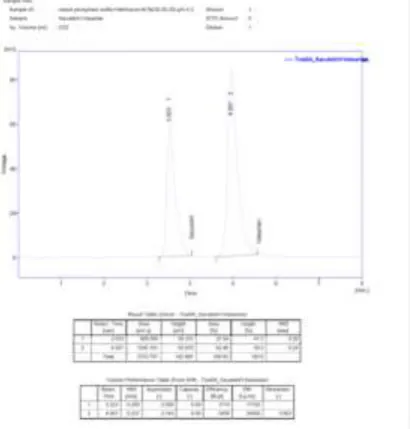
Fig. 4.3.1: Chromatogram of sacubitril and valsartan by using mobile phase
Observation:
Although the Efficiency was not satisfactory for
valsartan.
The peak response of Sacubitril was very less.
Hence it was not taken for optimization. The
details are given in table 4.3.1 and figure 4.3.1.
Trial- 2
Chromatographic conditions
Mobile phase : Methonol + ACN + Phosphate buffer
pH : 4.5
Ratio : 50:30:20
Column : InertsilODS 3V (250×4.6 ×5µ)
wavelength : 241nm
Flow rate : 1ml/min
Preparation of mixed standard solution
weigh accurately 98 mg of Sacubitril and 102 mg of
Valsartan in 100 ml of volumetric flask and dissolve in
10ml of mobile phase and make up the volume with
mobile phase.From above stock solution 98 µg/ml of
Sacubitril and 102 µg/ml of Valsartan is prepared by
diluting 1ml to 10ml with mobile phase. This solution is
used for recording chromatogram.
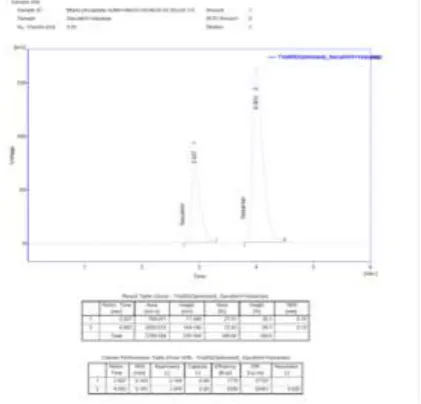
Fig. 4.3.2: Chromatogram of Valsartan and
Sacubitril by using Mobile phase
Observation:
Efficiency of both the drugs was good.
The run time is very more.
The peaks of Sacubitril and Valsartan showed
tailing.
The details are given figure 4.3.2, Hence it was
Trial- 3:
Chromatographic conditions
Mobile phase : Phosphate buffer:ACN:Methanol
pH : 4.0
Ratio : 30:30:40
Column : Inertsil ODS 3V, (250×4.6× 5µ)
Wavelength : 241nm
Flow rate : 1ml/min
Preparation of mixed standard solution
weigh accurately 98 mg of Sacubitril and 102 mg of
Valsartan in 100 ml of volumetric flask and dissolve in
10ml of mobile phase and make up the volume with
mobile phase. From above stock solution 98 µg/ml of
Sacubitril and 102 µg/ml of Valsartan is prepared by
diluting 1ml to 10ml with mobile phase. This solution is
used for recording chromatogram.
Fig. 4.3.3: Chromatogram of Valsartan and Sacubitril by using mobile phase
Observation:
Asymmetry factor for VALSARTAN does not
meet the system suitability requirements.
The run time is 11 minutes.
The details are given figure 6.3.3, hence it was
not taken for optimization.
Trial- 4:
Chromatographic conditions
Mobile phase : Mixed phosphate buffer:
METHANOL :ACN
pH : 4.5
Ratio : 30:50:20
Column : Inertsil ODS , (250×4.6× 5µ)
Wavelength : 241 nm
Flow rate : 1ml/min
Preparation of mixed standard solution
weigh accurately 98 mg of Sacubitril and 102 mg of
Valsartan in 100 ml of volumetric flask and dissolve in
10ml of mobile phase and make up the volume with
mobile phase.From above stock solution 98 µg/ml of
Sacubitriland 102 µg/ml of Valsartan is prepared by
diluting 1ml to 10ml with mobile phase. This solution is
used for recording chromatogram.
Fig. 4.3.4: Chromatogram of Valsartan and Sacubitril by using mobile phase
Observation:
Peak Asymmetry factor for Sacubitril and
Valsartan does not meet the system suitability
requirements.
The run time is very more.
The details are given in figure 8.3.4, hence it was
Trial-5: (Optimized): Chromatographic conditions
Mobile phase : Mixed phosphate
buffer:MeOH:ACN
pH : 3.0
Ratio : 30:50:20
Column : Inertsil ODS 3V column,C18(250x4.6
ID) 5µm
Wavelength : 241 nm
Flow rate : 1.0ml/min
Preparation of mixed standard solution
weigh accurately 98 mg of Sacubitril and 102 mg of
Valsartan in 100 ml of volumetric flask and dissolve in
10ml of mobile phase and make up the volume with
mobile phase. From above stock solution 98 µg/ml of
Sacubitril and 102µg/ml Valsartan is prepared by diluting
1ml to 10ml with mobile phase. This solution is used for
recording chromatogram.
Fig. 4.3.8: Chromatogram of Valsartan and Sacubitril by using mobile phase
Observation:
All the system suitability requirements were met.
The peak Asymmetry factor was less than 2 for
both Valsartan and Sacubitril.
The efficiency was more than 2000 Valsartan
and Sacubitril.
Resolution between two peaks >1.5.
The details are given in figure 4.3.8, hence this
method was for optimized.
Table 4.3.8: Optimized chromatographic conditions
4.4. Assay
Preparation of samples for Assay Preparation of mixed standard solution
weigh accurately 98 mg of Sacubitril and 102 mg of
Valsartan in 100 ml of volumetric flask and dissolve in
10ml of mobile phase and make up the volume with
mobile phase. From above stock solution 98 µg/ml of
Sacubitril and 102 µg/ml of Valsartan is prepared by
diluting 1ml to 10ml with mobile phase. This solution is
used for recording chromatogram.
Tabletsample: 5tablets(each tablet contains Valsartan 102mg
Sacubitril -98 mg) were weighed and taken into a mortar
and crushed to fine powder and uniformly mixed. Tablet
stock solutions of Valsartan and Sacubitril (μg/ml) were
prepared by dissolving weight equivalent to 102 mg of
Valsartan and 98 mg of Sacubitril and dissolved in
sufficient mobile phase. After that filtered the solution
using 0.45-micron syringe filter and Sonicated for 5 min
and dilute to 50ml with mobile phase. Further dilutions
are prepared in 5 replicates of 102 μg/ml of Valsartan and 98μg/ml of Sacubitril was made by adding 1 ml of stock
solution to 10 ml of mobile phase.
Calculation
The amount of Valsartan and Sacubitril present
in the formulation by using the formula given below, and
Where,
AS: Average peak area due to standard preparation
AT: Peak area due to assay preparation
WS: Weight of Valsartan / Sacubitril in mg
WT: Weight of sample in assay preparation
DT: Dilution of assay preparation
Fig. 4.4.2: Chromatogram of Assay standard preparation-2
Table No.4.4.9.2: Assay Results
Observation
The amount of Sacubitril and Valsartan present in the
taken dosage form was found to be 100.17% and
100.55% respectively.
V. CONCLUSION:
“Development and validation of RP-HPLC
method for the simultaneous estimation of Sacubitril and
Valsartan Pharmaceutical dosage forms”. From the above
experimental results and parameters it was concluded that,
this newly developed method for the simultaneous
estimation Sacubitril and Valsartan was found to be
simple, precise, accurate and high resolution and shorter
retention time makes this method more acceptable and
cost effective and it can be effectively applied for routine
analysis in research institutions, quality control
department in meant in industries, approved testing
laboratories studies in near future.
REFERENCES:
[1] B.K.Sharma, HPLC, Instrumental methods of chemical analysis,Goel pubkishers;24th edition;2005;p286-300.
[2] Gurudeep.R.Chatwal, Sharm.K.Anand, HPLC, Instrumental methods of chemical analysis; 2010;p624-639.
[3] ICH, Text on Validation of Analytical Procedures, ICH – Q2A, International Conference on Harmonisation, IFPMA, Geneva, 1995; 2-3: A–1 to A–3.
[4] ICH, Validation of Analytical Procedures Methodology, ICH – Q2B, International Conference on Harmonisation, 1996; p1-3.
[5] ICH Guidelines, Q2 (R1) Validation of Analytical Procedures Text and Methodology, 2005; p1-6.
[7] United states pharmacopoeia 34 NF29 ,volume 2 part 1,page no. 1873-1875,1949-1951
[8] Indian pharmacopoeia -2010 volume-2,page no 806-807,849-850
[9] The Merck Index, An Encyclopedia OfChemical, Drugs and Biologicals, Maryadele J.O. Neil.Eds,13th edition, Published by Merck Research Lab, Division of Merck and co. Inc., Whitehouse Station, NJ: 2006:148. NJ: 2006:86.
[10] Detectors –
http://lipidlibrary.aocs.org/topics/detect92/file.pdf
[11] Method development -