ABSTRACT
SIMÕES FERREIRA, BRUNO MIGUEL. Permatourism: Concept Development, Application and Empirical Validation. (Under the direction of Dr. Duarte Morais).
Grassroots tourism development models are reported to engender conscientization, entrepreneurial networking, self-efficacy, and the creation of locally owned and operated tourism microenterprises. However, actual local participation may be constrained by socio-political, legal, administrative and economic structures. In reaction to the inherent limitations of existing models, this study proposes an alternative form of tourism development, Permatourism, which pursues the complementarity between top-down and bottom-up approaches as well as between the informal and formal tourism sectors. In addition, this study leverages my extensive fieldwork in NC within the Fork2Farmer project, which aims to de-anonymize farm tourism microentrepreneurs (FMTEs) and create alternative revenue streams, as well as my involvement in a project in the ejido Playa Grande, Puerto Vallarta, Mexico, which aims at enabling dignified livelihoods through communitarian tourism entrepreneurship.
by the level of bridging ties they have with formal private sector partners (e.g., celebrated farm-to-table chefs), public sector support agencies (e.g., Extension Offices and TDAs), and other peers (e.g., other farmers). Data from 207 FTMEs suggests that the bridging ties significantly and positively influence internal and external efficacy, and that internal self-efficacy significantly and positively influences microentrepreneurial intention. Finally, I conducted 28 in-depth interviews with two subaltern groups of tourism microentrepreneurs in Puerto Vallarta, namely 1) artisans in Bucerias who sell their art at markets and plazas and
receive visitors through a local non-profit, and 2) ejidatários of Playa Grande, who established a community-owned ecopark which offers canopy tours, horseback-riding, local food and glamping. Interviews were transcribed verbatim and theoretical thematic analysis was conducted to examine their perceptions of the local industry and adaptation strategies to optimize the scarce economic opportunities conceded by a tourism-generated socioeconomic apartheid. Findings suggest that although microentrepreneurs are cognizant that formal sector players have the upper hand, they are still able to glean livelihood opportunities by aligning themselves with the formal sector and providing complementary services and products.
Permatourism: Concept Development, Application and Empirical Validation
by
Bruno Miguel Simões Ferreira
A dissertation submitted to the Graduate Faculty of North Carolina State University
in partial fulfillment of the requirements for the degree of
Doctor of Philosophy
Parks, Recreation & Tourism Management
Raleigh, North Carolina 2019
APPROVED BY:
_______________________________ _______________________________
Dr. Duarte Morais Dr. Gene Brothers
Committee Chair
_______________________________ _______________________________
ii DEDICATION
iii BIOGRAPHY
iv ACKNOWLEDGMENTS
v TABLE OF CONTENTS
LIST OF TABLES... x
LIST OF FIGURES ... xi
Introduction ... 1
Overview ... 1
Research questions ... 1
Theoretical framework ... 2
3.1. Overview ... 2
3.2. Evolution of tourism development thinking ... 4
3.2.1. Modernization and tourism ... 4
3.2.2. Dependency and tourism ... 6
3.2.3. Economic neoliberalism and tourism ... 7
3.2.4. Alternative development and tourism ... 7
3.2.5. The impasse and post-development and tourism ... 8
3.2.6. Human development and tourism ... 10
3.2.7. Global development and tourism ... 11
3.3. Economic inequality ... 13
3.3.1. Disciplines’ assumptions and methodologies ... 13
3.3.2. Undersocialized vs. oversocialized approaches ... 14
3.3.3. Elite capture, opportunity hoarding, and occupational closure ... 15
3.3.4. Structural constraints and homophily ... 17
3.3.5. Socioeconomic apartheid at tourism destinations ... 18
Creating a new paradigm... 19
4.1. Tourism development: transcending a dichotomy ... 19
4.2. Permaculture design ... 21
4.3. Permatourism ... 22
4.4. Synergies between formal and informal sector ... 24
4.5. Tourism microentrepreneurship ... 29
The importance of the local foods movement on tourism microentrepreneurship ... 30
5.1. Farm to Table ... 30
5.2. The Fork to Farmer movement ... 31
5.3. The transformative power of video and film ... 32
vi
5.4.1. From chefs to farmers ... 37
5.4.1.1. Social capital ... 37
5.4.1.2. Self-efficacy ... 40
5.4.1.3. Reputation ... 42
5.4.2. From farmers to chefs ... 43
5.4.2.1. Transparency ... 43
5.4.2.2. Alignment ... 43
5.4.3. Reciprocity vs. altruism ... 44
Methodology ... 46
6.1. Participatory action-research ... 46
6.2. Power ... 48
6.3. Article 1 ... 53
6.3.1. Background ... 53
6.3.2. Purpose ... 54
6.3.3. Theoretical framework ... 54
6.3.4. Implications ... 55
6.4. Article 2 ... 55
6.4.1. Background ... 55
6.4.2. Purpose ... 56
6.4.3. Method ... 56
6.4.4. Implications ... 57
6.5. Article 3 ... 57
6.5.1. Background ... 57
6.5.2. Purpose ... 59
6.5.3. Method ... 59
6.5.4. Implications ... 59
Limitations of the study ... 59
Delimitations of the study ... 60
Significance of the study ... 60
Definitions of terms ... 61
References ... 63
Conceptualizing Permatourism ... 77
vii
Permaculture design ... 80
Permatourism ... 80
Ethics ... 82
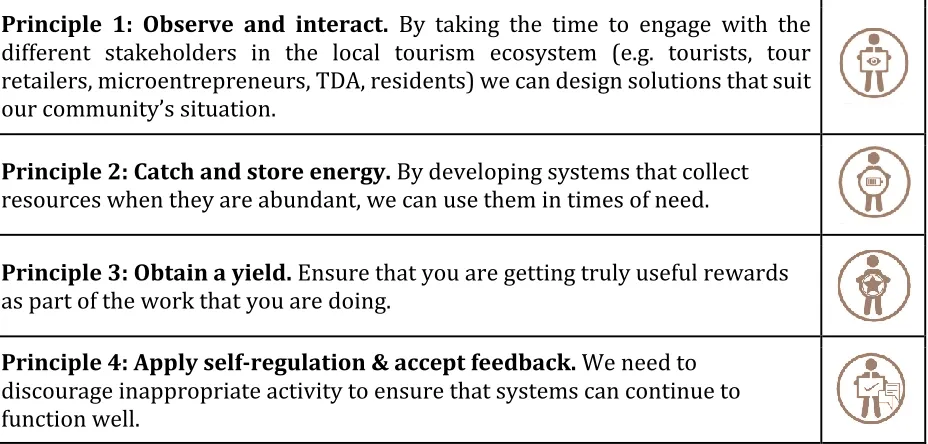
Principles ... 85
Principle 1: Observe and interact. ... 86
Principle 2: Catch and store energy. ... 87
Principle 3: Obtain a yield ... 88
Principle 4: Apply self-regulation & accept feedback ... 89
Principle 5: Use & value renewable resources & services ... 90
Principle 6: Produce no waste ... 92
Principle 7: Design from patterns to details ... 93
Principle 8: Integrate rather than segregate ... 93
Principle 9: Use small and slow solutions ... 95
Principle 10: Use and value diversity ... 96
Principle 11: Use edges & value the marginal ... 98
Principle 12: Creatively use and respond to change. ... 99
Permatourism zones ... 101
Implications for practice ... 103
Implications for theory ... 104
Conclusion ... 106
References ... 107
The Effect of Synergies Between the Informal and Formal Tourism Sectors on Farmers’ Tourism Microentrepreneurial Intentions ... 117
Introduction ... 118
Background ... 119
2.1. Farm tourism... 119
2.2. Social Capital ... 121
2.3. Permatourism ... 123
2.4. Self-efficacy ... 125
2.5. Hypotheses ... 127
Method ... 128
3.1. Participatory action-research (PAR) ... 128
3.2. Qualitative data ... 129
viii
3.4. Instruments and data analysis ... 131
3.5. Reliability, convergent validity, and discriminant validity ... 133
Results... 134
4.1. Respondents’ socio-demographic profile and their engagement in agritourism ... 134
4.2. Measurement model ... 136
4.3. Structural model and test of hypotheses ... 138
Discussion ... 141
5.1. Limitations ... 145
5.2. Further research ... 145
Conclusion ... 147
References ... 149
Resisting Tourism-Induced Socioeconomic Apartheid through Microentrepreneurship... 158
Introduction ... 159
Literature review ... 159
2.1. Socioeconomic inequality ... 160
2.2. The informal economy ... 162
2.3. Tourism microentrepreneurship ... 163
2.4. Permatourism ... 165
Methodology ... 166
3.1. Research setting ... 166
3.2. Data collection ... 168
Results and discussion ... 172
4.1. Oppression or business as usual?... 172
4.2. Business strategies... 181
4.3. Permatourism ... 186
Conclusion ... 188
References ... 191
Conclusion ... 198
1. Article summaries ... 198
1.1. Article 1 ... 198
1.2. Article 2 ... 200
1.3. Article 3 ... 201
ix
3. Theoretical implications and recommendations for future research ... 205
4. Practical implications ... 207
References ... 209
APPENDICES ... 211
Appendix A: IRB application Article 2 ... 212
Appendix B: IRB application Article 2 ... 220
Appendix C: Online survey Article 2 ... 221
Appendix D: IRB application Article 3 ... 236
Appendix E: IRB approval Article 3 ... 243
x LIST OF TABLES
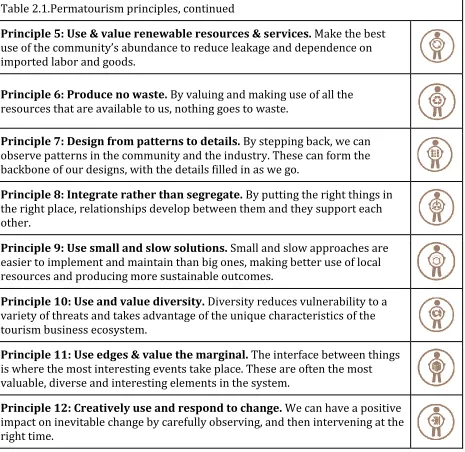
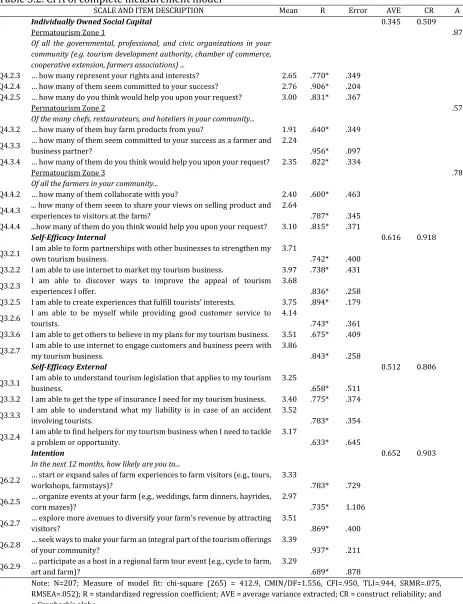
Table 2.1. Permatourism principles... 100 Table 3.1. Farmers demographic and agritourism profile ... 135 Table 3.2. CFA of complete measurement model ... 137 Table 3.3. Hypothesized relationships between constructs and observed relationship
xi LIST OF FIGURES
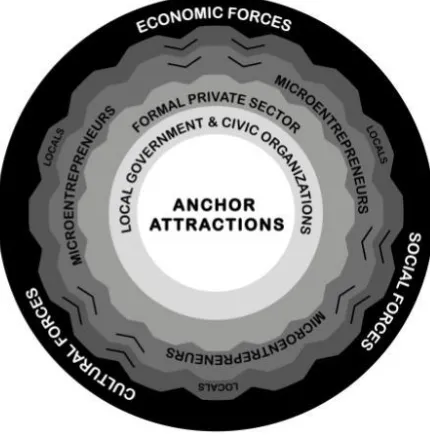
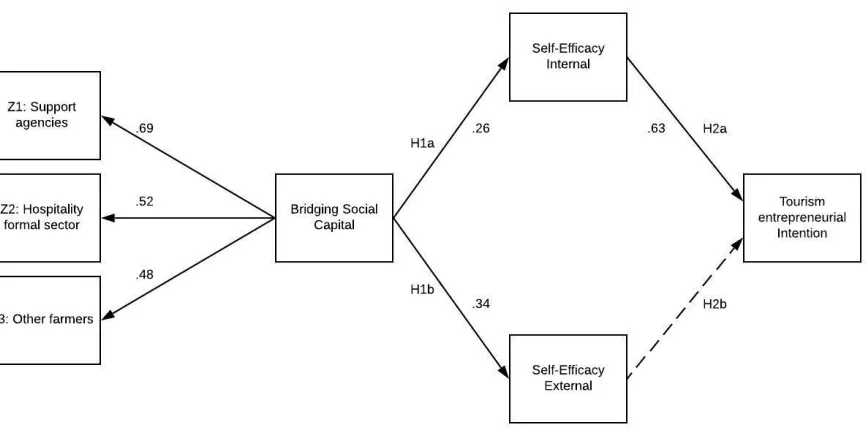
Figure 1.1. The symbiotic relationship between farmers and chefs ... 37 Figure 2.1. Permatourism site design ... 102 Figure 3.1. Proposed model of bridging social capital’s influence on farmers’ tourism
1 Introduction
Overview
The assertion that tourism has failed to deliver on its promise for equitable prosperity is perhaps too simplistic and naïve and may take away from the fact that in many economically challenged regions in the world, whether countries or communities, tourism may be the only viable route to economic growth. Notwithstanding, tourism being the imperative development strategy should not give leeway to its formal sector to hijack the industry through predatory monopolistic practices that generate socioeconomic apartheid which prevent equitable prosperity among locals. By the same token, we need to understand that such practices rather than representing some sort of inherent malice towards communities can be justified under the logic of profit maximization by minimizing exchanges between tourists and surrounding formal and informal businesses. Moreover, we should bear in mind that in the transnational tourism corporate sector, management is accountable to shareholders, not communities. Hence, the main point of this dissertation is that if we have hopes to change the reality in tourism, then we should walk away from solutions that are based solely in corporate environmental and social responsibility, and focus on business savvy solutions that represent a win-win situation for both formal and informal actors.
Research questions
2 to which it is relevant and useful as a conceptual framework to understand dynamics between the informal and formal tourism sectors in 1) the context of farm tourism microentrepreneurship North Carolina, and 2) communitarian tourism entrepreneurship and cultural tourism microentrepreneurship in Puerto Vallarta, Mexico:
a) What is the conceptual framework underpinning Permatourism?
b) Can Permatourism explain successes and failures in tourism development case studies?
c) What best practices for tourism development can be afforded by the Permatourism framework?
d) To what extent do synergies between farmers and formal sector actors contribute to elevated self-efficacy among the former?
e) How do local microentrepreneurs adapt to the economic apartheid system prevalent in sea, sun, sand and sex destinations?
Theoretical framework 3.1. Overview
3 look at tourism. Then, I discuss economic inequality as a product of a neoliberal agenda that continues to control tourism development around the globe. I also make a critique to neoclassical economists whose seemingly infallible mathematical models have precluded the field from understanding the phenomenon from a relational point of view and posit that the methodological dexterity of the social sciences is a necessary condition to understand it. Then, I move into challenging the structuralist/dualist perspective on the informal and formal sectors of the economy, arguing that rather than competing with one another these are important parts of a mutually supporting system.
4 3.2. Evolution of tourism development thinking
Tourism is an important engine of economic growth, and is usually credited with generating employment, foreign exchange, and public tax (World Tourism Organization, 2018). Nonetheless, there is also ample evidence of many shortcomings that are persistently ignored by governments, who tend to look at tourism as the “imperative” economic strategy (Rich, 2007). Accordingly, critical scholars have raised concerns about the inequitable distribution of income, changes in the social fabric of the communities, and environmental degradation at destinations (Gmelch, 2012). In the following sections I will examine the evolution of tourism thinking, identifying strengths and pitfalls of models implemented. 3.2.1. Modernization and tourism
5 newly independent countries still had to deal with a largely uneducated population, primary resource-based economies with little to no diversification, and an infrastructure designed to efficiently ship those resources out to the metropolis (Ochonu, 2013).
6 3.2.2. Dependency and tourism
It has been argued that tourism development during the 1960s period created the equivalent of a new type of plantation economy (Gmelch, 2012). The leisure needs of developed countries were being met by the developing countries where the wealth generated from tourism was transferred from the ‘colony’ back to the developed world (Telfer, 2002). In this regard, tourist-host encounters are particularly interesting for the social sciences because they often put face to face the Global North and the Global South, wealthy and the poor, white and black, powerful and the subaltern, which in many ways reproduce the social dynamics seen in colonial times, when the indigenous populations existed to serve the needs of the colonists (Cleverdon & Kalisch, 2000). For example, Gmelch (2012) posits that the tourism monoculture in the Caribbean, which depends primarily on the North American and European markets resembles the sugar-cane monoculture model before independence.
7 3.2.3. Economic neoliberalism and tourism
Development policies during the Economic Neoliberalism era (1970s-1980s) were implemented so that multinational tourism companies were free to operate across national borders unfettered by onerous regulation or protectionist measures (Telfer, 2002). Milton Freidman, distinguished professor at the University of Chicago was the leading figure and advocate of free market theory. His and his colleagues’ ideas have had a dreadful impact in the Asia, Africa and Latin America (Shleifer, 2009), but that didn’t preclude him to win the Nobel Prize in economics. Neoliberalism proposes Structural Adjustments Programs in financially challenged countries, which can entail privatization of public services, free movement of people and goods, and reduction in government spending in the social sector (Nelson & Prilleltensky, 2010). By persuading, sometimes coercing, countries to give up their protections in terms of laws and tariffs against foreign products and corporations, local economic players become defenseless against the take over from much larger, business-savvy, and ruthless Western multi-nationals (Leitner, Peck, & Sheppard, 2007). In tourism, this meant that airports could be privatized, environmental protections could no longer stop real-estate development in already vulnerable areas (Mosedale, 2016), or that high-end restaurants and hotels could offer imported meat and beverages to a growing and demanding international clientele (Thomas-Francois, von Massow, & Joppe, 2017).
3.2.4. Alternative development and tourism
8 indefinitely for future generations (Bossel, 1999). It does so by pursuing a triple bottom line comprising economic, social and environmental indicators (Slaper & Hall, 2011). In tourism, Butler’s (1980) destination lifecycle graph became very popular because it demonstrated that when the carrying-capacity of a destination is exceeded it leads to disillusionment of locals and resentment against tourists, which may lead to demise of the destination. Although sustainable tourism is still waived as the ideal model of tourism development, there are some who criticize the applicability, theoretical foundations and real impact of the concept (Berno & Bricker, 2001; Liu, 2003; Wheeller, 1991). Moreover, Müller (1994) claims that, in the event there was ever one, at some point it lost most of its meaning and became an empty cliché. It is almost as though “sustainable” and “tourism” are two words that are naturally attached to one another, and that anyone can say them out loud without fearing to be questioned about the validity of that statement, when in fact there is little evidence that sustainability goals or practices have ever been consistently put to use by the tourism industry (Sharpley, 2010). Perhaps this theoretical divide (Sharpley, 2000) is behind this department’s decision to add “equitable” before “sustainable tourism” in the official designation of the concentration within the PRTM graduate program. And, although the inclusion of “equitable” can be perceived as a redundancy, given that it results from the intersection of the economic and social dimensions, it is nonetheless harder to “abuse” given the novelty and provocative nature of the term “equitable”.
3.2.5. The impasse and post-development and tourism
10 3.2.6. Human development and tourism
Human development (1990s-2000s) advocates have focused on how tourism can be a positive global force through pro-poor, responsible, appropriate, ethical and volunteer tourism. In the nineties, it was reasoned that tourism could be a positive global force through responsible, appropriate, and ethical travelling to under-resourced areas. In this regard, my own experiences as a volunteer tourist, trainer of volunteer tourists, and also recipient of volunteer tourists at the community, are to some extent consistent with concerns raised by scholars on the potential for negative impacts on host communities (Taplin, Dredge, & Scherrer, 2014). In particular, it is unclear whether voluntourists are driven by self-interest or altruism; and the extent to which volunteer tourism organizations truly act as agents of change or are simply a new instrument of commodification (Wearing & McGehee, 2013). Moreover, although I can attest to the enthusiasm and idealism of many of my former volunteers which energized host communities, I can also see how it created a dependency in communities, who would be on the lookout for the upcoming cohort that could fix the local playground or run the kindergarten (Mehta, 2013). Notwithstanding, perhaps the biggest criticism of all is that it is yet another form of neo-colonialism (Gillier & Zivanovic, 2014; Stein, 2017) – white people educating the “noble savage”.
11 gaining momentum as a prominent sociological theory and panacea in and outside Academia (Portes, 1998). However, according to Nelson and Prilleltensky (2010) social capital theory has served governments well to deflect responsibilities to undertake structural changes that are necessary to allow individuals to empower themselves.
3.2.7. Global development and tourism
Global development (2000s-2010s) is a comprehensive policy in areas of trade and economic cooperation, development cooperation, foreign and security policy that has a focus on conflict management and environmental policy to deal with biodiversity and climate change (Saarinen, Rogerson, & Manwa, 2011).
However, the model of tourism development advocated today may not differ greatly from other neoliberal models used in the past. One should remember that the early nineties saw a dramatic increase of cross-border mergers and acquisitions which resulted in the creation of massive multinational tourism corporations with the power to control local supply and demand (Theuvsen, 2004). To make matters worse, increase in corporate shareholder value since the late seventies has meant that once fair salaries, social security and retirement packages to frontline works are now off the table (J. Davis, 2013; Goldstein, 2012). This raises the question of why a recipe that failed largely in addressing national or regional problems should be a solution for a world that has grown to be even more challenging and unstable. I will use the example of Portugal to elaborate on my skepticism.
12 enabled the ripple effect of the subprime mortgage crisis in the USA to reach a small, peripheral country like Portugal (Fligstein & Habinek, 2014), with dramatic consequences, also favored a wave of international tourism that helped kickstart the economy after harsh years of recession (Serra, Correia, & Rodrigues, 2014). On the downside, the “golden hordes” (Turner & Ash, 1975) that flocked to the country remained primarily in the capital, raising the price of real estate in the city many-fold, thus driving collective displacement (Gant, 2016). Today, renting a modest two-bed unit in an inconspicuous neighborhood can be as expensive as the value of three minimum wages, which is forcing many families to the suburbs (Correia, 2017). The gentrification of the inner city is nevertheless a good investment opportunity for the big boys, who can afford to buy whole dwellings and easily monetize the investment through short term vacation rentals, despite the concerning negative impact on the local availability of permanent rental housing (Gurran & Phibbs, 2017).
13 have contributed the most to the subfield of tourism economics (Song, Dwyer, Li, & Cao, 2012).
3.3. Economic inequality
Unlike economists, economic sociologists contend that inequality is a phenomenon sustained through relational dynamics (Granovetter, 2017; Lin, 2002; Tomaskovic-Devey, Hällsten, & Avent-Holt, 2015; Zelizer, 1978). They also differ in that the analytical starting point in economics is the individual actor, whereas in sociology it’s groups and institutions (Smelser & Swedberg, 2005). This becomes a problem in the study of economic inequality because the scope of research in economics fails to encompass perspectives that challenge
individual rational choice theory. Regardless, neoclassical economists have historically paid little attention to the topic of economic inequality, attributing it to exogenous factors such as skill-based technological change (Krueger, 1993), which has received a lot of criticism from economic sociologists (Card & DiNardo, 2002). There is certainly a myriad of reasons for why mainstream economists may have chosen to avoid addressing the topic, but mostly due to two main factors (Sen, 1997): first, the core assumptions that go into mainstream economic theory; and, second, the field’s “utilitarian” and positivistic methodological tradition.
3.3.1. Disciplines’ assumptions and methodologies
14 hand” (Fligstein & Habinek, 2014), and market equilibrium (Mertens & Hassan, 2010) can be restored as it always does.
The second factor, methodological, pertains to the pervasive reductionist approach to the analysis of economic action in mainstream economics research. According to Granovetter (2017), economists generally pursue “simple and elegant models” (p.3), with strong, though not explicit, built-in assumptions about human nature, not compliant with complex social processes or environmental conditions. Likewise, DiMaggio (2002) posits that processes that shape and are shaped by economic actors, like “animal spirits”, are taken for granted by economists as exogenous variables in neat models, and calls for the endogenization of “emotional buoyancy in order to explain its ebbs and flows'' (p. 96). Heterodox economist Sen (1997) further criticizes neoclassical economists for their "super clever assumptions […] that give the appearance of working very well [which] operate through hiding the choice of values and weights in some constructed opaqueness” (p.398). In sum, even if mainstream economists decided to pay more attention to economic inequality, a related though different concept from income inequality (Sen, 1997), they would still be ill-equipped and unprepared, given that, presumably, they don’t seem to have the necessary methodological dexterity for pursuing such endeavor.
3.3.2. Undersocialized vs. oversocialized approaches
15 to a script written for them” (p.487). Of course, this begs the question of whether there is an alternative middle ground level of analysis that can address the blind spot made apparent by inherent limitations of both approaches to human action. In that regard, Emirbayer(1997) argues that meaningful sociological enquiry can only be achieved through examination of the meso-level or relational setting. Similarly, in the context of community psychology, Rappaport (1987) contends that empowerment of individuals entails both a “psychological sense of personal control or influence and a concern with actual social influence, political power, and legal rights” (p. 121), which can be accomplished through mediating structures such as schools, churches or voluntary organizations.
Emirbayer (1997) also used economic inequality to expose the limitations of the substantialist perspective. According to him, inequality is most often than not defined as a matter of individual variations in the possession of “human capital” or other goods, with its primary causes being the actions of entities such as groups or individuals, rather than the dynamic relations among them. Likewise, an undersocialized approach is blind to the fact that “inequality comes largely from the solutions that elite and non-elite actors improvise in the face of recurrent organizational problems—challenges centering around control over symbolic, positional, or emotional resources” (p.292).
3.3.3. Elite capture, opportunity hoarding, and occupational closure
16 themselves of the most profitable, prestigious and desirable roles and occupations in the projects, causing resentment and resistance in the subordinate groups, which ultimately compromises the economic performance and viability of the ventures (Lund & Saito-Jensen, 2013; Sene-Harper, 2016).
A distinct but related concept is opportunity hoarding, described by Tomaskovic-Devey, Hällsten, and Avent-Holt (2015) as the mechanism through which economic actors monopolize valuable resources for themselves and similar others. Emirbayer (1997) explains that members of a categorically bounded network usually start by acquiring control over a valuable resource, hoard their access to it, and develop practices that perpetuate this restricted access. Of course, a power differential between groups is a necessary condition because one group will be more effective in making claims and imposing its own agenda (Granovetter, 2017). For example, unscrupulous profit-seeking tourism corporations largely control distribution systems, relegating the rural subaltern to the “sidelines of the tourism economy, informally or even illegally gleaning bits of income not worthwhile to the formal industry” (Ferreira, Morais, Nazariadli, & Ghahramani, 2017, p.74).
17 awarded, organic certification and accreditation. The lengthy, costly and bureaucratic application process dissuades small farm owners from even trying, forcing them into parallel or informal economies where they are least able to create and sustain economic rents. Tomaskovic-Devey and Lin (2011) define economic rent as “income above what would be realized in a perfectly competitive market (p. 541), which can be attained either through monopolies or market niches.
3.3.4. Structural constraints and homophily
Lin (2000) posits that inequality derives from individuals or groups’ relative differential access to social capital, due to both membership in poorer networks and homophily. The first has to do with the fact that specific social groups may occupy vulnerable socio-economic positions due to historical, political, racial, or other ascribed or constructed reason. The second pertains to the fact that individuals are likely to associate with those that are similar in one or more characteristic. In sum, individuals tend to network with members of the same group. Put in practice, individuals operating at lower strata will be embedded in networks with limited quantity and diversity of resources, whereas individuals operating in upper strata will have access to better resources, both in quantity and in diversity, which only augments the existing differential.
18 afford a certain degree of social mobility across socio-economic strata and reduce the likelihood of conscientiousness, class conflict, and social upheaval” (p.787).
3.3.5. Socioeconomic apartheid at tourism destinations
The model of enclave tourism is designed to minimize interactions between tourists and ancillary formal and informal businesses, in order to increase resort profits (Freitag, 1994). A consequence of that is high leakage to western countries and limited economic opportunities for locals who are recruited mostly as cheap, unskilled labor for menial tasks at the resorts (Mbaiwa, 2005). In Puerto Vallarta, Mexico, Wilson contends that (2008) tourism development marginalizes great numbers of the local population by way of self-contained, all-inclusive resorts, which lead to segregation between locals and tourists and limit tourist spending outside the complex, creating a de facto socioeconomic apartheid. Although socioeconomic impacts of tourism have been primarily studied by anthropologists (Wallace, 2005), economists Alam and Paramati (2016) used panel econometric techniques to confirm that tourism increases income inequality in developing economies. Moreover, Lee (2009) found that within the industrialized US, tourism services-dependent counties have greater income inequality than non-tourism services-dependent counties.
19 Creating a new paradigm
Tourism as a field of scholarly interest has been around for many decades (Wallace & Valene, 2018). However, practitioners and academicians alike have been unable to deliver on the promise of tourism to engender equitable prosperity. Therefore, the search for an innovative, original and disruptive approach to tourism development is timely. Nelson and Prilleltensky (2010) contend that complex societal problems ought to be reframed in different terms in order to generate different responses from governments and communities. And, judging by the massive production of scientific knowledge in the field of tourism (Santos, Netto, & Wang, 2017), perhaps we don’t need to reinvent the wheel but rather look at the tourism business ecosystem through the lenses of a seemingly distant and unrelated discipline yet unconstrained by the way we usually look at the problem.
In the next sections I will discuss why the economic muscle of tourism should not be ignored and absent from discussions about Global Development. However, if the field is committed to make tourism a force for global development then we need to reject previous failed paradigms and embrace a new tourism development alternative that openly embraces the profit motive in industrialized capitalist societies, but has built-in guiding principles and mechanisms that facilitate integration with the local formal and informal economy.
4.1. Tourism development: transcending a dichotomy
20 believed to create the conditions to attract outside private sector interest. Hence, local benefits accrue through a trickle-down logic that comes with market success.
While there is a long record of failure of top-down approaches in many contexts such as environmental management (Fraser, Dougill, Mabee, Reed, & McAlpine, 2006), area-based economic rejuvenation (Haughton, 1998) or policy implementation (Matland, 1995), there is only limited evidence that grassroots models perform better than their counterparts. For example, Haughton (1998) posits that sometimes communities fear that their enhanced participation is synonymous with disinvestment from government officials.
Tourism development usually follows top-down approaches that include very limited local participation (Wang & Wall, 2007). Often, private organizations external to the community and with control over tourism distribution systems often “drop-in” with investment capital, access to markets, and with a vision on how they are going to profit from those communities’ tourism appeal (Davis & Morais, 2004; Morais, Ferreira, Nazariadli, & Ghahramani, 2017).
21 Therefore, we need to transcend traditional paradigms and embrace frameworks that allow for the integration of different economic actors for the optimization of system performance.
4.2. Permaculture design
Permaculture started in Australia by the hand of Bill Mollison and David Holmgren (Holmgren, 2017), who were concerned with energy inefficiencies of mechanized agriculture, whose energy output was dwarfed by energy inputs, mostly in the form of non-renewable, highly pollutant, fossil fuels. Their concerns were heightened by the oil crisis in the seventies and resonated highly with the back to the land movement. While permaculture primarily meant permanent agriculture, soon it became obvious that real permanent agriculture would be impossible with a permanent culture hinging on three ethics: care for the earth, care for the people and fair share.
22 4.3. Permatourism
Brothers, Morais, and Wallace (2017) and Ferreira (2018) define Permatourism as a tourism planning and management process that pursues the complementarity between formal private and public actors and local microentrepreneurs and grassroots community social structures. Permatourism expects the formal tourism sector to embrace the socio-cultural characteristics of the host community to make the local tourism experience more unique and competitive while at the same time ensuring that locals are better equipped to become involved in tourism. Additionally, Permatourism, requires the creation of a grassroots business development strategy that aligns local entrepreneurs with expected business opportunities generated by existing or upcoming big tourism investments in the region or large scope social movements and trends with high impact at the macroeconomic level.
23 Permatourism is a social innovation because it uses creative and novel solutions to solve complex problems created by profit-driven tourism development, such as inequitable distribution of income, changes in the social fabric of communities, and environmental degradation. Moreover, it does so by addressing these problems at their root, i.e. at the planning stages of tourism development. Hence, Permatourism tries to bring about social change, rather than just the amelioration of the conditions of locals through the provision of services. And, by deeply changing the way the tourism system works, often to the benefit of corporations, we are reducing the vulnerability of locals by enabling them to pursue microentrepreneurial opportunities offered by a more democratic tourism marketplace. Not only are they able to generate much needed income from sharing their passions and skills with visitors, the sense of ownership, pride and self-esteem that accrue from owning a local microenterprise feed into a self-determined, self-reliant model of community development that is advocated by Nelson and Prilleltensky (2010). Accordingly, it is not so much about “giving power” as it is to create the conditions that enable people to empower themselves, through leadership, voice, employment and entrepreneurship. By creating the economic opportunities and allowing the community to tap into resource rich social networks, we are enabling community members to be in the driving seat of their lives, in their own pursuit of liberation and well-being.
24 with change, fear of the unknown precludes people from supporting these initiatives. For example, the nature of feedback from reviewers at one of the world’s leading tourism conference on a paper proposing Permatourism concurs with my previous statement that the status quo does not desire to have their assumptions challenged, and will resist any substantial change to current social and, in this case, conventions in the field of inquiry. Accordingly, one issue that was identified on peer reviews was the redundancy of the concept Permatourism, which didn’t differ substantially from Sustainable Tourism. In contrast, I argue that there are only but a few similarities between them, including the common vision of a permanent, indefinite, healthy and productive local tourism system. However, Sustainable Tourism, roughly, is a model dedicated to the triple bottom line that advocates for conscious exploration of resources of the destination, so that they remain available for future generations. In a way, tourism is seen as something inherently bad, which needs to be restrained. Moreover, pursuing the triple bottom line is barely a talking point nowadays, as we assume any legitimate enterprise or agency already has those concerns built-in into their mission statement.
4.4. Synergies between formal and informal sector
25 adaptability to conditions of change. Moreover, the informal and formal sectors are believed to be part of a mutually supporting system, which can energize local economies in a variety of ways (Boanada-Fuchs & Boanada Fuchs, 2018). For example, microentrepreneurs in the informal tourism sector offer authentic off-the-beaten path experiences that enhance the local mainstream tourism product afforded by the formal sector (Morais et al., 2017)
Despite the importance of the informal sector, there is a generalized idea that it is an expression of business activity that has mostly a negative impact in the economy. For example, “black market” is a term that is often heard in mainstream media, and even in academia it is not unusual to find pejorative terms like the “shadow economy” (Apressyan, 1997). At the fore front of this perspective are neoclassical economists whose philosophical assumptions (e.g. utility maximization, accumulation of capital) may preclude them to understand that utility for a local artisan may have more to do with pride stemming from the opportunity to showcase to visitors some ancient technique learned from his or her parents than with any extra income made through this workshop. In the same vein, Ateljevic and Doorne (2000) remind us that tourism microentrepreneurs do not grow beyond their ability to reap joy from the activity and keep control of the business. Finally, growth can attract unwanted attention to one’s business by regulatory bodies, and therefore microentrepreneurs prefer to operate under the radar and/or in unregulated spaces.
26 incorporated in the official local tourism offer by destination management organizations. The advent of the internet and the emergence of tourism webmarketplaces may have contributed to what Heberlein (2012) describes as a technological fix to the latter problem, by enabling and democratizing access to less known destinations and experiences with locals, not listed in the formal spheres. However, phenomena like overtourism serve to remind us that the formal industry continues to be a bottleneck and has enough power to influence demand by leveraging industry channels and influencers, for example through seeking easy-profit by creating and popularizing a destinations bucket list and pushing must-see attractions where they’re sure they can arrange for better deals and benefit from economies of scale. On the supply side, microentrepreneurs finally could reach customers directly, bypassing tourism retails monopolies which control the flow of visitors and may charge up to 80% of admission price at the attraction. However, the digital divide still meant that there was an important slice of microentrepreneurs, arguably the most charismatic and in most need for a voice, which could not tap into the opportunities afforded by the peer to peer economy (Ferreira, Morais, & Lorscheider, 2015). In addition to low efficacy in the e-Marketing component of tourism e-microentrepreneurial self-efficacy, these individuals may also feel unable to marshal resources of different kinds from the public and non-profit sector (Ferreira, 2016).
28 cases where there is a strong support for such measures. Instead of investing in educational or punitive campaigns aiming at collecting tax money from Airbnb microentrepreneurs, the legislator focused upstream for the most effective collection strategy as well as to circumvent need for compliance from microentrepreneurs who might or might not have been willing to give up a percentage of their revenue. Despite that, for the purpose of my research, Airbnb microentrepreneurs are still to great extent informal businesses for they seldom afford full employment with benefits and still rely on unsanctioned family labor.
While the structural fix granted micro hospitality businesses membership to the formal sector, informal providers of genuine experiences, artisans, storytellers, small farmers, or artists, are still underserved by local tourism governance structures. And, it is unlikely that in the years to come, a similar measure will do for the latter what it accomplished for the former. In this case, my goal is that my research serves as a cognitive fix, that is educating local tourism officials, managers of large hospitality units, as well as chefs of high-end farm to table restaurants, that symbiotic relationships with informal actors are not only prestigious but may also make sense from a business standpoint, as they could benefit, respectively, from richer more varied local tourism experience, day trips to less visited though more authentic sites offered by locals, and enhanced transparency in restaurant practices.
29 and actual beliefs, according to Heberlein (2012) it is easier to change behavior by reframing the problem in terms of profit, which is aligned with the entrepreneurial mindset of actors in the formal sector. Next, I provide a glimpse into tourism microentrepreneurship.
4.5. Tourism microentrepreneurship
Many authors have called for an increase in the stimulation and support of tourism microentrepreneurship by small business development authorities (Nyaupane, Morais & Dowler, 2005; K.C., 2015; LaPan, 2014; Mao, 2014). Consequently, the Manifesto of the
People-First Tourism Movement (Morais, 2017), endorsed by tourism scholars world-wide,
advocates that microentrepreneurship stands to make tourism a force for equitable community development by engaging previously alienated segments of society in tourism economics and in the planning of tourism development. Likewise, McGehee and Kline (2008) contend that entrepreneurship is well suited to the context of rural tourism development, because it “harmonizes with the philosophy that problems are best solved by solutions generated from inside the community, and that external consultants are not needed to propose successful strategies for economic redemption” (p. 123).
30 preserve their quality of life and, accordingly, rely mostly on niche markets (Morais, Wallace, Rodrigues, España, & Wang, 2014). Usually they are not affiliated with formal professional networks nor are their services available through the traditional distribution systems (KC, Morais, Peterson, Seekamp, & Smith, 2017).
The importance of the local foods movement on tourism microentrepreneurship
5.1. Farm to Table
31 importance (Tippins, Rassuli, & Hollander, 2002). As a result, offering farm experiences is becoming an increasingly popular strategy for family farming operations, because it allows farmers to earn additional revenue while also educating the public about where their food comes from (Nasers, 2009).
The local foods movement, through the emergence of farmers markets and the popularity of farm-to-table restaurants, has been instrumental in re-skilling the consumer by engaging foodies with local food systems. It has become hip to nerd out about the different varieties of kale that can be grown in the county and bought at the farmers market. However, chefs are always in the spotlight for they are the ones skillfully and artistically transforming raw ingredients into culinary jewels, relegating farmers to the sidelines of the high-end restaurant industry. Next, the fork to farmer movement promises to challenge the status quo by diverting the attention to the farmer.
5.2. The Fork to Farmer movement
32 The innovative nature of this initiative was validated in 2017 with the award of a 3-year U.S. Department of Agriculture grant to scale-up the project across the state. One of the goals is to enable 40 new short videos, which will bring public visibility to other select examples of fruitful collaboration between farmers and chefs throughout North Carolina. And, while film production is not the end goal but a rather a catalyst to entice the community to organize and tackle agritourism opportunities, we need to be reminded of the transformative power of participatory video in underserved communities.
5.3. The transformative power of video and film
The presence of video and film in the social sciences dates back to the early 20th century, having firstly been used by anthropologists in ethnographic research (Lewis-Beck, Bryman, & Liao, 2003). MacDougall (2011) considers that anthropological filming is hard to define because of the historical fluctuation of what is considered anthropological. Notwithstanding, it falls under the umbrella of visual anthropology, which goes back to the 19th century when the focus was material culture and human physiology, and it might range from video as a recording technology to interpretive accounts of social and cultural life.
33 objectification of local cultures (Greenwood, 1989) and the ways tourism promotes unfair economic relationships.
Other non-anthropological applications of film usually have a transformative agenda but may or may not be participatory in nature. According to Mitchell and De Lange (2011), video in participatory research has been used in several ways in social science research, usually under the umbrella of such terms as collaborative video, community video, and participatory video. Collaborative video is usually referred to as a process where the researcher or community worker works with a group of participants to create a video production, whereas in participatory video the process involves a group of participants primarily constructing their own video texts with only minimal assistance from the research team. In either approach, the research is not the goal itself, but is rather aimed at assisting in improving the community: 1) by promoting cooperation between participants; 2) by addressing themes that are often taboo - the unspeakable; 3) by functioning as a catalyst for post-screening discussions; and 4) by engaging people in social change.
34 Mitchell and Lange (2011) report on a community-based participatory video project implemented in the rural South African context to spark communication between community members about “unspeakable” topics. Videos created by small groups of community members focused on rape, gender, and poverty, and featured very provocative titles, which is testimony to the collective reflexivity the method brings about: Rape at school: Trust no one; How raping got me HIV&AIDS; Rape; Effect of poverty in school; and It all began with poverty. When the short videos were later screened in the community, the authors noted that message got easily through as collaborative video equals out power relations. In contrast, teaching and preaching have limited impact for they emanate from people “standing in front of them”.
35 According to MacDougall (2011), the greatest advantage of film is that the viewer’s experience is closer to that of the researcher in the field, more than a written text would permit. The message also gets through easier because viewers can recognize many situations in other people’s lives and respond to them, even if they don’t understand the language. Finally, filming provides a further level of understanding by conveying postures and facial expressions.
However, in remote areas, not served by the power grid, there is a serious limitation if the locals cannot screen the videos themselves, given the goal is for the community to take ownership of the resulting productions (Mitchell & De Lange, 2011). Moreover, MacDougall (2011) acknowledges that a camera will always be an alien object standing between the researcher and the participants. Even though the days of massive filming equipment are over, the camera will remain the center of attention for it is an obtrusive method by definition.
A type of concern in the Fork2Farmer project would be the potential for representative dissonance (Bandyopadhyay & Morais, 2005). Urban tourists expect to encounter the rural “other” in agritourism experiences, whereas some farmers wish to be portrayed as sophisticated and entrepreneurial (Nazariadli, Morais, Barbieri, & Smith, 2017). Careful negotiation of expectations by the research team is advised and can play instrumental in the project.
36 with the subject and exploring it in new ways. Fortunately, Haw and Hadfield (2011) offer five further modalities that pragmatically represent uses of video in various research that seem to shed some more light on the distinctions between them: 1) Extraction, video used to record a specific interaction so that it can be studied in more depth by the researcher; 2) reflection: using video to support participants to reflect upon their actions, understandings and constructions; 3) Projection and provocation; using video to provoke participants to critically examine and challenge existing norms, traditions and power structures; 4) Participation, using video to engage participants in a research project in ways that allow them to shape its focus and outcomes; and 5) Articulation: using video to help participants voice their opinions and communicate these to others.
The Fork 2 Farmer docu-series, in its 14 iterations so far, has utilized all these five modalities, although clearly focusing on a) reflection on the ways farmers wish to be portrayed in the authentic experiences tourism marketplace, b) provocation, as to elicit the understanding that farmers are as dependent on chefs as chefs are dependent on farmers, and c) Articulation, as providing a platform where farmers can voice their motivations and invite discerning tourists to the farms. Recuperating Aitchison’s (2001) interrogation “can the subaltern speak (in tourism)?”, it looks as though they may have not only a variety of media but also a large audience to do so.
5.4. The relationship between chefs and farmers
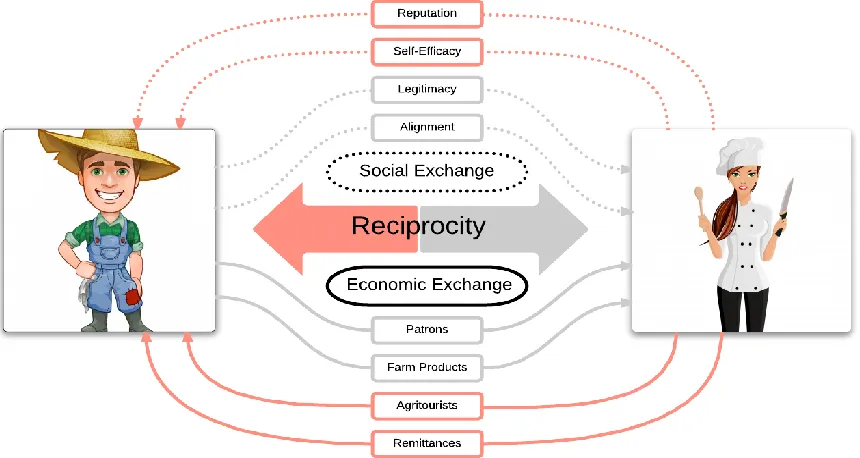
37 capital, self-efficacy, and reputation as a facilitator in future transactions. Secondly, I will turn to non-economic assets that chefs obtain from farmers, namely the enhanced level of transparency that it brings to the restaurant’s practices, and the alignment with important core values that enable economic rent.
Figure 1.1. The symbiotic relationship between farmers and chefs
5.4.1. From chefs to farmers 5.4.1.1. Social capital
38 Social capital, as contemporarily conceptualized, was first defined by Bordieu (1986) as “the aggregate of the actual or potential resources which are linked to possession of a durable network of more or less institutionalized relationships of mutual acquaintance and recognition – or in other words, to membership in group” (p. 286). In this study, we follow the author’s instrumental treatment of the concept, arguing that farmers will see their networks extended by way of partnership with chefs, therefore getting exposed to valuable non-redundant information through “weak ties” (Granovetter, 1973). I anticipate that exchange opportunities with other chefs may arise, as well the possibility to tap into resources like grants and low-interest loans.
Although Bordieu (1986) was perhaps the first to conceptualize social capital in the way it is contemporarily used, his sophisticated theorizing of the concept didn’t really find its way into the Anglo-Saxonic literature until much later, for it was originally published in French (Portes, 1998). Social capital has since been adopted and tweaked by a number of prominent authors (Coleman, 1988; Lin, 2000; Putnam, 1995), also finding its way into everyday language through general circulation magazines, rapidly becoming a panacea to all ills afflicting society (Portes, 1998). While there is not an agreed upon definition of the concept, I find Bordieu’s (1986) to be very discerning and certainly encompassing other nuanced perspectives.
39 structures” (p. 6). What these two postulations suggest (not necessarily their authors’ convictions) is that social capital is unreservedly a positive asset and that the more you have of it, the more likely you are to attain desired outcomes. For example, Zhang and Lin (2016) reported that foreign firms operating in China, suffering both from unequal institutional support and the liabilities of foreignness, privileged job applicants with higher social capital as the firms had high hopes that it could be leveraged to acquire economic resources, political support, and enhance legitimacy in the Chinese marketplace. They also found that social capital was more important for higher level positions, because senior management and other high ranks play a crucial role in establishing and nurturing interorganizational networks.
40 each other in some way, therefore, possessing heterogeneous resources (Woolcock & Narayan, 2000).
5.4.1.2. Self-efficacy
Self-efficacy is major theoretical paradigm utilized to explain motivation, perseverance and level of effort in a specific task (Bandura, 1982), defined as one’s belief in one’s ability to succeed in a target behavior, is a dominant theoretical paradigm used to explain people’s motivation, effort, and perseverance in a task (Bandura, 1977). The theory holds that if people perceive themselves to be capable of accomplishing certain activities, they are more likely to undertake them in the future (Alkire, 2002). Moreover, self-efficacy will also influence an individual’s level of motivation, as reflected in how much effort one will exert in a task, and how long one will persevere in the face of obstacles (Bandura, 1980). Concerning entrepreneurship, Boyd and Vozikis (1994) paved the way for the development and validation of self-efficacy in the entrepreneurial setting (Moberg, 2013). Entrepreneurial self-efficacy (ESE) has been defined as one’s belief in one’s ability to perform entrepreneurial related tasks and findings indicate it is a multidimensional construct (Chen, Greene & Crick, 1998; De Noble, Jung & Ehrlich, 1999; McGee, Peterson, Mueller & Sequeira, 2009; Moberg, 2013).
41 changing market demands, materialized in competitive advantage by meaningful differentiation from mainstream competition in the tourism sector. The second factor is
Marshaling Resources, and the dimension involves assembling resources of support from local agencies) to bring the venture into existence. The third factor is Adapting to Externalities; this dimension encompasses ways in which microentrepreneurs are able to either capitalize on or mitigate nuances in the legal landscape affecting the tourism sector that are out of their control. The fourth dimension is Aligning Core Purpose with Self, and it refers to the extent to which the microentrepreneur is able to articulate to stakeholders a core purpose of the business in line with personal idiosyncrasies and in support of a desired lifestyle. Lastly, e-Marketing denotes the competence and savviness of microentrepreneurs in regard to the effective use of social media to market their tourism businesses and engage with visitors and peers.
42 that their endorsement will have a significant impact on farmers’ TeMSE (Ferreira, Morais, Pollack, & Bunds, 2017).
5.4.1.3. Reputation
In commerce, trust problems have been ubiquitous ever since humans started trading commodities. According to Diekman, Jann, Przepiorka, and Wehrli (2014), in archaic societies, failure to reciprocate was punished by the loss of reputation and status; but when trade started transcending the borders of small communities, social and economic institutions evolved as a substitute for informal social control. A current example of such institutions are credit bureaus. Accordingly, Grosskopf and Sarin (2010) observe that an entrepreneur must be able to demonstrate a good credit history and hence a reputation for paying back loans promptly, or else fail to obtain the loans required to meet current needs and, thus, face bankruptcy.
43 5.4.2. From farmers to chefs
5.4.2.1. Transparency
According to Bhaduri and Ha-Brookshire (2011), transparency relates to visibility and accessibility of business information, including a traceable supply chain that shows the movement of products from the source to the end consumer, deemed a necessary condition for building customer loyalty, reputation and brand image, and maintain legitimacy. In niche markets, such as farm-to-table restaurant industry, the topic of transparency may be even more critical given the nature of its core patronage, disproportionally composed of socially and environmentally conscientious millennials, who expect that chefs and restauranteurs take their commitment to sourcing locally seriously (Weiss, 2012). In addition, numerous incidents of fraud have been reported on popular media, involving for example alleged Florida Blue Crab being actually caught in the Indian Ocean, have given rise to an alternative derogatory denomination to the movement – fraud to table (Berr, 2016). We argue that a public close relationship with local farmers will give chefs and restaurants the necessary edge to claim transparency business practices, a necessary condition for farm-to-table restaurant economic success.
5.4.2.2. Alignment
44 attaining economic rents, or payments to assets that exceed the competitive price (Dencker & Fang, 2016; Weeden & Grusky, 2014).
Conversely, by collaborating with local farmers, chefs and restauranteurs can align their value proposition with generally accepted core values in America (Kawasaki, 2011), such as sustainability, healthy living and localism (Flack, 1997). And, Shin, Im, Jung, and Severt (2017) found that health consciousness and community attachment positively influence attitudes towards visiting locally sourced restaurants, which ultimately
influence willingness to pay more. Therefore, I argue that collaborating with local
farmers enables chefs and restauranteurs to attain economic rents that will ensure
high economic performance in a fiercely competitive industry.
5.4.3. Reciprocity vs. altruism
45 that this multilayered construction may be embedded in linguistic symbolism, in particular in the way individuals thank one another in different European languages. Thus, the English “thank you” the German “zu danken”, would be indicative of a more superficial level of intellectual recognition; the French “mercy”, the Spanish “gracias”, or the Italian “grazie” would refer to the intermediary level of giving grace, and; finally, the Portuguese “obrigado”, loosely translated to obliged, indebted, or beholden, would correspond to the deepest level of all. Hence, in my consciously oversocialized analysis of Sampaio da Nóvoa’s (2015) claim, “obrigado” may signal an almost self-inflicted commitment to reciprocate by the recipient of social capital, which seems to pair up well with the undersocialized view that its donors act upon the expectancy of reciprocation. Therefore, we have donors with expectations to be repaid on the one hand, and recipients culturally constrained to pay their debts. The argument is most useful to demystify a common belief that I gleaned from extensive fieldwork, that chefs may be in the unlikely business of “helping” farmers survive. Most intriguing is even the fact that the fallacy is blatantly reproduced in the farmers’ discourse, in statements like “[without these partnerships] I wouldn’t be able to exist… because I’m so small” (Browne, Ferreira, & Morais, 2016). Even in the unlikely event of being true, the contrary is more often than not obscured – Farm to table restaurants wouldn’t be able to exist either, were it not for the small organic farms that supply them.
46 1984) nor am I claiming that speakers of one language will feel more indebted than others. My argument is that whether we take an approach that focuses on the individual or one that focuses on societal factors, in either case we have a compelling argument to assume that chefs are not in the business of altruism towards small-farmers, rather they have 1) a strategic interest, primarily legitimacy and alignment with core values, and 2) that they expect and count on reciprocity.
Methodology
This dissertation follows a mixed methods approach that is going to be described in detail for each study. In addition, both studies are part of a bigger participatory action-research that aims at transforming the lives and communities of participants. Power differential between researcher and researched in this dissertation is discussed and mitigation strategies are presented.
6.1. Participatory action-research
47 process. According to Nelson and Prilleltensky (2010), PAR cannot be defined by methods employed rather by the goals of research. And, because PAR is much more complex and nuanced than experimental or survey research, thus creating extra challenges on researchers that may at times, often unintendedly, give in to the forces of oppression, the latter authors propose the concept of psychopolitical validity to assess the epistemological and transformational value of research.
Wisner et al. (1991) discuss the differences between instrumental participation and transformative participation. Instrumental participation is mandated by governments and other institutions holding power to legitimize processes and decisions that are far from being democratic, but nonetheless require a token of popular representation. Conversely, transformative participation is genuine, from the bottom up, and usually flourishes into social change.
48 When conducting participatory research, it is critical to consider how structural power dynamics play out in the communities within which I plan to conduct my research. Next, I will lay out each primary stakeholder group and their current level of power and how it will potentially impact the research process. Finally, I describe what strategies I plan to use to mitigate these undesired effects.
6.2. Power
Power can be analyzed at various levels and from different perspectives. For example, Nelson and Prilleltenski (2010) speak of power within, referring to the need for the “conscientization” of the individual and realization that he or she can influence the outcomes of his/her life, 2) power with, which refers to collective action putting together the strengths of community members and also other communities with whom coalitions may be forged, and 3) power to, which can be seen as “liberation”, the ability to pursue the goals that matter to the individual.
49 recognized within academic boundaries but may not apply in other settings where the power differential may be reversed. Finally, it should be mentioned that the debate on influence of power on economic outcomes is not settled in the academic discourse, and perhaps will never be. Accordingly, Granovetter (2017) exposes how neoclassical economists brush issues of power under the rug for it would spoil their sanitized, “scientific”, predictive economic models, which is the source of much criticism by economic sociologists who tend to see power as a variable of primary interest.
50 researchers have the power that accrues both from their professional status and affiliation to the university.
I think that one form of power that is especially relevant in this system is the ability to impose cultural understandings and influence shared consciousness. Regarding the first, some farmers have told me that one of their goals in agritourism is to retort the prevalent misconception that southerners are “hillbillies and rednecks”, and that the new generation of organic farmers are a bunch of “potheads”. Others have refused to showcase their “rurality”, sought after by urbanites (Nazariadli, 2018), and preferred to portray themselves as industrious, sophisticated and entrepreneurial. I don’t think that chefs were the ones necessarily creating this social stigma, but I think it feeds well into their business model because the more rural and “primitive” the farmer can be, the more natural and “unspoiled” the products become in the eyes of their customers, the foodies. For example, even though most wine is mechanically harvested, all wine drinkers want to imagine those grapes being handpicked as they have seen in numerous promotional clips by the Portuguese Tourism agency.
51 shared consciousness in which chefs are the benefactors, as led some farmers to internalize it.
52 flora and fauna (Popovici, 2017). Notwithstanding, they are oppressed by tourism retail monopolies which exploit these community owned and run enterprises by controlling the flow of tourists and setting the prices as they wish.
Reflecting on my field notes, I am drawn to believe that the power differential between researcher-researched in Mexico is much higher than in North Carolina. This has to do with several reasons including my (deficient) mastery of the English language, dark skin tone, and provenience from a small peripheral country. Other reasons have more to do with the well-known vulnerability, low income and status of most graduate students in the US (Kelsky, 2015). Nevertheless, I acknowledge that I am more educated than most farmers I work with and that my line of work may be more prestigious than farming. In Mexico, the differential is steeper as I have lighter skin than most, use Spanish as a third language, and come from the United States, which is still believed to be the land of dreams for most Mexicans.