Design and Development of a
Communication-Assisted Microgrid
Protection System
Taha Selim USTUN
B.Sc. and M.Sc. in Electrical and Electronics Engineering
Submitted in fulfillment of the requirements of the degree of
Doctor of Philosophy
School of Engineering and Science, Faculty of Health,
Engineering and Science, Victoria University
Abstract
Climate change concerns due to the rising amounts of the carbon gas in the atmosphere have
in the last decade or so initiated a fast pace of technological advances in the renewable
energy industry. Such developments in technology and the move towards cleaner sources
of energy have made renewable resources based Distributed Generators (DGs) more
desirable. However, it is a known fact that rising penetrations of DGs have adverse impacts
on the grid structure and its operation. The microgrid concept is a solution proposed to
control the impact of DGs and make conventional grids more suitable for large scale
deployments of DGs.
Unlike conventional utility grids, microgrids comprise generators, storage devices and loads
at all levels of the system. Therefore, power generation, distribution and consumption levels
are not discrete in microgrids and power flows may occur in any direction. Microgrids may
be disconnected from the utility grid and continue its operation under islanding conditions.
Furthermore, some microgrids may have changing structures with alternative paths and the
coupling point for a device or a part of the microgrid may change due to the altering
conditions. Due to their unprecedented structure, these smaller grids experience very
significant protection issues. Conventional fault current protection schemes cannot be used
and should be modified due to the existence of generators at all levels of the distribution
estimate their fault current contributions. Some DGs, such as Inverter Interfaced DGs
(IIDGs), do not provide high fault currents which makes the fault detection more difficult. On
the other hand, the operating point of relays cannot be lowered boundlessly as this will trigger
erroneous trippings when there is no fault.
In order to sustain a safe operation in such a versatile and dynamic structure, which has
numerous parameters and variables, a new communication-assisted protection strategy is
required. The need of extensive communication between the microgrid components is widely
accepted in the Power Engineering field. In this research, a novel microgrid protection system
has been developed, which utilizes extensive communication to monitor the microgrid and
update relay fault currents according to the variations in the microgrid. This system is
designed to respond to dynamic changes in the microgrid such as connection/disconnection of
DGs. The operating points and connections of microgrid components are analyzed by the
Microgrid Central Protection Unit (MCPU). MCPU implements the protection parameter
calculation and assignment method developed in this work. After performing necessary
calculations, MCPU determines the operating points and updates them into relay settings to
ensure safe and reliable operation.
In this research, the communication infrastructure has been based on international standard
IEC 61850 and its recent extension for DGs, IEC 61850-7-420. New extensions have also
been proposed for these standards where there is a need for a new component such as fault
current limiters or electric vehicles. Since standard logical nodes and communication
procedures are utilized, the developed protection system can easily be installed in new
microgrid, integrated with existing infrastructures and adjusted to new deployments. Given
IEC 61850 and IEC 61850-7-420, the realization of plug-and-play concept would be easier.
However, it is worthy to highlight that the proposed protection system does not depend on
any particular communication standard or modeling. Should there be the need to use other
standards such as DNP3; this microgrid protection system can be implemented with them as
well.
In order to minimize human input and realize automated process, the microgrid has been
modeled according to the graph theory where the components are represented as nodes.
Dijkstra‟s algorithm, which is famous for shortest-path calculation purposes, is run over the
microgrid to determine the relay hierarchy at any point in time. In this manner, regardless of
the dynamic changes occurring in the microgrid, the hierarchy of network components can be
extracted. The implemented algorithm not only ensures proper selective operation under fault
conditions but also facilitates the introduction of new connections and new devices to the
system. Since the microgrid hierarchy can be detected automatically, even with new
connections, the developed algorithm serves for plug-and-play concepts in electrical
networks.
The main contribution to knowledge presented in this thesis is the development of a new
communication-assisted protection scheme for the protection of microgrids. The developed
protection system is very versatile and can be implemented as the primary protection scheme
in a microgrid, or it can be utilized simultaneously with other protection schemes, or it can be
installed as a roll-back strategy for other protection schemes when they cannot operate due to
a malfunction, e.g. in case of communication or synchronization failures in differential
protection systems.
Declaration of Originality
“I, Taha Selim USTUN, declare that the PhD thesis entitled “Design and Development of a Communication-Assisted Microgrid Protection System” is no more than 100,000 words in length including quotes and exclusive of tables, figures, appendices, bibliography, references and footnotes. This thesis contains no material that has been submitted previously, in whole or in part, for the award of any other academic degree or diploma. Except where otherwise indicated, this thesis is my own work”.
Signature Date:
Acknowledgements
In the name of Allah, the Beneficent, the Merciful.
Read in the name of your Lord Who created. He created
man from a clot. Who taught (to write) with the pen, Taught
man what he knew not.
(The Clot – 96th Surah – Verses 1 to 5)
They said: Glory be to Thee! We have no knowledge but
that which Thou hast taught us; surely Thou art the
Knowing, the Wise.
(The Cow – 2nd Surah – 32nd Verse)
…and say: O my Lord! Increase me in knowledge.
(Ta Ha – 20th Surah – 114th Verse)
List of Publications
Peer-Reviewed Journal Papers
[1] Taha Selim Ustun, Cagil Ozansoy, Aladin Zayegh, "Recent developments in microgrids and example cases around the world--A review," in Renewable and Sustainable Energy Reviews, Elsevier, vol. 15, pp. 4030-4041, 2011
[2] Taha Selim Ustun, Cagil Ozansoy, Aladin Zayegh, "Modeling of a Centralized Microgrid Protection System and Distributed Energy Resources According to IEC 61850-7-420," in IEEE Transactions on Power Systems, vol. PP, pp. 1-8, 2012.
[3] Taha Selim Ustun, Cagil Ozansoy, Aladin Zayegh, "Fault Current Coefficient and Time Delay Assignment for Microgrid Protection System with Central Protection Unit," in IEEE Transactions onPower Systems, vol. PP, pp. 2012 .
[4] Taha Selim Ustun, Cagil Ozansoy, Aladin Zayegh, "Implementing Vehicle-to-Grid (V2G) Technology with IEC 61850-7-420," IEEE Transactions on Smartgrids, vol. PP, pp. 2012 (accepted).
Refereed Conference Papers
[1] Taha Selim Ustun, Cagil Ozansoy, Aladin Zayegh, "A central microgrid protection system for networks with fault current limiters," in Proceedings of Environment and Electrical Engineering (EEEIC), 2011 10th International Conference on , vol., no., pp.1-4, 8-11 May 208-11, Rome, Italy, ISBN 978-1-4244-8781-3.
[2] Taha Selim Ustun, Cagil Ozansoy, Aladin Zayegh, "A microgrid protection system with central protection unit and extensive communication," in Proceedings of Environment and Electrical Engineering (EEEIC), 2011 10th International Conference on , vol., no., pp.1-4, 8-11 May 208-11, Rome, Italy, ISBN 978-1-4244-8781-3
[3] Taha Selim Ustun, Cagil Ozansoy, Aladin Zayegh, "Distributed Energy Resources (DER) Object Modeling with IEC 61850-7-420," in Proceedings of Australasian Universities Power Engineering Conference, AUPEC, 2011.
[4] Taha Selim Ustun, Cagil Ozansoy, Aladin Zayegh, "Implementation of Dijkstra‟s Algorithm in a Dynamic Microgrid for Relay Hierarchy Detection," in Proceedings of Second IEEE International Conference on Smart Grid Communications (SmartGridComm), Belgium, 2011.
[6] Taha Selim Ustun, Cagil Ozansoy, and Aladin Zayegh; "Using Object Oriented Data Structures for Dynamic Communication and Control in Electrical Networks"; in Proceedings of 25th Canadian Conference on Electrical and Computer Engineering (CCECE), 2012, April 29-2 May 2012
[7] Taha Selim Ustun, Cagil Ozansoy, and Aladin Zayegh; "Electric Vehicle Potential of Australian Households Based On Vehicle Ownership and Usage"; in Proceedings of 25th Canadian Conference on Electrical and Computer Engineering (CCECE), 2012, April 29-2 May 2012
[8]Jarred Wentzel, Taha Selim Ustun, Cagil Ozansoy, and Aladin Zayegh; “Investigation of Micro-Grid Behavior While Operating Under Various Network Conditions"; in Proceedings of IEEE International Conference on Smart Grid Engineering (SGE‟12) 27-29 August, 2012 UOIT, Oshawa, Canada
[9] Taha Selim Ustun, Cagil Ozansoy, and Aladin Zayegh, " Simulation of Communication Infrastructure of a Centralized Microgrid Protection System Based on IEC 61850-7-420," in Proceedings of Third IEEE International Conference on Smart Grid Communications (SmartGridComm), Tainan City, Taiwan, November 2012
Under Review:
[1] Taha Selim Ustun, Cagil Ozansoy, Aladin Zayegh, "Modeling Electrical Networks with Object Oriented Data Structures for Smart Control," International Journal of Electrical Power and Energy Systems, Elsevier
[2] Taha Selim Ustun, Cagil Ozansoy, Aladin Zayegh, "Investigation of Electric Vehicle Potential of Australian Households and Its Impact on Smartgrids," IEEE Industrial Electronics Magazine, Special Issue on Microgrids
[3] Taha Selim Ustun, Cagil Ozansoy, Aladin Zayegh, "Differential Protection of Microgrids with Central Protection Unit Support”, IEEE PES Conference on Innovative Smart Grid Technologies, Sao Paulo, Brazil, ISGT-LA 2013, 15 – 17 April, 2013
Table of Contents
Abstract ... i
Declaration of Originality ... iv
Acknowledgements ... v
List of Publications ... vi
Table of Contents ... viii
List of Figures ... xiii
List of Tables ... xviii
List of Abbreviations ... xx
Chapter 1 ... 1
Thesis Overview ... 1
1.1. Introduction ... 1
1.2. Aim of This Research ... 2
1.3. Research Methodologies and Techniques ... 8
1.4. Originality of the Thesis ... 11
1.5. Organization of the Thesis ... 13
Chapter 2 ... 16
Literature Review on Microgrid Concept and Its Implementation ... 16
2.1. Introduction ... 16
2.2. The Microgrid Concept ... 19
2.3. Current Status of Literature and Ongoing Research ... 21
2.3.1. Control ... 23
2.3.2. Protection ... 28
2.3.2.1. Islanding Detection ... 28
2.3.3. Microgrid Energy Management System (MEMS) ... 38
2.4. Examples around the World ... 42
2.4.1. European Union (EU) ... 42
2.4.2. Japan ... 43
2.4.3. Korea... 44
2.4.4. North America ... 45
2.4.5. Australia ... 46
2.5. Standards and Universalization ... 47
2.6. Impact of Electric Vehicles (EVs) on Future Microgrids ... 51
2.7. Conclusion ... 53
Chapter 3 ... 56
Conceptual Design of Centralized Microgrid Protection System ... 56
3.1. Introduction ... 56
3.2. Fault Current Challenges in Microgrids ... 58
3.3. Microgrid Protection System with Central Protection Unit and Extensive Communication ... 67
3.4. Power Networks with Fault Current Limiters(FCL) ... 74
3.5. Conceptual Design with Fault Current Limiter ... 77
3.6. Conclusion ... 81
Chapter 4 ... 83
Object Oriented Modeling of Microgrids and Automated Structure Detection ... 83
4.1. Introduction ... 83
4.2. Object Oriented (OO) Representation of Power Networks ... 86
4.3. Relay Hierarchy and Selectivity Issues... 93
4.4. Dijkstra’s Algorithm for Automated Structure Detection... 98
4.6. Conclusion ... 108
Chapter 5 ... 110
Fault Current and Time Delay Assignment for Relays ... 110
5.1. Introduction ... 110
5.2. Calculation of Grid Fault Current Contribution ... 111
5.3. Calculation of DG impact factor – k ... 114
5.4. Relay Hierarchy adjustment for selectivity ... 118
5.5. Faults outside the microgrid ... 124
5.6. Reliability considerations ... 127
5.7. Conclusion ... 129
Chapter 6 ... 131
IEC 61850-Based Modeling of the Microgrid Protection System ... 131
6.1. Introduction ... 131
6.2. IEC 61850 International Standard ... 132
6.3. Modeling DER Systems with IEC 61850-7-420 Extension ... 136
6.3.1. DER Unit Controller ... 138
6.3.2. Internal Parameters ... 139
6.3.3. Grid Connection Units ... 140
6.3.4. Network Operator Units ... 141
6.4. Extending IEC 61850-7-420 for New Grid Components ... 141
6.4.1. Fault Current Limiter Extension for IEC 61850-7-420 ... 142
6.4.1.1. Updating the DER controller LN (DRCT) ... 143
6.4.1.2. Information Modeling for the FCL Logical Device ... 144
6.4.2. Electric Vehicle (EV) Extension... 147
6.4.2.1. Current Status of EV Technologies ... 148
6.5. MCPU Modeling with IEC 61850-7-420 ... 158
6.6. Data Maps With IEC 61850-7-420 Models ... 166
6.7. Conclusion ... 171
Chapter 7 ... 174
Microgrid Operation and Protection Simulations ... 174
7.1. Introduction ... 174
7.2. Microgrid Operation Simulations ... 176
7.2.1. Microgrid Simulation - Islanded Operation ... 179
7.2.2. Grid-Connected Simulation: Transmission Network Connection, IEEE T14-Bus System 180 7.2.3. Grid-Connected Simulation: Distribution Network Connection, IEEE 34-Bus System 184 7.2.4. Microgrid V2G-G2V Simulations for EV (Charging/Supplying)... 187
7.3. Fault Parameter follow-up for Microgrid Operation Simulations ... 189
7.3.1. MATLAB Simulation Results... 194
7.4. Communication Interface Simulations ... 198
7.4.1. Simulation Works and Resultant Data Maps ... 202
7.5. Conclusion ... 207
Chapter 8 ... 209
Operation of the Proposed Protection System under Different Protection Scenarios .. 209
8.1. Introduction ... 209
8.2. Operation with Other Microgrid Protection Systems ... 211
8.3. Usage of Proposed System as a support for Differential Protection ... 216
8.3.1. Differential Protection with Microgrid Central Protection Unit (MCPU) ... 221
8.3.2. Communication Infrastructure Reliability Considerations ... 227
Chapter 9 ... 232
Conclusions and Future Work ... 232
9.1. Introduction ... 232
9.2. Key Contributions of the Research ... 234
9.3. Future Work ... 238
References ... 240
Appendix – A IEEE 14 Bus Test System ... 252
Appendix – B IEEE 34 Bus Test System... 254
Appendix – C Short Circuit Analysis Results for Simulated Power Systems ... 256
List of Figures
Figure 2.1. A Sample Microgrid Architecture ... 20
Figure 2.2. Different droop lines and operating points in [45] ... 27
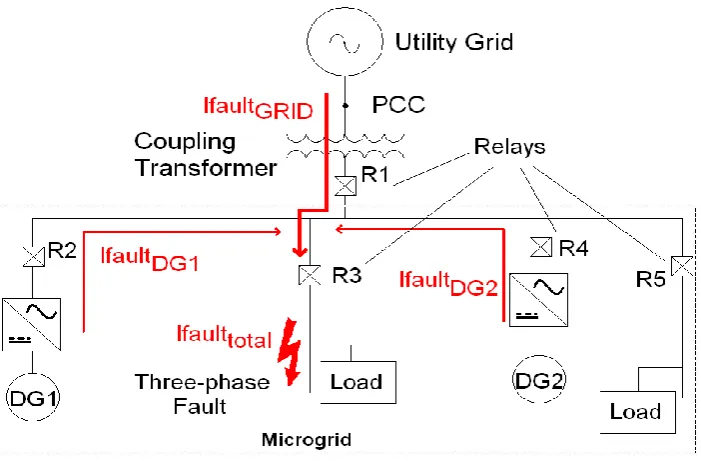
Figure 2.3. Grid and DG fault current contribution in MG ... 32
Figure 2.5 Adaptive Microgrid Protection System proposed in [73] ... 35
Figure 2.6 Implementation of Selectivity with interlock direction in [73] ... 36
Figure 2.7. Control Levels of the Microgrid [100] ... 39
Figure 2.8. CERTS Microgrid [6] ... 46
Figure 2.9. IEEE SCC21 1547 Series of Interconnection Standards [61] ... 48
Figure 3.1. Grid connected-Mode, Internal Three-phase Fault ... 60
Figure 3.2. Islanded Mode – Internal Three-phase Fault ... 61
Figure 3.3. Nuisance Tripping ... 62
Figure 3.4. Selectivity Issue ... 64
Figure 3.5. Reverse Selectivity for Faults outside the Microgrid ... 66
Figure 3.6. Topology of the Developed Microgrid Protection System ... 67
Figure 3.7. Interrupt-based Protection Algorithm ... 73
Figure 3.8. Solid state FCL topology in [158]. ... 75
Figure 3.9. The inverter interface used in [157]. ... 76
Figure 3.10. Fault current limitation algorithm for the topology in Figure 3.9 [157]. ... 76
Figure 3.11. Fault current limitation curves for inverter topology [160]. ... 77
Figure 3.12. Protection Algorithm employed in MCPU for FCLs. ... 80
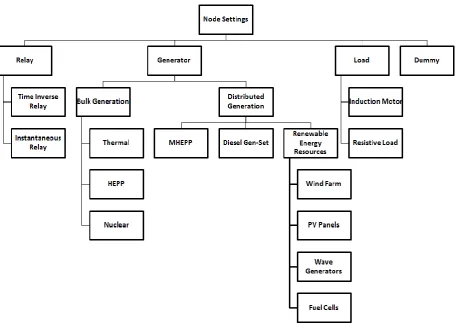
Figure 4.2. Abstraction of NS for different Node types handled by Update Settings Function ... 89
Figure 4.3. Bus bar Locations in a Sample Microgrid where Dummy Node is required .... 91
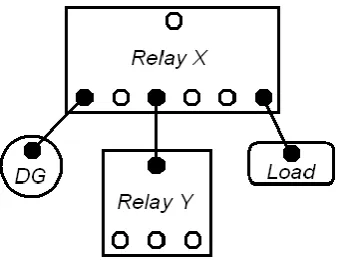
Figure 4.5. Topology After Connect (Relay X) Service ... 92
Figure 4.6. A sample microgrid ... 94
Figure 4.7. The network structure when CB5 is open and CB4 is closed (1st Case) ... 95
Figure 4.8.The Network structure when CB5 closes and CB4 opens (2nd Case) ... 95
Figure 4.9. A sample graph for shortest path problem ... 98
Figure 4.10. 1st Loop, First 3-steps performed on „node a‟ ... 99
Figure 4.11. 2nd Loop, First 3-steps performed on „node d‟ ... 100
Figure 4.12. 3rd Loop, First 3-steps performed for node b ... 100
Figure 4.13. Modeling of microgrid in Case 1 according to graph theory ... 102
Figure 4.14. Modeling of microgrid in Case 2 according to graph theory ... 102
Figure 4.15. Dijkstra‟s Algorithm run for case 1, Path from CB2 to DG4 ... 104
Figure 4.16. Dijkstra‟s Algorithm run for case 2, after grid re-configuration, Path from CB2 to DG4 ... 105
Figure 4.17. Dijkstra‟s Algorithm run after new deployments, Path from CB2 to DG6 .. 106
Figure 5.1. Thevenin Equivalent Circuit taken from Point A ... 112
Figure 5.2. Fault Contribution of DG at different locations ... 114
Figure 5.3. Symmetrical components scheme ... 115
Figure 5.4. A sample microgrid ... 119
Figure 5.5. 2-pair Selectivity Method Algorithm ... 120
Figure 5.6. The network structure change from Case 1 (a) to Case 3 (b) ... 123
Figure 5.7. Faults in the Utility Grid ... 125
Figure 5.8. Local Decision Making scheme in Relays ... 128
Figure 6.1. Generic DER system in IEC 61850-7-420 [197] ... 136
Figure 6.2. Fault current limitation for inverter topology [160]. ... 143
Figure 6.4. FACL Class in Generic DER system (IEC 61850-7-420) ... 147
Figure 6.5. A HEV with a series hybrid power train ... 149
Figure 6.6. A HEV with a parallel hybrid power train ... 149
Figure 6.7. A PHEV with a series-parallel hybrid power train ... 150
Figure 6.8. Charging time of Several Vehicles for Different Charging Options ... 152
Figure 6.9. Modeling EVs with IEC 61850-7-420. ... 155
Figure 6.10. Virtualization of Electric Vehicles with proposed LNs ... 157
Figure 6.11. EVCT Class in Generic DER system (IEC 61850-7-420) ... 157
Figure 6.12. Relay LD incorporating various functions modeled with LNs ... 159
Figure 6.13. Reciprocating Engine Information Model ... 160
Figure 6.14. Fuel Cell Modeling ... 162
Figure 6.15. PV Panel Modeling ... 165
Figure 6.16. The system modeled according to IEC 61850-7-420 ... 166
Figure 6.17. Reporting DG status through IEC 61850-7-420 Models ... 168
Figure 6.18. Reporting Relay status through IEC 61850-7-420 Models ... 169
Figure 6.19. Updating Relay operating Currents through IEC 61850-7-420 Models ... 171
Figure 7.1. Micro-grid network structure used for investigation & simulation ... 176
– when bus 4 is connected to bus 3 through CB5 ... 176
Figure 7.2. Micro-grid network structure used for investigation & simulation ... 177
– when bus 4 is connected to bus 2 through CB12 ... 177
Figure 7.3. IEEE Standard T14 Bus System [212] with Microgrid Connection ... 182
Figure 7.4. IEEE Standard 34 Bus System [213] with Microgrid Connection ... 185
Figure 7.5. The Sample Microgrid with EV deployments (G2V mode – charging) ... 187
Figure 7.6. The Sample Microgrid with EVs operating in V2G mode ... 188
Figure 7.8. Relay Communication and Control Module ... 190
Figure 7.9. DG with Communication Module ... 192
Figure 7.10. MCPU Block (inside) ... 193
Figure 7.11. The Microgrid Model Simulated in MATLAB/Simulink ... 195
Figure 7.12. Current Waveforms for the Grid and DG1 ... 196
Figure 7.13. Current Waveforms for DG2 and DG3... 197
Figure 7.14. Operating Mode Signal and Tripping Current ... 197
Figure 7.15. Total Current flow in the Network ... 198
Figure 7.16. Relay Block with XCBR, PTOC and TCTR LNs ... 199
Figure 7.17. DG model with DRCT and DRCS LNs ... 200
Figure 7.18. StatusDG module (in MCPU) to extract connection status of DGs ... 201
Figure 7.19. IfaultDG module (in MCPU) to extract fault contribution of DGs ... 202
Figure 7.20. The system for which communication modeling is performed ... 202
Figure 7.21. MCPU operating with modeled Relay and DG blocks ... 205
Figure 7.22. The Communication Infrastructure modeled according to IEC 61850-7-420 ... 206
Figure 8.1. Interaction of the Proposed Protection System with Others ... 212
Figure 8.2. Status of the network after inclusion of CB1 and CB2 in the Proposed Protection System ... 214
Figure 8.3. A sample differential protection topology ... 217
Figure 8.4. Differential Protection for power lines ... 218
Figure 8.5. A double-slope restraint characteristic [222] ... 218
Figure 8.6. Multi-terminal protection zone with several currents ... 220
Figure 8.7. Topology of the Developed Differential Protection with MCPU ... 222
Figure 8.9. Protection Algorithm employed in MCPU. ... 226
List of Tables
Table 2.1. Batteries Used For Distributed Energy Storage ... 22
Table 2.2. Control Strategies for DG coupling Inverters in MG ... 24
Table 3.1. Data Maps in the Central Protection Unit ... 70
Table 3.2. Data Maps in the Central Protection Unit ... 78
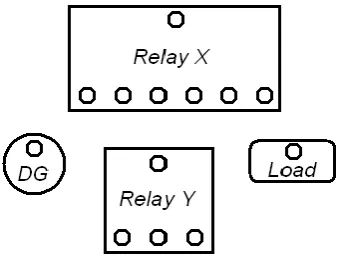
Table 4.1. Details of Relay X ... 92
Table 4.2. Details of Load ... 92
Table 4.3. Details of Relay X After Load.Disconnect (Relay X) ... 93
Table 4.4. Shortest Path from “node a” ... 101
Table 4.5. The Path from “Circuit Breaker 2” ... 105
Table 4.6. The Path from “Circuit Breaker 2” After New Deployments ... 107
Table 5.1. 2-pair Selectivity Method Data ... 120
Table 5.2. Critical Relay Hierarchy For Various Cases ... 122
Table 5.3. Relay Pairing For Case 1 ... 122
Table 5.4. Relay Pairing For Case 3 ... 124
Table 5.5. Bidirectional Parameters For Case 1 ... 126
Table 6.1. Updated DRCT Class ... 144
Table 6.2. FACL Class ... 146
Table 6.3. Typical Set of EV Charging Options ... 151
Table 6.4. Battery Characteristics of Different EVs ... 152
Table 6.5. Updated DRCT Class ... 154
Table 6.6. Proposed EVCT Class ... 156
Table 6.7. Network Component Parameters at t=0 sec ... 168
Table 6.8. Network Component Parameters at t=0.5 sec ... 169
Table 7.1 – Micro-Grid Loading Magnitudes ... 177
Table 7.2 – Distributed Generation Type & Magnitude of Power Generated ... 178
Table 7.3 – Islanded Operation: Micro-grid Configuration 1 - Branch Flow Results ... 180
Table 7.4 – Islanded Operation: Micro-grid Configuration 2 - Branch Flow Results ... 180
Table 7.5 – Grid Connected Operation: T14 Bus System - Micro-grid Configuration 1 . 183 Power Flow Results ... 183
Table 7.6 – Grid Connected Operation: T14 Bus System - Micro-grid Configuration 2 . 183 Power Flow Results ... 183
Table 7.7 – Grid Connected Operation: IEEE Standard 34 Bus System - Micro-grid Configuration 1 Power Flow Results ... 186
Table 7.8 – Grid Connected Operation: IEEE Standard 34 Bus System - Micro-grid Configuration 2 Power Flow Results ... 186
Table 7.9 – Simulation Results for Test Cases ... 189
Table 7.10 – Network Component Parameters ... 196
Table 7.11 – Network Component Parameters at t=0 Sec ... 204
Table 7.12 – Network Component Parameters at t=0.5 Sec ... 204
Table 8.1. Data Maps for Operation with Other Protection Systems ... 213
Table 8.2. Selectivity Table for Operation with Other Protection Systems ... 213
Table 8.3. Data Maps After Integration of CB1 and CB2 ... 215
Table 8.4. 2-pair Selectivity List After New Integrations ... 215
Table 8.5. Multi-terminal Differential Protection Zones ... 223
List of Abbreviations
AC Alternating Current
ACSI Abstract Communication Service Interface
ASG Analogue Setting
CB Circuit Breaker
CCM Communication and Control Module
CDC Common Data Class
CERTS Consortium for Electric Reliability Technology Solutions
CORBA Common Object Request Broker Architecture
CT Current Transformer
DC Direct Current
DCOM Distributed Component Object Model
DCP Controllable Double Point
DER Distributed Energy Resource
DG Distributed Generator
DMS Distribution Management System
DNO Distribution Network Operator
ECP Electrical Connection Point
EE Electrical Engineering
ENN Electrical Network Node
EV Electric Vehicle
FACTS Flexible AC Transmission System
FCL Fault Current Limiter
G2V Grid-to-Vehicle
GOOSE Generic Object Oriented Substation Event
GTO Gate Turn Off
HEV Hybrid Electric Vehicle
ICS Internal Combustion Engine
IEC International Electrotechnical Committee
IED Intelligent Electronic Device
IGBT Insulated Gate Bipolar Transistor
IIDG Inverter Interfaced Distributed Generator
ING Integer Status Setting
IR Individual Relay
LC Local Controller
LD Logical Device
LN Logical Node
LV Low Voltage
MCPU Microgrid Central Protection Unit
MEMS Microgrid Energy Management System
MGCC Microgrid Central Controller
MHEPP Micro Hydroelectric Power Plant
MMS Manufacturing Message Specification
MMS Microgrid Management System
MO Market Operator
MPPT Maximum Power Point Tracking
MV Measured Value
NS Node Settings
OO Object-Oriented
PE Power Electronics
PHEV Plug-in Hybrid Electric Vehicle
PLC Power Line Carrier
PV Photovoltaic
R&D Research and Development
RBD Reliability Block Diagram
RE Renewable Energy
RoCoF Rate-of-Change-of-Frequency
SAS Substation Automation System
SCADA Supervisory Control and Data Acquisition
SCC21 IEEE Standard Coordinating Committee 21
SCFCL Superconducting Fault Current Limiter
SPS Single Point Status
T&D Transmission and Distribution
TCP/IP Transmission Control Protocol/Internet Protocol
UML Unified Model Language
V2G Vehicle-to-Grid
VPD Voltage-Power Droop
VPP Virtual Power Plant
Chapter 1
Thesis Overview
1.1.
Introduction
The search for cleaner and more efficient power systems drew engineers‟ attention to
Distributed Generators (DGs). As a result of recent developments in technology and concerns
for global warming, the new tendency in the Power Engineering field is to generate electricity
from cleaner energy sources and closer to the consumption areas [1]. This implies that the
share of DG in the power generation shall increase substantially. These generators may be
Renewable Energy (RE) based such as wind turbines and solar systems.
However, existing transmission and distribution networks are not suitable for large scale DG
connections since they were traditionally designed with the assumption of a passive network.
The DG interconnection to such networks changes their fundamental characteristics and
create unprecedented technical problems [2]. Moreover, in the case of a fault, DG systems
contribute to the fault currents and the transient characteristics of the network become
completely different [3]. Since the Inverter Interfaced DGs (IIDGs) have highly variable
characteristics, they alter the grid structure and jeopardize safe and reliable operation[4].
overcome these problems a new concept called “microgrid” is proposed by the power
engineers.
A microgrid is a collection of loads and micro-generators along with some local storage and
behaves like a model-citizen [5] from grid side thanks to intelligent control [6]. Although a
microgrid has many generators and loads, it appears as a net load or a net generator to the
broader grid with well-behaved characteristics [7], i.e. with stable voltage and frequency.
Through microgrids, the gigantic conventional utility network can be divided into smaller
networks which manage distributed generators, loads, storage and protection devices in their
own grid [8]. In microgrids, these generators are handled in smaller quantities and, thus, DGs
can be connected to the grid and side-effects on the grid operation can be eliminated.
Despite their advantages, microgrids bring along some technical challenges in control,
management and protection fields [9, 10]. Since the very basics of conventional network
operation do not hold any more (such as grid‟s being radial and passive) revolutionary
changes are required for safe operation. Protection systems, in particular, are affected heavily
by the current contribution of DGs and the bidirectional power flow. Therefore, a new
approach is required for power grid protection purposes.
1.2.
Aim of This Research
The research presented in this thesis aimed to investigate the impact of Distributed
Generators (DGs) on the operation of electrical networks and design a novel protection
system with extensive communication. In order to accommodate new deployments and
follow the dynamic changes occurring in a microgrid, the proposed protection system has
protection system uses communication lines to gather information and send data. This
communication infrastructure has been based on and modeled according to the international
substation communication standard IEC 61850 [11] and its extension for DGs, IEC
61850-7-420[12].
The specific aims of this research can be summarized as follows:
Research on evolving concepts of microgrids and smartgrids
Extensive literature review has been performed to closely follow the recent developments in
microgrid and smartgrid research areas. Being relatively new in power engineering field,
these areas constantly develop at a high speed. It is imperative to monitor the research work
and the associated findings almost on a day-to-day basis to stay up to date with these areas.
The literature review was performed in a wide perspective, so as to include the evolution
power networks are experiencing nowadays. Old, interconnected, passive and massive power
networks are being transformed into smaller and isolated smaller entities which may be both
active and passive. The motivations behind this evolution, its impact on power networks,
practical aspects which relate to the end-users, novel technologies and possible research areas
have been investigated in detail. Accordingly, this research has touched upon various
concepts in the power engineering field such as network protection, fault currents, relay
programming, communication standards, communication infrastructure and new technologies
such as Fault Current Limiters (FCLs) and Electric Vehicles (EVs). The literature review
provided in this research provides a good reference for these different concepts, their places
in microgrids and possible future research work in the field.
It is not a secret that recent years have experienced a sharp increase in the network
penetration of DG systems . This can be traced back to benefits of DGs such as lower carbon
emissions, more environment friendly generation, less dependence on oil and its products for
electricity generation as well as local generation and grid-support at peak hours. However,
electricity networks were designed several decades ago. There was no local generation in
those days and the power flow was unidirectional from generation points to consumption
points. The addition of DGs to power networks at various levels such as transmission and
distribution renders these earlier assumptions invalid. The consequences of DG usage have
been investigated thoroughly in this research, especially from fault levels and fault current
protection perspectives. The work carried out was not limited conventional DGs such as
diesel generators or PV panels but novel technologies such as Electric Vehicles (EVs) have
also been studied.
Investigation of the potential and impact of Electric Vehicles (EVs) and
Vehicle-to-Grid (V2G) operation on microgrids
Due to rising oil prices and environmental concerns, EVs have become very popular and car
manufacturers increased their focus on EV technology. Also, governments started giving
incentives for wide spread EV usage. Therefore, this research focused on investigating the
potential of EVs from social and financial perspectives. Some test cases have been set up and
simulated in order to investigate the impacts of EVs on microgrids under Vehicle-to-Grid
(V2G) and Grid-to-Vehicle (G2V) operating conditions when they are supplying power to the
grid and drawing power from the grid, respectively.
Design of a novel communication-assisted protection system
Following the investigations and findings above, a novel protection system which uses
the fact that microgrids are not only differ from conventional electrical grids in terms of their
size, hence micro-grid, but also in terms of intelligence, hence the term smartgrid is used.
These new generation grids require the components and the management system to be
smarter, to monitor even the slightest of changes, to communicate with different parts of the
grid and make decisions on the fly. Therefore, the protection system proposed in this thesis
incorporates communication between the components and the central management unit. The
novelty of this research is its special focus on the fault protection in microgrids. In the
literature, there have been several works done in the management, load sharing and
marketing fields but little has been contributed towards the design of a protection system for
the unprecedented conditions occurring in microgrids.
Assignment of protection parameters on the fly
One of the key contributions of this research is the developed ability to calculate the fault
current parameters required to coordinate the protection devices in the protection system. In
conventional power networks, the passive mode of operation and the unidirectional power
flow eased the protection calculations massively. Power Engineers had the luxury to calculate
fault conditions beforehand and program protection devices accordingly. However, the
dynamic nature of microgrids, bidirectional power flows, presence of generation at every
level of power networks require that the protection systems shall follow all these changes and
calculate operating points for any modification, when it occurs. It is almost impossible to
calculate and tabulate all of the possible conditions in a microgrid beforehand. Even if it is
accomplished, a new deployment or a new connection of a generator would require all of the
calculations and possible cases to be updated. Therefore, a calculation method has been
developed where the fault levels and fault current contributions are calculated by the
protection system automatically. In this fashion, human input is lowered to a minimum and
Modeling communication infrastructure with international substation communication
standard IEC 61850 and its extension for DGs, IEC 61850-7-420
In addition to designing a new protection system for microgrids, this research contributes to
the knowledge by modeling the whole system along with its components in compliance with
international substation communication standard IEC 61850 and its recent extension IEC
61850-7-420. This is a solid step towards standardizing the communication required for the
microgrids. It is constantly repeated in the literature that communication is an indispensible
factor in microgrids. However, there is no specific step towards modeling microgrids
management systems with standard models. By designing the whole protection system
according to the IEC standard, this research paves the way for standardization both for
manufacturers and operators.
Extending IEC 61850 standard to accommodate new equipment definitions
IEC 61850 standard does not cover every single equipment present in power grids. In order to
address this short coming, the International Electrotechnical Committee (IEC) published an
extension for DGs which is titled IEC 61850-7-420. Nevertheless, through the course of this
research, it has been determined that there are some crucial components that are not included
in these standards. In an effort to model the entire microgrid and the newly designed
protection system, new extensions have been proposed to include devices such as FCLs and
EVs. The Logical Nodes (LNs) derived for these devices follow the strict rules of IEC
standards and, hence, they are fully compatible. With these extensions, some missing links in
the standard have been bridged and the application of the IEC 61850 standard to Microgrids
has been made more feasible.
Automatic relay hierarchy extraction after a microgrid structure change or a new
As expressed earlier, one of the biggest challenges power engineers face in microgrids is their
ever-changing nature. This requires the protection systems to be flexible, dynamic and
compatible with the changes occurring therein. For instance, an operating condition which is
correct for a certain structure of microgrid might become absolutely unacceptable after
several modifications made in the microgrid structure. Therefore, it is required to monitor
these changes as well as new deployments to adapt the installed protection system
accordingly. For this purpose, a groundbreaking approach has been implemented in this
research where Dijkstra‟s algorithm, an algorithm which is used to find the shortest path
between two points, has been used to extract the relay hierarchy in a microgrid without the
need for prior knowledge of the microgrid structure. Regardless of the modifications and new
deployments occurring in the microgrid, this algorithm enables protection systems to extract
new microgrid structure and hence, the relay hierarchy. This is invaluable for plug-and-play
purposes in power networks.
Supporting other protection systems with the proposed system
This research also explains how the proposed protection system can be used to support other
protection systems used in power networks. Some power networks have established their
protective devices for a particular protection scheme and it is not realistic to propose the
complete removal of these devices. In these places, the proposed system can be used to
support to the protection systems as a roll-back strategy. For instance, this has been
implemented for communication failure cases in differential protection which requires
continuous communication over a dedicated line. Furthermore, being very versatile and
flexible, the developed protection system can be adapted or realized to support other
1.3.
Research Methodologies and Techniques
In order to achieve the above-mentioned aims of this research, a step by step approach has
been implemented in this research. These steps can be summarized with the following
research methodologies and techniques:
Literature review for new concepts such as microgrids and smartgrids
A thorough literature review has been performed to get the full grasp of these newly
introduced concepts. Since these concepts have emerged recently, they are evolving very fast
and special attention shall be paid to stay up-to-date. Moreover, the interpretation and
implementation of these new concepts may differ in different parts of the world. Therefore,
various microgrid test cases from different countries have been examined. In addition to
management and stability issues, special attention has been paid to protection considerations
due to relatively less research work done in this particular field.
Investigation of the effects of DGs and other equipment such as FCLs
Following the wide-scoped literature review explained above, research work has been
dedicated to investigate the effects of DG deployments and use of other devices such as FCLs
on microgrids. This step was particularly important to analyze the behavior and effects of
such equipment on the microgrid operation since the protection system modeling has to
account for them. The design of the new protection scheme was heavily based on these
findings.
Investigation of the impact of EVs and V2G technology
Although this item is very close to the one above, some differences ask for a separate
analysis. Firstly, most of the devices considered in the above item are large establishments
diesel generator or a wind turbine on its own. However, the vehicle predictions show that
almost all households could own an EV in the future. Furthermore, most of these devices
have single operating mode, either generator or load, whereas EVs can freely alter between
charging (G2V) and generating (V2G) modes of operation. Due to these major differences,
EVs and their modes of operation have been investigated as a separate item in this research.
Design of a novel protection system based on extensive communication
Once the necessary investigations were done and the knowledge gap regarding the microgrid
protection systems were identified and understood, a novel protection system has been
designed. This new protection system considers the smartgrid vision where extensive
communication lines will be utilized between the grid components. Therefore, the proposed
protection system does not require new communication line installation for protection
purposes, rather it uses the lines which will be present in future smartgrids. Although the use
of communication in protection lines might seem a tedious task, it makes it possible to
monitor the changes occurring in the microgrid and take necessary actions immediately.
These changes might be short-term changes such as disconnection of a relay or long-term
changes such as a new DG deployment.
Modeling of the proposed protection system with IEC 61850 Standard and its recent
extension IEC 61850-7-420
In order to make the developed protection system universal, the research focused on
modeling of this conceptual design using the international substation communication standard
IEC 61850 and its recent extension for DGs, IEC 6180-7-420. This step is very crucial to
have a universal protection system which can be implemented in different microgrids. When
the standard modeling stipulated by IEC standards has been implemented, the developed
of the grid components. Instead of having a localized, custom-made protection system for a
particular microgrid, this approach ensures that the proposed protection system can be
utilized as a generic system.
Extending IEC 61850-7-420 for new equipment
Although a recent extension of IEC 61850 was recently published for DGs, i.e. IEC
61850-7-420, there are still some devices which are not defined in this standard. These include FCLs
and EVs. Since they are bound to be used very often in future power networks, they need to
be incorporated to IEC communication standards. In this research, these missing links have
been connected by proposing IEC models for these devices.
Automated microgrid structure detection for plug-and-play purposes
After designing a new protection scheme and modeling it within the IEC communication
framework, it was required to automate the microgrid structure detection. This has particular
importance in microgrids, since several connections/disconnections may happen in a very
short period of time and some new deployments are always bound to occur. These
deployments need not be very high cost projects. For instance, whenever a new EV is
purchased by a household, this will appear as a new deployment from network operator‟s
point of view. Therefore, a new approach has been taken to enable the microgrid protection
system monitor the changes and extract the resulting structure. Thanks to this automated
approach, network structure is not required to be known by the protection system beforehand.
Adaptation of the proposed system for other protection systems
Finally, the developed protection system was implemented with other protection schemes
seen in microgrids. This adaptation was designed in two aspects. The first one envisages that
instance, multi-terminal protection with long distance between the terminals in a differential
protection set-up would be very meticulous and tedious task. Furthermore, any new
deployment would require the multi-terminal connections to be updated. The proposed
protection system is utilized to support differential protection in this aspect. Secondly, some
protection schemes such as differential protection require the communication link to be active
continuously. Should there be a communication failure the protection scheme becomes
ineffective. Thanks to the local decision making of the proposed scheme, it is implemented as
a roll-back strategy in case of a failure. This is also important to depict the interaction
between different protection schemes.
1.4.
Originality of the Thesis
This thesis presents a microgrid protection system which is equipped with various capabilities
to address the changing nature of power networks. While striving to realize a reliable and
secure power network, the proposed protection system takes individual components into
account. In this manner, the protection system is implemented in a holistic sense where
micro-management is also performed. The following points can be listed as the key
contributions of this research work to the scientific knowledge:
Details the design of a Microgrid Central Protection Unit (MCPU)
This thesis provides the design details of an MCPU which is required for the coordination of
the developed protection system. The conceptual design explains how the individual fault
contributions of different generators shall be taken into account, how new fault levels and
operating conditions shall be updated in protective devices and how different operating
modes, i.e. grid-connected or islanded mode, shall be accounted for. This MCPU is designed
to be versatile so that it can be adapted to different microgrids with different set of
components such as FCLs, EVs with V2G operation as well as operation with other
protection schemes such as differential protection.
Implementation of communication with IEC standards for universality
This research has modeled a complete protection system according to the IEC international
communication standards. This is very important to show how different equipment is
included in the protection scheme, regardless of their manufacturers or serial numbers. This
standard way of modeling is crucial to include all kinds of equipment and, thus, make the
proposed protection scheme universal.
In this research, modeling of the data and information exchange for the newly designed
protection system has been carried out according to the various components of the IEC 61850
standards. This is significant to ensure a standard means of data communication between the
microgrid components and protection elements. The work carried out has therefore made
contributions to the realization of the plug-and-play concept in microgrid protection systems.
Wherever applicable, it extends IEC standard, thus contributes to betterment of it
In order to model every device present in the power grids, some extensions have been made
to the IEC 61850 standard. This includes extensions for FCLs and EVs which are bound to be
very often utilized in future grids. This thesis stands out for the fact that as part of the work
carried out, new LNs have been devised and proposed for the devices which are not currently
included in these standards. In this fashion, the applicability of IEC 61850 standard and its
scope has also been extended.
It automates the protection system adjustments with Dijsktra‟s algorithm on graph
Unlike previous protection systems, the proposed protection scheme has a unique feature
which enables it to monitor the changes occurring in the microgrid and extract the resultant
structure thereof. This is achieved by representing microgrids with graph theory where
devices are represented as nodes. Then, Dijkstra‟s algorithm, which is traditionally used to
find shortest path on a graph, is run over this representation to extract the paths connecting
these nodes. These paths represent the connections present between grid components and
shall be used in protection scheme coordination. Representation of power networks with
graph theory and extraction of microgrid structure with Dijkstra‟s algorithm is unprecedented
and unique to this research. In this fashion, the dynamic connections/disconnections in a
microgrid can be monitored while new deployments can be easily included in the protection
system
The proposed scheme can be used to support various protection schemes
The proposed protection scheme can be used as a standalone system to ensure protection of
the microgrids. Additionally, a unique feature of the proposed system enables it to be used to
support other protection systems whenever necessary. Alternatively, the proposed system can
be installed as a roll-back strategy in case of a failure which renders the primary protection
system invalid such as a communication failure in differential protection systems.
1.5.
Organization of the Thesis
This thesis consists of nine chapters in total and it is organized as follows:
Chapter1 gives an overview of the thesis, its aims of the research and its contribution to the
knowledge. It also sheds some light on the research techniques and methodologies used in the
power engineering field such as DGs, microgrids, their implementations, interactions with
one another and the larger power network. These concepts have been introduced recently and
their implementations might differ in different parts of the world. This literature review is
intended to provide the required background information, especially from microgrid
protection perspective. Although relatively much work is done in other aspects of microgrids
such as stability and islanding detection, not much effort has been reserved for fault levels
and fault current calculations.
Following this review and the detection of the research field, Chapter 3 depicts the details of
a conceptual microgrid protection system which is proposed to fill the knowledge gap
outlined in the previous chapter. It reveals the connection of grid components with MCPU
over communication lines, the process for collecting grid data and its analysis, the calculation
of operating points and updating them in relevant grid components. It is also mentioned in
this section, how this conceptual design is kept flexible and how several generators with
different grid connection interfaces such as rotating machines, IIDGs or DGs with FCL can
all be handled in single design.
The hallmark of microgrids is their dynamic structure which is bound to change very often.
Therefore, Chapter 4 explains how the developed protection scheme is designed to
automatically monitor changes happening in the microgrid and adapt the operating points
accordingly. This is achieved by representing electrical networks as a graph with
Object-Oriented (OO) models. Then, the steps of automatic operation through Dijkstra‟s algorithm
are examined where, in an unprecedented manner, this shortest-path-finding algorithm is
utilized to extract the microgrid structure. This automatic operation is also applicable for new
Chapter 5 analyzes the mathematical approach to fault levels and protective devices
coordination calculations. This approach is formed to match with the flexible conceptual
design and automated operation explained above. In a unique manner in microgrid research,
Chapter 6 gives the full communication framework of the developed microgrid protection
system according to IEC 61850 communication standard. This type of standardized
communication ensures that any grid component will be compatible with the proposed
microgrid protection system for communication purposes, regardless of its manufacturer or
model. Also in this chapter, several extensions to this standard have been proposed for some
crucial devices which are bound to be indispensible in microgrids in the near future.
Chapter 7 gives the details of implementation of the protection system with several
simulation works performed and presents the results. Chapter 8 gives an insight about how
the developed protection scheme can be used as a roll-back strategy or an additional support
for other protection schemes in case of a failure. This chapter also provides valuable
information about the interaction between the developed protection system and others, should
they exist in the same microgrid. Finally, Chapter 9 summarizes the whole research work,
Chapter 2
Literature Review on Microgrid Concept and Its Implementation
Publications pertaining to this chapter:
1) Taha Selim Ustun, Cagil Ozansoy, Aladin Zayegh, "Recent developments in microgrids and example
cases around the world--A review," Renewable and Sustainable Energy Reviews, Elsevier, vol. 15, pp. 4030-4041, 2011
2.1. Introduction
The prominence of generating electric power in very large steam-powered central power
stations seems to have ended. The increased concerns for the environmental impacts of
centralized coal-fired generation, most importantly those that relate to high CO2 emissions,
are the main factors driving the transition towards small-scale decentralized generation of
power. Decentralized (distributed) generation of electricity most favorably occurs from
renewable sources that are located on the distribution system close to the point of
consumption. Governments and industries all around the world are increasingly looking for
ways to reduce the greenhouse emissions from their operations with a major focus on the use
and installation of sustainable distributed energy systems [1].
The need for far more efficient electricity management systems has given rise to the
transmission. The trend is to increase the share of Distributed Generator (DG) in the
electricity supply. DG may also comprise Renewable Energy (RE) systems such as solar,
wind, fuel cells and wave, which are promising cleaner technologies leading to reductions in
greenhouse gas emissions and in effect aiding in the remedy of the global warming problem
[13]. Consequently, governments and energy regulation authorities worldwide are
encouraging more deployments of RE based DGs. However, higher penetration of
micro-sources, i.e. small scale PV panels, wind turbines, and diesel generators into the grid changes
the traditional “radial” structure of the grid. This revolutionary change in the structure
triggers many problems which were previously unknown to the grid operators and power
engineers [2]. There are now various micro-sources at different penetration levels in the grid
and this new structure invalidates the traditional power flow control methods. Moreover, DGs
also make contributions to the fault currents around the network. Hence, in case of a fault, the
transient characteristics of the network become completely different [3]. These are only a few
of the issues that have arisen in relation with the revolutionary changes occurring in the grids
and the way they are operated.
There are still many technical challenges that must be overcome so that DGs can be
cost-effectively, efficiently and reliably integrated into existing electric power systems. Existing
distribution systems are not designed for significant penetration of DG. Distribution systems
were traditionally designed with the assumption of a passive network. The interconnection of
decentralized renewable energy generation systems to such networks inevitably changes the
characteristics of the system and presents key technical challenges such as circuit protection
coordination, power quality, reliability, and stability issues that must be overcome.
Controlling a huge number of geographically dispersed DGs in a large network is a daunting
The search for alternative energy sources and more efficient utilization of the energy as a
means of tackling the global warming concerns will require fundamental changes in the
Electrical Engineering (EE) field explicitly in relation to the matters associated with the
Transmission and Distribution (T&D) of this renewable electricity. Although T&D grids have
been around for many decades, DG and RE concepts have recently become irreversibly
popular. As a result, many research and development needs have evolved as a necessity to
enable the scaling up of the implementation and uptake of renewable energy systems giving
them recognition and equal status in energy sector investment processes.
Microgrids, which are small entities in a power system network, are capable of coordinating
and managing DGs in a more decentralized way thus reducing the need for the centralized
coordination and management of such systems [5, 9]. This is highly recommended in [9],
where it is claimed that such a scheme would permit DGs to provide their full benefits. Yet,
there are still many research and development needs associated with the microgrids [10].
Microgrid is a very exciting research field in the power engineering field and it has many
different aspects which are complete research fields in their own. Furthermore, microgrids
resemble an intersection zone of several concepts such as network operations, protection,
power electronics, distributed generation, renewable energy etc. [14]. Consequently, it is not
a surprise to see more researchers focusing on microgrids and more publications appearing in
the literature.
This chapter presents a detailed review of the literature with regard to microgrids by outlining
the existing knowledge as well as the problems and challenges being encountered. It also
the world. It gives an insight into some real-life implementations of microgrids. Finally, it
focuses on knowledge gaps yet to be addressed and possible future work in this field of
Power/Electrical Engineering. Quite naturally, special attention has been paid to microgrid
protection, recently proposed schemes and knowledge gaps since the work presented in thesis
pertain to the same research field.
2.2. The Microgrid Concept
A microgrid is a new concept which refers to a small-scale power system with a cluster of
loads and distributed generators operating together with energy management, control and
protection devices and associated software. Such devices include the Flexible AC
Transmission System (FACTS) control devices such as power flow controllers and voltage
regulators as well as protective relays and circuit breakers [15]. In other words, a microgrid is
a collection of loads and micro-generators along with some local storage and behaves similar
to a model-citizen [5] from grid side thanks to intelligent control [6]. This means, although a
microgrid is itself composed of many generators and loads, it appears as a net load or a net
generator to the broader grid with well-behaved characteristics [7].
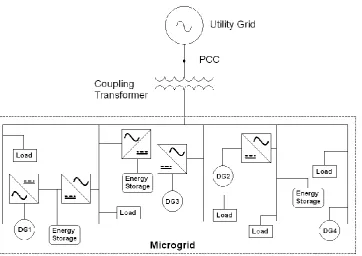
A sample microgrid architecture is shown in Figure 2.1. As shown, the microgrid is a very
versatile concept as it can accommodate various types of the micro generators (wind turbine,
Photovoltaic (PV) array, diesel generator, and wave generator), local storage elements
(capacitors, flywheel) and loads. A distributed generator might be a diesel generator (DG4)
which can be coupled to the grid directly, or a PV array which needs Direct Current
(DC)/Alternating Current (AC) inverter interface (DG2, DG3) or an asynchronous wind
turbine (DG1) which requires AC-DC-AC inversion for proper grid connection. Similarly,
the storage devices used in the system may or may not require an inverter interface as in the
Figure 2.1. A Sample Microgrid Architecture
A microgrid can be a DC [16], AC or even a high frequency AC grid [17]. It can be a single
or a three phase system or it may be connected to low voltage or medium power distribution
networks [15]. Furthermore, a microgrid could be operating in either grid connected or
islanded operation mode. For each operating mode operational requirements are different and
distinct control schemes are required.
The groundbreaking feature of a microgrid is its ability to operate “autonomously” when
there is a power outage in the main grid. This operation mode is called islanded operation
since the microgrid disconnects from the grid and becomes an island with local generators
and loads. In this way, the consumers may receive continuous service even when there is
power outage in the grid due to a fault or maintenance. Moreover, if there are voltage sags,
frequency drops, or faults in the main grid then the microgrid can be easily disconnected, i.e.
islanded from the rest of the grid and the users can be isolated from those problems. In this
way, microgrids not only help in providing uninterrupted service but also contribute to the
![Figure 2.2. Different droop lines and operating points in [45]](https://thumb-us.123doks.com/thumbv2/123dok_us/7936117.1317604/50.595.195.394.244.418/figure-different-droop-lines-operating-points.webp)
![Figure 2.5 Adaptive Microgrid Protection System proposed in [73]](https://thumb-us.123doks.com/thumbv2/123dok_us/7936117.1317604/58.595.70.524.401.612/figure-adaptive-microgrid-protection-system-proposed-in.webp)
![Figure 2.6 Implementation of Selectivity with interlock direction in [73]](https://thumb-us.123doks.com/thumbv2/123dok_us/7936117.1317604/59.595.92.502.208.511/figure-implementation-selectivity-interlock-direction.webp)
![Figure 2.7. Control Levels of the Microgrid [100]](https://thumb-us.123doks.com/thumbv2/123dok_us/7936117.1317604/62.595.174.420.374.590/figure-control-levels-microgrid.webp)
![Figure 2.9. IEEE SCC21 1547 Series of Interconnection Standards [61]](https://thumb-us.123doks.com/thumbv2/123dok_us/7936117.1317604/71.595.151.445.238.568/figure-ieee-scc-series-interconnection-standards.webp)