Survey on Continuous Eye on
Authorized User
Prof.Trupti Suryawanshi1 , Dnyaneshwar Chavan2 , Pratik Borate3, Suraj Yadav4
Dept. of Computer Engg, Keystone School of Engg, Savitribai Phule University, Pune, India
ABSTRACT :User authentication systems aretraditionally based on pairs of username and password andverify the identity of the user only at login phase. No checksare performed during working sessions, which are terminatedby an explicit logout or expire after an idle activityperiod of the user.Emerging biometric OTP generation, question and answers solutions allow substituting username and password with data during session establishment, but in such an approach still a single verification is deemed sufficient, and the identity of a user is considered immutable during the entire session. Additionally in this system we are going to implement the session authentication with various approach like biometric, OTP(one time password) generation, question and answers with specified time limiting. A secure protocol is defined for perpetual authentication through continuous user verification. The protocol determines adaptive time outs based on the quality, frequency and type of biometric, OTP generation, question. And answers data transparently acquired from the user.
KEYWORDS: Continuous user authentication; CASHMA verification certificate ;various authenticationdata like biometric, OTP generation, question. And answers data
I.
I
NTRODUCTIONUser authentication systems are traditionally based on pairs of username and password and verify the identity of the user only at login phase. No checks are performed during working sessions, which are terminated by an explicit logout or expire after an idle activity period of the user.
Security of web-based applications is a serious concern, due to the recent increase in the frequency and complexity of cyber-attacks; biometric, OTP and questions & Answers techniques offer emerging solution for secure and trusted authentication, where user-name and password are replaced by one of this biometric, OTP and questions &answers data. However, parallel to the spreading usage of biometric , OTP and questions &answers data systems, the incentive in their misuse is also growing, especially considering their possible application in the DBA authentication, financial and banking sectors etc, Such observations lead to arguing that a continuous authentication point and a single biometric, OTP and questions & answers data can guarantee a degree of security .
II.
S
AMPLEA
PPLICATIONS
CENARIOCASHMA can authenticate to web services, ranging from services with strict security requirements as online banking services to services with reduced security requirements as forums or social networks. Additionally, it can grant access to physical secure areas as a restricted zone in an airport, or a military zone (in such cases the authentication system can be supported by biometric kiosk placed at the entrance of the secure area). We explain the usage of the CASHMA
III.
P
ROPOSED ALGORITHMA. Design Considerations:
Client login page
Authentication server stores authentication data.
Client sends the authentication data and sever compares the this data with database template and generates CASHMA certificate
Servers sends the CASHMA certificate client after verifying it.
After getting the certificate client may have access permissions to web services until timestamp ends .
B. Description of the Proposed Algorithm:
Aim of the proposed algorithm is toidentifies theauthorized user by verifying the user with variousauthentication data like biometric, otp and answers & questionwhich is generated by the authentication server and sends to client in a random variations to give high degree of security. The proposed algorithm is consists of step.
Step:Generating random authentication data
The authentication server(ASr)will generates a random verification modes eq. i=biometrics,otp,q&a’s
1.ASr=bio ………iteration i=1 ifASr= =bio
access granted else
DENY
2.ASr=OTP ………iteration i=2 ifASr= =OTP
access granted else
DENY
3.ASr=Q&A ………iteration i=3 ifASr= =Q&A’s
access granted else
DENY
This process will runs according to time i iteration after i=1 finishes it generates another verification phase. eq.
ASrα in
ASr = =correct data Access granted Else
Deny
whereinis timestamp of client system and n is generating number of iteration factor.
IV.
P
SEUDO CODE1.start 2.registration 3.login: -OTP -Bio_metriics -Q&A's
4.Valid certificate from CASHMA Authentication Service . - Analyse
-comapre successfully
7.web services reads the certificate to assume it authorized user 8.session time going to expire the client may explicitly notify.
V. PROPOSEDSYSTEM ARCHITECTURES
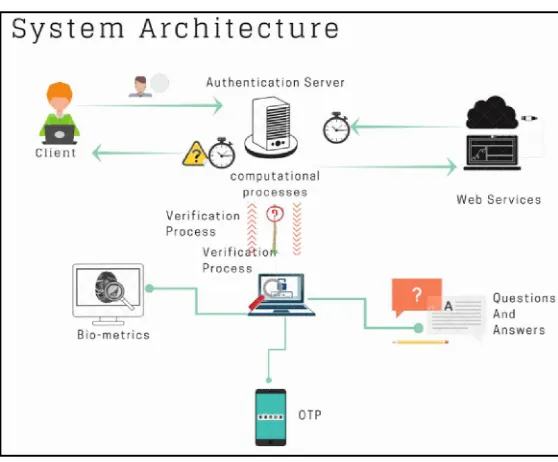
Fig 1.Basic Architecture of Proposed system
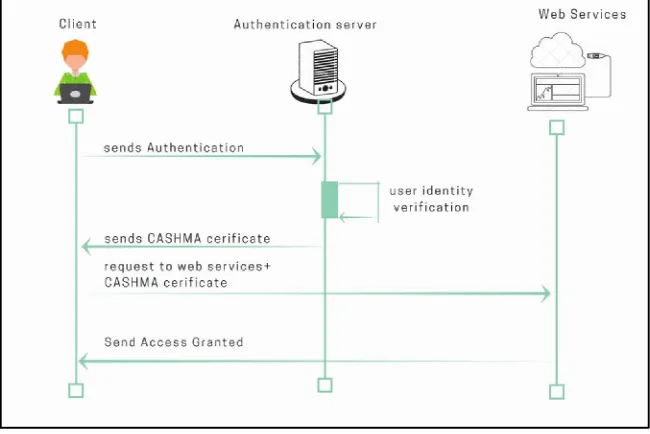
Fig2.BasicArchitecture of Authentication Server with CASHMA
The approach we introduced in CASHMA for usable and highly secure user sessions is a continuous sequential (a single biometric modality at once is presented to the system ) multi-modal biometric authentication protocol, which adaptively computes and refreshes session timeouts on the basis of the trust put in the client. Such global trust is evaluated as a numeric value, computed by continuously evaluating the trust both in the user and the (biometric) subsystems used for acquiring biometric data. In the CASHMA context, each subsystem comprises all the hardware/software elements necessary to acquire and verify the authenticity of one bio-metric trait, including sensors, comparison algorithms and all the facilities for data transmission and management. Trust in the user is determined on the basis of frequency of updates of fresh biometric samples, while trust in each sub-system is computed on the basis of the quality and variety of sensors used for the acquisition of biometric samples, and on the risk of the subsystem to be intruded.
The context aware security by hierarchical multilevel architectures (CASHMA) system for secure biometric authentication on the Internet. CASHMA is able to operate securely with any kind of web service, including services with high security demands as online banking services, and it is intended to be used from different client devices, e.g., smartphones, Desktop PCs or even biometric kiosks placed at the entrance of secure areas. Depending on the preferences and requirements of the owner of the web service, the CASHMA authentication service can complement a traditional authentication service, or can replace it.
Fig 2.Basic Architecture of Authentication Server with CASHMA
In the above we present the information contained in the body of the CASHMA certificate transmitted to the client by the CASHMA authentication server, necessary to under-stand details of the protocol. Time stamp and sequence number univocally identify each certificate, and protect from replay attacks. ID is the user ID, e.g., a number. Decision represents the outcome of the verification proce-dure carried out on the server side. It includes the expiration time of the session, dynamically assigned by the CASHMA authentication server. In fact, the global trust level and the session timeout are always computed considering the time instant in which the CASHMA application acquires the bio-metric data, to avoid potential problems related to unknown delays in communication and computation. Since such delays are not predicable, simply delivering a relative time-out value to the client is not feasible: the CASHMA server
The CASHMA authentication server analyzes the biometric data received and performs an authenti-cation procedure. Two different possibilities arise here. If the user identity is not verified (the global trust level is below the trust threshold gmin), ew or additional biometric data are requested (back to step 1) until the minimum trust threshold gmin is
reached. Instead if the user identity is success-fully verified, the CASHMA authentication server authenticates the user, computes an initial timeout of length T0 for the user session, set the expiration time at T0þt0, creates the CASHMA
certificate and sends it to the client (step 2).The client forwards the CASHMA certificate to the web service (step 3) coupling it with its request.The web service reads the certificate and authorizes the client to use the requested service (step 4) until time t0þT0.
For clarity, steps 1-4 are represented in Fig. 3 for the case of successful user verification only. VI.
C
ONCLUSIONWe exploit that to define a protocol for continuous authentication that improves security and usability of user session.
REFERENCES
[1]. CASHMA-“Context Aware Security by Hierarchical Multilevel Architectures”, MIUR FIRB, 2005.
[2]. Andrea Ceccarelli, Leonardo Montecchi, Francesco Brancati, PaoloLollini, Angelo Marguglio, Andrea Bondavalli,, “Continuous and
[3]. Transparent user identity verification for secure internet services”, IEEE Transactions on Dependable and Secure Computing MAY/JUNE 2015. [4]. L .Hong, A. Jain, and S. Pankanti, “Can Multibiometrics Improve Performance?” Proc. Workshop on Automatic Identification Advances Technologies (Auto ID ’99) Summit, pp. 59-64, 1999.
[5]. [4] L. Montecchi, P. Lollini, A. Bondavalli, and E. La Mattina,“Quantitative Security Evaluation of a Multi-Biometric Authentication System”, Proc. Int’l Conf. Computer Safety, Reliability and security, pp. 209-221, 2012.
[6]. S. Kumar, T. Sim, R. Janakiraman, and S. Zhang, “Using Continuous Biometric Verification to Protect Interactive Login Sessions” Proc. 21st Ann. Computer Security Applications Conf. (ACSAC ’05), pp.441-450, 2005.
[7]. T. Sim, S. Zhang, R. Janakiraman, and S. Kumar, “Continuous Verification Using Multimodal Biometrics”, IEEE Trans. Pattern Analysis and Machine Intelligence, vol. 29, no. 4, pp. 687-700, Apr.2007.
BIOGRAPHY
Name : Prof.Trupti Suryawanshi, Qualification: M.Tech Computer Engineering, Experience : 3 Years Teaching She has completed his bachelor’s degree from Shivaji University, Kolhapur in 2011, with Distinction and master’s degree from BharatiVidyapeeth , Pune in the year 2016. She is having total 03 years of professional teaching experience. She has worked with SCSCOE fromBhor. She has presented and published 2 International Papers in the reputed journals. She is expertise in field of Computer Graphics, Software Engineering ,High Performance Computing.
Mr.DnyaneshwarSatishChavan, pursing in the Keystone School of engineering ,pune. He have received the Diploma from the Department of computer Science and Engineering ,Jaywantraosawant polytechnic ,pune,India in 2015 . His research interests include Database(My0Sql,No-Sql),programming languages (i.e. c,c++,java,python,Android),Data Mining,compilers and algorithms.
Mr.Suraj Sanjay Yadav , pursing in the Keystone School of engineering ,pune. He have received the Diploma from the Department of computer Science and Engineering ,Jaywantraosawantploytechnic,pune,India in 2015 . His research interests include Database(Sql,No-Sql), programming languages (i.e. c,c++,java,python),testing(manual and automation),Security and privacy,DataMining,compilers and algorithms.