the direction of Prof. Haig Khachatoorian and Dr. Sharon M. B. Joines).
by Zhenmin Hou
A dissertation submitted to the Graduate Faculty of North Carolina State University
in partial fulfillment of the requirements for the degree of
Doctor of Philosophy
Design
Raleigh, North Carolina 2017
APPROVED BY:
_______________________________ _______________________________
Prof. Haig Khachatoorian Dr. Sharon Joines
Co-Chair Co-Chair
DEDICATION
BIOGRAPHY
TABLE OF CONTENTS
LIST OF TABLES ... viii
LIST OF FIGURES ... ix
CHAPTER 1 INTRODUCTION ... Error! Bookmark not defined. 1.1. Background ... 2
1.1.1 Global Aging ... 2
1.1.2 Health Problems of the Elderly Population ... 5
1.1.3 Exercise and Games ... 6
1.1.4 Exergames ... 7
1.2. Significance of the Problem and Purpose of the Dissertation ... 8
CHAPTER 2 LITERATURE REVIEW ... 10
2.1 Video Game Design for the Elderly ... 10
2.2 Exergame Design for Elderly ... 15
2.3 Summary ... 18
CHAPTER 3 CONCEPTUAL FRAMEWORK ... 20
3.1 Three Steps Guiding Exergame Development for the Elderly ... 20
3.1.1 Wanting to Play: Elderly Individual’s Interests ... 21
3.1.2 Learning How to Play: Leading Elderly Individuals ... 22
3.1.3 Continuing the Play: Encouraging Elderly Individuals ... 25
3.1.4 Summary and Hypothesis ... 26
3.2 Overview of Dissertation ... 27
CHAPTER 4 STUDY OF EXERGAMES ... 30
4.1 Features of Exergames ... 30
4.1.1 Content ... 33
4.1.2 Gameplay ... 37
4.1.3 Sensory Transmission ... 42
4.1.4 Movement Protocol ... 50
4.1.5 Social Function ... 52
4.1.6 Virtual Prize ... 54
4.1.7 Summary: AE-37 ... 55
4.2 Study 1: Stereotypical Clusters of Exergames ... 55
4.2.1 Research Questions ... 55
4.2.2 Research Methods and Data Collection ... 56
4.2.3 Data Analysis and Results ... 58
4.3 Study 2: Sample Level Selection for each Stereotypical Cluster ... 61
4.3.1 Research Purpose ... 61
4.3.2 Research Method & Data Collection ... 61
4.3.3 Data Analysis and Results ... 68
CHAPTER 5 ELDERLY PREFERENCES ... 75
5.1 Attributes of Elderly ... 76
5.1.2 Intelligence Domains ... 82
5.1.3 Status of Socializing ... 85
5.2 Study 3: Preferences of the Elderly ... 86
5.2.1 Research Question ... 86
5.2.2 Research Methods ... 87
5.2.3 Data Collection ... 90
5.2.4 Data Analysis ... 91
5.2.5 Results ... 106
CHAPTER 6 CONCLUSIONS AND RECOMMENDATIONS ... 111
6.1 Summary of Findings ... 111
6.2 Research Limitations ... 114
6.3 Future Works ... 115
6.4 Recommendations and Insights ... 116
REFERENCES ... 117
APPENDICES ... 125
Appendix A: Questionnaire ... 126
Appendix B: AE-37 ... 161
Appendix C: AE-37 and Questionnaire ... 162
Appendix D: Removed Games and Reason ... 168
Appendix E: 117 Games and AE-37 ... 170
Appendix F: Five Game Clusters ... 191
Appendix G: R Codes for Clustering ... 195
Appendix H: Observation Log ... 196
Appendix I: R Codes for Agreement ... 197
Appendix J: SAS Codes for Multiple Regression ... 198
Appendix K: Results for Multiple Regression ... 199
LIST OF TABLES
TABLE 3-A THREE STEPS GUIDING ELDERLY EXERGAME DEVELOPMENT ... 20
TABLE 4-A RECOMMENDATION OF SPORTS TYPE AND AMOUNT FOR OLDER ADULTS (NELSON ET AL.,2007) ... 50
TABLE 4-B DATA COLLECTION SOURCES ... 57
TABLE 4-C DATA EXAMPLE:AE6 FOR GAME 8 ... 57
TABLE 4-D GAME CANDIDATES ... 62
TABLE 4-E RESULT OF STUDY 2 ... 74
TABLE 5-A SOCIAL SCORE ... 86
TABLE 5-B LOCATION OF PARTICIPANTS ... 93
TABLE 5-C HIGHEST LEVEL OF EDUCATION ... 95
TABLE 5-D GAMING EXPERIENCES ... 97
TABLE 5-E PARTICIPANTS'PERCENT COMPREHENSION IN DETAIL ... 98
TABLE 5-F PREFERENCE SCORE FOR 5GAMES IN DETAIL ... 99
TABLE 5-G SUM OF AGREEMENT MEASURE (SOAM) FOR AE-37 ... 102
TABLE 5-H SUM OF MEASURE (SOAM) FOR AE-37–HEAT MAP ... 103
TABLE 5-I SUMMARY OF CORRELATIONS ... 105
LIST OF FIGURES
FIGURE 4-1NUMBER OF CLUSTERS ... 59
FIGURE 4-2CLUSTER VISUALIZATION ... 60
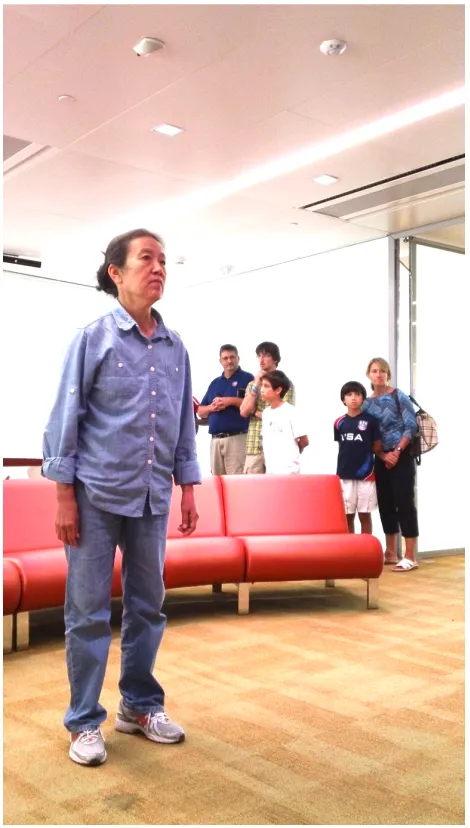
FIGURE 4-3THE PARTICIPANT ... 63
FIGURE 4-4THE GAME ROOM:CARPETED FLOORS, ADEQUATE LIGHT SOURCES ... 64
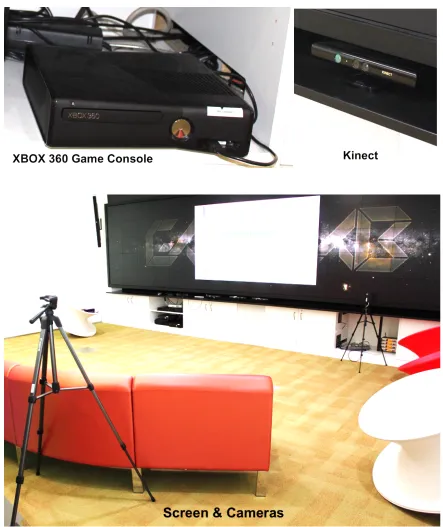
FIGURE 4-5DEVICES:SCREEN,XBOX 360,KINECT,CAMERAS ... 65
FIGURE 4-6PLACEMENT OF CAMERAS ... 66
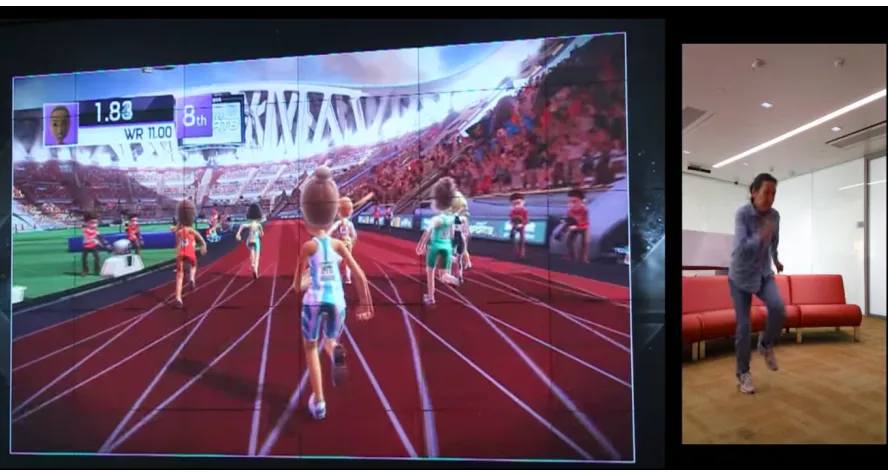
FIGURE 4-7SCREEN SHOT OF AN OBSERVATION VIDEO ... 67
FIGURE 4-8THE BASELINE FOR A DRIVING GAME ... 69
FIGURE 4-9MOVEMENT THAT COMPLETED THE REQUIRED ACTION ... 70
FIGURE 4-10MOVEMENT THAT FAIL TO COMPLETE THE REQUIRED ACTION ... 71
FIGURE 4-11DANCING ... 72
FIGURE 4-12 SHRUG:FRUSTRATED AFTER SEVERAL ERROR MOVEMENTS ... 73
FIGURE 5-1ORIGIN OF PARTICIPANTS ... 92
FIGURE 5-2AGE OF PARTICIPANTS ... 93
FIGURE 5-3GENDER OF PARTICIPANTS ... 94
FIGURE 5-4LEVEL OF EDUCATION ... 95
FIGURE 5-5GAMING EXPERIENCES ... 96
FIGURE 5-6PARTICIPANTS’AVERAGE PERCENT COMPREHENSION OF 5 GAME ... 98
FIGURE 5-7PREFERENCE OF 5GAMES ... 99
CHAPTER 1 INTRODUCTION
1.1. Background
Global aging created many challenges for video game designers, and the health problems of the aging population is one of them. This section analyzes the global aging problem, and finds an opportunity for video game designers to make effective changes in their game design.
1.1.1 Global Aging
The aging population has become a matter of global concern: “Population aging is expected to be among the most prominent global demographic trends of the 21st century” (Gavrilov & Heuveline, 2003).
population aging and their related issues (Takayama, 1992; Van de Kaa, 2003; Vincent & Velkoff, 2010; Yeung & Zhou, 1991). Generally speaking, there is no doubt that the rapid increase in population aging across the globe is signaling the most astonishing demographic changes in the history of humankind (Gruber & Wise, 1997).
The United Nations (UN) estimates that by the year 2025, the global population of those over 60 years will double from 542 million in 1995 to ~1.2 billion people (Krug, Mercy, Dahlberg, & Zwi, 2002). The global population age of 65 or older was estimated at 461 million in 2004, an increase of 10.3 million, since 2003. UN projections for 2030 indicate that more than 60 countries will have at least 2 million people aged 65 or older (J. L. Powell, 2010).
Population aging has different historical reasons around the world. First of all, due to the rapid economic development and the rising unemployment caused by this phenomenon, lots of DINK (Double Income, No Kids) families appeared, as the childbearing-aged population tried to avoid life pressures, high child care costs, and other consequential problems. Also, some policies from various governments, such as the "family planning" policy in China, directly result in the decline in the number of newborns (Xiong, 2009; Yeung & Zhou, 1991). Last but not least, the extension of the average life expectancy, promoted by the advances in medical technology and the rising level of public health, is also a reason for global aging at this scale.
However, there are many more negative impacts than positive ones brought on by global aging. Due to the reduction of the workforce, companies need to migrate, sometimes even across countries; also, elderly welfare and medical expenditures absorb a lot of social resources, which become a heavy burden on many countries. This pressure has spread to other areas, such as the pension system and welfare system.
Moreover, we tend to think the major impacts of the aging problem, brought on by declining birth rates and the improvement of health conditions, will only affect the developed countries. However, a brief from the UN has pointed out that this change in the population structure will also have a heavy impact on developing countries (World Health Organization, 2016b).
As a result, alleviating the problems caused by aging has become a major social issue for most of the world. There are two main aspects that we could use to mitigate the negative impacts of global aging:
On one hand, we could attempt to prevent the future trends of aging. This would include the implementation of pro-natalist policies, such as the related policy of Singapore, which regulates the predictable future population (Wong & Yeoh, 2003). Other methods include a population migration policy, such as the related policy in Austria, and so on (Van de Kaa, 2003).
better care for the elderly. By enabling the elderly to achieve both good physiological and mental health, associated societal pressures would be reduced.
1.1.2 Health Problems of the Elderly Population
In the big picture of global aging, governments have adopted different measures to invest more resources into elderly support systems. For example, many countries have set-up pension systems (which include but are not limited to: the United States’ social security system, the UK’s pension provisions, the Canada Pension Plan, the pension systems in France, the Employees’ Provident Fund Organization of India, the National Pension of Japan, the state social welfare retirement pension of the Republic of Ireland, the New Zealand Superannuation, and so on).
Other than investing more resources into the elderly support systems, the WHO has also suggested an ‘active aging' approach, which appears to be more important and meaningful (World Health Organization, 2016b). This approach has changed the stereotype that the elderly will become a "social burden", but reveals that the elderly could continuously contribute to their society. As a result, this "active aging" concept could drive the elderly in continuing participation in social, economic, cultural and civic affairs.
Thus, the focus shifts to the concept of “elderly health”. There are two aspects of elderly health: physical health and mental health. Common physical health problems associated with aging include: physical degradation and chronic diseases; common mental health problems including anxiety, depression and other psychological problems (Caspersen, Powell, & Christenson, 1985; C. B. Taylor, Sallis, & Needle, 1985).
There are several methods of prevention and treatment for aforementioned health problems, including having good primary health-care settings (e.g. regular healthy checks, early intervention, etc.) and adopting a healthy lifestyle (e.g. healthy diet, regular exercise, etc.) (Caspersen et al., 1985; C. B. Taylor et al., 1985). Admittedly, having good primary health-care settings is the key to maintaining good health conditions for elderly adults. However, adopting a healthy lifestyle is also equally, or maybe even more, important.
1.1.3 Exercise and Games
A healthy lifestyle includes a healthy diet and regular exercise. A healthy diet could improve physical health conditions, while regular exercise could not only improve physical health conditions, but also has a positive impact on mental health (Folkins & Sime, 1981; Penedo & Dahn, 2005).
have gradually revealed a clear path from engaging in proper exercise to improving cognitive functions (DeVries, 1970; Hawkins, Kramer, & Capaldi, 1992; Kannel, Belanger, D'Agostino, & Israel, 1986; Saltin, Hartley, Kilbom, & Åstrand, 1969).
On the other hand, leisure activities, by one person or by a group of individuals, is also a way to improve physical and mental health (Nimrod, 2010). There are many studies showing that leisure activities can improve the mental health of human beings (Driver, Brown, & Peterson, 1991; Riddick & Daniel, 1984; H.-X. Wang, Karp, Winblad, & Fratiglioni, 2002). As a result, leisure activity and physical exercise may be good partners in promoting elderly individual’s health, both physically and mentally. Exergames, which embed exercise activities into video games, are an activity combines leisure and physical exercise. This kind of game has the potential to promote both physical and mental health in the elderly population. At the moment, the Exergame is a combination of design and numerous scientific / technological factors. The development of relevant new technologies, and their use in Exergame design, may further promote the health of the elderly in a more efficient way.
1.1.4 Exergames
exercise, are called “Exergames” (Note: The Virtual Reality (VR) games for which the gamers need to wear VR devices will not be discussed in this research).
Exergames have the potential to have a significant positive improving the elderly users' health. These games provide a fun, less restrictive form of exercise for the elderly. Thus Exergames bring a new possibility for addressing the health concern of older adults.
As previously mentioned, there are several kinds of Exergame consoles. Among these different choices, Kinect (developed by Microsoft) is an Exergame console that does not need any controller and as a result attracts a lot of attention. Although some of the other Exergame consoles need far less button clicking than traditional video games, these consoles still require too much for the elderly to think about while playing. Thus, Kinect is more suitable for elderly adults to learn, since remembering all the different combinations of buttons is not necessary. Also, according to an experimental study, the difficulty range of the Kinect games is more appropriate for elderly users (Ganesan & Anthony, 2012).
As a result, the further research direction of this dissertation is focused on Exergames, running on the bundle of Microsoft Xbox (the game console) and with Kinect (the movement recognition device) as an input device.
1.2. Significance of the Problem and Purpose of the Dissertation
have shown that Exergames can improve subsyndromal symptomatic depression in older adults, better than by physical activity only (Rosenberg et al., 2010). Other studies have provided indications of the benefits of Exergames in seniors with dementia, balance ability, and so on (Agmon, Perry, Phelan, Demiris, & Nguyen, 2011; Anderson-Hanley et al., 2012; Van Diest, Lamoth, Stegenga, Verkerke, & Postema, 2013).
This dissertation takes into consideration the Exergames, elderly players, designers and the relationships between them. The author has divided the purpose of Exergame design for analysis by “Excite elderly — wanting to play”, “Lead elderly — to learn how to play” and “Encourage elderly — to keep playing”. This research has focused on the first design purpose, further deconstructed and analyzed the user experience of the elderly by their interests and the underlying reasons for it, and thus answered the question of “how can the Exergame attract the elderly to start to playing it?”.
CHAPTER 2 LITERATURE REVIEW
2.1 Video Game Design for the Elderly
Many academic scholars have conducted research about video games with players who are 65 years old and older.
In 1983, Shulamith Weisman conducted primary research about designing video games for the frail elderly (Weisman, 1983). The author believed that there was potential for computer games attracting the elderly to play. Weisman pointed out that there are three potential benefits that computer games may bring to the older players. They are: meeting the elderly’s needs for fun, mental stimulation, and enhancing the elderly’s self-esteem. In the meantime, Weisman also pointed out that there are some difficulty aspects within computer games for older adults. The author also presented a project: in which four computer games were adapted for the moderate mentally and physically impaired elderly, and tested by 50 nursing home residents. In the end, Weisman stated that there were some differences that designers should pay attention to when designing for older adults rather than for other, younger players.
of older players. As a result, the game could be then completed successfully by elderly, thus it could “increase their self-esteem through a sense of mastery”.
However, other than reducing the difficulty of the game, which could be done by re-programming, Weisman also pointed out that there are some aspects, which cannot be fixed so simply. In order to better satisfy older adults’ needs and arouse their interests, the designer also needs to avoid the negative emotions of older players. For instance, in a word-guessing game, “a stick figure of a hanging man” would “lose a part of his body,” if the participant made a wrong guess. These kind of mechanics might create “anxiety and fear of failure”, and lead to “negative feelings”.
When Weisman published this article, the Personal Computer (PC) was just beginning to spread into households. Today, just as Weisman predicted, the PC, and the functionally similar product, the Game Console, is growing into a trend within the recreational activities of older adults. Since the time that Weisman conducted his research, more and more scholars have participated in the discussion of this research area and have contributed to a better understanding of human-machine interactions.
process includes: visual acuity (loss in static and dynamic visual acuity, range of visual accommodation, loss of contrast sensitivity, decreases in dark adaptation, declines in color sensitivity, and a heightened susceptibility to problems with glare) and auditory acuity (sensitivity for pure tones, and high frequency tones). It was also noted that the decline of motor abilities with age varies between different users. Ijsselsteijn et al. suggests that with the age related decline of the cognitive process (attention processes, working memory, discourse comprehension, problem-solving and reasoning, and memory encoding and retrieval) greater attention be given to digital game interface design. In addition, seniors have not been highly exposed to computer technology, which may create an additional barrier for video game designers.
Ijsselsteijn et al. also argues that there are potential benefits of digital gaming in older age, especially for self-esteem and mental stimulation. Last but not least, the authors made a list of several areas for opportunities for design video games regarding older adults. The potential areas are: relaxation and entertainment; socializing with others; the explicit motivation, when playing a game might be sharpening one’s mind; and finally, creating digital games with new technology which could be more natural and could engage the whole body.
In 2008, Flores et al. published an article: Improving patient motivation in game development for motor deficit rehabilitation, combined robot-aided therapy with appealing games (Flores et al., 2008). This article discussed how to address issues of stroke rehabilitation in elderly patient motivation due to the existing use of boring tasks. Flores et al. compared stroke rehabilitation games and some popular games, which were not currently used in rehabilitation. As a result, the authors proposed a suitability classification, which could "serve as a general indicator for the appropriateness or adaptability of each game for use in elderly rehabilitation." Flores et al. pointed out that the games that were designed for post-stroke motor rehabilitation therapy have a clear purpose and are effective for therapy, yet lack the qualities required to be entertaining, and thus cannot provide enough motivation for target players. Thus, they advocated that other engineers, scientists, and health professionals, game developers are also invited to contribute in this area.
Overall, this article made a comparison of serious games and video games that serve (or were designed for) the normal population. Flores et al. pointed out that the former lacks attractiveness, while the later lacks effectiveness when working with a specific population. In contrast to Weisman et al. and Ijsselsteijn et al., Flores et al. did not define how video game design should develop for the general elderly population instead he focused on solving specific issues for the needs of special elderly populations.
In the research Putting fun into video games for older adults (McLaughlin, Gandy, Allaire, & Whitlock, 2012), the authors pointed out that when designing games for the elderly, there are several key elements that designers could focus on and make improvements to. These key elements include: the design of the games, supplemental materials, usability, and training. McLaughlin also states that the most important aspect, while designing video games for older adults, is to “offer benefits to them”. Meaning that, the game should provide motivation for the elderly players.
From the article, the costs for elderly to play video games are associated with age related physical changes, cognitive changes, and affective costs. Physical changes result in difficulties among older players in the user experience of the game interface; cognitive changes result in difficulties in fulfilling the memory demands; and affective costs cause them to experience stereotype threats (the fact that fear of failure often promotes failure). To avoid the impact of these costs, several design elements should be addressed: the user interface should be designed so that it is easier to use; fewer memory demands should be placed; designs that signal appropriateness for an older audience should be presented; players should be started at a much less challenging level than that for a younger audience; and early rewards for small accomplishments should be provided (McLaughlin et al., 2012).
low physical demand, novel sensory experience, a social component, a reward system (supporting in feelings of flow and engagement), and performance scaffolding through initial experiences with the game (McLaughlin et al., 2012).
Compared to the previous literature, this research pointed out that increasing “benefits” are more important than reducing “costs”. Thus, it also provides suggestions for how designers should design games for the elderly, so that older players are more likely to adopt the game by meeting their expectations and providing a positive initial experience with the game.
2.2 Exergame Design for Elderly
Along with the development of technology and the popularity of Exergaming, scholars are beginning to focus on this specific field of video game research — the relationship between the elderly and Exergames. The primary manifestation of this trend is that some researchers have employed Exergames as representative of videos game in their research.
In 2008, Van Schaik et al. published Virtual augmented exercise gaming for older adults (Van Schaik, Blake, Pernet, Spears, & Fencott, 2008). By testing virtual augmented exercise (VAE) games for older adults, researchers stated that there was evidence for the benefits of VAE with cognitive exercise (solving simple puzzles and hitting targets based on the answer) and recommended that this type of exercise is a promising method for elderly.
needs of the elderly have to be considered during the design process of Exergames. In addition to Exergames, the study provides a foundation for future research regarding digital games for the elderly as well. The next year, Gerling et al. also published another article: When gaming is not suitable for everyone: playtesting wii games with frail elderly (K. Gerling & Masuch, 2011). In this article, Gerling et al. noted the necessity of specifically designing games to provide a more positive1 gaming experience so that the elderly will want to play.
In 2011, Gerling et al. also published their research: Designing and evaluating digital games for frail elderly persons (Kathrin M Gerling, Schulte, & Masuch, 2011). In this paper, the researchers presented details of a game named SilverPromenade. SilverPromenade is not only a video game, but also an Exergame, which was developed especially for frail elderly players in nursing home environments. They evaluated a playable prototype and found that the elderly participants showed interest in playing this game, regardless of physically and mentally age-related changes. Thus, Gerling et al. identified some elderly-videogame design opportunities. First of all, designers should carefully explore the abilities of older players, so that the game can provide accessible gameplay for them. Secondly, the game should be able to provide meaningful metaphors, which relate to real-world actions, so that the elderly could enter into play easily. Finally, the game should expand to a broader range of players and gaming situations as well.
1 A reminder that a positive gaming experience refers to the reward system or game characteristics such as
In Leinonen et al.'s article of 2012, Designing games for well-being; Exergames for elderly people (Leinonen, Koivisto, Sirkka, & Kiili, 2012) several Exergame prototypes were tested on 34 older adults, aged 70 and up. The findings of this pilot study support the usefulness of the tested game concepts among the elderly, for the purposes of activation, recreation, and rehabilitation. The investigators concluded that the Exergames could provide not only physical and mental exercise, but it also provides social interaction and friendly competition. Thus, Exergames are suitable to enriching the daily life in residents of rehabilitation centers.
2.3 Summary
The aforementioned seminal articles provide a foundation for this dissertation and were presented according to their publication date to provide context to the progression of the field of Exergames. However, there are additional relevant studies, though lesser known in the field, that may inform this dissertation. A brief summary of the studies that affect this dissertation are listed below.
Video games, once thriving amongst youth only, start to have a growing number of elderly fans. Combining video games with exercise shows the potential of attracting the participation of older persons to play (Ijsselsteijn et al., 2007) as well as attracting them to keep playing for longer sessions and/or over longer periods of time (Csikszentmihalyi, 1975, 2000; Sinclair, Hingston, & Masek, 2007, 2009). Thus, Exergames could achieve a deeper, even profound goal of improving elderly mental and physical well-being (Ganesan & Anthony, 2012; Ijsselsteijn et al., 2007; McLaughlin et al., 2012; Weisman, 1983). Examples of research that have proven pieces of these benefits include benefits of VAE (VAE with puzzles changes or negates the expected negative associations among exercise outcomes) (Van Schaik et al., 2008) and physical and mental exercise, social interaction, friendly competition (McLaughlin et al., 2012).
CHAPTER 3 CONCEPTUAL FRAMEWORK
3.1 Three Steps Guiding Exergame Development for the Elderly
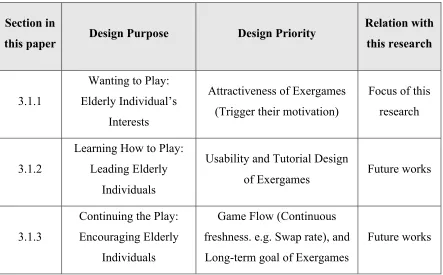
There are three steps which will guide the elderly to accept and enjoy Exergaming: excite them so that they want to play, lead them so that they learn how to play, and encourage them to keep playing (for both short-term and long-term). These three relate to different design priorities and have different relationships with this research (Table 3-a Three Steps Guiding Elderly Exergame ); the focus of the current research is on the first step – exciting elderly participants so that they want to play. The second and third steps are discussed but not investigated.
Table 3-a Three Steps Guiding Elderly Exergame Development
Section in
this paper Design Purpose Design Priority
Relation with this research
3.1.1
Wanting to Play: Elderly Individual’s
Interests
Attractiveness of Exergames (Trigger their motivation)
Focus of this research
3.1.2
Learning How to Play: Leading Elderly
Individuals
Usability and Tutorial Design
of Exergames Future works
3.1.3
Continuing the Play: Encouraging Elderly
Individuals
Game Flow (Continuous freshness. e.g. Swap rate), and
Long-term goal of Exergames
3.1.1 Wanting to Play: Elderly Individual’s Interests
Pertaining to Exergame design, increasing benefits is more important than reducing costs (McLaughlin et al., 2012). Where benefits are understood to provide positive feelings and reactions from the player while playing the game; costs interrupt the game flow or have a negative effect on the player (such as creating negative feelings or hurting). For the player, interesting game features, which are easy to notice, are the benefit provider. Conversely, UX is the cost provider since it can easily impede the game flow. As a result, the first step of guiding the elderly to accept and enjoy Exergaming, is to arouse the interest of elderly by providing interesting game features.
In other words, if an Exergame would be designed for older players, then there are two aspects that need to be considered while designing the game. First, the game needs to be understandable after a short period of playing or watching. Secondly, there should be at least one feature or a couple of features that attracts the interest of a potential older gamer.
In summary, the different game features an Exergame could provide, the understandability of these features by older adults, and the correlation between the personality/identity of elderly individual and their preferences, are the focus of this research.
3.1.2 Learning How to Play: Leading Elderly Individuals
There are two design aspects that could serve the purpose of leading the elderly in learning how to play an Exergame. One is the tutorial design, the other is usability/accessibility design.
In the current marketplace, there are a couple of common tutorial types for Exergames. They are: pictures forming a storyboard (a sequence of static images), motion pictures (a clip of cartoon or anime), and an introductory part or one level of gameplay. These tutorial sections teach the older players the basics of a game. Among all the types of tutorials, there are some potential common features that can to be tuned towards the needs of the elderly.
on the player), which would exhaust an older player making him/her reluctant to play further (see 4.3 Study 2: Sample Level Selection for each Stereotypical Cluster). Thus, the duration of a tutorial section must be controlled carefully.
Secondly, keep the tutorial simple. In a tutorial section, there is a need to split operating skills into their constituent parts and display each part one-by-one for the players. Usually, the game tutorial will allow the players to try out skill parts a couple of times, so that players can keep these skills in mind while playing. If the tutorial is for the elderly, the deconstruction of operating skills might need to be done more thoroughly and need to be repeated more times. For instance, in the video game Super Mario, players need to control an avatar named Mario throughout all the game levels. Mario has two basic movements: run and jump. And a combination movement – running fast. But, these three movements could be broken-down further, as in the form of: going forward/backward, running fast forward/backward, jumping into to the air, jumping to punch and crush a piece of brick, jumping and at the same time go forward/backward to get on a higher stair or to step on an enemy to disable it, and so on. Although, this is a list of tutorials for a video game, in Exergames, it is the same. It is crucial for the tutorial section to teach gameplay skills one-by-one, explaining them step-by-step and repeatedly for the older player. As we already have the first rule, which is “keep it short”, if we want to have all the needed skills shown in the tutorial and repeat them, we must have a relatively short list of skills. In other words, we need to “make it simple”.
combination of skills can raise the complexity of game play making it more challenging and creating more fun for ordinary players. However, the combination skills are not easy for the elderly to learn, thus they usually create frustration. So, these combination skills are not recommended.
Based on these insights, there can be three guiding principles for the tutorial design of an Exergame: short, simple, and minimize combination skills.
In addition to the tutorial, the user experience (UX) of the game is also an essential part of teaching the elderly how to play. Some tutorials do not provide much UX, such as the picture or storyboard tutorials previously mentioned — so they (the tutorial design and UX design) will be discussed separately. After the elderly individual learns to play an Exergame and starts the main session of the game, usability and accessibility should not be an obstacle for them playing.
experimental session of this dissertation in Study 2. In several games, when the player needs to “choose” an “item”, the game requires the player to hold one arm in the air for ~ 5 seconds. However, 5 times out of 10 the participant couldn’t sustain the posture and finish this gesture-command.
In summary, optimization of UX design for the elderly is needed for Exergame design.
3.1.3 Continuing the Play: Encouraging Elderly Individuals
In 1975, Mihaly Csikszentmihalyi presented a concept called “Flow” (Csikszentmihalyi, 1975, 2000). In his research, he defined “Flow” as “a state of total engagement in an activity”. When in the state of “flow”, the participant will experience “peak enjoyment, energetic focus, and creative concentration” at the same time (Csikszentmihalyi, 2000).
In 2005, Sweetser et al. presented an alternative concept called “Game Flow” (Sweetser & Wyeth, 2005). This is a similar concept to the original “Flow”, but happens in the gaming experience. Sweetser et al. also note the possibility of evaluating players’ enjoyment using a related model.
as well as the fitness and skill of a player (Sinclair et al., 2007, 2009). It may also be affected by the accumulation of successive playing time (Kiili & Merilampi, 2010; Nijholt, Pasch, van Dijk, Reidsma, & Heylen, 2011; Sinclair et al., 2007).
In summary, the key to keeping elderly individuals playing is to fit the gameplay process into the players’ needs, and finally, help players reach the state of Dual Flow. If this is achieved, the player will keep playing voluntarily.
3.1.4 Summary and Hypothesis
As previously mentioned, if designers intend to create Exergames that elderly individuals will accept and enjoy, they should consider designing for three aspects: excite elderly wanting to play, lead elderly to learn how to play, and encourage elderly to keep playing. This dissertation focuses on the first step: arouse their interests to play Exergames. As a result, the conceptual framework is addressing this topic will be presented in the next chapter in this dissertation. Those three steps are not provided independently by the game, therefore some game features that this dissertation includes will also have connections with the second and third steps (note they will not be the focus of this discussion).
3.2 Overview of Dissertation
This dissertation was divided into three studies. The first study focuses on evaluating games which are currently available on the market. This analysis centers around analyzing the features of Exergames which relate to the attractiveness and categorizing the Exergames into several stereotypical clusters according to these features. The second study focuses on analyzing each stereotypical cluster by conducting a series of test-play sessions with an older player in order to select one game sampler for each stereotypical cluster. Informed by results of studies one and two, a questionnaire was developed to support the third study. The third study focuses on connecting the attributes (physical, cognitive and preferences) of older adults to their Exergame preferences.
Since the first and second studies are both focused on Exergames, they are discussed together in Chapter 4. The third study, focused on elderly individuals and Exergames, is discussed in Chapter 5. An overview of the studies research questions and study results are listed below:
Study 1: Market Available Exergame Stereotypical Clusters
1 Features of Exergames – Questions: What are the features of an Exergame that relate to the elderly’s preferences? What are the differences between Exergames and traditional video games? Result: List of the game features and their possible relation to older gamers’ preferences.
Study 2: Exergame Samplers
1 Game candidate selection – Question: What are the game candidates that are both representative (for game features/clusters) and recognizable (popular on the market)? Result: Total of 26 game/mini-game candidates were selected and prepared for the next experiment session.
2 Games selected as cluster examples – Question: Among all the game candidates, what are the game samplers that are both able to be completed and better preferred by older player? Result: 5 videos (of an elderly person playing a game) were selected as examples of the different types of game clusters. Gameplay videos of those 5 games were created and presented to questionnaire participants in Study 3.
Study 3: Elderly Preferences
Study 3 is a survey exploring the relationships (correlations) between attributes of the elderly as an individual with their understanding/preferences regarding individual Exergames and their preferences regarding specific game features. The development of both sections of the survey were guided by several questions:
2 Preference of elderly – Questions: What are the preferences of elderly individuals about Exergame’s features? And, what are the preferences of elderly individuals about the 5 sample Exergames? Questions were written to assess the preferences of the elderly participants regarding Exergame features and the 5 sample Exergames.
Result: The survey was taken by 80 individuals; a correlation between personal attributes and Exergame features’ preference in this data set was revealed.
CHAPTER 4 STUDY OF EXERGAMES
Chapter 4 includes a feature study of current Exergames (4.1), a study that found out the stereotypical clusters of Exergames (4.2 Study 1), and a study that selected one game sampler for each cluster (4.3 Study 2).
4.1 Features of Exergames
The key concerns of this study is to find out which features that have the potential to affect (positively or negatively) elderly preference of Exergames.
It must be clarified that every Exergame is composed of many different features, so there is no certain feature that can be used to judge the attractiveness of an Exergame alone. For instance, we cannot simply measure elderly individuals’ preferences and attribute that preference to the game genre, or to the movement protocol of a game. Instead we must take a more detailed look at the game features.
As a result, a summary of all the variables (game features) which could affect players’ preferences for Exergames was analyzed and is summarized in the following section. A total of 37 game features were clustered into 6 categories. These variables were summarized in order to assess the attractiveness of an Exergame, thus this list of features was named AE-37 (Attractiveness of Exergames – 37 Features).
In this section, the details of AE-37 are discussed.
Human beings react to a stimulus. The attractiveness of Exergames is basically the players’ reaction of being “interested in” or “pleased by” the stimulus of the game. In other words, attractiveness is a function of the players’ reaction to the stimulus.
Based on this idea, AE-37 divided the attractiveness of Exergames into 2 parts: attractiveness that is a result of from Physical Stimulus of the game, and the attractiveness associated with the Psychological Stimulus of the game. The Physical Stimulus includes Sensory Transmission (Visually and Acoustically) and Movement Protocol; the Psychological Stimulus includes Game Content, Gameplay, Social Function, and Virtual Prizes. These 6 categories of stimulus are relatively stable in a finished game (e.g. not in the development process). That is to say, that after any game is designed, the game features are fixed. Although some games have customizable functions, the game features are still limited to a very small range.
game is on the market. It does not necessarily mean it is valid. The assessment of AE-37’s validity is presented in 5.1.5. Gaming Experience.
In this Chapter, each of the six categories of game features are separately described and analyzed. The order of the category presentation is based upon the player’s point of view. They are:
“What is the game about?” (Content); “How can I win the game?” (Gameplay);
“How can the game communicate with me?” (Sensory Transmission); “How should I communicate with the game?” (Movement Protocol); “How do I interact with other players?” (Social Function); and “What can I get by playing it?” (Virtual Prize).
Also, the AE-37 provides the framework for the questionnaire in Study 3; there are questions based on each game feature of AE-37 (see Appendix A: Questionnaire).
4.1.1 Content
The game Content includes the Theme of a game, and the Storyline, if there is one embedded in the game. They establish the foundation of a game, create it with a prerequisite (background or backstory), and allow players to be immersed in a certain ambiance while playing.
It could also be said that the Theme and Storyline are the backgrounds of a game, which could have an impact on the preferences of older players. Since Content usually create the first impression to a player, it is very important in creating a positive first impression of the game.
Theme
The Theme in a game identifies “What should / could the player do in this game?”
Compared to the traditional game themes and genre of video games (E. Adams, 2014), all the game themes of Exergames were collected and are listed in this section. Ideally, each game theme is exclusive. In other words, one Exergame could not belong to multiple game themes. In the practical context, some games in the marketplace are hard to define: some of the games (or some section of a certain game) appear to contain two or more themes. For this research, if each section of a game belongs to different themes, we’ll divide this game into several mini-games for discussion. Analyzing and defining the game theme of Exermini-games are crucial to the following research process. Therefore, several necessary changes have been made to the main viewpoint of game theme and genre theory (E. Adams, 2014; Apperley, 2006; Arsenault, 2009). The resulting Exergame focused game themes are discussed in following sections.
To sum up, there are 6 Themes that were observed from the 174 Exergames that were assessed:
o Theme 1: Sports Competitions (contains normal competitions, fun sports competitions, driving competitions, and puzzle-solving competitions);
o Theme 2: Workouts & Fitness Classes;
o Theme 3: Musical Activities (contains singing, dancing, and conducting – this theme does not exist for video games thus was created for Exergames specifically);
o Theme 4: Defeat Enemies (contains shooters and fights);
o Theme 5: Raising and Interacting with Creatures (contains animals / pets, etc.); and
o Theme 6: Adventures.
Storyline
Thus, a game’s storyline feature was categorized as follow:
o Storyline 0: There is no story embedded in the game;
o Storyline 1: The game has a story in it.
Furthermore, for those games which has a storyline embedded in, more detailed category could be defined by three variables: complexity, reality, and immersion. Each variable was presented on a 10-point scale:
1. Complexity:
o Complexity 1: Includes character and context;
o Complexity 3: Includes reason;
o Complexity 5: Includes result;
o Complexity 7: Includes progress / conversation;
o Complexity 9: Includes multiple events;
o Complexity 10: Includes more complicated plot than the above.
2. Reality (in a scale that gradually changes from real to fantasy):
o Reality 1: Pure reality;
o Reality 4: More real than fantasy;
o Reality 7: More fantasy than real;
3. Immersion (in a scale that gradually changes from highly immersive to not immersive):
o Immersion 1: Very immersive (storyline is intense and rich).
o Immersion 10: Not immersive at all.
4.1.2 Gameplay
“Gameplay” has two typical definitions. The broader one is “... an ensemble made up of the player's sensations, thoughts, feelings, actions, and meaning-making in a gameplay setting" (Ermi & Mäyrä, 2005); and the narrower one is “The tactical aspects of a computer game (Exergame, in this dissertation), such as its plot and the way it is played, as distinct from the graphics and sound effects”(Oxford Dictionary, 2010). In this dissertation, gameplay refers to the later and focuses on “what kind of gaming skills (but not sports skills, which were discussed in Movement Protocol) should the player use, to win the game”.
In this research, the aspects of gameplay include being assessed are: challenge types, sequence of challenges, the complexity of game rules, outcome determination mechanism (game of chance vs. game of skill), and, challenge / enemy ability (less but hard challenge or strong enemy vs. more but easy challenge or weak enemy).
Types of Challenges
Exergames have been classified into the same 11 types, as identified by Adams (E. Adams, 2014), as follows:
o Challenge Type 1: Memory and Knowledge
o Challenge Type 2: Pattern Recognition
o Challenge Type 3: Conceptual Reasoning
o Challenge Type 4: Formal Logic
o Challenge Type 5: Physical Coordination
o Challenge Type 6: Time Pressure
o Challenge Type 7: Conflict
o Challenge Type 8: Economic
o Challenge Type 9: Construction
o Challenge Type 10: Creation
o Challenge Type 11: Exploration
considered for this kind of workout games. Also, there could be multiple challenge types within the same game.
Sequence of Challenges
Generally speaking, the academic, video game world divided the challenge sequence of a video game into linear gameplay and non-linear gameplay (M. Powell, 2015). The challenge sequence is the key which could distinguish a game’s level of freedom. On one hand, freedom creates a sense of casualness. The player will feel less stressed while playing if the game is not restricted on the challenge sequence. On another hand, greater freedom relies on the player’s advanced ability to arrange multiple possibilities in their virtual world. That is, if a player does not have a strong imagination, the nonlinear gameplay will appear “vague” in his / her mind. In some situations, this “vagueness” could create uncertainty or insecure feelings for him / her. This kind of feeling sometimes will bother a gamer.
In this study, the challenge sequence of Exergames was categorized into more specific types (beyond the simple linear or non-linear designation). There are four challenge sequence types with the complexity gradually increasing. These four types are:
o Challenge sequence 1: Repeat the same task / section over and over again. Task A ⇔ Task B
For example, "Plant apple trees ⇔ Pick ripe apples".
For example: "Go forward ⇒ Disable enemy ⇒Disable the “boss” ⇒ Save princess".
o Challenge sequence 3: Finish tasks in a fixed order, while multi-tasking at the same time.
Task A ⇒ Task B, while Task C ⇒ Task D (considering both at the same time) For example, "Cook ⇒ Serve food to the customer", and in the meantime, "Clean
leftovers ⇒ Put dishes back to the kitchen."
o Challenge sequence 4: Finish tasks in a random order that is up to the player, one-by-one.
Task A ⇒ Task C ⇒ Task D ⇒ Task B (sequence is allowed to be shuffled.) For example, "Feed dog"; "Go shopping"; "Watch TV"; "Have dinner". The order is up to the player, and the outcome could be different according to the task order.
The Complexity of Game Rules
Game rules’ complexity is another aspect that could discourage older players, if it is not well designed. A proper level of game rules’ complexity will trigger the elderly individuals with interest, create fun for them, and in some situations (when everything else in the game are also properly designed), bring them to the “flow” state. On the opposite side, when a game’s rules are too simple or too complex, the elderly individuals would lose their interest very quickly (Sweetser & Wyeth, 2005; M. J. Taylor, Gresty, & Baskett, 2006).
consider the tasks that need to be completed as “Do”, and the rules that players should not break as “Don’t” (the result of which will terminate the game session or deduct part of the game score), then the complexity of game rules could be scaled by the total number of Dos and Don’ts. As a result, when the researcher defines the complexity of game rules of a certain Exergame, or studies older adults’ Exergaming preference for game rules’ complexity, the following values would be considered:
1. Number of “Do”
o Rule Do 1: Do one thing only
o Rule Do 10: Solve ten tasks at the same time
2. Number of Don’t
o Rule Don’t 1: Only one thing needs to be avoid
o Rule Don’t 10: Have to avoid ten threats at the same time
Outcome Determination Mechanism
This dissertation does not focus on the detailed game mechanism; but will only focus on the proportion of chance versus skill. The more skill a game requires, the more likely that the player’s game score would be improved by practicing.
o Mechanism 1: By chance only (such as Dice game);
o Mechanism 5: Mixed (such as Poker);
o Mechanism 9: By skill only (such as Go or Chess).
Challenge / Enemy Composition
In this research, the total capacity of challenges or enemies in a game was set as one unit, then discussed: Are there fewer but harder challenges, or are there more but easier challenges? (Are there fewer but stronger enemies, or are there more but weaker enemies?) There are 10 composition categorizations used with the end points or extremes defined as follows:
o Composition 1: One strong enemy / One hard or long task
o Composition 10: Lots of weak enemies / Lots of easy or short tasks
4.1.3 Sensory Transmission
The information sent out by a game console, which can be perceived by players’ senses, is defined as “sensory transmission” in this dissertation. It could be presented in a different form in order to stimulate the players, sight / hearing / touch, etc.
Graphic Style
There are 5 design considerations of graphic style that could be related to older player’s preferences. They include: whether the graphics tend to be real or fantasy; tough or goofy; simple or complicated; and level of contrast (high or low) between characters and background. Each of the 5 graphic style design considerations are rated on 10-point scales.
1. The level of reality that the graphics contains:
o Graphic Reality1: Real (everything showed on screen comes from real life)
o Graphic Reality10: Fantasy (nothing shown on the screen comes from real life - all of the game graphics are created)
2. The tendency of mood that the graphics express:
o Graphic Mood 1: Tough (serious with tension)
o Graphic Mood 4: Cool
o Graphic Mood 7: Cute
o Graphic Mood 10: Goofy (funny with relaxation)
3. The abundance of the graphics’ details:
o Graphic Detail 1: Simple
4. The art style that the graphics belongs to:
o Graphic Art 1: Abstract art (independent from visual references in the world)
o Graphic Art 10: Figurative art (derived from real object sources)
5. The contrast of the character / object and the background when the lightness of character / objects is fixed as moderate:
o Graphic Contrast 1: High contrast with lighter background
o Graphic Contrast 5/6: Low contrast (background and objects share similar lightness)
o Graphic Contrast 10: High contrast with darker background
Sense of Space
In a video game, the sense of space is influenced by 4 variables: the scale of the game; the dimension of the game; where the screen can expand to; and, what does the edge of the screen imply. These 4 variables could also apply to Exergames and are employed to measure the sense of space of an Exergame in this research.
1. Game scale. Game scale relates to players’ ability to imagine on a micro / macro scale, and could result in different preferences for individual players.
o Game Scale 1: “God” (The player view is in a significantly larger scale than that of a human being)
o Game Scale 9: “Bug” (The player view is in a significantly smaller scale than that of a human being)
2. Dimension. In the game, the player could “move” either the avatar or props on many dimensions. This variable relates to the multitask ability of a player, and sometimes, to their spatial imagination ability.
o Dimension 1: 2D (Every new piece of information - such as hint, enemy, etc. - are coming from 2 dimensions only. They are: X-axis, which usually means up and down; and Y-axis, which usually means left and right.)
o Dimension 2: 2.5D (Although the game looks like it happened in a 3D space, the player could only move in two dimensions.)
o Dimension 3: 3D (Compare to 2D, this design adds on a third dimension: Z-axis, which usually means front and back)
3. Screen can expand to in three ways:
o Expand 0: Fully closed: Non-Expandable
o Expand 1: Up / Down or Left / Right
o Expand 2: Fully opened: All Directions
The screen variable focuses on the players’ expectation at the edges of the game. “Edges” usually means closure, and to the players, closure means “nothing will come out from there”. In other words, this variable is also related to the multitask ability of a player. If there is an edge, it means that player could pay less attention to that direction / side of the screen, and only focus on the open “edges”. For the player, the non-expandable design is the most straightforward one, and the all direction design is the most unpredictable one. Two side-edge game design (usually side-scrolling or vertically scrolling video games) are in between the challenge levels.
However, there is an exception to this. In some video games, the edge of the screen does not mean the end of the road, but implies a portal to somewhere else, for example, Pac-Man. This exception is detailed in the next variable.
4. When reaching the edge of the game screen:
o Edge 1: Face the edge as a closure: the object that the player controls can only turn around. For example, when player’s avatar reaches the upper edge of the screen, he/she cannot go up further but can only turn to the right/left/back.
Portal design could multiply the size of the gaming area and add more possibilities for gameplay, thus creating a higher game complexity.
Context
In a video game, the context could relate to two variables: the time period settings of the game and the location settings of the game. These two variables could also apply to Exergames and are employed to measure the context of an Exergame in this research.
1. Time Period:
o Time 1: Prehistory
o Time 2: Ancient History
o Time 3: Modern History
o Time 4: Present
o Time 5: Future
2. Location:
o Location 1: Ocean
o Location 3: Earth surface
o Location 4: Sky / Above Earth
o Location 5: Outer Space
o Location 6: Other Planets
Character and Avatar Design
Similar to video games, an avatar is a character that represents the player in an Exergame. A video game study (Yoon & Vargas, 2016) has pointed out that game avatars, as “identity containers”, can mirror people’s self-concepts. The study also pointed out that the preferred forms of avatars among East Asians and North Americans are different (Yoon & Vargas, 2016). Likewise, the similarity between avatars and characters (representing other players or NPC, non-player characters which are generated within the game) are also the main concern of this section.
1. The look of avatars (in order from most to least similar to player):
o Avatar Similarity 1: Mirroring image of player
o Avatar Similarity 2: Avatar looks similar to player
o Avatar Similarity 3: Shadow/abstract image of player
o Avatar Similarity 4: Does not look like player
o Character Similarity 1: Human
o Character Similarity 2: Hybrid
o Character Similarity 3: Animal
o Character Similarity 4: Robot
o Character Similarity 5: Imaginary creature
Props
In video games, assistance objects or assistance properties are also called “Props”. Exergames shares the same idea. From simple to rich, the complexity of the props’ design within Exergames is defined as follows:
o Shapes of Props 1: Numbers and/or Letters
o Shapes of Props 2: Real, Daily Objects
o Shapes of Props 3: Imaginary Objects
Special Effects
From real to imagined, the special effects of Exergames could be:
o Effect 1: visualization of daily (truly exist and visible) elements, such as water, fire, light, etc.
o Effect 3: visualization of imaginary elements, such as magic, spells, illusions, etc.
4.1.4 Movement Protocol
There are three types of activity that are recommended to the elderly: aerobic, muscle strengthening, and flexibility & balance (Nelson et al., 2007). Each of them differ in the recommended intensity, duration, and frequency (see Table 4-a, which is an excerpt of the full chart).
Table 4-a Recommendation of sports type and amount for older adults (Nelson et al., 2007)
Sports Types Recommendations
Aerobic Activity
Frequency A minimum of 5 days/week for moderate intensity; or, a minimum of 3 days/week for vigorous intensity.
Intensity Moderate intensity at 5 to 6 on a 10-point scale; vigorous intensity at 7 to 8 on a 10-point scale.
Duration
Accumulate at least 30 minutes a day of moderate-intensity activity, in bouts of at least 10 minutes each; or continuous vigorous activity for at least 20 minutes.
Muscle-Strengthening
Activity
Frequency At least 2 days/week.
Number of
Exercises 8–10 exercises involving the major muscle groups.
Sets and
Repetitions 10–15 repetitions.
Flexibility and Balance Activity
After comparing elderly people’s needs with what Exergames could provide, five variables are employed to measure the movement protocol of an Exergame in this research:
1. Frequency of movements:
o Movement Frequency 1: Steady - Holding one position for more than 5 seconds (such as Yoga / Pilates).
o Movement Frequency 2: Slow - Holding one position for 2 - 5 seconds (such as Tai-Chi).
o Movement Frequency 3: Mild - One move per 1 - 2 seconds (such as walking).
o Movement Frequency 4: Fast - Multiple moves per second (such as dancing).
2. Exertion level:
o Exertion level 1: Allow player to play at least 30 minutes, and do not feel fatigued at all.
o Exertion level 2: Allow player to play 30 minutes before he/she feels fatigued.
o Exertion level 3: Tire player out within 30 minutes.
o Exertion level 4: Tire player out within 15 minutes.
o Exertion level 5: Tire player out within a couple of minutes.
3. Duration of each Exergame round:
o Movement Duration 1: 0 - 3 minutes
o Movement Duration 3: 5 - 10 minutes
o Movement Duration 4: 10 - 30 minutes
o Movement Duration 5: longer than 30 minutes
4. Muscle strengthen activity:
o Strengthen Activity 1: Engaging arms
o Strengthen Activity 2: Engaging core
o Strengthen Activity 3: Engaging legs
5. Balancing skill:
o Balancing Activity 1: Do asymmetrical movements with legs only
o Balancing Activity 2: Do asymmetrical movements with arms only
4.1.5 Social Function
1. Social functions:
o Social 0: Player could only play alone on their own console.
o Social 1: Player could interact with others, online.
If the “Social 1” is the case, then more analysis is needed for social functions (sections 2-5 below) as follow:
2. Players’ relationship with other players:
o Social Relation 1: Cooperate (locally or online)
o Social Relation 2: Compete (locally or online)
3. Timing of receiving online comments and/or feedback:
o Social Timing 1: During playing
o Social Timing 2: After each game round
4. Form of received online comments and/or feedback:
o Social Form 1: Video chat (comments by the other player, who the gamer can see and hear, by language, facial expressions, and/or body language in real time).
o Social Form 2: Messages (comments by the other player, who the gamer cannot see, by text, voice messages, and/or emojis).
5. Target of online socialization:
o Social Target 2: Strangers (who are also playing the same game)
4.1.6 Virtual Prize
This section will only discuss the direct, positive feedback, which usually happens after a “level” of game-playing that an Exergame could offer players. These kind of feedback could be a prize ribbon or a list of achievements thus they have been defined as a “virtual prize”. The in-direct benefit (such as health improvement or making new friends) is something different, and will be discussed in Chapter 5.
The virtual prizes that an Exergame could provide to players include:
o Prize 1: A prize ribbon, medal, or trophy. It will provide a simple and effective feeling of “I’ve done a good job.”
o Prize 2: A list of all the achievements that a player has accomplished in the game. It will create a surprise from time to time, and also, the completion of a whole achievement list will provide the player a sense of overall “accomplishment”.
o Prize 3: A leaderboard that shows the player’s best game score to other players. Leaderboard provides ranking compared to others and display (for others to see). This feature is intertwined with social function.
4.1.7 Summary: AE-37
The attractiveness of Exergames is captured with 37 attributes (37, see Appendix B: AE-37). A detailed explanation of the relationship between each design feature and the questions in the questionnaire is provided in Appendix C: AE-37 and Questionnaire.
4.2 Study 1: Stereotypical Clusters of Exergames
4.2.1 Research Questions
Research Question 1: Do Exergame Stereotypes exist in the current marketplace?
As of Feb 14, 2014, there were 174 Kinect games available on the market. If they were analyzed by the AE-37 in the Features of Exergame, could Exergame Stereotypes be found? In other words, are there common combinations of those 37 features?
Research Question 2: If there are Exergame stereotypes, what are they?
If there is a common combination(s) of features, identify the clusters of games for the next study (Study 2: Sample Level Selection for each Stereotype).
4.2.2 Research Methods and Data Collection
This section presents the methods for data collection and analysis for answering the above research questions. In this section, all the 174 Kinect games were reviewed using AE-37. Similar to section 4.1, reference information about each game used this section was captured from the game introductions, game trailers, gameplay videos, and customer reviews/comments. After 37 features for all 174 Exergames were collected, Multiple Factor Analysis (MFA – a statistical analysis technique) was used to define the clusters presented in the results section.
Table 4-b Data Collection Sources
Source Information
Official website of Kinect Selling rank, introduction of game, comments from customers, etc. Official website of the game Official trailer, detailed
introduction, etc.
Video-sharing website (https://www.youtube.com/) Advertisement of game, trailers, game reviews, etc.
3 Game review sites (http://www.gamespot.com/, http://www.metacritic.com/, http://www.ign.com/)
Game reviews.
Among the 174 games, 57 of them were removed from the data before coding. The reason for removing them from consideration is because some of them include very limited amount of body movement during gameplay, or they were a duplication or combination of other games. For a detailed list of removed games and the reason for removing, see Appendix D: Removed Games and Reason.
Since the game features contained multiple codes, certain features were expanded into multiple columns and noted as being present (or not) in the game using binary coding. For example, AE6 (the 6th game feature of the AE-37) contains 11 “challenge types”, and one game could include more than one types of challenge. So for Game 8 (see Table 4-c Data example: AE6 for Game 8), the value of AE6 was 1 for columns 1 2 5 6 7 8 and 11 and 0 for columns 3, 4, 9, and 10. Thus Game 8 had 7 challenge types documented as present in the game.
Table 4-c Data example: AE6 for Game 8
AE6. 1 AE6. 2 AE6. 3 AE6. 4 AE6. 5 AE6. 6 AE6. 7 AE6. 8 AE6. 9 AE 6.10 AE 6.11
After screening and coding, 117 games were described by the 37 groups of values, and were prepared for analysis as described in the following session. For the detailed AE-37 ratings for all 117 games see Appendix E: 117 Games and AE-37.
4.2.3 Data Analysis and Results
There are both categorical and ordinal variables in the study 1 data; and there is no numerical variable. Since the game features do not include any continuous data, the Gower dissimilarity matrix can be used with little concern for non-normality and outliers. For each variable, it uses the appropriate distance metric for the variable type and normalizes so that the value is between 0 and 1. For the ordinal data, Manhattan distance is used with adjustment for ties. After nominal data is converted to binary coding, a Dice coefficient is used.2
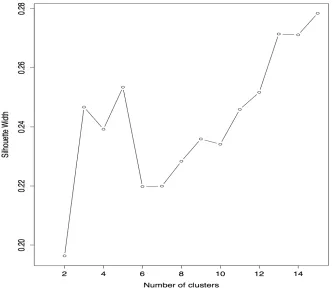
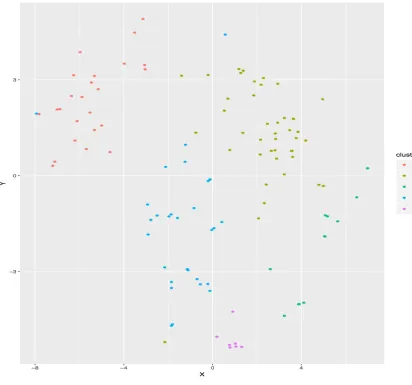
Hierarchical clustering and partitioning around medoids (k-medoids) are among the most common clustering methods using dissimilarity matrix. It seems reasonable to assume no hierarchy of clusters, so k-medoids is the algorithm of choice. As the name suggests, it is similar to k-means: k cluster centers are chosen, and observations closest to a cluster center are put in that cluster. The cluster centers are recalculated, and the algorithm iterates until convergence. k-means uses the means as the center, whereas k-medoids uses the observations themselves.
2 This approach to the data analysis was based upon a series of consultations with Jirapat Samranvedhya, NC