Abstract
CHEN, YE. Effect of Aging on the Bioavailability of Toluene Sorbed to Municipal Solid Waste Components. (Under the direction of Dr. Morton A. Barlaz and Dr. Detlef R. U. Knappe).
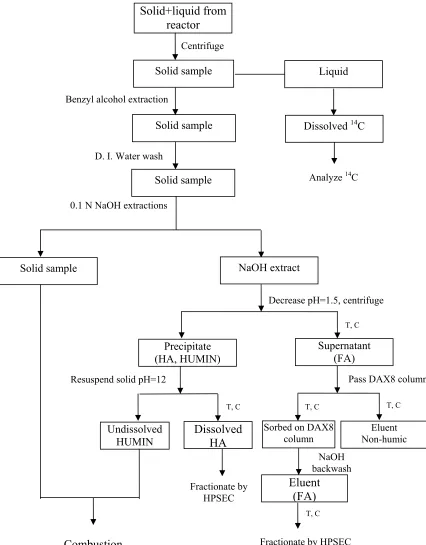
The bioavailability of toluene sorbed to individual municipal solid waste (MSW) component [office paper, newsprint, model food and yard waste, high density polyethylene (HDPE) and poly(vinyl chloride)(PVC)] was evaluated. Effects of sorbent decomposition on toluene bioavailability were studied by evaluating biodegradable sorbents in both fresh and anaerobically decomposed form. To determine the effect of aging on toluene bioavailability, bioavailability tests were performed for MSW components that were in contact with toluene for 1, 30, and 180 days. At the termination of bioavailability test, sequential organic solvent extraction, alkali extraction, and combustion were used to determine the fate of toluene that was not available to bacteria. Lignocellulosic waste (fresh and degraded office paper, newsprint) was subjected to enzymatic hydrolysis and acid hydrolysis to determine the effect of individual biopolymers in paper on the sorption and bioavailability of toluene.
EFFECT OF AGING ON THE BIOAVAILABILITY OF TOLUENE
SORBED TO MUNICIPAL SOLID WASTE COMPONENTS
by
Ye Chen
A dissertation submitted to the Graduate Faculty of North Carolina State University
in partial fulfillment of the requirements for the Degree of Doctor of Philosophy
CIVIL ENGINEERING
Raleigh, North Carolina 2003
APPROVED BY
Dr. Morton A. Barlaz Chair of Advisory Committee
Dr. Detlef R. U. Knappe Co-Chair of Advisory Committee
Dr. Francis L. de los Reyes III Advisory Committee
Biography
Acknowledgements
This thesis has been made possible by the support and help from numerous people. My deepest gratitude goes to:
My advisors: Dr. Morton Barlaz and Dr. Detlef Knappe for guiding me through my doctoral study with incredible patience. Their dedication, wisdom and enthusiasm in scientific research will continue to have a huge influence on me in my future career.
Dr. Michael Hyman, for his generous help and constructive advice. His unique insight and professional expertise made this a better work.
Dr. de los Reyes, for serving on my committee and willingly devoting his time to assist me in my research.
Phil Calvert, who deserves my sincere appreciation for providing support during the development of the experiment. With his excellent efforts, the most stressful and potentially miserable part of my research finally became manageable.
David Black, for his technical assistance and daily guidance on laboratory procedures.
Christy Smith, who taught me the basic knowledge and techniques in microbiology.
Jerry Wicks who helped me with the preparation of more than 200 samples.
Friends and colleagues including Lei Li, Bingyan Wu, Brenda Ress, Matt Pelton, Zhong Zhang, In Chio Lou, Kapo Coulibaly, Yong Jung, and Travis Wagner. Their help is invaluable.
On a personal level, I would like to thank:
My parents, for their unconditional love and support.
Table of Contents
LIST OF TABLES... VI
LIST OF FIGURES...VII
CHAPTER 1 INTRODUCTION...1
CHAPTER 2 LITERATURE REVIEW...4
2.1CHARACTERIZATION OF MUNICIPAL SOLID WASTE...4
2.1.1 Cellulose and Hemicellulose...5
2.1.2 Lignin...7
2.1.3 Poly (vinyl chloride) (PVC) and High Density Polyethylene (HDPE)...8
2.1.4 Protein and Lipid ...9
2.2BIOAVAILABILITY...10
2.3FACTORS CONTROLLING BIOAVAILABILITY...11
2.3.1 Aging Effect...11
2.3.2 Difference among Organisms ...18
2.4AEROBIC TOLUENE DEGRADATION...21
LITERATURE CITED...23
CHAPTER 3 METHOD DEVELOPMENT ...32
3.1ANAEROBIC BIOAVAILABILITY TEST...32
3.1.1 Materials...32
3.1.2 Methods...33
3.1.3 Experimental Results ...35
3.1.4 Conclusions and Recommendations...36
3.1.5 Improvements...36
3.2AEROBIC BIOAVAILABILITY TEST...37
3.2.1 Methods...37
3.2.2 Experimental Results ...41
3.2.3 Improvements...43
3.3PRELIMINARY TEST...43
3.3.1 Toxicity Assay of Acidogenic Leachate...43
LITERATURE CITED...48
CHAPTER 4 RESULTS AND DISCUSSION...50
4.1THE EFFECT OF AGING ON THE BIOAVAILABILITY OF TOLUENE SORBED TO MUNICIPAL SOLID WASTE COMPONENTS...50
4.2TABLES AND FIGURES FOR MANUSCRIPT 1...73
4.3SUPPORTING INFORMATION FOR MANUSCRIPT 1...78
4.4THE EFFECT OF CELLULOSE PLUS HEMICELLULOSE AND LIGNIN ON THE BIOAVAILABILITY OF TOLUENE SORBED TO WASTE PAPER...86
4.5FIGURES AND TABLES OF MANUSCRIPT 2...103
4.6SUPPORTING INFORMATION FOR MANUSCRIPT 2...109
APPENDICES...113
APPENDIX ADATA OF MANUSCRIPT 1...113
APPENDIX BDATA OF MANUSCRIPT 2...136
APPENDIX CRELATIONSHIP BETWEEN OPTICAL DENSITY AND CFU ...140
List of Tables
TABLE2.1COMPONENTS OF AEROBIC FUNGAL CELLULASES... 7
TABLE2.2COMPOUNDS SHOWN TO BECOME LESS BIOAVAILABLE AS A RESULT OF AGING... 11
TABLE2.3CLASSIFICATION OF PORE SIZE... 15
TABLE2.4 MODEL PARAMETER FOR AEROBIC TOLUENE BIODEGRADATION BY PURE CULTURES... 22
TABLE3.1CHARACTERIZATION OF SORBENTS... 34
TABLE3.2VFAANALYSIS OF ACIDOGENIC LEACHATE... 34
TABLE3.3 ANAEROBIC BIOAVAILABILITY OF O-XYLENE AGED ONE MONTH ON DEGRADED NEWSPRINT ... 36
TABLE3.4COMPARISON OF TOLUENE BIOAVAILABILITY WITH AND WITHOUT GAMMA IRRADIATION.... 41
TABLE4.1DEGRADATION OF SORBENTS BY PPF1 ... 73
TABLE4.2MINERALIZATION OF TOLUENE SORBED TO MSWCOMPONENTS AT 200 HRS ... 74
TABLE4.3MINERALIZATION OF TOLUENE SORBED TO MSWCOMPONENTS... 74
TABLE4.4 PH AT THE TERMINATION OF BIOAVAILABILITY TESTS FOR SELECTED SORBENTS... 74
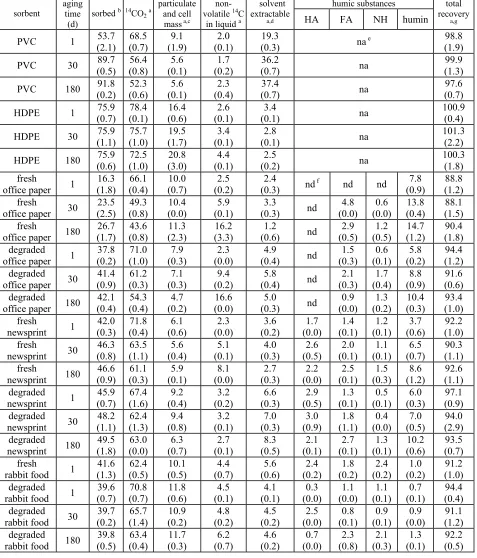
TABLE4.5DISTRIBUTION OF RADIOACTIVITY... 75
TABLE4.6SOLVENT EXTRACTION OF RADIOACTIVITY BY BENZYL ALCOHOL... 76
TABLE4.7DISTRIBUTION OF NON PURGABLE ORGANIC CARBON (NPOC) IN HUMIC MATTER... 77
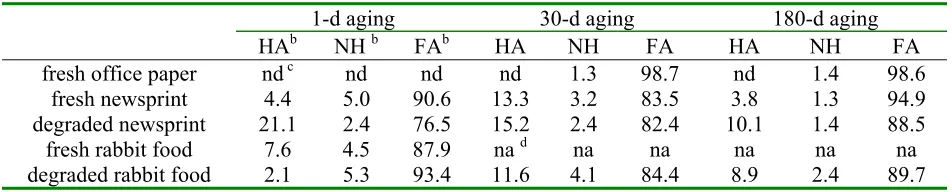
TABLE4.8ASSOCIATION OF RADIOACTIVITY BY HUMIC SUBSTANCES... 77
TABLE4.9ASSOCIATION OF RADIOACTIVITY WITH HUMIN FRACTION... 77
TABLE4.10SORBENT COMPOSITION AND EFFECT OF PH ON ENZYMATIC HYDROLYSIS OF BIOPOLYMERS ... 103
TABLE4.11SORPTION OF TOLUENE TO MSWCOMPONENTS AND THEIR LIGNINS... 106
TABLES4.1SORPTION OF TOLUENE TO NEWSPRINT AND NP-LIGNIN AFTER 30 DAYS OF AGING... 112
TABLEA.1MEASUREMENT OF LIQUID PHASE 14CCONCENTRATION BY DIFFERENT TREATMENTS... 113
TABLEA.2BIOAVAILABILITY,EXTRACTION AND COMBUSTION DATA... 114
TABLEB.1ENZYMATIC HYDROLYSIS DATA... 136
List of Figures
FIGURE2.1TOLUENE PATHWAY MAP. ... 22
FIGURE3.1EXPERIMENTAL DESIGN FOR AEROBIC TOLUENE BIOAVAILABILITY TEST... 39
FIGURE3.2ANALYSIS OF RESIDUAL 14C AFTER TERMINATION OF BIOAVAILABILITY TEST. ... 42
FIGURE3.3EXPERIMENTAL DESIGN FOR ACIDOGENIC LEACHATE TOXICITY ASSAY... 44
FIGURE3.4TOXICITY ASSAY OF ACIDOGENIC LEACHATE. ... 45
FIGURE3.5BIOAVAILABILITY TEST CONDUCTED IN METHANOGENIC LEACHATE. ... 46
FIGURE3.6ANALYSIS OF AQUEOUS PHASE AFTER BIOAVAILABILITY TEST IN METHANOGENIC LEACHATE USING HPSEC ... 48
FIGURE4.1BIOAVAILABILITY REACTOR... 73
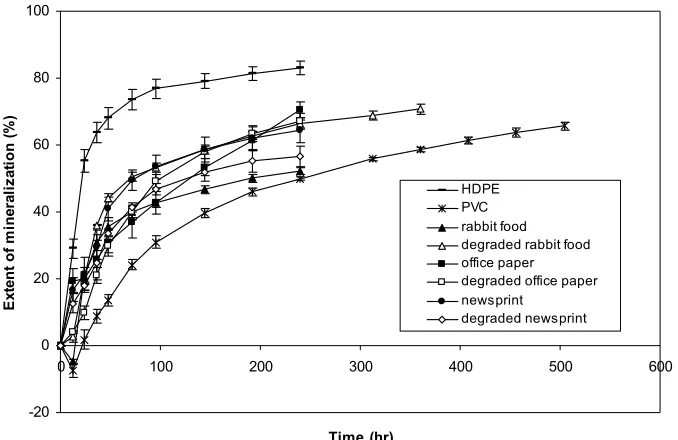
FIGURE4.2BIOAVAILABILITY OF TOLUENE SORBED TO MSWCOMPONENTS AFTER 1-D AGING AS CALCULATED FROM EQN.1. ... 73
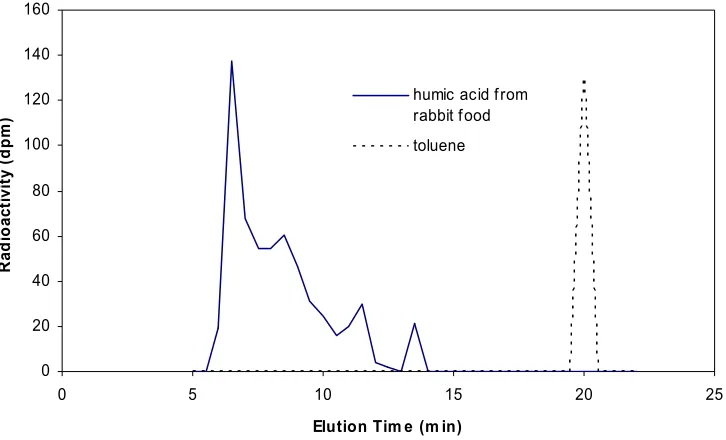
FIGURE4.3HPSEC CHROMATOGRAM OF HUMIC ACID EXTRACTED FROM RABBIT FOOD... 76
FIGURES4.1BIOAVAILABILITY OF TOLUENE SORBED TO MSWCOMPONENT AFTER 30-D AGING... 78
FIGURES4.2BIOAVAILABILITY OF TOLUENE SORBED TO MSWCOMPONENT AFTER 180-D AGING... 78
FIGURES4.3HPSEC CHROMATOGRAM OF HUMIC SUBSTANCES EXTRACTED FROM MSWCOMPONENT. ... 84
FIGURES4.4COMPARISON OF BIODEGRADATION OF TOLUENE BY PPF1 AT DIFFERENT PH... 85
FIGURES4.5COMPARISON OF DIFFERENT PREPARATION OF FRESH OFFICE PAPER BLANKS... 85
FIGURE4.4BIOAVAILABILITY REACTOR... 103
FIGURE4.5EFFECT OF CELLULASE AND HEMICELLULASE ADDITION ON THE BIOAVAILABILITY OF TOLUENE SORBED TO NEWSPRINT AGED FOR (A)1 DAY,(B)30 DAYS AND (C)180 DAYS. ... 105
FIGURE4.6BIOAVAILABILITY OF TOLUENE SORBED TO (A) FRESH NEWSPRINT,(B) DEGRADED NEWSPRINT AND (C) DEGRADED OFFICE PAPER AND ISOLATED LIGNINS OF EQUIVALENT MASS... 108
FIGURES4.6EFFECT OF CELLULASE AND HEMICELLULASE ADDITION ON THE BIOAVAILABILITY OF TOLUENE SORBED TO OFFICE PAPER AGED FOR (A)1 DAY,(B)30 DAYS AND (C)180 DAYS... 109
FIGURES4.7EFFECT OF CELLULASE AND HEMICELLULASE ADDITION ON THE BIOAVAILABILITY OF TOLUENE SORBED TO DEGRADED OFFICE PAPER AGED FOR (A)1 DAY,(B)30 DAYS AND (C)180 DAYS. ... 110
FIGURES4.8EFFECT OF CELLULASE AND HEMICELLULASE ADDITION ON THE BIOAVAILABILITY OF
... 111
FIGURES4.9BIOAVAILABILITY OF TOLUENE AGED FOR 30-D WITH FRESH NEWSPRINT AND ISOLATED
LIGNIN OF EQUIVALENT MASS... 112
FIGUREA.1COMPARISON OF BIOAVAILABILITY OF TOLUENE SORBED TO HDPE UNDER DIFFERENT
TREATMENT... 113
Chapter 1
Introduction
Despite increases in recycling and incineration, landfills remain the major waste disposal option in the United States. In 1994, approximately 61% of the municipal solid waste generated was disposed of by burial in a sanitary landfill (U.S. EPA. 1996). In the year 2000, there are around 1960 operating municipal waste landfills in the US in addition to thousands of closed sites (U.S.EPA, 2002). Unlined landfills have been shown to result in groundwater contamination (Robinson and Barr 1999; Kettunen et al. 1999; Cozzarelli et al. 2000). Approximately 15% of the sites on the National Priority List of Superfund are municipal landfills that accepted hazardous waste (U.S. EPA. 2003). Alkylbenzenes, ketones and chlorinated aliphatic hydrocarbons are typical contaminants in ground water (Christenssen et al. 1994). Because of its water solubility and acute toxicity and genotoxicity, toluene was classified as priority pollutants by the U.S. EPA.
the slower the disappearance of the compound, the more time is available for sorption and loss in bioavailability to occur (Nam and Alexander 2001). Bioavailability of organic compounds is determined by the characteristics of the sorbent (Luthy et al. 1997), and the sorbate (Brusseau and Rao 1991), the physiological traits of microorganisms (Scow and Johnson 1997), and environmental factors (Rijnaarts et al. 1990).
To date, little information is available on the bioavailability of HOCs sorbed to MSW. Most studies concerning bioavailability of sorbed organics have been conducted in soils and sediments. MSW differs from soils/sediments with respect to contaminant fate and bioavailability in that (1) compared to soils/sediments; MSW has a higher organic carbon content (Eleazer et al. 1997). Glassy organic matter is hypothesized as a major factor leading to slow diffusion and reduced bioavailability of HOCs (Pignatello and Xing 1996); (2) biodegradation of lignocellulose and microbial synthesis lead to the formation of humic substances (Shevchenko and Bailey 1996). Previous investigations revealed humic substances were responsible for both sequestration (White et al. 1999) and irreversible binding of HOCs to the solid phase (Bollag et al. 1998) and (3) many studies show bioavailability is reduced by aging, a prolonged contact of HOCs to soils/sediments (Hatzinger and Alexander 1995; Nam and Alexander 1998), similar effect is expected in landfills, where long contact time can lead to the diffusion of HOCs into hard/condensed organic matter or micropores in sorbents.
Investigating the bioavailability of HOCs sorbed to MSW is of considerable importance in attempts to predict the fate and transport of these compounds and the extent of possible bioremediation in landfill. The result will also provide useful information in developing models to predict contaminant fate in landfills. Such models are essential to project contaminant concentrations in leachate, which can be used to assess the leachate contamination risk to groundwater. Moreover, since aging leads to a loss in acute toxicity to organisms, the ability to predict the extent of sequestration is of great importance in risk analysis.
• Investigate the impacts of aging and sorbent decomposition on bioavailability.
• Compare rates of desorption and biodegradation; evaluate whether contaminant desorption limits bioavailability.
Chapter 2
Literature Review
This literature review is composed of four parts: characterization of MSW; bioavailability; factors controlling bioavailability; and aerobic degradation of toluene. The first part is a summary of municipal solid waste components. Considering the importance of organic matter in bioavailability, the individual components of organic matter (cellulose, hemicellulose, lignin etc.) in solid waste as well as their biodegradation and effect on sorption, humification are reviewed. In the following part, a brief definition of bioavailability and summary of published research involving bioavailability of organic compounds are provided. Literature on soils and sediments is emphasized because there is no published information on bioavailability in the landfill ecosystem. In the third part, mechanisms that cause reduced bioavailability are explained. Specifically, this part will focus on the factors controlling bioavailability such as aging and microorganisms. The following part includes information about aerobic toluene biodegradation; different biodegradation pathways and toluene oxidizing bacteria.
2.1 Characterization of Municipal Solid Waste
chemical pulp of high purity. Most of the lignin is removed during chemical treatment, leaving cellulose as the major component. The percentage of the cellulose varies depending on specific chemicals used (Calkin 1957). Food waste comprised 12.1% of MSW; the major organic components of food waste are carbohydrate, protein and lipids (US EPA 1999).
2.1.1 Cellulose and Hemicellulose
Cellulose, a linear polymer made of glucose subunits linked by β-1, 4 glycosidic bonds, is the most abundant biopolymer on earth (Senior 1990). Most native celluloses are composed of two different forms. The parallel oriented chains form highly ordered crystalline domains. The crystalline domain is interspersed by more disordered, amorphous regions. The native crystalline form of cellulose has a structure designated as type I, which can be converted into type II by alkali treatment. Depending on origin and pretreatment, the degree of crystallinity of cellulose can vary from 0% to 100% (Béguin and Aubert 1994). Evans et al. (1995) studied the crystallinity change during Kraft pulping process using X-ray diffraction, infrared (IR) spectroscopy and NMR spectroscopy. All three methods indicated that the degree of crystallinity of the cellulose increased as Kraft pulping proceeded due to preferential removal of the less ordered carbohydrates. Hunt et al. (2001) also reported cellulose fibril distortions were partially relaxed by the pulping process, which led to significant cellulose crystallinity increase.
Water decreases the glass transition temperature (Tg) of dry cellulose from 225 °C to -45 °C (Leboeuf et al. 2000). In aqueous solution, HOC sorption to cellulose should therefore be dominated by partitioning mechanism. Pure cellulose has a fairly low sorption capacity for organic compounds, with 1.0 mg/g for benzene and 1.4 mg/g for tetrachloride phenol (Rutherford et al. 1992). The low uptake of cellulose is determined by its high organic polarity (O+N)/C (Rutherford et al. 1992) and lack of aromaticity (Xing et al. 1994).
microorganisms can hydrolyze the 1,4-glycosidic bonds of cellulose with cellulase, which can convert the complex cellulose to smaller cellobiose molecules (Pelczar Jr. and Reid 1958). Cellulases form a multicomponent enzyme system; with endoglucanases (EGs) that hydrolyse cellulose chains randomly, cellobiohydrolases (CBHs) that hydrolyse cellobiose from the polymer ends and cellobiases that hydrolyse cellobiose to glucose (Cavaco-Paulo 1998). The individual component and their mode of action are summarized in Table 2.1 (Bhat and Bhat 1997). Amorphous cellulose is preferentially hydrolyzed while crystalline cellulose is more resistant to hydrolysis (Senior 1990). In both aerobic and anaerobic conditions, cellulose is substantially degraded by fungi and bacteria (Eleazer et al. 1997; Pichler and Kögel-Knabner 2000). In most natural environments, cellulose cannot be completely mineralized due to the protective effect of lignin, soil minerals and humus polymers. Cellulose can form chemical or physical linkages to these constituents to persist for a sufficient length of time to participate directly in humus formation (Bollag et al. 1998).
Enzymatic hydrolysis was used recently to investigate of the residual lignin and lignin-cellulose bonds in pulps. Karlsson et al. (2001) used cellulases and hemicelluases to study lignin-cellulose as well as lignin-hemicellulose bonds in Kraft pulps. It was found 40% of pine Kraft pulp was degraded by the cellulase treatment. The remaining cellulose was still of high molecular weight, which indicated a considerable portion of the residual lignin in the pine Kraft pulp was bonded to cellulose. The authors also reported the simultaneous removal of lignin and cellulose by the cellulase treatment. This result is similar to that of Hortling et al. (1990), who concluded that the 20-60% residual lignin dissolved during the enzymatic hydrolysis of pulps with a kappa number (most common parameter for determination of lignin content) below 58.
TABLE 2.1 Components of Aerobic Fungal Cellulases
Enzyme Synonym EC code Mode of Action
endo-1,4-β -D-glucanase
1,4-β-D-glucan
glucanohydrolase EC 3.2.1.4
-G-G-G-G-G ↑ ↑
Cleaves linkages at random
EC 3.2.1.91
-G-G-G-G-G- ↑
Releases cellobiose either from reducing or non-reducing end
exo-1,4-β -D-glucanase
1,4-β-D-glucan cellobiohydrolase
EC 3.2.1.74
-G-G-G-G-G- ↑
Releases glucose from non-reducing end
β-glucosidase
cellobiose β-D-glucoside glucohydrolase
EC 3.2.1.21
G-G G-G G-G ↑ ↑
Convert cellobiose to glucose
Hemicelluloses contain xylan, mannan, galactan and arabinan as the main heteropolymers (Dekker and Richards 1976). The principal monomers present in most hemicelluloses are D-xylose, D-mannose, D-galactose, and L-arabinose (Wenzl 1970). For native hemicelluloses, the most probable Tg is around 180 °C, and 30% moisture can lower the Tg to room temperature (Back and Salmen 1982). Because of the much greater complexity of sugars and linkages in hemicelluloses, many more enzymes are involved in the complete hydrolysis of the backbone and the branches (Deobald and Crawford 2000). Because xylan is a common hemicellulose backbone constituent, much of the research on hemicellulases has focused on xylanases. The xylanolytic enzyme system is composed of β-1,4-endoxylanase, β-xylosidase, α -L-arabinofuranosidase, α-glucuronidase, acetyl xylan esterase, and phenolic acid esterase. All these enzymes act cooperatively to convert xylan into its constituent sugars (Beg et al. 2001). Sugars produced can be readily detected colorimetrically (Sharrock 1988) using method proposed by Miller et al. (1960), Lever (1973), Mullings and Rarish (1984).
2.1.2 Lignin
role in humification processes. One of the widely accepted theories concerning organic matter humification in soil is that lignin and its degradation products such as phenols, quinones and more complex compounds are the main precursors in the formation of humic substances; their polymerization and condensation with N-compounds such as protein, amino acids, nucleic acids is brought about by the soil microorganisms (Stevenson 1994; Sánchez-Monedero et al. 1999). Lignin is a glassy polymer with a glass transition temperature of 70 °C (LeBoeuf et al. 2000).
White-rot fungi are responsible for most of the lignin decomposition in nature and lignin degradation by white-rot fungi is faster than by any other organism (Tuomela et al. 2000). There are many genera of actinomycetes and eubacteria that can degrade extracted lignin and dehydrogenation polymer (synthetic lignin). Many bacterial strains, especially actinomycetes, can solubilize and modify the lignin structure extensively, but their ability to mineralize lignin is limited (Buswell and Odier 1987). Aerobic microorganisms are the primary lignin degraders in most environments. Anaerobic degradation of lignin is either not observed (Micales and Skog 1997; Pichler and Kögel-Knabner 2000; Odier and Monties 1983) or happens at very low speed under specified conditions. It was found that anaerobic rumen microorganisms are capable of degrading plant fiber cell wall (Kuhad et al. 1997). Colberg (1988) investigated the anaerobic microbial degradation of lignin compounds and concluded that the intermediate metabolic products called oligolignols may be partially degraded to CO2 and CH4 by anaerobic microorganisms. Benner and Hodson (1985) found elevated temperature of 55° C could enhance the anaerobic degradation of lignin.
2.1.3 Poly (vinyl chloride) (PVC) and High Density Polyethylene (HDPE)
temperatures required for thermal destruction (Mersiowsky et al. 2001).
Plasticizers are important in determining the glass transition temperature of PVC and consequently its sorptive behavior. Rigid PVC undergoes glass transition at temperatures between 60 and 80 °C, whereas for flexible PVC compounds this temperature range is reduced to around 0 °C at an average plasticizer content of approximately 30% (Mersiowsky et al. 2001). Significant plasticizer loss can occur in landfill due to microbial transformation during the methanogenic landfill stage (Ejlertsson et al. 1997; Mersiowsky et al. 2001), which indicates that PVC containing plasticizers may be transformed from a rubbery to a glassy state in landfill environment.
Polyethylene consists of repeating ethylene (CH2=CH2) monomers. The glass transition temperature of polyethylene is –68 °C (Brandup et al. 1989). HDPE contains interstitial spaces between the polymer segments through which small molecules can diffuse.
2.1.4 Protein and Lipid
Proteins are one of the major constituents of living organisms. Proteins are made up of one or more polypeptide chains, each consisting of many α-amino acid residues covalently linked by peptide bonds. The naturally occurring proteins are too large to enter the bacterial cell. The decomposition of protein occurs in two stages:
Enzymes
Protein + H2O → polypeptides
Enzymes
Polypeptides + H2O → mixture of individual amino acids
cell wall polymer of microorganisms, e.g., lipids, and become poorly degradable (Dinel et al. 1996; Lichtfouse et al.1996) and may be incorporated into humic substances (Sánchez-Monedero
et al. 1999).
Lipids include a variety of fat-like substances. Many bacteria are capable of decomposing fats through lipases. Lipases cause a hydrolytic breakdown through addition of water; the lipid molecule is split into glycerol and its respective fatty acid. González-Vila et al. (1995) studied the progressive transformation of lipids in landfills. Samples were taken from different depths in the landfill. The depth of the samples represented the disposal time. The amount of Sohxlet-extractable lipids showed irregular behaviors with depth, which might be due to the great heterogeneity of the samples and microbial resynthesis. Microbially synthesized long-chain lipids are resistant to attack by microorganisms (Dinel et al. 1996).
2.2 Bioavailability
Bioavailability represents the accessibility of a chemical for bioaccumulation, where bioaccumulation is the accumulation of a contaminant via all routes available to the organism (Alexander 2000). Sorption processes have been shown to influence the bioavailability of various organic chemicals. As a result of sorption both increases and decreases in biodegradation rate are possible. Sorption often has been found to stimulate biodegradation when the compound to be degraded or its metabolites are toxic to the microorganisms. In this case sorption reduces the toxic chemical concentration. Ehrhardt and Rehm (1985) found cells of Pseudomonas and
(Nam and Alexander 1998; Hatzinger and Alexander 1997, Löser et al. 1999) are not directly available for degradation. Technologies such as addition of nutrients, electron acceptor and bacteria are unlikely to stimulate the degradation of pollutants that are sequestered (Hatzinger and Alexander 1997). Only when organic compounds desorb out of sorbents to a site where they are freely available to microorganisms can they be degraded. Desorption of organic compounds out of organic matter can be very slow due to the mechanisms described below. In most cases, the lower desorption rate limits degradation rate and bioavailability is limited by desorption.
2.3 Factors Controlling Bioavailability
2.3.1 Aging Effect
Sorption and consequently the loss of bioavailability is a time-dependent process. Numerous studies showed contaminant bioavailability to microorganisms decreases with time up to a time beyond which a further decline is no longer detectable (Table 2.2). Sorption has been observed to occur in two stages: a rapid step involving association with labile domains near the particle surface, followed by a slower step (Pignatello and Xing 1996; Johnson et al. 1999; Brusseau et al. 1991). Karickhoff (1984) showed that sediments continue to sorb hydrophobic compounds from water indefinitely at a slow rate after the initial rapid uptake. Continued slow sorption can be attributed to HOCs diffusing into remote micropores or hard/condensed organic matter (Alexander 2000). During aging, more molecules move into sites from which desorption is retarded; this process is responsible for the reduced bioavailability as aging time increases. In the following section, the mechanisms behind the aging phenomenon are explained.
TABLE 2.2 Compounds Shown to Become Less Bioavailable as a Result of Aging
Compounds Sorbent Aging period bioavailable % Non- Reference
4-nitrophenol Soil (lima loam) 103 d 20.5 Hatzinger and Alexander 1997
Naphthalene Soil 3 years 25 Guerin and Boyd 1997
Phenanthrene Soil 103 d 31 White et al. 1999
Sorption to Hard/Glassy Organic Carbon
Organic matter consists of humic substances and partially decomposed biomass. When present above trace levels, organic matter is the predominant sorbent of hydrophobic organic compounds (Xing and Pignatello 1997). The OM is viewed as a tangle of macromolecules that offers an organo-lipophilic phase. Evidence supporting sorption by OM was provided by Dec (1997), who used 13NMR to study residues of fungicide cyprodinil. The analysis of fulvic acid and humin revealed they contained mainly unmodified cyprodinil molecules, which was apparently sequestered in soil by physical forces other than covalent binding.
result of aging (Dec et al. 1997).
Sorption into glassy/hard organic matter is a possible rate limiting step in desorption because (1) the pressures associated with sorption are significantly greater than those involved in desorption. Hydrophobic solute molecules may hysteretically adsorb or condense within such pores; (2) diffusion in or out of tightly cross-linked and condensed OM is usually more highly activated and can be very slow.
Weber and Huang (1996) studied the change of phase distribution relationships with time under nonequilibrium conditions. They found sequence of accessibility of pollutant to each component and the associated dominant mechanism in soil is time dependent. Soft or rubbery organic matter is readily accessed by HOC molecules and associated sorption rates are relatively fast. The mechanism of sorption to this domain is one of partitioning. Once the readily accessible domain site reaches apparent equilibrium, the condensed organic matter domain is accessed and the overall sorption process is dominated by the behavior of this domain. Aged samples, for which sorbent-sorbate contact time may be months or years, can be enriched in the slow fraction owing to the slow diffusion into condensed organic matter.
Diffusion through Hydrophobic Micropores
TABLE 2.3 Classification of Pore Size
Macropores Mesopores Micropores
IUPAC (1972) > 50 nm 2-50 nm < 2 nm
SSSA (1997) >75 µm 30-75 µm 5-30 µm
Humification
The classical theory suggests that humic substances are formed through modification of lignin. Another theory in agreement with this suggests that humic acids are derived from quinones, which in turn are formed from polyphenols or lignin decomposition products (Stevenson 1994). Humification is composed of two stages: The first stage involves degradative processes that lead to the formation of substrates. The more recalcitrant lignin components are selectively preserved. In the second stage, the substrates and the preservation products are further transformed by synthetic processes, which result in the formation of humus. Oxidative coupling plays an important role in humus formation. The reaction can be catalyzed by either enzymes originating from microorganisms or abiotic catalysts such as clay minerals or metal oxides.
Humus is a substance that can be envisioned as a large polymer with aromatic and aliphatic moieties. Humic substances do not have a definitive structure; instead, they exhibit an open structure in a state of constant formation or modification. For this reason, any substance that chemically resembles a natural humus constituent can participate in humification and become incorporated into soil organic matter (Bollag et al. 1998). Organic compounds can be sequestered (Dec et al. 1997), adsorbed (Dec and Bollag 1997) or covalently bonded to humus (Park et al. 2000). Only if compounds or their metabolites are bound through covalent linkages are they considered to be an integral part of humus (Achtnich et al. 1999). Compounds that are bound chemically are considered irreversiblely bound because they cannot be recovered by methods that do not change the chemical character of the immobilized compounds (Dec et al. 1997). They are highly resistant to exhaustive extraction with organic solvents and release by microbial activity (Dec and Bollag 1988).
incorporation relies largely on the oxidative coupling reaction. In oxidative coupling reactions, aromatic compounds are oxidized to form free radicals or quinones. The unstable oxidation products are then subject to chemical coupling (Park et al. 1999). The chemical coupling not only happens among reactive free radicals, they also couple to molecules of relatively resistant compound (Roper et al. 1995). If the reaction takes place in polluted soils, they couple mainly to humus, which abounds in stable free radicals (Stevenson 1994), resulting in the formation of covalent linkage between humic substances and the xenobiotics or their degradation products (Bollag et al. 1992). Humus itself also exhibits catalytic properties due to the presence of free radical components (Stevenson 1994).
Sarkar et al. (1988) provided evidence that oxidative coupling is mediated by enzymes. In this study, 14C-labeled 2,4-dichlorophenol, natural fulvic acid and four oxidoreductive enzymes were incubated. It was found that no binding was observed in control samples with boiled enzyme. In samples with non-boiled enzymes, however, substantial amounts of radioactivity were incorporated into fulvic acid. Due to the complexity of soil organic matter, model systems have been used for determining the types of chemical bonds and reaction mechanism involved. Typically a free enzyme is incubated with a single xenobiotic substrate in the presence of a humus constituent as co-substrate. Kim et al. (1998) studied reaction of herbicide bentazon and its metabolites with humic monomers in the presence of oxidoreductases. Transformation was monitored on the basis of disappearance of bentazon/metabolites from supernatant. It was found that the extent of transformation depended upon the chemical structure of the substrate, the type and concentration of co-substrate, and the pH of the reaction mixture. The difference in the reactivity of various substrates appears to be related to the coupling potential of the side groups. The hydroxyl group of hydroxy-bentazon is more reactive than a side chain such as a methyl group. Therefore, after incubation of 24 h, 100% of 6-hydroxy-bentazon was transformed in the presence of laccase and guaiacol at pH 3.0 while the transformation was 20% for des-isopropyl-bentazon under the same condition.
4-CP and catechol were incubated together with laccase, the former was oxidized with the formation of free radicals, while the latter formed phenoxide anions and o-quinones. Catechol was transformed at a higher rate than 4-CP. Because the oxidation products of 4-CP and catechol differed in their oxidized forms and the rate of formation, only 21.4% of 4-CP was transformed. On the contrary, when both CP and syringaldehyde were oxidized to free radicals, 82% of 4-CP was transformed because 4-4-CP and syringaldehyde were on the same oxidized form and capable of efficient cross coupling.
To further approximate the conditions in soil, Park et al. (2000) studied chlorinated phenol transformation in the presence of humic acid. In this study, humic acid in many cases enhanced the incorporation of chlorinated pollutants into OM. The author explained the result by speculating that the chlorinated compounds were subject exclusively to oligomerization in the absence of humic acid. When humic acid was present, it underwent binding. However, the effect of humic acid also depended on the substrate and the type of catalyst. It was found that the transformation of 4-CA was only slightly affected by humic acid. This was due to the large oligomerization/low binding to humic acid.
active hydrogens in the soil matrix with silyl groups caused a disintegration of humic aggregates into smaller fragments, silylated humic materials were soluble in organic solvent and was suitable for high resolution in NMR. It was demonstrated that the phenyl and pyrimidyl moieties of the cleaved fungicide became integral parts of the humic acid matrix.
Thron et al. (1996) used 15N-NMR spectroscopy to demonstrate covalent binding of 15N-labeled aniline to humic acid when the two components were dissolved in water and stirred for 5 days at pH 6. The changes in the chemical shifts of the 15N atom indicated that binding was due to nucleophilic addition reactions of aniline with the quinone or carbonyl groups typical for humic substances.
Ionic bond between organic compounds and humic substances is another mechanism involved in irreversible binding process. Senesi and Testini (1980) reported the formation of ionic bonds between protonated s-triazine and carboxylate anion.
2.3.2 Difference among Organisms
Whether or not sorbed contaminants can be directly available to microorganisms is still in debate. The most commonly accepted concept is that desorption is a prerequisite of biodegradation, i.e., the contaminants need to diffuse out of the sorbent first before they can be degraded by microorganisms. Recently, other researchers showed evidence that sorbed substrate may be directly available for degradation by attached cells (Feng et al. 2000; Park et al. 2001; Guerin and Boyd 1992; Calvillo and Alexander 1996; Tang et al. 1998; Grosser et al. 2000; Laor
surface and to survive on low substrate concentration (Scow and Johnson 1997).
Kinetic Parameters
Guerin and Boyd (1992) studied the ability of two bacterial species to degrade naphthalene.
Pseudomonas putida 17484 (Pp17484) and NP-Alk were used to study biodegradation of naphthalene in the presence of soil. For NP-Alk, decreases in the rate and extent of naphthalene mineralization were observed with increases in the amount of added soil. Sorbed naphthalene was not utilized by the cells. In contrast, Pp17484 showed a rapid exponential phase followed by a linear phase of 14CO2 production. A portion of sorbed naphthalene was also available to the organisms. In a later paper (Guerin and Boyd 1995), the authors found Pp17484 maintained naphthalene degradation ability at low levels for long periods of time in the absence of naphthalene and could rapidly respond to new additions of naphthalene to culture. In contrast, the NP-Alk was unable to maintain naphthalene degradation activity in the long-term absence of naphthalene and needed many hours after exposure to naphthalene before degradation activity was induced. Gueer and Shelton (1992) examined two Alcaligene sp strains with similar maximum growth rates but with 10 fold difference in the half-saturation constant Ks. When concentration of 2, 4-D was high (60 and 600 µg/ml), the strain with the lower Ks, could use 2, 4-D more rapidly than the strain with the higher Ks. It is speculated that the half-saturation constant influences the strain’s degradation ability in a substrate-limited environment.
Feng et al. (2000) investigated the bioavailability of soil-sorbed biphenyl to Pseudomonas putida
Attachment
The attachment of bacteria to sorbents likely influences their biodegradation ability. Although there appears to be a qualitative consensus that surfaces influence bacterial metabolism, the experimental observations are not always consistent; neither has a general explanation been advanced for this influence. Even for the same experimental result, researchers are arguing the different mechanisms behind the phenomena. A positive influence of surfaces on bacterial activity was found when marine bacteria were used to degrade amino acid (Bright and Fletcher 1983). The author attributed it to the accumulation of substrate at the surface of sediments.
Calvillo and Alexander (1996) compared the biodegradation of cells with different ability to attach to sorbents. Cells, which can attach to the surfaces of sorbent, showed high mineralization extent after 150 hrs. It was speculated this difference of utilization might involve lipids at the bacterial surface, the hydrophobic molecules on the solids dissolved first into these lipids before entering the liquid phase. It was also found that 80% of 120 µg of biphenyl sorbed to the beads were mineralized by consortium SBP-1. But none of the twelve bacteria isolated from the consortium could mineralize sorbed biphenyl. The mechanisms involved in this phenomenon were not fully determined in this investigation. Harms and Zehnder (1994) used porous Teflon beads to study the degradation of sorbed 3-chlorodibenzofuran by a Sphingomonas sp. and found that attached cells degraded the bound chemical more rapidly than could be accounted for by the rates of desorption into the aqueous phase.
Enrichment Techniques
the same condition (C4.7, S2.1). The author explained this difference by suggesting the strain SM7.6.1 was better adapted to sorptive environments than other isolates.
2.4 Aerobic Toluene Degradation
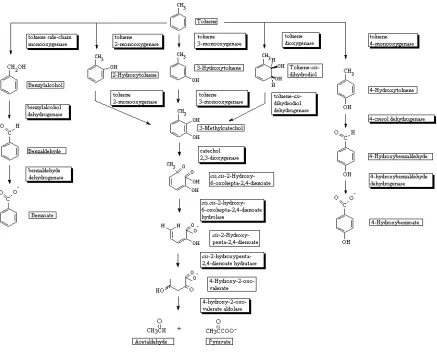
The oxidation of toluene can be initiated by insertion of O into any of the four unique C-H bonds in this molecule (Fig. 2.1). Toluene 4-monooxygenase (T4MO) catalyzes reaction from toluene to p-cresol (4-hydroxytoluene). Similarly, Toluene 3-monooxygenase (T3MO) produces m -cresol (3-hydroxytoluene) and Toluene 2-monooxygenase (T2MO) produces o-cresol (2-hydroxytoluene). Xylene monooxygenase (XMO, also toluene side chain monooxygenase) hydroxylates the methyl carbon to form benzyl alcohol. In addition, toluene dioxygenase (TDO) can insert both atoms of oxygen into toluene to form cis-dihydrodiol (Arp et al. 2001).
Bacteria have diverse metabolic capabilities to degrade toluene. Different toluene oxidizers and their kinetic parameters are summarized in Table 2.4. Pseudomonas putida F1 (PpF1 ATCC: 700007) was selected in this study because of it has been subjected to extensive study (Gibson et al. 1968a; 1968b; 1970; 1989) and it has fast toluene biodegradation rate. The bacterium
TABLE 2.4 Model Parameter for Aerobic Toluene Biodegradation by Pure Cultures
Bacteria (°T C) max. conc.(mg/L) b µmax
(h-1) (mg/L) Ks Ki
d
(mg/L)
YX/Se
(g/g) Reference
P. p F1 30 43 0.86± 0.01 13.8±0.9 / 1.28±0.13 Reardon et al. 2000
P. p R1a 25 4 0.504 0.1 / 1.2 Pedersen et al. 1997
P. p. 54G 24 50 0.42±0.05 3.98±0.78 42.78±3.87 0.90±0.13 Mirpuri et al. 1997
P. p. O1 30 70 0.72 15.07 44.33 0.64 Oh et al. 1994
P. fragi B1 room 10 0.543±0.076 1.96±0.91 / 1.22±0.1 Chang et al. 1993
P. sp. X1 room 10 0.452±0.115 1.88±1.26 / 0.99±0.25 Chang et al. 1993
P.p. 23973 32 30 0.437 6.0 1980 / Chio et al. 1992
P. p mt-2 / c / / 0.708±0.156 / / Duetz et al. 1998
B. cepacia G4 / / / 2.35 / / Arp et al. 2001
a A value of 0.048 h-1 for the specific decay rate was also reported. b Maximum toluene concentration. c Not
available. d Parameters are for the Monod model unless a value of K
i is given, in which case the Andrews model was
used. e The theoretical value of Y
X/S for growth on toluene is 1.23 g/g.
FIGURE 2.1 Toluene pathway map.
Literature Cited
Achtnich, C.; Fernandes, E.; Bollag, J. M.; Knackmuss, H. J.; Lenke, H. Covalent binding of reduced metabolites of (15N
3) TNT to soil organic matter during a bioremediation process analyzed by 15N NMR spectroscopy. Environ.
Sci. Technol. 1999, 33, 4448-4456.
Alexander, M. Aging, bioavailability, and overestimation of risk from environmental pollutants. Environ. Sci. Technol. 2000, 34, 4259-4265.
Aminabhavi, T. M.; Naik, H. G. Sorption/desorption, diffusion, permeation and swelling of high density polyethylene geomembrane in the presence of hazardous organic liquids. J. Hazardous Materials. 1999, 64, 251-262.
Arp, D. J.; Yeager, C. M.; Hyman, M. R. Molecular and cellular fundamentals of aerobic cometabolism of trichloroethylene. Biodegradation. 2001, 12, 81-103.
Back, E. L.; Salmen, N. L. Glass transitions of wood components hold implications for molding and pulping processes. Tappi. 1982, 65, 107-110.
Beg, Q. K.; Kapoor, M.; Mahajan, L.; Hoondal, G. S. Microbial xylanases and their industrial applications: a review. Appl. Microbiol. Biotechnol. 2001,56, 326-338.
Béguin, P.; Aubert, J-P. The biological degradation of cellulose. FEMS Microbiol. Rev. 1994,13, 25-58.
Bhat, M. K.; Bhat, S. Cellulose degrading enzymes and their potential industrial applications. Biotechnol. Adv. 1997, 15, 583-620.
Bollag, J. M.; Myers, C. J.; Minard, R. D. Biological and chemical interactions of pesticides with soil organic matter. Sci. Total. Environ. 1992, 123/124, 205-217.
Bollag, J. M.; Dec, J.; Huang, P. M. Formation mechanisms of complex organic structures in soil habitats. Adv. Agron. 1998, 63, 237-266.
Brandup, J.; Immergnt, E. H.; Grulke, E. A. Polymer Handbook, Wiley, New York. 1989, p206.
Brenner, R.; Hodson, R. E. Thermophilic anaerobic biodegradation of (14C) lignin, (14C) cellulose and (14C)
lignocellulose preparations. Appl. Environ. Microbio. 1985, 50, 971-976.
Bright, J. J.; Fletcher, M. Amino-acid assimilation and respiration by attached and free-living populations of a marine Pseudomonas-sp. Microbiol. Ecol. 1983, 9, 215-226.
Buswell, J. A.; Odier, E. Lignin biodegradation. CRC Crit. Rev. Biotechnol. 1987, 6, 1-60.
Calkin, J. B. Paper making materials and processes. In Modern pulp and paper making. Reinhold Publishing Corporation. New York. 1957, p 53-55.
Calvillo, Y. M.; Alexander, M. Mechanism of microbial utilization of biphenyl sorbed to polyacrylic beads. Appl. Microbio. Biotechnol. 1996, 45, 383-390.
Cavaco-Paulo, A. Mechanism of cellulase action in textile processes. Carbohyd. polym. 1998, 37, 273-277.
Christenssen, T. H.; Kjesdsen, P.; Albrechsen, H. J.; Heron, G.; Nielsen, P. H.; Bjerg, P. L.; Holm, P. E. Attenuation of landfill leachate pollutants in aquifers. Crit. Rev. Environ. Sci. Technol. 1994, 24, 119-202.
Chung, G. Y.; McCoy, B. J.; Scow, K. M. Criteria to assess when biodegradation is kinetically limited by intraparticle diffusion and sorption. Biotechnol. Bioeng. 1993, 41, 625-632.
Colberg, P. J. Anaerobic microbial degradation of cellulose, lignin, oligolignols, and monoaromatic lignin derivates. In Biology of Anaerobic Microorganisms. Zehnder, A. J. B. (ed). Wiley, USA. 1988, p 333-372.
Connaughton, D. F.; Stedinger, J. R.; Lion, L. W.; Schuler, M. L. Description of time-varying desorption kinetics: release of naphthalene from contaminated soils. Environ. Sci. Technol. 1993, 27, 2397-2403.
Cornelissen, G.; van Noort, P. C. M.; Govers, H. A. J. Mechanism of slow desorption of organic compounds from sediments: a study using model sorbents. Environ. Sci. Technol. 1998, 32, 3124-3131.
Cozzarelli, J. M.; Eganhouse, R. P.; Baekecker, M. J. Transformation of monoaromatic hydrocarbons to organic acids in anoxic groundwater environment. Environ. Geol. Water Sci. 1990, 16, 135-141.
Cozzarelli, J. M.; Suflita, J. M.; Ulrich, G. A.; Harris, S. H.; Scholl, M. A.; Schlottmann, J. L.; Christenson, S. Geochemical and microbiological methods for evaluating anaerobic processes in an aquifer contaminated by landfill leachate. Environ. Sci. Technol. 2000, 34, 4025-4033.
Crocker, F. H.; Guerin, W. F.; Boyd, S. A. Bioavailability of naphbthalene sorbed to cationic surfactant-modified smectite clay. Environ. Sci. Technol. 1995, 29, 2953-2958.
de Boer, J. H. The Dynamical Character of Adsorption. Clarendon Press, Oxford. 1968.
Dec, J.; Haider, K.; Benesi, A.; Rangaswamy, V.; Schäffer, A.; Plücken, U.; Bollag, J. M. Analysis of soil-bound residues of 13C-labeled fungicide cyprodinil by NMR-spectroscopy. Environ. Sci. Technol. 1997a, 31, 1128-1135.
Dec, J.; Haider, K.; Schäffer, A.; Fernandes, E.; Bollag, J. M. Use of a silylation procedure and 13C-NMR
spectroscopy to characterize bound and sequestered residues of cyprodinil in soil. Environ. Sci. Technol. 1997b, 31, 2991-2997.
Dec, J.; Bollag, J. M. Microbial release and degradation of catechol and chlorophenols bound to synthetic humic acid. Soil Sci. Soc. Am. J. 1988, 52, 1366-1371.
Dekker, R. F. H.; Richards, G. N. Hemicelluloses, their occurrence, purification, properties and mode of action. Adv. Carbohydr. Chem. Biochem. 1976, 32, 277-352.
Deobald and Crawford Lignicellulose biodegradation. In Hurst, C. J.; Knudsen, G. R.; McInerney, M. J.;
Stetzenbach, L. D.; Walter, M. V. (eds) Manual of Environmental Microbiology. America Society for Microbiology. 2000.
Dinel, H.; Schnitzer, M.; Dumontet, S. Compost maturity: chemical characteristics of extractable lipids. Compost Sci. Util. 1996,4, 16-25.
Ehrhardt, H. M.; Rehm, H. J. Phenol degradation by microorganisms adsorbed on activated carbon. Appl. Microbio. Biotechnol. 1985, 21, 32-36.
Ejlertsson, J.; Alnervik, M.; Svensson, B. H. Influence of water solubility, side chain degradability and side chain configuration on the degradation of phthalic acid esters under methanogenic conditions. Environ. Sci. Technol. 1997, 31, 2761-2764.
Eleazer, W. E.; Odle, W. S.; Wang, Y.; Barlaz, M. A. Biodegradability of municipal solid waste components in laboratory-scale landfills. Environ. Sci. Technol. 1997, 31, 911-917.
Evans, R.; Newman, R. H.; Roick, U. C.; Suckling, I. D.; Wallis, A. F. A. Changes in cellulose crystallinity during kraft pulping-comparison of infrared, X-ray diffraction and solid-state NMR results. Holzforschung 1995, 49, 498-504.
Everett, D. H.; Powl, J. C. Adsorption in slit-like and cylindrical micropores in Henry’s law region-model for microporosity of carbons. J. Chem. Soc. Faraday Trans. 1976, 72, 619-636.
Farrell, J.; Reinhard, M. Desorption of halogenated organics from model solids, sediments, and soil under unsaturated conditions. 1. Isotherms. Environ. Sci. Technol. 1994a, 28, 53-62.
Farrel, M.; Reinhard, M. Desorption of halogenated organics from model solids, sediments, and soil under unsaturated conditions. 2. Kinetics. Environ. Sci. Technol. 1994b, 28, 63-72.
Farrel, J.; Grassian, D.; Jones, M. Investigation of mechanisms contributing to slow desorption of hydrophobic organic compounds from mineral solids. Environ. Sci. Technol. 1999, 33, 1237-1243.
Feng, Y.; Park, J-H.; Voice, T. C.; Boyd, S. A. Bioavailability of soil-sorbed biphenyl to bacteria. Environ. Sci. Technol. 2000, 34, 1977-1984.
Gibson, D. T.; Koch, J. R.; Kallio, R. E. Oxidative degradation of aromatic hydrocarbons by microorganisms. I. Enzymatic formation of catechol from benzene. Biochemistry 1968a, 7, 2653-2662.
Gibson, D. T.; Cardini, G. E.; Maseles, F. C.; Kallio, R. E. Incorporation of oxygen-18 into benzene by pseudomonas putida *. Biochemistry. 1970, 9, 1631-1635.
Gibson, D. In Microbial Degradation of Organic Compounds. Marcel Dekker Inc. New York and Basel. 1984, p 399-438.
Gibson, D. T.; Zylstra, G. J.; Chauhan, S. Biotransformations catalyzed by toluene dioxygenase from Pseudomonas putida F1, In Pseudomonas: Biotransformations, Pathogenesis, and Evolving Biotechnology. S. Kaplan (ed.) American Society for Microbiology, Washington, D. C. 1989, p 121-132.
Gibson, D. T.; Parales, R. E. Aromatic hydrocarbon dioxygenases in environmental biotechnology. Curr. Opin. Biotech. 2000, 11, 236-243.
González-Vila, F. J.; Bautista, J. M.; Del Rio, J. C.; Martin, F. Evolution of chemicals within the dump profile in a controlled landfill. Chemosphere. 1995, 31, 2817-2825.
Grosser, R. J.; Friedrich, M.; Ward, D. M.; Inskeep, W. P. Effect of model sorptive phases on phenanthrene biodegradation: different enrichment conditions influence bioavailability and selection of phenanthrene-degrading isolates. Appl. Environ. Microbiol. 2000, 66, 2695-2702.
Gueer, L. A.; Shelton, D. R. Effect of inoculant strain and organic matter content on kinetics of 2, 4-dicholorophenoxyacetic acid degradation in soil. Appl. Environ. Microbiol. 1992, 58, 1459-1465.
Guerin, W. F.; Boyd, S. A. Differential bioavailability of soil-sorbed naphthalene to two bacterial species. Appl. Environ. Microbiol. 1992, 58, 1142-1152.
Guerin, W. F.; Boyd, S. A. Maintenance and induction of naphthalene degradation activity in Pseudomonas putida and Alcaligenes sp. under different culture conditions. Appl. Environ. Microbiol. 1995, 61, 4061-4068.
Guerin, W. F.; Boyd, S. A. Bioavailability of naphthalene associated with natural and synthetic sorbents. Water Res. 1997, 31, 1504-1512.
Guthrie, E. A.; Bortiatynski, J. M.; van Heemst, J. D. H.; Richman, J. E.; Hardy, K. S.; Kovach, E. M.; Hatcher, P. G. Determination of (13C) pyrene sequestration in sediment microcosms using flash prolysis-GC-MS and 13C NMR.
Environ. Sci. Technol. 1999, 33, 119-125.
Harms, H.; Zehnder, A. J. B. Influence of substrate diffusion on degradation of debenzofuran and 3-chlorodibenzofuran by attached and suspended bacteria. Appl. Environ. Microbiol. 1994, 60, 2736-2745.
Harms, H.; Zehnder, A. J. B. Bioavailability of sorbed 3-chlorodibenzofuran. Appl. Environ. Microbiol. 1995, 61, 27-33.
Hatzinger, P. B.; Alexander, M. Effect of aging of chemicals in soil on their biodegradability and extractability. Environ. Sci. Technol. 1995, 29, 537-545.
Hortling, B.; Ranua, M.; Sundquist, J. Investigation of the residual lignin in chemical pulps. Part I. Enzymatic hydrolysis of the pulps and fractionation of the products. Nordic Pulp Paper Res. J. 1990, 1, 33-37.
Huang, W.; Weber, W. J. A distributed reactivity model for sorption by soils and sediments. 10. Relationships between desorption, hysteresis, and the chemical characteristics of organic domains. Environ. Sci. Technol. 1997, 31, 2562-2569.
Hunt, E. L.; Larsson, P. T.; Iversen, T. A CP/MAS C-13-NMR study of supermolecular changes in the cellulose and hemicellulose structure during Kraft pulping. Nordic Pulp Pap. Res. J. 2001, 16, 33-39.
International Union of Pured and Applied Chemistry, Division of Physical Chemistry Pure. Appl. Chem. 1972, 31, 577-638.
Johnson, S. E.; Herman, J. S.; Mills, A. L.; Hornberger, G. M. Bioavailability and desorption characteristics of aged, nonextractable atrazine in soil. Environ. Toxicol. Chem. 1999, 18, 1747-1754.
Karickhoff, S. W. Organic pollutant sorption in aquatic systems. J. Hydraul. Eng. 1984, 110, 707.
Karlsson, O.; Pettersson, B.; Westermark, U. The use of cellulases and hemicellulases to study lignin-cellulose as well as lignin-hemicellulose bonds in Kraft pulps. J. Pulp Paper Sci. 2001, 27, 196-201.
Kettunen, R. H.; Keskitalo, P.; Hoilijoki, T. H.; Rintala, J. A. Biological treatment for removal of organic material and ammonium from leachate at low temperatures. Waste Manage. Res. 1999,17, 487-492.
Kim, J. E.; Wang, C. J.; Bollag, J. M. Interaction of reactive and inert chemicals in the presence of oxidoreductases: Reaction of the herbicide bentazon and its metabolites with humic monomers. Biodegradation. 1998, 8, 387-392.
Kuhad, R. C.; Singh, A.; Eriksson, K. E. L. Microorganisms and enzymes involved in the degradation of plant fiber cell walls. In Advances in Biochemical Engineering/Biotechnology. Vol 57. Eriksson, K. E. L (ed). Springer, Germany. 1997, p 46-125.
Lamoureux, E. M.; Brownawell, B. J. Chemical and biological availability of sediment-sorbed hydrophobic organic contaminants. Environ. Toxicol. Chem. 1999, 18, 1733-1741.
Laor, Y.; Strom, P. F.; Farmer, W. J. The effect of sorption on phenanthrene bioavailability. J. Biotechnol. 1996, 51, 227-234.
LeBoeuf, E. J.; Weber, W. J. Jr. Macromolecular characteristics of natural organic matter. 2. Sorption and desorption behavior. Environ. Sci. Technol. 2000, 34, 3632-3640.
Lever, M. Colorimetric and fluorometric carbohydrate determination with para-hydroxybenzoic acid hydrazide. Biochem. Med. 1973, 274-281.
Lichtfouse, E.; Chenu, C.; Baudin, F. Resistant ultralaminae in soils. Org. Geochem. 1996, 25, 263-265.
Luthy, R. G.; Aiken, G. R.; Brusseau, M. L.; Cunninghan, S. D.; Gschwend, P. M.; Pignatello, J. J.; Reinhard, M.; Trainan, S. J.; Weber, W. J. Jr.; Westall, J. C. Sequestration of hydrophobic organic contaminants by geosorbents. Environ. Sci. Technol. 1997, 31, 3341-3347.
McGinley, P. M.; Katz, L. E.; Weber, W. J. A distributed reactivity model for sorption by soils and sediments. 2. Multicomponent systems and competitive effects. Environ. Sci. Technol. 1993, 27, 1524-1531.
Mersiowsky, I.; Weller, M.; Ejlertsson, J. Fate of plasticised PVC products under landfill conditions: a laboratory-scale landfill simulation reactor study. Wat. Res. 2001, 35, 3063-3070.
Micales, J. A.; Skog, K. E. The decomposition of forest products in landfill. Int. Biodeter. Biodegrad. 1997, 39, 145-158.
Miller, G. L.; Blum, R.; Glennon, W. E.; Burton, A. L. Measurement of carboxymethylcellulase activity. Anal. Biochem. 1960, 2, 127-132.
Mullings, R.; Parish, J. H. New reducing sugar assay for the study of cellulases. Enzyme Microb. Technol. 1984, 6, 491-496.
Nam, K.; Alexander, M. Role of nanoporosity and hydrophobicity in sequestration and bioavailability: tests with model solids. Environ. Sci. Technol. 1998, 32, 71-74.
Nam, K.; Alexander, M. Relationship between biodegradation rate and percentage of a compound that becomes sequestered in soil. Soil Biol. biochem. 2001, 33, 787-792.
Nguyen, R. T.; Harvey, H. R. In Nitrogen-containing macromolecules in the biosphere and geosphere. Stankiewicz, B. A.; Van Bergen, P. F. (eds) ACS Symposium Series 707: American Chemical Society: Washington, DC. 1998, p 88-112.
Odier, E.; Monties, B. Absence of microbial mineralization of lignin in anaerobic enrichment cultures. Appl. Environ. Microbiol. 1983, 46, 661-665.
Park, J. W.; Kim, J. E.; Bollag, J. M. Effect of humic constituents on the transformation of chlorinated phenols and anilines in the presence of oxidoreductive enzymes or birmessite. Environ. Sci. Technol. 1999, 33, 2028-2034.
Park, J. W.; Dec, J.; Kim, J. E.; Bollag, J. M. Transformation of chlorinated phenols and anilines in the presence of humic acid. J. Environ. Qual. 2000, 29, 214-220.
Park, J. H.; Zhao, X.; Voice, T. C. Biodegradation of non-desorbable naphthalene in soils. Environ. Sci. Technol. 2001, 35, 2734-2740.
Pelczar, M. J. Jr.; Reid, R. D. In Microbiology. McGraw Press. New York. 1958, p102-103.
Pichler, M.; Kögel-Knabner, I. Chemolytic analysis of organic matter during aerobic and anaerobic treatment of municipal solid waste. J. Environ. Qual. 2000, 29, 1337-1344.
composting as studied by solid-state dipolar dephasing and PSRE 13C NMR and solid-state 15N NMR spectroscopy.
Environ. Sci. Technol. 2000, 34, 4034-4038.
Pignatello, J. J.; Ferrandino, F. J.; Huang, L. Q. Elution of aged and freshly added herbicides from a soil. Environ. Sci. Technol. 1993, 27, 1563-1571.
Pignatello, J. J.; Xing, B. Mechanisms of slow sorption of organic chemicals to natural particles. Environ. Sci. Technol. 1996, 30, 1-11.
Rijnaarts, H. H. M.; Bachmann, A.; Jumelet, J. C.; Zehnder, A. J. B. Effect of desorption and intraparticle mass transfer on the aerobic biomineralization of α-hexachlorocyclohexane in a contaminated calcareous soil. Environ. Sci. Technol. 1990, 24, 1349-1354.
Robinson, H. D.; Barr, M. J. Aerobic biological treatment of landfill leachates. Waste Manage. Res. 1999, 17, 478-486.
Roper, J. C.; Sharkar, J. M.; Dec, J.; Bollag, J. M. Enhanced enzymatic removal of chlorophenols in the presence of co-substrates. Water Res. 1995, 29, 2720-2724.
Rutherford, D. W.; Chiou, C. T.; Kile, D. E. Influence of soil organic matter composition on the partition of organic compounds. Environ. Sci. Technol. 1992, 26, 336-340.
Sánchez-Monedero, M. A.; Roig, A.; Cegarra, J.; Bernal, M. P. Relationships between water-soluble carbohydrate and phenol fractions and the humification indices of different organic wastes during composting. Bioresource Technol. 1999, 70, 193-201.
Sarkar, J. M.; Malcolm, R. L.; Bollag, J. M. Enzymatic coupling of 2, 4-dichlorophenol to stream fulvic acid in the presence of oxidoreductases. Soil Sci. Soc. Am. J. 1988, 52, 688-694.
Scow, K. M.; Hutson, J. Effect of diffusion and sorption on the kinetics of biodegradation: theoretical considerations. Soil Sci. Soc. Am. J. 1992, 56, 119-127.
Scow, K. M.; Johnson, C. R. Effect of sorption on biodegradation of soil pollutants. 1997, Adv. Agron. 58, 1-56.
Senesi, N.; Testini, C. Adsorption of some nitrogenated herbicides by soil humic acids. Soil Sci. 1980, 130, 314-320.
Senior, E. In Microbiology of Landfill Sites. CRC press. Florida. 1990.
Sharrock, K. R. Cellulase assay methods: a review. J. Biochem. Biophy. Methods. 1988, 17, 81-106.
Shevchenko, S. M.; Bailey, G. W. Life after death: lignin-humic relationship reexamined. Crit. Rev. Env. Sci. Tec. 1996, 26, 95-153.
Stanier, R. Y.; Palleroni, N. J.; Doudoroff, M. The aerobic Pseudomonas: a taxonomic study. J. Gen. Microbiol. 1966, 43, 159-271.
intraparticle micropores. Environ. Sci. Technol. 1987, 21, 1201-1208.
Stevenson, F. L. Humus chemistry: Genesis, Composition, Reactions, 2nd Edition. John Wiley & Sons, New York.
1994.
Tang, W. C.; White, J. C.; Alexander, M. Utilization of sorbed compounds by microorganisms specifically isolated for that purpose. Appl. Microbiol. Biotechnol. 1998, 49, 117-121.
Thorn, K. A.; Pettigrew, P. J.; Goldenberg, W. S. Covalent binding of aniline to humic substances. 2. 15N NMR
studies of nucleophilic addition reactions. Environ. Sci. Technol. 1996, 30, 2764-2775.
Tuomela, M.; Vikman, M.; Hatakka, A.; Itavaara, M. Biodegradation of lignin in a compost environment: a review. Bioresource Technol. 2000, 72, 169-183.
U. S. EPA. Characterization for municipal solid waste in the United States: EPA 530-R-96-001: U. S. EPA: Washington, DC. 1996 update.
U. S. EPA. Municipal Solid Waste Factbook, Version 4.0: EPA 530-C-97-001: U. S. EPA: Washington. DC. 1997.
U .S. EPA Characterization of Municipal Solid Waste in the United States: US EPA/530-R-99-021; Office of Solid Waste, U.S. EPA: Washington, DC. 1999 update.
Venkataramani, E. S.; Ahlert, R. C.; Carbo, P. Biological treatment of landfill leachate. CRC Crit. Rev. Env. Contr. 1984, 14, 333-376.
Weber, W. J.; McGinley, P. M.; Katz, L. E. A distributed reactivity model for sorption by soils and sediments. 1. Conceptual basis and equilibrium assessments. Environ. Sci. Technol. 1992, 26, 1955-1962.
Weber, W. J. Jr.; Huang, W. A distributed reactivity model for sorption by soils and sediments. 4. Intraparticle heterogeneity and phase-distributed relationships under nonequilibrium conditions. Environ. Sci. Technol. 1996, 30, 881-888.
Wenzl, H. F. J. The chemistry of wood. In The Chemical Technology of Wood. Academic Press. New York and London. 1970, p92-156.
Werth, C. T.; Reinhard, M. Effects of temperature on trichloroethylene desorption from silica gel and natural sediments. 2. Kinetics. Environ. Sci. Technol. 1997, 31, 697-703.
White, J. C.; Hunter, M.; Nam, K.; Pignatello, J. J.; Alexander, M. Correlation between biological and physical availabilities of phenanthrene in soils and soil humin in aging experiments. Environ. Toxicol. Chem. 1999, 18, 1720-1727.
Xing, B.; McGill, W. B.; Dudas, M. J. Sorption of benzene, toluene, and o-xylene by collagen compared with nonprotein organic sorbent. Can. J. Soi. Sci. 1994, 74, 465-469.
Xing, B.; Pignatello, J. J. Dual-mode sorption of low-polarity compounds in glassy poly (vinyl chloride) and soil organic matter. Environ. Sci. Technol. 1997, 31, 792-799.
Chapter 3
Method Development
In this chapter, experimental techniques used to evaluate bioavailability of toluene sorbed to MSW are described in detail. Preliminary data are included to give an overview of the development and gradual improvement of the experimental techniques.
3.1 Anaerobic Bioavailability Test
The objective of this test is to evaluate the potential of using consortia enriched from landfills in assessing bioavailability of HOCs sorbed to MSW component. The description of materials also applies to the other experiments in this chapter.
3.1.1 Materials
Sorbents and Their Characterization
Due to the complexity and heterogeneity of MSW, bioavailability tests are conducted with the major organic MSW components in pure form. Rabbit food (Manna Pro Corporation, St. Louis, MO) contains both simple and complex carbohydrates as well as proteins in the form of alfalfa, wheat, soy and oat products, and it was used to represent food and yard waste. Poly (vinyl chloride) (PVC) (Sigma-Aldrich Milwaukee, WI) and high-density polyethylene (HDPE) were tested to represent glassy and rubbery polymers respectively. Newsprint and office paper were chosen to represent the major paper types in MSW.
The characterization of sorbents is summarized in Table 3.1 (Wu et al. 2001).
Sorbate
14C Labeled toluene (2.8 mCi/mmol, 99% purity) was purchased from Sigma Chemical Co. (St. Louis, MO). For stock solutions, 1 mCi radioactive toluene was mixed with 10 ml non-labeled toluene (Reagent grade, Fisher Scientific, Pittsburgh, PA) to give a final concentration of 150325.33 dpm/µL. Stock solutions are kept in a freezer at –10 ºC until use.
Leachates
Acidogenic leachate was produced by recirculating water through fresh residential refuse. The pH of the leachate was 4.9 and COD was around 22,000 mg/l. The acidogenic leachate has high concentrations of volatile fatty acids (VFA), which are summarized in Table 3.2. Methanogenic leachate was generated in the laboratory from decomposed refuse with pH around 8 and TOC around 120 mg/l.
3.1.2 Methods
TABLE 3.1 Characterization of Sorbents a
Sorbent Cellulose (%)
Hemicellulose (%)
Lignin (%)
Lipophilic extractives (%)
Crude protein (%)
Ash
(wt%) foc BET surface area (m2/g)
Poly (vinyl chloride) N/A N/A N/A N/A N/A 0.00 0.389 0.8 High density polyethylene N/A N/A N/A N/A N/A 0.01 0.876 0.6 Fresh office paper 64.7 13.0 0.93 0.7 0.31 11.6 0.373 2.8 Degraded office paper 36.2 6.9 4.8 3.3 4.99 38.4 0.278 6.0 Fresh newsprint 48.3 18.1 22.1 1.6 0.44 2.0 0.451 2.6 Degraded newsprint 35.1 16.0 32.3 1.4 3.74 6.4 0.455 3.4 Fresh rabbit food 30.6 15.4 9.5 4.9 18.1 7.7 0.423 0.6 Degraded rabbit food 7.1 5.7 25.2 4.5 20.6 34.5 0.329 0.5
a Values are averages of replicate analyses. b N/A: not analyzed
TABLE 3.2 VFA Analysis of Acidogenic Leachate a, b
Sample number
acetic acid
propionic acid
i-butyric acid
Butyric acid
2-methyl butyric acid
i-valeric acid
Valeric Acid
i-caproic acid
caproic acid
heptanoic acid
1 1658 1571 101 3862 52 61 1774 22 337 ND
2 1886 1675 141 3736 56 66 1717 21 317 ND
Following aging, bottles were removed from the tumbler. Duplicate 0.5 ml samples were taken from the aqueous phase. This step quantified the amount of test compound sorbed to the solid. After sample removal, as much additional liquid as possible was removed from bottle using a disposable syringe. The volume removed was replaced with inoculum from a culture known to degrade o-xylene (enriched from contaminated sediment obtained from a sandy zone of an aquifer in Pensacola, FI. (Edwards and Grbic-Galic 1994)), leaving a 10 ml headspace for gas accumulation. The concentration of the test compound was adjusted using the 14C stock solution to be the same in the inoculum as in the aqueous phase of the test bottles to prevent any additional sorption and desorption.
For the six control bottles, three were inoculated with the same amount of microorganisms. The inoculum was autoclaved and added to the other three abiotic control bottles. These three abiotic control bottles were set up to monitor the abiotic loss of the test compound during incubation.
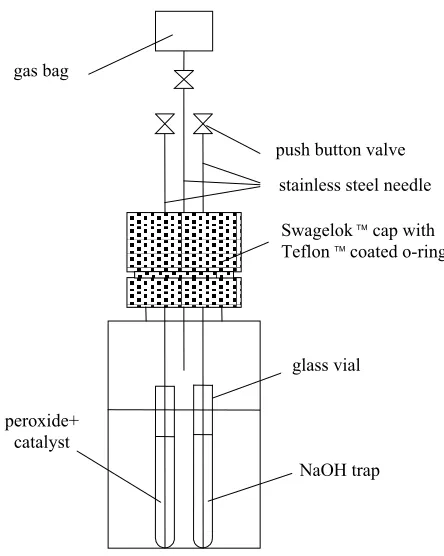
Following inoculation. Three positive controls, three bioavailability tests and three abiotic controls were maintained at 37°C for 4 months. Gas production was monitored by venting the headspace of bottles directly into gasbags. 14CH4 and 14CO2 and volatile 14C-test compound were quantified using gas trapping protocol.
3.1.3 Experimental Results
TABLE 3.3 Anaerobic Bioavailability of o-xylene Aged One Month on Degraded Newsprint
dpm trapped Bottle number
Initial dpm added
dpm removed
with leachate
dpm added
with inoculum
14CO
2 14CH4 ORBO Total
Cumulative
14CO 214CH4
recovery (%)
Cumulative recovery
(%)
1 1062959 94197 50334 0 0 19223 19223 0 1.89
2 1036385 88498 50334 0 986 14140 15126 0.099 1.52
Bioavail-ability 3 1062959 81867 50334 571 0 17017 17588 0.055 1.76
1 1062959 0 0 301 2115 71320 73736 0.23 6.94
2 1062959 0 0 536 6483 73386 80405 0.66 7.56
Positive
control 3 1062959 0 0 324 2211 80858 83273 0.23 7.85
1 1062959 90146 54317 0 0 9542 9542 0 0.93
2 1062959 92985 54317 0 0 9645 9645 0 0.94
Abiotic
Control 3 1062959 98349 54317 0 0 10378 10378 0 1.02
3.1.4 Conclusions and Recommendations
1 O-xylene is a volatile compound. Previous test showed that significant loss occurred when using gray Teflon coated butyl rubber stopper to seal serum bottle during long time aging. The loss during aging will introduce uncertainties into the mass balance. To avoid this, the bottles should then be sealed in a way that allows for the headspace to be vented without opening the bottle.
2 After three months of incubation. It was found that large amount of gas was produced in abiotic control bottle; indicating γ irradiation prior to loading the bottle was ineffective. Contamination may occur during weighing and spiking procedures.
3.1.5 Improvements
Based on the anaerobic bioavailability test, the experimental design was improved in the following aspects.