University of South Carolina
Scholar Commons
Theses and Dissertations
2017
Rebirth of the House Museum: Commemorating
Reconstruction at the Woodrow Wilson Family
Home
Jennifer Whitmer Taylor
University of South Carolina
Follow this and additional works at:https://scholarcommons.sc.edu/etd Part of theHistory Commons
This Open Access Dissertation is brought to you by Scholar Commons. It has been accepted for inclusion in Theses and Dissertations by an authorized administrator of Scholar Commons. For more information, please [email protected].
Recommended Citation
R
EBIRTH OF THEH
OUSEM
USEUM:
C
OMMEMORATINGR
ECONSTRUCTION ATTHE
W
OODROWW
ILSONF
AMILYH
OMEby
Jennifer Whitmer Taylor Bachelor of Arts Murray State University, 2001
Master of Arts
University of North Carolina at Wilmington, 2006
Submitted in Partial Fulfillment of the Requirements For the Degree of Doctor of Philosophy in
History
College of Arts and Sciences University of South Carolina
2017 Accepted by:
Allison Marsh, Major Professor Susan Courtney, Committee Member Wanda Hendricks, Committee Member
Robert Weyeneth, Committee Member
ii
iii
DEDICATION
iv
ACKNOWLEDGEMENTS
v
Wilson Family Home (WWFH) docents, who turned an exhibit into an experience, disclosed their stories to me. Any criticism they may perceive in this work reflects on my shortcomings as their trainer. Similar to the visitors and docents of the WWFH, I, too, was taught a Dunning School interpretation by my favorite high school teacher, who also happened to worship Woodrow Wilson. As such, I must recognize the WWFH
vi
ABSTRACT
Rebirth of a House Museum traces the transformation of the Woodrow Wilson Family Home (WWFH) in Columbia, South Carolina from an eighty year-old presidential shrine to the nation’s first museum of Reconstruction. A semi-guided house tour with limited objects and grounded in a specific time and place modernized an outdated historic house museum (HHM). The house became the primary artifact, supported by a panel exhibit and five original Wilson family objects. Critical to the exhibit’s success were the docents, who also steer this manuscript via their oral histories and fill a void in public history literature. Like Reconstruction, the reinterpretation was both revolutionary but less radical than its potential. Nonetheless, the project will assist sites seeking guidance in training and inclusivity, tackling difficult or controversial interpretative transitions, and unraveling white supremacy.
vii
viii
TABLE OF CONTENTS
DEDICATION ... iii
ACKNOWLEDGEMENTS ... iv
ABSTRACT ... vi
LIST OF TABLES ... xi
LIST OF FIGURES ... xii
LIST OF ABBREVIATIONS ... xiii
CHAPTER 1:INTRODUCTION ...1
1.1THE WOODROW WILSON FAMILY HOME’S ORIGINS AS PRESIDENTIAL SHRINE ...2
1.2ABRIEF SYNOPSIS OF THE TOUR ...5
1.3SITUATING THE WWFH IN MUSEUM LITERATURE ...8
1.4CHAPTER SUMMARIES ...19
CHAPTER 2:THE REBIRTH OF THE WOODROW WILSON FAMILY HOME:RETHINKING THE SIGNIFICANCE OF THE WWFH FOR THE TWENTY-FIRST CENTURY ...27
2.1WALKING IN THE FOOTSTEPS OF THE PRESIDENT ...27
2.2OBJECTING TO OBJECTS ...35
2.3DEATH OF THE DOCENT? ...46
CHAPTER 3:ANEW WAY OF THINKING:DOCENT TRAINING AND LEARNING ABOUT THE LOST CAUSE ...60
3.1DESIGNING THE TRAINING ...61
ix
3.3EVALUATING THE DOCENTS ...74
3.4“YOU CANNOT PLEASE EVERYBODY”:REJECTING THE INTERPRETATION ...81
3.5WHO MAKES THE BEST DOCENT? ...89
CHAPTER 4:AREN’T I A CITIZEN:INTERPRETING VIOLENCE ...106
4.1THE PROBLEM OF PRIVILEGE:LANGUAGE AND CULTURAL SENSITIVITY TRAINING ...107
4.2ALABOR OF LOVE AND SORROW:INTERPRETING THE LIVES OF DOMESTIC WORKERS ...117
4.3INTERPRETING VIOLENCE AND THE OVERTHROW OF RECONSTRUCTION ...138
CHAPTER 5:WRITING HISTORY WITH LIGHTNING:INTERPRETING MEMORY AND WHITE SUPREMACY ...155
5.1ADIFFICULT TRANSITION:FROM POLITICAL TERRORISM TO A WHITE SUPREMACIST MEMORY OF RECONSTRUCTION ...156
5.2REWRITING HISTORY WITH LIGHTNING:CRAFTING THE LEGACY OF WOODROW WILSON AND RECONSTRUCTION ...166
5.3RACISM IN DEGREES:INTERPRETING WILSON AND WHITE SUPREMACY ...193
5.4BUT WHAT ABOUT GONE WITH THE WIND?:CONCLUSIONS AND THE ACT OF LETTING GO ...203
CHAPTER 6:ENGAGING RECONSTRUCTION AS A CIVIL RIGHTS MOVEMENT FOR TWENTY-FIRST CENTURY VISITORS ...208
6.1THE EVALUATION ...212
6.2THE RESULTS ...214
CHAPTER 7:CONCLUSION:ON THE EDGE OF RECONSTRUCTING RECONSTRUCTION ...258
7.1THE POLITICAL ROAD TO RECONSTRUCTION IN THE HHM ...265
7.2THE FUTURE (POLITICS) OF THE MUSEUM ...278
x
APPENDIX A–HISTORIC COLUMBIA POST-TRAINING SESSION SURVEY ...309
APPENDIX B–HISTORIC COLUMBIA REVISED DOCENT EVALUATION MARCH 2014 ...311
APPENDIX C–WWFHDOCENT SCRIPT DEVELOPMENT AND ANALYSIS ...320
APPENDIX D–WWFHDOCENT SCRIPT JUNE 2014 ...328
APPENDIX E–WWFHVISITOR EVALUATION ...362
APPENDIX F–ORAL HISTORY METHODOLOGY ...365
APPENDIX G–WWFHDOCENT SURVEY FOR DISSERTATION ...370
xi
LIST OF TABLES
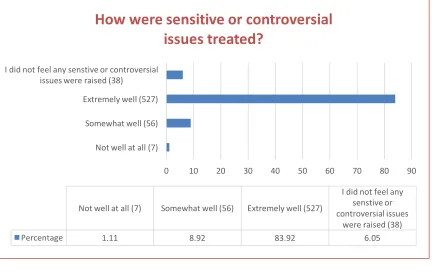
Table 4.1 Visitor Evaluation Question on Sensitive or Controversial Issues ...112
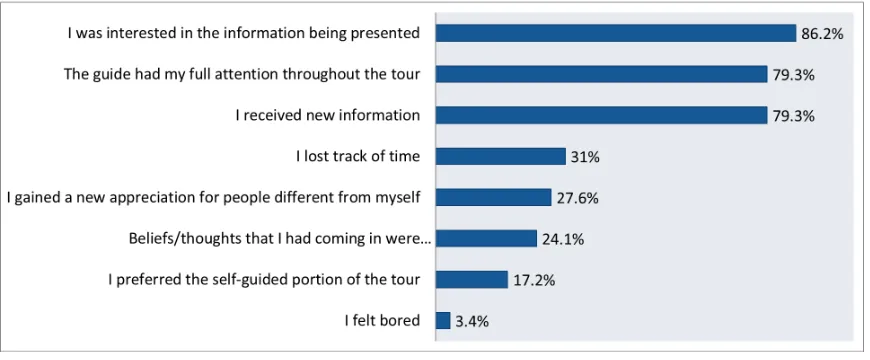
Table 6.1 Opening Day Responses to the Question “During My Tour of the WWFH Exhibition Today” ...216
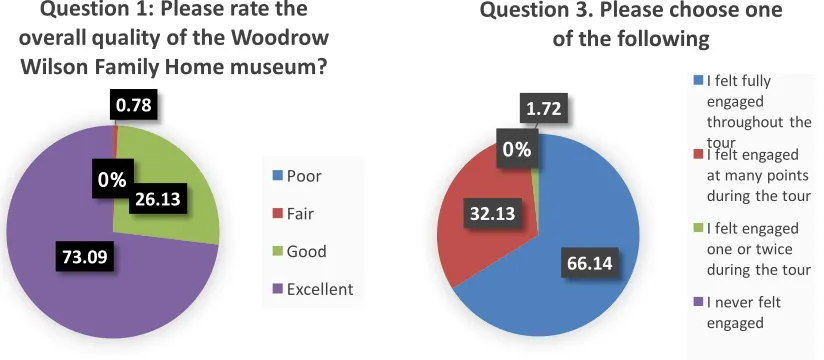
Table 6.2 Visitor Evaluation Question 1 ...217
Table 6.3 Visitor Evaluation Question 3 ...217
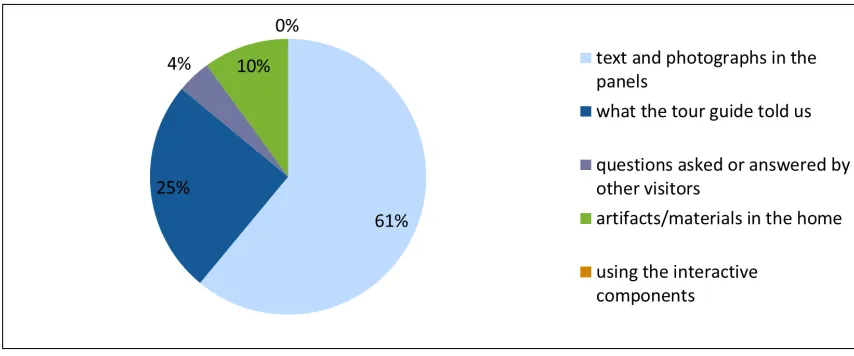
Table 6.4 Opening Day Responses to the Question “What Type of Information Was Most Interesting to You?” ...223
Table 6.5 Visitor Evaluation Question 5 ...226
Table 6.6 Visitor Evaluation Question 2 ...234
Table 6.7 Visitor Evaluation Question 7 ...238
Table 6.8 Visitor Evaluation Question 9 ...243
Table 6.9 Evaluator Demographics by Decade of Birth ...245
xii
LIST OF FIGURES
Figure 1.1 Woodrow Wilson Family Home Adult Tour Script Floor Plan ...6 Figure 3.1 How Prepared Do You Currently Feel to Lead Tours Regarding the
xiii
LIST OF ABBREVIATIONS
APVA ... Association for the Preservation of Virginia Antiquities CCMM ... Centro Cultural y Museum de la Memoria DAR ... Daughters of the American Revolution HHM ... Historic House Museum
JAH ... Journal of American History
xiv
1
CHAPTER 1
INTRODUCTION
On a crisp Saturday morning, the fifteenth of February 2014, dozens of people
gathered between a magnolia tree and the front steps of a blue Italianate Victorian era
house. The crowd awaited entry into the childhood home of Woodrow Wilson, which had
been closed to the public for nine years. The last barrier in the reinterpretation and
rehabilitation of the eighty-year old historic house museum (HHM) was the ribbon
cutting staged on the home’s porch. From its inception as a presidential house, the
Woodrow Wilson Family Home (WWFH) and the tour visitors took there explored the
teenage years of the twenty-eighth president of the United States. But somewhat
ironically, with one slice of a yellow ribbon that President’s Day, the HHM severed it ties
to the presidential shrine mentality. Armed with a revolutionary reinterpretation, the
WWFH officially opened in Columbia, South Carolina as the first museum of
Reconstruction in the nation. The new interpretation overthrew the traditional HHM
narrative of elite white men in an attempt to fill the enormous gap between academic and
public knowledge of Reconstruction. Historic Columbia, the organization that
administers the home, reimagined the outdated HHM model of docent-guided tours
heavily dependent on period rooms and installed a twenty-first century exhibit reliant on
panels and a minimalist approach to displaying artifacts. The organization launched an
innovative semi-guided tour led by vetted docents trained to interpret the biracial space
2
created by Reconstruction. In the process of blending the two seemingly unconnected subjects of the post-Civil War world and a teenager named Tommy who would become president, the museum created complex and at times contested conversations about freedom, citizenship, terror, systemic racism, hero worship, and memory in South Carolina, the South, and the nation.
1.1 THE WOODROW WILSON FAMILY HOME’S ORIGINS AS
PRESIDENTIAL SHRINE
The HHM movement began in the mid-nineteenth century with efforts to preserve sites affiliated with America’s first president. By the end of the Reconstruction era, three of the first five HHMs were associated with George Washington. The first was the Independence Day opening of Hasbrouck House, his headquarters in Newburgh, NY, in 1850, but his headquarters at Valley Forge was saved in 1876. The most significant, Mount Vernon, was preserved in 1860. By the 1890s, two homes were rescued a year. The movement only grew with the rise of the car until HHMs numbered over 400 by 1933, stretching from the east coast to the first cabins of the West. The growth of HHMs also reflected a patriotic spirit and a greater mission of Americanization.1 In 1933, Laurence Coleman acknowledged the shrine origins of the HHM movement. The homes “chosen to survive” were those “where celebrity is born, where fame makes its home, where art or science labors in erstwhile obscurity, where important incidents occur, where death visits the great.”2 It was at this time during the Great Depression that Wilson’s
1 Laurence Vail Coleman, Historic House Museums. With a Directory (Detroit, MI: Gale Research Company, 1973), 18; Patricia West, Domesticating History: The Political Origins of America’s House Museums (Washington, D.C.: Smithsonian Institution Press, 1999), 4, 43; Jennifer Pustz, Voices from the Back Stairs: Interpreting Servants’ Lives at Historic House Museums (DeKalb: Northern Illinois University Press, 2010), 15–16.
3
home in Columbia and the manse he was born in in Staunton, Virginia were saved. His last home on S Street in Washington, D.C. and the manse he occupied in Augusta, Georgia before moving to Columbia were preserved decades later.
Historic house museums in the twenty-first century face numerous challenges. They are too numerous, and often as birthplaces and homes of elites shrouded in outdated interpretations of the past, they must demand diversity and relevancy if they are to remain solvent.3 In the second decade of the twenty-first century, the WWFH sought to make a former presidential shrine relevant again. The site reinvented the image of the ideal American in the HHM and illuminated the patriotism of black Americans working toward political, economic and social equality when Wilson was a teenager living in
Reconstruction-era Columbia. This continues a process underway at the nation’s most prestigious presidential homes and reputable southern institutions. By adopting the interpretative style of social historians, these HHMs now present more inclusive
narratives in an attempt to remain pertinent and intellectually honest. New interpretations of slavery at Mount Vernon and Monticello, most notably Mulberry Row, and an
abundance of tours available on the immigrant experience in New York’s Lower East Side Tenement Museum reflect some of these more successful attempts.4
The WWFH could never entirely shed its presidential ties and shrine origins. Rather than overlook the museum’s institutional history, docents incorporate the
3 Pustz, Voices from the Back Stairs, 14–15.
4 Pustz, Voices from the Back Stairs, 19; “Slavery,” George Washington’s Mount Vernon, accessed March 5, 2017, http://www.mountvernon.org/george-washington/slavery/; “Plantation & Slavery,” Thomas Jefferson’s Monticello, accessed March 5, 2017, https://www.monticello.org/site/plantation-and-slavery; “Guided Tours of the Tenement Museum,” Tenement Museum, accessed March 6, 2017,
4
museum’s beginnings using the neighborhood’s architecture. Docents and visitors pass Township Auditorium on their way from the gift shop to the home. In August 1928, the American Legion Richland Post No. 6 and its Auxiliary negotiated a deal to purchase Tommy’s house to halt its “immediate demolition” as part of the construction of
Township Auditorium on the former Wilson property.5 Although originally the home was to be relocated, by October the Legion and Auxiliary changed its position, resolving to preserve the home where it stood.6 Approximately 115 organizations across the state emerged by late 1928 as enthusiastic champions of the cause. However, white women’s organizations led the charge, drafting over sixty percent of the resolutions. The most popular theme in the resolutions was preserving the home as a shrine. Eleven clubs, including the state American Legion and three chapters of the United Daughters of the Confederacy, adopted this shrine rhetoric.7 The Auxiliary led the charge to pass a bill in the state legislature to preserve the Wilson home on its original site. Passed in early March of 1929, the bill appropriated $35,000 to purchase the property and pay for repairs
5 Jesse T. Reese, “Agreement between J.M. VanMetre and American Legion and American Legion
Auxiliary” (Columbia, S.C., August 25, 1928), Woodrow Wilson Boyhood Home, Records, 25 Aug. 1928-4 Dec. 1928 and c. 1928, South Caroliniana Library, University of South Carolina. Hereinafter cited as WWBH, Records and SCL, USC; Jesse T. Reese, “Agreement between J.M. VanMetre and American Legion and American Legion Auxiliary” (Columbia, S.C., August 25, 1928), WWBH, Records, 25 Aug. 1928-4 Dec. 1928 and c. 1928, SCL, USC; Quote from Mary R. Forbes to American Legion Auxiliary Unit Presidents, “To the Units of the American Legion Auxiliary, Department of South Carolina,” January 17, 1929, WWBH, Records, 8 Jan. 1929-31 Jan. 1929, SCL, USC..
6 Reese, “Agreement between J.M. VanMetre and American Legion and American Legion Auxiliary;”
American Legion Auxiliary Richland Post No. 6, “Resolution” (Columbia, S.C., September 28, 1928), WWBH, Records, 25 Aug. 1928-4 Dec. 1928 and c. 1928, SCL, USC; “Woodrow Wilson Home Bed-Room” 1956, 13 backside, WWBH, Records, 1952-29 December 1956 and 1956, SCL, USC; American Legion Columbia Post No. 6, “Resolution” (Columbia, S.C., October 4, 1928), WWBH, Records, 25 Aug. 1928-4 Dec. 1928 and c. 1928, SCL, USC; M.S. Whaley, “Auditorium Trustees Meeting Announcement” (Columbia, S.C., October 6, 1928), WWBH, Records, 25 Aug. 1928-4 Dec. 1928 and c. 1928, SCL, USC. 7 “Full Text of Resolutions Adopted By 95 Various Organizations in South Carolina As to the Proposal
5
and renovations, with half to be raised by the public.8 On June 20, 1929 the state became owner of the home, and the South Carolina Historical Commission took over control.9 The home opened in 1933 to the public and for the next eighty years functioned as a presidential shrine. Although the 2014 reinterpretation would shed this shrine origin, Historic Columbia believed it important to include the museum’s origins and combine it with the Wilsons’ local movements and the evolution of Tommy’s neighborhood as “a teaching tool.”10
1.2 A BRIEF SYNOPSIS OF THE TOUR
While the movement through the WFFH appears traditional, the format and the design of the tour creates an original HHM experience. The appendix includes the final version of the docent script, revised from its February 2014 version that following June. The tour begins with the walk from the Robert Mills Museum Shop and an introduction on the front porch. There docents disclose upfront the tour’s unconventional design and the interpretation’s focus on Reconstruction, the period following the Civil War and ending in South Carolina in 1876, through the eyes of Tommy Wilson. The dual narrative
8 Forbes to American Legion Auxiliary Unit Presidents, “To the Units of the American Legion Auxiliary,
Department of South Carolina”; “Summary of Provisions of the Act to Preserve the Woodrow Wilson Home in Columbia As a Memorial and Shrine” January 17, 1929, WWBH, Records, 8 Jan. 1929-31 Jan. 1929, SCL, USC; “S. 52 A Bill to Provide for the Purchase of the Premises and Buildings Thereon Situate at the Corner of Hampton and Henderson Streets in the City of Columbia, South Carolina, Being the Boyhood Home of the Late President Woodrow Wilson” January 16, 1929, 1–2, WWBH, Records, 8 Jan. 1929-31 Jan. 1929, SCL, USC; “A Bill to Provide for the Purchase of the Premises and Buildings Thereon Situate at the Corner of Hampton and Henderson Streets in the City of Columbia, South Carolina, Being the Boyhood Home of the Late President Woodrow Wilson” (draft, January 16, 1929), 2–3, WWBH, Records, 8 Jan. 1929-31 Jan. 1929, SCL, USC; “S. 52 A Bill,” 1; “Help Save the Woodrow Wilson Home” March 1929, WWBH, Records, 14 Mar. 1929-13 April 1929, SCL, USC; Halsey, “Trust to Be Accepted at July Meeting”; “Legion Men and Women at Woodrow Wilson Home,” Record, March 8, 1929, WWBH, Records, 4 Feb. 1929-13 Mar. 1929, SCL, USC.
9 “Minutes of the Woodrow Wilson Home Purchase Fund Committee, 6 March-11 May” 1929, 8–9,
WWBH, Records, 4 Feb. 1929-13 Mar. 1929, SCL, USC; Ashley Halsey, “Trust to Be Accepted at July Meeting,” April 24, 1932, Woodrow Wilson Memorial 14 MPs, 1929-1969, SCL, USC.
6
of Reconstruction and the Wilson family thematically links the room exhibits; however, each room also has its own topic relative to Reconstruction or the Wilsons, but usually both. Transition and introductory room statements establish these subthemes and direct visitors to additional information available on panels and through artifacts. Engagement points with the docent, generally built around an open-ended, thematic question, continue conversations surrounding these topics.
Figure 1.1 Woodrow Wilson Family Home Adult Tour Script Floor Plan11
The first half of the tour centers on the bottom floor, launching from the Entrance Hall where visitors are acquainted officially with the home’s occupants. A panel’s images introduce Tommy, who sat for a portrait when he lived in Columbia, and his parents Joseph and Janet Wilson; however, docents verbally present Tommy’s older sisters Annie and Marion and little brother Josie and announce the presence of domestic workers.12 The
11 Jennifer Whitmer Taylor, “Woodrow Wilson Family Home Adult Tour Script” (Historic Columbia, June
13, 2014), 3, 17.
12 “The Woodrow Wilson Family Home,” panel (Columbia, SC: The Woodrow Wilson Family Home,
7
Southeast Formal Parlor orients the visitor to Reconstruction on the local, state, and to a lesser degree national level. For example, one panel features Tommy’s representative W.B. Nash, a former slave turned businessman and nine year senator for Richland county.13 The Study not only treats the Wilson and Woodrow families’ ties to the Southern Presbyterian Church but also traces the proliferation of black churches. The Pantry and Passage, or Butler’s Pantry, open conversations about domestic labor and local merchants, subjects which often trickle into the adjoining Dining Room as a transition to Family Life, both for the Wilsons and Columbians at large. The final space, the Southwest Family Parlor, explores the Reconstruction Amendments ending slavery, providing citizenship, and granting suffrage to black men. However, citizenship takes center stage via a short exhibit film about the Fourteenth Amendment, segregation and contemporary issues of citizenship.
The second half of the tour takes place in the private spaces of the home in the bedrooms located on the second floor. Visitors stop first in Tommy’s Bedroom, which highlights his passion for baseball and British politics as well as his education, a topic expanded in the Northwest Bedroom 12. Its theme “The Promise of Reconstruction” unveils the origins of an integrated public education system in South Carolina. The Southwest Bedroom 11 sandwiched in between presents two aspects of the “Politics of Reconstruction,” municipal services and the introduction of a temporary two party system in the South. The latter depicts Republicans and Democrats of the era, which look vastly different to visitors than the parties they recognize today. The final two bedrooms on the
Columbia, January 31, 2014), 4; Jennifer Whitmer Taylor, “WWFH Interpretation Adult Tour 02 06 14 Working Draft” (Historic Columbia, February 6, 2014), 4; Jennifer Whitmer Taylor, “WWFH
8
east side navigate the traumatic resolution to Reconstruction in South Carolina. These spaces discuss political terrorism at the hands of the Ku Klux Klan and Red Shirts as well as the complex and often incorrect ways Woodrow Wilson, but especially,
Reconstruction have been remembered. The tour concludes with exploration of the back porch before returning to the first floor for self-guided touring of rooms 4 and 5, the bathing room and water closet. By opening access to these last two rooms, the WWFH made spaces formally “out of bounds” public.14For brevity and thematic structure, this manuscript focuses primarily on the neighborhood, pantries, dining room, and the last two guided interpretative spaces, bedrooms fourteen and fifteen.
1.3 SITUATING THE WWFH IN MUSEUM LITERATURE
The reinterpretation of the WWFH revolutionizes the conventional model of the HHM and presidential shrine. The WWFH’s development is but one approach to modernizing these traditional, ideological spaces that have been shaped over the last century and half. The exhibit takes advantages of twenty-first century theories of visitor identity and visitation patterns to reimagine the ways in which docents and visitors exchange information. But in illuminating the voices of the docents over staff and visitors, this dissertation provides valuable insight into the ways this revolutionary process has succeeded and at times failed on the front lines of the museum.
In 1933, Laurence Coleman labeled HHMs as a “new kind” of agency, “agencies of instruction and inspiration.”15 More recently, Tony Bennett, author of Birth of the Museum, took this one step further when he traced the origins of the modern museum, primarily through a Foucauldian lens. The museum was but another heterotopia
9
“inscribing and broadcasting the messages of power” and producing normative culture both rationally and scientifically that at times could be contested and inverted.
Combining semiotics and Marxist theories of power, the incorporation/resistance paradigm maintains that the dominant culture still encodes hegemonic messages for its audience; however, others outside the dominant culture are left to their own negotiated or oppositional interpretations.16 Less formal festivals, fairs and exhibitions represented the march of progress and were perfected through regulation into similar but more civilized spaces such as amusement parks, public parks, libraries, theaters, department stores, and museums. In ordering the chaos of collections through classification and display, the museum played a game of show and tell with its objects to convey these dominant cultural messages and manage the social behavior and conduct of its visitors with the same surveilling gaze as other public spheres. TheBirth of a Nation, which was screened by Wilson in one of his most notorious actions as president, was part of the culture produced for this larger bourgeois public sphere and designed to civilize the masses by modeling and performing white middle class values.17
The theoretical framework used by Bennett demonstrates the ways in which museum audience theory has evolved much as media and cultural studies have. The literature moved away from the idea that messages are distributed in a one-way process and that an interpretation’s success solely rests on whether visitors received this message. Messages were conveyed by “herding” the visitor with other strangers in a guided tour that monitored and timed their linear movement and learning. But visitors now construct
16 Tony Bennett, The Birth of the Museum: History, Theory, Politics (New York, NY: Routledge, 1995), 1, 6, quote 61; Theopisti Stylianou-Lambert, “Re-Conceptualizing Museum Audiences: Power, Activity, Responsibility,” Visitor Studies 13, no. 2 (July 2010): 131, 133.
10
the meaning in their museum visits.18 The WWFH’s semi-guided tour makes this process easier by disrupting the one-way system of a guide talking for the duration of the tour. Visitors can probe topics of interest to them via questions or conversations or select material to explore through their movements.
However, the tour still relies on lingering aspects of managing social behavior from the modern museum’s birth. Historic Columbia reorganized and reclassified Wilson artifacts to make “visible and present” a subject once “invisible and absent,”
Reconstruction.19 Jean King reminded public historians of the dangers in interpreting history that has political and cultural implications for many visitors. In the example of South Carolina’s Confederate flag debate, she argued “one person’s ‘social betterment’ . . . is another person’s social disaster.”20 It is not that museums must be neutral or shy away from presenting less than shining or contested history in the name of objectivity. They should be expected to articulate the same cultural and social tensions expressed in everyday life because these institutions are inherently political and do function at their best while exploring this dissonance. However, it is important to state why such an interpretation is valuable and avoid a “fraudulent” experience for the visitor expecting a different interpretation.21
18 Stylianou-Lambert, “Re-Conceptualizing Museum Audiences,” 131; Bennett, The Birth of the Museum, 55, 59; Nina Simon, The Participatory Museum (Santa Cruz, CA: Museum 2.0, 2010), ii.
19 Bennett, The Birth of the Museum, 35.
20 Jean A. King, “Taking What Action for Change? Dare Evaluation Build a New Social Order?,” Visitor
Studies 19, no. 1 (January 2016): 5, quote 6.
21 King, “Taking What Action for Change?, 6; Hilde Hein, “Assuming Responsibility: Lessons from
11
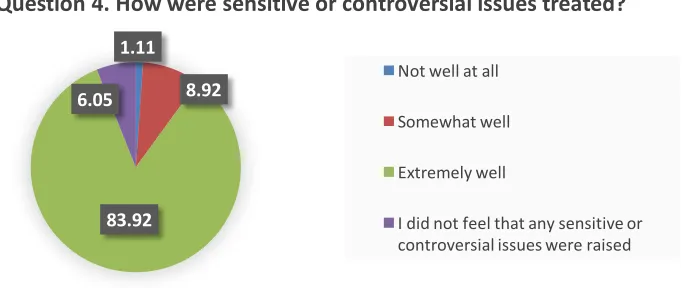
The WWFH joins other museums dealing with controversial material where visitors and scholar-experts may debate the evidence or work in opposition to one another. But these relationships between museum professionals and visitors are vital, especially in the case of the WWFH, because the controversial interpretations operate in communities related to the events and people. When an interpretation challenges local mythology, tension should be expected. The WWFH addressed this friction directly and asked visitors about it with an evaluation question on sensitive and controversial material. Fortunately, dissent was minimal, but it could have gone differently. The content that curators and historians find important or are drawn to may not necessarily be the information visitors want to learn, which can be disastrous for an interpretation and neglectful of the public’s desires. A well-known example of “expectation distortion,” or when an exhibit contradicts visitor memory and knowledge, was the controversy over the Smithsonian’s Enola Gay exhibition. The original exhibit, filled with complexity and difficult questions about the atomic bomb, was scrapped. But the WWFH proves exceptional because the public fails to realize that the myths of Reconstruction need correcting. They do not know they want this information until after they receive it, as evaluation data for the WWFH has shown.22
An important turn in public history literature toward the visitor coincided with the transition of cultural institutions into the leisure and tourism industry. With more
emphasis on the visitor, museums explored more diverse narratives and embraced interactive and multimedia exhibits. Some embraced social advocacy.23 Yet even as
22 Jacob A. Benfield et al., “An ‘Honest Visionary’ and ‘Dishonest Scallywag’: Blending Fact, Opinion,
and Interest into a Front-End Evaluation,” Visitor Studies 11, no. 1 (March 2008): 56–57, 70.
23 Lee Davidson and Pamela Sibley, “Audiences at the ‘New’ Museum: Visitor Commitment, Diversity and
12
education will always be part of the museum experience, museum going is above all a leisure experience and attending a museum, like other leisure activities, affirms identity.24
John Falk, the leading scholar in visitor identity, and his small “i” identity-related visitor marked a contextual turn in visitor studies away from a focus on the length of visits. Falk’s identities are the Explorer, Experience Seeker, Professional/Hobbyist, the Recharger, who looks for a therapeutic or rejuvenating experience, and the Facilitator, who encourages learning.Critics have called his identities “reductionist” because they exclude other factors and wants that comprise the choice a visitor makes to attend or skip a trip to a museum. His “short term” identities from a “behaviorist market research framework” neglected the “long term” Identities that he rightly argued did not absolutely define visitors’ leisure choices.25 The importance of Falk’s identities in understanding visitor motivations did not render demographic factors such as gender, sexuality, age, race and ethnicity, education level, ability/disability, and the complexity of
socioeconomic status useless. Identity is complex, thus assessing how visitors and non-visitors think about cultural institutions requires complex approaches. A new “contextual turn” should also open up research on non-visitors, which needs more scholarly attention as museums start to attract this previously ignored group. Scholarship shows and public historians know that adult museum visitors are generally younger, white professionals, often wealthier and more educated than the general population. Families are numerous
24 John H. Falk, Identity and the Museum Visitor Experience (Walnut Creek, CA: Left Coast Press, 2009), 50–51, 80.
13
but minorities, those with disabilities and non-English speakers are rare.26 In the case of black museums, at least twenty percent of their visitors are non-black while mainstream museums rarely reach above ten percent for black visitors. Art museums have received the harshest criticism about accessibility. The gallery and the ability to interpret its collection is seen as elite-only.27
Issues of accessibility and the museum are complicated. From a Foucauldian perspective of knowledge and regulation, public museums should have audiences that match the diversity in these institutions’ collecting, conservation and exhibit practices. This diversity, though, is meant to promote social betterment through the hegemonic messages rather than being inclusive for inclusivity’s sake.28 In The Participatory Museum, Nina Simon postulated that the audience-centered institution should be as relevant, useful and accessible as a shopping mall or train station. Now atmospherics, or manipulating the environment to affect people’s behavior in consumer or leisure spaces, has been reimagined for the museum, since it is a leisure space that people enter
voluntarily either for a purpose or to peruse casually. Outside, the architectural style, setting and signage affect behavior. Interior variables consider color schemes, lighting, and the comfort of the space as well as the décor of individual exhibits, case displays, images, interpretative signage, and object and interactive labels. Spaces of commercial
26 Helen Coxall, “‘Open Minds: Inclusive Practice,’” in Museum Philosophy for the Twenty-First Century, ed. Hugh H. Genoways (Lantham, MD: Altamira Press, 2006), 139–40; Falk, Identity and the Museum Visitor Experience, 29; Dawson and Jensen, “Towards A Contextual Turn,” 128, 132–34, 137–38, 159; Stylianou-Lambert, “Re-Conceptualizing Museum Audiences,” 134–35; Davidson and Sibley, “Audiences at the ‘New’ Museum,” 178.
14
consumption like ticketing and food, crowding, and interactions with staff and visitors are also factors.29
But no amount of theory can compensate for the divide between mainstream institutions and sites developed for underserved communities. Power and knowledge have shaped American museums, creating struggles for their establishment within the black community. The recent opening of the Smithsonian’s new National Museum of African American History and Culture hopefully marks a significant change. Exhibits pertaining to African Americans before the social movements of the 1960s were relegated to mainstream white museums with an anthropological or natural history focus or the two dozen or so museums operating at historically black colleges and universities. Along with small, grassroots ones, a handful of independent, non-profit black museums sprung up in cities with strong connections to the Great Migration of black Americans out of the South. The museums that survived at the end of the twentieth century often reluctantly reduced their power by forming collaborations with mainstream ones, universities and institutions. In other cases, black museums were forced to secure revenue and
professionalize outside of their primary audience and community. Cultural tourism helped inspire a surge of “safe icon” museums in the 1990s devoted to important figures like Harriet Tubman and Martin Luther King Jr., but black women, such as Nannie Burroughs who were vital to women’s and Civil Rights activism, remain largely overlooked. In the late twentieth century, the National Park Service sought more inclusive narratives, particularly around the Underground Railroad and Civil Rights movements, as did mainstream museums. Institutions have begun to explore segregation,
15
but less well-known and more “revolutionary” subjects like Marcus and Amy Jacques Garvey and Nat Turner remain nearly untouchable.30
The WWFH cannot escape its origins in white mainstream museum making, but it does seek to rectify the absence of positive exhibits on the black experience these spaces shunned. Reconstruction, although temporary and imperfect, was revolutionary in its aspirations for black citizens and so radical that Republicans from that era have been saddled with that description for 150 years. The WWFH may not interpret Garvey but the four Rollin’s sisters, socially and politically powerful women of color, guide the
interpretation of the “Women’s Rights” panel in the Informal Parlor. Charlotte chaired South Carolina’s women’s rights convention in Columbia in December 1870 and created the state branch of the American Woman Suffrage Association. The sisters, who hailed from Charleston, maintained a home in Columbia where they entertained black and white guests. Frances, pictured on the panel, married Beaufort legislator and lawyer William Whipper and wrote Martin Delany’s biography under a male pseudonym.31
Today the WWFH strives for inclusive practice. By illuminating the misunderstood period of Reconstruction, the WWFH performs a service for the community and with community partners. As part of interpreting its small collection relevant to the Wilson home, Historic Columbia collaborated most extensively with the University of South Carolina’s education and history programs. The last exhibit film the
Legacy of Woodrow Wilson and Reconstruction required working across the disciplines of history and media studies in order to contextualize a film central to the dual narrative of Reconstruction and Wilson, Birth of a Nation. Lastly, in its training, Historic
30 Coleman, “African American Museums,” 151–56.
16
Columbia required docents partake in language and cultural sensitivity training in an attempt to make “diversity awareness” mainstream within the organization.32 The WWFH at once moves away from the over-produced Old South plantation and tells an interracial story of the past. The nostalgia driven heritage industry in the South
emphasized the beauty of the home and its objects, which displaced the interracial history, including that of slavery and the social relations between diverse people.33 The nostalgia industry also ensured the interracial narrative of Reconstruction would remain a taboo subject. The WWFH corrects Lost Cause interpretations of Reconstruction, built on the false narrative that the Civil War was fought bravely over states’ rights rather than slavery and that Reconstruction was a disastrous punishment for white southerners. This reinterpretation is possible because the celebration of political and domestic terrorism is no longer socially acceptable. Just as they did in the first modern museums, visitors continue to regulate and monitor one another, making challenges rooted in Lost Cause rhetoric harder to espouse among visitors who no longer find these views mainstream. Visitors not only perform their identity in response to the institutions’ visual signs or messages but this identity can evolve based on the reception of this performance. Other visitors can reject a Lost Cause performance. And a visit, which is never static, can evolve for guests based on what they learn and encounter.34
If anything, the WWFH exemplifies the idea in visitor studies that the visitor and the museum are one and the same, balancing negotiations between both of their
32 Coxall, “‘Open Minds: Inclusive Practice,’” 139.
33 Tara McPherson, Reconstructing Dixie: Race, Gender, and Nostalgia in the Imagined South (Durham, NC: Duke University Press, 2003), 42–43.
17
perspectives.35 While Historic Columbia has selected a dominant scholarly message about Reconstruction, both docent and visitor communicate and receive messages, negotiate their identity, and create and modify memory. In essence, the WWFH tour seeks to resolve some of the most common complaints about museums. By adopting an original theme and reinterpretation, the WWFH demonstrates that museums can change. The tour not only includes multiple views, at least one of which hopefully every visitor can identify with, but also trains them to challenge authoritative voices, even that of the museum.36 The visitor’s choice to move between panels, artifacts, and interactives at their discretion democratizes the tour experience. These movements made possible by the semi-guided tour, the conversational nature of the tour’s design, and open-ended questions create original individualized tours for every visitor. In this way, the WWFH remains unfinished as new meanings always are being constructed by the visitor based on their individual life experiences and ideologies. The visitor transforms into a self-made docent.37
This dissertation addresses the challenges and successes of the WWFH’s
reinterpretation as the script of the new tour evolved and the museum opened its doors in February 2014. But the most important and crucial component here are docent
experiences, which remain underrepresented in public history literature. The focus on WWFH docents fills a void in the literature driven by audience and identity. By the late 1970s and early 1980s, public history and museum practitioners began asking important
35 Falk, Identity and the Museum Visitor Experience, 35; Eric Jensen, Emily Dawson, and John H. Falk, “Dialogue and Synthesis: Developing Consensus in Visitor Research Methodology,” Visitor Studies 14, no. 2 (July 2011): 160.
18
questions about the limited training docents received after being placed on the front lines and motivations inspiring them to volunteer at museums.38 But the articles or books that incorporated docents often concentrated on the visitor experience during a tour rather than giving these interpreters their own voice.39 Susan Crane found docents rejected a 1993 “counter-tour” at San Francisco’s Haas-Lillienthal House entitled "An Invisible Life: A View into the World of a 120-Year-Old Man.” The docents felt undermined because of the museum’s effort to create a fictional life with artifacts and docent-told stories that created a false “historical presence.” Similar to the volunteer docents at Historic Columbia and their views about the WWFH, some docents participated. Others refused.40 Scholarship on the training process places the perspective of the trainers or full-time staff at the center. Akin to the WWFH’s experience, the 2001 reopening of the Campbell House tour in Spokane, Washington moved away from a décor and object based tour to one with larger themes of class, gender and labor. A new script incorporated Howard Gardner’s multiple intelligence theory that stressed critical thinking through music, physical activity, speaking, and both interpersonal and intrapersonal practices. Some docents struggled with breaking character during vignettes placed within the tour, giving visitors wrong information, and the complexity of the script and thematic material. Efforts to make The Genomic Revolution exhibit a guided tour provided a model for
38 Charles Bleick, “A Volunteer in Art Education: The Art Museum Docent,” Art Education 33, no. 1 (January 1, 1980): 19–20; Lois Swan Jones, “Volunteer-Guides and Classroom Teachers in School-Visitation Programs in European and North American Art Museums,” Studies in Art Education 18, no. 3 (January 1, 1977): 32, 35–35. In an interview with ten art museum docents, these interpreters revealed they joined the museum to contribute to their community, become involved with museum programs and other like-minded docents, and expand their mental capabilities.
39 Eileen H. Tamura, “Ethnic Museums in Hawai’i: Exhibits, Interpreters, and Reenactments,” Journal of
American Ethnic History 28, no. 3 (April 1, 2009): 69–71, 73.
19
training undergraduate students, who had an existing framework of knowledge, as paid docent interns.41 In 2009, The Museum Educator’s Manual appeared as a how-to handbook for museums to adopt the “team approach” of volunteer management. A step-by-step guide to implementing successfully the three Rs of recruitment, recognition, and retention of docents, the book serves as a solid training manual but gives no perspectives of docents.42 In the second decade of the twenty-first century, paid and volunteer staff-mediated learning remained “poorly understood.”43 As such, this dissertation includes the voices of ten volunteers and six weekend staff paid docents who completed short surveys, eleven of whom went on to participate in oral histories.
1.4 CHAPTER SUMMARIES
If Reconstruction upended black legal, political and religious inequality, the WWFH overturned traditional assumptions about the HHM, namely the need for a fully-guided tour, period room furniture vignettes, and original artifacts. The chapter “The Rebirth of the Woodrow Wilson Family Home” details how the WWFH contested the outdated structure of HHMs. The small amount of Wilson and Reconstruction related material culture available forced the interpretative staff to redefine the role of furniture and collections in HHMs. If anything, the WWFH represents material culture philosophy coming full circle. Where museums were first designed to “focus on the rare and
41 Janice Williams Rutherford and Steven E. Shay, “Peopling the Age of Elegance: Reinterpreting
Spokane’s Campbell House--A Collaboration,” The Public Historian 26, no. 3 (August 1, 2004): 32–33, 35–36, 40, 42, 45–46; Robert E. Pyatt, Tracie Rosser, and Kelly Powell, “Undergraduates as Science Museum Docents: Training Students to Be the Teachers Using Peer Led Team Learning,” The American Biology Teacher 71, no. 1 (January 1, 2009): 16.
42 Anna Johnson et al., The Museum Educator’s Manual: Educators Share Successful Techniques, American Association for State and Local History Book Series (Lanham: AltaMira Press, 2009), 2–3, 16, 20.
43 Scott A. Pattison and Lynn D. Dierking, “Staff-Mediated Learning in Museums: A Social Interaction
20
exceptional” via objects, the WWFH uses minimal objects once again to place the emphasis on the rare and exceptional. Yet in this case, the rare and exceptional is presenting an accurate depiction of Reconstruction.44 This move away from an object-centered approach places the WWFH within the larger trends of this methodology’s decline in favor of a people-centered approach to interpreting objects.45 The Wilson home itself became the primary artifact, allowing for an interpretation focused on a specific place and period in time, Reconstruction-era Columbia. Most rooms contain a small number of objects owned by the Wilsons or related to the Reconstruction era.
Additionally, the home incorporates two digital interactives, Camille Drie’s 1872 map of downtown Columbia in the formal parlor and a family tree in the dining room. The informal parlor and final bedroom of the house contain exhibit films discussing the complex issues of constitutional changes, citizenship, and historical memory. Four supplementary videos on the home’s rehabilitation from 2005 through 2013 appear in the bathing room concluding the tour.
By creating a panel-driven Reconstruction exhibit, Historic Columbia resolved issues with only possessing five original Wilson family artifacts and the need for period room vignettes. Each exhibit room contains at least one exhibit panel. Weekend staff docent Halie Brazier “loved” the panels because, as a “very visual person,” they provided images for her to use on the tour and served as a quick-reference guide for names or details. She explained, “I love being able to see an image and either have the audience explain it or tell me what they see or say what’s different about it than what we would
44 Bennett, The Birth of the Museum, 2.
21
normally see today.”46 However, the text panel heavy exhibit combined with the difficulty of the subject matter and traditional expectations of a guided-tour resulted in the decision to maintain the use of docents to interpret the twenty-first century museum with a semi-guided tour. Questions remain whether the semi-guided tour is the most effective way to experience the WWFH; however, the success of Louisiana’s Old State Capitol Museum suggests that using a structure as artifact and the “rich meaning” of its history as exhibit alongside multi-media and flexible guided approaches are successful tenets of a twenty-first century museum philosophy. The Capitol Museum is the only museum in the world devoted exclusively to Louisiana politics just as the WWFH is the only museum devoted to Reconstruction, and both come at their subjects first and foremost through the building.47
The next chapter “A New Way of Thinking: Docent Training and Learning about the Lost Cause” assesses the way in which museum administrators and docents changed their thinking to create a revolutionary HHM. Just as Reconstruction ushered in public education in the South, the WWFH reinvented Historic Columbia’s docent education and training process. Not only did the organization offer a variety of required workshops covering history, public history practices, and racial and cultural sensitivity, but it also evaluated and thoroughly vetted each docent to conduct tours. The majority of Historic Columbia’s volunteers did not complete the training process. Many docents immediately rejected the new home and training, often because they held a negative understanding of Reconstruction or attachment to the previous Wilson interpretation. A few docents grew
46 Halie Brazier, interview by Jennifer Whitmer Taylor, digital recording, January 27, 2016.
47 J. Daniel D’Oney, “Louisiana’s Old State Capitol Museum: Castle on the Mississippi,” in Defining
22
resentful of the Reconstruction-heavy script and evaluation demands or challenged the interpretation by minimizing Reconstruction in their tours. The docents who excelled were women, educators, and advanced degree holders. Over time, some docents
embraced the changes once they saw the museum’s success or interpretation evolve based on feedback from docents. Docents came into the process with their own Lost Cause indoctrination but used the training and their tours to combat these preconceived notions. Remarkably, docents simultaneously reconstructed their memory of Reconstruction and taught visitors how to do the same. However, the long-term problems with docents that struggled with the unique tour style and complex material or opposed the Reconstruction interpretation fuels a debate about whether HHMs should rely on volunteer docents at all. The chapter “Aren’t I a Citizen: Interpreting Violence” places the WWFH within the context of HHMs, especially southern ones, and their tradition of limiting or
excluding narratives of non-elite whites. The WWFH incorporated historiography, census records, architecture, image analysis, and docent training to give unknown domestic workers and black female educators depicted in the butler’s pantry, dining room, and the education bedroom “agency.” But in the effort to illuminate the lives of working class domestics, some docents and visitors succumbed to the Downton Abbey effect, which blinded them to the unique racial circumstances that affected workers lives beyond their economic and social status. No docent overtly objected to the mandatory language and cultural sensitivity training. In fact, paid weekend staff, often with public history
backgrounds and education, welcomed it. However, some volunteers believed the session unnecessary while others received their first exposure to concepts such as “white
23
that either use annihilation or relative incorporation to discuss black experiences, either eliminating these narratives all together or including them intermittently; however, as a radical HHM the WWFH fell short because the interpretation neglected scholarly knowledge on the violence and sexual exploitation women of color experienced during Reconstruction. Nor did the training adequately prepare docents to discuss this unsettling but necessary history.48 Nonetheless, script revisions, docent evaluations, and docent oral histories show that docents were at their most comfortable and successful overturning archaic memories through their interpretation of political and domestic terrorism. For some, discussing white violence against black citizens made them acutely aware of white privilege and their family and community ties to violence.
Docents and the interpretative team struggled to craft a narrative in the final exhibit bedroom that adequately dealt with Woodrow Wilson’s white supremacy. This crusade to improve the most difficult interpretative space in the WWFH comprises the chapter “Writing History with Lightning: Interpreting Memory and White Supremacy.” The team and docents continuously revised numerous introductions and conclusions for the space in an effort to convey the complexity of Wilson’s legacy and deconstruct Reconstruction memory nationally and in South Carolina. This included docents having some exposure to the historiography of Reconstruction and Woodrow Wilson’s place within it. The interpretation confronted Wilson’s stance on segregation and his viewing of D.W. Griffith’s 1915 racist blockbuster The Birth of Nation (Birth), topics other Wilson homes rarely addressed; but, lynching and white terror against black citizens are themes that connect the overthrow of Reconstruction, Birth and the epidemic of lynching
24
during Wilson’s presidency. Yet, lynching was deemed too controversial and graphic for the tour. Additionally, docents were reluctant to frame Wilson as a racist along the lines of fellow politicians in South Carolina such as Benjamin Tillman or “Cotton Ed” Smith. Again, the WWFH never quite crossed the threshold of radicalism, in this case speaking truthfully about white supremacy as it is understood in academia. Even though much improved, some aspects of the WWFH interpretation illustrated the powerful, even if frequently covert, hold white supremacy still maintains on institutions and interpretations. However, in the wake of the Charleston massacre in the summer of 2015 that left nine people slain at the hands of a white supremacist and nationwide student protests on college campuses addressing overt and institutional racism, Wilson’s memory and white supremacy came under attack. These events allowed Historic Columbia to address the issue of Wilson’s relationship with white supremacy minimized by the original reinterpretation. Workshops with docents generated new conversations within the institution outside of public view, which continued between docent and visitor in the public space of the WWFH.
The final core chapter “Engaging Reconstruction as a Civil Rights Movement for Twenty-First Century Visitors” treats visitor reception using evaluation data and docent interviews. The exceptional quality of the docents and the exhibit resulted in
25
The exceptions included some Millennials as well as a few Lost Cause promoters and visitors expressing LGBTQ bias.The chapter and museum demonstrate Americans are ready and open to consuming Reconstruction history at heritage sites on the 150th anniversary of Reconstruction’s implementation.
The WWFH demanded relevancy as it eschewed its presidential shrine origins and the political, social and partial truths that style of interpretation avoided. Rather than be trapped in a cliché dollhouse-style interpretation with voyeuristic vignettes that serve as a “repetitive time stamp” set to the average afternoon typically depicted in HHMs, the WWFH answered the call for these sites to be “turned upside down and inside out” for the sake of survival.49 When the deteriorating home closed in 2005, the WWFH was guilty of all these charges. But with the WWFH’s reopening, Historic Columbia produced an exhibit and tour that when combined with the voices of public historians, docents and visitors serve as a guide to revolutionize the obsolete house museum. The process of this transformation from presidential shrine to Reconstruction museum simultaneously demonstrates the unique challenges of correcting alternative memory and the boundaries of discussing violence and oppression perpetuated against black citizens by white
Americans. The difficulty was not only in initiating conversations with the public but in promoting honest dialogues and best practices within the institution itself.
One docent “really wanted to be a part” of the WWFH, “in some way” as it transformed into the nation’s first museum of Reconstruction. Since college, the docent felt both North and South knew “very little” about this period of American history. The native South Carolinian recognized southerners espoused an interpretation that did not
49 The authors lay out five critiques of house museums. The new approach of the WWFH challenges three
26
accurately reflect the project of Reconstruction. Knowing the subject’s importance made the docent “really kind of excited.” This excitement and enthusiasm has yet to recede because located “in Columbia, South Carolina and the state that was the first to secede from the Union” is the “first museum dedicated to Reconstruction, which I think is wonderful.”50 Although the first museum of Reconstruction, it is also part of a growing movement to commemorate Reconstruction in the state. In his final days in office, President Barack Obama, with a stroke of his pen and the authority of the Antiquities Act, designated four properties, including buildings associated with Reconstruction’s first freedmen’s school Penn Center and a site where enslaved people listened as they were freed by the Emancipation Proclamation on January 1, 1863, part of a federal
Reconstruction monument in Beaufort County. The Mitchelville Preservation Project on nearby Hilton Head Island is in its infancy but is working to commemorate the first self-governed freedmen’s community, which was destroyed in the hurricane of 1893. The WWFH and South Carolina currently lead the initiative to memorialize Reconstruction. All of these state and federal projects will learn from one another, and in turn will be able to show the South and the nation the value of commemorating Reconstruction.51
50 Docent Doe, interview by Jennifer Whitmer Taylor, digital recording, February 17, 2016. The author
conducted an interview with one docent who wished to remain anonymous. That oral history will be cited as Docent Doe.
51 Jennifer Schuessler, “Taking Another Look at the Reconstruction Era,” New York Times, August 24, 2015, http://www.nytimes.com/2015/08/25/arts/park-service-project-would-address-the-reconstruction-era.html?ref=arts; Gregory P. Downs and Kate Masur, “The Perfect Spot for a Reckoning with Reconstruction,” The Washington Post, October 7, 2016, sec. Opinions,
https://www.washingtonpost.com/opinions/the-perfect-spot-for-a-reckoning-with-reconstruction/2016/10/07/b884c1c0-7f60-11e6-9070-5c4905bf40dc_story.html?utm_term=.fcac7e29844c; Emma Dumain, “Just Under the Wire, Obama Establishes National Monument to Reconstruction Era in Beaufort County,” Post and Courier, January 12, 2017, http://www.postandcourier.com/news/just-under- the-wire-obama-establishes-national-monument-to-reconstruction/article_cb26b062-d91b-11e6-bf8b-7fd195453416.html; Page Putnam Miller and Jennifer Whitmer Taylor, “Postscript to ‘Reconstructing Memory,’” Muster from the Journal of the Civil War Era, March 7, 2017,
27
CHAPTER 2
THE REBIRTH OF THE WOODROW WILSON FAMILY HOME:
RETHINKING THE SIGNIFICANCE OF THE WWFH FOR THE
TWENTY-FIRST CENTURY
As part of the Woodrow Wilson Family Home (WWFH) shedding its shrine origins, Historic Columbia toppled traditional assumptions about historic house museums (HHMs). The new interpretation specifically challenged the need for a fully-guided tour, period room furniture vignettes, and a large number of original artifacts. Historic
Columbia reimagined the way in which objects and the docent could be used to interpret the home. The organization was able to do this because the reinterpretation emphasized the importance of time, space and place. Docents entered the debate on the relevance of objects and argued rooms with imaginary moments frozen in time did not necessarily produce a good tour. Not only did docents embrace an interpretation with fewer objects, the majority of visitors welcomed a new HHM experience. But the question remained whether an experimental semi-guided tour was the most effective way to transport visitors into Tommy Wilson’s world, crafted through his childhood home and the panels and objects displayed there.
2.1 WALKING IN THE FOOTSTEPS OF THE PRESIDENT
From the beginning of the new tour, time and place are critical components. Visitors purchased their tour ticket in the Robert Mills Museum Shop, Historic
28
bear the name of the famous architect who designed the residence, but in the nineteenth century, the structures on these grounds were better known as the Presbyterian Church’s Columbia Theological Seminary. The one-block journey to the WWFH commenced from this sacred space.1 Both the preservation and rehabilitation of the premier artifact, the home, and Joseph Wilson’s appointment to the seminary allowed the visitor to think immediately about the importance of time and place, in this case a middle-class home constructed at the height of Reconstruction in Columbia and centered in a Presbyterian world.2 Although the South was upended through Civil War and Reconstruction, Tommy’s world retained some sense of normalcy through the ever-present
Presbyterianism that rooted his childhood and bonded his community together. The future president’s most notable biographer Arthur Link argued the only ideology that defined Wilson more than his southerness was his Presbyterianism.3 From the onset of the tour, docents immersed visitors in Tommy’s Presbyterian world. His father spent a decade at First Presbyterian Church in Augusta, Georgia before moving the family to Columbia. Once in the capital, the Wilson family built their first home, just a block from the seminary. Visitors walked in Tommy’s shoes by “taking a path similar” to the future president and his father.4
1 Jennifer Whitmer Taylor, “WWFH Interpretation Adult Tour Jen’s Revision” (Historic Columbia,
December 10, 2013), 1; Sarah Blackwell, “WWFH Interpretation Adult Tour - SAB Edits per 12.11.13 Meeting” (Historic Columbia, December 11, 2013), 1.
2 Taylor, “WWFH Script,” December 10, 2013, 1; Blackwell, “Tour - SAB Edits,” 1.
3 Arthur S. Link, Wilson: The Road to the White House, vol. 1 (Princeton, N.J.: Princeton University Press, 1947), 2–3.
4 Blackwell, “Tour - SAB Edits,” 3; Robin Waites, “WWFH Interpretation Adult Tour Jen’s Revision 2
29
Rather than docents telling guests about the Wilsons and Reconstruction, the tour invites guests to “imagine for a moment” the world of Columbia during Reconstruction.5 This enables visitors to “conjure” this world and negotiate their place within it.6 Docents pushed both visitors and the interpretative team to consider the importance of the space within this world. Weekend staff docent Jennifer Gunter asked visitors to “imagine” the dirt roads, construction, horses and buggies as they retraced Tommy’s path in the 1870s. For volunteer Jean Morgan this was not a stretch. “Realistic” people like herself preferred emersion in the “real environment.”7 But volunteer docent Pam Redfield pushed the team to emphasize space in ways they had not in early versions of the script. She suggested introducing Annie, Tommy’s sister, through a charming neighborhood anecdote. While their home was being constructed, the Wilsons spent their first months in Columbia living in a rented house near the seminary and across the street from Annie’s future husband. Redfield’s experience as a guide taught her “visitors love these fun facts.” Because of her suggestion, the tour clarified the spatial relationships of the neighborhood and Tommy’s world, linking the seminary, the rental of the Campbell-Bryce House and the Wilson’s new home together.8 Rather than present an “abstract” space visitors walked through, docents illuminated the “social and cultural construct” of Tommy’s neighborhood during Reconstruction.9
5 Robin Waites, “WWFH - Tour Review First Floor DC,” January 21, 2014, Historic Columbia Collection. 6 Vagnone and Ryan, Anarchist’s Guide, 85.
7 Jennifer Gunter, interview by Jennifer Whitmer Taylor, digital recording, March 27, 2016; Jean Morgan,
interview by Jennifer Whitmer Taylor, digital recording, January 25, 2016.
8 Pamela Redfield, “Thoughts on the Scrip[t] for Woodrow Wilson Family Home,” January 10, 2014;
Jennifer Whitmer Taylor, “Woodrow Wilson Family Home Adult Tour Script” (Historic Columbia, January 2, 2014), 6; Taylor, “Tour 01 31 14 Working Draft,” 1; Waites, Sherrer, and Taylor, “Marking Changes RW JMS,” 1.
30
Docents and staff wanted the tour to be forthcoming about the focus on
Reconstruction through the eyes of Tommy Wilson and the tour’s unconventional design. Visitors had some inclination from a newspaper article they read, the advertisement they saw, or the synopsis they heard in the gift shop that this HHM tour would be different.10 When the script was revised in the summer of 2014, Tommy as a lens to a time and place became a centerpiece of the introduction and months of tour experience solidified the precise language needed to convey this theme:11
Today we will explore the teenage years of Woodrow Wilson and his family’s experience in this city during Reconstruction. Thus, the Wilson family becomes the lens through which we see this place and time. By the end of the tour, you should have a greater understanding of the complexities of both Reconstruction and Woodrow Wilson.12
Consultant Annie Wright argued the statement gave visitors “a schema that new info can fit into.” This dual narrative grounded the tour and offered visitors the opportunity to consider how Reconstruction shaped the future president and how Wilson shaped the memory of the period.13 The layering of Reconstruction over Wilson moved beyond the
traditional narrative of one or two people “at the most significant time of their lives” that rendered marginalized groups “silent.” By using Tommy the teenager, not the president, more natural and inclusive narratives emerged.14
Most docents took great care to craft and present their explanation of the dual narrative and tour format upfront. Gunter emphasized the WWFH is “a museum inside of a house and not a house museum.” She used that as a stepping stone to then talk about the
10 Taylor, “Adult Tour January 2nd Draft,” 1.
11 Taylor, “WWFH Script,” December 10, 2013, 1; Waites, “Revision 2 Dec 16 RW Notes,” 1; Taylor,
“Tour 01 31 14 Working Draft,” 4; Taylor, “Tour 02 06 14,” 4. 12 Waites, Sherrer, and Taylor, “Marking Changes RW JMS,” 2.
31
primary artifact’s construction and rehabilitation.15 Thus, with regards to the “identity crisis” plaguing HHMs as to whether they are houses or museums, the WWFH answers they are both.16 Docent Doe, wanting visitors to understand the tour’s purpose at the beginning, told them “we are here to talk about and interpret this time in American history, this time in Southern history, particularly this time in Columbia, seeing it through the eyes of a family who lived here in the middle of this time period, a family who
happened to have a son who became a president of the United States.”17 These efforts by docents helped avoid the Bait and Switch on visitors, who otherwise may have felt “duped,” alienated, or suspicious of the museum.18 Weekend staffer Halie Brazier
stressed the focus on the president’s teenage years, the “world around him,” and minimal material culture. She “wanted to be frank and upfront” for the majority of guests who came for Woodrow Wilson and received a lesson in Reconstruction. She informed visitors, “There are plenty of other historic houses that do that.”19
As Brazier suggested, the existence and competition from three other Woodrow Wilson HHMs inspired the new interpretation of the WWFH. And while those sites incorporate the time and place of Wilson’s presence, the president drives the narratives. Wilson HHMs that originally opened as shrines anchor his identity in the South and serve as a road map tracing his father Joseph Wilson’s career in the Southern Presbyterian Church. The local community saved both the Columbia and Staunton, Virginia homes at roughly the same time in the 1930s; yet, the manse where Wilson was born and spent the
15 Gunter, interview.
16 Vagnone and Ryan, Anarchist’s Guide, 130. 17 Docent Doe, interview.