V O LU M E 1 - Thesis
A utobiographical M em ory Functioning and P sychosis
N IC O L A W O O D
D.Clin. Psy 2003
ProQuest Number: U644308
All rights reserved
INFORMATION TO ALL USERS
The quality of this reproduction is dependent upon the quality of the copy submitted.
In the unlikely event that the author did not send a complete manuscript and there are missing pages, these will be noted. Also, if material had to be removed,
a note will indicate the deletion.
uest.
ProQuest U644308
Published by ProQuest LLC(2016). Copyright of the Dissertation is held by the Author.
All rights reserved.
This work is protected against unauthorized copying under Title 17, United States Code. Microform Edition © ProQuest LLC.
ProQuest LLC
789 East Eisenhower Parkway P.O. Box 1346
Table o f Contents
Page
Acknowledgements (iü)
Abstract (iv)
Chapter 1: Introduction and cognitive models o f psychosis 1
1.1 History of the concept of schizophrenia 2
1.2 Classification of symptoms 4
1.3 Psychological models of psychosis 7
1.4 Cognitive models of delusions 7
1.5 Cognitive models of voices 12
1.6 Integrative cognitive models of psychosis 14
Chapter 2: Other models o f psychosis 17
2.1 Neurodevelopmental models 17
2.2 Neurological studies 18
2.3 Biological models 19
2.4 Genetic vulnerability 20
2.5 Environmental factors 20
2.6 Neuropsychological studies 21
Chapter 3: Autobiographical Memory 25
3.1 The structure of autobiographical knowledge and memories 25
3.2 Models of autobiographical memory 28
3.3 Functions of autobiographical memory 29
3.4 Overgeneral Memory 32
3.5 Origins of Overgeneral Memory 35
3.6 Autobiographical memory specificity and psychosis 37
3.7 Summary of the current study 42
Chapter 4: Method 45
4.1 Participants 45
4.2 Recruitment process 47
4.3 Ethical Approval 50
4.4 Measures 50
4.5 Procedure 56
4.6 Analyses 60
Chapter 5: Results 61
5.1 Differences between the psychotic and control groups 62
5.2 Memory specificity on the AMT 64
5.3 The temporal gradient of autobiographical memory 69
5.4 Comparison of the AMI and the AMT 76
Chapter 6: Discussion 81
6.1 AM retrieval as measured by the AMT 81
6.2 AM retrieval and temporal gradient as measured by the AMI 88
6.3 Comparison of the AMI and the AMT 91
6.4 Consequences of an overgeneral retrieval style 96
6.5 Development of an overgeneral retrieval style 101
6.6 Limitations of the study and suggestions for future research 107
6.7 Clinical implications 112
6.8 Concluding comments 116
References 117
Appendices 134
Appendix 1 : Ethical Approval Letters
A cknow ledgem ents
I would like to thank Dr Hamish McLeod and Professor Chris Brewin for all their help, guidance, and support throughout the duration o f this project and for being able to provide encouraging feedback often at very short notice and with good humour. I would also like to thank Dr Pasco Fearon for his assistance in developing my understanding of design and statistical issues and for providing sound advice at a time when it was most needed.
I would wish to acknowledge and thank the participants in this study who gave their time, often under difficult personal circumstances, for little personal gain. I am understandably grateful for their contribution.
Autobiographical M em ory Functioning and Psychosis
ABSTRACT
Autobiographical memory (AM) relates to the memories and information that we have about ourselves, events in our lives, and the world. Memory impairments have long been associated with psychosis, both in research and clinical observation (Tamlyn et al, 1992). It is already known that in comparison with the overall intellectual decline often found in individuals with chronic psychosis, disproportionate deficits can be found in executive functioning and memory, particularly long-term memory (McKay et al, 1995).
Several studies have investigated autobiographical memory deficits in psychosis specifically (e.g. Feinstein et al, 1998; Kaney et al, 1992). All o f these have found some deficit in autobiographical retrieval, although the nature o f these deficits has varied or been conflicting. This study hoped to clarify the nature o f these deficits and to compare the two most widely used measures of AM for the first time.
This project investigated both the memory retrieval styles o f individuals with psychosis i.e. specific or over-general, and the temporal gradient of their memories. Autobiographical retrieval performance was examined in a group of 20 participants experiencing positive symptoms of psychosis and matched controls using the AMI and the AMT. Working memory, verbal episodic memory and degree of depressive symptomatology were also taken into account.
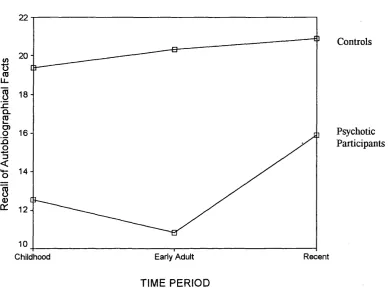
An overgeneral retrieval style of AM was found in the psychotic participants in comparison with the controls on both the measures, and this effect remained when working memory capacity and verbal episodic memory were controlled for. The psychotic group displayed an approximation to a u shaped temporal gradient for recall of personal facts and personal events, and the early adulthood period was found to be most impaired.
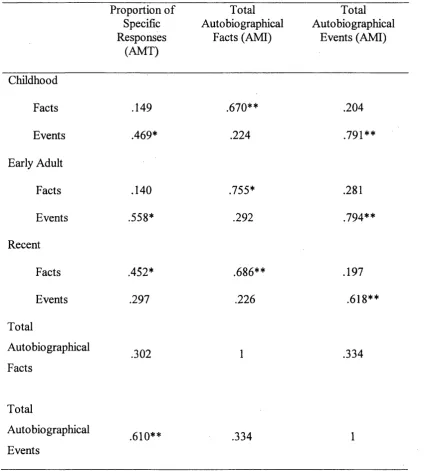
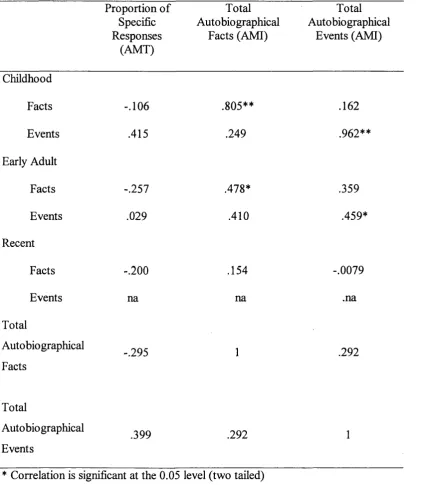
The personal events schedule was found to be positively correlated with the AMT in the psychotic group, although no relationship was found between the AMT and the recall o f personal facts. No association was found between the AMI and the AMT when administered to the control group.
C hapter 1: Introduction
The ‘pathognomonic’ deficit for schizophrenia has been elusive, despite the interest of many researchers in identifying a single deficit or marker that might provide some underlying etiological unity for psychotic symptoms. There appears to be no specific deficit that is present in all people who present with symptoms o f psychosis. However, with the advent o f the biopsycho social model (Zubin & Spring, 1977), recent research has focused on an exploration o f some o f the underlying psychological mechanisms that may be involved in the development and maintenance of psychotic symptoms. Schizophrenia as a diagnostic category affects one in a hundred people, with a wide variation in the presentation of positive, negative and disorganised symptoms, functional outcome and course o f illness. However, abnormalities in attentional and cognitive processes, including memory, have been considered central features o f schizophrenia since the original clinical descriptions of Kraepelin (1905) and Bleuler (1911) (Goldberg & Gold, 1995).
In this chapter, the history of the concept o f schizophrenia will be briefly reviewed, before moving onto a discussion o f the different cognitive models that have been developed to account for the symptoms of psychosis. In Chapter 2, the contribution that neurodevelopmental, biological, neurological, genetic and social studies have made to the understanding o f schizophrenia will be briefly reviewed before the neuropsychological research into memory impairments in psychosis is discussed. Following this in Chapter 3, the contemporary understanding of the structure and function of autobiographical memory will be discussed, and the relationship between deficits in autobiographical memory and other clinical disorders will be considered. Finally the current literature on the relationship between autobiographical memory and psychosis will be reviewed, before moving on to a discussion of the current study.
1.1 History o f the concept o f schizophrenia
Kraepelin (1905) first described what is now known today as schizophrenia. Dementia praecox, as it was originally labelled, was characterised by progressive intellectual deterioration with an early onset, normally during the early twenties. Kraepelin (ibid.) distinguished dementia praecox fi*om other psychoses discovered around the same time, for example, Alzheimer’s disease, viewing it as a functional psychosis because no specific neuropathology could be identified.
deficit, the breaking or loosening o f associative threads that linked thoughts together. The main difference between Kraepelin and Bleuler’s concept of schizophrenia was that Bleuler did not believe that progressive deterioration was inevitable.
The symptoms of schizophrenia are diverse, ranging from auditory hallucinations, thought disorder and delusions, through to apathy and a decreased interest in social activities. The current diagnostic criteria in the Diagnostic and Statistical Manual IV (APA, 1994) are stated as follows: two or more of the following, each being present for a significant portion of time during a one-month period:
■ Delusions
■ Hallucinations, such as voices, and less frequently imagery ■ Disorganised speech e.g. frequent derailment or incoherence ■ Disorganised or catatonic behaviour
■ Negative symptoms such as flattening of affect and avolition
1.2 Classification o f Symptoms
The general trend within schizophrenia research has been to try and classity symptoms into particular groups. Schneider (1959) developed a list of first-rank symptoms, whose presence were considered mandatory for a diagnosis o f schizophrenia. Such symptoms included audible thoughts, voices commenting and arguing, thought insertion and passivity experiences with subjective delusions o f external control.
More recently Liddle (1987a) identified three clusters of symptoms; reality distortion (delusions and hallucinations), disorganisation syndrome (thought disorder and inappropriate affect) and psychomotor poverty (representing the negative syndrome), based on empirical examinations of the correlations between the symptom characteristics of psychosis. Various factor analytic studies o f correlations between symptoms and neuropsychological studies have supported such a three syndrome model (Liddle, 1987b; Liddle & Barnes, 1990; Baxter & Liddle, 1998; Grube, Bilder & Goldman, 1998; Smith, Mar & Turofif, 1998).
For many years the medical model dominated research into schizophrenia, with an emphasis on finding an underlying biological marker or area of neurological pathology that could account for the different symptoms of psychosis. As discussed at the beginning of this chapter, such an underlying marker has remained elusive. Some researchers have questioned the diagnostic validity of schizophrenia (Bentall, 1990), some have questioned the construct of schizophrenia as a whole (Boyle, 1990) and others have advocated that the symptoms of psychosis can only be understood by linking the steps between the phenomenological experiences and social, psychological and neurobio logical levels of explanation. (Garety, Kuipers, Fowler, Freeman & Bebbington, 2001).
relatively large subgroups of people hear voices and believe strange things that could be regarded as delusional without recourse to psychiatric services (Romme & Escher, 1989; Tien, 1991, Peters, Joseph & Garety, 1999). However only a small proportion o f those who can be identified as having high levels o f such schizotypal experiences and mild psychosis go on to develop a significant mental health problem (Chapman & Chapman, 1988). Given that such experiences are common in the normal population, recent research has focused on examining what the underlying cognitive mechanisms might be that mediate the transition into psychosis and maintain symptoms (Maher, 1988; Bentall, 1990; Frith, 1992; Fowler, Garety & Kuipers, 1998; Garety et al, 2001; Beck & Rector, 2002; Beck & Rector, 2003). This extensive body o f research, which is continually developing, has led to the development and refinement o f cognitive-behavioural interventions for psychotic symptoms. Evidence for the efficacy o f cognitive behavioural therapy (CBT) for psychosis is increasing (Haddock, Tarrier, Spaulding, Yusupoff, Kinney, McCarthy; 1998; Kuipers, Fowler, Garety, Chisholm, Freeman, Dunn, Bebbington, & Hadley, 1998; Tarrier et al, 2000; Rector & Beck, 2001) and the dual processes o f theory development and therapeutic trials can only serve to enhance the current understanding and effective treatment o f the factors that are involved in the development and maintenance of psychotic symptoms.
this introduction to thoroughly review the evidence for the latter models, but the basic premises and arguments for and against will be presented.
1.3 C ognitive models o f psychosis
The vulnerability-stress model of psychosis (Zubin & Spring, 1977) has been widely accepted as a biopsychosocial framework for understanding the development of psychotic symptoms. This model suggests that psychosis occurs in the context of a vulnerable predisposition, that onset is triggered by certain events, (such as life events, difficult social circumstances or drugs) and that this leads to a disruption in the cognitive processes of attention, perception, memory and judgement. Such disruptions are often accompanied by emotional changes (Fowler, Garety & Kuipers, 1995). The main body o f research into the cognitive mechanisms underlying psychotic symptoms has taken a symptom-based approach, based on the argument postulated by Persons (1986) and Bentall (1990) that different cognitive mechanisms may underlie the different symptoms.
1.4 W hat cognitive processes are associated with delusions?
1.4.1 Perceptual disturbances
Maher (1988) has proposed a single factor account model of delusions where an individual with delusions suffers primarily from perceptual anomalies which are biological in nature, and which involve vivid and intense sensory input. He has argued that such individuals then seek an explanation o f these unusual percepts, using normal cognitive processes, such as reasoning and deduction. The delusion itself is perceived to be an explanation of anomalous experience which is then resistant to counter evidence through the normal mechanism o f confirmatory bias i.e. that individuals attend more to information that confirms their beliefs, and are more likely to disregard information that contradicts them. In his theory, Maher (1988) further suggests that delusional beliefs may be reinforced by the reduction in anxiety that accompanies the development of an explanation for these unusual experiences.
1.4.2 Reasoning Biases
There is considerable evidence to suggest that people with delusions display biases in reasoning. They will often make decisions on the basis o f less information than others, known as ‘jumping to conclusions’, (Garety, Hemsley & Wessley, 1991) and this tendency is exaggerated when material is emotive or self referent (Dudley, John, Young & Over, 1997b, Kemp et al, 1997). Based on Bayesian inference tasks, Dudley et al (1997a) found that people with delusions had a data gathering bias and were more likely to make conclusions based on less evidence than other psychiatric and control groups. Garety & Freeman (1999) concluded that such a reasoning bias can lead to the acceptance o f incorrect hypotheses and that people with delusions are more likely to switch their judgements rapidly (Young & Bentall, 1997).
1.4.2 Theory o f Mind
be linked to a biased retrieval of events from autobiographical memory. However Garety & Freeman (1999) concluded that while the evidence for theory o f mind deficits in schizophrenia is strong, that such a deficit does not appear to be specifically related to delusions.
1.4.4 Attributional Biases
1.4.5 S elf Concept
Beck & Rector (2002) have suggested that delusions, particularly o f a grandiose or persecutory nature, are formed as a reaction to an underlying degraded self- concept. They have linked the formation o f delusions as a response to underlying dysfunctional beliefs rather than to negative mood states and have argued that the content o f the delusions often reflects the content o f the persons’ predelusional behefs. Grandiose delusions are perceived as being compensatory for feelings of loneliness and alienation as a result o f core maladaptive schemas, such as inner defectiveness, dangerousness or vulnerability to harm commonly found in people with psychosis (Fowler, Garety & Kuipers, 1995; Brabban & Turkington, 2002). Persecutory delusions are considered to develop in a similar way, but additionally are often reflections of non-delusional ideas or preoccupations that predate the delusion, and are activated by certain triggering events that are perceived to be in some way linked to these overvalued ideas (Beck & Rector, 2002).
processes and biological, psychological and social processes may be involved’ (pl34).
1.5 C ognitive models o f Voices
1.5.1 Attribution and self-monitoring
Both Frith (1987, 1992) and Bentall (1990) have postulated that individuals who experience auditory hallucinations are failing to recognise that the voice they are hearing is actually self-generated and they have argued that this failure is due to a deficit in an internal monitoring process. Bentall et al (1991) and Baker & Morrison (1998) found that subjects who heard voices were more likely to misattribute words that they themselves had spoken, to an external source, and concluded that people who hear voices may be suffering from an externalising attribution style.
Conversely Frith (1992) has argued that auditory hallucinations are the consequence of an individual’s inability to recognise their own self-initiated activity and this was hypothesized to be a defect in ‘self-monitoring’ (Frith, 1987).
1.5.2 Beliefs about voices
and experience more negative and critical voices, the role o f appraisal has become an area of research. Chadwick & Birchwood (1994) and Birchwood & Chadwick (1997) found that voices appraised as malevolent (e.g. critical or threatening) tended to be resisted and provoked negative emotional reactions, whereas people tended to engage with, and not feel threatened by voices believed to be benevolent. Close & Garety (1998) assessed negative self-evaluations associated with voices and described consistent relationships between voice content, negative self-evaluations and behavioural and emotional reactions. Morrison, Haddock & Tarrier (1995) in their cognitive model o f hallucinations proposed that voices are intrusive thoughts that are appraised as unacceptable to the self, and so become externally attributed in order to minimise cognitive dissonance.
1.5.3 Metacognitive Beliefs
Morrison & Wells (2003) found that psychotic individuals who hear voices tended to demonstrate higher levels of dysfunctional metacognitive beliefs than other patient groups, scoring higher on positive beliefs about worry, negative beliefs about uncontrollability and danger, and negative behefs about responsibihty and punishment. They also found that the metacognitive behefs of their sample that had persecutory delusions and panic patients were often similar to each other. Morrison & Wehs (2003) concluded that certain types o f metacognitive behefs are a general vulnerabihty factor in the development o f psychological disorders.
potentially be maintaining the occurrence o f voices, even in the absence o f any underlying deficit in cognitive processes (Bentall, 1990; Fowler, 2000).
1.5.4 ‘Hot cognitions'
Beck & Rector (2003) have argued that voices are the result o f ‘hot cognitions’. Hot cognitions are considered to be negative automatic thoughts that are related to core maladaptive beliefs, which spontaneously intrude into consciousness, and are associated with a strong emotional response. Such hot cognitions become interpreted as voices through the processes of externalising bias, negative appraisal and deficient reality testing and self monitoring.
1.6 Integrative C ognitive M odels o f Psychosis
Several groups o f researchers have attempted to integrate the findings discussed above into a single model that can account for the development and maintenance o f psychotic symptoms.
because spontaneous or self-generated actions are not specified by an external trigger stimulus but are internally driven (Frith, 1992). Thus, for example, poverty of action can be explained not in terms o f a lack o f motivation but in relation to the inability to either form or carry out self-generated intentions. He has argued that the causal mechanism in psychosis is a general defect in meta-representation, the ability to understand their own and others intentions, resulting in a lack of awareness of their own intentions.
Garety, et al. (2001) also believe that the externalising bias and impaired reality testing are the key factors that lead to the development o f psychosis in vulnerable individuals. They have also highlighted the role that negative affect as a result of core negative beliefs about the self and the world plays, particularly in the maintenance o f symptoms. They argue that anxiety in particular will not only perpetuate the information processing biases described but also increase safety behaviours that prevent access to disconfirmatory evidence, (Freeman & Garety, 2000) and increase the likelihood that a threatening explanation will be sought and accepted (Garety et al, 2001).
Sum mary
C hapter 2 - O ther models o f schizophrenia and psychotic sym ptom s
In this section, the contribution that neurodevelopmental, biological, genetic, and social studies have made to the understanding o f schizophrenia will be discussed, especially in terms of vulnerability (Zubin & Spring, 1977) before moving onto a more detailed description of the evidence from neuropsychological studies that impairments in memory are often found in psychotic populations.
2.1 N eurodevelopm ental models o f schizophrenia
2.2 Neurological Findings
It has been found that an increased size of the lateral ventricles in the brain is present in first episode schizophrenic patients and that this enlargement appears to remain static over time (Raz & Raz, 1990). From studies using neuroimaging techniques in twin studies, it has been concluded however that such structural brain abnormalities may not be an index of the illness’s progression, but are more likely to constitute a pre-existing vulnerability to the development o f psychotic symptoms (Jackson, 1990; Harrison, 1999).
2.3 B iological M odels: the role o f neurotransmitters
It is likely that multiple neurotransmitters may contribute to the aetiology of schizophrenia, although the neurotransmitter that has been the subject o f most research attention is dopamine (Harrison, 1999). Neurotransmitters are chemicals that allow for communication between nerve cells or neurons. They are typically released into the space between neurons, known as a synapse, where they exert their effect by binding to specific receptors of adjacent neurons. Through this operation, neurotransmitters may serve to propagate electrochemical signals throughout the nervous system (Conklin & lacono, 2002)
2.4 Genetic Vulnerability
Well-replicated findings fi"om family, twin and adoption studies indicate that there is a substantial genetic component to the predisposition for schizophrenia (Marshall, 1990). The degree to which hereditary factors play a part in the development of schizophrenia has been investigated in many twin studies and it has generally been found that the co-twins o f affected individuals develop schizophrenia about half the time (Gottesman & Shields, 1982). If schizophrenia could be attributed to genes alone, then all identical twins would develop schizophrenia if one of the pairing were affected. Thus, at the very least, environmental factors must also influence the development of psychotic symptoms. Furthermore, Marshall (1990) in a review o f the literature on genetic studies has seriously critiqued the methodology o f many o f the twin and adoption studies and concluded that the role o f genetic factors has been overemphasized.
2.5 Environm ental Factors: Family D ynam ics
al, 1985; LefF & Vaughn, 1985; Burbach & Stanbridge, 1998), which have been found to be efiScacious (Roth & Fonagy, 1996).
2.6 Neuropsychological Studies
From the application of neuropsychological techniques, it had been found that cognitive deficits are characteristic o f people with schizophrenia, and that they tend to show a particular impairment of memory (McKenna, Clare & Baddeley, 1995, Bilder, 2000). Such deficits do not appear to be the result o f drug treatment, nor can they be easily explained in terms of problems of motivation, or disruption by positive symptoms such as hallucinations and delusions (Baddeley, Thornton, Chua & McKenna, 1996)
Before reviewing some of the evidence for memory impairments in schizophrenia, it seems pertinent to briefly outline the models of short and long term memory that have relevance to this study.
2.6.1 Model o f Short Term and Long Term Memory.
Baddeley (1992^) has suggested a model of working memory that divides short term memory into three parts: the visuo-spatial sketch pad, the articulatory loop and the central executive. The articulatory loop system is responsible for recycling verbal information within immediate memory, e.g. when a person is attempting to remember a phone number temporarily (Baddley, 1986). The visuo-spatial sketchpad controls visual images and is the visual equivalent o f the articulatory loop. The central executive system controls the awareness o f information in working memory and coordinates and schedules other mental processes.
There are many models and types o f long term memory (Tamlyn, McKenna, Mortimer, Lund, Hammond & Baddeley, 1992) but for the purposes o f this study only one o f the most influential distinctions will be described here.
Tulving (1983) and Baddeley (1990) have argued that there are two types o f long term memory: episodic memory and semantic memory. Episodic memory represents our memory o f events and experience, e.g. what one had for lunch, where one spent last Christmas. Semantic memory encompasses knowledge about the world, including facts, concepts, and rules.
2.6.2 Memory deficits and Psychosis
functioning and long term memory (McKay, McKenna, Bentham, Mortimer, Holbery& Hodges, 1996).
Such a memory deficit has been considered to have similarities with the classic amnesic syndrome, with unimpaired short term memory (as measured by digit span and story recall) but impaired long term memory especially in episodic and semantic memory (McKenna et al, 1990; Tamlyn et al, 1992). In a sample o f 60 schizophrenic patients Tamlyn et al (1992) administered a battery o f neuropsychological tests, and found that their sample displayed no deficits in the short term/working memory tasks, but showed clearly evident deficits in long term memory, including both semantic and episodic memory. Clare, McKenna, Mortimer & Baddeley (1993) compared 12 participants diagnosed with schizophrenia with 12 matched controls, and found that overall, the psychotic group displayed significant deficits in both episodic and semantic memory. Various other researchers have found similar findings (Goldberg & Gold, 1995; Joyce, Collinson & Crichton, 1996; Aleman et al, 1999, Van Oostrem et al, 2003). Elvevag & Goldberg (2000) have argued that such memory deficits are an enduring feature o f schizophrenia and that they do not appear to be state-related, and concluded that dysfunction in memory and other cognitive domains are at the core o f psychotic symptoms.
have found that autobiographical memory is impaired in people with schizophrenia (Tamlyn et al, 1992; Baddeley et al, 1996; Feinstein, Goldberg, Nowlin & Weinberger, 1998: Ruitort, Cuervo, Danion, Peretti, & Salamie, 2003).
C hapter 3 - A utobiographical M em ory
3.1 The Structure o f A utobiographical K now ledge and M em ories
Conway & Pleydell-Pearce (2000) have suggested that autobiographical memories are transitory dynamic mental constructions generated from an underlying knowledge base, that are constructed by a set o f central processes found in working memory (Baddeley, 1986, Conway, 1996).
3.1.1 Autobiographical Knowledge
Conway (1992, 1996) has often commented on how one o f the most striking features o f autobiographical knowledge is that it appears to have at least three different levels. Three broad levels o f specificity have been uncovered: life time periods, general events and event-specific knowledge (Conway & Rubin, 1993). Such differentiations have guided much o f the current research into autobiographical memory and its relationship to a variety o f clinical disorders (e.g. post-traumatic stress disorder, or PTSD, (McNally et al, 1994); and depression (Kuyken & Dalgliesh, 1995).
These types of knowledge are considered to be organised into knowledge structures within the autobiographical memory knowledge base and autobiographical memories are constructed through different patterns of activated knowledge within each of the structures (Anderson & Conway, 1993; Conway,
Life time periods, such as ‘Svhen I was at school”, ‘Svhen I lived in Cambridge”, represent general knowledge of significant others, common locations, activities, plans and goals, characteristic of a period. Lifetime periods are also more likely to name distinct periods o f time with identifiable beginnings and endings, although these periods can overlap and the boundaries may become a little fiizzy. The content o f a lifetime period represents thematic knowledge about common features o f that period (Conway, 1992, 1996), as well as temporal knowledge about the duration o f the period.
features of these event clusters is that they feature vivid memories o f events relating to the attainment or failure to attain personal goals.
Event specific knowledge refers to memory for very specific knowledge unique to the single event, can be measured in terms o f minutes and seconds, and forms the lowest level o f the hierarchy o f autobiographical knowledge structures (Conway, 1996). Brewer (1988) found that the more sensory detail available at recall, the more accurate the autobiographical memory would be, and Johnson, Foley, Suengas & Raye (1988) found that sensory knowledge was fimdamental in distinguishing memory for experienced events and memory for imagined events
3.1.2 Autobiographical Memories
Also based on Norman & Bobrow’s (1979) descriptions theory, Williams (1996) has suggested that memory for events in one’s life is hierarchically organised, with the ‘upper layers’ containing general memory information that can act as pointers to the more specific and detailed ‘lower’ layers. Williams (1996) has suggested that these upper layers are thought to act as intermediate stages in the laying down and later recollection o f events. In recollecting an event it is proposed that individuals first find an ‘upper’ layer general description which is then used to search the ‘lower’ layer memory database for an appropriate memory.
3.2 M odels o f A utobiographical M em ory
goals that an individual can maintain is constrained by autobiographical knowledge that places consistency and plausibility limits on what goals can be held by the working self (Conway & Pleydell-Pearce, 2000)
3.3 Functions of Autobiographical Memory
Both Bluck (2003) and Pillemer (2003) have suggested that autobiographical memories have self, social and directive fonctions.
3.3.1 Self Function
Many theoretical formulations have emphasized the fonction of AM in the continuity of the self. Conway (1996) has argued that the adequacy of autobiographical knowledge is dependent on its ability to support and promote continuity and development of the self. Barclay (1996) has hypothesized that a fonction of the personal past is to preserve a sense of being a coherent person and many researchers have argued that self-continuity is maintained through the relationship between self and autobiographical memory. Wilson & Ross (2003) have argued that that individuals’ current self-views, behefs and goals influence their recollections of former selves and that current beliefs and goals are conversely influenced by what is remembered fi*om individuals’ personal past and how they recall their earlier selves and personal events.
future. They have suggested that people appraise their past in vv^ays that allow them to view their current self in a favourable way as a means o f self enhancement. McFarland & Alvaro (2000) asked individuals who had experienced a personally disturbing or traumatic past event to evaluate what they were like prior to the episode. Participants were more critical o f their former selves if they had been thinking about the traumatic event, and the authors hypothesized that the reconstruction o f the past may protect current identity in that by focusing on how a distressing event has led to growth or a positive outcome on the self, then individuals may minimise the negative impact o f the trauma. Ross & Wilson (2002) have suggested that autobiographical memory processes have a self-esteem maintenance function, in that favourable comparisons o f the current self with past selves, reflected in specific autobiographical memories, can serve to create a positive appraisal o f the current self.
3.3.2 Social Function
bonds has often been noted (Pillemer, 2003) and has even been considered to have an evolutionary adaptive function (Neisser, 1986; Nelson, 1993; Nelson, 2003).
3.3.3 Directive Function
The third function o f autobiographical memory is considered to be directive, relating to problem solving and the ability to form new goals. Pillemer (2003) has argued that specific autobiographical memories, which he has called ‘personal event memories’, represent an event that happened at a particular time and place, and includes the rememberer’s unique circumstances at that time, with associated sensory images and feelings. He has argued that such memories provide models for present activities and contribute to the abihty to successfully problem solve, to guide behaviour and to adapt, especially in novel or unfamiliar situations. Robinson & Swanson (1990) have hypothesized that specific autobiographical memories allow individuals to use their own past experience to construct models that facihtate the understanding o f the inner world o f others and thereby to predict their future behaviour. Through comparing different past events, and by comparing different events with developed rules about how others and ourselves behave, individuals are able to test hypotheses about how the world operates and make predictions about the future. Efficient problem solving may be reliant on satisfactory retrieval o f specific autobiographical memories to provide a helpful and varied ‘database’ from which to construct solutions to real life problems (Pillemer, 2003).
difficulties and problem solving deficits are commonly observed in individuals with psychosis (Falloon, 2000; Garety et al, 2001), it would seem appropriate to postulate that autobiographical memory deficits may well be implicated in the development and maintenance o f the positive symptoms o f psychosis.
3.4 Overgeneral M em ory
The phenomenon o f overgeneral memory was first described in a study that addressed the issue of why patients who had overdosed displayed relatively long latencies to retrieve personal memories, especially in response to positive cue words. Williams & Broadbent (1986) found that participants who had attempted suicide who completed the AMT (Autobiographical Memory Test), showed biased retrieval when their performance was compared to hospital control groups. This bias was due to delayed retrieval o f positive memories rather than faster retrieval of negative memories. It was hypothesised that this effect was due to inappropriate retrieval strategies that resulted in general rather than specific memories in the overdose group. General memories would include T always get let down by others’ or ‘At parties I always get ignored’, whereas a specific memory would be ‘My fi-iend didn’t return my call last Saturday’.
Research has found that overgenerality of autobiographical memory is not confined to parasuicidal patients. It has also been found in parents with relationship difficulties with their children (Wahler & Afton, 1980), sexual abuse survivors (Kuyken & Brewin, 1995), Vietnam veterans with post-traumatic stress disorder (McNally et al, 1994), and brain damaged patients (Baddeley & Wilson,
Similar studies have also indicated that people with a primary diagnosis o f depression, are much more likely to respond with overgeneral memories, especially in response to positive cue words (Moore, Watts & Williams, 1988; Williams & Scott, 1988; Brittlebank, Scott, Williams & Farrier, 1993; Kuyken & Dalgliesh, 1995; Goddard, Dritschel & Burton, 1996), and that overgeneral memories were not due simply to recent negative events or the effect o f any drugs taken (Williams & Ditschel, 1988), Overgeneral memories were also present in anxiety disordered patients (Burke & Mathews, 1992) and patients with obsessive compulsive disorder (Wilhelm, McNally, Baer & Florin, 1997), who had co- morbid depression. Examination of the studies cited above raises the question o f whether autobiographical memory is simply an epiphenomenon o f a temporary depressive state. However, the correlation between specificity o f autobiographical memory and depressed mood (as measured by the Beck Depression Inventory) has not been found to be significant in all studies (e.g. Williams & Ditschel, 1988; Kuyken & Brewin, 1995; Brewin, Reynolds & Tata, 1999; Jones, Heard, Startup, Swales, Williams, & Jones, 1999). Additionally, the fact that over-generahty does not disappear when depression remits suggests that it may be a life-long cognitive style or trait, rather than a state characteristic.
fewest parasuicidal acts during the previous four months (Startup, Heard, Swales, Jones, Wilhams & Jones, 2001). If distressing memories increase emotional dysregulation (Reynolds & Brewin, 1999) and emotional dysregulation is a major cause of parasuicide (Macleod, Williams & Linehan, 1992), then Startup et al (2001) proposed that overgeneral memory may have the short-term adaptive function of helping to protect individuals from the build up of the kinds of thoughts, memories and feelings that can result in some people diagnosed with BPD to engage in self-harming behaviours.
3.4.1 The process o f memory retrieval and mnemonic interlock.
3.5 Origins o f overgeneral memory
Developmental psychologists have shown that retrieval of events in an overgeneral form is a normal developmental phase before specific event memory emerges at the age o f 3 to 4 years of age (Nelson, 1993). Based upon anecdotal evidence, Williams’ theory (1996) suggests that for some children who experience stressful events around this time, it is possible that overgeneral recall remains the preferred method o f retrieval for events in their life. Attempts to recollect events may lead to mnemonic interlock, as a way o f avoiding recall o f specific events and therefore miiiimising negative affect. It is postulated that the more disrupted the early experiences, the greater the tendency for new events to be encoded in a more schematic, less distinctive form (Williams, 1996). Kuyken & Brewin (1995) found that many of the depressed women in their study who had a tendency to recall general memories compared with the control group, had been sexually abused in childhood and adolescence. Those women, whether or not they had suffered from a trauma related disorder, had greater difficulty in retrieving either positive or negative specific events from their past. Hunter & Andrews (2002) compared women who had experienced childhood sexual abuse with a matched control group on their ability to recall facts and events from childhood. They found that there was no difference between the two groups in terms o f the quality or specificity of their memories for autobiographical incidents, but that the women with abuse histories were significantly less able to recall specific facts about their personal history, such as addresses and names o f significant individuals.
depressive disorder was more effective in predicting autobiographical memory performance than self-reported childhood trauma. In a replication o f the above study using participants diagnosed with borderline personahty, Amtz, Meeren & Wessel (2002) found that age and depression were significant predictors o f overgeneral memories, but that a diagnosis o f BPD or the experience o f childhood trauma was not related to memory specificity. In a study o f undergraduates who had experienced a variety o f traumas in childhood, including but not restricted to child sexual abuse, Reviere & Bakeman (2001) found no significant relationship between autobio graphical memory specificity and traumatic experiences in childhood.
These findings cast some doubt on theories that emphasize the role o f childhood trauma in overgeneral autobiographical memory. While it could be argued that there were differences in the level o f abuse histories between the participants in these studies, the latter three studies indicate that childhood trauma is not the only pathway to an overgeneral autobiographical memory. It may well be the case that for patients diagnosed with depression and/or post traumatic stress disorder, it is the occurrence of intmsive memories rather than a history o f trauma per se that acts as the primary determinant o f overgenerality (Brewin, et al, 1999). Brewin (1998) has suggested that the avoidance o f such intrusive memories may disrupt the retrieval pathways by which specific personal memories would normally be accessed, or that the demands on working memory imposed by their attempts to avoid, may reduce the capacity they have to carry out the task.
mediated encoding and the goals of the working self that are operating at retrieval. In a similar vein to Williams (1996), they have argued that overgeneral memories may occur when there is significant negative affect associated with the discrepancy between current and past goals, and that in order to avoid a destabilisation of the current goals o f the working self, then the memory retrieval process is terminated prematurely.
Some studies have found that experiences o f early trauma are common in people with psychosis (e.g. Agid et al, 1999; Neria, et al; 2002) and that even the development o f psychotic symptoms can be considered a traumatic event (Meyer et al, 1999; Frame & Morrison, 2001). There is also evidence that many psychotic individuals experience depression at a higher rate than would be expected within the normal population (Birchwood & Iqbal, 1998). Given the previous body of literature on the relationship between trauma, depression and autobiographical memory deficits, it would be expected that overgeneral memories are also more likely be found in psychotic groups.
3.6 A utobiographical M em ory Specificity and Psychosis
In a small sample (n=4) Tamlyn et al. (1992) found general deficits in long term memory, but particularly in relation to autobiographical memory. Using the Autobiographical Memory Inventory (AMI: Kopelman et al, 1990), they found that autobiographical memory was impaired in childhood, early adult life and the recent past and that their sample demonstrated overgeneral memory retrieval for all time periods. They also found that there was a shallow temporal gradient of AM v^th more remote and early autobiographical memories being spared, and the most recent memories being impaired. In normal individuals, the temporal gradient o f long term memory has been represented by a curve that rises very gradually into the most recent years. In healthy control samples, the information that is best remembered seems to be that which is most recently acquired. However, in Tamlyn et al’s sample, this pattern was clearly reversed. However the authors noted that such a temporal gradient was not a consistent finding when individual performance was examined and performance on the story recall task was also impaired, suggesting possible deficits in verbal episodic memory that could have accounted for the deficits in autobiographical memory observed. Whether there was any differences between the recall o f semantic (facts) and episodic autobiographical memory (events) was unfortunately not reported.
found an overgeneral retrieval style for autobiographical events in comparison to controls although there was more o f a flat temporal gradient for the psychotic group with both childhood and early adult periods being impaired, rather than the deficit being more pronounced in the early adult period. Whilst not delineating the different temporal gradients for recall o f facts and events, Feinstein et al (1998) concluded that such deficits were noteworthy as they corresponded to the onset period o f psychosis and indicated that little memory for this period was retained. The authors hypothesized that the normal processes o f encoding or consolidation could have been disrupted, and that afi;er the acute period, where individuals had started to adjust to internal and external changes, then this process may have stabilised.
The results from the above two studies would appear to be contradictory and suggest that this is an area in which further research is required. Both have their methodological flaws, in that Tamlyn et al’s (1992) study had a very small sample size and Feinstein & colleagues (1998) made speculations about the temporal gradient o f autobiographical memory without distinguishing between the different patterns of recall for autobiographical facts and events. In addition, in both studies, the relationship between autobiographical memory, working memory and deficits in encoding and retrieval in short term memory were not considered or fully explored.
autobiographical facts, but found that the non-deluded group performed significantly worse on recall of autobiographical events, displaying an overgeneral retrieval style for all time periods. The deluded group were found to be comparatively normal in comparison, although it is not clear whether their performance would have been considered to be impaired in comparison with a normal population. However, the authors appropriately pointed out that their sample size was very small and that there appeared to be some overlap in the presentation of the deluded and non-deluded sample.
Following this, Kaney et al (1999) investigated the specificity of AM in individuals who met DSM-III-R criteria for delusional disorder but who had not manifested other psychotic symptoms which would have resulted in a diagnosis of schizophrenia. They found that the deluded participants recalled significantly more general memories and fewer specific memories than the control groups. As they used a different measure of AM (the Autobiographical Memory Test; AMT), they did not report any data on the temporal gradient of the memories. However, it should be noted that contradictory to previous research, (Kuyken & Brewin, 1995; Kuyken & Dagliesh, 1995; Williams, 1996) they did not find that their depressed participants showed evidence of over-general memories.
difference in specificity of recall across the three time periods for the patient group, although this was present in the control group, with them recalling significantly more as the time period became less remote. Overall they concluded that the deficits observed in the psychotic group were most apparent after the onset of illness. Ruitort et al (2003) suggested that the relatively impaired performance following the onset of illness might have represented an encoding deficit. The authors linked this finding with Conway & Pleydell-Pearce’s (2000) model of autobiographical memory and suggested that the time of onset of illness may be a period when the encoding and consolidation of memories and information relating to the self is impaired, thus leading to a breakdown in the development of personal identity.
As can be seen, the previous research into autobiographical memory deficits in psychosis is confusing and contradictory. While some o f the earher studies have found that individuals with psychosis do exhibit an over-general retrieval style, more recent studies, some which have focused on specific psychotic symptoms, have been contradictory. Furthermore, while some studies have found an unusual temporal gradient o f memories in relation to specific time periods, others have found no marked drSerence fi*om controls, and the distinction between recall of autobiographical events and autobio graphical facts has often not been made clear.
A fiirther confounding factor in the literature on autobiographical memory is that different measures have been used to tap into what is presumably the same construct. Research is clearly required to compare the two most commonly used measures o f autobiographical memory to investigate whether this is in fact the case.
3.7 Sum mary o f the current study
the opportunity to test whether there are specific autobiographical memory problems in psychosis or whether these are part of a general memory impairment. Given the literature on overgeneral memory in depression, the degree of depressive symptomatology in both groups w lU also be taken into account.
3.8 Research Hypotheses
Given the current literature base on autobiographical memory retrieval in psychotic populations, several hypotheses have been formulated:
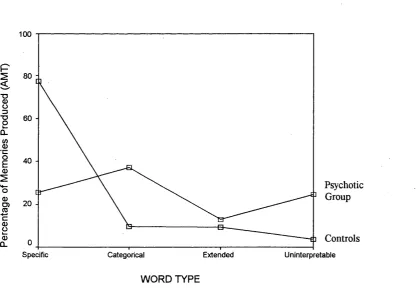
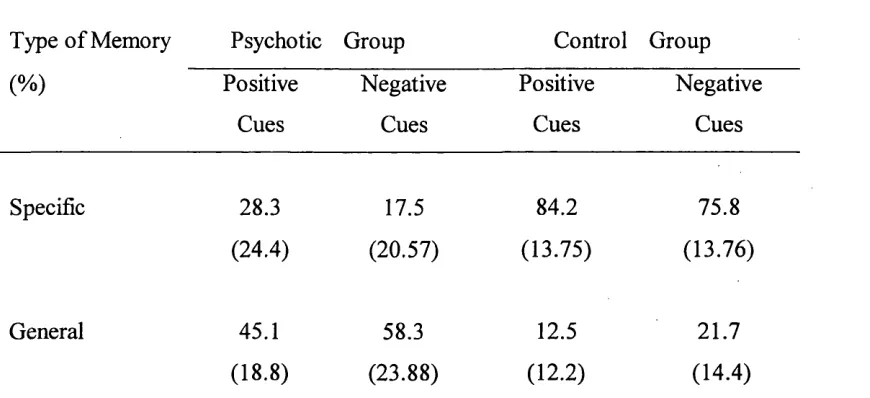
1) Individuals with psychosis will overall demonstrate an over-general retrieval style of autobiographical memory in relation to controls on the AMT
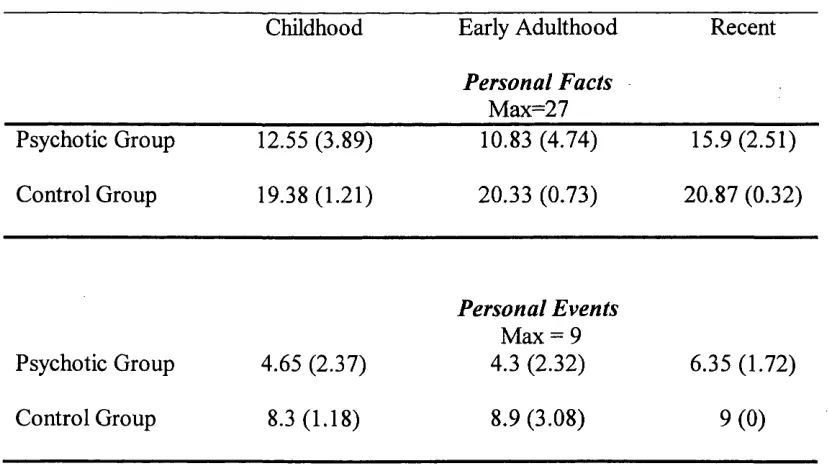
2) They will also demonstrate an overgeneral retrieval style of autobiographical facts and memories on the AMI
3) An approximation to a u-shaped temporal gradient of AM will be found in individuals with psychosis and that the poorest recall of AM will be found around the time of onset of illness in early adulthood.
4) Deficits in the retrieval of specific AM information will be independent of any deficits in working memory or verbal episodic memory.
C hapter 4 - M ethod
4.1 Participants
20 participants (14 men and 6 women) with a diagnosis o f schizophrenia were recruited from the psychiatric inpatient populations o f 9 long term rehabilitation or low secure forensic rehabilitation wards at the Whittington and St Bernard’s Hospitals, London. They all fulfilled the DSM-IV criteria (APA, 1994) for chronic schizophrenia as determined by the current treating psychiatrists and were all currently symptomatic i.e. experiencing at least one positive symptom of psychosis, such as voices or delusions.
Exclusion Criteria
Exclusion criteria for the study included a history o f organic brain disease, epilepsy, head injury, recurrent and extensive drug or alcohol abuse, having had ECT within the past year or having levels o f disorganisation or negative symptomatology that would have precluded engagement. A co-morbid diagnosis of a personahty disorder or depression was also considered to be exclusion criterion.
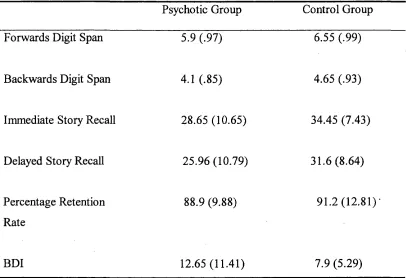
mean duration o f illness was 17.3 years (SD = 7.73). All participants were on typical or atypical antipsychotic medication.
The control group consisted o f 20 healthy participants (14 males and 6 females) who had no known history o f mental illness, and were not intoxicated with alcohol or drugs at the time of testing (operationalised as no consumption o f alcohol or drugs in the last eight hours). The average age o f the control group was 34.8 years (SD = 12.53), and the mean number o f years spent in full time education was 14.1 years (SD = 3.076). None o f the control group were taking any prescribed medication.
The control group was matched to the psychotic group on age, gender, number of years in education and premorbid Full Scale I.Q, as measured by the National Adult Reading Test (NART, second edition; Nelson, 1991).
No significant differences were found between the ages o f the psychotic and the control group (t(38) = .897, p=.375). Given that the distribution o f the number o f years in education was positively skewed for the control group (S = l.l 13, Z= 2.17, p<0.05), a non - parametric test was used to ascertain if there were any significant differences in the average number of years in education between the two groups. This was not found to be the case. (Mann-Whitney, Z= -.576, p = .565).
(t(38)=-1.379, p=.176). Thus the control group were considered to be suitably matched to the psychiatric group in terms o f age, gender, number of years in education and premorbid I.Q.
4,2 Recruitment Process
The study was described to clinical teams at the two hospitals and two local community mental health centres in the Ealing and Islington areas of London. The Consultant Psychiatrists responsible for the inpatients (most o f whom were linked to specific wards) or who were members o f the two community mental health teams were then approached by letter (Appendix 2.4), informed o f the study and asked to sign a consent form (Appendix 2.5) allowing the researcher access to their patients. Of the 8 Consultant Psychiatrists approached, all gave their permission for their patients or clients to be potentially considered as participants.
The participants were then recruited in one of two ways:
1) A meeting was arranged with ward managers, where they were given information about the study (Appendix 2.6), and asked to identify potential participants who met the inclusion criteria and who did not meet the exclusion criteria. Participants were then approached by the researcher and a member o f staff well known to the patient, and they were asked if they would be willing to participate in a research study.
researcher met with the named nurse or keyworker and they were then asked to meet with their patient separately to discuss the study and to obtain consent (Appendix 2.3). Only once consent had been given, did the researcher then approach the individual and arrange a convenient time to conduct the interview.
The reason for having two different recruitment processes and means o f obtaining consent was in order to meet the requirements o f the two different ethics committees who provided ethical approval for the study.
For the control group, the researcher approached the manager o f a London DHSS unemployment centre, the purpose o f the study was explained and their permission obtained to recruit participants from their centre. An advert was placed in the job centre and also posted on their recruitment website. From the advert, two participants were recruited and a further eight controls were obtained by approaching individuals in the job centre and asking them if they would like to be involved in a research project. The control group also consisted o f nursing staff from several hospitals in the London area and people known personally to the researcher who were considered suitable for the study.
normally took no longer than an hour and half, and could be conducted over two sessions if more convenient.
It should be noted that approximately 60 patients with a diagnosis of schizophrenia were approached and invited to take part in the study. O f these, almost two thirds declined, and four others gave and then withdrew their consent prior to the interview taking place. In some situations, the ability to engage with and tolerate an interview process was informally assessed through discussion with staff members, and some potential participants were excluded on the basis o f risk issues e.g. risk o f aggression, or where the potential o f a negative impact on the patient was too high, given the nature o f the study. In four cases, the researcher decided to terminate the interview prematurely as it was clear that the participants were too preoccupied or distracted by their symptoms, or their thinking was too disordered for the data collected to have been valid. Such data were not included in the final analysis.
Remuneration
In line with guidelines suggested by University College London, only the control group were paid £7.50 for their time, taken from research funds allocated by the Sub-Department o f Clinical Health Psychology at University College London
4.3 Ethical Approval
The study was approved by the West London Mental Health Research Ethics Committee on the 10^ May 2002 and by Camden and Islington Community Health Local Research Ethics Committee on 3U* March 2003 (see Appendix 1). Apart from a small change in the way that the participants were approached as discussed in the recruitment process section, which was requested by the second ethics committee, no further ethical objections were raised.
4.4 Measures
A utobiographical M em ory Interview (A M I) (Kopelman, Wilson & Baddeley, 1990)
descriptive richness o f the account, ranging from 0-3, and its specificity in time and place, yielding a maximum score o f 9 for each time period. The personal semantic schedule assesses the ability to recall facts such as home addresses and names o f friends or colleagues. The amount o f information provided was scored up to a maximum o f 21 for each time period and was presumed to be accurate, as outlined in the manual (Kopelman, et al 1990). Kopelman (1989) found that there was correlations of between 0.93 and 0.99 when the recall o f Korsakoff s and Altzheimer’s patients were verified against the reports o f close relatives and concluded that detailed checking of responses with relative reports was most likely to be unnecessary. For the clinical sample, when the accuracy o f the information or events recalled was in question, (e.g. when it was not clear whether the memory contained some delusional content), case notes and psychiatric reports were reviewed and staff members who had a direct relationship e.g. primary nurse, with the participant were consulted. Overall, it was normally clear when a memory was in fact delusional e.g. T was a fighter pilot in the US Armed Forces’ or T was kidnapped and forced to pull huskies in Alaska’, and in such circumstances the event was scored as ‘O’. The AMI manual presents norms and cut off scores that represent different levels of impairments across the three time periods for both healthy and clinical populations.
were adapted to include specific memories occurring whilst they were residing at these addresses.
The AMI has not been found to be correlated with age or IQ (r=0.23 and 0.15 respectively) but has been found to correlate with other measures of remote memory such as the Recognition Memory Test for Words and Faces (Warrington, 1984) and the Rivermead Behavioural Memory Test (Wilson, Cockbum & Baddley, 1985)(r values ranging from 0.391 to 0.681).
Inter-rater reliability statistics reported in the AMI manual (Kopelman et al., 1990) range from 0.83 to 0.86 and previous studies using the AMI (Brewin & Stokou, 2002) found inter rater reliability to be good (89%, weighted Kappa=0.73).
A utobiographical M em ory Test (A M T:W illiam s & B roadbent, 1986)
Paris). A more detailed outline o f the presentation o f the cue words and coding of responses is provided in the Procedure section following.
N ational A dult R eading Test (NART); (Nelson, 1991 - restandardisation for the WAIS-R).
from factor analyses o f the WAIS-R subtests, and has high levels of inter-rater (0.96-0.98) and test-retest (0.98) reliabilities (Nelson & Willison, 1991).
B eck Depression Inventory (BDI-II) (Beck, 1996).
This is a widely used 21 item self rating measure which assesses the intensity o f depression in clinical and normal populations. Each item has a list of four statements that are arranged in increasing severity about a particular symptom o f depression. The new inventory (BDI-II) was created to be in line with the depression criteria for DSM-IV (APA, 1994). Items on the new scale replaced items that dealt with symptoms of weight loss, changes in body image and somatic preoccupation. Sleep loss and appetite loss were also revised to assess both increases and decreases in sleep and appetite. The BDI-II is considered to be more clinically sensitive than the original BDI (Beck, Ward, Mendelson, Mock & Erbaugh, 1961), with a inter-rater reliabihty o f .92 and a test-retest rehability o f .93 (Beck, 1996).
D igit Span subtest o f the W AIS -I I I (Wechsler Adult Intelligence Scale- 3"^^ revision (Wechsler, 1998a) and Wechsler Memory Scale: Wechsler, 1998b)
increasing series of digits and the numbers are presented at a rate o f one per second. Participants are then required to recall the numbers in the correct order, this is known as forwards digit span. Backwards digit span involves recalling the series o f number backwards, and tests the ability to manipulate verbal material in working memory. The average digit span backwards is 5. The average digit span forward is 7 numbers, with a normal range o f between 5 and 9. (WAIS-III).
The A dult M em ory and Inform ation Processing B attery (A M IPB) (Coughlan & Hollows, 1985)
4.5 Procedure
Information was recorded on demographic history, experience of mental health problems and where appropriate, current medication and duration o f illness. Clinical notes were reviewed in order to corroborate the above information with the reports given by the participants. Generally the AMI was administered first, followed by the NART and then the presentation o f the story fi-om the story recall task, and immediate recall of the story. The AMT was then presented (see below for details of administration) followed by delayed recall from the story recall task. Following this, the forward and backward digit span task was administered and the interview ended with the participant completing the Beck Depression Inventory. The ordering of the tests was generally as outlined above although the order was sometimes adapted to the demands o f the situation in terms of concentration and motivation.
participant who withdrew consent half way through, all interviews were completed.
Administration o f the AMT
The participant was given a standard set o f instructions about the nature o f the test and an example of the desired response was given. The present study used the following instructions given in Williams’(unpublished) procedure:
I am interested in your memory fo r events that have happened in your life.
I am going to read to you some words. For each word, I want you to think
o f an event that has happened to you that the word reminds you of. The
event could have happened recently (yesterday or last week) or a long time
ago. It might be an important event or a trivial event.
Just one more thing, the memory you tell me about should be o f a specific
event. So i f I said the word ‘good’ - it would not be ok to say 7 always enjoy a good party ’, because that does not mention a specific event. But it
would be ok to say 7 had a good time at Ja ne’s party ’ because that it is a specific event.
Lets try some words fo r practice