The Final Hour: Coach-Athlete Interactions Immediately Prior to Performance in
Basketball
By
Scott Fletcher
A thesis submitted in fulfilment of the requirements for the Degree of
DOCTOR OF PHILOSOPHY
Victoria University
School of Human Movement, Recreation, and Performance and
Centre for Aging, Rehabilitation, Exercise, and Sport
STUDENT
DECLARATION
“I, Scott Fletcher, declare that the PhD thesis entitled
The Final Hour: Coach-Athlete
Interactions Immediately Prior to Performance in Basketball
is no more than 100,000
words in length, exclusive of tables, figures, appendices, references and footnotes.
This thesis contains no material that has been submitted previously, in whole or in part,
for the award of any other academic degree or diploma. Except where otherwise
indicated, this thesis is my own work.”
Signed
ACKNOWLEDGEMENTS
A wise man once told me that a PhD is not about the research it is about the
journey. Before I started, I had been thinking how can it not be about the research?
After, two years for a Master’s degree and then four years for a PhD, I think the wise
man may well have been right. During the past 6 years, I spent almost two years in
New Zealand studying and the four years in Melbourne. Throughout this time, I met an
incredible amount of people that have helped me get to this point. The experiences, the
highs, lows, and in-betweens that I have encountered in the past 6 years have been
incredible. Furthermore, the support that I received from all corners of life has been
overwhelming. It truly has been a journey. Over the past 6 years, I been through a
Masters degree, a PhD, 2 accidents, months of physio/rehab and medication, had my
computer stolen, to moved house to many times (13 at last count…I think), flown all
over the world, experienced the highs of life with wonderful friends and colleagues,
and had the best family a man could ever want.
First of all, I must thank my supervisors. To Tony Morris, I cannot thank you
enough, the time and effort that you have put into this PhD has been incredible. I could
not have made it without your help. To Daryl Marchant, you help has been invaluable
over the past four years, your advice and time has aided my research and my career. To
the other staff at Victoria University including Mark Andersen and Harriet Speed, your
presence and advice has been most welcome over the years and will not be forgotten.
big part of this. Also, a big thanks to all the staff at the School of Human Movement
as well.
To my great friends who I could never thank enough, Gooba, and Kim I owe
you far more than I could ever express. To Fiona, Carey, Debs, Jo, Hussein, Joe,
Claire, Perry and Amy, Brendon, Ken, Alex, Aaron and Margot, Cam and Jules, Brad
and Ange, Glenn (thanks for all the beers mate!), Flik, and anyone that’s brought me a
beer or a coffee over the past four years, I thank you all.
To my family, whom I could never thank enough, I think I’m in your debt
forever. Especially to Mum, Dad, Campbell you’ve all put up with a lot and helped me
out above and beyond the call of duty. Also to Perry, Julie, and Erina I could not have
done this without you. To Hamish and all the Kirks and all the Fletchers, and
especially, to Nana whom I miss lots, I also thank you.
I must also express my gratitude to all those I’ve met and worked with at the
Australian Sports Commission and at the Australian Institute of Sport. Cheers.
Finally, I raise a toast to all friends old and new, to family near and far, to those
I’ve loved and lost, and to those dearly departed.
ABSTRACT
Pre-competitive preparations in elite sport have been shown to be important to
performance. In particular, mental preparation and mental readiness have been shown
to be important determinants of successful performance. For example, Orlick and
Partington (1988) highlighted that mental preparation in Olympic athletes was
perceived to be important to successful performance. In the search for understanding of
performance excellence researchers (e.g., Durand-Bush & Salmela, 2002, Mahoney &
Avener, 1977; McCaffey & Orlick, 1989; Orlick & Partington) have highlighted the
role of the coach in the development and maintenance of elite performance. Above all,
the coach has been found to be a critical element of performance and has been
perceived to be influential to athletic performance in both a positive or negative
manner. In addition, researchers have highlighted that coaches and the coaching
processes/practices that they adopt are influential in constructing a performance
environment that could aid or hinder athletes preparing for and performing in
competition (Côté & Sedgwick, 2003). In particular, coach-athlete interactions
immediately prior to performance are suggested to be an important determinant of
mental preparation and performance (Gould, Guinan, Greenleaf, Medbery, & Peterson,
1999). There is limited information, however, on coach-athlete interactions
immediately prior to performance and the influence on mental preparation and
performance.
In this thesis, I investigated coach-athlete interactions immediately prior to
performance in semi-elite basketball teams. The participants in the study were four
single sex (2 male and 2 female) coach-athlete dyads competing in Australian
prior to a game. Phase 2, involved observation of training and of the final hour prior
to a game. Phase 3, involved a semi-structured interview with a targeted player on
their perceptions of the coach prior to performance. Phase 4, involved a Verbal Cued
Stimulated Recall Interview (VCSRI) with the coach. The VCSRI was focused on the
coaches’ explanations and reflections on their actions and communications
immediately prior to the game recorded in Phase 2. The data were analysed using
ground theory methods and constant comparative analysis.
Overall, I found that the four coaches aimed to construct a pre-performance
environment that fostered players’ physical preparation, mental preparations and
readiness, and reinforced the game plan and tactics practiced during the week. In
addition, coaches were also found to spend time focused on personal preparation in
order to ready themselves mentally for their role in the pre-game period and in the
game. Coaches suggested that a key aspect of mental preparation was the use of
pre-game routines. All four coaches proposed that pre-pre-game routines either individual or
team based aided their own and athletes’ mental preparation for competition. In
particular, pre-game routines facilitated athletes into a game centred focus and
narrowed their attention onto the game, the team, and their individual role within the
team.
Coaches’ were found to have structured the pre-game preparations differently
depending on the preferences of the team or their own preferred coaching style, giving
players more or less free time to complete their own pre-game routines. A number of
external factors mediated the structure and style of the pre-game routines. These
factors included the time of the season, the level of development, player experience,
and the coaches’ assessment of player preparations prior to the game.
particular, coaches stated that they used individual interactions to focus players and
aid the players in mentally preparing for the game. The coaches achieved this through
structured warm-ups, individual interactions and individual coaching, motivational
strategies, player assessment, and the pre-game talk.
I also found that coaches monitored their players throughout the
pre-performance period and used their background knowledge of the players’ personality,
preferred coaching style, game state, current form, and body language to assess the
progress to assess the mental readiness of players before a match. Coaches applied this
mental framework to players’ pre-game preparations to assess their progress. If
coaches perceived one of their players to be unprepared they would take them aside
and speak individually to the player and try to refocus them by showing confidence in
their ability, praise, encouragement, and individual goal setting.
A key finding related to the players perception of their coach. The majority of
players perceived their coaching to be a positive influence on their preparations, a
source of motivation, and confidence. Players’, however, did not always agree with
their coach’s decisions and style of coaching before a game. Specifically, players’
were found to have perceived coaches as organisers and facilitators, whom aided them
to reach their optimal preparation for performance.
The interactions between coach and player were found to differ depending on
several mediating factors. The mediating factors included players’ level of
development, time of the season, player’s form, opposition, the teams place on the
ladder, and players’ preferred coaching style. The mediating factors determined the
content and focus of the pre-game talk and the interactions with players.
performance. The model highlights the interaction between coach and player
personal variables, the coach-athlete relationship, mediating factors, mental framework
of players, coach intervention, preparation, and performance.
In conclusion, coach-athlete interactions immediately prior to performance are
focused on the optimal mental and physical preparation, player mental readiness and
game focus, positive reinforcement of team plan/strategies, team cohesion, and coach
preparation. Coach-athlete interactions were focused on motivation, confidence,
positive reinforcement, and game focus. Importantly, coaches needed to be aware of all
aspects of their players’ behaviour and personality in order to be an effective coach.
Furthermore, coaches’ interventions were a compromise between players’ needs, what
was best for the team, and what coaches perceived to be best for the player. In
addition, a key aspect of coach-athlete interactions before a game was open and honest
communication. Coaches and players needed to be able to openly communicate
important information under pressure and with limited time available.
The results from this study have important implications for coaches and
TABLE OF CONTENTS
ACKNOWLEDGEMENTS ...iii
ABSTRACT... v
TABLE OF CONTENTS... ix
LIST OF FIGURES ... xvi
LIST OF TABLES ...xvii
CHAPTER 1: INTRODUCTION ... 1
CHAPTER 2: COACH-ATHLETE INTERACTIONS IMMEDIATELY PRIOR TO
PERFORMANCE IN BASKETBALL. A LITERATURE REVIEW... 6
Evolution of Research on Coaching in Sport Psychology ... 7
Leadership Research in Sport Psychology ... 9
The Multidimensional Model of Leadership ... 9
The Leadership Scale for Sport and the MML ... 11
Measurement Issues and the LSS... 14
The Revised Leadership Scale for Sport... 15
Summary of Leadership in Sport ... 17
The Behavioural Approach to Research on Coaching ... 18
An Introduction to Research on Coaching Behaviour ... 18
The Mediational Model of Leadership... 20
The Coaching Behaviour Assessment System... 24
Summary of the MM and the CBAS... 29
Coaching Behaviour Research in Sport Psychology... 30
Research Findings from the Systematic Observation of Coach Behaviour ... 30
Athletes’ Perceptions of Coach Behaviour ... 38
Video Observation and Coaching Behaviour... 43
Limitations of Behavioural Research... 47
Summary of the Behavioural Assessment of Coaching in Sport ... 49
Overview and Theory of the Cognitive Approach ... 50
Theory and Development of the Coaching Model... 52
Research Findings on Coaching Knowledge and the Coaching Model... 62
Summary of the Cognitive Approach to Coaching ... 66
Coach Influence on Athletes’ Ideal Performance State ... 67
The Coach-Athlete Relationship and Performance... 68
The Role of Coaching in Peak Performance ... 71
Coaching Immediately Prior to Performance... 78
Summary of Research on Coaching in Sport Psychology ... 86
The Present Thesis ... 89
CHAPTER 3: METHOD ... 91
Introduction ... 91
Participants... 92
Research Design and Grounded Theory Methods ... 95
Focus of the Study... 98
Conceptual framework of the study ... 99
Procedures ... 99
Data Collection ... 101
Data Analysis ... 109
Issues of Validity, Reliability, and Trustworthiness in Qualitative Research... 115
The Researcher... 117
Research Credibility... 118
Results for Team A ... 122
Description of Team A... 122
Phase 1: Interview with Amy on Intended Coaching Practices ... 123
Phase 2: Observations of Amy... 135
Phase 3: Interview with Ally... 140
Phase 4: VCSRI Session with Amy ... 144
Summary ... 152
Triangulation of Results for Team A ... 153
Summary ... 158
Results for Team B... 158
Description of Team B ... 158
Phase 1: Interview with Bruce on Intended Coaching Practices ... 159
Phase 2: Observations of Team B ... 168
Phase 3: Interview with Brad ... 174
Phase 4: VCSRI Session with Bruce... 177
Summary ... 188
Triangulation of Results for Team B ... 189
Summary ... 193
Results for Team C... 194
Description of Team C ... 194
Phase 1: Interview with Carl on Intended Coaching Practices ... 195
Phase 2: Observations of Team C ... 203
Phase 3: Interview with Campbell ... 208
Phase 4: VCSRI Session with Carl ... 216
Summary ... 228
Summary ... 232
Results for Team D ... 232
Description of Team D... 232
Phase 1: Interview with Donna on Intended Coaching Practices ... 233
Phase 2: Observations of Team D... 242
Phase 3: Interview with Debbie ... 245
Overview of Debbie’s Perceptions of Donna’s Behaviour Prior to Performance
... 245
Phase 4: VCSRI Session with Donna ... 251
Summary ... 259
Triangulation of Results for Team D ... 260
Analysis of Major Themes ... 263
Primary Objectives Immediately Prior to Performance ... 264
Using Physical Preparation to Aid Mental Preparation ... 265
Mental Preparation Strategies ... 267
Tactical Reinforcement Prior to Performance ... 272
Using Pre-Game Routines to Aid Mental Preparation... 272
Onsite Player Assessment and Evaluation ... 275
Coach-Player Relationship Issues ... 277
Mediating Factors ... 280
Coaching Interventions ... 284
Individual Interactions ... 284
Observation and Assessment ... 285
Motivational Strategies ... 285
Goal Setting... 286
Summary of Major Themes ... 286
Constructing a Visual Representation of Coaching Interactions Prior to Performance
... 287
A Description of the Visual Representation of Coaching Interactions Prior to
Performance (VRICPP)... 289
Key to the Model... 290
Description and Explanation of Factors Included in the Pre-Performance
Coaching Model ... 290
Summary of the Pre-Performance Coaching Model ... 295
CHAPTER 5: GENERAL DISCUSSION ... 296
Synopsis of the Major Findings and Relationship to Theory... 296
Objectives of Pre-Game Preparations ... 297
Discussing the Pre-Performance Coaching Model ... 300
Summary of the Pre-Performance Coaching Model ... 303
The Influence of the Coach in Pre-Game Preparations... 304
Mental Preparation and Pre-game Routines Prior to Performance ... 307
Coaching and Mental Preparation... 307
The Relationship Between Physical Preparation and Mental Readiness ... 308
Pre-game Preparation and Pre-Game Routines... 308
Using and Constructing Mental Frameworks to Assess Player Preparations ... 312
Player Knowledge and Onsite Assessment ... 312
Preferred Coaching Style and Coach-Athlete Compatibility ... 314
Summary ... 315
Reflections on Coaching Behaviour... 316
Self-reflection in Coaching ... 317
Factors Mediating Pre-Game Preparations ... 318
Level of Development of Coach, Team, and Player ... 318
Situation and Context... 319
Unexpected Events... 320
Methodological Issues: Strengths and Limitations of the Thesis... 321
Strengths of the Research... 321
Limitations of the Thesis... 323
Implications and Recommendations for Future Research ... 327
Recommendations for Future Research ... 327
Implications for Coaches ... 328
Implications for Sport Psychologists ... 330
Concluding Remarks ... 331
REFERENCES... 334
APPENDICES ... 351
Appendix A1: Information Package to coaches... 352
Appendix A2: Information Package to Players... 356
Appendix A3: Information package and consent form-Minor... 360
Appendix B1: Consent form-Coaches ... 364
Appendix B2: Consent form-Players ... 368
Appendix C: Interview guide ... 372
Appendix D: Training Observations ... 379
Training Session Observations for Team A ... 380
Training Session Observations for Team B ... 383
Training Session Observations for Team C ... 386
Appendix E: Basketball in Australia... 392
Basketball in Australia ... 393
Appendix F: Game Summaries and Performance Descriptions of all Teams... 395
Game Descriptions and Summary of Performance for all Teams... 396
Team A Game Summary... 396
Team B Game Summary... 396
Team C Game Summary:... 397
Team D Game Summary... 397
Appendix G: Researchers Note. An Unexpected Event and a Confessional Tale .. 399
LIST OF FIGURES
Figure 2.1: The Multidimensional Model of Leadership
10
Figure 2.2: The Mediational Model of Sport Leadership
23
Figure 2.3: CBAS response categories
26
Figure
2.4:
The
Coaching
Model
52
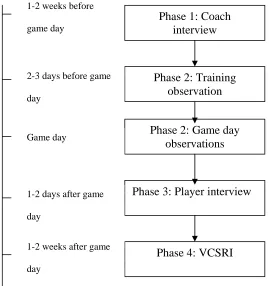
Figure 3.1: Flow diagram and timeline of the four data collection methods used in this
thesis
91
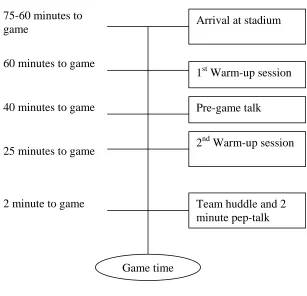
Figure 4.1: Timeline and structure of Amy’s pre-game preparations for Team A 125
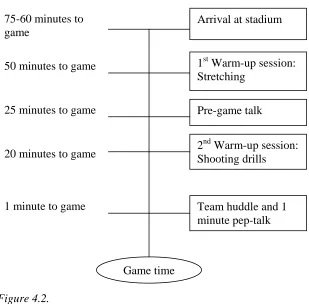
Figure 4.2: Timeline and structure of Bruce’s pre-game preparations for Team B 160
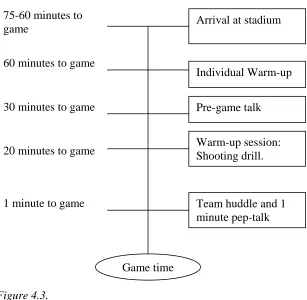
Figure 4.3: Timeline and structure of Carl’s pre-game preparations for Team C
196
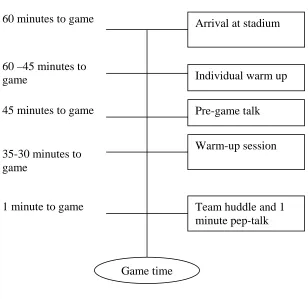
Figure 4.4: Timeline and structure of Donna’s pre-game preparations for Team D 235
LIST OF TABLES
Table 2.1: CBAS response categories: Class I reactive behaviours
27
Table 2.2: CBAS response categories: Class II spontaneous behaviours
28
CHAPTER 1: INTRODUCTION
Understanding the factors that are related to superior performance in elite sport is a
primary goal of sport psychology research. To investigate peak performances in sport,
researchers have focused on understanding the factors that contribute to the achievement
of these above average performances. From peak performance research, it is widely
recognised that an athlete’s psychological state, based on mental preparation, is a
contributing factor (Eklund, 1994a, 1994b; Gould, Eklund, & Jackson, 1992a, 1992b;
Mahoney, Gabriel, & Perkins, 1987; McCaffrey & Orlick, 1989; Orlick & Partington,
1988). An important finding identified in peak performance research is the link between
mental preparation and pre-game routines. In particular, the combination of optimal
physical and mental readiness prior to competition has been perceived by Olympic
athletes to be an extremely important factor influencing performance (Orlick &
Partington, 1988). In particular, Orlick and Partington, concluded that the quality of
athletes’ mental preparation prior to performance was an important determinant of success
in Olympic athletes.
Sport psychology researchers have also highlighted that the success of world
champion and Olympic athletes is linked to psychological characteristics, such as mental
toughness, confidence, competitiveness, attentional focus, pre-competitive preparations,
and psychological development (Durand-Bush & Salmela, 2002; Eklund, 1994a; Gould,
Dieffenbach, & Moffett, 2002). Specifically, researchers have highlighted that successful
and less successful athletes differ significantly in terms of their mental preparation (e.g.,
Mahoney & Avener, 1977; Mahoney et al., 1987; Orlick & Partington, 1988),
demonstrating the important role that athletes’ psychological states have in the
An important factor identified by researchers, in the pursuit of peak athletic
performance, is the influence of coaches’ behaviour. In particular, coaches are perceived
to be central figures in all aspects of athletes career’s, as well as in training and
competition (Lyle, 1999). Coaches are perceived to have an important influence in all
aspects of athletes’ preparations for competition and in determining athletes’ success and
development (Durand-Bush & Salmela, 2002). The relationship between coach and athlete
is critical to success in elite sport and is viewed as being related to athletes’ psychological
development and mental preparation. In particular, a primary goal of coaches is to aid
players’ psychological states for performance and aid players in attaining their ideal
pre-game psychological state. There is a limited understanding, however, of how coaches and
coach-athlete interactions immediately prior to competition, affect pre-performance
preparations, mental readiness, and athletic performance.
In many sports, coaches work very closely with athletes immediately prior to
performance. In particular, coaches aim to get athletes physically and mentally ready to
perform at their best. The high number of interactions between coach and athlete, at
training as well as before, during, and after competition means that coaches are often in a
central position to influence athletes’, preparations, including their psychological state or
more specifically their mental readiness
1. Indeed, researchers have argued that the coach is
essential to athletic preparations across all aspects of an athlete’s career, including
preparations on the day of performance (Bloom, 1996; Cote, Salmela, Trudel et al., 1995;
1 Note: Throughout this thesis the term “athletes’ psychological state” will refer to all athletes psychological
traits while “mental readiness” will be used to relate to athletes game specific mental readiness to perform.
In addition, the term Ideal Performance State (IPS) will be used to refer to athletes’ optimal pre-game
Cote, Salmela, & Russell, 1995a). Furthermore, researchers have shown that coaches are
also perceived as being performers in their own right and their performance at
competitions can directly influence athletes’ preparations, in either a positive or negative
manner (Gould, Guinan, Greenleaf, Medbery, & Peterson, 1999). These noteworthy
findings highlight the relevance of the claim that coaches’ own performance and
behaviour could potentially influence not only athletes’ psychological state, but also their
actual performance.
On the day of competition, athletes aim to reach their ideal performance state,
where they attain their optimal physical and psychological preparation and compete at or
close to their performance potential (Keating & Hogg, 1995; Loehr, 1984; McInman &
Grove, 1991). Researchers have highlighted that prior to competition coaches aim to
construct a positive environment that will facilitate athletes’ preparations (Cote &
Sedgwick, 2003). Coaches’ are suggested to facilitate preparation by setting up pre-game
routines and structures, involving physical warm-ups, team talks, and time for mental
preparation. Researchers have proposed that the pre-competitive rituals and routines of
coaches and athletes are important elements of performance. In particular, how a player
engages their cognitions, emotions, and behaviour prior to performance is proposed to
often represent the difference between success and failure (Keating & Hogg, 1995).
Further to this point, Bloom (1996) argued that, during preparation for performance,
coaches play an important role in athletes’ mental and physical preparation.
Despite the suggested importance of coaching, at this time there is limited
information that has elucidated the factors that contribute to athletic preparations prior to
coach-athlete interactions
2to performance (e.g., Gould et al., 1999; Jowett & Cockerill,
2003), there is limited understanding of how coach-athlete interactions immediately prior
to performance affect athlete psychological preparations. The research that has been
conducted has primarily been uni-directional and focused on the coach (e.g., Chelladurai
& Salah, 1980a, 1980b) or on observing the coach (e.g., Lacy & Darst, 1985) or on
athletes’ perceptions of the coach (e.g., Pelletier & Bower, 2001). There have been few
multi-method studies that have investigated all aspects of the coaching process (e.g.,
Jones, R.L, Armour, & Potrac, 2003; Potrac, Jones, R. L., & Armour, 2002). It is
suggested that this limits the depth of information being collected. Furthermore, the
importance of athletes’ mental preparation to athletic performance highlights the need to
further investigate and understand the dynamics of coach-athlete interactions close to
performance. Understanding the factors and elements that affect athletic preparation close
to performance could provide detailed information for coaches, athletes, and sport
psychologists.
The purpose of the research reported in this thesis was to investigate how
coach-athlete interactions immediately prior to performance in basketball influence coach-athletes’
preparation for performance. In this thesis, I focused on the influence on athletes’ mental
preparation. In this thesis, I investigated the pre-performance environment from four
different perspectives. Using, a multi-method approach, I examined coach-athlete dyads
by triangulating; (a) coaches’ intended behaviours and practices prior to a match; (b)
observed coaching behaviour prior to a match; (c) athlete perceptions of coaching
2 Note: Please note that, the term “interaction” or “interactions” was used to refer to specific interactions
between coach and athlete that occurred throughout the data collection, whilst” relationship” referred to
behaviour prior to performance and the influence on athletes performance states; and (d)
coaches’ reflections and explanations of their own behaviour. The four methods in this
study were combined to allow comparison between coach, player, and observer
perspectives. The four methods will be used to elucidate the influence of coach-athlete
CHAPTER 2: COACH-ATHLETE INTERACTIONS IMMEDIATELY PRIOR TO
PERFORMANCE IN BASKETBALL. A LITERATURE REVIEW
In this literature review, I examine the literature relating to coaching behaviour,
coaching immediately prior to performance and the relationship to mental preparation. I
briefly examine the existing research on coaching behaviour, leadership style, and
coach-athlete interactions in sport. I focused on reviewing the different approaches that
researchers have taken to investigate different aspects of coaching. In particular, I examine
how they have shaped the field and the current research project. I have focus on
examining research on leadership, coaching behaviour, coaching knowledge, and the
relationship between coaching and athletes’ performance states. In the leadership section
of the literature review, I outline the evolution of research on coaching and leadership
styles. In the second part of the theoretical review, I focus on the analysis of coaching
behaviour and the different methods used. In the third section of the literature review, I
examine research focused on the cognitive aspects of coaching. In each of the behavioural
and cognitive approaches, I present and discuss the underlying principles of the different
research methods used to examine coach-athlete interactions. In the next section, I examine
research aimed at understanding the link between coaching behaviour and athlete
performance states with a focus on the link to mental preparation. I present and discuss
research findings on the coach-athlete relationship, mental preparation, peak performance,
and coaching immediately prior to performance. In the final section of the literature
review, termed “The present thesis”, I describe the original research question and the
Evolution of Research on Coaching in Sport Psychology
Early research on understanding how coaches influence elite athletes has been
credited to Griffith (1925; 1926; 1928). Griffith was recognized as being the first author to
research the psychology of coaching and the psychology of athletics and is widely
regarded as the father of sport psychology. Griffith was the first to write about the
psychological aspects of sport and coaching, putting forward the case for the uses of
psychological research in athletic competition. Using the first sport psychology lab in the
USA, Griffith wrote of the psychology of coaching methods and the problems regarding
coaching pedagogy and teaching (Green, 2003). After Griffith left the field of sport
psychology in 1938, there was a considerable time gap until further publications emerged
on leadership and coaching in sport psychology (Weinberg & Gould, 1999). It was not
until the late 1960’s and early 1970’s when further research on the psychology of
coaching re-emerged. During that time, researchers began to focus on the personality traits
of leaders, (e.g., Ogilvie & Tutko, 1966) and on different models of leadership behaviour
(1967).
Research on coaching behaviour and leadership styles received more detailed
attention in the 1970’s and early 1980’s, when researchers began adopting models and
theories from general psychology and management literature. During this time, leadership
researchers focused on (a) situational theories, e.g., Hersey and Blanchard (1969); (b)
interactionist theories, e.g., House (1971) and Fielder (1967) , and (c) normative models of
leadership, e.g., Vroom and Yetton (1973), Vroom and Jago (1974). A major contributor
to leadership research was Chelladurai (e.g., Chelladurai, 1980; Chelladurai & Saleh,
1980a; 1980b). Chelladurai adopted management theories and applied them to sport.
Multidimensional Model of Leadership (MML), and an accompanying questionnaire, the
Leadership Scale for Sport (LSS). Chelladurai, in particular, sought to identify, develop,
and enhance our understanding of leadership in the sporting domain.
In the mid-late 1970’s, research on coaching received a dramatic increase in
interest through the work of Tharp and Gallimore (1976) and Smith, Smoll, and colleagues
(Smith, Smoll, & Curtis, 1978, 1979; Smith, Smoll, & Hunt, 1977; Smith, Zane, Smoll, &
Coppel, 1983; Smoll & Smith, 1980). On the back of observation research by Tharp and
Gallimore, researchers began adopting research methods from education and pedagogy to
study coaching. Smoll, Smith, Curtis, & Hunt (1978) developed the Mediational Model of
Leadership (MM) to understand how coaching behaviour affected youth sports. Smoll et
al. (1978. then developed a systematic observation instrument, termed the Coaching
Behavioural Assessment System (CBAS) to assess the behavioural component of the
mediational model. The application of systematic observation and questionnaire research
pushed research on coaching in sport psychology to new heights.
Reviews by Kahan (1999), Gilbert (2002), and Gilbert and Trudel (2004a)
highlighted the growth and extent of coaching research, as well as the limitations and
needs for future research. In recent years, there has been a growth in qualitative research
on coaching behaviour in sport. Researchers, such as R.L Jones, Potrac, and colleagues (C.
J. Brewer & Jones, 2002; R. L. Jones, Armour, & Potrac, 2003; R. L. Jones, Armour, &
Potrac, 2004; Potrac, Brewer, Jones, Armour, & Hoff, 2000; Potrac & Jones, 1999; Potrac,
Jones, & Armour, 2002) used qualitative and multi-method studies to investigate different
aspects of coaching behaviour. In addition, Côté and colleagues (Cote, Salmela, Trudel et
al., 1995; Cote & Salmela, 1996; Cote, Salmela et al., 1995a; Cote, Salmela, & Russell,
Gilbert, Trudel, and colleagues (Gilbert & Trudel, 1999, 2000, 2004b; Gilbert, Trudel, &
Haughian, 1999; Trudel, Cote, & Bernard, 1996; Trudel, Gilbert, & Trochon, 2001;
Trudel, Haughian, & Gilbert, 1996), applied a variety of research methods, including
in-depth interviews and video-based observation, to assess coaching in sport. Currently, a
wide variety of different methods is being used to elucidate the complexities of the
coaching process. This section of the literature review outlines the predominant research
approaches and findings focuses on the influence of coaching immediately prior to
performance and the link to athletes’ psychological states.
Leadership Research in Sport Psychology
The Multidimensional Model of Leadership
Chelladurai and Saleh (Chelladurai, 1990, 1993; Chelladurai & Saleh, 1978;
Chelladurai & Saleh, 1980a) developed the Multidimensional Model of Leadership (MML,
see Figure 2.1) to assess leadership in sport. In contrast to previous leadership models that
focused on single entities, such as the coach or the situational context, the MML comprised
multiple aspects of the coaching process, the leader, the situation, and the group.
Chelladurai’s MML conceptualised leadership as an interactional process where group
performance and satisfaction were considered to be functions of the congruence among the
three states of leader behaviours: required, preferred, and actual. Chelladurai proposed that
the greater the congruence between these three states the greater the levels of athlete
performance and satisfaction. Furthermore, Chelladurai (1990, 1993) stated that the
characteristics of the situation, the leader, and the members of the group influence the three
states of leader behaviour. These factors then interact to influence the group’s performance
In the MML, Chelladurai (1990; 1993) proposed that athletic performance and
athlete satisfaction were influenced by the leader’s personal characteristics, including their
personality, ability, and experience. He suggested that the required behaviour of the coach
was influenced by the parameters set by the situational characteristics, such as the
organisational structure and its environment, and variables, such as the type of sport,
size/level of team, and task variability (C. A. Sherman, Fuller, & Speed, 2000).
Antecedents
Leader behaviour Consequences
Figure 2.1.
The Multidimensional Model of Leadership
(Chelladurai, 1993)
.
Situational
characteristics
Leader characteristics
Membership characteristics
Group Performance
and Satisfaction
In addition, individual athletes’ preferences were suggested to influence how leaders
actually conducted themself within the group (Chelladurai, 1993).
The strength of Chelladurai’s (1990) MML is that it incorporates the conceptual
frameworks of trait, behavioural, and situational leadership theories (e.g., Fiedler, 1967;
House, 1971) to address the interactions of the coach and athlete in an athletic situation (C.
A. Sherman et al., 2000). Previous leadership theories had focused independently on the
leader, the group, and the situation. Chelladurai’s MML focused on all three elements and
their interactions or interdependence within the confines of a sporting environment (C. A.
Sherman et al., 2000).
The Leadership Scale for Sport and the MML
The Leadership Scale for Sport (LSS) was developed in conjunction with the
model to measure constructs of the MML (Chelladurai & Saleh, 1980a). The LSS contains
five dimensions including: training and instruction behaviour, democratic behaviour,
autocratic behaviour, social support behaviour, and positive feedback. The LSS has been
divided into three versions that can be used to evaluate (a) athletes’ perceptions of the
coach’s behaviour, (b) athletes’ preferred coach behaviour, and (c) the coach’s perception
of their own behaviours.
Researchers have primarily focused on investigating the relationship between:
athletes’ perceived and preferred leadership styles (e.g., Dwyer & Fischer, 1990), between
leadership style and athlete satisfaction (e.g., Riemer & Chelladurai, 1995), and differing
patterns of leadership (e.g., Serpa, Patco, & Santos, 1991). For example, the MML has
received support in the sports literature with youth soccer coaches (Liukkonen, 1999),
1998), leadership and satisfaction in tennis (Riemer & Toon, 2001), and wrestlers
(Dwyer & Fischer, 1990).
Some examples of research focused on leadership in sport include a study by
Dwyer and Fischer (1990) study on wrestlers. Dwyer and Fischer found that the wrestlers
perceived their coaches to be high on positive feedback, high on training and instruction
behaviour, and low on autocratic behaviour. The high level of satisfaction the wrestlers
had with their coach and the proposed interaction between athlete satisfaction and a
democratic style of leadership supported the principles of the MML. Another example of
leadership research is a study by Serpa et al. (1991), who investigated the leadership styles
evident in international Handball teams. Serpa et al. found that, in both athletes and
coaches, the training and instruction dimension of the LSS was predominant, whereas the
democratic dimension was exhibited the least. Serpa et al. showed that athletes’ perception
of coaching behaviour can influence athlete satisfaction. Serpa et al.’s findings, however,
should be viewed with caution, because they involve the application of two self-report
measures and no actual measure of behaviour.
An example of leadership research focused on examining the preferred leadership
patterns of athletes is seen in a study by Chelladurai and Carron (1983). Chelladurai and
Carron examined athletic maturity and preferred leadership patterns and found that more
experienced athletes preferred less training and instruction behaviours than less
experienced athletes. In addition, Chelladurai and Carron found that the need for social
support from coaches, as measured by the LSS, increased as the level of competition
Perceived, Preferred, and Coach Perceptions of Leadership
The LSS has been used to examine the discrepancy between athletes’ preferred and
perceived leadership styles and athlete satisfaction. Using the LSS and a self-report
measure of athlete satisfaction, Chelladurai (1984) examined the discrepancy between
preferred and perceived leadership styles and the athlete satisfaction of college basketball
players, wrestlers, and track and field athletes. Chelladurai found that the discrepancy
between athletes’ preferred and perceived leadership styles was associated with decreases
in athlete satisfaction in the following areas: team performance, leadership, and overall
involvement in the team. The study highlighted the link between perceptions of leadership
and athlete satisfaction.
Salminen and Liukkonen (1996) conducted a multi-method study on 68 Finnish
coaches and their 100 athletes, the athletes’ perceived leadership style of their coaches was
combined with observations of coaching behaviour. Salminen and Liukkonen found that
coaches demonstrated a democratic style of leadership most often. In particular, the
democratic style of leadership was found to significantly correlate with observed coaching
behaviour. Salminen and Liukkonen also found that there was a discrepancy between
coaches’ and athletes’ perceptions of leadership style. Coaches were found to evaluate
their behaviour in a more positive manner than their athletes. Liukkonen (1999) supported
this result in a study on Finnish coaches and athletes, highlighting that a coach’s behaviour
can be perceived or interpreted differently by athletes. The limitations of these studies lay
in the instrument used to assess the observed coaching behaviour. The observation
instrument was not described in full in the study. As a consequence, the results in this
The perception of leadership has been linked to group cohesion. Gardner, Light
Shields, Light Bredemeier, and Bostrom (1996) found that coaches perceived as high in
training and instruction, democratic behaviour, social support, and positive feedback, and
low in autocratic behaviour, had teams that were perceived to be more cohesive. Gardner
et al. also found that there were significant differences between male and female coaches
and between athletes from different levels of high school. Gardner et al. highlighted that
coaches were perceived to have more positive coaching behaviours produced more
cohesive team.
There has been a wealth of research into leadership styles in sport. One aspect of
leadership research has been the comparison of athletes’ perceptions of leader behaviour
and coaches’ perceptions of their own behaviour. Researchers, such as Liukkonen (1999),
have found that there is often a discrepancy between coaches’ perceptions of their
behaviour and athletes’ perceptions of the behaviour of these coaches. Furthermore,
coaches’ perceptions of their own behaviour has been found to disagree with observation
of actual behaviour (Salminen & Liukkonen, 1999). Research focused on the LSS has
highlighted the predominant leadership styles of elite and semi-elite coaches. There is,
however, limited evidence that relates leadership styles to actual performance.
Measurement Issues and the LSS
The LSS has been widely criticised due to the inconsistent results and the poor
internal consistency of the subscales. For example, the autocratic behaviour subscale has
continually shown poor internal consistency with reported Cronbach’s (1951) alpha
coefficients ranging between .11 and .79 (Chelladurai & Riemer, 1998). Furthermore, the
LSS has been criticised for being a narrow and restricted measure of leadership behaviour,
and Riemer raised several issues regarding the use of the LSS and the MML. First, they
questioned whether the LSS captured all the relevant coaching behaviours. Second, they
cited that the LSS was based on existing scales drawn from business and industry.
Although business and sport leadership share some similarities, the athletic context is
unique, meaning that the adoption of non-sport scales may not be applicable to sport
settings. To further support this point, Potrac et al. (2000) and C.J. Brewer and R.L. Jones
(2002) cited that the unique context of coaching is a key measurement issue for researchers
assessing coach/leader behaviour. The LSS is a general measurement instrument that fails
to assess the unique aspects of sport and can only give a general guide to leadership
patterns.
Third, Chelladurai and Riemer stated that the dimensions of the LSS are not
comprehensive, when compared to other instruments, such as the CBAS, or other models
of leadership, such as the Mediational Model of Leadership (Smoll & Smith, 1989). The
validity and reliability of the LSS have been demonstrated, but, the results are inconsistent,
and as such, conclusions drawn from studies using the LSS should be viewed with caution,
particularly with regard to the autocratic behaviour dimension (Chelladurai, 1993).
The Revised Leadership Scale for Sport
Due to the criticisms of the LSS, Jambor and Zhang (1997) and Zhang, Jensen, and
Mann (1997) constructed the Revised Leadership Scale for Sport (RLSS). Using a
three-stage process, Zhang et al. interviewed coaches from different sports and accumulated 240
new items that were added to the original 40. In the second stage, three linguistic experts
and 17 expert coaches reviewed and revised the list, focusing on the consistency of the
added items to the original. Through this process, the 240 items were subsequently reduced
to 120. The 120 items were then administered in a questionnaire to 696 athletes and 206
extractions and rotations and found that six common factors emerged, containing 60
items. The RLSS, was found to include the following factors: democratic behaviour,
positive feedback behaviour, situational consideration factor, social support, teaching and
instruction, and autocratic behaviour. The RLSS has been found to have a high internal
consistency, reporting alpha coefficients of .70, and above, however, the scale has only
been applied in a limited number of situations (Zhang et al., 1997).
Jambor and Zhang (1997) completed one of the few studies published using the
RLSS. Jambor and Zhang investigated the leadership behaviours of 162 high school and
college coaches. Jambor and Zhang compared the responses from the coaches and found
that there were no significant gender differences. There were, however, significant
differences between the different levels of coaching. Jambor and Zhang reported
inadequate low internal consistency for the RLSS reporting alpha coefficients that ranged
from .52 to .84 for the six subscales. Due to several of the alpha coefficients being below
.70 the reliability of the results must be questioned.
Beam, Serwatka, and Wilson (2004) used the RLSS to examined the leadership
preferences of student-athletes and compared the results, based on gender, competition
level, task dependence, and task variability. Beam et al. found that significant differences
occurred between gender, with female athletes preferring situational consideration and
training and instruction behaviours, while male student-athletes showed significantly
greater preferences for autocratic and social support behaviour. Furthermore, Beam et al.
found that independent sport athletes preferred more democratic behaviours, positive
feedback, situational consideration, and social support behaviours when compared to team
sport athletes. Beam et al., however, failed to assess the reliability and validity of the
the merits of the RLSS can be determined. The RLSS, however, is a viable alternative
to the often-criticised LSS.
Summary of Leadership in Sport
The MML and the LSS have detailed athletes’ preferences and perceptions of
leadership styles in many different settings (Dwyer & Fischer, 1990, 1998; Liukkonen,
1999; Riemer & Chelladurai, 1995; Salminen & Liukkonen, 1996; C. A. Sherman et al.,
2000). In particular, there has been a wealth of information regarding the antecedent
variables of leadership, for example: gender (Liukkonen, 1999; C. A. Sherman et al.,
2000), age, experience, and maturity (Chelladurai & Carron, 1983), and intrinsic
motivation (Amorose & Horn, 2000). In assessing the MML, questions must be raised,
concerning whether performance and satisfaction are indeed the only outcomes of
coach-athlete interactions. Furthermore, there is limited evidence for the relationship between
leadership and performance. Chelladurai’s (1990) MML, despite its predictive ability, is
restricted by the limitations of the LSS. A key factor in reviewing research conducted with
the LSS and the MML is the inherent problems with the internal consistency of the LSS.
Repeated low internal consistency for subscales means that support for the findings
derived from the use of the instrument must be queried. In particular, the LSS is restricted
to five aspects of leadership and only two distinct leadership styles, autocratic and
democratic, and the autocratic scale has shown inconsistent reliability. Consequently,
alternative research methods or multi-methods should be applied to restrict the limitations
The Behavioural Approach to Research on Coaching
An Introduction to Research on Coaching Behaviour
In this section, I first introduce the behavioural approach to coaching. Next I
review the primary theoretical model used in behavioural assessment, the Mediational
Model of Leadership, and the accompanying measure, the Coaching Behavioural
Assessment System. In this section of the literature review, I then consider the major
research finings focused on the behavioural assessment of coaches. I will also examine
research focused on athlete perceptions of coach behaviour, the use of video recording to
enhance coach observation, and the limitations of the behavioural approach to coaching.
The traditional approach to assessing coaching has focused on categorising the
overt behaviours displayed by coaches during training or competition. Abraham and
Collins (1998c) described the behavioural assessment of coaching as being the
quantitative tally of a specific target, such as a verbal behaviour displayed by a coach
during training or competition. The primary aim of behavioural assessment is to categorize
the instructional behaviours of coaches and identify the specific instructional behaviours
used in the practice/competition environment (Abraham & Collins). Previously, the
primary method of behavioural assessment in coaching has been to categorise behaviours
of coaches through questionnaire administration. The predominant role of systematic
observation stemmed from the efforts to improve the quality of coach education (e.g.,
Gilbert & Trudel, 1999) and athletic training programs (e.g., Lacy & Darst, 1985, 1989;
Lacy & Goldston, 1990). C.J. Brewer and R.L. Jones (2002) stated that the goal of
observational research was to obtain a more holistic understanding of the coaching
Gilbert (2002) reviewed the methods used to investigate coaching behaviour and
found that 83.1% of the research was conducted using questionnaires or systematic
observation. Some examples of observational instruments include: the Coaching
Behavioural Assessment System (CBAS; Smith et al., 1977), the Arizona State University
Observational Instrument (ASUOI, Lacy & Darst, 1984, 1985, 1989; Lacy & Goldston,
1990) and the Coaching Analysis Instrument (CAI; Partridge & Franks, 1996). The
questionnaires used to investigate coaching issues include the Leadership Scale for Sport
(LSS; Chelladurai & Saleh, 1980), the Coaching Behaviour Scale for Sport (CBS-S; Côté
et al., 1999), and the Coaching Behaviour Questionnaire (CBQ; Kenow & Williams, 1992;
1999; Williams et al., 2003).
van der Mars (1989) and more recently Potrac
,Brewer, Jones, Armour, Hoff,
(2000) stated that systematic observation research has contributed more to the
understanding of coach effectiveness than any other approach. The benefits of behavioural
research revolve around the use of actual observable field data that is collected in a
scientifically reliable manner. The analysis of coaching behaviour via observation has
allowed for the identification and categorisation of coaching behaviour across different
ages, sports, genders, and levels of experience. Furthermore, observational research has
provided rich data and aided in our understanding of coaching practices in training and
competition.
The diverse nature of coaching, however, has limited the findings. For example,
van der Mars (1989) cited that observation research has often lacked objectivity,
reliability, and specificity. In addition, questionnaire research on coaching behaviour is
limited, as the rating scales often lack reliability and the subsequent measurement of
instruments are often narrowly defined and restricted to a selected list of behavioural
categories that can force observed behaviours into irrelevant categories. Furthermore, the
instruments often do not reflect the unique aspects of the sport being observed. Indeed,
Potrac et al. (2000) stated that even though behavioural assessments have provided a
description of coaches’ instructional behaviours they do not provide an insight into why
coaches act or behave as they do.
In recent years, there has been a move away from direct description or
categorization of behaviours through observation and the use of questionnaires, because of
the inherent limitations of each approach. For example, the narrow range of categories in
the observation instrument(s), the observer’s bias and training, and the unique aspects of
each sport limit coach behaviour research with systematic observation instruments and
questionnaires. Potrac et al. (2000) proposed that a range of different methods or
multi-methods should be employed to enhance the effectiveness of coaching research. C.J.
Brewer and R.L. Jones (2002) proposed the application of a five-stage model (observer
training, amending an existing observational instrument, establishing face validity of
instrument, determining inter-observer reliability, and establishing inter-observer
reliability and test-retest reliability) to enhance the accuracy and reliability of the data
being collated through systematic observation and behavioural assessment.
The Mediational Model of Leadership
The importance of the coach in the leadership position led Smoll, Smith, Curtis,
and Hunt (1978) to propose a model of leadership behaviours. The Mediational Model of
Leadership (MM, Smith & Smoll, 1991; Smoll & Smith, 1989, see Figure 2.2) evolved
from the proposition that adult leaders occupy a critical role in youth sports. In particular,
goal priorities they establish, the attitudes and values they exhibit, and their behaviours
all influence youth athletes. The MM was constructed to reflect the importance of
interpersonal relations, social cognition, individual differences, and the need to examine
person-by-situation interactions in the sporting context (Smoll & Smith, 1989).
Smoll et al. (1978) initially proposed a mediational model comprising three
components (coach, athlete, and situational variables). Smith and Smoll (1989) proposed
an expanded theoretical model (see Figure 2.2), based on an interactional perspective and
the hypothesised relationships among the following factors: individual difference and
personality, situational, cognitive, and behavioural variables. Smoll and Smith (1989)
expanded the original three-element model to delineate between the characteristics and
processes that influence adult leadership behaviours and mediate the effects on children.
In the MM, Smoll and Smith, proposed that the effects of coaching behaviours are
mediated by athletes’ perceptions and evaluative reactions. The coaches’ behaviours are
then mediated by the meaning that players’ attribute to them (Smith, Smoll, &
Christensen, 1996).
Smith, Smoll, and Christensen (1996) proposed that the complex cognitive and
affective processes that are drawn from the perception of the coach’s behaviours, as well
as the child’s age normative beliefs, expectations, and personality characteristics combine
to influence the sporting experience and shape the coaching process. The cognitive and
affective processes are suggested to serve as filters between overt coaching behaviours,
youngsters attitudes toward their coach, and their sport experience (Smoll & Smith, 1989).
The coach’s perception of the player’s attitude mediates the relationship between a
Smoll and Smith (1989) further proposed that the inherent individual differences
of each coach influence or mediate each coach’s goals and their behavioural intentions.
The reciprocal interactions, among the components or variables in addition to the casual
relationships are suggested to mediate the behavioural intentions of the coach. Smoll and
Smith’s MM integrates all aspects of coach-athlete interactions, including the actual
behaviour, the reasons or thinking behind the actual behaviour, the player’s
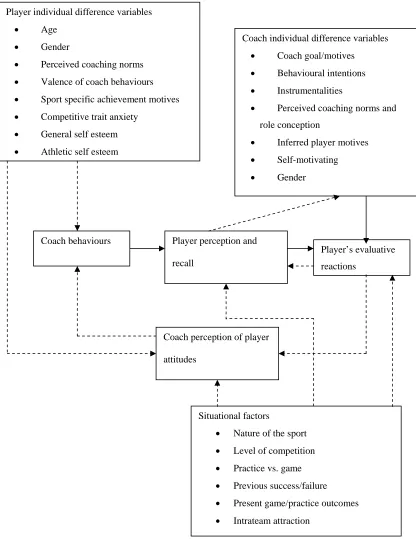
Coach individual difference variables • Coach goal/motives
• Behavioural intentions • Instrumentalities
• Perceived coaching norms and
role conception
• Inferred player motives • Self-motivating • Gender Player individual difference variables
• Age
• Gender
• Perceived coaching norms • Valence of coach behaviours • Sport specific achievement motives • Competitive trait anxiety
• General self esteem • Athletic self esteem
Coach behaviours Player perception and
recall
Player’s evaluative
reactions
Coach perception of player
attitudes
Situational factors
• Nature of the sport • Level of competition • Practice vs. game • Previous success/failure • Present game/practice outcomes • Intrateam attraction
Figure 2.2.
A model of coaching behaviours, their antecedents, and their effects, with
hypothesised relations among situational, cognitive, behavioural, and individual
The model is comprehensive in the evaluation of the coach-athlete interactions and
importantly takes into account the varying situational variables that are inherent in
different sporting contexts. This allows for the unique aspects of certain sports to be
accounted for in the assessment of coaching behaviour.
Much has been written about the MM, however, as Chelladurai and Riemer stated,
the latest version of the model has not been empirically tested. It has only been in recent
years, that researchers, (e.g., Kenow & Williams, (1992; 1999); Williams et al., (2003),
have constructed the Coaching Behaviour Questionnaire (CBQ) to assess components of
Smoll and Smith’s MM. Specifically, Kenow and Williams (1992, 1999) focused on
athletes’ perceptions and evaluative reactions to coaching behaviour components of the
MM, in conjunction with coach-athlete compatibility and anxiety. Kenow and Williams
(1999) found that the CBQ supported Smoll and Smith’s model. In a further test of the
CBQ, Williams et al. conducted a confirmatory factor analysis to test whether the
sub-scales measured the components of the MM. Williams et al. concluded that the subsub-scales
of the CBQ support and expand upon Smoll and Smith’s model. Furthermore, Williams et
al. found that the CBQ supported Smoll and Smith’s argument that “the ultimate effects of
coaching behaviours are mediated by the meaning that players’ attribute to them” (Smoll
& Smith, 1989, p. 1527). There has been limited research using the CBQ and more is
warranted to investigate how effectively the CBQ can measure the components of the
MM.
The Coaching Behaviour Assessment System
Various systematic observational instruments have been designed to analyse the
instruction and learning context provided by youth sport coaches. The most prominent of
Assessment System (CBAS; Smith et al., (1977). The CBAS was designed to examine
the influence of the coach on the psychological development of children through sport
(Abraham & Collins, 1998a, 1998b, 1998c), with a view to providing intervention
recommendations, and to test the behavioural component of the MM. The CBAS was
developed over a number of years through the observation and recording of youth soccer
coaches’ behaviours during practice and game sessions. Smith et al. developed the set of
categories through the content analysis of the behavioural categories from previous
studies. The resulting behavioural categories were then used as the basis for the
observational instrument and applied to basketball, baseball, and American football
coaches. Smith et al. concluded that the results of the scoring system were sufficient to
incorporate a large variety of different coaching behaviours.
The application of the CBAS required observers to be trained and competent in
assessing the different behaviours of the coach. Each independent observer must agree on
how a particular behaviour is to be categorised to ensure reliability. Smith et al. (1977)
developed a training program that was aimed at achieving high inter-rater reliability. The
main purpose was to overcome the individual biases evident when different observers
directly observe the same individual and, consequently to increase the reliability of the
research and the observational instrument.
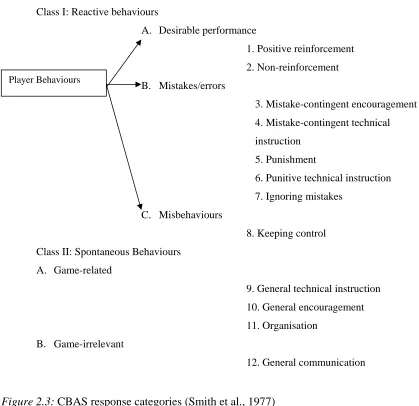
Coaching behaviours in the CBAS are classified categorised into 12 categories,
including eight reactive behaviours and four spontaneous coaching behaviours (see Figure
2.3). Definitions of the 12 categories are presented in Tables 2.1 and 2.2. Smith et al.
(1977) distinguished between the two types of behaviours with reactive behaviours having
an identifiable stimulus and spontaneous behaviours having no identifiable or clear-cut
Class I: Reactive behaviours
A. Desirable performance
1. Positive reinforcement
2. Non-reinforcement
B. Mistakes/errors
3. Mistake-contingent encouragement
4. Mistake-contingent technical
instruction
5. Punishment
6. Punitive technical instruction
7. Ignoring mistakes
C. Misbehaviours
8. Keeping control
Class II: Spontaneous Behaviours
A. Game-related
9. General technical instruction
10. General encouragement
11. Organisation
B. Game-irrelevant
12. General communication