Comparisons of foot to ball interaction in Australian Football in elite males
By James Peacock ID: 3855335
Submitted for the degree of Bachelor of Applied Science (Honours) in Human Movement
Supervisors: Dr. Kevin Ball Dr. Simon Taylor Dr. Hiroyuki Nunome
College of Sport and Exercise Science Victoria University
Abstract
Drop punt kicking is considered the most important skill in Australian Football (AF) and
impact is the most crucial element in performance. Previous research on impact in AF
kicking has used pre and post ball contact data to calculate average foot-ball characteristics
but there has been no evaluation of the phase during impact. Important information has
been found in soccer performing this analysis and importantly some parameters such as
force have been found to be two times average force. The aims of the study were to
evaluate foot and ball velocity during impact and compare impact differences between
distance and accuracy kicks. Eleven elite AF players were fitted with reflective markers on
the kick leg and foot and kicked drop punt kicks with their preferred foot attempting to hit
a 20m target (accuracy) and performing maximal distance kicks. Two-dimensional 4000Hz
video recorded impact and from this footage, shank, foot and ball markers were tracked
using ProAnalyst software. Distance kicks displayed significantly larger foot and ball
velocity, contact distance, average and peak force, work and impulse while accuracy kicks
exhibited larger contact time and greater plantarflexion at the ankle throughout impact.
Foot to ball ratio did not differ between accuracy and distance kicks. The profile of impact
was successfully described where many similarities with soccer kicking existed. It was
suggested that throughout the deformation phase of impact foot is applying force to the
ball while during the reformation phase ball was applying force to the foot. Peak
deformation did not occur at the crossover point of foot and ball velocity as seen in soccer
kicking. Active changes in ankle angle were exhibited as accuracy kicks displayed a
greater range of movement. The results of distance kicking suggested that decreasing ankle
STUDENT DECLARATION
I, James Peacock, declare that the Bachelor of Applied Science (Honours) in Human
Movement thesis titled Comparisons of foot to ball interaction in Australian Football in
elite males is no more than 12,000 words in length including quotes and exclusive of tables, figures, appendices, bibliography, references and footnotes. This thesis contains no
material that has been submitted previously, in whole or in part, for the award of any other
academic degree of diploma. Except where otherwise indicated, this thesis is my own
work.
Acknowledgements
Firstly, I would like to thank all the participants whom contributed toward this study.
I would like to extend a big thank you for the significant contribution of my supervisors,
Dr. Kevin Ball, Dr. Simon Taylor and Dr. Hiroyuki Nunome. Thank you all for your
contribution to the work I have been able to complete this year.
A big shout out to my fellow high speed operator – Chris Ingleton. Thank you for your
assistance in all areas – set up, data collection and analysis. You have made this year
significantly easier.
The research team – Bryce, Lucy, Emma, Luke, Alicija and Ross. Thank you all very
much for your massive contribution in collecting data throughout the year.
A big shout out to Professor Damian Farrow for his contribution and the rest of the team at
ISEAL. You have made my life a lot easier.
Biomechanic laboratory managers – Ketha and Rob, thank you for your contributions
throughout the year.
To my family and close friends - thank you all for your support throughout the year. The
support I have received has been greatly appreciated.
Lastly, a big thank you to my Lord Saviour, Jesus Christ. You have provided all my
Referencing
Table of Contents Table of Contents
Abstract ………....…….………....…………. II
Student declaration ……….………….. III
Acknowledgements ……….………. IV
Referencing ……….………... V
Table of contents ……….. VI
List of Tables ……….………… VIII
List of Figures ……….. IX
1.0 Introduction ……… 1
1.2 Factors influencing impact ………. 2
1.3 Aims ………... 3
2.0 Literature review ……… 4
2.1 Behaviour of the foot throughout impact ………... 4
2.2 Nature of the ball throughout impact ………. 7
3.0 Methods ……… 10
3.1 Participants ………... 10
3.2 Laboratory ……… 10
3.3 Task ……….. 14
3.4 Geometric centre of the ball ………. 15
3.5 Analysis …..………..…… 19
3.6 Statistical analysis …….………... 22
4.0 Results ……….. 24
4.1 The profile of impact ……….………... 24
4.2 Comparisons between distance and accuracy kicking ………. 26
5.2 The profile of impact ………. 34
5.3 Distance and accuracy kicks ………. 38
5.3.1 The nature of the foot ……… 38
5.3.2 The nature of the ball ……… 45
5.4 General discussion ……… 49
6.0 Conclusion ……… 52
7.0 References ……….……… 54
A.1 Appendix A: Smoothing ………..…….…… 57
A.2 Appendix B: Confidence intervals ……… 71
A.3 Appendix C: Information to participants ………..…… 73
List of tables
Table 3.1. Parameters of foot and ball impact characteristics ……… 21
Table 4.1. Results of chosen parameters between accuracy and distance kicks along with
statistical analysis. ……….. 27
Table 5.1. Summary of previous literature on key parameters between AF, rugby league
List of Figures
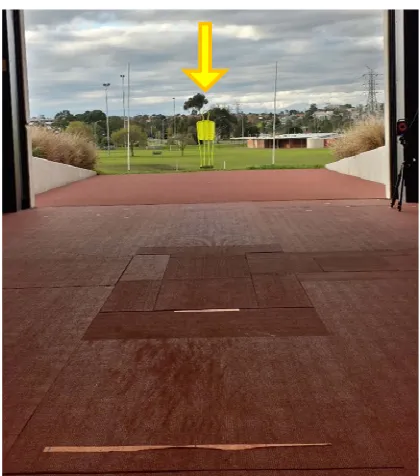
Figure 3.1. Vision of the target 20m away from the kicking area………..11
Figure 3.2. Half dome reflective markers placed on the balls………... 12
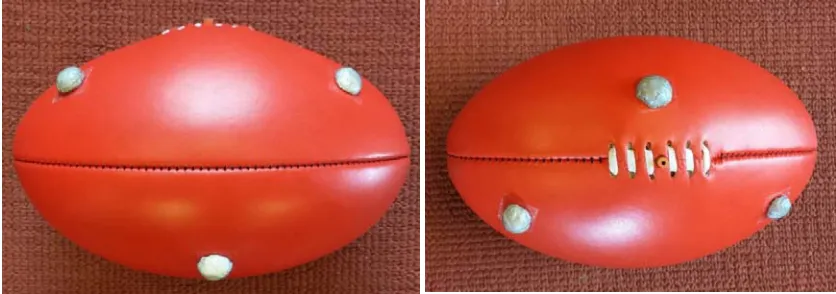
Figure 3.3. Location of reflective markers on the kicking limb in the sagittal plane and in the frontal plane………. 13
Figure 3.4. Example images showing slight rotation of the ball about it’s longitudinal axis……… 16
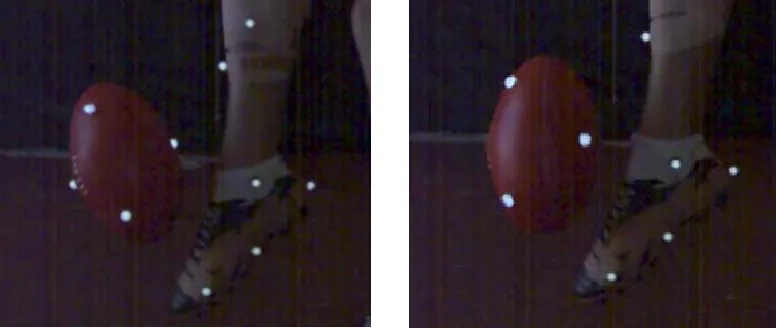
Figure 3.5. The position of GCB can be calculated from two known points……… 17
Figure 3.6. Three separate relationships were used to reduce errors………. 18
Figure 4.1. Impact profile of distance kicks ………. 24
Figure 4.2. Foot velocity ………... 28
Figure 4.3. Change in ankle angle ……… 29
Figure 4.4. Ball reaction force ……….. 29
Figure 4.5. Ball velocity ………... 30
Figure 5.1. Ankle angle throughout the duration of impact ………. 43
1.0 Introduction
Drop punt kicking is the most important skill in Australian Football (AF) and is used to
move the ball efficiently around the field. Kicks are targeted to reach a desired distance
and/ or direction to enable players to score maximal points and for team members to mark
the ball. The motion of kicking is considered to be sequential where movement starts at the
support leg and moves through to the foot of the kicking limb where foot and ball make
contact during the swinging phase. After impact ceases the flight path of the ball can no
longer be altered which is why impact is considered the most important phase of the
kicking motion.
Previous research looking at AF kicking has used pre and post ball contact data where
analysis has been limited to calculating average foot-ball characteristics. It is not known
what occurs during the impact phase of AF kicking however analysis of rugby league
(Ball, Ingleton, Peacock, & Nunome, 2013) and soccer (Shinkai, Nunome, Isokawa, &
Ikegami, 2009) kicking throughout foot-ball contact has discovered that important impact
characteristics were severely underestimated once compared to average values. A tri-axial
motion of the foot has been found to occur in soccer kicking (Shinkai et al., 2009), while
other key parameters such as peak force to be approximately two times average force (Ball
et al., 2013).
Kicks are targeted to reach a desired distance and/ or direction from its origin. The
speed-accuracy trade off states that when the speed-accuracy of a task is increased, the ability to
maintain speed decreases and vice-versa. This principle questions whether impact factors
differ when either distance or accuracy is amplified. All previous research focusing on
impact in AF kicking used a pre/post-ball contact data where comparisons were made
kicking (Smith, Ball, & MacMahon, 2009) and junior to senior kicking (Ball, Smith, &
MacMahon, 2010). No previous research has specifically compared distance and accuracy
kicking.
1.2 Factors influencing impact
It is during impact that the ball changes direction and magnitude of the velocity vector to
reach the target which is a specified distance and direction from the kicker. Previous
research in AF kicking has found that foot speed prior to impact correlates highly with ball
speed after impact (r = 0.68) (Ball, 2008a). However, the author reported that other
variances for distance kicking existed that were not calculated and suggested that impact or
ball flight characteristics could be of importance.
The transfer of energy/ momentum from foot to ball is largely dictated by the velocity of
the foot prior to impact however impact factors also influence the nature of impact and
have found to differ among kicking types. Correlations between junior (r = 0.57) and
senior (r = 0.79) AF kickers between foot and ball speed have differed where Ball et al.,
(2010) suggested that impact factors could explain this difference. Impact factors describe
the way the foot applies the magnitude and direction of the force vector to the ball
throughout the duration of impact. Key factors of impact are ball orientation, position of
ball on foot, behaviour of the foot due to impact with the ball and work done on the ball
(Ball et al., 2010). This can be simplified into two separate categories: behaviour of the
1.3 Aims
The aims of the present study are;
- Compare impact characteristics of drop punt kicking between accuracy and distance
kicking using elite male AF players.
2.0 Literature review
2.1 Behaviour of the foot throughout impact
Foot and ball velocity
Previous research on impact in AF kicking has found differences in foot and ball velocity
between specific kicking types. Ball (2008b) reported significant differences in change in
ball velocity between 30m (22.1m/s) and 50m (25.0m/s) accuracy kicks in elite AF
players. Smith et al., (2009) reported significant differences in foot (26.5m/s to 22.6m/s)
and ball (32.6m/s to 27.0m/s) velocity for maximal distance kicks between preferred and
non-preferred kicking limbs, respectively. Significant differences in maximal distance
kicks between senior (26.5m/s and 32.6m/s) and junior (21.3m/s and 24.7m/s) kickers
were reported in foot and ball velocity, respectively (Ball et al., 2010).
Velocity of the foot and ball throughout the duration of impact has been previously
documented in rugby league and soccer kicking (Ball et al., 2013; Shinkai et al., 2009;
Tsaousidis & Zatsiorsky, 1996). Shinkai et al., (2009) split impact into four separate
phases and suggested that approximately three fourths of impact duration was required to
accelerate the ball. Throughout phase 1, deformation of the ball mostly occurred as the
centre of gravity of the ball accelerated. Phase 2 saw a rapid acceleration of the ball and
deceleration of the foot and lasted until foot and ball velocity were equal in magnitude
where peak deformation of the ball occurred. Phase 3 is the beginning of the reformation
phase of impact where the velocity of the ball continued to accelerate. As the acceleration
Change in ankle angle
It has been hypothesized that foot motion throughout impact is most likely associated with
the relative contact point along the foot (Shinkai et al., 2009). Using three-dimensional
high speed video recording at 5000Hz, it was reported the foot underwent a tri-axial
motion that included plantar/dorsal-flexing, abduction/ adduction and inversion/ eversion
movements. It was hypothesised that the corresponding movements of the ankle were a
result of the force vector applied to a relative point about the centre of gravity of the foot.
This association was identified after the foot exhibited abduction and eversion throughout
the duration of impact where it was suggested that the force vector transferred diagonally
through the medial side of the foot. The results of Tol, Slim, van Soest, & van Dijk, (2002)
reported the anteromedial side of the foot was most frequently used as the point of contact
in instep kicking and was used as supporting evidence by Shinkai et al., (2009). As a
result, it was hypothesised that contact occurring on the proximal side of the centre of
gravity of the foot (CGF), dorsal-flexing motion occurs. Impact applied on the distal side
of the CGF generates plantar-flexing motion. The profile of ankle motion throughout
impact in soccer kicking displayed dorsi-flexing movement until approximately one fourth
of impact before plantar-flexing movements occurred where it was suggested that as
deformation increased, the point of contact moved distally across the CGF (Shinkai et al.,
2009).
It is believed that improving the rigidity of the kicking limb in impact is beneficial for
performance as a means of increasing effective mass. Using the conservation of
momentum which is proven to be a method of only approximating impact characteristics,
Shinkai, Nunome, Suito, Inoue, & Ikegami, (2013) reported the mass of shod foot to be
research focusing on impact in AF kicking has reported the foot to plantar-flex throughout
the duration of impact where significant differences were reported between senior and
junior kickers (Ball et al., 2010). It was reported that senior kickers plantar-flexed 4° while
junior kickers plantar-flexed 6° and the author suggested differences between senior and
junior kickers were due to lower strength and suggested that improvements of strength
might lead to improved performance in distance kicks. Similar findings have been reported
in soccer kicking (Asami & Nolte, 1983; Sterzing & Hennig, 2008) however this was
questioned after (Nunome, Lake, Georgakis, & Stergioulas, 2006) reported that one
participant who displayed the largest foot velocity also produced the greatest change in
2.2 Nature of the ball throughout impact
Work
Significant differences in work have been reported in studies focusing on impact in AF
kicking. Ball, (2008b) compared 50m (271J) to 30m (198J) accuracy kicks where a
significant-medium effect (d = 1.15) was found. Comparisons between preferred (225J)
and non-preferred (156J) distance kicks differed significantly with large effect (d = 1.53)
(Smith et al., 2009). Ball et al., (2010) reported significant differences existed between
senior (225J) and junior (136J) with a large effect (d = 2.5) for distance kicking.
Contact distance and contact time
Significant differences have been reported in studies focusing on impact in AF kicking in
contact distance and unclear results exist for contact time. Contact distance differed
significantly between 50m (0.24m) and 30m (0.19m) accuracy kicks with a small effect
size (d = 0.046) where it was also reported contact time did not differ significantly (50m =
10.0ms, 30m = 9.8ms) (Ball, 2008b). Comparisons between preferred and non-preferred
distance kicking exhibited significant differences in contact distance that were large in
effect (d = 1.50) with preferred kicking limbs producing 0.22m and non-preferred 0.19m
(Smith et al., 2009). Contact time (preferred = 11.53ms, non-preferred = 12.05ms) differed
insignificantly after Bonferroni adjustment, with a medium effect (d = 0.37). Ball et al.,
(2010) reported significant differences in contact distance comparing distance kicking data
from Smith et al., (2009) to junior kickers (senior = 0.22m, junior = 0.20m) with a large
effect size (d = 1.0). A small non-significant effect was reported between senior (11.06ms)
Force and deformation
Previous studies focusing on impact in instep soccer kicking reported that peak force could
be estimated assuming the force curve throughout impact is of a half-sine wave (Tol et al.,
2002). To estimate peak force, the authors multiplied average force (1025N) by π/2 which
equated to 1710N. However, this method has assumed that peak force occurs at the
midpoint of impact. Force and deformation are linked in that deformation increases as the
force per cross sectional area applied to the ball increases. Other studies focusing on
impact have found peak deformation to occur prior to the midpoint of impact (Shinkai et
al., 2009; Tsaousidis & Zatsiorsky, 1996). Shinkai et al., (2009) reported peak force to be
greater than two-times average force and while it was not measured, suggested that peak
force occurred at the point of maximal deformation. This indicates that the force curve in
soccer kicking is not of a half-sine wave however, peak force is likely to occur at the point
of maximal deformation.
Classical impact (conservation of momentum)
Impact between foot and ball was thought to be described by the classical impact theory
however research has found that muscles provide work throughout the duration of impact.
The conservation of momentum was used to estimate the effective mass in junior to senior
soccer kicking and calculate differences between soccer and American football
(Plagenhoef, 1971; Shinkai et al., 2013). However, classical impact theories incorporate
assumptions that are not entirely representative of the true nature of the mechanics
involved in the impact. Tsaousidis & Zatsiorsky, (1996) argued the conservation of
momentum was inadequate to calculate impact characteristics due to muscle work
completed during impact. Therefore, foot to ball impact characteristics derived from
Foot to ball speed ratio
Foot-to-ball speed ratio has been suggested to be a valid measurement of ball impact
efficiency. Research focusing on the maturation process of soccer kicking from junior to
senior via cross-sectional method stated that foot-to-ball speed ratio is a measure of impact
efficiency (Shinkai et al., 2013). Foot-to-ball speed ratio has been used to distinguish
impact differences between kicking groups in AF. Comparing senior to junior kickers, Ball
et al., (2010) recorded average impact characteristics via pre/ post-impact data collection at
6000Hz in two-dimensions. The author reported a non-significant medium effect between
senior (1.23) and junior (1.16) kickers for distance kicking. Comparisons between
preferred (1.23) and non-preferred (1.20) distance kicking limbs using the same methods
produced a medium effect that was non-significant (Smith et al., 2009).
3.0 Methods
3.1 Participants
Thirteen participants who were currently playing in, or had recently (within the last 2
years) retired from AFL level participated in this study (average age = 26.8 years old, SD
= 6.8). Of the recent retirees, all were still currently involved in training and playing games
at club level. Prior to starting, participants completed informed consent forms that were
approved by the University Human Research Ethics Committee (VUHREC). Participants
wore shorts and football boots they frequently used in games/ training.
3.2 Laboratory
Two systems were used to capture the kinematic data; two-dimensional high speed video
(HSV) and three-dimensional (3-d) motion capture (VICON). A kicking area was marked
on the floor to aid in the reliability of the athlete kicking in a capture volume for optimal
measurement accuracy. The HSV camera captured the foot-to-ball impact kinematics with
a sampling rate of 4000Hz. The 3-d motion capture volume was optimised to include toe
off of the kicking swing phase and heel contact of the follow through phase. Positioned
20m to the front of the kicking area was a kicking target that simulated kicking toward a
The HSV camera that was used for the study was a Photron Fastcam SA3 (Photron, San
Diego, CA, USA, Inc.). Two-dimensional kinematic data was recorded in the sagittal plane
(i.e. camera positioned lateral to the kicking leg). From this data, foot and ball impact
characteristics were calculated. A calibration frame was used to reconstruct the kicking
area into 2-d metric coordinates. Three calibration files were used to accommodate for the
player kicking at different depths in the camera field of view to reduce out of plane errors.
Similar to past studies looking at impact characteristics in AF kicking, ball contact was
visually identified (Ball, 2008; Smith, Ball, & MacMahon, 2009). Recording data at
4000Hz typically captures approximately 40 data points during the impact phase of the
kick. This data provided the input variables for deriving the force and velocity profiles
throughout this impact phase. These profiles were then compared to previous studies (Ball,
2008; Nunome, Lake, Georgakis, & Stergioulas, 2006; Shinkai, Nunome, Isokawa, &
Ikegami, 2009; Smith et al., 2009).
The kicking volume was reconstructed into three-dimensional space from ten VICON
T-40s cameras (Oxford Metrics Group Plc [OMG], Oxford, UK) with a sampling frequency
of 500Hz. The cameras were positioned around the kicking area, run up area and follow
through area. The 3-d motion capture system was used to calculate the geometric centre of
ball at the instant of ball contact (see methods section 3.4).
Four half dome markers were attached on the ball, where three markers faced towards the
lateral side of the kicking limb, and the single marker on the opposing side (Figure 3.2). A
Sherrin ‘Match Ball’ (Russell Corporation Australia, Scoresby, Australia) was used for
testing as this ball is currently used in the AFL. Due to impact characteristics of AF
Kicking, markers can be forced to detach from the ball. Therefore, prior to being placed on
balls, the marker positions were carefully measured, marked with permanent ink and
attached securely. In the case where a marker was forced to detach during a kick, it could
be re-placed in the same position. Marker positions were designed where the average
coordinates (X and Y) of the three lateral side markers represents the centre of the ball in
two dimensional data. The three-dimensional motion capture system can calculate the
geometric centre of the ball based on static captures.
Reflective markers (14mm, B&L Engineering, Santa Ana, USA) were secured to body
landmarks on the preferred kicking limb. Key limbs were the shank and foot (Figure 3.3).
A cluster of three markers attached to a rigid body were placed on the midpoint of the
shank following the tibia. Three individual markers were placed on the foot where the
average of the three markers represent the centre of the foot. Individual locations of
markers placed on the foot were the posterior calcaneus, head of the 5th metatarsal and
base of the 5th metatarsal.
Figure 3.3. Location of reflective markers on the kicking limb in the sagittal plane (left image) and in the frontal plane (right image). The majority of markers are placed on the preferred kicking limb.
Shank cluster Posterior
calcaneus
Base of 5th metatarsal
3.3 Task
Participants completed a standardised warm-up that included jogging, flexibility exercises
(e.g. dynamic stretching) and kicking. Following warm-up participants completed a
familiarisation of the testing area by completing a minimum of 10 kicks prior to the
commencement of testing.
There were two kicking conditions prescribed. Players completed two trials under each
kicking condition;
Condition 1: Accuracy kick
For accuracy kicks, an adaptation of the ‘Buckley kicking test’ was used. The ‘Buckley
kicking test’ has been used at draft camps for the AFL and is a tool used to assess the
ability of kicking skill. The adaptation of the ‘Buckley kicking test’ involved participants
completing only the 20m kick with the preferred leg from the test. Participants started by
facing the opposing direction of the target, they were required to run toward a cone 2m
away from the kicking target, turn 180 degrees and then run 3m towards the kicking target
and kick.
Condition 2: Maximal distance kick
3.4 Geometric centre of ball
A unique algorithm was used to combine 3-d with HSV data to calculate the geometric
centre of the ball throughout the duration of impact. Previous studies focusing on the
impact phase of kicking estimated the true nature of ball throughout the duration of impact
by two methods: i) tracking the edge of the ball from which the geometric centre of the
ball can be calculated (Tsaousidis & Zatsiorsky, 1996), or ii) using algorithms to
incorporate the amount of deformation to estimate the centre of gravity of the ball (Shinkai
et al., 2009). In the present study, the 3-d motion capture system calculated the geometric
centre of ball (GCB) using all four markers on the ball, where the 2-d HSV system
estimates the GCB using the three markers on the lateral side of the ball. However, due to
the nature of AF kicking the ball is dropped from the participants’ hand before foot-to-ball
contact where the ball can rotate slightly about its longitudinal axis. When this occurred,
the estimated ball centre derived from the 2-d sagittal plane coordinates of the three ball
markers did not accurately represent the GCB (Figure 3.4). To overcome this, a
relationship combining the 3-d ball-marker position with the HSV data was used. This
enabled the position of the GCB to be given in the coordinate system of the HSV data (i.e.
relative to the physical ball markers in the HSV data) and to allow for the GCB to be
calculated throughout the duration of impact. The true nature of the GCB was accurately
A three-step process was required to calculate the GCB coordinates within the HSV data
that involved creating a relationship with the 3-d motion capture data and transferring it to
the HSV data.
1. Firstly, at the instance before ball contact the GCB was represented as a 3-d ‘virtual
marker’ that was derived from the 3-d coordinates of the four ‘tracking markers’
attached to the ball.
2. Secondly, using these five coordinates two relationships (to generate X and Y
values) (equations 3.3.1 and 3.3.2) that included two physical markers (that were
used in both 3-d and HSV systems) and the virtual GCB marker were made.
3 1 2 / (3.3.1)
3 1 2 / (3.3.2)
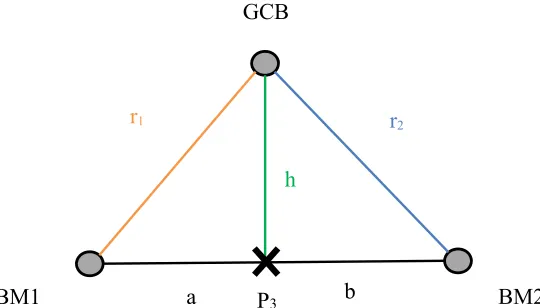
This was possible by using the ‘intersection of two circles’ (Bourke, 1997) (Figure
3.5). The relationships included multiple fixed-distance variables (equations 3.3.3-
3.3.8) that were calculated within the 3-d data.
/ (3.3.3)
2 ∗
⁄ (3.3.4)
(3.3.5)
(3.3.6)
(3.3.7)
(3.3.8)
The ‘intersection of two circles’ originated from geometry where they were used to
calculate the intersection of two overlapping circles. Circles that overlap have two
intersections, where the ‘±’ sign was used to distinguish between each intersection.
As a result, the relationships generated in the present study were double-checked
within the 3-d data to ensure that the correct intersection was used.
3. Thirdly, the two relationships were applied to the respective markers in the HSV
data where the GCB was calculated in the HSV coordinate system.
Figure 3.5. The position of GCB can be calculated from two known points. The position of ball marker 1 (BM1) and ball marker 2 (BM2) were used as reference points to the GCB.
r1 r2
h
a b
BM1 BM2
GCB
This process was repeated three times, to ensure all three reflective markers HSV were
utilised evenly when calculating ball parameters. This process of generating six
relationships in total (2 coordinates x 3 different relationships) reduced the total amount of
maximal error by one-third by averaging the relationships. Figure 3.6 represents a visual
interpretation of the design of the three relationships.
3.5 Analysis
All reflective markers collected from HSV were digitised into 2-d position coordinates
using ProAnalyst software (Xcitex Inc., Cambridge, Massachusetts, USA). Each video trial
was cut into smaller time periods from 5 frames (i.e. 5 x 4000Hz) prior to ball contact to 5
frames after contact. This time period was selected because it enabled an appropriate
method to standardise the smoothing process. After all reflective markers were transposed
into 2-d coordinates, the data was exported into Visual3D biomechanical analysis software
(C-Motion, Inc., Germantown, USA).
Visual3D software was used to process and analyse data:
1. Data Processing (Smoothing/Filtering)
2-d data from HSV were smoothed using a Butterworth digital filter, with a cut-off
frequency of 280Hz. The decision of the cut-off frequency was based on four criteria: 1)
residual analysis (Winter, 2009; Yu, Gabriel, Noble, & An, 1999); 2) the change in
parameter values using different cut-off’s; 3) a visual inspection of data transformation;
found that an optimal range was between 170-260Hz. The influence of different cutoff
frequencies on chosen parameters derived an optimal range between 240-280Hz. Visual
inspection showed that noise was evident when selected cut-off frequencies were below
240, and for frequencies above 300Hz important features of the true signal was being
removed. Previous literature has used a range of 200-350Hz. Further details on the
rationale behind the selection of the cut-off frequency can be found in appendix B.
2. Parameterisation (Data Analysis):
Processed (filtered) data was used for obtaining variables associated with foot and ball
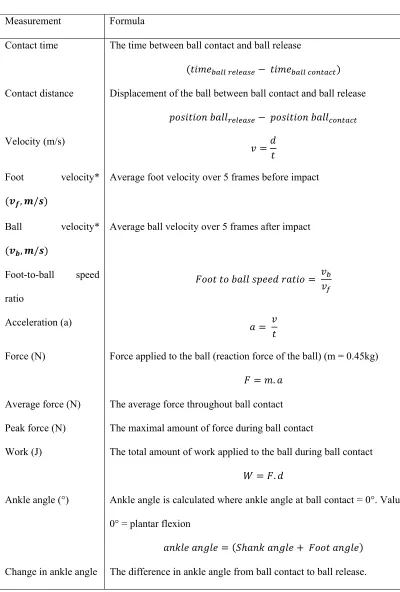
Table 3.1. Parameters of foot and ball impact characteristics
Measurement Formula
Contact time The time between ball contact and ball release
Contact distance Displacement of the ball between ball contact and ball release
Velocity (m/s)
Foot velocity*
, /
Average foot velocity over 5 frames before impact
Ball velocity*
, /
Average ball velocity over 5 frames after impact
Foot-to-ball speed
ratio
Acceleration (a)
Force (N) Force applied to the ball (reaction force of the ball) (m = 0.45kg)
.
Average force (N) The average force throughout ball contact
Peak force (N) The maximal amount of force during ball contact
Work (J) The total amount of work applied to the ball during ball contact
.
Ankle angle (°) Ankle angle is calculated where ankle angle at ball contact = 0°. Values >
0° = plantar flexion
Change in ankle angle The difference in ankle angle from ball contact to ball release.
3.6 Statistical analysis
The parameters derived from distance and accuracy kicks were exported to Microsoft
Excel (Microsoft Corporation, Redmond, WA, USA) where a three-step statistical analysis
was conducted.
1. Independent and dependent variables
Independent variables: accuracy and distance kicks.
Dependent variables: there are two types of dependent variables; discrete and
continuous variables. Discrete variables that are a singular value and continuous
variables that are plotted against time throughout the duration of impact.
Discrete variables: contact time, contact distance, foot velocity, ball velocity, foot
to ball speed ratio, change in ankle angle, force (peak), force (average), work and
impulse.
Continuous variables: Foot velocity, ball velocity, force and change in ankle angle.
2. Hypotheses
Aim 1: to compare impact characteristics between distance and accuracy kicks
Null – hypothesis: No significant differences existed between accuracy and
distance kicks
Alternative hypothesis: Significant difference existed between accuracy and
distance kicks
Aim 2: to describe the profile of impact in AF kicking
3. Statistical design Aim 1:
Discrete variables: repeated-measures t-tests with a significance level of 0.05 were
performed using 1-tail tests. The choice of 1-tail tests were based on comparisons
found in contact distance, change in ball velocity and work (Ball, 2008). The
current study was expected to generate larger differences between the kicking
conditions due to a greater difference in kick distance (20m and maximal kicks
which are estimated to be approximately 60-70m). Therefore based on this prior
data, the choice of 1-tailed is considered more appropriate (df = 10, p < 0.05, effect size (d) = large > 0.8, medium > 0.5 and small > 0.2, Cohen, (1988)).
Continuous variables: All trials were normalised from 0 – 100% of ball contact to
remove the influence of inter-trial and inter-subject differences in contact time.
Data were split into four phases of impact following the criteria of previous impact
analysis of soccer kicking (Shinkai et al., 2009) to allow statistical analysis to be
conducted in each phase. Null-hypothesis testing was completing by graphing
1-tailed 95% confidence intervals (Welkowitz, Cohen, & Lea, 2012) (see appendix
C).
Aim 2:
Using distance kicks, the profile of impact (foot velocity, force and ball velocity)
was qualitatively and quantitatively described where no statistical analysis was
conducted as only 1 independent variable existed.
4.0 Results
4.1 The profile of impact
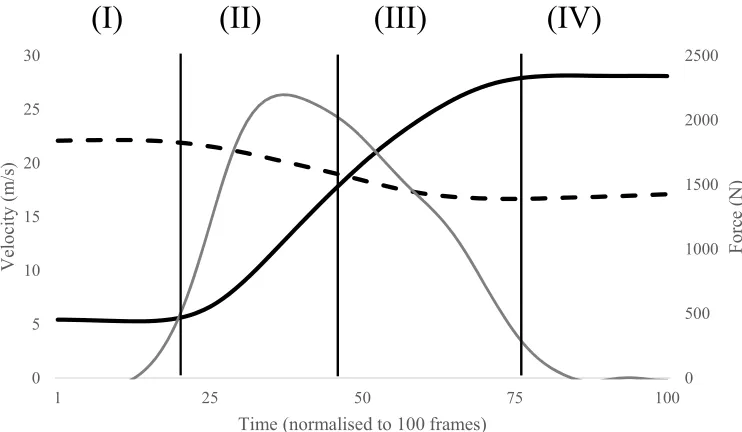
Accuracy and distance kicks displayed similar impact profiles and were split into four
different phases to ease running statistical comparisons. The impact profile of distance
kicks (figure 4.1) will be qualitatively described. Four phases of the foot-to-ball impact
phase was determined based upon several key events: phase 1 was defined when foot and
ball make contact; phase 2 begins with the increase in ball velocity; phase 3 begins when
foot and ball velocity were equal; phase 4 begins when foot and ball velocity start to
plateau. This is the final phase of contact that runs until foot and ball contact ceases.
During phase 1 of impact, ball and foot make contact where velocity of the foot decreases
and velocity of the ball increases due to force applied to the ball. Throughout phase 1
visual inspection showed the ball was mostly deforming. In phase 2 ball velocity rises at a
uniform rate and is preceded by the rise in ball reaction force which reaches a maximum
0 500 1000 1500 2000 2500 0 5 10 15 20 25 30
1 25 50 75 100
Fo rc e (N ) V el oci ty ( m /s)
Time (normalised to 100 frames)
Figure 4.1.Ball velocity (solid black line), foot velocity (dashed black line) and force (grey line, secondary axis) of distance kicks.
peak force prior to the end of phase 2. Phase 3 begins as foot and ball velocity are equal.
As this phase proceeds, the force reduces and there is a decline in the positive acceleration
of the ball. As ball reaction forces continue to decline, the velocity of the foot and ball
begin to plateau. This marks the beginning of phase 4. Throughout phase 4 the velocity of
4.2 Comparisons between distance and accuracy kicks
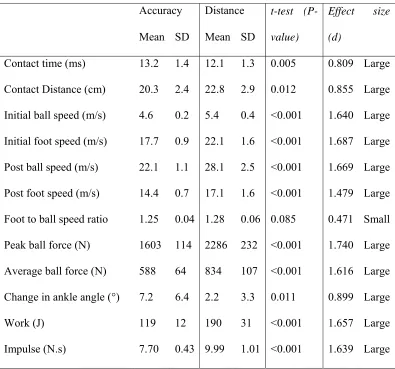
Table 4.1 indicates the results of chosen biomechanical parameters of the impact phase,
including statistical analysis. Almost all biomechanical parameters showed statistical
significance when comparing between distance and accuracy kicks. Distance kicks were
characterised by significantly larger contact distances, foot and ball speeds (both before
and after ball contact), ball reaction forces, work and impulse compared to accuracy kicks.
Conversely, accuracy kicks were characterised by significantly larger contact times and
change in ankle angle during impact. Effect sizes were high for significant relationships.
While distance kicks produced a larger foot to ball speed ratio with a small effect, this was
Table 4.1. Results of chosen parameters between accuracy and distance kicks along with statistical analysis.
Accuracy Distance t-test
(P-value)
Effect size (d)
Mean SD Mean SD
Contact time (ms) 13.2 1.4 12.1 1.3 0.005 0.809 Large
Contact Distance (cm) 20.3 2.4 22.8 2.9 0.012 0.855 Large
Initial ball speed (m/s) 4.6 0.2 5.4 0.4 <0.001 1.640 Large
Initial foot speed (m/s) 17.7 0.9 22.1 1.6 <0.001 1.687 Large
Post ball speed (m/s) 22.1 1.1 28.1 2.5 <0.001 1.669 Large
Post foot speed (m/s) 14.4 0.7 17.1 1.6 <0.001 1.479 Large
Foot to ball speed ratio 1.25 0.04 1.28 0.06 0.085 0.471 Small
Peak ball force (N) 1603 114 2286 232 <0.001 1.740 Large
Average ball force (N) 588 64 834 107 <0.001 1.616 Large
Change in ankle angle (°) 7.2 6.4 2.2 3.3 0.011 0.899 Large
Work (J) 119 12 190 31 <0.001 1.657 Large
Impulse (N.s) 7.70 0.43 9.99 1.01 <0.001 1.639 Large
Effect size: d < 0.2 = none, d < 0.5 = small, d < 0.8 = medium and d > 0.8 = large
Figure 4.2 represents the velocity of the foot for distance and accuracy kicks. A
statistically significant difference occurred during the entire duration of impact with
Figure 4.3 represents the change in ankle angle throughout ball contact. Similar patterns
were exhibited (dorsi-flexing then plantar-flexing) however magnitude and timing differed
between kicking types. A significant difference occurred immediately as distance kicks
displayed initial dorsi-flexing motion and at 53% of contact duration the ankle moved into
a state of plantarflexion relative to ankle angle at ball contact. Accuracy kicks were in a
phase of dorsiflexion for 23% of impact before entering plantarflexion until contact
ceased.
10 12 14 16 18 20 22 24
1 25 50 75 100
V
elo
ci
ty (m/s)
Time (normalised to 100 frames)
Figure 4.2.Foot velocity. Foot velocity of distance (solid black line) and accuracy kicks (dashed line). 95% confidence intervals (solid grey line) represent a significant statistical difference when the distance kick exceeds this value.
Figure 4.4 shows ball reaction force throughout. Throughout phases 2 and 3 a significant
difference occurred with distance kicks producing high force values. Peak force occurred
midway through phase 2 for both accuracy and distance kicks. Visual inspection of the
curves showed no difference in the shape between accuracy and distance kicks where the
magnitude was scaled up. ‐2 ‐1 0 1 2 3 4 5 6 7 8
1 25 50 75 100
Cha nge in a nkle a ng le (+ ve pla nta r fl exi on, -ve dorsi fl exi on)
Time (normalised to 100 frames)
Figure 4.3.Change in ankle angle. Distance (solid black line) and accuracy (dashed black line) represent the change in ankle angle. Positive values represent plantar flexion while negative values represent dorsi flexion. 95% confidence intervals (grey line) represent a significant statistical difference.
(I) (II) (III) (IV)
0 500 1000 1500 2000 2500
1 25 50 75 100
F
orce
(N)
Time (normalised to 100 frames)
Figure 4.4.Ball reaction force between distance kicks (solid line) and accuracy kicks dashed line). There is a significant statistical difference between the two when the distance kick data exceeds the 95% confident interval (grey line).
Figure 4.5 represents the velocity of the ball throughout impact. Velocity for distance and
accuracy kicks increased throughout phases 2 and 3 of impact. Midway through phase 2
through to the remainder of impact a significant difference occurred with distance kicks
producing larger values then accuracy kicks.
0 5 10 15 20 25 30
1 25 50 75 100
Ve
lo
city
(
m
/s
)
Time (normalised to 100 frames)
Figure 4.5.Ball velocity. Distance (solid black line) and accuracy kicks (dashed black line). 95% confidence interval (grey line) is achieved when the solid black line exceeds this value and a significant statistical difference occurs.
5.0 Discussion
5.1 Comparisons with previous literature
Comparisons with previous literature show values recorded for the present study are
mostly similar. Table 5.1 summarises the previous literature with the current study on
chosen parameters. Contact distance, foot speed, ball speed, foot to ball speed ratio,
change in ankle angle and peak force all lay within a range of previous data that has
focused on ball impact characteristics or kinematic analysis of AF, rugby league and
soccer kicking.
Contact time is slightly larger than previous AF literature but lays within a range reported
for soccer kicking. The present study reported values of 12.1ms for distance and 13.2ms
for accuracy kicks that were larger than the previous 9.8 - 11.53ms reported for AF (Ball,
2008b; Ball, Smith, & MacMahon, 2010; Smith, Ball, & MacMahon, 2009) and 7.2 -
10.9ms for rugby league (Ball, 2010; Ball, Ingleton, Peacock, & Nunome, 2013). The
present study did lye within the range of 9-16ms for soccer kicking (Asai, Carré, Akatsuka,
& Haake, 2002; Shinkai, Nunome, Isokawa, & Ikegami, 2009; Tol, Slim, van Soest, & van
Dijk, 2002; Tsaousidis & Zatsiorsky, 1996).
Results of distance kicking in the present study compared to previous AF research appear
to produce lower work, impulse and average force. However, foot and ball speed were in
an acceptable range that included data before and after impact indicating the nature of
impact is accurate. Work in the current study was lower than the values reported for AF
(Ball, 2008b; Smith et al., 2009) and rugby league (Ball, 2010), but was higher than the
reported values for junior kickers in AF (Ball et al., 2010) and soccer kicking (Tsaousidis
league (Ball et al., 2013)) and soccer kicking (Shinkai et al., 2009; Tol et al., 2002;
Tsaousidis & Zatsiorsky, 1996). Impulse for distance and accuracy is slightly lower than
the previous values in soccer kicking that involved amateur participants completing
penalty kicks using the instep style of kick (Asai et al., 2002; Tol et al., 2002). While the
difference between distance kicks in the present study to the previous literature is
approximately 1Ns, the present study involved elite players compared to amateurs in the
previous studies. Elite players are expected to produce significantly larger values. As foot
and ball speed are within an acceptable range compared to previous data, the discrepancies
found in average force, work and impulse in the present study to past literature were not
errors. The differences between distance and accuracy kicks across these parameters
exhibited greater values in distance kicks which is in accordance with a logical
Table 5.1. Summary of previous literature on key parameters between AF, rugby league and soccer kicking. All kicks were completed on
preferred limb unless otherwise noted.
Tas k Subj ects Contact ti me (ms ) Contact dista nce (c m) Fo ot sp ee d (m/s ) Ball speed (m /s ) Fo ot t
o ball sp
eed rati o Cha nge in an kle a ngl e (° ) For ce ( pe ak ) (N) Fo rc e (a vg ) (N ) Work ( J) Impuls e (N s)
Present study Distance Elite 12.1 22.8 22.1 28.1 1.28 2.2 2286 834 190 9.99
Present study Accuracy Elite 13.2 20.3 17.7 22.1 1.25 7.2 1603 588 119 7.70
AF – drop punt kick
(Ball, 2008b) 50m Elite 10.0 24 1129* 271
(Ball, 2008b) 30m Elite 9.8 19 1042* 198
(Smith et al., 2009) Distance Elite 11.53 22 26.5 32.6 1.23 4 1023* 225
Distance (non-pref.) Elite 12.05 19 22.6 27.0 1.20 822* 156
(Ball et al., 2010) Distance Jnr 11.06 20 21.3 24.7 1.16 6 679* 136
(Ball, 2011b) 45m Elite 19.0
(Ball, 2011a) 45m Elite 18.8
(Ball, 2008a) Distance Elite 26.4
Rugby league – drop punt kick
(Ball, 2010) 45m Elite 7.2 20 20.0 25.8 1.30 1450* 290
Grubber Elite 8.8 12 11.0 13.7 1.27 567* 68
(Ball et al., 2013) Distance Elite 10.9 18 21.3 27.8 1.31 2062 1045
Soccer kicking – instep kick (unless otherwise noted)
(Shinkai et al., 2009) Distance Elite 9 20.5 29.3 1.43 7.1 2926 1403
(Tol et al., 2002) Penalty Amateur 10.7 24.6 1025 11.0
(Tsaousidis & Zatsiorsky, 1996) Toe kick - distance Amateur 16 26 20 25 1150 130
(Asai et al., 2002) Penalty Amateur 9.12 14.7 23.1 25.4 11.1
5.2 The profile of impact
The profile of impact in AF kicking shows many similarities to previous research in soccer
kicking. The closest comparisons could made via ball reaction force and foot and ball
velocity to Shinkai et al., (2009) described impact using deformation and foot and ball
velocity. The four-phase description of impact in soccer was also applicable for punt
kicking in AF (Shinkai et al., 2009). The profile of distance kicks in AF showed many
similarities with previous profiles of soccer kicking. The largest difference was initial
velocity of the ball where a stationary ball was used in soccer kicking. However, from this
point initial impact displayed similar results between AF and soccer kicking with a delay
in the face of the ball moving as deformation increased throughout the first phase of
impact (Shinkai et al., 2009; Tsaousidis & Zatsiorsky, 1996).
Effective contact time is approximately only three fourths as opposed to the entire duration
of contact. The profile of impact in AF kicking shows little interaction in the fourth phase
where support is provided for Shinkai et al., (2009) whom stated that the effectual duration
to accelerate the ball is approximately three fourths of impact duration. It is during phases
1 and 2 of impact where it can be suggested that the foot is applying force to the ball
compared to the ball applying force during phase 3 of impact. Little interaction occurs in
the final phase. As suggested by Shinkai et al., (2009), the effectual duration to accelerate
the ball was approximately three fourths of visually determined ball contact time where
during this period the momentum of the ball increases substantially. It can be suggested
that during phases 1 and 2 of impact the velocity vector of the ball changes significantly
whereas during phases 3 and 4 acceleration of the ball is lower where little contribution of
ball acceleration is provided from the foot. The foot merely acts as a body for the ball to
Peak deformation of the ball doees not occur at the crossover point of foot and ball
velocity. Time of peak force occurred at 41% of contact time and the time of the crossover
point of foot and ball velocity occurred at 48% of contact time. Peak deformation has been
reported to occur when the magnitude of foot and ball velocity are equal in soccer kicking
(Shinkai et al., 2009; Tsaousidis & Zatsiorsky, 1996). It has also been reported that peak
deformation and peak force were assumed to occur at the same time (Shinkai et al., 2009).
The elastic modulus of a solid object is calculated by stress divided by strain or simply put,
when a force is applied to the ball, deformation occurs (Serway, 2012). Kicking of a
football (or soccer ball) follows the bulk modulus of elastic bodies where it is the
resistance to changes in volume and deformation is related to the force per cross sectional
area. Deformation will increase as a result of increased force or an increased area of which
the force is applied. It is likely that peak force and deformation occur at the same time and
why Shinkai et al., (2009) stated that at peak ball deformation it is supposed that ball
reaction force reaches is maximum. Differences between timing of crossover point of foot
and ball velocity and peak velocity indicate that the crossover point is not likely to
resemble peak deformation in AF kicking. The chance of error explaining this discrepancy
between crossover point and peak force is unlikely. The timing of peak force occurs prior
to the crossover point of foot and ball velocity where after post-hoc analysis of individual
results throughout distance kicks peak force did not occur at this intersection, indicating
that ensemble averaging has not introduced potential errors. The potential error in
calculating instantaneous force is unlikely to explain this difference as the results of
individual trials all display the same pattern of peak force occurring prior to crossover
point and there is approximately a difference of 200N in the magnitude of force at the time
of its peak and the magnitude at time of crossover. Other forces exist in the impact of foot
other than that applied by the foot are effectively included given the calculations are based
on change in ball velocity but regardless would seem to be too low to be influencing this
finding. Force due to gravity is approximately 4.5N (ball mass 0.45kg x 9.81m/s2) and air
resistance at a ball speed of 19m/s approximately 25N (using F = ½ .p.v2.Cd.A, where p =
mass density of air = 1.2, v = ball velocity, Cd = drag coefficient = 0.62, A = cross
sectional area with ball assumed to be side on or maximum cross sectional area = 0.147
m2) (Alam, Subic, & Watkins, 2005). Both external forces are much lower than the overall
force of 500-2000 N. The use of the geometric centre rather than centre of gravity of the
ball could contribute to this although this might be expected to overestimate the peak force
rather than change the timing of it. The shape of the ball might be influencing this
relationship with the inconsistent shell shape and likely different properties around the
point compared to the belly potentially exhibiting different deformation properties. Future
work needs to examine this relationship in more detail and with a model that better
approximates the centre of mass of the ball.
Previous research estimating peak force from average force is inapplicable to AF kicking.
Estimations of peak ball reaction force was calculated by multiplying average force by half
sine wave (π/2) (Tol et al., 2002). This assumes that force throughout impact, throughout
the deformation and reformation phase occurs in a mirror fashion. Using an average force
of 1025N, estimated peak force was 1610N (Tol et al., 2002). This method involves many
assumptions regarding the force and subsequent deformation profile throughout duration
of impact. Peak force and the crossover point of foot and ball velocity in the present study
occur prior to the midpoint of impact. Previous research tracking the deformation profile
throughout the duration of impact has found that peak deformation occurs approximately
1-2ms prior to midway of impact (Shinkai et al., 2009; Tsaousidis & Zatsiorsky, 1996) and
indicates that the force profile is likely to be skewed toward the first half of impact.
Comparisons between estimated peak force from average force and actual peak force
calculated show estimated peak force is severely underestimated. Estimated peak force
from average force is 1310N compared to actual peak force is 2286N. There is a
possibility that the force profile is of a half-sine wave shape throughout the effective
duration of impact (phases 1-3). Post-hoc calculations of average force through phases 1-3
show that this method still underestimates peak force. Average force was 1103N
throughout phases 1-3 of impact with an estimated peak force of 1732N that is still
substantially lower than actual peak force. This indicates that the force profile does not
follow a half-sine wave and should not be used to estimate peak force in AF kicking.
Three general patterns of ankle angle exhibited in distance kicks for the present study have
also previously been reported in soccer kicking. Most prior research has looked at the
average change in ankle angle over the duration where Shinkai et al., (2009) reported three
general patterns of ankle angle movement. The first ankle angle movement pattern
displayed a delay before distinctive plantar-flexing. The second ankle angle movement
pattern dorsi-flexed in the first stage of impact before also distinctively plantar-flexing.
The third ankle angle movement pattern displayed a dorsi-flexing angular velocity
throughout the entire duration of impact. As reported by Shinkai et al., (2009), the majority
of participants in the present study were included in the first (N = 4) and second (N = 6)
ankle angle movement groups, where one was found in the third. Statistical differences
between the first and second patterns showed no differences in impact efficiency
indicating neither group benefits kicking performance (force, foot-to-ball speed ratio,
5.3 Distance and accuracy kicks 5.3.1 The nature of the foot Foot and ball velocity
Distance kicks were characterised by significantly greater foot and ball velocity compared
to accuracy kicks. To produce greater distance, a greater foot speed will in-turn create a
larger ball speed which results in the ball being propelled further. No study has compared
distance and accuracy kicks, but the association of greater foot and ball speeds with greater
kick distance has been found in both AF and rugby league kicking (Ball, 2010; Ball,
Smith, & MacMahon, 2010). Strong correlations between foot velocity and kicking
distance for both senior (r = 0.79) and junior (r = 0.57) AF kickers have been reported,
indicating that as foot speed increases, ball speed increases (Ball et al., 2010). This pattern
was also evident in rugby league kicking in comparing ball velocity of the shorter
(10-20m) grubber kick to the 45m kick. Statistical analysis by present researcher shows
velocity of the ball for the grubber kick (13.7m/s) to be significantly lower than the 45m
kick (25.8m/s) (t (11) = 6.7092, p < 0.05). Comparing 30m to 50m accuracy kicks, Ball,
(2008) did not report on foot or ball velocity but stated a significant difference in change in
ball velocity with a medium effect.
Two possible explanations for this reduction in foot velocity for the accuracy kicks are the
differences of kicking distance and the constraint of accuracy. For the accuracy kick, the
target was 20 m away while maximum distance kicks travelled approximately 60m.
Examining this in terms of the impulse-momentum relationship, the velocity of the foot is
a key determinant of how much momentum is transferred onto the ball. As the distance to
the accuracy target was approximately one-third of distance kicks, approximately one-third
of the momentum of the ball is required to reach the target if the trajectory remains
kicks. This indicated that participants kicked the ball at a much higher velocity than was
required to achieve the necessary distance. Two advantages for increased ball velocity are
to reduce flight time and to increase relative target area. Players may have been in
‘game-mode’ where flight time must be minimised to avoid passes being intercepted. Players also
increased ball velocity to increase the relative target area. Post-hoc analysis of ball
trajectory shows that accuracy kicks departed at an angle of 15° (SD = 2°) and distance
kicks 30° (SD = 2°) (p < 0.05). Faster ball speeds translate to a flatter trajectory of the ball
to reach the same distance where a larger relative target area would exist compared to
kicks that exhibited a greater loft. Regardless, the issue of distance alone does not explain
the difference in foot and ball speeds so the more likely reason is due to the constraint of
accuracy. The speed-accuracy trade off states where accuracy is increased, the speed at
which the task can be completed successfully will decrease and vice-versa (Magill &
Anderson, 2007). Based upon this theory, it could be expected that players in this study are
likely to have slowed foot velocity (and in-turn ball speed) to increase the accuracy of the
kick.
Ball velocity is largely dictated by foot velocity, however other factors influence the nature
of impact. It has previously been reported that a substantial amount of ball speed after
impact is due to the speed of the foot prior to impact when assessing seniors and junior
kickers (Ball et al., 2010). However, it was also suggested that foot speed prior to impact
should not be the only focus to improving kicking distance because there are several
factors associated with the nature of the impact that can influence the ball speed. For
example, these other impact factor influences on ball speed are: ball orientation; position
of ball on foot; behaviour of the foot due to impact with the ball; and work done on the
Impact efficiency While foot–to-ball speeds were significantly larger for distance kicks, foot-to-ball speed
ratio did not increase significantly. Foot-to-ball speed ratio has been used as an indicator of
impact efficiency in soccer kicking (Shinkai, Nunome, Suito, Inoue, & Ikegami, 2013). In
the present study, a small non-significant effect size was found between foot-to-ball speed
ratio in accuracy (1.25) and distance kicks (1.28). Previous research in AF kicking also
shows non-significant differences when comparing foot-to-ball speed ratios between
kicking techniques. Medium non-significant differences existed between senior (1.23) and
junior (1.16) distance kicking (Ball et al., 2010). Similar findings were also found between
preferred (1.23) and non-preferred (1.20) kicking limbs in AF (Smith et al., 2009). After
post-hoc statistical analysis by the author of the present study analysing rugby league
(Ball, 2010), no significant differences in foot-to-ball speed ratios were found between
45m (1.30) and grubber (1.27) kicks (t (11) = 0.2780, p > 0.05).
No significant differences existed in the efficiency of impact however it can be suggested
that a difference in the execution of kicks existed. Non-significant differences in
foot-to-ball speed ratio were found in the current study and the above presented studies and is
likely due to only successful kicks being analysed where a key characteristic of a
successful kick is reaching an optimal efficiency. Ball et al., (2010) reported no significant
difference in foot-to-ball speed ratio but found a lower correlation of foot and ball velocity
in junior compared to senior kickers and suggested impact factors were the cause. The
author completed post-hoc analysis that showed a significantly larger change in ankle
angle existed in junior compared to senior kickers and suggested differences were caused
by lower levels of strength in junior kickers. Similar findings of a greater change in ankle
angle and lower correlation between foot and ball velocity existed in the present study,
alteration in technique rather than differences in strength due to the same population
completing the task.
Ankle angle
Distance kicks displayed significantly lower plantar-flexion angular displacement during
impact phase compared to distance kicks. These results supports the findings of Ball et al.,
(2010) whom stated that a firmer foot is beneficial for distance kicking. Previous research
focusing on impact in soccer kicking has reported the ability to maintain body rigidity
throughout impact is beneficial for distance kicking (Asami & Nolte, 1983; Lees, Asai,
Andersen, Nunome, & Sterzing, 2010; Sterzing & Hennig, 2008). However, analysis
within distance kicks displays contrasting results. No correlations existed between
foot-to-ball speed ratio and change in ankle angle (r = -0.16) and moderate and strong correlations
existed between change in ankle angle with impulse (r = 0.63), work (r = 0.44), peak force
(r = 0.61) and ball velocity (r = 0.58). This contradicts previous research and theoretical
understanding while supports findings by Nunome, Lake, Georgakis, & Stergioulas,
(2006) whom reported the largest foot speed with the largest change in ankle angle.
However this could be limited by the group-based analysis in the present study where
changes in individuals may produce different results. Tol, Slim, van Soest, & van Dijk,
(2002) associated forced plantarflexion with a greater risk of injury within distance kicking
where lowering this change in ankle angle could lower the chance of injury.
The results of the present study indicate the difference in change in ankle angle is unlikely
due to a passive movement of the foot where it is an active control. Significantly larger
force was found in distance kicks where assuming that the point of contact remained
constant a greater plantar-flexing force is expected. Visual inspection of the point of
compared to distance kicks where it is suggested that the difference change in ankle angle
between distance and accuracy kicks was intentional. This change could exist to increase
accuracy or to alter the flight path of the ball.
Ankle angle differed significantly between distance and accuracy kicks where it was
suggested to be a method of increasing accuracy. Post-hoc calculations of ankle angle
throughout the duration of impact showed significant differences in ankle angle occurred
at the onset of impact until the midpoint of phase 3 with distance kicks exhibiting a higher
ankle angle (Figure 5.1). Previous research has linked distance kicking with the potential
to damage anatomical structures (Tol et al., 2002), indicating that ankle rigidity is provided
not only by muscles, but also by bony structure within the ankle joint. At the onset of
impact, there is less support provided by bony structure in accuracy kicks that could be an
intentional method to lower high pressure force gradients across the foot. Previous
research into soccer kicking has reported that altering the construction of shoes to reduce
the high-pressure force gradients across the foot increases accuracy (Hennig & Sterzing,
2010). Comparing multiple shoes along with barefoot kicking, the author reported that
uneven pressures across the ball to foot surface caused by anatomical structures could
lower kicking accuracy. Different shoe constructions that increase the pressure distribution
more evenly across the foot were believed to increase accuracy. It can be suggested that
actively allowing a more forgiving foot during impact may be a method of lowering high
Absolute foot angle differed significantly with accuracy kicks displaying a more vertical
foot orientation where it was suggested this would optimise impact to reach the desired
ball trajectory. Post-hoc calculations of absolute foot angle throughout the duration of
impact show that accuracy kicks displayed a significantly greater foot angle relative to the
horizontal compared to distance kicks that lasted the duration of impact (Figure 5.2). As
previously discussed, ball flight trajectory differed significantly between accuracy and
distance kicks with accuracy kicks producing a lower trajectory by 15°. To obtain this
difference in trajectory, the angle of the foot in distance kicks was more vertical. The
difference between distance and accuracy kicks started at approximately 12.5° and
increased to approximately 22° at the end of impact. To obtain this desired trajectory,
ankle angle may have potentially been optimised to allow for a greater range of motion to
combat the change in foot angle that occurs as shank angle increases.
120 122 124 126 128 130 132 134 136
1 25 50 75 100
A nk le an gl e (° )
Time (normalised to 100 frames)
0 5 10 15 20 25
1 25 50 75 100
Me
an d
ifference
(°)
Time (normalised to 100 frames)
Figure 5.2.Mean difference in absolute foot angle between distance and accuracy kicks
5.3.2 The nature of the ball Contact time
Contact time was significantly lower for distance compared to accuracy kicking. While no
study has specifically compared these two kick types, the pattern of higher foot/ball
velocity kicks being associated with lower contact times has been found in AF, rugby
league and soccer kicking. In AF kicking, Smith, Ball, & MacMahon, (2009) reported
contact time for preferred kicking limbs (11.53ms) to be lower than non-preferred kicking
limbs (12.05ms) where greater ball speed after impact occurred. Ball, (2010) reported a
lower contact time in rugby league for the 45m kicks (7.2ms) compared to the grubber
kick (8.8ms) while Nunome, Shinkai, & Ikegami, (2012) reported a negative correlation
between ball velocity and contact time in soccer kicking that was significant (r = -0.438, p
< 0.05). The association between higher implement speeds and lower contact times has
also been found in other impact sports such as tennis and golf (Cross, 1999; Roberts,
Jones, & Rothberg, 2001).
Significant differences in contact time found in the present study appear to be in contrast to
other previous results in AF kicking. Comparing senior and junior kickers, Ball et al.,
(2010) reported a significant difference in force (seniors producing larger force) but
reported a small effect which was not significant between the groups in contact time.
Comparing 30m and 50m kicks, Ball, (2008b) reported no significant difference between
contact time.
Force is estimated to be the determining factor for contact duration in striking sports.
Roberts et al., (2001) reported ball contact duration in golf could be estimated via the
Hertz Law of contact, where it is the resistance of an object to change in its length during