ASSESSING SECURITY MEASURES AT HOTELS: A CASE STUDY FROM GAUTENG
by
NOMSA PRIDE CEBEKHULU
submitted in accordance with the requirements for the degree of
MASTER OF ARTS in the subject
CRIMINAL JUSTICE
at the
UNIVERSITY OF SOUTH AFRICA
SUPERVISOR: DR O. J. KOLE
i
COPYRIGHT
© Copyright resides in the University of South Africa and Mrs Nomsa Pride Cebekhulu. In terms of the Copyright Act 98 of 1978, no part of this material may be reproduced, be stored in any retrieval system, be transmitted in any form or be published, redistributed or screened by any means (electronic, mechanical, photocopying, recording or otherwise) without prior written permission from the University of South Africa and Mrs Nomsa Pride Cebekhulu. However, permission to use in these ways any material in this work that is derived from other sources must be obtained from the original source. For academic and research purposes, original information may be used and referred to so long as it is properly referenced and the source acknowledged as such.
© UNISA 2016
ii
STATEMENT STUDENT NUMBER: 33036535
I, NOMSA PRIDE CEBEKHULU, declare that this dissertation: ASSESSING SECURITY MEASURES AT HOTELS: A CASE STUDY FROM GAUTENG, is my own work and that all the sources that I have used or quoted have been indicated and acknowledged by means of complete references.
SIGNATURE:……….. DATE:………..
iii
DEDICATION
In memory of my grandfather, Mr John Msimang, my father, Mr Edward Yedwa Hogan and my brother Hyacinth Ndyebo Hogan who perceived that one day deliverables will be realised.
iv
ACKNOWLEDGEMENTS
I would like to thank Jehovah God, Almighty for His wisdom, the strength, perseverance and guidance He bestowed upon me throughout the journey in completion of this dissertation. I would like to acknowledge the following individuals who contributed in helping me complete this study:
• To my family members, my loving husband Percival ‘Du’, for his enormous support and understanding, my sons Wandile and Gcobani, my daughter Siphesihle, my mother Thandi and my sister Lunga Hogan-Msimang as well as my grandmother Bessie ‘Gogmama’ Msimang;
• Dr Olaotse John Kole, my supervisor and academic conscience. I thank him for his encouragement, direction and for believing in me. Most of all, I thank you for your assistance, as an expert in the field of Security Management;
• Prof P. Dastile (Chair of the Department), I thank you for the time-offs, inspiration and your continuous advices; and
• To all my colleagues in the Department of Criminology and Security Science, thank you for your motivation and support, especially Ms Nyameka Daniel, Mr Lebogang Morodi and Mr Velani Mtshali (Retired) for lending me their ears.
v
EXECUTIVE SUMMARY
This study is about assessing security measures in the hotel industry in Gauteng Province, South Africa. The researcher divided Gauteng into five regions (Mogale City; Tshwane; Central Johannesburg; Ekurhuleni; and Sedibeng). The researcher adopted the qualitative approach where one-on-one interviews were conducted with the participants. There were 20 hotels that were selected to participate in the study. From the 20 hotels, where only one participant from each was involved, the researcher conducted one-on-one interviews with twenty (20) Security Managers or anybody who was responsible for the security functions at senior level at the hotels. A semi-structured interview schedule with probing questions was used as a guide to obtain comprehensive information about security measures from the participants. Random sampling approach was used in the study. From the population of 70 hotels in Gauteng, where the sample of twenty (20) was derived, was the group within which the researcher was interested in for obtaining data. Since Gauteng Province is huge, the researcher only conducted research within the four metropolitan areas consisting of Johannesburg, Mogale City, Tshwane and Ekurhuleni.
The aims and objectives of the research study are as follows: • Outline the nature of business that hotels are engaged in;
• Investigate if there are security policies and procedures as part of effective security component;
• Examine what important assets need to be protected at hotel facilities; • Uncover the risks facing assets in the hotel facilities;
• Determine what incidents of loss took place in the hotel facilities; • Examine what assets are mainly targeted by perpetrators at hotels; • Uncover the profile and modus operandi of hotel perpetrators;
• Examine the effectiveness of security measures and systems that are put in place at hotels;
• Explore if security systems are integrated at hotels;
• Determine the frequency of conducting risk assessment at hotels;
• Check if pre and post-employment screening is conducted for security officers at hotels; • Find out if the guests inquire about security measures when making reservations; and • Find out how guests feel about security at the hotel facilities.
vi The study revealed the following:
• Hotels are business entities which attract different types of guests, nationally and internationally. Different services that are offered at the hotels which make hotels the main choice of destination to the guests are: accommodation for sleeping, leisure, and work commitments such as workshops or conferences. The study also revealed that most of the clientele comes from the corporate sector.
• There are basic security measures in place in the hotels. These range from security policies, security procedures, physical security (for example, technological security such as Close Circuit Television (CCTV) surveillance system, adequate security lighting, security personnel (contract or in-house), alarm systems, armed response, access control systems and security fence or walls). The security measures were also appeared to be put in place in accordance with the location of the hotel. If the hotel was surrounded by other business areas, the level of security was more focused in the inner security layer. If the hotel was standing alone, the different security layers (the inner security layer, the outer and the middle security layers) were adequately protected.
• Hotels are faced with different risks such as theft, prostitution, murder and assault, among others. Theft however was found to be across the board; for example, people were stealing the hoteliers’ property or the guests’ property.
• Prostitution was found to be prevalent at hotels. Prominent people from political arena, corporate environment and other guests were interested in the prostitutes. Prostitutes were said to have their own modus operandi of using drugs to their prospective clients and then rob them of their money and belongings thereafter.
• Most of the assets which are targeted by hotel perpetrators were found to be: guests/ hotel money, hotel goods, guests’ cars, goods in guests’ cars, televisions, home music systems and mobile devices such as laptops and cell phones.
• The profile and modus operandi of hotel perpetrators.
• Security assessments are conducted at hotels so as to figure out what security risks are facing the hotels.
• Hotels need to be protected at all times against criminality as it tarnishes their image. • Most of the guests do enquire about the safety of the hotel before making a booking.
Some of the guests mainly from the corporate sector do send their security specialists to assess the level of security at the hotel prior to making a booking.
As the findings on this study were based on aims and objectives, recommendations for crime combating, proactive protection and future research were identified. The recommendations will, hopefully, also improve any inadequate security measures that may have been revealed by the study.
Key words
vii ACRONYMS ASIS: American Security Industries Association ATM: Automated Machine
BLS: Bureau of Labour Statistics
BSIA: British Security Industries Association CCTV: Close-circuit television
CEO: Chief Executive Officer CEP: Criminal Event Perspective
CFOI: Census of Fatal Occupation Injuries EFT: Electronic Funds Transfer
FBI: Federal Bureau of Investigations
FEDHASA: Federated Hospitality Association of Southern Africa FEMA: Federal Emergency Management Agency
FM: Frequency modulation GDP: Gross Domestic Product
NDPA: National Drowning Prevention Association NFPA: National Fire Prevention Association NQF: National Qualification Framework
PSIRA: Private Security Industry Regulatory Authority R & B: Rhythm and Blues
SABRIC: South African Bank Risk Information Centre SAMA: South African Music Awards
SASA: South African Security Association SAPS: South African Police Service UCR: Uniform Crime Report UNISA: University of South Africa USA: United States of America
viii
TABLE OF CONTENTS
CHAPTER ONE: THE OVERVIEW AND MOTIVATION FOR RESEARCH STUDY
1.1 INTRODUCTION 1
1.2 BACKGROUND INFORMATION ABOUT HOTELS 2
1.3 PROBLEM STATEMENT 4
1.4 TYPES OF CRIMES THREATING THE HOTEL INDUSTRY 7
1.5 VULNERABLE ASSETS AT HOTELS 9
1.6 AIMS AND OBJECTIVES OF THE RESEARCH STUDY 10
1.7 RESEARCH QUESTIONS 11
1.8 THE SIGNIFICANCE OF THE RESEARCH 12
1.9 THE HOTEL INDUSTRY TERMINOLOGY AND DEFINITIONS 12
1.10 THE LAYOUT OF THE DISSERTATION 14
1.11 CONCLUSION 14
CHAPTER 2: RESEARCH DESIGN AND METHODOLOGY
2.1 INTRODUCTION 15
2.2 RESEARCH DESIGN 16
2.3 POPULATION AND SAMPLING 17
2.3.1 Sampling approach 18
2.3.2 Random Sampling 19
2.3.3 Random Sample Method for the selection process 19
2.3.4 Selection of participants 19
2.3.5 Unit of analysis 20
2.4 DATA COLLECTION METHODS 21
2.4.1 Interviewing techniques 21
2.5 THE INTERVIEW PROCESS 23
2.5.1 Interview settings 24
2.5.2 Managing interviews 25
2.6 ETHICAL REVIEW PROCESS 26
2.6.1 Institutional approval 26
ix
2.6.3 Informed consent 27
2.6.4 Confidentiality 27
2.6.5 Access, case selection and inducement 27
2.7 RELIABILITY AND VALIDITY 28
2.7.1 Reliability 28
2.7.2 Validity 28
2.8 DATA ANALYSIS 29
2.8.1 Planning for data recording 30
2.8.2 Data collection and preliminary analysis 30
2.8.3 Managing data 31
2.8.4 Reading and writing memos 31
2.8.5 Generating categories, themes and patterns 31
2.8.6 Coding data 31
2.8.7 Testing emergent understanding 32
2.8.8 Searching for alternative explanation 32
2.8.9 Presentation of findings 32
2.9 CONCLUSION 33
CHAPTER 3: THE HISTORICAL BACKGROUND AND NATURE OF ASSESSING SECURITY MEASURES AT THE HOTELS
3.1INTRODUCTION 34
3.2THE HOSPITALITY INDUSTRY 35
3.3THE ACHIEVEMENTS AND PROGRESSION IN THE HOTEL INDUSTRY 35 3.4THE ROLE OF HOTEL INDUSTRY IN SOUTH AFRICA 36
3.5MANAGERIAL CONTROL IN THE HOTEL INDUSTRY 37
3.6THE RATIONALE BEHIND HOTELS PROTECTION 37
3.7SECURITY MANAGEMENT IN THE HOTEL INDUSTRY 38
3.7.1 International perspective 38
3.7.2 South African perspective 39
3.8IN-HOUSE SECURITY VERSUS PRIVATE SECURITY IN THE HOTEL
ENTITY 39
3.9 SECURITY MEASURES PROTECTING HOTELS IN SOUTH AFRICA 41
x
3.9.2 Control of identification passes 41
3.9.3 Security control room and the close circuit television 42
3.9.4 Material access control 42
3.9.5 Guest profiling 42
3.9.6 Employee verification 43
3.9.7 Emergency plan 43
3.10 CURRENT STATUS OF SECURITY IN THE HOTEL FACILITY 44 3.11 THE SIGNIFICANCE OF SECURITY MEASURES AT HOTELS 45 3.12 THE INEFFECTIVENESS OF SECURITY FUNCTION AT HOTELS (WHY
SECURITY FAIL IN HOTELS) 47
3.13 SAFETY AND SECURITY ASPECTS AT HOTELS 49
3.14 CRIMES FACING HOTELS 52
3.14.1 The nature of hotel crimes 53
3.15 HOTEL VIOLENCE AND NON-VIOLENT (PROPERTY) CRIMES THREATS 54
3. 15.1 Violent crime threats in hotels 54
3.15.2 The nature and extent of violent crimes threats 55 3.15.3 Non-violent property crimes threats in hotels 57
3.15.4 White-collar crime 58
3.15.5 Corporate crime 59
3.15.6 The nature and extent of property crimes threats 59
3.15.7 Fraud 60
3.15.8 Prostitution 61
3.15.9 Bilking 62
3.15.10 Theft 63
3.16 ORGANISED CRIME 65
3.16.1 The history of the Mafia 65
3.16.2 Different types of crimes committed by the Mafia gangs 67 3.16.3 The relationship between the Mafia and the legitimate businesses 67
3.16.4 South Africa and Cosa Nostra 68
3.16.5 The nature and extent of organised crime 69
3.17 CAUSES OF HOTEL CRIMES 70
xi CHAPTER 4: THEORETICAL FRAMEWORK
4.1 INTRODUCTION 73
4.2 THE CRIMINAL EVENT PERSPECTIVE (CEP) 73
4.3 RATIONAL CHOICE THEORY 75
4.4 SITUATIONAL CRIME PREVENTION 77
4.5 CRIME PREVENTION THROUGH ENVIRONMENTAL DESIGN (CPTED) 78
4.6 DEFENSIBLE SPACE THEORY 81
4.6.1 Territoriality 82
4.6.2 Natural surveillance 82
4.6.3 Natural access control 83
4.7 BROKEN-WINDOWS THEORY 83
4.8 CONCLUSION 84
CHAPTER 5: FINDINGS: DATA PRESENTATION, INTERPRETATION AND ANALYSIS
5.1 INTRODUCTION 85
5.2 SECTION A: BIOGRAPHICAL DATA 85
5.2.1 Biographical information of research participants 85 5.3 SECTION B: FACTORS CONTRIBUTING TO EFFECTIVE SECURITY
MEASURES AT HOTEL FACILITIES 89
5.3.1 Nature of business services at the hotel facility 89 5.3.2 Provision of operative structure at the hotel facility 91
5.3.3 Securing assets at the hotel facility 93
5.3.4 Risks of crime at the hotel facility 97
5.3.5 Incidents of loss at the hotel facility 101 5.3.6 Assets of interest criminals pursue at the hotel facility 104 5.3.7 Profile and modus operandi of criminals at the hotel facility 107 5.3.8 Security measures for the protection of hotel facilities 109 5.3.9 Integrated security systems at the hotel facility 111 5.3.10 Frequency of risk analysis at the hotel facility 114 5.3.11 Employees background checks at the hotel facility 115 5.3.12 Adequacy and effectiveness of security measure at the hotel facilities 118
xii
5.3.13 Impact of risk at the hotel facility 120
5.3.14 Concerns of guests on security at the hotels facility 122 5.3.15 Expression of guests about security at the hotel facility 125
5. 4 CONCLUSION 127
CHAPTER 6: CONCLUSION AND RECOMMENDATIONS
6.1 INTRODUCTION 128
6.2 CONCLUSION OF THE RESEARCH 128
6.3 RECOMMENDATIONS 129
6.3.1 Recommendation to the hotelier 129
6.3.2 Recommendations to security specialist 131 6.3.3 Recommendation to the South African Police Service (SAPS) 133 6.3.4 Recommendation to the banking industry (credit cards merchant bank) 133
6.4 LIMITATIONS OF THE STUDY 134
6.5 RECOMMENDATIONS FOR FUTURE RESEARCH 135
6.6 CONCLUSION 136
LIST OF REFERENCES 138
ANNEXURES
Annexure A: Interview schedule 154
Annexure B: Permission letter 156
Annexure C: Consent form 159
Annexure D: Ethics certificate 161
Annexure E: Turnitin receipt 163
Annexure F: Language specialist certificate 164
LIST OF TABLES
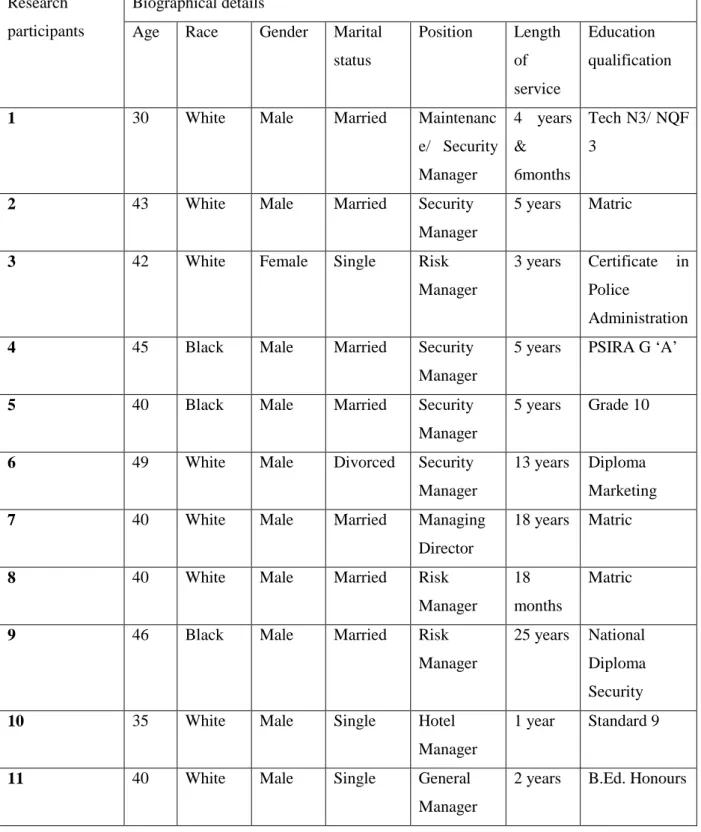
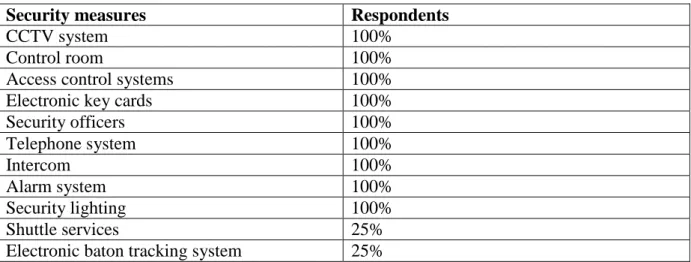
Table 5.1: Biographical information of participants 86 Table 5.2: Security measures protecting hotel facilities 110
xiii LIST OF FIGURES
Graph 5.1: Assets targeted by perpetrators at hotel facilities 104 Graph 5.2: Integration of security systems at hotels 112 Graph 5.3: Frequency of conducting risk assessment at hotels 114 Graph 5.4: Pre-screening or post-employment screening 116 Graph 5.5: Adequacy and effectiveness of the security measures at hotels 118 Graph 5.6: Inquiries by guests about security measures when making reservations 123
1
CHAPTER ONE
THE OVERVIEW AND MOTIVATION FOR RESEARCH STUDY
1.1 INTRODUCTION
This chapter aims at introducing the trends of safety and security encountered by guests in the hotel industry. The hotels are subjected to risks which make them vulnerable to different types of crimes committed. Hotel assets also become endangered to the criminal element.
This chapter also aims to examine the effectiveness of the security measures implemented by the hotel industry for the protection of whole hotel, both internally and externally.
Newland (1997: np) posed the following questions:
• “Who is accountable for reasonable care in guest protection and hotel assets?
• Is it the house keeping section, the bell person, the kitchen worker or the Security Department?”
According to Newland (1997: np), a management tool of emphasising on the reasonable care in guest protection and asset protection should be employed by all senior, middle and supervisory management.
Hotels in the hospitality industry are faced with crime, safety and fire weaknesses that compel implementation of security measures (Purpura, 1991:327). Consumable inventory items located in hotels, such as, linens, art works, ornaments, food, guests clothing and money are susceptible to robbery and theft. Safety of hotel personnel and guests is of a high priority. The hotel facility has a continuous flow of people, like, guests together with their visitors who are allowed in and out of the entity, together with employees (receptionists, housekeeping and dining hall staff, bar lounge personnel and patrons repair technicians, as well as security personnel) (Purpura, 1991:328).
Protection must be provided to all the people in the hotel facility but people who need such protection most are female employees, female guests and children guests during the night when security shift changes and the hand-over process has been completed (Purpura, 1991:328). Effective security measures in hotels play a significant role in the protection of valuable assets internally and externally.
2
Stolen merchandise is wrapped with dirty linen by offenders to be collected later. According to Beaudry (1996:63), there is lack of control in the food services where food ordering, preparation and distribution functions have discrepancies. Physical security in hotels is, among others, the use of computer-controlled electronic guest room locks, close-circuit television (CCTV) cameras, video recording equipment, intrusion, panic, and barrier alarms as well as fire alarms.
The perimeter of the hotel is determined by its location and functions. A hotel in the city centre will not be enclosed by a wall or fence, but its opening will be on the sidewalk of the street. However, the hotel in a stand-alone site with recreational facilities where the community have an access to the hotel’s revenue or privacy is likely to be fenced for private use (Beaudry, 1996:64). The hotel’s structural barriers, either permanent or temporal, serve as a deterrent to trespassers. These barriers may consist of chai link fences, stone walls, large stones embedded in the ground, dense ground or any other feature that is gruelling for someone to detour (Beaudry, 1996:265).
1.2 BACKGROUND INFORMATION ABOUT HOTELS
The hotel industry globally has been associated with crime related challenges since the days of small inns to the present times (Greenberg, 1991: np). These challenges are attributed to a 24/7 business operation times that the industry provides (Burstein, 1994:155). Security measures in the hotel industry are lax due to the permission granted to members of the public, who are strangers to the hotel to visit the premises (Hughes, 1984:1). However, theft is a crime that is undeniably the most prevalent in the hotel industry (Mansfeld & Pizam, 2006:112). The security measures already in place need to be reviewed to ensure protection for valuable hotel resources, such as, assets, personnel, and most importantly, the guests and their valuables.
However, this chapter first assessed the existing security measures in the hotel facility, around Gauteng province, with the intention to proactively combat crime in these entities. The hotel industry provides service to hotel visitors who are known as guests. According to Angelo and Vladimir (2011:7), the service is described as meeting customers’ needs in the
3
way that they want and expect them to be met and by providing superior service which meant exceeding customers’ expectations. The hotel business provides a fully paid furnished accommodation on a short-term and temporary basis.
The hotel industry’s goal like any other industry is committed to safety and security of people and their belongings. To achieve this goal, the internal security-related tools, such as, recordable locks, alarm system, surveillance system and emergency plan, are a requirement to reduce safety and security risks (Hayes & Ninemeier, 2006:410). There are some unique safety and security issues in some hotels where guests need to be protected against the swimming pool areas, spas, and parking bays. External resources like local law enforcement and property insurers also contribute towards the safety and security of guests and hotel employees (Hayes & Ninemeier, 2006:423).
Internal and external threats play a significant role in the impact of property loss experienced by the hotel. It is required by the law for the hotel industry to demonstrate reasonable care by identifying unique and specific threats that exist to asset security (Hayes & Ninemeier, 2006:429).
A hotel guest brings with him or her all the valuable items, expecting the hotel to provide protection. The guest will leave certain property behind in the room hoping to find it there when he or she returns, and will be shocked if the opposite is the case (Hughes, 1984:43). Upon identifying that there is lack of protection, the hotel guests may anticipate risks. The risks in question will result in various criminal activities.
In the past the hotel industry nationwide was experiencing a number of challenges exposed by the negligence of security responsibility, meaning, some of the hotels failed to provide reasonable security for the guests despite the complaints from the guests to hotel management (Fischer & Green, 1992:33). Upon the ignorance of some hotel management, in one case, the guests took the matter further, to international courts, where the hotel industry was charged with security negligence, particularly in the area of protection of guests. The courts issued mandates to the industry emphasising the importance of guest protection. The court recommended that the hotel industry should consider utilising private security industry to protect the hotel facilities (Fischer & Green, 1992:33).
4 1.3 PROBLEM STATEMENT
Since hotels operate around the clock, guests move freely at all hours. In hotels where there are a number of access and egress control points, a guest may access and egress the hotel without being noticed or reporting to the reception.
A hotel is a facility where numerous types of crimes take place, like, bilking, data breach, robbery, theft, bomb threats, to name just a few. Perpetrators of crimes committed in hotels are seldom arrested and convicted as they sometimes commit victimless crimes, such as, money laundering, drug trafficking and robbery during prostitution, which are not reported. This is due to the fact that victimless crime victims contribute towards crimes committed against them.
According to McLaughlin and Muncie (2006:451), a victimless crime is a form of behaviour that is illegal but is consensual in nature and lacks a complaining participant in crime. However, these activities are used by the same victims to campaign for legalisation and decriminalisation (McLaughlin & Muncie, 2006:451). Prostitutes are not only loitering around the building but are conducting their trade inside the hotel premises, and that constitute their status as undesirable guests where staff members may ask them to leave (Hughes, 1984:35). The researcher’s observation in one of prominent hotels included, among others, maintaining that the foyer’s entrance hall and chairs are constantly occupied by non-guests, the hotel bar is full of intoxicated non-guests patrons who pose a threat to hotel guests (an inquiry was made to the hotel security officer and confirms the problem of a threat but they were only allowed to be escorted-out of the bar at ten (10) p.m.).
The researcher has also observed the lack of control on the access and egress points of the hotel entrance. Anyone with or without the luggage may enter the hotel and walk through the reception area to the guests rooms whether invited or not. It is also easier to obtain a room key from the reception without being checked whether this is the guest or a non-guest. Non-guests are usually the ones who occupy foyer seats, going up and down the hotel corridors and are also found in hotel bars and restaurant (Hughes, 1984:33).
Some crimes in the hotel begin in the foyer as well as in the reception counter, such as, theft, robbery and credit card fraud. While the guest is busy with the registration with the
5
receptionist, the guest places his or her belongings on the floor and after the registration is completed, some of the bags, if not all are missing. In some hotels which are along the busy streets, robbery takes place when a guest walks inside the hotel lift with a non-guests and get robbed inside the elevator (Hughes, 1984:34). The software used by some hotels to process guests credit cards are maintained by outsourced information-technology companies and this maintenance provides access to hackers into the hotel system if the Information Technology employees do not change their usernames and password to their default settings (Nassauer, nd:np).
The researcher observed, from a few randomly selected hotels, again that some hotel car parks have no visibility of a security officer for access control. There is also lack of maintenance in some hotels, such as, poor lighting, untidy scenery associated with stored furniture due to hotel renovations. In some car parks there are cars which looked like they have been dumped months ago due to their dusty and dirty nature. Some frontline or reception staff in certain hotels lack customer service or interpersonal skills which contribute to unhelpfulness. The administration section which deals with paper trail plays a significant role in disseminating and destroying the industry’s confidential information. Letter-head of the company forms may be a valuable asset to the thief in the street.
Other criminal activities include bookmarkers, loan sharks, drug traffickers and the loot sharers operate their market in hotels. In most instances, the runners of these activities are the employees of the hotel (Buzby II & Paine, 1976:205). These activities are usually being given a go-ahead by the hotel owner known as ‘Cosa Nostra’ (Mafia) family, with the intention of obtaining a percentage or commission. The insider, may it be a bellman, doorman, luggage porter, or a receptionist who is always in contact with the hotel guests at all times, may solicit these kind of businesses (Buzby II & Paine, 1976:205).
As the hotel’s public relations specialist promotes the image of the hotel industry as well as security issues, the public relations staff’s task is to avoid adverse publicity for the hotel or at least keep it to an absolute minimum (Burnstein, 1975:65). But that task is rarely conducted effectively, especially if the incident to be reported to the media involves security issues; for example, if a prominent politician has been found dead in a hotel room (ibid). The security managers will not communicate all the information to the public relation’s staff due to secrecy and uncommunicative conduct. This conduct is usually practiced by those security
6
managers who were previously in the police force or in intelligence duties (Burnstein, 1975:65). They view sharing of information as a one-way-street since the public relations staff will not be able to help them with investigations.
Team work is not established and promoted between the Security Department and other departments in the hotel industry. The security managers must be able to distinguish between information indiscretion and lack of communication (Burstein, 1975:66).
Hotels also permit non-guests to attend arranged functions at the bar lounge and to indulge in hotel’s full-service (independently owned) restaurant for dining. The facility generally offers 15 or more different cooked meals at a buffet level for a reasonable price (Walker, 2007:249). During the function they get invited into the guest rooms without notifying the receptionist, sometimes with the intention of stealing hotel properties that are easily accessible, such as, ashtrays, towels and face cloths, shower caps, bathrobes and so forth. Some proceed with prostitution trade at guest’s approval (Burnstein, 1994:156).
Even non-guests visiting the hotel have a legal right to expect management to protect their health and well-being to the greatest degree possible (Hayes & Ninemeier, 2006:410). The hotel’s legal liability plays a significant role in ensuring that the hotel is protected from unnecessary risk that will be costly. It is the duty of the hotel to ensure that it exercises reasonable care towards the guest. If the hotel realises that the threat against the guest is imminent, the guest should be notified, in case an act of robbery occurs in the guest room from a defective lock (ibid, p.410).
According to Newland (1997:16), hotel protection management programme emphasises the change ‘security’ to protection. He maintains that hoteliers perceive or envisage security as a cigar-smoking, over-weight and a retired police officer, who is reactive rather than proactive. The group of hoteliers, their properties, corporation and professional futures consider the ‘security’ individual as a person who should provide the ‘protection’ to their assets. However, hotels do not consider ‘security’ as a holistic idea which should be built into the hotel management programme. To hoteliers, ‘protection’ is an implication which is a conflict of interest to the ‘host’ (hotel) since the guests took it upon themselves to visit the hotels; they (guests) were not invited by the ‘host’. The guests visit the hotels at their own risk (Newland, 1997:18).
7
Hotels strive to portray the host-image of openness and relaxation, of comfort and enjoyment as well as of a friendly host, but find it impossible to introduce the cold, hard reality of ‘security’, a person who will police them in their adopted friendly environment (Newland, 1997:19). Hoteliers also recognise ‘security’ as similar to ‘guest protection’ whose functions should be conducted by the ‘Security Department’ where the department have the exclusive responsibility for guest protection (Newland, 1997:19).
1.4 TYPES OF CRIMES THREATING THE HOTEL INDUSTRY
Hotels are one of the businesses that are subjected to risk in the hospitality industry due to its business practices. Risks that are exposed to this operation both domestically and globally are as follows: bilking, burglary, data breaches, industrial espionage, gun trafficking, hijacking (of guests or employees) (Barth, 2006:275). Beaudry (1996:94) further identified kidnapping (of employees or guests), theft (of employees and/or guests), rape (of guests), robbery (of guests) shrinkage (of employees), bomb threats, assault and murder (of guests) act of terrorism, and fire hazard, as security risks that also occur in hotel facilities.
The risk exposed to hotels is assessed to determine the type of risk affecting assets involved in hotels. Fay (2007:415) maintains that the risk exposure assessment determines the effect that the occurrence will have on the disruption of the organisation, for example, kidnapping- in case one of the guests is kidnapped and held hostage by unknown people, for the extortion of money or undisclosed proprietary trade secrets, from the hotel’s Chief Financial Officer. In 1993, in an attempted robbery, a British tourist (guest), Gary Colley, was murdered in a Florida hotel, United States of America. This impacted negatively on the hotel industry where the British Foreign office advised British tourist not to send guests to Florida hotels anymore (Zhao, Ho & Brown, 2009:21).
In 2008 and 2009 Mumbai hotels were attacked by terrorists due to vulnerability to potential safety and security threats in hotels. The hoteliers globally seem to be unshaken by the incidents as they did not change the hotel situation as far as security is concerned. Instead the hoteliers monitored the contracted staff extensively and conducted biographical checks on internal employees. The hotel took the decision to grow a department that will handle loss prevention, with the exclusion of security section (Wood, 2013:78).
8
Causes of hotel victimisation are unknown since the hoteliers do not report victimisation to the law enforcement agencies. Thus, there is no accurate record regarding such incidences. The only crime report the police possesses is from the individuals reporting incidents encountered in individual hotels (ibid, p. 21).
Zhao et al. (2009:21) maintain that ricin poison was identified at Las Vegas Hotel where hotel employees and guests were admitted in hospital for the possible symptoms of short breath, fever, nausea and dehydration. This incidence posed a threat to homeland security and the Federal Bureau of Investigations (FBI) as the federal law enforcement agencies suspected a terrorism act (Zhao et al., 2009: 21).
Burglaries in guest rooms are the most common crimes in hotels. Zhao et al. (2009:21) indicate that about 30-40 crimes occur daily in hotels in Central London and in Miami, Florida. They occur among foreign hotel tourists who are unfamiliar with the area, and usually become victims of theft. Criminals are attracted to hotels that are visited often by foreign guests as they usually carry large sums of cash, jewellery and electronic equipment. Once the robbery has taken place, it may not be reported since they may not be familiar with crime reporting procedures and that may enable criminals to go ‘scot free’ (Zhao et al., 2009:21).
During the Radio Metro frequency modulation (FM) awards, the radio station disc jockeys (DJs) while hosted by the Hilton hotel in Durban, their personal belongings, such as, cell phones, cameras and laptops were stolen from their rooms (Maune, 2013:np). The hotel maintained they were not responsible as there was no sign of burglary, instead the electronic access door keys were used to gain access into the rooms; thus, no compensation was granted (ibid, np).
Employee theft plays a role in the hotel industry service production. Employee theft as defined by Kole (2012:57) is the unauthorised taking, control or transfer of property of the formal work organisation, perpetrated by employee during the course of occupational activity which is related to his or her employment. Employee theft in the hotel industry involves the loss of cash that is kept on hand by the front office, guests’ jewellery, cell phones, laptops or I-pads, guest room supplies and furnishings.
9
Hotel employees who are responsible for buying food and beverages may also defraud the hotel by accepting kickbacks from the vendors or steal the same products bought for the hotel for their personal use (Hayes & Ninemeier, 2006:435).
Marketing and sales team may also add towards the hotel shrinkage by billing the hotel for services that were never rendered (ibid, p. 435). Threats to asset security take the form of irregularities with the expense accounts conducted by the sales and marketing team due to their interaction with clients, miscalculation of mileage travelled, entertained client and sales trips taken can cause the expense account expenditure to be excessive and will result in their reimbursement being too high (ibid, p. 435).
The maintenance department would experience the loss of an inventory of small but expensive hand tools used by the hotel for maintenance. Items like, portable hand drills, electric saws, wrenches, screw-drivers, pliers, etc. may end-up missing if they are not controlled properly. Some hand tools may be left unattended during the breaks while the user is on lunch or tea break (Hayes & Ninemeier, 2006:437).
The hotel relies on publicity to maintain its business and growth. The hotel industry counts on public acceptance for it to survive and stay in business and maximises profit. Through bad publicity, the hotel may find its reputation in distress and reputation is the hotel’s greatest asset. The hotel’s reputation which is an elusive status is described as a well-run, clean and a comfortable establishment which is essential for its success. Fennelly (1992:108) maintains that the hotel’s reputation depends on the security programme of its Security Department. The success of the security programme is directly entangled to the reputation and image the Security Department holds in the opinion of the hotel’s employees, its guests and the general public. It is arduous to foster reputation once tarnished.
1.5 VULNERABLE ASSETS AT HOTELS
Hotels have acquired a vast number of valuable assets in their premises. A different calibre of guests choose the hotels of their preference to stay in based on the benefits they will appreciate, such as, saunas, business centres, a desk with a comfortable chair and wireless
10
Internet connection in individual guest rooms, concierge services, hot drinks makers en-suite, exercise rooms (gyms), to name just a few (Timothy & Teye, 2009:135).
Guests who are on official business are concerned about the security measures in the hotel they have chosen as they carry confidential documents and valued equipment. Ordinary guests on leisure also have a need to know about security measures in place for their protection. Travel agencies around the world ensure that they only do business with hotels that comply with the minimum standard of safety and security. Big international corporations and travel agencies have established safety and Security Departments which deal with hotel screening on safety and security in hotels (Yorke-Smith, 2010: np). According to Wood (2013:78) cites the United Kingdom (UK) Institute of Hospitality which maintains that some hotels are not in favour of security concept as they fail to foresee the return on investment by installing expensive security equipment.
Women in business often travel alone or sometimes with their children for holidays, also contribute in the upgrading of security measures in hotels. Their vulnerability need to be minimised (Pizam & Mansfeld, 1996:288). The following are the assets robbed in hotels: guest’s luggage, jewellery and money, employees’ personal belongings, proprietary data and trade secrets, cash (in safe deposit boxes), hotel keys, hotel vehicles (Beaudry, 1996:58). Internal décor (ornaments, artefacts), linen, towels, ropes, silverware and crockery and ashtrays, are easily stolen by guests as souvenirs (Burstein, 1994:158). Since hotels have exclusive assets to protect, it is their duty to assess the type and the extent of the threats they will encounter. The security measures in place or to be implemented in the hotel industry should equal the assets to be protected (Newland, 1997:63).
1.6 AIMS AND OBJECTIVES OF THE RESEARCH STUDY
The aims and objectives of the research study are as follows: • Outline the nature of business that hotels are engaged in;
• Investigate if there are security policies and procedures as part of effective security component;
• Examine what important assets need to be protected at hotel facilities; • Uncover the risks facing assets in the hotel facilities;
11
• Determine what incidents of loss took place in the hotel facilities; • Examine what assets are mainly targeted by perpetrators at hotels; • Uncover the profile and modus operandi of hotel perpetrators;
• Examine the effectiveness of security measures and systems that are put in place at hotels;
• Explore if security systems are integrated at hotels;
• Determine the frequency of conducting risk assessment at hotels;
• Check if pre and post-employment screening is conducted for security officers at hotels; • Investigate if the security measures and systems are adequate and effective;
• Examine the impact upon the facilities should risk occur;
• Find out if the guests inquire about security measures when making reservations; and • Find out how guests feel about security at the hotel facilities.
1.7 RESEARCH QUESTIONS
Research questions are questions the research study seeks to answer. Questions should be detailed, accurate and well composed (Neuman, 1997:232-234). Research questions are also based on the problem statement of the research and involve the collection of new data or analyses of existing data in relation to the phenomenon being studied (Neuman, 1997:234).
The questions presented in this study are as follows:
• What is the nature of business operations at this organisation?
• Does the facility have an effective security structure, with policies and procedures, where there is a command and control of the job?
• What are the important assets in the hotel facility that need protection? • What are the risks of crime confronting the assets in the facility?
• Has the hotel experienced any incident of loss in the last 3 years and what kind of loss was it?
• What assets are targeted by hotel perpetrators?
• What are is the profile and the modus operandi of hotel perpetrators?
12
• Are security systems integrated and if so, how are they integrated? • How often is risk assessment conducted at the hotel?
• Is pre-and-post-employment screening done on all personnel in the hotel, including security personnel?
• Are these existing security measures and systems adequate and effective? • What will be the impact upon the facility should the risk occur?
• Do domestic and/or international guests inquire about security measures when making reservations?
• How do guests feel about security in this hotel?
1.8 THE SIGNIFICANCE OF THE RESEARCH
Pizam and Mansfeld (1996:284) maintain that there is a lack of empirical evidence based on research for crime prevention strategies in the hotel industry, even though a number of articles have been written suggesting different security strategies for hoteliers to incorporate. This research will exhibit the contemporary prestige level of security in the hotel industry and whether the guest is really disadvantaged twice, meaning the guest has paid to be in the hotel then his or her belongings are being stolen, where he or she will not get reimbursed.
This research would make a significant contribution in assessing and reviewing the effectiveness of security measures in hotels, evaluating the types of crimes most prevalent in hotels and measuring the guests and the hotelier’s perception on security and safety.
The hotel industry will be steered, hopefully, by the findings and the recommendations of this study and enhance any inadequacies that may be exposed by the research assessment.
UNISA: The research results can be documented into future study guides of the Department of Security Management in order to equip the students with the knowledge in terms of security measures protecting hotels.
1.9 THE HOTEL INDUSTRY TERMINOLOGY AND DEFINITIONS
The following are the key terminology and definitions used in the hotel industry by the hoteliers, franchisees and franchisers as well as hotel security management personnel:
13
• Countermeasure: This is an action taken to reduce or eliminate one or more vulnerabilities. The costs involved may either be monetary or nonmonetary (reduced operational efficiency, unfavourable working conditions and bad publicity (Roper, 1999:14).
• Crime Prevention Through Environmental Design (CPTED): This is the process of planning security during construction. It is an environmental theory based on the proposition that the appropriate design and application of the built and surrounding environment can improve the quality of life by deterring crime and reducing the fear of crime (Atlas, 2008:353).
• Greet, Understand, Educate, Suggest and Track (G.U.E.S.T): Guest is a problem-solving acronym model used by hotel personnel on how to handle customer’s complaints or issues (Bagdan, 2013:44).
• Hotel: Facility that provides comfortable lodging and generally, but not always, food, beverage, entertainment, and a ‘home away from home’ service (Beaudry, 1996:ix).
• Hotel Industry: This is an industry that provides a paid and fully furnished accommodation on a short-term and temporary basis with a variety of benefits (Timothy & Teye, 2009:135). • Occupation Health and Safety Act (No. 85 of 1993): This is the provision for the health
and safety of persons at work and for the health and safety of persons in connection with the activities of persons at work and to establish an advisory council for occupational health and safety.
• Reasonable care: This is the management tool employed by all senior, middle and supervisory management that ensures guest protection in the hotels. Hotel personnel become accountable for a breakdown for adequacy in the protection of guests (Newland, 1997: np). • Risk assessment: This is the process of evaluating threats and vulnerabilities to an asset so as
to give an expert opinion on the probability of loss or damage and its impact, as to conduct relevant precautions (Roper, 1999:14).
• Risk Management: This is the ability to foresee a risk and then to prepare or protect against that risk, or at least to reduce the losses that will accompany the event (Manley, 2009:21). • Safety: This is protection of the individual’s physical well-being and health (Hayes &
Ninemeier, 2006:410).
• Security: This is a systematic effort to provide protection and the level of safety to hotel as a physical entity, and to its stakeholders, namely; employee, guests and other users, from
14
threats and/or hazards that may attribute from external or/ and internal factors (Wood, 2013:77).
• Security survey: This is a detailed study and analysis of a facility’s property, structures, physical features, environment, operating procedures and internal control (Floyd, 2008:1). • Threat: Any indication, circumstance or event with the potential to cause the loss of or
damage to an asset. It can be also defined as the intention and capability of an opposition to undertake action that would be detrimental to the interest of an asset owner (Roper, 1999:13).
1.10 THE LAYOUT OF THE DISSERTATION
CHAPTER 1 The overview and motivation for research study CHAPTER 2 Research design and methodology
CHAPTER 3 The historical background and nature of assessing security measures at the hotels
CHAPTER 4 Theoretical Framework
CHAPTER 5 Findings: Data presentation, interpretation and analysis CHAPTER 6 Conclusion and recommendations
1.11 CONCLUSION
In this chapter, an insight into the outline and motivation of the research study is clarified. The clarification is based on the theoretical concepts used throughout the study, like, ‘guest’, ‘reasonable care’, ‘threats’ and ‘countermeasures’ for proper understanding.
This chapter places emphasis on the types of crime that are a huge challenge and the problems that are faced by the hotel industry as a 24/7 business operator in the South African context. Safety and security in the hotel industry is the basic vital aspect that attracts guests and promotes profitability.
It is therefore imperative that security in South African hotels as well as globally be prioritised, and be proactive rather than reactive for the expectations of guests when they are away from home, and where they feel safe and secure.
15 CHAPTER 2
RESEARCH DESIGN AND METHODOLOGY
2.1 INTRODUCTION
This chapter is aimed at providing a clear understanding to the reader whose target market was to be measured for this study and method of data collection to be used. The quality assessment tools and techniques which are the research instruments used to target, analyse, develop and/or evaluate a service system, were used for the quality service process.
The research methodology is the process that the researcher employs to the practices of the procedures of the research project. This process involves the steps to be taken into account when conducting scientific research. The researcher investigated people’s beliefs, behaviours, interaction and their institutions (De Vos, Strydom, Fouche & Delport, 2005:41). These authors define social science research as the objective study of human activity in social reality with the intentional attainment of valid insightfulness to it (De Vos et al., 2005:41). The study was pursued to explore and observe social phenomenon in relation to security measures in Gauteng hotels.
The qualitative method was employed in this study with the intention to collect data that would be descriptive and evaluative and will result in a narrative and in a form of interpretive practices (Guest, Namey & Mitchell, 2013:2). These practices turn into representations that included interviews, field notes, and recordings which involve a naturalistic approach. This meant that the researcher studied the phenomenon in their natural settings and attempted to gain insight from the data collected (Guest et al., 2013:3). Qualitative research involved examining a topic through a concept or a symbolic description of factors (Dantzker & Hunter, 2012:56).
The present study encompassed the professional scientific inquiry relating to a social problem that contributed to growth in the body of knowledge about security management distresses (De Vos et al., 2005:45). The research project was also based on the researcher’s observation of reality.
16
De Vos et al. (2005:92) maintain that observant and sensitive individuals around their surroundings are more likely to be involved with interesting research topics. Research problems result from tangible problems observed in reality.
The researcher attempted to obtain an understanding on or about security measures in Gauteng hotels during the progress of the study. This notion was clearly supported by Guest et al. (2013:14) who contend that case studies can also be used in order to gain more understanding on the topic.
As the researcher was interested in the unique quality of the phenomena (security measures) that are rarely observed within the real-life context of the case (hotel industry), the researcher’s questions explored and probed the unique interest (Guest et al., 2013:9). Williams (2003:55) maintains that for the researcher to understand the phenomenon being studied, he or she may be in a position of either an insider (same location) or an outsider (stranger). The understanding was based on researcher’s shared aspect of the same social world or sharing cultural resources as the participants.
2.2 RESEARCH DESIGN
De Vos et al. (2005:268) describe research design as preferences available to researchers to study events concurring to formulas that are suitable for their research objectives. Accordingly, research design was strategically outlined once the choices and actions were determined. In this instance, the researcher’s research design involved corresponding crime data that was collected from security or/ and facility managers for adequacy and efficiency of existing security measures at hotels in Gauteng, with crime prevention strategies data (Bach & Pizam, 1996:61).
A case study places its focus on either the case (hotels in Gauteng) or an issue that is illustrated by the case, that is, security measures within its larger context (De Vos et al., 2005:272).
A small number of hotels were chosen as a sample to represent a larger population. The knowledge gained from the case study has been applied to a larger population (Guest et al., 2013:14).
17
The case study design involves methodologies that include a detailed in-depth data collection method with multiple sources of information that is rich in context (De Vos et al., 2005:272). The methodology that the researcher employed for collecting data was interviews whereby an interview schedule was used.
Henning (2004:41) maintains the following attributes of the case study design:
• Case study researchers collect data for in-depth understanding of the situation and meaning for those involved;
• The researcher placed the interest on the process rather than the outcomes, in context rather than specific variables, and in discovery rather than confirmation;
• The researcher was engrossed in the data collected (Neuman, 1997:331); and
• Case studies are thorough in description and analyses a single unit or bounded system, like an individual, a program, an event or an intervention.
According to Federated Hospitality Association of Southern Africa (FEDHASA) (2014), there are 400 hotels in Gauteng. Motels, bed and breakfasts, self-caterings, lodges are also categorised as hotels according to the association. The researcher only dealt with hotels. The ‘hotels’ the researcher identified from the 400 were only 70 and they were the ones the researcher conducted the study on. The process the researcher used for identification was to filter hotels from the list of hotels provided online by FEDHASA. These hotels were chosen irrespective of their graded system. Such hotels included the branded and the non-branded groups. The branded hotels are those that are involved in franchising while the non-branded group are the ones that are independent.
2.3 POPULATION AND SAMPLING
Guest et al. (2013:42) define population as a largest group of units from which sample elements are drawn for research purposes. The population entails the usage of a sampling frame to draw the sample elements. From the population of 70 hotels in Gauteng, where the sample of twenty (20) was derived, was the group within which the researcher was interested in for obtaining data. The participants involved in the study were part of the population. Since Gauteng Province is huge, the researcher only conducted research within the four metropolitan areas consisting of Johannesburg, Mogale City, Tshwane and Ekurhuleni.
18
FEDHASA (2014) maintains that most of the hotels are located in Johannesburg and Pretoria. Only a few are outside these major cities. Most towns like, Boksburg, Benoni, Heidelberg, and Krugersdorp, are areas where accommodations such as, motels, bed and breakfasts, self-caterings and lodges are located. Therefore, the researcher was not placing her interest on these kinds of accommodations. The researcher’s interest was on the actual hotels in Gauteng.
For sampling purposes, the researcher used random sampling approach because of its ability to represent the elements of the whole target population.
2.3.1 Sampling approach
Sampling refers to the process of selecting a subsection of items from a defined population, to include in a study (Guest et al., 2013:41). For the study to be valid, sampling plays a significant role, for example, the instrument (sample) that is used by the interviewer for measurements, actually measures what the researcher intends to measure (all seventy (70) hotels are included in the selection process). The sample technique can also be relied upon in supplying the same results even after repeatedly undergoing the same sampling process (ibid).
Neuman (1997:201) defines sampling as a process of selecting cases or samples for inclusion in a research project. In addition, Delport and Roestenburg (2011:193) maintain that sampling is the seizing part of the population since they have the same traits as the total population. Probability sampling was concerned with representing the total population randomly and is statistically constructed (Neuman, 1997:208). This kind of sampling involved the drawing of the subset from a fixed size of 70 hotels in Gauteng Province to ensure that all the elements of the population were represented. Probability sample goal was to generalise the findings to the sample’s larger population since it would not be ideal to study the whole population group (Steinberg, 2004:95).
19 2.3.2 Random Sampling
Random sampling was chosen as a technique that was reliable and influenced by probability, whereby the elements of the population had an equal chance of being selected for the sample (Steinberg, 2004:94). The selection process of random sampling is an independent factor, meaning that, the selection process does not have an influence on the selection or exclusion of a particular subject from the sample (Herbert, 1990:48). The representation included using a table of random numbers or lists to draw a sample (Neuman, 1997:208). The researcher used a list to draw a sample. The divided list was picked out of a hat (Steinberg, 2004:95). 2.3.3 Random Sample Method for the selection process
As the population of interest was identified, that is, 70 hotels, a sample was selected using a sampling frame. A sampling frame is a list of 70 hotels. The list contained the names and areas where all these 70 hotels were located. The hotels information from the list was written in small pieces papers that were folded and deposited into the hat, and a ruffle was conducted. Neuman (1997:222) stipulates that for a population less than 1000, a sample ratio of 30% is appropriate. The researcher used a sample size of a sample ratio of 42%, which was equivalent to 30 hotels after they were selected from a target population of 70 hotels. The researcher initially selected 20 hotels as the actual sample ratio. Thereafter, 10 additional hotels were also selected as reserves should in case some of the participants from the actual sample did not wish to participate in the study. The researcher would have resorted to the reserved ones. The remaining forty (40) hotels information in the hat was discarded (Steinberg, 2004:95).
2.3.4 Selection of participants
Each hotel consisted of one security or facility manager who is a security expert in the hotel facility. Facility managers are hotel personnel that in some instances are referred to as security managers since they work together with security managers or independently performing security functions. However, during the interview process, the researcher identified that only one facility manager was recognised as a security manager.
The research participants’ ages ranged from 34 to 58 years of age. Their race, service period and educational qualification varied. The majority of research participants were males where
20
only two were females. The research participants were selected purposefully with an intention to obtain insight information regarding the phenomenon being studied. The sampling frame was structured around the aims and objectives to ascertain whether security measures at hotels in Gauteng Province were adequate and effective for the prevention of hotel crimes and incidents. The researcher also found out that security officers in hotels are outsourced and they guard the perimeters of hotels. There were only a handful of security officers found inside patrolling the floorson certain hotels, but most of them were not tasked to function inside the hotel.
A few security managers at hotels were in-house while most of them were outsourced and the outsourced ones were hands-on operationally with extensive experience within the hotel facility. They also supervised a number of outsourced security officers. The research participants provided comprehensive information needed by the researcher in relation to the experience they have acquired regarding the phenomenon at hand. The researcher used face-to-face interviews as a method of data collection to elicit responses from the participants.
2.3.5 Unit of analysis
The researcher collected data from individuals which Bachman and Schutt (2008:104) describe as unit of analysis. Research questions, according to Davies, Francis and Jupp (2011:48), play a significant role in the unit of analysis. They were drafted around the unit of analysis. The research questions required data to be collected from different sources, like, individuals, social groups, events, articles and institutions. However, the researcher collected data from sources like, the literature, articles and security managers situated in the institutions 20 hotels in Gauteng Province. The units of analysis were regarded as specific characters to what the research study wanted to establish; for example, research questions were addressed specifically to security or/and facility manager.
It became important to advise that the conclusion reached by the researcher in the findings were limited to the unit of analysis (security and/or facility manager) as stated in the research questions. For instance, findings about the adequacy and effectiveness of existing security measures at hotels in Gauteng Province are not necessarily true for guests in hotels (Davies et al., 2011:48).
21
As the research questions revolved around the unit of analysis, therefore, the participant(s) became an important element in the study. The researcher did not discriminate against the demographic factors of the participant(s), such as, age, gender race or status. The only requirement that was expected by the researcher from the participants was that they were currently working in and for the hotel facility in Gauteng Province performing security functions when the research was conducted. The rationale behind this was to acquire as much information as possible in relation to the phenomenon under study, that is, hotels in Gauteng Province.
2.4 DATA COLLECTION METHODS
This part of the section consisted of the ways and methods that were used in the study to collect data. As the researcher adopted qualitative research, even though it was time-consuming, the phenomenon being studied reflected the actual being (Dantzker & Hunter, 2012:57).
For the purpose of this study, the researcher made use of the interviewing technique as the method of collecting data. Literature review as the secondary data source was also consulted to gain more insight into the phenomenon being studied. The interviewing technique and the literature revision the researcher used were the best methods appropriate for the study (ibid, p. 57). As the prodigies of security measures are located at hotels, it was deemed applicable for the researcher to conduct the research in the same location.
The research study explored the adequacy and effectiveness of existing security measures together with the nature of crime occurrence as well as the intervention measures at hotels in Gauteng Province. The researcher obtained vital information from the participants with expertise and understanding and gained clarity and insight into security measures being studied.
2.4.1 Interviewing techniques
The interview technique is viewed as the interaction between two individuals where one individual’s goal is to acquire acknowledgeable response to specific questions from a person with knowledge (Dantzker & Hunter, 2012:126). Furthermore, Hagan (2012:173) refers to an interview as a face-to-face situation in which the interviewer orally solicits responses. Hagan
22
(2012:174) further defines an interview as a conversation with a purpose of gathering information. Davies et al. (2011:163) also support the assertion, though in a broader sense, that an interview is a method of data collection, information or opinion gathering that specifically and typically involves asking a series of questions. It is in a form of a dialogue where rich data can be unearthed with the help of profound probing.
The researcher obtained required information from the participants through a list referred to as an interview schedule (Annexure A) with a number of written questions of in-depth interview for guiding purposes (Hagan, 2012:176). As the questions in the interview schedule, as Bachman and Schutt (2008:148) indicate, were explorative in nature, the researcher inquisitively investigated security measures in Gauteng hotels, which was the concept of which she had little knowledge. The researcher wanted to reveal as much about the properties as possible without restrictions from the participants. More information was given to the hoteliers about the study as it was outlined in the application for permission (Annexure B) to conduct the study at hotels.
Semi-structured interviews as supported by Alston and Bowles (2003:116) are interviews that fall between structured and in-depth interviews. They follow a set of outlined questions with immediate follow-up questions. During the interview, the follow-up questions were asked after the participants answered the outlined questions for additional information. However, the degree of structured questions and initiative from the interviewer varied. The interviewer asked follow-up questions for exploratory and descriptive purposes. The interviewer wanted the participants’ response to be elaborate on, on what the interviewer had little prior knowledge of (Alston & Bowles, 2003:116).
Semi-structured interview schedules include many open-ended questions, with loads of suggestions for prompts and probes. Probes were used for either summary technique where the interviewer summarised what the participant said, by verifying whether what was said was understood by the researcher in the process, or/ and controlled non-directive probing, where the interviewer asked further questions (Alston & Bowles, 2003:116). The researcher in this instance used the voice recorder to avoid limitations. The use of a voice recorder or a listening device was as per both the participants’ and interviewer’s consent as reflected on the consent form (Annexure C). The semi-structured interview that the researcher conducted, involved the face-to-face approach. This approach was of pivotal importance as the
23
interviewer’s gender, age, class and ethnicity could influence the response of the participants. Alston and Bowles (2003:116-117) maintain that some researchers may want to match the traits of the participants with the hope that the participants will be open and honest in the interview process. On the other hand other researchers believe that participants become honest to those interviewers who are different to them.
The advantages and the disadvantages of the interview technique according to Steinberg (2004:107) were identified as follows:
Advantages of the interview technique
• The researcher controlled the process to obtain the exact information. • The researcher addressed complex issues.
• The questions and responses were clarified by the researcher.
• The researcher observed the participant’s non-verbal cues while responding to the questions.
• The participant’s cooperation was easier to obtain for interview when the interviewer was present.
• There was a high response rate as the interviewer controlled the process.
Disadvantages of the interview technique
• The researcher’s presence may have influenced the situation by drawing undesirable response.
• The researcher’s personality could have influenced the setting.
• The quality of the researcher’s interaction may have unwanted effects on responses. • Conducting interviews was costly and time-consuming.
2.5 THE INTERVIEW PROCESS
For the purpose of gaining in-depth insight of the phenomenon being studied, the process of the interview played a significant role in the study. To obtain the understanding of the phenomenon being studied, the researcher read what the participant said, noticed how he or she has put the words across when talking. The participant’s behaviour was observed, while
24
at the same time confirmed with the participants whether what the interviewer heard, read and observed, was what the participant actually said. The process sometimes confirmed or contradicted the content of what the participant said (De Vos et al., 2005:291).
The personal reaction of the researcher towards the participant also played a vital role since the researcher was investigating the new terrain with the participant. During the interview, the participant’s response led the conversation into a new adventurous domain whereby the researcher explored other avenues related to the study which were referred for future research (De Vos et al., 2005:291).
The exploration of new avenues was determined by the cultural and ethnographic background which was entrenched in the interview, of which the researcher needed to be aware. Background knowledge, incorporation of indigenous informative resources, perceptions and directions created throughput in the study.
2.5.1 Interview settings
Before the interviews were conducted, permission (Annexure B) from the hotelier, as the targeted site, was requested and granted (Alston & Bowles, 2003:114). The interviewees were then introduced to the research study and were given a description on what the study was all about (Davies et al., 2011:166).
Both the researcher and the participants agreed upon in advance on hotels being the venues for the interviews and a decision was taken for the researcher to send the interview schedule to the participants prior to the agreed interview date to examine the nature of the questions. During the interview, non-scheduled interruptions as well as time and lengthy restrictions affected the manner in which the interview was conducted.
One interview took approximately 45 minutes to an hour with each participant. A quiet environment with no interruptions and where the participant was comfortable was utilised. Non-verbal communication skills play a role in the interview settings. The researcher established from the participants the appropriate gestures of respect in demonstrating body language, like, some participants did not make eye contact when being spoken to and/or they nodded the head when they agree to statements (Alston & Bowles, 2003:114). This exercise depends upon the culture of the participant, such as, the African culture (Neuman, 1997:354).