Peter E. Jackson
in
Encyclopedia of Analytical Chemistry
R.A. Meyers (Ed.)
pp. 2779–2801
Ion Chromatography in
Environmental Analysis
Peter E. Jackson
Dionex
Corporation, Sunnyvale, USA
1 Introduction 1
1.1 Historical Perspective 1
1.2 Definition and Scope 2
2 Alternative Analytical Techniques 2 3 Sample Handling and Preparation 3
3.1 Sample Storage and Preservation 3
3.2 Sample Dissolution 4
3.3 Sample Cleanup 5
4 Regulatory Methods of Analysis 6 5 Water and Wastewater Analysis 7
5.1 Drinking Water and Wastewater 7
5.2 Natural Waters 13
5.3 Brines 15
6 Soil, Sludge, and Solid Waste Analysis 17
6.1 Soil and Soil Extracts 17
6.2 Sludge, Leachates, and Solid
Waste 18
7 Quality Assurance 19
Acknowledgment 20
Abbreviations and Acronyms 20
Related Articles 20
References 20
Ion chromatography (IC) is a subset of liquid chromatog-raphy applied to the determination of ionic solutes, such as inorganic anions, cations, transition metals, and low-molecular-weight organic acids and bases. Although these solutes can be analyzed using a number of separation and detection modes, ion-exchange is the primary separation mode and suppressed conductivity is the primary method of detection in IC. Method detection limits (MDLs) for inorganic anions and cations are typically in the low parts per billion range and recoveries obtained for ions in spiked water samples are generally in the order of 80 – 110%. The linear calibration range extends from low parts per billion to mid parts per million concentrations for most appli-cations. IC is well established as regulatory method for the analysis of inorganic anions in environmental samples as there are few alternative methods which can determine multiple anions in a single analysis. However, there are
relatively few regulatory methods for cation analysis which use IC. Methods for cation analysis tend to be based upon spectroscopic techniques, although IC offers the advan-tage of providing information on metal speciation. The main interferences in IC are generally other ions which elute within the timeframe of the ion(s) of interest, and the determination of trace ions in the presence of high levels of other ionic species remains the most difficult of analyses with this technique.
1 INTRODUCTION
1.1 Historical Perspective
The origins of modern IC were laid down by Hamish Small et al. at Dow Chemical in 1975, when they first described a novel ion-exchange chromatographic method for the separation and conductimetric detection of ionic species..1/ They employed a low-capacity, ion-exchange stationary phase for the separation of analyte ions, in conjunction with a second ion-exchange column and conductivity detector, which allowed for continuous monitoring of the eluted ions. The second column was called a ‘stripper’ column (later termed a ‘suppressor’) and served to reduce the background conductance of the eluent and enhance the detectability of the eluted ions. In the case of anion analysis, this was achieved by exchanging hydronium ions from the cation-exchange suppressor for cocations (e.g. sodium) in the eluent, prior to the measurement of conductance. This results in conversion of the eluent anion to its less-conductive weak-acid form, while enhancing the conductance of the analyte ion pair as a result of replacing the less-conductive cocation with the more conductive hydronium ion. The reverse situation can be described for cation analysis, where the suppressor is an anion-exchange column and the eluent is converted to its less-conductive weak-base form. The term ‘IC’ was subsequently introduced when this technology was licensed to the DionexCorporation for commercial development.
The introduction of IC provided a foundation for renewed interest in the determination of ionic solutes and prompted much investigation into the use of alternative separation and detection approaches for the liquid chromatographic analysis of inorganic compounds. In 1979, Fritz et al. showed that a suppressor was not essential to sensitive conductivity detection, provided that appropriate low-capacity stationary phases and low-conductance eluents were used..2,3/ In addition, the separation of inorganic ions using traditional C18
reversed-phase columns was also being explored at about the same time..4/ Since that time, a considerable variety of separation and detection methods have been
Encyclopedia of Analytical Chemistry
employed for the determination of ionic species, as discussed in the article Ion Chromatography. This, in turn, has significantly expanded the range of solutes and applications to which IC is now applied.
1.2 Definition and Scope
This diversity has led to the point where IC is typically defined by the range of solutes to which it is applied, rather than any specific combination of separation and detection modes..5/ IC can therefore be considered to encompass liquid chromatographic techniques which can be used for the determination of the following ionic solutes: inorganic anions; inorganic cations including alkali metal, alkaline earth, transition metal, and rare earth ions; low-molecular-weight (water soluble) carboxylic acids plus organic phosphonic and sulfonic acids, including detergents; carbohydrates; low-molecular-weight organic bases; and ionic metal complexes..5 – 8/ Ion-exchange remains the primary separation mode used in IC today, although other approaches used for the separation of inor-ganic species include ion interaction, ion exclusion, and chelation chromatography, in addition to reversed-phase separations of metal complexes. Advances in suppressor technology have improved the sensitivity and ease of use of suppressed conductivity detection, although nonsup-pressed conductivity and indirect (or vacancy) detection methods are still employed as alternatives for univer-sal detection. Direct detection methods have proven to be highly selective for ultraviolet (UV)-absorbing or electroactive species, whereas postcolumn derivatization followed by UV/VIS (ultraviolet/visible) absorption or fluorescence is an important detection approach for tran-sition metals, lanthanides, and actinides. Additionally, the use of more advanced detection techniques for IC, such as mass spectrometry (MS) and inductively cou-pled plasma mass spectrometry (ICPMS), continue to be explored..5/
The growth of IC was very rapid because it provided a reliable and accurate method for the simultaneous determination of many common inorganic ions. In the early stages of its development, IC was viewed as a tool for the determination of simple inorganic species, particularly in environmental samples. The vast majority of the early applications of IC were for the analysis of inorganic anions and cations in environmental samples, such as air-filter extracts, soil extracts, drinking water, and natural-water samples..9,10/ As the range of solutes that could be determined by IC continued to expand, so did the application areas in which the technique was applied. In addition to environmental applications, IC is now routinely used for the analysis of ionic compounds in diverse areas. These include the chemical and petrochemical industries, semiconductor
and high-purity water applications, food and beverage applications, the clinical and pharmaceutical industries, and mining and metallurgical applications.
IC can now be considered a well-established, mature technique for the analysis of ionic species and many orga-nizations, such as ASTM (American Society for Testing and Materials), AOAC (Association of Official Analyti-cal Chemists), and USEPA (United States Environmental Protection Agency), have standard or regulatory methods of analysis based upon IC. Despite the diverse range of solutes and sample types currently analyzed by IC, envi-ronmental analysis continues to be the largest application area in terms of new instrument sales and the total number of samples analyzed. In terms of the solutes analyzed in environmental applications of IC, inorganic anions are by far the most important. The primary reason for this is the lack of alternative methods for anion analysis, which is not the case for cations, where many other instrumental techniques are available. Consequently, the simultane-ous analysis of the common inorganic anions in drinking water and wastewater remains the most important routine application of IC.
2 ALTERNATIVE ANALYTICAL
TECHNIQUES
IC is a well-established regulatory technique for the analysis of inorganic anions in environmental samples. Acceptance of IC for the analysis of anionic solutes was very rapid, primarily due to the lack of alternative meth-ods that could determine multiple anions in a single analysis. A variety of methods have been employed for the analysis of inorganic anions: traditional spectroscopic techniques such as colorimetry; wet chemical methods such as gravimetric analysis, turbidimetry, and titrimetry; and electrochemical techniques such the use of an ion-selective electrode (ISE) and amperometric titrations..11/ Many of these methods suffer from interferences and limited sensitivity, they can be labor intensive and are often difficult to automate. The use of flow injection analysis (FIA) enables the automation of certain col-orimetric and ISE methods of analysis, although still only for one analyte at a time. Multiple analytes can be determined by adding additional channels to an FIA system; however, this adds complexity and cost to the instrument.
During the early development of IC, many comparisons between wet chemistry methods and IC were performed in order to validate the latter technique. For instance, in a 1984 comparison, IC was found to be equivalent to con-ventional wet chemistry methods for the determination of common anions (such as chloride, nitrate, and sulfate) in
Table 1 Conventional methods for the analysis of inorganic anions in drinking water.12/
Analyte Conventional analytical method Method
Fluoride ISE USEPA 340.2
Chloride Potentiometric titration bAPHA 407C Nitrite Automated (FIA)
sulfanamidea USEPA 354 Nitrate Automated (FIA)
cadmium reductiona USEPA 365.1 Phosphate Automated (FIA) ascorbic
acida USEPA 353.2
Sulfate Turbidimetric USEPA 375.1 aFIA methods use spectrophotometry for quantification after
appro-priate color formation.
bAmerican Public Health Association.
drinking-water samples..12/ Table 1 details the approved conventional methods used (at the time) for the analy-sis of the inorganic anions commonly found in drinking water. Considering that these six individual test proce-dures could be replaced by one 30 min chromatographic separation, it is not surprising that IC quickly became accepted by regulatory bodies worldwide for the analysis of anions in drinking water.
However, the situation regarding the analysis of cations in environmental samples is quite different to the case for anions. Many rapid and sensitive spectroscopic meth-ods (such as AAS (atomic absorption spectroscopy), ICPAES (inductively coupled plasma atomic emission spectroscopy), and ICPMS) and electrochemical methods (such as polarography and anodic stripping voltammetry) are available for cation analysis. Many of these are mul-tielement techniques and therefore duplicate one of the major attractions of chromatographic methods. Regula-tory methods for cation (metal) analysis in environmental samples tend to be based primarily upon AAS and ICP (inductively coupled plasma) instrumentation..11/ How-ever, IC does offer an advantage over spectroscopic techniques for cation analysis in the area of metal specia-tion. For instance, as IC is a separation-based technique, it can distinguish different metal oxidation states, such Cr(III) and Cr(VI) and also Fe(II) and Fe(III)..13,14/ In addition, IC has also been used to determine stable metal complexes, such as metallocyanides and organic arsenic species..5/Nevertheless, there are only a limited number of environmental regulatory methods for cations based upon IC methodology.
3 SAMPLE HANDLING AND
PREPARATION
The primary concerns when collecting environmental samples for analysis using any measurement technique
is that the sample collected is representative of the total sample matrix, and that no contamination occurs dur-ing the sampldur-ing process..5/ Also, appropriate storage and preservation of the sample is required, in order that the final sample analysis is representative of the analyte concentrations present when the sample was originally taken from the field. Appropriate procedures for the collection of representative samples are dis-cussed in detail in the article Sampling Considerations
for Biomonitoring; however, sample handling and
prepa-ration techniques specific to IC analysis are discussed below.
3.1 Sample Storage and Preservation
Water samples collected for analysis by IC ideally should be collected in plastic containers, such as polystyrene or polypropylene bottles, as glass bottles can contribute ionic contamination when performing trace analysis..15/ The bottles should be thoroughly rinsed with reagent-grade
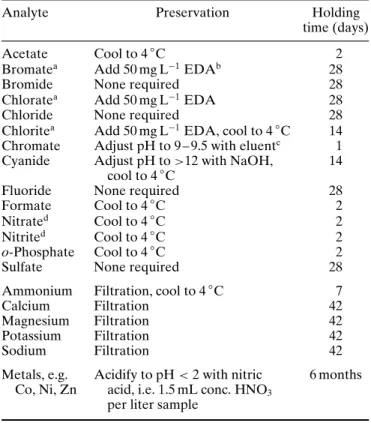
Table 2 Sample preservation and holding times for anions and cations commonly determined by IC.11,16 – 19/
Analyte Preservation Holding
time (days)
Acetate Cool to 4°C 2
Bromatea Add 50 mg L 1EDAb 28
Bromide None required 28
Chloratea Add 50 mg L 1EDA 28
Chloride None required 28
Chloritea Add 50 mg L 1EDA, cool to 4°C 14 Chromate Adjust pH to 9 – 9.5 with eluentc 1 Cyanide Adjust pH to>12 with NaOH,
cool to 4°C
14
Fluoride None required 28
Formate Cool to 4°C 2
Nitrated Cool to 4°C 2
Nitrited Cool to 4°C 2
o-Phosphate Cool to 4°C 2
Sulfate None required 28
Ammonium Filtration, cool to 4°C 7
Calcium Filtration 42 Magnesium Filtration 42 Potassium Filtration 42 Sodium Filtration 42 Metals, e.g. Co, Ni, Zn
Acidify to pH<2 with nitric acid, i.e. 1.5 mL conc. HNO3 per liter sample
6 months
aSamples collected for oxyhalide analysis should be immediately sparged with an inert gas (e.g. nitrogen, argon, or helium) for 5 min to remove active gases such as chlorine dioxide or ozone. Samples for chlorite should be stored in amber containers.
bEDADethylenediamine.
cEluentD250 mM ammonium sulfate and 100 mM ammonium hydrox-ide.
dHolding times can be increased by adjusting to pH 12 with sodium hydroxide.
water before use. Sample preservation requirements and holding times for anions and cations typically determined by IC are listed in Table 2.
3.2 Sample Dissolution
The majority of the water samples collected for IC analysis require little or no sample pretreatment. Drinking-water samples, for instance, typically require no pretreatment other than filtration through a 0.45µm filter to remove particulates. Higher ionic strength water samples, e.g. wastewater, often only require dilution (and filtration) to bring the analytes of interest into the working range of the method. In fact, this so-called dilute-and-shoot approach to sample preparation is one of the advantages of IC when it comes to the practical application of this technique..20/ However, solid samples, such as soils and sludge, are not directly amenable to IC analysis and require additional sample pretreatment.
3.2.1 Aqueous Extraction
The high solubility of ionic species in water means that such solutes can often be removed from solid samples prior to IC analysis simply by aqueous extraction of the finely divided sample. Generally, a weighed amount of the sample is mixed with a known volume of water, or other extracting solution, and homogenized using a blender or ultrasonic probe; alternatively, it is mixed with a magnetic stirrer or rotation flask..17,21/The choice of extracting solution is dependent on both the sample matrix and the nature of the solute ions..5/ Water is preferred, in order to avoid introducing extraneous peaks into the final chromatogram. However, the following have all been used to extract ionic species from solid samples prior to IC analysis:.5/ water combined with a miscible solvent such as methanol; solutions of dilute acid or base; dilute salt solutions, such as potassium chloride or phosphate buffers; or even the eluent solution used for the IC separation. Recoveries from the aqueous extraction of solid samples for low parts per million spikes of leachable solutes, such as fluoride, chloride, bromide, and nitrate, are typically of the order of 82 – 101%..22/
3.2.2 Acid Digestion
Many solid samples, such as shale or rocks, are not amenable to simple aqueous extraction and it is necessary to digest the sample to obtain quantitative recoveries of ionic species. This is traditionally performed using concentrated acids (e.g. nitric acid) or their mixtures (e.g. nitric/hydrochloric acids) and is widely used in the preparation of environmental samples prior to analysis using spectroscopic techniques, such as AAS or ICPAES..11,23/ However, acid digestion is often
inappropriate for IC because the excess of the acid coanion can lead to the appearance of a large, interfering peak in the final chromatogram and can also cause column overloading..5/ Hence, this approach is typically not employed for anion analysis, unless further sample pretreatment is being used. One important example of this approach is the determination of total cyanide by IC. Cyanide is strongly complexed to certain metals, e.g. iron, and strong acid digestion in the presence of a magnesium chloride catalyst is required to liberate free cyanide. The resulting hydrocyanic acid can be removed from the digestion matrix by reflux distillation and absorbed into a sodium hydroxide solution which can be analyzed for cyanide using IC with amperometric detection..24/ The same approach can also be used for sulfide and fluoride in solid samples.
In general, acid digestion is better suited to preparing samples which are to be analyzed for cations using IC. For instance, total nitrogen (as the ammonium ion) has been determined in environmental samples using IC by direct analysis of the Kjeldahl digest matrix..25/ In addition, transition metals and rare earth elements are frequently analyzed using IC with postcolumn reaction detection after acid digestion of the samples..5/
3.2.3 Alkali Fusion
Fusion techniques can be an attractive alternative to acid digestion for the preparation of samples of geological materials. A sample is mixed with an alkaline flux and heated at high temperatures (800 – 1100°C) until the flux becomes molten. The melt is then cooled and dissolved in a suitable digestion solution prior to analysis by IC. Typical flux materials include sodium peroxide, sodium carbonate, lithium tetraborate, and sodium hydroxide..26/ Care must again be taken to ensure that the final digest solution is compatible with the IC separation. This approach has been used for the determination of fluoride and chloride in geological materials after fusion with sodium carbonate and subsequent injection into an IC device using a carbonate/bicarbonate eluent..5/ Occasionally, this approach is the only means available for obtaining complex samples in solution. For instance, alkali fusion followed by acid digestion proved to be necessary for the complete dissolution of mineral sands when analyzing thorium and uranium by IC with postcolumn reaction detection..26/
3.2.4 Combustion Methods
Sample combustion is another approach which is com-monly used to prepare solid matrices for analysis by IC. This involves total combustion of the sample in oxygen, which converts nonmetallic elements to volatile gaseous
compounds. These gases can be collected into a suitable absorbing solution which can then be analyzed using IC. Combustion methods have been used for the determina-tion of halides and total sulfur, nitrogen, and phosphorus in samples such as plant materials, silicate rocks, coal, and oil shales..17/ The Schoeniger flask is the simplest apparatus for sample combustion. However, the oxy-gen pressure is limited to atmospheric pressure, which limits the sample size and ultimately the sensitivity of the analysis. Larger samples can be accommodated in a Parr bomb where oxygen pressures as high as 40 atm are used to facilitate sample combustion..5/ The absorbing solution used for halides, which are converted to their corresponding acid gas (e.g. HCl) during combustion is typically dilute sodium hydroxide. A reducing agent, such as hydrazine sulfate, may be added to prevent the formation of oxyanions for bromide and iodide..27/ Alter-natively, sulfur and phosphorus are typically quantitated as sulfate and phosphate, respectively, hence the absorb-ing solution typically contains an oxidizabsorb-ing agent, such as hydrogen peroxide..28/
3.3 Sample Cleanup
Once a solution has been obtained it is typically necessary to perform some degree of sample pretreatment or cleanup prior to injection into the IC device. This pretreatment may be as simple as filtration, or may be a complicated time-consuming matrix-elimination step. The typical intent of sample cleanup is to achieve one or more of the following goals: (1) removal of particulates which could cause blockages or damage to the instrument; (2) reduce the overall sample loading on the column; (3) concentration or dilution of the target analytes; and (4) removal of matrix interferences..5/
3.3.1 Filtration
As is the case with all liquid chromatographic methods, samples analyzed by IC should be free of particulates to avoid blockages or damage to connecting tubing, column end frits, and other hardware components. Samples are typically filtered through a 0.45µm (or less) membrane-based filter. Disposable syringe filters are commercially available and their use greatly simplifies sample filtration. Also, certain types of autoinjectors will automatically filter the sample before injection into the IC instrument. However, the possibility of sample contamination from these devices can be a concern, particularly when performing trace analysis. Rinsing filters with 20 mL of deionized water prior to filtration of the sample has been shown to remove most inorganic contaminants..29/
3.3.2 Matrix Elimination
Complex aqueous samples, such as wastewaters and solid leachates, often require further chemical modification (cleanup) of the sample in order to eliminate matrix interferences. Solid-phase extraction (SPE) cartridges represent the most convenient means of removing inter-ferences prior to ion chromatographic analysis..30/These commercially available disposable cartridges enable rapid sample pretreatment and require only small volumes of sample. SPE cartridges are available with many differ-ent chromatographic packing materials; including silica, alumina, C18, anion-exchange resins (OH form),
cation-exchange resins (HC, AgC, BaCforms), neutral polymer,
amino, and activated carbon..5/ These cartridges can be employed in a number of different modes of operation with IC analyses, as discussed below.
ž Hydrophobic SPE cartridges, e.g. C18 and neutral
polymers, can be used to remove neutral organic com-pounds, while allowing inorganic ions to pass through unretained. Hydrophobic organic compounds do not typically interfere during an IC separation; however, they can be strongly retained on the stationary phase material which can lead to decreased column life-times. This approach is typically required when using IC for the analysis of ions in food and biological matri-ces, or wastewaters and soil leachates containing high levels of organics, e.g. humic acids..17,21/
ž Cation- and anion-exchange SPE cartridges in the HC
and OH forms, respectively, can be used to adjust sample pH and reduce total ionic strength without adding a potentially interfering coanion (for acids) or cocation (for bases) to the sample..30/
ž Cation-exchange SPE cartridges in the HC form can
be used to remove carbonate and cationic species, such as ironIIIand aluminum, which may precipitate under alkaline eluent conditions..17/Cation-exchange cartridges in the AgCand BaCforms can be used to
selectively remove halides and sulfate from samples by precipitating insoluble silver halides or barium sulfate, respectively..30/The AgCform cartridges are
widely used to selectively remove chloride from environmental waters to allow trace analysis of anions, such as bromate in ozonated waters, which would otherwise be masked by the excess chloride..31/ Recently, SPE disks have become available as an alternative to the cartridge configuration. These disks are available with many of the same packings as the cartridges, although their geometry allows the use of higher sample loading flow rates..32/ The use of dialysis across membranes offers another means of reducing sample interferences, and this approach has been used
to reduce sample acidity,.33/basicity,.34/and also chloride in brine samples prior to IC analysis..35/
3.3.3 On-line Matrix Elimination
Many of the sample preparation techniques described above can also be performed using on-line instrumenta-tion. This approach offers the benefits of greater precision and the process can often be automated, although the instrumentation is usually more complex. The most com-mon application of on-line matrix elimination in IC is sample preconcentration. A measured volume of sam-ple is first passed through an ion-exchange concentrator column and the solute ions are retained on this column, while the bulk sample solution (i.e. water) passes through to waste. The concentrator column is then switched to be in line with the eluent, which carries the solute ions through to the analytical column to be separated and detected in the usual manner..5/ This approach is frequently used for the determination of trace ions in high-purity waters, e.g. steam and boiler feed water for power station generators..36/
Sample preconcentration can also be successfully applied to high-ionic-strength samples, particularly if the solutes of interest are strongly retained on the concentrator column. The strongly retained solutes can be trapped on the concentrator column while weakly retained solutes and water pass through to waste. This approach, which effectively combines sample
preconcentration with matrix elimination, has been used for the determination of anions in aqueous vegetation extracts and low parts per billion levels of precious metal cyanide complexes in gold tailings solutions..37,38/ A variation on using ion-exchange columns to selectively concentrate ionic solutes prior to IC analysis is the use of chelating resins. These materials can be used to selectively complex transition metal and rare earth elements in the presence of high levels of alkali and alkaline earth metals. This approach has been employed for the on-line cleanup and concentration of low parts per billion levels of transition metals and lanthanides in complex geological matrices and seawater prior to analysis by IC or ICPMS..39/
Automated matrix elimination can also be performed using heart-cut techniques. This involves loading the sample onto a short column, then carefully switching only the fraction of eluent containing the solute(s) of interest towards the separator column. This approach, which typically performs best when the sample matrix has a consistent composition, has been used for the determination of trace anions in samples containing high levels of chloride..20/
4 REGULATORY METHODS OF ANALYSIS
IC has been approved by many standard or regulatory organizations in numerous countries for the analysis of
Table 3 Regulatory IC methods approved in the USA for environmental water and waste analysis
Method Analytes Matricesa
EPA Method 300.0 (A) F, Cl, NO2, Br, NO3, PO4, SO4 rw, dw, sw, ww, gw, se EPA Method 300.0 (B) BrO3, ClO3, ClO2 Raw water, dw EPA Method 300.1 (A) F, Cl, NO2, Br, NO3, PO4, SO4 rw, dw, sw, gw EPA Method 300.1 (B) BrO3, Br, ClO3, ClO2 rw, dw, sw, gw
EPA SW-846 9056 F, Cl, Br, NO3, PO4, SO4 Combustion extracts, all waters ASTM D 4327-97 F, Cl, NO2, Br, NO3, PO4, SO4 dw, ww
Standard Methods.11/4110 Cl, NO2, Br, NO3, PO4, SO4 rw, dw, ww
EPA Method 300.6 Cl, NO3, PO4, SO4 Wet deposition, rain, snow, dew, sleet, hail ASTM D 5085-90 Cl, NO3, SO4 Wet deposition, rain, snow, sleet, hail
EPA Method B-1011 NO2, NO3 rw, dw
EPA SW-846 9058b ClO4 rw, dw, gw
ASTM D 2036-97 CN dw, sw, ww
ASTM D19.05.03.22b Total Fe(CN)63 and Fe(CN)64 dw, gw, ww EPA Method 218.6 Hexavalent chromium (CrO42 ) dw, gw, ww EPA SW-846 7199 Hexavalent chromium (CrO42 ) dw, gw, ww ASTM D 5257-93 Hexavalent chromium (CrO42 ) dw, sw, ww ASTM D19.05.03.23b Na, NH4, K, Mg, Ca rw, sw, gw, ww
EPA Method 300.7 Na, NH4, K, Mg, Ca Wet deposition, rain, snow, dew, sleet, hail EPA Method 200.10c Cd, Co, Cu, Pb, Ni, U, V Brines, seawater, mw, ew
EPA Method 200.13c Cd, Co, Cu, Pb, Ni Brines, seawater, mw, ew
aMatrices: rwDreagent water; dwDdrinking water; swDsurface water; wwDwastewater (mixed domestic and industrial); gwDground water; seDsolid extracts; mwDmarine water; ewDestuarine water.
bProposed method, in draft form only.
both anions and cations in environmental samples. The majority of the approved methods are for the analysis of anionic solutes; however, some approved methods exist for cations. Although a complete listing of approved IC methods worldwide is beyond the scope of this article, a list of the most important regulatory IC methods used for environmental water and waste analysis in the USA is given in Table 3..40/
Many different regulatory agencies promulgate what are essentially similar methods, as Table 3 illustrates. For instance, ASTM D 4327-97 uses the same methodol-ogy as USEPA Method 300.0(A); however, each agency has a unique method format and writing style. Also, differences exist between the methods in the area of quality control (QC). Thus QC is mandated in most USEPA methods whereas it is currently optional in ASTM methods. Different regulatory agencies exist even within the USEPA; hence Method 300.0 is appli-cable to the analysis of inorganic anions in drinking water and wastewater under direction of the Office of Groundwater and Drinking Water, whereas Method 9056 is applicable to the analysis of inorganic anions in all water types and combustion bomb extracts under direction of the Office of Solid Waste and Emergency Response.
In addition to the methods shown in Table 3 which use IC for environmental water and waste analysis, a considerable number of IC methods are employed for air analysis. Regulatory bodies, such as the National Institute of Occupational Safety and Health (NIOSH) and the Occupational Safety and Health Administration (OSHA), specify IC for the analysis of compounds in air and workplace atmospheres that form ionic species in solution (e.g. formic acid, sulfur dioxide, nitrous oxides, ammonia, and hexavalent chromium).
Although Table 3 details only methods approved in the USA, many industrial countries around the world have similar health and environmental standards; consequently, a considerable number of regulatory IC methods exist worldwide. For instance, German Methods DIN 38 405 (D 20) and DIN ISO (International Organization for Standardization) 10 304-1 are similar to USEPA Method 300.0, whereas DIN 38 405 (D 22) is applicable to the determination of chromate, iodide, sulfite, thiocyanate, and thiosulfate in water matrices. French Method AFNOR T90-042 is again similar to EPA Method 300.0, as is the Italian method UNICHIM 926 (1991). Several IC methods are approved in Japan for the analysis of anions in matrices, such as industrial waters (K0101), industrial wastewater (K0102), mine water, and wastewater (M0202)..41/ Japan also has a method detailing general rules for IC analysis (K0127), whereas Standards Australia has a recommended practice for chemical analysis by IC (AS 3741-1990)..42/
5 WATER AND WASTEWATER ANALYSIS
5.1 Drinking Water and Wastewater
Water quality in the USA is legislated through the Safe Drinking Water Act (SDWA) and the Clean Water Act (CWA). The SDWA ensures the integrity and safety of US drinking water, whereas the goal of the CWA is to reduce the discharge of pollutants into US waters. The majority of the regulatory methods of analysis that use IC are validated for both drinking water and wastewater, hence these matrices will be considered together. 5.1.1 Common Inorganic Anions
The US National Primary Drinking Water Standards specifies a maximum contaminant level (MCL) for a number of common inorganic anions, including fluoride, nitrite, and nitrate. The MCLs are specified to mini-mize potential health effects arising from the ingestion of these anions in drinking water. For instance, high levels of fluoride causes skeletal and dental fluorosis, whereas nitrite and nitrate can cause methemoglobulinemia, which can be fatal to infants..21/ Consequently, the analysis of these anions in drinking waters is mandated, as are the analytical methods used for their quantification. Other common anions, such as chloride and sulfate, are consid-ered secondary contaminants. The Secondary Drinking Water Standards are guidelines regarding taste, odor, color and certain aesthetic effects that are not federally enforced. However, they are recommended to all states as reasonable goals and many of the states adopt their own enforceable regulations governing these contaminants..43/ IC has been approved for compliance monitoring of these common inorganic anions in drinking water in the USA since the mid-1980s, as described in EPA Method 300.0. This same method received interim approval for the analysis of inorganic anions in wastewater under the National Pollution Discharge Elimination Sys-tem (NPDES) permits program in 1992. Method 300.0 specifies the use of a DionexAS4A anion-exchange col-umn with an eluent of 1.7 mM sodium bicarbonate/1.8 mM sodium carbonate for the separation of common anions. An optional column may be substituted provided com-parable resolution of peaks is obtained and that the QC requirements of the method can be met..22/Conductivity detection is used for quantification after suppression of the eluent conductance with an anion micro-membrane suppressor (AMMS) or similar device.
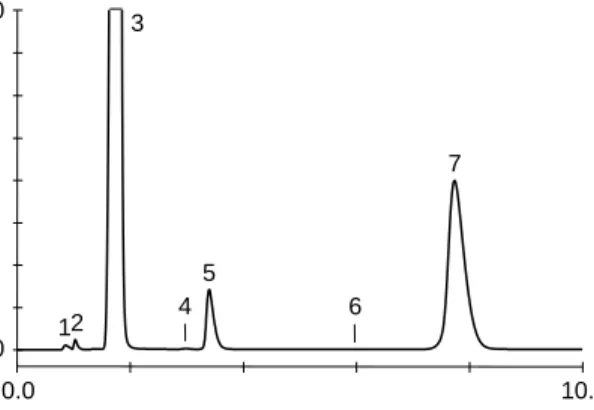
Figure 1 shows a chromatogram of a standard con-taining low parts per million levels of common anions obtained using the conditions described in Method 300.0. All the anions are well-resolved within a total run time of less than 8 min. The application range and MDLs that can be achieved for each of the anions using
0.0 −2.0 10.0
µ
S
8.0Time (min)
7 6 5 4 3 2 1Figure 1 Separation of low parts per million anion stan-dard using EPA Method 300.0. Conditions: column, Dionex IonPac AS4A-SC; eluent, 1.8 mM sodium carbonate/1.7 mM sodium bicarbonate; flow rate, 2.0 mL min 1; detection, sup-pressed conductivity with an anion self-regenerating suppres-sor (ASRS) operated at 50 mA in recycle mode; injection volume, 25µL; solutes, 1Dfluoride (2 mg L 1), 2Dchloride (3 mg L 1), 3Dnitrite (5 mg L 1), 4Dbromide (10 mg L 1), 5Dnitrate (10 mg L 1), 6Dphosphate (15 mg L 1), 7Dsulfate (15 mg L 1).
Table 4 USEPA Method 300.0 application ranges and detection limits (DLs).22/
Analyte Application range MDL
(mg L 1) (mg L 1) Fluoride 0.26 – 8.49 0.01 Chloride 0.78 – 26.0 0.02 Nitrite-N 0.36 – 12.0 0.004 Bromide 0.63 – 21.0 0.01 Nitrate-N 0.42 – 14.0 0.002 Orthophosphate-P 0.69 – 23.1 0.003 Sulfate 2.85 – 95.0 0.02
Method 300.0 are shown in Table 4. Similar methods, such as ASTM D 4327-97 and Standard Methods 4110, provide comparable performance. Advances in column and suppressor technology continues to improve the methodology for determination of these common anions. The IonPac AS14 column provides complete resolu-tion of fluoride and acetate and also improved resoluresolu-tion of fluoride from the void peak compared to the AS4A column. Figure 2 shows a chromatogram of a typical drinking-water sample obtained using an AS14 column with a 3.5 mM bicarbonate/1.0 mM carbonate eluent and suppressed conductivity detection.
EPA Method 300.0 is also validated for wastewater analysis, although such samples often require sample pretreatment before injection into the ion chromato-graph. Dilution into the application range followed by filtration is often required, whereas pretreatment with SPE cartridges to remove hydrophobic organic material
30.0 0.0 0.0 14.0
Time (min)
µ
S
1 2 3 4 5Figure 2 Determination of inorganic anions in drinking water. Conditions as for Figure 1, except: column, Dionex IonPac AS14; eluent, 3.5 mM sodium carbonate/1.0 mM sodium bicarbonate; injection volume, 50µL; solutes, 1Dfluoride (0.03 mg L 1), 2Dchloride (10.1 mg L 1), 3Dnitrate (3.7 mg L 1), 4Dphosphate (0.04 mg L 1), 5Dsulfate (12.2 mg L 1). 20 0 0 2 4 6 8 10
Time (min)
µ
S
1 2 3 5 6 4 7 8Figure 3 Determination of anions in domestic wastewa-ter. Conditions as for Figure 1, except: injection volume, 50µL; sample preparation, SPE cleanup with a Waters C18 Sep-Pak; solutes, 1Dinjection peak, 2Dacetate (4.2 mg L 1), 3Dbicarbonate (not quantitated), 4Dchloride (49 mg L 1), 5Dbromide (0.04 mg L 1), 6Dnitrate (0.03 mg L 1), 7D phos-phate (28 mg L 1), 8Dsulfate (35 mg L 1).
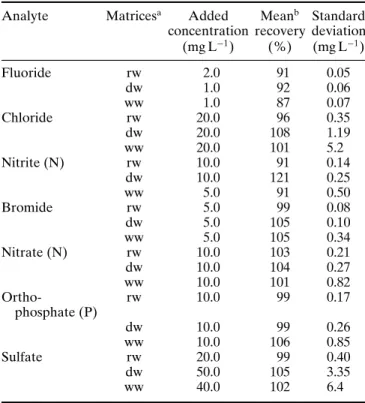
is recommended to prolong column lifetimes. Figure 3 shows a chromatogram of a typical domestic wastewater sample obtained using an AS4A column with a car-bonate/bicarbonate eluent and suppressed conductivity detection. The performance of environmental methods, such as EPA Method 300.0, is typically validated through single- and multioperator precision and bias studies on spiked samples. Table 5 shows single-operator precision and bias data obtained using Method 300.0 for common anions spiked into reagent water, drinking water, and mixed domestic and industrial wastewaters. Acceptable precision and bias data were obtained for the determi-nation of common anions in all three matrix types when using IC.
Table 5 USEPA Method 300.0 single-operator precision and bias.22/
Analyte Matricesa Added Meanb Standard concentration recovery deviation (mg L 1) (%) (mg L 1) Fluoride rw 2.0 91 0.05 dw 1.0 92 0.06 ww 1.0 87 0.07 Chloride rw 20.0 96 0.35 dw 20.0 108 1.19 ww 20.0 101 5.2 Nitrite (N) rw 10.0 91 0.14 dw 10.0 121 0.25 ww 5.0 91 0.50 Bromide rw 5.0 99 0.08 dw 5.0 105 0.10 ww 5.0 105 0.34 Nitrate (N) rw 10.0 103 0.21 dw 10.0 104 0.27 ww 10.0 101 0.82 Ortho-phosphate (P) rw 10.0 99 0.17 dw 10.0 99 0.26 ww 10.0 106 0.85 Sulfate rw 20.0 99 0.40 dw 50.0 105 3.35 ww 40.0 102 6.4
aMatrices: rwDreagent water; dwDdrinking water; wwDwastewater (mixed domestic and industrial).
bAverage of seven replicates.
5.1.2 Disinfection By-product Anions
USEPA Method 300.0 was revised in 1993 to include determination of the disinfection by-product (DBP) anions – bromate, chlorite, and chlorate. Bromate is a DBP produced from the ozonation of source water that contains naturally occurring bromide, whereas chlorite and chlorate are produced as a result of using chlorine dioxide as a disinfectant. These DBP anions pose significant health risks, even at low microgram per liter levels. Bromate has been judged as a potential carcinogen and the USEPA has estimated a potential cancer risk equivalent to 1 in 104for a lifetime exposure to drinking water containing bromate at 5µg L 1..44/
The occurrence of bromate and other DBPs in US drinking water has recently been documented by the USEPA through the comprehensive collection of data mandated by the information collection rule (ICR). The USEPA has proposed an MCL for bromate of 10µg L 1
and an MCL for chlorite of 1000µg L 1 in finished
drinking water, which was promulgated in Stage I of the disinfectant and disinfection by-product (D/DBP) rule..45/ USEPA Method 300.0(B) specifies the use of a Dionex AS9-SC anion-exchange column with a 1.7 mM sodium bicarbonate/1.8 mM sodium carbonate eluent and suppressed conductivity detection for the
analysis of bromate, chlorite, and chlorate. However, Method 300.0(B), as originally published, cannot meet the quantitation requirements of the ICR and method modifications are required. These include the use of a weaker borate eluent to improve bromate and chloride resolution and the use of sample pretreatment to minimize chloride interference..46/
In support of the publication of Stage I of the D/DBP rule, the USEPA recently developed Method 300.1 for the determination of inorganic and DBP anions. Method 300.1 specifies a Dionex AS9-HC anion ex-change column with a 9.0 mM sodium carbonate eluent and suppressed conductivity detection. The AS9-HC differs from the column specified in Method 300.0(B) in that it has higher capacity and improved sepa-ration of the key oxyhalide anions from potential interferences. Method 300.1(A) is applicable to common inorganic anions in drinking water, whereas 300.1(B) is applicable to the determination of DBP anions, and bromide, in drinking water. Methods 300.1(A) and (B) use different injection volumes to achieve differ-ent MDLs. Method 300.1(A) requires 10µL whereas 300.1(B) requires 50µL when using a 2 mm ID (inter-nal diameter) column, or 50µL and 200µL injections, respectively, with a 4 mm ID column..16/ The relatively large injection volume is required for 300.1(B) in order to achieve the DLs necessary when analyzing DBP anions.
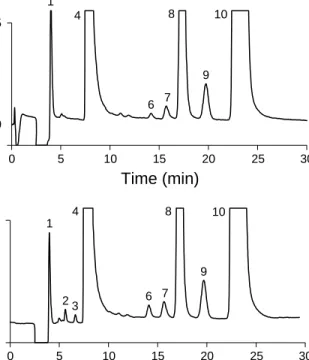
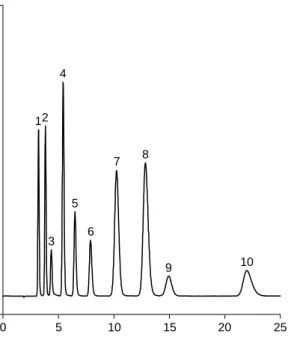
Figure 4 shows the separation of chlorite, bromate, and chlorate, in addition to the common inorganic anions using an AS9-HC column. The MDLs for 300.1(B) using a 50µL injection and 2 mm ID column are 0.89, 1.44, 1.44, and 1.31µg L 1 for chlorite, bromate,
10 0 0 5 10 15 20 25
Time (min)
µ
S
1 2 3 4 5 6 7 8 9 10Figure 4 Separation of oxyhalides plus common inorganic anions using EPA Method 300.1. Conditions: column, Dionex IonPac AS9-HC (4 mm ID); eluent, 9.0 mM sodium car-bonate; flow rate, 1.0 mL min 1; detection, suppressed con-ductivity with an ASRS operated at 100 mA in external water mode; injection volume, 25µL; solutes, 1Dfluoride (3 mg L 1), 2Dchlorite (10 mg L 1), 3Dbromate (20 mg L 1), 4Dchloride (6 mg L 1), 5Dnitrite (15 mg L 1), 6Dbromide (25 mg L 1), 7Dchlorate (25 mg L 1), 8Dnitrate (25 mg L 1), 9Dphosphate (40 mg L 1), 10Dsulfate (30 mg L 1).
0 5 0.2 1 4 2 3 6 7 9 5 8 10 0.0
µ
S
10 15 20 25Time (min)
Figure 5 Determination of low-level oxyhalides and com-mon anions in simulated drinking water. Conditions as for Figure 4, except: injection volume, 200µL; solutes, 1Dfluoride (1 mg L 1), 2Dchlorite (0.01 g L 1), 3Dbromate (0.005 mg L 1), 4Dchloride (50 mg L 1), 5Dnitrite (0.1 mg L 1), 6D bro-mide (0.01 mg L 1), 7Dchlorate (0.01 mg L 1), 8Dnitrate (10 mg L 1), 9Dphosphate (0.1 mg L 1), 10Dsulfate (50 mg L 1).
bromide, and chlorate respectively..16/ Figure 5 shows the chromatogram of a synthetic drinking water sample obtained using an AS9-HC column with a 9.0 mM carbonate eluent and suppressed conductivity detection. Despite using a 200µL injection, no column overloading occurs and bromate can be determined at 5µg L 1 in the presence of a 10 000-fold excess of chloride..47/ Figure 6 shows the application of Method 300.1(B) to the determination of DBP anions in drinking water from Sunnyvale, California. The water in this municipality is disinfected using hypochlorite, hence chlorate appears in the drinking water matrix, shown in Figure 6(a). The same drinking water spiked with 10µg L 1 each of chlorite,
bromate, bromide, and chlorate is shown in Figure 6(b), indicating that the DBP anions are clearly resolved from the common inorganic anions (and bromide) present in drinking water. Table 6 shows single-operator precision and bias data obtained using Method 300.1 for the DBP anions spiked into reagent water, drinking water, and high-ionic-strength drinking water.
5.1.3 Hexavalent Chromium
USEPA Methods 300.0 and 300.1, and equivalent meth-ods in the USA and other countries, represent the most important and widely used applications of IC in environ-mental analysis. However, a number of other regulatory methods based on IC are applicable to drinking-water and wastewater analysis. Inorganic chromium is a primary drinking-water contaminant with an MCL of 0.1 mg L 1.
Hexavalent chromium is the most toxic form of the metal,
0 5 1 4 6 7 9 8 10 0.0 0.5
µ
S
10 15 20 25 30Time (min)
(a) 0 5 1 4 2 3 6 7 9 8 10 0.0 0.5µ
S
10 15 20 25 30Time (min)
(b)Figure 6 Determination of oxyhalides and common anions in Sunnyvale drinking water. Conditions as for Figure 4, except: sample, (a) drinking water and (b) drinking water spiked with 0.01 mg L 1 of oxyhalide anions and bromide; solutes, (a) 1Dfluoride (0.05 mg L 1), 4Dchloride (19 mg L 1), 6Dbromide (0.004 mg L 1), 7Dchlorate (0.03 mg L 1), 8Dnitrate (1.7 mg L 1), 9Dphosphate (0.25 mg L 1), 10D sul-fate (30 mg L 1) and (b) 1Dfluoride (0.05 mg L 1), 2Dchlorite (0.008 g L 1), 3Dbromate (0.012 mg L 1), 4Dchloride (19 mg L 1), 6Dbromide (0.013 mg L 1), 7Dchlorate (0.041 mg L 1), 8Dnitrate (1.7 mg L 1), 9Dphosphate (0.25 mg L 1), 10Dsulfate (30 mg L 1).
Table 6 USEPA Method 300.1 single-operator precision and bias.16/
Analyte Matricesa Added Meanb Standard concentration recovery deviation (µg L 1) (%) (µg L 1) Chlorite rw 100 96.2 0.95 O3w 100 84.4 0.46 hiw 100 102 2.19 Bromate rw 5.00 101 0.45 O3w 5.00 80.9 0.61 hiw 5.00 97.5 0.95 Bromide rw 20.0 104 0.80 O3w 20.0 –c 3.67 hiw 20.0 92.5 0.79 Chlorate rw 100 98.3 0.80 O3w 100 100 1.20 hiw 100 86.1 1.47
aMatrices: rwDreagent water; O3wDozonated drinking water; hiwD high-ionic-strength simulated drinking water.
bAverage of nine replicates.
in addition to being a suspected carcinogen. Hexavalent chromium can be separated as the chromate anion using a high capacity Dionex AS7 anion-exchange column, as specified in USEPA Method 218.6..18/ In this case, detection is achieved using a UV/VIS detector after postcolumn reaction with diphenylcarbohydrazide, as this color-forming reagent provides a more sensitive and selective means for determining chromate than sup-pressed conductivity.
USEPA Method 218.6 and ASTM D 5257-93 are validated for the determination of hexavalent chromium in drinking water, groundwaters and industrial wastew-aters. An MDL of 0.3µg L 1 for Cr(VI) in drinking
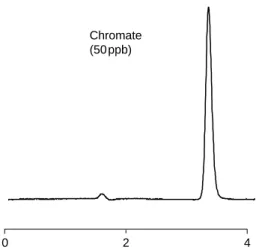
and wastewater can be achieved using a 250µL injec-tion. Average recoveries in the order of 98 – 105% were obtained for 100µg L 1 Cr(VI) solutions spiked into reagent, drinking, ground, primary sewage waste and electroplating wastewaters..16/ Figure 7 shows a chro-matogram of a spiked wastewater sample obtained using the conditions described in USEPA Method 218.6. No interfering peaks are observed when using this very specific detection approach for Cr(VI) analysis.
5.1.4 Cyanide
The highly toxic cyanide anion is a primary drinking-water contaminant which has an MCL of 0.2 mg L 1. Sources of cyanide contamination in drinking water include effluents from the electroplating, steel, plastics and mining industries, in addition to certain fertilizers..43/
0 2 4
Time (min)
Chromate (50 ppb)Figure 7 Determination of chromate in spiked wastewater using EPA Method 218.6. Conditions: column, DionexAS7; eluent, 250 mM ammonium sulfate/100 mM ammonium hydrox-ide; flow rate, 1.5 mL min 1; detection, UV/VIS at 530 nm after postcolumn reaction with 2 mM diphenylcarbazide/10% methanol/1.0 N sulfuric acid delivered at 0.5 mL min 1; injec-tion volume, 100µL; sample, filtered wastewater spiked with 50µg L 1chromate.
Cyanide is classified according to its availability in the presence of complexing metals. Total cyanide refers to CN that can be released as hydrocyanic acid (HCN) from both the aqueous and particulate portions of a sample under total reflux distillation conditions and includes both free and complex cyanides. Free cyanide refers to CN that can be released as hydrocyanic acid from the aqueous portion of a sample by direct cyanide determination without reflux distillation. Cyanide amenable to chlorination refers to CN determined after chlorinating a portion of sample, and calculating the difference between total cyanide in the original and chlorinated samples. Weak acid dissociable cyanide refers to CN determined after distillation with a weak acid. This only releases CN bound in weak complexes, i.e. those with low stability constants, such as with Cu or Zn..24/
In practice, the majority of CN determinations, par-ticularly in wastewater samples, involve measurement of total CN, which is determined after reflux distillation of an alkaline sample in the presence of sulfuric acid and a magnesium chloride catalyst..24/ The released HCN is absorbed into a sodium hydroxide scrubber solution and the cyanide in this solution can be measured colorimetri-cally, by IC, FIA, titration, or ISE. An IC separation is recommended with electrochemical detection when sul-fur, thiocyanate, or other sulfur-containing compounds are present in the sample, as H2S codistills with HCN
and can interfere with the FIA determination when using electrochemical detection..24/
ASTM D 2036-97 is validated for the determination of total cyanide in drinking, ground, and surface waters, and both domestic and industrial wastes using IC, in addition to other analytical measurement techniques. Cyanide is separated on a Dionex AS7 anion-exchange column using an eluent of 100 mM sodium hydroxide/500 mM sodium acetate/0.5% (V/V) ethylenediamine. The CN is then detected using an amperometric detector with a silver working electrode operated at 0.05 V..24/This very sensitive detection approach provides an MDL of 2µg L 1
when using a 1.0 mL injection volume and can tolerate sulfur concentrations up to 100 times the cyanide level without degradation of method performance. Figure 8 shows a chromatogram of cyanide and sulfide in a spiked wastewater sample obtained using an AS7 column and amperometric detection. The applicable range of this method is from 10µg L 1 to 10 mg L 1 cyanide; mean
recoveries in the order of 85 – 98% were obtained for samples spiked with CN over the range 40 – 1000µg L 1.
5.1.5 Perchlorate
Ammonium perchlorate is a key ingredient in solid rocket propellants which has recently been found in groundwaters in regions of the USA where aerospace
0 2 4 6 8
Time (min)
1 2
Figure 8 Determination of sulfide and cyanide in spiked wastewater using ASTM Method D2036-97. Conditions: column, Dionex IonPac AS7; eluent, 500 mM sodium acetate/100 mM sodium hydroxide; flow rate, 1.0 mL min 1; detection, amperometry using a silver working electrode oper-ated at 0.05 V versus Ag/AgCl reference; injection volume, 100µL; sample, filtered spiked wastewater; solutes, 1Dsulfide (25µg L 1), 2Dcyanide (100µg L 1).
material, munitions, and fireworks have been developed, tested, or manufactured. Perchlorate has been found in ground and surface waters in California, Nevada, Utah, and West Virgina..48/Perchlorate poses a human health risk and preliminary data from the USEPA reports that exposure to less than 4 – 18µg L 1 as providing adequate health protection..49/ Perchlorate is listed on the USEPA contaminant candidate list as a research priority, although it is not currently regulated under the Federal SDWA..43/Perchlorate contamination of public drinking-water wells is becoming a serious problem in some western States and the California Department of Health Services (CDHS) has adopted an action level for perchlorate in drinking water of 18µg L 1. To date,
perchlorate has been detected in over 100 public drinking-water wells in California, with more than 20 wells being closed due to contamination..49/
The CDHS developed an IC method based on the use of an hydrophilic IonPac AS5 column, large loop injection, and suppressed conductivity detection to quantify perchlorate at low microgram per liter levels..50/ However, the use of an IonPac AS11 column with an eluent of 100 mM hydroxide, 1000µL injection, and suppressed conductivity detection provides an MDL for perchlorate of 0.3µg L 1 without the need for an organic modifier in the mobile phase..48/ Figure 9 shows a chromatogram of perchlorate standard at 20µg L 1, whereas Figure 10 shows a drinking water sample spiked
0.0 2.0 4.0 6.0 8.0 10.0 12.0
Time (min)
0.0 0.6 1µ
S
Figure 9 Chromatogram of 20µg L 1 perchlorate standard. Conditions: column, Dionex IonPac AS11; eluent, 100 mM sodium hydroxide; flow rate, 1.0 mL min 1; detection, sup-pressed conductivity with an ASRS-Ultra operated at 300 mA in external water mode; injection volume, 1000µL; solute, per-chlorate. 1 0.0 2.0 4.0 6.0
Time (min)
8.0 10.0 12.0 0.5 0.0µ
S
Figure 10 Analysis of perchlorate in spiked drinking water. Conditions as for Figure 9, except: sample, filtered Sunnyvale, CA, tapwater spiked with 6µg L 1perchlorate.
with 6.0µg L 1 perchlorate. The applicable range of this method is from 2.0 to 100µg L 1 perchlorate. The method is free of interferences from common anions and quantitative recoveries were obtained for low microgram per liter levels of perchlorate in spiked drinking and groundwater samples..48/
5.1.6 Inorganic Cations and Ammonia
The preceding discussion shows that a number of regulatory methods based on IC are available for anion analysis; however, that is not case for cation analysis. The majority of the inorganic cations listed as primary drinking water contaminants are transition metals which are most commonly analyzed using spectroscopic methods, such as AAS, ICPAES, or ICPMS..11/However, IC is a USEPA-approved method for the analysis of the ammonium cation, sodium, potassium, calcium, and magnesium
0 5 10 15 20 25
Time (min)
16µ
S
0 12 3 5 6 9 10 7 8 4Figure 11 Separation of ammonia and alkali/alkaline earth cations. Conditions: column, DionexIonPacCS12A; eluent, 18 mM methanesulfonic acid; flow rate, 1.0 mL min 1; detec-tion, suppressed conductivity with a cation self-regenerating suppressor (CSRS) operated at 100 mA in recycle mode; injection volume, 25µL; solutes, 1Dlithium (1 mg L 1), 2Dsodium (4 mg L 1), 3Dammonia (5 mg L 1), 4Dpotassium (10 mg L 1), 5Drubidium (10 mg L 1), 6Dcesium (10 mg L 1), 7Dmagnesium (5 mg L 1), 8Dcalcium (10 mg L 1), 9D stron-tium (10 mg L 1), 10Dbarium (10 mg L 1).
in rain water and wet precipitation, and provides a straightforward method for the simultaneous analysis of these cations..19/ Also, the ISO has recently published an ISO Method for the simultaneous determination of dissolved alkali and alkaline earth cations, ammonia, and manganese in water and wastewater using IC..51/ Figure 11 shows an example of a typical separation of alkali and alkaline earth cations and ammonia obtained using a DionexCS12A column with an eluent of methanesulfonic acid and suppressed conductivity detection.
IC is particularly beneficial for the simultaneous determination of cations plus ammonia in wastewaters containing amines, as these compounds can interfere with the conventional colorimetric or ISE methods used for ammonia analysis. Recently, an ASTM method based on IC has been proposed for the analysis of ammonia, sodium, potassium, calcium, and magnesium in reagent, drinking, surface, and groundwater and mixed industrial and domestic wastewater. This method uses a Dionex CS15 column which has crown ether functionalities incorporated into the stationary phase to provide maximum resolution of ammonia and the
0 0.25 0.0 5 10 15 20
Time (min)
µ
S
1 2 3Figure 12 Determination of ammonia in industrial wastewa-ter. Conditions: column, DionexIonPacCS15; temperature, 40°C; eluent, 10 mN sulfuric acid/10% methanol; flow rate, 1.2 mL min 1; detection, suppressed conductivity with a CSRS operated at 100 mA in external water mode; injection vol-ume, 25µL; solutes, 1Dsodium (100 mg L 1), 2Dammonia (0.025 mg L 1), 3Dcalcium (not quantitated).
adjacent sodium peak. The use of this column with an eluent of 13 mN sulfuric acid and suppressed conductivity detection can achieve an MDL for ammonia of 1.0µg L 1
using a 100µL injection loop..52/ Figure 12 shows the application of this column for the determination of ammonia in industrial wastewater containing a large excess of sodium.
5.2 Natural Waters
In addition to being approved for a number of drinking-water and wastedrinking-water analyses, IC is also widely used for analysis of natural water samples. Many of the regulatory methods described in section 5.1 are also validated for natural waters, such as ground and surface waters. Natural waters encompass a wide variety of sample matrices, including: rain and acid rain; mineral spring waters and other groundwaters; surface waters (such as river, stream, lake, and pond waters); soil pore waters; runoff waters; snow, hail, and sleet; ice and ice cores; well and bore waters, etc. There are few regulations governing the analysis of such samples, hence a great diversity of IC methods are applied to a much wider range of analytes than in the highly regulated area of drinking water and wastewater analysis.
Although the key regulatory methods which use IC were described in the preceding pages, it is beyond the scope of this article to describe all of the applications of IC to natural-water analysis. Good overviews of the early use of IC for environmental applications are available,.9,10/ and two very comprehensive listings of environmental analyses using IC were published in
1990..5,53/ In addition, proceedings of the International IC Symposium, published annually since 1991 by the Journal of Chromatography, contain excellent summaries of current developments and applications of IC for environmental and other analyses.
The analysis of rain water and acid rain is one of the more important applications of IC. The determination of ionic components in rain waters by IC is frequently used to estimate the effects of acidification on the natural and urban environments caused by acid rain..54/ The major ionic components of acid rain consist of the hydronium ion, sodium, ammonium, potassium, calcium, magnesium, and chloride, nitrate, and sulfate. Clearly, separate analyses using the separations presented in Figures 1 and 11 would provide the major components of an ion balance for an acid rain, once the sample pH had been measured. USEPA Methods 300.7 and 300.6 are based on similar, although somewhat dated, methods for the determination of these cations and anions, respectively, in acid rain and rain water..19,55/
Many researchers have developed methods that enable the simultaneous determination of both anions and cations in rain waters and atmospheric aerosols, with perhaps the most comprehensive approach involving an automated quadruple IC system to perform isocratic anion, gradient anion (with and without sample pre-concentration), and gradient cation separations using
350 300 250 0.0 10.0 20.0 30.0
m
V
Time (min)
1 2 3 4 5 6 7Figure 13 Simultaneous determination of anions and cations in acid rain. Conditions: column, TosohTSKgel OA-PAK; elu-ent, 5 mM tartaric acid/7.5% methanol; flow rate, 1.2 mL min 1; detection, nonsuppressed conductivity; injection volume, 100µL; sample, acid rain from Nagoya, Japan; solutes, 1Dsulfate, 2Dchloride, 3Dnitrate, 4Dsodium, 5D ammo-nia, 6Dpotassium, 7Dmagnesium, 8Dcalcium. (Reprinted from K. Tanaka, K. Ohta, J.S. Fritz, S. Matsushita, A. Miyanaga, ‘Simultaneous Ion-exclusion Chromatography Cation Exchange Chromatography with Conductometric Detection of Anions and Cations in Acid Rain Waters’, J. Chromatogr., 671, 239 – 248, Copyright (1994) with permission from Elsevier Science.)
a single sample injection..56/ Tanaka et al. developed a less complex approach that enables the simultaneous determination of anions and cations in acid rain based upon a simultaneous ion-exclusion – cation-exchange sep-aration and non-suppressed conductimetric detection..54/ Figure 13 shows an example of a chromatogram of anions and cations in rain water obtained using this approach.
Gradient elution is typically required to quantify all of the minor acid components of rain-water samples, as organic acid anions, such as formate, acetate, or methanesulfonate, are often present at low levels in rain-water samples..57/ Figure 14 shows an example of the resolving power that can be achieved with an hydroxide gradient using modern IC instrumentation, whereas Figure 15 shows the separation of inorganic anions and organic acids in rain water obtained using a borate gradient with a Dionex AS11 column and suppressed conductivity detection. Gradient separations can be used to quantify a wide range of anionic solutes in complex water samples, such as hazardous-waste leachates. In addition to rain-water analysis, IC has also been used to analyze terrestrial waters and ice cores from pristine environments, such as Antarctica, in order to establish baseline levels of pollutants..58,59/
The analysis of ground and surface waters is another common application of IC. The determination of inor-ganic solutes in waters from rivers, streams, lakes, and ponds is similar in complexity to the analysis of typical wastewater samples. Filtration followed by pretreatment with SPE cartridges to remove hydrophobic organic mate-rial is recommended when analyzing most ground and surface waters. Mineral waters are typical examples of natural groundwaters which are commonly analyzed by IC. These samples can significantly differ in both total mineralization and also chemical composition..60/IC has been shown to be applicable to the determination of over 98.6% of the total cation composition and over 98.9% of the noncarbonate anion composition of min-eral waters..61/ Similarly, IC is also frequently applied to the determination of inorganic ions in surface waters. Figure 16 shows the analysis of inorganic anions in lake water from Salt Lake in Utah obtained using an AS4A column and suppressed conductivity detection.
IC tends to be more commonly utilized for the determination of metal species in natural waters than in drinking-water and wastewater samples. The ability of IC to quantify different oxidation states, such as Fe(II) or Fe(III); and stable metal complexes, such as metallocyanides, or both inorganic and organic arsenic species is of great benefit in determining the fate, transport, and toxicity of metals in natural waters..14,62/ Figure 17 shows an example of the determination of low parts per billion levels of metal cations in
5 10 15
Time (min)
1 234 5 6 10µ
S
0 7 8 9 10 11 13 14 15 16 17 18 23 24 25 26 27 28 29 30 32 33 34 31 1921 22 20 12Figure 14 Hydroxide gradient separation of inorganic and organic acid anions. Conditions: column, Dionex IonPac AS11; eluent, deionized water/sodium hydroxide gradient; flow rate, 2.0 mL min 1; detection, suppressed conductivity; solutes, 1Disopropylethylphosphonate (5 mg L 1), 2Dquinate (5 mg L 1), 3Dfluoride (1 mg L 1), 4Dacetate (5 mg L 1), 5Dpropionate (5 mg L 1), 6Dformate (5 mg L 1), 7Dmethanesulfonate (5 mg L 1), 8Dpyruvate (5 mg L 1), 9Dchlorite (5 mg L 1), 10Dvalerate (5 mg L 1), 11Dmonochloroacetate (5 mg L 1), 12Dbromate (5 mg L 1), 13Dchloride (2 mg L 1), 14Dnitrite (5 mg L 1), 15Dtrifluoroacetate (5 mg L 1), 16Dbromide (3 mg L 1), 17Dnitrate (3 mg L 1), 18Dchlorate (3 mg L 1), 19Dselenite (5 mg L 1), 20Dcarbonate (5 mg L 1), 21Dmalonate (5 mg L 1), 22Dmaleate (5 mg L 1), 23Dsulfate (5 mg L 1), 24Doxalate (5 mg L 1), 25Dketomalonate (10 mg L 1), 26Dtungstate (10 mg L 1), 27Dphthalate (10 mg L 1), 28Dphosphate (10 mg L 1), 29Dchromate (10 mg L 1), 30Dcitrate (10 mg L 1), 31Dtricarballylate (10 mg L 1), 32Disocitrate (10 mg L 1), 33Dcis-aconitate (10 mg L 1), 34Dtrans-aconitate (10 mg L 1).
river water obtained after preconcentrating 40 mL of sample..63/
5.3 Brines
The analysis of brines by IC is complicated by the high ionic strength and excess sodium chloride in the sample. Nevertheless, IC is frequently used for the analysis of inorganic solutes in natural-water brines, which include seawater, subsurface brines, geothermal brines, and very high salinity groundwaters. The analysis of major components, e.g. chloride and sulfate, in brines is relatively straightforward, only requiring a dilution before direct injection into the IC device..64/However, the analysis of minor components in brines typically requires careful selection of analytical conditions, and a wide variety of approaches have been used for the analysis of these minor components. The use of IC for the analysis of anions in high salt concentration environmental waters has recently been reviewed by Singh et al..65/ In addition to the use of conventional suppressed IC, other
approaches include: using sodium chloride as the eluent; sample pretreatment with Ag-form membranes and SPE cartridges; the use of heart-cut matrix elimination or preconcentration combined with matrix elimination; and the use of more selective detection methods, such as UV/VIS absorption, amperometry, postcolumn derivatization, and even ICPMS..30,32,58,65 – 72/
The use of sodium chloride as an eluent combined with low-wavelength UV detection allows the determination of UV-absorbing anions, such as nitrate, iodide, and molyb-date, in samples containing up to 20 000 mg L 1of chloride
without loss of chromatographic performance..66/ A similar approach with an eluent containing chloride and an ion-pairing reagent has been used for the anal-ysis of thiosulfate and polythionates in natural saline waters..68/Sample pretreatment with Ag-form SPE car-tidges or membranes to reduce chloride is a commonly used approach to allow determination of minor anionic components in brines. Chloride precipitates as AgCl, although other halides are also removed to a signifi-cant extent using this approach and poor recoveries can
10 0 10 20
µ
S
Time (min)
1.0 0.0 FLa Gl− Ac MSA Fo Cl− NO3− SO42− PO43−Figure 15 Determination of inorganic anions and organic acids in rain water using a borate gradient. Conditions: column, DionexIonPacAS11; eluent, deionized water/sodium tetrab-orate gradient; flow rate, 1.0 mL min 1; injection volume, 25µL; detection, suppressed conductivity using an AMMS. (Reprinted from A.A. Ammann, T.B. Ruttimann, ‘Simultaneous Determi-nation of Small Organic and Inorganic Anions in Environmental Water Samples by Ion-exchange Chromatography’, J.
Chro-matogr., 706, 259 – 269, Copyright (1995), with permission from
Elsevier Science.) 0.0 40.0 0.0 12 4 5 6 7 3
µ
S
10.0Time (min)
Figure 16 Determination of anions in lake water. Conditions as for Figure 3, except: sample, water from Salt Lake, Utah; solutes, 1Dinjection peak, 2Dfluoride (0.28 mg L 1), 3Dchloride (142 mg L 1), 4Dbromide (0.18 mg L 1), 5Dnitrate (11.2 mg L 1), 6Dphosphate (0.28 mg L 1), 7Dsulfate (44 mg L 1).
be obtained for nitrite..30,32/ Selective detection can be applied to the determination of specific ions; for instance, iodide has been determined in brine using pulsed amper-ometry at a silver working electrode after separation on a Dionex AS11 column with an eluent of 50 mM nitric acid. Iodide could be quantified at 16µg L 1in 30% NaCl
0.08 0.04 0 4 8 12 16 20 24 28
Time (min)
A
b
s
o
rb
a
n
c
e
Cu Zn Co Pb Ni Mg 40 ml H2O Mn (plus Ca)Figure 17 Determination of metal cations in river water obtained using sample preconcentration. Conditions: column, Nucleosil C18; eluent, 2 mM octanesulfonate/0.35 – 0.5 M tartrate gradient; detection, UV/VIS at 510 nm after postcolumn reaction with 4-(2-pyridylazo)-resorcinol (PAR); sample, 40 mL river water preconcentrated; solutes, copper (5µg L 1), zinc (47µg L 1), lead (0.9µg L 1), nickel (7.2µg L 1), cobalt (1.8µg L 1), manganese (38µg L 1), magnesium (430µg L 1). (Reprinted with permission from R.M. Cassidy, S. Elchuk, J.O. McHugh..63/ Copyright (1982) American Chemical Society.)
after a 10-fold dilution and calibration using standard addition..69/
Automated matrix elimination techniques have also been used to determine anions and metals in seawater samples. Nitrite, bromide, nitrate, and sulfate have been determined in brine using a heart-cut and recycling system. A unresolved cut of the sample containing
0 3 6 9 12
Time (min)
Fe3+ Cu2+ Ni2+ Zn2+ Mn2+Figure 18 Determination of transition metals in seawater obtained using chelation concentration. Conditions: column, DionexIonPacCS5; eluent, 35 mM pyridine 2,6-dicarboxylic acid; flow rate, 1.0 mL min 1; detection, UV/VIS at 530 nm after postcolumn reaction with PAR; sample, 40 g seawater pre-concentrated; solutes, iron (2.23µg L 1), copper (1.75µg L 1), nickel (1.34µg L 1), zinc (5.19µg L 1), manganese (1.85µg L 1). (Reprinted with permission from A. Siriraks, H.M. Kingston, J.M. Riviello..71/Copyright (1990) American Chemical Society.)
chloride and nitrite is trapped in a sample loop and reinjected onto an anion-exchange column using four-and six-port switching valves. This method permits a DL of 0.5 mg L 1for nitrite in spiked seawater samples when
using IC with suppressed conductivity detection..70/ The use of a highly cross-linked, iminodiacetate functionalized macroporous resin has been shown to selectively retain transition metals and lanthanides in the presence of high levels of alkali and alka