i
Integration of indigenous knowledge systems and modern climate science:
Development of a Mobile application to improve smallholder agricultural
production
NOMCEBO RHULANI UBISI
BACHELOR OF ENVIRONMENTAL SCIENCES (UKZN), PGDip FOOD SECURITY (UKZN), MAgric FOOD SECURITY (UKZN)
Thesis submitted in fulfilment of the academic requirements of the degree of Doctor of Philosophy (Food Security)
African Centre for Food Security
School of Agricultural, Earth and Environmental Sciences (SAEES) College of Agriculture, Engineering and Science
University of KwaZulu-Natal Pietermaritzburg SOUTH AFRICA
ii
PREFACE
The work described in this dissertation was carried out in the school of Agricultural, Earth and Environmental Sciences, University of KwaZulu-Natal, under the supervision of Prof. Unathi Kolanisi and Prof Obert Jiri.
Signed: Date: 24 March 2020
Nomcebo R Ubisi (Candidate)
As supervisors of the candidate we agree to the submission of this dissertation.
Signed: Date: 24 March 2020
Prof. Unathi Kolanisi (Supervisor)
Signed: Date: 24 March 2020
iii
DECLARATION
I, Nomcebo Rhulani Ubisi, declare that:
1. The research, except where otherwise indicated, is my original research.
2. This dissertation has not been submitted for any degree or examination at any other university.
3. This dissertation does not contain other persons’ data, pictures, graphs or other information,
unless specifically acknowledged as being sourced from those persons.
4. This dissertation does not contain text, graphics or tables copied and pasted from the Internet,
unless specifically acknowledged, with the source being detailed in the dissertation and in the references section.
Signed:
Nomcebo Rhulani Ubisi(Candidate)
iv
ABSTRACT
In sub Saharan Africa, subsistence agriculture underpins rural livelihoods. However, climate change has negatively affected rural smallholder farming due to over-dependence on climate-sensitive rain-fed agriculture. The effects of climate change have become the most critical issue for rural smallholder farmers. Rural smallholder farmers are greatly impacted by climate change and variability, leading to reduced crop yields, crop failure, loss of assets and livelihood opportunities. However, despite such challenges, farming continued to sustain livelihoods in rural areas over the years. Traditionally, African rural smallholder farmers have relied on their indigenous knowledge (IK) to sustain themselves, maintain their cultural identity as well as understanding climate and weather patterns for their decision-making at a farm level. However, the increase in rainfall variability in the past few years associated with climate change has reduced the reliability of IK. To address such challenges, the study suggests the integration of indigenous knowledge with modern climate science at a local level, to enhance the resilience of smallholder farmers to climate change.
The aim of the study was to establish commonly used indigenous knowledge indicators for climate and weather forecasts predictions and smallholder farmers’ perceptions on the integration of the two knowledge systems as well as the use of mobile app technology to improve agricultural production in Nkomazi Local Municipality, South Africa. The study information was collected through both qualitative and quantitative research methods. Data were collected from twelve villages, sampling 100 participants, 8 key informant interviews, transact walk conducted with a small group of farmers (maximum 5) and eight focus group discussions in Nkomazi Local Municipality. ArcMap 10.7.1 was used to map the distribution of indigenous indicators used by Nkomazi smallholder farmers and the Poynton model was used to predict the impact of the increasing temperature on smallholder farmers’ production using the plant and animal indigenous climate indicators in these villages, and SPSS 25 was used to analyse the quantitative data as well as Excel 2016. Qualitative data was analysed through thematic analysis.
From the transect walks and focus group discussions, the study findings revealed that many of the Nkomazi smallholder farmers relied more on their indigenous knowledge (IK) than on scientific weather forecasts (SWFs) for farm level decision-making. The findings also revealed that elderly people passed down indigenous knowledge to them during field practices and
v through casual conversation as they were regarded as custodians of the indigenous knowledge systems. However, lack of IKS documentation is been the biggest challenge facing those farmers. Smallholder farmers' indigenous knowledge on weather foresting was compared with empirical evidence from Komati weather station from 1993-2018, and there were similarities on both knowledge systems. Further, it was revealed that there were different indigenous climate indicators utilised by Nkomazi smallholder farmers to predict weather forecasts. These indicators included certain patterns and behaviour of plants and animals, atmospheric, astronomic and human ailments. Animal indicators (31%) were the most commonly used followed by plant indicators (26%). The documentation of major climatic events recalled by the smallholder farmers over the study area agreed with what was collected from the rainfall and temperature data.
Data from the South African Weather Services highlighted that Nkomazi rainfall has reduced greatly in the years 2000 and 2010 with 40 mm/year, with the highest temperature increase in
2003 (340). Poynton model predicted the indigenous indicators distribution with increasing
temperature by 50C. The model predicted negative results with increasing temperature.
Meaning that farmers would lose their indigenous indicators for weather predictions to make farm level decisions. Therefore, to address these challenges and help smallholder farmers adapt to the changing environment, the study suggests the need for reliable weather forecasts to guide the farmer's decision-making at a local level. To improve sustainability, efficient documentation of indigenous knowledge and the creation of a framework for integrating the two knowledge systems in weather forecasting is needed. Importantly, there is a great need to create an information dissemination network for weather forecasting within local municipalities. To achieve household food security, both knowledge systems should be integrated for farmers to make informed decisions.
Therefore, mobile App development for rural smallholder farmers will bridge the gap and act as a key driver to reduce smallholder farmers' vulnerability to climate change and enhance resilience to improve productivity as it will focus on improving agricultural production. The mobile application for agricultural and rural development is a software that was designed for the collection and transmission of Indigenous knowledge information and modern climatic data through mobile (Web Application) technology for rural smallholder farmers. This mobile app is meant to provide practical indigenous knowledge system (IKS) used by smallholder farmers. The development of the mobile app will focus on improving agriculture production with functions such as providing climate and market information, increasing access to extension
vi services, facilitating market links ability of sending chats/enquiries to App manager through sending chats and pics by farmers as well as IKS documentation. It will be accessible to smallholder farmers, extension officers and produce buyers. This mobile App will provide significant economic and social benefits among smallholder farmers by reducing product losses, improving agricultural production and providing the opportunity to make our developing country more globally competitive. It will include a non-redundant database (fast) that will include easy capturing of data. This system is user friendly and will be available as a light to load secure Web Application (Both Computer and Mobile). This App will contribute to the field through integrating IKS and modern science. It will assist in transforming, documenting and disseminating IKS information as well as improved accessibility of information through technology and contributing to diffusion of technology as we heading towards the 4th Industrial Revolution (4IR).
Key words: Integration, Indigenous knowledge systems, Indigenous knowledge, modern climate science, mobile application, smallholder farmers, food security
vii
ACKNOWLEDGEMENTS
I acknowledge the following people who provided assistance during this study, without their help this work would have not been possible.
• The National Research Foundation (NRF) for funding this study.
• My supervisor, Prof. Unathi Kolanisi from the University of
KwaZulu-Natal and University of Zulu-land for her support and guidance throughout the study.
• My co-supervisor, Prof. Obert Jiri from the Universityof KwaZulu-Natal
and University of Zimbabwe for his constructive and worthwhile comments, guidance and patience.
• The South African weather services for provision of Nkomazi weather
forecast for the years 1993-2018 from Komati weather station
• Human Science Research Council (HSRC) and African Centre for Food
Security staff members for information sharing throughout the year.
• The Mpumalanga department of Agriculture for approval to conduct the
study in Nkomazi Local Municipality
• The extension officers and community members of Nkomazi local
municipality for participating in this study and for the valuable information they provided
• All field workers for their assistance with data collection during the survey
and focused group discussions.
• Mr Njabula Mawelela for helping with data capturing and support
throughout the study
• Mr Lwando for his statistical assistance
• Mr Gift Mokoena for his assistance with mobile App development
• Mr S Dlamini, for support and reviewing my work
• Mr Frederic Tshitangano for his assistance in GIS
• My family for their constructive advice on academic and social affairs
Above all, I thank the Lord God Almighty for the strength and courage to complete the research project
viii
DEDICATION
This thesis is dedicated to my late mother Busi “Ma-B” Ndlovu who laid the foundation and for my continued intellectual development.
Gone too soon, but I will be forever grateful for the Love and support you gave me, you were and forever will be my Heroine
Rest In Peace Mommy (1968-2013)
ix
TABLE OF CONTENTS
PREFACE ... ii ABSTRACT ... iv ACKNOWLEDGEMENTS ... vii DEDICATION... viii TABLE OF CONTENTS ... ix List of Figures ... xvLIST OF ABBREVIATIONS ... xvi
Chapter 1: THE PROBLEM AND IT'S SETTING... 2
1.1 Introduction to the research problem ... 2
1.2 Problem statement ... 3 1.3 Research Aim ... 3 1.4 Specific Objectives ... 3 1.5 Study limits ... 4 1.6 Definition of terms ... 4 1.7 Assumptions ... 5
1.8 Organization of thesis laid out as follows: ... 5
1.9 References ... 6
Chapter 2: LITERATURE REVIEW ... 7
2.1 Introduction ... 7
2.2 Conceptual framework ... 7
2.3 Food Security crises in South Africa ... 10
2.4 Indigenous knowledge systems ... 11
2.4.1 Indigenous knowledge climate indicators ... 12
2.4.2 Accessibility and documentation of indigenous knowledge systems ... 14
2.5 Indigenous Knowledge in Agriculture ... 15
2.5.1 Indigenous Knowledge applications weed management ... 16
2.5.2 Indigenous Knowledge application Pest management ... 17
2.5.3 Indigenous Knowledge application in soil fertility management ... 17
2.6 Relevance and utilization of indigenous knowledge in climate change adaptation ... 18
2.7 Smallholder farmers in South Africa ... 19
2.8 Constraints faced by smallholder farmers ... 21
x
2.8.2 Road and Transport ... 22
2.8.3 Technological barriers... 22
2.8.4 Market Information ... 23
2.8.5 Quality constraints ... 23
2.9 Mobile applications for agricultural and rural development ... 24
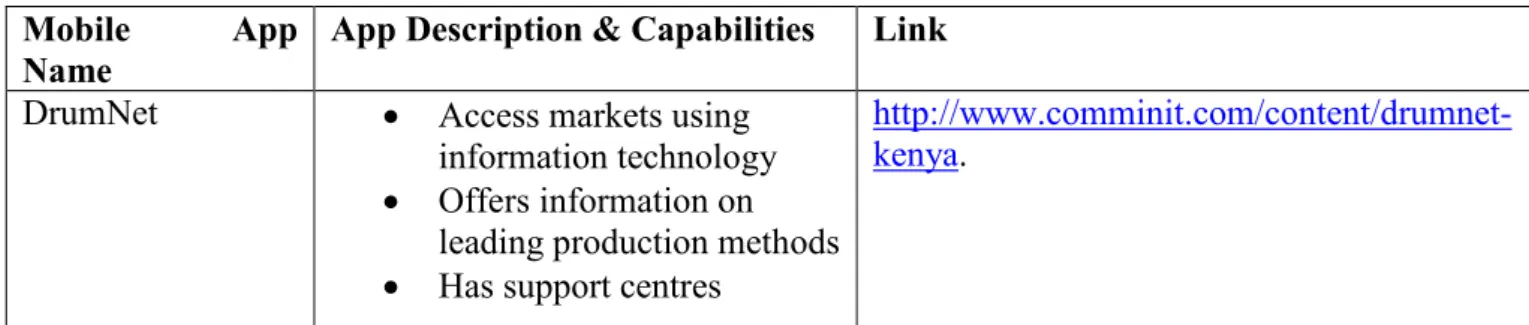
2.9.1 Existing Agricultural Mobile Applications ... 24
2.10 Comparative review of Indigenous Knowledge and Modern Science ... 26
2.11 South African government interventions to assist smallholder farmers ... 29
2.12 Summary ... 29
2.13 Reference ... 30
Chapter 3: Study Conceptual Framework, study design and Description of the Study Area ... 40
3.1 Introduction ... 40
3.2 Study Conceptual Framework ... 40
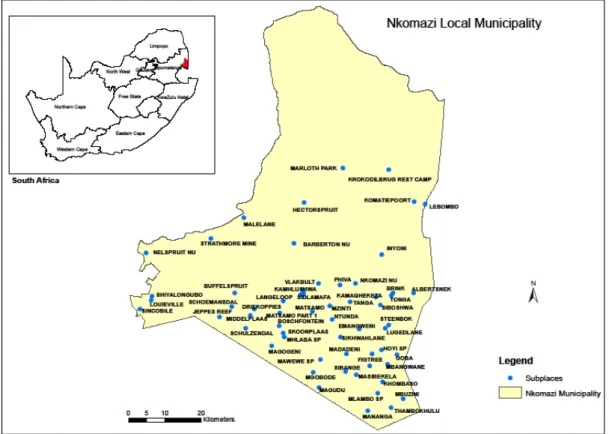
3.3 Description of the study area ... 41
3.3.1 Nkomazi Local Municipality ... 42
3.4 Research study design ... 43
3.4.1 Sample size ... 44
3.4.2 Sampling procedure ... 45
3.4.3 Data collection Tools ... 45
3.4.4 Data collection procedure ... 47
3.4.5 Mobile Application Development ... 48
3.4.6 Data analysis ... 48
3.5 Reliability and validity ... 49
3.6 Ethical consideration ... 49
3.7 Summary ... 50
3.8 References ... 51
Chapter 4: The role of indigenous knowledge systems in rural smallholder farmers in response to climate change: Case study of Nkomazi Local Municipality, Mpumalanga, South Africa ... 52
4.1 Abstract ... 52
4.2 Introduction ... 52
4.3 Description of the Study area ... 54
4.4 Data Collection and Analysis ... 55
4.5 Results and Discussion ... 55
4.5.1 Demographics ... 55
4.5.2 Indigenous Knowledge weather and climate Indicators ... 56
xi
4.5.4 Indigenous knowledge in climate change adaptation ... 62
4.6 Conclusions and recommendations ... 63
4.8 References ... 64
Chapter 5: Demystifying the knowledge: Integrating IKS and modern science for local weather prediction ... 67
5.1 Abstract ... 67
5.2 Introduction ... 68
5.3 Description of the Study area ... 69
5.4 Data Collection ... 69
5.4.1 Rainfall and temperature data ... 70
5.4.2 Sampling ... 70
5.5 Data Analysis ... 70
5.6 Results ... 70
5.6.1 Socio-economic profiles of the respondents ... 70
5.6.2 Local observations and impacts of climate change ... 71
5.6.3 Nkomazi smallholder farmers’ observations of weather changes ... 71
5.6.4 Smallholder farmers’ adaptation strategies to climate change and variability ... 72
5.6.5 Indigenous climate forecast indicators in Nkomazi Local Municipality ... 73
5.6.6 Sources of climate change information that the farmers relied upon ... 73
5.6.7 Relationship between gender and IKS reliability ... 73
5.6.8 Forecast for 1993/2008 rainfall variability in Nkomazi Local Municipality ... 74
5.7 Discussions ... 76
5.7.1 Impacts of climate and weather changes in Nkomazi ... 76
5.7.2 Smallholder farmers’ uses of IKS in climate change adaptation ... 77
5.7.3 Usefulness of Indigenous Knowledge Systems in Agricultural planning ... 77
5.7.4 Uses of IKS climate forecast indicators for weather prediction... 79
5.7.5 Sources of climate change information ... 79
5.7.6 Indigenous Knowledge systems reliability ... 79
5.7.7 Modern science weather Forecast for 1993/2008 rainfall variability... 80
5.7.8 Modern science weather forecast for 1993/2008 temperature variability ... 81
5.7.9 Potential integration between indigenous knowledge systems and Modern climate science ... 81
5.7.10 Advantages of integrating IKS and modern science ... 84
5.8 Conclusion and recommendations ... 85
xii Chapter 6: Spatial distribution of indigenous climate indicators and mobile app development
for rural smallholder farmers ... 90
6.1 Abstract ... 90
6.2 Introduction ... 91
6.3 Description of the Study area ... 92
6.4 Methodology ... 92
6.5 Data Collection ... 93
6.6 Data Analysis ... 93
6.7 Results and Discussions ... 94
6.7.1 Socio-economic profiles of the respondents ... 94
6.7.2 Seasonal calendar with months and activities happening ... 94
6.7.3 Events documented from indigenous knowledge ... 95
6.7.4 Smallholder farmers’ seasonal calendar for crops grown in different seasons ... 98
6.7.5 South African seasonal calendar used by extension officers ... 98
6.7.5 Indigenous climate indicators used by Nkomazi smallholder farmers for weather prediction ... 99
6.7.6. Spatial distribution of Indigenous climate indicators in Nkomazi ... 101
6.7.7 Spatial distribution of dominating indigenous climate indicators used for weather prediction in Nkomazi ... 102
6.8 Poynton Indigenous indicator model ... 103
6.9 Conclusions ... 104
6.10 References ... 106
Chapter 7: Development of a Mobile application to improve smallholder agricultural production ... 108
7.1 Mobile App Development ... 108
7.2 Project Scope ... 109
7.2.1 Situation / Problem / Opportunity ... 109
7.3 Project Goals ... 109
7. 4 In Scope ... 110
7.4.1 In-Scope: People: ... 110
7.4.2 Process System: ... 110
7.4.3 Location: ... 110
7. 5 Out of Scope: People: ... 110
7.5.1 Process System:... 110
7.5.2 Location: ... 110
7.6 Project Objectives: ... 110
xiii
7.8 Mobile App validation ... 111
7.9 Accessing the App: ... 111
Chapter 8: Conclusion and recommendations ... 112
8.1 Conclusions ... 112
8.2 Recommendations for Policymakers ... 114
8.3 Recommendations for improvement of the study ... 115
8.4 Study critique ... 115
APPENDIX A: Survey Questionnaire ... 116
APPENDIX B: Focus group discussion guide ... 124
APPENDIX C: Transect Walk ... 126
APPENDIX D: Approval letter from Mpumalanga Department of Agriculture ... 128
xiv
Tables
Table 1: Existing Mobile Apps for smallholder farmers ... 25
Table 2: Comparison between Indigenous knowledge and modern science ... 28
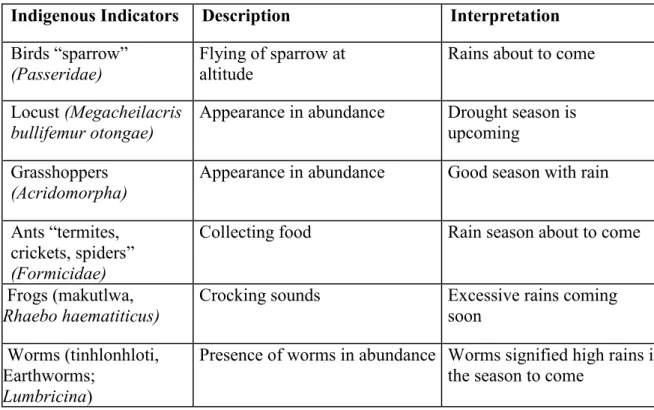
Table 3: IKS climate Animal indicators by Nkomazi Smallholder farmers ... 56
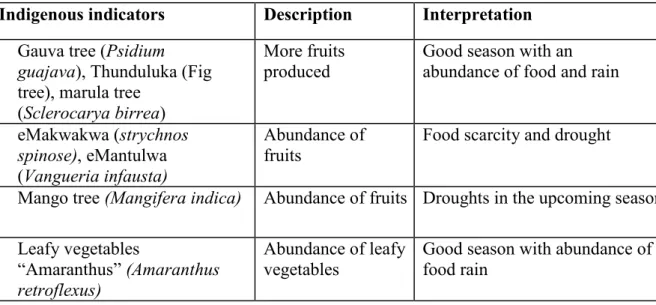
Table 4: IKS climate Plants indicators by Nkomazi smallholder farmers ... 57
Table 5: IKS climate Atmospheric indicators by Nkomazi Smallholder farmers ... 58
Table 6: IKS climate Astronomic indicators by Nkomazi Smallholder farmers ... 59
Table 7: IKS climatehuman ailments indicators by Nkomazi Smallholder farmers ... 60
Table 8: Smallholder farmers’ adaptation strategies to climate change and variability ... 72
Table 9: Indigenous climate forecast indicators in Nkomazi Local Municipality ... 73
Table 10: Sources of climate change information that the farmers relied upon ... 73
Table 11: Months of the year with agricultural activities ... 94
Table 12: Indigenously documented events ... 96
Table 13: seasonal calendar for crop production (Table adapted from Arc, 2013) ... 98
Table 14: Indigenous climate indicators in Nkomazi villages ... 100
xv
List of Figures
Figure 1: Knowledge System Framework ... 8
Figure 2: The study Conceptual framework ... 41
Figure 3: Study area map ... 43
Figure 4: Impacts of climate change on Nkomazi smallholder farmers ... 71
Figure 5: Farmer observations of climate change and its impact ... 72
Figure 6: Relationship between gender and IKS reliability ... 74
Figure 7: Relationship between gender and IKS reliability ... 74
Figure 8: Average annual rainfall in Nkomazi Local Municipality ... 75
Figure 9: Annual average maximum temperature for Nkomazi Local Municipality ... 75
Figure 10: Annual average minimum temperature for Nkomazi Local Municipality ... 76
Figure 11: IKS techniques used by Nkomazi smallholder farmers ... 78
Figure 12: Percentages of Male and females respondents ... 94
Figure 13: Crops grown in Nkomazi Local Municipality ... 98
Figure 14: Spatial distribution of indigenous climate indicators categories in Nkomazi ... 101
Figure 15: Spatial distribution of dominating indigenous climate indicators used for weather prediction in Nkomazi ... 102
Figure 16: Model predicting the distribution of the indigenous climate indicators with temperature increase ... 103
Figure 17: Mobile App Login page... 109
xvi
LIST OF ABBREVIATIONS
DAFF Department of Agriculture Forestry and Fisheries
CSIR Council for Scientific and Industrial Research
FAO Food and Agriculture Organization
FGD Focus Group Discussion
HSRC Human Sciences Research Council IK Indigenous Knowledge
IKS Indigenous Knowledge Systems
IFAD International Fund for Agricultural Development IFPRI International Food Policy Research Institute NRF National Research Foundation
SAWS South African Weather Services
SCF Seasonal Climate Forecast
SPSS Statistical Package for Social Sciences SWF Scientific Weather Forecast
2
Chapter 1: THE PROBLEM AND IT'S SETTING
1.1 Introduction to the research problem
Throughout the years, long before the introduction of modern climate scientific methods for climate prediction and weather forecasting, farming continued successfully as a cornerstone for most rural farmers (Zuma-Netshiukhwi, Stigter and Walker, 2013). African communities have always coped with the changing environment (Enock, 2013). In local communities farmers had indigenous ways of using nature for gathering, predicting and interpreting weather
(Zuma-Netshiukhwi et al., 2013a). The natural indigenous climate indicators involved the
observation of animal behaviour, plant phenology, clouds and moon as well as wind direction. These indicators were used to define the onset and end of the rain season, as well as predicting
season quality (Jiri et al., 2015). Thus, these natural indicators were mainly used as guidance
for agricultural activities to be undertaken by farmers (Zuma-Netshiukhwi et al., 2013a).
According to Onyango (2009), due to modernization, indigenous knowledge is viewed as “backward impostors”, whilst scientific knowledge is considered superior unlike the ‘backward’ knowledge indigenous farmers rely on.
On the other hand, national governments have always advised farmers of expected meteorological conditions through extensions of workers and media. However, the reliability of gathering climate information from extension officers has been a challenge. Majority of South African smallholder farmers are resource-poor and reside in rural and remote areas. They do not get the support they need from extension officers, they have poor infrastructure, such as roads, making it difficult for quick and easy dissemination and interpretation of climate information by extension officers, hence it is difficult for them to cope and adapt to climate change (Mudhara, 2010).
However, several studies have highlighted that in most African countries smallholder farmers have access to and utilize mobile phones (Mittal and Mehar, 2012; Rashid and Elder, 2009). According to Mittal and Mehar (2012), Indian smallholder farmers are already adapting to the use of mobile phones as an effective way of communication among themselves. This reveals the potential of using mobile phones as a channel for integration of the indigenous knowledge systems and modern climate science. Nonetheless, due to high levels of illiteracy and lack of education, the use of mobile phones by smallholder farmers becomes limited to making and receiving calls, as only a few farmers know how to use them apart from that (Chikuni and Kilima, 2019). Therefore, there is a need for a simple and basic development of a mobile app
3 that will attract less effort to understand and use, as complex technology is likely to confuse smallholder farmers and render the service meaningless. The integration of indigenous knowledge with modern climate science for indigenous smallholder farmers to receive and access climate information quickly and easily using modern technology will help improve smallholder farmers’ agricultural production.
1.2 Problem statement
Smallholder farmers have been receiving support from the governmental extension officers on their agricultural production. One of the challenges of extension workers is limited resources in terms of capacity, geographical location (far distances between the areas allocated to one extension officer) and thus efficiency (time versus transport) to reach the farmers. On the contrary, several studies have reported that a majority of farmers have access and utilize mobile phones. They are already receiving some kind of climate change information from their mobile phones.
As a coping strategy to counteract the challenges of delayed extension services, smallholder farmers relied upon their indigenous knowledge practices to cope and adapt to the adverse environmental conditions. However, some of the observed indicators disappear and no longer reliable due to climate change, resulting in farmers losing their confidence in them. Therefore, this calls for an integration of indigenous knowledge systems with modern climate science, by getting the indigenous information in the context and format that indigenous people are familiar with, can accept and easily understand. More so, modern information systems such as mobile apps could be used to generate and share both indigenous and modern agricultural-climate change science.
1.3 Research Aim
This study aimed to develop a mobile app technology to integrate indigenous knowledge systems with modern climate science to improve agricultural production for smallholder farmers.
1.4 Specific Objectives
The objectives of the study were:
1.4.1 To investigate agricultural advisory services accessible to smallholder farmers.
4
1.4.3 To identify, analyse and document indigenous climate indicators used by smallholder
farmers over the study areas.
1.4.4 To map and analyse the distribution of indigenous climate indicators in the study area
1.4.5 Assess perceptions of the local communities in using mobile app technology to improve
agricultural production.
1.4.6 To develop a mobile application for smallholder farmers to operationalise the
integration and dissemination of indigenous knowledge and modern climate science 1.5 Study limits
1.4.7 The results of the study may not be generalised as the study was only carried out in Nkomazi Local Municipality, Mpumalanga province.
1.4.8 There was a limited time to conduct the research; therefore, a large sample could not
be taken.
1.4.9 There was limited documentation on the integration of indigenous knowledge systems
and modern science. 1.6 Definition of terms Food Security:
Food security exists when food is available for all people at all times, physically, socially and economically accessible, safe and nutritious food that meets people's dietary needs and their food preferences for an active and healthy life (FAO, 2013).
Indigenous Knowledge Systems (IKS)
Refers to the information and skills gathered from the local communities usually based on culture, that have been used as indicators and prediction measures of some upcoming events or situations (Mittal and Mehar, 2012)
Integration
Is the combination of two or more things so that they effectively work together. Mobile Application
“Mobile apps are software programs designed to run on smartphones, tablets and other devices” (Costopoulou, Ntaliani, and Karetsos, 2016)
5 Modern Climate Science is contemporary science about climate issues also known as climate change.
Smallholder Farmers:
Smallholder farmers’ also known as small-scale farmers usually own small-based plots on which they grow few cash crops and mostly subsistence crops. They rely mainly on agriculture as the main source of livelihood and use family labour (DAFF, 2012).
1.7 Assumptions
1.7.1 It was assumed that all smallholder farmers would participate actively and answer the
survey questions honestly.
1.7.2 It was also assumed that the focus group participants would give honest responses
during the discussions.
1.8 Organization of thesis laid out as follows: The thesis is laid out as follows:
Chapter 1: Introduction to the research problem and setting. Chapter 2: Literature review.
Chapter 3: Study conceptual framework, study design and description of the study area. Chapter 4: Study findings on the role of indigenous knowledge systems in rural smallholder farmers in response to climate change
Chapter 5: Study findings on demystifying the knowledge: Integrating IKS and modern science for local weather prediction.
Chapter 6: Study findings on the mobile app development and spatial distribution of indigenous climate indicators in Nkomazi local municipality, Mpumalanga, South Africa
Chapter 7: Conclusions and recommendations.
The referencing style used in this thesis is according to the guidelines used in the Discipline of Food Security, University of KwaZulu-Natal, Pietermaritzburg.
6 1.9 References
Chikuni, T. and Kilima, F. T. M. (2019) ‘Smallholder farmers’ market participation and
mobile phone-based market information services in Lilongwe, Malawi’, Electronic
Journal of Information Systems in Developing Countries, The Electr(April), pp. 1–13. doi: 10.1002/isd2.12097.
Costopoulou, C., Ntaliani, M. and Karetsos, S. (2016) ‘Studying Mobile Apps for
Agriculture’, IOSR Journal of Mobile Computing & Application, 3(6), pp. 2394–42.
doi: 10.9790/0050-03064449.
DAFF (2012) agriculture, forestry & fisheries Department: Agriculture, Forestry and
Fisheries REPUBLIC OF SOUTH AFRICA Directorate Co-operative and Enterprise Development DEPARTMENT OF AGRICULTURE, FORESTRY AND FISHERIES. Available at:
http://www.nda.agric.za/doaDev/sideMenu/cooperativeandenterprisedevelopment/doc s/FRAMEWORK- OF SMALL FARMERS (2).pdf (Accessed: 14 August 2018). Enock, C. M. (2013) ‘Indigenous Knowledge Systems and Modern Weather Forecasting:
Exploring the Linkages’, Journal of Agriculture and Sustainability, 2(1), pp. 98–141.
FAO (2013) Statistical Yearbook of the Food And Agricultural Organization for the United
Nations. Available at: http://www.fao.org/docrep/018/i3107e/i3107e.PDF (Accessed: 15 August 2018).
Jiri, O., Mafongoya, P. L. and Chivenge, P. (2015) ‘Indigenous knowledge systems, seasonal
“quality” and climate change adaptation in Zimbabwe’, Climate Research, 66(2), pp.
103–111. doi: 10.3354/cr01334.
Mittal, S. and Mehar, M. (2012) ‘How Mobile Phones Contribute to Growth of Small Farmers ? Evidence from India’, Quarterly Journal of International Agriculture, 51(3), pp. 227–244.
Mudhara, M. (2010) ‘Agrarian transformation in smallholder agriculture in South Africa: A
diagnosis of bottlenecks and public policy options’, Sciences-New York, pp. 1–19.
Rashid, A. T. and Elder, L. (2009) ‘Mobile Phones and Development: An Analysis of
IDRC-Supported Projects’, The Electronic Journal of Information Systems in Developing
Countries, 36(1), pp. 1–16. doi: 10.1002/j.1681-4835.2009.tb00249.x.
Zuma-Netshiukhwi, G., Stigter, K. and Walker, S. (2013) ‘Use of traditional weather/climate knowledge by farmers in the South-Western free State of South Africa:
Agrometeorological learning by scientists’, Atmosphere, 4(4), pp. 383–410. doi:
7
Chapter 2: LITERATURE REVIEW
12.1 Introduction
A review of the literature was conducted to examine the integration of Indigenous Knowledge Systems and Modern climate science to improve smallholder agricultural production. The review covered the conceptual framework, agricultural advisory services accessible to smallholder farmers, existing climate channels that inform smallholder farmers’ decisions, available documented indigenous climate indicators used by smallholder farmers, the distribution of indigenous climate indicators as well as the development of mobile application for smallholder farmers as a solution to household food insecurity.
2.2 Conceptual framework
According to Akullo et al., (2007), indigenous knowledge refers to the body of knowledge that
is native to rural smallholder farmers. Mittal and Mehar (2012) and Shizha (2015) further describes it as the information and skills gathered from the local communities based on culture, that have been used as indicators and prediction measures of some upcoming events or situations. This knowledge system has been used by smallholder farmers in the developing world for improved agricultural production (Sam Ktunaxa, 2011). On the other hand, modern knowledge refers to values, ideas, concepts, and beliefs, which are imparted by extension workers who are trained in scientific agriculture. Though, note should be taken that in some cases the difference between modern science and indigenous knowledge is not distinct enough
(Adedipe et al., 2004).For instance, some techniques fall under both indigenous and modern
knowledge.
This includes mulching, fallowing and crop rotation for soil conservation and fertility improvement. However, there are still gaps in the literature that have not adequately covered the integration between the two knowledge systems. The framework below (Figure 1) explains the two knowledge systems and the potential gaps the researcher is hoping to fill in the study.
1 This chapter has been accepted for publication as follows: Nomcebo R Ubisi, Unathi Kolanisi, Obert Jiri. (2019) Comparative review of Indigenous Knowledge Systems and Morden climate
8 Figure 1: Knowledge System Framework
As highlighted in Figure 1, indigenous knowledge systems are based on social-cultural beliefs, religious, mythical values as well as the use of compost manure. This was supported by Hlatywayo (2017) on the study conducted in Zimbabwe on indigenous knowledge, beliefs, and practices. These skills, knowledge, and practices relating to natural resources were passed down through the cultural learning process from generation to generation (Akullo, Kanzikwera, and Birungi, 2007; Hlatywayo, 2017). Indigenous knowledge systems are community-oriented and mostly use observations for short-term predictions. In agreement, it is a study conducted by Rankoana (2017) on the use of indigenous knowledge in subsistence farming which highlighted that local indigenous farmers us their IK to predict their farming seasons and maintain their crops. Masinde (2012), further elaborates that indigenous farmers feel confident and valued by recognising and sharing the IK as a community and therefore confident to participate in risk reduction initiatives.
9 Whilst, on the other hand, modern science is knowledge generated by experts using modernised technologies, fertilizers as well as improved crop varieties. This includes the use of weather forecasts generated from weather stations for season predictions. Similarly, (Kooman and Haverkort, 1995), highlighted the use of modern farm machinery such as tractors, improved seeds, harvesters, chemical inputs and threshers as modern science. This knowledge system is based on empirical evidence, which uses model techniques for long-term predictions.
However, indigenous knowledge is under threat due to events such as climate change making it difficult for indigenous smallholder farmers to keep up with the changing environment and
emergence of new pests and crop diseases (Ubisi et al., 2017). Therefore, there is a need for
scientific intervention to help mitigate some of these challenges. So, both knowledge systems can be integrated to allow documentation of IK, easier and quicker communication between farmers and extension officers and dissemination of important climate information. This integration will bridge the gap of delayed extension services, receiving updated climate information as well as keeping IK information safe and secured for future generations, as Masinde (2012) has highlighted that over the years IK has been slowly disappearing and eroding.
Therefore, mobile App intervention will act as a key possible driver to reduce vulnerability, enhance resilience for rural smallholder farmers, and improve productivity. This integration will give smallholder farmers several levels of risk-preparedness, as using IK alone makes it difficult to foretell climate change issues. Because it is also difficult for IK to forecast beyond a season, while in modern science, this can be achieved by employing technologies such as internet and mobile App. Masinde (2012), also argued the issue of terminologies used in IK, as sometimes one terminology may have more than one meaning. Conversely, incorporating indigenous knowledge systems with modern climate science will improve its relevance and acceptability, in addition to boosting its utilisation among smallholder farmers, a combination of both knowledge systems can lead to innovations, knowledge.
Mobile App can be used for agricultural and rural development through collecting and disseminating IK and modern climatic information by providing practical use of IKS for rural smallholder farmers. The App will enhance smallholder farmers’ well-being and improve agricultural production by providing climate and market information, increasing access to extension services, and facilitating market links. Additionally, these authors Brokensha, Warren, and Werner (1980); Thrupp (1989); Flora (2010) and Masinde (2012), suggest a
10 similar relationship that integrating indigenous knowledge and modern science can improve smallholder farmers’ livelihoods. This means that farmers can immediately respond to potential climate risks and thus leading to strengthened resilience and self-confidence in their farming systems (Masinde, 2012).
These outcomes will contribute to the achievement of the South African National Developmental Plan, Food and Nutrition Security Policy goals as it aims at ensuring a decent standard of living for people through the provision of basic services and the development of human capacity (Nkwana, 2015). The South African National Developmental Plan also regards food and nutrition security as the country's priority, therefore, this innovation will improve indigenous farmers' food and nutrition security status as poverty reduction will be guaranteed and sustained for a stable and secure world (Masinde, 2012). The advantages of such a mutual relationship between both knowledge systems can be accelerated using mobile App development. This is the thrust of this research: integrating indigenous knowledge systems with modern climate science through the development of a mobile app to improve rural smallholder farmers’ agricultural production.
2.3 Food Security crises in South Africa
According to the Food and Agriculture Organization (FAO) report in 2007, about 814 million
people in developing countries were undernourished (Labadarios et al., 2011). Recent FAO
reports further highlight the state of food insecurity and undernourished people in developing countries to have increased and reached about 815 million (FAO, IFAD, UNICEF, 2017). The effects of food insecurities have become a challenge in many parts of the world including South Africa.
In South Africa, household food insecurity has been influenced by several factors such as climate change, increasing food and fuel prices, unemployment, high energy tariffs and increasing interest rates (Department of Agriculture, 2006). These conditions become a great challenge for ordinary South African citizens. According to the World Bank (2011), the increasing food prices and lack of job opportunities have been the greatest cause of food insecurity in the developing world since 1971. The Statistics South Africa (Stats SA) quarterly survey (2014) also highlighted unemployment to have increased since 2008 (Statistics SA, 2014), while concurrently food and energy price have been on a raise as well. The increase of unemployment coupled with increasing food and energy prices have negatively affected the
11 food affordability and accessibility of the people especially those living on minimum wages (Department of Agriculture, 2006).
According to Altman, Hart, and Jacobs (2009), South Africa is food secure at a national level
but experiences food insecurity at a household level. Cock et al., (2013), further elaborates that
almost half of the people residing in South African former homelands and townships are living in poverty. The National Planning Commission stated that in 2012 about 40 percent of South African households were living on less than R418 per person monthly. Therefore, due to the escalating food prices own food production at a household level needs to be underlined as a coping strategy for low-income households (Altman, Hart and Jacobs, 2009).
Therefore, as a country, we need to see the possibility of indigenous knowledge as a solution to deal with food insecurity in rural communities and consider the important role this knowledge system can play in dealing with household food insecurity in South Africa. Vorster,
Stevens, and Steyn (2008), Jan van Rensburg et al., (2009), (Hart Tim, 2006), Modi, Modi and
Hendriks (2006) and (Joyce M. Thamaga-Chitja and Morojele, 2014), conducted studies on indigenous knowledge and food production in South Africa. These studies demonstrated the existence of indigenous knowledge and its potential for improving smallholder household food security. However, it was observed that most agricultural institutions in South Africa tend to ignore indigenous knowledge as a solution to household food security and rural economies.
2.4 Indigenous knowledge systems
Throughout the years, indigenous knowledge (IK) has formed the backbone of rural livelihoods. In most parts of Africa, Asia and Latin American people have been using indigenous knowledge to sustain themselves and maintain their cultural identity (Nelson, 2015). Indigenous knowledge is a form of knowledge that consists of skills and practices or methods of doing things that originated locally and naturally (Enock, 2013). Buthelezi and Hughes, 2014 further describe indigenous knowledge as the body of historical knowledge in the long-term adaptation of humans to the environment. Moreover, Nelson (2015) defines "indigenous knowledge" as traditional knowledge that is used to describe the knowledge systems developed by communities as opposed to the scientific knowledge that is usually referred to as "modern knowledge".
This knowledge comprises a way of knowledge gathered by local people over a period through gathering of experiences as well as their relationship with the environment. It informs the skills and practices of local people, collectively known as indigenous knowledge systems (IKS),
12 which is unique to a given culture (Persens, 2005; Das and Mazumder, 2013; Buthelezi and Hughes, 2014). In this study, IKS is referred to as traditional knowledge used by smallholder farmers to predict weather and seasonal rainfall patterns and used as a decision-making tool. In various cultures, IK evolved into extensive knowledge systems that addressed societal and traditional knowledge issues in human survival and the quality of life, including agriculture, health and water and food security, through the use of climate indicators and prediction measures of some upcoming events (Tharakan, 2015; Mittal and Mehar, 2012).
2.4.1 Indigenous knowledge climate indicators
Since time immemorial smallholder agriculture has been the engine of rural economic growth and the main source of most smallholder farmers’ livelihoods in local communities (Komba and Muchapondwa, 2012a). Smallholder farmers had indigenous ways of using nature to predict and interpret weather rather than the modern ways of separating time into minutes, hours, days, weeks, months and years (Enock, 2013; Zuma-Netshiukhwi, Stigter and Walker, 2013b). To cope with the negative impacts of climate change, local communities had other natural indigenous indicators to interpret weather. These indicators involved the observation of animal behaviour, plants, clouds, and moon as well as wind direction (Miriam, 2015; Jiri, Mafongoya and Chivenge, 2015). Such knowledge was used to define the onset and end of the rain season, which also assisted farmers to plan their agricultural activities (Jiri, Mafongoya and Chivenge, 2015; Enock, 2013). A study conducted in the Eastern Cape in South Africa on the application of indigenous knowledge systems in water conservation and management revealed that local people employ indigenous based practices such as water harvesting and water conservation methods to improve water preservation in fragile soils (Mahlangu and Garutsa, 2014). This was further observed in Kenya were smallholder farmers used food preservation methods such as fermentation, honey, herbal plants, and sun-drying to ensure food security (Naanyu, 2013). Farmers also use intercropping and diversification techniques, seed selection, a no-tillage technique for soil conservation and mixed methods to avoid the risks of drought (Altieri, 2004).
As observed in various studies, IK in rural settings is used to predict weather forecast, soil fertility, water detection with other events interpreted from animal behaviour such as birds as well as vegetation changes (Posey, 1985; Ingram, Roncoli and Kirshen, 2002; Nelson, 2015.
Zuma-Netshiukhwi et al., (2013b), highlighted that in the South-Western Free State,
smallholder farmers observed cloud accumulation and behaviour of cows and calves in the veld as an indication that rains would fall in a few hours or a day's time and employed mixed farming
13 systems with crops, livestock, and agroforestry as an adaptation measure to climate change. These climate indicators were used for short-term planning for the rainy season. However, farmers are faced with some threatening weather and climate hazards such as drought, floods, hailstorms, strong dry winds, and black frost. These are some of the weaknesses and challenges smallholder farmers’ face due to a lack of long-term IKS signals to predict weather and other upcoming climate events.
2.4.1.1 Animal Indicators
Indigenous smallholder farmers in rural communities often use animal behaviour, appearance
and movement to predict weather (Chang’a et al., 2010). This includes the singing, chirping,
and nesting of some birds, which are seen as useful climate indicators for the onset of rains in southern Africa (UNEP, 2008). Additionally, some predictions are made through the
observations of arrival of migratory birds (Bucorvusa byssinicus), in countries such as
Zimbabwe, northern parts of South Africa and Zambia (Orlove et al., 2010) Smallholder
farmers from Zimbabwe and Botswana observe sounds from certain insects emerging from hibernation to signal the start of a season (Mapfumo et al., 2015). Moreover, Jiri et al., (2015) highlighted that some indicators are common in most Southern Africa and this contributes to the preservation of several animals across the region.
2.4.1.2 Plant Indicators
During agricultural activities, smallholder farmers observe wild and cultivated plants for
climate prediction (Rivero-Romero et al., 2016). As highlighted by Jiri et al., (2015), some
studies done in Southern Africa reported that smallholder farmers in rural areas observe certain trees bearing fruits at certain times as an indicator for either a poor or good season. For instance,
Brandy bush (Grewiaflava) in Botswana bears fruits twice a year, but if they observe that, these
shrubs have no fruit at all it indicated serious drought in the next season and late fruiting
indicated a good season (Kolawole et al., 2014). Mapfumo et al., (2015), further highlight that
in Zimbabwe smallholder farmers observed the disappearance of trees such as Hute, Maroro and Tsambatsi symbolise upcoming droughts. In Uganda, the flowering of coffee trees signals
rains coming in a few weeks (Orlove et al., 2010). Therefore, this means that shifting of fruiting
patterns of the observed trees or slight change on weather and climate is likely to have an impact on these indicators. These affect the reliability of these indicators, knowing that indigenous forecasts play an important role in predicting and planning for farming seasons by smallholder farmers (Jiri et al., 2015).
14
2.4.1.3 Atmospheric & Astronomic indicators
In Southern Africa, indigenous smallholder farmers believe that it is important to observe the
sequencing of seasons as an indicator for the upcoming season (Orlove et al., 2010; Mapfumo
et al., 2015). Also, note should be taken that natural resource-based indicators play an
important role in predicting seasons (Roncoli et al., 2002; Kolawole et al., 2014; Mapfumo et
al., 2015). These indicators are based on atmospheric and astronomic conditions such as wind
directions, sky visibility, rivers, rainfall, water bodies and streams, the appearance of different
clouds as well as the moon. According to Rivero-Romero et al., (2016), local people consider
these indicators as signs for climate predictions.
Moreover, smallholder farmers interpret the appearance of the moon in two phases; when it appears to be completely bright, it means abundant rainfall, while beige tones are an indicator for the dry season. The moon shape is also taken into consideration when coming to climate prediction, seeing the moon tilted towards the south, it symbolises rain coming, but when tilted
north it means dry season coming (Rivero-Romero et al., 2016).
Kolawole et al., (2014), further highlighted that the behaviour of Major River flows is key in
indicating the nature of the upcoming season. A free flow of a river in one direction indicates a good season with abundant rains, while a spiral-like flow indicates limited rainfall (Jiri et al., 2015). A study conducted in Zimbabwe showed that there were five regimes observed by
smallholder farmers that had indicated the specific rainfall stages for ages (Mapfumo et al.,
2015). These observations involved the onset and end of the winter season, the upcoming rains in August after grains processing, marking the end of wildfires in late September, observing the growth of tree leaves in October and marking the start of the rainy season in
October/November. However, Mapfumo et al., (2015) further highlighted that these indicators
have been affected by changes in rainfall patterns misleading smallholder farmers and not being as reliable as they used to. Essentially, indigenous smallholder farmers relied on these indicators for their farm practices (Jiri et al., 2015).
2.4.2 Accessibility and documentation of indigenous knowledge systems
As stated by Nelson (2015) IK documentation has been a challenge, especially for rural smallholder farmers. Several studies all over the world have suggested some methods for proper documentation of IK. However, the unfortunate part is that most of these methods remain on paper than practical (Rigney, 1999; Turner, Ignace, and Ignace, 2000). Nakata (2002) highlighted that IK documentation methods are more applicable and effective in
15 developed countries. Warren, Slikkerveer, and Titilola (1989) noted that in the USA IK documentation have been archived in the form of databases. These are some of the existing gaps for South African rural smallholder farmers, such as innovations of proper documentation, archiving and disseminating IK for rural smallholder farmers. Warren, Slikkerveer, and Titilola (1989) further propose that the storage and collection of IK should be made readily available to farmers using newsletters, journals, and other media.
Gender inclusivity and transformation is another important component in addressing the indigenous knowledge concept. This knowledge system is gendered in different ways as men and women have different roles and responsibilities in a community (Qun, 2012). Enock (2013) further elaborates on the importance of recognising that certain aspects of indigenous knowledge are gender-sensitive and may be solely practised by either women or men as they express their knowledge differently. However, the challenge with IK is that there are no long-term indigenous climate prediction indicators for extreme climate events. IK indicators seem to provide short-term predictions (Zuma-Netshiukhwi, Stigter, and Walker, 2013a).
Furthermore, the weakness with IK is that it only resides in the head of the beholder. As highlighted by Zuma-Netshiukhwi, Stigter and Walker (2013a) in the study that was conducted at South-Western Free State of South Africa on the use of traditional weather/climate knowledge by farmers, only elderly participants could recall the years which had extremes weather events. This supports the old African proverb quoted by Naanyu (2013) which states that "when a knowledgeable old person dies, a whole library disappears” (Naanyu, 2013). This concept simply means that if we do not care to document the existing IK from our elderly people we might end up with poor documentation of IK which may result in misquoting and misinterpretation by the surviving generation as old people die with their knowledge with no point of reference. According to Lindh and Haider (2010), the importance of documenting IK has been overlooked resulting in some cases being lost. And as observed by Williams, David L.; Muchena (1991) the skills to collect, identify and develop IK into modern functional formats are needed to warrant sustainability. Failure to do so will make it hard for the success of marrying indigenous knowledge and modern science for the growth of rural agriculture. 2.5 Indigenous Knowledge in Agriculture
Long before the introduction of conventional agriculture indigenous knowledge-based agriculture certified the production of a variety of foods (Ogle and Grivetti, 1985). Local people, including smallholder farmers, are custodians of indigenous knowledge systems
16 (Willett, 1993). These farmers are knowledgeable of their situations including what works and what doesn't work for their farming systems, their available resources and how one change
impacts other parts of their system (Ubisi et al., 2017). Indigenous knowledge is vital for
resource-poor agriculture, as it provides food security for smallholder farmers at a household level. Indigenous agriculture is based on the understanding local people have and it changes through innovativeness and creativity as well as through contact with other local and international knowledge systems (Warren, 1991). In rural settings, the indigenous knowledge system represent mechanisms to ensure minimal livelihoods. Resource-poor smallholder farmers always planned for their agricultural production and conserve natural resources with the instruments of indigenous knowledge (Naanyu, 2013). This development has been a matter of survival to indigenous people in a rural setting and has been representing generations of experience, careful observations and trial and error experiments (Akullo, Kanzikwera, and Birungi, 2007).
Indigenous farmers heap trash and soil around plants while weeding and make bands as a
technique to reduce soil erosion and water run (Junge et al., 2009). Farmers mostly use maize
stalks and elephant grass for soil moisture conservation and add manure after decomposition when mulching (Adedipe, Okuneye, and Ayinde, 2004). Smallholder farmers also enhance soil nutrients by adding manure from their livestock (goats, chicken, and cattle) and crop residues like kitchen waste/refuse (Akullo, Kanzikwera, and Birungi, 2007). Early planting is one of the pillars for better production, especially for rain-fed agriculture. Farmers often take advantage of the early rains which are known for lessening pest and disease incidences leading to high yields (Rankoana, 2017). In farm management, smallholder farmers often apply indigenous techniques for weed management to control their farm productivity.
2.5.1 Indigenous Knowledge applications weed management
Indigenous smallholder farmers have developed a multi-storey farming system over the years for weed control. These practices involved intercropping, selective weeding, heaping manures, timing and placement of chemical fertilizers and manure, early planting, tillage and crop rotations to minimise weed spread and competition with crops (G, 2010). Indigenous smallholder farmers also make use of mechanical weed control methods such as hand-hoe weeding and animal-drawn implements (Muoni, Rusinamhodzi, and Thierfelder, 2013). Another technique indigenous smallholder farmers would use is to let the weed grow and cover soil which prevents it from heating up or drying out excessively, thereafter later in the season the farmers would do superficial hoeing and let the weed on the soil surface as protective mulch
17 (Mertens and Jansen, 2002). This practice helps with nutrients recycle and allow nitrogen assimilation through the bacteria decomposing the plants. This weed management practices
sustainably improved yields (Farooq et al., 2011).
2.5.2 Indigenous Knowledge application Pest management
In agriculture, the pest described as any destructive or unwanted insect or animal that attacks crops and livestock (Oxford English Dictionary, 2017). In crop farming, pests such as birds, nematodes, rodents, and insects feed on and destroy cultivated crops, produce and stored seeds (Alabi, Banwo and Alabi, 2006). The FAO implemented some Pest Management programs as interventions to reduce pest threat on food production (FAO, 2017). However, rural smallholder farmers reverted to their indigenous ways of pest management as pesticides are
not readily available and financially accessible (Mihale et al., 2009). A lot of studies recorded
and recommended the use of indigenous pest management practices as a readily available and ecologically friendly options for rural smallholder farmers (Alabi, Banwo, and Alabi (2006); Gressel (2011); Farooq et al., (2011); Zijlstra et al., 2011).
Indigenous pest management practices have been in existence for over a century in different
parts of the world particularly in China (Xu et al., 2008). Citrus growers place nests of the
predacious ant Oecophylla smaragdini in orange trees to reduce the damage of insects. India is no different, smallholder farmers in local areas plant a sunflower in wheat fields to aid
bio-control of rats by owls at the grain development stage (Sinha et al., 2009).
Scholars such as Alabi, Banwo, and Alabi (2006); Farooq et al., (2011); Gressel (2011) &
Banwo and Adamu (2003) have identified different pest management practices for indigenous smallholder farmers. These scholars highlighted that indigenous knowledge pest management practices are mostly based on built-in features in cropping systems, such as crop rotation, intercropping and farm plot location or on specific responsive actions to reduce pest attack, such as plants with repellent, timing of weeding, smoke, use of insecticide action, scarecrows, digging up grasshopper egg masses and traps.
2.5.3 Indigenous Knowledge application in soil fertility management
Smallholder farmers in rural areas have developed various indigenous techniques to improve and maintain soil fertility. These techniques were used to make certain that their land had enough nutrients to provide for household food crops (Chamberlin, 2007, Salami, Kamara and Brixiova, 2010, Zhou, 2010). The use of manure, mulching and composting are common techniques for soil fertility management and have played a crucial role in indigenous
18
smallholder farmers' farming systems (Hepperly et al., 2009, Lyimo, Pratt and Mnyuku, 2012,
Chivenge et al., 2009). According to Mkhabela (2003), smallholder farmers in rural Dundee
and Nkwezela in KwaZulu-Natal still actively apply these techniques for their farming systems
as well as Zimbabwe, Ethiopia (Lupwayi et al., 2000) and Tanzania (Lyimo et al., 2012b).
Crop mulching and the use of poultry and kraal manure have been in practice ever since times in memorial (Rankoana, 2017). Indigenous smallholder farmers have used mulching to
conserve soil moisture and keeping soil cool, as well as manure to sustain fertility (Onduru et
al., 2008). With the increased soil moisture from this technique, smallholder farmers are then
able to plant with certainty that their crops will grow to maturity and that there will be pumper harvests.
Indigenous smallholder farmers can determine when the soil is exhausted. They can identify soil fertility challenges through observations when water retention level reduces substantially; crops become stunted and yellowish causing yield decline (Osbahr and Allan, 2003). The soil colour also tells a lot, if the colour changes from dark or brown to reddish with increased number of stones it means that the soil is exhausted, it then allows the growth of weeds such as embuura, Bidens pilosa, milkweed which indicates soil infertility (Akullo, Kanzikwera, and Birungi, 2007).
Farmers employed various indigenous practices at every stage of the plant growth to cope with
soil fertility challenges (Onduru et al., 2008). This includes making mounds by collecting and
heaping trash in preparation for planting solanium potatoes, tobacco, sweet potatoes and
vegetables which are preferably planted on raised seedbeds (Ojiewo et al., 2013). Techniques
such as intercropping groundnuts and maize, beans and maize, agroforestry and millet and maize are practised especially for coffee fruit and trees to improve soil fertility (Mithamo, 2013). Smallholder farmers have also adopted the crop rotation technique for their farming systems over time. According to Akullo, Kanzikwera and Birungi (2007) smallholder farmers in Uganda planted cassava as the last crop during rotation as many farmers believe that cassava is not a heavy feeder and that when its leaves wither and drop, they decompose and add manure to the soil.
2.6 Relevance and utilization of indigenous knowledge in climate change adaptation
In the modern days, climate change is a major threat to sustainable development mainly in sub-Saharan Africa due to high dependency on climate-sensitive resources and low adaptive
19
al., (2014), most rural communities are vulnerable because of their great dependency on
climate-sensitive resources such as water resources and low adaptive capacity. The effects of climate change have become the most critical issue for rural smallholder farmers from the global to the local level (Kumar, 2014). Literature highlights that the effects of climate change are already felt greatly by smallholder farmers in rural communities as they are experiencing a decline in yields, crop failure, loss of assets and livelihood opportunities (Cherotich, Saidu, and
Bebe, 2012). However, based on the research conducted by Ubisi et al., ( 2017) in Limpopo
province (Vembe and districts), there is evidence that while smallholder farmers are facing severe climatic variability in rural communities' indigenous skills to cope with prolonged droughts and severe heat have been developed. In those areas smallholder farmers solely relied on IK as their adaptation strategy, they used it to predict their planting and harvesting seasons by looking at their climate indicators for rain such as moon shape and direction. However, on the other hand, there are concerns over IK relevance for future adaptation amongst other challenges faced by smallholder farmers, as most of the older generation who are knowledge holders of IK will die with the information if we do not find ways to document their science and make it accessible. Therefore, it is important to document and make the IK information available and accessible even for future generations.
2.7 Smallholder farmers in South Africa
Due to their socio-economic position, smallholder farmers are among the most disadvantaged and vulnerable groups affected by climate change and variability (Hazell, 2007, ASFG, 2013). Smallholder farmers in the southern African region are set to be most affected by these climate variations due to poor access to information, low access to technology and dependency on climate-sensitive agriculture (Morton, 2007, Mutekwa, 2009, Oxfam, 2007). Therefore, the impact of climate change and variability threatens and weakens the already vulnerable smallholder farmers whose main source of livelihood is rain-fed agriculture.
South Africa is no different from other countries as climate change is threatening the food security agenda of the country (HSRC, 2018). Climate change has been viewed as a worsening poverty status among the rural population. It presents major threats in achieving the New Sustainable Development Goals which were built on the Millennium Development goals, due to its adverse impacts which undermine all countries' capability to achieve sustainable development (UNDP, 2018). The SDGs aim to encourage development by improving social
20 and economic conditions, eliminating poverty and hunger, and promoting environmental sustainability (UN, 2015).
The changing climate poses a negative impact on overall productivity; soil fertility due to the very hot temperatures accompanied by dry winds leading to erosion, wilting of plants and poor production (DEDET, 2013). Killeen (2008) highlighted that soil is very crucial for the provision of nutrients for plant growth, carbon storage as well as the regulation of the water cycle. The increase in temperature and changing precipitation patterns negatively affects soil quality which results in loss of soil organic matter (Soils Matter, 2013). This negatively affects soil fertility as the rising of air temperatures are likely to speed up the natural decomposition of organic matter and increase the rates of other soil processes (Altieri and Koohafkan, 2008). This degrades soils, which are critical for crop production. The majority of smallholder farmers in rural areas have no or primary level education, therefore it is difficult for them to access
information on new technologies on soil management (Wanyama et al., 2010). These farmers
mostly practice mono-cropping, which is disadvantageous as it degrades soils even more (Patterson, 2015). Climate change has also affected the erratic rainfalls in South Africa.
Poor infrastructure in rural areas remains the main challenge smallholder farmers face, this is due to erratic rains causing floods, destroying buildings, eroding roads and bridges (Ngigi, and MDG Centre, 2009). In various South African rural areas, smallholder farmers are generally found in remote areas, making it difficult to reach because roads are either in poor condition or non-existent. As a result, there is a long transportation time with high costs, due to inadequate
transport infrastructure. According to Louw et al., (2007) transportation of produce to the
markets on time is one of the key constraints for smallholder farmers in rural areas. This, therefore, results in loss of quality and late delivery to the markets, leading to products being sold at lower prices or rejected, resulting in a lack of sustainable income for the smallholder farmers, which affect their livelihoods as well as their food security (Baloyi, 2010).
According to Komba and Muchapondwa (2012b), smallholder agriculture is the engine of rural economic growth and the main source of most smallholder farmers' livelihoods. IFAD (2010) estimates that there are about 500 million smallholder farms in the world; in Asia and sub-Saharan Africa smallholder farmers produce up to 80% of the food consumed and support up to two billion people. However, global climate change has increased vulnerability leading to poverty and human food insecurity. According to Dinar (2008) in South Africa the agricultural
21 sector contributes 3.4% to the Gross Domestic Product (GDP) and employs 30% of the labour force, and for the third quarter of 2010 primary agriculture contributed about 3% to the GDP of South Africa whose nominal value was estimated at R667 billion (Chamuka, 2011). However, regardless of the great contribution agriculture has to the economy, it could be greatly affected by climate-related disasters such as erratic rainfalls, floods and extended dry seasons.
In many parts of Africa, the current climate is already marginal concerning precipitation and further warming in semi-arid areas is likely to be devastating to agriculture (Mendelsohn, 2008). Climate may change more rapidly than expected and is projected to have complex, long-term effects on the environment. According to Komba and Muchapondwa (2012b), climate change brings about substantial losses especially to smallholder farmers whose main source of livelihood is derived from agriculture. Dinar (2008) highlighted that yields could fall quite dramatically in the absence of costly adaptation measures. Moreover, Mendelsohn, (2008) stated that the negative impacts of climate change can be significantly reduced through adaptation strategies. Therefore, there is a need for investments to improve agricultural productivity under the risk of climate change (Schlenker and Lobell, 2010).
2.8 Constraints faced by smallholder farmers
Some constraints hinder the growth of smallholder farmers (von Loeper et al., 2016). Some
key constraints are lack of physical infrastructures, lack of access to transport produce, Crop production, land and quality of produce (Baloyi, 2010). Besides, Sartorius and Kirsten (2007) also highlighted the lack of land, poor physical and institutional infrastructure as important hindering factors. Crop production constraints have however been one of the key factors affecting smallholder farmers.
2.8.1 Crop production constraints
Akullo, Kanzikwera, and Birungi (2007) highlighted some major constrains in crop production which includes inadequate extension services, lack of knowledge on improved farming
methods e.g. results generated by Ubisi et al., (2017) in Limpopo one agricultural extension
officer could hardly suffice for all smallholder farmers in their unit. Lack of improved crop varieties and markets coupled with unscrupulous intermediaries who in most cases exploit farmers. Crop pests and diseases are some other constraints that negatively affect farmers' production as well as lack of capital to purchase proper farm equipment's as they still using hand hoes (Baloyi, 2010). Another challenge smallholder farmer’s face is the unpredictable or