warwick.ac.uk/lib-publications Manuscript version: Author’s Accepted Manuscript
The version presented in WRAP is the author’s accepted manuscript and may differ from the published version or Version of Record.
Persistent WRAP URL:
http://wrap.warwick.ac.uk/115710 How to cite:
Please refer to published version for the most recent bibliographic citation information. If a published version is known of, the repository item page linked to above, will contain details on accessing it.
Copyright and reuse:
The Warwick Research Archive Portal (WRAP) makes this work by researchers of the University of Warwick available open access under the following conditions.
© 2019 Elsevier. Licensed under the Creative Commons Attribution-NonCommercial-NoDerivatives 4.0 International http://creativecommons.org/licenses/by-nc-nd/4.0/.
Publisher’s statement:
Please refer to the repository item page, publisher’s statement section, for further information.
Consumer-Facing Technology Fraud: Economics, Attack Methods
and Potential Solutions
IMohammed Aamir Ali∗, Mario Parreno Centeno, Muhammad Ajmal Azad, Feng Hao, Aad van Moorsel
School of Computing, Newcastle University, Newcastle Upon Tyne, United Kingdom
Abstract
The emerging use of modern technologies has not only benefited society but also attracted fraudsters and criminals to misuse the technology for financial benefits. Fraud over the Inter-net still increases dramatically, resulting in an annual loss of billions of dollars to subscribers, service providers and regulators worldwide. Much of such fraud directly impact individuals, both in the case of browser-based and mobile Internet based services, as well as when using traditional telephony services, either through landline phones or mobiles. It is important that users of the technology should be both informed about fraud, as well as protected from frauds through fraud detection and prevention systems. In this paper, we present an anatomy of frauds for different consumer-facing technologies from three broad perspectives - we discuss Internet, mobile and traditional telecommunication, from the perspectives of losses through frauds over the technology, fraud attack mechanisms and systems used for detecting and preventing frauds.The paper also provides recommendations for securing the emerging technologies from fraud and attacks.
Keywords: Consumer Frauds, Card Payment Frauds, Mobile Payment Frauds, Telecommunications Fraud, Fraud Economics, Fraud Mechanism
1. Introduction
The Internet today has reached a stage where many aspects of our lives are connected online, which includes buying products and services, doing businesses, banking, booking, managing of traveling and vacations and more. The advances in Internet technology have also greatly empowered criminals to misuse the Internet technologies for financial frauds [1]. The Internet has made it possible for cybercriminals to commit crimes at a distance of thousands of miles away, in another jurisdiction, hiding their identities and beyond the reach of any prosecutor. Cyber frauds result in a loss of around $608 billion to consumers, enterprises, and governments across the world [2].
∗Corresponding Author
Email addresses: [email protected](Mohammed Aamir Ali), [email protected] (Mario Parreno Centeno),[email protected](Muhammad Ajmal Azad),[email protected] (Feng Hao), [email protected] (Aad van Moorsel)
Table 1: Regional distribution of cybercrime for the year 2017 [2].
Region (World Bank) Region GDP (USD, tril-lions) Cybercrime Cost (USD, billions) Cybercrime Loss (%GDP) North America 20.2 140 to 175 0.69 to 0.87%
Europe and Central Asia 20.3 160 to 180 0.79 to 0.89%
East Asia & the Pacific 22.5 120 to 200 0.53 to 0.89%
South Asia 2.9 7 to 15 0.24 to 0.52%
Latin America & the Caribbean
5.3 15 to 30 0.28 to 0.57%
Sub-Saharan Africa 1.5 1 to 3 0.07 to 0.20%
MENA 3.1 2 to 5 0.06 to 0.16%
World $75.8 $445 to $608 0.59 to 0.80%
Table 1 shows the regional distribution of cybercrime measured for the year 2017. In recent years, the cost of global cybercrime has increased from $445 billion in 2014 to $608 billion in 2017 [2]. Table 1 also compares regional GDP with the percentage loss in GDP as a result of cybercrime. It can be derived from the table that the higher the regional GDP, the greater are the losses associated with the cybercrime. The cybercriminals can use a number of ways to defraud the user of the technology. They can use stolen personal information ones debit, credit or store card, they can acquire such information over via social engineering and phishing attack using telephone and web(email, social networks). A recent report published by Symantec revealed that 978 million people in 20 countries were affected by cybercrime in 2017 [3]. These frauds resulted in a loss of $172 billion (an average of $142 per victim) to the consumers. Furthermore, the report also revealed that consumers spend nearly 24 hours on average dealing with the aftermath. Additionally, these frauds not only bring financial loss but also leave the psychological and social effects on the well being of the victims [4] .
Some of the most common cybercrimes experienced by consumers today include debit or credit card fraud, hacking of an email or social media account, electronic commerce frauds and disclosing private information to fraudsters via the telephone call or clicking on phishing email [3]. Specifically, in the United Kingdom, it is estimated that the UK economy is suffering from the loss of around 27 billion per annum due to these cyber frauds [5]. UK businesses are affected the most at a cost of around£21 billion, followed by the government and citizens, with a damage of around£3 billion each. The Internet Crime Complaint Center has received around 11000 complaints in 2017, resulting in a loss of around $15 million, 90% higher than the losses reported in 2016 [6]. Furthermore, Microsoft also saw a subnational increase in the tech scam i.e. a 24% increase in tech scams reported by customers in 2017 over the previous year [7] with the average loss of $200 to $400 each. Fraud over financial systems such as ransomware, card payment, and Crime as a Service (CaaS) is found to be some of the established and professionalized ways of the fraud [8].
practice cyber frauds. Some of the highly targeted customer-facing platforms include but are not limited to payment systems, where cybercriminals take control of the target victim’s payment account; attacks on mobile platforms where a victim’s mobile phone is targeted to get control over payment applications; and least studied telecommunication fraud where illegitimate acts are performed by targeting a victim through their telephony network. With the evolution in cyber systems, cybercriminals have also evolved in their methods of targeting cybersystems and there is a strong need to characterize the most used mechanism of cyber crimes in order to protect organizations and consumers from cybercriminals.
In this paper, we discuss cybercrimes in three dimensions: 1) economics of cybercrime
--what is the cost of frauds and how much is required to have a defense, 2) attack mechanisms
-- what attack mechanism criminals are using to fraud consumers and enterprises, and 3) prevention and detection systems -- what technical systems and techniques used by service providers to protect their consumers. We provided economics of cyber crimes based on reports published by government agencies and popular security companies. We analyzed the fraud mechanism in three diverse technologies: 1) card payment technologies and frauds, 2) mobile payment frauds and 3) telecommunication frauds. We choose these technologies for the following reasons: 1) the user base on these technologies are very high (e.g. there are around more than 5 billion telephone users), 2) collective frauds over these technologies are more than $60 billion [9, 10], 3) telephony become the preferred media to target the use for payment and card frauds. . We believe that this is the first study that covers various aspects of frauds on diverse technologies. Where applicable, the paper provides recommendations to improve the security of the system and safeguard individuals from the cybercriminals. This study would help consumers, regulators, service provider, and law enforcement agencies to know about the how fraudsters are misusing the technologies and common defenses used to protect the consumers.
In summary, the major contributions of this paper are as follows:
• It provides a comprehensive discussion on the systems used by enterprises to safeguard their clients from frauds.
• It highlights recommendations for the effective cyber defense.
This paper is organized as follows. Section 3 discusses credit card payment technologies, frauds over each methods of card payments, attack mechanism and possible defenses. Section 4 presents discussion on frauds in mobile payment systems. Section 5 presents discussion on the frauds in the telecommunication systems. Section 6 discusses ways forward and future directions to secure consumers from frauds. Section 7 concludes the paper.
2. Frauds Over Internet Technologies
The cybercriminal use the Internet technology for the fraud activities in two ways: 1) spreading malicious content e.g malware, Trojans or viruses that in turn leak private infor-mation of the victims [11], and 2) convincing victims to disclose their private inforinfor-mation via social engineering attack. Internet based applications have created new opportunities
for businesses and retailers but at the same time it has paved new ways for fraudsters to use the new mechanism to commit fraud with users and businesses. Every year, a large number of people loss their money to different type of frauds over the Internet applications such as ecommerce, online dating, online gaming, credit card frauds, telephone frauds, mobile payment frauds etc. The commerce frauds can be of different types that includes, merchant delivered the product, which is quite different from the product listed at the time purchase, did not sent product or sent product of low quality. Some of the most common frauds hap-pening today over the online marketplaces are: buyers not receiving goods that they have ordered, receiving products that have inferior value or are significantly different from the original description [12]. The statistics by Experian revealed that e-commerce frauds (online auctions, buying products) have increased by 33% since 2015 [13]. Frauds over the online marketplaces have resulted in an annual loss that cost users billions of dollars all over the world [14, 15].
Over the Internet, the fraudsters have created a large number of fake pages for two purposes: 1) they convince end-user to click on some link through social engineering or phishing attack or silently download the malicious software on the user computer whenever the user visited the malicious web page. These fraudsters also convince users to call the special expensive telephone number, which not only result in loss of finance because of calling to the premium number but also result in disclosing their financial information to fraudsters. Another type of fraud that is popular over the internet is the Advanced Fee Fraud (AFF). This fraud is committed by asking victims to pay some amount to process their incentive, which can be in the form of leftover money of deceased Nigerian rich person, an offer of job with relatively high pay, and the luck person selected for the holiday vacations. The common attribute of these frauds is that victim must pay a small amount of money to get the huge amount from the attack.
3. Card Payment Frauds
This section will provide an overview of card payment technologies and payment fraud as it affects the global payment system. We will start with a brief introduction to the payment system types. Section 3.1 discusses card payments fraud landscape and details current fraud trends. Section 3.2 and Section 3.3 presents an introduction to the technology and security features of each card payment type and will then detail tools any techniques used by cybercriminals to abuse the card payment system.
Typically, a card payment system can be categorized into card present and card not present (CNP). Incard present payment system, the cardholder is physically present at the merchant store and a payment is performed by swiping (magnetic stripe), inserting (chip and PIN) or tapping (in case of contactless) a payment card to the merchant provided point of sale (PoS) terminal/reader. With card present transactions the identity of the cardholder making a transaction is established either by requesting a card’s PIN, or by the cardholder signature. There are more security elements when combined enhances the security of card present transactions, for example, the security features of smart cards with chip enables it to host payment related information securely. Card present payment security is further
advanced with the use of cryptographic techniques that binds each transaction with a unique transaction specific code or cryptogram. Within card present payment technologies we have:
• Magnetic stripe cards
• EMV chip & PIN cards, with three protocol variants: Static Data Authentication (SDA), Dynamic (DDA) and Combined (CDA)
• EMV contactless cards, with three protocol variants (SDA, fast DDA and fast CDA) With Card Not Present (CNP) payment system, on the other hand, the cardholder enters her payment card details on the checkout page provided by the merchant website. The security of CNP payment system relies upon the cardholder correctly providing her payment card details which may be shared with ‘every’ merchant that the cardholder makes a transaction with. CNP payment system has two grievous security limitations. Firstly, the identity of the actual cardholder cannot be established by the merchant or by the card issuer and secondly the card details are static which remains same until the card service is expired. To overcome these limitations, the payment industry came with a user-authentication scheme which requires the cardholder to establish their identity with the card issuer before the transaction is approved.
We will expand more on the working and technology limitations of each type of card payment system in section 2.1 to 2.5 but before let us discuss the fraud landscape over card payments.
3.1. Economics of Card Payments Frauds
Payment card fraud is an international issue that spans across nations, states and borders. Fraud overpayment cards has amounted to a total of $22.80 billion globally for the year 2016 [16]. This is 4.4% increase in the global card payment fraud rate as compared to the year 2015 where it was recorded $21.79 billion [16]. The United States (US) alone accounts for an overall of two-fifths (38.7%) of the global card payment fraud rate amounting to a total of $8.45bn for the year 2016 and it is estimated that by the year 2020 the US card payment fraud could surpass $28bn [17]. To the contrary, card fraud losses for Europe in 2016 reached $2.12bn and about 73% of the European card fraud came from the United Kingdom (UK) and France [18]. In fact for Europe, card payment fraud in one of the EMPACT priority, under Europols priority crime areas (2018-2021 EU Policy Cycle [19]). Over the last six years it is established that the costs associated with the losses on financial systems constituted to the largest single category of fraud across the globe and over the Internet [18].
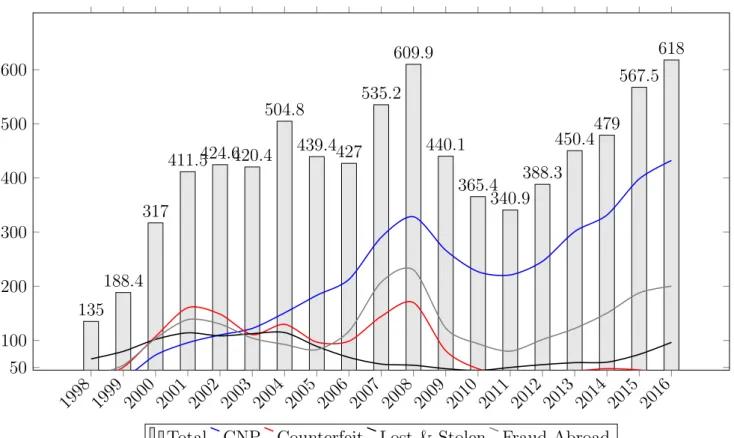
So how does a perpetrator achieves in practicing fraud over electronic payment systems? A simple answer to this question is fraudsters in most cases targets weakness in the pay-ment system technologies and exploits them for their interests and/or monetary gain. The methods used by fraudsters to abuse the payment system varies and depends upon the type of system (among card present and CNP) being targeted. Fraudsters methods can be well understood by mapping the payment card fraud patterns over the evolution/improvements of card payment technologies. For this study, we take the payment card fraud patterns from the UK.
1998 1999 2000 2001 2002 2003 2004 2005 2006 2007 2008 2009 2010 2011 2012 2013 2014 2015 2016 50 100 200 300 400 500 600 135 188.4 317 411.5424.6420.4 504.8 439.4427 535.2 609.9 440.1 365.4 340.9 388.3 450.4479 567.5 618
Total CNP Counterfeit Lost & Stolen Fraud Abroad Figure 1: UK Card Fraud by Type from year 1998 to 2018.
Figure 1 shows UK card fraud statistics1 from 1998 to 2016 [20]. The statistics reveal that ratio between the different types of card fraud changes year on year. In the figure, the yellow line represents fraud losses on card present payment types and green line signifies the fraud that occurred over CNP payment interface. Figure 1 also shows the introduction for significant security improvements in the card payment system technology listed below
1. smartcards with EMV2 Chip and Pin protocol: were introduced in the year 2004 replacing earlier magnetic stripe cards for card present transactions
2. transaction risk profiling: card issuing banks started to use transaction risk profiling algorithms that assessed the risks associated with transactions
3. more secure EMV protocol: the EMV protocol introduced a more secure form of trans-action data authentication mitigating security flaws associated with earlier versions of EMV protocol implementations
Prior to 2004, before the introduction of EMV chip and pin, fraudsters have shown to target the magnetic stripe based card present transactions. CNP fraud, on the other hand, shows a gradual increase from the year 1997 to 2008 just before transaction risk profiling was introduced. However, fraudsters have shown to bypass CNP transaction safeguards as this is reflected by the growing fraud rates (from year 2011) of CNP payment systems. CNP fraud standouts to be the single largest category of fraud amounting to a total of 70% of the total card fraud rate for the year 2016 [20].
Now that we understand the types and areas of fraud over card payment systems let us take a look at technology behind each card payment system, security limitations of card payment systems and attacker methods while abusing the target payment system.
3.2. Magnetic Stripe Cards - Technology, Attacker Methods and Solutions
Magnetic stripe cards have a capability to store information which can be read electron-ically by magnetic stripe reader head. Each magnetic stripe payment card comes with a pre-loaded payment application that contains information about the user payment account as embedded by the card issuing bank. There are two tracks containing payment data lo-cated within the magnetic stripe Track 1 and Track 2. Track 1 includes all fields of Track 2 plus the cardholders name and additional fields for exclusive use by the card issuer. Mainly we have a field for 16-digit Primary Account Number (PAN) 3, cardholder name, cards expiry date, a service code which specifies the interchange rules and controls risk manage-ment functions and the final field is discretionary data which is used to provide security functions to a magnetic stripe transaction. Discretionary data includes one or more of the following fields: PIN Verification Key Indicator (PKVI) [22] , PIN Verification Value (PVV) [22], Card Verification Value (CVV) [23] and Card Validation Code (CVC) [23]. With each
1The fraud statistics from UK was one of the early adopter of secure payment technologies
2EMVCo [21] is a consortium of card payment networks (VisaCo, MasterCard, American Express, JCB
and Discover) that was set-up to maintain interoperability between payment card operation.
3A 16-digit card number which is also printed on the front of the card. PAN uniquely identifies the
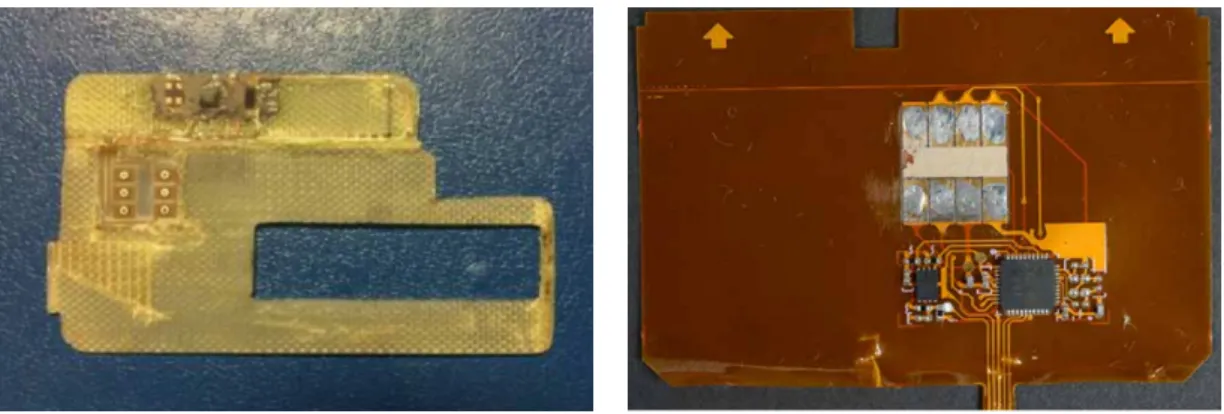
Figure 2: Showing a magnetic stripe skimming device found attached on an ATM machine [24]. The internal circuitry of the skimming device is also shown.
magnetic stripe read, the card provides stored payment application data which is fetched by the PoS terminal to process a transaction. The terminal then applies security protocols for cardholder verification and risk management to complete a transaction.
Each magnetic stripe card has a cryptographically derived Card Verification Value (CVV) which makes magnetic stripe cards much secure than just having the PAN and expiry date [23]. CVV prevents counterfeit cards from being generated using the cardholder data ob-tained from paper receipts. CVV is a three-digit value generated by the card issuing banks and is embedded in card data before the card is issued to the cardholder. During a transac-tion, if there is a match in CVV received during the payment request to that of the locally generated CVV by the card issuer, the transaction data is marked to be authentic which is coming from the real-card issued to the cardholder.
However, magnetic stripe cards work simply as memory sticks and are best suited for the applications like ticketing, loyalty pass where security is not of prime importance. Apart from storing and retrieval of static data, not many operations could be performed on the magnetic stripe cards. The other problem associated with the magnetic stripe card is the amount of information that can be read. The access control policies on fetching the amount of data could not be defined on the magnetic stripe. This means any reader with magnetic head can read all the contents stored within a magnetic stripe. This came as an opportunity for attackers to practice a trivial type of fraud on the magnetic stripe cards: Skimming and Cloning.
3.2.1. Magnetic Stripe Cards - Skimming and Card Cloning
In skimming fraud, the magnetic stripe technology cannot prove the difference in the actuality of a real and counterfeit card generated through skimming. In this type of fraud, ATMs are physically modified with a minimal effort in a manner that is difficult for the cardholder to detect. The way skimming works is that thieves put a card scanner on top of the little slot where the payment card is typically inserted in an ATM machine. These skimmers allow the card to pass through them into the ATM slot while also scanning the card and stealing the numbers off it. This happens so discretely that many victims have no idea that something is amiss until they look at their bank statements probably weeks later.
And because many ATM card slots use similar designs, there are plenty of skimmers that are designed to look almost exactly similar to legitimate card slots making it even harder for a customer to realize what is going on. Of course, though, the magnetic stripe transactions are protected with a PIN, and to do anything notoriously useful with the skimmed card. To steal the PIN, miscreants also install small pinhole cameras in inconspicuous locations on the ATM to capture footage of cardholder keying the PIN. To capture PIN, there are also number pad overlayers available on the black market which just look like the keypad on the ATM. Nowadays due to this becoming common practice, the public and banks have become more aware and the scammer may get caught when they try to retrieve their scamming equipment from the ATMs. To resolve this, more advanced skimming devices on the black market transmit stolen card information and PINs wirelessly making it much easier for the fraudsters to practice their scheme without getting caught. To overcome the magnetic stripe cards skimming and cloning attacks, the payment card industry introduced more secure forms of card payment which came in the form of EMV chip and PIN cards described next.
3.3. EMV Chip and PIN Cards - Technology, Attacker Methods and Solutions
EMVCo created the “Integrated Circuit Card Specifications for Payment Systems”[25]. These specifications define an EMV chip and pin protocol [25], a messaging standard using which the payment cards operate and communicate with compatible readers. EMV draws is key functionality using features provided by the smart cards and supports either of the following three payment operations:
Static Data Authentication. SDA was only designed for initial versions of smart cards that had limited processing capability and can securely store only limited data. SDA validates the integrity of the application data stored within the smart card IC. However, SDA does not authenticate the card itself. During the card personalization phase (before the card is issued to the cardholder), the card issuer prepares the payment Application Data (AD) which is relevant to the cardholder account. The AD is signed with the card issuers private key (S1) and is stored in the smart card IC. The card issuer public key (P1) is signed by the Certificate Authoritys (CA’s) private key (SCA) and this issuer public key certificate is stored in the smart card’s memory. During the transaction process, when the cardholder inserts the card into the PoS terminal, the CA’s public key (PCA) (which is issued to the acquirer and resides with the PoS terminal) is used to decrypt the issuer public key certificate which resides within the card. The PoS terminal extracts the issuer public key (P1) from the certificate. In the next step, the PoS extracts the signed application data (signed by S1) from the card and validates it using P1. Once the signed application data is found valid, the reader and the issuer can be assured that the data in the smart card memory can be trusted and has not been altered.
Dynamic Data Authentication. DDA is an advance scheme of card authentication, where each card is personalized with its private key used by the card to generate a signature Signed DDA (SDDA). The signature encodes transaction data and a random number given to the card by the PoS terminal which guarantees uniqueness for every transaction. In this scheme of card authentication, the cards public key (PIC) is signed by the issuers private key
(S1), and the card public key certificate is stored in the smart card IC. The issuer public key (P1) is further signed by CA’s private key (SCA), and issuer public key certificate is stored in the smart card IC. The CA’s public keys are distributed to the PoS terminals. During the transaction, the validation of SDDA by the reader indicates that the card is authentic and is issued to the cardholder by the card issuer.
Combined Data Authentication. With CDA, both the POS terminal and the card issuer verify the integrity of the payment card. Much similar to DDA, in CDA the card generates a transaction specific signature (SDDA) which is used by the PoS to verify the transaction. In addition, an Application Cryptogram (AC) is also generated by the issuing bank to be signed by the card using a shared secret key. An AC consist of transaction specific data and a random number which guarantees transaction uniqueness. During a transaction, a request to sign the AC is sent to the card by the card issuing bank. Having validated the received signed AC from the card, the issuing bank can guarantee the card authentication. The above three EMV methods guarantee that the payment card is authentic and the data inside the card is unaltered by any adversary activity. The security of EMV enabled transaction is further enhanced with the use of card’s PIN only known to a valid cardholder. This guarantees that only the authorized person entitled by the card issuing bank is using the card. These security features make EMV the most suitable payment protocol for card payments. On the flip side, EMV payment cards also exhibit certain limitations which affect the security of other forms of the payment system. Below we will discuss limitations or attacks that were explored on the EMV chip and pin payment cards.
3.3.1. EMV Chip and Pin Shimming
As discussed in the previous section, EMV defines functions that establish the authentic-ity of the card, however, there is no mechanism defined which verifies the authenticauthentic-ity of the reader that the card communicates with. This provides ample opportunity for an attacker with a rogue reader to communicate with the EMV card. Figure 3 shows two EMV shim-mer devices found in EMV enabled ATM machines. These shimshim-mers are attacker tools that intercept communication between the EMV card and a PoS terminal or an ATM. Although there is no known possibility for an attacker can create a cloned copy of victim’s EMV card, instead the, shimmed details are used to create a magnetic stripe version of victim’s card.
EMV smart card chip contains all components of cardholder payment application data found in magnetic stripe except for CVV. EMV interface contains its own version of Card Verification Value generally referred to as iCVV or dynamic CVV. iCVV which is different to magnetic stripe CVV prevents the shimmed data being copied and used over magnetic stripe interface. The rationality behind the success of shimming can be related to the negligence of some card issuing banks while validating the CVV. Shimming works because some card issuing banks do not validate the CVV while authorizing a magnetic stripe transaction [26]. 3.3.2. EMV Chip and PIN Protocol Flaws
EMV Chip and Pin is an open-source and well-documented protocol. The proven com-plexity of EMV Chip and Pin protocol and its widespread use across the globe made the
Figure 3: Shows two EMV shimmer devices found in EMV enabled ATM machines. On the left, it is a shimmer device found in Canada and rigth side one was discovered in an ATM machine in Europe. Figures of shimmer devices are taken from [26].
protocol much attractive for research communities. There is a substantial amount of re-search addressing the security analysis of EMV Chip and Pin protocol. We will focus on a research which has identified a practical exploitable vulnerability in the EMV protocol.
Murdoch et al. (2010) [27] identified a flaw in the EMV chip and pin protocol which allows an attacker to authorize a payment while entering an incorrect PIN. Researchers introduced a man-in-the-middle device which can subvert the cardholder verification process by telling the POS terminal that the PIN entered by the attacker is correct, whilst telling the EMV card that this is a transaction verified by signature and therefore no PIN is required. This bypass the primary security of the EMV Chip & PIN protocol, i.e. the cardholder PIN. The research team performed practical experiments to demonstrate that the vulnerability was present in the UK issued credit/debit cards and UK POS terminals. The importance of this research was highlighted in the year 2012 when fraudsters were arrested in France. It was discovered that the fraudsters had exploited this vulnerability to conduct 6,000 fraudulent purchases with a total value of more than 500,000 [28].
3.4. EMV Contactless: Technology, Attacker Methods and Solutions
The advancements in the EMV payment ecosystem towards fast and secure payments were achieved with the introduction of contactless cards. Unlike chip and PIN card which require a point of contact for communication with the reader, contactless card talks to POS terminal wirelessly using RFID technology. Contactless payments are designed for low-cost in-store payments usually about £30 in the UK and do not require PIN verification for cardholder authentication.
The EMV contactless transaction protocol [29] derived from the EMV chip and pin protocol and is further enhanced to minimize the transaction processing times at the PoS terminal. The EMV contactless specifications define at least two variations of contactless transaction protocol. Both of these protocol sequences derive three security features from EMV chip and pin protocol as defined in Section 3.3. Although proven to provide conve-nience to the customer and speed to the low-value payments, the contactless interface of
EMV payment cards has introduced a new series of attack vectors on card payments which are discussed below:
3.4.1. EMV Contactless Protocol Flaws
Emms et al. (2013) [30] exploited the EMV offline Pin verify command from contact-less interface. Contactcontact-less transactions do not require the cardholder to enter their PIN. However, the researchers discovered the offline PIN verify command is functionally available on most of the UK issued payment cards. This PIN verify command can be exploited by an attacker to guess the card PIN without blocking the card. The research demonstrated a viable attack scenario where a contactless physical access control reader is programmed with part of an EMV transaction protocol. When the user scans a wallet with payment card onto the access control reader, it selects a payment application on the card.
In another study, Emms et al. (2014) [31] exploited a currency limit handling command in the EMV contactless specifications. Typically, for UK based payments cards the maximum threshold for a transaction value is £30. However, the researchers demonstrated that for contactless cards, when a transaction is made in a currency type foreign to the card issued country, the card will allow transactions of unlimited value. It was shown by their research that the UK issued contactless card accepted a transaction of 1 million euros without the PIN.
3.5. CNP Payments - Technology, Limitations and Attacker Methods
The ease and convenience with which a customer can make purchases over the Internet benefited both the customer and the merchants alike. Within CNP payment system we have authorization-only anduser-authentication enabled CNP payment protocols. Authorization-only CNP protocols provided more convenience to the shopping process where customers were only required to fill and submit their payment card details which includes 16 digit card number, card’s expiry date, three digit card security code (CVV2) and cardholder address information to the Internet-based merchants. For fraudsters, however, this convenience came as an opportunity to steal customer’s card details and misuse them for later use.
The first attempt to combat growing CNP payment fraud came in the year 2001 where payment networks (Visa, MasterCard, American Express et al.) introduced 3 Domain Secure (3DS) protocol. It introduced the concept of user-authentication for payment transactions over the Internet. For every CNP payment transaction, 3DS required the customers provide a passwords, thus combating the growing CNP payment fraud. However, the 3DS protocol exhibited two design flaws: activation during shopping and the use of static passwords. Activation during shopping required the cardholders to register with 3DS during the time of purchase. This enabled even attackers with stolen card details to register victim’s card over the 3DS. Additionally, attackers were still able to trick victims to give away their static 3DS password. Because of these reasons most merchants still stay hesitant to adopt the 3DS and prefer using authorization-only CNP payment protocol. This freedom of choice for the merchants (i.e. the use of user-authentication and/or authorization-only), in the ways to accept online payments even left pathways for the attacker to exploit loopholes and practice fraud over CNP payment system.
Table 2: Card number information fields (Numbering is from left to right)
Card number: 4658 - 5900 - 0000 - 000C
First six digits: called as Bank Identification Number (BIN), iden-tifies the card brand and issuing bank
Digits 7 to (15): assigned by the card issuing bank and denotes personal account number shown as zero´s
Last digit: akin to checksum (indicated by ‘C’), used by a computer to verify the card number entered is correct
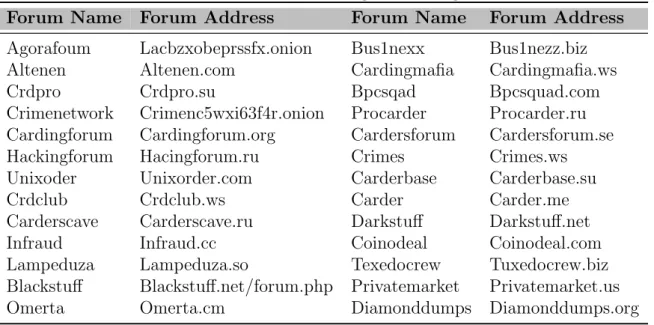
The most common techniques employed by fraudsters to abuse the CNP payment includes phishing and targeting victim’s machines with specially craftedmalwares which are designed to steal payment card details. Stolen card details are either used by adversaries or are traded on online portals. Trading of credit card numbers in the underground market has previously been studied in the academic literature [12]. Even today the trading of credit card details are real as we provide a list of at least 15 live illicit websites/forums [See Table A.4 in Appendix A] where card details are still traded. Since phishing [32][33], card details stealing malwares[34][35][36] and trading of card details in underground forums [37][38] has been comprehensively studied, for brevity we did not expand these attacker techniques in this paper. In the following sections we detail three limitations that we explored within the CNP payment system:
• Card Skimming (Magstripe, EMV Chip and PIN and EMV Contactless) • Merchant Receipts and Guessable Card Numbers
• Architecture of Authorization Response Codes 3.5.1. Card skimming
Also as discussed in section 3.3.2 the design of card present payment protocols [25][39][40] mandates the card number to be stored as plain text within the cards memory; this enables even an illegitimate card reader to communicate and interpret the card details. Such an unusual design for a payment protocols offers at least two opportunities for an attacker to obtain payment card details. Firstly, it is well-known for a contactless card that card number and expiry date could be skimmed from a distance with any NFC enabled device [24][41] and in fact, in a single google play search, we located 38 freely available Android apps which could be used by an attacker to read the contactless payment cards. Another channel that an adversary can follow to obtain the card number details is from the merchants sales receipt from reader Point of Sale (POS) terminal.
3.5.2. Merchant Receipts and Guessable Card Numbers
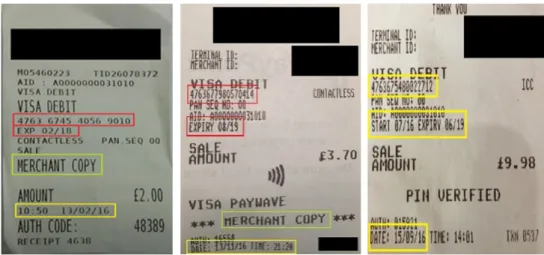
To maintain sales records made using payment cards, in-store merchants maintain mer-chant copy of customers transaction. We found that mermer-chant copies from a number of
Figure 4: Merchant receipts exploiting full payment card number and expiry date in plane text.
high street retailers revealed their customer’s complete payment card number and expiry date (shown in Figure 4). These card details are enough to create and purchase goods from giant online merchants stores like Amazon [24]. Worst of all, none of the merchants were educated about the risks of losing merchant copies, and few of the merchants even agreed to sell several merchant copies for under a dollar. This means, whenever a customer uses their card with in-store retailers, there is a risk of card number being stolen. Just from around our organization, we found 23 such retailers whose merchant copy revealed full card number and expiry date.
We further investigated the possibility of an attacker generating payment card numbers and explored that an adversary can easy produce and validate a database of active payment card numbers as discussed below:
The payment card numbering specifications are governed by the ISO/IEC 7812-1:2017 [42] and the ISO 10202-6:1994 [43]. Table 2 enumerates the useful insights that can be obtained from a credit card number. It can be learned from a card number that customer account number fills nine spaces and therefore, the maximum number of possible active card numbers for a bank would be one less to 109 (a billion). An attacker starts after selecting target banks BIN (bank with a high number of customers would give high positives), randomly generates thousands of accounts number using Luhn’s check algorithm [44] (or with automated bots as demonstrated in [41]) and makes transactions using the generated card numbers on online payment websites. When a transaction is made, a transaction authorization request is sent by the merchant to the card issuing bank. The card issuing bank, through authorization response message (further discussed in next section), indicates to the merchant that the card number used while trying to make a purchase is not correct. For an attacker, the Authorization response will reveal the validity of a card number.
For example when we made a transaction with invalid card number on a merchant website-x (website name masked), we received the response as shown in Figure 5. If the card number was valid, the authorization only changes to indicate any other invalid card data element (as shown in Figure 6). A recent investigation into Tesco bank breach revealed that
Figure 5: Response code revealing the validity of a card number
Figure 6: Response code revealing the validity of a card number and expiry date
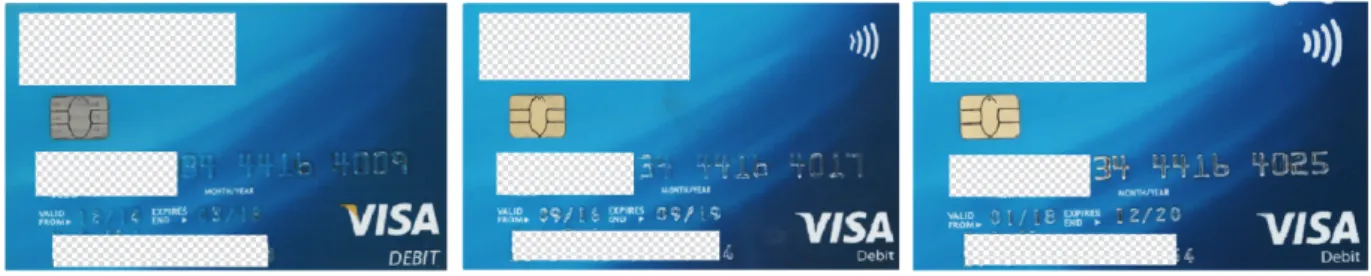
attackers used similar technique to exploit payment card details of around 9000 customers [45]. Additionally we observed a weak security practice by a leading card issuer (name masked) while issuing the payment card numbers to their customers. We found that the card issuer issued payment card numbers in a serial guessable sequence. Shown in Figure 7, are three payment cards belonging to the same customer and card numbers are shown issued in a sequence with a difference of 8.
3.5.3. Architecture of Authorization Response Codes
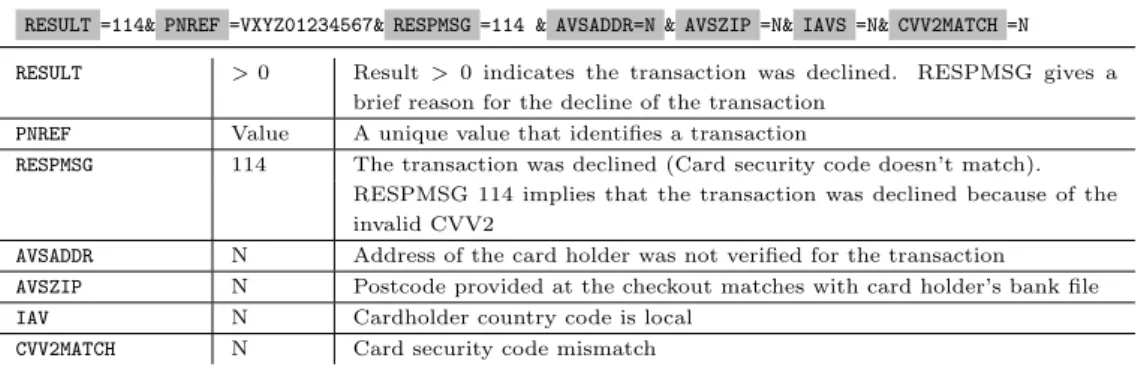
As discussed, after a merchant submits an authorization request (AuthzReq), the card holder bank responds back the merchant or it’s payment processor with what is known as an authorization response (AuthzRes). The AuthzRes is a string of complex codes which indicates to the merchant the transaction status and any card data field put incorrect by the card holder. To make AuthzRes codes readable for the customers at checkout, these response codes are parsed by the merchants into the user understandable language. Perceiving the parsed AuthzRes from a rogue merchant‘s mindset; the codes conversely could be used to learn all card data fields.
Table 3 shows an AuthzRes code for the merchant with PayPal as its payment processor. It can be derived from Table 3 that the transaction was declined because CVV2 supplied at checkout by the customer does not match with the actual card holder file with the bank’s
Table 3: Authorization response code for merchant with PayPal as payment processor
RESULT =114& PNREF =VXYZ01234567& RESPMSG =114 & AVSADDR=N & AVSZIP =N& IAVS =N& CVV2MATCH =N
RESULT >0 Result> 0 indicates the transaction was declined. RESPMSG gives a
brief reason for the decline of the transaction
PNREF Value A unique value that identifies a transaction
RESPMSG 114 The transaction was declined (Card security code doesn’t match).
RESPMSG 114 implies that the transaction was declined because of the invalid CVV2
AVSADDR N Address of the card holder was not verified for the transaction
AVSZIP N Postcode provided at the checkout matches with card holder’s bank file
IAV N Cardholder country code is local
CVV2MATCH N Card security code mismatch
authorization server. This AuthRes code also implies that the card number and the expiry date were valid.In the next step, the AuthRes code is simplified at the checkout in user natural language. For example, during our experimentswith valid card numbers when the expiry was not entered correctly while making a purchase on website x (name masked), the parsed response string as shown in Figure 6 explicitly stated “Your payment has been declined as your card expiry date was not valid”. Educating a user/attacker about the incorrect card data element. Having known that the VISA authorization network does not detect multiple invalid attempts when distributed across multiple payment gateways [41], attacker has countless attempts to guess expiry date and all the other card data required to make an online payment [41]. Using the AuthRes codes an attacker could easily be able to obtain card data fields for all Visa cards[41].
4. Mobile Payment Frauds
Over the years, mobile devices such as smartphones and tablets have started to replace desktop computers. Fraudsters have caught the wave of opportunity and they have been shifting their activities to this channel [46]. Mobile web fraud strategies are quite similar to those used on traditional online fraud, making the adaptation of cyber frauds to the mobile situation often straightforward. Furthermore, fraudsters have found new chances to make profit specific to mobile applications.
Some of the characteristics that have helped to increase the popularity of mobile devices such as ease of use and mobility, create new security risks not associated with computers. It is common that mobile devices are shared with friends and family, and it is potentially easier to leave them unattended in public spaces where they can be used for a second person or easily stolen.
Mobile payments have been adopted in different ways. We are using mobile devices for online shopping and to pay for digital services. Moreover, they have become popular for contactless payments instead of paying with debit or credit cards. The main models for mobile payments usually relayed in one of the following technologies [47]:
• Stored value account systems: Usually the method is integrated into an app on the mobile device i.e. payment wallet. Apple Pay, Samsung Pay, Android Pay, Microsoft
Wallet and PayPal are the most widely used wallets, being Paypal the only one which works across different operating systems. They allow the customer to make faster online payments (when the merchant accept them) and contactless transactions using the Near Field Communication technology included in many mobile devices. Other popular wallet apps are brand specific, such as Boost Mobile and the Starbucks Wallet app which usually include loyalty programs.
• Account based systems: A mobile web payment system can store card details which can be remembered for future purchases turning the payment into a simple click-to-buy. Commonly, an strong authentication is required to commit large value payments. Banks have taken advantage of this technology and they have developed applications which allow costumers to operate in their accounts in real-time i.e. direct transfers. • Mobile billing systems: The consumer uses a premium SMS or direct carrier billing
during the checkout. The success of earlier mobile content services such as logos and ringtones accustomed consumers to use this type of payment. An advantage of this type of payment is that existing telecom operator billing systems are suitable for handling micropayments transactions.
A common way to steal payment information is through malware which has been in-stalled previously in the device. Others ways are social engineering and fake apps [48, 49]. Because of the low prices of mobile devices, fraudsters can afford using many different de-vices to commit the attack and most of the observed fraudulent e-commerce transactions are originated from new devices[50]. Using new devices, fraudsters can avoid some of the tradi-tional anti-fraud measures such as those based on a persistent identification which i.e. the merchant can identify that is the same device trying to get access from a different account. 4.1. Economics of Mobile Payment Fraud
During the first quarter of 2018 more than half of the financial transactions took place on mobile devices [50] and it has been on this channel where the highest percentage of fraudulent operations have taken place. However, the awareness of risks on mobile payments is low and many merchants believe that mobile devices are more secure than computers [51].
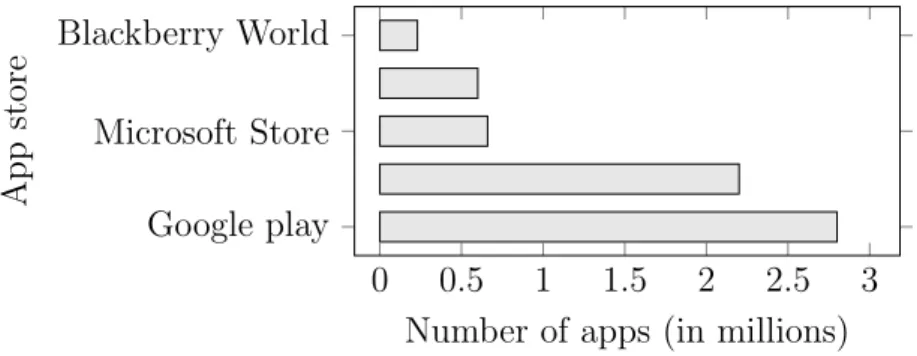
On the other hand, the number of merchants offering their services through apps instead through dedicated mobile websites has grown considerably, especially for merchants with high revenue [52]. At the end of the first quarter of 2018, there were available 7.1 million mobile applications at the leading app stores of the market [53](Fig. 8 shows the number of applications available by most popular app stores in this period). At the same time, the proportion of cyber fraud carried out using mobile apps has increased from 5% to 39% in the last three years [54].
4.2. Attack Methods in Mobile Payments
Many types of fraud affect the end-user of mobile devices. We describe the group with higher incidence.
0 0.5 1 1.5 2 2.5 3 Google play
Microsoft Store Blackberry World
Number of apps (in millions)
App
store
Figure 8: Number of apps available in leading app stores in first quarter of 2018.
4.2.1. Account Takeover
Account takeover is the most frequent type of fraud [55]. After fraudsters have found out about the access information of a user, they utilize it to sign up for an expensive service or purchase a product. Bad actors manage to access personally identifiable information in many different ways such as data breaches which become more and more frequent i.e. between May and July of 2017, Equifax, one of the largest credit bureaus in the U.S, was a victim of a data breach. In this case, personal information of almost 150 million of customers was exposed, including in a few cases credit card data [56].
Once an account has been taken over, it is difficult to fight because both legitimate and fraudulent users use the correct login credentials. Customers are particularly vulnerable when they do not use strong passwords and they re-use them for several accounts [57]. Es-pecially when the provider utilizes a one-factor authentication method increases the exposure of the users. For example, after the coffee chain Starbucks launched an app which allowed customers to pay for their coffee, several customers reported that money was withdrawn from their accounts without authorization [58]. After fraudsters managed to login the app, they top up the account using the stored credit card and then they purchased gift cards which can be sold in the black market. The company said that criminals were obtaining login credentials from hacked websites and trying them out in the Starbucks app.
4.2.2. Phishing
Phishing is a well-known cyber attack where fraudsters steal personal information from users under false pretences by email, phone call or social media sites. It is one of the oldest types of cyber fraud attacks but still it is frequently used in mobile channels i.e. mobile users are 18 times more likely to be exposed to a phishing attempt than to malware [59], and three times more vulnerable to a phising attack than in computers [60]. While many users have learned to be suspicious of links and attachments in emails, however, today 66% of emails are checked on the mobile devices [61]. Similarly, the popularity of mobile applications like SMS and WhatsApp also attracted the fraudsters to utilize the medium for getting personal information of the victim via the phishing attack.
4.2.3. Fake Applications
Scammers develop fake apps which may include malware or be designed to steal personal info. Sometimes phantom applications use and organization brand without permission to easily trick the users. Financial Trojan horse malware is one of the most popular cases because of the increasing availability of malware-as-a-service kits available in the cyber un-derground [50]. In some cases, the fake application sends premium SMS messages where an amount of money charged to the phone bill of the user goes directly to the fraudsters. Several researchers demonstrated the use of fake Near Field Communication (NFC) reader application on android enabled platforms. NFC enabled mobile phones use ISO 14443 Iden-tification cards – Contactless integrated circuit cards – Proximity cards (part 1-4) commu-nication standards and these are the same standards as used by contactless payment cards and readers to facilitate payments.
Mehrnezad et al. in [62] demonstrated the practicality of fake NFC applications initiating fraudulent transaction with contactless payment cards. In that, the researchers were able to design a fake NFC application which can interact with the contactless cards kept in a mobile phone wallet, make fraudulent transactions, read user locations and upload these to an attacker controlled server. In fact, in a single Google play search we found 38 such NFC android mobile applications capable of reading contactless payment cards.
4.2.4. Fraudulent Website
A large number of fake website will use a domain name that impersonate or refer a well-known brand. But this would not represent the official website. For example, you apply for the job on-line, and they ask to deposit funds to process your application. This type of fraud shows the same characteristics of the computer case. However, in mobile devices, it is more successful because users are less likely to notice that a website is slightly different than the original [63]. This is because, screens size of mobile devices are relatively small, constraining the user interface. This makes it considerably more difficult for users to recognize which mobile application or website they are interacting with [64].
4.3. Systems for Detecting Frauds In Mobile Payment Systems
The trade-off usability-security is the main concern when implementing anti-fraud mea-sures. Users do not want that their online experience is affected by security steps. At the same time, merchants know that if there are not able to provide a smooth setting, they will have to deal with the user disappointment and economic losses.
On the other hand, because the specific hardware specifications of mobile devices, the adopted measures must meet certain intrinsic aspects of the platform:
• lightweight: computational demand of the system have to be low since mobile compu-tational power is limited.
• restrict the communications: some mobile devices users i.e. smartphone users, can be charged by data rates. Additionally, the bandwidth or data usage may be limited. Therefore, the amount of information sent and received for the security approach should be low.
• restrict the energy consumption: battery life is nowadays a big concern in mobile technology. It is required that energy consumption level is as much efficient as possible. 4.3.1. Control access: authentication mechanisms
Because of the friendly portability of mobile devices, access control measures are neces-sary. An authentication mechanism is a common measure to prevent unauthorized access to the device. In an authentication process, the identity of the user is verified according to information provide either directly or indirectly by the user. We can classify authentication methods on:
• Knowledge-based methods: the process is based in information which the user knows i.e. a password or a Personal Identification Number (PIN).
• Object-based methods: the process is based in something the user possesses i.e. ex-ample a hardware token.
• Biometric-based methods: the process is based on information obtained usually from sensors. This information describes the physical or behavioural characteristics of the users such as the tone, cadence and pitch of their voice.
In [65] was introduced an object-based approach using a Bluetooth token. In this ap-proach, when the user pretends to gain access to the device, a smartphone try to communi-cate with a token through Bluetooth connection. If the token can be reached and the smart-phone receives confirmation of the communication, it will be unlocked. However, object-based authentication methods have been rarely implemented for mobile devices. Nowadays, people bring their devices most of the time with them, and the obligation to carry on an authentication device makes these systems less practical.
Knowledge-based methods have been used for a long time on mobile authentication pro-cesses and they are still used widely. PIN and password have been for years the most common authentication approach on this channel, despite that their inconvenience and weakness have been proved many times. This method is susceptible to simple attacks i.e. shoulder surfing where fraudsters spy the actions of victims and smudge attacks where smudge stains on the display are used to infer the password [66]. On the other hand, because of user have to re-member the code, either they often use the same memorable instance for different accounts or they choose a weak one. A study has shown that over 6.000.000 passwords, 91% of all of them belong to a list of just 1.000. The same study point that in this list 8.5% of the individuals use either password or 123456 as a password [67]. Furthermore, passwords have reported stolen from big databases on many occasions.
Some approaches have try to overcome some of the limitations of PIN’s and passwords. In [68], they introduce a graphical authentication system which pretends to confuse an observer requiring different information each time the user tries to login. In order to make the system more manageable, the users have to remember a group of images instead of codes and they will have to select the images they known between those revealed. The study showed an increment of the time to login and lower success rate. [66] attempted to reduce the threat
of the shoulder surfing attack. In this case, the user should draw a shape in the back of the device, area which should be more difficult to watch. The system was developed in a prototype because the additional hardware required is not available in any smartphone in the market.
However, PIN/Passwords are intrusive techniques which require a specific action of the user and they take place only once at the beginning of the session.
Biometrics based methods have been introduced more recently and they are receiving a lot of attention from the community. Biometric data describe physical or behavioural characteristics from a human being. Different sources will include different attributes such as features which describe a voice pattern and motion patterns.
A Biometric Authentication System (BAS) evaluates biometric data for verification or identification of individuals. Nowadays, many different sensors have been incorporated in the smartphone such as environmental, location and motion sensors. Obtaining biometric data from them is easy and straightforward and BAS have been found trustworthy.
With the integration of low-cost and high-quality cameras on mobile devices, face recog-nition authentication methods, which had been used widely in banking and security access systems, become popular for unlocking the mobile devices [69] [70]. In a face recognition approach, the system stores patterns of feature images or video frames which characterized the user i.e. relative position, size, and shape of the eyes. One of the main threats of this method is the face spoof attack. In the simplest face spoofing attacks such as print attacks and replay attacks, the scammer basically tries to mislead the system showing to the camera an image of the victim. Nowadays, with the popularity of social networks, it is very easy to have access to photos and videos from most of the people. More sophisticated attacks i.e. the 3D Masks attack, use a 3d-scanners. Measures to improve theses methods have been proposed for both but results are still limited [71]. An additional concern in this approaches is that the process of face capturing is influenced by a lot of external conditions such as the illumination in the scenario and the clothes worn by the individual.
As same as face recognition, iris recognition uses the devices camera to capture biometric features. Most of the non-mobile iris authentication systems used images taken in near-infrared illumination because iris is usually imaged close to the near-infrared spectrum [72]. Quality of the camera on mobile devices has been improved drastically lately, but they do not account with this kind of technology. Thus, when a picture of the iris is taken in real scenarios, distortion is introduced because effects such as low light, shadow and off-angle gaze direction, decreasing the accuracy of the method [73].
Periocular authentication systems share a lot of similarities with iris and face recognition schemes. Periocular biometric features are extracted from an image of the facial region in the vicinity of the eye. The main advantage compared to the iris recognition method is the easier way to capture the data. Furthermore, invisible lighting it is not required to capture the image. Extensive research of this method for authentication has been done on smartphone platforms [74].
More recently, some manufacturers have included a fingerprint reader in their devices to authenticate users [75]. This method has a lot of similarities to face recognition. The main difference is that the features used to discriminate between users are those obtained from
print patterns of the individual. Many users trust this authentication method [76]. However, this method usually is not very accurate [77]. Conventional touch sensors introduce physi-cal distortion because of the pressure applied by the individual which critiphysi-cally affects the authentication process. Furthermore, the classification is influenced for others environmen-tal factors such as humidity. Furthermore, fingerprint images databases represent a huge risk. There have been multiple cases where information from password databases have been stolen. Whether information from a fingerprint database was stolen, authentication patterns could not be reset.
Voice recognition authentication methods are based on the idea that the voice of each in-dividual has unique characteristics that can help to discriminate between users. Banks have been very interested in this technology because they could be integrated it in telebanking applications. However, a study which compares the usability of several biometric authen-tication methods found voice recognition less user-friendly than password entry and face recognition [78]. In the mentioned study, most of the participants involved gave negative feedback about the method.
Another biometric authentication approach which has been extendedly studied on mobile devices is touchscreen recognition. This method is based on the idea that the manner that the user touch the screen can be used to authenticate individuals. Usually, this method is applied in continuous approaches i.e. the user is authenticated continuously during the whole session with a certain frequency which depends on the capabilities of the system. The obvious limitation of this approach for continuous authentication is that not all the activities involve touch actions.
Continuous authentication approaches are non-intrusive. With the inclusion of motion sensors such as the accelerometer, the magnetometer and the gyroscope, motion authenti-cation for mobile devices has become more popular. Usually, motion recognition is used on continuous authentication approaches too. Some studies have been focused on identifying users based in the way they walk [79] and in the way the hold the device [80, 81].
4.3.2. Machine Learning to fight Payment Frauds
The industry is continually seeking measures to combat fraud activity. However, where a new protective procedure is introduced fraudsters adapt to it.
Because of the low prices of mobile devices, fraudsters can afford using many different devices to commit the attack and most of the observed fraudulent e-commerce transactions are originated from devices that are ’new’ [50]. Operating in this manner, fraudsters can avoid some of the traditional anti-fraud measures such as those based on the persistent identification.
As we have mentioned, one step authentication processes are easier to hijack especially because users many times utilize the same access info for different services. Combining several types of measures the device is less likely to be compromised.
In this scene, Machine Learning (ML) techniques become to play an important role.The use of ML in identifying and mitigating fraud has grown 13% since 2015 [52]. Approaches which involve the use of ML algorithms analyzed behavioural data related to the users, helping to detect anomaly patterns which can be correlated with fraud. ML algorithms have
been proved very efficient, but their use on mobile devices are limited to the computational resources available. For this reason, some authors propose a distributed approach in which some of the computational burdens are consigned to the cloud [82].
Many continuous authentication biometric approaches are based in ML approaches such as Support Vector Machine and Hidden Markov Model [83, 79]. More recently, some ap-proaches have been based in Deep Neural Networks [80, 81, 84, 85, 86].
5. Telecommunication Frauds
The telephone system has become an integral part of daily routine. There is more than 6 billion telephony user across the world [87, 88]. The huge customer base, easy integration with the Internet and cheap call rate have made telephone network a lucrative medium for the fraudsters to target the victims in real-time. In this section, first, we provide economics of telecommunication frauds, then provide the methods which fraudsters are using to target the victim and then present brief discussions on methods designed to protect the network and consumers.
5.1. Economics of Telecommunication Frauds
Telecommunication systems (Mobile, Fixed, Internet Telephony) have become an inte-gral of humans life by staying in touch with friends and family and doing business com-munications. As of 2017, the number of telecommunication users in the United Kingdom is approximately 125.5 million (Fixed and Mobile). The rapid increases of the user base and cheap telephony rates over the Internet Telephony (VoIP (Voice over IP)) have also facilitated scammers and fraudsters to use this medium for the financial benefits. Scammers over the Internet telephony can use spoofed identities of the legitimate entities (for example banks, tax department) or use non-trackable anonymous identities for making unsolicited calls and messages to the telephony users. These calls and messages not only annoy call receiver with the unwanted ringing but would also result in a financial loss.
There are around $2.25 trillion accumulated losses in the telecommunication industry across the globe as reported by the Communications Fraud Control Association (CFCA) [10]. It is estimated that unsolicited or spam calls over telephony results in a loss of $38.1 billion per year to the fraudsters and scammers. This is 1.69% of the total telecommunication revenue. Moreover, FTC (Federal Trade Communication) has estimated that people in the USA lose $8.6 billion annually to the fraudsters, and the majority of fraudsters use telephony medium for the purpose. The following are the top categories of frauds in the telecommunication networks: $0.8 billion to SMS Faking or Spoofing, $1.6 billion to Phishing and Pharming, $1.8 billion to Wangiri (Call Back attack) [10].
5.2. Attack Methods in Telecommunication Frauds
The following are the top categories of frauds in the telecommunication networks: $0.8 billion to SMS Faking or Spoofing, $1.6 billion to Phishing and Pharming, $1.8 billion to Wangiri (Call Back attacks) [10]. This section list some of the most common fraud types and their attack mechanism.
5.2.1. Wangiri Fraud
Wangiri (literally, ring and disconnect) is a type of fraud call that was first originated in Japan back in 2002 [89]. In the wangiri call attack, the attacker convinces call recipients to call a premium rate national or international phone. The attacker made a short miscall on the victim identity and curious recipients assume that they have missed a call from the legitimate caller and call back the callee. They are then charged at the premium call rate for this call. The user does not realize they are a victim of this fraud until he receives the monthly bill from his service provider. In this attack, the attacker convinces callee to callback on the premium number which is under the control of fraudsters.
5.2.2. Simbox or ByPass Fraud
Bypass Fraud or SIM Box fraud is the most costly type of fraud affecting the regulator as well as the telecommunication service provider. The Bypass fraud is common in regions or countries where call rates for international termination are substantially higher than the local landline or mobile call charges. The fraud results in an average annual loss of $ 4.3 billion [90]. In Bypass fraud, fraudsters illegally install or place a SIM Box at its premises. The sim box routes the calls from the international caller to the callee, presenting that call is originated from the local mobile or telephone fixed exchanges, thus bypassing charges paid to the regulator on the international long distance call. This call fraud largely affects the regulator and the end-users in the sense that regulator loses money because of local termination and end-users is paying for the premium call route but route provided to him is a low-quality route.
In practice, Bypass fraud works in two ways [91, 92]. 1) The fraudster presents himself as the legitimate telecommunication entity to other telecommunication companies. Once the agreement is signed for the interconnect, the terminating operator routes call s from the originating operator via the simbox, which is not observable to the caller and the originating operator. However, over the period of time, the caller could notice the low-quality route because of degraded quality and report it to the operator. 2) The owner of the Simbox network to offer the cheap call termination, though this would not directly impact the caller or the callee in terms of financial loss, it would bring a loss for the regulator and legitimate call termination operators for not receiving share on the calls originating from overseas. 5.2.3. International Revenue Sharing Fraud
In International Revenue Sharing Fraud (IRSF), fraudsters illegally hack or convince callee to make a call to a premium number. This would not only result in financial loss for telecommunication operators but would also bring loss to end-users and small enterprises. IRSF fraud can be committed in two ways. 1) the fraudster can trick the callee to call back on the premium numbers by using a stolen identity or making a miscall to the callee [93, 89]. 2) The fraudster uses the resources of hacked telecommunication operator or private branch exchange (PBX) of an enterprise in order to originate calls for the premium number obtained from an International Premium Rate Number provider. With IRSF, Fraudsters make repeated calls to premium numbers or international calls to destinations with high
termination rates. This results in a loss of around $6.1 billion a year to the enterprise and telecommunication operators [90].
5.2.4. Subscription Frauds
In subscription fraud, the fraudster uses the telecommunication services with the inten-tion of not paying the charges to the telecommunicainten-tion operators. This is probably the common fraud activity and can be easily managed without a huge investment. The fraud-sters in a subscription fraud can be grouped into two types: 1) the personal use, i.e buying the subscription services or buy the post-paid sim cards on the stolen identities and have no intentions to pay the bills, 2) for the profit, i.e. selling the long distance calls using acquired sim cards. The subscription fraud is the major problems for telecommunication service providers its accounts for $2 billion which is roughly 40% of all fraud losses [90]. 5.2.5. Robo and Telemarketing Calls
A robocall or the telemarketing call is the phone call that uses telecommunication medium and the computerized autodialer to deliver a pre-recorded telemarketing message to the call receiver. These calls are often made for the political campaigns, collecting dona-tions, offering holiday packages, promoting political and religious thoughts and selling legal and illegal products. These calls can come at any hour of the day and require an immediate response from the recipient, thus annoy call recipients while at work, disturb them in their family times, and can even interrupt their sleep in late hours at night. Recent statistics on telephony spam have revealed that answering a spam call would result in an estimated loss of 20 million man-hours for a small business enterprise in the United States with the estimated loss of about $475 million annually [94]. In 2016, estimated US residents have received around 2.4 billion robocalls per month [95]. Every year service providers, regu-lators, and law enforcement agencies receive thousands of complaints from consumers for unsolicited, unauthorized, and fraudulent callers trying to abuse them. These calls can also be the first step towards the frauds. FTC (Federal Trade Communication) has estimated that every year scammers and spammers cause a loss of $8.6 billion annually to a citizen of USA due to frauds and majority of them are initiated from the telephone [96]. In 2016, it was estimated that around 27 million U.S. consumers lost approximately $7.4 billion to phone scams and robocalling, averaging $274 per victim [97].
5.2.6. Over the Top Bypass
Over the top (OTT) communication applications are the application that operators over the Internet. These communication applications provide services like instant messaging, telephony over Internet and streaming video. The OTT apps are widely being used by the people for staying connected with the loved ones and making long distance cheap or free telephone calls. WhatsApp, the most popular OTT app for the instant messaging and voice has more than 1.5 billion monthly active users [98]. The OTT bypass is similar to the simbox fraud but this fraud is generally done by the telecommunication operators with their customers and termination operators [99]. In this fraud, the telecommunication operator makes an agreement with OTT provider and divert calls for the receiver through the OTT
![Table 1: Regional distribution of cybercrime for the year 2017 [2].](https://thumb-us.123doks.com/thumbv2/123dok_us/79735.2509045/3.892.124.772.198.481/table-regional-distribution-cybercrime-year.webp)
![Figure 2: Showing a magnetic stripe skimming device found attached on an ATM machine [24]](https://thumb-us.123doks.com/thumbv2/123dok_us/79735.2509045/9.892.136.760.165.371/figure-showing-magnetic-stripe-skimming-device-attached-machine.webp)