Tools of the Trade
A Guide to Designing and
Operating a Cap and Trade
Program for Pollution Control
Tools of the Trade:
A Guide To Designing and
Operating a Cap and Trade
Program For Pollution Control
United States Environmental Protection Agency
Office of Air and Radiation
EPA430-B-03-002
www.epa.gov/airmarkets
Table of Contents
Acknowlegments ...ii Chapter 1: Introduction ...1-1 Introduction ...1-1 Purpose ...1-1 Structure ...1-1 Cap and Trade ...1-2Chapter 2: Is Cap and Trade the Right Tool?...2-1
Introduction ...2-1 General Assessment Issues ...2-1 Comparison of Cap and Trade and Other Policy Options ...2-5
Chapter 3: Developing a Cap and Trade Program ...3-1
Introduction ...3-1 Guiding Principles ...3-1 Establishing Legal Authority ...3-2 Creating an Emission Inventory ...3-3 Program Design Elements ...3-4 Other Design Considerations ...3-25
Chapter 4: How to Implement and Operate a Cap and Trade Program ...4-1
Introduction ...4-1 Integrated Information Systems ...4-1 Auditing and Verification ...4-4 Technical Support for Regulated Sources ...4-5 Administrative Costs Associated with Cap and Trade ...4-6
Chapter 5: Assessment and Communications...5-1
Introduction ...5-1 Communicating Status and Results ...5-1 Communication Issues Unique to Emission Trading Programs ...5-2 Modes of Communication...5-5 Continued Assessment ...5-5
Glossary of Terms...Glossary-1
Acronyms...Acronyms-1
References...References-1
Appendix A: The Optimal Level of Pollution ...A-1
The Economics of Emission Trading ...A-2 Appendix B: Example Assessment of the Potential For Cap and Trade ...B-1
Acknowledgments
T
he U.S. Environmental Protection Agency (EPA) would like to acknowledge the many individual contribu tors to this document, without whose efforts this guidebook would not be complete. Although the com plete list of experts who have provided technical and editorial support is too long to list here, we would like to thank some key contributors and reviewers who have played a significant role in developing this guidebook.In particular, we wish to acknowledge the efforts of the staff of the Clean Air Markets Division (CAMD) of the U.S. EPA – the division responsible for operating the U.S. SO2 Allowance and Ozone Transport Commission
(OTC) NOx Budget Trading Programs. Many staff contributed to this guidebook, including Rona Birnbaum, Kevin Culligan, Katia Karousakis, Stephanie Grumet, Richard Haeuber, Melanie LaCount, Sasha Mackler, Brian McLean, Beth Murray, Sam Napolitano, and Sharon Saile. Special mention is due to Jennifer Macedonia and Mary Shellabarger who did much of the planning and development of this guidebook. Joe Kruger and Jeremy Schreifels compiled and edited the completed document.
This guidebook benefited immensely from the comments and suggestions of a panel of external reviewers, including Dallas Burtraw, Resources for the Future; Andrzej Blachowicz, Center for Clean Air Policy; Tomas Chmelik, Czech Ministry of Environment; A. Denny Ellerman, Massachusetts Institute of Technology; Erik
Haites, Margaree Consultants; Blas Pérez Henríquez, University of California-Berkeley; Stan Kolar, Center for Clean Air Policy; Nancy Seidman, Massachusetts Department of Environmental Protection; Jintian Yang, Chinese
Research Academy of Environmental Sciences; and Peter Zapfel, European Commission. We would like to thank each of them for their insightful comments and suggestions.
We would also like to thank the staff at ERG for graphics and production support.
1
Introduction
Introduction
T
o ensure a cleaner, healthier environment, gov ernments are increasingly using market-based pollution control approaches, such as emission trading, to reduce harmful emissions. The theory of emission trading and the potential benefits of market-based incentives relative to more traditional environ mental policy approaches are well established in economic and policy literature. Until recently, however, practical applications of emission trading programs have been relatively limited. In 1990, the United States enacted legislation to implement a comprehensive national sulfur dioxide (SO2) program using a form ofemissions trading called “cap and trade.” The U.S. SO2 cap and trade program has proven to be highly
effective from both an environmental and an economic standpoint. The success of this program and others that followed has spurred interest from policymakers, regulating authorities, and business and environmental organizations. Today, emission trading mechanisms are increasingly considered and used worldwide for the cost-effective management of national, regional, and global environmental problems, including acid rain, ground-level ozone, and climate change.
Purpose
This guidebook is intended as a reference for policy-makers and regulators considering cap and trade as a policy tool to control pollution. It is intended to be sufficiently generic to apply to various pollutants and environmental concerns; however, it emphasizes cap and trade to control emissions produced from station ary source combustion. In the United States, SO2 and
NOx are controlled with cap and trade programs. These programs provide many illustrative examples that are described within this text.
Structure
This guidebook is organized as follows:
• The introduction explains the policy tool known as cap and trade.
• Chapter 2 provides guidance on how to deter-mine if cap and trade is the right solution for a particular problem and describes how it varies from other policy options, including other forms of emission trading.
• Chapter 3 explains the process for developing a cap and trade program.
• Chapter 4 explains how to implement and oper ate a cap and trade program.
• Chapter 5 discusses how to assess the results of a cap and trade program and communicate them to the public.
• Glossary of Terms and Acronyms contains defi nitions of the terms and abbreviations used throughout this guidebook.
• References contains a list of articles and papers cited in this guidebook.
• The Appendices contain additional technical and reference information.
Specific examples are provided throughout the text. These examples draw on the experience from cap and trade programs, including the U.S. SO2 Allowance
Trading Program (also known as the Acid Rain Program), the Regional Clean Air Incentives Market (RECLAIM) in Southern California, the Ozone Transport Commission (OTC) Regional NOx Trading Program in the Northeastern United States, and the United Kingdom’s emission trading program for car-bon dioxide (CO2). These examples were selected to
illustrate various aspects of cap and trade and are not intended to endorse controls on a specific pollutant.
Cap and Trade
Cap and trade is a market-based policy tool for environ mental protection. A cap and trade program establishes an aggregate emission cap that specifies the maximum quantity of emissions authorized from sources included in the program. The regulating authority of a cap and trade program creates individual authorizations (“allowances”) to emit a specific quantity (e.g., 1 ton) of a pollutant. The total number of allowances equals the level of the cap. To be in compliance, each emis sion source must surrender allowances equal to its actu al emissions. It may buy or sell (trade) them with other emissions sources or market participants. Each emission source can design its own compliance strategy – emis sion reductions and allowance purchases or sales – to minimize its compliance cost. And it can adjust its compliance strategy in response to changes in technol ogy or market conditions without requiring government review and approval.
H
Ho
ow
w aa C
Caap
p aan
nd
d T
Trraad
de
e P
Prro
og
grraam
m W
Wo
orrk
kss
1. The regulating authority sets a cap on totalmass emissions for a group of sources for a fixed compliance period (e.g., 1 year). 2. The regulating authority divides the cap into
allowances, each representing an authoriza tion to emit a specific quantity of pollutant (e.g., 1 ton of SO2).
3. The regulating authority distributes allowances.
4. For the compliance period, each source meas ures and reports all of its emissions.
5. At the end of the compliance period, each source must surrender allowances to cover the quantity of the pollutant it emitted.
If a source does not hold sufficient allowances to cover its emissions, the regulating authority imposes penalties.
Environmental Certainty
Cap and trade programs offer a number of advantages over more traditional approaches to environmental reg ulation. First and foremost, cap and trade programs can provide a greater level of environmental certainty than other environmental policy options. The cap, which is set by policymakers, the regulating authority, or anoth er governing body, represents a maximum amount of allowable emissions that sources can emit. Penalties that exceed the costs of compliance and consistent, effective enforcement deter sources from emitting beyond the cap level. In contrast, traditional policy approaches such as command-and-control regulation generally do not establish absolute limits on allowable emissions but rather rely on emission rates that can allow emissions to rise as utilization rises.
With cap and trade programs, even new emission sources may not increase the limits on emissions. The regulating authority may require new entrants to pur chase or receive allocated allowances from the total allowable emissions set by the cap (see Chapter 3 for a description of different ways that new entrants may be treated). Thus, the emissions target is maintained and the price of an allowance can adjust to reflect the increased demand for allowances.
A cap and trade program may also encourage sources to pursue earlier reductions of emissions than would have otherwise occurred, which can result in
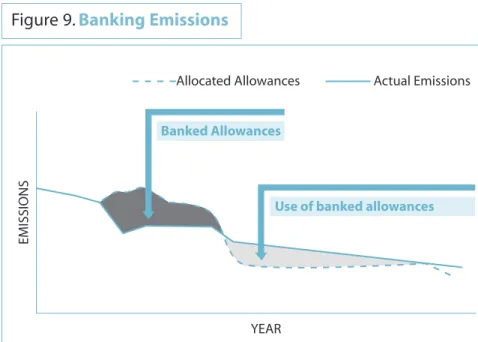
the earlier achievement of environmental and human health benefits. This is a result of two primary drivers: first, the cap and associated allowance market creates a monetary value for allowances, providing sources with a tangible incentive to decrease emissions. Second, a cap and trade program can incorporate the flexibility of banking (see Chapter 4) to provide sources with an additional incentive to reduce emis sions earlier than required. Banking allows sources to carry over unused allowances for use in a later compli ance period when there might be more restrictive requirements or higher expected costs to reduce emis sions. Essentially, banking gives sources some flexibil ity in the timing of emission reductions (i.e., temporal flexibility). This is in addition to flexibility given to sources in the location at which they make emission reductions (i.e., spatial flexibility).
Another environmental advantage of cap and trade is improved accountability. Participating sources must fully account for every ton of emissions by following protocols to ensure completeness, accuracy, and con sistency of emission measurement. This system con trasts with most environmental programs that base compliance on periodic inspections and assumptions that equipment is functioning and the source is in compliance between inspections.
Accurate measurement of emissions and timely reporting are critical to the success of a cap and trade program and the integrity of the cap. After emissions data and allowance transaction information are reported,
Figure 1. Cost Minimization With Trading
the regulating authority can provide detailed or summa ry information to the public (e.g., on the Internet). This transparency, or access to information, can provide con fidence in the effectiveness of the program.
Minimizing Control Costs
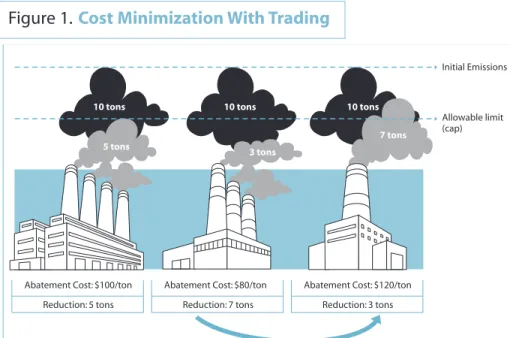
In addition to the environmental benefits of adopting a cap and trade program, significant economic benefits also support the use of such a mechanism. Cap and trade programs provide sources with flexibility in how they achieve their emission target, which is uncommon under traditional environmental policy approaches. The cap establishes the emission level for emission sources; the sources, however, are provided with the flexibility of choosing how they want to abate their emissions. Each source can choose to invest in abate ment equipment or energy efficiency measures, to switch to fuel sources with no or reduced emissions, or to shutdown or reduce output from higher emitting sources. The regulating authority does not need to approve each source’s compliance choices because the cap, accompanied by emission measurement and reporting requirements, enable the regulating authori ty to focus on assessing compliance results (i.e., ensur ing that each source has at least one allowance for each unit of pollution emitted). Cap and trade programs also allow sources to trade allowances, providing an additional option for complying with the emissions tar-get. Sources that have high marginal abatement costs (i.e., the cost of reducing the next unit of emissions)
can purchase additional allowances from sources that have low marginal abatement
Initial Emissions
Allowable limit (cap)
Abatement Cost: $100/ton
Reduction: 5 tons
Abatement Cost: $80/ton
Reduction: 7 tons
Abatement Cost: $120/ton
Reduction: 3 tons
Potential transfer of 2 allowances for $80-$120 each
3 tons 5 tons
7 tons 10 tons
10 tons 10 tons
costs. In this way, both buyers and sellers of allowances can benefit. Sources with low costs can reduce their emissions below their allowance holdings and earn revenues from selling their excess allowances – a reward for better environmental performance. Sources with high costs can purchase additional allowances at a price that is lower than the cost to reduce a unit of pollution at their facility (see Figure 1). This outcome is consistent with the “polluter pays” principle.
A well designed cap and trade program can also provide continuous incentives for innovation in emis sion abatement. Because of the value attached to allowances. The value creates an economic incentive to invest in research and development for emission abatement options that can further reduce the costs of attaining compliance.
Finally, the cost-minimizing feature of cap and trade has long-term environmental benefits. Driving down the cost of reducing a unit of pollution means that poli cymakers and regulating authorities can set targets that reduce more pollution at the same cost to society. This system makes it economically and politically feasible to achieve greater environmental improvement.
2
Is Cap and Trade
the Right Tool?
Introduction
C
ap and trade can be an effective tool to address air pollution. However, it is not appropriate in all situations or for all environmental problems. Policymakers should consider a number of important issues before deciding whether cap and trade is appro priate. Prior to developing a cap and trade program, policymakers and other experts should determine whether the nature of the environmental problem, as well as the institutional capacity and political situation, is conducive to the successful establishment of such a program (Benkovic and Kruger, 2001).This section begins with a brief discussion of some of the general issues that must be assessed for any type of emission reduction program. Next, the section examines whether cap and trade can address a particu lar environmental problem. Finally, it compares cap and trade to other types of policies including different forms of emission trading.
General Assessment
Issues
Before making a decision about an emission reduction program, policymakers should assess a number of sci ence, technology, and other issues. For example, regard-less of the type of program chosen, policymakers must understand the nature of the environmental or health problem of concern, the pathways of exposure, the loca tion and magnitude of the sources that contribute to the problem, and the emission reductions necessary to address the problem. Similarly, policymakers should have answers to technical and economic questions such as the cost, availability, and performance of control tech nologies. Although a full discussion of these questions is beyond the scope of this manual, Appendix B sum marizes how some of these questions were addressed under the U.S. SO2 Allowance Trading Program.
Once policymakers have a thorough understanding of these issues and questions, they can determine whether cap and trade is an appropriate tool to address the problem. The following sections outline some of the key considerations used to determine whether cap and trade will be an effective program for a particular situation.
Is Flexibility Appropriate?
Cap and trade is premised on the notion that regula tors do not need to direct the type or location of spe cific emission reductions within a region. Instead, these programs set an overall target and let “the mar ket” determine where to make the most cost-effective reductions. In some cases, however, it does matter where an emission reduction is made. For example, some toxic emissions may have primarily local health impacts in the area immediately surrounding a facility. Allowing such a facility to buy allowances from other similar facilities in the area may not fully address the risks caused by its emissions. It may make a situation worse by causing a “hotspot” if the cap does not require sufficient reductions to minimize or prevent local impacts. In such a case, it may be necessary, from a public health standpoint, to impose source-specific controls and limit the flexibility inherent in an emis sion trading program.
In general, the more a pollutant is uniformly dis persed over a larger geographic area, the more appro priate it is for the use of cap and trade.
Even when the location of emissions does matter, cap and trade may be effective if the environmental goal can be met through emission reductions in a gen eral region. For example, a cap and trade program can reduce total loadings of a pollutant into the atmos phere, particularly if these pollutants are emitted by many sources and transported over a large geographic region. This was the case in the United States with the SO2 Allowance Trading Program, which is intended
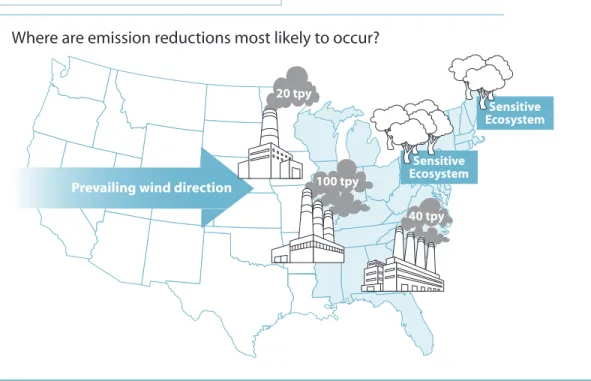
to reduce acid deposition in the Eastern United States and Canada. Similarly, cap and trade programs can address ambient air quality problems by reducing background levels of pollution that contribute to adverse air quality. For example, if there are prevailing winds, it may be necessary to include emission sources upwind of the polluted area that could prevent down-wind areas from meeting their ambient air quality standards. The NOx cap and trade programs in the Northeastern United States were designed to reduce long-range transport of NOx emissions that lead to the formation of ground-level ozone.
Before designing cap and trade programs to address emissions that are not uniformly mixed, it is necessary to conduct an assessment of the possibility of
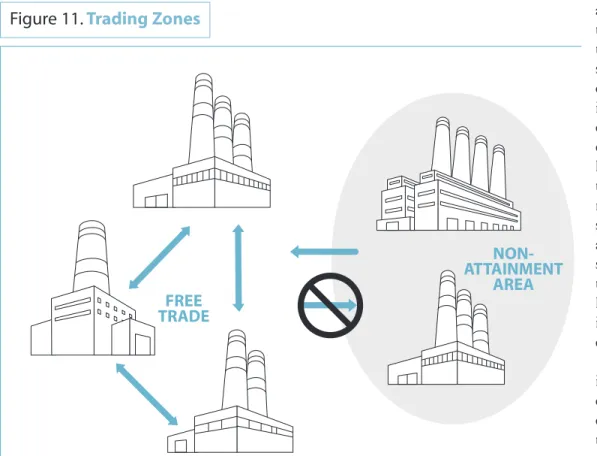
hotspots. Chapter 3 contains a discussion about ways to assess the potential for hotspots and how to develop policies to avoid them if necessary. In such cases regu
lating authorities may need to limit emissions at spe cific sources or limit trading to ensure that the pro-gram does not create hotspots and that it achieves the environmental objectives. It should be noted, howev er, that if a program requires too many trading restric tions to avoid hotspots, a more conventional regulatory approach to address the problem might be preferable.
Do Sources Have Different
Control Costs?
Cap and trade programs make the most sense when emission sources have different costs for reducing emissions (Newell and Stavins, 1997). These cost dif ferences may result from the age of the facilities, avail-ability of technology, location, fuel use, and other factors. In the U.S. SO2 Allowance Trading Program,
there was considerable diversity in emission reduction costs because of differences in the age of power plants and the proximity to low sulfur coal supplies (Stavins, 1998). Where costs are different, there is “room for a deal,” because sources with high marginal abatement costs have an incentive to buy allowances from sources with low marginal abatement costs. Conversely, if affected sources tend to be relatively homogenous, their marginal abatement costs may be approximately equal and there is little incentive for trading. In this case, a cap and trade program is not likely to yield a significantly more cost-effective outcome than more traditional types of regulation. Table 1 is a compilation of SO2 marginal control costs for sources in Taiyuan,
China. The data were used to assess the feasibility of using cap and trade to reduce SO2 emissions. This
type of analysis is critical to determining the merits of using cap and trade as a policy instrument.
Are There Sufficient Sources?
In general, cap and trade programs should include enough sources to create an active market for
allowances. If there are too few sources, there may be few opportunities for trading. In addition, even if there are cost-effective trading opportunities in a program with few sources, a market with few transactions could make potential sellers reluctant to part with their excess allowances. These potential sellers could be concerned that if business conditions change and they need more allowances in the future, they will have dif ficulty purchasing them. They may instead hoard excess allowances even though it might not appear to
T
Taab
blle
e 1
1:: C
Co
osstt--E
Effffe
eccttiiv
ve
en
ne
essss o
off S
SO
O
22C
Co
on
nttrro
oll M
Me
eaassu
urre
ess iin
n
T
Taaiiy
yu
uaan
n,, C
Ch
hiin
naa
Control Source Cost/ton
(US$)
Treat post-combustion gas Taiyuan District Heating $60
Flue gas desulfurization (FGD) Eastern Mountain Power Plant $80 Lower sulfur coal (~1.3%) Taiyuan #1 and #2 Power Plants,
Taiyuan Iron & Steel $100
FGD (simplified) Taiyuan #1 Power Plant * $240
Limestone fuel additive Coal Gasification Plant $130
* In addition to unspecified costs paid through a grant from the government of Japan. Source: RFF, 2001
they must follow national poli cies but are given considerable autonomy in implementation.2
To the extent that the region of a cap and trade program covers more than one jurisdiction, the authorities should maintain some consistency in key design elements of the program. To ensure that the allowances are consistent and fungible across jurisdictions, cap and trade pro-grams require common design elements, including standards for determining applicability, emissions measurement and reporting, recordkeeping, enforcement, and penalties for be in their economic interest to do so. Additionally,
with fewer sources, there may be a concern that larger sources may exert market power and withhold
allowances from the market to drive up prices of allowances.
There is a tradeoff, however, in that the more numer ous the sources, the more complex and costly the cap and trade program may be to establish and operate. For example, a cap and trade program for vehicles could be administratively costly if there was a need to measure and report emissions and enforce compliance at the vehicle level.1 Technological advances, however, are
making it possible to cost-effectively expand participa tion in cap and trade programs (e.g., computerized data tracking systems, improved emission measurement tech nology (Kruger, et al., 2000)).
Is there Adequate Authority?
Another important question government officials must consider is whether the relevant government entity has sufficient jurisdiction over the geographic area where they would implement the cap and trade program. In many countries, regional or local authorities are respon sible for implementing environmental programs. Often,
non-compliance (Kinner, 2002). Thus, program designers should answer the following questions:
• Will provinces and municipalities be responsive to directives, such as monitoring requirements, imposed by the national government or would they cooperate to form a collective effort to develop such requirements?
• Does the central government, or coalition of local governments, have the capacity to enforce compliance provisions and penalties throughout the entire trading region?
Other design elements, such as allocation methodolo gies for assigning the initial distribution for
allowances, might be left to the provinces or munici palities since the allocation methods have little envi ronmental impact. 3
Are there Adequate Political
and Market Institutions?
For the trading component of a cap and trade program to work, a country must have some of the same institu tions and incentives in place as those required for any type of market to function. These include:
1 Other environmental policy tools, or alternatively, the compliance obligation and allowance allocation at the vehicle manufacturer, fuel refiner or
distributor level, may be more appropriate in this case.
2 For example, China’s provincial Environmental Protection Boards have the main responsibility for running air quality and other environmental
programs. Similarly, in Slovakia there are 79 local districts that implement environmental and other programs.
3 Allowing different provinces or municipalities to have different allocation schemes may have distributional economic impacts, such as favoring
firms within an industrial sector in one region of a country over another. This result could have economic efficiency effects if product markets are not perfectly competitive.
• A developed system of private contracts and property rights (see Chapter 3 for discussion of property rights issues associated with emission trading).
• A private sector that makes business decisions based on the desire to lower costs and raise profits. • A government culture that will allow private busi
nesses to make decisions about “how” to achieve objectives with a minimum of intervention. As with all environmental programs, a cap and trade program requires adequate enforcement to ensure that emission objectives are met. In addition, for an allowance market to develop, market participants must be confident that sources will measure and report emissions correctly, the regulating authority will verify compliance, and, if there is non-compliance, the regu lating authority will assess sufficient financial penal-ties. Thus, cap and trade programs will have greatest success in countries where rule of law is respected and enforcement is consistent, impartial, transparent, and independent of political considerations (EDf and RSHE, 2000). In addition, once regulations are imple mented, they should be changed only through trans-parent and fair procedures. Participants should clearly understand from the beginning how the program works and how regulating authorities will measure and enforce compliance. Interest in a trading program will diminish significantly if firms believe that rules are unfair, arbitrary, or unpredictable.
Even if a country does not yet have all of the attrib utes described above, it may still be beneficial to develop the infrastructure necessary for a cap and trade program in advance of more comprehensive eco nomic changes (Ellerman, 2002). As centrally planned economies make the transition to become more mar ket oriented, they may also transform their environ mental programs to become more efficient. Even if conditions are not yet ripe for trading, the structure of a cap and trade program may improve environmental performance. In particular, the emphasis on careful mass-based emission measurement and accounting may improve environmental accountability of sources. For example, recent experiments in Slovakia (CCAP, 2001) and Chile (Montero, et al., 2000) have indicated
that the allocation process associated with cap and trade has served as an incentive for more complete and accurate emission inventories.
Are Measurement Capabilities
Sufficiently Accurate and
Consistent?
In considering whether cap and trade is an appropriate tool to address an environmental problem, policymak ers should consider whether sources covered by the program can measure emissions with sufficient accura cy and consistency to support the cap and trade policy tool. (For a discussion of emission measurement priori ties and issues for a cap and trade program, see Chapter 3.)
Unlike many types of environmental regulation where regulating authorities judge compliance by adherence to detailed technology or process specifica tions, cap and trade programs require a purely perform ance-based test for compliance. Ultimately, measured emissions dictate how many allowances a source must surrender at the end of the compliance period. Thus, the measured emissions dictate how many extra allowances a source may be able to sell or how many additional allowances a source may need to buy. If one source uses a less accurate emission measurement method than another, and consequently underesti mates its actual emissions, it could surrender fewer allowances than necessary to offset its emissions. If this scenario occurred, the emission goal (or cap) would not be met. In addition, facilities with opportu nities to reduce emissions beyond required levels would lose some of the economic incentive, because the underreporting sources need fewer allowances for compliance and will therefore either increase the sup-ply or decrease demand for allowances.
Comparison of Cap
and Trade and Other
Policy Options
A number of different policy tools can be used to address environmental concerns. These include:
• Economic-incentive approaches, such as environ mental taxes and emission trading.
• Command-and-control approaches, such as tech nology mandates or emissions rate standards. • Non-regulatory approaches, such as voluntary
agreements and eco-labeling.
Ultimately, the policymaker’s objective should be to achieve the optimal level of pollution control to adequately protect human health and the environ ment at a minimum cost to society.
Market-Based Approaches vs.
Command-and-Control
Regulation
For many air pollution problems, command-and-con trol (or direct regulation) may be the best course. For example, where regulating authorities can identify a specific facility as the source of a public health prob lem, limiting its emissions may be the simplest and most effective solution. Also, in the transportation sec tor where fuel characteristics can have a direct impact on the effectiveness of engine technology, it may be best to directly specify fuel parameters, such as sulfur content, to permit firms to design engines in the most cost-effective way to reduce harmful emissions of par ticulates or other pollutants such as NOx, hydrocar bons, and carbon monoxide.
Command-and-control regulations often work best when:
• Emission reduction experience is limited and expertise is concentrated among regulators. • Solutions are clear or there are few options for
reducing emissions.
• Monitoring total mass emissions is not feasible. • Emissions have serious local health impacts, and
trading might make such hotspots worse. • Emissions are toxic, and the desired emissions
level might be zero.
With command-and-control, the regulating authori ty typically establishes a requirement to install a spe cific type of emission reduction technology. Although sources may achieve a certain level of emissions per unit of heat input or product output using the tech nology, increased utilization and new emissions sources can threaten the ability to achieve and main tain an emissions target. Older sources that have been exempted or “grandfathered” from strict emissions controls might also threaten the ability to achieve and maintain an emission target. This threat can affect the ability to achieve an environmental and/or human health goal.
For some environmental problems, however, specif ic requirements may cost more than flexible policy approaches and inhibit innovation. These types of environmental problems may work well for a transi tional application of incentive-based approaches or economic instruments, such as taxes or a cap and trade program. Such programs may be preferred to encourage more economically efficient solutions. If properly designed, economic incentives can harness market forces to work toward environmental improve ment. By internalizing pollution control costs they can make pollution reduction in the economic interest of the firm and promote innovation.
It is also possible and, in some instances, beneficial to use a hybrid approach where command-and-control policies are implemented side-by-side with a cap and trade program. Command-and-control policies, if not overly restrictive, can establish a backstop or safety net to adequately protect human health and the environ ment (see Chapter 3).4
Cap and Trade vs.
Environmental Taxes
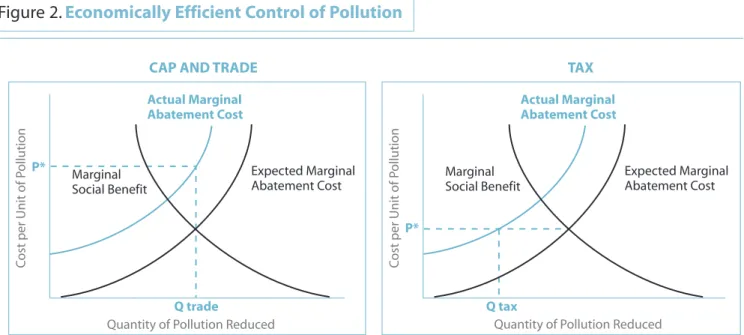
Environmental taxes are another significant market-based instrument for reducing pollution. The major difference between cap and trade and environmental taxes is that cap and trade imposes an absolute restric tion on the quantity of emissions allowed (i.e., the cap) and allows the price of emissions to adjust to the mar ginal abatement cost (i.e., the cost of controlling a unit of emissions). An environmental tax sets a price for a ton of emissions and allows the quantity of emissions
4 For a discussion of integrating cap and trade with other instruments, see Schreifels, 2000 and Ellerman, 2002.
Figure 2.
Economically Efficient Control of Pollution
C
ost per Unit of P
ollution
Marginal Social Benefit
Quantity of Pollution Reduced Actual Marginal
Abatement Cost
CAP AND TRADE TAX
Expected Marginal Abatement Cost
P*
Q trade
C
ost per Unit of P
ollution Marginal
Social Benefit
Quantity of Pollution Reduced
Actual Marginal Abatement Cost Expected Marginal Abatement Cost P* Q tax
Theoretically, environmental taxes or cap and trade will provide the same level of environmental protection. However, if policymakers have incomplete or imperfect information about costs and benefits, researchers create new control technologies, or unforeseen developments arise, cap and trade provides certainty that the level of emissions will not increase beyond the emission cap. However, there are no assurances about the cost of the program. An environmental tax does not provide certainty about emissions, but it does establish a limit on the cost of the pro-gram to ensure that the price of emitting a unit of pollution does not exceed the tax level. In the second graph, the actual marginal abatement cost is higher than expected leading to fewer emission reductions (i.e., higher emissions) for the tax program. If the actual marginal abatement cost were lower than anticipated, the emission reductions for the environmental tax program would be greater than for the cap and trade pro-gram (and costs would be higher.)
to adjust to the level at which marginal abatement cost is equal to the level of the tax (See Figure 2).
Environmental Certainty
There is extensive discussion in economics literature about the relative merits of cap and trade and environ mental taxes.5 In situations where greater environmental
certainty is needed, cap and trade programs are prefer-able because the cap sets an emission goal that sources must meet. With taxes, the regulating authority must establish a tax per unit of emissions. However, due to imperfect information (e.g., regarding marginal abate ment costs and price sensitivities) and technological changes, setting the tax at the level required to attain the emission target becomes difficult and uncertain.6
Moreover, under a regime of environmental taxes, new entrants into the polluting activity will lead to increased
emissions. With cap and trade, regulating authorities can require new entrants to purchase allowances directly from the market or the regulating authority can provide allowances from set-asides that are within the cap. Thus, the emission goal can be maintained.
Price Certainty
In situations where price certainty is needed, tax pro-grams are preferable because the tax per unit of emis sions limits the cost to firms. For example, where the costs of achieving a level of emission reductions are uncertain, policymakers may decide to set an emis sions tax rather than taking a chance that an allowance price will rise to a level that is economically or politi cally unsustainable. 7
5
For a discussion of the economic considerations for choosing between taxes versus emissions trading, see Baumol and Oates, 1988.
6
A recent study of environmental taxes in Europe showed that these programs have failed to achieve the expected level of emission reductions (OECD, 2001).
7
A third type of economic instrument is essentially a hybrid of a tax and a cap and trade program. This mechanism, sometimes known as a “safety valve” or a “price cap” is a cap and trade program with a maximum price per ton. If the market price per ton rises above the maximum price, regulated sources can buy additional tons at the maximum price. In such a situation, the emission cap is exceeded, but the price per ton does not rise above the maximum level (Pizer, 1997).
Administrative Costs
Administrative costs are similar for both environmental taxes and cap and trade. Each approach requires sources to keep records of fuel consumption or emis sions and to report this information to the regulating authority. The regulating authority’s administrative costs include processing this information, reviewing it for completeness and accuracy, and recording it. The regulating authority could also conduct detailed audits of selected submissions.
With both instruments the regulating authority must decide the rigor of emission measurement and reporting requirements. For example, Sweden’s NOx tax and the U.S. SO2 Allowance Trading Program
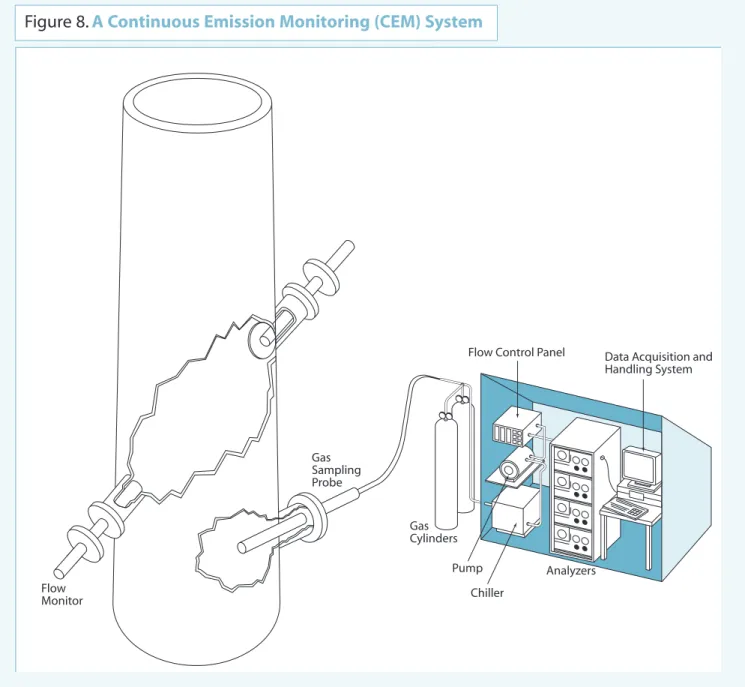
require the use of continuous emission monitors (Blackman and Harrington, 1999). Similarly, the regu latory authority’s review of data can be more or less rigorous depending on the level of review necessary. Under the U.S. SO2 Allowance Trading Program, emis
sion data review is rigorous. Although it is highly auto-mated, more than 75 percent of staff resources at the federal and state level are associated with the meas urement, processing, and tracking of emissions data (see Chapter 4 for a more detailed discussion of administrative costs).
Under a cap and trade program, a small amount of additional resources are necessary to process
allowance transfers and reconcile emissions and allowances at the end of a compliance period. A tax program will require resources to collect and manage tax receipts. Some fiscal institutions, however, may already have the resources in place to collect and man-age receipts from other tax schemes.
Political Considerations
Some regions have a history of implementing environ mental tax programs. In these regions environmental taxes may be easier to implement because they are already understood and accepted and much of the infrastructure may already exist. In other regions, there may be political reasons to opt for a cap and trade pro-gram. Emission sources may prefer a system in which allowances are allocated without charge rather than a system of environmental taxes in which a source has to pay for emissions. The initial allocation of allowances reflects a transfer to sources of an asset that is scarce and therefore has economic value. Recognizing this, sources are often more supportive of this market-based
incentive program than they are of environmental taxes. In some circumstances, policymakers might use both policies, environmental taxes and cap and trade.8
A low tax can generate revenue for the regulating authority while still offering emission sources the ben efits of a cap and trade program. Alternatively, the reg ulating authority could generate revenue with a cap and trade program by distributing some or all allowances through an auction.
Other Forms of Emission
Trading
This section examines two additional forms of emis sion trading – project-based trading and rate-based trading – and compares them to the cap and trade approach in terms of potential to limit total emissions, ability to achieve cost minimization, administrative overhead, and transaction costs.
Cap and Trade vs. Project-Based Trading
Potential to Limit Total Emissions
Project-based trading, otherwise known as credit trad ing or offset trading, is generally not used as a stand-alone program. It can be used to offer emission sources the flexibility to seek lower cost emission offsets from sectors outside a regulatory program. Historically in the United States, these types of credits or offsets have been used to meet rate-based emissions limits for con ventional pollutants. More recently, there has been con siderable international interest in using project-based trading as a complement to cap and trade to meet vol untary or mandatory greenhouse gas emission targets. Emission offsets, or credits, are typically calculated by comparing actual emissions against a baseline. The baseline is an estimate of what emissions would be in a hypothetical situation (e.g., if the project had not been created). Determining the baseline is often the biggest challenge with project-based trading.
Designing effective protocols to verify offsets is diffi cult because it requires making a determination about whether the emission reductions from an offset proj ect would have occurred anyway. This type of test is known as “additionality.” If emission reductions from a project are not “additional,” there is a risk that these reductions could dilute an emissions goal and lead to
8
For a discussion of integrating cap and trade and environmental taxes, see Ellerman, 2002.
increased emissions compared to a case in which no offsets are allowed.
A similar concern in some situations is “paper cred its.” These are created when a source uses its legal allowable level of emissions (e.g., its maximum poten tial to emit) as its baseline rather than what emissions would have been in the absence of the project. These paper credits are the difference between what a source is allowed to emit and what a source actually emits. These credits increase allowable emissions without generating any real emission reductions.9
Two issues must be addressed for project-based trading–the effect on total emissions from “non-addi tional” offsets and “leakage,” which is an increase in emissions or decrease in sequestration caused by the project but not accounted for in the emission baseline for that project activity.10 The underlying concept is
that a particular project can produce offsetting effects that fully or partially negate the benefits of the proj ect. For example, a project that protects a forest tract slated for deforestation may simply accelerate logging of the next most suitable location.
Projects that temporarily sequester emissions (e.g., forestry projects that sequester carbon dioxide) also raise issues of “permanence.” If the emission reductions from the project are used to offset other emissions, and the project subsequently releases the sequestered emis sions, not only is the environmental benefit lost, but the credits may allow emissions to increase.
Cost Minimization
As with cap and trade, project-based trading can reduce the economic costs of achieving an emission goal by adding flexibility for sources to develop appro priate compliance strategies. For example, a polluting facility may invest in an offsite emission abatement project to earn emission reduction credits. If approved, these credits may be used to offset emissions from the facility.
Administrative Involvement and Transaction Costs
A key difference between cap and trade and project-based trading is the way that emission reductions are verified and the implications for administrative involve ment. A cap and trade program requires preliminary
analysis to establish an emission cap for regulated sources. Depending on the method of allowance distri bution (see Chapter 3), additional work may be required to allocate emission allowances to the regulat ed sources. Due to the emission cap and measurement requirements, there is no need for the regulating authority to review each emission reduction activity or to calculate an emission baseline for each activity. Instead, each regulated source measures and reports its total emissions, and the regulating authority focuses on ensuring emissions are measured accurately and an allowance is turned in for each unit of emissions.
In contrast, project-based trading often requires that project participants develop a project specific emission baseline for review by the regulating authority or other authorized experts.11 Review of such baselines can be
contentious and resource intensive because it is extremely difficult to define with certainty what would have happened in the absence of a project.
To reduce administrative and transaction costs and address additionality concerns, the regulating authori ty may establish multi-project baselines. Multi-project baselines use performance standards or benchmarks for a type of project. If the project results in emission rates lower than the standard, the project automatical ly receives credit equal to the difference between the baseline and the actual emissions (Sathaye, et al., 2001). Standardizing baseline methodologies in advance can significantly reduce administrative costs and reduce the subjectivity inherent in the review of a project baseline. They may not, however, always be a perfect test for whether emissions are below the levels that would have occurred otherwise. Also, multi-proj ect baselines may be difficult to develop for some types of projects.
Project-based trading can reduce the costs of attaining an emission goal, but the administrative and transaction costs per unit of emission reduction are often higher than cap and trade programs; there is greater uncertainty and risk associated with an offset than an allowance (e.g., due to baseline, permanence, and leakage issues); and extensive involvement and oversight by the regulating authority are required to ensure environmental integrity. These transaction
9
Paper credits can also affect rate-based trading programs.
10
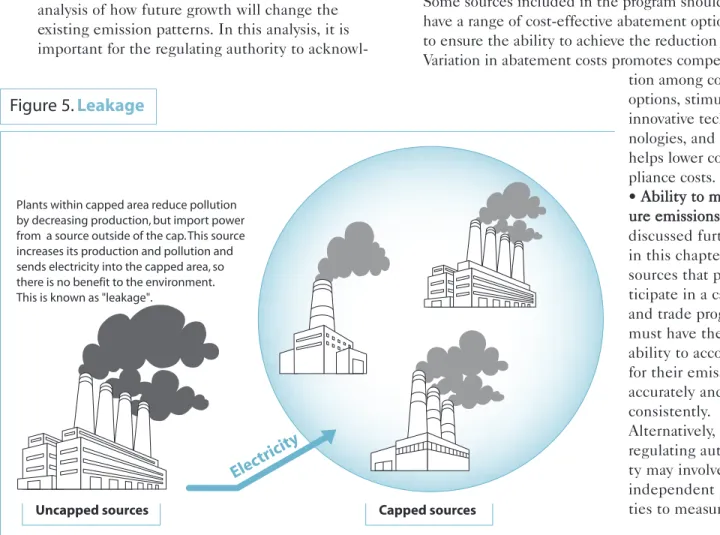
Leakage can also occur in cap and trade programs that do not include all sources contributing to the environmental problem. Sources in the pro-gram may shift production to other sources not participating in the propro-gram, thereby negating some of the emission reductions.
11
Adequate safeguards for using an outside expert for verification include: sufficient direction and oversight from the regulating authority; accredi tation of competency; and protection from conflicts of interest.
complexities vary depending upon project type. Project-based trading can be an effective way to intro duce some sectors to market-based incentive pro-grams. In addition, it can be effective for sectors in which it is easier to measure an emission reduction (e.g., the quantity of gas captured from a landfill methane recovery project) than total mass emissions.
Cap and Trade vs. Rate-Based Trading
Under a rate-based trading approach, the regulating authority determines a performance standard (e.g., an amount of emissions allowed per unit of output) for a sector (e.g., tons of a pollutant per kWh of electricity generated). Sources with emission rates below the performance standard can earn credits12, whereas
sources with emission rates above the standard must obtain credits for their excess emissions to remain in compliance.
Sources with low cost opportunities to improve their emissions rate have an incentive to operate at rates below the performance standard. They can then sell the resulting credits to sources that have higher costs to attain the performance standard. Rate-based trading programs have been used in the United States to phase out lead in gasoline and control mobile source emissions.
One consideration when evaluating rate-based trad ing is that if the activity level increases at a rate faster than the emission rate declines, sources can earn cred its while total emissions increase.
Potential to Limit Total Emissions
Perhaps the most important measure of a regulatory approach is whether it can produce the desired envi ronmental improvement. Emission caps set the total emission level, in effect, constructing a program from the environmental goal back to the sources. In con trast, rate-based trading attempts to establish an emis sion rate standard for each source that will, in
aggregate, produce the desired environmental improve ment. However, under a rate-based program, emissions and the pollution load on the environment can
increase if sources increase their utilization or if new sources are built.
This situation raises a distinction between cap and trade programs and rate-based programs regarding industrial growth. Both types of programs accommo
date growth. The responsibility for addressing growth, however, falls upon the sources in a cap and trade pro-gram while it falls on the regulating authority in a rate-based program. More specifically, under a cap, sources must determine how to operate new facilities or increase utilization of existing facilities and still comply with the emission cap. This approach encour ages industry to innovate and find lower-cost
approaches to reducing emissions. In the U.S. SO2
Allowance Trading Program electricity production and economic growth increased while SO2 emissions
decreased significantly (see Figure 3). In a rate-based program, as with an environmental tax program, the regulating authority must periodically impose new rate standards to achieve and maintain an emission target and prevent (or correct for) additional emissions that may result from increased production. This cycle of revising regulatory programs can create a less certain regulatory environment for sources to conduct compli ance and business planning.
Cost Minimization
As with cap and trade, the fact that sources can trade their credits under the rate-based approach implies that the performance standard could be achieved at a lower economic cost. This is because sources with high mar ginal abatement costs will choose to purchase credits from firms with lower marginal abatement costs.
Administrative Involvement and Transaction Costs
Under a rate-based system, the regulating authority converts each source’s emission rate and activity level to credits. Because the regulating authority must col lect activity level data, the data requirements may be greater for rate-based trading. Such data may also include commercially sensitive data that could be diffi cult to obtain. This information, however, may be use ful for other types of trading programs as well. The regulating authority can use the information to verify measured emissions.
Like cap and trade, rate-based approaches do not necessarily require that the regulating authority approve each trade (in contrast to the project-based trading described earlier). Because some additional steps for government approval may be required, the level of administrative involvement and costs could be
12 For electric power sources, the credits earned would be equal to the difference between the performance standard and the source’s emission rate
multiplied by the source’s current heat input or generation.
Figure 3.
Decoupling Economic Growth and Environmental Protection
60 Gross Domestic Product 40 20 0 -20U.S. SO2 Allowance Trading Program SO2 Emissions
-40
YEAR
the same or slightly greater than those of a cap and
project-based programs usually do not require net trade program.
emission reductions, they are not effective as
stand-Summary of Other Forms of Emission
alone programs. However, a well designedproject-Trading
based trading program may complement aEach of the three forms of emission trading is appro- command-and-control program that establishes emis priate in certain situations. When achieving and main- sion or concentration limits. It may also complement a taining an absolute emission goal is important, a cap cap and trade program in sectors for which accurate and trade program can provide more certainty about emission measurement of entities or activities may not total emissions. Administrative and transaction costs be as well developed.
for cap and trade programs are often lower than for Rate-based trading can be an effective way to pro-project-based trading, which is burdened by higher mote efficiency if circumstances do not require an uncertainty and risk and the need for extensive regu- absolute cap on emissions. The administrative and lating authority involvement. transaction costs for rate-based trading programs are
Project-based trading programs have historically likely to be the same or similar to cap and trade. (See evolved from the introduction of limited flexibility in Table 2 for a summary of the forms of emission trading.) traditional command-and-control programs. Because
PERCENT CHANGES SINCE 1980
T
Taab
blle
e 2
2:: T
Th
hrre
ee
e F
Fo
orrm
mss o
off E
Em
miissssiio
on
nss T
Trraad
diin
ng
g C
Co
om
mp
paarre
ed
d
Limit Total Cost Administrative &
Emissions Minimization Transaction Costs
Cap and Trade High Yes Low
Project-based Trading Low to Medium Yes High
Rate-based Trading Medium Yes Low to Medium
E
Eaarrlly
y E
Em
miissssiio
on
nss T
Trraad
diin
ng
g iin
n tth
he
e U
Un
niitte
ed
d S
Sttaatte
ess
Cap and trade in the United States evolved to improve upon earlier experiences that were expensive, resource-intensive and burdened with subjective review procedures, which resulted in limited environmental benefits. The U.S. EPA and state-level environmental agencies have used several different forms of emission trading with varying degrees of environmental and economic effectiveness. Although many of the early achievements were modest, the early efforts in emission trading are important because they provided a foundation and valuable practical experience for the development of more effective emission trading programs (e.g., the U.S. SO2 Allowance Trading
Program).
Offset Program
EPA first applied the concept of marketable emission permits in the mid-1970s as a means for new sources of emissions to locate in areas with poor air quality without causing additional air quality problems. New sources and existing sources that wanted to expand their facilities were required to “offset” their emissions by acquiring emis sion reductions from other sources. In this program, offsets are generated when a source reduces actual emissions below their permitted level and applies to a state agency for certification of the reduction. For a source to receive an offset, the state must determine that the reduction is: (1) surplus in the sense of not being required by current regulations; (2) enforceable; (3) permanent; and (4) quantifiable. Offsets are normally denominated by the quantity of pollutant in tons released over 1 year (tons/year). The most common method of generating offsets is closing the source or reducing its output. However, sources can also earn offsets by modifying production processes or installing pollution control equipment.
Bubble Policy
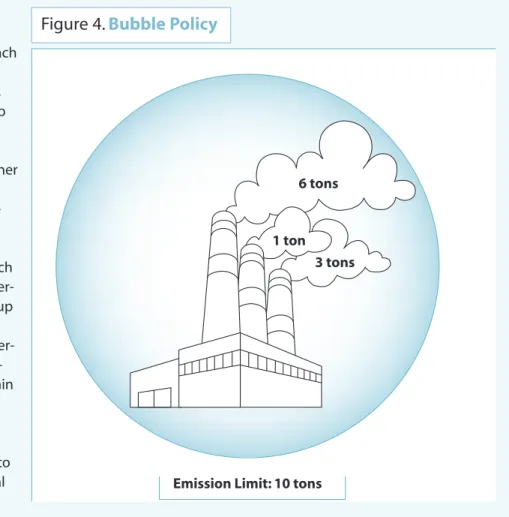
The bubble policy is another approach that served as a foundation for later trading policies. Established in 1979, the bubble policy allowed sources to meet emission limits by applying a single aggregate emission limit to multiple sources within a facility rather than applying individual control equipment or emission rate require ments at each emission source. The term “bubble” is used to invoke an image of a bubble over a facility (such as a refinery or a steel mill) with sever al emission sources. A facility or group of facilities can aggregate emissions and use a mix of controls that is differ ent from those mandated by regula tions, as long as total emissions within the bubble are equal to or less than the cumulative limit for all sources within the bubble (see Figure 4).
By design, bubbles are intended to
be neutral in terms of environmental Emission Limit: 10 tons
3 tons 6 tons
1 ton
Figure 4.
Bubble Policy
impact. However, bubble proposals must undergo individual review and approval, which, over the years, has been streamlined but is still rather burdensome. Consequently, the bubble provision has been used in less than 100 cases in the United States over the last 20 years.
Evaluation of Early Emissions Trading Activities
Several factors limited the appeal of these early trading approaches. The trading mechanisms were meant to modi fy or enhance existing air pollution control programs that did not themselves address total emissions. Therefore, the trading mechanisms were not effective at controlling overall emission growth. To ensure that air quality did not deteriorate, expensive air quality modeling was often required before regulators accepted proposed trades. Deposits to emission banks (credits generated for some later, yet-to-be-determined use) were typically “taxed” by the air quality management authority to meet state air quality requirements or to generate a surplus that the area could use, for instance, to attract new firms. Offset ratios (i.e., requiring more than 1 ton of emission reductions to offset 1 new ton of emissions) used to counter some of the uncertainties from a trade further depressed credit value. Finally, the administrative oversight to protect against the creation of “paper credits” and “anyway tons” turned out to be resource-intensive.
In a 2001 study on project-based trading systems, the Environmental Law Institute (ELI) concluded that such programs in the United States “have generally failed to generate considerable trades and retrospective reviews have tended to blame their shortcomings on high transaction costs, uncertainty and risk in obtaining needed gov ernment approvals, as well as lack of clear legal authority and clearly specified objectives” (ELI, 2001).
3
Developing a Cap
and Trade Program
Introduction
P
rior to implementing a cap and trade program, policymakers should examine various design options, decide which features to employ, and ensure that there is adequate legal authority. Key deci sions include determining which sources to include in the program (i.e., applicability), the level of the emis sion reduction or limitation (i.e., cap), and the timing when reductions will be required. In addition, policy-makers should determine requirements for measuring and reporting emissions, methods of distributing allowances, rules governing allowance use, compliance and enforcement provisions, and provisions for inte grating cap and trade with existing policies. Before design work can proceed, it is critical to have informa tion on the potentially affected sources, such as their emissions, utilization, and control options. All of these issues are discussed in this chapter.Guiding Principles
Several overarching principles can guide the develop ment of a cap and trade program. Adhering to these principles—simplicity, accountability, transparency,
predictability, and consistency—can promote environ mental compliance and efficient markets.
Simplicity
Simplicity is an important goal when designing an effective cap and trade program. Program operation for both emission sources and regulating authorities can be less costly and time-consuming if the rules are not overly complex or burdensome. Markets function bet ter when the rules are simple and easily understood by all participants. Moreover, the environment is more likely to be protected when rules are clear and easily enforced. In contrast, complexity often requires more decisions, debate, and information collection. This sit uation, in turn, can create uncertainty and unnecessary burden that may lead to delays, opportunities fore-gone, and ultimately higher costs. In some countries, complexity may also make it more likely that there will be litigation over contentious issues.
Another aspect of simplicity that will increase the economic effectiveness of a cap and trade program is the fungibility of allowances (i.e., an allowance is a stan dardized unit of trade that is interchangeable with other allowances). Fungibility is highly desirable to minimize transaction costs in the program and to maximize the
Setting the mass-based emission cap:
Implementation dates:
Sources covered:
Distributing tradable allowances: efficiency of the cap and trade program to lower costs.
Simplicity is enhanced by avoiding the creation of dif ferent categories of allowances with different attributes, unless it is absolutely necessary to maintain the envi ronmental integrity of the system. For example, dis counting the use of certain types of allowances based on their geographic origin or on their ability to be banked complicates transactions and reduces the cost effective ness of allowance trading and may not have significant environmental benefits.
More broadly, the principle of simplicity can be applied to all elements of the program, including:
• Applicability thresholds (determining which facilities are affected)
• Allocation formulas
• Trading rules and/or restrictions • Measurement options and rules • Reporting requirements
• Penalty assessment
Accountability
A cap and trade program must create a framework of oversight and enforcement that will hold participants accountable for their emissions and ensure compliance with the program’s requirements. The basis of
accountability is the accurate measurement and verifi cation of emissions and the rigorous and consistent enforcement of penalties for fraud or noncompliance. The regulating authority can facilitate accountability through clear and simple rules.
Transparency
Transparency refers to the full and open disclosure of relevant public and private decisions, such as establish ing the rules and regulations for a trading program and determining if an emission source is in compliance. Transparency is important to a well-functioning cap and trade program, both in terms of its design and its operation. Transparency of the design process can pro-mote public acceptance and confidence in the cap and trade program.
Information transparency is also important to the effective operation of an emission trading program. Providing public access to source-level emission and allowance data promotes confidence in the program and provides an additional level of scrutiny to verify enforce ment and encourage compliance. In some jurisdictions these data are classified as confidential and may require legal changes to make them publicly available.
Advances in information technology and the Internet have made it possible to provide interested parties with timely and useful information about emissions, allowances, and program results.
Predictability and Consistency
Predictability and consistency in the design and applica tion of program rules are important principles for an effective cap and trade program. They help create the right circumstances to encourage innovation and lower costs. With a cap and trade program, emission sources have an incentive to find better and lower-cost opportu nities to reduce emissions. This incentive depends upon long-term, predictable, and consistent rules that affect the economic value of emission reductions. This arrangement does not mean, however, that rules cannot change in response to new information. Rather, it means that the framework must include the possibility for change and a clear explanation of the process for chang ing the rules.
Establishing Legal
Authority
As discussed earlier, there must be legal authority to establish a cap and trade program. Although policy-makers can include many components in authorizing legislation, the basic components are listed below. Several of these components are discussed in more detail in this chapter and Chapter 4.
• Setting the mass-based emission cap: If the cap is not set directly by policymakers, the regulating authority must have authority to limit the total quantity of pollution from the relevant sector(s) by establishing a cap on emissions.
• Implementation dates: Sources must comply with the emission caps starting in a particular compliance period.
• Sources covered: A complete control program must define which sectors are subject to program requirements and, within each sector, which emission sources are affected. For example, the scope of an electric generating sector cap and trade program could include all electric generat ing units or only electric generating units above a certain generation capacity.
• Distributing tradable allowances: Traditional air quality permits authorize a certain amount of
Banking:
Trading procedures:
Emission monitoring and reporting:
Compliance:
Establishing and enforcing penalties for non-compliance:
Program applicability:
Allowance allocations:
Aggregate cap: emissions and are non-transferable. Policymakers
establishing a cap and trade program must pro-vide for tradable permits, specifically that appro priate increments (e.g., allowances) are tradable among participants in the program. The regulat ing authority can allocate these authorizations, or allowances, to emit in a variety of ways, or auc tion them to the highest bidders. Policymakers should also explicitly state which regulating authority is responsible for issuing and distribut ing the allowances.
• Banking: Policymakers might allow sources to use allowances issued in one period for compli ance in subsequent periods. This arrangement is called banking.
• Trading procedures: A cap and trade program needs consistent rules for conducting allowance transfers, as well as a system for tracking allowances. Policymakers should explicitly state which regulating authority is responsible for developing and enforcing trading procedures. • Emission monitoring and reporting: Accurate,
comprehensive emission data are a cornerstone of a credible and effective cap and trade pro-gram. The regulating authority must have the authority to require standardized methodologies for emission measurement, collect emissions data to determine compliance, and publicize emission and allowance data to provide trans parency and promote confidence in the program. • Compliance: Each affected emission source is
required to hold at least one allowance in their account for each unit of emissions during the compliance period. Cap and trade programs must include provisions that authorize the regulating authority to reconcile the emissions of each source with the number of allowances they hold to determine compliance.
• Establishing and enforcing penalties for non-compliance: The regulating authority must have the authority to impose and enforce sufficient penalties on emission sources that do not comply with the rules of the program.
Legislation to provide legal authority can range from a few broad sentences to many detailed pages. The legislation may provide only general language authorizing the use of emission trading or it may explicitly state the rules and guidelines for a cap and trade program.
In addition to establishing this new authority, a cap and trade program may require appropriate amend ments to a country’s existing legislation. For example, fundamental legal issues (e.g., existing technology standards or taxes) may hinder the development of a cap and trade program if not properly addressed. Most countries will already have some regulations that are related to environmental performance. If existing reg ulations (or economic incentives) are simply in place to collect revenues for the government (e.g., environ mental taxes set well below the marginal abatement cost), then a cap and trade program can likely be added. If there are technology standards, it may be necessary to make certain adjustments in existing leg islation (e.g., replacing the technology standards with caps of equal or greater stringency, or allowing firms to opt out of them in favor of participating in the cap and trade program). For further discussion on cap and trade and potential conflicts in the existing legal structure, see Chapter 4.
Creating an Emission
Inventory
An important step in the development process for a cap and trade program is the creation of an adequate source-level emission inventory. The types of data and appropriate level of detail for the emission inventory will depend upon the intended use of the data. The emission inventory is likely to be useful in analyzing and making the following design decisions:
• Program applicability: The regulating authority may use inventory data to make decisions about which sectors to include, where to apply the obligation to hold allowances (e.g., at the fuel distributor or the emission source), and what thresholds should be set to determine if a source is affected by or exempted from the program (e.g., production capacity).
• Allowance allocations: The regulating authority may use inventory data to analyze the effects of different allocation options on emission sources and to decide on a method for distributing allowances.
• Aggregate cap: The regulating authority will need the inventory data for the affected emission sources to analyze the potential costs and bene fits of different emission caps, as well as to
Program design considerations:
Cost of data collection and availability of data:
Completeness:
Measurement Method: assess the performance of the program once
implemented. In some cases, the emission inventory is used to project future emissions, either using a sophisticated computer model or using simple assumptions about projected emis sion growth.
Minimum data requirements for the emission inven tory include: (1) individual emission source character istics (e.g., size, location, name-plate capacity, process type, boiler type, fuel type); and (2) emission levels for individual sources based on output, fuel use, and/or emission data. These data requirements will vary depending upon: (a) the types of sources to be regulat ed under the cap and trade program; (b) the pollutant; (c) the choice of allowance distribution method; and (d) the method for setting the overall cap.
Inventory Level of Detail
For cap and trade programs that require emission sources to hold allowances, sources can be inventoried at five different levels of detail: (1) the company level13;
(2) the plant level, which denotes a plant or facility that could contain several emitting activities; (3) the point/stack level, where emissions exit to the ambient air from stacks, vents, or other points; (4) the
process/segment level, representing the unit operations of specific source categories (e.g., a single boiler that burns both coal and gas would count as two segments); and (5) the unit level (e.g., each individual boiler)14.
Although a full comparison of the different options is beyond the scope of this guidebook, the most sig nificant factors in making this decision are:
• Program design considerations: The level of detail needed for the emission inventory is often determined by program design considerations. For example, if the program applicability thresh-old is based on the size of a combustion unit, then an inventory created at the plant level will not provide sufficient detail; additional informa tion at the unit level will be necessary. Similarly, allowance allocation formulas may require a cer tain level of inventory data.
• Cost of data collect