AUTHOR(S):
TITLE:
YEAR:
Publisher citation:
OpenAIR citation:
Publisher copyright statement:
OpenAIR takedown statement:
This publication is made freely available under ________ open access.
This is the ______________________ version of an article originally published by ____________________________ in __________________________________________________________________________________________ (ISSN _________; eISSN __________).
This publication is distributed under a CC ____________ license. ____________________________________________________
Section 6 of the “Repository policy for OpenAIR @ RGU” (available from http://www.rgu.ac.uk/staff-and-current-students/library/library-policies/repository-policies) provides guidance on the criteria under which RGU will consider withdrawing material from OpenAIR. If you believe that this item is subject to any of these criteria, or for any other reason should not be held on OpenAIR, then please contact [email protected] with the details of the item and the nature of your complaint.
GREEN
WARRENDER, D. and MACPHERSON, S.
Student nurse perceptions of experiential learning to understand personality disorder.
2018
WARRENDER, D. and MACPHERSON, S. 2018. Student nurse perceptions of experiential learning to understand personality disorder. British journal of mental health nursing [online], 7(4), pages 173-188. Available from: https://doi.org/10.12968/bjmh.2018.7.4.173 WARRENDER, D. and MACPHERSON, S. 2018. Student nurse perceptions of experiential learning to understand personality disorder. British journal of mental health nursing, 7 (4), pages 173-188. Held on OpenAIR [online]. Available from: https://openair.rgu.ac.uk/
AUTHOR ACCEPTED MARK ALLEN HEALTHCARE
British journal of mental health nursing
2049-5919 2052-496X
This document is the Accepted Manuscript version of a Published Work that appeared in final form in British Journal of Mental Health Nursing, copyright © MA Healthcare, after peer review and technical editing by the publisher. To access the final edited and published work see https://doi.org/10.12968/bjmh.2018.7.4.173
BY-NC 4.0
https://creativecommons.org/licenses/by-nc/4.0
https://mirrors.creativecommons.org/presskit/buttons/88x31/png/by-nc.png[10/10/2017 09:37:50]
OpenAIR at RGUDigitally signed by OpenAIR at RGU Date: 2018.10.02 15:34:34 +01'00'
Student nurse perceptions of experiential learning to understand
personality disorder
Dan Warrender and Scott Macpherson
British Journal of Mental Health Nursing 2018 7:4, 173-188
Dan Warrender
Lecturer in mental health nursing, Robert Gordon University, Aberdeen Scott Macpherson
Lecturer in mental health nursing, Robert Gordon University, Aberdeen Email: [email protected]
Abstract
The high prevalence of people with personality disorders in mental health settings suggests that there should be a dedicated focus on this area within pre-registration mental health nursing. People with personality disorder diagnoses have been described as a challenging group to work with, and this has led to negative perceptions and stigmatisation of the clinical label. A hypothesis that these negative perceptions are rooted in a lack of empathy, directly related to a lack of understanding of the lived experience of these conditions, led to the development of a teaching session utilising experiential learning. Aims were to proactively address stigmatisation through ‘fishing upstream’ and promoting an appreciation of the lived experience of the symptoms of a personality disorder diagnosis. Based in a university teaching pre-registration mental health nursing, the session used simulation to allow students to adopt the role of a person diagnosed with a with a personality disorder and interact in a facilitated scenario. A qualitative and phenomenological design saw the perceptions of four student nurses captured through focus group and interview. Students described the teaching session as beneficial in having improved their empathy and increased their
understanding of the experience of people living with personality disorder diagnoses, allowing them the understanding to be able to challenge stigma, giving them a desire to role model good practice to others and increasing their confidence in working with people with personality disorder
diagnoses. This has clear implications for practice through increasing understanding and reducing the potential for negative perceptions, thus potentially improving the experience of mental healthcare for people with personality disorders.
Keywords
Personality disorders, borderline personality disorder, mental health nursing, student nurses, experiential learning, simulation
Historically viewed as untreatable (Adshead, 2001; Bateman and Tyrer, 2004), personality disorders involve ways of thinking and feeling about oneself and others which deviate markedly from the norm and adversely affect how people may function in many aspects of life (American Psychiatric Association 2013). Personality is conceptualised around the way an individual functions within themselves and the way they relate to others (Bateman et al, 2010), with its function a consolidation of a coherent sense of self and capacity to establish and maintain effective relationships with others in social groups (Livesley, 2003). One of the dominant theories regarding personality states that most people have a balance of five character traits, described as the ‘big five’ (Bateman et al, 2010, p.233); neuroticism, openness, extraversion, agreeableness and conscientiousness (Costa and Widiger, 2012). For people with a diagnosis of personality disorder the balance is said to be disrupted, and one of these traits has generally become dominant.
Strained Relationships
Personality disorder has been defined as “a recurring condition that, when present, hinders mutual understanding in relationships, souring and damaging them” (Tyrer, 2018, p.17). This difficulty in navigating the social world can lead to significant interpersonal problems, and contact with mental health services may relate to unhappiness within oneself, or because of unhappiness in others around oneself (Bateman et al., 2010). Given these challenges, it is unsurprising that families of individuals diagnosed with borderline personality disorder, which is the most commonly diagnosed personality disorder (Pack et al 2013), have described chronic and traumatic stress, strained relationships with the individual, as well as with the mental health system (Giffin, 2008).The lack of mutual understanding in relationships can lead to behaviour which challenges accepted social norms (Gordon, 2017), and has thus been labelled a symptom of a personality disorder. Acknowledging that work is being undertaken to revise these diagnoses (Tyrer, 2018), they are currently classified into a range of categories within the DSM-V (American Psychiatric Association, 2013) and ICD-10 (World Health Organisation, 1992) diagnostic manuals. Symptoms can include unstable self-image, emotional dysregulation, difficulties in interpersonal relationships, disregarding of the rights of others, impulsivity and self-harming and suicidal behaviour (NICE, 2009; Gordon, 2017). Prevalence of Personality Disorders
Previous studies have seen the prevalence of personality disorder in UK general population community settings weighted at 4.4% (Coid et al., 2006), and in healthcare settings comprising an estimated 24% of primary care attendees (Moran et al., 2000). Much of the literature focuses specifically on borderline personality disorder, with studies finding a prevalence which ranges from 0.7% (NICE, 2009) to 5.9% (Bateman and Krawitz, 2013) in the general populations of Western countries. Individuals with the borderline personality disorder diagnosis have been found to place a significant strain on the resources of health services (Bender et al., 2001; Gross et al., 2002),
accounting for an estimated 4-6% of UK primary care attenders (Moran et al., 2000) and being the most common personality disorder found in non-forensic mental health settings (NICE, 2009). Some studies have suggested a prevalence as high as 20% in inpatient psychiatry (Zanarini et al., 2001), and admissions which are both frequent and lengthy (Dasgupta and Barber, 2004). Given the rates in healthcare settings, it is wholly appropriate that the understanding of personality disorders should be prioritised in a mental health curriculum.
Attitudes and Stigma
The attitudinal negativity and stigma around personality disorder further justifies the need for an innovative approach to teaching. Nurses have perceived patients as being difficult and manipulative
(McGrath and Dowling, 2012), care provision has been described as tiring, draining and frustrating (Warrender, 2015), with people diagnosed with personality disorders given less sympathy than individuals with other psychiatric diagnoses (Markham and Trower, 2003). People with the borderline personality disorder diagnosis in particular have been described as a ‘destructive whirlwind’, a “powerful, dangerous, unrelenting and unstoppable force which leaves a trail of destruction in its wake” (Woollaston & Hixenbaugh, 2008, p.705). Contextualising this dramatic statement, nurses have experienced significant distress, felt uncertain how to approach patients and been unsure of the purpose for hospital admission (Warrender, 2015). Patients may be impulsive, have a rapid fluctuation in mood, and engage in self-harming and suicidal behaviour (NICE, 2009), therefore appreciating mental health professionals as human beings, it is understandable that this would invoke strong feelings.
Addressing Attitudes
Attitudes have been described as tripartite with cognitive, affective and behavioural components (Hogg and Vaughan, 2008). It is the behavioural impact of an attitude which highlights the need for this to be addressed, with nurse’s attitudes potentially impacting how they treat people diagnosed with personality disorder, and thus impacting patient outcomes. Whilst there is little actual evidence to link attitudes to clinical behaviour towards people diagnosed with personality disorder through patient outcomes (Dickens et al, 2016), a review of mental health nurse perceptions highlighted that there was a tendency for nursing staff to keep any contact with people with personality disorder diagnoses to a minimum (Loader, 2017).
Adding weight to this, a famous example from another context can showcase how attitudes are anything but benign. Rosenthal and Jacobson’s (1968) school based study evidenced that attitudes can influence behaviour and in turn outcomes, leading to a self-fulfilling prophecy. Their study saw teachers told that students were ‘clever’ or ‘ordinary’, whilst this had been allocated at random, with no truth or notable difference in ability. At the end of the school year, the students labelled ‘clever’ had made more gains, not because they had more ability, but as a result of the teachers’ attitude towards them. Students who were believed to show more promise received more attention and support. In terms of healthcare settings, we can hypothesise that attitudes towards people diagnosed with personality disorder likely influence outcomes in the same way.
Service user perspectives
Indeed, service user perspectives have identified the “double role” of mental health care (Perseius et al, 2005, p.165) in relieving but also potentially adding to suffering if staff are perceived as being disrespectful or not understanding. Further unhelpful interactions have seen staff described as “judgemental”, “dismissive”, “condescending”, “sarcastic” and “impatient” (Borshmann et al, 2014, p.804). These are examples of the behavioural component of an attitude, emphasizing how crucial it is that nurse education appropriately prepare the future workforce to deliver effective care.
Challenging stigma
To challenge stigma before it starts, academia should ‘fish upstream’ by targeting the future workforce before they have a chance to form negative attitudes as registered nurses, and provide teaching which emphasises the patient experience and aims to increase empathy and
understanding. It is ironic that whilst many of the difficulties faced by people with a personality disorder diagnosis can be rooted in misunderstanding others, these diagnoses have often themselves been misunderstood.
AIMS AND OBJECTIVES OF THE TEACHING SESSION
The authors’ hypothesis is that negative perceptions and stigma are directly linked to a lack of empathy for people diagnosed with personality disorder, which in turn is a result of limited
understanding. Therefore the aims and objectives of the teaching session were to promote empathy through simulation, increase understanding through discussion, and influence positive behaviour towards people with personality disorder diagnoses by addressing attitudes. Increased
understanding through targeted clinical education has already been shown to have positive impacts on staff attitudes (Miller et al, 1996; Commons Treloar et al 2008; Shanks et al, 2011), and it was hoped that this would be equally, if not more effective at the undergraduate stage of mental health nursing.
SIMULATING THE ‘INTERNAL WORKING MODEL
The understanding of personality disorder and its aetiology owes much to ‘attachment theory’ and the work of John Bowlby and Mary Ainsworth who hypothesised that much of personality develops through intimate emotional bonds with others, called ‘attachments’ (Simanowitz and Pearce, 2003). Through interaction with a primary attachment figure a child constructs an internal working model (IWM), defined as a mental representation and expectation of the world related to oneself and others (Bateman et al., 2010). The IWM is a way of seeing the world through the meaning we give to our current experience, based on our previous experience (Howe, 2011). Built up around the
concepts of oneself, others, and the relationship between oneself and others, an IWM filters experience and attributes meaning, influencing what we “do, say, think and feel” (Howe, 2011, p.33). This provided the theoretical basis for teaching content, creating a particular way of seeing the world for students which referenced traits associated with all personality disorder diagnosis subtypes from both the DSM-V (American Psychiatric Association 2013) and ICD-10 (World Health Organisation, 1992) (see Box 1 for some examples).
BOX 1: SAMPLE OF CHARACTER INSTRUCTIONS Borderline/emotionally unstable personality disorder
You are 23 years old and live in your own flat, but have regular contact with your parents, though you often argue with them. You find it hard to control your emotions, and though your mood can fluctuate rapidly between periods of joy and despair, you tend to feel bad about yourself and often self-harm through cutting, and have recurrent suicidal thoughts. You also have a tendency to binge drink and act impulsively.
You have recently split up with a partner after meeting and falling head over heels in love 3 weeks ago. As a result of this you felt abandoned, got drunk and took an overdose of paracetamol, resulting in admission to A&E. You are at the party after your friend suggested you go out to forget about the ex. You are happy to engage with others and make friends quickly, but if someone says something you don’t agree with, your mood may suddenly change as you become angry and walk away.
Antisocial/dissocial personality disorder
You are 50 years old, you have previously been in prison for theft and assault, and now live alone. You have no contact with your ex-partner or two children. You don’t care much about the feelings of others and can intimidate and bully people, you get easily frustrated with others and tend to be aggressive.
You tend to act impulsively, and don’t feel guilty about things you’ve done. You don’t tend to learn from unpleasant experiences, and despite having been in prison, continue to shoplift regularly. You have attended the party in a bad mood after your two children have again ignored your attempts to contact them.
Narcissistic personality disorder
You are 35 years old and live alone. You have a tense relationship with your mother who you feel sorry for because she is, in your mind, ‘weak’. You have a strong sense of your own self-importance. You dream of unlimited success, power and intellectual brilliance. You crave attention from others and feel that other people should look up to you, but are not interested in others’ thoughts or feelings.
You have a tendency to exaggerate your own abilities and achievements. You look down on others you see as beneath you, and often ask for favours then fail to return them and exploit people for personal gain. You have just got a new job as a secretarial assistant in an office, but will seek to exaggerate this role into ‘company troubleshooter’ when you describe it to others. You feel that being the head of the company is not out of your reach, as given your abilities, you are entitled to it. You feel that everyone at the party should listen to what you have to say about your new job, though you will not be interested by what anyone else has to say about themselves.
Obsessive compulsive personality disorder
You are 42 years old and live with your elderly parents. You have never had a meaningful relationship. You have a tendency to worry and doubt a lot, and have been described as a perfectionist and even a ‘control freak’. You relieve your anxiety and feel in control of situations when making lists, following rules and sticking to routines.
Your adherence to rules includes a very fixed view of morality and how people should behave, and you worry about doing the wrong thing. As a result of this strict morality, you are quite judgemental of others. You are incredibly sensitive to criticism. You are having obsessive thoughts that other people at the party are intending to lie to others, and feel that it is immoral, and wrong. You are preoccupied with the ‘rules’ you see as integral to life.
No diagnosis
You are 25 years old, a student studying history and living with three flatmates. You are quite anxious around new people; however, once you begin to converse with people and get to know them, you feel much more comfortable and relaxed. You are currently quite apprehensive about meeting a group of new people for the first time.
You will begin the party standing alone feeling anxious, though once people engage you in conversation, you relax a little. You have a nervous laugh, and a tendency to try and break the ice with poorly delivered jokes.
METHODS Teaching Session
The teaching session sits within a 2nd year preregistration mental health nursing module. This was
considered to be the optimum time for the role-play, with the class having established relationships, and potentially more amenability to take part in more challenging teaching. Twenty-five students participated in the session and were each assigned a character, the majority consistent with
personality disorder diagnoses and some neutral. Some diagnoses were played by two different students, with all diagnoses represented at least once within the group. Neutral characters which had no diagnosis were added to allow exploration of behaviour which may not be diagnosed but display similar symptoms to personality disorder pathology, and emphasise that behaviour must be enduring to meet the diagnosis. Students were emailed with their character one week before, and encouraged to discuss with lecturers any potential discomfort in participation.
Giving all students an IWM, the session encouraged them to interact with one another in a social scenario through the character they had been given. A key aim was to emphasise that a way of seeing the world will have a causal link to behaviour, and therefore the perception that people diagnosed with personality disorder are often in full control of their actions and choose to be purposefully difficult (Markham and Trower, 2003) neglects the influence of the IWM. This aim was considered to be best achieved through direct experience, with the session held in a classroom arranged into an open space simulating a social event, and lasting twenty minutes.
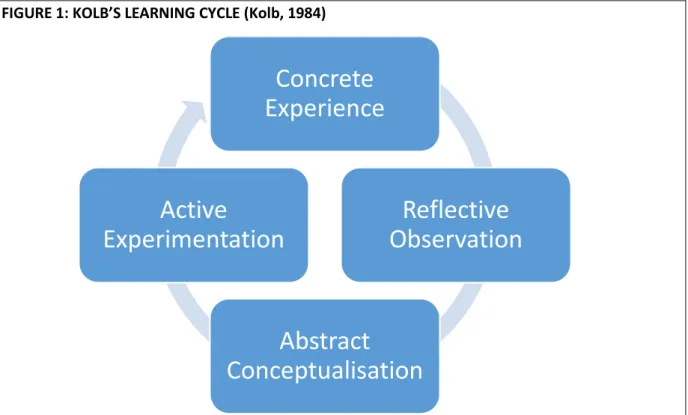
Experiential learning has previously been shown to positively impact student’s empathy towards people with mental health conditions (Ballon et al., 2007; Goodwin and Deady, 2012), and in contrast to the dynamics of clinical practice, simulation is a form of experiential learning which allows academics to maintain control of the environment. Simulation itself is not innovative, and has been used in undergraduate mental health nursing education to a variety of ends, including developing therapeutic communication, and challenging stigma and fear of individuals who have mental illness (Brown, 2015). However, to the authors’ knowledge it has not been used in this way with personality disorder specifically in mind. Kolb’s (1984) learning cycle (see figure 1) guided development beyond the simulation to a facilitated debrief whereby learning could be consolidated through discussion. Kolb’s abstract conceptualisation and active experimentation relates to threshold concepts whereby true understanding not only changes perspective but consequentially changes behaviour (Biggs and Tang, 2011). This reflected the aim of influencing not only what students think, but how they practice clinically when working with people with a personality disorder diagnosis.
FIGURE 1: KOLB’S LEARNING CYCLE (Kolb, 1984)
Concrete
Experience
Reflective
Observation
Abstract
Conceptualisation
Active
Experimentation
Characters were based on the authors’ clinical experience and current diagnostic criteria, the DSM-V (American Psychiatric Association, 2013) and the ICD-10 (World Health Organisation, 1992), with additional input from and discussions with people with living experience of personality disorder diagnoses, service users, carers and health professionals and third sector organisations. Each student role-played their character and particular IWM and were encouraged to note their own experience and impression of others. During the session the authors played ‘hosts’, in character as people who were receiving and entertaining guests. This allowed an in-depth facilitation, with authors supporting students and prompting interaction whilst assessing their comfort and engagement.
Moreover, explicitly addressing the stigma around personality disorder the session used tangible labels to explore the intangible experience of being diagnosed. Characters assigned with a personality disorder diagnosis wore a physical label, with their diagnosis stated on paper taped to their back. This was used as a platform for reflection in debrief and encouraged a move to threshold concepts (Biggs and Tang, 2011) exploring how students felt wearing the label, and how they felt seeing labels on others. The session encouraged students to relate this to the psychological labelling of patients through diagnosis, provoking consideration of the impact of diagnosis on stigma and self-stigma.
Qualitative Research
Following on from the aims and objectives of the teaching session, research aims were to explore student clinical experience, perceptions of the teaching session in general, then specifically on empathy, attitudes, understanding and future practice working with people diagnosed with a personality disorder. Qualitative research is a natural approach to capturing meaning attached to social phenomenon within social worlds (Snape and Spencer, 2003), and phenomenology further seeks to understand these social worlds within the subjective context of individual or group experiences (Todres and Holloway, 2010). The objectives of this study overlap between evaluative and generative approaches (Ritchie, 2003), evaluating students perceptions of the teaching session, whilst beginning to generate theories and strategies with implications for education and practice. It is this generation which marks the phenomenological approach as interpretive rather than
descriptive.
Interpretative Phenomenology
Descriptive phenomenology uses the term ‘bracketing’ to indicate the suspension of all researcher pre-conceptions, beginning without hypothesis and seeking to gain a true and untainted description (Todres and Holloway, 2010). This full suspension of preconceptions was neither possible nor desirable in this study, given the authors were emic through their roles in development, delivery and evaluation of the session, with direct clinical experience of working with people with personality disorder diagnoses. The use of interpretive phenomenology allowed the authors to embrace hypotheses, use preconceptions explicitly and positively (Todres and Holloway, 2010) and create an interpretive framework for the generation of new data.
The university’s school ethics review panel reviewed study aims, methods, consent forms,
participant information sheets, topic guide and data storage. Participants were approached through information sheets distributed through e-mail, with face to face information sessions offered. There was one week between information dissemination and data collection to allow potential participants adequate time and space to ensure informed consent. Consent forms were signed immediately
prior to data collection, with participants aware they would not be identified anywhere in the findings and that they had the right to withdraw at any time, and did not have to give a reason. In May 2016, there was a purposive sampling of mental health nursing students who had participated in the teaching session. The students would therefore be information rich, and the most appropriate cases to allow substantial exploration of the research topic (Addo, 2014, p.193). Focus groups were preferred as they can capture thoughts and ideas beyond that of individual interviews, as participants share and refine their ideas through the group interaction itself (Lewis and McNaughton Nichols, 2014). This opened up the potential for both challenge and extension around the preliminary hypothesis (Goodman and Evans, 2010), increasing the chances of new data. To limit bias, the focus group and interview were conducted by an academic colleague with no involvement in the creation or delivery of the session, with experience of facilitation and a teaching relationship with students. A topic guide (see box 2) was utilised, as opposed to a strictly
regimented list of questions, with less structure often allowing more fluid and engaging discussion (Goodman and Evans, 2010).
BOX 2: FOCUS GROUP/INTERVIEW TOPIC GUIDE
1. Individual experiences
Aim: To provide a baseline and context of students’ individual clinical experiences of people with personality disorder
Have you had experience of working with people with personality disorders in your clinical placements?
If so, can you describe some of your experiences?
2. Teaching session
Aim: To understand the students’ experience of the teaching session
Can you describe your experience of the teaching session, in particular the role play? How comfortable were you in the role play?
How was the length of the session?
3. Attitudes
Aim: To explore any existing stigma and attitudes and whether the teaching session had an impact on these
Can you describe your attitudes towards people with personality disorder prior to the teaching session?
Where did your attitudes come from? Describe some of your experiences of attitudes towards people with personality disorders
What impact, if any, did the teaching session have on your attitudes towards people with personality disorder?
4. Patient experience
Aim: To explore whether the session increased empathy towards people with personality disorder and whether it helped increase understanding of the patient experience
What was your understanding of the patient experience prior to the teaching session?
What impact, if any, did the teaching session have on your understanding of the patient experience?
5. Overall impact on students clinical practice
Aim: To capture any potential changes to student’s clinical practice following the session Do you think the teaching session will influence the way you work with people with personality disorders in the future?
If so, how? If not, why not?
Summary
Summarise the key points from the discussion
Whilst the groups were timed for participant convenience (Finch and Lewis, 2003), unfortunate scheduling saw this at the end of an assessment week, immediately prior to a period of student annual leave. Data collection went ahead with an emphasis on gathering data which was fresh. Ten students indicated an interest, with actual attendance less than anticipated (3 in one group and 1 in the other, giving a total of 4 students). This limited the second ‘group’ to an interview. All
participants were female, and a total of four from twenty-five students participating in the study saw overall engagement at 16%. Students were not required to disclose reasons for non-participation. Data Collection
Data collection took place in meeting rooms within the university, with refreshments provided to ensure comfort in single sessions which lasted between 30 and 60 minutes. Discussions were digitally recorded then transcribed verbatim and, whilst transcripts were not handed back to participants for comment or correction, the focus group and interview were each closed with a summary which sought to ensure views had been captured accurately. The authors completed transcription from data recordings, beginning to live in the data (Lathlean, 2010, p.430) and gain insight through interpretation. Major themes followed the narrative of the topic guide, with secondary themes being entirely new data derived from participant quotes (see box 4) and all themes agreed on by both authors. Using basic, intermediate and higher levels of data analysis (Parahoo 2014), data was broken up into a series of quotes, with quotes then themed based on similarity. Finally, themes were organised together into a narrative. Leaning on the ideas of Van Manen (1994) analysis sought to write in a compelling way, build a plot, capture plot and sub-plots, provide concrete examples to illustrate themes, and finally offer new insights. Interpretation also maintained adherence to the analytic hierarchy (Spencer et al ,2003), directing analysis from raw
data to the assignment of meaning, capturing of examples to illustrate and portray meaning, and the creation of new theories and concepts with examples used to portray these.
RESULTS
Data collection sought to ask students about individual experiences of working with people
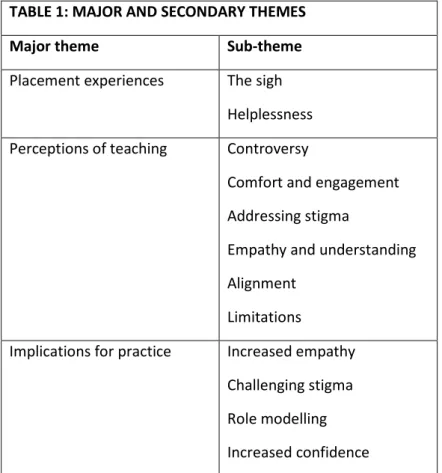
diagnosed with personality disorders, general perceptions of the teaching session, existing attitudes and stigma and any subsequent impact of the teaching session; whether there was improved empathy and understanding of the patient experience, and perceived implications of the teaching session on their future in clinical practice. The results were grouped into three main themes: placement experiences, perceptions of teaching and implications for practice. Sub-themes use participant’s words to illustrate inferred meanings. Specific participant quotes are represented by ‘P’, and numbered 1-4, with 1-3 referring to the focus group participants and 4 the interview participant.
TABLE 1: MAJOR AND SECONDARY THEMES
Major theme Sub-theme
Placement experiences The sigh Helplessness Perceptions of teaching Controversy
Comfort and engagement Addressing stigma
Empathy and understanding Alignment
Limitations
Implications for practice Increased empathy Challenging stigma Role modelling Increased confidence
Placement Experiences ‘The sigh’
P1 stated that, when encountering a person diagnosed with a personality disorder, staff reaction had been “kind of a groan…the treatment of them on the ward wasn’t like negative or anything, but it was just in the office”. P2 reiterated that if a patient presented to a hospital ward “it was the sigh” from nursing staff that indicated a negative attitude. P1 described “hearing things (from staff) like ‘my cat needs to be here more than her’” in relation to people with a personality disorder diagnosis. This implied dismissiveness of the distress experienced by people as a result of the clinical label. Whilst there was acknowledgement that staff did not explicitly dismiss patients, P3 noted “you can
give off signs to people and patients aren’t stupid”. P3 acknowledged the impact of attitudes, stating “you can see how that could then knock on to students and the next lot of nurses coming in”. Affirming this, P2 acknowledged that (in previous placements) “I took on a negative view because of the responses of other nurses”.
‘Helplessness’
Participants recalled staff helplessness (P1) “I don’t know what to do with this person, I don’t know how to help, I don’t know how to not make it worse”. P2 stated “staff are so scared”, and noted that fear would create distance between themselves and patients, with staff seeking “more of a back role”. P4 however remarked that “some staff are really good”. Whilst ‘good’ is vague, it could indicate increased understanding and personality disorder specific skillsets, nonetheless it is possible that the difference is related to some other non-personality disorder specific understanding.
Perceptions of teaching ‘Controversy’
P4 indicated an initial discomfort, stating “At first I was really hesitant about the whole thing… how can this be allowed?....I thought it would be very difficult to avoid full blown stereotyping”. In development the authors had been mindful of this, and addressed this in debrief. P4 continued “but in doing it I did see the benefits of it… I think the benefits outweighed the cons… I think I learned more from it”. P2 identified the benefits of using an experiential approach, stating “if you go through a PowerPoint presentation you’re not going to know how it feels”.
‘Comfort and engagement’
All participants agreed that the placement of the session in their second year was appropriate to ensure comfort. P1 stated “I think our class is quite open”, while P3 added “I don’t know if everyone would have interacted as well in 1st year…the group has started to merge better”. P4 concurred “I think 2nd year is the optimum time”. The length of the roleplay was also mentioned, with twenty minutes on the edge of student comfort. P4 indicated that towards the end, “some people were getting a little bit bored”.
In terms of engagement, P2 described “at the start we were quite shy…but we seemed to get into it really quickly”. P3 described the session as “interesting”, while P1 said “it was a really good way to explore, em, well to identify different types of personality disorder and also to explore stigma”, adding “I was excited to see how everyone in the class, who everyone was”. Capturing students’ interest and excitement within teaching is essential, and the roleplay appeared to engage students in a way that encouraged learning.
‘Addressing stigma’
Participants explored their own preconceptions and the potential stigmatisation inherent within the session. P1 remarked “it was like a case study, very objective, it was more you apply what you think, so I felt like I was stigmatising that role”. P1 continued to scrutinise their own ideas, stating “I don’t have a personality disorder, so I’m assuming what it would look like, which if somebody with that diagnosis was in the room they might feel offended”. P3 acknowledged feeling “worried about if you’re sort of being a bit of a caricature of somebody, so maybe we are making a bit of a stereotype ourselves”. Whilst students were roleplaying conditions which they did not have subjective
experience of, P4 believed “you can’t really avoid stereotyping… you just go with what you think is right”. This ‘what you think is right’ was a focus of discussion and was scrutinized in debrief. In
asking students to look at their own preconceptions, they gained a level of self-awareness through examining their own attitudes. P1 described this as “valuable for learning”.
‘Empathy and Understanding’
All participants acknowledged an increased understanding of personality disorder, and more empathy towards people with the diagnoses. P1 captured the experience as “feeling how it might be”. The ‘might’ indicates an appreciation of difference in each patient and presentation, taking into account diagnoses without a blanket assumption as to the experiences of all people with a
personality disorder diagnosis. P3 explained: “I think you can be told something…but when you actually experience, I mean it’s a shallow level of our experience because we’re acting something, but just that wee bit of time, it just gives you a tiny bit of an insight as to what it can actually be like, and that’ll enhance our empathy”. Students appeared to grasp that there could never be a true understanding of another person’s experience, and that a single diagnosis can never account for a multitude of human experiences. This ‘shallow’ experience, however, was incredibly powerful, P2 stating that prior to the session “I’d never actually thought of it from their point of view”.
Participants described their experience of being given diagnoses to wear. P2 stated at the end of the session, with help from peers they “could just take it off, that label off your back, but obviously they (patients) can’t do that”. Participants identified the balance of power in the medical model, in that patients diagnosed by medical professionals are powerless to remove that label. This was realised through abstract conceptualisation; having one of their peers apply their label using sticky tape, then unable to reach round themselves, having to ask them to remove it at the end of the session. Participants further explored the impact of these stigmatised diagnoses. P1 experienced this, as their character was ostracised: “at one point everyone had stopped speaking to me because it had got round the room that I was this diagnosis”.
There was an appreciation of the thoughts and feelings behind the behaviour, which can cause difficulties in interpersonal relationships. P2 felt “it must be tiring, they can’t be doing it just to annoy us, to get on our nerves and for attention and things like that”. P4 added, “they’re doing what they’re doing for a reason, nobody does that for fun”. The concept of a ‘tiring’ existence was reiterated by all participants. P3 stated “it was really tiring just doing it for a short period of time” and empathised with “how emotionally hard that would be”. P4 noted “how hard it must be to live like that…to be like this full time”. The misguided idea of people diagnosed with personality
disorders being deliberately difficult was addressed, P3 realising “nobody would choose to live constantly like that, it would just be too tiring”. This showcases a move towards an appreciation of the power of the IWM in influencing behaviour, and away from the idea that people are actively choosing to make interpersonal interactions difficult.
‘Alignment’
Participants favoured having teaching on related subjects, with attachment theory and mentalization based therapy presented a week before. P3 stated “I think having the two sessions together worked really well”. P1 agreed “because it’s fine to say you shouldn’t be like this, but we need to replace it with the knowledge of how you should be”. Participants raised the point that if a session is to challenge stigma, there also needs to be appropriate teaching on skillsets which will enable students to appropriately engage with people.
Participants felt limited in having only one character to roleplay. P3 wanted “to experience what others may be like”, and P1 suggested “we could swap diagnoses”, P2 agreeing “that would be interesting”. This suggests that students would have liked to experience alternative characters to increase their spectrum of awareness. Given the difference in how some personality disorders are defined, students could benefit from a wider experience. P3 explained the limiting experience of their character: “because I was withdrawing from everybody I didn’t really interact with anybody else that much”. P4 suggested the session could be improved “if you could have had like two completely different ones, so you could see the contrast, and you could see the whole spectrum”. Implications for Practice
‘Increased empathy’
P2 described now being able to empathise with patients. If engaging with someone with a
personality disorder diagnosis, “I think I am going to reflect on the learning experience, and go ‘this is what it felt like for me’, so you can kind of have a bit of a gauge as to how they might be feeling as well”. P3 continued “hopefully we’ll then use that and treat people better”. P4 described having “more patience… more understanding”, and expressed the value of understanding the experience of living with the symptoms of a personality disorder diagnosis, saying “you’re a lot less dismissive if you understand it’s not just hard work for you, it’s also hard work for them”.
‘Challenging stigma’
Participants expressed a desire to challenge stigma. P1 committed “to make a conscious effort to challenge attitudes when I go back on the ward in a few weeks”, and try to get across that people diagnosed with personality disorders “shouldn’t be seen as a burden to your job, they are your job”. Furthermore, P4 was motivated “to get staff to understand that they may be exhausted, but they are not living with this full time. They can go home at the end of a shift and there’s no more personality disorder for them that day, but these people can be like this their whole lives, and it’s not fun and they’re not trying to be difficult”.
‘Role Modelling’
Reflecting on witnessing stigma, P4 said “I don’t want to be one of those nurses”. Participants clearly understood their role as role models of the future. P3 “Eventually we are going to be qualified nurses, and we are the ones who will have students coming in, and I think it’s important recognising how we behave could influence them… somebody has got to break the chain
somewhere… and we need to be the people that do break the chain”. This demonstrates an intention to not only reactively challenge stigma, but also to proactively role model for others. ‘Increased confidence’
P1 described working with people with personality disorder diagnoses on their first placement “I distanced myself, because I didn’t want to make it worse…. I didn’t know enough”. They
acknowledged distance as “not conducive to therapeutic relationships or recovery” claiming “I will actively seek interactions”. The ability to move from a place of distance to an increase in proximity, demonstrates an increase in confidence. P2 confirmed “if somebody came in…I’d probably feel more confident”.
DISCUSSION
The aims of the study were to explore student experiences of the teaching session, and ascertain perceptions of value related to empathy, attitudes, appreciation of the patient experience and
implications for future clinical practice. Establishing a baseline, from their experience, participants confirmed a stigma in practice surrounding individuals diagnosed with personality disorders. This was consistent with existing literature, particularly with ‘the sigh’ reminiscent of existing studies which show negative attitudes surrounding people diagnosed with personality disorders (Markham and Trower, 2003; Woollaston & Hixenbaugh, 2008; McGrath and Dowling, 2012; Dickens et al, 2016), and “my cat needs to be here more than her” echoing a confusion regarding the purpose of inpatient admission (Warrender, 2015). Given that students learning experiences are balanced between academia and practice, these negative attitudes further justify a teaching approach such as the experiential role-play, and particularly in an academic setting. Simulation in academia can provide an experience which also guarantees the much needed thinking space for abstract conceptualisation, a space which may not exist in busy clinical environments where limited resources impact on this opportunity for reflection.
Overall comfort with the simulation was helped by the session being in the students second year, and the class having an established relationship. Redfern (2015, p.113) describes a Maslow’s hierarchy of needs for the classroom, in which safety needs include “a learning environment of trust and respect with clear rules on behaviour”. Given the simulation was acknowledged to be outwith the standard norms of classroom practice, these safety needs were essential. However, whilst it was important that students felt safe, this is not synonymous with absolute comfort, and deep learning can be uncomfortable. PowerPoint presentations in particular have been criticised for being detrimental to the development of critical thinking (Smith, 2015), and students also acknowledged the limitations of this when addressing the lived experience of people with mental health diagnoses. It could be argued that simulation was necessary to move students towards a place where they themselves describe more of an understanding of “how it feels”.
Participants initially seeing the idea as slightly controversial displays an awareness of the sensitivity regarding any portrayals of people with mental health conditions, evidenced in particular by discourse related to portrayal in film and popular media (Hallam, 2002; Philo, Secker and Platt, 1994). Whilst stigma was pre-emptively considered with these characters being discussed with people with lived experience of some personality disorders diagnoses prior to the simulation, authors were aware and students were reminded that each and every person’s experience will be entirely unique. Thus students who were feeling that character instructions could be stereotyping or that their portrayals may have been caricaturing the diagnosis, were prompted to consider the variety of experiences/presentations that may fall beneath this label. Their portrayals would likely be a million miles from some individuals and perhaps a stone’s throw from another’s, with no one depiction ever able to monopolise a diagnosis due to the almost infinite dynamics of human experience. With specific personality disorder diagnoses already heavily criticised for having significant comorbidities with other personality disorder diagnoses (NICE, 2009) and being severely heterogeneous (Trull, et al, 2011), an accurate demonstration or portrayal to account for this variety would be absolutely impossible. This in itself was felt to be an important discussion point, with the fact that students could not accurately role-play a diagnosis placing an emphasis on the need for person centred practice. Despite initial discomfort around portraying a serious mental health issue, participants acknowledged the benefits of this approach to teaching.
In terms of implications for practice, the session achieved its aim of increasing empathy, with “feeling how it might be” a marked win in terms of session outcomes. Empathy is one of the three core conditions in therapeutic relationships, as identified by Carl Rogers (1957), and has been identified as lacking in some nurse responses to people diagnosed with personality disorders (McGrath and Dowling, 2012). There was a pledge by participants to challenge stigma, thus a
potential pollination of positive attitudes entering clinical practice. However, attitudinal change can be difficult to achieve, and may not necessarily be embraced. The challenges for newly qualified nurses have been well documented in literature, with a potential hurdle in ‘nurses eating their young’ (Meissner, 1986) and workplace bullying (Wilson, 2016). While nurses qualifying with a commitment and drive to influence practice is undoubtedly a good thing, the sustainable impact of any teaching requires continuing professional development and support in the clinical environment, placing limitations on the session alone.
Nonetheless, although changing the views of established nurses may be a challenge, what new nurses can always be responsible for is their own practice. Today’s students are tomorrow’s nurses, and therefore tomorrow’s mentors. Participants had expressed the desire to “break the chain” of negative attitudes being passed to the next generation of nurses through role modelling to future students. If empathy and understanding towards people diagnosed with personality disorders can be emphasised in pre-registration education, and reinforced in practice, this may be the gradual breaking of the chain necessary to improve practice. Part of this positive role modelling could be the willingness to engage with patients diagnosed with personality disorders. Participants had indicated a move from a distance brought about by fear of making things worse, to recognition that this was not conducive to therapeutic relationships. Having this recognition saw a pledge to seek out interactions, and increase proximity. Given some of the diagnostic criteria describe a fear of abandonment (APA, 2013), and nurses confirming having minimal contact with patients (Ma et al, 2008; McGrath and Dowling, 2012), this increase in proximity marks a valuable step towards therapeutic engagement which could have the potential to improve patient outcomes.
Participants found the session to be comfortable and engaging, and acknowledged impacts on their empathy, with some understanding of the potential patient experience. There were clear
implications for practice with an increase in empathy towards people diagnosed with personality disorders, a desire to challenge negative attitudes, a vow to role model to the next generation of student nurses to break the chain of stigma, and an increased proximity to patients which may have previously been avoided due to fear of getting it wrong. Whilst this was one teaching session evaluated with a small sample, the approach clearly shows some promise and merits further development.
FUTURE DIRECTIONS
Whilst the authors’ reflections on the teaching session and views of participants will be invaluable in improving and developing this session further, there is a wider context to be considered. Whilst this session used current diagnostic criteria, this is under revision. Expected within the next two years is the ICD-11, introducing a spectrum which lists mild, moderate and severe personality disorder as new classifications, with anankastic, detached, dissocial, negative affective and disinhibited domain traits (Tyrer, 2018). Attitudes towards these new diagnostic terms and categories will be explored in order to keep teaching fresh and relevant to contemporary practice. Given that participants had identified limitations in only experiencing one character, there will be consideration of how an appreciation of different diagnoses and traits may be achieved either through simulation, or discussion of peer experiences.
However, growing awareness of the correlation between adverse childhood experiences (Felitti et al, 1998; Public Health Wales NHS Trust, 2015; CDC, 2016) and aetiology of personality disorders as well as an increased recognition on the importance of trauma informed care (Sweeney et al, 2016) leads the authors to consider teaching and explicit labelling which captures and explores alternative angles to classification. With some vocal dissent to the personality disorder diagnoses (A Disorder for
Everyone!, 2018) and a movement to focus on the human experiences behind diagnoses (The British Psychological Society, 2018), the difference in student experience between seeing and wearing labels which state ‘personality disorder’ or ‘adverse childhood experience’ and ‘trauma’ would be an interesting avenue. Teaching should never stand still, and developing this session further involves not only keeping in touch with contemporary classification systems, but also challenging them. Finally, the authors’ ultimate goal is to synthesise a variety of sessions into a three year teaching thread, which will be carefully mapped to the new Nursing and Midwifery Council standards for pre-registration education (NMC, 2018). This would tie concepts such as adverse childhood experiences, attachment theory, mentalization, personality disorder, trauma informed care and principles of therapeutic engagement into a coherent and accessible narrative which empowers students with the knowledge and skills to work effectively with people who may display symptoms of personality disorder diagnoses. Participants had highlighted that teaching being appropriately aligned with complementary sessions, with relevant additional theory and skills was of benefit to the student learning experience. Also and crucially, continuing the involvement of people with lived experience of the personality disorder diagnoses (already present in the curriculum) allows students the opportunity to engage with people who may meet a personality disorder diagnosis, yet not be in active difficulty or crisis. This is essential in breaking down barriers of stigma and stereotyping, emphasising the strengths of individuals out-with the moments where they may not need the help of mental health professionals.
Limitations
This study acknowledges a potential bias with the research team having developed and presented the teaching session. However, efforts were made to minimise this through having a neutral facilitator collect data, and accurately reflecting the views of participants in using their own words. As students also received teaching on attachment theory and mentalization (related concepts to personality disorder), it may be difficult to credit all impact to this specific teaching session. Further limitations come in the small sample size of four student nurses at one university. This study should be replicated with increased sample sizes in the future.
CONCLUSION
Using experiential roleplay allows a glimpse into the potential lived experience of people with symptoms of personality disorder diagnoses which has positive implications for practice; an increased empathy, motivation to directly challenge stigma directly and indirectly through role modelling, and an increased confidence. This may benefit therapeutic relationships, the experience of patients, and allow staff to feel empowered. This may go some way to avoiding patient isolation in clinical environments due to practitioners feeling helpless and impotent in their ability to make a difference. This teaching session was perceived as valuable, and has the potential to promote positive attitudes towards a patient group with a high prevalence in clinical settings, potentially improve the experience of care for people diagnosed with personality disorders.
ACKNOWLEDGMENTS
The authors would like to acknowledge students who participated in the teaching session, and those who contributed to the subsequent evaluation. We are grateful to Fiona Baguely, Lecturer in Adult Nursing, who kindly facilitated our focus group and interview, and Barbara Dax who assisted us in a scoping literature review. Finally we are grateful to the following people (listed in alphabetical order by surname) who helped us shape our ideas through discussion. Many thanks to Gordon Hendry, Jo
Mullen, Naomi Salisbury (self-injury support) and Chris Young (mental health campaigner), who were generous with their time, ideas and support.
REFERENCES
A Disorder for Everyone! 2018. A Disorder for Everyone! Exploring the culture of psychiatric diagnosis - creating change; [Cited 1st June 2018]. Available from:
http://www.adisorder4everyone.com/.
Addo M. 2014. Qualitative Research. In: Taylor, R (Ed), The essentials of nursing and healthcare research. London : Sage. p. 191-211.
Adshead G. 2001. Murmurs of discontent: treatment and treatability of personality disorder. Adv Psychiatr Treat. 7: 407-415.
American Psychiatric Association 2013. Diagnostic and statistical manual of mental disorders, 5th edition. Arlington, VA : American Psychiatric Publishing.
Ballon BC, Silver I, Fidler D. 2007. Headspace theater: an innovative method for experiential learning of psychiatric symptomatology using modified role-playing and improvisational theater techniques. Acad Psychiatry. 31(5):380-387.
Bateman A, Brown D, Pedder J. 2010. Introduction to psychotherapy: An outline of psychodynamic principles of practice, 4th ed. Hove, East Sussex : Routledge.
Bateman AW, Krawitz R. 2013. Borderline personality disorder: an evidence-based guide for generalist mental health professionals. Oxford: Oxford University Press.
Bateman A, Tyrer P. 2004. Psychological treatment for personality disorders. Adv Psychiatr Treat. 10:378-388.
Bender DS, Dolan RT, Skodol AE, Sanislow CA, Dycl IR, McGlashan TH, Shea T, Zanarini MC, Oldham JM, Gunderson, JG. 2001. Treatment utilization by patients with personality disorders. Am J Psychiatry. 158(2):295-302.
Biggs J, Tang C. 2011. Teaching for quality learning at university, 4th Ed. Maidenhead: Open University Press.
Borschmann R, Trevillion K, Ph.D., Henderson C, Rose D, Szmukler G, Moran P. 2014. Advance Statements for borderline personality disorder: a qualitative study of future crisis treatment preferences. Psychiatr Serv. 65(6):802-807.
The British Psychological Society. 2018. The power threat meaning framework: towards the identification of patterns in emotional distress, unusual experiences and troubled or troubling behaviour, as an alternative to functional psychiatric diagnosis. [Cited 2018 Jun 1] [Internet] Available from:
https://www1.bps.org.uk/system/files/user-files/Division%20of%20Clinical%20Psychology/public/INF299%20PTM%20Main%20web.pdf
Brown A. 2015. Simulation in undergraduate mental health nursing education: a literature review. Clin. Simul. Nurs.11(10):445–449.
CDC (Centers for disease control and prevention): violence prevention: adverse childhood experiences [Internet]. 2016. Centers for disease control and prevention. [Cited 3rd Oct 2017].
Coid J, Yang M, Tyrer P, Roberts A, Ullrich S. 2006. Prevalence and correlates of personality disorder in Great Britain. Br J Psychiatry. 188:423-431.
Commons Treloar AJ, Lewis AJ. 2008. Targeted clinical education for staff attitudes towards deliberate self-harm in borderline personality disorder: randomized controlled trial. Aust N Z J Psychiatry. 42:981–988.
Costa P, Widiger T. 2012. Personality disorders and the five-factor model of personality. 3rd edn. Washington, DC: American Psychological Association.
Dasgupta P, Barber J. 2004. Admission patterns of patients with personality disorder. Psychiatr Bull. 28(9):321-323.
Dickens G, Lamont E, Gray S. 2016. Mental health nurses’ attitudes, behaviour, experience and knowledge regarding adults with a diagnosis of borderline personality disorder: systematic, integrative literature review. J Clin Nurs. 25(13-14): 1848-1875.
Felitti VJ, Anda RF, Nordenberg D, Williamson DF, Spitz AM, Edwards V, Koss MP, Marks JS. 1998. Relationship of Childhood Abuse and Household Dysfunction to Many of the Leading Causes of Death in Adults. Am J Prev Med. 14(4):245-258.
Finch H, Lewis J. 2003. Focus Groups. In: Ritchie J, Lewis, J, editors. Qualitative research practice: a guide for social science students and researchers. London: Sage. p. 170-198.
Giffin J. 2008. Family experience of borderline personality disorder. Aust NZ J Fam Ther. 29(3):133-138.
Goodman C, Evans C. 2010. Focus Groups. In: Gerrish K, Lacey A, editors. The research process in nursing. Oxford: Blackwell Publishing Ltd. p. 358-368.
Goodwin J, Deady R. 2012. The art of mental health practice: the role of drama in developing empathy. Perspect Psychiatr Care. 49:126-134.
Gordon, CA. 2017. The person with a personality disorder. In: Chambers M, editor. Psychiatric and mental health nursing: the craft of caring. Abingdon: Routledge. p. 293-305.
Gross R, Olfson M, Gameroff M, Shea S, Feder A, Fuentes M, Lantigua R, Weissman MM. 2002. Borderline personality disorder in primary care. Arch Intern Med. 162(1):53-60.
Hallam A. 2002. Media influences on mental health policy: long-term effects of the Clunis and Silcock cases. Int Rev Psychiatry. 14:26–33.
Hogg MA, and Vaughan GM. 2008. Social psychology (5th edition). Harlow: Pearson Education.
Howe D. 2011. Attachment across the lifecourse: a brief introduction. Hampshire: Palgrave Macmillan.
Kolb, DA. 1984. Experiential learning: experience as the source of learning and development. New Jersey: Prentice-Hall.
Lathlean J. 2010. Qualitative analysis. In: Gerrish K, Lacey A, editors. The research process in nursing. Oxford: Blackwell Publishing Ltd. p.423-436.
Lewis J, McNaughton Nichols C. 2014. Design issues. In: Ritchie J, Lewis J, McNaughton Nichols C, Ormston R. Qualitative research practice: a guide for social science students and researchers, 2nd ed.
Livesley WJ. 2003. Practical management of personality disorder. New York, NY: The Guildford Press.
Loader K. 2017. What are the effects of nurse attitudes towards patients with borderline personality disorder. British Journal of Mental Health Nursing. 6(2):66-72.
Ma WF, Shih FJ, Hsiao SM, Shih SM, Hayter M. 2008. ‘Caring across thorns’ –different care outcomes for borderline personality disorder patients in Taiwan. J Clin Nurs. 18(3):440–50.
Markham D, Trower P. 2003. The effects of the psychiatric label 'borderline personality disorder' on nursing staff's perceptions and causal attributions for challenging behaviours. Br J Clin Psychol. 42:243-256.
McGrath B, Dowling M. 2012. Exploring registered psychiatric nurses' responses towards service users with a diagnosis of borderline personality disorder. Nurs Res Pract. 2012:1-10.
Meissner J. 1986. Nurses: are we eating our young? Nursing. 16(3):51-53.
Miller SA, Davenport NC. 1996. Increasing staff knowledge of and improving attitudes toward patients with borderline personality disorder. Psychiatr Serv. 47:533–535.
Moran, P, Jenkins, R, Tylee, A, Blizard R, Mann A. 2000. The prevalence of personality disorder among UK primary care attenders. Acta Psychiatr Scand. 102(1):52-57.
NICE (National institute for health care excellence) 2009. Borderline personality disorder: treatment and management. [Internet]. The British Psychological Society and the Royal College of Psychiatrists. [cited 2018 Jul 1]. Available from:
http://www.nice.org.uk/guidance/cg78/evidence/bpd-full-guideline-242147197
NMC (Nursing and midwifery council) 2018. Standards for nurses. [Internet] [cited 2018 Jul 1] Available from: https://www.nmc.org.uk/standards/standards-for-nurses/
Pack S, Wakeham S, Beeby R, Fawkes L, Yeandle J. 2013. Management of borderline personality disorder. Nursing Times. 109(15):21-23.
Parahoo K. 2014. Nursing research: principles, process and issues, 3rd edition. London: Palgrave
Macmillan.
Paris, J. 2002. Commentary on the American psychiatric association guidelines for the treatment of borderline personality disorder: evidence-based psychiatry and the quality of evidence. J Pers Disord. 16(2):130-134.
Paris, J. 2004. Is hospitalization useful for suicidal patients with borderline personality disorder? J Pers Disord. 18(3):240-247.
Perseius K, Ekdahl S, Asberg M, Samuelsen M. 2005. To tame a volcano: patients with borderline personality disorder and their perceptions of suffering. Arch Psychiatr Nurs. 19(4):160-168. Philo G., Secker J, Platt S. 1994. The impact of the mass media on public images of mental illness: Media content and audience belief. Health Educ. J. 53:271–281.
Public Health Wales NHS Trust, 2015. Welsh adverse childhood experiences (ACE) study: adverse childhood experiences and their impact on health-harming behaviours in the Welsh adult population. Cardiff: Public Health Wales NHS Trust.
Redfern A. 2015. An essential guide to classroom practice. Abingdon: Routledge.
Rodgers C., 1957. The necessary and sufficient conditions of therapeutic personality change. Journal of consulting psychology. 21:95-103.
Shanks C, Pfohl B, Blum N, Black DW. 2011. Can negative attitudes toward patients with borderline personality disorder be changed? The effect of attending a STEPPS workshop. J Pers Disord. 25:806– 812.
Smith A., 2015. How PowerPoint is killing critical thought [Internet]. The Guardian [cited 2018 Jul 1]. Available from:
http://www.theguardian.com/commentisfree/2015/sep/23/powerpoint-thought-students-bullet-points-information
Ritchie J. 2003. The applications of qualitative methods to social research. In: Ritchie J, Lewis J, editors. Qualitative research practice: a guide for social science students and researchers. London: Sage. p. 24-46.
Rosenthal R. and Jacobsen L. 1968. Pygmallion in the classroom: teachers’ expectations and pupils individual development. New York: Holt.
Simanowitz V, Pearce P. 2003. Personality development. Maidenhead: Open university press. Snape D, Spencer L. 2003. The foundations of qualitative research. In: Ritchie J, Lewis, J, editors. Qualitative research practice: a guide for social science students and researchers. London: Sage. p. 1-23.
Spencer L, Ritchie J, O’Connor W. 2003. Analysis: practices, principles and processes. In: Ritchie J, Lewis, J, editors. Qualitative research practice: a guide for social science students and researchers. London: Sage. p. 199-218.
Sweeney A, Clement S, Filson B, Kennedy A. 2016. Trauma-informed mental healthcare in the UK: what is it and how can we further its development? Mental Health Review Journal.21(3):174-192. Todres L, Holloway I. 2010. Phenomenological research. In: Gerrish K, Lacey A, editors. The Research Process in Nursing. Oxford: Blackwell Publishing Ltd. p. 177-187.
Trull T, Distel MA, Carpenter RW. 2011. DSM-5 borderline personality disorder: at the border between a dimensional and a categorical view. Curr Psychiatry Rep. 13(1):43-9.
Tyrer P. 2018. Taming the beast within: shredding the stereotypes of personality disorder. London: Sheldon Press.
Van Manen M. 1994. Researching lived experience: human science for an action-sensitive pedagogy. London, Ontario: Althouse press.
Warrender D. 2015. Staff nurse perceptions of the impact of mentalization based therapy skills training when working with borderline personality disorder in acute mental health: a qualitative study. J Psychiatr Ment Health Nurs. 22(8):623-633.
Wilson JL. 2016. An exploration of bullying behaviours in nursing: a review of the literature. Br J Nurs. 25(6):303-306.
Woollaston K, Hixenbaugh P. 2008. ‘'Destructive whirlwind': nurses' perceptions of patients diagnosed with borderline personality disorder. J Psychiatr Ment Health Nurs. 15(9):703-709.
World Health Organisation. 1992. The ICD-10: classification of mental and behavioural disorders: clinical descriptions and diagnostic guidelines. Geneva: WHO.
Zanarini MC, Frankenburg FR, Khera GS, Bleichmar J. 2001.Treatment histories of borderline inpatients. Compr Psychiatry. 42(2):144-150.