A TRANSCENDENTAL PHENOMENOLOGICAL STUDY OF DEVELOPMENTAL MATH STUDENTS’ EXPERIENCES AND PERCEPTIONS
by
Megan LeeAnn Cordes Liberty University
A Dissertation Presented in Partial Fulfillment Of the Requirements for the Degree
Doctor of Education
Liberty University 2014
A TRANSCENDENTAL PHENOMENOLOGICAL STUDY OF DEVELOPMENTAL MATH STUDENTS’ EXPERIENCES AND PERCEPTIONS
by
Megan LeeAnn Cordes Liberty University
A Dissertation Presented in Partial Fulfillment Of the Requirements for the Degree
Doctor of Education
Liberty University 2014
APPROVED BY: Jennifer Courduff, Ph.D., Committee Chair Brian Yates, Ed.D., Committee Member Lorae Roukema, Ed.D., Committee Member Scott Watson, Ph.D., Associate Dean, Advanced Programs
ABSTRACT
Current literature suggests the rise of enrollment among United States (U.S.) postsecondary institutions but the decline in graduation rates. While there is extensive quantitative data
examining course redesigns and increasing student achievement in developmental math courses, there is limited research examining students’ experiences and perceptions within these courses. The purpose of this transcendental phenomenological study was to examine the experiences and perceptions of developmental math students. This study utilized the theoretical framework of Bandura’s (1997) social cognitive theory and Tinto’s (2012a) retention theory. Research
questions focused on the lived experience of struggling within a developmental math course, past math experiences and attitudes, and current perceptions of developmental math placement and math emporium model. Purposeful sampling was used to identify 13 students who did not pass a developmental math course at a private four-year postsecondary institution. Data collection included formal response questions, interviews, and Self Description Questionnaire III (SDQ III). All data were analyzed through traditional phenomenological analysis methods of
bracketing, horizonalization, clustering into themes, textural descriptions, structural descriptions, and textural-structural synthesis (Moustakas, 1994). Provisional codes were used for the initial review of the interview data to cluster significant statements into themes. The study revealed themes of (a) isolation, (b) self-doubt and negative attitudes towards developmental math, (c) success clouded by inability to progress, (d) fixed mindset, (e) experiences with teachers, (f) expected placement, (g) good placement, (h) desire for change, (i) overall positive experience with staff, and (j) change in math confidence.
Keywords: developmental math, prerequisite courses, remedial education, self-efficacy, Bandura, Tinto’s retention theory, transcendental phenomenology, Self Description
Dedication
I dedicate my dissertation to my husband, Jason, with gratitude and love. May you always know how much I love you and how thankful I am to do life with you. You put up with a lot of crazy. Thank you.
Acknowledgements
“Look at the nations and watch – and be utterly amazed. For I am going to do something in your days you would not believe, even if you were told” (Habakkuk 1:5; New International Version). Lord, you gave me these words as a junior at Campbell University when I started my journey into the world of education. Never did I dream that You would fulfill a young girl’s dream of becoming a doctor through the avenue of education! You have constantly supplied all of my needs by giving me strength to begin, encouragement to persist, and determination to finish. Thank You for loving me and for providing me with your abundant grace through Jesus Christ. May You receive all glory and honor.
To Jason Aric, thank you for your unending support of my dreams and for being my very best friend. I know you have sacrificed greatly and for that, I am humbled and honored to call you my husband. To Luke Benjamin and Kate Alivia, you are the very best of me. May the Lord richly bless your lives for His kingdom and may you always know that “his glorious, unlimited resources…will empower you with inner strength through his Spirit” (Ephesians 3:16, New Living Translation). Luke and Kate, “may you have the power to understand, as all God’s people should, how wide, how long, how high, and how deep his love is” (Ephesians 3:19). To my parents, perhaps we can look back at my younger days when I was stubborn and verbally rebellious and agree that I turned out all right. Thank you for always encouraging and supporting me and most of all, pointing me to Jesus. To my Cordes parents, thank you for always encouraging me and enveloping me in your prayers.
To the countless number of military spouses, especially Isabel, who made us dinners, grabbed Luke and Kate on short notice, or listened to endless talks about school – thank you. To Ally, thank you for being a part of our Hawaiian ohana and taking care of Luke and Kate. To
Sarah, you uprooted your life and poured into our family during the beginning stages of this degree. I am forever grateful for the way you love my children and for our friendship. Thank you, Sarah Beth! To Chad, thank you for always taking my phone calls (although I am quite certain you screen most of them), editing cover letters and leaving the comments, and helping me stay focused on finishing. I’m quite certain that whether you like it or not, we are forever
friends.
To Dr. Courduff, I prayed for you and asked the Lord to bring you into my life. You were pivotal in this journey by providing enormous amounts of knowledge and expertise coupled with genuine love, support, and encouragement. Your friendship is the very best thing to come from this entire journey. Thank you. Dr. Roukema, thank you for keen attention to detail and thoroughly scrubbing my paper clean of any dramatic adjectives. You made me fall in love with education at Campbell through your passion and zeal for teaching. I am honored that you agreed to be a part of this process. Dr. Yates, thank you for your support of my research, for the
numerous readings of my dissertation, and the great conversations about helping developmental math students. I’m grateful for the love you have for students and research. Dr. Spaulding, thank you for taking my itty-bitty proposal and ideas and challenging me to think through all my decisions. I am a better writer because of you.
Table of Contents ABSTRACT ... 3 Dedication ... 4 Acknowledgements ... 5 Table of Contents ... 7 List of Tables ... 13 List of Figures ... 14 List of Abbreviations ... 15
CHAPTER ONE: INTRODUCTION ... 17
Background ... 19
Situation to Self... 21
Problem Statement ... 22
Purpose Statement ... 25
Significance of the Study ... 26
Research Questions ... 28
Research Question Discussion ... 29
Definition of Terms... 32
Research Plan ... 35
Delimitations ... 36
Conclusion ... 37
CHAPTER TWO: LITERATURE REVIEW ... 38
Theoretical Framework ... 39
Tinto’s Retention Theory ... 44
Literature Review... 47
History of Remedial Education ... 48
Developmental Education Trends ... 62
Implications... 65
Purpose of Redesigns ... 67
Traditional, Blended, and Online Environments ... 69
Current Math Redesign Models ... 71
Gaps ... 76
Need of the Study... 78
Conclusion ... 78
CHAPTER THREE: METHODOLOGY ... 79
Design ... 79 Transcendental Phenomenology ... 80 Alternative Methodologies... 81 Research Questions ... 86 Participants ... 86 Sampling procedures ... 89 Sample Size ... 89 Setting ... 90
Math Emporium Requirements ... 90
Procedures ... 92
Data Collection ... 95
Formal Responses ... 95
Self Description Questionnaire III ... 99
Interviews ... 103
Data Analysis ... 104
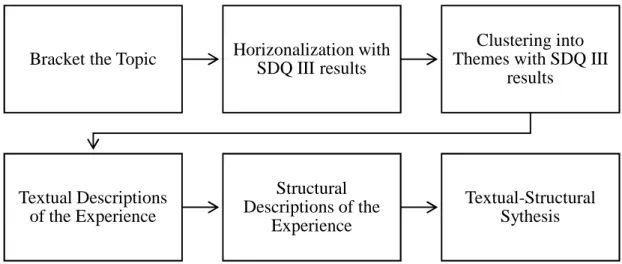
Bracketing the Topic ... 105
Horizonalization ... 106
Cluster into Themes ... 107
Textural Descriptions of the Experience... 108
Structural Descriptions of the Experience ... 109
Textural-Structural Synthesis... 109
Trustworthiness ... 109
Triangulation ... 110
Rich, Thick Descriptions ... 110
Member Checking ... 111
Peer Review ... 111
Ethical Considerations ... 112
Consent ... 112
Confidentiality and Anonymity ... 113
Data Security ... 113
Counseling and Tutoring Services ... 113
Compensation ... 113
CHAPTER FOUR: FINDINGS ... 115
Research Questions ... 115
Participants ... 116
Descriptions of Participants ... 117
Self Description Questionnaire III ... 119
Formal Responses and Interviews ... 127
Themes ... 128
Research Question One ... 128
Research Question Two ... 137
Research Question Three ... 145
Research Question Four ... 148
Composite Textural Description ... 157
Composite Structural Descriptions ... 159
Textural-Structural Synthesis... 160
Anomalies ... 161
Conclusion ... 162
CHAPTER FIVE: DISCUSSION ... 164
Summary of Findings ... 166
Theoretical Framework Revisited ... 167
Bandura’s Social Cognitive Theory – Self-Efficacy ... 167
Tinto’s Retention Theory ... 172
Implications... 173
Self-doubt and Negative Attitudes ... 175
Success Clouded by Inability to Progress ... 176
Fixed Mindset ... 177
Experiences with Teachers ... 178
Expected and Good Placement ... 179
Desire for Change ... 180
Overall Positive Experience with Staff ... 181
Change in Math Confidence ... 182
Recommendations ... 182
Struggling Developmental Math Students ... 183
Developmental Math Faculty ... 184
Administration ... 187
Delimitations and Limitations ... 192
Future Research ... 194 Summary ... 195 REFERENCES ... 198 APPENDIX A ... 213 APPENDIX B ... 215 APPENDIX C ... 218 APPENDIX D ... 219 APPENDIX E ... 221 APPENDIX F... 222 APPENDIX G ... 223
APPENDIX H ... 226
APPENDIX I ... 227
APPENDIX J ... 230
List of Tables
Table 1. Developmental Student Graduation Rates ... 20
Table 2. Postsecondary Institutions using NCAT Math Emporium Model Redesigns ... 75
Table 3. Qualitative Research Methods Considered ... 85
Table 4. Demographic Questions in Formal Responses ... 88
Table 5. Formal Response Questions ... 96
Table 6. Sample Self Description Questionnaire III Item ... 98
Table 7. SDQ III Factor and Descriptions ... 100
Table 8. Interview Questions ... 102
Table 9. Provisional Codes for Data Analysis ... 103
Table 10. Descriptions of Participants ... 108
Table 11. SDQ III Mathematics Results ... 120
Table 12. SDQ III Mathematics Results ... 121
Table 13. SDQ III Mathematics Results ... 122
Table 14. SDQ III Numeric Rating Scale ... 123
List of Figures
Figure 1. Postsecondary institutions rationale for developmental math course redesigns created
through an extensive review of the literature. ... 24
Figure 2. Low self-efficacy and student perception. ... 42
Figure 3. High self-efficacy and student perceptions ... 43
Figure 4. Break in negative math performance. ... 44
Figure 5. Break in negative math performance ... 60
Figure 6. High self-efficacy and student perceptions ... 61
Figure 7. Low self-efficacy and student perception ... 62
Figure 8. Study procedures ... 93
Figure 9. Data analysis flowchart ... 105
Figure 10. SDQ III Numeric Results. ... 124
Figure 11. SDQ III Numeric Results. ... 124
Figure 12. SDQ III Numeric Results. ... 125
Figure 13. SDQ III Numeric Results. ... 125
Figure 14. SDQ III Numeric Results.. ... 126
Figure 15. SDQ III Numeric Results. ... 126
Figure 16. Low self-efficacy perpetuates negative perceptions and unsuccessfully experiences. ... 170
Figure 17. Successful math experiences perpetuates positive perceptions and increased efficacy. ... 171
List of Abbreviations
Achieving the Dream (ATD) Adequate Yearly Progress (AYP) American College Testing (ACT) Center on Educational Policy (CEP)
Centre for Positive Psychology and Education (CPPE) College Placement Test (CPT)
Electronic Books (E-books)
Elementary and Secondary Education Act (ESEA) End-of-Grade (EOG)
General Equivalency Diploma (GED) Government Issue Bill (GI Bill) Grade Point Average (GPA)
Graduate Record Examination (GRE) Higher Education Act (HEA)
Institutional Review Board (IRB) Kindergarten through 12th Grade (K-12) My Math Lab (MML™)
Mountain University (MU)
National Assessment of Educational Progress (NAEP) National Center for Academic Transformation (NCAT) National Defense Education Act (NDEA)
No Child Left Behind (NCLB) Race to the Top (RTTP) Research Question (RQ)
Scholastic Achievement Test (SAT) Self Description Questionnaire (SDQ) Self Description Questionnaire III (SDQ III) United States (U.S.)
United States Military Academy Preparatory School, West Point Prep (USMAPS) World War II (WWII)
CHAPTER ONE: INTRODUCTION
Conservative research estimates that 20% of incoming United States (U.S.) college freshmen require at least one remedial course (Bautsch, 2013; Diploma to Nowhere, 2008; Remediation: Higher, 2012). Traditionally, this conservative percentage reflects the number of freshman requiring remediation entering a four-year post-secondary institution (Remediation: Higher education's bridge to nowhere, 2012). The majority of students requiring remediation attend a two-year postsecondary institution (Kilian, 2009) and over 50% of incoming community college students require remediation (Remediation: Higher, 2012). Bettinger, Boatman, and Long (2013) estimate all incoming two-year students and 80% of four-year students need remediation. Regardless of the differing numbers, researchers all conclude there are millions of incoming college freshmen needing remediation. Fortunately, most post-secondary institutions in the U.S. offer developmental education courses for underprepared students. Literature refers to underprepared students when students entering college cannot immediately enroll into college level courses due to an academic deficiency in math, English, or writing. Underprepared
students are identified through placement exams offered by the institution, national scholastic achievement exams, and/or transcripts. When prior high school performance or low testing scores indicate the need for developmental math placement, students are enrolled in remedial math courses before they can start taking college-level math courses. Students enrolled in developmental math courses do not receive math credit for completing the course nor do the courses count towards the math requirement for any major. Students must successfully complete the developmental course before registering for any collegiate level, credit-bearing math course. Depending on the severity of the math skill deficiency, some students must successfully
Unfortunately, there are many students who are flagged through one or more of the aforementioned placement indicators who do not enroll in the course or complete the
developmental course sequence (Bailey, Jeong, & Cho, 2010). The retention and graduation rates among students placed in developmental education courses are substantially lower than students who are academically prepared to immediately begin college-level math courses (Bahr, 2008; Bahr, 2013; Bailey et al., 2010; Bettinger & Long, 2009; Boylan, 2002; Calcagno & Long, 2008; Diploma to Nowhere, 2008; Howard & Whitaker, 2011; Martorell & McFarlin, 2011; Parker, 2012; Remediation: Higher, 2012; Silverman & Seidman, 2011-2012).
The rates among developmental math students are even higher than developmental writing and developmental English students (Bonham & Boylan, 2011). Because of this, there are numerous studies dedicated to increasing student achievement in developmental math (Speckler, 2012; Twigg, 2011). Speckler (2012) published 77 different quantitative studies examining student achievement in developmental math courses. These studies aimed to alter a portion of the developmental math course and then, compare the new course outcomes (i.e. achievement rates) to the older course outcomes. Developmental math courses, changes in the format of the course, and the measurement tool for assessing the outcomes for the change were different in the 77 studies (Speckler, 2012). Within the past five years, many quantitative studies show the positive relationship of transitioning developmental math courses away from traditional lecture courses (Speckler, 2012; Twigg, 2011). This has led to a complete overhaul of U.S. developmental education courses at various postsecondary institutions. While universities and community colleges publish higher passing rates for developmental math students after the institutions undergo specific course changes, there are still students who do not pass
and perceptions of students who are struggling to pass or failing developmental math courses (Canfield, 2013; Howard & Whitaker, 2011; Koch, Slate, & Moore, 2012). The purpose of this transcendental phenomenological study is to examine the experiences and perceptions of developmental math students who do not pass their first developmental math course with an overall grade of 70% or higher. The following sections highlight important background information about the study, my personal interest in the study, the problem, purpose, and significance of the study, research questions and plan, and limitations to the study.
Background
Students attending U.S. post-secondary institutions are arriving on campus with academic deficiencies (Bahr, 2008; Bahr, 2013; Bailey et al., 2010; Bettinger & Long, 2009; Boylan, 2002; Calcagno & Long, 2008; Diploma to Nowhere, 2008; Howard & Whitaker, 2011; Martorell & McFarlin, 2011; Parker, 2012; Remediation: Higher, 2012; Silverman & Seidman, 2011-2012). Typically, these students require either developmental math, English, and/or writing courses. Over 50% of all students entering U.S. two-year colleges and 20% of students entering U.S. four-year universities are required to take at least one remedial course (Bautsch, 2013; Diploma to Nowhere, 2008; Remediation: Higher, 2012). According to the National Center for Education Statistics, 10.8 million students were enrolled in a four-year postsecondary institution in 2011 and 7.5 million students at 2-year institutions (Adu, Wikinson-Flicker, Kristapovich, Rathbun, Wang, & Zhang, 2012). That translates to 5.4 million students required to take a remedial course at a four-year institution and 1.5 million students required to take a remedial courses at a two-year institution. Together, there were roughly 6.9 million postsecondary students required to take one remedial course. Melguizo, Bos, and Prather (2011) assert that there is a larger proportion of high school graduates that require developmental courses than presently reported
and compared to the 1980s. Due to this increase, all two-year colleges and 75% of four-year colleges offer developmental courses to remediate underprepared students for college level academics (Howell, 2011; Melguizo et al., 2011).
Current research indicates that some students who test into developmental courses never even enroll in the course. According to researchers Bailey, Jeong, and Cho (2010), 30% of students who test into developmental courses do not take the courses. Furthermore, only 60% of students enroll in the referred course (Bailey et al., 2010). Students who do enroll in the
developmental course, typically do not progress to college level math. In fact, less than one in four students who successfully complete a remedial course will successfully complete a college-level math course (Bahr, 2010). Unfortunately, less than 10% of developmental students graduate from two-year colleges within three years and roughly 30% graduate from a four-year college within six years (Remediation: Higher, 2012). Table 1 shows the low graduation
percentages of developmental students and the increased amount of time developmental students spend earning a degree.
Table 1
Developmental Student Graduation Rates
Postsecondary Institution Graduation Percentage Time it take to earn degree
2-year college 10% 3 years
4-year college 30% 6 years
College completion rates in the U.S. are continuing to decrease (Trends and tracking charts: 1983-2010, 2010). In 2006 and 2010, the American College Testing (ACT) indicated that less than 40% of college students enrolled in a public four year university complete a degree in five
years (Trends and tracking charts: 1983-2010, 2010). This shocking percentage reflects the lowest completion rates in the past 27 years of data collection.
Situation to Self
This study is important to me because I taught postsecondary developmental math courses. Developmental math courses are offered to academically underprepared college students to remediate math concepts necessary for college level mathematics. Developmental math courses at my past university do not count towards math credit in college; however, these courses are necessary for students who lack the basic math skills necessary to complete college math requirements for a degree. Students receive elective credit for successfully completing developmental courses and gain the math skills necessary to enter college level algebra.
Academically underprepared students were identified through two ways at my university. First, they were screened through academic records and testing scores from the ACT or Scholastic Achievement Test (SAT). After the initial screening, potential developmental math students were given a departmental placement exam. The score on the placement exam determined the math course the student needed to enroll in to start their mathematic sequence at the university. The math department felt the pressure to continually redesign courses to increase student achievement and progression rates due to low developmental math student passing rates at the university.
Retaining students is a priority at most universities to keep the cash flow from tuition and fees at the school. Although these course redesigns are monetarily costly and time-consuming, increasing student achievement and graduation rates take precedence over cost. Even with course redesigns, students are still struggling to successfully complete courses. I was interested in learning more about students’ experiences within developmental courses. More specifically, I
was interested in learning from the students who are not experiencing success within a developmental math course. I hoped to gain a better perspective of the students and a fuller understanding of the complexity of the situation. The perspectives of developmental math students are missing from current literature. Schools are spending billions of dollars redesigning existing developmental math courses to increase student achievement without any published literature reporting first-hand from the students. Students can give insight that numbers and averages cannot give. I was interested in hearing the stories behind the numbers and using the voices of developmental students to challenge educators to redesign developmental math courses based on developmental math students’ experiences and perceptions. I hope that universities read this study and start investigating ways to use both quantitative and qualitative data together to devise a more holistic plan to increase developmental math student completion, retention, and graduation rates. Using a transcendental phenomenological approach, I used an ontological philosophical assumption in order to understand the participant’s reality within developmental math courses and describe the different perspectives of the participants. The participants’ environments and realities were studied and I relied on the participants’ views of the situations through a social constructivism framework paradigm (Creswell, 2007).
Problem Statement
The problem of the study is the high enrollment rate of postsecondary students into developmental math courses (Bahr, 2008; Bahr, 2013; Bailey et al., 2010; Bettinger & Long, 2009; Boylan, 2002; Calcagno & Long, 2008; Diploma to Nowhere, 2008; Howard & Whitaker, 2011; Martorell & McFarlin, 2011; Parker, 2012; Remediation: Higher, 2012; Silverman & Seidman, 2011-2012) coupled with low successful completion, retention, and graduation rates of students enrolled in developmental courses (Bailey et al., 2010; Seidman, 2005; Silverman &
Seidman, 2011-2012). Bailey et al. (2010) using Achieving the Dream: Community Colleges Count, an initiative intended to increase community college student outcomes and Bailey (2009), revealed that only 30-33% of students enrolled in developmental math sequences successfully completed the sequence and could enroll in college-level mathematics; therefore, over 60% of students enrolled in developmental math courses do not enroll into college-level math courses. Some postsecondary institutions provide more than one level of developmental math courses to students. The higher number of developmental math courses required by a student, the less likely the student will successfully complete all the prerequiste courses in order to enroll in college level math (Bailey et al., 2010; Bahr, 2010; Bahr, 2012). Furthermore, the lower a student places in the developmental math sequence, the less likely a student will successfully complete all the necessary developmental math courses (Bailey et al., 2010; Bahr, 2012).
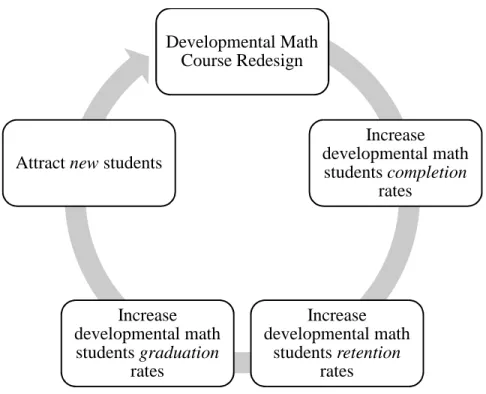
There is a push in post-secondary education to redesign existing developmental courses in order to increase completion, retention, and graduation rates among developmental math students. Completion rates refer to the number of students who successfully complete their developmental math course with an overall passing grade. For my study, this grade is set by the university at 70% or higher. Retention rates refer to the number of students who remain at a postsecondary institution each year. Graduation rates refer to the number of students who earn a degree at a postsecondary institution. Postsecondary institutions aim to increase successful completion rates among developmental students, in order to increase retention rates. Increased retention rates lead to increased graduation rates. Increasing graduation rates at postsecondary institutions are the basis for attracting more students and a source of prestige among
Figure 1. Postsecondary institutions rationale for developmental math course redesigns created through an extensive review of the literature.
Post-secondary institutions spend substantial funds on developmental education and course redesigns in hopes of increasing completion, retention, and graduation rates (Bailey et al., 2010; Melguizo, Bos, & Prather, 2011; Speckler, 2012).
There are quantitative studies that focus on the racial, gender, and economic dispartities in developmental education, calling for more attention to students with lower rates of completion within developmental math sequences (Bahr, 2008; Bahr, 2010; Bailey et al., 2010). Using the National Center for Education Statistics (NCES) datasets, researchers (Lee, 2010; Lee, 2012; Lee, Finn, & Liu, 2011) show how the national growth trajectory indicates lower math achievement rates in K-12 education among African-American students, low socioeconomic students, and female students. Bahr’s (2010) research indicated lower math achievement rates
Developmental Math Course Redesign Increase developmental math students completion rates Increase developmental math students retention rates Increase developmental math students graduation rates Attract new students
among different races, ethnicities, genders, and socioeconomic statuses in developmental math courses at postsecondary institutions.
One way to address these disparities within developmental math courses is to introduce a specific treatment (i.e., different learning environment, mode of instruction, learning model) to investigate if there is a positive and significant difference between the treatment and control group. Numerous quantitative studies (Ashby, Sadera, & McNary, 2011; Bettinger & Long, 2009; Hooker, 2011; LaManque, 2009; Mireles, Offer, Ward, & Dochen, 2011; Silverman & Seidman, 2011-2012; Speckler, 2012; Trenholm, 2009; Twigg, 2011) have investigated
increasing developmental course completion rates through the introduction of a treatment. While identifying students who are more likely to unsuccessfully complete a developmental math course and investigating different treatment options to increase successful completion rates are important, they provide only a partial picture of the problem. Student perceptions and
experiences within the developmental math sequence are crucial to understanding the low completion, retention, and graduation rates among students enrolled in developmental math coures. Very few studies (Canfield, 2013; Howard & Whitaker, 2011; Koch, Slate, & Moore, 2012) inquire about students’ perceptions and experiences in developmental math placement or reasons for low success rates in developmental math courses.
Purpose Statement
The purpose of this transcendental phenomenological study was to examine the
experiences and perceptions of developmental math students who did not meet the university’s standard of passing a developmental math course. The study focused on collegiate students enrolled in a developmental math course who struggled to complete a developmental math course and earned a final grade less than 70%. For this study, the university’s standard of
passing a developmental math course is defined by a grade higher than 70% and completion of all course assignments, quizzes, and tests. Bandura’s (1997) self-efficacy and Tinto’s (2012) retention theory provided the theoretical framework of the study.
Significance of the Study
There is a definite push for post-secondary institutions to redesign existing
developmental courses to increase student passing and completion rates through U.S. Federal mandates and increased grant funding monies for schools (Diploma to Nowhere, 2008;
Remediation: Higher, 2012). Due to different standards at different postsecondary institutions, passing rates for developmental math courses are set by the institutions. There is no standard passing percentage for all developmental math courses. Regardless of the passing score, post-secondary institutions are attempting to increase student passing rates through course redesigns. Course redesigns may include accelerated programs (Rodgers, Posler, & Trible, 2011), module courses (Silverman & Seidman, 2011), technology integration (Ashby et al., 2011), peer-tutors (Hooker, 2011), summer bridge projects (Navarro, 2007) and blended classrooms (Trenholm, 2009) to the direct placement of borderline developmental students into college level courses without remedial coursework (Bettinger & Long, 2009). There are numerous quantatitive studies investigating specific course redesigns and student outcomes and achievements (Ashby, Sadera, & McNary, 2011; Bahr P. R., 2008; Bettinger & Long, 2009; Hooker, 2011; LaManque, 2009; Mireles, Offer, Ward, & Dochen, 2011; Silverman & Seidman, 2011-2012; Speckler, 2012; Trenholm, 2009). In 2012, Speckler compiled 77 quantitative studies completed by
post-secondary institutions across the United States using course redesign tools published by Pearson. In each of these studies, post-secondary institutions noted increases in student enrollment,
postsecondary institutions that utilize the math emporium model to increase student achievement in developmental math. While the quantitative studies indicate that course redesigns can be successful for some students, there are limited qualitative studies investigating students’
perceptions of developmental math courses (Barfield, 2013; Howard & Whitaker, 2011; Koch et al., 2012). Furthermore, there are no qualitative studies examining struggling developmental math students before or after the course redesigns. This specific type of research is necessary to understanding struggling developmental math students and has been identified as an area of future research (Howard & Whitaker, 2011). Post-secondary institutions need to have a complete and well-rounded view of developmental students. This requires more qualitative studies in developmental math.
Deeper knowledge of the struggles of students enrolled in developmental courses through a qualitative approach will allow universities to examine current course practices. This study’s findings can help postsecondary institutions understand the lived experience of developmental math students who are struggling. In addition, the study’s findings can assist postsecondary faculty in addressing concerns and problems identified by developmental math students in the study.
Utilizing Bandura’s (1997) social cognitive theory will allow students to explain how they perceive themselves in the developmental math course. Knowing how students feel about their own abilities can identify specific areas within the developmental math course that need to be addressed. Students may express a faulty knowledge of their misbeliefs and may not fully understand the link between self-efficacy and task completion (Bandura, 1997). Identifying and addressing misperceptions can help students who are struggling become more self-aware about their strengths instead of focusing on feelings of inadequacies. Furthermore, Bandura (1997)
explains high self-efficacy does not guarantee success, but self-doubt leads to failure. Students in this study will share experiences of success and failure in previous math courses. This could show a pattern of self-doubt that could be attributed to students’ struggles within the present developmental math course. For post-secondary institutions, knowing how self-efficacy influences the academic abilities of struggling students will help institutions address these concerns for future developmental math students.
Tinto’s (2012) theory of retention focuses on the four conditions for post-secondary institutions to meet in order to increase student retention. The conditions are (a) expectations, (b) support, (c) assessment and feedback, and (d) involvement (Tinto, 2012). While post-secondary institutions may provide some of these services to all students, examining students who are struggling can provide more specific strategies within these conditions to further
develop or promote within the developmental math classroom. Students who are struggling may indicate areas of weakness within the developmental math course that discourage them from successfully completing the course. This is very significant information for postsecondary institution to use and address to increase developmental math student completion, retention, and graduation rates.
Research Questions
There were four main research questions that guided this study. The research questions were grounded in the theoretical framework of Bandura (1997) and Tinto (2012). The research questions provided the foundation to examining student perceptions and experiences within a developmental math course. The research questions were:
2. What experiences and attitudes impact struggling developmental math students’ mastery of basic math skills?
3. What are developmental math students’ perceptions of developmental math course placement in an emporium model at a four year institution?
4. How do developmental math students perceive the university’s Mathematics Emporium model?
Research Question Discussion
The first research question was the driving force of the study that encompassed the phenomenon of interest (Moustakas, 1994; Van Manen, 1990). Van Manen (1990) explained that phenomenology is questioning something by addressing the question of what something is truly like. Moustakas (1994) described the research question as a guide and focus of an
investigation, where the entire process points back to the research question. Furthermore, the research question must be at the very core a focal point of the study that can provide a vitally rich and layered foundation for the development of the study. The formulatic suggestion of “what is it like?” question was recommended by researchers (Englander, 2012; Giorgi, 2009; Gallagher & Zahavi, 2008; Nagel, 1974). This basic question focused the research on the lived experience of students who are struggling within their first developmental math course and allows the participants to give voice to their perceptions and experiences. Also, this question helped define the selection of participants by focusing on whether or not the potential
participants have experienced the phenomenon under investigation (Englander, 2012). The main source of data collection for this question was the one-on-one interviews and the formal response questions.
Prior literature reveals that successful developmental math students indicated a negative turning point during elementary, middle, or secondary math courses that impacted the students’ ability to learn new math concepts (Howard & Whitaker, 2011). These negative turning points were often followed by a positive turning point that occurred during the developmental math course (Howard & Whitaker, 2011). The second research question seeks to examine whether or not present developmental math students in my study identify with a past negative experiences in math. In addition, the question allows the researcher to investigate whether or not present
developmental math students in my study experienced a positive turning point during the developmental math course. Bandura’s (1997) social cognitive theory explained that
self-efficacy is influenced by current and past experiences. More specifically, the three causations of behavior, personal factors, and external factors interact to formulate the feelings of self-efficacy (Bandura, 1977). Self-efficacy can motivate student action or impede student progress. Past positive and negative experiences could have an impact on present levels of academic self-efficacy. This question examined qualitative facors of behavior and experience within the phenonmenon of students struggling within developmental math courses (Moustakas, 1994). Data collection for this research question included one-on-one interviews, formal response questions, and Self Description Questionnaire III (SDQ III) results for present levels of academic self-efficacy.
The third research question was designed to address Bandura’s (1997) idea that faulty misbeliefs can block further development of basic skills. Students cannot build more complex skills when basic skills have not been perceived as mastered. This question was rooted in Tinto’s (2012a) retention theory and Bandura’s (1997) social cognitive theory. This question examined the perception of the developmental math course placement. Prior research indicated
that developmental math students who question their own math abilities will not be capable of success (Kilian, 2009). In addition, students who doubt their abilities tend to give up and drop out of college compared to students who have higher math self-efficacy beliefs (Kilian, 2009). Tinto’s (2012a) retention theory warned that low expectations of students at postsecondary institutions can lead to low achievement and success rates. This included students being labeled by the postsecondary institution as developmental or remedial students. Regardless of whether or not postsecondary institutions labeled students developmental or remedial, students might perceive themselves as less than their peer who do not require developmental courses. This question sought to examine how the students perceive their developmental math placement and if that placement influenced their self-belief and performance in the course.
The last research question examined the university’s math emporium model and
technology integration. While the math emporium model has been touted as “a silver bullet for higher education,” this question examined the students’ perception of the emporium model (Twigg, 2011). The emporium model’s four core principles identified the reasons why the emporium model is successful within higher education. These four reasons were a) increased time on math problems, b) increased time on difficult problems and less on mastered concepts, c) immediate assistance, and d) students must do math (Twigg, 2011). While these reasons are backed by 11 years of experimental, quantitative research studies (Twigg, 2011), this question asked students to reflect on their experiences within the emporium model and gave voice to their perceptions of the model. Tinto’s (2012) retention theory hinged on four ideals for student retention: expectation, support, immediate feedback and assessment, and involvement. Theoretically, the mathematics emporium model addressed two of the four ideals for student retention: a) support, and b) immediate feedback and assessment.
This last research question was rooted in Tinto’s (2012) retention theory. Students’ perceptions of the math emporium model coupled with Tinto’s (2012) retention theory can identify areas of improvement for institutions in order to progress and retain students enrolled in developmental math courses. In addition, this question identified areas that universities may overspend or over-utilize, according to Tinto’s (2012) retention theory, that do not positively influence struggling developmental math students nor help them successfully master the content. Data collection for this research question was one-on-one interviews and SDQ III results.
Definition of Terms
Academic deficiencies refers to students who arrive to postsecondary institutions, albeit a high school diploma or passing score on the Graduate Record Examination (GRE), and are not ready to take college-level courses due to poor writing abilities, lack of basic math and/or writing skills (Bailey, Jeong, & Cho, 2010). Academic deficiencies are determined differently at each postsecondary institution, but normally use grade point averages (GPAs) from high school, college entrance exams, and/or college placement exams.
Accelerated courses are a specific type of developmental course redesign where students can complete more than one developmental course in a traditional 16-week semester (Bailey, 2009). Accelerated courses can also include intensive two-week summer courses to remediate basic skills before fall semester (Navarro, 2007).
Attrition refers to the retention rates of college students at the university (DeWitz, Woolsey, & Walsh, 2009). Schools with high attrition rates have high numbers of students leaving the university without a degree.
Blended courses are a type of course which combines traditional teaching with
software publisher to host homework, quizzes, and/or tests online. Some schools integrate video media into blended courses, too.
College-level math course refers to a course that carries college-level credit for math to apply towards a two- or four-year degree (Bailey et al., 2010).
Computer-based learning is where students work through mathematics content delivered through technology. Instructors in this method of learning can provide some instructional delivery face-to-face, but for the majority of the time, the learner is self-pacing through content on a computer. Most course redesigns replace traditional face-to-face instruction with computer-based learning (Hodara, 2011).
Developmental education encompasses all pre-requisite courses that college students must take in order to remediate basic skills to get into college level courses (Bailey et al., 2010). Developmental education normally includes English, math and writing. There are various levels of developmental education courses. Typically, developmental education courses do not carry any academic credits (Martorell & McFarlin, Jr., 2011). Elective credits are given to the successful completion of developmental education courses.
Developmental math course is a remedial math course designed to teach basic math skills that are necessary to gaining entrance into college level, credit-bearing math courses. Typically, developmental math is the umbrella in which remedial math courses fall; however, research uses both terms interchangeably (Bailey et al., 2009).
Math emporium model is a type of redesign that places students in a computer lab for most of the class time. Students are self-paced and the assignments are individualized based on pre-tests for each of the modules. Instructors and tutors are in the computer lab to answer questions and provide immediate assistance (Twigg, 2011).
Modules are course objectives and curriculum divided into hierarchical units that must be sequentially mastered (Silverman & Seidman, 2011). The amount of information contained in each module is unique to each postsecondary institution. Modules can contain pretests, video lectures, homework assignments, quizzes, and unit tests. Students must sequentially complete all the necessary components in one module before moving on to the next module.
Online courses are accessed strictly using the internet. Students and instructors never physically meet. All course material is presented online, typically using a software server that organized the objectives, activities, quizzes, and tests for each course (Ashby et al., 2011).
Pedagogy is the art of teaching children and/or adolescents. This refers to method of teaching or instruction (Groen, 2012).
Redesign refers to postsecondary institutions’ process of designing new curriculum for whole courses of developmental math, not just one section or course, to increase learning outcomes through low-cost technology integration (Twigg, 2011).
Remedial course is used in literature to refer to a developmental course. Remedial courses attempt to rectify the academic disadvantage among students with basic math deficiencies (Bahr, 2008).
Retention rate is the percentage of students who persist and progress at a postsecondary institution to attain a college degree (DeWitz, et al., 2009).
Retention theory by Tinto (2012) gives a model for postsecondary institutions to use to increase student retention rates. The four core ideals are: expectation, support, immediate feedback and assessment, and involvement.
Self-efficacy refers to a subset of Bandura’s (1997) social cognitive theory. Self-efficacy deals with one’s perceptions and beliefs in their ability.
Social cognitive theory examines the process by which a person is able to perform or learn (Bandura, 1997). Bandura (1997) asserts that the social and cognitive abilities of a person influences their ability to learn.
Traditional courses refers to a course in which an instructor lectures every class period, students attend the lecture, and then, students complete homework assignments outside of the classroom. Quizzes and tests are given during class time. Traditional settings, also known as face-to-face, do not require the use of the internet for instruction, supplemental material, or assignments (Ashby et al., 2011).
Underprepared college students is synonymous with academically deficient students. Underprepared college students do not have the basic skills to immediately enter college-level courses. Underprepared college students require at least one developmental course which presents the opportunity to increase basic skill levels to complete college-level work (Bailey et al., 2010).
Research Plan
This qualitative study employed a transcendental phenomenological research design in order to encapsulate students’ perceptions concerning the lived experiences of their struggles and challenges in a developmental math course. This research method allowed me to focus on student experiences, while intentionally removing any researcher bias (Moustakas, 1994). I used 13 participants enrolled in a developmental math course who had an overall final grade below 70% and were willing to participate in the study. I sampled participants until thematic saturation was achieved and no new themes emerged from the data. A description of the study allowed students to identify whether or not they met the criteria for participation in the study and allowed them to access the digital informed consent form (see Appendix D and Appendix E). Data
collection included formal response questions, semi-structured, open-ended interviews, and Self Description Questionnaire III (SDQ III) (see Appendix F, Appendix G, Appendix H, Appendix I, Appendix J and Appendix K). Data was analyzed using Moustakas’ (1994) data analysis
approach of (a) bracketing, (b) horizonalization, (c) clustering into themes, (d) textural descriptions of the experience, (e) structural descriptions of the experiences, and (f) textural-structural synthesis. The data analysis led to an essence of the phenomenon that answered the four research questions and ultimately, gave meaning to the experience of struggling within a developmental math course.
Delimitations
I limited participants to students who did not meet the university’s standard of passing a developmental math course at one four-year private, nonprofit postsecondary institution. Participants did not have a diagnosed learning disability. The decision to limit the study to one private university was twofold. First, the math emporium model is highly researched and state-of-the-art. This type of course redesign was not at every university or postsecondary institution. Although, I could have found other postsecondary institutions that utilized an emporium model, I purposefully did not want to investigate more than one school for this study. Secondly, this setting was a convenience setting for me and assisted the university in future research and
curriculum design. A description of the study assisted students in identifying whether or not they experienced the condition of not meeting the university’s standard of passing a developmental math course (see Appendix D) and informed consent helped me identify whether or not the student was a potential participate (see Appendix E). This allowed me to focus only on students who experienced the lived phenomenon of struggling in their first developmental math course at one university.
It was very important that the sample of participants in the study reflected all the students experiencing this phenomenon in order to get a full essence of the phenomenon; therefore, the sample was thoughtfully and intentionally examined to reflect the typical developmental math population at the university. Unfortunately, the number of willing participants limited this intention.
Conclusion
The aim of this research study was to give voice to the students who are struggling to complete a developmental math course and subsequently, did not meet the university’s standard of passing. Furthermore, this study was necessary due to the overwhelming number of
quantitative studies on developmental math courses and lack of qualitative studies. Post-secondary institutions need to examine both quantitative and qualitative factors when redesigning developmental math courses. Bandura (1997) and Tinto (2012) provided the theoretical framework for the study and were instrumental in explaining academic self-efficacy (Bandura, 1977) and student retention at postsecondary institutions (Tinto, 2012).
CHAPTER TWO: LITERATURE REVIEW
In the last twenty years, U.S. postsecondary institutions have doubled enrollment rates, while graduation rates have only slightly increased (Tinto, 2012; Vigdor, 2013). In addition, math SAT scores have not improved from 1972 to 2011 (Vigdor, 2013). Because math aptitude has been linked to lifelong earning potential, this is a large and valid concern for the U.S.
(Vigdor, 2013). The achievement gap, retention rate, and graduation rate among students enrolled in developmental courses due to academic deficiencies are significantly lower than college-ready and academically proficient students who enroll directly into college level courses (Grassl, 2010). Historically, enrollment rates at postsecondary institutions increase after major world events, migrations, during economic changes and legislation (Arendale, 2011). Within the U.S., changes in enrollment demographics from the traditional, white upper-class males to a more nontraditional, heterogeneous mix of students from differing socioeconomic statuses and ethnicities, began during the westward migration of the colonists in the early years of the states (Arendale, 2011; Vigdor, 2013); however, the largest increase in diversity of student enrollment stems from students in the 1970s entering college after World War II (WWII) through legislation outlined by the federal government.
In addition to the GI Bill, the federal and state governments through the Elementary and Secondary School Act (Elementary and Secondary School Act of 1965, 1965), A Nation At Risk report (U.S., 1983), No Child Left Behind (NCLB, 2002), and Race To The Top (RTTT) have publicized the increased importance of higher education and the access of postsecondary schooling to the general public (Levine & Levine, 2012). State-level legislation, along with increased pressure from the federal government, have mandated easy accessibility to college for all citizens (Seidman, 2012). As more students flooded into postsecondary institutions, college
retention rates have become a prestigious bragging right among schools and the basis for attracting better students (Berger et al., 2012). In addition to individual school prestige, the national economy is dependent upon college retention and degree acquisition by its citizens (Seidman, 2012). The global status of the U.S. as an educational forerunner hinges on the number of degree-holding citizens. In recent years, the U.S. has had to find skilled mathematicians and scientists from other countries indicating a failure on the part of the educational system to adequately supply the economy with enough skilled workers (Seidman, 2012).
Investigating trends in college student retention and student attrition patterns through the development of specific curriculum designed to meet the needs of academically underprepared students is vital to increasing college graduation rates and meeting the demands placed on
postsecondary institutions through state and federal legislations. Furthermore, examining federal mandates like NCLB (2002) and Common Core Standards (National Governors Association Center for Best Practices & Council of Chief State School Officers, 2010) for kindergarten through twelfth grade provides a good foundation for investigating underprepared college students. In addition, this phenomenon should be viewed through the lens and scope of Bandura’s (1997) social cognitive theory and Vincent Tinto’s (2012) retention theory.
Theoretical Framework
The theoretical framework of the study provided the foundation and support for the study. In qualitative research, the theoretical framework provide the underpinnings of the study helping researchers establish a clear direction and provide support for the development of research questions and data collection methods. Bandura’s (1997) social cognitive theory focused the study on examining students’ experiences in light of perceived self-efficacy in math courses.
Bandura’s (1997) notion of self-efficacy shaped this study’s research questions, data collection methods, analysis, and discussion. Tinto’s (2012a) retention theory provided the needed literature support for developing the research questions and data collection pieces.
Bandura’s Social Cognitive Theory – Self-Efficacy
Bandura’s (1997) social cognitive theory examines the process by which a person is able to perform or learn. More specifically, Bandura’s (1997) social cognitive theory discusses the idea of self-efficacy and its effects on the learning process. Bandura’s (1997) work describes three factors that influence one another within the learning process. The learning process is described as the processes of thought that lead to action on the part of the learner (Bandura, 1986). Bandura (1977) labels these factors as causations to learning and are (a) behavior, (b) personal factors, and (c) external factors. The behavior of a student, or how a student acts or responds, influences the ability of the student to learn and retain information. In addition, personal factors, such as the cognitive ability of a student or biological events within a student’s life, affects learning. Lastly, external factors or the academic and social environment of the learner affects the learning outcome of the student. Within this theory, cognitive ability is only one of the causes of learning. Utilizing this theory, developmental math students with high levels of self-efficacy, albeit lower cognitive abilities, should be able to learn new concepts. Interestingly, Bandura’s theory explains this phenomenon using the opposite thought process when Bandura (1997) claims, “misbeliefs in one’s inefficacy may retard development of the very sub-skills upon which more complex performances depend” (p. 395). Looking within
developmental math, students with low self-efficacy in math underperform students with higher self-efficacy (Grassl, 2010; Howard & Whitaker, 2011). In addition, students with higher levels of self-efficacy complete challenging tasks, persist in the midst of challenges, and give more
effort (Grassl, 2010). Bandura (1997) noted that this idea of self-efficacy or self-belief does not guarantee success, but self-doubt leads to failure.
Self-efficacy within students is based on four factors (a) prior performance, (b)
perceptions of other students’ learning, (c) positive feedback, and (d) emotional response of the learner (Bandura, 1997). Self-efficacy has a powerful effect on students’ decisions and actions (Bandura, 2002). Within developmental mathematics, students’ levels of self-efficacy are significantly lower due to prior mathematics performance (Grassl, 2010). Bandura’s (1997) theory of self-efficacy places high significance on the prior performance of students. Unfortunately, students enrolled in developmental math courses most often have negative perceptions of themselves in prior mathematics courses (Grassl, 2010; Howard & Whitaker, 2011). This negative perception and low self-efficacy beliefs significantly retard the academic achievement of developmental math students. Vuong, Brown-Welty, and Tracz (2010) explained the difference among students with high levels of self-efficacy compared to students with lower self-efficacy. College students with lower self-efficacy incur higher levels of stress, depression, and lower levels of effort exerted on tasks (Vuong, Brown-Welty, & Tracz, 2010). In addition, students with lower self-efficacy have been shown to have lower persevering rates on tasks (Vuong et al., 2010). This coupled with lower levels of effort impedes the level of academic achievement among students with lower levels of self-efficacy (Vuong et al., 2010). The results from this quantitative study showed grade point average (GPA) measures and the likelihood of persistence among first generation sophomore students were directly and significantly related to self-efficacy among the students (Vuong et al., 2010).
Howard and Whitaker (2011) showed the emerging themes of a negative and positive turning point for successful developmental mathematics students through a phenomenological
study. Participants identified a key time in elementary or middle school where a negative perception of mathematical ability started. The students carried this negative perception of their mathematics ability with them to each subsequent math course. Students were more likely to have low self-efficacy in the initial weeks of the developmental math course based on prior math performance. Within the developmental math course, the successful math students indicated a positive turning point when the students realized that math was easier than previously perceived. After students’ self-efficacy in math increased, students saw an increase in academic
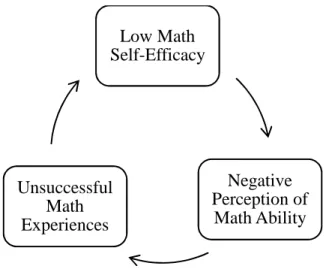
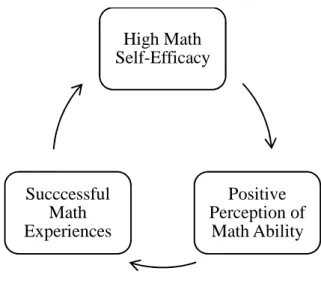
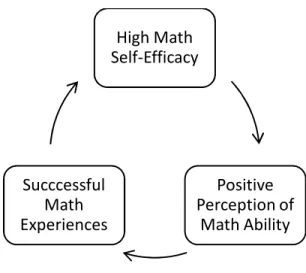
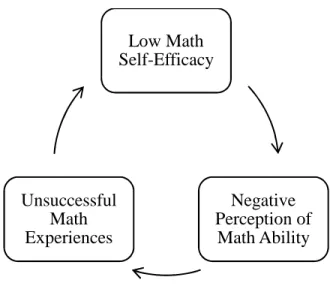
achievement (Howard & Whitaker, 2011). The increased academic achievement further increased students’ feelings of self-efficacy. The cyclic illustration of Figure 2 and Figure 3 summarizes Bandura’s (1997) theory of self-efficacy on the social cognitive processes of perception and experiences using Howard and Whitaker’s (2011) research.
Figure 2. Low self-efficacy and student perception. Low Math Self-Efficacy Negative Perception of Math Ability Unsuccessful Math Experiences
Figure 3. High self-efficacy and student perceptions
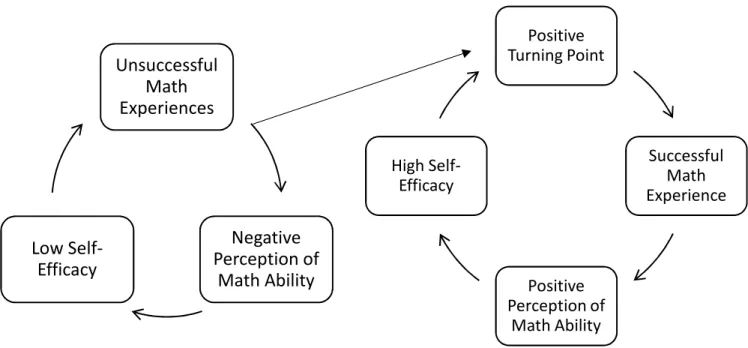
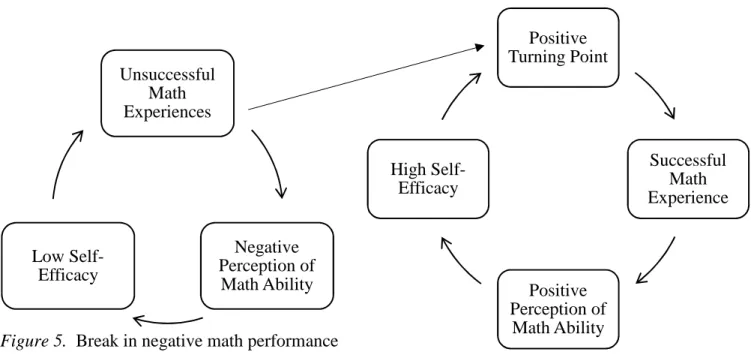
While these two cycles seem to perpetuate each other, Howard and Whitaker (2011) discovered that students with unsuccessful performance in prior math courses can have a positive turning point in math which effects how they perceive their current math course. Figure 4 shows how students can either continue in the cycle of unsuccessful math experience, negative
perceptions and low self-efficacy, or break the cycle. Once the cycle breaks through a positive turning point, students enter the cycle of positive math experience, positive perception and high self-efficacy in developmental math courses (Howard & Whitaker, 2011). There is no research to suggest students stay in the cycle of high efficacy or return to the cycle of low efficacy.
High Math Self-Efficacy Positive Perception of Math Ability Succcessful Math Experiences
Positive Turning Point Successful Math Experience Positive Perception of Math Ability High Self-Efficacy Unsuccessful Math Experiences Negative Perception of Math Ability Low Self-Efficacy
Figure 4. Break in negative math performance.
Another phenomenological research study explores the relationship among
developmental student experiences and achievement through the power of self-efficacy. Koch, Slate, and Moore (2012) stressed the importance of understanding how the students perceive placement within the developmental course sequence and experiences within the courses. The weak results in the Koch, Slate, and Moore (2012) study were due to the very small size (n = 3); however, the findings indicated that student perceptions of developmental math placement and the experience provides invaluable insight for kindergarten through 12th grade educators, 2-year and 4-year colleges. The information gleaned from this study can help meet the needs of this expanding population (Koch et al., 2012).
Tinto’s Retention Theory
Tinto’s (2012a) retention theory provides a model for institutional action to retain and progress students towards a college degree. Tinto (2012) argued that in order to fully address student attrition, researchers must look at actions universities take to retain students. A solid model of student retention married with institutional action gives guidelines for policies,
programs, and procedures to increase student retention with a focus on historically underserved college students (Tinto, 2012). Tinto’s model for student retention focuses on four conditions that must be met by the university to encourage and assist student success. The four conditions are (a) expectations, (b) support, (c) assessment and feedback, and (d) involvement (Tinto, 2012).
Expectations are a clear determinate of student success. Tinto (2012) maintained the desperate need of students to know what is required for academic success through consistent and clear expectations from the university. Furthermore, high expectations for student ability from the university ensure a higher chance of student success (Tinto, 2012). Within a university setting, different students might experience a different set of expectations. Tinto (2012) warned that labeling students as remedial implies a subtle expectation of a lower standard. Koch et al. (2012) reported initial reactions of negativity surrounding developmental math student
placement. Students self-identified themes of lower cognitive abilities and expressed negative thoughts about the stigma of being enrolled in a remedial math course (Koch et al., 2012). The second research question in the study seeks to examine this perception among developmental math students to uncover any perceived meanings of being a developmental or remedial math student.
Financial, social, and academic support are necessary for student success in Tinto’s (2012) retention theory. Institutions implementing Tinto’s retention theory have increased the academic support students enrolled in developmental courses receive through tutors, peer study groups, and summer bridge programs. Hooker (2012) utilized the Peer-Led Team Learning model to encourage peer support within the developmental math course. Utilizing this model, Hooker (2012) indicated an increase perseverance rate of 47% and higher proficiency on
assessments in comparison to the control group. Mireles, Offer, Ward, and Dochen (2011) reported significant gains for students enrolled in developmental math paired with a 5.5 week study skills program. The categories that showed significant improvement for the students were (a) anxiety, (b) attitude, (c) concentration, (d) information processing, (e) motivation, (f)
selecting main ideas, (g) self-testing, (h) study aids, (i) test strategies, and (j) time management (Mireles et al., 2011). Overall, this type of academic support resulted in statistically significant results for all categories and researchers concluded the programs were a success (Mireles et at., 2011).
Another condition of Tinto’s (2012) retention theory that must be met in order to promote student success is assessment and feedback. Continuous assessment and immediate feedback are necessary to students. The assessments are necessary to inform the instructor of concepts that need to be reviewed, and feedback is necessary for students to master new concepts. Koch et al. (2012) reported the participants indicated the feedback the instructors provided via email resulted in perceived benefits by the participants. Within developmental math courses, many universities are utilizing technology to increase immediate feedback. The emporium model utilizes the latest technology to increase student participation, continuous assessment, and immediate feedback (Twigg, 2011).
The last condition of Tinto’s (2012) retention model is student involvement. In this sense, involement is most clearly associated with student engagement. Social and academic engagement are indicators of student retention. The more socially and academically engaged students are, the more likely they are to persist at a university (Tinto, 2012).
Bandura’s (1997) and Tinto’s (2012) theories provided the framework for this study. Both theories seem very independent of one another; however, Bandura’s (1997) work on
self-efficacy does relate to postsecondary institutions abilities to retain students. Student retention directly correlates to Tinto’s (2012a) work on the conditions that can increase student retention rates. Focusing on students’ self-efficacy within a crucial developmental course can help identify areas of institutional strengths and weaknesses. This study will focus on examining students’ perceptions and experiences through Bandura (1997) and Tinto (2012a) in order to view this phenomenon through the lens of self-efficacy and student retention.
Literature Review
Postsecondary institutions are seeing an increased number of students arriving to campus with academic deficiencies in math, reading, and writing (Ashby, Sadera, & McNary, 2011; Bahr, 2013; Bahr, 2008; Bailey, Jeong, & Cho, 2010; Diploma to Nowhere, 2008; Remediation:
Higher, 2012; U.S. Census Bureau, 2009). Over 20% of all entering university freshman and close to 60% of community college freshmen are required to take one developmental course (Howard & Whitaker, 2011; Lewis & Farris, 1996). Enrollment in developmental education continues to rise (Bahr, 2010; Calcagno & Long, 2008; Howard & Whitaker, 2011; Howell, 2011; Koch, Slate, & Moore, 2012; Mireles, Offer, Ward, & Dochen, 2011). While remedial education has been in existence in the United States for decades, there is a distinct difference between the remedial courses offered 100 years ago and today’s developmental curriculum (Boylan, 2002).
Necessitated by the increasing number of academically deficient students enrolling in college courses, developmental education is a debatable and very controversial topic. According to Arendale (2011), the constant controversy surrounding developmental education is an
American tradition. The developmental label attached to curriculums and courses at postsecondary institutions infuriates some scholars. These critics insist that developmental
courses diminish academic standards, cheapen institutional credentials, and discourage academic faculty (Bahr, 2010). Proponents of developmental curriculums and courses argue that offering these developmental courses is a way to equalize academic inequalities present in secondary, middle, and elementary schools and socially disadvantaged students (Bahr, 2010). In addition, developmental education courses are viewed as a way to assist all students in increasing a higher lifelong earning potential (Bahr, 2010).
History of Remedial Education
While some researchers use the terms remedial and developmental interchangeably, other researchers refuse to see the similarities among these two terms. Hunter Boylan (2002), a well-known author and professor, argued that developmental education is the thoughtful integration of theoretical approaches rooted in psychology within the curriculum. Remediation does not imply the same standard of sophisticated care that is applied to developmental curriculum (Boylan, 2002). Historically, developmental education started when competent students lacked either math or writing skills. These students were academically competent in major-related courses but needed a refresher course to complete either a math or English requirement. Today’s
developmental curriculum addresses academically deficient students in a number of content areas (Boylan, 2002). In addition, present developmental students lack social and academic competencies in other areas that past students did not lack (Boylan, 2002). A huge shift in U.S. developmental education developed when postsecondary education changed from the idea that college was only for the elite few to the idea that postsecondary education was attainable for all citizens (Bankston III, 2011; Levine & Levine, 2012).
College for Some
In 1849, a college preparatory department was established for the University of Wisconsin for students who were deficient in basic skills (Boylan, 2002). Very prestigious universities like West Point and the Naval Academy have preparatory academies designed to assist students in meeting strenuous admission standards. The United States Military Academy Preparatory School (USMAPS), also known as West Point Prep, started admitting preparatory students in 1946 and the Naval Academy Preparatory School (NAPS) boasts an official start date of 1914 (Burley, n.d.; USMAPS, n.d.). Students attend USMAPS or NAPS for a year and engage in a very demanding remedial curriculum designed to increase test scores. At the end of the