University of Kentucky University of Kentucky
UKnowledge
UKnowledge
Theses and Dissertations--Educational PolicyStudies and Evaluation Educational Policy Studies and Evaluation
2020
Improving Retention and Degree Attainment for Underrepresented
Improving Retention and Degree Attainment for Underrepresented
Students in STEM: Is Experiential Learning the Solution?
Students in STEM: Is Experiential Learning the Solution?
Cori HendersonUniversity of Kentucky, [email protected]
Digital Object Identifier: https://doi.org/10.13023/etd.2020.425
Right click to open a feedback form in a new tab to let us know how this document benefits you. Right click to open a feedback form in a new tab to let us know how this document benefits you.
Recommended Citation Recommended Citation
Henderson, Cori, "Improving Retention and Degree Attainment for Underrepresented Students in STEM: Is Experiential Learning the Solution?" (2020). Theses and Dissertations--Educational Policy Studies and Evaluation. 73.
https://uknowledge.uky.edu/epe_etds/73
This Doctoral Dissertation is brought to you for free and open access by the Educational Policy Studies and Evaluation at UKnowledge. It has been accepted for inclusion in Theses and Dissertations--Educational Policy Studies and Evaluation by an authorized administrator of UKnowledge. For more information, please contact
STUDENT AGREEMENT: STUDENT AGREEMENT:
I represent that my thesis or dissertation and abstract are my original work. Proper attribution has been given to all outside sources. I understand that I am solely responsible for obtaining any needed copyright permissions. I have obtained needed written permission statement(s) from the owner(s) of each third-party copyrighted matter to be included in my work, allowing electronic distribution (if such use is not permitted by the fair use doctrine) which will be submitted to UKnowledge as Additional File.
I hereby grant to The University of Kentucky and its agents the irrevocable, non-exclusive, and royalty-free license to archive and make accessible my work in whole or in part in all forms of media, now or hereafter known. I agree that the document mentioned above may be made available immediately for worldwide access unless an embargo applies.
I retain all other ownership rights to the copyright of my work. I also retain the right to use in future works (such as articles or books) all or part of my work. I understand that I am free to register the copyright to my work.
REVIEW, APPROVAL AND ACCEPTANCE REVIEW, APPROVAL AND ACCEPTANCE
The document mentioned above has been reviewed and accepted by the student’s advisor, on behalf of the advisory committee, and by the Director of Graduate Studies (DGS), on behalf of the program; we verify that this is the final, approved version of the student’s thesis including all changes required by the advisory committee. The undersigned agree to abide by the statements above.
Cori Henderson, Student Dr. John Thelin, Major Professor Dr. Jane Jensen, Director of Graduate Studies
IMPROVING RETENTION AND DEGREE ATTAINMENT FOR
UNDERREPRESENTED STUDENTS IN STEM: IS EXPERIENTIAL LEARNING THE SOLUTION?
________________________________________ DISSERTATION
________________________________________ A dissertation submitted in partial fulfillment of the requirements for the degree of Doctor of Education in the
College of Education at the University of Kentucky
By Cori Henderson Lexington, Kentucky
Director: Dr.Jane Jensen, Professor of Educational Policy Studies and Evaluation Lexington, Kentucky
2020
ABSTRACT OF DISSERTATION
IMPROVING RETENTION AND DEGREE ATTAINMENT FOR
UNDERREPRESENTED STUDENTS IN STEM: IS EXPERIENTIAL LEARNING THE SOLUTION?
Experiential learning opportunities, such as undergraduate research, are found to be useful in promoting retention and graduation in STEM majors, and specifically for underrepresented student populations. These opportunities are being implemented throughout the United Stated as a means to improve student learning and persistence. In Kentucky’s strategic plan, experiential learning activities are seen as an avenue to help students persist in college and are key components in helping the commonwealth reach their goal of sixty-percent of adult Kentuckians earning a college credential by 2030.
Mirroring the commonwealth’s strategic plan, Northern Kentucky University (NKU) emphasized the importance for experiential learning opportunities and student success, particularly for underrepresented students. However, little is known about how these experiences are able to produce student persistence towards degree completion. McDevitt, Patel, Rose, and Ellison (2016) found that after participating in a summer research program, some students expressed a greater sense of respect as a member of the scientific community.
The present study investigates the influences of a summer research program on student science identity, sense of belonging and persistence in STEM. In-depth
interviews with students, faculty, and administrators revealed how a summer research program can influence student persistence in STEM, especially for underrepresented students. Implications from this study suggest that undergraduate research programs that include faculty and peer interactions, career exploration, and the physical “doing” of research are likely to produce student persistence in STEM, particularly for
underrepresented students. Limitations of the study, such as conducting the research in the midst of a global pandemic are discussed as well.
Cori Henderson (Name of Student)
11/09/2020 Date
IMPROVING RETENTION AND DEGREE ATTAINMENT FOR
UNDERREPRESENTED STUDENTS IN STEM: IS EXPERIENTIAL LEARNING THE SOLUTION? By Cori Henderson Dr. John Thelin Director of Dissertation Dr. Jane Jensen Director of Graduate Studies
11/09/2020 Date
DEDICATION ToMy Family.
iii
ACKNOWLEDGMENTS
There are so many people who have encouraged me along this journey. I still recall telling my mother when I was six months pregnant with my first child, that I planned to pursue my doctorates degree in the upcoming fall. It was December at the time and I just graduated with my master’s degree. She later told me she was nervous for me to take on so much at once, but she knew I was determined. So, in March my husband and I welcomed the birth of our first son, Caleb. And in August, I started the doctoral program. Like for many, balancing a full-time job, family, and school certainly presented its challenges, but I thank my family for keeping me encouraged and helping me along the way. To my husband, Earmon, who always had an encouraging word and a funny joke to keep me going. To my parents, who instilled the value of an education in me and my siblings from a very young age, I am only here because of you. And to my grandparents, who, when I was four, my grandmother made me and my sister count aloud to 100 using a handmade poster board chart and my late-grandfather, who was illiterate, and always told me to “get an education”, because he didn’t have the opportunity to go to school and had to drop out of grade school to help his family on their farm. This degree is for you.
I want to thank my dissertation chair and “coach” Dr. John Thelin for helping me throughout the dissertation stage. There were times when I felt completely discouraged and Dr. Thelin helped to talk me off of the edge. Thank you, Dr. Thelin for seeing me through. Thank you to Dr. Willis Jones, my former chair and committee member, who helped me to think through my dissertation topic and helped to make it a reality. And to Dr. Cindy Jong and Dr. Jungmin Lee, also members of my dissertation committee, who shared literature within their courses that put me on the path to investigate STEM student
iv
success. Your coursework helped shape my dissertation and inspired me to be an active agent of student success at my institution.
Most importantly, I thank God. I wouldn’t have made it through this journey without His grace and strength.
v
TABLE OF CONTENTS
ACKNOWLEDGMENTS ... iii
LIST OF TABLES ... vii
LIST OF FIGURES ... viii
CHAPTER 1. INTRODUCTION ... 1
1.1 Problem Statement ... 1
CHAPTER 2. HISTORICAL CONTEXT AND LITERATURE REVIEW ... 4
2.1 Current Knowledge on the Problem of Context ... 4
2.2 Discussion of existing data/background relevant to issue ... 11
2.3 Theoretical Framework related to Experiential Learning... 13
2.4 Undergraduate Research: Addressing Issues of STEM Community and Science Identity ... 18
2.5 Statement of Purpose and Research Questions ... 27
CHAPTER 3. METHOD ... 28
3.1 Institutional and Program Context ... 29
3.2 Participant Selection ... 34
3.3 Participants ... 35
3.4 Data Collection and Procedures ... 37
3.5 Interview Process ... 38
3.6 Data Analysis ... 42
CHAPTER 4. RESULTS ... 43
4.1 Foot in the Door... 43
4.2 “Doing” Research ... 48
4.3 Career Exploration ... 52
4.4 Connecting to Faculty ... 56
4.5 Building Relationships with Peers ... 62
4.6 Understanding Science Nomenclature ... 65
vi
4.8 STEM Persistence: Barriers and Solutions to URE Participation ... 74
4.9 URE Benefits and Barriers for Faculty ... 78
4.10 URE Process Model ... 82
CHAPTER 5. DISCUSSION ... 83
5.1 Foot in the Door... 84
5.2 “Doing” Research ... 85
5.3 Career Exploration ... 86
5.4 Connecting to Faculty ... 86
5.5 Building Relationships with Peers ... 88
5.6 Understanding Science Nomenclature ... 89
5.7 Who can be a scientist?... 89
5.8 STEM Persistence: Barriers and Solutions to URE Participation ... 90
5.9 URE Benefits and Barriers for Faculty ... 91
5.10 Understanding how UREs influence STEM persistence: URE Process Model 91 5.11 Limitations ... 94
5.12 Implications and Recommendations for Future Research ... 95
APPENDICES ... 97
APPENDIX 1. STUDENT SURVEY INFORMED CONSENT ... 97
APPENDIX 2. STUDENT INTERVIEW CONSENT FORM ... 102
APPENDIX 3. FACULTY AND ADMINISTRATION INTERVIEW CONSENT FORM ... 107
APPENDIX 4. STUDENT DEMOGRAPHIC SURVEY ... 111
APPENDIX 5. STUDENT INTERVIEW PROTOCOL ... 113
APPENDIX 6: FACULTY INTERVIEW PROTOCOL ... 114
APPENDIX 7. ADMINISTRATION INTERVIEW PROTOCOL ... 115
REFERENCES ... 116
vii
LISTOFTABLES
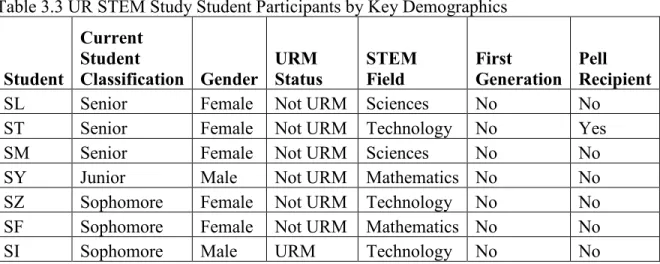
Table 3.1 Retention and graduation data of URM STEM program participants ... 34 Table 3.2 UR STEM Study Student Participants by Selection Criteria ... 36 Table 3.3 UR STEM Study Student Participants by Key Demographics ... 36
viii
LISTOFFIGURES
1
CHAPTER1.INTRODUCTION 1.1 Problem Statement
Recognizing the need for a more educated population to meet market demands, the Kentucky Council on Postsecondary Education (CPE) set a statewide goal of 60 percent of adult Kentuckians to hold a postsecondary credential by 2030. This push to educate more citizens within Kentucky is also to attract higher paying jobs to the state, such as careers within science, technology, engineering, and mathematics (STEM). CPE recognizes in order for the state to appeal to more STEM-based companies, Kentucky must have a career-ready workforce. Under the CPE state strategic plan, each state post-secondary institution was charged with a credential attainment goal, including a STEM goal (CPE, 2016). Many public higher education institutions within the state began to create initiatives to meet the ambitious statewide credential attainment goal.
In light of the new state strategic plan, former Governor Matt Bevin signed into law Senate Bill 153 in 2017, which established a new funding model for all public state institutions that would be based on institutional performance, student enrollments,
instructional and student spending, and facilities costs. The new model would go into full effect in 2018 (CPE, 2016). In the first full implementation year, Northern Kentucky University (NKU) was outperformed on almost all performance funding metrics when compared to the other public 4-year institutions. This resulted in a loss of thousands of dollars for NKU. With over a third of the performance funding attributed to student persistence and degrees awarded, including specific metrics tied to STEM areas, it is imperative for NKU to improve the success rate of students within STEM majors.
2
businesses, high schools and current students to build the next university strategic plan that would align with the CPE state plan. NKU was interested in knowing how they could meet their constituents’ needs and what the institution needed to improve upon to foster student success. After receiving thousands of responses from students, faculty,
community members and local businesses, the university created a framework that was rooted around three pillars, or themes; student access, student completion, and career and community engagement. These pillars were considered the foundation of student success and mirrored the three themes of the state plan; opportunity, success, and impact (NKU, 2019).
With a new framework in place, the next challenge for NKU was understanding just how they could improve student success. What types of initiatives would help students complete their degrees, especially students from underrepresented populations, such as first generation, economically disadvantaged, and racially minoritized groups? Throughout the strategic framework, NKU highlighted the need to create pathways and programming to assist underrepresented student populations in being successful at NKU. With a first generation undergraduate population of nearly 47 percent and an
underrepresented minority (URM) enrollment increase over the last several years, the university recognizes the importance of serving the unique needs and challenges of these student groups and established specific goals and objectives under the new strategic plan to specifically create initiatives to foster success for these student populations.
Experiential learning activities, such as research with faculty, internships, and externships, were noted by NKU as a solution to help students attain their degrees. These activities, praised by national experts as significant predictors of student retention and
3
completion (National Survey of Student Engagement [NSSE], 2007), are an initiative the university plans to expand upon in order to increase student degree attainment. According to the experiential learning theory, experiential learning is defined as a “dynamic, holistic theory of the process of learning from experience” (p. 11, Kolb & Kolb, 2017). Students engage in an experience, abstract lessons from the said experience, then reflect on what was learned through the experience. This form of learning puts the student as the center of learning and allows them to glean knowledge from the experience. Because of this dynamic form of learning, institutions across the nation, including NKU, are trying to find more ways to incorporate experiential learning into their curriculum.
Currently, NKU has a 43 percent six-year graduation rate, which is over ten percentage points below the overall Kentucky graduation rate of 54 percent (CPE, 2019b). Experiential learning activities were highlighted as one of the top initiatives for the university’s pillar of career and community engagement. Furthermore, the institution set a goal to implement these experiences within each academic major, ensuring that all students have the opportunity to participate in these career related activities.
In order to be successful, NKU would need to find best practices for
implementing experiential learning activities throughout the campus. Although many researchers have noted the positive impacts of experiential learning on student retention and graduation, there is less research on the specific factors that ensure a successful experience for students. Often research studies compare the retention rates of students exposed to experiential learning to those who have not had similar experiences, but less is shared within these studies on the details of the experiences. So how would NKU
4
an examination of a current NKU program that has demonstrated a successful impact on student persistence, particularly STEM persistence. The proposed study will investigate why the program has been successful and what components of the program as well as psychosocial concepts influence student persistence in STEM. The subsequent sections outline the following; (a) current context of the issues surrounding successful
implementation of experiential learning opportunities campus wide both broadly and specifically at NKU, (b) typical components of experiential learning activities, and (c) psychosocial components related to experiential learning activities and STEM
persistence.
CHAPTER2.HISTORICALCONTEXTANDLITERATURE REVIEW
2.1 Current Knowledge on the Problem of Context
In a 2012 occupational forecast for the Greater Cincinnati metropolitan area, computer and mathematical science occupations were expected to gross nearly 7,000 jobs by 2020 (Center for Economic Analysis and Development [CEAD]). Furthermore, the state of Kentucky is expected to employ over 74,000 people in science, mathematics, and engineering occupations by 2026 (Kentucky Center for Statistics, 2016).
In response to these economic and workforce needs, the commonwealth of Kentucky set a postsecondary credential attainment goal of 60% by 2030. In 2016, only 45 percent of Kentuckians had earned postsecondary credentials, which was lower than the national average of 52 percent. Kentucky officials believed that achieving an educated community could stave off chronic social plagues such as poverty, addiction, disease, and incarceration (CPE, 2016). Not only that, but a well-educated state could
5
lead to more tax dollars. In 2015, CPE commissioned University of Kentucky’s Center for Business and Economic Research (CBER) to study the positive effects of increased levels of educational attainment. CBER found that if Kentucky was as well-educated as the national average it could translate into an additional $370 to $534 million in tax revenue annually. Such lucrative financial and social promises led the commonwealth to set an ambitious goal of over half of the adult population to hold postsecondary
credentials by 2030 (CPE, 2016).
Once the goal was set, CPE began to create a detailed strategic plan that
articulated objectives and strategies necessary to meet this goal. Objective 9 of the plan called for improvement in “career readiness and employability of postsecondary
education graduates” (CPE, 2016, p. 17). Objective 10 called for an increase in research to create “new knowledge, accelerate innovation, and promote economic growth” (p. 17). To do so, CPE outlined the following strategies:
9.3. Work with the employer community, foundations, and state agencies to provide “work and learn” opportunities, including experiential or project-based learning, co-ops, internships, externships, and clinical experiences.
9.6. Advance Kentucky’s STEM and health agendas through ongoing leadership, advocacy, and collaboration.
10.4. Increase opportunities for undergraduate students to conduct or assist in research (CPE, 2016)
Throughout the state’s plan, there is specific language that calls public
6
order to ensure student completion and to boost the number of graduates within STEM fields.
In the conclusion of the state plan, CPE outlined the course for implementation. One of the key strategies for successful implementation was to ensure that all public universities and colleges created institutional plans that aligned with the goals and objectives of the state plan. This led NKU to formulate their new strategic plan, Success by Design. Throughout the Success by Design framework are strategies and language that parallels the commonwealth’s plan. For example, the vision of NKU’s plan states:
NKU will be nationally recognized for being a student-ready, regionally-engaged university that empowers diverse learners for economic and social mobility (NKU, 2019).
This vision encompasses the essential elements of the state’s plan that has a focus on economic growth and degree attainment for a variety of population groups. Not only does the university vision align with the state, there are several objectives and strategies that echoes the CPE’s plan as well:
Increase the number of first-generation, post-traditional, international, and underrepresented students at NKU, particularly in fields where their underrepresentation is most significant.
Increase flexible, experiential and modular learning pathways that allow students to earn credentials along the way to their degree, and implement components of competency-based education in majors where possible.
7
our students’ career readiness and lifelong learning (NKU, 2019).
Again, similar to the commonwealth, NKU recognizes the importance of experiential learning in the retention and completion of students. Therefore, experiential learning is highlighted as a key tactic to retaining and graduating more students, specifically students within STEM (NKU, 2019).
With state and university plans clearly outlined and articulated, execution is still key in the successes of these plans. Given the current state of degree completion at both the university and state levels, there is much work to be done to meet the state goal, particularly in the areas of STEM fields, as these degrees only made up a small fraction of overall state and university degree earners at the implementation stage of these plans in 2017.
Since 2017, overall NKU undergraduate enrollment has declined by four percent, STEM enrollment has declined by over ten percent. Retention of first-time, full-time STEM students have declined as well, with a third fall retention rate of 33 percent for the 2015 cohort to a 28 percent rate in 2017. Similar retention declines have been
experienced for URM STEM students as well. Furthermore, STEM degrees have
remained stagnant, only accounting for 14 percent of overall bachelor’s degrees in 2018-19. Of those STEM degrees awarded, URM students only accounted for six percent, compared to 12 percent of all bachelor’s degrees earned (CPE, 2019b).
The challenge to retain and graduate more underrepresented students within STEM majors is not unique to NKU, but is a national concern as well. In 2007, the
8
to action to improve the current state of science-related education and programming. Yet by 2015, only 18 percent of all bachelor’s degrees conferred were within science,
technology, engineering, and mathematics (STEM). Furthermore, African American and Hispanic STEM degree earners accounted for 12 and 15 percent of those degrees
respectively (National Center for Education Statistics [NCES], 2019).
The same is true for the state of Kentucky. In 2018-19, the state’s public institutions awarded over 12,000 STEM degrees. Of those STEM degrees, only eight percent were earned by URM students, and 18 percent were earned by low income students. Furthermore, women made up only a quarter of STEM degrees, compared to over half of all degrees earned for that year. Overall, the state of Kentucky has struggled to produce a more diverse STEM workforce (CPE, 2019b). This raises the concern as to who will be qualified to work in the new STEM-focused companies and careers
Kentucky is wanting to attract to the commonwealth (CPE, 2016).
Understanding the high need to funnel more students within the STEM pipeline, many colleges and universities throughout the United States are creating STEM-focused experiential learning programs to remedy the inequities found in the persistence of underrepresented minority (URM) students and women in STEM majors. Espinosa (2011) found that for women of color, participation in such programs, specifically those that emphasize undergraduate research and creating a robust STEM community,
improved their likelihood to persist in STEM disciplines. Lane’s (2016) examination of experiential learning within a science support program for URM students found that students valued the sense of community and gaining knowledge on how to operate within the science community in order to be successful. Other scholars also have found similar
9
findings for students of color, particularly those that focus on faculty-student mentorships (Hurtado, Eagan, Tran, Newman, Chang, & Velasco, 2011), student research (Ghee, Keels, Collins, Neal-Spence, & Baker, 2016), and student engagement (Fechheimer, Webber, & Kleiber, 2011).
Experiential learning activities, like research with faculty, are known to improve student retention and completion in STEM majors. In an analysis by Ghee, Keels,
Collins, Neal-Spence, and Baker (2016), research with faculty was attributed to retaining more students within their STEM major, specifically for URM students. Therefore, NKU must find ways to implement these experiences within students’ academic careers in order to ensure success, especially for underrepresented populations in STEM.
Experiential learning activities are not new to NKU. Throughout the university, there are pockets of departments and centers who have implemented these activities within the academic curriculum. However, student participation in these activities are sporadic, and often do not occur until many students’ senior year of their postsecondary academic careers. In the institution’s 2018 National Survey of Student Engagement (NSSE) results, only about half of seniors had participated in an internship. Furthermore, NSSE recommends that freshmen participate in at least one experiential learning
experience by the end of their first year. According to the 2018 results, approximately half of all first-year students surveyed participated in such experiences, trailing behind benchmark comparison group institutions as well (NKU, 2018).
Not only has student participation in experiential learning been lagging at NKU, the ability to track such experiences university-wide has posed issues as well. Currently, the only experiences that are tracked are those that students take for credit. Any
10
experiences that the student acquires on their own, such as paid research experiences outside of the university, are not included within the university data. This gap in tracking such experiences creates a challenge for the institution to truly assess overall student participation.
Currently, NKU has adopted the National Association of Colleges & Employers (NACE) criteria of experiential learning, which states:
1. The experience must be an extension of the classroom: a learning experience that provides for applying the knowledge gained in the classroom. It must not be simply to advance the operations of the employer or be the work that a regular employee would routinely perform.
2. The skills or knowledge learned must be transferable to other employment settings.
3. The experience has a defined beginning and end, and a job description with desired qualifications.
4. There are clearly defined learning objectives/goals related to the professional goals of the student’s academic coursework.
5. There is supervision by a professional with expertise and educational and/or professional background in the field of the experience.
6. There is routine feedback by the experienced supervisor.
7. There are resources, equipment, and facilities provided by the host employer that support learning objectives/goals (NKU, 2016).
These criteria focus on the benefits that are provided to the student in order to further student learning and knowledge within their area of focus.
11
2.2 Discussion of existing data/background relevant to issue
Implementing experiential learning activities are not always a guarantee of student academic success. In a literature review by Sadler Burgin, McKinney, and
Ponjuan (2010), they found that research experiences were not always the best predictors of success. One potential reason, as suggested by Sadler Burgin et al., could be the specific components that make up the experiences were not in place. This could be student to mentor/researcher matching, student interest aligned with the research, and other essential components. Presently, there is not much research on what components make a successful program. However, there are some factors that are typically found within an experiential learning program.
One factor is that the program must be structured. Research programs that are structured and provide explicit outcomes are more likely to be successful and report significant perceived gains from students (Thiry, Weston, Laursen, & Hunter, 2012). Thiry et al. found that undergraduate research experiences that provided students with continuous feedback, clear objectives and instructions of the research study, and guidance on how to apply newly acquired skills, were more likely to be satisfied with their research experience and express greater research skill gains.
Another key factor is that faculty and graduate research assistances involved in undergraduate research programs should provide quality mentor-mentee experiences. In a synthesis of research studies on undergraduate research experiences over the last five years, Linn, Palmer, Baranger, Gerard, and Stone (2015) noted that mentors act as student guides and help students to create a sense of scientific identity by helping them to
12
that mentors help students to recognize gaps in their science knowledge and how to navigate future coursework to fill these knowledge gaps. Although Linn’s et al. review found that students benefit most from faculty mentors, many of the studies within their review used graduate students and post-doctoral students as mentors.
Furthermore, mentorships within the context of experiential learning opportunities can provide great benefits from underrepresented student groups within STEM as well. For example, URM students report higher gains from research programs when they are able to relate to their research mentor and receive advice and experiences that go beyond academic research (Rodriguez Amaya, Betancourt, Henry Collins, Hinojosa, & Corona, 2018; Schwartz, 2011). Hernandez et al. (2017) examined factors related to high-quality mentorships among Black STEM students and faculty mentors and found that frequency of mentor-mentee interactions impacted student perception on the quality of the
mentorship. Hernandez et al. also found that perceived similarities between mentor and mentee influenced quality of the mentorship, even those beyond racial and gender similarities. These findings suggest frequent interactions with faculty for URM STEM students can have positive influences on student satisfaction with their experiential learning activity.
Undergraduate research is time intensive for faculty as well as students. In a case study conducted by Schwartz (2011), faculty reported spending 10–16 hours a week engaged in these relationships teaching, modeling, supervising, assessing progress, networking, presenting at conferences with students, career counseling, mentoring students on family or personal problems, and academic acculturation. Therefore, in order to maintain faculty participation, undergraduate research programs must be valued and
13
accounted for within the tenure/professorship process. Many faculty feel pressured to drop such activities because they conflict with other departmental priorities and are not given much weight within the tenure process (Schwartz, 2011).
Finally, in order to see true gains in STEM persistence and graduation, students must participate in more than one undergraduate research program (Fechheimer et al., 2011; Ghee et al., 2016; Rodriguez Amaya et al., 2018; Thiry et al., 2012). In a
correlation analysis, Fechheimer, Webber, and Kleiber (2011) found that students who participated in undergraduate research had higher GPAs at graduation than students who did not participate, even after controlling for SAT score. However, findings were only significant when students participated in two or more research opportunities. These significant findings held true also for differences in gender. Researchers also found that URM students experience high gains in STEM persistence when the undergraduate research experience goes beyond one opportunity (Rodriguez Amaya et al., 2018; Schwartz, 2011).
2.3 Theoretical Framework related to Experiential Learning
Sense of belonging and science identity are known to be large influencers of student persistence in STEM, specifically for underrepresented students (Carlone & Johnson, 2007; Espinosa, 2011; Jackson, 2013). Rainey, Dancy, Mickelson, Steams, and Moller (2018) found that sense of belonging and science identity were significant
influencers of STEM commitment for women and students of color. Espinosa (2011) noted that women of color were more likely to persist in STEM when they had opportunities to participate in undergraduate research and feel a part of the STEM
14
community on campus. The following review of the literature examines both the uses of these activities in STEM and the psychological concepts of sense of belonging and science identity that underline the success of STEM persistence for underrepresented students.
Sense of belonging. Interactions between a student, peer groups, faculty, and campus environment can have an impact on a student’s sense of belonging. Sense of belonging can be described as when one’s own personal values connect with the values and norms of the organization (Bonous-Hammarth, 2000). Students feel a sense of belonging within the campus climate when their values and individual characteristics are embraced and valued within the campus community. In order for students to persist in STEM, they must feel like they are a part of the STEM community.
McDevitt, Patel, Rose, and Ellison (2016) found that after participating in a summer research program, some students expressed a greater sense of respect as a member of a scientific research team. This sense of respect and belongingness to the science community also was a predictor of higher self-assessment of research skills at the conclusion of the summer research program. McDevitt and colleagues suggested that facilitating a “culture of respect” in a collaborative learning environment can reinforce students’ interest in STEM and empower them to be active learners. This is especially crucial for the success of underrepresented students. Research has found that sense of belonging for underrepresented students, like students from Latinx backgrounds, can impact their transition into college. Hurtado and Carter (1997) examined perception of sense of belonging for Latinx students and found that students who had higher ratings of sense of belonging were more likely to persist in college. Additionally,
Bonous-15
Hammarth (2000) found that URM STEM students were more likely to leave STEM majors when they were in campus environments that did not provide a welcoming and belonging environment.
Experiential learning opportunities can be used to foster belongingness for underrepresented students. In a study that examined the impact of a program that emphasized undergraduate research experiences for URM students, Ovink and Veazey (2011) discovered that the program not only better prepared students with scientific skillsets, but provided a supportive community of like-minded peers to help in the transition and learning of the sciences subculture. The students were able to build “social and subcultural capital”, which helped them to feel that their STEM goals were more attainable. Rainey et al. (2018) found that STEM students who reported a greater sense of belonging were more likely to remain in STEM majors than those who left STEM.
Furthermore, women of color were the least likely to report a sense of belonging to the STEM community and thus more likely to leave STEM.
Sense of belonging is critical for first generation students as well. First generation students often need validation that they belong in college and are valuable contributors to the campus, this is especially true for STEM first generation students (Kezar &
Holcombe, 2017). In a multi-campus STEM collaborative project, California State University (CSU) established multiple STEM initiatives in order to improve the persistence rates for underrepresented students in STEM, such as first generation students. They found that campuses that were able to implement high impact practices (i.e. experiential learning) were more likely to foster a sense of community and
16
about various STEM careers than their continuing-education counterparts (Kezar & Holcombe, 2017). Chapman, Hill, Nagel-Myers, and Ramler (2019) experienced similar results within their STEM support program that targeted high achieving Pell-eligible students. Students who participated in the program commented on the opportunities to gain basic skills first-hand and how these experiences helped them to engage with their peers and faculty, which led to a greater sense of belonging within the STEM community.
These studies suggest that in order for URM, female, and other underrepresented STEM students to be successful, they must feel connected to the STEM community. Factors contributing to STEM sense of belonging are interpersonal relationships, perceived competence, personal interest, and science identity (Rainey et al., 2018). Experiential learning opportunities and initiatives created to improve underrepresented students’ persistence in STEM must consider the impact of STEM sense of belonging. Experiences need to consider providing social networks where students can connect with the STEM community and build a relationship with other students and faculty within STEM (Kezar & Holcombe, 2017; Ovink & Veazey, 2011).
Science identity. According to Carlone and Johnson’s (2007) model, science identity is made up of three components; competence, performance, and recognition. Competence is built through student science experiences and opportunities to build scientific knowledge. Then, students are able to perform the skills in which they have learned that are relevant to science practice. And when successful performance of science skills and practices lead to positive recognition by professors, peers, and meaningful others, students are able to develop strong science identities. From this science identity model, it is clear to see how experiential learning, such as undergraduate research, can be
17
pertinent in developing potential scientists, particularly students from underrepresented backgrounds.
Chemers, Zurbriggen, Syed, Goza, and Bearman (2011) found that such activities are mediated by science identity and self-efficacy, which then impacts student success and persistence in STEM. In a series of studies conducted with URM STEM students, Chemers et al. found that science identity mediated the association between research experiences and STEM career commitment. This means that research experiences were only able to influence STEM career commitment if those same experiences were perceived to improve student science identity. These findings suggest the importance of science identity on STEM persistence, especially for URM students.
In a longitudinal study, Robinson, Perez, Nuttall, Roseth, and Linnenbrink-Garcia (2018) were interested in how science identity was developed over time and how science identity predicted the pursuit of a STEM career post-graduation. Robinson et al. found evidence of three classes of science identity that are developed over time; High with transitory incline, which are students who have high science identity in their freshman year and generally maintain a relatively high science identity throughout college; Moderate-high and stable are students who have a moderately high science identity in their first year with little to no change over four years; and Moderate-low with early decline are students who had a low science identity in the first year and then experienced a sharp decline in the following year, with a less dramatic decline in the final two years. Similar to Chemers et al. (2011), students with high science identity also possessed high self-efficacy and believed that they were capable of performing scientific procedures and hypothesis testing. Students in the highest science identity class were more likely to
18
pursue STEM careers post-graduation as well. Furthermore, Robinson found that women and URM students were least likely to be in the class with the highest level of science identity and thus less likely to pursue STEM careers compared to their male, Asian and White counterparts. For first generation URM students, when they are able to view science as an opportunity to meet prosocial goals, they are able to find greater congruence between their personal/cultural and science identities (Jackson, Galvez, Landa, Buonora, & Thoman, 2016). Piatt, Merolla, Pringle, and Serpe (2019) found that both faculty mentoring and research involvement are related to higher levels of science identity and graduate school enrollment for low income, first generation and URM students. These data suggest the importance of building a science identity through experiential activities in order to increase the likelihood of underrepresented students to pursue STEM careers.
2.4 Undergraduate Research: Addressing Issues of STEM Community and Science Identity
Structured undergraduate research programs allow undergraduate students to assist a faculty member or graduate research assistant in formalized research. These activities can include gathering and collecting data, data entry, data cleaning, data
analysis, and initial write-up of the results (Ovink & Veazey, 2011). Several studies have found that undergraduate research programs can improve student retention and
graduation in STEM as well as likelihood to pursue graduate or professional school post-graduation (Fechheimer et al., 2011; Ghee et al., 2016). Undergraduate research programs are so successful because they allow students to cultivate their research skills and thus improving their self-efficacy and confidence (Ghee et al., 2016).
19
These improved skill-sets and self-efficacy hold true for underrepresented students participating in undergraduate research as well. Ghee and colleagues (2016) found that students who engaged in research preparation activities during their summer research program reported significant gains in research skills after completing the research program.
Undergraduate research is an excellent experiential learning activity that fosters the essential components of sense of belonging and science identity for STEM students, specifically for underrepresented student populations (Carlone & Johnson, 2007;
Chemers et al., 2010; Lane, 2016). Undergraduate research experiences (URE) are known to enhance research skills and proficiency, interest in research careers, and an interest in pursuing a graduate degree (Lopatto 2010). UREs have a greater impact on STEM persistence for URM, first generation, and women students. There have been specific calls at the federal, state, and university levels to increase URE for STEM students in order to increase persistence and degree attainment (CPE, 2016; NKU, 2019; Obama, 2009). The President’s Council of Advisors on Science and Technology (2012) recommended colleges and universities to provide early engagement of students in research because of its impact on STEM persistence. Because of these recommendations, federal funding was allotted for undergraduate research and providing these research experiences for those underrepresented in STEM (National Science Foundation [NSF], 2013). The commonwealth of Kentucky has weighted STEM degrees higher in its performance funding model, with URM STEM degrees having greater weights. NKU calls for more of these types of opportunities for students within its strategic plan. Because of the demands and calls from all political levels for more UREs and the
20
research on the benefits of UREs on underrepresented student persistence in STEM, this research will focus on the impacts of a summer research program at NKU. To provide additional context of these benefits, the following segment details the previous research on UREs, specifically with students of color, women, first generation, and economically disadvantaged individuals pursuing STEM degrees.
URM and URE. Over the last several decades, there have been countless of studies that discovered that college campuses can often have a “chilly” campus climate for Black and Hispanic or Latinx students (Locks, Hurtado, Bowman, & Oseguera, 2008; Rainey et al., 2018). Students of color often report feeling isolated or excluded within the campus environment. Hurtado and Carter (1997) reported that perceptions of a hostile racial climate had negative effects on Latinx students’ sense of belonging. Furthermore, Hurtado and Carter found that students who had frequent interactions with faculty were more likely to report higher sense of belonging. Research experiences with faculty provide STEM students the opportunity to interact with faculty and their peers in a research setting. These interactions are known to build sense of community and
belongingness, especially for students of color. Hurtado et al., (2011) found that creating interactions and networks through research programs, particularly for URM students, can eliminate feelings of isolation and increase their persistence in STEM. In an
undergraduate research program for URM students implemented by the New York City College of Technology, all 47 participants persisted in STEM, with many going on to pursue graduate school in a STEM discipline (Blake, Liou-Mark, & Chukuigwe, 2013). Often students of color report feeling more accepted within the research community after participating in a research experience (Banks, Fresquez, Haeger, Quinones-Soto, &
21 Hammersley, 2018; Hurtado et al., 2011).
Building networks and relationships with faculty through URE can influence student degree aspirations, especially for students of color. In a multi-institutional study, Eagan, Hurtado, Chang, Herrera, and Garibay (2013) discovered that URM students who participated in undergraduate research programs were more likely to report having intentions to enroll in STEM and non-STEM graduate and professional programs than URM students who did not participate in such programs. Furthermore, after participating in an undergraduate research program, Black and Asian American students showed significant increases in their intentions to pursue a STEM-related graduate program, more so than their White counterparts. UREs can help students generate a more tailored career path and trajectory as well. In a summer research program that targeted URM students from a 2-year institution, students reported that the research experience gave them a better sense of the field of study they wanted to pursue, helped them to identify which area of research they would want to focus on in the future, and it opened doors for other research and academic opportunities (Leggett-Robinson, Reid Mooring, & Villa, 2015). This suggests that UREs are critical to the STEM pathway for students of color.
UREs are well known for building students research skills, but it also can build cultural capital as well. For underrepresented students, understanding the nomenclature and nuances in STEM culture can present an impeding barrier, often derailing students, particularly students of color, from persisting in STEM. This lack of STEM discourse and “speech” can cause entering students in STEM to feel as though they don’t belong or impose on their perceptions of science self-identity. Robnett, Nelson, Zurbriggen, Crosby, and Chemers (2018) found that students who received instrumental mentorship,
22
such as task-focused mentoring, were more likely to report a higher sense of science identity. Falconer (2019) reported in her case study of Anne, a first-generation woman of color, that the budding researcher often felt displaced in the lab in some of her earlier research experiences because she didn’t understand the scientific language that was often used within the lab setting. It wasn’t until her second research experience with a doctor at a nearby hospital that she was able to learn the scientific words used in the lab. The more research experience that Anne received, the more she began to feel like a scientist. This suggests the need for early and frequent UREs for STEM students in order to help them acclimate to the STEM culture and discourse.
URE and Women. Similar to URM barriers to STEM persistence, women often
face feelings of isolation within STEM. This is likely due to science being a male
dominant field. Gender stereotypes of science emerge due to the dissonance between the expected roles of women in society and the expected roles of scientists in society (Aikens et al., 2017). Qualities often projected on to women include, agreeableness, nurturing, and passive, attributes incongruent with those of a scientist (Eagly & Karau, 2002). Studies have found that women tend to be positioned into “helper” roles instead of “producer” roles within STEM settings (Falconer, 2019). To overcome these stereotypes, women benefit from faculty interactions and mentoring, traits typically found in
undergraduate research programs. In an NSF funded undergraduate research program with mostly women (54%), participants were more likely to persist in STEM than those who did not participate in the program (Gibson et al., 2019).
Furthermore, women in STEM might face challenges with stereotype threat or imposter syndrome, feeling as if they don’t belong within the STEM community or that
23
they don’t have the proper knowledge base to participate within STEM (Falconer, 2019). Having adequate experiences with undergraduate research is known to improve students’ research skills and knowledge, thus impacting their science identity. Some of these skills include writing a hypothesis, conducting a proper literature review, reading research articles, and utilizing lab equipment (Leggett Robinson et al., 2015; Schneider, Bickel, & Morrison-Shetlar, 2015). In their study on the successes of women of color in STEM, Carlone and Johnson (2007) indicated that science identity not only came from doing science, but receiving recognition from meaningful others as a science person. In this study, women who received recognition from meaningful others within science were able to not only persist, but thrive within their STEM discipline. Offering opportunities to participate in undergraduate research can provide such recognition. Many who participate in research programs often have opportunities to present research findings at symposia and conferences (Gibson et al., 2019).
Interactions with faculty also are important for women in STEM and can impact their persistence in their fields of study. Aikens et al. (2017) found that women were less likely to have mentor relationships directly with faculty. In result, women reported lower science identity, likelihood to persist in STEM, publish research articles and pursue a STEM doctoral degree compared to their male counterparts. Furthermore, faculty who participated in UREs often reported helping students to learn research skills and discourse as well as helping students to overcome frustrations with conducting research. This benefit of faculty mentoring within UREs is essential to women success is STEM.
URE and First Generation. Parental educational attainment can have an impact on student outcomes and career aspirations. This could be due to a lack of access to
24
academic social capital and norms (Ostrove, Stewart, & Curtin, 2011). Continuing education students are able to use their parents’ knowledge of the higher education system. For example, continuing education students are more likely to apply for scholarships and grants and complete a FAFSA earlier than first generation students (McKinney & Novak, 2015). First generation college students sometimes struggle with navigating the academic culture and are often not as familiar with middle-class norms and the “hidden curriculum” (Banks et al., 2018; Grineski, Daniels, Collins, Morales, Frederick, & Garcia, 2017). First generation students might have a smaller stock in academic social capital, but they might have a larger stock in community cultural wealth, which can help them persist through college. Their community cultural wealth might include a sense of commitment to community well-being, skills to navigate through social institutions, maintaining high aspirations through difficult circumstances, and the capacity to challenge inequality (Yosso, 2005).
Access to undergraduate research opportunities can help first generation students learn science norms and discourse, but these experiences must be strategic and
intentional. Grineski et al. (2017) found that first generation students who participated in undergraduate research were still less likely to publish research and spent less hours in undergraduate research than their continuing education counterparts. Furthermore, although undergraduate research had a positive association with research confidence for first generation students, continuing education students had a stronger association with research confidence. These findings suggest the importance of intentional planning of undergraduate research objectives for underrepresented student populations, such as first generation individuals.
25
The California State University Louis Stokes Alliance for Minority Participation (CSU-LSAMP) Alliance comprised of 23 campuses and offers a wide-range of support systems for underrepresented students, such as URM and first generation individuals, to help them persist in STEM. At the Monterey Bay campus (CSUMB), there
Undergraduate Research Opportunities Center (UROC) provides undergraduate research experiences with faculty mentors. These opportunities are intended to help students learn and navigate the “hidden curriculum” of STEM by providing workshops to help students strengthen their written and oral presentation skills, which are used in their research presentations and conferences. Students are exposed to the hidden curriculum of
academia through active dialogues about the nuances and nomenclature of the academic setting. After participating in this program, students often reported higher levels of self-efficacy, sense of belonging to the research community, and research confidence (Banks et al., 2018). These program outcomes highlight the importance of intentional research programing for underrepresented students in STEM.
URE and Economically Disadvantage Students. Similar to first generation students, access to academic culture capital is limited for college students from working-class families. Often, college students from lower SES households attended high schools with inadequate financial funding, thus limiting their access to certain resources, such as technology and advanced science and mathematics courses (Grineski et al., 2017). This lack of resources can cause challenges with STEM persistence for economically
disadvantaged students. Furthermore, the cultural capital advantages of social elites are often invisible such that poor academic performance of working-class students, whose cultural capital runs incongruent to academia culture, is seen to reflect innate deficiencies
26
in academic ability (Bourdieu, 1986; Grineski et al., 2017).
Therefore, it is important to provide lower SES students opportunities to undergraduate research in order to build STEM cultural capital, science identity and persistence in STEM. It is important to note that students from working-class families often need to balance school and family obligations, such as taking care of younger siblings or working to pay for college (Grineski et al., 2017). In result, it is essential to provide research opportunities that do not conflict with family and working obligations for students within this economic demographic. Paid research opportunities also can provide working-class students the opportunity to get the experiences they need to build critical research skills as well as meeting family obligations.
Georgia Perimeter College, a two-year institution with 43% of its students receiving Pell, created a non-residential summer research program in partnership with two local four-year universities. The program provides three weeks of in-house mentoring with GPC faculty, which included an introduction to research concepts and training on basic research techniques and skills. Then students are partnered with graduate research assistances at the four-year institutions in an eight-week research experience. Of the twelve students that participated, each reported an increase in their comfort with science research, sense of belonging in STEM, and their likelihood to transfer to a 4-year institution. Students explained how the experiences helped them to “see themselves” as scientists and define themselves as scientists. Several indicated that the research program influenced them to consider pursuing graduate school in a STEM discipline.
27
students to participate in undergraduate research. Underrepresented students in STEM, like working-class students, must be able to “see themselves” as scientists and as active agents of the STEM community. This mental model can be fostered through research experiences. UREs build research skills and discourse, especially for students who have been omitted from receiving advanced scientific and mathematic experiences due to insufficient funding within their secondary schools. Higher education institutions must provide these experiences early within the STEM careers for underrepresented students in order to close the skills gap and cultural capital that are perilous barriers to STEM
persistence.
2.5 Statement of Purpose and Research Questions
Experiential learning opportunities have been found to be useful in promoting retention and graduation in STEM majors, and specifically for underrepresented student populations. Experiential learning activities provide STEM students with a sense of science identity, connects them to the STEM community, and allows them to perfect their research skills. Both the commonwealth of Kentucky and NKU have called for the use of experiential learning activities as a means to increase degrees in STEM areas, specifically for underrepresented students. NKU has even stated the need to make experiential
learning mandatory for all programs.
This will be no small feat, and will take great effort on the university to be successful in implementing experiential learning campus-wide. There are several current programs at NKU that have shown promise in promoting student persistence and
28 research questions are as follows:
1. How has the participation in a summer research program, UR STEM, influenced student persistence in STEM?
2. How have, if at all, a summer research program aided students from
underrepresented populations in the development of science identity and sense of belonging in the STEM community at NKU?
Understanding how to replicate some of NKU’s current successes with experiential learning activities will increase their chances of further success with an expanded
program. Also, investigation into which components are most useful to underrepresented students, specifically in STEM, can ensure that these components are included within campus-wide experiential learning activities. From a broader contextual perspective, there is little research on why experiential learning activities work. Additionally, providing a theoretical framework in which to view these student persistence outcomes can provide more depth and understanding as to why these programs are successful. Researchers suggests the need for more rigorous qualitative studies to better understand the complexities of STEM programs (Museus et al., 2011). Thus, the current study attempts to investigate the innerworkings of these programs to seek intricate insights into the successes of experiential learning programs like undergraduate research experiences.
CHAPTER3.METHOD
The current study investigated student and faculty perceptions on experiential learning activities, specifically undergraduate student research, and how these
29
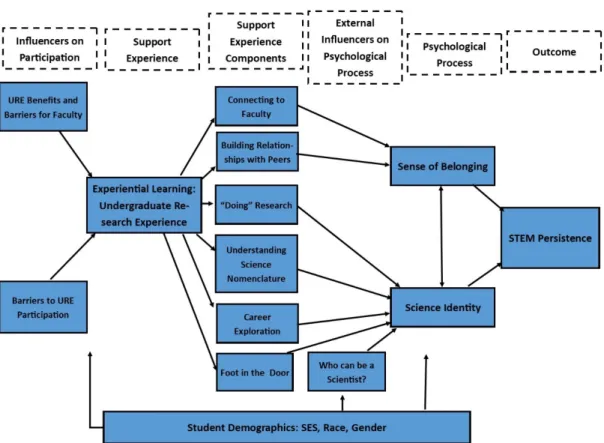
primarily focused on understanding how the components of sense of belonging and science identity influence STEM persistence, particularly for underrepresented students in STEM. As previously stated, the existing literature suggests that experiential learning activities, like student research, can provide a sense of community and science identity for underrepresented students in STEM. The study conducted an explanatory, holistic, single case study that investigated the impact of a summer research program on student science identity and sense of belonging in underrepresented students in STEM.
Underrepresented STEM student groups include first generation, female, financially disadvantaged, and underrepresented racial minoritized (URM) students. This study included interviews and a document analysis to examine the program attributes associated with science identity and sense of belonging.
3.1 Institutional and Program Context
Northern Kentucky University (NKU) is a mid-size, public comprehensive institution located in the mid-west. In fall 2018, STEM students made up approximately 20 percent of the overall undergraduate degree-seeking enrollment. Furthermore, 12 percent of women, 15 percent of URM, 18 percent of financially disadvantaged, and 18 percent of first generation undergraduate students were in STEM majors. Additionally, for first-time students who started in a STEM major in the fall of 2018, only about half (53%) continued in their STEM major by the following fall.
CINSAM. The Center for Integrative Natural Science and Mathematics (CINSAM) was established in 2000 by the Kentucky Council on Postsecondary
30
to serve as NKU’s Program of Distinction, a state initiative to reach the council’s goal of national-level degree attainment by 2020. The center was funded using state funds from the Regional University Excellence Trust Fund for the first five years of the program. After receiving initial state funding, the university was responsible for ongoing funding and support. The center was created to enhance the teaching, learning and application of STEM at P-16 education levels within the northern Kentucky region with a primary goal of facilitating the recruitment, retention and graduation of STEM and STEM education students.
Under the direction of the first director, a math professor, Dr. Phillip Schmidt who was brought to NKU from Akron University to develop the program, there was focus on science and mathematics at every educational level and building relationships within the public and private sector within the northern Kentucky region. This included math and science continuing education courses for teachers; developing alliances for teachers, faculty, industry scientists and engineers; internship and research opportunities for college students in business and industry; and symposia to improve public understanding in mathematics and science.
When Dr. Schmidt retired in 2004, CINSAM had a series of interim directors between 2004 and 2017. In 2017, Dr. Madhura Kulkarni officially became the director of CINSAM. With a background in environmental sciences and fundraising, she continued to make progress on CINSAM’s mission as well as finding new funding revenues for CINSAM’s growing list of programs. Under her direction, she was able to solidify sponsorship funding from two major corporations; Toyota USA and Duke Energy. Furthermore, the center began hosting STEM+H day at NKU in 2018, which brought
31
over 300 high school students from across the tri-state area. This event included partnerships with the Cincinnati Museum Center and Kentucky Science Center. These types of events promote STEM within the region and STEM recruitment for NKU. Other strategies of STEM promotion by CINSAM includes; faculty research grants, which are “mini” grants that serve as seed money for faculty to develop their research in order to request funding from larger funders for their research; a summer celebration of student research that allows students to showcase their research findings from their summer research projects; STEM ambassadors which is a leadership development course that promotes peer mentoring and learning; STEM scholars, a faculty/student mentor program that builds sense of community for STEM students who are underrepresented in STEM; and UR-STEM, an undergraduate summer research program that targets underrepresented students in STEM.
As previously discussed, NKU and the commonwealth of Kentucky have explicit goals to improve STEM scholarship and degree attainment within the northern Kentucky region and throughout the state, therefore CINSAM is instrumental in bringing these goals into fruition. CINSAM recognizes that in order to meet the university and state STEM degree attainment goals, underrepresented students such as women and racially minoritized students must be a part of that strategy. From its proposed beginnings, CINSAM was structured to enhance the interest of underrepresented students in STEM through student research and scholarship. Based upon this foundation, CINSAM created the UR-STEM summer research program.
UR STEM Summer Research Program. The UR (undergraduate research)
32
Foundation’s (NSF) Science, Technology, Engineering, and Mathematics Talent
Expansion Program (STEP) grant. By summer 2011, 80 students submitted applications to participate in the program, 32 students were selected. Research projects were proposed by faculty from the Biological Sciences, Chemistry, Computer Science, Mathematics & Statistics, and Physics &Geology departments. At the inception of the summer research program, the objective was to provide students early experiences with research, thus focusing on students with no research experience, typically freshman or sophomore students. Projects came from across the STEM departments, where the program tried to provide equal funding to each of the departments.
NSF-STEP funding ended in 2016, but CINSAM was able to use departmental savings as well as NSF-FORCE funding to carry on the UR-STEM program. As the program began to mature over the years, CINSAM recognized the importance to engage underrepresented students in early research experiences in order to increase their
persistence in STEM, and thus began to prioritize students who were women, first generation, economically disadvantaged and racially minoritized as well as students struggling in their lab courses. This application criteria are what make UR STEM what it is today.
The present program selection process follows three phases; faculty project application, student application, and student-project matching. For the faculty project application phase, the academic chairs within the STEM departments review the project proposals and approve those in which they deem appropriate for undergraduate research. Approved proposals are uploaded to the program’s website for student review. The research projects include project description, required/preferred skills, and project
33
duration. Students can participate in an eight-week or four-week paid research project, ranging from $350-$1,400 stipend. Participating faculty also receive a $500 stipend and potentially additional funding for supplies. Students select up to three projects in which they would like to work.
Student applications are reviewed by CINSAM for program criteria checks and priority scoring based upon first generation status, low income (as defined as Pell
received), URM status, and female in an underrepresented STEM major. Selected student applications are then matched to their indicated projects of interest and shared back out with the research faculty, scoring is not disclosed. Faculty select the student(s) in which they have an interest and then conduct interviews. After interviews are conducted, faculty make their final selections and share those back with CINSAM for a final review. If selected, students are paired with faculty. Due to budget constraints, not all students can participate in the program.
The objective of the UR STEM program is to provide underrepresented students in STEM early opportunities to engage in undergraduate research. These experiences are also expected to build student-faculty relationships as well as peer partnerships. Students are required to complete ethics training and write a reflection about what they learned from the research project. Students also are required to present their research findings at the Heather Bullen Summer Research Celebration.
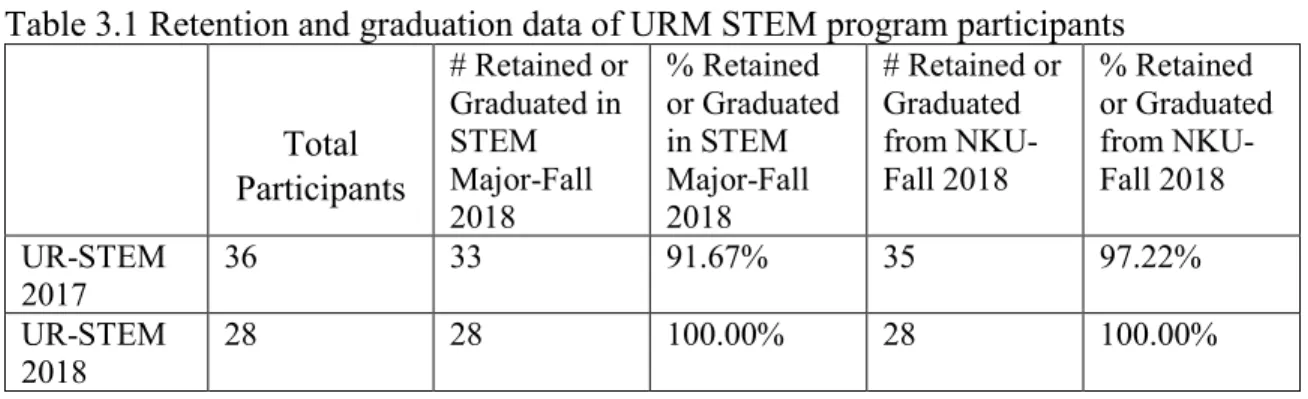
Over the last two years, UR STEM has shown promising results in retaining and graduating underrepresented students who participated within the program. In 2017, 33 (91.7 %) of the 36 participants retained or graduated in a STEM major by fall 2018 (see Table 1). To provide context, the fall 2017 cohort second fall retention rate for all STEM
34
majors who continued in a STEM track at NKU was 52%. These programmatic retention rates are exemplary and an exploratory analysis on how the program is able to retain such a high number of students in STEM is worthwhile.
UR STEM was the selected site program due to its focus on early participation in undergraduate research and emphasis on these experiences for underrepresented students in STEM. Furthermore, UR STEM is the university’s only formal undergraduate research program that targets underrepresented students across all STEM disciplines. Due to these programmatic features, UR STEM was selected for this case study.
Table 3.1 Retention and graduation data of URM STEM program participants Total Participants # Retained or Graduated in STEM Major-Fall 2018 % Retained or Graduated in STEM Major-Fall 2018 # Retained or Graduated from NKU-Fall 2018 % Retained or Graduated from NKU-Fall 2018 UR-STEM 2017 36 33 91.67% 35 97.22% UR-STEM 2018 28 28 100.00% 28 100.00% 3.2 Participant Selection
Purposeful sampling was utilized for this case study. The study was to include current and previous UR STEM student researchers, faculty researchers and program administrator of UR STEM. The objective was to get a representation of each
underrepresented student type, including first generation, financially disadvantaged, female, and underrepresented racially minoritized students. Student participants could represent one or more of these subcategories. The definition of first generation used within this study is adopted from the federal TRIO definition, which classifies any