Review
TRP channels interaction with lipids and its implications in disease☆
Francisco J. Taberner, Gregorio Fernández-Ballester, Asia Fernández-Carvajal
⁎
, Antonio Ferrer-Montiel
⁎
Instituto de Biología Molecular y Celular, Universidad Miguel Hernández, Alicante, Spaina b s t r a c t
a r t i c l e i n f o
Article history:
Received 18 December 2014
Received in revised form 21 March 2015 Accepted 23 March 2015
Available online 30 March 2015 Keywords: Neuronal signaling Nociception Membrane transduction Structure–function Channel gating Thermodynamics
Transient receptor potential (TRP) proteins are a family of ion channels central for sensory signaling. These recep-tors and, in particular, those involved in thermal sensing are also involved in pain signaling. Noteworthy, thermosensory receptors are polymodal ion channels that respond to both physical and chemical stimuli, thus integrating different environmental clues. In addition, their activity is modulated by algesic agents and lipidergic substances that are primarily released in pathological states. Lipids and lipid-like molecules have been found that can directly activate some thermosensory channels or modulate their activity by either potentiating or inhibiting it. To date, more than 50 endogenous lipids that can regulate TRP channel activity in sensory neurons have been described, thus representing the majority of known endogenous TRP channel modulators. Lipid modulators of TRP channels comprise lipids from a variety of metabolic pathways, including metabolites of the cyclooxygenase, lipoxygenase and cytochrome-P450 pathways, phospholipids and lysophospholipids. Therefore, TRP-channels are able to integrate and interpret incoming signals from the different metabolic lipid pathways. Taken together, the large number of lipids that can activate, sensitize or inhibit neuronal TRP-channels highlights the pivotal role of these molecules in sensory biology as well as in pain transduction and perception. This article is part of a Spe-cial Issue entitled: Lipid–protein interactions. Guest Editors: Amitabha Chattopadhyay and Jean-Marie Ruysschaert.
© 2015 Elsevier B.V. All rights reserved.
Contents
1. Introduction . . . 1818
2. Lipid metabolites as modulators of TRP channel function . . . 1819
3. Membrane micro-domains as modulators of TRP channels . . . 1821
4. Modulation of TRP channel function by phosphoinositides . . . 1821
5. TRP channels contain putative lipid binding sites . . . 1822
6. Outlook . . . 1824
Conflict of interest . . . 1824
Transparency document . . . 1824
Acknowledgments . . . 1825
References . . . 1825
1. Introduction
Survival of organisms critically depends on sensing environmental signals and transducing the information to the brain for proper re-sponse. For this purpose, the peripheral nervous system has specialized
neurons that contain the sensing molecular machinery, namely ion channels that respond to chemical and physical stimuli. An important family of sensory channels is the Transient Receptor Potential (TRP). These are non-selective cation channels, which are organized in six sub-families, namely Ankyrin (TRPA), Canonical (TRPC), Melastatin (TRPM), Mucolipin (TRPML), Polycistin (TRPP) and Vanilloid (TRPV)[1–4]. In sensory neurons, they contribute to a plethora of activities including thermal sensation, homeostasis of body temperature and pain[5,6]. In the central nervous system (CNS), TRP channels have been associated with neurogenesis, brain development and synaptic transmission
[7,8]. Moreover, TRPV1 and TRPA1 have also been related to immuni-ty, obesity and thermogenesis[9]. Therefore, it is not surprising that ☆ This article is part of a Special Issue entitled: Lipid–protein interactions. Guest Editors:
Amitabha Chattopadhyay and Jean-Marie Ruysschaert.
⁎ Corresponding authors at: Instituto de Biología Molecular y Celular, Universidad Miguel Hernández, Av. de la Universidad s/n, 03202 Elche (Alicante), Spain. Tel.: +34 966658727; fax: +34 966658758.
E-mail addresses:[email protected](A. Fernández-Carvajal),[email protected] (A. Ferrer-Montiel).
http://dx.doi.org/10.1016/j.bbamem.2015.03.022 0005-2736/© 2015 Elsevier B.V. All rights reserved.
Contents lists available atScienceDirect
Biochimica et Biophysica Acta
j o u r n a l h o m e p a g e : w w w . e l s e v i e r . c o m / l o c a t e / b b a m e mdysfunction of TRP channels is involved in the etiology of several diseases
[10].
Structurally, TRP channels are tetrameric assemblies of basic sub-units organized around a central aqueous pore. Akin to voltage-gated K+channels, each subunit is composed of a membrane region
contain-ing 6 transmembrane segments. The recent structural model derived from cryo-electron microscopic images has clearly shown this molecu-lar analogy[11]. TRP channels mainly differ in their cytosolic N- and C-terminal domains, which are involved in channel gating and mediat-ing intracellular signalmediat-ing. Indeed, most of TRP channels, if not all, are part of protein complexes known as signalplexes[12–14].
TRPs are activated by a myriad of physical and chemical stimuli such as temperature, pressure, voltage, irritant agents, inflammatory mole-cules, pH, osmolality changes, UVB radiation and a large list of natural chemical compounds[2,5,6,15–17]. TRP-evoked ionic currents are pivotal for the modulation of action potential in peripheral terminals, and to modify signaling pathways. Notably, TRP channel functionality is modulated by intracellular signaling pathways such as those mediat-ed by protein kinase C (PKC), protein kinase A (PKA) and phospholipase C (PLC)[6,18]. This interplay makes TRP channels highly dynamic signal integrators whose activity depends on the cellular context and state.
As integral membrane proteins, TRP channels are highly sensitive to the lipid environment, although studies in reconstituted controlled sys-tems are still scarce. Furthermore, some potent TRP agonists are lipids. The effect of lipids on TRP channels function has attracted the interest of the pharmaceutical industry and the academic research, as reflected by the number of research articles and reviews of thisfield[19–23].
A great variety of channels, including TRPs, is modulated by endog-enous and exogendog-enous lipids[21,24–29]. Cholesterol has been reported to potentiate or diminish the activity of ion channels [30]. Phos-phatidylinositol 4-5-bisphosphate (PIP2) is a special case since it mod-ulates the activity of many types of ion channels in a variety of modes
[31–33]. A notable interest is currently centered on understanding the structure–function relations for TRP–lipid interactions. Information on the functional and structural interactions between lipids and TRP chan-nels offers mechanistic insights into TRP-mediated cellular processes. Furthermore, such knowledge may shed light into pathological process-es, and the structural information may be utilized to pave the way to develop TRP channel modulators with therapeutic potential. The history of lipid studies in the TRPfield started in the late 1990s[34–36], and knowledge has thus far expanded to cover various aspects such as ligand binding, sensitivity shift, bilayer-protein interactions, and up-stream metabotropic signaling. However, it has not been established yet whether TRP–lipid interactions act as second messengers, intercel-lular transmitters, or function to simply transform the plasma mem-brane properties affecting channel protein structure.
To date, more than 50 endogenous lipids that can regulate TRP chan-nel activity in sensory neurons have been described, thus representing the majority of known endogenous TRP channel modulators (Fig. 1). Lipid modulators of TRP channels comprise lipids from a variety of metabolic pathways, including metabolites of the cyclooxygenase (COX), lipoxygenase (LOX) and cytochrome-P450 (CYP) pathways, phospholipids and lysophospholipids [37–40]. In addition, recent studies have identified lipid families previously not known to be connected to sensor signaling as modulators of TRP channels. These newly identified lipid modulators belong to hepoxilin A3[41], 9-(S)-hydroxyoctadecadienoic acid (9-(S)-HODE) and 13-(S)-HODE from the LOX-pathway[42,43], 5(6)-epoxy-8Z,11Z,14Z-eicosatrienoic acid (5,6-EET) from the CYP-pathway and 20-hydroxyeicasatetraenoic acid (20-HETE) anα-hydroxide of arachidonic acid (AA)[44,45], as well as the lysophosphatidic acid (LPA)[46]. Furthermore, molecules like the LOX-derivedω-3 lipid Resolvin D1 (RvD1) and Resolvin D2 (RvD2) act as endogenous inhibitors of TRPA1, TRPV1, TRPV3 and TRPV4[47], thus expanding the functionality of lipid-mediated TRP channel modu-lation. Therefore, TRP-channels are able to integrate and interpret incoming signals from the different metabolic lipid pathways. Taken
together, the large number of lipids that can activate, sensitize or inhibit neuronal TRP-channels highlights the pivotal role of these molecules in sensory biology as well as in pain transduction and perception. Here we review the current state of this exciting topic in classical thermoTRP biology, focusing on the structure-function data for TRP channels regulation by different lipid mediators such as lipid metabolites, phosphoinositides and components of lipid rafts. Novel thermosensory channels (TRPM2, TRPM3 and TRPM5) have been excluded because of yet limited data.
2. Lipid metabolites as modulators of TRP channel function Original efforts to deorphanize TRPV1 channels[63]suggested that endocannabinoids, such as anandamide, were TRPV1 agonists[35]. Later, N-arachidonoyl-dopamine (NADA) and the N-oleyl-dopamine (OLDA)[38,60]were also determined to be TRPV1 agonists. Lipidergic endovanilloids may bind to the intracellular receptor side like capsaicin but compelling evidence is yet lacking. Similarly, nonpsychoactive can-nabinoids such as cannabidiol and cannabinol have been described as TRPV2 agonists[64]. These results suggested that lipid metabolites may be critical modulators of TRP channel function.
Lipids from cell membranes can be metabolized by Phospholipase A2
(PLA2) which release free polyunsaturated fatty acids (PUFAs) and
lysophospholipids (LPLs) or by PLC that produce Diacylglycerol (DAG) and Inositol trisphosphate (IP3) (Fig. 2). PUFAs can be additionally
metabolized by COX, LOX and CYP enzymes given a plethora of lipids molecules able to modulate thermoTRP channels activity[65]. LPLs produced by PLA2are also able to regulate the activity of TRP channels.
For instance, LPA, increased upon tissue injury, activates TRPV1 through a direct mechanism by apparently interacting with the channel C termi-nus[46], indicating a key role of this lipid in pain transduction.
Other LPLs that have been shown to modulate TRP channels are lysophosphatidylcholine (LPC), lysophosphatidylinositol (LPI), and lysophosphatidylserine (LPS) that alter the thermal sensitivity of TRPM8, raising the temperature threshold toward normal body temper-ature. This positive modulation by LPLs provides a potential physiolog-ical mechanism for sensitizing and activating TRPM8 in the absence of temperature variations[56,66]. However, direct binding of these lipidergic metabolites to TRPM8 has not yet been demonstrated; and, LPLs may just affect the plasma membrane physico-chemical properties and thus indirectly influence channel gating.
LPC and LPI are also able to induce calcium influx via TRPV2 channel[67]. This activation, which involves Gq/Go-protein and phosphatidylinositol-3,4 kinase (PI3,4K) signaling, appears to be mainly due to TRPV2 translocation to the plasma membrane and is dependent on the length of the side-chain and the nature of the lysophospholipid head-group. A potential pathological role of TRPV2 activation by LPC and LPI has been suggested in prostate cancer as it increases cell migra-tion of the prostate cancer cell line PC3[67].
Diacylglycerol is a signaling molecule generated by Gq-coupled GPCR receptors. DAG activates TRPV1 in a membrane-delimited manner[59]. Multiple DAG analogues, 1-oleoyl-2-acetyl-snglycerol (OAG), 1-Stearyl-2-arachinonyl-sn-glycerol (SAG), and 1,2-dioctanoyl-sn-glycerol (DOG) have this capability but with different potencies
[59]. This activation is likely due to direct binding of the lipid to the channel because DAG downstream signaling such as DAG lipase and TRPV1 phosphorylation by DAG-activated protein kinase is not involved. More relevant, a TRPV1 mutant channel unable to bind capsaicin does not react with DAG. Diacylglycerol is also a TRPA1 activator and may contribute to the downstream mechanism of GPCR-induced pain[48].
Endogenous TRPV1 lipid ligands also include LOX metabolites such as (S)-hydroperoxyeicosa-5Z,8Z,10E,14Z-tetraeonic acid 12-(S)HPETE, 15-(S)HPETE and leukotriene B4 (LKB4)[36]. The signaling leading to LOX metabolites includes bradykinin (BK) stimulation of the B2 receptor and PLA2 activation[68]. BK-induced excitation of sensory neurons via TRPV1 has been proposed to involve mobilization
of arachidonic acid by PLA2and generation of 12-(S)HPETE[36,68]. LOX
also produces 9-HODE and 13-HODE from linoleic acid[42,43]. HODEs selectively act on TRPV1. This cascade seems to be initiated by noxious heat and contributes to heat sensitivity. Since HODEs are released during cell injury, their production could represent a mechanism for inflammatory hyperalgesia and mechanical allodynia[42,43].
In addition to LOX metabolites, pro-inflammatory lipidergic media-tors that affect TRPV1 activity include prostaglandins[69]. Their effect is mediated through different intracellular pathways, which culminate in the phosphorylation of the channel through PKC or PKA[70]. Further-more, prostaglandins like PGA1, PGA2, 8-iso-PGA2, 15-deoxy-PGJ2and
D12-PGJ2, formed by non-enzymatic dehydration of the respective PGs
(PGD2, PGE2and PGE1), are also TRPA1 ligands and directly gate the
channel to cause acute nociception[50,71,72]. Based on the recent evidence that TRPA1 antagonists alleviate visceral nociception, the blockade of cyclopentone prostaglandin formation may represent a novel avenue for therapeutic intervention in inflammatory visceral pain[72]. Other prostaglandins like PGE2 activate GPCRs leading to TRPV4 channel phosphorylation and activation[73].
CYP-derived endogenous signaling lipids, the epoxyeicosatrienoic acids (EETs) and epoxymetabolites of arachidonic acid, have also been identified to interact with thermosensory TRP channels. Lipids 5,6-EET and to a lesser extent 8,9-EET have been identified to directly activate TRPV4 in vascular endothelial cells, promoting vasorelaxation[74]. Moreover, at high concentrations (N10μM), 5,6-EET can activate TRPV4 in colonic afferents where it may cause visceral hyperalgesia
[75,76]. However, in lumbal DRG L4 and L5 neurons, 5,6-EET causes Ca2 +transients independently of TRPV4 and acts as an endogenous
TRPA1 activator. 5,6-EET is synthesized in dorsal root ganglia and the dorsal horn of the spinal cord during acute pain and causes mechanical hypersensitivity by activating TRPA1 on primary afferent terminals in the L4–L5 section of the dorsal horn[45]. Also, 8,9-EET is able to sensi-tize AITC-induced TRPA1 responses in DRG-neurons through still unknown mechanisms[45].
Nitrate fatty acids such as 9-nitroleic acid (OA-NO2) that are
gener-ated during inflammation by phospholipids and nitric oxide (NO) are other endogenous lipidergic TRPA1 and TRPV1 activators[54]. The ef-fect of OA-NO2on afferent neurons is initially excitatory; however,
prolonged exposure to OA-NO2may desensitize the TRPV1 and TRPA1
channels and, in turn, suppress nociceptive and inflammatory responses
[54]. It has been shown that subcutaneous injection of OA-NO2into a rat
hindpaw induced delayed and prolonged nociceptive behavior. These results raise the possibility that OA-NO2might be useful clinically to
re-duce neurogenic inflammation and certain types of painful sensations by desensitizing TRPA1 expressed in nociceptive afferents[77].
It is interesting that resolvins, the most potent endogenous lipid ligands described thus far, selectively inhibit the TRPV1 and TRPA1 gating. RvD2 and RvE1 inhibit the capsaicin-activated currents at IC50 values of 0.1 nM and 1 nM concentrations, respectively[47], and AITC-activated currents with IC50 values of 2 nM and 9 nM, respectively. These results suggest distinct roles of resolvins in regulating TRP chan-nels and identify RvD2 as a very potent endogenous inhibitor of inflammatory pain[47].
Another lipid that modulates thermosensory channels is the choles-terol intermediate lipid farnesyl pyrophosphate (FPP). This lipid is the sole known endogenous TRPV3 activator and made its effect via direct channel interaction. FPP has a strong potency and it produces a hyperalgesic effect in vivo[58]. FPP synthase is inhibited by nitrogen con-taining biphosphonates, which proved to be useful in certain types of bone cancer and neuropathic pain[80]. In contrast, RvD1 inhibits periph-erally expressed TRPV3 leading to a modality-specific antinociception. Thus, stimulating the endogenous production of RvD1 or the extraneous administration of it and even its possible synthetic analogues might help reverse TRPV3-mediated pain states[53]. Since TRPV3 has been implicat-ed in inflammatory pain[58]and skin disorders[81], manipulation of TRPV3 activity by FPP synthase blockers or RvD1 may be exploited for therapeutic purposes. Taken together, TRP channels have broad spectrum of chemoceptive sensitivity unlike the canonical ligand gated ion Fig. 1.Lipidergic metabolites that activate (blue) or inhibit (red) TRP channels. References:[48]for arachidonic acid and OAG (TRPA1);[49]for PGA1, PGA2 (TRPA1);[50]for nitrooleic acid (TRPA1);[51,52]for PIP2 (TRPA1);[45]for 5,6-EET (TRPA1);[53]for Resolvin D1 (TRPA1, TRPV3 and TRPV4);[47]for Resolvin D1, D2 and E1 (TRPA1, TRPV1);[54]for nitrooleic acid OA-NO2(TRPA1,TRPV1);[55]for PIP2 (TRPM8);[56]for LPC, LPI, LPS, docosahexaenoic acid (DHA), eicosapentaenoic acid (EPA) and arachidonic acid (AA) (TRPM8);[57]for 5,6-EET and 8,9-EET epoxyeicosatrienoic acids (TRPV4, TRPA1);[58]for FPP (TRPV3);[36]for 12(S)-HPETE, 15(S)-HPETE, 5(S)-HETE and leukotriene B4 (TRPV1);[35,36]for anandamide (TRPV1); [59]for OAG (1-oleoyl-2-acetyl-snglycerol), SAG (1-Stearyl-2-arachinonyl-sn-glycerol), and DOG (1,2-dioctanoyl-sn-glycerol) (TRPV1);[42,43]for13-HODE, 13-oxo-HODE, 9-HODE and 9-oxo-HODE (TRPV1);[60]for NADA and OLDA (TRPV1);[59]for OAG, (TRPV1);[61]for LPC (TRPV2);[62]for cannabinoids CB (TRPV2).
channels. This feature of TRP channels makes them the key transducer molecules to signal a wide range of stimuli from physiological to noxious stimuli.
3. Membrane micro-domains as modulators of TRP channels One of the most studied membrane micro-domains are lipid rafts which are domains rich in cholesterol, sphingomyelin and gangliosides that play an important role modulating the activity of ion channels as the nicotinic acetylcholine channel[82–86]. A similar central role has been reported for TRPM8 channels[29], whose activity is critically reg-ulated by lipid raft association. Menthol- and cold-mediated responses of TRPM8 were potentiated when the association of the channel with lipid rafts was prevented. In addition, lipid raft disruption shifted the threshold for TRPM8 activation to a warmer temperature[29].
Intriguingly, several studies conducted with TRPV1 have provided controversial results. Depletion of cholesterol, upon incubation with methylβ-cyclodextrin (MCD), did not change heat activation currents in TRPV1 expressed inXenopus laevisoocytes, while in dorsal root ganglion neurons the amplitude of capsaicin-activated currents was significantly reduced[87]. In contrast, it was reported that3(H)RTX
binding to TRPV1 receptors was not modulated by cholesterol depletion in rat C6 glioma cells[88]. However, disruption of lipid rafts by depleting any of its cardinal constituents, namely cholesterol, sphingomyelin or gangliosides by pharmacological tools blocked TRPV1 gating by various agonists[89]. Inhibition of Ca2+responses occurred when cholesterol
was depleted by MCD[87,90], or when extracellular sphingomyelin molecules were broken down by sphingomyelinase[91], and also when the cells were incubated with D-PDMP or myriocin which reduce the biosynthesis of gangliosides by inhibiting ceramide glucosylation
[92]. However, capsaicin-induced TRPV1 single channel currents in HEK293-transfected cells were not changed after cholesterol depletion, but diminished with cholesterol addition. R579D and F758Q substitu-tions in the S5 helix of TRPV1 reduced this cholesterol inhibitory effect
[93]. Thus, the role of hydrophobic interactions in drug/agonist binding to the TRP channel/lipid raft interface might be more important in drug action than it has previously been taken into account[29,89,94].
Apart from lipid rafts, the influence of other membrane micro-domains has not been described. Similarly, whether lipidic metabolites exert part of their modulating TRP activity by creating such micro-domains in the membrane is yet elusive, but very exciting notion.
4. Modulation of TRP channel function by phosphoinositides The most studied lipid modulator of TRP channel activity is phosphoinositides, which appear to be a master regulator of this family of ion channels. The regulatory role of phosphoinositides on ion chan-nels wasfirst demonstrated by the PI(4,5)P2 requirement of the cardiac KATPchannels[95]. Subsequent publications indicated that members of
inwardly-rectifying and voltage-gated K+and voltage-gated Ca2 +
channel families were also regulated by PI(4,5)P2 (see[19,96]). TRP channels are also subjected to phosphoinositide regulation. This regula-tion could be by direct binding or by indirect mechanisms involving interacting proteins whose function depends on PIP2 binding. A good example of that is the Erzin-PIP2 interaction that strengthens actin binding to the cellular membrane and modulates cell adhesion and morphology[97]. Similarly, it has been proposed that the membrane protein Pirt can modulate TRPV1 activity trough a PIP2-dependent mechanism[52]. This mode of regulation has not been intensively Fig. 2.Lipid metabolites implicated in TRP channel modulation. Abbreviations: Phospholipase C (PLC), phospholipase A (PLA2), iPLA2: Ca2+
insensible, cPLA2: citosolic, cytochrome P450 (CYP), cyclooxygenases (COX), lipoxygenases (LOX), HETEs: hydroxyeicosatetraenoic acids, EETs: epoxyeicosatrienoic acids, OLAMs: oxidized linoleic acid metabolites, leukotriene (LK), resolvin (Rsv) prostaglandins (PG), N-arachidonoyldopamine (NADA), N-oleoyldopamine (OLDA).
studied. Therefore, it is plausible that future studies unveil new indirect PIP2-mediated modulators of TRP channels.
The direct effect of PI(4,5)P2 on channel activity has been well characterized for TRPM8. Menthol-evoked currents in TRPM8 inside-out patch clamp recordings run down as consequence of the phospha-tases that eliminate PI(4,5)P2. Similarly, sequestering membrane PIP2 with polylysin or anti-PI(4,5)P2 antibody inactivates the channel[55, 98]. In cells, the inactivation of TRPM8 by the rapamycin-induced 5′ phosphatase or withCiona intestinalisVoltage Sensitive Phosphatase (ciVSP) further support that membrane PIP2 depletion inactivates TRPM8[99,100]. Conversely, recovering PI(4,5)P2 levels with the short acyl chain counterpart diC8-PIP2 or by stimulating the conversion of PI(4)P into PI(4,5)P2 with MgATP, recovers the activity of the cold re-ceptor in excised patches[55,98,100]. In terms of specificity thefinding that TRPM8 activity in excised patches or in artificial bilayers is not sup-ported by PI(4)P, PI(3,5)P2 or PI(3,4,5) underscores a strict requirement for PI(4,5)P2[101,102]. The requirement of PIP2 for channels activity has also been reported for TRPM4, TRPM5, TRPM6, TRPM7 and TRPV5
[55,103–107].
The scenario reported for TRPV1 is markedly different. In this case the hydrolysis of PI(4,5)P2 favors channel function by relieving tonic channel inhibition or by the action of the generated second messengers
[24,108,109]. However, recent findings on TRPV1 underscore that besides its inhibitory role, PI(4,5)P2 is also a necessary cofactor for channel activation. PI(4,5)P2 and PI(4)P enhance the activity of TRPV1
[110–113]and its depletion decrease channel activity[25,111,114]. Furthermore, rundown of PIP2 is determinant for desensitization upon prolonged exposure to an activating stimulus[25,110,115]. At variance with TRPM8, TRPV1 channel activity can be supported, although at a lower extent, by PI(4)P, PI(3,4)P2 and PIP(3,4,5)P3 and other phospho-lipids such as phosphatidylglycerol[26,110]. Negative charged lipids such as oleolyl-CoA or 1,2-dioleoyl-sn -glycero-3-((N-(5-amino-1-carboxypentyl)iminodiacetic acid)succinyl) (DGS-NTA) can also hold TRPV1 function as well, implying a low selectivity of TRPV1 in phosphoinositide binding[26]. Noteworthy, the dependence of the TRP channel function on specific phosphoinositides offers new layers of regulation. First, it imposes a temporal constrain to the channel response such that a sustained signal can be easily terminated. And, second, the different content on phosphoinositides of the subcellular membranes spatially restricts the channel activity to the specific membranes or membrane regions[96].
Virtually any stretch of positive residues can interact with PI(4,5)P2. Several of such sequences can be found in almost all TRP channels but not all of them mediate PIP2 regulation. Functionally relevant binding sites have been characterized by combining molecular biology tech-niques such as site directed mutagenesis with patch clamp recordings. In TRPM8, positively charged amino acids in the TRPbox, a 6-mer conserved domain in the C-terminus near the internal channel gate, mediate PIP2 effect. When K995, R998 and R1008 are mutated, the sensitivity for PI(4,5)P2 decreases accompanied with channel blockade by PIP2 depletion[55]. Mutations in the N-end of the C-terminus, the so-called TRP domain, also affect the sensitivity for PIP2 in TRPM5, TRPV1 and TRPV5[55,116,117]. However, they have little effect, if any, on TRPM4 suggesting the existence of other PIP2 binding sites for channel modulation. Indeed, TRPM4–PIP2 interacting region is located in the PH-like domain at the distal C-terminus of the channel[103].
A group of positive residues downstream the TRPbox of TRPV1 and TRPV2 has been shown to interact with PIP2, implying that it may be shared by other TRP channels and serve as a general regulatory region in this family of ion channels[112]. It is also worth mentioning that not all PIP2 binding sites reside in the C-terminus of the channel. A case in point is TRPV4 who has the PIP2 biding site in the cytosolic N-terminus. It has been proposed that PIP2 binding in TRPV4 favors the conformational rearrangements that lead to the activation of the channel by hypotonicity and heat[118].
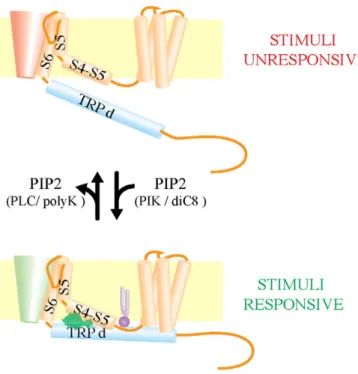
Structure–function studies pinpoint to the TRP domain as a pivotal region for channel gating and PIP2 modulation as it contains residues central for PIP2 binding[119–122]. The functional relevance of this domain has been further substantiated by its conformation in the proposed high resolution TRPV1 structural model[11]. Recent studies have further demonstrated the importance of the TRP domain on allo-steric channel activation. Mutations targeting W697 in the TRP box of TRPV1 resulted in a complete loss of voltage sensitivity while retaining capsaicin response[121]. Interestingly, the W697 is interacting with S4–S5 loop considered central for voltage sensing[11,121]. In TRPM8, mutations Y981E and Y981K destabilized the gate resulting in constitu-tive channel opening[122]. Interestingly, subsequent mutations on the S6-TRP box linker restored the regulated activity mainly by re-establishing coupling of stimuli sensing and pore opening. Mutations in the TRP domain with greater functional impact reside at the predicted interaction interface between the TRP helix and the loop S4–S5[122], suggesting that the TRP helix/S4–S5 loop interaction is central for trans-mitting different stimuli to the gate. Remarkably, these regions have also intense PIP2 contacts with residues in the S4–S5 loop such as those suggested for TRPV1[116,117]. Thus, PIP2 binding can strengthen the TRP helix/S4–S5 loop interaction favoring coupling of the putative voltage sensor and the channel pore. Noteworthy, S4–S5 loop/PIP2 con-tacts have been shown to control the pore opening in Kv channels[123]. Taking together, it is tempting to propose that by tethering the TRP domain to the membrane, PIP2 promotes and strengthens the TRP helix/S4–S5 loop interaction setting the structural framework for the allosteric regulation of channel gating (Fig. 3).
5. TRP channels contain putative lipid binding sites
A central question arises: are there binding sites for lipids in TRP channels? Can the channel structure reveal specific lipid docking sites? Although it has been reported that lipids modulated the channel activity of TRP channels, there is no information regarding the presence of lipid binding sites in the receptor. This limitation likely arises from
Fig. 3.Possible action of PIP2 on TRP channels. PIP2 binding close to the channel pore allows the interactions of the S4–S5 linker with the TRP domain. Variations of PIP2 levels regulate channels responsiveness by uncoupling the sensing domains from the channel gate. The drawing represents a single subunit of the tetramer. The pivotal regions for stim-uli coupling are named in the picture. The S4–S5 loop (S4–S5)/TRP domain (TRPd) inter-actions are represented by a green cloud and the PIP2 moiety is colored in purple.
scarce high-resolution structural information available on TRP channels, which is restricted to the cytosolic ankyrin domains and peptides from the C-terminal. The Ankyrin-repeat domain (ARD) from the cytoplasmic N-terminus of different TRP channels has been characterized by X-ray crystallography unraveling binding sites for regulatory molecules
[124–128]. At variance, obtaining structures for the full-length channel is cumbersome as these proteins are hard to crystallize and the crystals diffract poorly. Alternatively, electron cryo-microscopy structures of full-length TRPV1, TRPV2, TRPV4 and TRPA1 have disclosed the molec-ular architecture and subunit organization[127,129–131], although at a low resolution (13.6 Å at most). Recently, however, a breakthrough in TRP channel structure was reached. Using single particle electron cryo-microscopy, a 3.4 Å structural model of TRPV1 lacking the distal part of the C-terminus was reported for the closed and open states
[11,132]. Unfortunately, none of these structures were determined in complex with lipids.
Thus, to uncover putative lipid binding sites on TRP channels, we used the structural information available for other ion channels. Hence, we superposed the TRPV1 EM structural model on representa-tive Kv, Nav and Cav ion channels structures obtained in complex with lipids. Then, the lipids were transferred to the TRPV1 structural model to determine whether the TRP channel exhibited similar binding sites. Small clashes between lipid fragments and TRPV1 residues were removed by molecular steepest descent minimization.
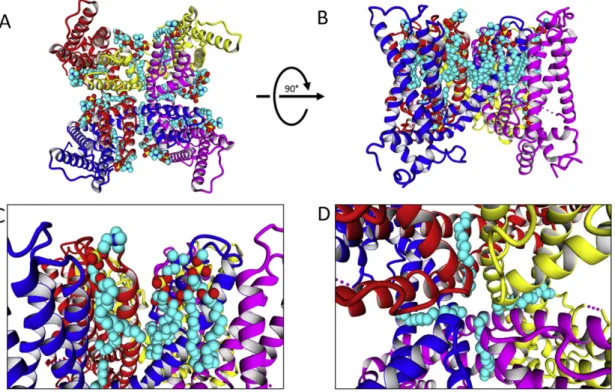
Fig. 4shows different views of the TRPV1 channel with lipids trans-ferred from the Kv1.2/Kv2.1 (paddle-chimera) Kv channel (code 2R9R)
[133]. A top view of TRPV1 in complex with transferred lipids (Fig. 4A) shows a similar arrangement of annular and non-annular lipid around the channel, denser in the outer leaflet (Fig. 4B). Annular lipidsfit well on TRPV1 in both leaflets. In the inner leaflet two phospholipidergic fragments are in deep contact with the S4–S5 linker (Fig. 4C), a region of the channel that couples voltage-sensor domain and the pore for channel gating [134–136]. TRPV1 conformation is compatible with two phospholipids, one is in deep intrasubunit contacts with the S4–S5 linker (Fig. 4C, left), the TRP domain and the S1–S4 domain. The other interaction is mediated by inter-subunit contacts with S5 and the beginning of S4–S5 linker (Fig. 4C, right). The polar head group of
both phospholipids resides at different depths in the membrane, which has been related to the perturbation that protein exerts on the membrane at lipid–protein interface[133]. This unusual position for a phospholipid is related to specific favorable contacts with the protein, probably influencing its structure and function[137].
PIP2 has been described as a special case since it modulates the activity of many types of ion channels in a variety of modes[31–33], including TRPV1[116,117]. The current understanding of the structural requirements for PIP2 binding comes from potassium inward rectifying channels. The crystal structure of Kir2.2 shows that the phosphoinositide binds at the interface between the transmembrane domain and the C-terminal domain. A closer look at the binding site discloses hints for PIP2 interaction: the acyl chains are accommodated by hydrophobic sur-faces of the transmembrane region and the negative charged phosphate interact with positively R and K residues in tether helix[138]. Brauchi et al.[116]hypothesized that the polar head group of PIP2 could contact with the TRP domain through basic residues (R701 and K710), and the acyl chain could mediate the interaction between two adjacent subunits. In the model, the location of the PIP2 head group is compatible with the interaction with R701 (and probably with K710) in the TRP domain, and with R575 in the S4–S5 linker.
Fig. 5depicts TRPV1 channel in complex with lipids transferred from a Cav ion channel (code 4MS2). Non-annular lipids alsofit well on TRPV1 intersubunit spaces, as observed for lipids transferred from Kv channels (Fig. 4). A detailed view of the outer leaflet indicates that non-annular lipids occupy three kinds of intersubunit grooves, includ-ing regions between S1–S4 (blue chain) and pore (red chain), interpore (red and blue chains), and between pore (blue chain) and the S1–S4 (magenta chain) domains (Fig. 5C). Polar head groups appear to interact with proximal basic residues such as K535, K603, K656, and R534, while acyl chains appear to occupy hydrophobic clefts at the transmembrane level. The most noticeable feature of the TRPV1 in complex with lipids is that TRPV1 conformation is also compatible with lateral pore fenestra-tions observed for Nav and Cav channels[139–141]. These lateral portals revealed a hydrophobic access pathway to the central cavity (Fig. 5D), which could explain the effect observed for some general and local anesthetics, which has been shown to activate different TRP Fig. 4.TRPV1 in complex with lipids transferred from Kv1.2/Kv2.1 potassium channel. A. Extracellular view of the TRPV1 showing annular and non-annular lipids. Protein chains are represented in ribbon and color blue, red, yellow and magenta. Lipids in ball representation, with carbon and oxygen colored cyan and red, respectively. B. Side view of TRPV1 showing the transmembraneα-helices and the inner and outer membrane leaflets. C. Detail of non-annular lipid involved in intrasubunit interactions, putatively assigned to PIP2 binding site. D. Detail of other non-annular lipids in the inner and outer membrane leaflets.
channels[142,143]. The size of the portal cavities in different ion channels has been related to the different-sized drugs or hydrophobic molecules gaining access to the central cavity during different stages of pore gating[140]. In the case of TRPV1, superposition with Cav and Nav channels denoted a shorter cavity (4 × 4 Å in TRPV1 vs 8 × 10 Å in Nav) due to a displacement of the selectivityfilter and pore-helix that reduces the portal entrance to the inner cavity. Consequently, this lipid binding site could be restricted in TRPV1 to acyl chain-like mole-cules rather than to di-acylated molemole-cules such as phospholipids, or other higher size hydrophobic molecules. Furthermore, the portal entering is very close to the vanilloid binding site, as described for cap-saicin and resiniferatoxin in TRPV1[132]. In addition, the intersubunit region connecting S5 from one subunit and the beginning of S4–S5 from the adjacent subunit is compatible with the proposed docking-generated model for cholesterol binding[28], since transference of lipids to TRPV1 locates phospholipids (Fig. 4C) or acyl chains in this position. Taken together, these observations indicate that, at least in TRPV1 channels, there are well-defined binding sites for lipids, suggest-ing a critical role of these molecules in TRPV1 gatsuggest-ing. In addition, the modeled structures indicate that TRPV1 channels may accommodate a variety for lipid molecules, thus augmenting the modulatory mecha-nisms of channel gating. These observations for TRPV1 may be also extended to other TRP channels, as the transmembrane region is quite conserved within the TRP channel superfamily.
6. Outlook
Sensory TRP ion channels are crucial molecular components of pain transduction. Identification of their natural ligands has provided insights into the molecular basis of peripheral pain. Coincidently, lipid-derived substances are emerging as important biological media-tors. The diversity of endogenous lipids as modulators for sensory TRP-channels demonstrates the complexity of lipid signaling in noci-ceptive processing. Studies on the modulation of TRP channel function by lipidergic endogenous agents have contributed to our understanding
of the interaction between sensory nerves and diseased or damaged tissues, which is central in the generation and maintenance of pain. However, there are still many unsolved issues. Matching clinical pain types with TRP subtypes remains a challenge, particularly outside of TRPV1. For example, the role of TRPV2, a noxious heat receptor, to pain generation remains elusive. Its lipid interaction is also unclear. In addition, better information on the ligand binding site (amino acids) is needed to establish the pharmacological rationale for optimizing synthetic therapeutic agents targeting TRPs. Future studies are needed to systematically identify the physiological role for each lipid group in pain perception by lipidomic approaches.
Unveiling the lipidergic structures that modulate TRP function may allow for novel lead compound synthesis for analgesics aimed at TRPs. As lipids participate in other biological phenomena including infl amma-tion, it is possible to pursue the development of multi-target drugs. De-pending on TRP expressing sites and their differential functionalities, other beneficial effects in different disciplines such as dermatology or cardiovascular physiology can be also envisioned. The advantage of using potent lipid modulators of TRPs, such as resolvins, for the treat-ment of inflammatory pain over conventional NSAIDs is that they can resolve inflammation and pain by restoring cellular/tissue homeostasis using endogenous signaling pathways. Collectively, an expansion of our knowledge on lipidergic ligands and the molecular nature of their inter-actions with sensory TRP channels will improve our understanding of peripheral pain mechanisms and contribute to clinical intervention for associated diseases.
Conflict of interest
The authors declare no conflict of interest. Transparency document
TheTransparency documentassociated with this article can be found, in the online version.
Fig. 5.TRPV1 in complex with lipids transferred from a Cav channel. A. Extracellular view of the TRPV1 showing lipids derived from the crystal (code 4MS2). Representation similar with Fig. 4. B. Side view of TRPV1 showing the transmembraneα-helices and the lipids fragments, mainly located in the outer leaflets. C. Detail of annular lipid involved in intersubunit inter-actions in hydrophobic clefts of three protein subunits (blue, red and magenta). D. Detail of the hydrophobic portals connecting the membrane and the central pore cavity, as observed for closed Nav and Cav channels.
Acknowledgments
This work has been supported by grants from the Spanish Ministerio de Economía y Competitividad (MINECO) (BFU2012-39092-C02-01) to AFM and, the CONSOLIDER-INGENIO 2010 Program (CSD2008-00005 to AFM), and the Generalitat Valenciana PROMETEO/2014/011 and ISIC/ 2012/009 to AFM.
References
[1] D.E. Clapham, L.W. Runnels, C. Strübing, The trp ion channel family, Nat. Rev. Neurosci. 2 (2001) 387–396.
[2] D.E. Clapham, TRP channels as cellular sensors, Nature 426 (2003) 517–524. [3] K. Venkatachalam, C. Montell, TRP channels, Annu. Rev. Biochem. 76 (2007)
387–417.
[4] V. Flockerzi, B. Nilius, TRPs: Truly Remarkable Proteins, in: B. Nilius, V. Flockerzi (Eds.),Mammalian Transient Receptor Potential (TRP) Cation Channels, vol. 222, Springer, Berlin, Heidelberg 2014, pp. 1–12.
[5] A.I. Basbaum, D.M. Bautista, G. Scherrer, D. Julius, Cellular and molecular mecha-nisms of pain, Cell 139 (2009) 267–284.
[6] D. Julius, TRP channels and pain, Annu. Rev. Cell Dev. Biol. 29 (2013) 355–384. [7] R. Vennekens, A. Menigoz, B. Nilius, TRPs in the Brain, in: B. Nilius, S.G. Amara, T.
Gudermann, R. Jahn, R. Lill, S. Offermanns, O.H. Petersen (Eds.),Reviews of Physiol-ogy, Biochemistry and PharmacolPhysiol-ogy, vol. 163, Springer, Berlin, Heidelberg 2012, pp. 27–64.
[8] M.B. Morelli, C. Amantini, S. Liberati, M. Santoni, M. Nabissi, TRP channels: new potential therapeutic approaches in CNS neuropathies, CNS Neurol. Disord. Drug Targets 12 (2013) 274–293.
[9] E. Fernandes, M. Fernandes, J. Keeble, The functions of TRPA1 and TRPV1: moving away from sensory nerves: TRPA1 and TRPV1: moving away from sensory nerves, Br. J. Pharmacol. 166 (2012) 510–521.
[10] B. Nilius, TRP channels in disease, Biochim. Biophys. Acta (BBA)—Mol. Basis Dis. 1772 (2007) 805–812.
[11] M. Liao, E. Cao, D. Julius, Y. Cheng, Structure of the TRPV1 ion channel determined by electron cryo-microscopy, Nature 504 (2013) 107–112.
[12] A. Ferrer-Montiel, A. Fernandez-Carvajal, R. Planells-Cases, G. Fernandez-Ballester, J.M. Gonzalez-Ros, A. Messeguer, R. Gonzalez-Muniz, Advances in modulating thermosensory TRP channels, Expert Opin. Ther. Pat. 22 (2012) 999–1017. [13] A. Fernandez-Carvajal, G. Fernandez-Ballester, I. Devesa, J.M. Gonzalez-Ros, A.
Ferrer-Montiel, New strategies to develop novel pain therapies: addressing thermoreceptors from different points of view, Pharmaceuticals 5 (2011) 16–48. [14] I. Devesa, R. Planells-Cases, G. Fernandez-Ballester, J.M. Gonzalez-Ros, A.
Ferrer-Montiel, A. Fernandez-Carvajal, Role of the transient receptor potential vanilloid 1 in inflammation and sepsis, J. Inflamm. Res. 4 (2011) 67–81.
[15] K. Talavera, B. Nilius, T. Voets, Neuronal TRP channels: thermometers, pathfinders and life-savers, Trends Neurosci. 31 (2008) 287–295.
[16] R. Strotmann, C. Harteneck, K. Nunnenmacher, G. Schultz, T.D. Plant, OTRPC4, a nonselective cation channel that confers sensitivity to extracellular osmolarity, Nat. Cell Biol. 2 (2000) 695–702.
[17] C. Moore, F. Cevikbas, H.A. Pasolli, Y. Chen, W. Kong, C. Kempkes, P. Parekh, S.H. Lee, N.-A. Kontchou, I. Yeh, N.M. Jokerst, E. Fuchs, M. Steinhoff, W.B. Liedtke, UVB radiation generates sunburn pain and affects skin by activating epidermal TRPV4 ion channels and triggering endothelin-1 signaling, Proc. Natl. Acad. Sci. 110 (2013) E3225–E3234.
[18] D. Julius, J. Nathans, Signaling by Sensory Receptors, Cold Spring Harb. Perspect. Biol. 4 (2012) (a005991-a005991).
[19] T. Rohacs, Phosphoinositide Regulation of TRP Channels, in: B. Nilius, V. Flockerzi (Eds.),Mammalian Transient Receptor Potential (TRP) Cation Channels, vol. 223, Springer International Publishing, Cham 2014, pp. 1143–1176.
[20] M. Sisignano, D.L.H. Bennett, G. Geisslinger, K. Scholich, TRP-channels as key inte-grators of lipid pathways in nociceptive neurons, Prog. Lipid Res. 53 (2014) 93–107. [21] S. Yoo, J. Lim, S. Hwang, Sensory TRP channel interactions with endogenous lipids
and their biological outcomes, Molecules 19 (2014) 4708–4744.
[22] Y. Yu, C.R.J. Carter, N. Youssef, J.R.B. Dyck, P.E. Light, Intracellular long-chain acyl CoAs activate TRPV1 channels, PLoS One 9 (2014) e96597.
[23] S.-I. Choi, S. Yoo, J. Lim, S. Hwang, Are sensory TRP channels biological alarms for lipid peroxidation? Int. J. Mol. Sci. 15 (2014) 16430–16457.
[24] E. Cao, J.F. Cordero-Morales, B. Liu, F. Qin, D. Julius, TRPV1 channels are intrinsically heat sensitive and negatively regulated by phosphoinositide lipids, Neuron 77 (2013) 667–679.
[25] V. Lukacs, Y. Yudin, G.R. Hammond, E. Sharma, K. Fukami, T. Rohacs, Distinctive changes in plasma membrane phosphoinositides underlie differential regulation of TRPV1 in nociceptive neurons, J. Neurosci. 33 (2013) 11451–11463. [26] V. Lukacs, J.M. Rives, X. Sun, E. Zakharian, T. Rohacs, Promiscuous activation of
transient receptor potential vanilloid 1 (TRPV1) channels by negatively charged intracellular lipids: the key role of endogenous phosphoinositides in maintaining channel activity, J. Biol. Chem. 288 (2013) 35003–35013.
[27] S.L. Morales-Lazaro, B. Serrano-Flores, I. Llorente, E. Hernandez-Garcia, R. Gonzalez-Ramirez, S. Banerjee, D. Miller, V. Gududuru, J. Fells, D. Norman, G. Tigyi, D. Escalante-Alcalde, T. Rosenbaum, Structural determinants of the transient receptor potential 1 (TRPV1) channel activation by phospholipid analogs, J. Biol. Chem. 289 (2014) 24079–24090.
[28] S.L. Morales-Lazaro, S.A. Simon, T. Rosenbaum, The role of endogenous molecules in modulating pain through transient receptor potential vanilloid 1 (TRPV1), J. Physiol. 591 (2013) 3109–3121.
[29] C. Morenilla-Palao, M. Pertusa, V. Meseguer, H. Cabedo, F. Viana, Lipid raft segrega-tion modulates TRPM8 channel activity, J. Biol. Chem. 284 (2009) 9215–9224. [30] A.M. Dopico, A.N. Bukiya, A.K. Singh, Large conductance, calcium- and
voltage-gated potassium (BK) channels: regulation by cholesterol, Pharmacol. Ther. 135 (2012) 133–150.
[31] T. Balla, Phosphoinositides: tiny lipids with giant impact on cell regulation, Physiol. Rev. 93 (2013) 1019–1137.
[32] F.S. Choveau, F. Abderemane-Ali, F.C. Coyan, Z. Es-Salah-Lamoureux, I. Baro, G. Loussouarn, Opposite effects of the S4–S5 Linker and PIP(2) on voltage-gated channel function: KCNQ1/KCNE1 and other channels, Front. Pharmacol. 3 (2012) 125.
[33]D.W. Hilgemann, S. Feng, C. Nasuhoglu, The complex and intriguing lives of PIP2 with ion channels and transporters, Sci. STKE 2001 (2001) re19.
[34] S. Chyb, P. Raghu, R.C. Hardie, Polyunsaturated fatty acids activate the Drosophila light-sensitive channels TRP and TRPL, Nature 397 (1999) 255–259.
[35] P.M. Zygmunt, J. Petersson, D.A. Andersson, H. Chuang, M. Sorgard, M.V. Di, D. Julius, E.D. Hogestatt, Vanilloid receptors on sensory nerves mediate the vasodilator action of anandamide, Nature 400 (1999) 452–457.
[36] S.W. Hwang, H. Cho, J. Kwak, S.Y. Lee, C.J. Kang, J. Jung, S. Cho, K.H. Min, Y.G. Suh, D. Kim, U. Oh, Direct activation of capsaicin receptors by products of lipoxygenases: endogenous capsaicin-like substances, Proc. Natl. Acad. Sci. U. S. A. 97 (2000) 6155–6160.
[37] A. Szallasi, P.M. Blumberg, Complex Regulation of TRPV1 by Vanilloids, 2007. [38] S.M. Huang, T. Bisogno, M. Trevisani, A. Al-Hayani, P.L. De, F. Fezza, M. Tognetto, T.J.
Petros, J.F. Krey, C.J. Chu, J.D. Miller, S.N. Davies, P. Geppetti, J.M. Walker, M.V. Di, An endogenous capsaicin-like substance with high potency at recombinant and native vanilloid VR1 receptors 127, Proc. Natl. Acad. Sci. U. S. A. 99 (2002) 8400–8405.
[39] P.L. De, M.V. Di, Lipids as regulators of the activity of transient receptor potential type V1 (TRPV1) channels, Life Sci. 77 (2005) 1651–1666.
[40] S. Bang, S. Yoo, U. Oh, S.W. Hwang, Endogenous lipid-derived ligands for sensory TRP ion channels and their pain modulation, Arch. Pharm. Res. 33 (2010) 1509–1520.
[41] A.M. Gregus, S. Doolen, D.S. Dumlao, M.W. Buczynski, T. Takasusuki, B.L. Fitzsimmons, X.Y. Hua, B.K. Taylor, E.A. Dennis, T.L. Yaksh, Spinal 12-lipoxygenase-derived hepoxilin A3 contributes to inflammatory hyperalgesia via activation of TRPV1 and TRPA1 receptors, Proc. Natl. Acad. Sci. U. S. A. 109 (2012) 6721–6726. [42] A.M. Patwardhan, A.N. Akopian, N.B. Ruparel, A. Diogenes, S.T. Weintraub, C.
Uhlson, R.C. Murphy, K.M. Hargreaves, Heat generates oxidized linoleic acid metabolites that activate TRPV1 and produce pain in rodents, J. Clin. Invest. 120 (2010) 1617–1626.
[43] A.M. Patwardhan, P.E. Scotland, A.N. Akopian, K.M. Hargreaves, Activation of TRPV1 in the spinal cord by oxidized linoleic acid metabolites contributes to inflammatory hyperalgesia, Proc. Natl. Acad. Sci. U. S. A. 106 (2009) 18820–18824.
[44] H. Wen, J. Ostman, K.J. Bubb, C. Panayiotou, J.V. Priestley, M.D. Baker, A. Ahluwalia, 20-Hydroxyeicosatetraenoic acid (20-HETE) is a novel activator of transient receptor potential vanilloid 1 (TRPV1) channel, J. Biol. Chem. 287 (2012) 13868–13876.
[45] M. Sisignano, C.K. Park, C. Angioni, D.D. Zhang, C. von H., E.J. Cobos, N. Ghasemlou, Z.Z. Xu, V. Kumaran, R. Lu, A. Grant, M.J. Fischer, A. Schmidtko, P. Reeh, R.R. Ji, C.J. Woolf, G. Geisslinger, K. Scholich, C. Brenneis, 5,6-EET is released upon neuronal activity and induces mechanical pain hypersensitivity via TRPA1 on central afferent terminals, J. Neurosci. 32 (2012) 6364–6372.
[46] A. Nieto-Posadas, G. Picazo-Juarez, I. Llorente, A. Jara-Oseguera, S. Morales-Lazaro, D. Escalante-Alcalde, L.D. Islas, T. Rosenbaum, Lysophosphatidic acid directly acti-vates TRPV1 through a C-terminal binding site 108, Nat. Chem. Biol. 8 (2012) 78–85.
[47] C.K. Park, Z.Z. Xu, T. Liu, N. Lu, C.N. Serhan, R.R. Ji, Resolvin D2 is a potent endoge-nous inhibitor for transient receptor potential subtype V1/A1, inflammatory pain, and spinal cord synaptic plasticity in mice: distinct roles of Resolvin D1, D2, and E1, J. Neurosci. 31 (2011) 18433–18438.
[48] M. Bandell, G.M. Story, S.W. Hwang, V. Viswanath, S.R. Eid, M.J. Petrus, T.J. Earley, A. Patapoutian, Noxious cold ion channel TRPA1 is activated by pungent compounds and bradykinin, Neuron 41 (2004) 849–857.
[49] S. Materazzi, R. Nassini, E. Andre, B. Campi, S. Amadesi, M. Trevisani, N.W. Bunnett, R. Patacchini, P. Geppetti, Cox-dependent fatty acid metabolites cause pain through activation of the irritant receptor TRPA1, Proc. Natl. Acad. Sci. U. S. A. 105 (2008) 12045–12050.
[50] T.E. Taylor-Clark, S. Ghatta, W. Bettner, B.J. Undem, Nitrooleic acid, an endogenous product of nitrative stress, activates nociceptive sensory nerves via the direct activation of TRPA1, Mol. Pharmacol. 75 (2009) 820–829.
[51] Y. Dai, S. Wang, M. Tominaga, S. Yamamoto, T. Fukuoka, T. Higashi, K. Kobayashi, K. Obata, H. Yamanaka, K. Noguchi, Sensitization of TRPA1 by PAR2 contributes to the sensation of inflammatory pain, J. Clin. Invest. 117 (2007) 1979–1987. [52] A.Y. Kim, Z. Tang, Q. Liu, K.N. Patel, D. Maag, Y. Geng, X. Dong, Pirt, a
phosphoinositide-binding protein, functions as a regulatory subunit of TRPV1, Cell 133 (2008) 475–485.
[53] S. Bang, S. Yoo, T.J. Yang, H. Cho, Y.G. Kim, S.W. Hwang, Resolvin D1 attenuates activation of sensory transient receptor potential channels leading to multiple anti-nociception, Br. J. Pharmacol. 161 (2010) 707–720.
[54] A. Sculptoreanu, F.A. Kullmann, D.E. Artim, F.A. Bazley, F. Schopfer, S. Woodcock, B.A. Freeman, W.C. de Groat, Nitro-oleic acid inhibitsfiring and activates T, J. Pharmacol. Exp. Ther. 333 (2010) 883–895.
[55] T. Rohács, C.M.B. Lopes, I. Michailidis, D.E. Logothetis, PI(4,5)P2 regulates the activation and desensitization of TRPM8 channels through the TRP domain, Nat. Neurosci. 8 (2005) 626–634.
[56] D.A. Andersson, M. Nash, S. Bevan, Modulation of the cold-activated channel TRPM8 by lysophospholipids and polyunsaturated fatty acids, J. Neurosci. 27 (2007) 3347–3355.
[57]H. Watanabe, J. Vriens, J. Prenen, G. Droogmans, T. Voets, B. Nilius, Anandamide and arachidonic acid use epoxyeicosatrienoic acids to activate TRPV4 channels, Nature 424 (2003) 434–438.
[58]S. Bang, S. Yoo, T.J. Yang, H. Cho, S.W. Hwang, Farnesyl pyrophosphate is a novel pain-producing molecule via specific activation of TRPV3, J. Biol. Chem. 285 (2010) 19362–19371.
[59] D.H. Woo, S.J. Jung, M.H. Zhu, C.K. Park, Y.H. Kim, S.B. Oh, C.J. Lee, Direct activation of transient receptor potential vanilloid 1(TRPV1) by diacylglycerol (DAG), Mol. Pain 4 (2008) 42.
[60] C.J. Chu, S.M. Huang, P.L. De, T. Bisogno, S.A. Ewing, J.D. Miller, R.E. Zipkin, N. Daddario, G. Appendino, M.V. Di, J.M. Walker, N-oleoyldopamine, a novel endoge-nous capsaicin-like lipid that produces hyperalgesia 121, J. Biol. Chem. 278 (2003) 13633–13639.
[61] A. Fallah, R. Pierre, E. Abed, R. Moreau, Lysophosphatidylcholine-induced cytotox-icity in osteoblast-like MG-63 cells: involvement of transient receptor potential vanilloid 2 (TRPV2) channels, Mol. Membr. Biol. 30 (2013) 315–326.
[62]L. De Petrocellis, A. Ligresti, A.S. Moriello, M. Allara, T. Bisogno, S. Petrosino, C.G. Stott, V. Di Marzo, Effects of cannabinoids and cannabinoid-enriched Cannabis extracts on TRP channels and endocannabinoid metabolic enzymes, Br. J. Pharmacol. 163 (2011) 1479–1494.
[63] C.M. Flores, M.R. Vasko, The deorphanization of TRPV1 and the emergence of octadecadienoids as a new class of lipid transmitters, Mol. Interv. 10 (2010) 137–140.
[64] N. Qin, M.P. Neeper, Y. Liu, T.L. Hutchinson, M.L. Lubin, C.M. Flores, TRPV2 is activated by cannabidiol and mediates CGRP release in cultured rat dorsal root ganglion neurons, J. Neurosci. 28 (2008) 6231–6238.
[65] E. Hernandez-Garcia, T. Rosenbaum, Lipid modulation of thermal transient receptor potential channels, Curr. Top. Membr. 74 (2014) 135–180.
[66] F. Vanden Abeele, A. Zholos, G. Bidaux, Y. Shuba, S. Thebault, B. Beck, M. Flourakis, Y. Panchin, R. Skryma, N. Prevarskaya, Ca2 + -independent phos-pholipase A2-dependent gating of TRPM8 by lysophospholipids, J. Biol. Chem. 281 (2006) 40174–40182.
[67] M. Monet, D. Gkika, V. Lehen'kyi, A. Pourtier, F. Vanden Abeele, G. Bidaux, V. Juvin, F. Rassendren, S. Humez, N. Prevarsakaya, Lysophospholipids stimulate prostate cancer cell migration via TRPV2 channel activation, Biochim. Biophys. Acta 1793 (2009) 528–539.
[68] S. Yoo, S. Han, Y.S. Park, J.H. Lee, U. Oh, S.W. Hwang, Lipoxygenase inhibitors suppressed carrageenan-induced Fos-expression and inflammatory pain responses in the rat, Mol. Cells 27 (2009) 417–422.
[69] J.C. Lopshire, G.D. Nicol, The cAMP transduction cascade mediates the prostaglan-din E2 enhancement of the capsaicin-elicited current in rat sensory neurons: whole-cell and single-channel studies, J. Neurosci. 18 (1998) 6081–6092. [70] K. Mizumura, T. Sugiura, K. Katanosaka, R.K. Banik, Y. Kozaki, Excitation and
sensi-tization of nociceptors by bradykinin: what do we know? Exp. Brain Res. 196 (2009) 53–65.
[71] T.E. Taylor-Clark, B.J. Undem, D.W. Macglashan Jr., S. Ghatta, M.J. Carr, M.A. McAlexander, Prostaglandin-induced activation of nociceptive neurons via direct interaction with transient receptor potential A1 (TRPA1), Mol. Pharmacol. 73 (2008) 274–281.
[72] L.M. Pereira, R.C. Lima-Junior, A.X. Bem, C.G. Teixeira, L.S. Grassi, R.P. Medeiros, R.D. Marques-Neto, R.B. Callado, K.S. Aragao, D.V. Wong, M.L. Vale, G.A. Brito, R.A. Ribeiro, Blockade of TRPA1 with HC-030031 attenuates visceral nociception by a mechanism independent of inflammatory resident cells, nitric oxide and the opioid system, Eur. J. Pain 17 (2013) 223–233.
[73] T. Moriyama, T. Higashi, K. Togashi, T. Iida, E. Segi, Y. Sugimoto, T. Tominaga, S. Narumiya, M. Tominaga, Sensitization of TRPV1 by EP1 and IP reveals peripheral nociceptive mechanism of prostaglandins, Mol. Pain 1 (2005) 3.
[74] A.A. Spector, Arachidonic acid cytochrome P450 epoxygenase pathway, J. Lipid Res. 50 (2009) S52–S56 (Suppl.).
[75] S.M. Brierley, A.J. Page, P.A. Hughes, B. Adam, T. Liebregts, N.J. Cooper, G. Holtmann, W. Liedtke, L.A. Blackshaw, Selective role for TRPV4 ion channels in visceral sensory pathways, Gastroenterology 134 (2008) 2059–2069.
[76]W.E. Sipe, S.M. Brierley, C.M. Martin, B.D. Phillis, F.B. Cruz, E.F. Grady, W. Liedtke, D.M. Cohen, S. Vanner, L.A. Blackshaw, N.W. Bunnett, Transient receptor potential vanilloid 4 mediates protease activated receptor 2-induced sensitization of colonic afferent nerves and visceral hyperalgesia, Am. J. Physiol. Gastrointest. Liver Physiol. 294 (2008) G1288–G1298.
[77] X. Zhang, K.B. Koronowski, L. Li, B.A. Freeman, S. Woodcock, W.C. de Groat, Nitro-oleic acid desensitizes TRPA1 and TRPV1 agonist responses in adult rat DRG neurons, Exp. Neurol. 251 (2014) 12–21.
[80] R. von M., F. Strasser, S. Gillessen, K. Zaugg, Metastatic bone pain: treatment options with an emphasis on bisphosphonates, Support. Care Cancer 16 (2008) 1105–1115.
[81] K. Imura, T. Yoshioka, T. Hirasawa, T. Sakata, Role of TRPV3 in immune response to development of dermatitis, J. Inflamm. (Lond.) 6 (2009) 17.
[82]J. Corbin, H.H. Wang, M.P. Blanton, Identifying the cholesterol binding domain in the nicotinic acetylcholine receptor with [125I]azido-cholesterol, Biochim. Biophys. Acta 1414 (1998) 65–74.
[83] K. Simons, D. Toomre, Lipid rafts and signal transduction, Nat. Rev. Mol. Cell Biol. 1 (2000) 31–39.
[84] S. Mishra, P.G. Joshi, Lipid raft heterogeneity: an enigma, J. Neurochem. 103 (Suppl. 1) (2007) 135–142.
[85] F.J. Barrantes, Cholesterol effects on nicotinic acetylcholine receptor, J. Neurochem. 103 (Suppl. 1) (2007) 72–80.
[86]B. Sjogren, P. Svenningsson, Caveolin-1 affects serotonin binding and cell surface levels of human 5-HT7(a) receptors, FEBS Lett. 581 (2007) 5115–5121. [87] M. Liu, W. Huang, D. Wu, J.V. Priestley, TRPV1, but not P2X, requires cholesterol for
its function and membrane expression in rat nociceptors, Eur. J. Neurol. 24 (2006) 1–6.
[88] M. Bari, A. Paradisi, N. Pasquariello, M. Maccarrone, Cholesterol-dependent modu-lation of type 1 cannabinoid receptors in nerve cells, J. Neurosci. Res. 81 (2005) 275–283.
[89] E. Szoke, R. Borzsei, D.M. Toth, O. Lengl, Z. Helyes, Z. Sandor, J. Szolcsanyi, Effect of lipid raft disruption on TRPV1 receptor activation of trigeminal sensory neurons and transfected cell line, Eur. J. Pharmacol. 628 (2010) 67–74.
[90] E.P. Kilsdonk, P.G. Yancey, G.W. Stoudt, F.W. Bangerter, W.J. Johnson, M.C. Phillips, G.H. Rothblat, Cellular cholesterol efflux mediated by cyclodextrins, J. Biol. Chem. 270 (1995) 17250–17256.
[91] T. Kobayashi, M. Takahashi, Y. Nagatsuka, Y. Hirabayashi, Lipid rafts: new tools and a new component, Biol. Pharm. Bull. 29 (2006) 1526–1531.
[92]P. Santha, O. Oszlacs, M. Dux, I. Dobos, G. Jancso, Inhibition of glucosylceramide synthase reversibly decreases the capsaicin-induced activation and TRPV1 expres-sion of cultured dorsal root ganglion neurons, Pain 150 (2010) 103–112. [93] G. Picazo-Juarez, S. Romero-Suarez, A. Nieto-Posadas, I. Llorente, A. Jara-Oseguera,
M. Briggs, T.J. McIntosh, S.A. Simon, E. Ladron-de-Guevara, L.D. Islas, T. Rosenbaum, Identification of a binding motif in the S5 helix that confers cholesterol sensitivity to the TRPV1 ion channel, J. Biol. Chem. 286 (2011) 24966–24976.
[94] Z. Torok, T. Crul, B. Maresca, G.J. Schutz, F. Viana, L. Dindia, S. Piotto, M. Brameshuber, G. Balogh, M. Peter, A. Porta, A. Trapani, I. Gombos, A. Glatz, B. Gungor, B. Peksel, L. Vigh Jr., B. Csoboz, I. Horvath, M.M. Vijayan, P.L. Hooper, J.L. Harwood, L. Vigh, Plasma membranes as heat stress sensors: from lipid-controlled molecular switches to therapeutic applications, Biochim. Biophys. Acta 1838 (2014) 1594–1618.
[95]D.W. Hilgemann, R. Ball, Regulation of Cardiac Na+, Ca2+ Exchange and KATP Potassium Channels by PIP2, Science 273 (1996) 956–959.
[96] B. Hille, E.J. Dickson, M. Kruse, O. Vivas, B.-C. Suh, Phosphoinositides regulate ion channels, Biochim. Biophys. Acta Mol. Cell Biol. Lipids 1851 (2014) 844–856. [97]J.A. Braunger, B.R. Bruckner, S. Nehls, A. Pietuch, V. Gerke, I. Mey, A. Janshoff, C.
Steinem, Phosphatidylinositol 4,5-Bisphosphate Alters the Number of Attachment Sites between Ezrin and Actin Filaments: A COLLOIDAL PROBE STUDY, J. Biol. Chem. 289 (2014) 9833–9843.
[98] B. Liu, F. Qin, Functional control of cold- and menthol-sensitive TRPM8 ion chan-nels by phosphatidylinositol 4,5-bisphosphate, J. Neurosci. 25 (2005) 1674–1681. [99]P. Varnai, B. Thyagarajan, T. Rohacs, T. Balla, Rapidly inducible changes in phos-phatidylinositol 4,5-bisphosphate levels influence multiple regulatory functions of the lipid in intact living cells, J. Cell Biol. 175 (2006) 377–382.
[100] Y. Yudin, V. Lukacs, C. Cao, T. Rohacs, Decrease in phosphatidylinositol 4,5-bisphosphate levels mediates desensitization of the cold sensor TRPM8 channels, J. Physiol. 589 (2011) 6007–6027.
[101]E. Zakharian, B. Thyagarajan, R.J. French, E. Pavlov, T. Rohacs, Inorganic polyphosphate modulates TRPM8 channels, PLoS One 4 (2009) e5404.
[102]E. Zakharian, C. Cao, T. Rohacs, Gating of transient receptor potential melastatin 8 (TRPM8) channels activated by cold and chemical agonists in planar lipid bilayers, J. Neurosci. 30 (2010) 12526–12534.
[103] B. Nilius, F. Mahieu, J. Prenen, A. Janssens, G. Owsianik, R. Vennekens, T. Voets, The Ca2 + -activated cation channel TRPM4 is regulated by phosphatidylinositol 4,5-biphosphate, EMBO J. 25 (2006) 467–478.
[104]D. Liu, E.R. Liman, Intracellular Ca2 + and the phospholipid PIP2 regulate the taste transduction ion channel TRPM5, Proc. Natl. Acad. Sci. 100 (2003) 15160–15165.
[105]J. Xie, B. Sun, J. Du, W. Yang, H.-C. Chen, J.D. Overton, L.W. Runnels, L. Yue, Phos-phatidylinositol 4,5-bisphosphate (PIP2) controls magnesium gatekeeper TRPM6 activity, Scientific Reports, 1, 2011.
[106] L.W. Runnels, L. Yue, D.E. Clapham, The TRPM7 channel is inactivated by PIP2 hydrolysis, Nat. Cell Biol. 4 (5) (2002) 329–336.
[107]J. Lee, PIP2 Activates TRPV5 and Releases Its Inhibition by Intracellular Mg2+, J. Gen. Physiol. 126 (2005) 439–451.
[108]H.-h. Chuang, E.D. Prescott, H. Kong, S. Shields, S.-E. Jordt, A.I. Basbaum, M.V. Chao, D. Julius, Bradykinin and nerve growth factor release the capsaicin receptor from PtdIns(4,5)P2-mediated inhibition, Nature 411 (2001) 957–962.
[109]M. Estacion, W.G. Sinkins, W.P. Schilling, Regulation of Drosophila transient recep-tor potential-like (TrpL) channels by phospholipase C-dependent mechanisms, J. Physiol. 530 (2001) 1–19.
[110]V. Lukacs, B. Thyagarajan, P. Varnai, A. Balla, T. Balla, T. Rohacs, Dual Regulation of TRPV1 by Phosphoinositides, J. Neurosci. 27 (2007) 7070–7080.
[111]R.M. Klein, C.A. Ufret-Vincenty, L. Hua, S.E. Gordon, Determinants of Molecular Spec-ificity in Phosphoinositide Regulation: phosphatidylinositol (4,5)-bisphosphate (PI(4,5)P2) is the endogenous lipid regulating TRPV1, J. Biol. Chem. 283 (2008) 26208–26216.
[112]C.A. Ufret-Vincenty, R.M. Klein, L. Hua, J. Angueyra, S.E. Gordon, Localization of the PIP2 sensor of TRPV1 ion channels, J. Biol. Chem. 286 (2011) 9688–9698. [113]E.N. Senning, M.D. Collins, A. Stratiievska, C.A. Ufret-Vincenty, S.E. Gordon,
Regula-tion of TRPV1 ion channel by phosphoinositide (4,5)-Bisphosphate: the role of membrane asymmetry, J. Biol. Chem. 289 (2014) 10999–11006.
[114] J. Yao, F. Qin, Interaction with phosphoinositides confers adaptation onto the TRPV1 pain receptor, PLoS Biol. 7 (2009) e46.
[115]B. Liu, C. Zhang, F. Qin, Functional recovery from desensitization of vanilloid receptor TRPV1 requires resynthesis of phosphatidylinositol 4,5-bisphosphate, J. Neurosci. 25 (2005) 4835–4843.
[116]S. Brauchi, G. Orta, C. Mascayano, M. Salazar, N. Raddatz, H. Urbina, E. Rosenmann, F. Gonzalez-Nilo, R. Latorre, Dissection of the components for PIP2 activation and thermosensation in TRP channels, Proc. Natl. Acad. Sci. 104 (2007) 10246–10251. [117]E.D. Prescott, D. Julius, A modular PIP2 binding site as a determinant of capsaicin
receptor sensitivity, Science 300 (2003) 1284–1288.
[118]A. Garcia-Elias, S. Mrkonjić, C. Pardo-Pastor, H. Inada, U.A. Hellmich, F. Rubio-Moscardó, C. Plata, R. Gaudet, R. Vicente, M.A. Valverde, Phosphatidylinositol-4,5-biphosphate-dependent rearrangement of TRPV4 cytosolic tails enables channel activation by physiological stimuli, Proc. Natl. Acad. Sci. 110 (2013) 9553–9558.
[119]P. Valente, N. Garcia-Sanz, A. Gomis, A. Fernandez-Carvajal, G. Fernandez-Ballester, F. Viana, C. Belmonte, A. Ferrer-Montiel, Identification of molecular determinants of channel gating in the transient receptor potential box of vanilloid receptor I, FASEB J. 22 (2008) 3298–3309.
[120]N. Garcia-Sanz, P. Valente, A. Gomis, A. Fernandez-Carvajal, G. Fernandez-Ballester, F. Viana, C. Belmonte, A. Ferrer-Montiel, A role of the transient receptor potential do-main of vanilloid receptor I in channel gating, J. Neurosci. 27 (2007) 11641–11650. [121]L. Gregorio-Teruel, P. Valente, J.M. Gonzalez-Ros, G. Fernandez-Ballester, A. Ferrer-Montiel, Mutation of I696 and W697 in the TRP box of vanilloid receptor subtype I modulates allosteric channel activation, J. Gen. Physiol. 143 (2014) 361–375. [122] F.J. Taberner, A. Lopez-Cordoba, G. Fernandez-Ballester, Y. Korchev, A.
Ferrer-Montiel, The region adjacent to the C-end of the Inner gate in transient receptor potential melastatin 8 (TRPM8) channels plays a central role in allosteric channel activation, J. Biol. Chem. 289 (2014) 28579–28594.
[123] A.A. Rodriguez-Menchaca, S.K. Adney, Q.-Y. Tang, X.-Y. Meng, A. Rosenhouse-Dantsker, M. Cui, D.E. Logothetis, PIP2 controls voltage-sensor movement and pore opening of Kv channels through the S4–S5 linker, Proc. Natl. Acad. Sci. 109 (2012) E2399–E2408.
[124] C.B. Phelps, R.R. Wang, S.S. Choo, R. Gaudet, Differential regulation of TRPV1, TRPV3, and TRPV4 sensitivity through a conserved binding site on the ankyrin repeat domain, J. Biol. Chem. 285 (2010) 731–740.
[125]C.B. Phelps, R.J. Huang, P.V. Lishko, R.R. Wang, R. Gaudet, Structural analyses of the ankyrin repeat domain of TRPV6 and related TRPV Ion channels†,‡, Biochemistry 47 (2008) 2476–2484.
[126] H. Inada, E. Procko, M. Sotomayor, R. Gaudet, Structural and biochemical conse-quences of disease-causing mutations in the ankyrin repeat domain of the human TRPV4 channel, Biochemistry 51 (2012) 6195–6206.
[127]Kevin W. Huynh, Matthew R. Cohen, S. Chakrapani, Heather A. Holdaway, Phoebe L. Stewart, Vera Y. Moiseenkova-Bell, Structural Insight into the assembly of TRPV channels, Structure 22 (2014) 260–268.
[128]P.V. Lishko, E. Procko, X. Jin, C.B. Phelps, R. Gaudet, The ankyrin repeats of TRPV1 bind multiple ligands and modulate channel sensitivity, Neuron 54 (2007) 905–918.
[129]V.Y. Moiseenkova-Bell, L.A. Stanciu, I.I. Serysheva, B.J. Tobe, T.G. Wensel, Structure of TRPV1 channel revealed by electron cryomicroscopy, Proc. Natl. Acad. Sci. 105 (2008) 7451–7455.
[130]T.L. Cvetkov, K.W. Huynh, M.R. Cohen, V.Y. Moiseenkova-Bell, Molecular architecture and subunit organization of TRPA1 ion channel revealed by electron microscopy, J. Biol. Chem. 286 (2011) 38168–38176.
[131]H. Shigematsu, T. Sokabe, R. Danev, M. Tominaga, K. Nagayama, A 3.5-nm structure of rat TRPV4 cation channel revealed by zernike phase-contrast cryoelectron mi-croscopy, J. Biol. Chem. 285 (2010) 11210–11218.
[132]E. Cao, M. Liao, Y. Cheng, D. Julius, TRPV1 structures in distinct conformations re-veal activation mechanisms, Nature 504 (2013) 113–118.
[133] S.B. Long, X. Tao, E.B. Campbell, R. MacKinnon, Atomic structure of a voltage-dependent K + channel in a lipid membrane-like environment, Nature 450 (2007) 376–382.
[134]S.B. Long, E.B. Campbell, R. MacKinnon, Voltage sensor of Kv1.2: structural basis of electromechanical coupling, Science 309 (2005) 903–908.
[135]Z. Lu, A.M. Klem, Y. Ramu, Coupling between voltage sensors and activation gate in voltage-gated K+ channels, J. Gen. Physiol. 120 (2002) 663–676.
[136] M. Sukhareva, D.H. Hackos, K.J. Swartz, Constitutive activation of the Shaker Kv channel, J. Gen. Physiol. 122 (2003) 541–556.
[137]D. Schmidt, Q.X. Jiang, R. MacKinnon, Phospholipids and the origin of cationic gat-ing charges in voltage sensors, Nature 444 (2006) 775–779.
[138]S.B. Hansen, X. Tao, R. MacKinnon, Structural basis of PIP2 activation of the classical inward rectifier K+ channel Kir2.2, Nature 477 (2011) 495–498.
[139] L. Tang, T.M. Gamal El-Din, J. Payandeh, G.Q. Martinez, T.M. Heard, T. Scheuer, N. Zheng, W.A. Catterall, Structural basis for Ca2+ selectivity of a voltage-gated calci-um channel, Nature 505 (2014) 56–61.
[140]J. Payandeh, T.M. Gamal El-Din, T. Scheuer, N. Zheng, W.A. Catterall, Crystal struc-ture of a voltage-gated sodium channel in two potentially inactivated states, Na-ture 486 (2012) 135–139.
[141]J. Payandeh, T. Scheuer, N. Zheng, W.A. Catterall, The crystal structure of a voltage-gated sodium channel, Nature 475 (2011) 353–358.
[142]J.A. Matta, P.M. Cornett, R.L. Miyares, K. Abe, N. Sahibzada, G.P. Ahern, General an-esthetics activate a nociceptive ion channel to enhance pain and inflammation, Proc. Natl. Acad. Sci. U. S. A. 105 (2008) 8784–8789.
[143]M.J. Fischer, A. Leffler, F. Niedermirtl, K. Kistner, M. Eberhardt, P.W. Reeh, C. Nau, The general anesthetic propofol excites nociceptors by activating TRPV1 and TRPA1 rather than GABAA receptors, J. Biol. Chem. 285 (2010) 34781–34792.
![Fig. 4 shows different views of the TRPV1 channel with lipids trans- trans-ferred from the Kv1.2/Kv2.1 (paddle-chimera) Kv channel (code 2R9R) [133]](https://thumb-us.123doks.com/thumbv2/123dok_us/1565651.2710165/6.892.108.789.80.452/shows-different-channel-lipids-ferred-paddle-chimera-channel.webp)