IIII
IIII
nnnn
nnnn
gggg
gggg
eeee
eeee
rrrr
rrrr
rrrr
rrrr
eeee
eeee
kkkk
kkkk
eeee
eeee
nnnn
nnnn
hhhh
hhhh
eeee
eeee
A
A
A
A
A
A
A
A
nnnn
nnnn
tttt
tttt
iiii
iiii
rrrr
rrrr
rrrr
rrrr
kkkk
kkkk
w
w
w
w
w
w
w
w
eeee
eeee
m
m
m
m
m
m
m
m
eeee
eeee
M
M
o
o
b
b
i
i
l
l
e
e
P
P
h
h
o
o
n
n
e
e
U
U
s
s
e
e
A
A
m
m
o
o
n
n
g
g
L
L
o
o
w
w
I
I
n
n
c
c
o
o
m
m
e
e
A
A
b
b
o
o
r
r
i
i
g
g
i
i
n
n
a
a
l
l
P
P
e
e
o
o
p
p
l
l
e
e
:
:
A
A
C
C
e
e
n
n
t
t
r
r
a
a
l
l
A
A
u
u
s
s
t
t
r
r
a
a
l
l
i
i
a
a
n
n
S
S
n
n
a
a
p
p
s
s
h
h
o
o
t
t
T
T
a
a
n
n
g
g
e
e
n
n
t
t
y
y
e
e
r
r
e
e
C
C
o
o
u
u
n
n
c
c
i
i
l
l
R
R
e
e
s
s
e
e
a
a
r
r
c
c
h
h
H
H
u
u
b
b
a
a
n
n
d
d
C
C
e
e
n
n
t
t
r
r
a
a
l
l
L
L
a
a
n
n
d
d
C
C
o
o
u
u
n
n
c
c
i
i
l
l
2
2
0
0
0
0
7
7
T
T
o
o
g
g
e
e
t
t
h
h
e
e
r
r
,
,
w
w
e
e
k
k
e
e
e
e
p
p
e
e
a
a
c
c
h
h
o
o
t
t
h
h
e
e
r
r
s
s
a
a
f
f
e
e
Acknowledgements
The report was researched by Tangentyere Council Research Hub and was jointly prepared by Tangentyere Council Research Hub and Central Land Council. Funding for the research was provided by the Telstra Consumer Consultative Council and the Central Land Council. The following people assisted in the research and report writing processes:
Andrew Vinter Mobile Phone Research Project Officer
Audrey McCormack Mobile Phone Project Researcher
Darrelle McCormack Mobile Phone Project Researcher
Tiara Foster Mobile Phone Project Researcher
Janelle Egan Mobile Phone Project Researcher
Toni McLaughlin Mobile Phone Project Researcher
Jennifer Stuart Mobile Phone Project Researcher
Denise Foster Tangentyere Council Researcher
Jane Ulrik Tangentyere Council Research Team Coordinator
Catriona Elek Tangentyere Council Social Services Manager
Siobhan MacDonnell Central Land Council Policy Research Officer
Jeremy Dore Central Land Council Policy Research Officer
In addition, the Alice Springs Town Council generously waived their fees to conduct surveys in public on their property and the following organisations gave permission to access their property or premises for the purposes of this research: Town Camp Housing Associations, Alice Springs Town Library, Aboriginal Hostels, Batchelor Institute of Tertiary Education, Alice Springs Renal Unit, Alice Springs Hospital, Centralian Secondary College, and the Alice Springs High School.
Cover artwork:
Cover artwork is a detail from a triptych, acrylic on canvas, Untitled, by Cheryl Wilson, painted for Tangentyere Artists. This image has been reproduced with permission and copyright for this image remains with the artist.
Suggested citation:
Tangentyere Council and Central Land Council (2007) Ingerrekenhe Antirrkweme: Mobile Phone Use Among Low Income Aboriginal People, A Central Australian Snapshot, Tangentyere Council and the Central Land Council, Alice Springs.
For additional information, please contact:
Social Services Manager Tangentyere Council Inc PO Box 8070
Alice Springs NT 0871 Phone 08 8951 4222 www.tangentyere.org.au
Policy Research Officer Central Land Council PO Box 3321
Alice Springs 0871 Phone 08 8951 6211 www.clc.org.au
Table of Contents
Acknowledgements... 2
About the Title: Ingerrekenhe Antirrkweme... 4
Summary and Recommendations... 5
Background... 9
Central Australia... 9
Remote communities... 9
Town camps... 10
Urban residents... 10
Employment and income... 11
Education... 12
Health... 13
Access to telephones... 13
Telephones in town camps... 13
Telephones in remote areas... 14
Tangentyere Council... 15
Central Land Council... 16
Map of the Central Australian region... 17
Map of Alice Springs, including town camps... 18
Methodology... 19
Research objectives... 19
Research process... 19
The research team... 20
Research design... 21
Conducting the survey... 22
Data collection... 24
Results and Analysis... 25
About the survey participants... 25
Gender of participants... 25
Participants' place of residence... 26
Participants' source of income... 26
Patterns of mobile phone use... 28
Mobile phone ownership... 28
Characteristics of mobile phone users and non-users... 28
Reasons for owning a mobile phone... 31
Reasons for not owning a mobile phone... 33
Choice of phone company... 36
Use of mobile phone services... 37
Time of day phones are used... 38
Locations called... 39
Buying a mobile phone... 42
Spending on mobile phone services... 43
Satisfaction with mobile phone services... 44
Other phone services... 45
Payphones... 46
Home Phones... 50
Other phones... 52
References... 53
Appendices... 54
Appendix A: Survey form, including consent form and information sheet... 54
About the Title:
Ingerrekenhe Antirrkweme
The title of this report was decided by the Tangentyere Council’s Aboriginal researchers and is an Arrernte phrase (the language of the people of Alice Springs and immediate surrounds) meaning “all of us together, we keep each other safe”. This title was chosen to reflect the two main reasons why participants of this study reported needing their mobile phones: To keep in touch with family, and to use in emergencies. These two reasons are intimately linked. That is, in addition to emergency services, family, friends and community ties are what provide safety to Aboriginal people.
Summary and Recommendations
This report indicates that Aboriginal people in central Australia with limited access to fixed telecommunication services are turning to mobile phones as a way of accessing basic telecommunications services.
Background
Central Australia is vast region, with Alice Springs as the main service centre. The region has a population of around 40,000 people, 38% of whom are Aboriginal people who tend to be highly mobile. The Aboriginal population can be divided into three main groups:
● People from remote regions, who live in 260 or so communities over a vast distance. Visitors from these regions often travel into Alice Springs
● Town Camp residents. Alice Springs has 19 'Town Camps', which are small Aboriginal communities within the boundaries of Alice Springs, and
● Alice Springs urban residents, which includes Aboriginal people living in privately owned or rented accommodation, and those in public housing.
Aboriginal people in all three groups face significant barriers and disadvantage, including in relation to income, employment, education and health.
Telecommunications services in the region are limited. In remote regions, there are limited residential phone services in communities, and public phones are not available on many
communities. In Alice Springs, public telephones are available in thirteen out of nineteen Town Camps, with home phone services generally available in urban areas but generally not available in Town Camps. Mobile phone coverage is available in Alice Springs, Tennant Creek, Ti-Tree,
Yuendumu, Mutitjulu, Hermannsburg, Santa Teresa and Ali Curung.
As Aboriginal people appeared to be increasingly turning to mobile phones as a way of accessing basic telecommunications services, the Central Land Council commissioned Tangentyere Council to conduct this study on patterns of mobile phone use among low income Aboriginal people. Cultural expertise was used in the design, conduct and analysis of the research, enhancing the validity of the study.
Key findings on mobile phone use
1. ABORIGINAL PEOPLE IN CENTRAL AUSTRALIA ARE INCREASINGLY OPTING TO USE MOBILE PHONES.
Of the 150 people surveyed a majority (56 per cent) owned a mobile phone. Higher rates of mobile phone ownership were found in young people (under 25yrs).
Aboriginal people who lived in Alice Springs are also more likely to own a mobile phone than Aboriginal people living in Town Camps, and in remote communities. This is perhaps in part due to the higher socio-economic status of Aboriginal people who live in urban Alice Springs relative to other areas. It may also relate to the fact that Alice Springs has mobile phone coverage while, by contrast, only five central Australian remote communities have coverage.
Finally, Aboriginal people who are employed are more likely to own a mobile phone than those who are on CDEP (Community Development Employment Program) payments, Centrelink payments or no income.
2. ABORIGINAL PEOPLE IN CENTRAL AUSTRALIA OVERWHELMINGLY OPT TO USE PRE-PAID MOBILE PHONE SERVICES.
Almost all of the mobile phone users surveyed, 93% were using a pre-paid mobile phone service. Results show that this is primarily due to the cost of mobile phones and concern over potential credit management problems.
3. THE MAIN REASONS ABORIGINAL PEOPLE GAVE FOR USING MOBILE PHONES ARE TO KEEP IN TOUCH WITH FAMILY AND FRIENDS AND FOR USE IN EMERGENCIES.
For the majority, a mobile phone is considered a necessity, rather than a luxury. The reason most commonly stated by Aboriginal people for owning a mobile phone was to keep in touch with family and friends. Connections with family and friends take on far greater importance in Aboriginal culture than in most other sections of the population for cultural reasons. Mobile phones are thus providing basic connectivity services for many Aboriginal people.
Mobile phones are also seen as essential safety tools, as 60 per cent of respondents stated that they owned a mobile phone for use in emergencies. This result seems to indicate that mobile phones are providing emergency access services to a group of people who do not otherwise have easy access to emergency services. This finding is explored in greater detail below, in the section on the access to home phones and payphones of the survey participants.
4. OWNING A MOBILE PHONE IS A SIGNIFICANT EXPENSE FOR ABORIGINAL PEOPLE ON LOW INCOMES.
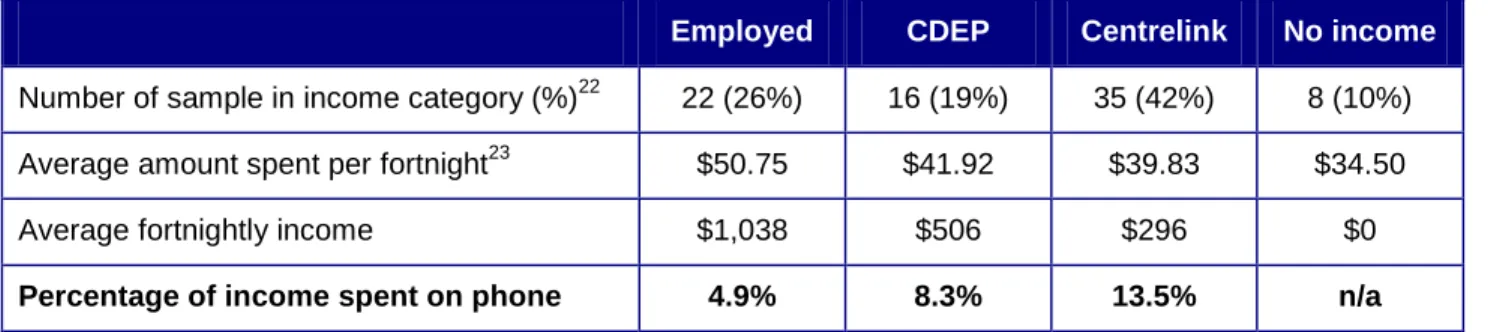
Participants in the survey who had a mobile phone spent on average $42 of their fortnightly income on their phone. More importantly, Aboriginal people on extremely low incomes were found to be spending a disproportionately large amount of their income on mobile phone service, as indicated below. In particular, participants on Centrelink benefits were spending on average 13.5% of their income on their mobile phone. This finding has significant welfare implications and is the basis of the key recommendation of this report that a low income pre-paid phone card be developed.
Amount spent per fortnight on mobile phone services by income source
Income source Employed CDEP Centrelink No income
Number of sample in income category (%) 22 (26%) 16 (19%) 35 (42%) 8 (10%) Average amount spent per fortnight $50.75 $41.92 $39.83 $34.50
Average fortnightly income $1,038 $506 $296 $0
Percentage of income spent on phone 4.9% 8.3% 13.5% n/a
Key findings on other phone use
Findings relating to home phone and payphone use, in conjunction with mobile phone findings, provide a way of gauging the degree to which mobile phones are providing basic telephony services to Aboriginal people who are not able to access other phone services.
5. ACCESS TO HOME PHONES IS EXTREMELY LIMITED AMONGST THE ABORIGINAL POPULATION IN CENTRAL AUSTRALIA.
The rate of home phone use of participants in the survey (25%) is far lower than that of the general Australian population.
The survey found that home phone users were more likely to be employed and living in the Alice Springs urban area. By contrast, respondents living in town camps in Alice Springs did not have any access to home phones. Responses to the survey indicated that education and literacy contributed to low levels of home phone access.
Many home phone users across the region have experienced having their service cut-off because of problems paying the bills (29%). Some participants are aware of this and have imposed voluntary restrictions on the use of their home phone. However, additional tools to assist home phone bill payers to minimise their costs are also important, as well as education to assist people to access and use these tools.
6. PAYPHONES REMAIN AN ESSENTIAL SERVICE FOR ABORIGINAL PEOPLE IN CENTRAL AUSTRALIA.
The rate of payphone use by participants in the survey was very high (79%). Payphone users were found to live in all locations and to be on all income sources, although users were more likely to be on lower incomes. Mobile phone users were also high users of payphones suggesting that even where Aboriginal people are mobile phone users payphones remain an essential service. This is particularly the case for residents in remote regions, where there is limited access to mobile phone network coverage, for remote residents and town camps residents who have low levels of access to home phones, and for the elderly, as results indicate that they are less able or less likely to adopt mobile phone technology.
7. PROBLEMS WITH PAYPHONE SERVICES.
Many participants complained about payphones being a great distance away or out of service due to coins getting jammed in them, and also about the distance they had to walk to the next working payphone. Some survey participants made critical comments about the operation of the robust community phone, developed by the Centre for Appropriate Technology. This community phone model has received large scale funding to support an improvement in access to telecommunications in remote communities. As such, recorded concerns of a lack of information on how to use the robust phone and a lack of access to the pre-paid card for the robust phone are of importance.
Discussion and Recommendations
1.MOBILE PHONE SERVICES.
The key findings of this report suggest that amongst many Aboriginal people in central Australia, particularly those on low incomes, pre-paid mobile phones are being used to provide basic telecommunications access to people who have limited access to home phones or payphones. Despite some limitations in cost and coverage, the strong take-up of mobile phones supports that mobile phone communication has much potential in providing telecommunications services for a mobile Aboriginal population. Increasingly, mobile phones need to be considered an essential service.
The survey indicates that low income Aboriginal people are spending a significant proportion of their income on mobile phones (mobile phone users on Centrelink benefits spent on average 13.5 per cent of their income). In addition, up to 50% of people indicated that the expense of mobile phone use was a major reason for not owning a mobile phone. This raises significant equity issues, as unlike low income home phone users, low income mobile phone users do not have access to a discounted service package. A more equitable package would be likely to result in higher rates of mobile phone use by Aboriginal people and better communication for Aboriginal people overall. It is also likely to reduce demand on payphone and home phone services.
In particular, the study suggests that participants tend to select their phone company based on discounted calls to family members, but also tend to call at any time of the day regardless of the
cost. Participants overwhelmingly opted for pre-paid packages due to credit issues. Aboriginal people would therefore benefit from a low income pre-paid package that included discounts for nominated contacts and flat call charges.
This report thus recommends that a low income mobile phone package be developed, in
consultation with the major mobile phone providers, as a matter of urgency. To ensure that this product is only accessible to people on low incomes, access could be regulated by health care card or be distributed by welfare agencies.
Recommendation 1: That a pre-paid mobile phone package be developed which is suitable for low income Aboriginal people. This report suggests an effective package could include:
• The ability for users to nominate numbers which can be called at lower rates.
• A flat rate for calls irrespective of the time such calls are made. 2.OTHER PHONE SERVICES.
Credit management issues and access to home phones appear to be key drivers of mobile phone take-up, as opposed to the superior utility of mobile phones alone. Therefore, measures which combat credit management issues and improve access to home phones and pay phones are encouraged.
Wider availability of appropriate home phone packages, such as the country calling line package developed by Telstra, would improve credit management and home phone access issues.
Appropriate community education, such as through community organisations, would further assist credit management issues.
Recommendation 2: That appropriate home phone packages and community education programs be further developed by phone companies and community organisations to assist Aboriginal people on low incomes access and manage a home phone.
Improved mobile phone and home phone access will reduce pressure on payphones, however, at this time, the results of the survey indicate that payphone services remain essential, even for mobile phone users. Although the survey was not focussed on this issue, high levels of use of work and community office phones underlined the continued need for access to phones other than home phones and mobile phones. The results of the survey also indicate that the use of robust payphones may be eased through better explanation of how to use phone cards.
Recommendation 3: That consideration be given to increase the number of public payphones in Central Australia where home phone access is limited, such as in Town Camps and remote communities, as well as education programs for robust payphones.
Background
This study was commissioned by the Central Land Council and conducted by the Tangentyere Council Research Hub. The study aimed to describe the patterns of use of mobile phones by low income Aboriginal people in Central Australia. Funds for the study were provided by the Telstra Consumer Consultative Council (TCCC) and the Central Land Council. This report was jointly prepared by Tangentyere Council and Central Land Council.
Central Australia
Central Australia is vast region, with a population of around 40,000 people, 38% of whom are Aboriginal (14,383 in 2001).1
The region is home to speakers of three main Aboriginal language groups (Western Desert, Arandic and Ngarrkic) within which are a range of culturally diverse language groups, including but not limited to the Walpiri, Warramungu, Arrernte, Luritja, Pitjantjatjarra, Yankunytjatjara, Pintupi, Luritja, Anmatyerr, Alyawarr, Ngaatjatjarra and Kaytetye people (CLC).2 Many of these residents have English as their second, third or fourth language. Alice Springs lies in the traditional lands of the Arrernte people. The people of the region share a culture in which family and kinship ties take on great importance, an issue referred to in the title of this report.
Of the total Aboriginal population of the region, 61% live in remote communities and 39% live in the Alice Springs region (Mitchell, et al, 2005).
The Aboriginal population of the region can be divided into three main groups: Alice Springs urban residents, which includes Aboriginal people living in privately owned or rented accommodation, and those in public housing; Alice Springs Town Camps; and, those from remote regions.
However, it is important to note that Aboriginal people in the region tend to be highly mobile, moving between remote communities, outstations and urban centres. Mobility is a part of Aboriginal life in Central Australian and is a key to people maintaining social relationships and relationships to places. Alice Springs is the principal regional service centre, not only for pastoralists, miners but also for other Aboriginal people living in remote communities in central and western desert regions of the Northern Territory, South Australia and Western Australia, who come from a wide range of language groups. Aboriginal visitors come to town for a range of reasons, including to visit family, to access government services (mainly health services), and for shopping, sport and housing (Foster, et al, 2005; ASTCTF, 2006).
Remote communities
Around 61% of the Central Australian region’s Aboriginal population live in 260 or so outlying communities, totaling around 9,000 people over a vast distance (Mitchell, et al, 2005). This
population is highly mobile. Aboriginal people in Central Australia have particular relationships and affiliation with many different localities and language groups. Dual or multiple residence is common as people move between two and sometimes three of these communities. It is common also to spend time in Alice Springs (Mitchell, et al, 2005).
1
Based on 2001 figures from the Australian Bureau of Statistics (2002); The Aboriginal population is forecasted to rise to 42% of the total population by 2021 (Mitchell, et al, 2005).
2
For a detailed discussion on language groups, see the Central Land Council website at http://www.clc.org.au/ourculture/language.asp
Public transport in the region is minimal (ASTCTF, 2006), so visitors from remote regions most often travel into Alice Springs in family owned vehicles. In addition, it is often considerably easier for people to get a lift into town than it is for them to arrange transport to return home.
Town camps
'Town camps' are small communities located within the town boundaries of Alice Springs (see map). Some of these sites have been traditional camping areas over a long period of time. A number are located near ceremonial sites, established in part for the protection of those sites.
The majority of people residing in town camps now are permanent residents, many of whom are now 3rd, 4th and 5th generation (Foster, et al, 2005; ASTCTF, 2006). The development of all of the town camps as permanent residential areas dates from White occupation of the region, the process of which caused others to moved to town due to dislocation from country, to seek work, to access services and/or to be closer to their children who were forcibly removed and placed in Alice Springs. Each town camp continues to have specific language and cultural affiliations, and as such, residents are primarily family members or members of the same language group.
Today there are 19 established town camps, 16 of which have leasehold title. The base population of town camps is estimated to be between 1,605 and 2,380, sharing 191 houses (Foster, et al, 2005). This resident population makes up between 11% and 17% of the total Aboriginal population of the region.3 However, high population mobility means that at any one time, residents are often
hosting a number of visiting relatives. As such, the total town camp population, or ‘service population’, includes both visitors and residents of that camp, with the total annual service population estimated to be up to 3,300 people (Foster, et al, 2005).
Dating from Territory self-government in 1978, there has been continuing dispute over government responsibility for essential services to town camps. As such, essential services infrastructure on town camps is inadequate, of variable quality, and nearing the end of its serviceable life. Much of the infrastructure does not meet Australian service standards (ASTCTF, 2006). This includes very limited access to home phones.
Urban residents
Aboriginal residents in Alice Spring (not including town camps) include private home owners, private tenants and public housing tenants. There are between 3,250 – 4,000 urban residents, or between 21% and 27% of the total Aboriginal population of the region.4 A high number of Aboriginal visitors
are also in found in Alice Spring urban areas (Foster, et al, 2005; DKCRC, et al, in press).
In June 2004, there were 652 people on the public housing waiting list and the waiting time for a 4 bedroom house was 48 months. This waiting list is an underestimate of need, as there are barriers for people to get on and remain on this waiting list. Market rental rates of one and two bedroom units are between 90% and 103% of the average weekly incomes of Aboriginal people who are unemployed or not in the labour force (Mitchell, et al, 2005), and housing commission houses are rented at market rates.
3
Figures for town camp population are based on surveys conducted in 2004-2005. These figures have been compared to census figures for the region from 2001 to gain the percentage of town camps compared to urban housing Aboriginal resident . Given that the Aboriginal population of the region is increasing, this is likely to be a slight underestimate of the urban population.
4
Employment and income
The relative gap in labour force status between Aboriginal and non-Aboriginal people is substantial. Income sources for Aboriginal people in the region can be classified into three main groups:
Employment, Centrelink benefits and Community Development Employment Program (CDEP), a form of 'work for the dole'.
The average annual income of an Aboriginal person is approximately 25% of that of a non-Aboriginal person in the remote regions ($9,113 compared to $35,729), and 50% of that of an non-Aboriginal person in Alice Springs ($15,781, compared to $32,403).
In Alice Springs, 8% of Aboriginal people receive CDEP, 7% are classified as unemployed and 56% as not in the labour force5 and 29% as 'other' (including employed people). In remote Central Australia, 15% of Aboriginal people are on CDEP, 3% are unemployed, 76% are not in the labour force, and 6% are classified as 'other'.
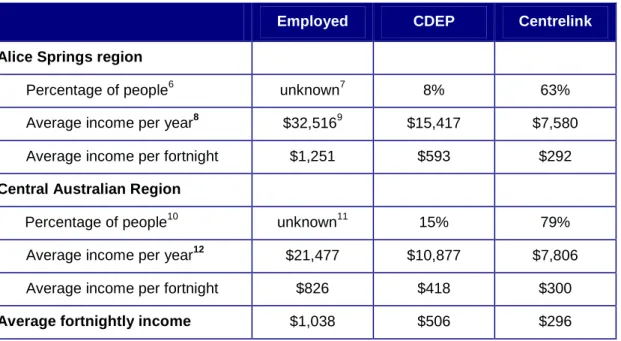
Table 1. Average income of Aboriginal people in Central Australia
Employed CDEP Centrelink
Alice Springs region
Percentage of people6 unknown7 8% 63%
Average income per year8 $32,5169 $15,417 $7,580 Average income per fortnight $1,251 $593 $292 Central Australian Region
Percentage of people10 unknown11 15% 79%
Average income per year12 $21,477 $10,877 $7,806 Average income per fortnight $826 $418 $300
Average fortnightly income $1,038 $506 $296
5 The ‘not in labour force’ (NILF) category is based on question 37 (Did you look for work at any time in the last four
weeks?) of the ABS Census. In most remote communities the possible employment options are extremely limited and usually known, thus many people answered negatively. The categorisation of CDEP as ‘work’ and the inclusion of many people in the NILF category who would be looking for work if there was any, has the effect of understating substantially the number of people unemployed and thus the unemployment rate.
6 Percentage figures are based on ABS 2002 data for the region (Mitchell, et al, 2005).
7
The percentage of Aboriginal people employed is not available as they formed part of an 'other' classification in this data source (Mitchell, et al, 2005). However, it is likely that employed people make up the majority of this ‘other’ group population (29% in Alice Springs and 6% in remote regions).
8
Average incomes are based on ABS 2001 Census data (Mitchell, et al, 2005).
9
Based on ABS 2001 Census data. It is important to note that there are 163 outliers which would affect this average, in the form Aboriginal people earning more than $800 per week. In remote regions there were 37 in this group (Mitchell, et
al, 2005).
10
Percentage figures are based on ABS 2002 data for the region (Mitchell, et al, 2005).
11 The percentage of Aboriginal people employed is not available as they formed part of an 'other' classification in this data
source (Mitchell, et al, 2005). However, it is likely that employed people make up the majority of the remaining population (29% in Alice Springs and 6% in remote regions).
12
A large number of people rely on Centrelink benefits to meet the basic needs of life, the costs of which in remote areas are very high. Food items are, on average, 45% more expensive in remote areas than in Alice Springs (Mitchell, et al, 2005). In addition, the population is a highly mobile population, and high mobility is expensive. Not only are fuel costs high, the difficulty meeting administrative requirements for benefits while away can lead to forgone income, as discussed below.
Centrelink benefits for Aboriginal people have been shown to be lower than those for non Aboriginal people, possibly because of a lower level of compliance with administrative requirements.
Difficulties with compliance are largely due to the high mobility of recipients and to difficulties claiming supplementary benefits. The average fortnightly benefit received by Aboriginal people in the region is $296 (based on ABS 2001 income data, cited by Mitchell, et al, 2005, p.42). This is well below the amount people are generally entitled to receive. For example, standard NewStart
Centrelink benefit for a single person is $420 per fortnight in 2006, not including supplementary income such as rent assistance or family tax benefit.13
Community Development Employment Program (CDEP), a form of 'work for the dole', is the major source of employment for Aboriginal people in the region (70% of those employed in the Central Australian region and 22% in the Alice Springs region).14 A significant proportion of CDEP participants earn less that $400 per fortnight; less than they would be entitled to receive on Centrelink benefits (Mitchell, et al, 2005).The maximum CDEP income per fortnight allowable in remote regions is $862 (2003-4 financial year, Mitchell, et al, 2005).
In addition to low average income, each Aboriginal income earner supports far more people than their non-Aboriginal counterpart ('economic dependency ratio'); Each Aboriginal income earner in remote region supports an average of 6 others, where as non-Aboriginal earners in the region
support one person between 4. In Alice Springs, each Aboriginal earner supports 3 people, and every non-Aboriginal earner supports 1.5 people (Mitchell, et al, 2005).
Telephones are necessary for Aboriginal people to keep in touch with CDEP providers, Centrelink, job network agencies and/or their employer. The mobility of the population, as well as a range of other reasons identified in this study (such as lack of access to home phone and payphones) mean that despite the expense, mobile phones are used for this purpose, even by those who do not have mobile phone coverage in their usual place of residence.
Education
Educational opportunities and outcomes greatly affect employment status of Aboriginal people in Central Australia. The impact on children of overcrowded and inadequate housing, poor nutritional status and ill-health, domestic disturbance and violence, high levels of alcohol consumption and substance abuse are all key factors contributing to poor school attendance, diminished participation and concentration. Many children are also further impeded in their capacity to participate
effectively in education due to lack of school readiness, language barriers and an absence of parental engagement with schools and education (ASTCTF, 2006).
Not only do low educational levels contributed to lower incomes among the population, but also to people’s ability to access telecommunication services. For example, education and skills to
successfully negotiate contracts, understand the terms and conditions of mobile phone use, and
13 Sourced from the Centrelink website, last modified 28.08.2006,
http://www.centrelink.gov.au/internet/internet.nsf/payments/pay_how_nsa.htm
14
thus avoid ‘bad deals’ and debt may be lacking among a population with low educational opportunities.
Health
Phones are often the only means of accessing emergency services in relation to health care. While Australians enjoy amongst the highest standards of health and life expectancy in the world, Aboriginal people from Central Australia continue to experience extremely poor health. The
standardised mortality rate for Aboriginal people in Central Australia is 2.95 times that of the total Australian population (Mitchell, et al, 2005).
Importantly, it is chronic diseases, such as diabetes and heart disease, that are now the leading cause of these higher rates of Indigenous mortality (HRSCCA, 2000). Infectious diseases have been successfully reduced, and the mortality rate is improving, particularly among children. However, in the previous decades, the rates of chronic illness such as rheumatic heart disease, diabetes and renal disease have been on the rise. The effective management of chronic illness involves regular visits to town or permanent relocation to town, which often results in separation from family. A phone is the only way to keep in touch your family from afar, and this phone contact is sometimes seen as the only thing keeping that person alive. However, conditions such as poor hearing and eyesight contribute to difficulties in using telecommunication devices. As such, those in poor health need special consideration in designing appropriate telecommunication devices and strategies. The health and wellbeing of an individual is closely related to the social context in which they live (ASTCTF, 2006), and access to appropriate health care is an important element of this context. The health status of town camp residents is considered by Tangentyere Council to be generally poorer than that of other permanent, urban Aboriginal residents of Alice Springs and therefore requires alternative service delivery arrangements (ASTCTF, 2006). In addition, access to health services is one of the principal reasons given for travel by people from remote communities to Alice Springs, as a large number of people in those communities have critical health related needs (ABS, 1999).
Access to telephones
Not only do telecommunications services help Aboriginal people to maintain cultural and family ties, access to phones in working order is an essential element of community safety and wellbeing. This is particularly important given the large number of town camp and remote residents who have critical health conditions (HRSCCA, 2000).The importance of access to telecommunications for people with major health conditions is recognised by Telstra who have developed a Priority Assistance for Individuals Policy in relation to home phones (ACA, 2005, p9). However, a large number of Aboriginal people in remote communities in Central Australia who have significant health conditions remain without access to emergency telecommunications services, including both
payphones and home phones.
In addition, access to telecommunications infrastructure affords communities better access to other government services; in particular, the health, education and justice sectors. Telecommunications infrastructure is also an important precursor to economic development (DCITA, 2002).
Telephones in town camps
In recent consultations in town camps, residents reported difficulties in being able to call police, ambulance and other service providers in emergency situations (ASTCTF, 2006).
There is very limited access to home phones on town camps. Connection of household phone
services on town camps generally requires either Tangentyere Council or the individual householder to dig trenches for underground cables to be laid before services can be connected (ASTCTF, 2006). There is also limited access to public phones. There are four Telstra payphones and fourteen public ‘robust phones’, covering 13 of the 19 town camps.15 There is also limited street lighting, which is essential for the safe use of public phones (ASTCTF, 2006).
For the last five years the Central Land Council and Tangentyere Council have been working
alongside Telstra to improve service delivery to these communities. Telstra is currently exploring a range of possible alternative household service options (phone cards, restricted access) to provide improved access to telecommunications. Tangentyere continues to offer limited assistance to town camp residents to access the Country Calling Line, however there has been no take up of this service to date.16
Mobile phone coverage is widely available in Alice Springs.
Telephones in remote areas
There are limited telecommunications services in remote Aboriginal communities. In the 589 remote communities in the Northern Territory, there are 591 residential phone services for an Indigenous population of 38,530 (DCITA, 2002, p.41).17This represents a take-up rate of an estimated 1.5% to
5% per cent amongst Indigenous residents of the Northern Territory (DCITA, 2002, p.40; ACA, 2003). The Central Land Council suggests that having a private residential phone causes difficulties for the phone owner as others use the phone, yet may be unable to contribute to paying the bill. Cultural obligations to family make it difficult for the phone owner to say ‘no’ or restrict excessive use, and often the phone owner is left to pay the bill or the phone is disconnected (CGC, 2001).
Access to payphones is a significant issue in remote Aboriginal communities in Central Australia (DCITA 2000, p.91). In remote communities in the Central Australia, there are 188 payphones, including 100 Telstra operated payphones. Nonetheless, many communities and small outstations within the central Australian region do not currently have access to payphones. The Universal Service Obligation states that Telstra will:
“ensure that payphones are reasonably accessible to all people in Australia on an equitable basis, wherever they reside or carry on business” (Telecommunications Act, 1999, p14).
However, under the Universal Service Obligation, communities will not be serviced if they are located within 40 kilometres of an existing payphone service, or have less than 20 adults, which in practice is interpreted as a total population of less than 50. This means that up to 10% of remote Aboriginal residents do not have access to a payphone. In the experience of the Central Land Council, many of these people do not have regular access to vehicle to travel to the nearest public phone in the case of emergencies.
Anecdotal evidence gathered by the Central Land Council prior to commissioning this study suggested that Aboriginal people with limited access to fixed telecommunication services are increasingly turning to mobile phones as a way of accessing basic telecommunications services. Mobile phone coverage is available in some of the larger Aboriginal communities in the region,
15
Data sourced from Tangentyere Council Housing Department, 24th November, 2006.
16 This has been principally due to the long and difficult application process, but also due to the lack of time Tangentyere
Council staff have available to manage the application process, as no specific funding has been provided to provide this support.
namely Yuendumu, Mutitjulu, Hermannsburg, Santa Teresa, Ali Curung, Lajamanu and Kalkarindji (and also in Erldunda, Ti-Tree, Tennant Creek and Yulara). However, the remainder of the 260 outlying communities do not currently have mobile phone coverage. A major reason for the commissioning of this study by the Central Land Council was to investigate this matter.
Tangentyere Council
Tangentyere Council is an Aboriginal owned and controlled organisation based in Alice Springs. It was established as a resource and advocacy agency for Aboriginal people living on town camps who were unable to access basic services, and is governed by an executive of town camp residents elected from each town camp. The Council’s core business continues to be housing and
infrastructure for town camp residents. However, the organisation has expanded to include a range of programs and services to meet the needs of town camp residents and visitors, and others in the community. It is now a large, complex organisation which provides infrastructure development, employment and training initiatives and a range of social programs. Services include: banking and financial management assistance; mail services; consumer education; aged care; youth services; an arts centre; CDEP services; night patrols; and environmental health.
Tangentyere Council Research Hub was formed with the assistance of three university partners who have a history of working with Tangentyere Council. These partners, who continue to be involved in the work of the unit, are the Centre for Remote Health (a joint endeavour of Charles Darwin
University and Flinders University), the National Drug Research Institute (Curtin University) and Centre for Social Research at Edith Cowan University. The aims of the Research Hub at Tangentyere are to:
● Provide and develop Aboriginal expertise in areas of research and social services development;
● Protect Aboriginal peoples' rights in relation to research;
● Promote and conduct research that is meaningful and results in practical change and development within the community;
● Give Aboriginal people ownership in research; and
● Use research to inform Tangentyere Council services, government, policy makers and academic institutions.
The Tangentyere Research Hub has developed research processes that endeavour to ensure the direction and ownership of the research is retained by Aboriginal people. This means that Aboriginal researchers are involved as more than simply translators or assistants. The dedication to this
research process and resulting high levels of community participation is intrinsic to the methodology used by the unit. Additionally, Tangentyere Research Hub is committed to a 'no survey without service' principle, which means that research must be of mutual benefit to the participants and the researchers, as discussed in the background section of this report.
Tangentyere Council chose to do this study because anecdotal evidence strongly suggested that Aboriginal people's lack of access to home phone and payphones led to a necessary reliance on mobile phone technology for basic needs. Additionally, we were concerned that mobile phone users were spending beyond their means to acquire these basic services, and at times committing to contracts outside of their means, which can lead to significant debt. As you will see, the findings of this study add weight to much of that anecdotal evidence.
Central Land Council
The Central Land Council (CLC) is a representative body promoting Aboriginal land issues. It is a statutory authority under the Aboriginal Land Rights (Northern Territory) Act 1976. It also has functions under the Native Title Act 1993 and the Pastoral Land Act 1992.The CLC is a Council of 90 Aboriginal people elected from communities in the southern half of the Northern Territory.
The roots of the CLC lie in the history of Aboriginal struggle for justice and our rights to our traditional land. The Land Rights Act gave Aboriginal people title to most of the Aboriginal reserve lands in the Northern Territory and gave the opportunity to claim other land not already owned, leased or being used by someone else. Today Aboriginal people own some 49 per cent of the land in the Northern Territory.
Methodology
Research objectives
The target population for the research was Aboriginal people, 15 years and over, who reside or visit Central Australia. This included urban residents, residents of town camps and visitors to Alice Springs from remote areas.
The initial research objectives were refined through discussion with the Aboriginal Researchers, taking into account the context for the research and available resources and time.
The final objectives were determined to be to:
● Identify the rates of mobile phone use among the target group;
● Identify who are using mobile phones and why;
● Identify who are not using mobile phones and why;
● Identify the mobile phone products being used;
● Identify the patterns of mobile phone use;
● Identify the amount spent on using mobile phones; and
● Identify the use of other phone services (eg home phones and payphones).
Research process
The Tangentyere Research Hub has developed a research process that endeavours to ensure the direction and ownership of the research is retained by Aboriginal people. The dedication to this research process and resulting high levels of community participation were intrinsic to the
methodology used for this project and ensured accountability and ethical processes were upheld at all times.
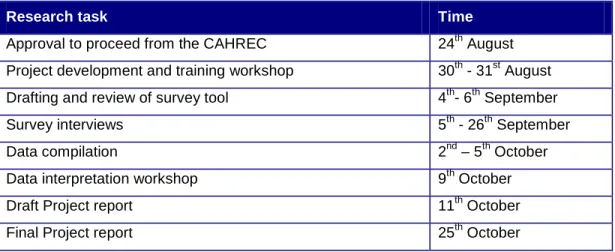
The Central Land Council approached Tangentyere Council about the research in mid 2006. Expert advice from Tangentyere Council Research Hub external partners was sought to develop he concept for the research, which was then discussed with Tangentyere Executive Research Sub-Committee, which gave approval to proceed. An application was submitted to the Central Australian Human Research Ethics Committee (CAHREC), and approved in August 2006. The research took place over a three month period in 2006, as summarised in Table 2.
Table 2: Research project timeline
Research task Time
Approval to proceed from the CAHREC 24th August Project development and training workshop 30th - 31st August Drafting and review of survey tool 4th- 6th September
Survey interviews 5th - 26th September
Data compilation 2nd – 5th October
Data interpretation workshop 9th October
Draft Project report 11th October
The research team
The research team was composed of Aboriginal people who had community connections and the ability to accurately interpret and analyse the responses of participants.
The team of researchers was composed of local Aboriginal people and a non-Aboriginal project Coordinator. Members of the research team included: Audrey McCormack, Darrelle McCormack, Tiara Foster, Toni McLaughlin, Janelle Egan, Denise Foster, and Jennifer Stuart. The project Co-ordinator was Andrew Vinter. The team was assisted by Denise Foster, a Tangentyere Council Aboriginal Researcher.
Researchers Darelle McCormack, Denise Foster and Tiara Foster
This team included a senior Aboriginal woman with standing in the community and considerable cultural and research skills, including the ability to manage a team of younger people with less research experience. The younger researchers were important so as to be able to encourage
participation by younger people in the research. Some of the team had prior experience working for the research unit on other projects. Others were new to research, but brought considerable cultural expertise. Some brought both.
Efforts were made to recruit among the researchers both men and women of a range of ages to encourage balanced participation in the sample, as well as a balanced set of views in relation to the analysis of results. Researchers ranged in ages. However, the efforts to recruit men were
unsuccessful. Excluding the Co-ordinator, the team was composed entirely of women. This is not uncommon, as men have been difficult to recruit for other projects. The researchers suggested that this may be due to a greater availability of women, and that, historically, Aboriginal people in this region tend to work best in single-gendered groups.
Research design
To achieve the research objectives, it was determined that a survey would be conducted among a sample of 150 members of the target group. Tangentyere’s Research Hub external partners assisted with the research design, which aimed to survey a stratified sample of the population to obtain quantitative and qualitative data on the research objectives.
As part of the process to recruit of the Aboriginal Researchers, a workshop was held to gain input on the research process and design, and gather interest in being involved in the project. This project development and training workshop was held at Tangentyere Council on the 30 and 31 August 2006.
Discussing ethics at the training workshop Developing the information and consent form
The workshop aimed to bring together the researchers to develop the research processes as a team. Specifically, the purposes of the workshop were to:
Discuss with the researchers the research proposal;
Refine the objectives of the research;
Discuss relevant background information on phone services and products;
Develop and test the research tool (survey);
Discuss the guidelines for ethical research and develop a consent process;
Identify how, where, and when the survey was to be conducted; and,
Develop the skills of the researchers in guiding and participating in research.
By the end of this workshop, the information sheet, consent form and survey were completed and initial piloting conducted (see Appendix A). This survey was developed so as to be an appropriate tool for eliciting information from the target group. Through discussion at the workshop, questions were refined and piloted by the group to ensure appropriateness, as well as the reliability and validity of the tool.
The workshop also determined that information about mobile phones and the contact details of a financial counselor would be offered on completion of the survey, if the researchers considered it appropriate.
During this workshop, it became apparent that while only one of the seven objectives of the
research related to the use of other phone services, questions about access to other phone services were necessary to gather data to provide essential context to the results. That is, it was seen as impossible to fully understand participants’ reasons for using or not using mobile phones, and the patterns of use, without an understanding of their use of other phone services.
In addition, Tangentyere Research Hub works on a principle of ‘no survey without service’ to ensure research can lead to the improvement of service delivery for Tangentyere’s clients. This meant there was an ethical duty in conducting this study to gather a range of information relating to telecommunication needs to allow Tangentyere to respond more generally to its clients’ needs.
Conducting the survey
Interviews were carried out in Alice Springs. Locations were selected to ensure that the mix of people that were approached was similar to the mix in the Aboriginal population of Central Australia.
Darelle McCormack and Tiara Foster conducting a survey
A range of survey locations were chosen, with the aim of sampling a spread of the population. As such, effort was made to survey at locations where the team was likely to find participants who normally live in remote areas (such as the Renal Hub and Batchelor Institute of Indigenous Tertiary Education). The locations were also chosen to ensure that low income Aboriginal people were sufficiently represented.
A permit was obtained from Alice Springs Town Council to conduct interviews in public places. Permission was obtained from the relevant authorities in advance to conduct interviews on private property, including on Town Camps.
Interviews were carried out at the following locations: Public locations:
Todd Mall & Town Council lawns
Various locations in the Alice Springs CBD Private locations:
Town Camps in Alice Springs Tangentyere Council offices Alice Springs Town Library Aboriginal Hostels
Batchelor Institute of Tertiary Education Alice Springs Renal Unit
Alice Springs Hospital
Centralian Secondary College Alice Springs High School
In order to feel that they could approach potential research participants with confidence,
researchers were identifiable by an identification badge and a T-shirt with a Tangentyere Council logo. This also gave the researchers a sense of pride in their role.
Initially surveys were conducted in pairs. This allowed one researcher to have a conversation with the participant while the other researcher would write down the answers on the survey form. This system was used for most of the surveys as it was effective in getting the full story from
participants. Gaining the full story allowed for rich qualitative data. This in turn provided the context to interpret the quantitative data. However, some surveys were conducted individually during the later stages of the research.
The researchers were responsible for asking the questions in the survey and completing the survey form; it was not a self-administered survey. The surveys took around 20 minutes to conduct, including giving information and gaining informed consent.
The researchers used their cultural expertise to approach people, engage with them, provide them with the information about the objectives of the research, encourage them to be involved, and to feel confident in gaining informed verbal consent. The consent process involved discussing with the participant what information the researcher would ask for and how it would be used. The rights of the participant to confidentiality or not to participate at any point during the interview were also explained. The researcher was required to sign for consent because it was their responsibility that consent was obtained. This also had cultural implications, as their standing within the community would have been affected by research that was not ethically conducted. An information sheet was offered to participants explaining the consent process as well as how to make a complaint if they had concerns with any aspect of the research (Appendix A).
After each day of surveying, the research team would meet to discuss the day's work, to ensure the surveys were fully completed, and discuss any problems which were encountered. As the research progressed, new locations were chosen to supplement the sample. For example, to increase the number of participants who normally live in remote areas.
Data collection
The methodology was designed to provide a ‘snapshot’ of mobile phone use among the population. The sample size reached the initial target amount, which was determined to be adequate to demonstrate the characteristics and patterns of use of the population via quantitative analysis. In addition, a qualitative analysis of the data was carried out. This adds depth to the study and takes into account cultural interpretations, allowing recommendations relevant to the community to be drawn from the data.
The data was analysed by the Aboriginal researchers and Project Officer, in conjunction with other members of the Tangentyere Research Hub. Analysis occurred during the data collection stage of the project, and at several meetings after the completion of data collection. This included
discussion at a meeting of the Research Sub-committee of the Tangentyere Council Executive, who are town camp residents elected to the governing body of Tangentyere Council. Survey data was entered into an Excel™ spreadsheet for analysis.
This report was co-authored by several Aboriginal Researchers on the team, the Project Officer and the Manager of Social Services at Tangentyere Council, with input from a range of others, all of whom are acknowledged on page 1 of this report. For this reason, a variety of 'voices' can be 'heard' throughout the report, bringing a range of cultural perspectives to the qualitative and quantitative analysis of the data.
A limitation of the survey tool was found at questions 6, 8, 15, 18, 22, 28 and 31 (see Attachment A). At these questions the option of ‘no comment’ was overused in data collection, possibly due to the design of the survey tool. Participants may also have made no comment in response to open ended questions due to the length of time the survey took. However, when this limitation was assessed to affect the data, this is noted in the Results and Analysis section.
We believe that this limitation could easily be avoided in future by omitting the ‘no comment’ option from the format of such surveys.
Another limitation of the survey tool was found at question 3 where the question ‘where do you live most of the time’ allowed a response of ‘remote community’ but did not specify the community. This did not allow analysis of mobile phone use in remote communities according to whether mobile coverage was available in communities where participants lived.
Results and Analysis
About the survey participants
A total of 150 surveys were conducted during the survey. Analysis of information in relation to gender, place of residents, age, and income is below.
Gender of participants
Survey participants were predominantly female (Figure 1).
Figure 1.
Number of survey participants
40 110 150 0 20 40 60 80 100 120 140 160
Male Female Total
Sex of survey participants
N o . o f p a rt ic ip a n ts
The researchers reported that they found women to be more approachable and willing to be interviewed. They suggest that this may have been the case for three main reasons:
It is usually the case in Aboriginal communities in Central Australia that women are responsible for dealing with business matters such as tracking budgets and dealing with Government agencies, so may have been more willing to participate, or more likely to be in the survey locations (eg. in public places running errands);
The composition of the all-female research team may have influenced who was approached for interviews. That is, researchers reported feeling more comfortable to approach other women for cultural reasons; and
As will be seen below, a primary reason for using mobile phones is to keep in contact with family. In local Aboriginal culture, as in the mainstream community, family responsibilities fall mainly to women, meaning that women are more likely to take
responsibility for the mobile phone among a family unit. People with mobile phones were more interested in participating in the study, so women may have been overrepresented in the sample for this reason.
Age of participants
The age of survey participants was relatively well distributed, with half of the participants under 24 years and half over 24 years. That it, the median age was 24 years. This aligns with the age
distribution of the population, with 44% of the population under 20 years old according to 2001 ABS figures, compared to 28% of the non-Aboriginal population (Mitchell, et al, 2005).
Participants' place of residence
The majority (72%) of survey participants lived in town, and 25% lived in remote communities. Because the survey was only able to be conducted in Alice Springs, residents from remote
communities are underrepresented (25% of the sample, compared to 61% of the region's population). This is important to note when interpreting study results about remote populations. A small number of participants were from interstate (approx. 3%) (see Figure 2).
Figure 2.
Residential status of survey participants
72 36 37 5 0 20 40 60 80 Alice Springs town area Town camp in Alice Springs Remote community Interstate Place of residence N o . o f p a rt ic ip a n ts
Of participants living in town, 67% lived in the urban area of Alice Springs and 33% lived in the town camps. This is close to the distribution of the population, based on the lower estimate of town camp population (1,605 town camp residents, or 29% of the urban Aboriginal population) (Foster, et al, 2005).
Participants' source of income
The income source of research participants was dominated by those on Centrelink benefits (approximately 56%). Twenty percent (20%) were Community Development Employment Program (CDEP) participants and approximately 18% were employed (see Figure 3).
Figure 3
CDEP participants appear to be overrepresented in this sample, when compared data for the Alice Springs population (8% of whom are on CDEP) and remote population (15% are on CDEP). Those in employment are underrepresented (18% of the sample), as compared to the estimated 29% of people in town who are employed.18 This suggests the sampling successfully reached low income Aboriginal people.
Some participants indicated that they receive no income (approximately 4%). Those with no income were usually under 18 years old and were living on the income of other family members. The issue of ‘economic dependency ratios’ is important when analysing these results. That is, it is safe to assume that the person paying for the mobile phone services of those with no incomes are supporting far more people than non-Aboriginal people are.
18
Although this percentage is much higher than the estimated 6% of Aboriginal people in remote regions who are employed.
Employed CDEP Centrelink No income No comment 0 20 40 60 80 100 26 29 84 8 3
Income source of survey participants
Major source of income
N o . o f p a rt ic ip a n ts
Patterns of mobile phone use
Mobile phone ownership
A majority of participants surveyed (56%) owned a mobile phone (see Figure 4).
Figure 4.
Mobile phone ownership of participants in the survey 84 66 0 20 40 60 80 100 Yes No
Mobile phone ownership
N o . o f p a rt ic ip a n ts
Nine people owned more than one mobile phone, four of which were using two mobile phones at the same time, having shopped around for a better deal and settled on two options.19 For example, one respondent said:
“I have a Telstra phone (because it's) cheaper, and an Optus one (for the) free calls” This result is surprisingly high, given the collective nature resource distribution and use in Aboriginal population of the region, which reduces the need for each individual to own their own phone.
Characteristics of mobile phone users and non-users
There was minimal difference in the rates of mobile phone ownership (users) between males and females in the survey (see Figure 5).
However, there was a difference in the rates of mobile phone ownership compared to the age, residential status, and source of income of survey participants (See Figures 6-8).
19
Figure 5.
Gender of mobile phone users and non-users
61 23 49 17 0 20 40 60 80 100 120 Female Male Gender of participants N o . o f p a rt ic ip a n ts Non-users Users Figure 6.
Age of mobile phone users and non-users
25 31 20 7 2 17 33 13 0 10 20 30 40 50 60
15-17 yrs 18-24 yrs 25-49 yrs 50 yrs and over
Age class of participants
N o . o f p a rt ic ip a n ts Non-users Users
The researchers were not surprised to find that a high proportion of young people owned mobile phones, with 93% of those in the 15-17 year old age group owning mobile phones. There were also more users aged 18-24 (65%) years compared to the overall rate of mobile phone ownership (56%). Thirty-eight percent (38% )of 25-49 year olds owned mobile phones and 35% of those 50 years and over (see Figure 6).
Figure 7.
Residential status of mobile phone users and non-users
50 17 13 4 22 19 24 1 0 10 20 30 40 50 60 70 80 Alice Springs urban area Town camp in Alice Springs Remote community Interstate Place of residence N o . o f p a rt ic ip a n ts Non-users Users
Residents of the Alice Springs urban area were found to have higher levels of mobile phone
ownership (69%) compared to the overall rate of mobile phone ownership (56%). However residents of town camps in Alice Springs were slightly less likely to own mobile phone than the average. Residents of remote communities were found to have much lower rates of mobile phone ownership (35%) (see Figure 7).
It was the experience of researchers who live town camps or have families in remote communities that Aboriginal people who own phones are those who have more education or skills, or have nieces or nephews with the education or skills to help them with using their phones. If their education or skills are poor, they tend to use community office phones instead. For example, they may use Tangentyere Council phones, or phones in remote community Councils if they need to talk to Centrelink or Aboriginal Legal Aid on the phone.
Figure 8.
Primary source of income of mobile phone users and non-users 22 16 35 8 13 49 0 4 0 10 20 30 40 50 60 70 80 90
Employed CDEP Centrelink No income
Income source N o . o f p a rt ic ip a n ts Non-users Users