Analysis of West Virginia’s
Graduated Driver Licensing
Program
Prepared by
West Virginia
University
The Pennsylvania State University
University of Maryland
University of Virginia
Virginia Polytechnic Institute and State
MID ATLANTIC UNIVERSITIES TRANSPORTATION CENTER
Analysis of West Virginia’s Graduated Driver Licensing Program
Final Report
By Alexandria M. Noble David R. Martinelli Avinash Unnikrishnan Diana MartinelliDepartment of Civil and Environmental Engineering West Virginia University
Morgantown, WV 26505 USA
1. Report No. WVU-2011-01
2. Government Accession No. 3. Recipient’s Catalog No.
4. Title and Subtitle
An Analysis of West Virginia’s Graduated Driver Licensing Program
5. Report Date December 2012
6. Performing Organization Code 7. Author(s)
Alexandria M. Noble, David R. Martinelli, Avinash Unnikrishnan, Diana Martinelli
8. Performing Organization Report No.
9. Performing Organization Name and Address West Virginia University
Morgantown, WV 26506
10. Work Unit No. (TRAIS)
11. Contract or Grant No. DTRT07-G-0003
12. Sponsoring Agency Name and Address US Department of Transportation
Research & Innovative Technology Admin UTC Program, RDT-30
1200 New Jersey Ave., SE Washington, DC 20590
13. Type of Report and Period Covered Final 8/1/11 – 1/31/13
14. Sponsoring Agency Code
15. Supplementary Notes
16. Abstract
Motor vehicle collisions are the leading cause of death for individuals between the ages of 15-20 years old in the United States. Top safety concerns involving teen drivers include; safety belt use, impaired driving, and distracted driving. Rules that address these safety concerns have been implemented into multifaceted GDL programs in the United States as well as in state legislation. There are a limited number of studies focusing on the perspective, knowledge and opinion of GDL policy. The effectiveness of the GDL program in West Virginia is being measured through the administration of surveys. The surveys have been designed to assess awareness among high school students, parents of high school students, and police officers. GDL limits teenage driver exposure to high risk situations but its potential to reduce fatalities is limited by people's willingness to comply with the laws and the enforcement of the program restrictions by parents and law enforcement officers. Using the insights provided by these surveys, ways to improve GDL policy and awareness to increase program effectiveness will be identified.
17. Key Words
GDL, novice drivers, West Virginia, teen driving
18. Distribution Statement
No restrictions. This document is available from the National Technical Information Service, Springfield, VA 22161
19. Security Classif. (of this report) Unclassified
20. Security Classif. (of this page) Unclassified
Acknowledgements
This research project is sponsored by the U.S. Department of Transportation, Federal Highway Administration, and the West Virginia Department of Transportation, Division of Highways. It was completed with the assistance of many individuals and organizations. The principal investigators wish to express thanks to those identified below, as well as all of the other individuals and organizations that supported the project.
The support provided by the West Virginia Division of Highways is appreciated. Mr. Donald Williamsdeserves special thanks for providing data and contacts and for reviewing work. The authors would also like to acknowledge the technical advisory committee for their input. The members of the technical advisory committee are: Rebecca Davison (WVDOT), Hamilton Duncan (FHWA), Steven Dale (WVDMV), Bob Tipton (WVDOT), Cindy Cramer (WVDOT), Bruce Kenney (WVDOT), Ray Lewis (WVDOT), Donna Hardy (WVDOT), and Richard Warner (WVDOT).
Disclaimer
The contents of this report reflect the views of the authors, who are responsible for the facts and the accuracy of the information presented herein. This document is disseminated under the sponsorship of the U.S. Department of Transportation’s University Transportation Centers Program, in the interest of information exchange. The U.S. Government assumes no liability for the contents or use thereof.
Table of Contents
1.0: Background ... 1
2.0: Literature Review ... 7
2.1: Graduated Driver Licensing in the United States ... 7
2.2: Teen Driver Safety ... 8
2.2.1: Safety Belts ... 8
2.2.2: Impaired Driving ... 9
2.2.3: Distracted Driving ... 9
2.2.4: Pairing Technology and the GDL ... 10
2.3 History of West Virginia’s GDL Program ... 11
2.4: Peer State Selection Criteria... 14
2.5: Program Peers ... 15
2.6: Geographic Peers ... 15
2.7: Demographic Peers ... 16
2.8: Peer State Comparisons... 16
2.9: Program Peers ... 16 2.9.1: California ... 16 2.9.2: Florida... 19 2.9.3: Michigan ... 19 2.10 Geographic Peers... 19 2.10.1: Ohio ... 20 2.10.2: Pennsylvania ... 20 2.11: Demographic Peers ... 21 2.11.1: Iowa ... 21 2.11.2: Washington ... 22 2.12: Enforcement ... 22
2.13: Program Peer States ... 24
2.14: Geographic Peer States ... 24
2.15: Demographic Peer States ... 25
2.16: Innovative Enforcement Strategies ... 25
2.18: Innovative Public Awareness Campaigns ... 27
2.19: Literature Review Summary ... 30
3.0: Research Approach ... 32
4.0: Findings ... 36
4.1: Parent Survey Findings ... 36
4.2: Student Survey Findings ... 40
4.3: Enforcement Survey Findings ... 43
5.0: Conclusions and Recommendations ... 48
6.0: References ... 49
List of Figures
Figure 1: IIHS Teen Motor Vehicle Fatalities ... 1
Figure 2: Source US DOT Fatality Analysis Reporting System... 7
Figure 3: Washington State Fatal Collisions by Year by Age (René Ewing & Associates, LLC, 2007) ... 22
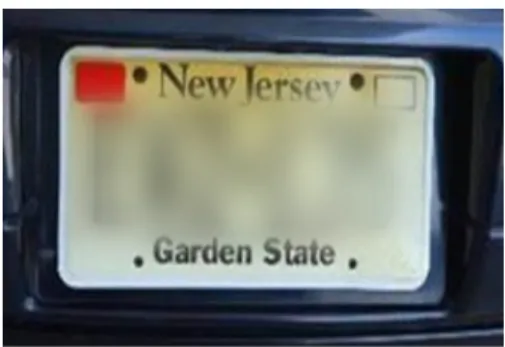
Figure 4: The GDL identification decal used in New Jersey. ... 26
Figure 5: Novice driver magnet used by the Delaware GDL Program ... 26
Figure 6: Parents who have heard of the GDL Program ... 36
Figure 7: Parent Knowledge Survey Results ... 37
Figure 8: Parent Cited Benefits to the GDL program ... 38
Figure 9: Parent cited GDL violations ... 39
Figure 10: Students who know of the GDL program ... 40
Figure 11: Student GDL Knowledge Survey Results ... 41
Figure 12: Stidemt Cited GDL Violations ... 43
Figure 13: Law Enforcement officers who know of GDL program ... 44
Figure 14: Law Enforcement Officer Knowledge Survey Results ... 44
List of Tables Table 1: Characteristics of Program Peer State GDL Programs ... 17
Table 2: Characteristics of Geographic Peer State GDL Programs ... 20
Table 3: Characteristics of Demographic Peer State GDL Programs ... 21
Table 4: Program Peers Component Enforcement for Intermediate Stage ... 24
Table 5: Geographic Peers Component Enforcement for Intermediate Stage ... 24
Table 6: Demographic Peers Component Enforcement for Intermediate Stage ... 25
Table 7: CT DMV required topics and time allotment for 2-hour parent class ... 29
Table 8: Parent attitudes about the CT DMV course ... 29
Table 9: Parent knowledge of topics covered ... 30
1.0: Background
Motor vehicle collisions are the leading cause of death for individuals between the ages of 15-20 years old in the United States. Due to age-restrictive factors, young drivers tend to overestimate their driving ability and underestimate roadway hazards. According to the Insurance Institute for Highway Safety (IIHS), the risk of collision is significantly elevated during the first year in which teenagers are eligible to drive when compared to older, more experienced drivers.
As shown in Figure 1, there has been a general downward trend in motor vehicle fatalities over time. The beginning of the more substantial declines corresponds to the enactment of major highway safety legislation. The National Highway Transportation Safety Association’s
(NHTSA) core strategies for strengthening graduated driver licensing (GDL) laws include: enactment of the recommended three-stage GDL components, highly publicized enforcement of GDL laws, and increasing parental responsibility in monitoring novice driver compliance with GDL laws.
Teen drivers are more likely to be involved in a fatal crash than any other driver age group. Factors that are thought to contribute to the elevated teenage crash rates are:
inexperience, immaturity, faulty decision-making, and distraction. Inexperience
Novice drivers have not been exposed to the many complex situations that can be posed while operating a motor vehicle. Teen drivers have a tendency to take their eyes off the road longer than older, more experienced drivers when checking mirrors. Inexperience is a risk factor for crashes mainly because competence for safe driving is largely a mental rather than a physical activity. New drivers can learn how to manage a vehicle effectively within a very short time frame. Safe and competent driving requires the ability to perceive hazards and to make sound judgments on how to mitigate the hazard. Where the driver allocates attention is also an important factor in safe driving. These strong mental processes can only be developed with years of exposure.
Immaturity
While there is a great deal of individual variation, in general as age increases so does maturity. An immature driver is more likely to engage in a risky situation than a mature driver. This tendency toward higher-risk behavior increases the likelihood that a young, immature driver will be involved in a crash. Many insurance companies provide a discount on premiums for teen drivers who get good grades in school. Students who do well in school have generally lower crash rates than students who do poorly in school. The same characteristics that enable students to get good grades are probably responsible for their relatively better crash rates, mainly greater maturity in terms of self-control and judgment.
Decision Making
The primary factors that impact decision making in general are: knowledge of risks, appreciation of the potential tradeoffs between risks and benefits, focus on the most likely outcomes, and perceived alternatives to taking the risk. Teen drivers, much like adult drivers, have a tendency to be overconfident in their control over risk. A teen who believes he or she can handle hazardous situations is confident in regard to driving skills and is decreasingly concerned about safety. Since the teen driver is also less experienced than the average adult driver, the optimistic bias is particularly hazardous for teen drivers.
Distraction
Driver inattention reduces the potential reaction time for braking and maneuvering. Long periods of distraction reduce the amount of time to react to an unexpected event, such as a
vehicle or pedestrian entering the roadway. Long periods of distraction occur commonly when dialing, texting, and visually searching for music. Visual fixation on an external event is also common. Novice drivers are not good at dividing their attention, they tend to fixate their attention on one thing and ignore potential hazards.
Graduated Driver Licensing
Efforts to reduce motor vehicle fatalities in general have been successful with the teen driver demographic. Graduated driver licensing attempts to correct for the tendencies of teen drivers discussed above. GDL gradually introduces teens into the responsibilities of driving and allows novice drivers to gain experience and skill over time under supervised conditions. Restrictions are reduced and eventually eliminated pending satisfactory completion of all subsequent steps of the program. Restrictions include: limited nighttime driving before full licensure, limited
transport of passengers, mandatory safety belt usage, zero tolerance for alcohol consumption, and no use of wireless communication devices.
There are a limited number of studies focusing on the perspective, knowledge, and opinion of GDL policy. The effectiveness of the GDL program in West Virginia is being measured through the administration of surveys. The surveys have been designed to assess awareness among high school students, parents of high school students, and police officers. GDL limits teenage driver exposure to high-risk situations, but its potential to reduce fatalities is limited by people's willingness to comply with the laws and the enforcement of the program restrictions by parents and law enforcement officers. The decline in teen fatalities from 2003-2010 is shown in Figure 1. Using the insights provided by these surveys, ways to improve GDL policy and awareness to increase program effectiveness will be identified.
Problem Statement
A limited number of studies have focused on the perspective, knowledge, and opinion of GDL policy. Several studies have focused on correlating the level of strictness of the policies with the reduction in teenage crash involvement. However, different states have adopted different policies corresponding to varying levels of strictness of the GDL policies. There are a limited number of studies in the literature focusing on the perspective, knowledge, and opinion of high school students, parents of high school students, and police officers on GDL policy. There has been no such study conducted for the State of West Virginia. To ensure that the GDL is working to prevent teen driver crash involvement and fatalities, the success of the program must be determined based on the compliance and awareness of the program.
Objectives Literaturereview
Past studies comparing the effectiveness of GDL policies were reviewed. The primary focus here was on reviewing efforts to evaluate the effectiveness of GDL policies across states. Any general trends observed nationally in the efficiency of GDL in reducing the crash severity or crash likelihood are reported. Special focus was placed on research on the effectiveness of GDL policies of peer states (states with similar GDL policies as West Virginia). The GDL program of other states is compared with West Virginia’s GDL policy in terms of minimum permissible age, passenger restrictions, nighttime driving restrictions, etc. The authors also studied the types of enforcement and fines associated with the enforcement of the program (secondary or primary offenses). Successful innovative strategies used by other states were identified and presented to the appropriate DOT representatives responsible for the program for future reference or
implementation.
Parent and student surveys
An online and paper based survey was conducted of high school students and their parents on their knowledge of the West Virginia GDL policy as well as their opinions of the program. The survey served to help identify any specific problems in the current implementation from the perspective of the students and parents. The survey targeted students in high schools in rural and urban areas. The key focus of the survey was to understand how well GDL is
understood by the students and their parents. The information from the surveys was used to determine how the GDL program should be modified if needed to increase its compliance and overall effectiveness.
Law enforcement survey
A survey of police officers in the State of West Virginia was conducted to elicit their opinion on the West Virginia GDL and its enforcement and compliance. An effort was made to obtain information on GDL-related citations. The results of the survey were used to provide recommendations on how to get the police more involved and how to get them to check for GDL violation as a part of the routine, if it is an issue.
Identify effective outreach programs
The research team endeavored to identify any specific outreach strategies and programs described in the literature. Communications strategies identified will have effectively
implemented policies and promote positive change in young drivers and their parents. Data Analysis
Survey responses were tabulated using simple statistical methods, and the results analyzed in order to make appropriate recommendations for future modifications to the GDL program in West Virginia.
Conclusions and recommendations
By analyzing the data collected from the surveys, the research team noted any significant variations in response within and between survey groups. Conclusions about program
effectiveness are presented and suggestions for improvement in compliance, knowledge, and awareness are provided, as warranted.
2.0: Literature Review 2.1: Graduated Driver Licensing in the United States
Motor vehicle collisions are the leading cause of death for individuals between the ages of 15-20 years old in the United States (see Figure 2). Due to age-restrictive factors, young drivers tend to overestimate their driving ability and underestimate roadway hazards. According to the Insurance Institute for Highway Safety (IIHS), the risk of collision is significantly elevated during the first year in which teenagers are eligible to drive when compared to older, more experienced drivers.
Figure 2: Driver fatal crash rates by driver age. (Source US DOT Fatality Analysis Reporting System)
Graduated driver licensing allows novice drivers to gain experience and skill over time under parental/educator-supervised conditions with state-specific restrictions. Restrictions are gradually reduced and eventually eliminated pending satisfactory completion of all subsequent steps of the program. Restrictions include: limited nighttime driving before full licensure,
limited transport of passengers, mandatory safety belt usage, zero tolerance for alcohol consumption, and no use of wireless communication devices.
The foundation of a comprehensive GDL law was initiated in 1989, when the American Association of Motor Vehicle Administrators (AAMVA) and the National Highway
Transportation Safety Administration (NHTSA) proposed safety measures for teen drivers. It wasn’t until 1996 that Florida became the first state to institute a graduated licensing system. GDL restrictions are not federally mandated; these choices are left up to individual state legislatures. Currently 49 of the 50 states have a full three-tier GDL program; the final state, North Dakota, had plans to institute its final three-tier component in 2012.
2.2: Teen Driver Safety
Motor vehicle crashes are the leading cause of death for teenagers in the United States (NHTSA). Top safety concerns involving teen drivers include: safety belt use, impaired driving, and distracted driving. Rules that address these safety concerns have been implemented into multifaceted GDL programs. These rules, along with applicable study findings, will be discussed below.
2.2.1: Safety Belts
In 1984 New York passed the first mandatory vehicle occupant restraint law in the United States. Today, 49 states and the District of Columbia have mandatory safety belt laws in place, and 33 states have safety belt use as a primary enforcement.
Through the use of primary enforcement laws, highly publicized enforcement, and
aimed at increasing safety belt use among teens, observed seat belt use in young adults (16 to 24 years old) stood at only 80 percent in 2008 (NHTSA).
2.2.2: Impaired Driving
The issue of drinking and driving has been highly publicized in recent years. Since the early 1980s, enforcement programs and public awareness strategies have increased while alcohol-related traffic fatalities have declined by nearly 50 percent.
Actions directed toward parental and adult responsibility is one recommended tactic to curb teen drinking and driving. Increased enforcement of laws against purchasing alcohol for people under the age of 21, as well as increased penalties and fines associated with violations, could further limit teen access to alcohol. Increased compliance checks with alcohol vendors are another suggested strategy to limit alcohol availability. Additionally, “use and lose” laws could be more readily enforced to confiscate the driver’s licenses of underage drinkers.
2.2.3: Distracted Driving
Thirty-four states, the District of Columbia, and Guam have instituted a ban on text messaging while driving for all drivers. Eight states and the District of Columbia disallow all drivers from using handheld cellular phones while operating a motor vehicle.
NHTSA has suggested the use of enforcement and public awareness as a solution to reduce distractions in the driving environment of teens. In recent years, legislation has been passed by certain states enacting such campaigns as “Phone in one hand, ticket in the other” to help curb driver cell phone use.
Teens also seem to have difficulty imposing rules on their passengers in order to keep them under control and create a safer driving environment. Teenagers also do not perceive cell phones as serious distractions while driving, yet complain about other drivers who are inattentive while they are on cell phones (Fell, et al., 2005). This indicates that teenagers are aware that cell phones have the potential to be a distraction to others, if not to themselves. Visuals could be incorporated into the driver’s education process to show other distracting situations and how they can impact a motorist’s driving ability. Showing students that common activities, such as
reaching for a CD, conversing with a passenger, or eating food are distracting and dangerous activities would raise the awareness of these frequently overlooked issues.
2.2.4: Pairing Technology and the GDL Seatbelt Interlock
Mandated in 1973 by NHTSA, seatbelt interlocks required drivers to engage their
seatbelts prior to full vehicle operation. The ignition interlock system prevented the engine from starting if any front-seat occupant did not have the safety belt engaged. Despite the positive effect of the introduction, in 1974 public resistance ultimately led to Congress enacting
legislation that prohibited NHTSA from requiring ignition interlock systems or buzzer warnings in excess of 8 seconds (Transportation Research Board, 2003). NHTSA implemented a sole requirement of the 4- to 8-second warning light and buzzer activation when the front seatbelts are not fastened at the time of ignition.
A Transportation Research Board (2003) report by the Committee for the Safety Belt Technology has suggested that seatbelt interlocks rather than seatbelt reminders should be used for high-risk drivers such as teens. This technology could address fatalities attributed to lack of seatbelt use.
Data Logger
The Data Logger provides parents with a record of teen driving performance. This technology allows parents to receive real-time notification of unsafe driving behaviors via multiple forms of electronic communication. Offline driving analysis by way of risk assessment software would give parents and other authorities the ability to review driving performance and attempt to modify reported unsafe behaviors. This device may be easily used in the On-Board Diagnostics (OBD) port of vehicles 1996 model year or later.
The Data Logger identifies drivers using personal identification and allows limited functionality based on the driver. Using this component in cooperation with the GDL program would allow identification of the novice driver and the supervising adult (Brovold, et al., 2007). This would enable precise monitoring of GDL provisions on nighttime driving, number of training hours, and mandatory permit holding periods.
Geo-Fencing
A geo-fence is a virtual perimeter for a real-world geographic area. Geo-fencing can be used to permit certain routes of driving as specified by parents and guardians. Many cellular phone service providers have GPS tracking software as an added option in service plans. Some companies have developed a chip that goes into the automobile.
2.3: History of West Virginia’s GDL Program
The GDL program was implemented in West Virginia by legislation during the 2000 Regular Session as a result of a nationwide effort by NHTSA to provide a better system for young drivers to gradually earn additional driving privileges with demonstration of proper driving technique. The American Automobile Association (AAA) provided major assistance to
the West Virginia Division of Motor Vehicles in order to get the legislation passed (Dale, 2011). This program was the main focus under Commissioner Joe Miller during the 1999 and 2000 legislative sessions.
Prior to the implementation of the GDL program in the State of West Virginia, minimal restrictions were placed on novice drivers. An instruction permit was the first step a new driver would take in order to obtain a full driver’s license. The instruction permit allowed the holder to operate a motor vehicle for the sole purpose of learning how to drive. The applicant for the permit was required to be at least 15 years old and pass a written knowledge test and a vision test administered by the state police. If the applicant was under the age of 18, they were also
required to obtain the consent of a parent or legal guardian. After obtaining the instruction permit, the permit holder was allowed to operate a motor vehicle when accompanied by a licensed driver who was at least 21 years old or a driver’s education instructor. This instruction permit was valid for 60 days after the permit holder’s 16th birthday; if the permit holder was 16 years or older at the time of permit issuance, the permit was considered valid for 60 days. Applicants were permitted to take the driving test whenever they felt ready, within the 60-day time frame.
After the instruction permit expired the applicant was allowed three attempts to pass the driving test. If the applicant did not pass, the instruction permit could be renewed one time. If the applicant did not pass the driving test after renewing the permit, he/she would be required to retake the vision and written tests as a new applicant.
If the applicant was between the ages of 16 and 18, he/she would receive a junior operator’s license. The junior operator’s license would expire the first day of the month
following the applicant’s 18th birthday. Upon payment of the renewal fee, the Division of Motor Vehicles (DMV) would issue the applicant a regular driver’s license without further
examination. However, if as a junior operator the applicant was convicted of two or more moving violations or any offense that is grounds for mandatory revocation, the license would be revoked until the operator reached the age of 18. Once the applicant turned 18, the applicant may reapply for a driver’s license but would be required to take the written, vision, and driving tests as a first-time applicant.
On January 1, 2001 the GDL program was implemented in West Virginia. This three-phase system made critical changes to the infrastructure of the pre-existing licensing system. While the minimum age to apply for a learner’s permit remained, a minimum holding period of 6 months was added to the previous requirements. In addition to the holding requirement, a
minimum of 30 documented, supervised driving hours were required to be logged prior to the applicant moving on to phase two of the program. However, no supervised driving time is required if integrated in a Department of Education approved driver education course.
The second (intermediate) phase of the GDL program allows unsupervised driving but with certain restrictions. The permit holder must be 16 years old and may only drive
unsupervised between the hours of 5 a.m. and 11 p.m., unless traveling from work, school, or religious functions. Additionally, no more than three passengers under the age of 19 may be in the vehicle while it is being operated by the permit holder (excluding immediate family). At 17 years old, all restrictions may be lifted and the permit holder may operate a motor vehicle with full driving privileges.
On July 10, 2009 three changes were made to the 2001 GDL program: (1) the number of mandatory supervised driving hours was increased from 30 to 50, with the addition of a
minimum of 10 hours of night driving; (2) unsupervised driving was prohibited between 10 p.m. and 5 a.m.; and (3) during the first 6 months of driving, no passengers under age 20 are permitted in the vehicle (excluding immediate family members); during the second 6 months, no more than one passenger under age 20 may be transported by the permit holder.
Changes were made to the West Virginia GDL law as a result of extensive research that showed curfews and additional unrelated teen passengers were a significant factor in fatalities and crashes (Dale, 2011). West Virginia was one of the first states to prohibit texting and handheld cell phone use for drivers under the age of 18. However, despite these strengthened regulations, the crash rates for novice drivers remain elevated relative to adult levels (NHTSA, 2006). This study adds to the limited literature on GDL programs and provides insights into ways to enhance compliance and increase safety. Other states’ GDL programs, research, enforcement, and compliance efforts were examined to inform this effort.
2.4: Peer State Selection Criteria
West Virginia was used as a standard of comparison for selecting peer states for this study. Peer states allow for a measure of effectiveness of the GDL program in West Virginia compared to other states based on shared factors. Peer states were broken down into three categories for analysis: program peers, geographic peers, and demographic peers, the criteria for which will be described below.
2.5: Program Peers
Program peer state selections were made based on similarities between the GDL program in place in West Virginia and GDL programs nationwide.
Learner Stage
• Minimum Entry Age: Deviation from standard no greater than plus or minus 6
months.
• Minimum Holding Period: Greater than or equal to the standard. • Total Supervised Driving Time: Equal to the standard.
Intermediate Stage
• Restricted Driving Begins: Deviation from standard no greater than plus or minus
1 hour.
• Restricted Driving Ends: Deviation from standard no greater than plus or minus 1
hour.
Based on these selection criteria, this study’s program peers include: California, Florida, Hawaii, Louisiana, Montana, Michigan, Nevada, Oklahoma, South Carolina, and
Tennessee.
2.6: Geographic Peers
Geographic peers were selected if the state shares a common border with West Virginia. Geographic peer states are: Kentucky, Maryland, Ohio, Pennsylvania, and Virginia.
2.7: Demographic Peers
In order to select demographic peers, 2010 United States Census data were analyzed for all 50 states. Demographic peers were selected based on relative population density per square mile, population based on race, resident education level, household size, and income.
Peer states that share similar demographics to West Virginia include Arizona, Colorado, Iowa, Oregon, and Washington.
2.8: Peer State Comparisons
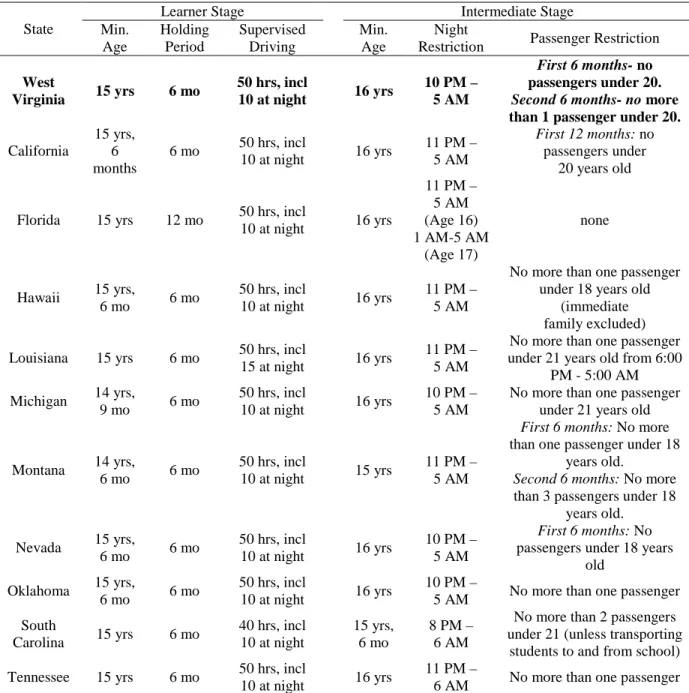
GDL laws place legal boundaries on new drivers. Legal restrictions help keep novice drivers safe as they continue to develop cognitively into their late teens/early 20s and gain more driving experience. All peer states that have studied the effects of the graduated driver licensing program have seen a net reduction in crashes involving those drivers who are affected by the restrictions placed on their driving privileges. Findings of these studies are summarized in Table 1, which lists program peer states’ GDL restrictions.
2.9: Program Peers
2.9.1: California
A study that used data through 2005 to examine the association of California’s GDL law and fatalities involving drivers ages 16-19 found that 16-year-old California drivers subjected to the GDL law experienced a motor-vehicle fatality rate 15% lower than 16-year-olds did before the law took effect (Males, 2007). However, a large increase in fatalities for 18 and 19 year olds offset the 15% reduction of fatal crash involvement for 16-year-olds.
Table 1: Characteristics of program peer state GDL programs State
Learner Stage Intermediate Stage
Min. Age Holding Period Supervised Driving Min. Age Night
Restriction Passenger Restriction
West Virginia 15 yrs 6 mo 50 hrs, incl 10 at night 16 yrs 10 PM – 5 AM First 6 months- no passengers under 20.
Second 6 months- no more
than 1 passenger under 20.
California 15 yrs, 6 months 6 mo 50 hrs, incl 10 at night 16 yrs 11 PM – 5 AM First 12 months: no passengers under 20 years old
Florida 15 yrs 12 mo 50 hrs, incl
10 at night 16 yrs 11 PM – 5 AM (Age 16) 1 AM-5 AM (Age 17) none Hawaii 15 yrs, 6 mo 6 mo 50 hrs, incl 10 at night 16 yrs 11 PM – 5 AM
No more than one passenger under 18 years old
(immediate family excluded)
Louisiana 15 yrs 6 mo 50 hrs, incl
15 at night 16 yrs
11 PM – 5 AM
No more than one passenger under 21 years old from 6:00
PM - 5:00 AM Michigan 14 yrs, 9 mo 6 mo 50 hrs, incl 10 at night 16 yrs 10 PM – 5 AM
No more than one passenger under 21 years old
Montana 14 yrs, 6 mo 6 mo 50 hrs, incl 10 at night 15 yrs 11 PM – 5 AM
First 6 months: No more than one passenger under 18
years old.
Second 6 months: No more than 3 passengers under 18
years old. Nevada 15 yrs, 6 mo 6 mo 50 hrs, incl 10 at night 16 yrs 10 PM – 5 AM First 6 months: No passengers under 18 years
old Oklahoma 15 yrs, 6 mo 6 mo 50 hrs, incl 10 at night 16 yrs 10 PM –
5 AM No more than one passenger South Carolina 15 yrs 6 mo 40 hrs, incl 10 at night 15 yrs, 6 mo 8 PM – 6 AM
No more than 2 passengers under 21 (unless transporting
students to and from school) Tennessee 15 yrs 6 mo 50 hrs, incl
10 at night 16 yrs
11 PM –
6 AM No more than one passenger Source: (Insurance Institute for Highway Safety, 2011)
An earlier study (Masten & Hagge, 2004) evaluated the safety impact of several GDL enhancements made in July 1998 for drivers under age 18. This evaluation found that the GDL program enhancements alone do not result in a significant overall reduction in teenage fatalities or crash involvement.
Carlos et al., (2009) explored the factors influencing teen driving behavior by asking teens about their perceptions of driver education and training, and about their driving practices. The study subjects were high school seniors in Central Valley, Los Angeles. Various issues relevant to driving, including training and education, most helpful learning resources, parental expectations, and reasons for driving, were explored. Students were asked about driving with friends and whether they or their friends participated in risky behaviors while driving and, if so, if they spoke up about it. Students were also asked about their involvement in auto accidents and the circumstances. The data suggest that the graduated driver licensing laws are reducing
violation rates for novice drivers, yet a fair number continue to break one or more laws. For example, 53% reported violating the driving curfew at least once.
Results also indicated that parents are a strong influence on young people’s driving. Nearly half (47%) of all respondents (N=623) cited their parents as the most helpful resource that they had available while learning to drive, moreso than driver training (25%), driver educations classes (11%), other relatives (5%), and friends (4%). In an open-ended question about how driver education or training could be improved, 48% indicated that teaching quality should be improved. Nearly 20% said driver education should be more practical or hands-on, and more than 12% suggested changing the amount of time for training (most wanted it to be longer). Approximately 12% said the training time was okay.
However, 38.4% reported distractions by their passengers while driving. The most common distraction reported was a passenger talking, yelling, arguing, or being loud (nearly 45% of those who reported distractions). More than 22% of the teenage drivers said that they were distracted by passengers “fooling around,” “wrestling,” or otherwise behaving playfully or
foolishly. In addition, more than 59% of respondents reported being passengers when a friend was driving dangerously.
When asked if they had been in any car crash as a driver, 328 teens (20.5%) responded positively. The majority of crashes occurred during daylight (63%). Speeding or reckless driving was the contributing factor most often identified (29.7%). Other contributing factors included bad weather (18%), car problems (11%), cell-phone use (11%), and alcohol or drug involvement (10%). Among additional responses about 10% said a lack of attention contributed to the crash. State data of California car crashes indicate that drivers 15-17 years old were at fault in 68% of fatal accidents.
2.9.2: Florida
Following adoption of graduated licensing in Florida, there was a decline in the crash rates of those affected by the law (15- to 17-year-olds), whiles the rate for 18-year-olds did not change significantly (Ulmer, Preusser, Williams, Ferguson, & Farmer, 2000).On a percentage basis, the greatest decline was among 15-year-olds, followed by 16-year-olds and then 17-year-olds, and the effects of graduated licensing were found to be more pronounced on nighttime than daytime crash involvements.
2.9.3: Michigan
Reductions in crash risk among 16-year-olds between 1996 and 2001 were 29% for all crashes and 44% for fatal crashes (Shope & Molnar, 2004).
2.10: Geographic Peers
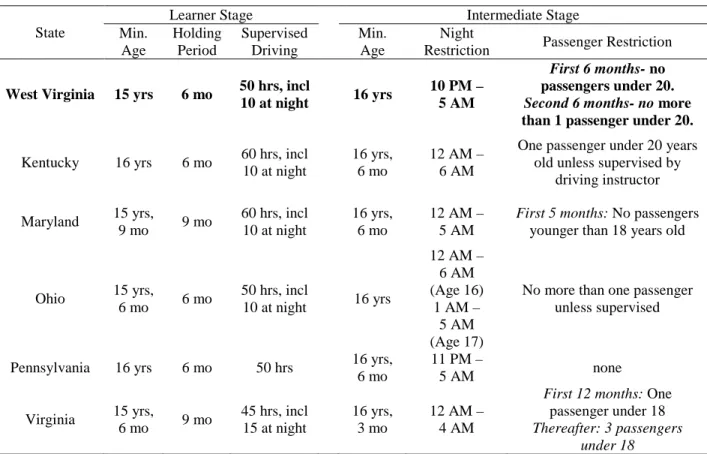
Table 2.10: Characteristics of geographic peer state GDL programs
State
Learner Stage Intermediate Stage
Min. Age Holding Period Supervised Driving Min. Age Night
Restriction Passenger Restriction
West Virginia 15 yrs 6 mo 50 hrs, incl
10 at night 16 yrs
10 PM – 5 AM
First 6 months- no
passengers under 20.
Second 6 months- no more
than 1 passenger under 20.
Kentucky 16 yrs 6 mo 60 hrs, incl 10 at night
16 yrs, 6 mo
12 AM – 6 AM
One passenger under 20 years old unless supervised by
driving instructor Maryland 15 yrs, 9 mo 9 mo 60 hrs, incl 10 at night 16 yrs, 6 mo 12 AM – 5 AM
First 5 months: No passengers younger than 18 years old
Ohio 15 yrs, 6 mo 6 mo 50 hrs, incl 10 at night 16 yrs 12 AM – 6 AM (Age 16) 1 AM – 5 AM (Age 17)
No more than one passenger unless supervised
Pennsylvania 16 yrs 6 mo 50 hrs 16 yrs, 6 mo 11 PM – 5 AM none Virginia 15 yrs, 6 mo 9 mo 45 hrs, incl 15 at night 16 yrs, 3 mo 12 AM – 4 AM
First 12 months: One passenger under 18
Thereafter: 3 passengers under 18
Source: (Insurance Institute for Highway Safety, 2011)
2.10.1: Ohio
Overall, crashes in Ohio involving drivers ages 16 and 17 decreased after GDL
implementation. When comparing pre-GDL and GDL groups, the crash involvement rate of the GDL group was 23% less than that of the pre-GDL group, while the at-fault crash rate was only 1% less. Fatal crash involvement as well as at-fault fatal crash involvement was less than the pre-GDL group by 24% and 7%, respectively (Shope & Molnar, 2003).
2.10.2: Pennsylvania
In Pennsylvania, crashes and fatalities were reduced by 27% and 58% for 16-year-old drivers between 1999 when the GDL went into effect, and 2000. From 1999 to 2001, a 45% reduction in fatalities occurred (Shope & Molnar, 2003).
2.11: Demographic Peers
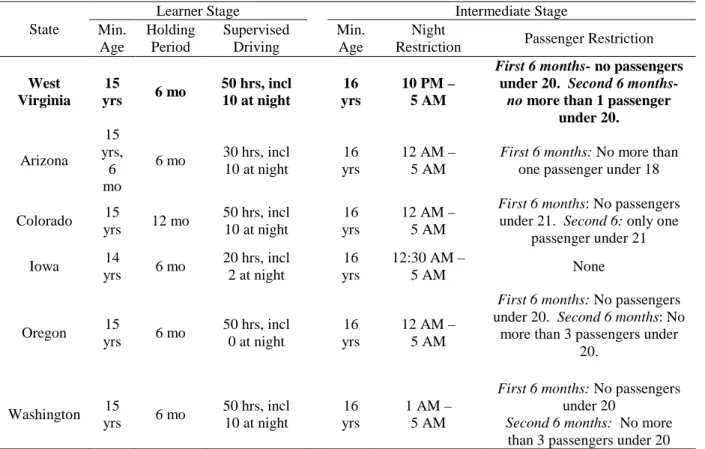
Demographic peer states and their GDL restrictions appear in Table 3. Relevant study findings follow.
Table 3: Characteristics of demographic peer state GDL programs State
Learner Stage Intermediate Stage
Min. Age Holding Period Supervised Driving Min. Age Night
Restriction Passenger Restriction
West Virginia 15 yrs 6 mo 50 hrs, incl 10 at night 16 yrs 10 PM – 5 AM
First 6 months- no passengers
under 20. Second 6 months-
no more than 1 passenger
under 20. Arizona 15 yrs, 6 mo 6 mo 30 hrs, incl 10 at night 16 yrs 12 AM – 5 AM
First 6 months: No more than one passenger under 18
Colorado 15 yrs 12 mo 50 hrs, incl 10 at night 16 yrs 12 AM – 5 AM
First 6 months: No passengers under 21. Second 6: only one
passenger under 21 Iowa 14 yrs 6 mo 20 hrs, incl 2 at night 16 yrs 12:30 AM – 5 AM None Oregon 15 yrs 6 mo 50 hrs, incl 0 at night 16 yrs 12 AM – 5 AM
First 6 months: No passengers under 20. Second 6 months: No
more than 3 passengers under 20. Washington 15 yrs 6 mo 50 hrs, incl 10 at night 16 yrs 1 AM – 5 AM
First 6 months: No passengers under 20
Second 6 months: No more than 3 passengers under 20 Source: (Insurance Institute for Highway Safety, 2011)
2.11.1: Iowa
After the implementation of the GDL in Iowa, a larger decrease was experienced in the crash rates of 15-, 16-, and 17-year-old drivers than the 35- to 44-year-old age group (Hallmark, Veneziano, Falb, Pawlovich, & Witt, 2007). For unknown reasons, 15-year-old drivers
minor school license1 may have been the major factor explaining why the GDL did not reduce crashes for this specific age group.
2.11.2: Washington
Since Washington’s implementation of its intermediate licensing program in 2001, teenage fatalities have decreased 69% for drivers aged 16 to 19 (Figure 3). In addition, there have been significant reductions in collisions for 16-year-olds. However, Washington’s
restrictions on teenage drivers fall behind the recommended national standard from the Insurance Institute for Highway Safety (René Ewing & Associates, LLC, 2007).
2.12: Enforcement
According to Steven Dale (2011), assistant to the Commissioner of the West Virginia DMV, West Virginia GDL laws are primary enforcement laws and include seatbelts and cell/texting use. He explained:
The number of citations issued for GDL component infractions are low. I would tend to agree with the second part of the question that drivers are more likely to be
1
A driver’s license that allows travel only between home and school: Iowa Code § 321.194
Figure 3: Washington State fatal collisions by year by age (Source: René Ewing & Associates, LLC, 2007)
ticketed for offenses like speeding. However, issuing tickets is not the primary objective of GDL laws, in my opinion. To me, GDL laws are about behavior modification…provide parents with a blue print for what should be considered as safe behavior for young drivers. If curfews, passenger restrictions, etc. are in the Law…more parents are more likely going to provide their young drivers with rules such as be home by 10 PM or restricting the son or daughter from transporting classmates.
According to Dale, compliance with highway safety laws can be categorized in three groups:
A. Persons who know and understand that not wearing seatbelts, cell phone/texting,
speeding, drinking before driving, aggressive driving, and tailgating are unsafe activities, and that their chances of avoiding crashes are better if they and those with whom they travel avoid these actions.
B. Persons who do not engage in a particular activity because they know it’s against the law and, therefore, understand that the activity must be unsafe.
C. Persons who will drive however they want, regardless of the laws.
Implicit in Dale’s remarks and suggested by the studies about California’s and Wisconsin’s GDL experiences (described below in section 6.0), keys to GDL effectiveness include knowledge/training, positive attitudes/understanding, compliance, and enforcement. Without all four elements, optimal safety results are not likely to be attained. Therefore, to better inform our study, peer states and their enforcement policies were included and are presented in the tables below, with compliance and awareness efforts described in the sections that follow.
2.13: Program Peer States
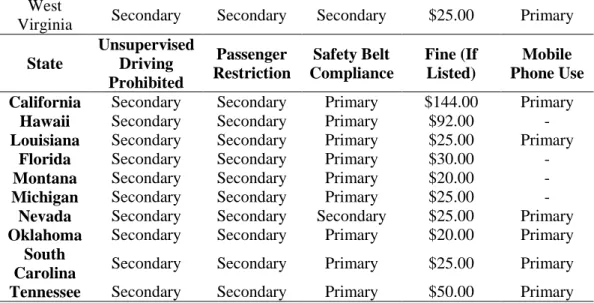
Program peers and their Intermediate Stage Enforcements and Fines appear in Table 4.
Table 4: Program peers component enforcement for intermediate stage
West
Virginia Secondary Secondary Secondary $25.00 Primary
State Unsupervised Driving Prohibited Passenger Restriction Safety Belt Compliance Fine (If Listed) Mobile Phone Use California Secondary Secondary Primary $144.00 Primary
Hawaii Secondary Secondary Primary $92.00 -
Louisiana Secondary Secondary Primary $25.00 Primary
Florida Secondary Secondary Primary $30.00 -
Montana Secondary Secondary Primary $20.00 -
Michigan Secondary Secondary Primary $25.00 -
Nevada Secondary Secondary Secondary $25.00 Primary
Oklahoma Secondary Secondary Primary $20.00 Primary
South
Carolina Secondary Secondary Primary $25.00 Primary Tennessee Secondary Secondary Primary $50.00 Primary
Source: IIHS, Governor's Highway Safety Association, 2011 Roadmap to State
Highway Safety Laws
2.14: Geographic Peer States
Geographic peers and their Intermediate Stage Enforcements and Fines appear in Table 5.
Table 5: Geographic peers component enforcement for intermediate stage
West Virginia Secondary Secondary Secondary $25.00 Primary
State Unsupervised Driving Prohibited Passenger Restriction Safety Belt Compliance Fine (If Listed) Mobile Phone Use Pennsylvania Secondary Secondary Secondary $10.00 -
Maryland Secondary Secondary Primary $25.00 Primary
Virginia Secondary Secondary Secondary $25.00 Primary
Kentucky Secondary Secondary Primary $25.00 Primary
Ohio Secondary Secondary Secondary $25.00 -
Source: IIHS, Governor's Highway Safety Association, 2011 Roadmap to State Highway
2.15: Demographic Peer States
Demographic peers and their Intermediate Stage Enforcements and Fines appear in Table 6.
Table 6: Demographic peers component enforcement for intermediate stage West
Virginia Secondary Secondary Secondary $25.00 Primary
State Unsupervised Driving Prohibited Passenger Restriction Safety Belt Compliance Fine (If Listed) Mobile Phone Use Arizona Secondary Secondary Secondary $10.00 -
Colorado Secondary Secondary Secondary $71.00 Primary
Iowa Secondary Secondary Primary $25.00 Primary
Oregon Secondary Secondary Primary $110.00 Primary
Washington Secondary Secondary Primary $124.00 Primary
Source: IIHS, Governor's Highway Safety Association, 2011 Roadmap to State Highway
Safety Laws
2.16: Innovative Enforcement Strategies
New Jersey has attempted to increase GDL restriction compliance through a unique law, known as Kyleigh’s Law. Named after Kyleigh D’Alessio of Washington Township, NJ, a 16-year-old female who was killed in a crash in which another teenager was driving, Kyleigh’s Law was signed April 15, 2009 and became effective May 1, 2010. The law requires any driver under the age of 21 who holds a permit or provisional driver license to purchase a pair of magnetic decals from the DMV (for $4.00 a pair) and display them on the top left corner of the front and rear license plates of their vehicle to make these drivers easier to identify by police (see Figure 4). In turn, it allows police to more effectively enforce GDL restrictions. Failure to display the decals can result in a fine of $100 in addition to any other fines incurred.
Of course, this law does not come without its share of debate. Concerned parents have argued that Kyleigh’s Law singles out teens for unintended identification by pedophiles and rapists. Youth rights groups are encouraging New Jersey drivers to sabotage the effectiveness of the law by having all drivers place these decals on their vehicles.
Delaware has a free, voluntary novice driver alert program that became effective on July 1, 2009. All GDL recipients may elect to place a reflective (Diamond Grade (DG3)) magnet on the rear of their vehicles (see Figure 5). It is suspected that other drivers on the road will slow down and give more room to the novice driver displaying the magnet. This program is used only as an additional safety tool for new drivers and their sponsors during the GDL period.
Figure 4: The GDL identification decal used in New Jersey
2.17: GDL Public Awareness
Wisconsin
In the years following the implementation of the GDL in Wisconsin2, there was a 15% reduction in crashes involving 16-year-old drivers. This reduction was significantly lower than the reductions experienced by other states (e.g., Michigan at 25%, North Carolina at 27%). The variability in effectiveness could be attributed to lack of program understanding, program diversity, or noncompliance.
GDL knowledge and attitude surveys were administered to Wisconsin teen drivers and their legal guardians to determine teen and parental knowledge and perception of the Wisconsin GDL program (McIntosh, 2005). Among respondents, 76% of parents supported the GDL while 70% of teens disapproved. Reasons for disapproval varied between parents and teens. Parents often cited inconvenience and restrictiveness, while teens most often cited passenger restrictions. It was suggested that overall, negative attitudes, more than lack of knowledge, may weaken GDL compliance.
2.18: Innovative Public Awareness Campaigns
Nevada, Oregon, and Connecticut have worked to instill greater awareness of,
understanding about, and positive attitudes toward their state’s respective GDL program through concerted public awareness campaigns.
Nevada’s campaign, called Prevent All Crashes Everyday (PACE) Program, was
implemented to encourage safe-driving habits among young drivers (15½ to 20 years old) and to increase awareness of seat-belt usage and the dangers of impaired and distracted driving among all drivers. The multi-platform advertising campaign included television, website, and
program elements. In the fall of 2010, a local Las Vegas television station aired four public service campaign announcements during each of its 13 local high school football game broadcasts. In addition to the live broadcasts, the games ran an encore presentation each Saturday. Campaign signage also appeared at the playing fields and on air.
At the heart of the Oregon Driver’s Education curriculum is parental involvement, and parents are required to attend a meeting as part of their teen’s driver training. The Oregon Parent Involvement Resource guide was developed in 2006. Parents are provided with “The Oregon Parent Guide to Teen Driving,” a resource completed through a joint partnership with the Oregon Transportation Safety Division and Driver and Motor Vehicle Services.
Parents of new drivers are presented with a folder on Parent Night, which includes a PowerPoint presentation, teacher’s notes, recommended activities, and demonstrations that address the parent’s responsibility in parental monitoring. During the parent meeting, information is given to educate parents on risk management driving and Graduated Driver Licensing laws and restrictions. Expectations for parental involvement in the education of their novice drivers are also presented. Oregon driver’s education providers reinforce safe driving practices through lesson plans and education progressions that incorporate home practice, under parental supervision. Parent/teen contracts also are available through a variety of sources. These contracts may be used to clearly convey parental expectations as well as teen expectations. Contracts may be used to underscore and define driving restrictions, rules, privileges, and consequences.
Connecticut is the first state to require a parent of 16- and 17-year-olds to complete a two hour training course prior to licensure. The program success was evaluated in 2010 (Chaudary et al.) The topics covered and amount of time allocated to each topic is listed in Table 7.
Table 7: CT DMV required topics and time allotment for 2-hour parent class
Topic Time allotment (min.)
Cognitive development 20
Risks 15
Parent’s role 15
Why graduated licensing? 10
What are the provisions of GDL? 10
New penalties and other provisions 10
New driver challenges and what is required to drive 10
Solutions (follow GDL rules, seat belts, avoidance of drinking/driving) 10
Skills needed to pass behind-the-wheel driving test 10
Hazard awareness 5
Teen-parent contract 5
Four basic driving rules 5
The parents and teens who participated in the program were interviewed within one year of program completion. Respondents were asked questions about their ratings of the course, how helpful they thought it was, and whether they agreed with the requirement that it be taken. The results of the parent interviews are shown in Table 8.
Table 8: Parent attitudes about the CT DMV course
Strongly agree Somewhat agree Somewhat disagree Strongly disagree
Training helped me 41% 43% 8% 7%
Will prevent crashes 21% 50% 18% 13%
Knowledgeable trainer 82% 15% 2% 1%
Well organized 72% 18% 6% 3%
Informative 60% 31% 6% 3%
Parents were also surveyed about their knowledge of the GDL program and other factors that affect teen crash involvement and injury. The results of the knowledge portion of the survey are shown in Table 9. A substantial deficiency in core GDL restrictions prior to completing the program was noted. After completing the program there was a marked increase in knowledge of the passenger restriction, night driving restriction, and GDL penalties.
Table 9: Parent knowledge of topics covered
Topic Topic was covered Prior awareness of topic
Alcohol 98% 99%
Passenger restriction 96% 77%
Night driving restriction 96% 71%
Distraction 94% 93%
Penalties 93% 58%
Teen involvement in fatal crashes 90% 84%
Brain development 52% 54%
Vehicle choice 31% 46%
The positive response from the parents about program participation was clear. Paired with the increased knowledge of GDL restrictions, this program is a promising complement to the GDL program.
2.19: Literature Review Summary
Based on the available research, it seems clear that GDL restrictions decrease teen
accidents by limiting teenage drivers’ exposure to some high-risk situations early in their driving experience. However, GDL’s full potential to reduce accidents and fatalities seems limited by people's knowledge, understanding, compliance, and enforcement of the laws. Therefore, an increase in both teen and parental awareness and understanding of GDL laws and rationales could help create more positive attitudes toward and voluntary compliance with its regulations.
This study seeks to add to the current GDL literature by assessing current knowledge, attitudes, and behaviors of a sample of West Virginia driver’s education students and their parents as well as police officers. Such information can then be used to identify gaps in knowledge and understanding of the Graduated Driver’s Licensing program. Analyzing this information will permit identification of any deficiencies in the program and implementation of improvements. Additional communication between parents, driver’s education instructors, and students would improve program effectiveness along with more GDL/teenage driver education for parents. Having more programs and tools available to allow parents and teens to better understand the rules and purpose of the GDL program would be beneficial to the program.
3.0: Research Approach
The success of the GDL program has been evaluated in other states; however, no studies of GDL effectiveness have been conducted specifically for West Virginia. Since each state is permitted to adopt its own GDL policies, with varying levels of strictness, it is important that West Virginia analyzes the effectiveness of its program.
To date, most studies of GDL programs have analyzed effectiveness strictly with respect to teenage crash involvement. While crash involvement is an important factor to investigate in overall program effectiveness, another vantage point worthy of investigation is the knowledge and opinion of those most directly affected by the GDL program.
While crash involvement may vary from year to year, the reason for these variations may not necessarily be a result of new legislation. Finding out if the program is being used as it is intended will provide insight as to whether the program is responsible for the change in crash involvement as well as ways to improve program participation. A study analyzing the
knowledge, compliance, and opinion of the GDL program will provide further depth and reason to the numbers. A positive attitude about the program would likely increase program
involvement. This would strengthen the results of a crash study if it were to be done in the future.
Survey Development and Distribution
Surveys were developed with the intent to extract information from the students, parents, and law enforcement officers about GDL knowledge, awareness, and compliance. Surveys were distributed in paper and electronic formats and were distributed to students and their parents
through school channels. Surveys were completed on a voluntary basis and all responses kept confidential.
Student/Parent Survey
The major objective of this study was to examine how the role and effectiveness of the GDL in the driving training of students in West Virginia. A survey was designed to assess the awareness, compliance, and opinion on enforcement of the GDL program among students and parents in West Virginia.
Awareness: To assess the awareness of the GDL, a knowledge survey was developed and administered to determine if students and parents were knowledgeable about basic GDL
concepts. The data collected will be used to compare student and parent knowledge, and to make insights as to who is more knowledgeable and why.
Compliance: Questions to determine whether students comply with the restrictions put in place by the GDL and if parents use the program were developed. If the GDL is deemed
ineffective, it could be because people are not compliant with the program or are not using the program as it was intended by the state.
Enforcement: To determine how students and parents view the enforcement of the program. Questions about how and if the police enforce the program were developed.
Information about perceptions of rules and consequences as set by the parents was also obtained. This helps determine if more police action is needed or if parent education on the GDL needs to be revised.
Opinion: Suggestions for program improvement were solicited from the students and their parents. Data on teenager driving habits (destination, time of day) also were obtained.
Juniors and seniors: Juniors and seniors were surveyed because of their experience with the program and their driving experience. Juniors and seniors along with their parents are the best source of GDL opinion since they have been through or are currently involved in the GDL program.
Enforcement Survey
To determine how well the GDL is being enforced in West Virginia, a survey of law enforcement officers was also conducted. A knowledge survey tested the officers’ general program knowledge, while an opinion survey was designed to solicit the opinion of those enforcing the GDL on the program’s strengths and weaknesses.
Awareness: To assess the awareness of the GDL a knowledge survey was developed and administered to determine if law enforcement officers were knowledgeable about basic GDL concepts. The data collected were used to compare program knowledge between different agencies, and to draw insight as to who is more knowledgeable and why.
Compliance: To assess teen compliance of the GDL program, law enforcement was surveyed to obtain an alternative point of view. Questions were designed to obtain the opinion of law enforcement officers on the frequency of GDL violations by teen drivers, and which particular restrictions are prone to violation.
Enforcement: In order to determine how frequently restrictions are being enforced, the police were asked directly how often citations for GDL violations were written. Since the GDL
is subject to secondary enforcement, questions were also asked about what impact changing the GDL to a primary enforcement law would have on enforcement/compliance, if any.
Opinion: Suggestions for programmatic changes to correct for potential noncompliance and barriers to enforcement of program guidelines were solicited from law enforcement. Questions regarding safety at present and the program’s potential for safety improvements were raised.
Locations
Urban and rural populations were surveyed to gauge their opinions on the awareness, compliance, and enforcement of the GDL program. Their responses were compared and the differences in their responses were noted. Differences in awareness, compliance, and
enforcement could indicate a difference in how the GDL is regarded between urban and rural populations.
4.0: Findings 4.1: Parent Survey Findings
Parents are intended to be the primary enforcers of the GDL program. In order for the program to operate most efficiently, current parents must be knowledgeable about the program rules and restrictions. Ninety parents of current high school juniors and seniors from urban and rural regions in West Virginia participated in this survey of the Graduated Driver Licensing program (see Figure 6). Only 46% of parents had heard of the GDL program, while the
remaining 54% did not know about the program or were unsure if they had heard of it before. Of
the parents who heard of the GDL approximately 29% had heard about it through DMV
literature; the same amount of parents were unsure or could not remember from where they had heard of the GDL program. Nineteen percent of parents heard about the GDL program from their son or daughter.
43% 46%
11%
Do parents know of the GDL?
No Yes Unsure
A five-question survey was distributed to the parents of high school juniors and seniors who are currently or have recently been enrolled in the Graduated Driver Licensing program. This survey was designed to test the parent’s knowledge of the most elementary components of the GDL. Results are shown in Figure 7.
Just under 90% of parents knew the minimum age at which their son or daughter could obtain a permit to operate a vehicle; however, 92% of parents did not know at what age their son/daughter could obtain their full operator’s license. Fewer than 60% of parents were
knowledgeable of the GDL curfew and passenger restrictions, which have a large impact on the program’s success or failure.
Trips taken most often by students, according to parents, are school related, either driving to and from classes or other school-sponsored extracurricular activities. Academic trips were followed by social trips. A surprisingly low number of trips were associated with household
0.0% 10.0% 20.0% 30.0% 40.0% 50.0% 60.0% 70.0% 80.0% 90.0% 100.0% Minimum Permit Age Number of Stages in the GDL Minimum Age for Full Licensure GDL Curfew GDL Passenger Restriction
Parent Knowledge Survey Results
Correct Incorrect
activities. Parents allow their children to drive to and from their academic and extracurricular activities. These activities begin and end at a time of day where if the parents were required to pick up their students at these times would create a large discord in their daily activities, such as arriving to work late, leaving early, or driving to pick up their son/daughter when their time could be spent doing other things. Parent-cited benefits are shown in Figure 8.
GDL restriction violations, as reported by parents, are summarized in Figure 9. About 54% of parents believe that teenage drivers violate the GDL curfew and passenger restrictions frequently. Parents have cited that the most often violated restriction by teen drivers is the passenger restriction, followed closely by mobile phone use and the curfew restriction. A majority of parents believe that the police rarely or never enforce the restrictions associated with the Graduated Driver Licensing program. The most common way to improve the GDL program cited by parents is to increase police enforcement and penalties. Many parents believe that the GDL program is not a substitute for school driver’s education courses and training programs.
33%
33% 16%
9% 4% 5%
Parent-Cited Benefits of the GDL Program
Confidence for teens Increase public safety Makes teens feel safer riding with others Earlier driving age No Benefits Unsure/Don't know
This indicates that parents believe that if law enforcement officers enforced the restrictions associated with the GDL, fewer teen drivers would violate the restrictions.
Fifty-six percent of parents believe that the GDL program is a very fair program, while 34% believe that it is not very fair. Fifty-five percent of parents believe that the GDL program increases safety, and 36% do not believe that the program increases safety. A majority of parents believe that the GDL raises teen driver confidence and increases public safety.
Sixty-two percent of parents cited that their son/daughter drives most often between the hours of 3 p.m. and 7 p.m.; 71% of parents stated that they use the GDL to restrict their
son/daughter’s driving, while 23% of parents do not and 6% only use it some of the time.
Many parents impose additional restrictions on their child’s driving, the most common being that their son/daughter must report their destination and obtain permission before driving. Parents also want their child to report expected return times and place limitations on their travel during severe weather conditions. The consequences for when a teen driver violates his or her parent’s restrictions are varied. The most common of these consequences is limited driving.
26%
36% 3%
32% 3%
Most Often Violated GDL Restrictions as Cited by Parents
Curfew Passenger Seatbelts
Mobile Phone Use Other
This seems to imply that having a driver other than a parent in the household is convenient for the parents, and that suspending their teen’s driving entirely would create an additional burden for them.
4.2: Student Survey Findings
Student surveys were distributed through schools. Over 400 student responses were collected. The survey was designed to gage student’s opinions on program compliance, fairness, and effectiveness. Suggestions for program improvement were also requested from students participating in the surveys.
Student knowledge of the Graduated Driver’s Licensing program was lower than expected, with only 53% of students reporting that they had heard of the program (see Figure 10). Student GDL knowledge is summarized in Figure 11.
Figure 10: Students who know of the GDL program
With respect to specific provisions of the GDL program, students were far more
knowledgeable about the minimum permit age and restrictions than they were about the number 33%
53% 14%
Do Students Know of the GDL?
No Yes Unsure
of stages in the GDL program or the minimum age for full licensure. Students were more knowledgable about aspects of the program that initially affected their ability to drive and the restrictions placed on their driving after they were permitted to do so. Students were less knowledgable about subsequent aspects of the program that were not inherently important to their ability to drive. This indicates that students are more concerned about obtaining the privlege to drive than they are about the rules that affect their ability to maintain that privilege.
Figure 11: Student GDL knowledge survey results
The largest benefit of the program cited by the students was increased confidence and that the program increases public safety. Only 6% of student drivers saw no benefits to the GDL program. Twenty-four percent of students said that decreasing insurance rates for non-offenders would improve the GDL program. Seventeen percent of students said that more GDL education for students would improve the program, while only 9% of students thought that the parents needed more GDL education. Seventeen percent of students wanted more GDL education for
0.0% 10.0% 20.0% 30.0% 40.0% 50.0% 60.0% 70.0% 80.0% 90.0% 100.0% Minimum Permit Age Number of Stages in the GDL Minimum Age for Full Licensure GDL Curfew GDL Passenger Restriction
Student Knowledge Survey Results
Correct Incorrect