ROLE OF AFFECT AND TASK CATEGORY-KNOWLEDGE
SHARING TOOLS FIT ON BEHAVIOURAL INTENTION TO
USE KS TOOLS AMONG KNOWLEDGE WORKERS
by
ANGELA LEE SIEW HOONG
Submitted in partial fulfilment of the requirements
for the
Degree of Doctor of Philosophy in Computing
at Sunway University
December, 2015
Copyright © 2015 by Sunway University
All rights reserved.
DECLARATION
I, Angela Lee Siew Hoong, declare that the PhD thesis entitled “Role of Affect and Task Category-Knowledge Sharing Tools Fit on Behavioral Intention to use KS tools among Knowledge Workers” that the thesis is my own work and has not been submitted in any form for any degree or diploma at any university or other institute of tertiary education. Information derived from the published or unpublished work of others has been acknowledged in the text, and a list of references given.
... 31 December 2015
ACKNOWLEDGEMENTS
I would like to express my sincere gratitude, thanks and appreciation to my supervisor Professor Dr. Lim Tong Ming. Without his advice, I would not have embarked into this wonderful journey. His deliberate effort and constant motivation had become my strength to move on and continue to strive for what I had thought would never come true in my life. I am thankful for all his teachings, advice and guidance to me. Although his mentorship was tough, it is all worth it since I had learned a lot under his guidance.
I also would like to express my appreciation to my co-supervisor Professor Dr Thi Lip Sam for his efforts to correct and realign my thesis. Prof Lim and Prof Thi have been constantly providing guidance to draft and redraft every chapter of my thesis. They assist me to restructure my thesis and make sure it is written clearly. They had both shown me what it means to be a true researcher and academician.
I am thankful and grateful to have Associate Prof Dr. Lin Mei Hua as my co supervisor for her advice and guidance in my thesis writing too. She had highlighted to me places in the thesis that were questionable so that I did not create any queries and confusion in my readers. I would also like to thank the staff of Faculty Science and Technology, Sunway University, especially the dean, associate dean and my colleagues who had helped me through this journey.
My heartfelt appreciation to My father and mother, my niece Grace Lee and family
ABSTRACT
Knowledge sharing is an essential practice by organizations of the 21st century. To leverage on knowledge sharing activities and cultivate a knowledge based ecosystem, organizations have invested and deployed many types of Knowledge Sharing tools (KS tools). KS tools allow knowledge workers to share and use knowledge in organizations. The low usage of KS tools justify the need to study the usage and also the intention to use these tools in organizations particularly among knowledge workers. In addition, the decline of Knowledge Economy Index (KEI) and Knowledge Index (KI) for Malaysia showed that knowledge sharing and knowledge contribution in education, innovation, and ICT are deteriorating. The need to investigate knowledge workers' intention to use knowledge sharing tools to support knowledge practices seems a reasonable research goal. In this research, the focus is on the behavioral intention of knowledge workers to use KS tools among knowledge workers in Multimedia Super Corridor (MSC) status organizations. MSC-status organizations play a key role that contributes to the national KEI and KI for Malaysia. The main objective of this study is to identify factors that influence the intention to use KS tools among knowledge workers.
In an attempt to provide answers to the research objective, Affective Technology Acceptance Model (A.T.A Model) is developed to examine the antecedents that influence the attitude and behavioral intention of the knowledge workers to use KS tools in their day-to-day tasks. The A.T.A Model integrates Technology Acceptance Model with Task-Technology Fit to examine the acceptance of technology by hypothesize fit between Task Category and KS tools to Behavioral Intention to use KS tools. The proposed research model also includes the role of affect drawing from
theories by Russell’s Circumplex of Affect and Watson, Clark and Tellegen’s Consensual Model of Affect into the propose model. The A.T.A model also considers organizational factors and motivational factors that influence the Behavioral Intention to use KS tools among knowledge workers.
Quantitative method using survey approach is adopted to collect data from respondents. The proposed A.T.A model is empirically examined using two hundred ninety five (295) respondents who comprised of knowledge workers from a sampling frame of two thousand five hundred and five (2505) knowledge workers in twenty-three (23) MSC-status organizations that participated in this research. The outcomes of the analysis support the overall structure of the model whereby sixteen (16) of the twenty-two (22) hypothesis are supported. The Behavioral Intention to use KS tools is supported and explained by knowledge workers' Attitude, Task-Category and KS tools fit, Positive Affect and Trust. In this research, Attitude has the highest impact on Behavioral Intention, followed by Task Category-KS tools fit, Positive Affect and Trust. On the other hand, Negative Affect influences Behavioral Intention knowledge workers for three (3) different points in time only ("At the Moment", "Past Few Days", and "Past Few Weeks"). However, Extrinsic and Intrinsic Rewards are found to have no influence on Behavioral Intention to use KS tools. The findings highlighted that change in Positive Affect is able to create a positive impact in Behavioral Intention of knowledge workers to use KS tools besides Attitude and TCK fit. The findings highlighted that Positive Affect has an influence on Perceived Usefulness, but Negative Affect has no influence on it. However, both Positive and Negative Affect have an influence on Perceived Ease of Use. The results also found that Task Category-KS tools fit influences Behavioral Intention significantly. This is consistent with past
research, which claimed that integrating Task Category-KS tools fit to acceptance model is able to provide better explanation on the intention of individuals to use KS tools. On the contrary, this research found Extrinsic and Intrinsic Rewards, and Management Support have no significant relationship with Behavioral Intention to used KS tools in the proposed A.T.A model.
Overall, the results of this study contribute to the literature of technology acceptance by shedding light on the behavioral intention to use KS tools among knowledge workers.
TABLE OF CONTENT ACKNOWLEDGEMENTS ... I ABSTRACT ... III TABLE OF CONTENT ... VI LIST OF APPENDICES ... IX LIST OF TABLES ... X LIST OF FIGURE ... XIII LIST OF ABBREVIATIONS ... XVI
CHAPTER 1 INTRODUCTION ... 1 1.1 BACKGROUND OF STUDY ... 1 1.2 MOTIVATION OF STUDY ... 7 1.2 PROBLEM STATEMENT ... 10 1.4 RESEARCH QUESTIONS ... 14 1.5 OBJECTIVES ... 15 1.6 SIGNIFICANCE OF RESEARCH ... 16 1.7 SCOPE OF RESEARCH ... 16
1.8 ORGANIZATION OF THE THESIS ... 18
1.9 SUMMARY ... 19
CHAPTER 2 LITERATURE REVIEW ... 20
2.1 KNOWLEDGE MANAGEMENT AND PRACTICES ... 20
2.1.1 Classification of knowledge ... 24
2.1.2 Factors in Knowledge Management System (KMS) and Implementation strategies 25 2.1.2.1 Organizational factors ... 26
2.1.2.2 Motivational factors ... 29
2.1.3 Knowledge Workers ... 32
2.2 TECHNOLOGY ACCEPTANCE ... 35
2.2.1 Theory of Reasoned Action (TRA) ... 35
2.2.2 Theory of Planned Behavior and Decomposed Theory of Planned Behavior ... 38
2.2.3 Technology Acceptance Model (TAM) ... 40
2.2.4 Technology Acceptance Model 2 (TAM2) and TAM 3 ... 45
2.2.5 Unified Theory of Acceptance and Use of Technology (UTAUT) ... 47
2.2.6 Augmented TAM... 50
2.2.7 Other Related Theories on Technology Acceptance ... 51
2.3 COMPARISON OF MODELS IN TECHNOLOGY ACCEPTANCE STUDY ... 53
2.3.1 TRA and TAM ... 54
2.3.2 TPB and TAM ... 55
2.3.3 SCT and TPB ... 55
2.3.4 Critical Remark ... 55
2.4 ROLE OF AFFECT ... 59
2.4.1 Affect Theories ... 61
2.4.2 Taxonomy of Affective States ... 69
2.4.3 Affect Scales ... 78
2.4.4 Role of Affect in Information Systems Research ... 84
2.4.5 Operational Definitions ... 89
2.4.6 Critical Remarks... 91
2.5 TASK CATEGORIES AND TASK-TECHNOLOGY FIT ... 91
2.5.1 Related Works on Tasks Categories ... 92
2.6 KNOWLEDGE SHARING TOOLS (KSTOOLS) ... 110
2.7 RESEARCH GAPS... 122
2.8 SUMMARY ... 123
CHAPTER 3 DEVELOPMENT OF RESEARCH FRAMEWORK ... 124
3.1 THEORETICAL BACKGROUND ... 125
3.2 PROPOSED EXTENSIONS TO TECHNOLOGY ACCEPTANCE MODEL ... 127
3.3 RESEARCH HYPOTHESIS DEVELOPMENT ... 132
3.3.1 Organizational Factors as Antecedent to Perceived Usefulness and Perceived Ease of Use ... 132
3.3.2 Perceived Usefulness and Perceived Ease of Use as Antecedents to Attitude toward KS tools usage ... 135
3.3.3 Attitude towards KS Tools Usage as an antecedent to Behavioral Intention to use KS Tools ... 137
3.3.4 Motivational Factors as antecedent to Behavioral Intention to use KS Tools... 138
3.3.5 Affect as an antecedent to Perceived Usefulness, Perceived Ease of Use and Behavioral Intention to use KS tools... 141
3.3.6 The influence of Task Category and KS tools on Task Category and KS tools fit (TCKfit) ... 142
3.3.7 Task Category and KS tools fit (TCK fit) as an antecedent to Behavioral Intention to use KS tools. ... 145
3.4 SUMMARY ... 146
CHAPTER 4 RESEARCH METHODOLOGY ... 147
4.1 RESEARCH METHODOLOGY ... 147
4.1.1 Qualitative Approach ... 147
4.1.2 Quantitative Approach ... 148
4.2 RESEARCH PROCESS ... 148
4.3 RESEARCH DESIGN ... 152
4.4 CHOICE OF RESEARCH DESIGN ... 152
4.5 POPULATION,SAMPLE AND DATA COLLECTION ... 156
4.5.1 Population ... 156
4.5.2 Sampling selection ... 156
4.5.3 Sampling techniques ... 157
4.5.4 Sample size ... 158
4.5.5 Data collection strategy ... 158
4.6 DATA EDITING AND CODING ... 159
4.7 ANALYSING DATA ... 160
4.8 ETHICS IN RESEARCH ... 161
4.9 QUESTIONNAIRE DESIGN ... 162
4.9.1 Structure of the survey instrument ... 163
4.9.2 Measurement scale ... 166
4.9.3 Development of questionnaires ... 168
4.9.4 Results Pre-test and Pilot Test ... 172
4.10 INTERNAL CONSISTENCY,RELIABILITY AND VALIDITY TEST FOR PILOT STUDY ... 174
4.10.1 Results of Reliability and Validity Analysis on Pilot Test ... 175
4.11 SUMMARY ... 189
CHAPTER 5 DEMOGRAPHIC, TASK CATEGORIES AND KS TOOLS USAGE ... 190
5.1 SURVEY RESPONSE RATE ... 190
5.2 NON RESPOND T-TEST ... 191
5.3 RESPONDENTS PROFILE ... 194
5.3.1 Industries ... 194
5.3.2 Job position... 195
5.3.3 Respondents' Working Experience ... 195
5.3.4 Education Level ... 196
5.3.5 User Type ... 196
5.5 ANALYSIS ON KS TOOLS USE AND TASK CATEGORY ... 204
5.6 SUMMARY ... 211
CHAPTER 6 ANALYSIS OF THE MODEL ... 212
6.1 ASSESSMENT OF THE MEASUREMENT MODEL ... 213
6.1.1 Minimum Sample Size Requirement ... 215
6.1.2 Reflective Measurement Models ... 215
6.1.2.1 Composite Reliability ... 216
6.1.2.2 Convergent Validity... 217
6.1.2.3 Discriminant Validity ... 219
6.1.3 Formative Measurement Models ... 220
6.1.3.1 Convergent Validity... 221
6.1.3.2 Collinearity Test ... 223
6.1.3.3 Assessing and Evaluating the Significance and Relevance of the Formative Items .. 226
6.1.3.4 Bootstrapping ... 229
6.2 ASSESSMENT OF THE STRUCTURAL MODEL ... 237
6.2.1 Collinearity Assessment ... 238
6.2.2 Structural Model Path Coefficients ... 239
6.2.2.2 Total Effect ... 249
6.2.3 Coefficient of Determination using R2 values ... 252
6.2.4 Effect size f2 ... 264
6.2.5 Blindfolding and predictive relevance Q2 ... 266
6.3 SUMMARY ... 268
CHAPTER 7 DISCUSSION AND CONCLUSIONS ... 272
7.1 OVERVIEW OF FINDINGS ... 272
7.1.1 KS tools Frequency Usage... 275
7.1.2 Task Category and KS tools ... 276
7.1.3 To Examine the Influence of Positive Affect, Negative Affect and Organizational Factors on Perceived Usefulness and Perceived Ease of Use ... 276
7.1.4 To examine the Influence of Positive Affect and Negative Affect on Behavioral Intention to use KS tools ... 279
7.1.5 To Examine the Motivational factors on Behavioral Intention to use KS tools ... 280
7.1.6 To Examine the Influence of Task-category and KS tools fit on Behavioral Intention to use KS tools ... 281
7.2 THEORETICAL IMPLICATIONS ... 282
7.3 PRACTICAL IMPLICATIONS ... 284
7.4 LIMITATIONS AND FUTURE RESEARCH ... 286
7.5 CONCLUSIONS ... 287
REFERENCES ... 289
APPENDIX 1 QUESTIONNAIRE ... 368
APPENDIX 2 G POWER ANALYSIS ... 381
APPENDIX 3 CROSS LOADINGS FOR ALL CONSTRUCTS ... 382
APPENDIX 4 SUMMARY OF THE EVALUATION OF REFLECTIVE MEASUREMENT MODEL 383 APPENDIX 5 CONVERGENCE VALIDITY TEST USING GLOBAL INDICATOR ... 384
APPENDIX 6 FORMATIVE CONSTRUCT SIGNIFICANT LEVEL ... 387
APPENDIX 7 ADAPTED INSTRUMENT ... 389
APPENDIX 8 LIST OF PUBLICATIONS ... 402
LIST OF APPENDICES
Appendix 1 Questionnaire
Appendix 2 G Power Analysis
Appendix 3 Cross Loading for all constructs
Appendix 4 Summary of the evaluation of Reflective Measurement model
Appendix 5 Convergence Validity test using Global Indicator
Appendix 6 Appendix 7
Formative Construct significant level Adapted Instrument
Appendix 8 List of Publications
LIST OF TABLES
Table 2.1 Technology and systems predicted by TAM
Table 2.2 External constructs added to TAM
Table 2.3 Taxonomy of Affective Concepts: Super Categories and Categories
(Zhang, 2013)
Table 2.4 Affect concept
Table 2.5 Affect Grid
Table 2.6 Affect related constructs in IS studies
Table 2.7 Operational definitions of affect
Table 2.8 Types of tasks by Zigurs and Buckland
Table 2.9 Task categories proposed by McGrath (1984)
Table 2.10 Organizational tasks (Gebauer and Shaw, 2002)
Table 2.11 Other related studies on tasks categories (Zigurs and Buckland,
1998)
Table 2.12 New constructs that extended Task-Technology Fit model
Table 2.13 Task Categorization
Table 2.14 Task category characteristics-Technology features
Table 2.15 Knowledge sharing tools listing
Table 2.16 KS tools and types of activities accomplished by each tool
Table 4.1 Summary of sources for items measure constructs in the A.T.A
model
Table 4.2 Results of Reliability and Internal Consistency tests
Table 5.2 Summaries of Non-Response Bias Methods/Techniques
Table 5.3 Independent Samples T-Test
Table 5.4 Industries
Table 5.5 Job positions
Table 5.6 Respondents’ Working experience
Table 5.7 Education Level
Table 5.8 Technical Skill
Table 5.9 Difference level of frequency usage
Table 5.10 Mean and Standard Deviation of KS tools usage
Table 5.11 Different types of task categories
Table 6.1 Reflective and Formative Constructs in A.T.A model
Table 6.2 Reflective constructs’ composite reliability after removing N4
Table 6.3 Summary of Outer loadings, Indicator reliability, and AVE
Table 6.4 Discriminant validity of constructs
Table 6.5 VIF for Collinearity assessment on formative constructs
Table 6.6 Task Category construct Outer weights and its significance level
Table 6.7 KS Tools construct outer weights and its significance level
Table 6.8 Management Support construct outer weights and its significance
level
Table 6.9 Social Factors construct outer weights and its significance level
Table 6.10 Facilitating Factors construct outer weights and its significance level
Table 6.11 Extrinsic Reward construct outer weights and its significance
Table 6.12 Intrinsic Reward construct outer weights and its significance level
Table 6.14 Positive Affect and Negative Affect on Perceived Usefulness construct outer weights and its significance level
Table 6.15 Positive affect and Negative Affect on Perceived Ease of Use
construct outer weights and its significance level
Table 6.16 Positive Affect and Negative Affect on Behavioral Intention
construct outer weights and its significance level
Table 6.17 Composite Means
Table 6.18 Summary of VIF for collinearity analysis
Table 6.19 Path Coefficients for all constructs
Table 6.20 Path Coefficients for PA and NA indicated in eight (8) different points in time by respondents
Table 6.21 Hypothesis Testing Results (Supported)
Table 6.22 Hypothesis testing results (Not Supported)
Table 6.23 Hypothesis Testing Result for the Eight (8) different times
Table 6.24 Endogenous Latent Variable R2 and t Values
Table 6.25a Significant Exogenous to Endogenous construct
Table 6.25b Insignificant Exogenous to Endogenous construct
Table 6.26 Endogenous Latent Variables with predictive relevance value
Table 6.27 Summary Analysis of Reflective Measurement Models
Table 6.28 Summary Analysis of Formative Measurement Model
Table 6.29 Structural Model Analysis for ATT_G
Table 6.30 Structural Model Analysis for BI_J
Table 6.31 Structural Model Analysis for PEOU _H
Table 6.32 Structural Model Analysis for PU_I
LIST OF FIGURE
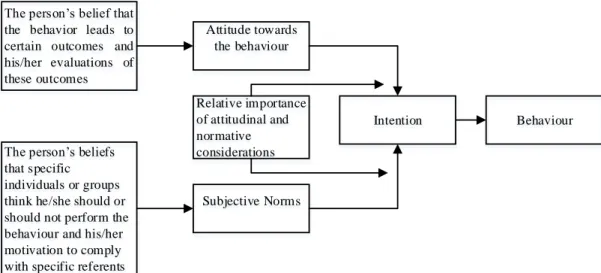
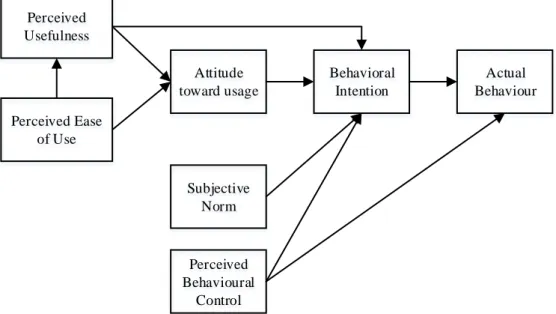
Figure 2.1 Theory of Reasoned Action (Ajzen and Fishbein, 1980)
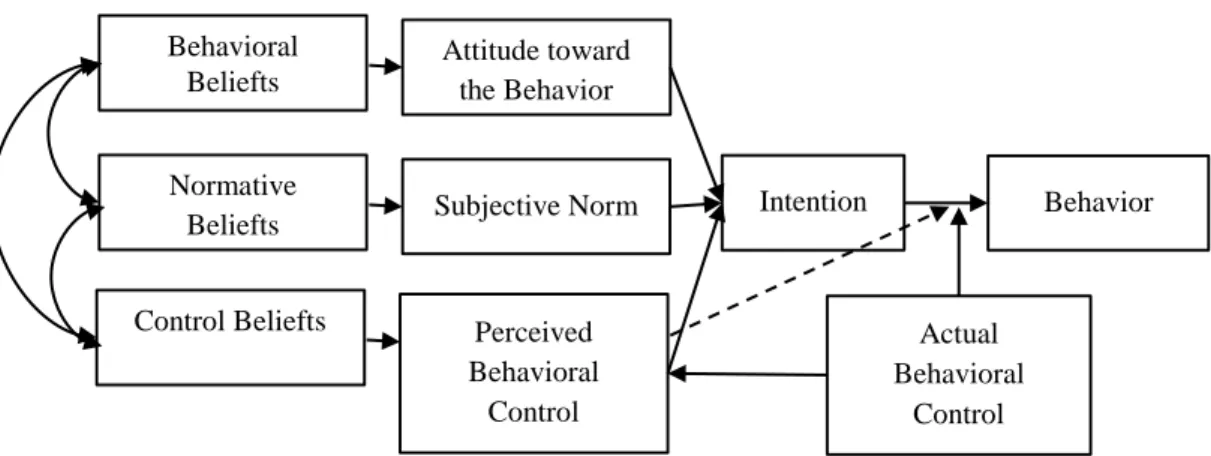
Figure 2.2 Theory of Planned Behaviors (Ajzen, 2006)
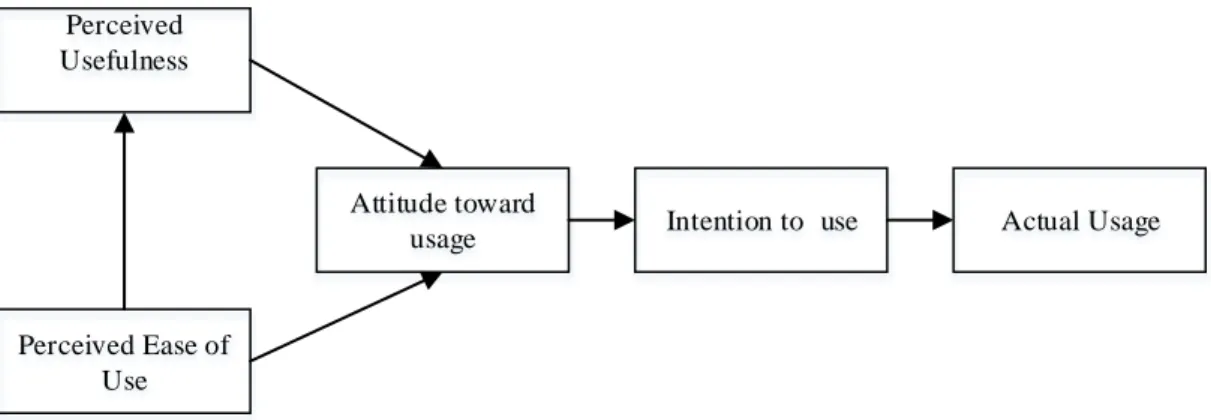
Figure 2.3 Technology Acceptance Model (Davis et al., 1989)
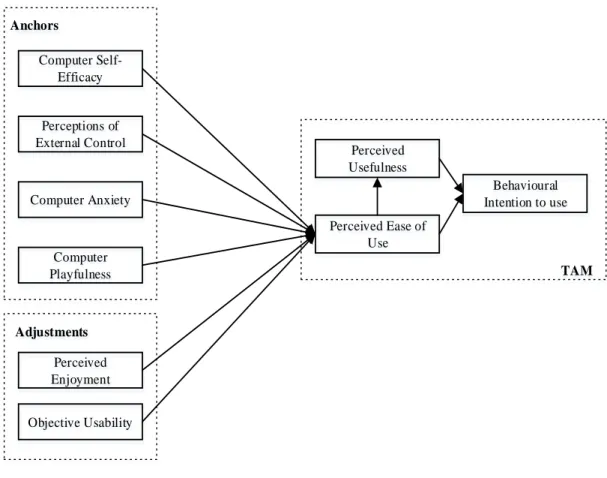
Figure 2.4 External variables added to TAM (Davis et al., 1989)
Figure 2.5 Extended Technology Acceptance Model (TAM 2) (Venkatesh and
Davis, 2000)
Figure 2.6 TAM 3 (Venkatesh, 2000)
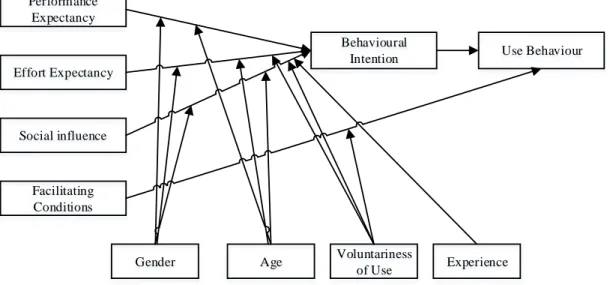
Figure 2.7 The Unified Theory of Acceptance and Use of Technology
(Venkatesh et al., 2003)
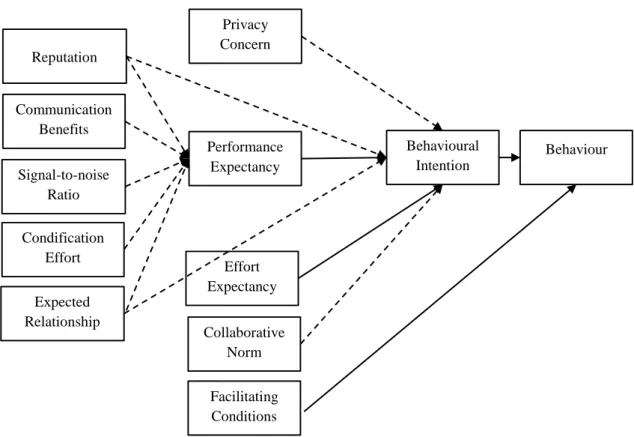
Figure 2.8 A modified version of UTAUT model (Gunther et al., 2009)
Figure 2.9 C-TAM-TPB (Taylor and Todd, 1995a)
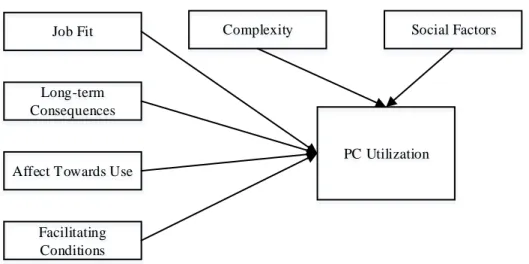
Figure 2.10 PC Utilization model (Thompson et al., 1991)
Figure 2.11 Model of Affect within Two-Dimensional Space described by Russell (1989)
Figure 2.12 Mcgrath’s Group Task Circumplex
Figure 2.13 Task Categories by Bystrom and Jarvelin (1995)
Figure 2.14 Job Characteristics Model by Hackman and Oldham (1967) Figure 2.15 Task Technology Fit (Goodhue and Thompson, 1995)
Figure 3.1 Extension of TAM using Organizational and Motivational Factors
Figure 3.2 Extension of TAM using Role of Affect
Figure 3.3 TCK Fit Model
Figure 3.5 Perceived Relationship between organizational factors with PEOU and PU
Figure 3.6 Perceived Relationships between PEOU and PU toward attitude using
KS tools
Figure 3.7 Attitude toward KS tools hypothesize Behavioral intention to use KS
Tools
Figure 3.8 Motivational Factors hypothesize Behavioral Intention To use KS
tools
Figure 3.9 Positive Affect and Negative Affect hypothesize PU, PEOU and BL
to use KS tools
Figure 3.10 Task Category and KS tools Fit hypothesize Behavioral Intention to use KS tools
Figure 4.1 Research Process
Figure 5.1 Comparative analysis on Usage Frequency of different group of KS
tools
Figure 5.2 Distribution of KS tools group and “Operational” Task group
Figure 5.3 Distribution of KS tools usage for “Information” Task Group
Figure 5.4 Distribution of KS tools usage for “Management” Task Group
Figure 5.5 Distribution frequency usage of KS tools group and Task group
Figure 6.1 Results of PLS analysis for Path Coefficient
Figure 6.2 Support_A, PEOU_H and PU_I direct, Indirect and Total Effects
Figure 6.3 PEOU_H, ATT_G and PU_I direct, Indirect and Total Effects
Figure 6.4 PEOU_H, Social_B and PU_I direct, Indirect and Total Effects
Figure 6.6 Results of PLS analysis for Path Coefficient and R2 values for time
“At the Moment”
Figure 6.7 Results of PLS analysis for Path Coefficient and R2 values for time
“Today”
Figure 6.8 Results of PLS analysis for Path Coefficient and R2 values for time
“Past Few Days”
Figure 6.9 Results of PLS analysis for Path Coefficient and R2 values for time
“Past Week”
Figure 6.10 Results of PLS analysis for Path Coefficient and R2 values for time
“Past Few Weeks”
Figure 6.11 Results of PLS analysis for Path Coefficient and R2 values for time
“Past Month”
Figure 6.12 Results of PLS analysis for Path Coefficient and R2 values for time
“Past Year”
Figure 6.13 Results of PLS analysis for Path Coefficient and R2 values for time
LIST OF ABBREVIATIONS
ATT Attitude
BI Behavioural Intention
KMS Knowledge Management Systems
KS Tools Knowledge sharing tools
NA Negative Affect
SCT Social Cognitive Theory
PA Positive Affect
PEOU Perceived Ease of Use
PU Perceived Usefulness
PLS Partial Least Square
TAM Technology Acceptance Model
TAM 2 Technology Acceptance Model 2
TAM 3 Technology Acceptance Model 3
TRA Theory of Reasoned Action
TPB Theory of Planned Behaviour
TTF Task Technology Fit
TCKfit Task Category-Knowledge Sharing Tools fit
TaskCat Task Category
CHAPTER 1 INTRODUCTION
This chapter outlines the research motivation, background, problem statement, research questions, objectives, contributions, significance, scope of research, and the structure of this thesis.
1.1 Background of Study
Knowledge is widely recognized as the key enable for a country to stay competitive in a globally borderless market ecosystem (Bhatiasevi, 2010; Mustapha and Abdullah, 2004). In the mid-1990s, the Malaysian government, was determined to transform the country into a Knowledge driven Economy (Economy) where the Malaysian K-Economy Master Plan outlines the major K-K-Economy policy initiatives. K-K-Economy is one of the key national agenda for Vision 2020, an effort by the government for Malaysia to become a developed nation. In the mid-1990s, Malaysia started to lay the foundation for the knowledge-based economy with the launching of the National IT Agenda (NITA) and the Multimedia Super Corridor (MSC). The Multimedia Super Corridor (MSC) is an area that stretches from the Kuala Lumpur city center to Cyberjaya. Cyberjaya is a city designed to incubate high technology companies. In addition, ICT infrastructures and utilization of ICT to support knowledge creation and sharing, besides developing quality human resources that is important for a K-Economy. ICT enables access to a large amount of information readily available from the World Wide Web.
Meanwhile, the emergence of Web 2.0 technology and rapid changes of the business ecosystem have driven the need for business to adopt new information systems with advanced functions and features. The new technologies enable organizations to be flatter, more flexible, and well networked. For organizations in the 21st century, Information and Communication Technology (ICT) is one of the key drivers that provide these organizations with the competitive advantage. Businesses need to invest in software, hardware, databases, communication networks and specialized personnel (Martin, Brown, DeHayes, Hoffer & Perkins, 2002). These investments are prerequisites for businesses to compete in the knowledge economy.
In addition, past studies have also indicated that knowledge sharing is one of the key components of knowledge management that is critical for the success of an organization in a highly competitive environment (Hau, Lee & Kim, 2013; Grant, 1996). With employees actively involved in knowledge sharing, organizations are able to enhance and sustain their competitive advantage (Hau et al., 2013; Liu & Phillips, 2011; Grant, 1996; Barney, 1991). Many organizations had also recognized that knowledge contributed by employees could benefit organizations in numerous ways. Therefore, organizations need to strategically apply and financially reward good knowledge sharing practices in order to motivate knowledge workers to contribute and share their knowledge and expertise (Argote, 1999; Grant, 1996; Wernerfelt, 1984). In view of the importance of organizational knowledge, many organizations have started to evolve and transform themselves into knowledge centric organizations, whereby knowledge workers could capture, manage, utilize, and share knowledge as part of their day-to-day work using knowledge sharing tools. The knowledge-based perspective from the resource-based view of organizations regards knowledge as a
source of organization competitive advantage (Nahapiet & Ghoshal, 1998; Conner & Prahalad, 1996; Grant, 1996; Barney, 1991). Many organizations are executing knowledge management initiatives and investing in knowledge sharing tools to manage organizational knowledge resources (Kankanhalli, Tan & Wei, 2005; Alavi and Leidener, 2001; Osterloh & Frey, 2000; Wasko & Faraj, 2000; Zack, 1999; Ruggles, 1998; Davenport & Prusak, 1998).
Two (2) successful factors in knowledge management initiatives are; First, the utilization of the network technology infrastructure such as internet, collaborative tools and global communication systems for effective transfer of knowledge. Second, the establishment of a broad information system infrastructure based on desktop computing and communications (Davenport & Prusak, 1998). Effective information system infrastructure includes databases and sophisticated collaborative systems that enable knowledge sharing activities are significant components for knowledge management.
ICT has long been associated with successful Knowledge Management (KM) systems (Lee & Jayasingam, 2012). In a competitive business environment, organizations have invested heavily in information technology to establish the state of the art KM system in order to enhance their competitive advantage (Onifade, 2015; Chong and Behsarati, 2014; Conner & Prahalad, 1996; Grantt, 1996). Despite the implementation of first class information technology, past studies have highlighted that KM systems are failing at an equivalent pace as the rate of implementation (Smith & McKeen, 2003). Organizations are fundamentally obsessed with the notion that the success of the KM systems solely relies on technology, hence, failing to acknowledge the fact
that employees’ acceptance and commitment toward the KM system is equally important (Coulson-Thomas, 1997; Davis, Subramaniam & Westerberg, 2005). This implies that benefits of knowledge sharing in any knowledge management systems could only be realized if employees are fully committed to utilize these systems. The availability of technology is not sufficient to drive organizations to create knowledge. In other words, organizational and motivational factors are other antecedents that influence the acceptance of technology by knowledge workers.
The advancement of information technology allows workers to capture and organize dispersed organizational knowledge in repositories to make better decisions and improve productivity. To manage knowledge in the organization, many knowledge sharing tools (KS tools) are invested by organizations to facilitate collaboration, communication, and knowledge sharing among employees. Many technical aspects of KS tools such as ease-of-use, intuitively designed user interface, pervasive platforms, and cloud services are some emerging technologies that support knowledge management activities. Some of the tools and technologies implemented to support knowledge sharing include groupware and other collaborative tools, such as email, video conferencing, voice over IP, social network sites (Yammer, Facebook,
LinkedIn), messaging systems (WhatsApp, Line, Messengers, Tango),
teleconferencing, eLearning tools and discussion forum (Bulletin Board and Chat Room).
A study conducted by the Economist Intelligence Unit (Ernest-Jones & Lofthouse, 2005) found that KS tools are important technology to achieve strategic goals, improving decision making processes and competing for market share. The
overwhelming amount of information available today enables users to access endless amount of information on the Internet and organization database storage. The operational and management knowledge in organizations can be shared using KS tools where new knowledge can provide insights for the knowledge workers to be used for problem solving and decision making activities. As a result, there is a need to study the acceptance of KS tools by organizations to achieve productivity and enhance performance.
While tools and technologies are important enablers for supporting knowledge sharing in an organization, however, the availability of these technologies do not guarantee these tools will be used to share knowledge (Mcdermott & O'Dell, 2001; Cross & Baird, 2000; Ruggles, 1998; Orlikowski, 1996). There is a need to understand the factors that shape behavioral intention to use KS tools in the organizational context. Therefore, investigating the factors that influence the acceptance of knowledge sharing tools is important. The acceptance of knowledge sharing tools depends on the functionality and features of these tools that would support the knowledge workers in their daily tasks. Hence, this research examines factors that influence the acceptance of knowledge sharing tools to support knowledge sharing activities that are crucial for organizations and those who plan to embark on knowledge sharing initiatives.
In a similar vein, research in technology acceptance has been a constantly evolving research area as new technologies are being developed and adopted by individuals and organizations. Two (2) key disciplines that have developed theories and models aim to explain acceptance, usage, and adoption of technology. Information Systems discipline has focused on characteristics of the systems in relation to adoption of
technology, whereas the discipline of social psychology focuses on technology acceptance behavior (Kholoud, 2009).
A substantial number of researchers use Technology Acceptance Model (TAM) as the basis to explain technology acceptance. Theory of Reasoned Action (TRA) is used to construct TAM as an intention-based model but tailored to the need of IT and IS research (Davis, 1986). Since its inception, TAM has been widely used and accepted as a reliable predictor on intention and actual use of IT systems. In recent years, extensions on TAM with new variables have also increased its power to explain the usage of different type of IT systems.
Recent studies have also highlighted that emotions and feelings are factors that can influence individual decision-making, marketing of products and acceptance of a technology (Heath & Sitkin, 2011; Lowenstein et al., 2011; Venkatesh, 2000). However, past researchers have largely ignored the element of affect in the behavioral models such as Technology Acceptance Model developed by Davis (1986) (Turkle & Coutu, 2003Smith, 2000). Recent development in Social Psychology and Information Systems has shown that consideration of variance of affect such as emotions, mood and traits have gained considerable attention. These researchers have also found that the role of affect can better explain behavior of an individual in their decision making, evaluation of a technology and technology acceptances (Heath & Sitkin, 2011; Lowenstein et al., 2011; Venkatesh, 2000; Fisher & Ashkanasy, 2000; Aspinwall, 1998; Williams & Aaker, 1990). With Russell’s Circumplex of Affect and Watson and Tellegen’s Consensual Model of Affect, the study on affect has started to draw researchers' attention. Works by Zhang & Li (2007) and Zhang (2013) had also shown
that affect induced by external stimuli such as IT systems or tools can significantly influence individuals to accept or reject the tools.
1.2 Motivation of Study
Malaysia is determined to transform the economy of the country into K-Economy since mid-1990s with the implementation of Multimedia Super Corridor or MSC. However, according to Knowledge Economy Index (KEI) ranking that measures performance of economic incentive and institutional regime, education and human resources, the innovation system and ICT, KEI for Malaysia has dropped from forty- eight (48) in year 2000 to forty-five (45) in year 2012 (Knowledge Assessment Methodology, 2011). In addition, the Knowledge Index (KI) that calculates the average of the normalized country scores on knowledge related activities in education, innovation and ICT found that the KI for Malaysia has also dropped from 6.45 in year 2000 to 6.25 in year 2012. The Malaysia KEI and KI index are important indicators that shows the country has been experiencing a slowdown in knowledge related activities. This has attracted a lot of attention from researchers because the slowdown of knowledge related activities in the areas such as education, ICT and innovation in the country may affect the realization of K-Economy that the country has determined to achieve by year 2020. Hence, it is important to study whether the KS tools used by knowledge workers of this country has helped to intensify knowledge practices among employees in MSC-status organizations.
Furthermore, this research is also supported by Legris, Ingham and Collerette (2003) that pointed out TAM has been used to test with software in three (3) categories: office automation, software development and business application. Their critical review
shows that KS tools have not been found tested using TAM. Chong & Besharati
(2014), Barachini (2009), Ismail Al-Alawi, Yousif Al-Marzooqi & Fraidoon
Mohammed (2007), Alavi & Leinder (2001), Szulanski (1996), Nonaka & Takeuchi (1995) have focused their research on various IS tools adoption. However, this research focuses on KS tools acceptance in view of the need to study KS tools acceptance in the organizations.
On the other hand, from the angle of pre-acceptance and pre-implementation of IT systems, Marler, Fisher & Ke (2009) showed many studies on TAM primarily focus on the relationships of constructs after the technology was adopted. Harold et al (1995) also highlighted that pre-implementation needs special attention because it shapes attitude and behaviour of individuals for future implementation phases. Thus, this motivates a study on the pre-acceptance of KS tools.
Furthermore, past related works have shown that the acceptance of technology can further be explained by integrating Task-Technology Fit (TTF) model with Technology Acceptance Model (TAM). TAM does not take into account the evaluation of IT and task, whereas TTF assumes that users choose to use IT without considering about users’ beliefs and attitude towards IT. Therefore, it is possible that the integration of TAM and TTF is able to provide additional explanatory power the study of technology acceptance instead of applying TAM or TTF alone. Many researchers have provided analytical results that support the integrated model provides greater explanatory power. Yen, Wu, Cheng & Huang (2010), Irick, (2008), Chang (2008), Sun, Ke & Cheng (2007), Dishaw & Strong (1999) opined the integration of TAM and TTF models to examine technology acceptance in the workplace could
provide better understanding on technology acceptance in the organizations. According to Dishaw & Strong’s (1999) integrated TAM and TTF model can effectively explain the variance in technology usage than an independent model. Task– technology fit has a direct influence on the Perceived Ease of Use and Behavioral Intention to use a technology. The integration of Task-Category and KS tools Fit model adapted from Task-Technology Fit with TAM is motivated by these successes from past research.
Affect, emotion and feeling have not been considered as an important antecedent in behavioral study in Information Systems (Zhang, 2013; Yik, Russell and Steiger, 2011; Sun & Zhang, 2006). This is largely due to inconsistent outcomes and inconclusive explanations produced by past related research (Clark and Watson, 1988; Harding, 1982; Morinwaki, 1974). Watson and Tellegen’s Consensual Model of Affect pointed out that affect consists of both Positive and Negative Activation (where subsequently they renamed them as Positive and Negative Affect). Many related studies pointed out that positive affect has attracted little attention by researchers because it does not pose any difficulty (Peslak & Bhatnagar, 2011 and Perlusz, 2004). However, negative affect poses difficulty and has been examined in many past research (Sjoberg, 1998; MacGregor, 1991; Simons, Maurer, Montag-Torardi and Whitaker, 1987). The role of affect could be extended into TAM as an antecedent to predict Perceived Usefulness and Perceived Ease of Use of a technology that could influence Behavioral Intention to use technology. The different state of affect can be examined using PANAS scale developed by Watson, Clark and Tellegen, in eight (8) different points in time (Ekkekakis, 2013; Zhang, 2013; Yik, Russell and Steiger, 2011; Sun & Zhang, 2006; Russell, 2005, 1980; Posner, Russell & Peterson, 2005;
Zhang & Li, 2005, 2004; Perlusz, 2004; Zelenski & Larsen, 2002; Russell & Barrett, 1999; Tellegen, Watson & Clark, 1999; Feldman, 1995; Tellegen 1985; Watson and Tellegen, 1985). Empirical studies conducted by previous researchers highlighted that both Positive and Negative Affect induced by different technologies can impact on the technology acceptance such as acceptance of e-commerce systems (Huang, 2003), and web portals (Heijden, 2004).
1.2 Problem Statement
Technology adoption and acceptance are important areas in information systems research. Some widely used theories/models that explain adoption are Theory of Planned Behavior (TPB) (Ajzen, 1985), Technology Acceptance Model (TAM) (Davis, 1986), TAM 2 (Venkatesh & Davis, 2000), Innovations Diffusion Theory (IDT) (Rogers, 1983), Combined TAM and TPB and Decomposed Theory of Planned Behavior (Taylor & Todd, 1995a, 1995b), Social Cognitive Theory (SCT) (Bandura, 1986) and the Unified Theory of Acceptance and Use of Technology (UTAUT) (Venkatesh, Morris, Davis & Davis, 2003). Despite their usefulness and popularity, IS researchers are still exploring in order to extend the boundaries of these theories/models by incorporating related theories from other social science discipline in conjunction with the rapid change of technologies and commercial environment. Past research that have applied these theories/models to explain technology adoption and acceptance investigated predictors such as Perceived Behavioral Control (PBC), Perceived Usefulness (PU), Perceived Ease of Use (PEOU) and Subjective Norm (SN) that determine the behavior of users. In addition, moderators are also being examined.
The role of affect has been neglected and ignored in technology acceptance research for the last few decades where only a limited amount of works could be found (Perlusz, 2004; Venkatesh, 2000). A lot of research in this area has produced inconsistent findings using current information systems theories /models that have prompted a growing number of studies to examine the role of cognitive psychology and affect that are perceived to have impact on adoption behavior (Fredrickson, 2003; Isen, 2003; Isen et al., 2003; Forgas, 2002; Aspinwall, 1998). Research has shown that behavioral affect of an individual’s feeling state are robust across various environment (Erez & Isen 2002; Estrada & Isen 1997; Estrada et al., 1994; Kahn & Isen, 1993; Isen et al., 1991; Kraiger et al., 1989). Past studies provide evidence to show that the role of affect in the duration to introduce a technology may have a significant impact on an individual’s usage intention and acceptance of technology (Sun & Zhang, 2006; Perlusz, 2004; Brave and Nass, 2003).
According to Sjoberg (1998), Perlusz (2004) and Venkatesh (2000), the role of affect has been overlooked in past studies. Seegar (2014) highlighted that incorporating affect in technology acceptance studies is important for many reasons. Moreover, positive affects have been neglected as compared to negative ones because positive affects do not pose any difficulties on acceptance of technologies. Furthermore, positive affect research seems to be limited due to researchers’ claim that it is difficult to discriminate this type of affect compared to the negative affect. Nonetheless, positive affect is equally important in determining technology acceptance behavior. If Negative affect poses problems in the acceptance of technologies, positive affect may provide solutions to promote technology acceptance. Positive affect may also help to
overcome difficulties and anxieties experienced by individuals when adopting a new technology.
Other than some inconsistent outcomes that are found in the technology acceptance theories/models that extends with role of affect, research needs to be carried out to examine whether these theories/models can be applied in a country such as Malaysia (Twati, 2014; Pookulangara, 2011; Ticehurst & Veal, 2000). The findings of this research targets at knowledge centric organizations in Malaysia. Hence, it is vital to examine technology acceptance in a different background and cultural context in order to evaluate whether such IS theories and models could be applied. Therefore, the findings of this research can contribute to knowledge centric organizations in Malaysia.
Another evidence from a case study that was conducted on shared service IT organization that implemented Knowledge Base Management System (KMS) by Lee and Lim (2012). This organization started to implement a customized KMS in the year 2006 to provide knowledge management and information sharing facilities to all the employees. The KMS aim was to enhance its competitive advantage in an open global market. This system was implemented to facilitate knowledge sharing among the employees. Its goals were also to manage knowledge, discover solutions, and promote innovations through sharing of information. However, the case study has discovered the organization encountered challenging problems in implementing KMS. The findings showed that the employees felt that encouragement and motivation schemes were not effective; as a result, many employees chose not to use the KMS. The organizational top management had tried various approaches such as offering different
types of rewards to the employees for adopting KMS. However, KMS usage among employees was very low. The outcomes of this study form the practical problem statement that motivates this research to study behavioural intention to use KS tools.
Above all, it is crucial that fit between types of tasks and knowledge sharing tools be examined as one of the antecedents of behavioral intention to use a technology are also be examined. Past related works integrated Task-Technology Fit (TTF) with Technology Acceptance Model (TAM) to provide better explanation on behavioural intention to use a technology. The demarcation between ‘behavioral intention to use a technology’ and ‘technology acceptance’ is different where ‘behavioural intention to use a technology’ is the degree of a person’s willingness to use new information technology. As for ‘technology acceptance’ this term has been used interchangeably with ‘technology adoption’ in many literatures. The underpinning theories used include TRA and TAM (Jackson, Park & Probst, 2006). However, the fit between Task Category and KS tools adapted from TTF as an extension to TAM has not been found. This study seeks to expand the understanding of the relationship between role of affect, Task category-KS tools fit, organizational and motivational as antecedents that influence behavioral intention to use KS tools.
1.4 Research Questions
The main research question for this study:
What are the antecedents that influence the attitude and behavioral intention to use KS tools?
The key question in this research is further broken down into following four (4) questions where this study will answer:
1. Does Positive Affect (PA), Negative Affect (NA) and Organizational Factors (Management Supports, Social Factors and Facilitating Conditions) influence Perceived Ease of Use (PEOU) and Perceived Usefulness (PU) that subsequently influence Behavioral Intention to use KS tools?
2. Does Positive Affect and Negative Affect influence Behavioral Intention to use KS tools?
3. Does Motivational Factors (Extrinsic and Intrinsic rewards and Trust) influence Behavior Intention to use KS tools?
1.5 Objectives
The objective of this research is to develop a research framework that extends the Technology Acceptance Model to examine and explain the behavior intention to use Knowledge Sharing (KS) tools. Taking into account the role of affect, and the integration of task category and knowledge sharing tools fit to TAM, could help researchers to understand the antecedents of technology acceptance in organizations. According to Davis (1989), previous research examines acceptability to determine the acceptance of information systems so that user acceptance can be improved.
The objectives of this research are as follow:
To identify the antecedents that influence attitude and behavioral intention to use KS tools.
1. To examine the influence of Positive Affect (PA), Negative Affect (NA) and
Organizational Factors on Perceived Ease of Use (PEOU) and Perceived Usefulness (PU) that subsequently influence Behavioral Intention to use KS tools.
2. To examine the influence of Positive Affect and Negative Affect on Behavioral
Intention to use KS tools.
3. To examine the influence of Motivational Factors on Behavioral Intention to
4. To examine the influence of Task Categories-KS tools fit on the Behavioral Intention to use KS tools.
1.6 Significance of Research
This research aims to contribute to theoretical and practical significance of the study. The theoretical significance consists of knowledge on technology acceptance with the consideration of role of affect and the fit of task category-KS tools in addition to organizational and motivational factors. The research aims to provide better understanding on KS tools usage among knowledge workers. In doing so, the research hopes to contribute to knowledge on the influence of task categories and of KS tools fit on the behavioral intention to use KS tools.
For the practical significance, the research aim to help practitioners and IT professionals to understand the factors that lead to behavioral intention to use knowledge sharing tools. More importantly, this study hopes to suggest approaches to promote the usage of KS tools. The results of the research also hopes to provide practitioners’ guidance and direction with respect to future development of new KS tools.
1.7 Scope of Research
This research targets the knowledge workers working in the MSC-status organizations in Malaysia. Following definition of MSC IS (2003), Malaysian workers who possess degree qualification are considered by the government to be knowledge workers. The
Malaysian definition of knowledge workers seems to focus on usage of information technology tools to enable knowledge workers to perform their tasks effectively and efficiently (Kernally, 2002; Davenport and Prusak, 1998; Grayson and O’Dell, 1998). In Malaysia, knowledge workers are a crucial resource for the growth of Multimedia Super Corridors (MSC) status organizations and drive knowledge economy in Malaysia (MSC IS, 2003; Tyndall, 2002).
The geographical scope consists of knowledge workers who work in MSC organization who has the behavioral intention to use KS tools. These MSC organizations are located around the country. However, the Multimedia Super Corridor (MSC) has the highest concentration of MSC status organizations and knowledge workers in Kuala Lumpur and Selangor. Meanwhile the methodological scope is quantitative research method. The theoretical scope of this research covers the Technology Acceptance Model, Theory of Reasoned Actions, Task Technology Fit model, Russell’s Circumplex of Affect and Consensual Model of Affect.
1.8 Organization of the Thesis
This thesis consists of 7 chapters and the outline of the thesis is presented as follows.
Chapter 1 provides the background and motivations of the research. This chapter discusses the research problems to derive the research questions, objectives, contributions, significance, scope and structure of the research.
Chapter 2 reviews the related research on Information Systems literature related to technology acceptance, task technology fit, and role of affect, task category, organizational and motivational factors that are perceived to influence IS adoption.
Chapter 3 describes the research framework that comprised of key determinants that are hypothesized to have influence on the behavioral intention to use KS tools that lead to the formulation of related research hypotheses.
Chapter 4 outlines the research methodology and justifications of the chosen research design. In addition, the research methodology, research process, population, sample, data collection and data analysis methods, development of the instrument, pretest and pilot test are presented.
Chapter 5 presents the results of the descriptive statistics on the respondents’ demographics.
Chapter 6 present the analysis of the measurement and structural model based on Affective Technology Acceptance Model or A.T.A Model using Structural Equation Model (SmartPLS version 3.0 software).
Chapter 7 highlights the key findings of the Affective Technology Acceptance Model. The research implications are also discussed in this chapter. The limitations of research and suggestions for future research are presented.
1.9 Summary
This chapter presents the background and motivations of this research, problems found from prior case investigation, objectives, scope of the study as well as the structure of this thesis. In the next chapter, literature review on related works will be presented.
CHAPTER 2 LITERATURE REVIEW
This chapter discusses the concepts of knowledge management practices, theories, and models that are used to explain successes and failures of individuals’ acceptance of knowledge sharing tools. This chapter also critically discusses and reviews extensively on related works in domains such as knowledge sharing practices, knowledge sharing tools, role of affect, task categories, Task Technology Fit, organizational and motivational factors and theories and models in technology acceptance according to the objectives in this research.
2.1 Knowledge Management and Practices
Knowledge is recognized as a critical strategic resource for organizations. The ability to acquire and manage knowledge among employees is crucial in today’s organizations. Knowledge is validated and authenticated information that is ready to be applied for decisions making (Alavi & Liedner, 2001). Traditional economies that focused on manufacturing has slowly transformed to knowledge-based economy. Knowledge-based economy focus on providing services and expertise (Debowski, 2006). Organizations that adopted hierarchical management, found in traditional economy has to be transformed to knowledge-based organizations (Dalkir, 2013; Davensport & Prusak, 1998). Davensport & Prusak (1998) commented that in order for organizations to sustain knowledge culture, employees need to acquire and apply new knowledge as one of the processes in the organizations. Therefore in order to manage organizational knowledge resources, organizations are adopting knowledge management and knowledge sharing practices by investing highly in knowledge
sharing tools (Alavi & Leidener, 2001; Osterloh & Frey, 2000; Zack, 1999; Davenport & Prusak, 1998).
One of the challenges encountered by organizations when implementing knowledge systems is the role of organizational culture. Organizational culture is defined as how employees behave in the organizations with regards to organizational vision and mission. Knowledge sharing practices require employees to share their knowledge by transforming their tacit knowledge to explicit knowledge. However, this is a challenge to many organizations because employees' attitude may impact knowledge sharing behavior in the organization (Debowski, 2006).
In order to nurture knowledge sharing culture, organizations use motivations such as offering rewards and personal recognition as part of the knowledge management strategies (Gurteen, 1999). Organizational culture is important because it influences employees’ behavior and communication (Gupta & Govindarajan, 2000). Organizational culture plays an important role in the implementation of knowledge sharing tools and systems (Delong & Fahey, 2000).
Knowledge Management (KM) is defined as a process of applying a structured way to organize, capture and use knowledge with the aim to reduce cost, enhance efficiency and productivity (Pfeiffer & Sutton, 1999; Ruggles & Holtshouse, 1999; Pasternack & Visco, 1998; Nonaka & Takeuchi, 1995). American Productivity and Quality Center (APQC) defines knowledge management as a systematic approach and effort to convert information to knowledge, and allowing it to grow, flow and create values (Dell & Hubert, 2011). Therefore, the main objective of KM is to capture the right
knowledge, deliver it to the right people at the right time and to deliver feedback to the organizations in order to improve organizational performance.
Nonaka & Takeuchi (1995) and Alavi & Leidner (2001) added that the key enabler of knowledge management is knowledge sharing where it allows collective learning and growth of knowledge assets. An organization must develop an effective knowledge sharing process and encourage its employees to share knowledge with their customers, competitors, markets, products and so forth (Bock & Kim, 2002; Osterloh & Frey, 2000; Pan & Scarbrough, 1998; Dell and Grayson, 1998).
Alavi & Leidner (2001) define Knowledge Management Systems (KMS) as a class of information systems applied to manage organizational knowledge. These systems are IT-based systems developed to support and enhance organization in knowledge creation, transfer and retrieval. The emergent of Web 2.0 provides a new frontier for knowledge management and sharing (Dell & Hubert, 2011). Social networking and collaboration technologies are making their ways into organizations. Recent literatures show that Web 2.0 technologies such as blogs and wikis are able to address some drawbacks of traditional knowledge management (Sotirios, 2009). A non-exhaustive list of knowledge sharing tools showing a growing list of tools as enablers to support knowledge practices is available in KSTools (2008).
Alavi & Leidner (1999) define knowledge management as a systematic process for obtaining, establishing and communicating both tacit and explicit knowledge of employees to be shared across with other employees to utilize the shared knowledge to be more effective and production in their work. O’Dell & Grayson (1998) define
knowledge management as a strategy of obtaining the right knowledge to the right people and the right time to share knowledge among employees to improve one’s performance in the organizations. Beckman (1999) define KM as the reinforcement of experience and expertise to create new ideas and innovation. Duhon (1998) refers knowledge management as a discipline that encourages a cohesive approach to identifying, capturing, evaluating, retrieving, and sharing all of an organizations knowledge assets. These knowledge assets may include databases, documents, policies, procedures, and previously un-captured expertise and experience in individual workers. Laudon & Laudon (2006) define knowledge management a process of thoroughly and aggressively manage and leverage on knowledge in an organization. Swan, Newell, Scarborough & Hislop (1999) define knowledge management as harnessing the intellectual and social capital of individuals in order to improve organizational learning capabilities. Tan, Carrillo, Anumba, Bouchlaghem, Kamara, & Udeaja, (2007) opined knowledge management as organizational optimize in the use of various technologies, tools and process to achieve knowledge in the organizations. On the other hand, Fowler (2013) defined knowledge management as a practice, process and culture of creating, sharing and improving an organization’s knowledge.
As the breadth of these definitions, KM is still evolving and it involves various activities that enable organizations to share and manage knowledge using information technology tools. These tools are used to capture and store knowledge that enable one to leverage on the knowledge availability in the organizations. By emphasizing knowledge as an asset to the organization, these assets are able to create a new value for the organization by providing efficiency and effectiveness.
Many researchers have defined knowledge sharing in their own form of views (Alavi & Leidner, 2001; Gupta & Govindarajan, 2000). Alavi & Leidner (2001) defined knowledge sharing as knowledge transfer and defined it as a process of disseminating knowledge throughout the organizations. The dissemination of knowledge can happen among peers in the organizations. Similarly, Gupta & Govindarajan (2000) defined knowledge sharing as knowledge flows that theorize to have five (5) elements namely; source of knowledge, willingness to share knowledge, media richness through communication channel, willingness of the recipient to acquire knowledge and absorptive capacity of the recipient towards receiving the knowledge. However Davenport & Prusak (1998) define knowledge sharing as a process that involves exchanging knowledge between individuals and groups. On the other hand, Connelly & Kelloway (2003) define knowledge sharing as a set of behaviors that involve the interchange of information.
2.1.1 Classification of knowledge
There are two (2) major categories of knowledge namely; tacit and explicit knowledge. Tacit knowledge is difficult to be put into words to explain and articulate. Explicit knowledge is something tangible, easy to be recorded, captured and it could be transformed into words, audio recordings or images. This also includes theoretical approaches, manuals, databases, plans, business documents, guidelines and etc. Tacit knowledge usually resides in peoples’ heads while explicit knowledge is tangible and easily documented and stored in database.
On the other hand, Nonaka & Takeuchi (1995) viewed knowledge as individual or collective assets. Individual knowledge exists in the heads of individuals whereas collective knowledge exists in collective actions of the organizations. Nonaka and Takeuchi regard knowledge creation process with four (4) modes of knowledge conversion. In the knowledge conversion processes, socialization refers to conversion of tacit knowledge among users through social interactions and shared experience such as practices, guidance, imitation, and observation to explicit knowledge. Externalization refers to conversion of tacit knowledge into explicit knowledge where it is deemed as a particularly difficult and often important conversion mechanism. It translates the knowledge through models, concepts, metaphors, analogies, stories and etc. Combination refers to combining and bundling together different bodies of explicit knowledge and internalization refers to the creation of new tacit knowledge from explicit knowledge. Although explicit to tacit dichotomy of knowledge is widely cited, other classifications of knowledge have also been presented. For instance, Zack (1999) categorized knowledge into "know-what”, "know-how" and "know-why", whereas Alavi & Leidner (2001) classified knowledge from the pure pragmatic perspective which includes knowledge about products, processes, competitors and customers.
2.1.2 Factors in Knowledge Management System (KMS) and Implementation strategies
Knowledge management strategies have attracted the attention of researchers for decades. In today’s global market place, organizations use knowledge to stay competitive. Knowledge must be made available freely and accessible easily by employees in the organizations through technology empowerment. The use of IT has
problems, to increase their productivity and quality of service. Hence, many organizations adopted some knowledge management and sharing technology to manage and share knowledge to remain competitive (Social Computing, 2006).
According to Andriole (2010), in order to increase the interactions among employees to share and create knowledge, one should embed Web 2.0 features into the system. The functions and features of Web 2.0 allow employees to easily collaborate and share information hence this could increase the level of trust and promote effective communication among employees. Due to the high failure rate in many Knowledge Management Systems (KMS) implementations, some organizations have deployed other types of KMS such as microblogging as alternative to improve knowledge management and sharing activities (Barnes, 2011; Dell & Hubert, 2011; Grit, 2009; Parameswaran & Whinston, 2007; Yew Wong & Aspinwall, 2005; Alavi & Leidner, 2001). In addition, past studies on acceptance of knowledge management related tools merely focused on cultural factors besides organizational, motivational, usability, functions and features of the tools (Jing et al., 2006). The technological features of these tools used among knowledge workers for different task categories attracted little attention from researchers.
2.1.2.1 Organizational factors
It is important to consider organizational factors when implementing a new technology in the organization. Organizational factors play a huge role in the acceptance of a new technology. Organizational factors such as management to support, social support and facilitating conditions in the organizations in support knowledge sharing activities is able to influence the intention behavior towards the use of technology (Kearns, 2006;
Wang & Chen, 2006, Sohal, Moss & Ng, 2001). Goman (2002) opined that employees prefer knowledge sharing activity to be implemented on a voluntary basis rather than driven by the management. This problem can be solved if the management is able to commit to a comprehensive change management. And the knowledge sharing ecosystem must be supported and committed by the top management (Barnes, 2011; Smith & Mckeen, 2003; Goman, 2002; Geraint, 1998). Based on a study conducted by Lee & Lim (2012), one of the findings in their investigation was the organizational knowledge sharing practice is insufficient to drive the employees in practicing knowledge sharing due to the commitment given by the top-level management. Knowledge sharing in an organization has significant risks on how it was being led, developed and implemented. In order to adopt a new system in their daily routine work, employees need to change their working routine in using the technology. Therefore, the top management must first lead the knowledge sharing practices and the use of KMS by providing commitment and support to the frontline employees (Barnes, 2011).
On the other hand, some studies have also considered social factors as one of the constructs that influence acceptance of new technology (Iglesias-Pradas, Hernandez-Garcia & Fernandez-Cardador, 2015; Shen, Laffey, Lin & Huang, 2006; Hong and Tam, 2006; Hsu & Lu, 2004; Orlikowski, 1996; Markus, 1990). From past research, terminologies such as social factors, social influence, social pressure and social norms are used to describe social factors (Brown & Venkatesh, 2005; Venkatesh & Davis, 1996). Brown & Venkatesh (2005) included social influence into UTAUT model, where the social influence is the extent to which consumers perceive the importance of others towards the use of a particular technology. Social influence was included in
the UTAUT model based on previous research conducted by Venkatesh & Davis (1996), Thompson, Higgins & Howell (1991), Moore & Benbasat (1991). Social influence is a critical factor to be considered in influencing behavioral intention to use a technology (Brown & Venkatesh, 2005).
Meanwhile facilitating conditions is also one of the important factors to be considered in the study of behavioral intention to use technology. It is regarded as the availability of resources such as time, money, technology compatibility and other resources that are needed to support the use of a technology (Venkatesh & Bala, 2008; Triandis, 1997; Taylor & Todd, 1995). Venkatesh & Bala (2008) also added that the absence of facilitating conditions could negatively impact the intention to use technology.
Lu, Liu, Yu & Wang (2008) studied the facilitating conditions as an antecedent to wireless mobile data service acceptance where their study involved two dimensions: resource factors such as time and money, and technology factors involving compatibility issues. It has been theorized that behavioral intention and IT usage would be less likely if less time or money is available and when technical incompatibility exists. Facilitating conditions are believed to include the availability of training and provision of support. Facilitating conditions, however, can also be viewed as an external control in the environment. Behavior could not occur if the environment prevents it or if the facilitating conditions make the behavior difficult. Policies, regulations, and legal environment are therefore all critical to the acceptance of technologies.