THE RELATIONSHIP BETWEEN THE FLIPPED CLASSROOM AND CRITICAL THINKING, ACADEMIC PERFORMANCE, STUDENT PERCEPTIONS,
AND STUDENT EVALUATIONS IN AN INTRODUCTORY PSYCHOLOGY COURSE
By
Matthew Warren Tolbert
Ted L. Miller David W. Rausch
Professor Professor Professor
Chair Committee Member
Elizabeth K. Crawford Dawn M. Ford
Associate Professor External Reviewer
THE RELATIONSHIP BETWEEN THE FLIPPED CLASSROOM AND CRITICAL THINKING, ACADEMIC PERFORMANCE, STUDENT PERCEPTIONS,
AND STUDENT EVALUATIONS IN AN INTRODUCTORY PSYCHOLOGY COURSE
By
Matthew Warren Tolbert
A Dissertation Submitted to the Faculty of the University of Tennessee at Chattanooga in Partial Fulfillment
of the Requirements of the Degree of Doctor of Philosophy: Learning and Leadership
The University of Tennessee at Chattanooga Chattanooga, Tennessee
Copyright © 2020 By Matthew Warren Tolbert
ABSTRACT
For more than two centuries, traditional college instruction in America has relied upon the use of the lecture as the model for the college classroom learning environment (Christensen & Eyring, 2011; Costin, 1972; Woodard, 2011). However, criticism of the lecture has led to the development of alternative instruction models (Dillenbourg, 1999a; Prince, 2004). The flipped classroom is one of these models. The flipped classroom flips the traditional model by moving content typically delivered through a lecture to an online environment and using class time for learning activities that are active and collaborative (Abeysekera & Dawson, 2015b).
Despite many advocates for using the flipped classroom model, there has been little research on how effective the model is at generating desired student outcomes. Understanding the viability of the flipped classroom for promoting learning is necessary if college educators are going to utilize the model. This study considers the flipped classroom’s effectiveness in three areas: academic performance, critical thinking, and evaluation and perception of the learning environment. Additional consideration was given to the relationship between student perception and academic performance.
This mixed methods study used a quasi-experimental, within subjects design. The population was comprised of students from two sections of a General Psychology course at a private, liberal arts university during one full fall semester. Treatments were counterbalanced so that each group of participants experienced the models in a different order. Individual qualitative interviews were conducted with 11 students who were recruited from the original sample.
Results showed no significant differences between the instruction models for perception and evaluation or critical thinking. There were mixed results on the differences in academic
performance. Despite this, a majority of participants preferred the flipped classroom model to the traditional model. Ultimately, this study demonstrated no detriment to students when using the flipped classroom.
DEDICATION
This work is dedicated to my wife for her patience and forgiveness and my children for keeping me attuned to what is most valuable in my life.
ACKNOWLEDGEMENTS
Dr. Ted Miller who, from the point of initiation into this scholarly endeavor, provided guidance, perspective, and encouragement throughout my doctoral journey. Dr. Beth Crawford who served as professor, advisor, and believer in this study and in me. Dr. David Rausch and Dr. Dawn Ford for their support and enthusiasm for this project. I would also like to thank Cristy Pratt for her willingness to attempt something new despite the effort required and Mike Hastilow for his invaluable contributions, without which I am not sure how this work would have been completed.
TABLE OF CONTENTS
ABSTRACT ... iv
DEDICATION ... vi
ACKNOWLEDGEMENT ... vii
LIST OF TABLES ... xi
LIST OF ABBREVIATIONS ... xii
CHAPTER I: INTRODUCTION ...1
Background of the Problem ...1
Purpose of the Study ...7
Research Questions ...8
Importance of the Study ...9
Theoretical Framework of the Flipped Classroom ...12
Definition of Terms...13
Methodological Assumptions ...15
Delimitations of the Study ...15
Limitations of the Study...16
II: LITERATURE REVIEW...18
The State of Higher Education Pedagogy ...19
Flipped Classroom ...22
The Flipped Classroom in Psychology ...24
Critical Thinking ...25
Psychological Critical Thinking ...26
The Learner-Centered Environment ...27
Self-Determination Theory ...30
Active Learning ...33
Collaborative Learning ...34
Chapter Summary ...34
Population and Sample ...38
Variables Analysis ...38
Instrumentation ...38
Perception and Evaluation Survey ...39
Summative Tests ...40
Psychological Critical Thinking Exam ...41
Qualitative Interview Questions ...42
Research Design and Implementation ...43
Implementation of Instructional Models ...46
Data Collection Procedures ...48
Chapter Summary ...52
IV: RESULTS AND ANALYSIS ...54
Data Screening ...54
Sample Characteristics ...55
Summary of Sample Characteristics ...58
Analysis Assumptions ...58
Quantitative Data Analysis ...60
Participant Perception and Academic Performance ...60
Academic Performance ...62
Difference between models of instruction ...63
Comparison of difference scores ...64
Critical Thinking ...65
Participant Evaluation ...66
Summary of Quantitative Data Analysis ...68
Qualitative Interviews with Individual Participants ...68
Preference ...70
Responsibility ...71
Engagement...73
Value ...75
Summary of Qualitative Interviews with Individual Participants...76
Chapter Summary ...77
V: DISCUSSION AND CONCLUSIONS ...79
Statement of the Problem ...79
Review of the Methodology...80
Summary of the Results ...82
Discussion of the Findings ...83
Student Perception and Academic Performance ...84
Academic Performance ...84
Critical Thinking ...88
Participant Evaluation ...89
Qualitative Interviews with Individual Participants ...89
Chapter Summary ...95
REFERENCES ...96
APPENDIX A. SAMPLE WELCOME LETTER ...108
B. INFORMED CONSENT FORM ...110
C. VARIABLES ANALYSIS ...113
D. PERCEPTION AND EVALUATION SURVEY ...115
E. SUMMATIVE TESTS TABLE OF SPECIFICATIONS ...120
F. PSYCHOLOGICAL CRITICAL THINKING EXAM ...132
G. QUALITATIVE INTERVIEW QUESTIONS ...136
H. BACKGROUND SHEET FOR TRADITIONAL INSTRUCTION ...138
I. BACKGROUND SHEET FOR ACTIVE AND COLLABORATIVE LEARNING...140
J. VIDEO STORYBOARD AND SCRIPT ...144
K. COURSE SYLLABI ...155
L. INTERVIEW TRANSCRIPTS ...176
M. COURSE DESCRIPTION ...223
LIST OF TABLES
3.1 Variations of Treatment Period ...49
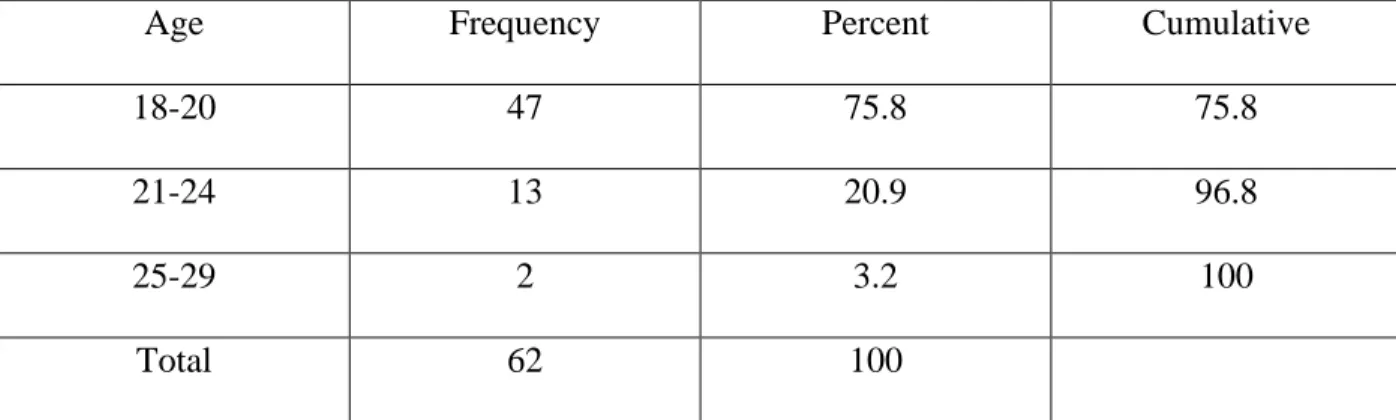
4.1 Participant Age...55
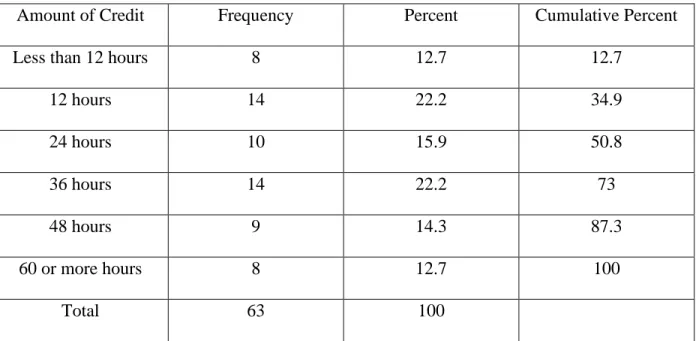
4.2 University Credit Hours ...56
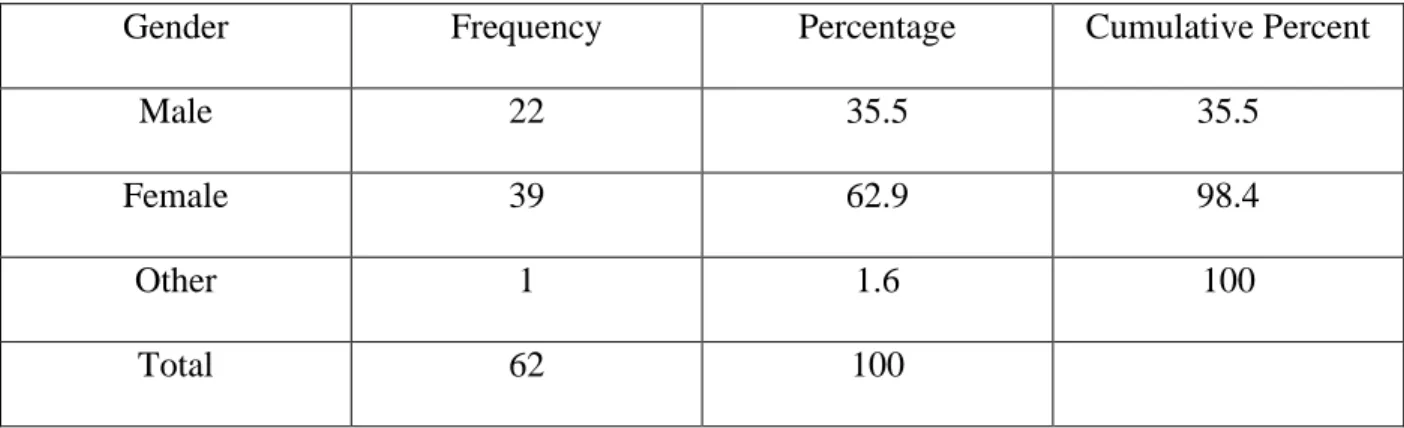
4.3 Gender ...57
4.4 Ethnicity ...57
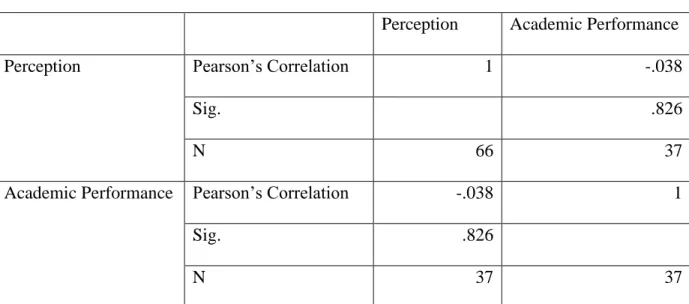
4.5 Group A Participant Perception-Academic Performance Correlation ...61
4.6 Group B Participant Perception-Academic Performance Correlation ...62
4.7 Group A Academic Performance Paired Samples t-Test ...63
4.8 Group B Academic Performance Paired Samples t-Test ...64
4.9 Independent Samples t-test ...65
4.10 Group A Critical Thinking Paired Samples t-Test ...66
4.11 Group B Critical Thinking Paired Samples t-Test ...66
4.12 Group A Participant Evaluation Paired Samples t-Test ...67
LIST OF ABBREVIATIONS
IHE, Institutions of higher education IRB, Institutional research board LMS, Learning management system PCT, Psychological critical thinking
PCTE, Psychological critical thinking exam SDT, Self-determination theory
SAU, Southern Adventist University
SPSS, Statistical Package for the Social Sciences TOS, Table of specifications
U.S., United States
UTC, University of Tennessee at Chattanooga ZPD, Zone of proximal development
CHAPTER I INTRODUCTION
For more than two centuries, traditional college instruction in America has relied upon the use of the lecture as the model for the college classroom learning environment (Christensen & Eyring, 2011; Costin, 1972; Woodard, 2011). The lecture was first recognized in American higher education in 1727 by Isaac Greenwood (as cited in Christensen & Eyring, 2011), a Harvard College professor of mathematics and natural philosophy who used the lecture as an innovative model of instruction to relate new scientific discoveries to his students. With the lecture, the professor delivers course content through a speech to students attending class while students took specific notes to be studied later based upon what they were hearing. Since beginning in the 18th century, college instruction has evolved, incorporating other models of instruction that often supplement the instructor’s lecturing (Bishop & Verleger, 2013b; Bonwell & Eison, 1991; Cross, 1987). Despite this evolution, the lecture has remained a common pedagogy for college instructors over the years (Burgan, 2006).
Background of the Problem
The lecture has not been without criticism (Costin, 1972). Slosson (as cited in Miller, 1927), defined lecturing as a mysterious process where information from a professor’s notes flows directly to the student’s notes without passing through the mind of either, suggesting that there is little learning that takes place during a lecture. Schueler (1951) stated that lecturing “is
Isaacs (1994) suggested that lecturing is not as valuable for learning as other methods and King (1993) promoted the “guide on the side” (p. 30) as an alternative to the lecturing “sage on the stage” (p. 30). More recently, studies of the lecture model of instruction continue to show that other pedagogies are often more effective at facilitating student achievement of learning outcomes (Reber, Downs, & Peterson Nelson, 2017a; Sadeghi & Sedaghat, 2014; Stetzik, Deeter, Parker, & Yukech, 2015). Importantly, Hartley (1967) found that students only remember 20% of lectured material. Despite such pejorative criticism, the lecture is still suggested as an important component of the college classroom (Exley & Dennick, 2009), with some proffering that lecturing is necessary for some types of learning (Burgan, 2006; Schwerdt & Wuppermann, 2011).
To understand criticism of the lecture, it is important to identify what methods of
instruction have been used in the traditional classroom. The traditional classroom focused on the instructor giving a speech and students taking notes on what the lecturer said (MacManaway, 1970). Notes would be studied later so that students could prepare for upcoming assessments. Eventually the use of tape recording of lectures became a supplement to note taking (Popham, 1961), and technology evolved to become an integral part of the lecture (Saettler, 2004). Classic technologies include the textbook and the chalkboard as instructional tools, however, with the advent of school museums and the invention of slide projectors, lecturers were able to offer visual representations of lecture content (Reiser, 2001). Overhead projectors became popular machines allowing for lecturers to write on transparencies during the lecture in an attempt to engage students, and, eventually, these innovations gave way to digital presentations using computers to generate slides of information (Reiser, 2001). The modern classroom has also moved beyond strict speeches given by the instructors and instead incorporated some discussion
time, such as allowing students to ask questions of what has been presented (Barr & Tagg, 1995). Despite the addition of more student interaction and the progressive use of technology, this did not represent a fundamental change in pedagogy, but only supplemented the instructor-centric delivery of course content (Barr & Tagg, 1995; Costin, 1972; Reiser, 2001).
Criticism of the lecture has given rise to other pedagogies that college instructors have used for engaging students for the purpose of, and potential improvement of, student
performance. Methods such as active learning (Prince, 2004) and collaborative learning (Dillenbourg, 1999a) have been shown to increase student engagement. Active learning, first promoted in the 1980’s, is a concept promoting the active engagement of students in the practice of doing things in the classroom environment (Bonwell & Eison, 1991). Likewise, collaborative learning, which is defined as a learning opportunity in which two or more people work together to learn or attempt to learn something (Dillenbourg, 1999a), is a concept that has been researched since the 1990’s and is advocated by researchers and practitioners of the flipped classroom model. Additionally, colleges are increasingly utilizing online technology for the delivery of classes (Allen & Seaman, 2016). The use of online technology allows the incorporation of alternative pedagogies including online discussion forums, the use of video, and interactive online textbooks (Means, Toyama, Murphy, Bakia, & Jones, 2009). The many available options provide college instructors the opportunity to choose some approach other than lecturing for the instructional design of their courses.
But even with these options, lecture has been reported as being the most frequently utilized instructional practice despite being reported as being the least effective (Smith, 2010). For instance, Smith (2010) found that, despite lectures being rated as less effective in every category than strategies such as practical exercises, hands-on activities, and group discussions,
more than half of faculty in the study chose to lecture. Additionally, a study testing the hypothesis that lecturing maximizes learning found that active learning techniques were more effective at improving course performance than lecturing (Freeman et al., 2014b). In this study, student exam scores improved by 6% and students in a lecture-dominant course were 1.5 times more likely to fail than students in active learning courses. Despite its popularity with college and university faculty, current research on college teaching suggests the need for strategies other than the lecture (T. C. Andrews & Lemons, 2015; Freeman et al., 2014b; Grunspan, Kline, & Brownell, 2018).
One of the more recent instructional design models that has been offered as an alternative to a lecture model is the flipped model of instruction (Baker, 2000). Since its inception at the beginning of the 21st Century, the flipped classroom has taken many forms, an evolution that has made defining the model difficult. Abeysekera and Dawson (2015b) broadly define the flipped classroom as moving most content delivery out of class to an online learning management system (LMS) and using class time for learning activities that are active, collaborative, and require students to complete pre- and/or post-class activities to fully benefit from in-class work. Through the use of an LMS, content is delivered through audio recordings or videos in addition to textbook-related materials either in printed form or through various online mediums. Students are expected to listen to the audio lectures or watch the videos before coming to class, with some studies showing an increase in engagement with these preclass activities (Critz & Knight, 2013; Forsey, Low, & Glance, 2013; McLaughlin et al., 2013). The in-class experience consists of activities intended to actively engage students for the purpose of facilitating the development of critical thinking skills and demonstrating student achievement of learning outcomes (Abeysekera & Dawson, 2015b; Domagk, 2015). In this way, what has traditionally been a classroom
activity, lecturing, as well as what has typically been an out of class activity, homework, have been flipped (Lage, Platt, & Treglia, 2000).
The term “flipped” was first coined by Bergmann and Sams (2012) who used the term to describe the way they incorporated an online LMS for the delivery of course content. However, this strategy had documented implementation at the beginning of the 21st century when using online options was still quite new (Lage et al., 2000). As online education continued to develop, online management tools were created to facilitate a more engaging experience through online technologies and the opportunity to facilitate online classes increased (Allen & Seaman, 2011). The advent of hybrid learning promoted combining both online and face-to-face environments (Allen, Seaman, & Garrett, 2007) and, with these innovations, the flipped classroom model of instruction was more fully developed. With the increase in the use of online instruction, emerging technologies have dominated the flipped classroom and have become a primary component of the model (Abeysekera & Dawson, 2015b).
The flipped classroom is not so much a new concept as a reframing of widely recognized pedagogies. Numerous studies have found that active learning techniques promote better
learning than traditional methods (Haak, HilleRisLambers, Pitre, & Freeman, 2011; Hake, 1998; Ruiz-Primo, Briggs, Iverson, Talbot, & Shepard, 2011), with Abeysekera and Dawson (2015b) suggesting active learning is a necessary component of the flipped classroom. Berrett (2012a) posits that the flipped classroom should incorporate group learning activities while Sweet and Michaelsen (2012) suggest team-based learning for problem-solving activities that are often a part of the flipped classroom (Abeysekera & Dawson, 2015b). Though the terminology for these kinds of classrooms may have only recently been developed, the methods are well-established by a variety of research studies (Dillenbourg, 1999b; Prince, 2004).
One of the benefits of the flipped classroom may be the promotion of critical thinking skills. Critical thinking has been the focus of higher education for many years (Bloom, 1956; Halpern, 2002). Some colleges and universities mandate critical thinking as a part of long-term goals and instructors often report the skills as being of great importance in courses they teach (Kim, Sharma, Land, & Furlong, 2013; McConnell, Steer, Owens, & Knight, 2005) even though research conclusions are mixed on the effectiveness of teaching strategies on the development of critical thinking (Riddell, 2007). Still, students have reported a positive relationship with how well teaching is organized and the development of critical thinking skills (Loes, Salisbury, & Pascarella, 2015).
Though the term has been widely used, and the concept highly promoted, defining critical thinking has been difficult. Dewey (1910) identified critical thinking as the scientific attitude of reflective thought. More modern iterations have identified critical thinking as higher-order-thinking (Bloom, 1956) or a “habit of mind” (Mulnix, 2012, p. 465). A simple definition of critical thinking is the comprehensive exploration of issues, ideas, artifacts, and events before an opinion or conclusion is accepted or formulated (Rhodes, 2010). Once defined, however, the question of how to promote this type of thinking in students remains. Halpern (2002) discussed the importance of using a skills approach to learning to think critically. Both active learning and collaborative learning strategies have been promoted as enhancing the development of critical thinking (Mulnix, 2012), with Van Gelder (2005) stating that like learning other skills, critical thinking skills must incorporate the opportunity for practice. Creating a learning environment that is active and collaborative as well as giving students the opportunity to practice important skills is vital for promoting critical thinking. The flipped classroom model emphasizes this kind
of learning environment, which may facilitate the development of critical thinking in ways a lecture classroom does not.
Purpose of the Study
The purpose of this study was to investigate potential differences between the flipped model of instruction and the traditional model of instruction in four distinct areas. First, this study examined the relationship between student perception of the learning environment and student academic performance within the instructional environment. Student perception indicates how students understand their role within the learning environment, specifically, whether or not they perceive themselves as either active or passive participants in the learning process. Second, this study examined the relationship of the flipped classroom with academic performance. A primary component of academic performance is student achievement of course learning outcomes. Learning outcomes are statements that describe what learners should know, do, or feel on completion of a learning experience (Rothwell & Kazanas, 2011). Third, this study examined the relationship of the flipped classroom and critical thinking. Critical thinking is characterized by the comprehensive exploration of issues, ideas, artifacts, and events before an opinion or conclusion is accepted or formulated (Rhodes, 2010). Finally, this study examined the relationship of the flipped classroom with student evaluation of the course instructional model. Evaluation here is defined as “judging the merit or worth of something” (Fitzpatrick, Christie, & Mark, 2009, p. 1).
Research Questions
The principal aim of the study was to explore the relationship between the flipped classroom model of instruction and student perception, academic performance, critical thinking, and evaluation. The following research questions generated the attendant research hypotheses:
R1: Is there a relationship between student perception of the learning environment and student academic performance within the flipped classroom learning environment as well as the traditional classroom learning environment?
H1: There is a relationship between student perception of the learning
environment and student academic performance within the flipped classroom learning environment as well as the traditional classroom learning environment. R2: Is there a difference in academic performance for students engaged in the flipped classroom model of instruction compared with the traditional model of instruction?
H2: There is a difference in academic performance for students engaged in the flipped classroom model of instruction compared with the traditional model of instruction.
R3: Is there a difference in critical thinking for students engaged in the flipped classroom model of instruction compared with the traditional model of instruction?
H3: There is a difference in critical thinking for students engaged in the flipped classroom model of instruction compared with the traditional model of
instruction.
R4: Is there a difference in participants’ evaluation of the flipped classroom model of instruction compared with the traditional model of instruction?
H4: There is a difference in participants’ evaluation of the flipped classroom model of instruction compared with the traditional model of instruction.
Importance of the Study
The lecture has been the subject of educators’ research and concern for at least 100 years (Christensen & Eyring, 2011; Costin, 1972). Due to its prominence in higher education, the lecture has promoted criticism and challenge by practitioners of other models throughout this time (Hartley & Cameron, 1967; Isaacs, 1994; King, 1993); this prominence has resulted in the development of alternative models. For instance, active learning and collaborative learning have been proposed as alternatives to the lecture with the intent of shifting the focus of the learning experience from the instructor to the student (Dillenbourg, 1999a; Prince, 2004). Still,
instructors continue to rely on lecturing for much of the delivery of course content (Exley & Dennick, 2009; Smith & Valentine, 2012) thus limiting the opportunities for active or
collaborative learning in the classroom. The flipped classroom model was developed as a way to make in-class interaction more active and collaborative while often, but not always, retaining direct instruction through a lecture (Bishop & Verleger, 2013a).
According to Abeysekera and Dawson (2015b), there is need for more research on the flipped classroom. Many existing articles are of either student perception of the learning experience or anecdotal experiences of instructors on the perceived effectiveness of the model (Bishop & Verleger, 2013a). Far fewer empirical studies have been completed on the
effectiveness of the model for helping students achieve learning outcomes (Bishop & Verleger, 2013a). Some research has focused upon the impact of the flipped model on student grades and/or student achievement (Ferreri & O’Connor, 2013b; Findlay-Thompson & Mombourquette,
Scherer, 2013), however the literature is mixed on the benefits of using the model (Findlay-Thompson & Mombourquette, 2014b). Findlay-(Findlay-Thompson and Mombourquette (2014b)
incorporated a flipped classroom model into a business class and compared it to two sections of a lecture to study the impact the model had on student grades. Students watched videos outside of class and participated in discussions and other assignments in class. There were no differences in student grades between the two models. Conversely, Ferreri and O’Connor (2013b)
incorporated the flipped model into a pharmacy course, using videos outside of class while applying patient information to case studies in class and found significant grade increases as compared to a lecture-based model. The reasons for the differential outcomes between these findings are unknown.
Though the use of the flipped classroom model has spanned a variety of disciplines such as business (Albert & Beatty, 2014; Findlay-Thompson & Mombourquette, 2014a), mathematics (Love, Hodge, Grandgenett, & Swift, 2014; Wilson, 2013), nursing (Missildine, Fountain, Summers, & Gosselin, 2013), nutrition (Mary Beth Gilboy, Scott Heinerichs, & Gina Pazzaglia, 2015), and pharmacology (Ferreri & O’Connor, 2013a), very few studies have investigated the use of the flipped classroom model in psychology (Sletten, 2015; Talley & Scherer, 2013). Talley and Scherer (2013) implemented the flipped classroom into a course on physiological psychology and compared exam scores with a traditional, lecture-based classroom. Although exam scores in the flipped section were higher, the course was not entirely flipped, with only 25% of class sessions incorporating the flipped design. Sletten (2015) compared exam grades from a flipped introductory psychology course with a traditional, lecture-based course and found no significant difference. Unfortunately, it is unclear how the classroom utilizing the flipped
model was designed in this study and, therefore, the relationship between the flipped classroom and learning is difficult to determine.
In preparing this investigation, the researcher found only one study researching the connection between the flipped classroom and critical thinking (Kong, 2014). In a study of the use of digital classrooms, Kong (2014) attempted to measure whether critical thinking could be learned through the use of a flipped classroom design. The data show that students were able to learn critical thinking skills through this model to a significant degree, however, the study did not compare the amount of critical thinking gained compared to other models. Further research in understanding the relationship between the flipped classroom and the development of critical thinking skills as compared to more traditional models of instruction is warranted. Thus, there is an apparent gap in the literature for understanding the flipped classroom model, and this seems especially true as it relates to psychology courses. Research is needed to understand any relationship that may exist between the flipped classroom model of instruction and academic performance as compared to a traditional classroom model of instruction. Furthermore, research is needed to understand any relationship that may exist between the flipped classroom model of instruction and the development of critical thinking skills and how this relationship may be influenced by specific content areas.
The need for more research on the flipped classroom model of instruction is well-established (Abeysekera & Dawson, 2015b), especially as a number of deficiencies in the literature have been identified. These deficiencies include the following recognized issues. First, available research has been primarily of student perception of the model and not student performance (Butt, 2014). Second, of those studies that do attempt to measure student academic performance, the findings are mixed (Findlay-Thompson & Mombourquette, 2014b). Third, an
obvious gap in the literature exists for studies on the flipped classroom model across course content and in particular within psychology courses (Sletten, 2015; Talley & Scherer, 2013). Finally, there appears to be no research of a relationship between the flipped classroom model and critical thinking as compared to traditional models of instruction (Kong, 2014). This study sought to provide evidence concerning each of the gaps within the literature.
Theoretical Framework of the Flipped Classroom
Though Bergmann and Sams (2012) suggested the flipped classroom as a way to engage students, increased student learning, critical thinking, and satisfaction of the learning
environment may also be impacted by the flipped classroom model. Abeysekera and Dawson (2015b) developed a theoretical model of the flipped classroom that incorporates
self-determination theory (SDT) as the foundation upon which the flipped classroom can be based. Additionally, the flipped classroom model provides alternative engagement opportunities for students (Bergmann & Sams, 2012). Both active learning (Bonwell & Eison, 1991) and collaborative learning (Dillenbourg, 1999a) have also been proposed as theoretical underpinnings of the flipped classroom’s relationship with student engagement. The
combination of these concepts provides a theoretical framework for the application of the flipped classroom.
SDT proffers that learners are motivated to learn based upon how well the learning environment meets innate cognitive needs. Learner motivation has been widely studied as a necessary component of the learning process and can be defined as “the willingness to attend and learn material in a development program” (Cole, Feild, & Harris, 2004, p. 67). Learning is greatly affected by how motivated students are to attend to the learning environment and engage
with the instructor in the learning process. SDT suggests that by meeting core cognitive needs of learners, motivation can be enhanced and improved for the learning experience and therefore result in higher academic performance.
SDT identifies three cognitive needs: competence, autonomy, and relatedness (Deci & Ryan, 1985a). In order to feel competent, students master knowledge, behavior, and skills important for success. Feelings of control and independence are satisfied by their need for autonomy. The need for relatedness is associated with belonging or a sense of connection to a social group within a given situation (Dillenbourg, 1999a; Pintrich, 2003). A flipped classroom that uses SDT is intended to meet students’ needs of competence, autonomy, and relatedness. Deci and Ryan (1985a) first promoted SDT as a motivational theory of human behavior. As such, the level of students’ motivation will influence their level of effort and focus on a learning activity (Abeysekera & Dawson, 2015b). The flipped classroom requires students to engage and complete a portion of the course requirements outside of class, requiring students to be motivated to complete this work. It is believed that a lack of student motivation is a fundamental reason for this discrepancy (Abeysekera & Dawson, 2015b). Due to its emphasis on meeting these specific motivational needs within the learning environment, SDT is foundational for the flipped
classroom model of instruction (Cole et al., 2004).
Definition of Terms
The following definitions were in operation during this study.
• Active Learning: Instructional activities involving students doing things and thinking
• Collaborative Learning: A situation in which two or more people learn or attempt to learn
something together (Dillenbourg, 1999a).
• Critical Thinking: Critical thinking is thinking characterized by the comprehensive
exploration of issues, ideas, artifacts, and events before accepting or formulating an opinion or conclusion (Rhodes, 2010).
• Flipped Classroom Model: Operationally defined as moving most content delivery out of
class to an online LMS, using class time for learning activities that are active and social, and requiring students to complete pre- and/or post-class activities to fully benefit from in-class work (Abeysekera & Dawson, 2015b).
• Hybrid Course: A hybrid course is a college course that blends online and face-to-face
delivery. A substantial portion of the content is delivered online, from 30-70% of course content (Allen et al., 2007).
• Learning Management System: Operationally defined as software systems designed to
support student learning (Ellis & Calvo, 2007).
• Learning Outcomes: Learning outcomes are statements that describe what learners should
know, do, or feel on completion of a learning experience (Rothwell & Kazanas, 2011). • Traditional Model of Instruction: Operationally defined as a model wherein the instructor
primarily lectures, students mainly take notes, and out of class homework problems are assigned for students to complete on their own (Wasserman, Norris, & Carr, 2013). • Student Academic Performance: Student scores on exams (Freeman et al., 2014a). • Student Engagement: The combination of student involvement, the effort of the student
organization of learning opportunities to encourage student participation in these learning activities (Wolf-Wendel, Ward, & Kinzie, 2009).
Methodological Assumptions
There were several assumptions for this study. First, it was assumed that all students were willing participants and answered all queries objectively and honestly. Second, due to the active nature of the learning environment, it was assumed that students followed the direction of the instructor while in the classroom. Third, when interacting with online materials, it was assumed that all students followed the directions of the instructor and fulfilled expectations of online coursework. Fourth, it was assumed the instructor carefully followed arranged guidelines for delivery of the course design elements with fidelity. Finally, there were seven different instruments that were used for measurement in this study, and it was assumed they were
sufficiently sensitive to detect changes in behaviors and perceptions. Ultimately, the assumption was that there was a difference between the flipped classroom and traditional models of
instruction as evidenced by students’ perception of the learning environment, academic performance, critical thinking, and evaluation of the learning environment.
Delimitations of the Study
The location for this study, Southern Adventist University, is a private, liberal arts college. Students enrolled in the courses to be utilized were primarily psychology, health, and prehealth majors with similar interests in psychology. General psychology is a freshman level course and was held in the fall semester. As a result, many students were within their first year of college. Each class, and therefore each treatment condition, was taught by the same
instructor. Additionally, the university has been recognized as the most ethnically diverse in the southern United States (U.S.) ("Campus Ethnic Diversity," n.d.) and, because health and pre-health majors make up the largest portion of students enrolled at the university, the population of participants enrolled in the General Psychology course is representative of the overall university population. The sample was chosen in nonrandom fashion by students enrolling in the sections of the General Psychology course that fit best within their overall academic schedule and the needs of their degree program. For this reason, this study was quasi-experimental in design using intergroup comparisons across a content and timeframe delineated period. Due to issues of potential researcher bias, the researcher was not an instructor for any of the sections assessed.
Limitations of the Study
This study was conducted in a midsized private faith-based liberal arts university, and results may not be generalizable to two-year colleges or public universities. Research conducted within a classroom setting has a unique set of constraints that must be addressed. First, because the focus of this study is on the instructional design within a classroom, students were enrolled in the course section that fit their individual semester schedules. For this reason, randomization of participants was not possible. Second, the course where the treatment was implemented uses an online textbook. For a lecture class, an online text is unnecessary, however, in order to provide a primary resource for students that is consistent across conditions, an online text was used. Third, the course was taught by a single instructor who had little experience using the flipped model of instruction. Due to the instructor’s background in using a more traditional instructional model, adjusting to the flipped classroom model was challenging. Fourth, the length of this study was a university semester, which could have affected academic performance and critical thinking skills
development outcomes. Fifth, because each section of the course received both conditions, students participated in both conditions and, therefore, became aware of these conditions. Finally, due to each student’s individual academic goals, some students chose to drop the course during either condition, leading to attrition and a reduction of the potential sample.
CHAPTER II LITERATURE REVIEW
Higher education has relied upon a consistent strategy of instruction for two centuries (Christensen & Eyring, 2011; Costin, 1972; Schueler, 1951; Woodard, 2011). Students attend classes to hear a professor lecture about different topics and take notes during the process (Isaacs, 1994; MacManaway, 1970). Students are then assigned work intended to deepen their knowledge of individual topics and, once completed, the assignments are graded to assess how well they understand each one. After a time, students are then assessed, often through a summative assessment like an exam, to ascertain how much of each topic is known by the students. Students are then assigned a grade based upon the entirety of their work within the course of study. But how well does this traditional model of instruction facilitate learning for college and university students? Are there other pedagogies that work better? How do these different models compare? These questions, among others, are vital to instructors in guiding their instructional strategies.
Researchers have been analyzing how college professors teach for decades (Costin, 1972; Lage et al., 2000; Miller, 1927; Prince, 2004; Velegol, Zappe, & Mahoney, 2015). Though lecturing became a primary form of instruction for college and university faculty (Lammers & Murphy, 2002), there have been many other models used. For instance, methods such as instructor-led class discussion has been widely adopted by many professors for many years (MacManaway, 1970). The methods of active learning (Prince, 2004) and collaborative learning (Dillenbourg, 1999a) have been shown to increase student engagement and Stetzik (2015)
demonstrated how using puzzle-based pedagogy improved student performance over a traditional lecture-based classroom. Additionally, colleges and universities are increasingly utilizing online technology for the delivery of classes (Allen & Seaman, 2011). The use of online technology allows the incorporation of alternative pedagogies including online discussion forums, the use of video, and interactive online textbooks (Means et al., 2009). The many available options provide instructors the opportunity to choose some approach other than lecturing for the instructional design of their courses. But even with these options, lecture has been reported as being the most frequently utilized instructional practice despite being reported as the least effective (Smith & Valentine, 2012). Considering this, the research questions for the current study focus on (a) student perception of the learning environment, (b) student academic performance in the flipped classroom, (c) critical thinking in the flipped classroom, and (d) student evaluation of the classroom. This review of related literature will discuss relevant issues related to these research questions.
The State of Higher Education Pedagogy
The lecture has been a staple in American higher education since the 17th century (Christensen & Eyring, 2011). Harvard College professor of mathematics and natural
philosophy, Isaac Greenwood (as cited in Christensen & Eyring, 2011), incorporated the lecture to bring to students new and exciting scientific discoveries, most of which had not yet been published in books or periodicals. This instruction was considered innovative at the time and soon became the model used across all colleges and universities in the United States. In the lecture, course content was delivered by the professor through a speech to students attending class, and those students took specific notes to be studied later based upon what they were
hearing. This model placed the professor at the center of the learning experience and, as the source of knowledge for students, elevated him to a position of privilege that pervades to this day (Barr & Tagg, 1995; Freeman et al., 2014b). Since then, college instruction has evolved,
incorporating other models of instruction that often supplement the instructor’s lecturing (Bishop & Verleger, 2013b; Bonwell & Eison, 1991; Cross, 1987; MacManaway, 1970). Despite this evolution, the lecture has remained a common pedagogy for college instructors (Burgan, 2006; Schwerdt & Wuppermann, 2011).
The traditional classroom instructional model consists of a lecture and discussion format that utilizes instructor delivered content and question and answering periods for students to clarify what has been presented (Barr & Tagg, 1995; Freeman et al., 2014b). Note taking is considered vital to student learning as it allows students to study later to prepare for upcoming assessments. Technology has taken a more prominent role in the classroom as an integral part of the lecture (Saettler, 2004). Originally, the textbook and chalkboard were innovative
technologies used as instructional tools. However, with the invention of slide projectors, lecturers were able to offer visual representations of lecture content (Reiser, 2001). Overhead projectors allowed lecturers to modify their visual content on transparencies during the lecture in an attempt to engage students. Eventually, the use of digital projectors became a standard for delivering content through the use of computers in presenting information (Reiser, 2001). Though the addition of more student interaction and the progressive use of technology have long been valuable components of higher education, these tools did not represent a fundamental change in pedagogy, but only supplemented the basic lecture and discussion model as the primary pedagogy (Bishop & Verleger, 2013b; Costin, 1972; Reiser, 2001). But this is changing.
The ways in which the public prefers to participate in learning experiences have
prompted changes to how institutions of higher education (IHE) deliver learning experiences. In the 21st century, students are expecting more freedom and more innovation, and technology is developing at such a rapid pace that it is difficult for instructors to stay current. Education is changing from a traditional face-to-face classroom to synchronous and asynchronous courses, increasingly free of charge to the public (Picciano, 2009). Due to the rise of online education in the late 20th century, students no longer need to be physically present for their education. Instead, students are able to further their education while still continuing their typical lives. The flexibility that online education provides is valuable, though online-only education requires self-directed learning, with students who are disciplined to guide themselves. Online education is being adopted rapidly (Allen & Seaman, 2016), but there remain some educators that are concerned about how to design courses for a purely online environment that will address the needs of their students. Many students still crave face-to-face contact with instructors.
Twenty-first century educators recognized the desire for a hybrid, or blended (Picciano, 2009), model of learning with students interacting with a learning management system (LMS) as well as attending face-to-face classes, and IHEs evolved to meet the growing need. Many educators believe that teaching online sacrifices some important aspects of teaching, mainly the opportunity for instructors to support students both socially and emotionally (Picciano, 2009). Blended learning affords an opportunity to combine both the benefits of online technology with the support students receive through direct interaction with a professor. These educators realize that, with such a variety of learners, requiring only one mode of learning will not accomplish the goals of the learning environment. Even in today’s information-rich environment through the use of the internet and online technologies, some still struggle with understanding the new world
of technology-based education (Picciano, 2009). With so many new facets to college pedagogy, college instructors are creating classrooms, both online and face-to-face, to meet the growing needs of students. In many ways, faculty must be sensitive to the changes to external
environments and adjust their strategies accordingly (Burke, 2011). By doing so instructors will not only stay current to innovative technologies and be sensitive to students’ changing needs, but also create learning environments that can make use of the technical innovations of education in the 21st century.
Flipped Classroom
Despite the innovation in online education and the introduction of blended learning, most university classrooms still regularly incorporate lecture (T. C. Andrews & Lemons, 2015;
Grunspan et al., 2018; Henderson, Beach, & Finkelstein, 2011; Schwerdt & Wuppermann, 2011; Smith, 2010). In this model, the instructor is viewed as the source of content knowledge (Barr & Tagg, 1995) and, though classroom environments are potentially more engaging due to increased use of technology and the incorporation of discussion, students are still relegated to passive listeners rather than active participants. Active participation in the learning process, referred to as active learning (Abeysekera & Dawson, 2015b; Prince, 2004), has been widely recognized as more effective at facilitating student learning (T. Andrews, Leonard, Colgrove, & Kalinowski, 2011; Berrett, 2012b; Freeman et al., 2014a; Richardson, Abraham, & Bond, 2012). Due to the discrepancy, educators have attempted to find ways to combine both a traditional, lecture-based pedagogy with more active learning strategies. This effort has resulted in a variety of models of instruction (Bishop & Verleger, 2013b; Bonwell & Eison, 1991). One of these models, the
flipped classroom, has risen in popularity primarily because of its combination of online technologies, content delivery methods similar to the lecture, and active learning strategies.
Bergmann and Sams (2012) first coined the term, flipped classroom, to describe the way they utilized an online LMS to deliver course content for a high school science class. Though the term was new, the strategy of inverting the way content was delivered had documented implementation at the beginning of the 21st century when using online options was still quite new (Lage et al., 2000). As online education continued to develop and online management tools were created to facilitate a more engaging experience through online technologies, the opportunity to facilitate online classes increased (Allen & Seaman, 2011). Once blended learning became popular by combining both online and face-to-face environments (Allen et al., 2007) the flipped classroom model of instruction was able to develop further. The increase in the use of online instruction led to emerging technologies dominating the flipped classroom and they have become a primary component of the model (Abeysekera & Dawson, 2015b).
Despite its growing popularity, few empirical studies had been completed on the
effectiveness of the flipped classroom model for increasing student academic performance before 2013 (Bishop & Verleger, 2013a). Though research focused upon the impact of the flipped model on student grades and student achievement is available (Ferreri & O’Connor, 2013b; Findlay-Thompson & Mombourquette, 2014b; Haughton & Kelly, 2015; Moravec et al., 2010; Talley & Scherer, 2013), the literature is mixed on the benefits of using the model to improve academic performance (Thompson & Mombourquette, 2014b). For example, Findlay-Thompson and Mombourquette (2014b) incorporated a flipped classroom model into a business class and compared it to two sections of a lecture to study the impact the model had on student grades. Students watched videos outside of class and participated in discussions and other
assignments in class. There were no differences in student grades between the two models. Conversely, Ferreri and O’Connor (2013b) incorporated the flipped model into a pharmacy course, using videos outside of class while applying patient information to case studies in class and found significant grade increases as compared to a lecture-based model. The reasons for the differential outcomes between these findings are unknown. Still, research that shows benefits for academic performance through the flipped classroom is growing (Talley & Scherer, 2013;
Winquist & Carlson, 2014).
The Flipped Classroom in Psychology
Though the use of the flipped classroom model has spanned a variety of disciplines, very few studies have focused on psychology courses (Sletten, 2015; Talley & Scherer, 2013). Talley and Sherer (2013) compared student exam scores from a flipped course on physiological
psychology , which used online video lectures and in class practice test sessions, to scores from previous semesters of a traditional, lecture-based classroom. Researchers found that student exam scores were significantly higher in the flipped classroom than the traditional classroom. Though this study did show a positive correlation between the flipped classroom and exam scores, students did not participate in a purely flipped classroom. In this case, only one in four classes used the flipped classroom model.
Sletten (2015) incorporated the flipped classroom into an introductory psychology course and compared it to a traditional, lecture-based course. There were relationships discovered between student perceptions of the flipped model and the kinds of strategies students used to learn the material, however, student grades on exams were compared and no significant
was small in this case, with 45 students enrolled in the traditional classroom and 27 students enrolled in the flipped classroom. It is unclear how the flipped classroom was designed in this study and it is apparent more research is needed to determine the relationship between the flipped classroom and academic performance in psychology courses.
Critical Thinking
One of the benefits of the flipped classroom may be the promotion of critical thinking skills. Critical thinking has been the focus of higher education for many years (Bloom, 1956; Dewey, 1997; Halpern, 2002). Colleges and universities often incorporate critical thinking as a part of long-term goals and instructors report the skills as being of great importance in courses they teach. Still, though the term has been widely used, and the concept consistently promoted, defining critical thinking has been difficult. Definitions vary from reflective thinking (Dewey, 1997) to a focus on higher-order thinking (Bloom, 1956) to a “habit of mind” (Mulnix, 2012, p. 465). Dewey (1997), who was one of the first to identify the skills that eventually became known as critical thinking, identified the need for a more scientific attitude of metacognition that allows us to better understand where our thought originates and how best to use it to think better. Paul and Elder (2005) broadly state that critical thinking is the attempt at improving one’s
thinking through the process of analyzing and assessing it. Bensley and Murtagh (2012) suggested a multidimensional perspective to understanding critical thinking.
Many experts agree that critical thinking is not only a set of thinking skills but also a disposition related to reasoning (Clifford, Boufal, & Kurtz, 2004; Ennis, 1987; Halpern, 1998). Examples of critical thinking skills are skills for argument analysis, methodological reasoning, causal reasoning, and statistical reasoning (Bensley & Murtagh, 2012). Critical thinking
dispositions consist more of “the willingness to engage in effortful thinking and the tendency to be open- and fair-minded in evaluating claims, yet remain skeptical of unsubstantiated claims” (Bensley & Murtagh, 2012, p. 6). Additionally, it must be understood that critical thinkers self-regulate, using critical thinking to develop beliefs and often guide behavior (Halpern, 1998). With such a broad understanding of critical thinking applied to educational settings, confusion and disagreement on what definition to use are common. For a scientific study, a more focused definition becomes necessary. A simple definition of critical thinking is the comprehensive exploration of issues, ideas, artifacts, and events before an opinion or conclusion is accepted or formulated (Rhodes, 2010).
Psychological Critical Thinking
In addition to an overall definition of critical thinking, evidence has shown that psychology provides a unique set of critical thinking skills that differs from the general population (Bensley & Murtagh, 2012; Lawson, Jordan-Fleming, & Bodle, 2015; Williams, Oliver, & Stockdale, 2004). Psychological critical thinking (PCT) consists of specific reasoning skills such as statistical and methodological reasoning, which are different from conditional reasoning shown in students in the natural sciences or the humanities (Bensley & Murtagh, 2012). Lawson et al. (1999) defines PCT as the ability to “evaluate claims in a way that explicitly incorporates basic principles of psychological science” (p. 207). This concept has been supported by studies showing improvement in PCT for students enrolled in psychology courses over those in comparison groups (Penningroth, Despain, & Gray, 2007) as well as those compared to philosophy students critical thinking performance (Burke, Sears, Kraus, & Roberts-Cady, 2013). Lawson (2015) proffers seven distinct questions of PCT that he addressed using a
psychological critical thinking exam (PCTE). This exam presents scenarios that consisted of a problem that students, using critical thinking, must identify. These questions focus on seven areas of PCT. The PCTE has been shown to be a valid and reliable measure of PCT (Burke et al., 2013; Lawson et al., 2015; Penningroth et al., 2007; Williams, Oliver, Allin, Winn, & Booher, 2003). The importance of differentiating general critical thinking and PCT is well-established (Haw, 2011; Lawson et al., 2015; Williams et al., 2003).
Once defined, however, the question of how to promote this type of thinking in students remains. Halpern (2002) discusses the importance of using a skills approach to learning to think critically and Haw (2011) showed that direct instruction on the development of critical thinking skills has a significant effect in students’ improvement in critical thinking. Lawson (1999) promoted the PCTE as a measure of specific PCT skills, which has been supported by multiple studies (Burke et al., 2013; Penningroth et al., 2007; Williams et al., 2003). Additionally, both active learning and collaborative learning strategies have been promoted as enhancing the development of critical thinking (Mulnix, 2012), with Van Gelder (2005) stating that like learning other skills, critical thinking skills must incorporate the opportunity for practice. Creating a learning environment that is active and collaborative as well as giving students the opportunity to practice important skills are vital for promoting critical thinking. The flipped classroom model emphasizes this kind of learning environment, which may facilitate the development of critical thinking in ways a lecture classroom does not.
The Learner-Centered Environment
The flipped classroom model may be a response to what Prensky (2001) coined the rise of “digital natives” (p. 1), a newer generation of students who were raised with computers and
the internet. This concept is even more relevant now with the introduction of smartphone technology as students now have technology with the capacity to access the internet at any moment. With this type of access, any student has the opportunity to direct their own learning. With the world’s available knowledge now at students’ fingertips, educators searched for new ways to engage students in learning experiences. The flipped classroom model represents an opportunity to utilize the benefits of recent technology to provide a structured opportunity to actively engage in knowledge construction, placing them at the center of the learning experience.
Many educational theorists, especially constructivist theorists, have focused on student perception of the learning environment. Dewey (1959) highlighted the importance of active involvement through a hands-on approach to learning. With his theory of the schema, Piaget (1955) suggested that learning was a component of the learner, rather than other factors such as the learning environment. Vygotsky (1978) established the necessity of scaffolding as an effort of the learner to achieve greater learning goals. The flipped classroom promotes learner-centered experience, allowing the learner to construct knowledge through interaction with content and teacher. The perception of this reality is important for a learning atmosphere that motivates learners to engage in the experience.
One theory that promotes the learner as the center of the learning environment is constructivism. Constructivism emerged through Dewey (1959), Piaget (1955), and Vygotsky (1978). In a constructive classroom, learning is what the learner does, rather than something that a teacher imposes on the learner (Sjøberg, 2007). Teachers view learners as autonomous
thinkers and attempt to facilitate the transformation of content understanding through active learning experiences rather than more passive strategies (Brooks, 1999). In this way, knowledge is not waiting to be discovered but, through engagement with the environment and other learners,
actively constructed (Felder, 2012; Gordon, 2008; Neo & Neo, 2009; Nie & Lau, 2010; Prakash, 2010). Piaget’s (2008) focus was that the means by which children gain knowledge is more important than the knowledge itself and Vygotsky (1978) conceptualized the zone of proximal development (ZPD) to describe the social context of this learning process, where teachers guide learners through the content and facilitate the attainment of learning goals. Learning through this kind of collaboration, interaction, and engagement are fundamental to constructivism and can lead to increased critical thinking such as problem-solving (Felder, 2012).
Active and collaborative learning have been found to be effective at inspiring students to reach deeper levels of understanding (Kilgo, Sheets, & Pascarella, 2015; Menchaca & Bekele, 2008; Merrill, 2008; Neo & Neo, 2009; Nie & Lau, 2010). This is why the American
Association of Colleges and Universities (AAC&U) recommends the use of these strategies as high impact practices for instructors (Kilgo et al., 2015). Tynjala (1999) suggested that students in the constructivist learning environment acquire more diversified knowledge and are able to apply that knowledge to real life situations better than those in other environments. The learner develops new ideas and alters existing ideas when interacting with content and collaborating with other learners and the instructor (Felder, 2012; Prakash, 2010; Prince & Felder, 2006, 2007). Nowhere is this better conceptualized than through social constructivism.
The term, social constructivism, was first proposed by Berger and Luckman (1966) to describe the theory of knowledge that suggests human development is socially situated and knowledge is constructed through social interaction. Berger et al. (1966) based their theory on the sociology of knowledge developed by Schutz (1967), which explores the relationship between knowledge and social context as well as Durkheim’s (1974) concepts of how social structures and social institutions develop. However, before these researchers began their work,
Vygotsky (1978) had developed many of the principles of social constructivism used today, including the zone of proximal development and the use of sociocultural context in education. His seminal work, Mind and Society (Vygotsky, 1978), was not published in English until the late 1970’s, though it made a remarkable impact on the field. Vygotsky (1978) posited that knowledge is constructed through both individual processes and in social contexts. This idea was furthered by Glaser (1991), who suggesting that learners construct new knowledge on top of existing knowledge. He believed that the individual’s inherent social nature must be considered in a discussion about cognition. The cultural context, he claimed, is fundamental to learners’ cognitive activity. Gergen (1999) also furthers this idea, suggesting that the interaction within groups of learners facilitates their rethinking of their world through problem-solving is essential to social construction. Research has shown that cooperative learning can substantially increase learner achievement, thereby supporting the concept of social construction as a viable theory of the learning process (Hrynchak & Batty, 2012; Stockdale & Williams, 2004).
Self-Determination Theory
Self-determination theory (SDT) consists of three cognitive needs: competence, autonomy, and relatedness (Deci & Ryan, 1985a). In order to feel competent, students master knowledge, behavior, and skills important for success. Feelings of control and independence are satisfied by their need for autonomy. The need for relatedness is associated with belonging or a sense of connection to a social group within a given situation (Dillenbourg, 1999a; Pintrich, 2003). A flipped classroom that uses SDT is intended to meet students’ needs of competence, autonomy, and relatedness.
Deci and Ryan (1985a) first promoted SDT as a motivational theory of human behavior. Motivation can be defined as “the willingness to attend and learn material in a development program” (Cole et al., 2004, p. 67). As such, the level of students’ motivation will influence their level of effort and focus on a learning activity (Abeysekera & Dawson, 2015b). The flipped classroom requires students to engage and complete a portion of the course requirements outside of class, requiring students to be motivated to complete this work. Though most colleges and universities suggest two hours of studying for each class ("How much time should you devote to studying?," n. d.; "Surviving College," n. d.), actual student time spent studying, completing homework, and preparing for all classes averages 17 hours per week (National Survey of Student Engagement, 2014), a total significantly lower than expected for a student spending 15 hours in class per week. It is believed that a lack of student motivation is a fundamental reason for this discrepancy (Abeysekera & Dawson, 2015b).
Insomuch as the flipped classroom meets a student’s cognitive needs, a student’s orientation to motivation can be affected by a flipped classroom that incorporates SDT
(Abeysekera & Dawson, 2015b). Additionally, orientation to motivation has been identified as a key factor in student performance and satisfaction (Guay, Ratelle, & Chanal, 2008; Ryan & Deci, 2000a). For instance, an external locus of control, motivated by the potential reward of a good grade if a student works hard, denotes an orientation to motivation that is primarily extrinsic. Ryan and Deci (2000b), however, promote the development of intrinsic motivation through the use of SDT. Additionally, Cole, Field, and Harris (2004) proffer that student effort within learning activities is directly related to their level of motivation for doing the work. A flipped classroom utilizing SDT can effectively improve student intrinsic motivation as long as it
contributes to a sense of competence, autonomy, and relatedness (Abeysekera & Dawson, 2015b).
SDT suggests that through meeting the needs of competence, autonomy, and relatedness, students can become more intrinsically motivated. Deci and Ryan (2008) define intrinsic
motivation as behavior that is performed due to being inherently enjoyable or interesting. Within SDT, feelings of competence within a social context enhance intrinsic motivation for actions performed, though only when paired with satisfaction of the need for autonomy (Ryan & Deci, 2000a). Thus, when students choose to complete work out of class and are able to master the material, they will be more intrinsically motivated than students who were required to complete their work based upon an expected reward or impending punishment. Additionally, learning environments that incorporate a social component aimed at increasing students’ feelings of relatedness are more likely to produce students who are intrinsically motivated (Niemiec & Ryan, 2009). In this way, SDT is able to meet the needs of competence, autonomy, and
relatedness and, through them, foster the development of intrinsic motivation within the flipped classroom.
The development of intrinsic motivation is vital to the concept of student engagement; a primary motivation for the adoption of the flipped classroom (Bergmann & Sams, 2012).
Student engagement represents the time and energy invested by students in educational activities combined with the effort institutions devote to creating effective learning environments (Kuh, 2003; Wolf-Wendel et al., 2009). This concept is important in understanding student
performance (Kuh, Cruce, Shoup, Kinzie, & Gonyea, 2008). Instructors have traditionally created the learning environment through lecturing even though student engagement is not as strong in a lecture classroom (M. B. Gilboy, S. Heinerichs, & G. Pazzaglia, 2015). The lecture
requires minimal active engagement by students and does not promote student autonomy and competence (Gauci, Dantas, Williams, & Kemm, 2009; Huba & Freed, 2000). For an
environment that promotes intrinsically motivated, engaged students, the flipped classroom must work to meet the needs of students through an active and collaborative process (M. B. Gilboy et al., 2015).
SDT is foundational for the flipped classroom due to its emphasis on the meeting of specific motivational needs that students have within a learning environment (Cole et al., 2004). By providing opportunities for feelings of competence, autonomy, and relatedness, instructors within the flipped classroom can assist in the development of intrinsic motivation, which is valuable for students that must complete a large portion of coursework outside of the classroom (Abeysekera & Dawson, 2015b). Intrinsically motivated students will be most likely to engage in the preparation necessary for face-to-face interactions to be most effective (Ryan & Deci, 2000a). In the classroom, the use of active and collaborative learning provides opportunities for increased student engagement, increased academic performance, and increased relatedness (Dillenbourg, 1999a; Johnson, Johnson, & Smith, 1998).
Active Learning
Bonwell and Eison (1991) define active learning as instructional activities involving students doing things and thinking about what they are doing. This has been applied by practitioners in a variety of ways, for example through discussion breaks during a lecture or actively working on classwork assignments (Prince, 2004). Due to the broad nature of its application, it is considered by some to be more of an approach to instruction rather than a separate model (Prince, 2004). Still, much evidence supports active learning as leading to an
increase in student learning (Bonwell & Eison, 1991). Andrews, Leonard, Colgrove, and Kalinowski (2011) recommend active learning for increasing student learning, and Berret (2012a) suggests active learning also is important for the flipped classroom. The active learning classroom promotes conscientiousness and concentration, qualities that have been associated with increased learning (Richardson et al., 2012). The flipped classroom works to incorporate active learning in face-to-face environments and has been shown to increase student engagement, especially when paired with collaborative learning (M. B. Gilboy et al., 2015).
Collaborative Learning
The flipped classroom creates opportunities for collaborative and cooperative learning in the classroom that strict lecturing does not. Dillenbourg (1999a) defines collaborative learning as “a situation in which two or more people learn or attempt to learn something together” (p. 1). As with active learning, collaborative learning provides a broad definition within which many variations have been included (Slavin, 1999). Johnson, Johnson, and Smith (1998) found that collaborative learning contributes to improved academic success as opposed to individual
learning across the board. With an emphasis on active learning strategies in face-to-face classes, the opportunity for collaborative learning is prevalent. The flipped classroom that incorporates collaborative learning can provide energy and new opportunities for learning.
Chapter Summary
This chapter investigated several areas of research relevant to understanding learning, critical thinking, motivation, and the flipped classroom instructional model in order to serve as a foundation for this study. An overview of instructional strategies in higher education revealed