CONTENT AND LANGUAGE INTEGRATED LEARNING (CLIL) AS A LANGUAGE SUPPORT STRATEGY IN A GRADE 8 NATURAL SCIENCES CLASSROOM
BY
ROCHELLE THORNE
Submitted in fulfilment of the requirements for the degree of
Magister Educationis
in the Faculty of Education at the Nelson Mandela Metropolitan University
PORT ELIZABETH
SOUTH AFRICA
SUPERVISOR: DR. K. ADAM
FULL NAME: ROCHELLE EUGENIA THORNE
STUDENT NUMBER: 210022019
QUALIFICATION: MAGISTER EDUCATIONIS
TITLE OF PROJECT:
Content and Language Integrated Learning (CLIL) as a language support strategy in a Grade 8 Natural Sciences classroom
DECLARATION:
In accordance with Rule G4.6.3, I hereby declare that the above-mentioned treatise/ dissertation/ thesis is my own work and that it has not previously been submitted for assessment to another University or for another qualification.
SIGNATURE: ______________________________
i
ACKNOWLEDGEMENTS
I would like to acknowledge the contributions of all those people who helped to make this study possible:
First I want to thank my Lord and Saviour, Jesus Christ for giving me the strength and wisdom to complete this study.
My husband, Rodney, who knows every chapter and detail of this dissertation, for your love, patience, support, understanding and for taking up all my household responsibilities. Without you, I would never have been able to complete this journey successfully. My children, ZinZan and Taine-Josh, for sharing me with my studies. Thank you for understanding the importance of this research.
My supervisor, Dr Kathija Adam, for her guidance, patience and support. Thank you for believing in my abilities when I doubted myself. Thank you for taking a special interest in my personal life, for always being there for me and for sharing laughter and tears with me.
Mr. Viv England, for your valuable insights and for sharing your knowledge with me.
My colleagues in the Science Department, and all the participants in my study.
My late father John Ludick, for reminding me that success is the result of hard-work and sacrifices. My mother, Mary, and sister, Renèe, for always reminding me to “never be a quitter.” To my broader family and friends for your motivation, encouragement and understanding of my absence.
Dr Virginia Didloft and Mrs Cheryl Rensburg, for your words of encouragement and guidance.
My fellow students in research, Chantel Nel, Ingrid De Monk and Hermione Kemp. Thank you for the pillar of strength you have been for me.
Ms. Marina Ward at the NMMU library for her assistance and Mr. Ignatious Chitekedza of the Statistics Department.
ii ABSTRACT
Content and Language Integrated Learning (CLIL) is an innovative educational approach in which an additional language is used for the learning and teaching of both language and subject content. Content and Language Integrated Learning is not commonly used in South African classrooms, but its application internationally has been shown by empirical research to significantly improve overall language competence in the target language. Reports indicate increased learner motivation and support for the learning of the content subject.
This study sought to consider whether CLIL intervention would improve both language and science skills amongst Grade 8 learners in a Natural Sciences classroom. The researcher used a concurrent embedded mixed method design, including both quantitative and qualitative methodologies to gather data. An experimental test design with English Home Language classes and Afrikaans Home Language classes was employed. Hypothesis Testing was used as a statistical analysis to compare the pre-test and post-test results in order to ascertain the impact of CLIL intervention. In addition, the poster-activity and an open-ended questionnaire was used to qualitatively ascertain the impact of CLIL on learner literacy skills. The results showed that CLIL intervention improved learner performance significantly when compared to learners who were not exposed to CLIL. In addition, CLIL lessons were perceived as effective and learners verified that the approach was beneficial to their learning process.
iii
TABLE OF CONTENTS
Page
ACKNOWLEDGEMENTS ... i
ABSTRACT ... ii
LIST OF TABLES ... viii
LIST OF FIGURES ... ix
LIST OF ABBREVIATIONS ... x
CHAPTER ONE INTRODUCTION AND OVERVIEW 1.1 INTRODUCTION ... 1
1.2 RATIONALE FOR THE STUDY ... 2
1.3 SIGNIFICANCE OF THE STUDY ... 3
1.4 RESEARCH QUESTIONS ... 4
1.5 RESEARCH DESIGN ... 5
1.6 LIMITATIONS OF THIS STUDY ... 6
1.7 DEFINITION OF CONCEPTS ... 6
1.8 OUTLINE OF THE STUDY ... 7
1.9 CONCLUSION ... 8
CHAPTER TWO LITERATURE REVIEW 2.1 INTRODUCTION ... 9
2.2 THE PROBLEM OF LANGUAGE IN SOUTH AFRICAN CLASSROOMS ... 9 2.3 SOCIO-CONSTRUCTIVIST THEORETICAL PERSPECTIVES . 12
iv
Page 2.4 CONTENT AND LANGUAGE INTEGRATED LEARNING
(CLIL) ... 13
2.4.1 The 4Cs Framework ... 15
2.4.1.1 Content and Language Integrated Learning leads to higher levels of attainment in both language and content ... 18
2.4.1.2 Content and Language Integrated Learning improves motivation in all learners ... 19
2.4.1.3 Content and Language Integrated Learning is for learners of all abilities ... 20
2.4.1.4 Content and Language Integrated Learning leads to greater intercultural awareness ... 21
2.5 CHALLENGES RELATED TO CLIL IMPLEMENTATION ... 21
2.6 CONCLUSION ... 22
CHAPTER THREE RESEARCH DESIGN AND METHODOLOGY 3.1 INTRODUCTION ... 23
3.2 RESEARCH DESIGN ... 23
3.2.1 Features of a mixed method research design ... 24
3.2.1.1 Assumptions about the world ... 24
3.2.1.2 Goals ... 24
3.2.1.3 Multi-method strategies ... 25
3.2.1.4 Researcher’s role ... 25
3.2.1.5 Context sensitivity ... 25
3.3 RESEARCH DESIGN OF THIS STUDY ... 26
3.4 RESEARCH METHODS ... 27
3.4.1 Ethical measures ... 27
v
Page
3.5 DATA COLLECTION ... 30
3.5.1 Pilot Study ... 30
3.5.2 Data Collection for this Study ... 30
3.6 DATA ANALYSIS ... 33
3.6.1 Quantitative data analysis ... 34
3.6.2 Qualitative analysis ... 34
3.7 CONCLUSION ... 35
CHAPTER FOUR ANALYSIS AND DISCUSSION OF FINDINGS 4.1 INTRODUCTION ... 36
4.2 BIOGRAPHICAL INFORMATION ... 36
4.3 BASELINE DATA ... 38
4.4 QUANTITATIVE DATA ANALYSIS ... 39
4.4.1 Hypothesis Test ... 39
4.3.2 Implications of the Quantitative Results ... 43
4.4 QUALITATIVE DATA ANALYSIS ... 45
4.4.1 Concept maps ... 45
4.4.2 Poster Design and Presentation ... 50
4.5 EVALUATION QUESTIONNAIRES ... 54
vi
Page
CHAPTER FIVE
CONCLUSION AND RECOMMENDATION
5.1 INTRODUCTION ... 58
5.2 OVERVIEW (SUMMARY) OF STUDY ... 58
5.3 OVERALL CONCLUSIONS ... 59
5.4 RECOMMENDATIONS ... 60
5.5. RECOMMENDATIONS FOR FURTHER RESEARCH ... 61
5.6 REFLECTIONS BY THE RESEARCHER ON THE RESEARCH PROCESS ... 61
5.6 CONCLUDING REMARKS ... 62
vii
LIST OF APPENDICES
APPENDIX A : Ethics approval letter APPENDIX B1 : Reading and Writing APPENDIX B2 : Lees en Skryf
APPENDIX B3 : Text APPENDIX B4 : Lees
APPENDIX C1 : Pre/Post Test APPENDIX C2 : Pre/Post-Toets APPENDIX D1 : Concept Map APPENDIX D2 : Konsepkaart
APPENDIX E1 : Global Warming - Unit Plan APPENDIX E2 : Aardverwarming – Eenheidsplan APPENDIX F1 : June- Assessment
APPENDIX F2 : Junie - Eksamen APPENDIX G1 : Questionnaire APPENDIX G2 : Vraelys
viii
LIST OF TABLES
TABLE 3.1 : A summary of strategies used for trustworthiness ... 29
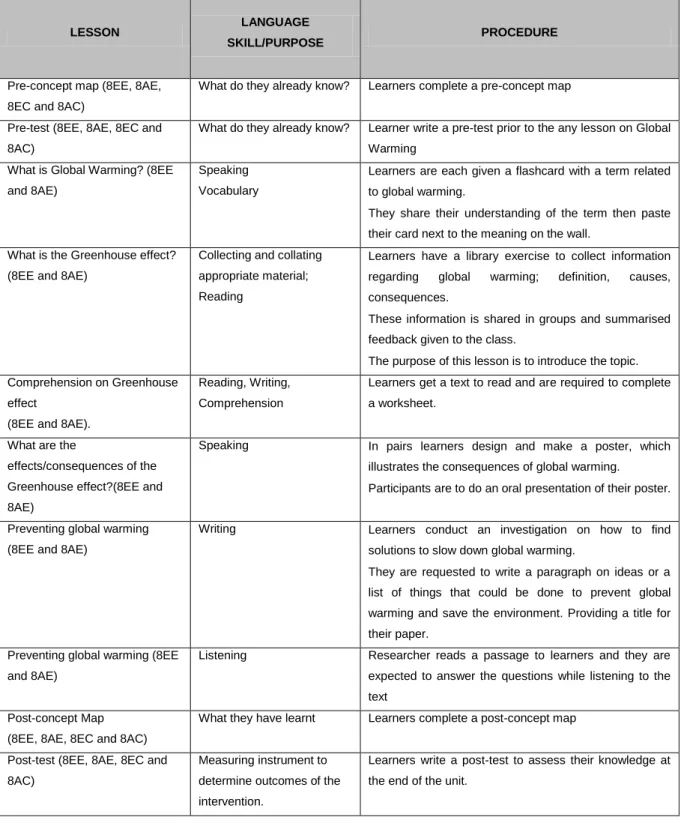
TABLE 3.2 : The Unit Activities with CLIL Intervention ... 32
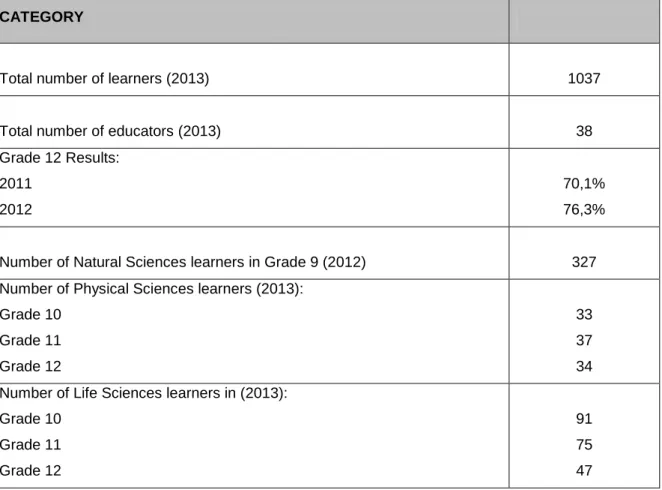
TABLE 4.1 : Biographical Details of Doringvlei Secondary School ... 37
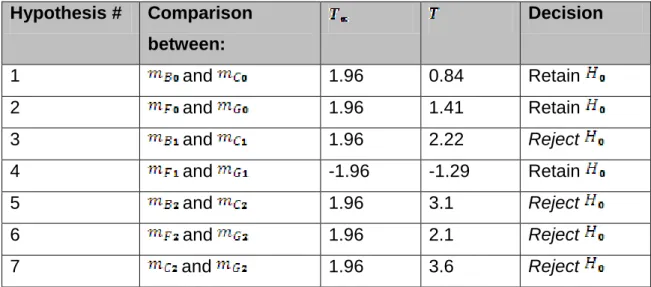
TABLE 4.2 : Results obtained from the hypothesis tests ... 42
TABLE 4.3 : Learner responses to evaluation questionnaire in both experimental groups (Grade 8EE and 8AE) ... 56
ix
LIST OF FIGURES
FIGURE 2.1 : 4Cs Framework (Coyle, 1990:56). ... 16
FIGURE 2.2 : Diagrammatic representations of the theoretical underpinning informing this study. ... 17
FIGURE 3.1 : Concurrent embedded mixed methods design – Quantitative as the primary data source and qualitative data providing a supporting role (Creswell, 2009:210) . ... 26
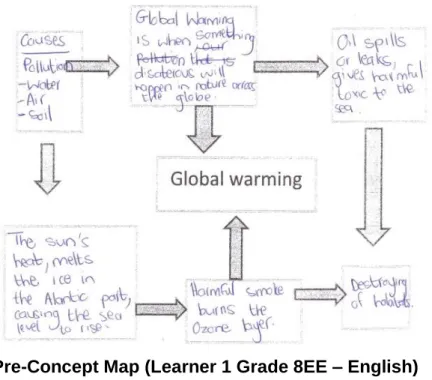
FIGURE 4.1 : Pre-Concept Map (Learner 1 Grade 8EE – English) ... 46
FIGURE 4.2 : Post-Concept Map (Learner 1 Grade 8EE – English) ... 46
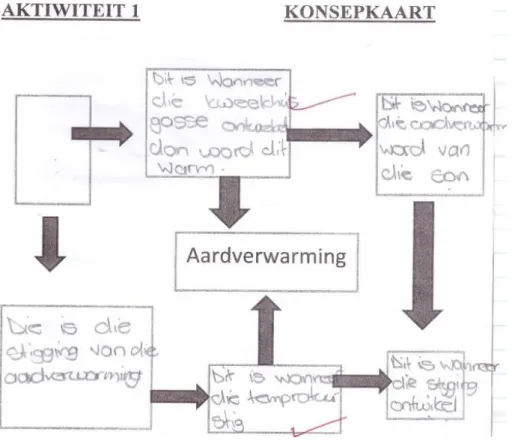
FIGURE 4.3 : Pre-Concept Map (Learner 2 Grade 8AE – Afrikaans) ... 47
FIGURE 4.4 : Post-Concept Map (Learner 2 Grade 8AE – Afrikaans) ... 47
FIGURE 4.5 : Poster example 1 (English Grade 8EE) ... 51
FIGURE 4.6 : Poster example 2 (English Grade 8EE) ... 51
FIGURE 4.7 : Poster example 3 (Afrikaans Grade 8AE) ... 52
x
LIST OF ABBREVIATIONS AND ACRONYMS
ANA : Annual National Assessment
BICS : Basic Interpersonal Communication Skills
CALLA : Cognitive Academic Language Learning Approach CALP : Cognitive Academic Language Proficiency
CBLT : Content-Based Language Teaching
CLIL : Content and Language Integrated Learning DBE : Department of Basic Education
ESL : English Second language speakers LoLT : Language of Learning and Teaching PANSALB : Pan South African Language Board ZPD : Zone of proximal development
1
CHAPTER ONE
INTRODUCTION AND OVERVIEW
“The poor and the affluent are not communicating because they do not have the same words. When we talk of the millions who are culturally deprived, we refer not to those who do not have access to good libraries and bookstores, or to museums and centres for the performing arts, but those deprived of the words with which everything else is built, the words that open doors. Children without words are licked before they start. The legion of the young wordless in urban and rural slums, eight to ten years old, do not know the meaning of hundreds of words which most middle-class people assume to be familiar to much younger children. Most of them have never seen their parents read a book or a magazine, or heard words used in other than rudimentary ways related to physical needs and functions. Thus is cultural fallout caused, the vicious circle of ignorance and poverty reinforced and perpetuated. Children deprived of words become school dropouts; dropouts deprived of hope behave delinquently. Amateur censors blame delinquency on reading immoral books and magazines, when in fact, the inability to read anything is the basic trouble.”
(Jennison, 2012:1)
1.1 INTRODUCTION
Linguistic diversity is one of South Africa’s defining features. With eleven national languages, respect for this diversity is a founding principle of its constitution. While the majority of learners in South Africa are bi- or multi-lingual, they receive instruction in a medium that is not their first language (PANSALB, 2000, as cited in O’Connor & Geiger, 2009:253). The logistical difficulties together with a widespread preference for education in English has resulted in a review of the Revised National Curriculum Statement's language policy (Department of Education, 2002:1-36), which uses an additive approach to bi- or multilingualism, whereby the first language is maintained and used as a basis for the learning of another language. The failure of this policy is evidenced by the 2011 Annual National Assessment (ANA) results, which showed that the national average performance in literacy was 31% (Department of Education: ANA Report, 2011:1). Noting that a pupil's first five years at school are a "make or break," watershed in his or her development, the Minister of Basic Education, Mrs Angie Motshegka, said that the ANA showed that there is an under-emphasis in education on basic skills such as reading, writing and arithmetic (Department of Education, 28 June, 2011).
Literacy focuses on developing a child’s ability to understand and use language, as an integral part of learning. Language and literacy should be considered in a holistic
2
way, taking account of “the integral nature of the areas of talking and listening, as well as reading and writing which extend across all areas of the curriculum,” (Northern Ireland Curriculum, 2012:2).Learners need language skills in science to enable them to access information and argue meaningfully about scientific issues. Hand, Prain and Yore (2001:42) contend that “there has been more recognition of the role of language skills in science classrooms and how increasing the variety of language tasks might increase both science understanding and language arts performance.” This implies that when learners have the opportunity to read, write and speak as scientists, it is likely that both their science and literacy knowledge will increase.
In considering the literacy crisis and the specific challenges related to language amongst South African learners, this study investigates the use of Content and Language Integrated Learning (CLIL) as a language support intervention in Grade 8 science classrooms. It is worth adding that language intervention is significant within the South African context, hence this forms the purpose for the current study.
1.2 RATIONALE FOR THE STUDY
The context for the study is a High School in the Northern Area of Port Elizabeth where the researcher is an educator. The school stands in a poverty-stricken, low socio-economic residential community plagued by illiteracy, unemployment, crime and substance abuse. The social challenges of the residents compel them to focus on survival and many parents do not possess the required skills to assist their children to overcome educational barriers. Matavire (2007:8) affirms this description in an article describing a neighbouring suburb with similar characteristics. In reviewing the school-based reports, from 2007-2012, the researcher discovered that 40% of learners fail Natural Sciences as a subject in grades 8 and 9. In probing for reasons why learners fail, the researcher worked with the learners, reviewing their exam papers and examining their reading and writing skills. The researcher’s deduction then was that the learners find the Natural Sciences a difficult learning area to comprehend, because their level of literacy is lower than expected for Senior Phase. Difficulties with language could be one of the most important reasons why
3
learners are unable to master scientific concepts or effectively study the subject matter.
Van Zyl (2006:17) asserts that parents are often ill-informed regarding the medium of instruction at schools and many parents prefer their children to receive tuition in English, resulting in many learners being taught in a second language. This is confirmed by research done in four Eastern Cape districts, which indicate that parents choose English as the Language of Learning and Teaching (LoLT), because they associate it with status and regard it as a language of technological and scientific access (Probyn, Murray, Botha, Botya, Brooks & Westphal, 2002:117). Informal conversations with parents at the school where the researcher teaches confirm this observation. Of the 1163 learners at Doringvlei Secondary School (pseudonym) which is a dual-medium school, 64% of learners study with English as Home Language and the remaining 36% with Afrikaans as Home Language (School-based data from discussion with the principal). However, of these barely 20% have English as their mother tongue.
In researching possible language intervention strategies for her multi-lingual science classes, the researcher encountered Content-Based Language Teaching (CBLT), Cognitive Academic Language Learning Approach (CALLA) and Content and Language Integrated Learning (CLIL). The researcher chose CLIL because it enabled language intervention without requiring more curriculum time. Such an approach was reported to not only facilitate bilingual language development but to also increase learner proficiency in Science and Mathematics (Coyle, 2007:543). The various research studies internationally indicate that reworking the delivery of the content of Natural Sciences to include language support strategies facilitates English language acquisition and development in learners (Coyle, Hood & Marsh, 2010:5 & Dalton-Puffer, Nikula & Smit, 2010:13).
1.3 SIGNIFICANCE OF THE STUDY
When a learner lacks the ability to understand, read and write textual information he or she cannot reach an understanding of scientific concepts. Reading and writing are essential activities that all students of science need in order to make meaning and
4
communicate their understanding. Landsberg (2005:150) also bemoans that in South Africa, too many learners are being taught predominantly in English, a language that is not their mother tongue. This study therefore, seeks to investigate the impact of a CLIL intervention in two Natural Sciences Grade 8 classrooms, one where the majority of learners are second language speakers in relation to LOLT and the other where LOLT is in their mother tongue (Afrikaans). A comparison of these two language contexts was thought to be a mechanism the researcher could use to confirm the impact (if any) of CLIL intervention specifically where LOLT is not the mother tongue.
The researcher designed the following research questions for the purposes of this study in order to develop an understanding of the impact of language intervention in a Natural Sciences classroom.
1.4 RESEARCH QUESTIONS
The following primary research question guides this study:
How does the inclusion of CLIL strategies in Natural Sciences lessons influence Grade 8 learner language proficiency and performance in science as a subject?
This research design is based on the sub-questions outlined below. The approach to answering each of these sub-questions is described below.
What is the literacy and Natural Sciences proficiency levels of Grade 8 learners?
In what ways does the implementation of CLIL strategies impact literacy levels and performance of learners in the Natural Sciences?
What are Grade 8 learner perspectives of CLIL implementation in the Natural Sciences classroom?
5
A mixed-methods design was considered appropriate for the purpose of this studying order to address the research questions.
1.5 RESEARCH DESIGN
Creswell (2009:3) describes a research design as “plans and the procedures for research that span the decisions from broad assumptions to detailed methods of data collection and analysis. ”A mixed-method research design was considered appropriate as it generates data both qualitatively and quantitatively where “neither approach fundamentally dominates the other as value is placed on the contributing epistemologies, theories, and methodologies equally all the time despite necessary fluctuations in the use of their quantitative or qualitative methods throughout the research process,” (Hall & Howard, 2008: 252).
Creswell and Plano-Clark (2007:112) regard purposive sampling as “researchers intentionally select participants who have experience with the central phenomenon or the key concept being explored.” For the purposes of study, purposive sampling was conducted based on a literacy test given to learners at Doringvlei Secondary School. The test is used by the school to sort learners into ability groups, hence two experimental and two control Grade 8 classes were chosen for the purposes of this study. The first group was an average ability Grade 8 English Home Language class (named Grade 8EE) and control group (named Grade 8EC). The second group was an average ability Grade 8 Afrikaans Home Language class (named Grade 8AE) and control group (named Grade 8AC).
A concurrent embedded mixed methods design (Creswell, 2009:14), was administered where the primary data is quantitative, while the secondary or supporting data was qualitative in nature. Quantitative data was generated from the pre-test, intervention, post-test data as well as the June assessment, while qualitative data was derived from pre-and-post concept maps, the poster activity and one open-ended questionnaire used to ascertain learner perspectives of CLIL implementation in a unit of study in the Natural Sciences.
6
Chapters three and four provide a more detailed account of the research design, data collection strategies and data analysis procedures.
1.6 LIMITATIONS OF THIS STUDY
The following limitations were considered in relation to this study:
A case study design using one context does not enable generalisation to all school contexts;
The researcher is a teacher at the school, hence her relationship to learners would be one of power, hence this relationship may have had an influence over participation/results of this study; and
The research could not teach all four classes chosen to be a part of this study. She taught the experimental groups (8EE and 8AE) while another teacher taught the control groups (8EC and 8AE). This variable could have impacted the results of this study.
1.7 DEFINITION OF CONCEPTS
For the purpose of this research, the following concepts are defined in terms of how they are used in this study:
Assessment – means a continuous structured process of gathering information on learner competence in many different ways;
CLIL – Content and Language Integrated Learning;
First Additional Language – means a language learned in addition to one’s Home Language;
Home Language – means the language first acquired by children through involvement at home; the language in which an individual thinks;
Linguistic diversity – refers to learning contexts where learners from different linguistic backgrounds share the same classroom space. Typically, multilingual classrooms accommodate learners who have different and mutual first languages;
7 Literacy – the ability to read and write;
LoLT – means the language chosen by a school’s governing body in consultation with parents. It is the language teachers use to instruct and assess; and
Mother tongue – refers to the first language in which a child learns to express him or herself. In some contexts, besides being the language learnt first, it also includes the language with which one identifies and which others use in identifying one as a native speaker.
1.8 OUTLINE OF THE STUDY
This study consists of five chapters and a brief description of the chapters is provided below:
Chapter one introduces the study and presents the problem formulation. In addition, it provides the aim and objectives and an explanation of the main concepts.
The second chapter discusses the current literature within the landscape of research conducted on developing language and literacy support amongst second language English speakers. It also provides the theoretical framework, as the lens through which the research is designed, implemented and analysed.
The third chapter provides a detailed account of the research design. It includes methods and procedures used for sampling, collection of data and for analysing collected data. In addition, it addresses the ethics for researching human subjects.
The fourth chapter focuses on the results obtained from the research process and provides an overview of the findings based on the concurrent embedded mixed method design. Both the quantitative and qualitative data are discussed.
The concluding chapter draws pertinent conclusions, their implications, and provides recommendations for practice and further research.
8
1.9 CONCLUSION
Literacy is an important precondition for organising and understanding the past, the present and the future to determine one’s role in the world (Grant & Wong, 2003:386-387). Being literate means being able to read and write at a level to be successful in today's world. It includes being proficient at math, knowing how to use technology, and knowing how to solve problems and make decisions. Literacy is the ability to use written language to derive and convey meaning. When a person is expected to learn to read in a language he does not understand, then becoming literate can be a confusing and frustrating process. Since every learner has the desire to be successful, teachers must provide the required support to assist learners to achieve their academic goals. The next chapter elaborates on and situates the problem discussed here within a larger theoretical framework as derived from the literature.
9
CHAPTER TWO
LITERATURE REVIEW
2.1 INTRODUCTION
After poverty, language, and in particular proficiency in the medium of instruction, is the largest single factor that affects learner performance in the majority of South African schools (Taylor & Prinsloo, 2005:9). Setati, Adler, Reed and Bapoo (2002:129) create the awareness that the majority of South Africa’s teachers, work in classrooms where English is officially the language of learning, but is not the first language of either the teachers or the learners. Teachers are therefore, faced with the double challenge of teaching a particular subject in English while learners are still learning the language.
This chapter begins with contextualising the challenges related to language in South African science classrooms. Next, a description of the socio-constructivist perspectives of Vygotsky (1962:1-239), Bruner (1986:5-322) and more recently Lave and Wenger (2001, as cited by Smith, 2009:par. 5) is discussed as it is within this broader theoretical framework that this study is located. In addition, an exposition of Coyle’s (1999:125-163) 4Cs CLIL conceptual framework is provided as an implementation model for this study as it has a number of benefits for South African classrooms where language intervention is essential.
2.2 THE PROBLEM OF LANGUAGE IN SOUTH AFRICAN CLASSROOMS
A number of studies (Barkhuizen, 2001:14; De Klerk, 2000:199 & Probyn, 2006:320) confirm the preference for English as LOLT expressed by many teachers, parents and learners. Nevertheless, the linguistic theories underpinning notions of additive bilingualism (Cummins, 2000:89) in the Language-in-Education Policy (1997:15), propose a strong role for Home Languages as a basis for the acquisition of additional languages. This is “not widely circulated or understood and are seldom considered by schools when decisions about school language policies are made” (Probyn, 2006:323). Although the policy encourages the use of learners’ Home
10
Languages as LOLT, many studies show (for example, Probyn, 2006:314-441; Heugh, 2002:171-196 and Howie, 2001:56) that the trend in African township and rural schools has been towards introducing English as LOLT, either in Grade 4 or from Grade 1. In the Eastern Cape Province, for example, where this research was conducted, isiXhosa is the Home Language of 83.8% of the population and English speakers comprise only 3.7%. Yet, English is the LOLT for the majority of learners from the beginning of Grade 4 (EMIS, 2001:122).
Rollnick and Rutherford (1996:101 as cited by Probyn, 2006:323) found the use of learners’ first language to be a powerful means of getting learners to explore ideas and, without code switching, some learners may develop alternative conceptions that could have remained unexposed. Even learners’ written work may conceal misconceptions that are more likely to be revealed in group discussions in the learners’ first language. Interaction between learners is important to explore ideas and concepts in a comfortable environment, which implies talking in their first language. Teaching and learning in the first language provides the support needed with concept development while learners develop their proficiency in English, the medium of instruction. It does, however, become crucial that learners practice any newly acquired terminology and be able to talk about concepts in English. This is where the dilemma of code switching arises.
Probyn (2001:251) observes that the language of the classroom is very often not English but a mixture of English and mother tongue. Teachers deliver chunks of content in English, textbook style, and then for discussion and further explanation, switch to mother tongue. Learners are often passive in the classroom and seldom engage in meaningful discussions in English. Hence, their practice of the language is limited even though the classroom is in many cases the only place where learners get exposure to English. Learners need feedback and input from the teacher in many areas including pronunciation and communication, the accuracy of knowledge, skills and thought processes (Schaffer, 2007:4). Therefore, teachers should continuously verify learners’ understanding and accommodate the unique learning styles of individual learners. To flourish in science, learners have to extend their knowledge of concepts beyond the basic vocabulary and be able to “… engage in, and manipulate the appropriate discourse” (Schaffer, 2007:6).
11
For many township and rural learners, the oral language of the school and classroom is their Home Language, whereas the language of reading, writing and assessment is English (Probyn, 2006:317). The difficulty for many is to bridge the gap and acquire not only proficiency in English, but also the kind of “cognitive academic language proficiency,” (Cummins, 2000:34) required for academic learning and meaningful engagement with the curriculum. The Fifth International Mathematics and Science Study (as described by Howie, 2001:32) highlighted these difficulties in the report that found that:
“The majority of South African pupils cannot communicate their scientific conclusions in the languages used for the test (i.e. English and Afrikaans which were the medium of instruction and are the languages currently used for matriculation examinations). In particular, pupils who study mathematics and science in their second language tend to have difficulty articulating their answers to open-ended questions and apparently had trouble comprehending several of the questions.”
One of the major difficulties experienced by learners when learning science is learning the language of science (Wellington & Osborne, 2001:1). Paying attention to language is very important to improve the quality of science education and every lesson should by implication, be a language lesson (Schaffer, 2007:1; Jaipal, 2001:2; Wellington & Osborne, 2001:3). To do well learners should be able to “extend their knowledge of concepts beyond basic vocabulary and be able to engage in, and manipulate the appropriate discourse” (Schaffer, 2007:6). There are various strategies that Natural Sciences teachers could implement to teach second language learners’ scientific discourse, concepts and terminology, though some will be more effective than others. Hence, the aim of this study is to consider whether the inclusion of CLIL strategies in Natural Sciences lessons influences Grade 8 learner language proficiency and performance in science as a subject.
A theoretical perspective that considers how language learning takes place is essential for before considering any desired intervention. For the purposes of this study, a socio-constructivist perspective is explored.
12
2.3 SOCIO-CONSTRUCTIVIST THEORETICAL PERSPECTIVES
Vygotsky (1962:65 & 1978:43), credited to be the father of the socio-constructivist perspective, viewed human development not as an isolated event, but one that could be only understood within the broader context of the society, family, school and workplace of the individual. He also viewed language as the result of early socialisation, and that its use in social contexts makes it the main vehicle for developing later knowledge and understanding (Lee & Smagorinski, 2000:192). From birth, children start constructing meaning through their interactions with their parents, peers and others in their social context. This social nature of learning is reflected by Mercer and Littleton (2007:138) when they explain that “learning and development are … both interpersonal and intrapersonal mediated by cultural tools.” In line with Vygotskyian thinking, language enables a mutual relationship between knowledge on the social (inter-mental) plane, before adopting an understanding on the psychological (intra-mental) plane. Hence, the social dimension is more than a safe, supportive environment – it is the area within which the learning actually occurs.
Vygotsky’s (1962 & 1978) theories concerning the cultural and social dimension of learning found support in the work of the American psychologist Jerome Bruner. Bruner (1986:30) was however, more specific in his analysis of the zone of proximal development because he connected it to the cognitive and social development of a child, who learns from a tutor who transmits culture and an understanding of the world. He proposed the term scaffolding to characterise the assistance and support offered to a child when it encounters some new material. He argued that learning to know the language may be accomplished without considerable help, but learning to use the language cannot be conquered without the assistance of other factors like a tutor, because the use of language demands the learning of notions that someone has to explain thoroughly (Bruner, 1986:126).
Drawing on many ideas from the work of Vygotsky (1962 & 1978) also are Lave and Wenger’s (2001 as cited by Smith, 2003:par 2) notions of situated learning and communities of practice. Situated learning recognizes that there is no learning that is not situated within a specific context, and emphasises the relational and negotiated
13
character of knowledge and learning as well as the engaged nature of the learning activity for the individuals involved. According to this theory, it is within communities that learning occurs most effectively. Interactions that take place within a community of practice like cooperation, problem solving, building trust, understanding and relations have the potential to foster community social capital that enhances the community members’ wellbeing. Learning is most effective when it takes place in communities. Academic and social outcomes will improve only when classrooms become learning communities, and teaching becomes learner-centered. Through the learning process, learners gradually move toward full participation in a community of practice, and eventually become part of their community of practice (Bockarie, 2002:2).
CLIL methodology is based on the principles of social constructivism on learner-centered approaches and a view of learning as a dynamic interactive process. Neo-Vygotskyian socio-cultural theories of learning have strong influence on the thinking behind the CLIL project. In contrast to cognitive perspectives, which focus on individual thinking process, socio-cultural theories see learning as located and mediated in social interaction. Within a broad socio-cultural perspective, the metaphor of “scaffolding” is often used to refer to types of assisted teaching/learning that emphasise the role of interaction between peers and teachers in moving learners from their existing levels of performance to higher levels of independent performance (Walqui, 2006: 160).
2.4 CONTENT AND LANGUAGE INTEGRATED LEARNING (CLIL)
CLIL is a term created by Marsh (2002:34) as a “methodology similar to, but distinct from, language immersion and content-based instruction.” It is an approach for learning content through an additional language, thus teaching both the subject and the language simultaneously. CLIL is not language teaching enhanced by a wider range of content. Neither is it content teaching translated in a different language (code) from the mother tongue. It is rather an approach comprising elements of both language and subject teaching and learning that are specific to CLIL classrooms (Coyle, 1990:34). Hence, it is a dual-focused educational approach, where a learner will learn both another subject (Natural Sciences) through the medium of a second
14
language (English) and at the same time learn a second language (English) by studying the content-based subject (Natural Sciences). In other words, the CLIL approach promotes mastery of both the language and the content equally, not one to the exclusion of the other.
CLIL has two distinctive features that set it apart from other types of provision, such as immersion teaching (Gajo, 2007:564; Lasagabaster, 2008:32 and Coyle, Holmes & King, 2009:74), namely, the integration of language and content. In CLIL, the two elements are interwoven and receive equal importance, although the emphasis may vary from one to another on specific occasions. The aim is to develop proficiency in both (Eurydice, 2005:7), by teaching the content not in, but with and through the foreign language. The second distinctive feature is the flexibility of CLIL to accommodate the wide range of socio-political and cultural realities that would be beneficial in the post-apartheid South African context.
Content and Language Integrated Learning is context-embedded, content-driven with clear pluri-cultural learning outcomes (Dalton-Puffer, 2008:89). It considers language to be the most essential learning tool and it connects learners to the visions and realities of language use for different purposes at different times. In a CLIL approach it is important to consider the difference between the learners’ Basic Intercultural Communication Skills (BICS) and their Cognitive Academic Language Proficiency (CALP) in the second language. According to Cummins (2000:76), BICS refers to the kind of conversational fluency a child might have in a language in real-life situations, while CALP refers to a more advanced language competence required to learn in a formal classroom setting. Content and Language Integrated Learning aims at moving learners from BICS to CALP by integrating the learners’ experiences and personal interests in the specific subject (Gajo, 2007:564; Lasagabaster, 2008:32 and Coyle, Holmes & King, 2009:74). Learners play an active role, with the active learner becoming the protagonist of the teaching/learning process.
The rationale for CLIL rests on a number of points based on second language acquisition theories (Dalton-Puffer, Huttner, Schindelegger & Smit, 2009:15). With its integration of content and language, CLIL can offer an authenticity of purpose unlike that of any communicative classroom (Greenfell, 2002:56; Graddol, 2006:234). By
15
realigning language and cognitive development, CLIL can combat the lack of relevance of language teaching based on grammatical progression and boost learners’ motivation (Lasagabaster & Sierra, 2009:1093). Content and Language Integrated Learning provides learners with a richer, more naturalistic environment that reinforces language acquisition and learning, and thus leads to greater proficiency in learners of all abilities (Krashen, 1985:26; Lightbown and Spada, 2006:87 and Lyster, 2007:78). The CLIL approach also regenerates content teaching by fostering cognitive development and flexibility in the learner through its constructivist approach, and by recognising language as an essential tool in learning (Dalton-Puffer, 2007:66; Lyster, 2007:43; Gajo, 2007:565, Coyle, et al., 2009:121; Coyle, Hood & Marsh, 2010:85 and). Finally, CLIL can also lead to greater intercultural understanding and prepares pupils better for internationalisation (Coyle, et al., 2010:89). In essence, CLIL claims to be a dynamic unit that is bigger than its two parts, providing an education that goes beyond subject and content learning (Coyle, et al., 2010:89).
Given these dimensions of CLIL and influenced by the early work of Mohan’s Knowledge Framework (1986:122), Coyle (1990:56) developed the 4Cs Framework as a cohesive conceptual modeling tool on which to base CLIL implementation in various contexts.
2.4.1 The 4Cs Framework
The 4Cs Framework holds that it is through progression in knowledge, skills and understanding of the subject matter, engagement in associated cognitive processing, interaction in a communicative context, developing appropriate language knowledge and skills as well as acquiring a deepening intercultural awareness through the positioning of self and ‘otherness’, that effective CLIL takes place (Coyle, 2008:98). From this perspective, CLIL involves learning to use language appropriately while using language to learn content effectively.
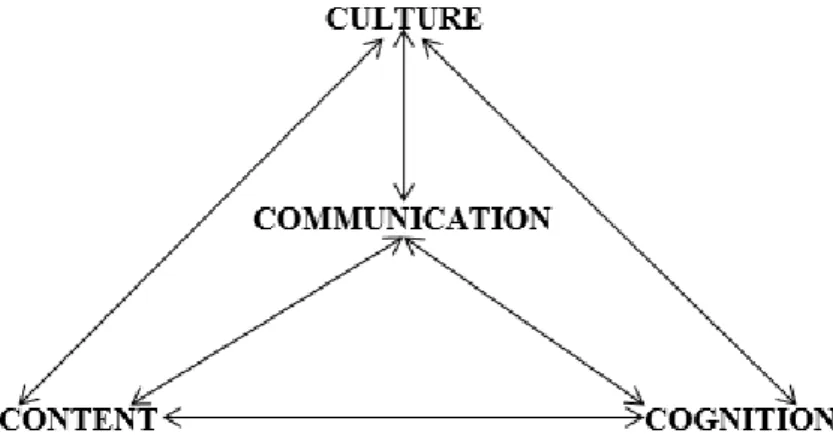
As depicted in Figure 2.1 below, the 4Cs framework for CLIL starts with content (such as subject matter, themes, cross-curricular approaches) and focuses on the interrelationship between content (subject matter), communication (language),
16
cognition (thinking) and culture (awareness of self and others) to build on the synergies of integrating learning (content and cognition) and language learning (communication and cultures).
FIGURE 2.1: 4Cs Framework (Coyle, 1990:56)
CLIL unites learning theories, language learning theories and inter-cultural understandings in that:
Subject matter is not only about acquiring knowledge and skills, it is about the learner constructing his/her own knowledge and developing skills;
Acquiring subject knowledge, skills and understanding is related to learning and thinking (cognition). To enable the learner to construct an understanding of the subject matter, the linguistic demands of its content must be analysed and made accessible;
Language needs to be learned in context, learning through the language, reconstructing the subject themes and their related cognitive processes;
Interaction in the learning context is fundamental to learning. This has implications when the learning context operates through a second language; and
The relationship between cultures and languages is complex. Intercultural awareness and learning is fundamental to CLIL.
17
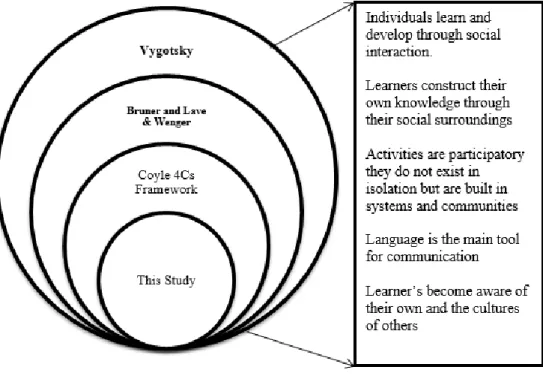
Since the focus of this study is CLIL intervention in a Grade 8 Natural Sciences classroom, Figure 2.2 below provides a diagrammatic overview of how the various theoretical perspectives inform this study. The over-arching socio-constructivist perspectives of Vygotsky, Bruner and later Lave and Wenger provide the fundamental basis from which Coyle draws to develop the 4Cs conceptual framework. In turn, the current study uses the 4Cs framework as a model from which to implement CLIL as a literacy intervention strategy in Grade 8 Natural Sciences classrooms.
FIGURE 2.2: Diagrammatic representations of the theoretical underpinning informing this study
Content and Language Integrated Learning has been documented in the literature to have the following benefits:
It leads to a higher level of attainment in target language and content studied; It improves motivation in all learners;
It benefits learners of all abilities; and It increases intercultural awareness.
18
These are discussed further in the sections that follow as they represent findings from a number of empirical research studies.
2.4.1.1 Content and Language Integrated Learning leads to higher levels of attainment in both language and content
A number of researchers concur that CLIL leads to increased levels of linguistic and content proficiency. It provides not just extra exposure to comprehensible input (Coleman, 2009:11), but more specifically the “context-embedded, cognitively challenging tasks move the learner on in terms of both content and language,” (Greenfell, 2002:67). By creating an authentic communicative context, CLIL provides a naturalistic environment where language can be more easily acquired while the focus is on meaning (Lightbown & Spada, 2006:122). In addition, CLIL also provides a careful analysis of the linguistic demands that tasks place on learners. Coyle’s model (Coyle, 2007:561) of linguistic progression in three strands includes:
language of learning (needed to access basic concepts in a given context); language for learning (language needed to operate and interact with the
content in a given context); and
language through learning (incidental language that results from active
involvement with the task).
There is research evidence to support the claim that CLIL makes all language needed for successful completion of tasks and knowledge acquisition transparent and accessible in a way that is not always found in content subjects (Coyle, 2007:562 & Gajo, 2007:574). The outcomes of most CLIL programmes have been positive, with CLIL students displaying higher levels of proficiency and higher communicative competence than their non-CLIL peers (Edelenbos; Johnstone & Kubanek, 2006:83; Alonso, Grisalena & Campo, 2008:38; Baetens Beardsmore, 2008:12; Dalton-Puffer, 2008:86; & Ruiz de Zarobe & Jimenez-Catalan, 2009:122). The CLIL model, has in essence been described as a “linguistic bath” where learners can acquire all they need to be prepared for real life communication (Lasagabaster, 2009:8).
19
2.4.1.2 Content and Language Integrated Learning improves motivation in all learners
Motivation is essential for learning. The literature considers two basic types of motivation for language learning, namely:
Integrative motivation (a desire to be part of the target language culture for affective reasons); and
Instrumental motivation (a desire to learn language for a personal gain). (Gardner, 1985:87; Greenfell, 2002:34).
A considerable amount of research into learners’ attitudes towards foreign languages in the UK has found that across the age groups, foreign languages are perceived by many as difficult, not enjoyable and not relevant (Dearing and King, 2007:128; Ellis, Loewen & Erlam, 2006: 577). Davies (2004:55) and Coleman, Galaczi and Astruc (2007:250) have also shown that as learners’ progress through school, their attitudes to foreign languages deteriorate slowly, usually at the end of the primary phase (Jones, 2010:177). Two main factors are identified as the source of the problem, namely, the lack of relevance of the language lessons and an extreme interpretation of the communicative approach to language teaching (Macaro, 2008:105). It is also widely acknowledged that the context in which a foreign language is presented, still based on the notional-functional curricula, are far removed from learners’ interests (Greenfell, 2002:25; Serra, 2007:582; Macaro, 2008:107; and; Coyle, Holmes & King, 2009:89). This is compounded by an emphasis on transaction rather than genuine communication and on rote learning instead of grammatical progression (Macaro, 2008:107).
It has been found that CLIL, with its integration of language and non-language content, boosts motivation by providing a legitimate and authentic context for language use. In CLIL the language becomes the means rather than the end in itself and this leads to a significant reduction in the amount of anxiety expressed by learners (Lasagabaster, 2009:7). The content-led nature of the lessons allows the
20
learners to engage with them at a more creative and challenging cognitive level and provides opportunities for genuine interaction with others, oneself and the world over a varied range of contexts (Greenfell, 2002:67). Coyle, et al. (2010:87) refer to the “double effect” where positive attitudes towards the language may transfer to the content subject. Finally, CLIL is described as fostering a “feel-good and can-do” attitude in all learners towards the vernacular language and language teaching in general (CLIL Cascade Network, 2010:18).
2.4.1.3 Content and Language Integrated Learning is for learners of all abilities
Researchers claim that CLIL not only increases linguistic proficiency, but that it also enhances content knowledge, cognitive skills and creativity in learners of all abilities (Holmes, 2005:76; Baetens Beardsmore, 2008:5 and Coyle, et al. (2010:134). According to Coyle, et al. (2010:140), CLIL is “an entitlement for all.” A substantial body of research proves that CLIL learners of all abilities often out-perform their non-CLIL peers (Dalton-Puffer & Nikula, 2006:247; Serra, 2007:585; Lasagabaster, 2008:45). This enhanced grasp of content knowledge is explained by two different factors, namely, the relation between language and content in CLIL lessons. The dual focus of CLIL means that the relationship between language and content has to be totally transparent. Language is seen as a tool for learning and the learner is provided with scaffolding and progression as much as content. In this sense, CLIL exposes the linguistic issues in subject content in a way that is often absent in non-language subjects (Gajo, 2007:566; Baetens Bearsmore, 2008:12; Mehisto, 2008:95; Coyle, et al. 2010:212,), making CLIL teachers more aware of the linguistic needs of the learners and thus more effective at ensuring comprehension. If education is a “language socialization of learning” (Mohan, 1986:17), CLIL also addresses issues of equity and inclusion and has potentially a socially equalising effect (Lasagabaster, 2008:45), which, in South Africa, is even more essential in culturally diverse classrooms.
21
2.4.1.4 Content and Language Integrated Learning leads to greater intercultural awareness
Content and Language Integrated Learning is generally linked to the development of greater intercultural awareness (Coyle. et al., 2010:34) by providing learners with experiences that would have been impossible in a monolingual or traditional ESL setting. Although language and culture are inseparable, language work in itself does not necessarily lead to the sort of self-awareness and tolerance of difference linked to intercultural understanding (Broady, 2004:69; Jones, 2000:55). In CLIL, the key difference is the provision of a meaningful context and the use of the foreign language as a tool to explore and construct meaning. In this way, learners can engage in deeper learning about themselves and others and at the same time, experience the process from the perspective of their counterparts (Cummins, 2000:63). An intercultural ethos is thus a defining feature of the CLIL classroom both at micro-level through meaningful interactions in the vernacular language and potentially, at macro-level by providing pupils with the linguistic tools and knowledge to extend their interactions beyond the classroom (Coyle. et al., 2010:37).
While the above describes the benefits of a CLIL intervention, literature also highlights some challenges in countries where CLIL has been adopted as a national project.
2.5 CHALLENGES RELATED TO CLIL IMPLEMENTATION
Pandian and Ramiah (2004:par.4) have researched the impact of CLIL in the Malaysian context. They argue that while CLIL is an attractive option for countries who wish to strengthen learner proficiencies in English, its inclusion changes the dynamics of the teaching and learning in science and mathematics classrooms. When teachers and learners who have been teaching and learning in mother tongue are now expected to perform effectively in English, a formidable challenge was related to teacher competency and proficiency in English. In addition, the learners are learning maths and science whilst they are learning English. “When the competency of English teachers themselves are questionable, what more can we expect from teachers of maths and science?” (Pandian & Ramiah, 2004:par.4). They
22
further argue that “teachers in Malaysia, are not language specialists, so they will have the double demand of transmitting content as well as language,” (Pandian & Ramiah, 2004:par 4). They blame the failure of CLIL implementation in Malaysia to a lack of consideration of teacher proficiency in the target language. While these findings have an important consideration for South African classrooms, in the South African context there are a number of teachers who are fluent in the target language where CLIL implementation could work.
2.6 CONCLUSION
Studies in second language acquisition have repeatedly shown that a second language is best learned through content when learners have a purpose for learning and when language use is authentic, rich and meaningful (Lazaruk, 2007:605). Non-native English-speaking learners benefit more from learning the second language and academic content knowledge simultaneously rather than separately. This brings in an alternative to code switching especially in a multicultural setting, namely, CLIL, which has established itself in the European discourse about language pedagogies (Dalton-Puffer, et al., 2009:63).
Content and Language Integrated Learning involves teaching a particular subject such as Natural Sciences through the medium of a language that is not the first language of learners. Teaching and learning does not focus primarily on language learning but on using the second language to teach the subject content. Teachers working with CLIL are specialists in their subject rather than traditional language teachers but they have to be fluent speakers of the target language. The key issue is that the learner gains new knowledge about the subject while encountering, using and learning the second language making CLIL an attractive option for the South African context. The following chapter focuses on the research design adopted for the purposes of this study.
23
CHAPTER THREE
RESEARCH DESIGN AND METHODOLOGY
3.1 INTRODUCTION
Mouton (2001:55) describes a research design as “a plan or blueprint of how one intends conducting the research.” It is also a guideline within which choice about data collection methods and analysis have to be made. This chapter presents a discussion of the research design developed to investigate the aims of this study, which is to consider how the inclusion of CLIL strategies in Natural Sciences lessons, affect language proficiency and Natural Sciences content knowledge of Grade 8 learners.
First, a justification is provided for the research design chosen and a description of the research setting is provided. Next, the data collection methods including ethical measures, verification of strategies and the instruments employed are discussed. Finally, the procedure used for data analysis is provided.
3.2 RESEARCH DESIGN
McMillan and Schumacher (1997, as cited by Wiersma, 2000:3), define research as a “systematic process of collecting and analysing data (information) for some purpose.” There are three basic approaches to research, namely, qualitative, quantitative and mixed research designs. Quantitative and qualitative approaches are often portrayed as polar opposites, however, the mixing of both approaches in tandem so that the overall strength of a study is greater that either qualitative or quantitative research” (Creswell, 2009:4).
The mixed-method has evolved to the point where it is being recognised as the third major research approach or paradigm (Denscombe, 2008:270). Creswell (2009:4) describes a mixed method design as the one that involves gathering both numeric information as well as text information and “it focuses on collecting, analysing, and mixing both quantitative and qualitative data in a single study or series of studies”
24
(Punch, 2009:288). A central premise is that the use of quantitative and qualitative approaches together provides a better understanding of research problems. Therefore, researchers who adopt a mixed methods approach have a pragmatic outlook where they are not committed to any one system of philosophy and reality and they draw liberally from both qualitative and quantitative assumptions when they engage in research. A mixed method research design has certain distinctive features that make it suitable for the purposes of this study.
3.2.1 Features of a mixed method research design
3.2.1.1 Assumptions about the world
Inquiry is drawn liberally from both qualitative and quantitative assumptions and the word ‘embedded’ is used in mixed-method design, because one type of data is embedded within the design framed by the other type. Three general strategies, namely, sequential, concurrent and transformative, are used in mixed method studies. In this study, a concurrent embedded mixed method process was used in the research design. In a concurrent method the researcher merges qualitative and quantitative data in order to provide a comprehensive analysis of the research problem. In this design the researcher collects both forms of data at the same time and then integrates the information in the interpretation of the overall results (Creswell, 2009:14).
3.2.1.2 Goals
The goal of mixed method is not to replace qualitative or quantitative approaches, but rather to “draw from the strengths and minimise the weaknesses of both in single research studies and across studies” (Johnson & Onwuegbuzie, 2004:14). It involves logical assumptions that guide the direction of collecting, analysing, and mixing qualitative and quantitative approaches in the various phases of the research process (Creswell & Plano-Clark, 2007:4).
25
3.2.1.3 Multi-method strategies
Creswell (2009:510) lists the advantages of mixed methods as follows:
It is a good design to use if one seeks to build on the strengths of both the qualitative and the quantitative data;
Quantitative data such as scores on instruments yield specific numbers that can be statistically analysed and can produce results to assess the frequency and magnitude of trends;
Qualitative data such as interviews that provide actual words of people in the study offer many different perspectives of the study topic and provide a complex picture of the situation; and
When one wants to follow up a quantitative study with a qualitative one to obtain more detailed specific information that can be gained from the results of statistical tests, one can use the mixed method design.
3.2.1.4 Researcher’s role
The researcher collects both qualitative data and quantitative data and develops a rationale for mixing. In addition, a visual picture of the procedures of the study employing the practice of both qualitative and quantitative research is provided and the data is integrated at different stages of inquiry. A mixed method mode of inquiry suits the researcher who enjoys both the structure of quantitative research and the flexibility of qualitative research (Creswell, 2009:220).
3.2.1.5 Context sensitivity
Tashakkori and Teddlie (2003:12) state that in a mixed-methods study, the researcher establishes both context-bound and context-free generalisations. The possibility of combining qualitative and quantitative approaches capitalises on the belief that human behaviour and actions are strongly influenced by the setting in which they occur because it forms the framework within which subjects interpret their
26
thoughts, feelings and actions. It also provides evidence for precision in the interpretation of the phenomenon or concept.
The above features of a mixed methods research design make this approach appropriate for the purposes of this study.
3.3 RESEARCH DESIGN OF THIS STUDY
The current study uses a concurrent embedded mixed method research design (Creswell, 2009:208). The quantitative data is the primary database while the qualitative data represents the secondary database, providing a supporting role in this study (see Figure 3.1 below).
FIGURE 3.1: Concurrent embedded mixed methods design – Quantitative as the primary data source and qualitative data providing a supporting role (Creswell, 2009:210)
For the purposes of this investigation, the inquiry began with a quantitative instrument (pre-test) (see Appendices C1 & C2), then the CLIL intervention was administered (which comprised a number of literacy activities that were both qualitative and quantitative in nature), (see Unit plan Appendices E1 & E2), followed by a post-test (see Appendices C1 & C2) and culminating mid-year examination (see Appendices F1 & F2) that yielded quantitative results. Finally, an open-ended evaluation questionnaire (see Appendices G1 & G2) to obtain learner perspectives of their experiences related to the CLIL intervention was administered.
QUANTITATIVE Qualitative
27
Doringvlei Secondary School (pseudonym) is a quintile three no-fee public school located in the Northern area of Port Elizabeth. The school has Grade 8 to 12 classes and learners are provided with nutrition at school as many come from poverty-stricken homes. It is a dual-medium school which caters for teaching and learning of both English and Afrikaans Home Language learners. The total learner population is 1163 learners with 53% English Home Language, 36% Afrikaans Home Language and 11% isiXhosa Home Language learners.
Approval for conducting this study was obtained from the Department of Basic Education (DBE). Prior to starting the investigation, the foremost consideration was the ethical measures necessary for the use of human subjects. Development of the necessary ethical measures is considered to be a part of the research methodology of this study.
3.4 RESEARCH METHODS
3.4.1 Ethical measures
Ethics deal with beliefs about what is right or wrong, proper or improper, good or bad (McMillan & Schumacher, 2001:196). Prior permission to do this research was granted by the Research Ethics Committee (REC-H) of the Nelson Mandela Metropolitan University (see Appendix A). Creswell and Plano-Clarke (2007:114) stress the importance of ethics in research when explaining that researchers require permission to collect data from individuals who are in charge of a site, from people providing the data (and their representatives such as parents), and campus-based institutional boards. Ethical considerations in this study involved the following aspects:
Negotiating and securing access: by seeking permission in writing;
Protecting the participants: by maintaining confidentiality, trust and respect; and
28
Letters of consent were signed by the principal of Doringvlei Secondary School, the Director of the Eastern Cape Department of Education and the parents of learners. In addition, Assent forms were signed by learners. It was hoped that with these ethical measures in place, participants would feel comfortable about sharing their perspectives and experiences openly without any fear of repercussion.
3.4.2 Approaches to verification and standards of quality
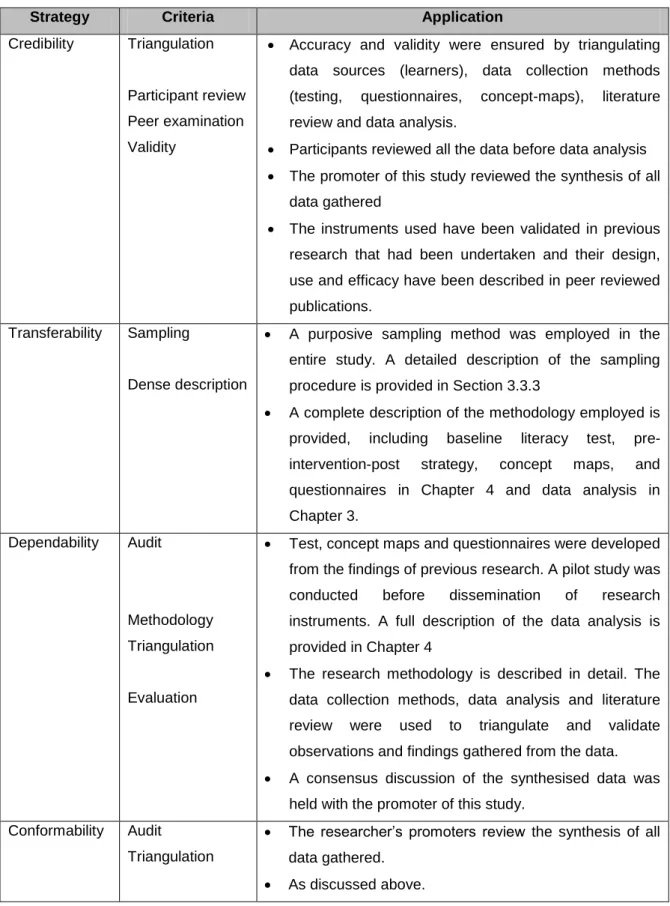
Guba’s (Creswell, 2009:210) model of trustworthiness was chosen for the purposes of this study. This model is based on the identification of four aspects: truth value, applicability, consistency and neutrality. This model was used to introduce standards of quality into this study. The strategies implemented were credibility, transferability, dependability and conformity. Table 3.1 provides a summary of strategies used for trustworthiness in this study.
29
TABLE 3.1: A summary of strategies used for trustworthiness
Strategy Criteria Application
Credibility Triangulation
Participant review Peer examination Validity
Accuracy and validity were ensured by triangulating data sources (learners), data collection methods (testing, questionnaires, concept-maps), literature review and data analysis.
Participants reviewed all the data before data analysis The promoter of this study reviewed the synthesis of all
data gathered
The instruments used have been validated in previous research that had been undertaken and their design, use and efficacy have been described in peer reviewed publications.
Transferability Sampling
Dense description
A purposive sampling method was employed in the entire study. A detailed description of the sampling procedure is provided in Section 3.3.3
A complete description of the methodology employed is provided, including baseline literacy test, pre-intervention-post strategy, concept maps, and questionnaires in Chapter 4 and data analysis in Chapter 3.
Dependability Audit
Methodology Triangulation
Evaluation
Test, concept maps and questionnaires were developed from the findings of previous research. A pilot study was conducted before dissemination of research instruments. A full description of the data analysis is provided in Chapter 4
The research methodology is described in detail. The data collection methods, data analysis and literature review were used to triangulate and validate observations and findings gathered from the data. A consensus discussion of the synthesised data was
held with the promoter of this study. Conformability Audit
Triangulation
The researcher’s promoters review the synthesis of all data gathered.