Omar, Tarig (2019)
From curriculum reform to classroom practice:
intentions, perceptions, and actual implementation in English secondary
schools in Libya.
PhD thesis.
http://theses.gla.ac.uk/78972/
Copyright and moral rights for this work are retained by the author
A copy can be downloaded for personal non-commercial research or study,
without prior permission or charge
This work cannot be reproduced or quoted extensively from without first
obtaining permission in writing from the author
The content must not be changed in any way or sold commercially in any
format or medium without the formal permission of the author
When referring to this work, full bibliographic details including the author,
title, awarding institution and date of the thesis must be given
Enlighten: Theses
https://theses.gla.ac.uk/ [email protected]
From Curriculum Reform to Classroom Practice:
Intentions, Perceptions, and Actual Implementation in
English Secondary Schools in Libya
Tarig Abdulatif Saleh Omar
2019
Submitted in fulfilment of the requirements for the degree
of Doctor of Philosophy (PhD)
School of Education
College of Social Sciences
ii
Acknowledgments
There have been many sources of support during this research study who deserve recognition and thanks. I would like to thank all the people without whom I would not have been able to obtain my doctorate in education.
In Glasgow, I would like to express my special gratitude to my main and second supervisor Dr Dely Elliot and Dr Margaret McCulloch, whose feedback and advice were so valuable and who challenged my thinking so as to enable me to achieve the best results in this thesis. They were helpful and considerate in e-mailing me useful readings that enriched my research.
I am grateful to the University of Glasgow for providing the necessary academic support in my first two years to enable me to continue my research journey.
In my home city, I would like to thank my ten participants, who were very generous in providing me their time and sharing with me their thoughts and concerns.
I am also very thankful to Libya’s Ministry of Higher Education for providing me with a scholarship to conduct my PhD in the UK. Special thanks go to the Libyan Embassy in London for the financial support it provided to me during my study at the University of Glasgow. Without this scholarship and financial support, the dream of starting and then completing my PhD journey would not have come true.
Finally, I am grateful to my wife and my adorable children for their love, encouragement and understanding, and for tolerating my absence during the whole four years, especially in the final year, during which I was writing up my thesis.
iii
Abstract
…….
In the last decade, curriculum developers have stressed the important role that teachers play in translating educational reforms into classroom practice. In Libya, the English language curriculum reform of 2000, which reflects a learner-centred philosophy of language teaching and learning, was intended to enable learners to communicate effectively in English. To achieve this goal, the reformers called for a learner-centred approach to learning through the use of Communicative Language Teaching (CLT) and Cooperative Learning (CL), as both are believed to maximise the learners’ exposure to meaningful learning experiences in a democratic and cooperative environment. However, despite its popularity in the field of English language teaching (ELT), there were many issues stemming from the teachers’ implementation of CLT.
Working as an English language teacher in a Libyan university raised my awareness of the difficulties associated with recruiting students for the department of English and linguistics. This complex situation sparked my interest in undertaking a research study to investigate the reasons behind this observed lack of English competence among Libyan secondary school graduates. Therefore, using Cultural Historical Activity Theory as a theoretical framework, this research study investigated English language teachers’ implementation of the present curriculum, which was introduced two decades ago. This research particularly aims to investigate the extent to which the perceptions of Libyan English language teachers in relation to language teaching and learning in general and in relation to CLT in particular are congruent with the pedagogical changes advocated by Libyan curriculum makers.
To investigate this phenomenon, a qualitative research design was employed as a mode of inquiry. An in-depth examination was conducted with ten secondary-school Libyan English language teachers, who were sampled purposively, in one city in eastern Libya. Complementary data collected through vignettes, initial and follow-up semi-structured interviews, and classroom observations were analysed and synthesised to promote the credibility and trustworthiness of the findings. These data, which were analysed thematically, yielded the themes and sub-themes which constitute the results of this research study.
iv
Using Cultural Historical Activity Theory (CHAT) as a lens helped to elucidate the very complex issues that secondary-school English language learning and teaching in Libya has been facing in the last 18 years or so. This research contributed by offering the following findings: (a) although teachers in this study reported positive views about CLT in general and learner-centred teaching in particular, inconsistencies between what teachers reported and their practice were also identified. Their practice, influenced by their experiences as language learners at their university, by their school culture, and by their professional context, seemingly remained teacher-centred; (b) this observed inconsistency has a huge impact not only on their overall practice (e.g. CL was almost non-existent in their practice and very few attempts were made to conduct pair or group work activities), but, more importantly, on the quality of Libyan students’ English language experiences; (c) these findings are interconnected with the teaching preparation and professional support that secondary-school Libyan English language teachers were offered at their university; (d) the findings also suggested that the Libyan school culture, in general, tended to be incompatible with the current English curriculum principles and intentions; and (e) English language teachers were isolated as they were the only Libyan teachers required to implement the English language curriculum reform. A different approach to learning was employed in other curricular areas, especially Arabic language learning, where teachers were not subject to these curricular reforms or expected to utilise a new pedagogical approach. Overall, these research findings offer a more comprehensive overview of this nationwide problem in order to elucidate the issues, encourage a joined-up approach to tackling them, and make recommendations to different stakeholders in order to seek potential ways forward, with a view to resolving the situation.
Important points for consideration are presented that are likely to improve the implementation of the present English language curriculum, the most important of which are the need to (a) adjust the university English curriculum as well as the teaching approach to be in harmony with the professional context and culture of Libyan schools; (b) establish more coordination and communication between teacher training programmes, schools, and curriculum designers; and (c) conduct further research to extend the findings and contributions of this research.
v
Table of Contents
Acknowledgments ... ii Abstract……. ... iii Table of Contents ... v Abbreviations ... xiList of Figures ... xii
List of Tables ... xiii
Chapter 1: The Research Context... 14
1.1 Introduction ... 14
1.2 Libya... 17
1.2.1 Education in Libya: Historical Context ... 17
1.2.2 English Language Curriculum in Libya ... 23
1.2.2.1 The Previous Curriculum... 24
1.2.2.2 The Present English Language Curriculum ... 25
1.2.2.2.1 The Present Curriculum Structure ... 25
1.2.2.2.2 Overall Objectives and Principles of the Present English Language Curriculum ... 26
1.3 English Language Teaching in Libya: The Problem ... 29
1.4 The Research Rationale ... 31
1.5 Organisation of the Thesis... 33
Chapter 2: Literature Review and Theoretical Framework ... 36
2.1 Theoretical Framework ... 36
2.1.1 Cultural-Historical Activity Theory (CHAT) ... 37
vi
2.1.1.2 The Notion of Mediation ... 41
2.2 What is Curriculum? ... 43
2.3 Curriculum Ideologies ... 46
2.3.1 Scholar Academic Ideology ... 48
2.3.2 Social Efficiency Ideology ... 49
2.3.3 Learner-Centred Ideology ... 50
2.3.4 Social Reconstruction Ideology ... 51
2.4 Curriculum Development and Reform ... 53
2.4.1 The Product Model ... 54
2.4.2 The Process Model ... 56
2.4.3 Curriculum Development... 58
2.4.4 The Role of Teachers in Curriculum Reform and Implementation ... 60
2.4.5 Reform-Oriented Professional Development ... 61
2.4.6 The Components of Effective Professional Development ... 62
Chapter 3: Teachers' Beliefs... 66
3.1 Introduction ... 66
3.2 Defining “Teachers’ Beliefs” ... 66
3.3 The Relationship Between Knowledge and Beliefs ... 67
3.4 The Relationship Between Beliefs, Attitudes and Behaviour ... 68
3.5 The Formation of Beliefs: Where Do Beliefs Stem from?... 70
3.6 Teachers’ Beliefs About Teaching and Learning ... 71
3.7 Teachers’ Beliefs About Curriculum Reform ... 73
3.8 Teacher Education and Curriculum Reform ... 75
3.8.1 Teacher Education in Higher Education ... 76
3.9 Factors Influencing the Implementation of Educational Reforms ... 78
3.9.1 Teachers’ Perceptions of Curriculum Reform ... 79
vii
3.9.3 The Non-Involvement of Teachers in the Process of Curriculum Reform ... 82
3.9.4 Curriculum Reform Dissemination: The Cascade Model ... 83
3.10 Communicative Language Teaching (CLT): Introduction... 84
3.10.1 Features of Communicative Language Teaching ... 87
3.10.2 The Communicative Language Approach (CLT): An Overview ... 87
3.10.3 CLT Versus Traditional Approach to English Language Teaching ... 90
3.10.4 Communicative Competence ... 92
3.10.5 Challenges of Communicative Language Teaching ... 93
3.10.6 Impact of Culture on Communicative Language Teaching ... 94
Chapter 4: Research Methodology ... 96
4.1 Introduction ... 96
4.2 Research Questions ... 101
4.3 Contacting Local Gatekeepers ... 103
4.4 Recruiting Participants ... 104
4.5 Instruments of Data Collection ... 106
4.5.1 Vignettes ... 108
4.5.2 Interviews ... 109
4.5.3 Classroom Observation ... 112
4.6 Procedure ... 113
4.6.1 The Pilot Study ... 115
4.6.2 The Main Research ... 116
4.6.2.1 Vignettes ... 116 4.6.2.2 Interviews ... 118 4.6.2.3 Classroom Observation... 119 4.6.2.4 Follow-Up Interview ... 121 4.6.2.5 Ethical Considerations ... 123 4.6.2.6 Data Analysis ... 125
viii
4.6.2.7 Trustworthiness in Qualitative Research ... 130
Chapter 5: Research Findings ... 134
5.1 Introduction ... 134
5.2 Vignettes... 138
5.2.1 Participants’ General Views About Teaching and Learning ... 138
5.2.2 Participants’ Responses and Understandings of Philosophies of Education. .. 141
5.2.2.1 Vignette 1: Participants’ Views About the Progressive Philosophy (Participation Metaphor) ... 141
5.2.2.2 Vignette 2: Participants’ Views About the Transmissive Philosophy (Acquisition Metaphor) ... 143
5.2.2.3 Vignette 3: Purpose of Education ... 145
5.3 Interviews: Teachers’ Backgrounds ... 149
5.3.1 Participants’ Attitudes Towards Becoming an English Language Teacher ... 150
5.3.2 Perceptions of the Present English Language Curriculum ... 151
5.3.3 The Lack of Teacher Education ... 152
5.3.4 Lack of Professional Development ... 153
5.3.5 Perceptions About Communicative Language Teaching (CLT) ... 155
5.3.6 Participants’ Beliefs About Teachers’ and Learners’ Roles in the CLT Classroom ... 156
5.3.6.1 Teachers’ Beliefs About Low-Achieving Learners ... 159
5.3.6.2 Teachers’ Beliefs About the Local Culture ... 161
5.3.7 Physical and Organisational Constraints to Employing CLT ... 162
5.3.7.1 The Curriculum Dissemination Process ... 162
5.3.7.2 Physical Constraints ... 163
5.3.7.3 Organisational Constraints ... 164
5.4 Observational Data ... 166
Chapter 6: Discussion... 171
ix
6.2 CHAT: Theoretical Understandings and Application ... 173
6.3 Supportive Tools ... 175
6.3.1 Teacher Education ... 176
6.3.2 Professional Development ... 183
6.3.2.1 Teacher’s Perceptions of the Effectiveness of the Sessions Provided to Introduce the Curriculum ... 186
6.3.3 Physical Constraints ... 189
6.3.4 Organisational Constraints ... 190
6.3.5 Mental Tools: Beliefs About Teaching and Learning ... 195
6.3.5.1 Teachers’ Beliefs About Their Role in the Classroom ... 195
6.3.5.2 Teachers’ Beliefs About Their Students’ Role ... 198
6.3.5.3 Teachers’ Beliefs About Students’ Learning Abilities ... 201
6.3.5.4 Teachers’ Beliefs About Societal Culture ... 202
6.4 Rules: School Culture and Societal Views About Teaching and Learning... 206
6.5 Community and Division of Labour: Suggested Roles and Teachers’ Histories Related Roles... 207
Chapter 7: Conclusion ... 209
7.1 Introduction ... 209
7.2 Conclusions from the Research ... 209
7.2.1 Research Questions Answered ... 209
7.2.2 Additional Key Findings ... 210
7.2.2.1 Teacher isolation ... 210
7.2.2.2 Traditional Learning Experiences at Higher Education ... 211
7.3 Implications ... 211
7.4 Contribution to Knowledge ... 213
7.5 Recommendations for Implementing CLT in Libyan Classrooms ... 215
7.6 Limitations and Future Directions... 217
x
7.8 A Concluding statement ... 221 References……… ... 222 Appendix ………. ... 264 Appendix A: The previous English language curriculum English for Libya. (adapted from Orafi 2008, p. 244-247) ... 264 Appendix B: The present curriculum and its structure (adapted from Anderian-Vallance, D. and Schoemann, J. 2008, pp. 4-17) ... 268 Appendix C: Research vignettes. (English version)... 278 Appendix D: Interview questions. ... 282 Appendix E: Classroom observation schedule and a sample of classroom observation. ... 284 Appendix F: Follow-up interview questions. ... 287 Appendix G: Examples themes derived from coding the vignettes, the two interviews and the classroom observations... 290 Appendix F: Plain language statement ... 293 Appendix G: Examples of NVivo nodes used in data analysis ... 296
xi
Abbreviations
C.E.R.C Curricular and Educational Research Centre in Libya
EFL English as a Foreign Language
CLT Communicative Language Teaching
M.o.E. Ministry of Education
C.E.R.C Curricular and Educational Research Centre
EfL English for Libya
ELT English Language Teaching
TESOL Teaching English to Speakers of Other Languages
LBoE Local Bureau of Education
CHAT Cultural-Historical Activity Theory LBoE Local Bureau of Education
LTE Language Teacher Education
xii
List of Figures
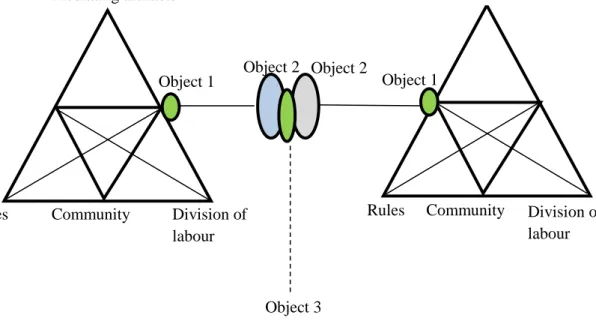
Figure 1: Third generation of activity theory (Engeström, 2001, p. 136)... 39
Figure 2: Vygotsky’s triangle of stimulus (S) and response (R) and …(X) (Vygotsky, 1978, p. 40) ... 41
Figure 3: Mediated act triangle (Engeström, 2001, p. 134) ... 41
Figure 4: The Product and Process Models of curriculum development adapted from O'Neill (2010b, p. 2) ... 54
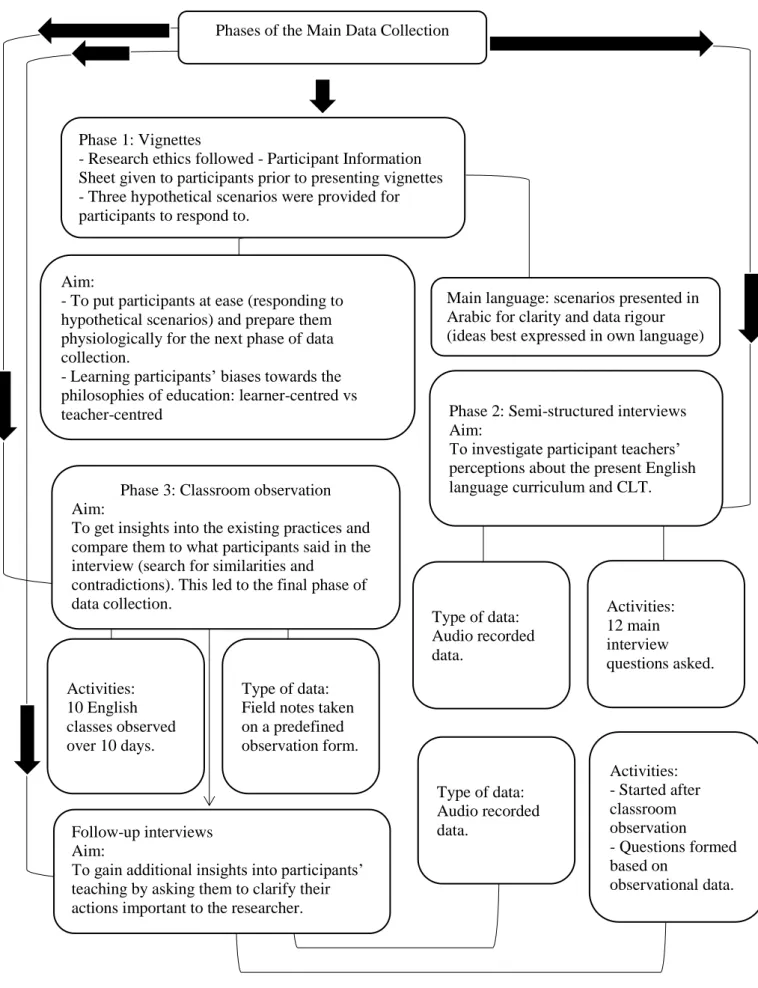
Figure 5: A flow diagram for all data collection process ... 114
Figure 6: Cultural-historical activity theory (CHAT) basic concept ... 173
Figure 7: Activity System: prior to CLT implementation ... 174
xiii
List of Tables
Table 1: Educational Structure in Libya ... 20
Table 2: The objectives of the education system in Libya ... 21
Table 3: The principles of the present secondary English language curriculum ... 27
Table 4: A comparison of curriculum ideologies... 48
Table 5: CLT vs Grammar Translation Method. ... 91
Table 6: Features of communicative competence ... 93
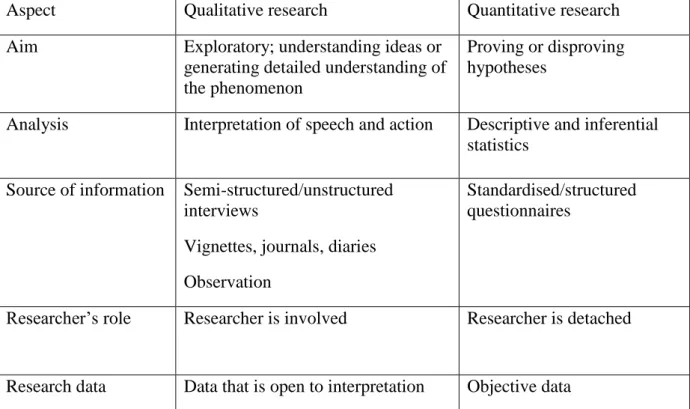
Table 7: Some key differences between quantitative and qualitative research ... 100
Table 8: Groups of nodes and sub-nodes ... 130
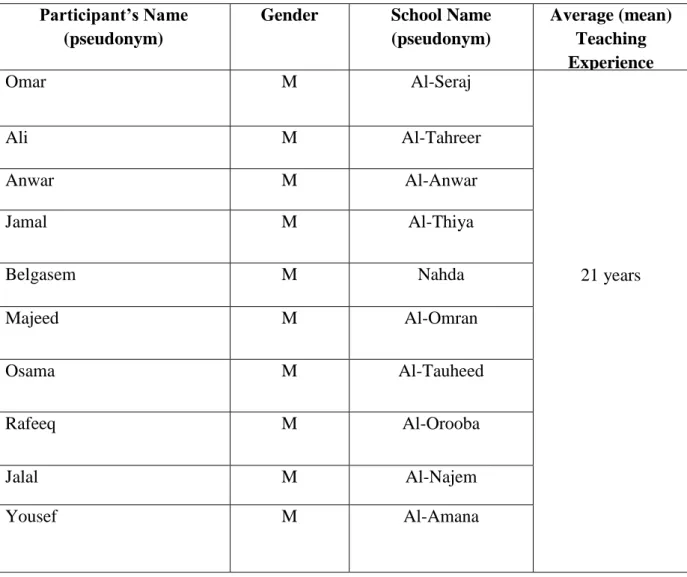
Table 9: Participants’ profiles ... 134
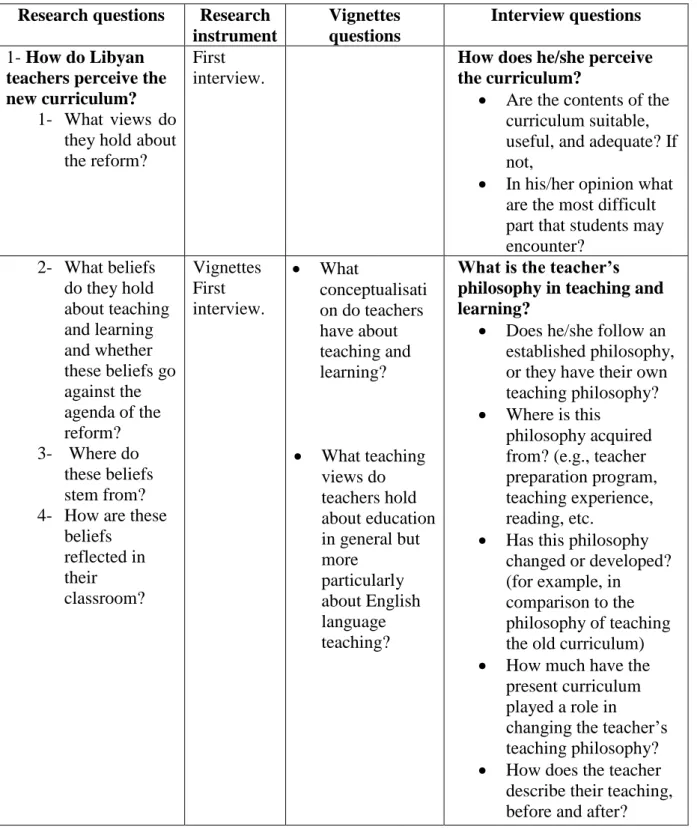
Table 10: Research questions with data sources that answer these question ... 135
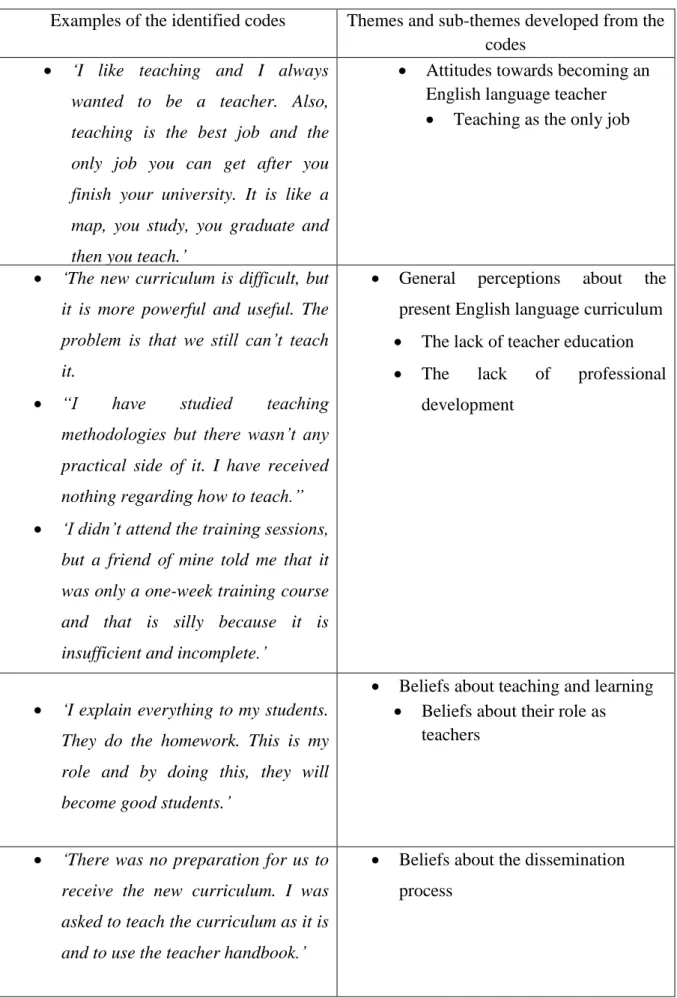
Table 11: Themes and sub-themes derived from the first interview... 147
Table 12: Themes and sub-themes derived from the second interview ... 148
Table 13: Themes and sub-themes derived from the classroom observation ... 149
Table 14: Participant teachers' views of their students’ roles in the classroom ... 158
14
Chapter 1:
The Research Context
1.1
Introduction
In 2000, Libya’s education authority made significant changes to most school curricula, including English, using a top-down approach to curriculum reform which adopted new theories and approaches to language teaching and learning. The result was the introduction of a new English curriculum in Libyan preparatory and secondary schools, followed by further changes to primary school curricula in 2007. The 2000 curriculum included new approaches to language teaching and learning such as communicative language teaching (CLT) and cooperative learning (CL). The development of the present English language curriculum was an important step taken by the Libyan educational authority towards achieving better language teaching and learning, required to keep pace with the rapid economic change and the need for English as a means of international communication. The curriculum, which was published between 2000 and 2007, was presented in the form of textbooks. The series, titled
English for Libya”, was mainly developed in the United Kingdom by Garnet Publishing in
agreement with the Curricular and Educational Research Centre in Libya (CERC)—the education body which belongs to Libya’s Ministry of Education. Compared with the previous English curriculum, the reformed English curriculum represented a remarkable shift by introducing modern teaching methodologies and curriculum materials, as well as implementing contemporary theories of language teaching and learning.
The CERC did not merely introduce the English curriculum to share the curriculum principles with teachers, but also required teachers to adopt and implement these principles by both changing what they do in relation to language teaching and how they think and believe about teaching. However, despite the introduction of the new curriculum in 2000, teachers’ actual classroom practices today still tend to be incongruent with the principles and goals of the curriculum (Orafi and Borg, 2009). In other words, their classroom practices seem to remain traditional—teacher-centred—whereby teachers control the learning process of their students. The teachers seem to place more trust in the traditional ways of teaching to which they had grown accustomed before being introduced to the present English language curriculum. This trust in previous teaching behaviours has led to incongruences between the overall aims and objectives of the 2000 curriculum in terms of the use of CLT and English teachers’ pedagogical practices. For example, while grammar within CLT is taught implicitly,
15
teachers in Libya still use a traditional approach to teach English grammar, presenting explicit grammatical rules with many examples written on the board (Yousaf et al., 2017). Such incongruences can be attributed to various factors, including teachers’ conflicting views about the whole educational process, particularly their views about student-centred pedagogy (Aloreibi and Carey, 2017). Such beliefs may subsequently affect teachers’ implementation of the recent English curriculum.
In order to implement the new curriculum, Libya’s Ministry of Education (M.o.E) employed the cascade model of staff development. Such a top-down approach to introducing the innovation meant that there was less opportunity for English language teachers to engage in planning and designing the innovation. Instead, they were simply required to adopt and implement this curriculum passed down to them by curriculum planners and educational authorities. Global research suggests that the cascade model is often employed for introducing curriculum reforms (Talukder, 2014, Karalis, 2016). However, this approach has also been criticised from different angles. Section 3.9.4 will discuss in more detail the usefulness and the drawbacks of the model for introducing educational innovations.
Considering the fact that the old English language curriculum had been followed by teachers for many years (from 1986 to 2000), such an innovation arguably required greater introductory and educational support to encourage teachers to adopt it. However, Libyan English language teachers were typically given only a one-week training course led by trained language inspectors in the belief that this would provide sufficient support to teachers in implementing and delivering the curriculum (Orafi, 2008).
A few research studies have analysed whether teachers are actually applying what they learned from the one-week training programme (e.g. Orafi, 2008). Moreover, there may still be unarticulated reasons why Libyan teachers do not implement the recent English curriculum as intended. The primary focus of this research is on the changes to the English language curriculum. The major problem with the present English language curriculum is that English language teachers in Libya have experienced difficulties in implementing it effectively for almost 20 years now. The first major implications are related to the current difficulties in English language teaching and learning which remain unresolved. This has great implications for the students entering higher education, particularly those joining the department of English language. As a university English language teacher myself, I have noticed serious language issues faced by almost all first-year students which can represent, in
16
my opinion, a great barrier to their moving on to the second year of the programme. Moreover, it is a great challenge for us (university teachers) to deal with and to teach advanced materials to students who lack the essential language requirements, such as a good writing and reading ability and a knowledge of correct spelling. At our universities, a significant number of complaints have been made regarding this issue, which suggests that something should be done to fix English language education in schools so that new university students can start and successfully complete their higher education language studies. The issues we (university teachers) are encountering in relation to the new students entering higher education language programmes originate from the poor implementation of the present English language curriculum in schools. Therefore, this research will attempt to investigate the issues around the poor implementation of the curriculum. It will investigate the reasons, if any, that may have inhibited teachers from adopting the reformed English language curriculum. This research will further explore how teachers’ educational beliefs and other contextual realities which have not yet been reported by other studies influence teachers’ educational behaviour in relation to teaching the present English language curriculum. By doing so, we may be able to understand what actually happens in teachers’ classrooms in relation to the implementation of the recent English language curriculum and why first-year university students are struggling with their language education. By providing an in-depth understanding of the issue of language education in schools, this research can offer solutions to the problems in the hope that these solutions will have a positive impact on students joining higher education language programmes in Libyan universities, especially in English language departments.
It is intended that this research will add new insights into teachers’ professional development and education, socio-cultural realities, the dissemination process of the English language curriculum reform, teachers’ understandings of the reform and the challenges it has brought, and teachers’ re-conceptions of their roles in the ongoing development of this curriculum. These insights might help us find an effective strategy for successfully implementing the curriculum to help advance English language education, not only to ensure effective language learning in schools, but also, as mentioned earlier, for the benefit of students studying languages at higher education.
This research will seriously consider the complexities of the Libyan context – starting from how English teachers have been educated, their educational perspectives, the reform’s impact on the English language subject alone (other school subjects remained untouched), Libya’s
17
historical contexts, and other societal influences – as these all seem to contribute to shaping the general pedagogical practices of secondary school English language teachers in Libya. The next section will discuss the context of the research in more depth and also comment on the research rationale. Finally, it will outline the contents and organisation of this thesis.
1.2
Libya
In this section, I discuss the country’s educational system. This includes Libya’s educational culture and its history of English language teaching. I will also look at the circumstances that necessitated the introduction of the present English language curriculum in 2000. Additionally, I will briefly discuss the principles and organisation of the curriculum and how this curriculum led to a significant shift (in terms of reform, rather than implementation) from teacher-centred to student-centred education. Even though the reform took place nearly two decades ago, its impacts with respect to the challenges it presents for both teachers and students still persist in Libya’s English education. This strongly suggests the need to study the phenomenon not only to appreciate the reasons for its impacts, but, more importantly, to help alleviate the situation.
1.2.1
Education in Libya: Historical Context
Libya is an Arabic country located in North Africa, sharing borders with Egypt in the east, Tunisia in the west, Algeria in the south-west, Sudan in the north-east, and Niger and Chad in the south. According to UNDESA (2017) (United Nations Department of Economic and Social Affairs), the population of Libya is approximately 6.276 million, the majority of whom inhabit the northern part of the country. Libya is the fourth largest country in Africa with the longest Mediterranean Sea coastline. The country has a large area—seven times the size of the United Kingdom (Worldatlas, 2017, Nationsonline, 2018).
It was not until 1951 that Libya gained its independence after a period of forty years of occupation by the Italian and British powers. The Italian colony was defeated in North Africa in 1942. After the defeat of the Italian power, Libya was under temporary British rule from 1942 to 1951. From 1951 to 1969, the period when the country was under the British monarchy, all Libyans were given the right to education. Schools were established for
18
different stages, and, in addition to the new schools, old Koranic schools were reopened, which in turn also had a significant influence on Libyan education (Deeb and Deeb, 1982). Efforts to introduce English language education began in the 1940s, after the end of World War II, and were conducted by the British administration in the northern part of Libya (Mohsen, 2014). From 1940 onwards, many English language programmes have been introduced. In 1940, for example, an English language textbook called Basic way to English
was introduced. In 1960, a new series of English language textbooks was introduced called
New Method, and these were later replaced with the Modern Reader series. However, no significant changes to Libya’s educational system took place until the bloodless coup of 1st September 1969 led by General Muammar Gaddafi (Abd-El-Khalick and Lederman, 2000). During his rule, additional primary schools were established and spread all over the country and it became compulsory for all Libyan children to attend primary education. This is considered one of the most significant changes made since the revolution and contributed to structuring the education system in Libya (Said et al., 2005, cited in Almansuri, 2018). Under the Gaddafi regime, the Ministry of Education revised the English language curriculum. The result was the introduction of the English for Libya curriculum, which mainly focused on improving learners’ communicative skills to enable them to use the English language more effectively. The curriculum remained in place until early 1986. Although Gaddafi contributed to developing education in the country, he also supported liberal, revolutionary, anti-Western, and anti-Israeli movements around the world, particularly in Europe and South America, as he believed that the people leading these movements were threatened by their governments (Blanchard, 2016). Gaddafi provided every form of support to these movements, including money and even weapons, to help them stand up to their enemies. Gaddafi’s policies contributed to the ‘souring of US relations’ (Blanchard, 2016, p. 21), and his acts were considered to be an attack on America and the West, who accused him of providing support to terrorists in the region. In 1988, Gaddafi was accused of killing 270 people by blowing up an airplane belonging to Pan Am airlines. Two suspects were identified by the court in the US. The US then demanded Gaddafi hand over the two suspects immediately, but Gaddafi refused to do so. Gaddafi’s act led to the imposition of international sanctions, which continued for 20 years. Consequently, this led to Gaddafi banning foreign language education, including English, as a reaction to the US decision. This clearly had a negative impact on English language learning in Libya, and subsequently on the proficiency of those becoming English language teachers. Although the Libyan regime never admitted bombing the Pan Am
19
Airlines plane, it accepted responsibility for the tragedy and paid billions of dollars in compensation (The Guardian, 2018). This led to the lifting of international sanctions in the early 2000s, ‘followed by economic liberalization, oil sales, and foreign investment that brought new wealth to some Libyans’ (Blanchard, 2016, p. 22). Until 2011, before Gaddafi was killed by Libyan rebels, relations between the regime and the West began to stabilise and foreign language education resumed (Aloreibi and Carey, 2017). After the Libya of Tomorrow project was launched in the mid-2000s by Saif Al-Islam, the eldest son of Gaddafi (Gheblawi, 2011), the Libyan Government adopted a well-planned policy to introduce a new system of English language education to keep pace with the global developments and to improve the country’s economy. At the same time, it invited international companies and business owners to invest in Libya. In 2000, Libya’s Ministry of Education ntroduced a new English language series called English for Libya based on communicative language teaching (CLT) principles, which is still being used today (see Section 1.2.2.2 above). However, the 2000 curriculum suffered various setbacks due to various cultural and contextual reasons. Additionally, as a result of the ban on English education in schools, learners suffered from the lack of qualified teachers (Najeeb, 2013). Although Libya is an oil-rich country with adequate financial resources (Ayub et al., 2016), its English language education has not been of the standard expected. Partly, this may be the result of the political tensions with the West, particularly with the US, during the Gaddafi regime, as mentioned earlier, and partly because of the lack of a well-designed policy to achieve the objectives of the revised English language curriculum.
Education in Libya is divided into two main systems, namely, the school system and the university system. Primary schools in Libya consist of six grades, while there are three years of preparatory and secondary grades (El-Hawat, 2006). There are different specialities within the secondary stage, where pupils study three main different disciplines: arts, sciences and vocational training. The educational authorities in Libya view education as the path to human and technological development and progress (Almansuri, 2018) and have stated their intention to innovate in order to keep pace with the global economic changes and create a modern Libyan society (Najeeb, 2013, Mohsen, 2014). A good practical example of these noble intentions is the creation of three specialisations for the country’s secondary and high schools to allow pupils to choose their own learning paths. However, bringing educational innovations is not without problems. As will be discussed in-depth later in this thesis, the Libyan educational authority employed a top-down approach to introduce the present English
20
language curriculum, which seems to be in harmony with the Libyan cultural, personal and classroom realities, all of which will be discussed in this research study.
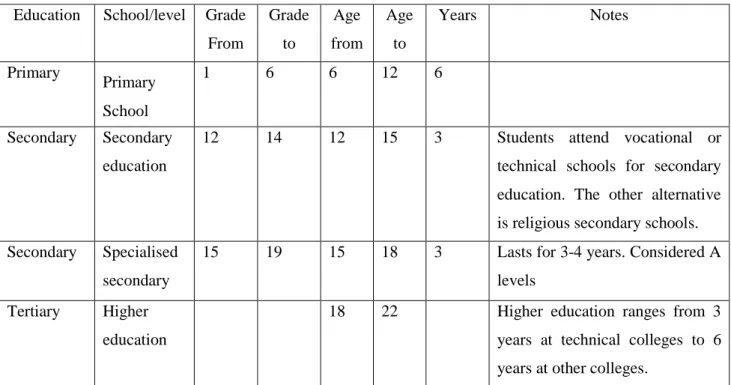
The following table provides a clear view of the various stages of the Libyan educational system, including the duration, age and overall length of each stage.
Table 1: Educational Structure in Libya
Education School/level Grade
From Grade to Age from Age to Years Notes Primary Primary School 1 6 6 12 6 Secondary Secondary education
12 14 12 15 3 Students attend vocational or
technical schools for secondary education. The other alternative is religious secondary schools. Secondary Specialised
secondary
15 19 15 18 3 Lasts for 3-4 years. Considered A
levels
Tertiary Higher
education
18 22 Higher education ranges from 3
years at technical colleges to 6 years at other colleges.
Adapted from Classbase (2018)
Almost all Libyan school children attend state schools as this is compulsory. They should complete all of the stages from the early primary stages to the end of secondary school. Passing from one year to another requires students to pass an examination; failure means that they may not be able to continue their education. Similarly, secondary school students have to pass what we call the “national exam” to secure a place in a university or a college (Alhmali, 2007).
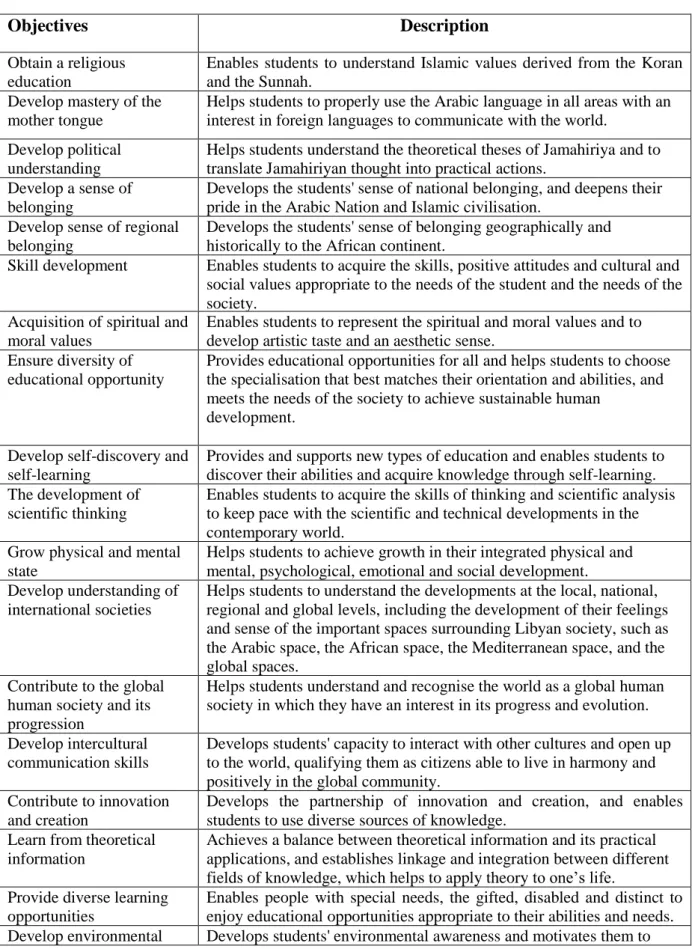
The general objectives of education in Libya are stated clearly prior to the Libyan government’s introduction of the education system in the country including the English language curriculum. As shown in Table 2, the educational authority in Libya aims to enable students to achieve a holistic education and a wide range of learning outcomes – from knowledge development (e.g. scientific thinking) to acquisition of various skills (e.g. self-learning, thinking skills, intercultural skills) and societal values (mainly derived from the
21
Koran and the Sunnah), to social and/or psychomotor development. The objectives of the education system in Libya are illustrated in the following table:
Table 2: The objectives of the education system in Libya
Objectives Description
Obtain a religious education
Enables students to understand Islamic values derived from the Koran and the Sunnah.
Develop mastery of the mother tongue
Helps students to properly use the Arabic language in all areas with an interest in foreign languages to communicate with the world.
Develop political understanding
Helps students understand the theoretical theses of Jamahiriya and to translate Jamahiriyan thought into practical actions.
Develop a sense of belonging
Develops the students' sense of national belonging, and deepens their pride in the Arabic Nation and Islamic civilisation.
Develop sense of regional belonging
Develops the students' sense of belonging geographically and historically to the African continent.
Skill development Enables students to acquire the skills, positive attitudes and cultural and social values appropriate to the needs of the student and the needs of the society.
Acquisition of spiritual and moral values
Enables students to represent the spiritual and moral values and to develop artistic taste and an aesthetic sense.
Ensure diversity of educational opportunity
Provides educational opportunities for all and helps students to choose the specialisation that best matches their orientation and abilities, and meets the needs of the society to achieve sustainable human
development. Develop self-discovery and
self-learning
Provides and supports new types of education and enables students to discover their abilities and acquire knowledge through self-learning. The development of
scientific thinking
Enables students to acquire the skills of thinking and scientific analysis to keep pace with the scientific and technical developments in the contemporary world.
Grow physical and mental state
Helps students to achieve growth in their integrated physical and mental, psychological, emotional and social development. Develop understanding of
international societies
Helps students to understand the developments at the local, national, regional and global levels, including the development of their feelings and sense of the important spaces surrounding Libyan society, such as the Arabic space, the African space, the Mediterranean space, and the global spaces.
Contribute to the global human society and its progression
Helps students understand and recognise the world as a global human society in which they have an interest in its progress and evolution. Develop intercultural
communication skills
Develops students' capacity to interact with other cultures and open up to the world, qualifying them as citizens able to live in harmony and positively in the global community.
Contribute to innovation and creation
Develops the partnership of innovation and creation, and enables students to use diverse sources of knowledge.
Learn from theoretical information
Achieves a balance between theoretical information and its practical applications, and establishes linkage and integration between different fields of knowledge, which helps to apply theory to one’s life.
Provide diverse learning opportunities
Enables people with special needs, the gifted, disabled and distinct to enjoy educational opportunities appropriate to their abilities and needs. Develop environmental Develops students' environmental awareness and motivates them to
22
awareness maintain the integrity of the environment and its various resources and
provide positive contributions to solving environmental problems. Encourage social peace and
defend human rights.
Enables students to understand the principles of security and social peace and human rights, and encourages them to build a peaceful society, a community of mutual understanding, dialogue and global tolerance, recognising their society’s rights within the international community and taking pride in one’s nation and its role in human civilisation.
Adapted from The General Peoples’ Committee of Education (2008, pp. 4-5)
Although the priority of the educational authorities, even before the curricular reform, has always been to improve the country’s education system, the educational objectives and outcomes, even today, have not been met due to various contextual factors related to the introduction of curriculum reform. These factors include the quality of English language teacher education, a lack of school infrastructure such as computers and laboratories, and large class sizes (Khalifa, 2002, Orafi and Borg, 2009, Altaieb and Omar, 2015, Aloreibi and Carey, 2017). The shortage of essential infrastructure could be due to the fact that the educational authorities have paid too much attention to increasing the number of schools to cope with the large number of students, rather than to improving the quality of schools. However, it remains difficult to equip the very large number of schools in Libya with the facilities they require, particularly due to the unstable political situation (Aloreibi and Carey, 2017). Furthermore, it would be very expensive to supply all schools with the required facilities (Ryu, 2008). But, going beyond this, it is important to mention the tribal nature of Libyan society and its powerful role in controlling social norms and legal aspects.
There are 140 main tribes in Libya (Tempelhof and Omar, 2012), all of which have leaders considered to be wise and who are highly respected by other Libyans, whether from the same tribe or from other tribes. Respect for the tribe leaders stems from the important role they play in resolving social tensions and disputes among members of these tribes (Aloreibi and Carey, 2017). Under Gaddafi, many tribal leaders were given a social role to administer and control the legal aspects of Libyan society (ibid.). However, Gaddafi gave no political role to these tribal leaders, while simultaneously exploiting their loyalty to his regime (Myers, 2013). Indeed, the loyalties of Libya’s tribes were misused by Gaddafi, who engaged in clientelism, giving loyal tribes ‘access to institutions, business opportunities, and bureaucratic approval, or even to clear the mundane hurdles of everyday life [through] strategically placed intermediaries’ (Bates and Rassam, cited in Myers, 2013, p. 10). This suggests that the decisions or choices made by people, including school teachers, such as the choice of using
23
certain teaching methods, might be overridden by different choices made by tribal leaders authorised to do so by Gaddafi. Although Gaddafi’s regime is now over and the power of tribal leaders to influence other people’s decisions has significantly decreased, it is worth noting that there are cases where, for example, school decisions are still influenced by the interference of tribal leaders. Therefore, one can argue that tribal interference can have a significant impact on teachers’ actual practices and decisions.
1.2.2
English Language Curriculum in Libya
The focus of this research is on the English language curriculum that was introduced in 2000. The research is concerned with the level achieved by higher secondary school English language students. I am interested particularly in this stage, firstly, because I am a university teacher who teaches the cohorts of students who have just finished their secondary education. Secondly, I have major concerns about the low level of English language proficiency of these new students. This low level of language competency has two implications for us as university teachers and for the new students themselves. For university teachers, it is difficult to teach the advanced university English language curriculum to students with very low English proficiency as the curriculum includes various subjects which require excellent language skills and makes certain assumptions about what students will be able to do when they arrive. For the new students, the lack of necessary language skills means that they are more likely to fail from the start, which will cause feelings of frustration for them and their families. The other challenge which we, as university English language teachers, often have to deal with is the pressure which some families put on us when they try to convince us that their children are able to complete their university English language education. In many cases, the pressure placed on us by families is so intense that we (university teachers) have no other option but to agree to continue teaching these low-achieving students. The implications of this situation both for society in general and for English education in particular are huge. Based on my experience as a university teacher, low-achieving students tend to leave university with little knowledge of the English language, let alone of teaching and learning. Once they are employed as school teachers (as teaching is currently the only profession that language graduates can join – see discussion in Chapter 5), their weaknesses in teaching are evident in their students’ language achievement. Therefore, the low-achieving language university graduates have a direct impact on their subsequent schools’ language education, where their students’ language acquisition is minimal.
24
Such concerns sparked my interest in investigating the entire state of English language teaching in secondary schools to determine the major reason(s) why we still receive low-achieving students at our university. My deepest interest lies in the relationship between the intentions of the recent English language curriculum, on the one hand, and the practices and experience of teachers, on the other, and how this relationship is affected by teachers’ conceptions and the social and contextual realities of the school settings.
This study aims to examine current teachers' experiences of implementing the English language curriculum in Libyan secondary schools and to cast light on how teachers' beliefs and other contextual factors influence the way teachers have perceived and implemented the educational reform since 2000. Given the observed learning deficiencies among secondary school students, I am interested in gaining an in-depth understanding of what happens in classrooms, the extent to which these practices reflect the curriculum’s recommendations, and the reasons for any discrepancies, if any are found.
As many teachers have experience of teaching the two different English curricula, they may have their own views about whether or not these two curricula are useful and appropriate to their context. The next section provides a comparison between the old and the more recent English language curricula. This will inform the thesis of the principles of the two curricula and also help us to understand how teachers envision their roles in relation to their views about the previous and the present English language curricula.
1.2.2.1 The Previous Curriculum
English teaching in Libya started in the late seventies when the English language was introduced into the Libyan education system due to the important role of English in many different domains. At that time, an English curriculum called Living English for Libya, written by non-natives, was introduced in intermediate and secondary state schools (Alkhaldy, 2012).
The Living English for Libya curriculum (see Appendix A for a sample), which was entirely teacher-centred, was designed to consist of three years at the intermediate stage (preparatory school), starting from 7th grade, and continue for three more years at the secondary stage (high school) (Altaieb and Omar, 2015). Four English classes were given per week, with each class lasting 45 minutes. However, English was not the only class taught, and as school timetables were congested, most English classes were pushed toward the end of the school day. By the time of the day when English was taught, students might well be exhausted,
25
especially after dealing with more complex classes such as maths, physics and chemistry, and this could affect their English language learning. As a result, students tended to leave school with little or no knowledge of how to use what they had learned in meaningful communication (Altaieb and Omar, 2015).
As noted above, after Libya was bombed by the US in 1986, the country’s leader, Muammar Gaddafi, banned the teaching of any foreign language; English teaching was only resumed in the mid-1990s (Aloreibi and Carey, 2017). Needless to say, these circumstances had a huge impact on English learning in Libya, and left a large gap in English language teaching and learning in the country, with teachers and learners unable to develop their English language teaching and learning skills.
Subsequently, it was the importance of the English language as the lingua franca and its continued importance in connecting people globally that prompted the Libyan educational authority to resume the teaching of English in the country (Orafi and Borg, 2009, Altaieb and Omar, 2015, Aloreibi and Carey, 2017). Thus, the Libyan Government in cooperation with the British Council introduced the English for Libya curriculum in 2000 for preparatory and secondary schools (Orafi, 2008, Alkhaldy, 2012).
1.2.2.2 The Present English Language Curriculum
The present curriculum was introduced in 2000 (Alkhaldy, 2012) and was presented in the form of different textbooks for all school stages. As mentioned earlier, the textbooks are called English for Libya. They were designed and published in the United Kingdom by Garnet in cooperation with the CERC in Libya. The curriculum included various textbooks: students’ textbooks and teachers’ handbook, which included an audio cassette. This curriculum is still in use and is the central focus of this thesis. In the next section, I discuss the curriculum’s overall structure as well as its objectives and methodological principles, providing critiques as appropriate.
1.2.2.2.1 The Present Curriculum Structure
The students’ textbooks are divided into two sections: a course book and a work book. There are eight units each consisting of twelve pages. Each unit is also divided into two sections, which are designed to relate to two different specialist academic areas: literacy and science (see Appendix B). For students of both specialisations, the first unit consists of identical
26
materials. The students will have the opportunity to study them from their first day of attending English class. Each unit covers different topic areas, developed through a focus on vocabulary, grammar, writing, speaking, listening and communicative learning lessons. Each unit is divided into twelve lessons (e.g. reading, vocabulary, grammar, speaking, listening, etc.) in which students engage in a variety of activities, covering multiple aspects of the English language. These lessons typically comprise reading (two lessons), vocabulary and grammar (three lessons), listening, speaking and writing (three lessons) and specialisation (four lessons).
The structures mentioned above are significantly different from those of the old curriculum. Looking closely at the above-mentioned examples of the lessons in the present English language curriculum, one can identify the underlying objectives of the curriculum. As the present English language curriculum aims to develop learners’ communicative skills, a communicative approach to teaching language is employed; however, this communicative approach seems to have been incongruent with the contextual and personal realities of the Libyan context. The old curriculum, by contrast, aimed to develop learners’ linguistic abilities only through mastering grammatical rules and memorising vocabulary. Thus, it is the communicative approach that distinguishes the present English language curriculum. This distinctiveness has led to certain challenges, which arguably have implications not only for how the teachers teach the subject but also for the overall learning experience of Libyan secondary students.
1.2.2.2.2 Overall Objectives and Principles of the Present English Language Curriculum
According to the teacher’s book (a book providing pedagogical instructions and guidance for teachers), the course textbooks are ‘designed to consolidate and further develop understanding of the grammatical system, to increase secondary students' range of active vocabulary and to extend their ability in the four language skills of reading, listening, speaking, and writing’ (D'Arcy and Schoenmann, 2008, p. 1). The teacher’s book provides secondary teachers with a comprehensive guide to how to use the course. The materials are designed for one year of English study consisting of approximately 100 teaching periods in total. The following table summarises the curricular principles as highlighted in the teacher’s book.
27
Table 3: The principles of the present secondary English language curriculum
Focus Curriculum principles
Reading • Aims to help students develop the sub-skills of prediction, inference, reading for gist, reading for specific information, and the ability to work out meaning from the context.
Grammar • Aims to activate the grammatical points which students have already learned through the productive skills of speaking and writing.
Listening • Aims to develop the sub-skills of prediction, inference, listening for gist, listening for specific information, and to enhance students' competence and confidence in listening comprehension.
Speaking • Aims to promote fluent communication and to make talking in English a regular activity among the students.
• Discourages error correction during the speaking stage. Writing • Aims to develop the knowledge of language and grammar the
students have already acquired by producing longer pieces of writing.
• Considers the process of writing as important as the end product, and encourages students to work together, to help each other with note taking and editing, and to produce work with a communicative purpose.
Pair work • Encourages the use of pair work and considers it a good opportunity for students to speak the target language.
Error correction • Making mistakes is part of the language learning process. Adapted from Orafi (2015, pp. 5-6)
From the principles mentioned above, it would appear that the recent English curriculum is based on constructivist learning theory: ‘the idea that learners construct knowledge for themselves—each learner constructs meaning individually (and socially)—as he or she learns’ (Hein, 1991, p. 22). Generally, and not specifically related to learning a foreign language, the constructivist theory of learning suggests that knowledge of the world and understanding is constructed individually (Powell and Kalina, 2009). Although constructivism is not a theory of teaching, teachers are encouraged to employ a completely different teaching approach from their traditional approach (Fosnot, 2005). With this approach, students are expected to be encouraged to participate by being involved in interactive learning sessions, involving such tasks as problem solving and group work (Juvova et al., 2015). The role of the constructivist teacher, then, is to facilitate, mentor and encourage learners to engage in such activities (ibid.). The present English language curriculum is based on the Communicative Language Teaching approach (hereafter CLT) because, at the time of its design, this approach was becoming popular across the world of English language teaching. CLT is another
28
important concept for this research and will be discussed in detail in Chapter 3. It is sufficient to mention here that CLT is the counter-reaction to the grammar translation method (the method which emphasises the mastery of linguistic knowledge regarding the target language). CLT emphasises that learners must participate in cooperative and meaningful interaction with others (Dornyei, 2013).
In a special investigative attempt, Orafi (2008) further contacted the publishing company (Garnet) and asked for any documents which could explain their intentions and thinking behind publishing the recent curriculum. He managed to obtain a document from the publishing company which outlined the objectives that guided them when writing the materials. According to Orafi (2008), the document provided by the company contained the following objectives:
• Students to leave school with high communicative ability so they become able to use the English language in communicative settings both orally and in a written form.
• Students to be motivated so that they become interested in using language communicatively.
• Students are expected to develop reading and listening skills such as skimming and scanning through a series of complex reading and listening activities.
It is evident that the recent curriculum presents a significant change in the principles of English language learning and teaching in Libya, and to perceptions of teachers’ and students’ roles. Thus, the teacher is no longer seen as the knowledge holder and students are no longer considered passive receivers of that knowledge; rather, teachers start to perceive themselves as facilitators who should provide help and support to their students so that they (the students) make the most of their learning experience (Benson and Voller, 2013).
Considering the different aims and objectives of the previous and the present English language curricula can help us understand the complexity of English language teaching. Teachers are likely to hold beliefs about the flexibility and practicality of the present English curriculum based upon their experiences of teaching the previous curriculum. Similarly, they are also likely to hold beliefs about their tried and trusted teaching practices. In addition, the suggested new role of students in the present English curriculum might contrast with teachers’
29
views of their students’ roles in the old curriculum. Such views might include the idea that learners should sit quietly and listen while the teacher is passing down knowledge to them – as is characteristic of teacher-centred curricula (Richards and Rodgers, 2014). Arguably, their beliefs can potentially interfere with their new roles of communicative language teachers. Therefore, it is important to appreciate the differences between the underlying principles of the two curricula and how teachers conceptualise these differences – positively or negatively. The focus of this research is not only to gain a sound appreciation of the numerous observed challenges affecting the teaching and learning of the present English curriculum, but, more importantly, to identify the original source(s) of these challenges taking into consideration that teachers have been teaching the present English curriculum for almost 20 years since it was introduced in 2000. There is also the intention that these ongoing challenges be subsequently addressed and resolved.
1.3
English Language Teaching in Libya: The Problem
In the 21st century, English has become an important language in higher education, research, business and commerce, as well as in many other fields. As the world becomes a global village, the role of the English language has necessitated changes in the language education policies of many countries around the world. Many Western countries have incorporated the teaching of English language in their schools so that their students can keep pace with the global developments in many aspects of life and to become open-minded to this culturally diverse world we live in. In Middle Eastern and North African countries, similar actions have been taken to incorporate English language education. With the objective of becoming a part of this global village, the Libyan educational authority has also introduced English language education into schools to enable Libyan children to become members of the English-speaking world. However, introducing a new English language curriculum is not without its challenges Many research studies have been carried out to explore the challenges relating to teachers and their educational practices, such as their knowledge, their beliefs, their perceptions, the academic culture and the context, as well as how these aspects relate to one another theoretically (Fung and Chow, 2002, Radzi et al., 2007, Dailey, 2010, Vaezi and Abbaspour, 2014). However, teaching is an activity that requires teachers to be practical and to find ways to apply theory to practice. This implies that teachers interact with their fellow teachers in an educational society because people, especially teachers, are active members of society and they do not learn in isolation (Lucas, 2011). In other words, people construct knowledge in
30
their social contexts, as is the case with Libyan teachers. Libyan teachers have learned to be teachers in their particular social contexts, putting knowledge about teaching and learning into action; thus, their educational practices are socially constructed.
The practices of Libyan English language teachers can be explained by the influence of their cultural backgrounds (Elabbar, 2011), for example, how they see themselves as teachers and how their society sees them and their learners. Teachers’ practices can also be explained by the beliefs they hold about teaching and learning (ibid.), e.g., how they see their role and their students’ roles in the classroom. Teachers’ performance can also be understood as a result of the early education they received (ibid.). As an example, language teachers taught using a traditional approach seem to transfer that teaching approach into their own teaching practices. Tudor (2001) suggests that there is general agreement that, in certain contexts, sociocultural realities have a significant influence on teaching behaviours. This would imply that teachers’ and students’ beliefs and expectations are directly affected by the cultural norms of that particular context. In other words, teachers and students already know what their responsibilities are in the classroom (ibid.). See also Section 2.1 below for a discussion of the relevant theory. In the following section, I will discuss the key aspects of Libyan educational culture.
Drawing upon my previous experience as an English language teacher at secondary school, I have observed that Libyan students sit quietly in the classroom and conventionally wait for their teacher to deliver the information to them, which the pupils subsequently memorise and revise in order to pass an exam. Sitting passively in the classroom does not only imply complete reliance on the teacher’s efforts; it might also relate to certain cultural norms. Specifically, students’ engagement in an activity might be viewed as an interruption by the teacher, thus, students’ engagement could be seen as impolite behaviour (Yu, 2001, Hu, 2002, Brown, 2009, Gulnaz et al., 2015). To avoid any misunderstanding, students have to raise their hands if they want to discuss an issue or participate in a task and wait to be called upon by the teacher (Aldabbus, 2008).
The M.o.E. in Libya seems to have neglected the cultural and contextual challenges that English language teachers face. Evidence of this lack of awareness can be seen in the down approach to English language curriculum reform that the M.o.E. adopted. In this top-down approach, the M.o.E. seems to have considered teachers to be qualified enough to implement and achieve the objectives of the reform. This seems to have made the teaching of English in Libya even more complicated. These managerial expectations tend to place a great
31
deal of pressure on English teachers in teaching the present English language curriculum, while providing them with insufficient training and professional support. The lack of teacher training might affect teachers’ uptake of the reform. In Libyan schools, most English language teachers are Libyans who obtained their bachelor’s degrees in English from a university or an institute. This is enough to qualify them for the position of school-level English language teachers, with no further requirement for special training or a diploma in teacher training. It is therefore not surprising that most EFL teachers lack specific training in teaching. While schools do have some basic infrastructure, they lack more advanced and vital facilities such as language labs and other audio-visual aids to make teaching effective and dynamic. In addition, most Libyan schools have large numbers of students, with an average 40-50 students in each class. Moreover, it seems that curriculum planners and the educational authority have underestimated the role of teachers’ beliefs, as well as the role of other contextual realities, in the implementation of curricular reforms (Levin and Wadmany, 2006, Crossley et al., 2017). The primary focus of this study, in addition to exploring the influences of teachers’ beliefs and culture and other contributory factors in the implementation of the present English language curriculum, is to gain a greater appreciation of the underlying reasons behind the teachers’ pedagogical challenges. This study aims to comprehend the continuing existence of these constraints after almost 20 years. A comprehensive analysis of the historical contexts, issues and challenges which have dominated Libyan English education in the last 20 years is necessary in order to understand the factors that contributed to how effective (or ineffective) the implementation of the English curriculum has been. In seeking useful resources with which to explore this phenomenon, including a theoretical framework for understanding the contextual and individual issues in Libyan schools, this study investigates the relationship between the intentions of the current English curriculum, teachers’ perceptions and the actual implementation of the curriculum. To analyse this relationship, Cultural-Historical Activity Theory (CHAT) is deemed appropriate and useful as a theoretical framework to understand the interaction of personal and contextual features that shape the teachers’ pedagogical practices and teaching goals. This will be discussed in Chapter 2.
1.4
The Research Rationale
Although I was not involved in the introduction of this curriculum in 2000, I had the chance, in mid-2014, to listen to three teachers speaking at national briefing sessions. In these