INTERACTIVE STRATEGIES FOR DEVELOPING INTUITIVE KNOWLEDGE AS BASIS FOR
SIMULATION MODELING EDUCATION
Tajudeen A. Atolagbe
Vlatka Hlupic
Simon J.E. Taylor
Ray J. Paul
Department of Information Systems and Computing
Brunel University, Uxbridge
Middlesex, UB8 3PH, UNITED KINGDOM
ABSTRACT
This paper investigates theoretically based instructional
approaches for organizational training, education and
knowledge acquisition for simulation modeling. It
proposes different theoretical paradigms that bear a close
relationship to the development of curricula for
simulation modeling and practice. A curriculum model is
promoted that has foundations, which are based on
adaptive instructional paradigms. We advocate that a
multiple approach to the delivery of instruction should be
a dynamic process, set within a context which integrates
both a theoretical and a practice-led curriculum. The
objective is to examine the contents, framework, and
instructional strategies for effective teaching and learning
for simulation modeling.
1 INTRODUCTION
The application environments for modeling and
simulation are numerous and diverse Law and Kelton
(1991) and usually involve using simulation software as
opposed to analytical methods. This has resulted in an
increase in demand for user training to operate and
support these products. Training activities can be
directed towards providing hands-on experience required
to apply simulation modeling processes.
A novice learner may prefer learning new simulation
software “by doing” rather than learning from textbooks
or manuals and gaining experience from continual
practice. Using simulation modeling software is mainly a
cognitive process with a small motor element. The
process involves thinking about what entities, attributes
and events to include in the model. Learning from
mistakes may be one of the main natural methods of
learning if it results in changes in behavior. Bruner
(1966) postulates four aspects that a theory of instruction
must address. These are: (1) learners’ predisposition
towards instruction, (2) the structure of the knowledge,
(3) the sequence of the instruction and (4) the type of
feedback. These can help define the various features for
implementing an effective learning environment for
simulation modeling.
Different universities have diverse programs of teaching
that are likely to produce different types of knowledge.
We are faced with the problem of teaching simulation
modeling for “understanding” as opposed to teaching
simulation modeling techniques. Proficiency in
simulation modeling techniques will involve a large
amount of practice. The pedagogical framework should
determine the contents, scope and training objectives for
the diverse learner. Learning outcomes could be
enhanced if instruction can be adapted to the learner’s
needs, contents, learning style, and cognitive style
(Labov 1982). Classroom activities give simple examples
emphasizing approaches and technical problems from
which problems can be solved. Classroom activities
could be centered on the body of knowledge that the
learner would require and with acquisition of new skill
(Taylor et al. 1995). Classroom activities should
therefore be directed towards improving skill and
performance. This could be achieved by organizing
instruction around clearly defined learning outcomes
within a subset of the curriculum.
This paper starts by reviewing relevant psychological
theories and instructional strategies, and proceeds to
propose an instructional framework that is based on
multiple approach to the delivery of instruction. The
framework is based on a dynamic process set within a
context, which integrates into a theoretical and
practice-led curriculum. The advantage of this framework is to
ensure that teaching standards for simulation are set and
met consistently.
2 SIMULATION MODELING EDUCATION
The increasing use of simulation modeling has resulted in
an increasing number of simulation modeling software
1394
products (Catalogue of simulation software, 1988), with
a resultant need for more user training. Simulation
modeling software presents diverse functionality that is
used to accomplish various simulations and modeling
projects. Typical applications of simulation modeling in
manufacturing include factory layout planning, material
flow analysis, scheduling and inventory analysis.
Therefore continuous development of the learner can be
achieved by the integration of classroom activities with
simulation modeling tasks. A Department of Trade and
Industry (1991) study identifies the scope of teaching of
simulation in formal education in the United Kingdom as
being limited and the quality and amount of teaching
varies greatly. The difficulties of meeting training
requirements could be attributed to the lack of technical
and social resources to satisfy the learning environment.
The reasons for this shortcoming are: (1) in some
institutions, simulation teaching is characterized by
relatively low class contact hours; (2) students have
different concepts of simulation and a limited range of
problem-solving strategies; (3) students have no freedom
in the choice of content and method of learning; (4) the
subject scope depends entirely on the flexibility of the
curriculum; (5) the functionality of the simulation
packages is not integrated into the curriculum; (6)
inadequate resources; (7) there is also some conflict in
the goal of teaching simulation techniques as opposed to
theoretical understanding.
Simulation modeling is taught in many universities in
the United Kingdom at M.Sc. level and to some final
year students in Computer Science and related fields. The
students are required to assimilate the knowledge
acquired during the course and be able to apply it to “real
life” problems. Inherent within this approach is the
notion of student deterring their personal value and
assessment methods. This method shapes the teaching of
simulation and inhibits student’s participation.
The processes of constructing a simulation model are
usually based on the users’ paradigms. It involves
building a conceptual model and using statistical
methods for analyzing the data derived from the
empirical study. These paradigms shape the methods by
which simulation modeling processes are taught in the
classroom, and their textbook adaptation. Different
paradigms of simulation modeling are used over a range
of domains and this affects ways the learner’s construct
their knowledge. The pedagogy of teaching/learning
simulation is traditionally based on classroom lectures
and using simulation software packages.
Increasing numbers of simulation languages and
simulators are used in the manufacturing, business and
military applications. The dynamic behavior of this
simulation software and methods of representing the
models are different. Simulation modeling courses should
provide the student with opportunities of learning more
than one simulation software package and this should be
an integral part of the curriculum. For example, students
should be able to recognize the application of a
simulation software package by using different case
studies. To illustrate this concept, the student could
compare modeling a production plant or supermarket
using Activity Cycles Diagrams (ACDs) and Visual
Simulation Seven (VS7). The student could be asked to
perform the same tasks by using either SimFactory or
WITNESS. This approach replies on short learning
activities that is problem centered
Taba (1977) states that a curriculum should consist of
“key elements; aims and objectives, content, and learning
experiences and evaluation.” The content may consist of
a new concept, “paradigm,” or principles disseminated to
the learner. The development of a “pedagogy” for
teaching simulation should be centered around a
curriculum framework, that is based on learning
outcomes and recognizes “both that something is and
what it is”, (Kuhn 1990). The lecturer’s “paradigms”
could influence learning outcomes due to their classroom
experience, knowledge, specific beliefs and instructional
strategy. The teaching paradigms should integrate
knowledge across various domains and facilitate the
attainment of a specified learning outcome. Simulation
modeling education should support and accommodate
differences in the ways students construct their
knowledge and should facilitate creative problem solving
to meet both organizational and educational needs.
Most classroom activities are influenced by formalist
vision of modeling and simulation. Learners conceive
this approach, as the “correct” way in which to approach
simulation modeling. Cognitive approach of teaching
simulation focuses on the behavior to be learned. One
good illustration of the emphasis of what is to be learned
is presented by Gagne’s (1970) theoretical framework.
Its application to teaching simulation modeling implies
that instruction should result in developing new
paradigms. He suggested that tutorial tasks could be
organized in a pedagogical hierarchy according to their
complexity and learning outcome.
These theories propose that each of the categories of
learning outcome require a different set of conditions for
optimizing learning, retention and transfer. Optimal
conditions can be defined both in terms of the
instructional environment and the learner’s behavior.
This process involves learning by using attention,
selective perception, short-term memory, rehearsal, long
term memory storage and retrieval of previously learned
information.
3 INSTRUCTIONAL OBJECTIVES
Training objectives for simulation modeling can be
defined both in the content and scope of the skill required
by the learner and the learning outcomes. Gagne and
Briggs (1988) postulate that teaching consist of situation,
execution, objectives and tools. The learning objectives
can be summarized as follows:
•
Problem solving skills and decision making, creating
and developing alternative solutions. Applying
simulation-modeling knowledge to solve different
problems.
•
Communications skills incorporating both verbal and
non-verbal including visual aids such as graphics,
animation, charts and models.
•
Analytical skills, i.e. development of a conceptual
and a simulation model of the system. The ability to
interpret statistical results and the extent to which the
results meet the simulation objectives. The ability to
recognize and analyze alternative explanations and
procedures.
•
Social skills - team work and participation and the
development of social-technical skills.
These objectives might provide the necessary
foundation for students and may allow for progressive
development in organizations/industries. For example,
the teacher could pose problems requiring learner to
solve. This approach may allow for the transfer of
knowledge from the classroom to everyday practice.
Collins et al. (1989) postulated a model that has four
building blocks - “content, methods, sequence, and
sociology.” This model can be put together to define an
effective and adaptive learning environment. The
contents
consist of a simulation modeling curriculum
framework that focuses on concepts, facts, and
procedures of modeling.
Methods -
the instructional
method should provide the student with the opportunities
to participate in, develop, or discover expert strategies in
simulation modeling contexts. This includes strategies
that would encourage student exploration and
independence.
Sequencing -
learning could be organized
so that the learner can build the multiple skills required
in expert performance and discover the conditions under
which they apply. This requires a sequence of instruction,
providing diverse problem-solving situations, and
hierarchical learning processes.
Sociology
- the learning
environment should reproduce the technological and
social characteristics of real world situations. Group
projects should require students to work with others and
work together to solve problems and carry out tasks. The
student will in the process reinforce each other’s
perception of the task and reject discrepancies, although
this might be impeded by individual difference amongst
the student. The pedagogic for simulation modeling
should integrate knowledge across different domains.
These learning objectives can be improved by adopting
any of the following strategies during instruction: (1) The
learner should be allowed to interact directly with the
simulation software package during instruction. (2) The
learner should be allowed to develop their own
experience by working with other students and on their
own. (3) Classroom activities should start with skills that
are relatively easy and should be focused on
performance. (4) Standards of performance should be
embedded in the learning environment and should be
evaluated. Evaluation should compare the attained
learning outcomes against the stated outcome.
4 PEDAGOGICAL ENVIRONMENT
The pedagogical environment for simulation modeling
involves classroom activities that can result in a mastery
of a predetermined set of core instructional contents.
Traditional models of learning simulation are based on
the acquisition of knowledge. These viewpoints can be
influenced by philosophy and the assumptions of various
professions and by their characteristics. Classroom
activities should expose the learner to intuitive aspects of
simulation modeling and the knowledge embedded in the
practice plus its applications over a range of domains.
Shannon (1975) suggested that a novice would require
“at least 720 hours of formal classroom instruction plus
another 1440 hours study effort” to acquire basic skills in
simulation modeling. This amount of contact hours could
put a strain on resources in either an industrial or an
academic environment. A viable option is to use a
computer based instructional system (Atolagbe and
Hlupic, 1996). The mapping activities, events, queues
and their operations into a simulation model involves
cognitive and analytical skills (Atolagbe and Hlupic,
1996). These skills include knowledge, comprehension,
application, analysis, synthesis and evaluation, (Bloom,
1972). For instance, some of these skills are used during
problem definition, conceptual modeling, model
development and output analysis. The cognitive load in
the model development processes affects students. They
perceive the cognitive load associated with model
construction processes as relatively large compared with
the cognitive contents of the “real” tasks. The cognitive
loads on some simulation software are minimized by
automating some of the model development process.
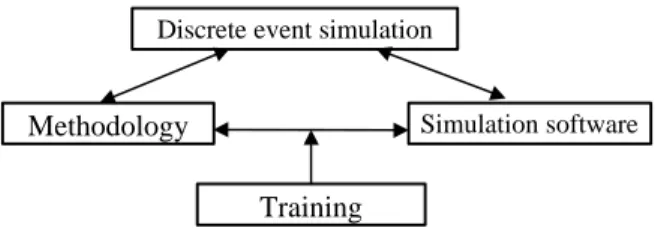
Figure 1. depicts framework for developing pedagogy for
simulation modeling. The pedagogy supports both
simulation modeling methodology and simulation
software. This allows for modular partitioning of the
contents and to adapt teaching to reflect new knowledge
or methodology.
Figure 1: Framework for Pedagogy Development
Howell and Cooke (1989) note that the changes in
technology increase the demand on the learner during
instruction. Instead of performing simple procedural and
predictable tasks during instruction, they are becoming
more responsible for inferences, diagnosis, judgements
and decision making often over a limited time period.
Bruner (1966) suggests that three important variables are
vital for the successful delivery of training, namely: the
learner, the knowledge to be learned, and the learning
process. These variables could provide ways of arranging
teaching processes in relation to the practical aspects of
learning.
A novice learner is prone to distort the building of a
simulation model and the analysis of the simulation
results. This can be attributed to: (1) an inability to
determine the possible cause of inconsistencies in the
model representation; (2) an inability to abstract
operations from the problem definition; (3) an inability to
establish the overall structure of the problem and the user
operational structure; (4) an inability to identify the
functionality of the software package and utilizes it
accordingly.
Some of these factors could be attributed to the
possibility that some courses and textbooks teach
“abstract” simulation modeling processes and these may
not provide adequate
concrete experience
to the learner.
Instruction for simulation modeling should prepare the
learner for a variety of real-life problems solving
situations and should enhance their “concrete
experience.” Learning experience could start with the
development of concrete experience (Kolb, 1984).
Kolb’s stages of learning could foster the development of
pedagogy for simulation modeling. The first stage
involves a learning experience, which begins with
instructional activities and developing simulation
modeling experience. The second stage involves
reflection on the modeling experience and understanding
its application and the third stage involves behavior
modification and the generalizing of new ideas. At this
stage, learners might begin to construct their own
knowledge. The final stage involves applying new
knowledge or paradigms to real-life problems. Kolb’s
learning circle can enhance the building of a learner’s
knowledge and skills in a simulation modeling course.
The “cognitive strains” on building a simulation model
is exacerbated by the model representation techniques
used by different simulation modeling software packages.
The techniques commonly used for discrete event
simulation include activity cycle diagrams and event,
activity and process approaches Law and Kelton (1991),
Paul and Balmer (1993), Pidd (1992), Shannon (1975).
These approaches require the acquisition of concrete
experience rather than abstract experience.
Simulation modeling processes involve conceptual
model formation and subsequent analysis of data. These
require the use of procedural knowledge, i.e.
problem
solving capabilities
and some degree of declarative
knowledge, i.e., an
understanding of the concepts
. These
could be attained by specifying learning outcomes during
the instructional development stages, by using an
effective pedagogy structure and by the sequencing of
tutorial units. Optimal conditions for teaching simulation
modeling can be defined both in terms of the
instructional environment and the learners’ knowledge.
Instruction for simulation modeling should involve a
dynamic integration of learning outcomes, curriculum
framework and appropriate simulation software. Other
factors such as pedagogy content, the learner’s
knowledge or teaching approach could be associated with
these factors.
5 ADAPTIVE INSTRUCTION
The processes of building a conceptual model require the
student to use an appropriate simulation modeling
strategy. Some students will require adequate guidelines
in order to understand the course material presented to
them during the course. Adaptive training activities could
adapt its contents to both the student's knowledge level
and didactic style.
Ausubel (1969) applies the cognitive approach to
learning based on assimilation theory, which suggests
that a meaningful learning results from the interaction
between new concepts, which learners have acquired, and
the cognitive structures they possess. We postulate that
the learner’s previous knowledge, providing an adaptive
teaching style and a clearly defined curriculum structure
could improve the learning outcomes for simulation
modeling. The pedagogical content should integrate
simulation and modeling knowledge with practice skills.
Gagne’s (1985) instructional design framework can be
adapted in developing an adaptive teaching style for
teaching simulation modeling. It suggests that learning
tasks should be classified into a hierarchy of structured
tasks, didactic and interactive styles. Lecturer
intervention could be required during the introductory
classes, or during the analysis of the behavior of the
model. Adaptive instruction is postulated based on the
following:
Discrete event simulation
Training
Simulation software
Curriculum Framework Learning Outcomes Simulation Modeling Educational objectives/ Adaptive teaching
•
Simulation modeling processes embody deterministic
procedures.
•
Conceptual modeling tools such as activity cycle
diagrams, automatic program generators, visual
interactive simulation, simulation program generators,
simulation software tools, the handling of stochastic
input and output, and model confidence require
different cognitive processing.
•
The dynamics of the model will change during its life
cycle.
•
Didactic planning is based on the learning outcome
and sequence of instruction.
Adaptive instruction could meet the needs of different
needs and skill levels. We adopt the following
procedures for implementing the system: (1) the
curriculum is structured so that all the contents and
instructional strategy reflects the functionality of the
software, (2) the curriculum relates to information on the
simulation modeling theory at the appropriate level in the
tutorial, (3) it identifies and describes models that are
supported by the simulation software application and
demarcates between these models, (4) A hierarchical
representation of building the model differentiates
conceptual representation and statistical analysis.
These would allow instruction to be adaptive and meet
different cognitive needs. An adaptive teaching strategy
would allow the student to adapt a suitable learning style
at various stages of simulation modeling processes.
This method of instruction could adapt its contents to
different types of learner and to their level of skills.
Desirable types of adaptive teaching styles are:
1. Instructor-oriented - the lecturer/system controls the
presentation of information and the method of learning
(Taba 1977). Different methods of instruction may be
adopted from the curriculum framework.
2. Guide Discovery - this method of instruction is
suitable for learning simulation software and for model
development.
3. Exploratory - The learner choose which topic to learn
or can navigate the topics freely. This method is suitable
for intelligent tutoring systems representation.
4. Student controls - the student control the tutorials and
can choose their own style of learning. This method
relates directly to the student's model.
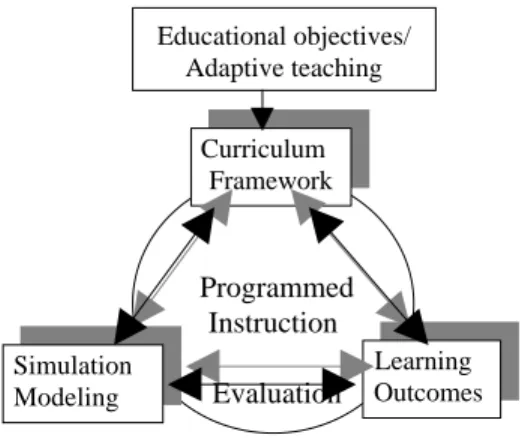
Figure 2, illustrates the different strategies that could
be used during instructional development and how
learner could be influenced by it. Different factors could
influence the instruction method and could be altered by
personal paradigms. It could also be adapted for
computer based learning.
Programmed
Instruction
Evaluation
Figure 2: Triangular Integration
6 PEDAGOGICAL FRAMEWORK FOR
TEACHING SIMULATION MODELING
We proposed a pedagogy framework that is centered on
the development of strategic knowledge applied to
modeling and simulation, which might be required by a
learner. It centers on producing a learner-oriented
instructional framework, which requires a predetermined
level of skill attainment at every level before proceeding
to the next tutorial unit.
An essential consideration, is what paradigms would be
most effective for the attainment of these learning
outcomes? The learning outcome was adopted from an
M.Sc. course in simulation modeling at Brunel
University (Paul and Hlupic 1994). The pedagogy
structure and the contents depict the essential procedures
and skill associated with simulation modeling. It focuses
on instruction and skills acquisition, it incorporates the
principles of curriculum framework (Taba 1977), transfer
of learning (Ellis 1969), experimental learning (Kolb
1984), with a problem solving strategy. The competence
level within each tutorial unit could be adaptable to both
the teaching objectives and the learners’ preferred
learning style. The pedagogy sequence could facilitate a
systematic progression, usually from basic skills to the
more complex (Bruner, 1966, and Taba, 1977). The
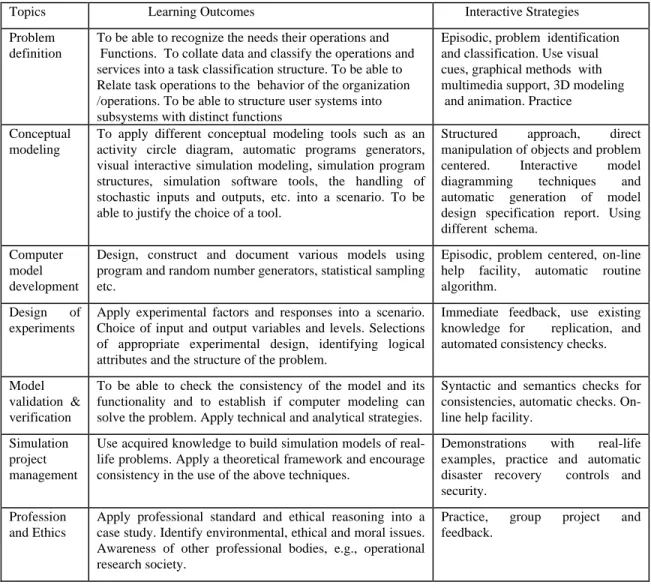
proposed curriculum structure is shown in Table 1. It
depicts the course module and its adaptation into a
curriculum. Each domain describes the skill and
knowledge required for each module. It depicts the ways
in which a pedagogy framework can be incorporated into
the core concepts of simulation modeling. The
advantages of the framework are: (I) It provides the
learner with the tools by which to explain and understand
simulation modeling behavior and validity during
instruction. (II) It provides ways for finding solutions to
the problems that could be posed by the behavior of the
simulation objects at various levels of modeling. (III) It
could be used to generate knowledge that is grounded in
the explanation of the simulation problem. (IV) It allows
for the teaching of transferable skills and it allows for the
alignment of the curriculum structure to a specific
learning objective. (V) It provides an alignment of the
sequence of instruction with a learning outcome. (VI) It
incorporates practical knowledge with the learning
outcome and with the simulation model developmental
life cycle. Knowledge and experience of a expert user
can be elicited by the application of this structure.
The curriculum framework is structured into the
following: Theoretical and practical applications of
simulation modeling; (2) Management of practical
exercise and case study; (3) Professional and ethical
issues. These could facilitate the development of
theoretical knowledge and enhance the development of
practical skills. The curriculum model allows for the
development of a student group project.
The proposed curriculum framework and the learning
outcomes can be implemented at a “micro or macro
level”. It could be implemented as computer based
instruction or as an intelligent tutoring system. The
assessment of learning outcomes could be integrated as
this could support effective instructional practice.
Central to this framework, is the need for evaluation.
Evaluation should test the student's progress and should
test the extent to which he has understood the domain
topics in relation to the stated learning objectives. The
tests should provide an assessment of abilities, which
have been found to be required in organizations.
Table 1: Curriculum Framework for Simulation Modeling
Topics Learning Outcomes Interactive Strategies Problem
definition
To be able to recognize the needs their operations and Functions. To collate data and classify the operations and services into a task classification structure. To be able to Relate task operations to the behavior of the organization /operations. To be able to structure user systems into subsystems with distinct functions
Episodic, problem identification and classification. Use visual cues, graphical methods with multimedia support, 3D modeling and animation. Practice
Conceptual modeling
To apply different conceptual modeling tools such as an activity circle diagram, automatic programs generators, visual interactive simulation modeling, simulation program structures, simulation software tools, the handling of stochastic inputs and outputs, etc. into a scenario. To be able to justify the choice of a tool.
Structured approach, direct manipulation of objects and problem centered. Interactive model diagramming techniques and automatic generation of model design specification report. Using different schema.
Computer model development
Design, construct and document various models using program and random number generators, statistical sampling etc.
Episodic, problem centered, on-line help facility, automatic routine algorithm.
Design of experiments
Apply experimental factors and responses into a scenario. Choice of input and output variables and levels. Selections of appropriate experimental design, identifying logical attributes and the structure of the problem.
Immediate feedback, use existing knowledge for replication, and automated consistency checks.
Model validation & verification
To be able to check the consistency of the model and its functionality and to establish if computer modeling can solve the problem. Apply technical and analytical strategies.
Syntactic and semantics checks for consistencies, automatic checks. On-line help facility.
Simulation project management
Use acquired knowledge to build simulation models of real-life problems. Apply a theoretical framework and encourage consistency in the use of the above techniques.
Demonstrations with real-life examples, practice and automatic disaster recovery controls and security.
Profession and Ethics
Apply professional standard and ethical reasoning into a case study. Identify environmental, ethical and moral issues. Awareness of other professional bodies, e.g., operational research society.
Practice, group project and feedback.