DETERMINANTS OF MICROFINANCE LOAN REPAYMENT
PERFORMANCE: CASE OF OMO MICROFINANCE (OMFI) IN
KAFFA ZONE
A THESIS SUBMITTED TO DEPARTMENT OF ACCOUNTING AND
FINANCE AS A PARTIAL FULFILMENT OF THE REQUIRMENTS FOR
MSC DEGREE IN ACCOUNTING AND FINANCE
BY
FITSUM TADELE
ADVISOR(S):
MAIN ADVISOR: AREGA SEYOUM (PhD)
CO-ADVISOR: DANIEL TOLESA (MSC)
JIMMA UNIVERSITY
COLLEGE OF BUSINESS AND ECONOMICS
DEPARTMENT OF ACCOUNTING AND FINANCE
JUNE, 2014 JIMMA, ETHIOPIA
i
Abstract
This study was conducted with the aim of analyzing the factors that influence microfinance loan repayment investigating determinants of loan repayment performance of borrowers (beneficiaries) and identify the major factors that face OMFI, by using primary data collected through structured questionnaire.
The survey includes a total of 339 respondents, using stratified sampling the population was divided into Urban and rural based on settlement areas. The primary data has been collected by interviewing 167 urban borrowers and 172 rural borrowers’ respondent using a structured questionnaire with the help of trained enumerators. The questionnaire includes both open- and closed- ended questions. In addition, secondary data were gathered from OMFI head office, OMFI branch office and other related relevant publications.
A binary logit model was used to analyze the socio-economic factors that influence loan repayment. In related with the regression analysis Multi co- linearity t and various model fitness tests were made for the assumption of Loan repayment by SPSS 20.0 statistical packages. Furthermore, a chi-square(X2) analysis was employed to compare the defaulters and non-defaulters group.
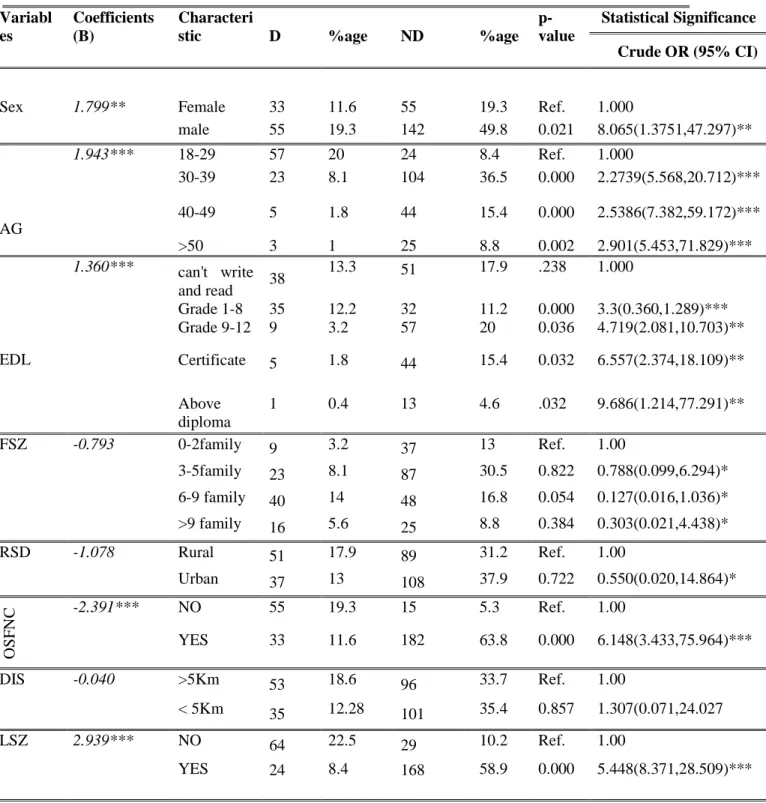
A total of twelve explanatory variables were included in the regression. The results of the descriptive statistics and the binary logistic model show that sex, age, education, source of income before loan, method of lending ,loan size ,suitability of installment period and timeliness of loan release were important in influencing loan repayment performance of the borrower. However, family size, distance of borrowers from institution, residence of borrowers, and frequency of collection were found to be insignificant in model.
ii
Acknowledgment
First my innumerable praise to the Almighty GOD for giving me the opportunity, capacity and guidance throughout my life.
Several individuals and organizations deserve acknowledgement for their contributions to the study. My foremost appreciation and thanks go to my main advisor Dr. Arega Seyoum for his valuable and constructive comment, suggestions and overall assistance from the early stage to the completion of the study. My heartfelt thanks also go to my co advisor, Ato Daniel Tolesa for his valuable comments and professional advice throughout the course of the research work. My heartfelt gratitude also goes to my parents, who were always with me in all aspects in general. My gratitude also goes to all of my friends and classmates for their comments and encouragement when I was in need of their assistance.
I will extend my thanks to Jimma University for sponsoring this thesis project. My appreciations also go to all staffs of microfinance for their unreserved support throughout the course and thesis works.
I want to thank branch and sub branch office staffs in Kaffa Zone OMFI, who facilitated the data collection process. Special thanks go to Ato Belay Tesemma branch manager who provided available information about the study respondents throughout the study (data collection) period. I will extend my thanks to Jimma University for sponsoring this thesis project.
Last but not least, I would like to thank the data collectors, and all research participants who took part in the study.
iii
Table of Contents
Abstract ... i
Acknowledgment ... ii
Table of Contents ... iii
List of Figures ... vi
List of Tables ... vii
List of Appendices ... viii
List of Abbreviations ... ix
CHAPTER ONE ... 1
1. INTRODUCTION ... 1
1.1 Background of the Study ... 1
1.2. Justification of the Study ... 3
1.3. Statement of the Problem ... 3
1.4. Objective of the Study ... 5
1.4.1. General Objectives ... 5
1.4.2. Specific Objectives ... 5
1.5. Significance of the Study ... 6
1.6. Scope and Limitation of Study ... 6
1.7. Organization of the paper ... 7
CHAPTER TWO ... 8
2. REVIEW OF RELATED LITERATURE ... 8
2.1 Theoretical Literature ... 8
2.1.1. Over View of Micro Finance ... 8
iv
2.1.3. Characteristics of Microfinance... 9
2.1.4. The Key Principles of Microfinance ... 10
2.1.5. Challenges of Microfinance ... 12
2.1.6. Lending Methodology ... 12
2.1.6.1. Group Based Lending ... 12
2.1.6.2. Individual Based Lending ... 13
2.1.7. Theories of Microfinance ... 13
2.1.8. Microfinance in Ethiopia ... 14
2.1.9. Omo Microfinance Institution (OMFI)... 14
2.2. Empirical Studies on Determinants of Loan Repayment ... 16
2.2.1. Studies in Other Countries ... 16
2.2.2. Studies in Ethiopia ... 17
2.3. Operational Definition of Terms Used In the Study ... 21
CHAPTER THREE ... 22
3. RESEARCH DESIGN AND METHODOLOGY ... 22
3.1. Description of the Study Area ... 22
3.2. Research Approach ... 23
3.3. Data source and type ... 23
3.4. Study Population ... 24
3.5. Sampling Method and Sample Size Determination ... 24
3.6. Data Analysis and Estimation Techniques ... 27
3.7. Assumptions of Logistic Regression ... 28
3.8. Definition of Variables and Its Expected Sign ... 29
3.8.1. Dependent Variable ... 29
v
CHAPTER FOUR ... 32
4. FINDING AND DISCUSSION ... 32
4.1. Descriptive statistics Analysis ... 32
4.1.1. Socio-Economic Characteristics of Respondents ... 33
4.1.2. Loan repayment performance ... 35
4.1.3. Individual and Group Lending ... 35
4.1.4. Loan related variables ... 36
4.1.5. Borrowers Reasons for Defaulting ... 40
4.1.6 Respondents’ Purpose of Borrowing and Related Activities ... 41
4.1.7. Internal and External Challenges of Institution ... 43
4.2. Econometric Analysis and Results ... 45
4.2.1. The Goodness-of-Fit Model ... 45
4.2.2. Test for Multi Co Linearity ... 47
4.2.3. Model Output ... 48
CHAPTER FIVE ... 55
5. SUMMARY, CONCLUSION AND RECOMMENDATIONS ... 55
5.1. Summary of Key Findings ... 55
5.2 Conclusions ... 59
5.3. Recommendations ... 61
REFERENCES ... i
I. Quantitative Questionnaire (English) To Be Filled By OMF Beneficiaries ... viii
vi
List of Figures
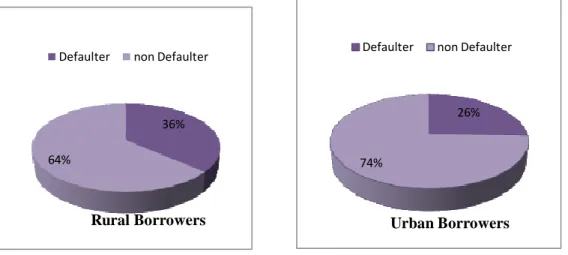
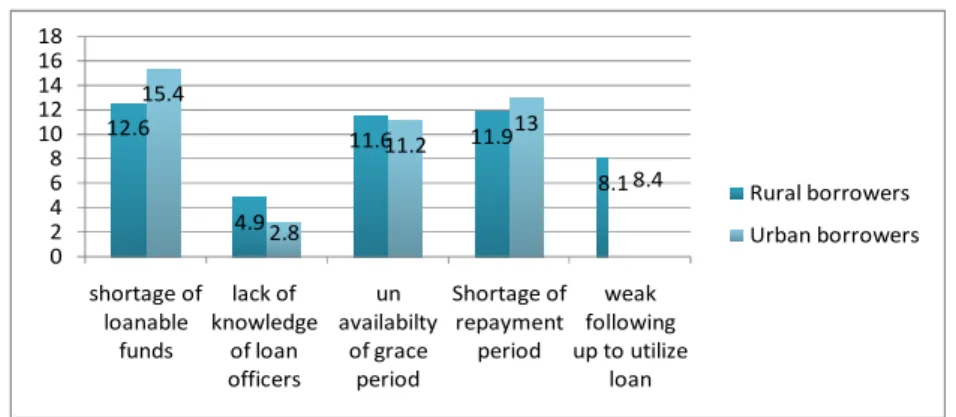
Pages Figure 2.1 Loan Approval Delegations………..………16 Figure 4.1 Loan Repayment and Residence of Borrowers………35 Figure 4.2 Institutional Related Factors Addressed By Respondents……….………..…43
vii
List of Tables
Pages
Table 3.1 Proportionate sample size from each stratum………..…...………..26
Table 4.1 Demographic Profile of Respondent……….……….. ……...……..32
Table 4.2 Method of Lending and Loan Repayment Relations……….………..….…35
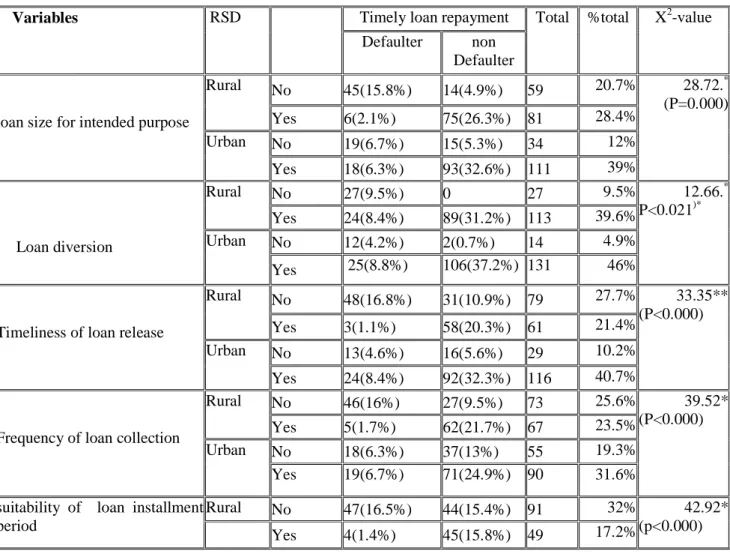
Table4.3 Some Determinant Variables of Loan Repayment………....….…...…….36
Table 4.4 Borrowers Reasons for Default……….……….….….……...…..40
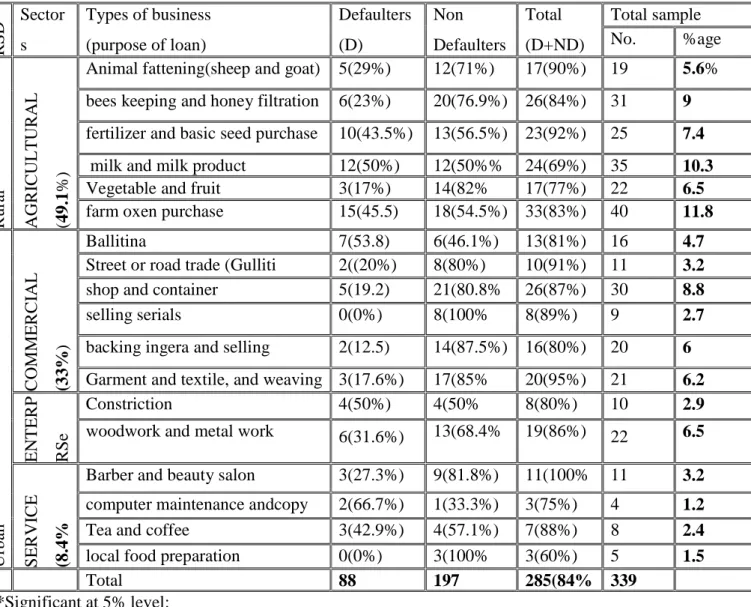
Table 4.5 Respondents by LR and Purpose of Borrowing………..…...……...41
Table 4.6 Size of Farm Land Relationship with Loan Repayment……….…………...……..….42
Table 4.7 Omnibus Test of model coefficients...………..……….………….……..……45
Table 4.8 Classification Table………...……..…….………..…..…….46
Table 4.9 Estimation of binary Logit model and effect of explanatory variables on LR……….………...…………...49
Table 5.1 Comparison of findings on determinants of Loan Repayment Performance from Various studies……….………58
viii
List of Appendices
Pages
Appendix 1; Organizational structure……….………..….xviii Appendix 2; Pearson Correlation coefficient Matrix……….….xix
ix
List of Abbreviations
ADB: Asian Development BankADCSI: Addis Credit and Saving Institution
AEMFI: Association of Ethiopian Micro – Finance Institutions AfDB: Africa Development Bank
CGAP: Consultative Group to Assist the Poorest CIDA: Canadian International Development Agency CSA: Central Statistical Agency
EXC: Ethiopian Commodity Exchange GTP: Growth and Transformation Plan LR Loan Repayment
MC: Micro Credit
MCIs: Microcredit Institutions MF: Microfinance
MFI: Micro – Finance Institutions n.d : No Date
NGO: Non – Governmental Organization OMF: Omo Microfinance
OMFIs: Omo Micro Finance Institutions Share Company OMFOPM: Omo Micro Finance Operational Manual
SNNPRS: Southern Nations and Nationalities Peoples’ Regional State SPSS: Statistical package Software for Social Science
1
CHAPTER ONE
1.
INTRODUCTION
1.1 Background of the Study
The eradication of poverty continues to be a top political agenda in most developing countries .In the 1970s the biggest developments in microfinance occurred for the poor people. The micro finance uprising has come a long way since Muhammad Yunus first providing financing to the poor in Bangladesh.
Sapy (2010), states that 10,000 Microfinance Institutions (MFIs) are currently serving over 150,000 Clients (90% in developing countries) throughout the world. There is still need to reach and serve an estimated 1.2 billion individuals living in extreme poverty (people living on less than U.S. $1 per day1). So, it is very important to develop new strategies that would allow viable financial services to reach all potential clients while ensuring profitability, and thus sustainability, of the financial institutions engaged in microfinance. According to CGAP report, sustainability of microfinance organizations essential to reach a large number of the poor, and as a result, achieve an impact of significant scale (CGAP, 2006).
Microcredit institutions (MCIs) are institutions that provide small loans to low income people either individually or as a group(Candice, 2000). Under the individual lending methodology, loans are granted directly to individuals or business entities. The effective repayment history of the individual normally determines accessibility to future larger loans. The group lending methodology involves providing loans to individuals within a group. The group members co-guarantee one another for repayment of the loan to the MFIs, and so providing a form of social collateral. In case of one member defaulting; the whole group is liable for repayment of the outstanding loan balance, otherwise they lose future access to loans 2.
1
www.kbyutv.org/smallfortunes/overview/ accessed November 10, 2013.
2
2
Ghatak and Guinnane (1999) review the benefits of group-based lending in different manner. Firstly, group-based lending techniques mitigate the information irregularity problems of determining the risk of default by borrowers because groups are normally formed by individual who are likely to know each other. Secondly, the loans are likely to be effectively invested since members of the group tend to monitor each other constantly. Finally, the members provide a form of insurance to each other within the group for repayment of the MFI loan in case of a genuine reason of default. Hence the concept of social capital by implication, the rest of the members cover up the installment repayment for the defaulting member.
The majority of microfinance institutions provide collateral-free small loans to low income households. These loans are generally expected to be used for self-employment and income-generating activities (Kono and Takahashi, 2010, p16). Microfinance can be a critical element of an effective poverty reduction strategy. Well organized access and efficient provision of saving, credit and insurance facilities in particular can enable the poor to smooth their consumption, manage their risks better, build their assets gradually, develop their microenterprise, and enhance their income earning capacity. Thus, microfinance helps to promote economic growth and development (ADB, 2000).
In developing countries, like Ethiopia, financial resource is important input for continuous development. Most of peoples living in third world are under poverty line. They need wide range financial services for consumption, running their business and building assets. Due to lack of collateral, poor people in most cases have no credit access from Banks. Microfinance offers financial services such as loans, savings and micro insurance to the poor people either in individual or in a group basis to those people.
The achievement of microfinance activities in Ethiopia is mainly affected by the income of clients, which directly depends on the effectiveness of the small business of borrowers who live in urban areas; also it depends on crop harvest and the high risk due to drought for rural areas. The fluctuations of product prices, which are difficult to predict, also affect the performance of MFI (Wolday, 2000). Current, most of the microfinance institutions suffer from credit risk, which leads to default. Hence, these studies try to address some determinants of loan repayment that affect both borrowers and lender performance.
3
1.2. Justification of the Study
The rationale of the study is aimed at shading some light as a contribution to address the problem. This study covered determinants of microfinance loan repayment performance case of OMFI and socio-demographic factors that are associated with loan repayment. Studies on loan repayment are not a new research area. In fact, various researches are conducted in loan repayment performance in different time, but the results of findings are still debatable among different researchers. The finding shows there is inconsistency of result regarding the determinant factor variables. Some variables such as sex, education level, method of lending and loan size have debatable results.
For instance; Bhatta and Tang (2002) and Solomon and Addisu (2013), found sex has significant impact on repayment rate, whereas Godquin (2004) and Jemale (2003) oppose this result. Regarding loan size, Zeller and Sharm(1996) found as LSZ have positive impact on LR. Whereas, Jemale (2003) found as loan size have significant and negative influence on LR.
Therefore, this study was conducted to fill the above mentioned gaps by including additional variables on former researchers on determinants of loan repayment. Besides, as to the researcher’s knowledge it appears that no study has been conducted on microfinance loan repayment performance in Kaffa zone on urban and rural borrowers.
Finally, the findings will be expected to fill literature and knowledge gap observed in the area. Besides, the findings of this study will help to visualize the factors affect loan repayment of borrowers and lenders in study area.
1.3. Statement of the Problem
Poverty alleviation has been one of the key development challenges over the decades in most developing economies. One of the identified key constraints faced by the poor is lack of access to formal credit. Microfinance institutions were established to fill the gap of scarce finance resources by providing funds to the poor and lower income group to alleviating poverty and enhance their business activities. Different approaches have been employed in alleviating poverty; the one is provision of credit for targeted poor. Credit is
4
considered to be an essential input to increase productivity (Nawai and Shariff, 2010). Provision of credit to the poor take advantage of economic opportunities to increase their level of output, hence move out of poverty (Shetty ,2008).
The primary objective of MFIs is to provide financial services (credit and saving) to the poor in order to relieve financial constraints and help alleviate poverty. Microfinance institutions offer loans mostly to urban and rural peoples who cannot afford collaterals to get loans from banks. Financial services in Ethiopia are characterized by a high urban concentration (Facet ,2013). To fill this gap microfinance institutions provide credit to the poor, who lack access of formal credit from financial institutions. Micro-finance sector currently face challenges of loan repayment (defaults) by clients. The poor loan controlling system causes serious challenge to most microfinance institutions.
Every microfinance institutions try to maximize its repayment performance. Improving repayment rates helps reduce the dependence of the MFIs on subsidies, which would improve sustainability (Godquin, 2004). One indicator of effectiveness of MFIs is the loan repayment performance of the borrowers (Addisu, 2006). High loan repayment rates benefits both MFIs and the borrowers (Godqin, 2004). Also it argued that high repayment rates reflect the adequacy of MFIs’ services to clients’ needs. High repayment rate helps to obtain the next higher amount of loan (Bond and Rai, 2009). Contrary to this, if there is low repayment rate, both the borrowers and the MFI were affected. In this case the borrowers will not be able to obtain the next higher loan and the lender will also lose their customer.
Default rates are the amount of loans not collected on current and past loan maturity period. Loans taken from credit institutions vary from country to country, region to region, sector to sector. However, almost all credits of developing countries were found to share one common characteristic; all suffer from a considerable amount of default rate (Kashuliza 1993).
Increasing default rate in microfinance leads to the following implication. For instance, it discourages the financial institutions to refinance the defaulting members, which put the defaulters once again into vicious circle of low productivity. Therefore, a rough investigation of the various aspects of loan defaults, source of credit, purpose of the loan, form of the loan, and condition of loan provision are of utmost importance both for policy makers and the lending
5
institutions (Kelly, 2005). Even if default is random and influenced by unpredictable behaviors or it is influenced by certain factors in a specific situation needs an empirical investigation so that the findings can be used by micro financing institutions to manipulate their credit program for the better (Khandker et al., 1995).
According to ( Awoke 2004, cited in Ahmmed et al., 2012) reports that most of the default arose from poor management procedures, loan diversion and unwillingness to repay loans. For this reason, the lenders must give various institutional methods that targeted to reduce the risk of loan default.
In order to maintain sustainability of MFIs, one important thing is to identify the socio-economic and institutional factors which significantly affect the loan repayment performance from both borrowers and lender side. Therefore, this study is aiming to analyze factors that affect loan repayment performance in Omo micro finance institution in Kaffa zone.
RESEARCH QUESTIONS
The study has the following research questions to be developed to solve the problems:
What are the major factors that affect loan repayment performance of borrowers in OMF?
What are the major difficulties and challenges faced by lenders in the collection process related with internal and external factors?
1.4. Objective of the Study
1.4.1. General Objectives
The main objective of the study is to investigate and analyze determinants of loan repayment performance of borrowers and to identify the major problems that face OMF in kaffa zone. 1.4.2. Specific Objectives
To analyze loan collection performance of Omo microfinance borrowers in rural and urban area.
To identify the socio-economic factors that influence loan repayment performance OMF borrowers.
To assess the major problems faced by the borrowers and lenders in the repayment process related with internal and external factors in OMFIs
6
To examine purpose of borrowing and loan related factors that influence the repayment performance of the clients?
1.5. Significance of the Study
Microfinance(MF) offers poor people access to basic financial services, such as loans, savings, money transfer services, micro insurance and other financial products targeted at poor and low-income people” MF is important in developing countries like, Ethiopia for poverty reduction and creating employment opportunity. One of the key factors for productivity and sustainability of MFIs is the ability of good loan repayment performance.
This study tray to provide:-
As source of knowledge for future references by people who have interest to gain insight about loan repayment performance of institution
Provide relevant information to decision makers about loan repayment performance of OMF.
As a baseline data to compare against similar studies to be made in the future in study area.
To provide possible suggestions to problem areas and recommended possible solution for concerning body.
1.6. Scope and Limitation of Study
The study was conducted in Kaffa zone of SNNRS in Ethiopia. The scope of this study was restricted determinants of microfinance loan repayment performance and socio demographic factors that affect loan repayment performance of OMFI borrowers.
Descriptive statistics and binary logistic economic model were used to analyze the primary data collected. Twelve independent and one dependent variable were selected for analytical purpose. In addition, the profitability level of business activity which is financed by credit of the borrowers was not included in the study. The data were obtained from two service delivery posts out of the 11 delivery posts that OMFI operates. The service delivery posts were limited to two due to logistical limitations. Since the research conducted was an academic research that should meet the deadline set by the University and this all reduce the freedoms of the researcher not expand the area as he wishes.
7
1.7. Organization of the paper
This research paper consists of five chapters. The first chapter comprises background of the study, Justification of study, statement of the problem, objectives of the study, research hypothesis, significance of the study and scope and limitation of the study.
Chapter 2 presents literature review with respect to the theoretical perspective and empirical studies on microfinance. Chapter 3 provides the research design and method of data collection of the study, in addition includes the main principles of research methodology and the adopted research design for the study. Chapter 4 consists of finding and discussion of the collected data on the problem in the sample.
Finally, chapter 5 consists of summaries of major findings, conclusions, and recommendation for possible solutions to the problems of the study.
8
CHAPTER TWO
2. REVIEW OF RELATED LITERATURE
2.1 Theoretical Literature
2.1.1. Over View of Micro Finance
In Europe in the 15th century, the Catholic Church founded so called pawn shops in order to keep people from shady loan sharks and money lenders who gave out loans at higher interest rates. These pawn shops later spread throughout the continent (Helms, 2006). According to Seibel (2005) “informal finance and self-help have been at the origin of microfinance in Europe”. More formal credit and savings institutions for poor people were already established in Ireland by the Irish Loan fund system as early as 1720,using peer monitoring to enforce the repayment in weekly installments of initially interest free loans from donated resources (Seibel 2003).
According to (Helms 2006) another cornerstone in the history of microfinance was the opening of the Indonesian People’s Credit Bank in 1895 that became the largest microfinance system in Indonesia. In Bangladesh Professor Muhammad Yunus , the famous founding father of Grameen Bank, with his own lending policy started its operations in the 1970s and who is currently a synonym for microfinance (Sarah ,2011). He provide first loan service from his own pocket to a group of rural women in Jobra in 1976 and successfully developed the concept of microfinance with his Grameen Bank throughout the country and later the whole world wide (Yunus 1999).
Nowadays there is a strong development towards commercialization and transformation of providers of microfinance into formal financial institutions. This stems from the incentive of profitability and sustainability of microfinance institutions. More and more institutions became independent from donor funds and increase their capital from the capital markets while raising their outreach. According to (Sundaresan, 2008) the year 2005 was declared as the “Year of microfinance” and attracted even more private investors to invest their funds into microfinance activities.
9 2.1.2. What Is Microfinance?
Microfinance is a form of financial development that has primarily focused on alleviating poverty through providing financial services to the lower income society or the poor. People think of microfinance, if at all, as being about microcredit, which is lending small amounts of money to the poor. Microfinance is not only offering this service only, but also it provides broader: including insurance, transactional services, and savings (Barr, 2004).
Canadian International Development Agency (CIDA,2007) defined microfinance as, “the provision of a wide range of financial services to poor women and men to enable them to increase their incomes, build assets and reduce lack of access to formal financial institutions. microcredit ,which is likely the most visible form of micro finance ,but also saving ,micro insurance ,money transfer ,and other financial services.
According to (Christen et al., 2003) microfinance” means the provision of banking services to lower-income people, especially the poor and very poor. The term “microfinance” is often used in a much narrower sense, referring principally to microcredit for tiny informal businesses of micro entrepreneurs, delivered using methods developed since 1980 mainly by socially-oriented non-governmental organizations (NGOs).
2.1.3. Characteristics of Microfinance
Microfinance gives access of financial services to low-income people, who wish to access money for starting or raising an income generation activity. The individual loans and savings of the poor clients are small. Microfinance came into being from the appreciation that micro-entrepreneurs and some poorer clients cannot have access to borrow from banks, that is, they can repay, both the principal and interest, on time and also make savings, provided financial services are tailored to suit their needs. Microfinance as an institution has created financial products and services that together have enabled low-income people to become clients of a banking intermediary.
The characteristics of microfinance products include (Murray and Boros, 2002, pp.10-11). • Small amounts of loans and savings.
• Short- period loans (up to one year term).
10
• Payments (Installments) made up from both principal and interest. • Higher interest rates on credit (higher than commercial bank rates)
• Easy access to the microfinance intermediary saves the time and money of the client and permits the intermediary to have a better idea about the clients’ financial and social status. • simple application procedures
• Short processing periods (between the completion of the application and the disbursement of the loan)
• The clients who pay on time become eligible for repeat loans with higher amounts.
• No collateral is required contrary to formal banking practices. Instead of collateral, microfinance intermediaries use alternative methods, like, the assessments of clients’ repayment potential by running cash flow analyses, which is based on the stream of cash flows, generated by the activities for which loans are taken.
2.1.4. The Key Principles of Microfinance
The last three decades have seen significant advances in understanding and providing financial services to better advance development and eradicate poverty. This includes providing the financial means to save, access credit, and start small businesses, with the potential to enhance community development, as well as local and national policy making. There are various principles of MFIs adopted and approved by the Group of Eight (G8) and its 28 public and private members (CGAP, 2006).
1. Poor people need a variety of financial services, not just loans.
Poor need wide financial service not only loans but also they want to savings, insurance, and money transfer services.
2. Microfinance is a powerful tool to fight poverty.
Poor households use MFIs as a tool to eradicate poverty by rising income, build their assets, and reduce themselves against external shocks.
3. Microfinance means building financial systems that serve the poor.
Microfinance will reach its full potential only if it is integrated with a country’s majority financial system. This integration fosters the development of the countries in general.
11
4. Microfinance can pay for itself, and must do so if it is to reach very large numbers of poor people.
Most poor people no access to get good financial services that meet their needs because there are not enough strong institutions that provide such services.
5. Microfinance is about building permanent local financial institutions
Developing sustainable micro financial system is important for offering service in permanent manner and that can attract domestic deposits, recycle them into loans, and provide other financial services.
6. Microcredit is not always the answer.
Other kinds of support may work better for people who are so poor that they are without income or means of repayment. Everybody before providing loan to the poor considers the awareness creation about how to generate income how to repay the loan is mandatory one, without this simple giving loan is not a tool for poverty eradication.
7. Interest rate ceilings hurt poor people by making it harder for them to get credit.
In this principle borrowers are expected to pay higher interest of credit rate for their credit more than bank sectors interest rate. Making many small loans costs more than making a few large ones. Borrowers who borrows higher amount of money charged less interest rate compared to lower borrowers.
8. The job of government is to enable financial services, not to provide them directly.
The role of government is to enable financial services by keeping safe and sustainable monetary policy environment for financial institution. Furthermore, government supports the financial sectors by providing available support.
9. Donor funds should complement private capital, not compete with it.
Donors should use appropriate micro financial institutions in continuous and sustainable ways by grant, loan, and equity instruments on a temporary basis to build the institutional capacity of financial providers, develop support infrastructure, and support experimental services and products.
10.The key bottleneck is the shortage of strong institutions and managers.
Donors should focus their support on building capacity. For long lasting of micro finance strong institutional and managerial staffs are the important one.
12
11.Microfinance works best when it measures and discloses its performance.
Reporting not only helps stakeholders judge costs and benefits, but it also improves performance. MFIs need to produce accurate and comparable reporting on financial performance (e.g., loan repayment and cost recovery) as well as social performance (e.g., number and poverty level of clients being served).
2.1.5. Challenges of Microfinance
Micro credit (MC) as a tool of poverty alleviation and it faces various challenges. These can be understood at three different levels: macro, meso and micro. At macro level unstable policies and poor macroeconomic conditions (economic growth and stability) are crucial to MC development. At meso level, in adequacy of institutional capacities those are; managerial and financial worthiness, quality of human resource, lack of coordination among the MCIs, entrepreneurial skills, and the issue of sustainability (mainly financial) are the main limitations. At micro level, the Problems related to the creditworthiness and credit discipline of the clients are main challenges (Samuel, 2008, p.23).
According to Vento (2004) the first most typical challenges faced by any Microfinance institution is credit risk. In addition, the cost of debt collection per loan amount is, on average, higher than in formal intermediation, especially in developing countries lending.
2.1.6. Lending Methodology
Lending methodologies differ with respect to whether loans are made to groups or to individuals. The lending methodology selection greatly influences product design, client selection, the application as well as approval process, loan repayment, and monitoring and portfolio management. Lending methodology also impacts the institutional structure and staff requirements, including training and compensation (Ledger wood, 2013).
2.1.6.1. Group Based Lending
Group based lending is one of new approaches of lending small amounts of money to a large number of clients who cannot offer collateral. The size of the group can vary, but most of the time groups have between 4 to 8 members. The group self-selects its members before
13
acquiring a loan. Most MFIs require a percentage of the loan that is supposed to be saved in advance, which points out the ability to make regular payments and serve as collateral (Murray and Boros, 2002).
According to (Murray and Boros, 2002) group members are jointly accountable for the repayment of each other’s loans. To ensure repayment, peer pressure and joint liability works very well. The defaulter group will be disqualified and will not be eligible for further loans, even if one member of the group becomes a defaulter. The creditworthiness of the borrower is therefore determined by the members rather than by the MFI.
According to Nawai and Shariff (2010) in group-based lending, borrowers must form a group before applying loans and they also responsible to other loan members. If one member default, the others will be responsible to pay the loan or they will be denied access for the next loans.
2.1.6.2. Individual Based Lending
Individual lending requires greater honest analysis of clients and their cash flows, sometimes physical collateral, and frequent and close contact with clients during the term of the loan. Loan approvals and amounts are based on an applicant’s eligibility and debt capacity, which in turn are dependent upon a number of factors, including personal and business characteristics, for example, age, gender, or reputation, sources and amount of income, age of business, cash flow, and available collateral (Ledger wood, 2013).
2.1.7. Theories of Microfinance
There are a number of theories that try to explain the concept of microfinance and its role in improving the life of poor people whole the world. Governments and development partners have invested heavily in these economies to alleviate poverty which is a obstacle to development of the financial markets and empowering the citizenry economically. There are different types of theory such as: neo-classical growth theory, welfarist theory, institutions theory, empowerment theory and uniting theory (Todaro et al, 2003; Robinson, 2001; Elsa and Stina, 2006; Cheston and Kuhn, 2002, cited in Omoro and Omwange, 2013).
14
Out of above mentioned theories to give some points in uniting theory, therefore it supports this study. According to (Ghatak and Guinnane, 1999) uniting theory was important for joint liability in the repayments of microfinance loans. The aim of this theory is to improve repayment rates and the welfare of credit-constrained borrowers. In joint liability, when one borrower cannot repay a loan, group members are responsible to repay for one of their members if he or she defaults to pay for his or her monthly installment. Borrowers believe that if a group member defaults, the whole group will not be allowed to access future loans even if the lending contract does not specify this punishment.
2.1.8. Microfinance in Ethiopia
Microfinance institutions introduced in Ethiopia after the dawn fall of the Derg regime following the policy of economic liberalization. The development of microfinance institutions in Ethiopia is a recent phenomenon. Ethiopian development strategy is the establishment of sustainable microfinance institutions serving large number of poor people. Microfinance is taken as a shift from government and NGO subsidized loan programs to finance services run by specialized financial institutions. Later microcredit programs were changed to microfinance institutions. Non-governmental organization (NGO) credit schemes and informal sources of finance have existed in Ethiopia for many years; the government instituted a legal and policy framework for MFIs in 1996 through Proclamation 40/1996 (Gebrehiwot, 2002).
Currently, the Ethiopian microfinance industry is rapidly growing. Recently, there are 31 MFIs reaching around 2.4 million people (AfDB, 2012). The deposit interest rate is 3-8% and lending interest rate is 12-24% in 2012. Most MFIs are doing remarkably well in terms of financial performance given their relatively short track record (Facet, 2013).
2.1.9. Omo Microfinance Institution (OMFI)
After introduction of proclamations 40/1996, one of the MFI established in Ethiopia is Omo Micro Finance Institution S. C (OMFI) which is operating in the southern nation’s nationality and peoples Regional State of Ethiopia. It was originally established as Nongovernmental organization in 1997. OMFI is operating in nine (9) branches in the following towns of the Southern Nations and Nationalities Peoples Regional Sate (SNNPRS) such as, Hossana (Hadiya
15
Zone); Durame (Kembata, Alaba Tembaro Zone); Arbaminch (Gamogofa Zone); Wolkite (Guraghae Zone); Bonga (Kaffa and Sheka Zone); Awassa (Sidama Zone); Dilla (Gedio Zone); Mizan (Bench Maji Zone) and Sodo (Wolayita Zone). Total Number of Woredas Covered so far is 52 Woredas in 9 branches. It provides financial services to active poor peoples in southern regional states both in urban and rural areas. Currently the institution has more than 327,888 active borrowers and gross loan portfolio of USD 31.2 million. The annual lending and deposit rate are 15% and 3% respectively. Gender Sensitivity; male and Female Clients accounts 62% and 38% respectively3.
The institution reaches its target through the organizational structure, namely: head office, branch office, sub branch office and kebeles service delivery post (Appendix 1). The total number of employees in the institution is 214, out of which 66 are loan officers and the rest are support staffs (OMFI, 2013).
Concerning to loan size and loan terms, OMFI provides loan to micro business, agricultural, small investment and working capital to its diverse clientele. Accordingly loan size for agriculture and micro business loan ranges between 2000 up to 5000 birr with loan term of between three month and two years depending on the type of activities financed. On the other hand, Loan size for small investment and working capital, start with a minimum of birr 5000 depending on the viability, profitability and absorption capacity of the client’s enterprise ,with loan term extended from a minimum of two years up to 5 years depending on the nature the business being financed. In addition to this the first loan cycle size shall not exceed birr 1,000 and birr10, 000 for agricultural and business loans and small investment and working capital respectively (OMFIOPM, 2010).
2.1.9.1. Client Selection Criteria and Group Formation
Some of selection criteria for credit service are:-economically active, healthy and capable poor between age group 18 and 60years ,low income urban, low income civil servant, good and proven credit history ,willing to make compulsory saving and viability of business plan are the
3
16
main criteria. In addition to this group formation is one of key element in MFI, the group will consist of a maximum of 5 members and minimum of 3(OMFIOPM, 2010)
2.1.9.2. Loan Approval Delegation From Upper Level To Lower Level
To minimize risk on loan administration, it is important to delegate loan approval in different hierarchy. According to the (OMFIOPM, 2013) the loan approval delegation are as follows:
Figure2.1.Loan approval delegation
Source: (OMFIOPM, 2010)
2.2. Empirical Studies on Determinants of Loan Repayment
2.2.1. Studies in Other Countries
Zeller and Sharma (1996) studied determinants of loan repayment performance empirical analysis evidence in Madagascar. By employed a Tobit model, the result shows that group size, loan size and social cohesion have positive and significant impact on loan repayment performance. In addition puts pressure on the borrower who do not pay credit reduce the loan default rate.
Park and Ren (2001) analyzing household survey data in micro finance with Chinese characteristic based on Grameen model, examined that high repayment frequency can be a burden to farmers without strong cash flow during off farm income.
17
Bhatta and Tang (2002) employing logit model in identifying determinate of loan repayment in micro credit program in United States. On their study concluded that women have low repayment rate. This result indicated some women entrepreneurs surveyed have engaged in higher risk and low return activities.
Godquin (2004) findings on microfinance repayment performance in Bangladesh, by employing probit model to estimate the probability of borrower loan repayment performance. The result shows the age of borrower and the loan size have negative impact on repayment performance. In addition to this female borrowers coefficient in his study was positive, it is not significant, but positive sign did not prove to have a significant better repayment performance.
Mokhtar et al. (2012) by employing logistic regration model he analyzes the determinants of loan repayment problems among TEKUN and YUN borrowers in Malaysia. Thefinding shows loan repayment problem is higher for male than female. He stated male borrowers are less responsible and disciplined in repaying their microcredit loans than female.
Habteab (2004)examine adverse selection and moral hazard in group based lending evidence from Eretria, in his study divided microfinance loan in to two individual based lending and group based lending .According to Habteab in group based lending all members of group are responsible for loan repayment which means they support the principles of joint liability. Different theories indicate that repayment performance is related to the screening, monitoring and enforcement of group members. Habteab investigated the differences in monitoring activities of group leaders via other group members make a difference to the repayment performance of groups.
2.2.2. Studies in Ethiopia
According to Mengistu (1997), an economic estimation was conducted on determinants of loan repayment performance and efficiency of screening mechanism: the case of Hawasa and Bahir Dar towns by using binomial probit model. The study employed 352 and 409 sample from Hawassa and Bahir Dar towns respectively. The study revealed that for Hawassa, age and weakly installment period are significantly and positively related with full loan repayment. In case of Bahir Dar loan diversion and availability of other source of credit have a negative impact on loan
18
repayment. In both cities loan size has negatively related, whereas suitability of repayment period is significantly and positively related, but sex and educational are positively related. , Reta (2000, cited in Jemal, 2003) in his study the impact of microfinance on living conditions of fuel wood carriers women in Addis Ababa. Employed probit model and the finding shows supervision, repayment period suitability and other source of income were positive impact on loan repayment performance ,while education level were negative impact related to loan repayment.
Belay (2002), factors influencing loan repayment of rural women in Eastern Ethiopia: case of Dire Dawa. His findings shows that land size is the basic asset of farmers, the cultivated land size owned by sample households’ respondents were the contributing factor for reducing the default rate. In addition to this the non defaulter respondents traveled on average less distance than defaulter. Hence, the distance has significant and negative impact on loan repayment performance.
Abreham (2002) employed Tobit model to analyze the determinants of loan repayment status of private borrowers around Zeway, Ethiopia. According to his finding ;having other source income ,education ,work experience in related economic activity before loan engaging other than agricultural were enhancing loan repayment ,while loan diversion ,being male borrower and giving extended loan repayment period were undermining factors of loan recovery performance of projects. The study was used to collect data from 154 borrowers out of this 102 sample were selected using stratified sampling method according to clients loan status ,so as to keep the population proportion in terms of their repayment,32.5%of total population were credit worthy borrowers and the reaming 67.5% were defaulters.
Jemal (2003) investigated the microfinance repayment performance of Oromia credit and saving institution in Kuyu, Ethiopia, he employed probit model and descriptive statistics. His finding shows age, income financed by loan, suitability of loan repayment period and loan supervision are positively and significantly related to loan repayment performance, while loan size, sex, number of dependents and loan diversion are significant and negatively related to loan repayment rate. In addition his finding shows that female borrowers were found better in terms of loan repayment.
19
Amare(2005) investigate the determinants of formal source of credit loan repayment performance of small holder farmers in Northern Gonder, Ethiopia. The study employed two-limit Tobit models to analyze seven explanatory variables. The finding of this study revealed that, livestock are important farm asset that improve the farmers repayment performance. In addition number experience in agricultural activities is factors, which is positively related to dependent variable (loan repayment).Farmers that have participated in agricultural activities increase their income, but land size is negatively related with dependent variable.
Meron (2008) on her study loan provision, degree of collectability and reasons for default: case of Wise saving and credit cooperatives union for women in Ethiopia. The study employed both primary and secondary data. The study revealed that the level of education of the borrower reduces the default rate and also indicates interest charged has a great impact on clients which makes them to reduce the amount of loan they want to take.
Fikirte (2011) on her study loan repayment performance of Addis credit and saving institution (AdCSI) in Addis Ababa, Ethiopia she employed a binary logit model used to analyze socio economic factors that influence loan repayment. The study shows out of 11 variables age and five business types (baltina& petty market, kiosk & shop, services providing, weaving & tailoring and urban agriculture) were important in influencing loan repayment performance of the borrower. In this study loan provision in group based lending in terms of the dependency ratio was negatively and significantly related to being defaulter, implies that borrower family in the group lending might be involved in productive activities. Furthermore ,sex and business experience of the respondents were found to be insignificant and positively related to loan repayment rate.
Million et al., (2012) studied on factors affecting loan repayment performance of Small holder farmer in Eastern Harergie, Ethiopia. In order to analyze the factors that influenced loan repayment performance, employed a two limit tobit regression model and also structural questioner was used to collect information from 140 respondent in two district (Kombolcha and Babile ),by using multi stage sampling technique. The result shows that agro ecological zone, off farm activities and technical assistance from extension agents positively influence loan
20
repayment performance, while product loss, informal credit, social festival are negatively related to loan repayment.
Solomon and Addisu(2013) study on determinants of rural households loan repayment performance :case of Oromia credit and saving share company (OCSS) and keleta saving and credit union(KSCUCSs) in Dodota woreda in oromia regional state. Employed logistic regression analysis, result shows age, sex, number of oxen owned, land holding size, and loan supervision were positively and significantly to pay full and timely loan. However house hold size and level of interest rate are the major factors which are increase default rate.
Abebe (2013) study conducted on factors that influence microfinance loan repayment and evaluating the loan rating mechanism: case of oromia credit and saving Share Company (OCSS) the research employed both primary data collected through structured questionnaire. The result of descriptive statists and the probit model shows education, income, loan supervision, suitability of repayment period, availability of other credit source and livestock are significantly factors that enhance loan repayment performance, while loan diversion and loan size significantly increase loan default. In addition female borrowers were better performance in terms of loan repayment than male.
Finally, other various studies were conducted on the determinants of loan repayment performance in different countries. Majority of the study conducted were focused on loan repayment related with rural borrowers, but few study indicate loan repayment performance of urban borrowers. However, the present research focuses on the determinants of loan repayment performance of both rural and urban microfinance beneficiaries. Furthermore, the study will also analyze the loan repayment performance of micro finance clients, the impact of lending on borrowers business activities, like commercial sectors ,enterprise sectors4,service sectors and agricultural sectors on loan repayment performance of OMFI ,that were not done by the other researchers before.
4
An Enterprise sector in this study refers to borrowers which are involved in construction, metal and wood work and kobil stone road construction and the like.
21
2.3. Operational Definition of Terms Used In the Study
Arrears: A loan that has not been paid over a short period of time according to the terms and requirements as agreed upon between lender and borrower in a loan agreement.
Borrower: A loan beneficiaries who willingly enters into an agreement with a lender with the intention of accessing credit or a loan of money
Default: A loan that has not been paid over a long period as agreed upon between lender and borrower. There is little hope of ever receiving payment from the borrower.
Defaulter: A borrower who fails to pay any portion of his or her loan amount, including fees and interest, within the agreed upon time frame under his or her loan agreement.
Grace period: A period of time for which a borrower is not required to pay any portion of his or her loan.
Group Loan: Loans given to individuals in a group in which all group members jointly guarantee each other
Interest rate: A percentage of a loan amount paid in the form of a fee established in a loan agreement for which the borrower pays during his or her loan period.
Lender: An institution that accepts deposits and lends money to the public with or without interest or other fees.
Loan (or credit): Money that is borrowed and must be paid back with or without interest or fees within the time period and under the terms as agreed upon between borrower and lender.
Loan agreement (credit agreement): An agreement between a willing lender and a willing borrower under which a lender extends credit or lends money to a borrower under prescribed terms.
Loan repayment period: The duration for which a borrower will make payments until his or her loan is paid in full.
Loan repayment frequency: The number of payments a borrower will make until his or her loan is paid in full.
22
CHAPTER THREE
3. RESEARCH DESIGN AND METHODOLOGY
3.1. Description of the Study Area
The study area is Kaffa Zone, one of the fourteen zones in the region. It is located in South Western Ethiopia, and share boundaries with North west and North East part with Oromia regional state ,East and south east part with Konta special district , south part with south Omo Zone ,south east part with Bench majji zone and South west part with Shekka zone. The capital of Kaffa zone is Bonga, which is found at about 449Kms far from Addis Ababa, 729 km far from Hawassa, and 115 Kms far from Jimma University with current total population of about 1,041,123 in which 49.36% are male and 50.64% are female population, is growing at a rate of 2.9% per annum (CSA, 2007). About 956,480(91.87 %) people are living in rural area while only 84,643 (8.13 %) people are living in Urban. Majority of the population live on agrarian economy.The zone is divided into 10 districts and one town administration, which consists of 325 kebeles out of these 309 rural kebeles and 16 urban kebeles. The geographical location of Kaffa zone is between 60 15'and 8008'north latitude and 35030'and 36046'east longitudes (ZoFED, 2013).
Various financial institutions assist the economic activities in Kaffa zone. Some Banks, private and government owned, working in Ethiopia have branches in Bonga, the capital city of Kaffa zone. Among these, Dashen Bank (DB) is the only private bank, which has a branch in Bonga. In addition two government owned banks are operating in Bonga, such as Commercial bank of Ethiopia (CBE) and Constriction and business bank (CBB). OMFI has branches in all 10 Woredas/district/ and 1 town administrations. However, OMFI is not serves only Woredas centre but also it has post office in all kebeles of Kaffa zone (OMFI, 2013).
23
3.2. Research Approach
In this study the researcher used both quantitative and qualitative approach. The use of both methods also ensures that the data was effectively interpreted and analyzed using the statistical analysis, descriptive figures as well as the narrative. According to Creswell (2003) three types of research approach which are familiar to business and social science research are quantitative, qualitative and mixed methods approach. Therefore, the next few paragraphs are present the three approaches basic nature, merits and demerits.
Quantitative research is based on the measurement of quantity or amount. It is applicable to phenomena that can be expressed in terms of quantity (Kothari, 2004). Quantitative research is a means for testing objective theories by examining the relationship among variables (Creswell, 2003). According to Jonker and Pennink (2010), quantitative research is often regarded as being purely scientific, justifiable, and precise and based on facts often reflected in exact figures. This approach often appears when the audience consists of individuals or readers with a quantitative orientation. This quantitative research approach can be further sub-classified into inferential (survey research), experimental and simulation approaches to research. Qualitative research is concerned with qualitative phenomenon, which means that, phenomena relating to or involving quality or kind (Kothari, 2004). In Qualitative research approach the researcher often makes knowledge claims based primarily on the multiple meanings of individual experiences, socially and historically constructed meanings, participation in issues, collaboration or change oriented with an intent of developing a theory or pattern or advocacy/participatory perspectives (Creswell, 2003p. 21). According to Kothari (2004) in this method the researchers uses mostly the closed ended questions. Closed questions have the advantages of easy handling, simple to answer, quick and relatively inexpensive to analyses. 3.3. Data source and type
A written survey is a questionnaire while an oral survey is an interview (Desalegn, n.d). This study was conducted based on both primary and secondary data, using a structured questionnaire with the help of trained enumerators. The primary data were collected by face to face interviews using structured questionnaire. The questionnaire includes both closed and open ended questions. The closed-ended questions used to collect background information about the respondent. It
24
covered the personal information, institutional, group lending, loan and repayment related questions. The open-ended questions dealt with the challenges in repayment process and institution, the perception of clients towards the OMF and microfinance institution as a whole. The questionnaire was prepared in English language and then translated into local languages Kaffigna and Amharic, the language spoken by the majority of population in study area. In addition, qualitative data collected through semi-structured interview and discussions were made with selected loan officers and branch managers and relevant documents were reviewed. The questionnaire was pre-tested before conducting survey for the whole sample. Secondary sources include published and unpublished materials about microfinance institution activities.
Survey questionnaire have been revised and adopted from various related studies. Jemal,2003; Asmelash, 2003; Fikirite, 2011 and Abraham, 2013) and others. The questionnaire has mainly two sections ,were divided in to six main parts: such as socio demographic profile of borrowers, loan and loan related questionnaires, group lending related questions, business related questions, institutional related questions, and other loan related internal and external factors
3.4. Study Population
A population can be defined as all people or items (unit of analysis) with the characteristics that the researchers wish to study. The analysis may be a person, group, country ,organization, object, or any other entity that the researchers wish to draw scientific suggestions (Bhattacherjee,2012). The respondents were borrowers and loan officers of Omo microfinance institution in Kaffa zone.
The number of borrower’s data was collected from borrower profile of the institution. The study populations were defaulter and non defaulter during the data collection period. Currently the institution has 2860 clients. The researcher used a total number of 7 officers (out of these 2 mangers and 5 loan officers) were interviewed in study period.
3.5. Sampling Method and Sample Size Determination
The research was employed through stratified random sampling in selecting the representatives following the method of proportional allocation under which the sizes of the samples
25
from different strata are relatively kept proportional to the sizes of the strata. The sample for this study consisted of defaulter and non defaulter OMF loan beneficiary in responding the questionnaires . Out of total population 2860 (844 defaulter and 2016 non defaulter borrowers) were included in this study (OMFI, 2013). To develop the sampling size, list of borrowers were acquired from Omo microfinance borrowers profile list .Representative sample are selected from the total borrowers by using stratified sampling technique dividing the borrowers (population) in to two strata, in terms of loan payment status defaulters and non defaulters. From total 1410 urban borrowers and 1450 rural borrowers were selected (OMFI, 2013).
Cochran’s (1977) sample size determination formula was adopted for this study. The numbers of borrowers were rural 1450 and urban 1410, totally the study size comprised of 2,860 beneficiaries, using the following scientific formula.
To determine the sample size in estimating the mean or the proportion of finite population)
Where z= value for selected alpha level of 0.025 in each tail (for 95% degree of confidence) =1.96
(p)(q) = estimate of variance = 0.25
D = acceptable margin of error for proportion being estimated 5%= 0.05
=384
Therefore since the initial sample size is greater than 5% of the total population (5% *2860=143), Cochran’s (1977) correction formula will be used to calculate the final sample size. These calculations are as follows:
N= N n n o o + 1
= =339, is the total sample size of survey.
The researcher believed that 339 sample size was used as representative of the population because of borrowers under similar stratification have homogenous characteristics and have common environment in which they exposed for similar problems. These samples were selected
26
from each Stratum using relatively proportionate allocation in relation to the percentage of total population.
From the above two stratum (defaulters and non defaulters borrowers), proportionate sample size was taken. The reason for using proportionate sample was to give equal chance for all respondents. To determine sample size from each stratum, the sample size determination formula was:-
n
N
N
n
s h h=
(
)
Where: nh= sample size from each stratum =
h
N Total population in each stratum =
s
N Total population of the sum of strata for study(x) and =
n Total sample size from the study population (Israel, 1992 and Cochran, 1977). Based on this formula sample size from each stratum was provided table below.
Table 3.1 Proportionate sample size from each stratum Loan repayment
status
Number of Borrowers
Proportionate sample size from stratum nh=(Nh ÷Nh ) n
Defaulters 844 (844/2860)*339=100
Non defaulters 2016 (2016/2860)*339=239
Total 2860 339
Source: survey result, 2014
The strata were grouped in four sectors (Agricultural sectors, commercial sectors, enterprise sectors and service sectors) according to purpose of borrowing. The survey mainly considers two service delivery posts namely; Bonga town administration for urban respondent and, Addiyo Woreda for rural respondent were selected in terms of their large number of clients.
27
3.6. Data Analysis and Estimation Techniques
Data analysis has been done after all the relevant data have been gathered from the respondents. Quantitative data was edited, coded and entered into a computer and processed using SPSS Version 20.0 statistical software. Errors related to inconsistency of data checked and corrected during data cleaning. The empirical analysis of the study was conducted using both descriptive statistics and econometric regression model. Descriptive statistics discussion is made by using measures like percentages, tables and maps used for comparing borrowers not paid credit/defaulters/ and paid credit/ non defaulters /in various explanatory variables.
The econometric regression model is applied for analyzing the data based on binary logistic model, which deal with loan repayment performance in total of 12 explanatory variables included in this study. Loan repayment status is a dependent variable, while different socio-economic, business related and lender related factors considered as independent variables. In this case the value of this dependent variable is 0 and 1, one stands for borrowers paid credit timely and 0 otherwise. Therefore, loan repayment is treated as dichotomous dependent variable. Chi-square test were used for comparing defaulter and non -defaulter borrowers in various explanatory variables. The chi-square test is used to determine whether frequency distributions differ significantly. When using χ2 we first prepare a cross-tabulation of the variables. The chi-square test can then be applied to the cross-tabulation to determine whether there is a significant difference between distributions (Fisher and Foreit, 2002).
The joint effects of all explanatory variables put together on the odds is (Holmes and Hossain, 2008) p p X B X B X B a e p p odds = + + + + − = 1 1 2 2 ... 1 ………..…..1
28 Taking the logarithms of both sides
P PX X X a Log P P Log β1 1 β2 2 ...β 1 + + + = − ...
.
2 i FerqCol SIP OSINC TmLrelse RSD DIS LSZ MOL FSZ EDL AG Sx LogitP Y ε β β β β β β β β β β β β α + + + + + + + + + + + + + = = 12 11 10 9 . . 8 7 . 6 5 . 4 3 . 2 1Y=1, is the probability that a borrowers will payback its loan
=
α is the intercept coefficients and ε is the error term
β1…12 are the coefficients of each of the independent variables If the error term (ε) is taken in to account, the logit model becomes:
∑
= + + = K i i i iX a Y 1 ε β ……….4The unknown parameters s ' β are estimated by likelihood function (equation 5)
The determinants of the loan repayment problem model were analyzed using logistic regression (Gujarati, 2003)
3.7. Assumptions of Logistic Regression
According to Hosmer and Lemshow(1989) In Logistic regration deferent assumptions were should consider for the efficient use of logistic regression the following points:-
oLogistic regression assumes meaningful coding of the variables. Logistic coefficients were difficult to interpret if not coded meaningfully. The convention for binomial logistic regression is to code the dependent class of interest as 1 and the other class as 0. oThe groups must be mutually exclusive and exhaustive; a case can only be in one group
and every case must be a member of one of the groups.
oLarger samples are needed than for linear regression because maximum likelihood coefficients are large sample estimates.
oThe logit regression equation should have a linear relationship with the logit form of the dependent variable.