Solar Air-Conditioning
and Refrigeration
D-A5:
Installation, Operation and Maintenance Guidelines
for Pre-Engineered Systems
A technical report of subtask A (Pre-engineered systems
for residential and small commercial applications)
Date: June 2011
Edited by Anita Preisler1
Institution AIT – Austrian Institute of Technology, Energy Department
Address Giefinggasse 2, A-1210 Vienna, Austria
Phone +43 (0) 50550-6634
Fax +43 (0) 50550-6613
e-mail [email protected]
Contribution from Dagmar Jähnig2, Amandine LeDenn3, Uli Jakob4, Nicole Olsacher5, Hilbert Focke6, Daniel Neyer7, Luis Angel Bujedo Nieto8, Assunta Napolitano9
2
Institution AEE INTEC
Address Feldgasse 19, A-8200 Gleisdorf, Austria
Phone +43-3112-5886-28
Fax +43-3112-5886-18
e-mail [email protected]
3Institution TECSOL
Address Perpignan, France
Phone +33 (0)4 68 68 16 39
Fax +33 (0) 4 68 68 16 41
e-mail [email protected]
4Company Solem Consulting
Address Postfach 2127, D-71370 Weinstadt, Germany
Phone +49 174 4130921
Fax +49 7151 60486-25
e-mail [email protected]
5Company S.O.L.I.D.
Address Puchstrasse 85, 8020 Graz, Austria
Phone +43 316 292840-48
Fax +43 316 292840-28
e-mail [email protected]
6
Institution ASIC – Austria Solar Innovation Center
Address Roseggerstraße 12, A-4600 Wels, Austria
Phone +43 (0) 7242 / 9396 5563
Fax +43 (0)7242 / 9396 49 5560
e-mail [email protected]
7Institution University Innsbruck - Energieeffizientes Bauen, Institut für Konstruktion und Materialwissenschaften
8
Institution CARTIF
Address Parque Tecnológico , 47151 Boecillo, Spain
Phone +34 983 546 504
Fax +34 983 546 521
e-mail [email protected]
9Institution EURAC
Address Viale Druso 1, 39100 Bolzano, Italy
Phone +39 0471 055651
Fax +39 0471 055699
Contents
1 Introduction ... 5 2 End-User Survey ... 5 2.1 Interview guideline ... 5 2.2 Results ... 6 2.2.1 General data ... 6 2.2.2 General questions ... 7 2.2.3 System configuration ... 82.2.4 Planning and installation ...10
2.2.5 System operation ...13
2.2.6 Maintenance ...14
2.2.7 Costs ...14
2.3 Recommendations for installation, operation and maintenance ...15
3 Interview Package Solution Provider ...16
3.1 Interview guideline ...17
3.2 Results ...17
3.2.1 Design indicators ...17
3.2.2 Components included...17
3.2.3 Control items included ...18
3.2.4 Maintenance included ...19
3.2.5 Monitoring included ...19
3.3 High quality package solutions ...20
4 Summary and conclusions ...21
5 List of figures ...23
1 Introduction
The idea of this working group was to set up guidelines for installation, operation and maintenance based on experience of already existing pre-engineered small scale solar heating and cooling plants. Therefore, an end-user survey was invented by setting up a questionnaire including the relevant information for this purpose (see chapter 2.1). From the results of the interviews (see 2.2) it became clear that most of the analyzed solar heating and cooling plants can´t be categorized in “pre-engineered” systems. As a result it was decided in the working group that the information gained from the end-user survey should be used for a list of recommendations (see chapter 2.3) to bring the idea of pre-engineered systems forward.
As a second step interviews with companies, which already offer package solutions for solar heating and cooling plants were carried out (see chapter 3) to investigate the pre-engineered status of the offered packages available. Furthermore, by comparing the different package solutions and also taking the experiences from monitoring of such systems into account, suggestions for high quality package solutions were set up.
2 End-User Survey
The purpose of the end-user survey was to give an impression on the pre-engineered status of the already existing solar heating and cooling plants by collecting the experiences (and expectations) of the plant owners regarding installation, operation and maintenance of their systems. The end-user survey is based on interviews which were held personally by authors of this report as well as filled in questionnaires by the plant owners themselves. To get in contact with the relevant plant owners a list of existing small scale solar cooling plants was put together. Therefore, in addition to the already known plants, due to monitoring evaluation by IEA SHC Task 38 institutions, manufacturer of small scale ab-/adsorption chillers were asked for existing installations. In total, data about 122 solar cooling plants was collected (see Appendix 1).
2.1
Interview guideline
To get the desired information from the plant owners of small scale solar heating and cooling plants a questionnaire was set up as an interview guideline. The content of the interview guidelines is divided into the following sections (see Appendix 2):
1. General data 2. General questions 3. System configuration
4. Planning and installation 5. System operation
6. Maintenance 7. Costs
As the list of existing small scale solar cooling plants shows, most of the more than 120 elaborated plants are located in Spain or in German speaking countries (see Appendix 1), the questionnaires were translated into Spanish and German (see Appendix 2) to increase the number of filled in questionnaires by plant owners.
2.2
Results
The collected results are presented in anonymous form, which was part of the interview guidelines general conditions.
2.2.1 General data
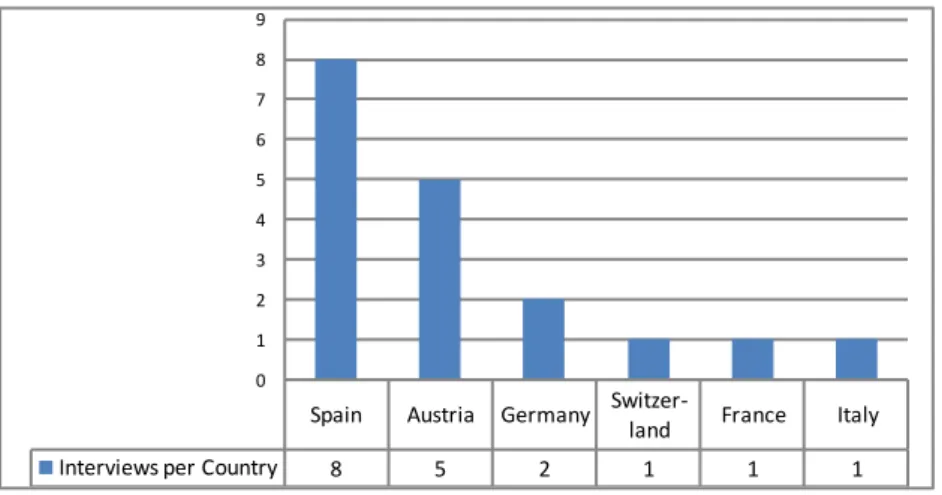
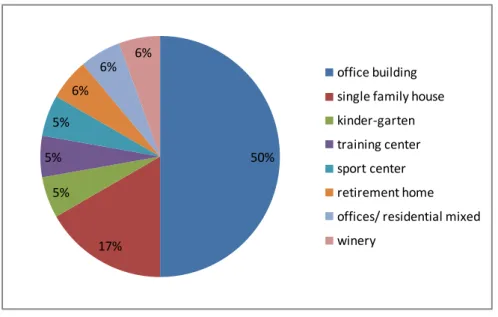
In total, 18 interviews were conducted in 6 countries (see Figure 1) on 8 application types (see Figure 2). No statistical conclusions can be taken from this survey because of the small sample size but it reflects the average ongoing trend.
Spain Austria Germany
Switzer-land France Italy
Interviews per Country 8 5 2 1 1 1
0 1 2 3 4 5 6 7 8 9
Figure 1: Evaluated interviews per country
Although most of the application types are office buildings (see Figure 2), a mix of applications for small scale solar heating and cooling plants can be verified, which also corresponds with the application types in all listed plants shown in Appendix 1.
50% 17% 5% 5% 5% 6% 6% 6% office building
single family house kinder-garten training center sport center retirement home offices/ residential mixed winery
Figure 2: Application types of solar heating and cooling plants
2.2.2 General questions
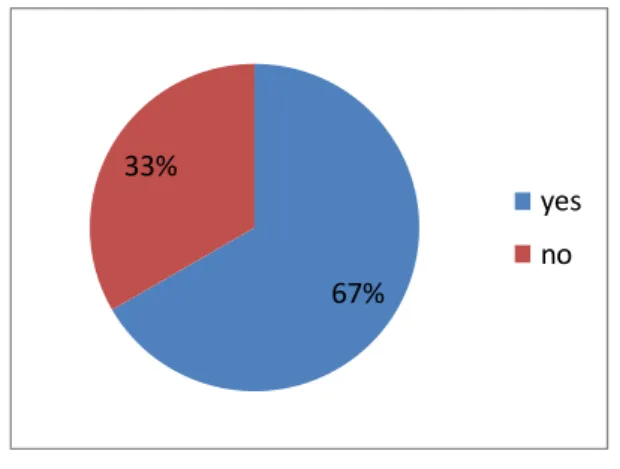
To the question, if the plant did fulfil owners expectations, two third answered with yes and one third with no, which is rather a high percentage of dissatisfied plant owners (see Figure 3). For “no” the following reasons were mentioned:
System is still not ready for operation
Plant was only fully operating after the third season. The energy savings were much smaller than predicted by consultant
Lots of adjustments for the operation Commissioning didn’t happen (2 plants)
Start up phase is too late in the morning (first time of cold production at noon)
Lack of continuity on the management of the project after commissioning (chiller provider is unable to maintain correctly the chiller and its control/monitoring system)
67% 33%
yes no
Figure 3: Fulfilment of expectations
The plant quality was judged quite well by the plant owners (see Figure 4); for “moderate” and “bad” following additional information or impressions were given:
The plant was not ready for daily use and needed a lot of manual adjustments, therefore, the plant has been dismounted
The majority of solar thermal installation companies do not understand solar thermal systems 50% 33% 11% 6% very good good moderate bad
Figure 4: Judgment of plant quality by plant owner
2.2.3 System configuration
From the technology side 14 of the evaluated plants are equipped with absorption chillers only four are adsorption chiller systems. The preferably used technology on the solar thermal side are flat plate collectors (14 plants), only three plants operate with evacuated tube collectors and one uses both types of solar collectors.
3,3 7,2 10,7 4,35,14,7 3,2 1,2 3,0 1,7 3,0 2,73,5 8,3 2,8 2,8 3,0 4,1 4,1 p la n t 1 p la n t 2 p la n t 3 p la n t 4 p la n t 5 p la n t 6 p la n t 7 p la n t 8 p la n t 9 p la n t 1 0 p la n t 1 1 p la n t 1 2 p la n t 1 3 p la n t 1 4 p la n t 1 5 p la n t 1 6 p la n t 1 7 p la n t 1 8 A ve ra g e
Collector area (m²)/Cooling Capacity (kW)
Figure 5: Configuration of solar collector field
Concerning dimensioning of the solar collector area in correlation to the installed cooling capacity, which is a typical planning indicator for solar thermal cooling plants, the values vary from 1,2 m²/kW to 10,7 m²/kW (see Figure 5). Also the configuration of the hot storage tank in correlation to the solar collector area has quite a large range from 9,4 l/m² to 166,7 l/m² (see Figure 6). 34,7 166,7 31,3 61,7 97,8 45,7 9,422,218,720,8 45,550,0 28,2 48,7 p la n t 1 p la n t 2 p la n t 3 p la n t 4 p la n t 5 p la n t 6 p la n t 7 p la n t 1 2 p la n t 1 4 p la n t 1 5 p la n t 1 6 p la n t 1 7 p la n t 1 8 A ve ra g e
Storage size (l)/Collector area (m²)
Figure 6: Configuration of solar storage size
The usage of solar thermal heat is limited to air-conditioning in three of the evaluated plants, all of the other plants use the solar thermal heat either for space heating support and/or domestic hot water (DHW) preparation (see Figure 7).
50%
28% 17%
5% air conditioning
space heating support and DHW
air conditioning and space heating support
only air conditioning
air conditioning and DHW
Figure 7: Use of solar heating and cooling plants
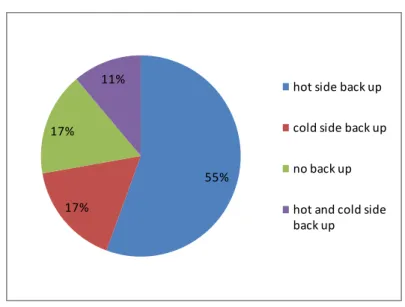
The back up strategies also varies significantly (see Figure 8). Most of evaluated plants use hot side back up. Based on the experiences of monitoring it is the most critical configuration in terms of achieving high primary energy savings.
55% 17%
17%
11% hot side back up
cold side back up
no back up
hot and cold side back up
Figure 8: Back up strategy of solar heating and cooling plants
2.2.4 Planning and installation
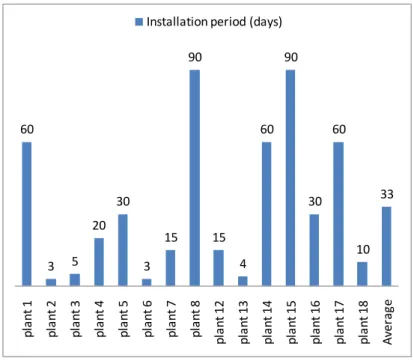
The installation period of the evaluated plants varies as well. It was finished in some cases within three days and reaches in some cases up to three month (see Figure 9). It is quite
60 3 5 20 30 3 15 90 15 4 60 90 30 60 10 33 pl an t 1 pl an t 2 pl an t 3 pl an t 4 pl an t 5 pl an t 6 pl an t 7 pl an t 8 pl an t 1 2 pl an t 1 3 pl an t 1 4 pl an t 1 5 pl an t 1 6 pl an t 1 7 pl an t 1 8 A ver ag e
Installation period (days)
Figure 9: Installation period of plants
The number of people involved for installation for the evaluated plants shows that for most of the plants less than five people were necessary (see Figure 10). Also this can be used as an indicator for pre-engineered systems to avoid misunderstandings and time delay during installation due to the amount of involved people and companies.
3 2 6 18 3 3 4 20 20 3 2 5 3 2 8 3 7 pl an t 1 pl an t 2 pl an t 3 pl an t 4 pl an t 5 pl an t 6 pl an t 7 pl an t 8 pl an t 1 0 pl an t 1 2 pl an t 1 3 pl an t 1 4 pl an t 1 5 pl an t 1 6 pl an t 1 7 pl an t 1 8 A ver ag e
People involved in installation
Figure 10: People involved for installation
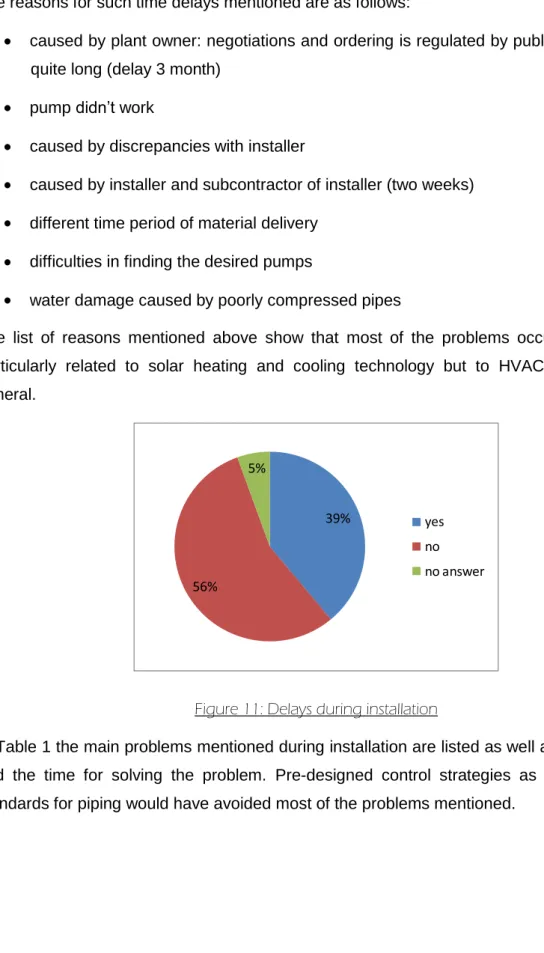
In seven of the evaluated plants time delays during installation (see Figure 11) were recorded.
The reasons for such time delays mentioned are as follows:
caused by plant owner: negotiations and ordering is regulated by public law and took quite long (delay 3 month)
pump didn’t work
caused by discrepancies with installer
caused by installer and subcontractor of installer (two weeks) different time period of material delivery
difficulties in finding the desired pumps
water damage caused by poorly compressed pipes
The list of reasons mentioned above show that most of the problems occurred were not particularly related to solar heating and cooling technology but to HVAC technology in general. 39% 56% 5% yes no no answer
Figure 11: Delays during installation
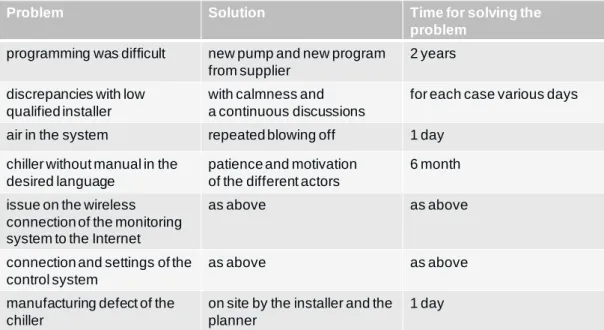
In Table 1 the main problems mentioned during installation are listed as well as the solutions and the time for solving the problem. Pre-designed control strategies as well as quality standards for piping would have avoided most of the problems mentioned.
Problem Solution Time for solving the problem
programming was difficult new pump and new program from supplier
2 years discrepancies with low
qualified installer
with calmness and a continuous discussions
for each case various days air in the system repeated blowing off 1 day
chiller without manual in the desired language
patience and motivation of the different actors
6 month issue on the wireless
connection of the monitoring system to the Internet
as above as above
connection and settings of the control system
as above as above
manufacturing defect of the chiller
on site by the installer and the planner
1 day
Table 1: Issues recorded during installation
2.2.5 System operation
In response to the question, if the plant owners are comfortable in the solar cooled area, most of the evaluated plants were perceived as comfortable (see Figure 12).
72% 5%
11%
6% 6% yes
no
not yet possible to answer
has not been checked until now
system is still not in operation
Figure 12: Indoor comfort
Positive experiences:
first day of operation it was too cold; following the adjustment of room air temperature to a minimum of 24°C, the expectations of comfort were met;
Negative experiences:
insufficient dimensioning of the cooling ceiling
floor gets too cold for children to play, pre-cooling of the building is necessary the control system is not optimized
to many manual adjustments necessary
2.2.6 Maintenance
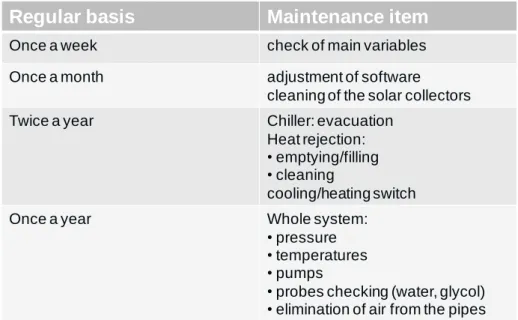
Table 2 shows a summary of the maintenance items mentioned by the plant owners. No similarity between the mentioned maintenance actions was visible by comparing the answers. Only some of the plant owners had enough information about necessary maintenance actions. In half of the evaluated cases, hardly any maintenance items were listed. This situation gives the impression that in most cases the plant owners lack information about necessary maintenance actions to be undertaken. These recordings expose possible reasons for a non satisfactory energy performance of the plants.
Regular basis
Maintenance item
Once a week check of main variables Once a month adjustment of software
cleaning of the solar collectors Twice a year Chiller: evacuation
Heat rejection: • emptying/filling • cleaning
cooling/heating switch Once a year Whole system:
• pressure • temperatures • pumps
• probes checking (water, glycol) • elimination of air from the pipes
Table 2: List of maintenance actions mentioned 2.2.7 Costs
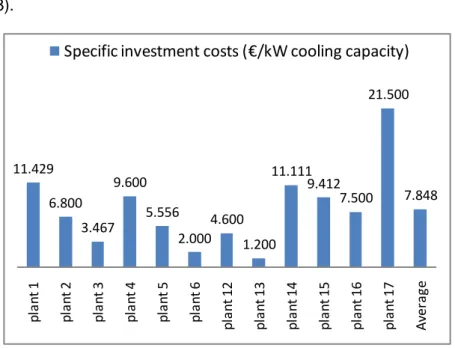
The specific investment costs, given by the plant owners, are in a very big range (see Figure
13). Compared to presently achievable average investment costs from
70 - 400 kWcooling capacity1most of the small-scale plants evaluated, are obviously much more expensive. Interestingly, there is one plant within the average values of investment costs of medium and large size solar cooling plants (plant 6) and one plant is much below these values (plant 13). 11.429 6.800 3.467 9.600 5.556 2.000 4.600 1.200 11.111 9.412 7.500 21.500 7.848 pl an t 1 pl an t 2 pl an t 3 pl an t 4 pl an t 5 pl an t 6 pl an t 1 2 pl an t 1 3 pl an t 1 4 pl an t 1 5 pl an t 1 6 pl an t 1 7 A ve ra ge
Specific investment costs (€/kW cooling capacity)
Figure 13: Specific investment costs of plants
2.3
Recommendations for installation, operation and maintenance
As already mentioned in chapter 1, the information gained from the end-user survey is transferred into the following list of recommendations to bring the idea of pre-engineered systems forward.
Installation:
One person (company) with responsibility for the full installation and co-ordination of communication between the involved companies and the end-user
Set up of installation time schedule which allows parallel work of different professionals and exact milestones, to shorten the time of installation
Planning of quality checks during installation; A list of components, typically used for solar heating and cooling plants, should be set up and applied
1
A. Preisler, T. Selke, L. Sisó, A. LeDenn, R. Ungerböck, ROCOCO – Reduction of Costs of Solar Cooling Systems, European Project in 6th Framework Program, Specific Support Action, Wien, 06/2008
Operation:
Setting up commissioning plans according to the possible technology combinations for solar heating and cooling plants from which the accurate plan can be selected Thorough commissioning, checking of all relevant parts in the system (pumps, heat
rejection, water treatment, valves, control, etc.) over a longer period of time (at least some days)
Handbook for end-user, explaining the main operation modes, values to be monitored, maintenance plan, supplier contact information
System controller should be pre-designed for the following purposes:
o Smooth operation of various technology combinations for solar heating and cooling plants also considering the distribution side
o Recording of monitoring data
o Simple to modify for improving the plants
Continuous recording of monitoring data of the plant (stored at system controller and/or sent to online data base at system supplier) and analyzed by system supplier should ensure high energy performance of the plant
Maintenance:
Maintenance should be carried out according to a maintenance plan set up by the system supplier beforehand
Typical maintenance items are shown in Table 2 but must be adjusted according to the actual application
Company or companies responsible for maintenance should be defined at the latest for the beginning of plant operation
3 Interview Package Solution Provider
As already mentioned in chapter 1, interviews with companies which already offer package solutions for solar heating and cooling plants were carried out to investigate the pre-engineered status of the offered packages available. Furthermore, by comparing the different package solutions and also taking the experiences from monitoring of such systems into account, suggestions for high quality package solutions were set up.
3.1
Interview guideline
The interview guideline for package solution providers (see Appendix 3) was set up for the purpose of information collection about package definition (included components, control items, maintenance and monitoring) as well as design indicators. Furthermore, the components which have to be designed separately were investigated.
3.2
Results
Following results correspond to the feedback of five package solution providers of small-scale solar heating and cooling systems. The collected results are also presented in anonymous form, always referring to package solution provider one to five as “PSP 1” to “PSP 5”.
3.2.1 Design indicators
PSP 1 has developed a design tool for selection of the cooling package size, based on weather data, calculation of heat rejection parameters and/or temperature levels of hot water, cooling water or chilled water. PSP 2 estimated the package size from available pre-designed packages; Separated planning is necessary for the dimensioning of pumps and cold water distribution system. The packages of PSP 3, PSP 4 and PSP 5 were mainly custom-made by the package solution provider themselves or external planners.
3.2.2 Components included
Table 3 compiles the components included in different package solutions provided by the interviewed package solution providers. Differences occur in the variety of components offered, for example PSP 1 and PSP 3 can provide dry, hybrid and wet heat rejection units while PSP 4 only offers wet cooling towers. Also the range of different chiller manufacturers is larger from PSP 1 and PSP 4 than from others. Back up is only mentioned as part of the package by PSP 1 and PSP 3. PSP 5 does not include the three pumps around the chiller in the package, only the solar thermal pumps are included. Water treatment is only mentioned as part of the package by PSP 1 and PSP 4. Cold storage is given as an option from PSP 3 and PSP 4. All of the interviewed package solution providers, except PSP 4, offer one system controller for the whole system up to the cold storage mainly developed by themselves.
PSP 1 PSP 2 PSP 3 PSP 4 PSP 5 ab/-adsorption chiller solar collectors solar pumps/heat exchanger
hot water storage
cold water storage
pumps around chiller
piping and hydraulics
heat rejection
water treatment
back up
system controller
Table 3: Components included in package solutions
3.2.3 Control items included
PSP 1 offers a very sophisticated system controller, taking into account the sorption chiller, heat rejection, solar thermal system, several other heat sources (e.g. CHP unit, biomass, etc.), distribution system (four mixed heating/cooling circuits) and room conditions; pre-defined control strategies, referring to 43 million hydraulic options, available in the system controller.
Also PSP 2 system controller is part of the package, which takes the solar cooling system up to the cold water storage into account (not the water distribution system); pre-defined control strategies are stored at the system controller.
The system controller of PSP 3 is custom-made and used for the whole installation including back-up and distribution, if required. The control system runs the chiller, the heat rejection system, pumps of all the loops and the back-up.
PSP 4 offers two different controllers, which can communicate with each other; pre-defined control strategies are foreseen for applications with fan coils, chilled ceilings and sub zero
The system controller of PSP 5 is custom-made and controls the system up to hot storage and cold storage; except some parameters, such as minimum temperature of chiller, no control strategies are pre-defined.
Only the system controllers of PSP 1 and PSP 3 can take into account both, the distribution system to the cooled area (fan-coils, cooled ceiling, etc.) and the room conditions (temperature, humidity).
3.2.4 Maintenance included
All interviewed package solution providers, except PSP 5 offer maintenance as part of the full package implemented by them or a recommended specialized company; commissioning is part of all packages, implemented by the package solution providers. PSP 1 and PSP 2 have pre-defined maintenance plans according to the chosen package solution. PSP 4 has included a visual inspection once a year and check of pump running times by telemaintenance. PSP 5 just recommends to the plant owner to empty the heat rejection unit in winter and to refill it in summer.
3.2.5 Monitoring included
Table 4 shows the present status of monitoring services included in different package solutions of interviewed package solution providers. PSP 1 has put most effort into this item. In this case monitoring was included in the system controller and made accessible for the plant owner, either directly at the system controller or put into graphs via internet access to the system supplier.
PSP 1 PSP 2 PSP 3 PSP 4 PSP 5
part of package
included in system controller
online data available
Table 4: Monitoring included in package solution
PSP 3 and PSP 4 also offer monitoring as part of the package; PSP 4 integrates sensors into the machine for all three circuits; PSP 3 didn´t give any detailed information about the included monitoring. Monitoring is offered by PSP 1, PSP 2 and PSP 3 also to improve the systems.
3.3
High quality package solutions
Following services should be included by a package solution provider to achieve high quality solar heating and cooling plants:
Design of the entire solar heating and cooling plant Thorough commissioning
Handbook for end-users (including maintenance plan) Maintenance according to maintenance plan
Monitoring data from main parts of the plant (solar thermal system, three circuits around chiller, heat rejection, storages, distribution to building); available on system controller or/and online data
Improvement of the system (at least yearly reporting)
When selecting components, following focus should be given to achieve high energy efficient plants:
Energy efficiency class of fans in heat rejection
Sufficient water treatment system included in the package Energy efficiency class of pumps; variable speed pumps
As already mentioned, the degree of pre-fabrication varies from supplier to supplier. It is recommended to choose a package, which is as pre-engineered as possible. This way, it can be made sure that all components work well together. An important aspect is that the controller is included in the package and the control strategies, necessary to ensure proper operation of all system components, have been pre-defined by the manufacturer. Most manufacturers offer pre-defined control strategies, depending on the exact configuration of the system e.g. the temperature level in the chilled water circuit.
Not all packages on the market include a control system which manages, besides the solar thermal plant and the chiller, the heat and cold distribution systems. In these cases, a separate controller is needed. However, the overall control concept of the building often has a big influence on the performance of the entire system. As an example, the cold distribution system should take into account whether there is cold from the thermally driven chiller available or not. That shows that the design matching of the controller for cold production and the controller of the heat and cold distribution is an important issue. Therefore packages
4 Summary and conclusions
The end-user survey showed that many installed small-scale solar heating and cooling plants are not truly pre-engineered. This explains many of the problems with the installed plants mentioned in the survey.
For example, the evaluation of the installation period showed that some installations have much too long periods of time for installation and many people involved. The communication between the involved parties seemed to be difficult in some cases (chiller provider, solar thermal collector provider, installer, planner and owner). In some cases the commissioning didn’t happen at all. During operation, the range of work for the plant owners reaches from hardly anything to do (everything runs automatically) to daily adjustments. The answers given by the plant owners concerning maintenance show that only some plant owners were well informed about the main maintenance items of a solar cooling system; the rest mentioned only parts of the necessary maintenance items or nothing at all. In most of the evaluated plants, the average investment costs are too high for what is already possible to achieve.
Small-scale solar heating and cooling systems can be bought from specialized companies as complete packages, including the entire solar thermal plant with hydraulics, heat storage tank, absorption or adsorption chiller, heat rejection system, possibly cold storage tank and a control system of the whole installation. The degree of pre-fabrication varies from supplier to supplier. In some cases, all pumps are pre-defined depending on the flow rate and an assumed pressure drop, taking distances between components into account. In other cases, these components need to be sized specifically for each installed system. These pre-engineered packages are then connected to heat, cold and domestic hot water distribution systems.
Packages, available on the market, offer different cooling capacities. The number of small-scale thermally driven chillers available on the market is not vast, often the chosen chiller represents the starting point for design. The rest of the system is then pre-engineered to fit the chiller size. For the purpose of choosing the correct size of the package for a given application, an assessment of the cooling load of the building has to be carried out. System suppliers help the customer in the planning process or recommend charging a planning office, to identify the cooling load of the building.
Suppliers of such systems typically have affiliated installers that carry out the installation work. The commissioning is then done by the supplying companies themselves, to ensure proper installation and operation of the plant. Many companies offer monitoring and optimization processes of the system. Since this is a relatively new technology, this should
systematically be used in order to avoid possible malfunctioning, minimize energy consumption and therefore operation costs of the system.
Maintenance is normally carried out by the system suppliers themselves or by an affiliated company typically at least once a year. However, some packages include a wet cooling tower for heat rejection, which requires following specific tasks: emptying of the water before the winter and refilling in the spring, water treatment management process (compulsory in some countries). With a pre-engineered system, it should not be necessary for the end-users to do any maintenance themselves.
5 List of figures
Figure 1: Evaluated interviews per country ... 6
Figure 2: Application types of solar heating and cooling plants ... 7
Figure 3: Fulfilment of expectations ... 8
Figure 4: Judgment of plant quality by plant owner ... 8
Figure 5: Configuration of solar collector field ... 9
Figure 6: Configuration of solar storage size ... 9
Figure 7: Use of solar heating and cooling plants ...10
Figure 8: Back up strategy of solar heating and cooling plants ...10
Figure 9: Installation period of plants ...11
Figure 10: People involved for installation ...11
Figure 11: Delays during installation ...12
Figure 12: Indoor comfort ...13
Figure 13: Specific investment costs of plants ...15
6 List of tables
Table 1: Issues recorded during installation ...13Table 2: List of maintenance actions mentioned ...14
Table 3: Components included in package solutions ...18
Table 4: Monitoring included in package solution ...19
7 Annexes
Appendix 1 – List of existing small scale solar heating and cooling plants Appendix 2 – Questionnaires for owners of small-scale solar cooling plants Appendix 3 – Questionnaire for package solution provider