Discursive strategizing as a vehicle for legitimation in a
cross-border mergers and acquisition process
Master’s Thesis
Klaus Klemetti
Aalto University School of Business
MSc Program in Strategy
Aalto University, P.O. BOX 11000, 00076 AALTO www.aalto.fi Abstract of master’s thesis
Author Klaus Klemetti
Title of thesis Discursive strategizing as a vehicle for legitimation in a cross-border mergers and acquisition process
Degree MSc in Economics and Business Administration Degree programme Strategy
Thesis advisor(s) Eero Vaara
Year of approval 2019 Number of pages 114 Language English
Abstract
This thesis examines media discourses related to a mergers and acquisitions process concerning Finnish cranes and industrial lifting equipment manufacturer and service provider Konecranes. The focus is on investigating legitimation dynamics and various strategies utilized to discursively construct legitimacy in the media. Past research has examined legitimation strategies and dynamics in M&As but little is known of the evolution of such dynamics in times of strategic change. Therefore, particular attention is paid to the changes in these strategies over time when an intended merger is cancelled and an acquisition takes place.
The objective of this study is to answer the following research questions: ““What are the discursive
legitimation dynamics and strategies in a merger and acquisition process?” and “How do these
dynamics evolve over time when a merger is cancelled and an acquisition takes place?”. By adopting
discourse analysis as a qualitative research method, I examine the micro-level processual dynamics of legitimation in the media. My data consists of 201 media accounts covering the M&A process. These are gathered from four Finnish newspapers and a magazine. Through abduction, I identify five independent and one dependent discursive strategies utilized in the media to (de)construct legitimacy. Rationalization, authorization, normalization, moralization, narrativization and politicization are demonstrated to be utilized both intentionally and unintentionally to either legitimate or delegitimate organizational actions.
My findings indicate that legitimation strategies are utilized in various ways during different periods of a M&A process. It is shown that rationalization and authorization function as primary strategies and that when a merger is cancelled and an acquisition takes place, intentional legitimation efforts focus on positive aspects of the new deal instead of comparison between the two. I also argue that the amount and nature of source material available for the media influences the relative prominence of legitimation strategies during the M&A process. Finally, it is concluded that organizational reality and concrete integration results are central in legitimating strategic changes.
Keywords mergers and acquisitions, legitimacy, legitimation strategies, discursive legitimation, discourse analysis
Aalto University, P.O. BOX 11000, 00076 AALTO www.aalto.fi Abstract of master’s thesis
Tekijä Klaus Klemetti
Työn nimi Discursive strategizing as a vehicle for legitimation in a cross-border mergers and acquisition process
Tutkinto Kauppatieteiden maisteri (KTM) Koulutusohjelma Strategy
Työn ohjaaja(t) Eero Vaara
Hyväksymisvuosi 2019 Sivumäärä 114 Kieli Englanti
Tiivistelmä
Tämä tutkielma tarkastelee mediadiskursseja koskien suomalaisen nostolaitevalmistaja ja palveluntuottaja Konecranesin fuusio ja yrityskauppaprosessia. Tarkoituksena on tutkia legitimointidynamiikoita sekä erinäisten strategioiden käyttöä legitimiteetin diskursiivisessa konstruoinnissa mediassa. Aiempi tutkimus on tarkastellut legitimointidynamiikoita fuusioissa ja yrityskaupoissa, mutta näiden kehitystä strategisten muutosten yhteydessä on tutkittu vain vähän. Tämän vuoksi erityistä huomiota kiinnitetään legitimointistrategioissa tapahtuviin muutoksiin fuusion peruuntuessa ja yrityskaupan toteutuessa sen sijaan.
Tämän tutkimuksen tavoitteena on vastata seuraaviin tutkimuskysymyksiin: ”Mitä ovat
diskursiiviset legitimointidynamiikat ja -strategiat fuusio ja yrityskauppaprosessissa?” ja ”Miten nämä dynamiikat kehittyvät, kun fuusio peruutetaan ja sen sijaan toteutetaan yrityskauppa?”.
Käyttämällä diskurssianalyysia laadullisena tutkimusmenetelmänä, tutkin mikrotason prosessuaalisia dynamiikoita legitimoinnissa mediassa. Tutkimusdata koostuu 201:stä mediatekstistä, joissa kyseistä fuusio ja yrityskauppaprosessia käsitellään. Tekstit on kerätty neljästä suomalaisesta sanomalehdestä sekä yhdestä aikakausilehdestä. Pohjaten analyysiini aiempaan tutkimukseen tunnistan viisi riippumatonta ja yhden kontekstisidonnaisen strategian legitimiteetin (de)konstruointiin mediassa. Tutkimuksessa osoitetaan, että rationalisaatiota, auktorisaatiota, normalisaatiota, moralisaatiota, narrativisaatiota ja politisointia käytetään sekä tarkoituksellisesti että tahattomasti organisaatioiden toiminnan legitimoinnissa ja vastustamisessa. Tulokseni viittaavat siihen, että legitimointistrategioita käytetään vaihtelevin tavoin fuusio ja yrityskauppaprosessin aikana. Tutkimukseni osoittaa, että rationalisaatio ja auktorisaatio toimivat ensisijaisina strategioina. Lisäksi vaikuttaa siltä, että fuusion muuttuessa yrityskaupaksi tarkoitukselliset legitimointitoimet keskittyvät toteutuneen kaupan positiivisiin puoliin vertailun sijaan. Esitän myös, että lähdemateriaalin määrä ja luonne vaikuttavat legitimointistrategioiden suhteelliseen käyttöön fuusio ja yrityskauppaprosessin aikana. Lopuksi, tutkimukseni osoittaa, että organisaatiotodellisuus ja konkreettiset integraatiotulokset ovat keskeisiä strategisten muutosten legitimoinnissa.
Avainsanat fuusiot ja yrityskaupat, legitimiteetti, legitimaatiostrategiat, diskursiivinen legitimointi, diskurssianalyysi
Table of contents
1. INTRODUCTION ... 1
1.1 BACKGROUND AND MOTIVATIONS ... 1
1.2 RESEARCH OBJECTIVES AND QUESTIONS ... 3
1.3 THESIS STRUCTURE ... 4
2. LITERATURE REVIEW ... 5
2.1 MERGERS AND ACQUISITIONS ... 5
2.1.1 A history... 5
2.1.2 Strategic perspective ... 6
2.1.3 Sociocultural perspective... 8
2.1.4 Legitimation in mergers and acquisitions ... 10
2.2 LEGITIMACY AND LEGITIMATION ... 11
2.2.1 Sociological roots of legitimacy ... 11
2.2.2 Organizational legitimacy ... 13
2.2.3 Legitimation ... 14
2.2.4 Legitimacy construction as a discursive practice ... 16
2.2.5 Legitimation strategies ... 18
2.2.6 Mediums for legitimation ... 20
2.3 THEORETICAL FRAMEWORK ... 21
3. DATA AND METHODOLOGY ... 23
3.1 METHODOLOGY ... 23 3.2 RESEARCH CONTEXT ... 25 3.3 DATA COLLECTION ... 26 3.4 ANALYSIS ... 28 3.5 CONSIDERATIONS ... 31 4. FINDINGS ... 33 4.1 RATIONALIZATION ... 35
4.1.1 Prior merger announcement ... 37
4.1.2 Merger announcement ... 37
4.1.3 Legitimation, delegitimation and relegitimation of the merger ... 39
4.1.4 A competing offer complicates the dynamic ... 40
4.1.5 An increased Zoomlion offer ... 43
4.1.6 Acquisition announcement ... 44
4.1.7 Naturalizing the acquisition post announcement ... 46
4.2 AUTHORIZATION ... 46
4.2.1 Prior merger announcement ... 50
4.2.2 Merger announcement ... 50
4.2.3 Legitimation, delegitimation and relegitimation of the merger ... 52
4.2.4 A competing offer complicates the dynamic ... 53
4.2.5 An increased Zoomlion offer ... 56
4.2.6 Acquisition announcement ... 58
4.2.7 Naturalizing the acquisition post announcement ... 60
4.3 NORMALIZATION... 61
4.3.1 Prior merger announcement ... 63
4.3.2 Merger announcement ... 64
4.3.3 Legitimation, delegitimation and relegitimation of the merger ... 65
4.3.4 A competing offer complicates the dynamic ... 66
4.3.5 An increased Zoomlion offer ... 68
4.3.6 Acquisition announcement ... 69
4.3.7 Naturalizing the acquisition post announcement ... 70
4.4 MORALIZATION ... 70
4.4.1 Merger announcement ... 72
4.4.2 Legitimation, delegitimation and relegitimation of the merger ... 73
4.4.3 A competing offer complicates the dynamic ... 74
4.4.5 Naturalizing the acquisition post announcement ... 77
4.5 NARRATIVIZATION ... 79
4.5.1 Prior merger announcement ... 81
4.5.2 Merger announcement ... 81
4.5.3 Legitimation, delegitimation and relegitimation of the merger ... 82
4.5.4 A competing offer complicates the dynamic ... 83
4.5.5 Acquisition announcement ... 84
4.5.6 Naturalizing the acquisition post announcement ... 85
4.6 POLITICIZATION, A SIXTH STRATEGY? ... 86
5. DISCUSSION AND CONCLUSIONS ... 89
5.1 SUMMARY ... 89
5.2 DISCUSSION ... 91
5.2.1 Discursive legitimation of M&As in the media ... 92
5.2.2 Legitimation strategies ... 92 5.2.3 Rationalization ... 93 5.2.4 Authorization ... 94 5.2.5 Normalization ... 95 5.2.6 Moralization ... 96 5.2.7 Narrativization ... 98 5.2.8 Politicization ... 99 5.3 PRACTICAL IMPLICATIONS ... 99 5.4 CONCLUSIONS ... 101
5.5 LIMITATIONS AND FUTURE RESEARCH ... 102
6. REFERENCES ... 106
List of figures and tables
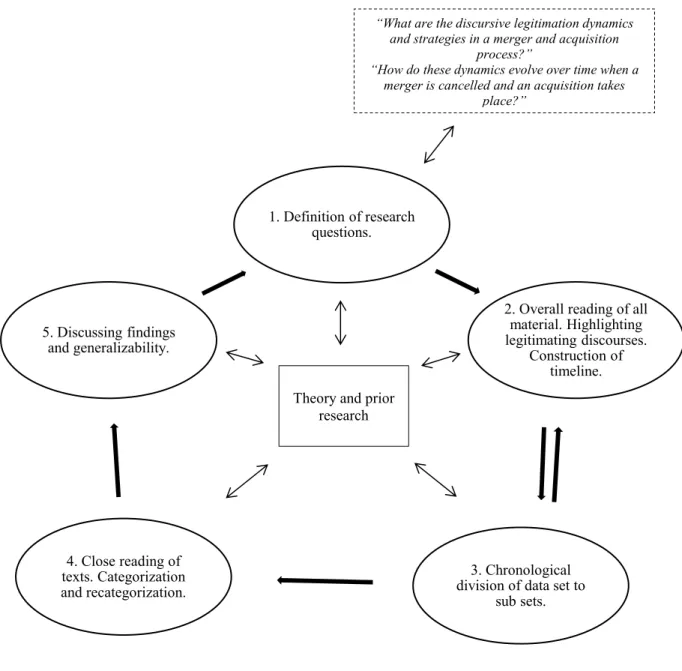
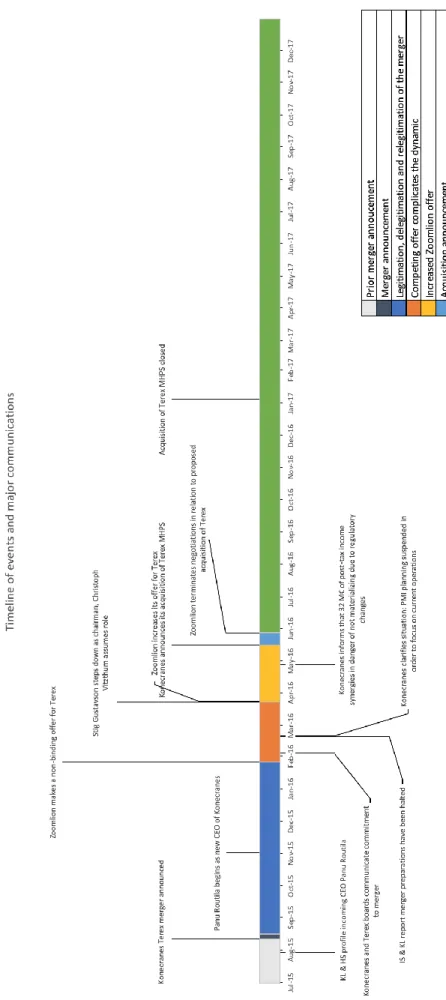
Figure 1: Steps of analysis ... 30Figure 2: Timeline of events and communications ... 34
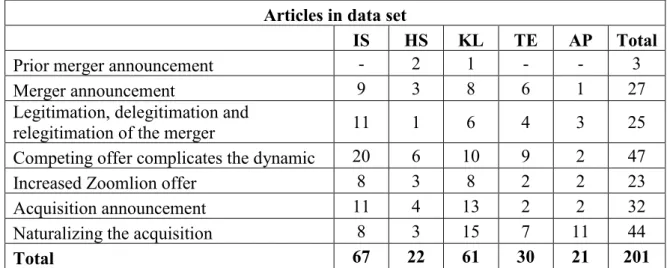
Table 1: Articles in data set ... 27
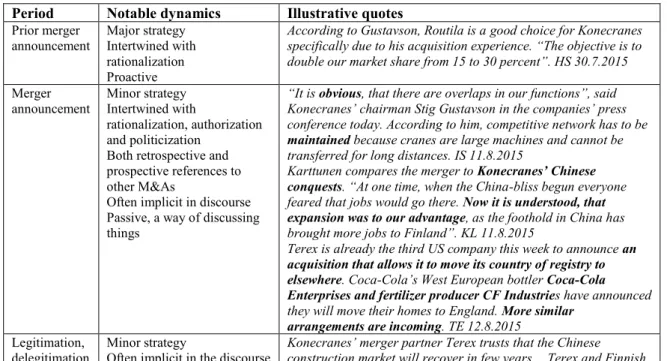
Table 2: Rationalization, notable dynamics ... 35
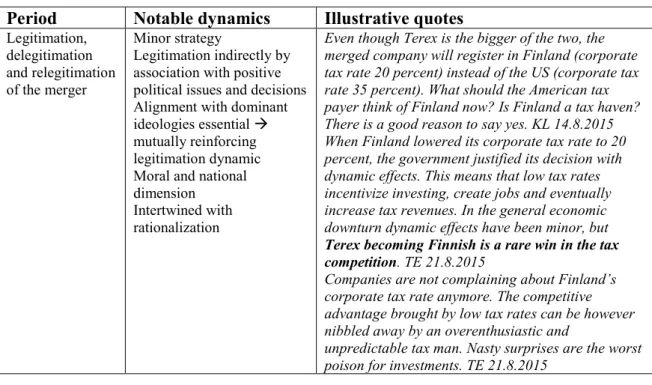
Table 3: Authorization, notable dynamics ... 47
Table 4: Normalization, notable dynamics ... 61
Table 5: Moralization, notable dynamics ... 71
Table 6: Narrativization, notable dynamics ... 79
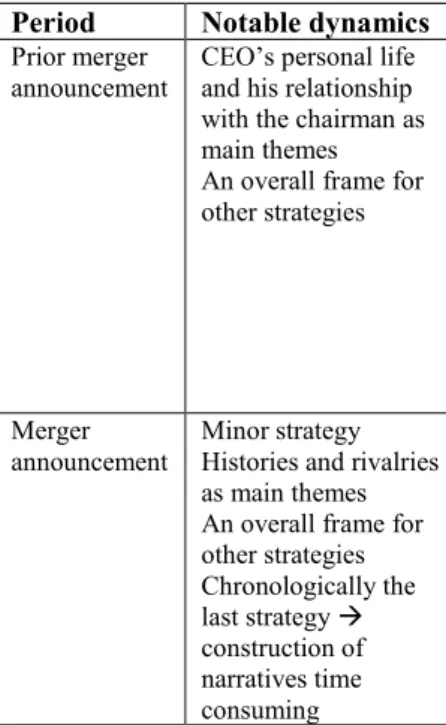
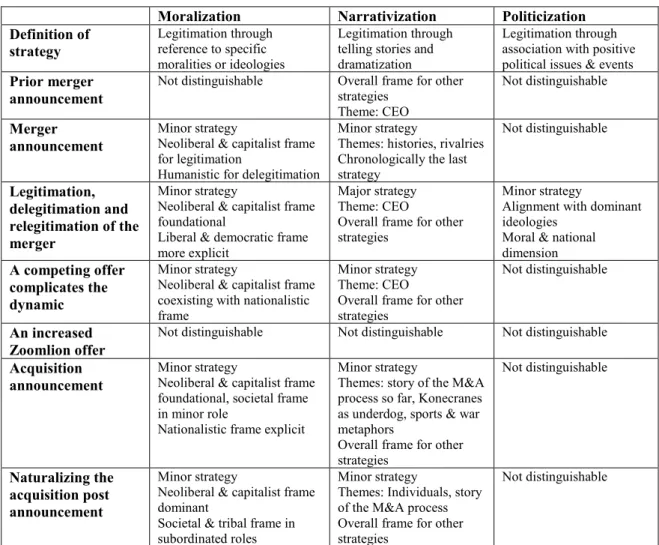
Table 7: Politicization, notable dynamics ... 86
1.
Introduction
1.1Background and motivations
Organizational change in general, and mergers and acquisitions (M&A) in particular are an interesting and widely researched phenomenon. To a researcher with a keen interest in strategic change, M&As are almost by definition extremely interesting subjects to study. They are often the most rapid, dramatic and strategically significant changes that an organization goes through making them so called “extreme situations” and therefore fitting topics for studying the phenomena of strategic change (Eisenhardt, 1989, 537; Pettigrew, 1988). In addition to the ‘extreme’ nature of M&As, the interest among researchers can at least partially be explained by M&As increasing popularity among practitioners (Graebner et al., 2017) in spite of notably low success rates (Marks & Mirvis, 2011).
Recent years have seen some of the largest M&As in Finland’s economic history. In addition to impacting the businesses in question, M&As influence societies more broadly, from employment opportunities and tax revenues to general economic activity. Therefore, M&As in general and large cross-border M&As in particular have received wide coverage in the media and sparked interesting public discussions of what is good, acceptable and desirable in the corporate realm. This has resulted in a variety of perceptions about M&As as some are seen as legitimate while others as illegitimate. According to Mazza and Alvarez (2000), these views of legitimacy are formed in discursive struggles taking place principally in the media (see also Tienari et al., 2003) and therefore, investigating how legitimacy is constructed and deconstructed in that arena can contribute to our understanding of M&As more broadly.
Legitimacy and legitimation have been examined from various points of view and while this stream of research emanates from sociology, its role in organizational research has increased lately. Vaara and Tienari (2002) investigated various discourse types in the media and their role in legitimating M&As while Suddaby and Greenwood (2005) identified rhetorical legitimation strategies in a M&A case. Vaara and colleagues (2006) further contributed to this stream of research in their analysis of media texts focusing on specific legitimation
strategies utilized in organizational restructurings. They argue that by looking at micro-level discursive practices and elements in the media, the subtle “complexities, ambiguities, and contradictions of legitimation processes” (p. 806) can better be understood. Further research has since examined discursive legitimation in a shutdown of a multinational corporation (Vaara & Tienari, 2008), problems of discursive legitimation and its connection to organizational action (Vaara & Monin, 2010) as well as changes to discursive practices of legitimation in the context of executive pay (Joutsenvirta, 2013). Albeit growing interest in discursive practices and legitimacy, relatively little research has been done on the micro-level discursive strategizing that actually constructs legitimacy in M&A situations. This means that Vaara and colleagues’ (2006) call for more research on legitimation strategies and their categorizations has not been fully answered.
According to Hirsch and DeSoucey (2006) restructuring discourses can change over time as organizational realities that those discourse reflect change. This means that legitimation strategies used in the past might not be relevant today. Moreover, in lengthier and widely covered M&A processes the media discourses consist of nuanced, intertwined and even contradictory legitimation strategies (Tienari et al., 2003) of which utilization varies during the process itself. In other words, as the M&A process changes, it is likely that the strategies utilized to legitimate those changes change as well. However, due to a lack of literature on the issue, very little is known about the changes in the use of legitimation strategies over time. As this aspect of legitimation has both theoretical and practical implications, empirical research on the issue should be conducted.
Vaara and colleagues (2006) stress media’s important role in legitimating organizational actions and change. They argue that journalists both intentionally and unintentionally use discursive strategies to either legitimate or delegitimate organizational actions, complementing Mazza and Alvarez’s (2000) notion of the media being the principal arena for legitimation. Tienari and colleagues (2003) further argue that media discourses on cross-border M&As are especially fruitful for analysis of discursive strategizing and thereby in this thesis I will focus on media coverage of an international M&A process. According to Nicholson and Anderson (2005) media plays an important role in both shaping the world views of their audiences as well as reflecting those views (see also Tienari et al., 2003). In my view, the media is a rich source for dramatic texts that possess varying perspectives on issues and therefore systematic analysis of it helps to create a holistic reflection of the public
discourse that defines what is legitimate and what is not. A discursive approach to media texts is therefore adopted in order to increase our understanding of the sophisticated meaning making processes central for legitimation, addressing Vaara and colleagues’ (2006) call for further investigations into subtle textual means of discursive strategizing.
To increase our understanding of these micro-dynamics of legitimation, examining the media coverage of a tumultuous M&A process during an extended period of time can be enlightening. Legitimacy for the intended Konecranes Terex merger and the later acquisition arrangement was constructed in the Finnish media through utilization of various legitimation strategies. By applying discourse analytical methods, my thesis aims at elaborating on the micro-processual dynamics of these strategies and changes in them and by doing so, address the above laid out research gaps. Moreover, a discursive approach will allow me to inspect the actual processes through which legitimacy is constructed instead of legitimacy as a phenomenon per se (Vaara & Monin, 2010). In essence, my analysis aims at the identification and categorization of legitimation strategies in a M&A process and at exploration of the changes in them when a merger is cancelled and an acquisition takes place. That is to say, my thesis seeks to contribute to our understanding on discursive legitimation strategies in M&As in general and on the changes in those strategies in particular.
1.2Research objectives and questions
My research has two main objectives that are to expand and test previous research on legitimation strategies and to begin a tentative discussion about the theoretical aspects of changes in legitimation strategies. Due to the scope and nature of this research, the main focus of my thesis is in first objective while the second objective should only be considered as a suggestion for more focused and profound research. First, although some research on legitimation strategies has been conducted, our understanding of these strategies and ways to categorize them is still lacking (Vaara et al., 2006). Thereby, my objective is to expand and test the generalizability of findings from previous research on legitimation strategies. Second, studies investigating legitimation dynamics in times of strategic change, especially when a merger turns into an acquisition are lacking. By abducting between previous research on legitimation strategies and my empirical data, I aim to open up a discussion on legitimation dynamics in such circumstances and hope to encourage more in-depth research
on the topic to test and refine my rudimentary observations. To achieve these objectives, I will answer two research questions that are:
1. What are the discursive legitimation dynamics and strategies in a merger and acquisition process?
2. How do these dynamics evolve over time when a merger is cancelled and an acquisition takes place?
Answering these questions will position my research in the junction of mergers and acquisitions literature and legitimation literature. Although both are widely research topics, current literature sheds very little light on the intersection providing only glimpses of a fundamental phenomenon in organizational science.
1.3Thesis structure
This thesis is divided into five chapters. In this chapter, I have introduced my research by describing its background and motivations, laying out research objectives and questions as well as discussing the thesis structure. The following chapter consists of a review of relevant literature. I begin it with presenting previous research on mergers and acquisitions and then move on to legitimation. Building on these, I will then finish that chapter by presenting my theoretical framework for this study. In chapter three, I discuss my methodology, data collection and analysis and considerations. A short description of the research context is also presented in order to assist in the reading of the fourth chapter, findings, which describes the analysis conducted in this thesis. In chapter five, discussions and conclusions, I summarize my research and discuss its implications. Limitations of this study as well as suggestions for future research are also considered before final conclusions.
2.
Literature review
In this section I review relevant literature and develop a theoretical frame of reference for this thesis. I begin with an overview of mergers and acquisitions literature spanning over fifty years, focusing on the most recent research. I then proceed to describe the broad body of legitimation research, elaborate on its central role for my thesis and link it to the phenomenon of mergers and acquisitions. Finally, I will conclude the review by presenting a theoretical frame of reference for this thesis.
2.1Mergers and Acquisitions 2.1.1 A history
Mergers and acquisitions (M&A) have been actively studied by management and strategy scholars since the 1960s. They represent so called “extreme situations” and are therefore fitting subjects for the study of strategic change (Eisenhardt, 1989, 537; Pettigrew, 1988). Initially, this stream of research stemmed mainly from scholars’ interest in the lack of success of so many M&As (e.g. Kitching, 1967; Levinson, 1970) hence the continual focus on failure. Even though research on the subject spans for over fifty years, relatively little improvements have been made in terms of financial performance or the human side of things (Marks & Mirvis, 2011) while M&As remain popular among practitioners (Graebner et al., 2017). According to Marks and Mirvis (2011), 83 % of deals fail in delivering shareholder value which raises questions such as why is the number of transactions going up instead of down. In their seminal work, Haspeslagh and Jamison (1991) explain this phenomenon by stating that M&As are often seen as ways to achieving strategic goals faster and with fewer resources than would otherwise be possible. More critical observers explain motives for M&As to be empire building, hubris, groupthink, fashions, managerialism and cognitive simplification among others (Vaara & Monin, 2010; Vaara & Tienari, 2002). In this thesis, the point is not to explain or even elaborate on the growing number of M&As and their successes and failures, but to focus on the micro-processual dynamics of legitimation in M&A situations. However, to be able to fully comprehend these dynamics, it is essential review and internalize existing literature on M&As and to elucidate how this body of
research connects to the concepts of legitimacy and legitimation and how it thereby informs this thesis.
To better understand the dynamics of mergers and acquisitions, researchers have approached the issue from several different angles. In the past thirty years attention has shifted from pre-merger strategic analysis towards the dynamics of post-pre-merger integration (PMI) in attempts to find value creation drivers and to identify potential barriers to realizing synergies and other M&A benefits (Graebner et al., 2017). In their review of PMI research, Graebner and colleagues (2017) distinguish three different perspectives or approaches, that are strategic, sociocultural and experience and learning. These are not fully separate nor contradictory streams of research but rather differences in focus.
In the following sections I will review M&A literature relevant for my thesis. As the focus of recent research has been on PMI, I will mainly focus on this aspect of M&As, using Graebner and colleagues’ (2017) categorization as a starting point. Of the three approaches, my review will take a closer look into literature from strategic and sociocultural perspectives due to their relevance for my thesis. I will also adopt Graebner and colleagues’ (2017) definition of PMI as “multifaceted, dynamic process in which the merging firms or their components are combined to form a new organization” (p. 2) and apply it more broadly to mergers and acquisitions per se. It is important to note that this M&A process consists of intertwined sub-processes and is characterized by unplanned opportunities and problems making it a Mintzbergian combination of deliberate and emergent (Mintzberg, 1985).
2.1.2 Strategic perspective
The earliest work on M&As was done from a strategic perspective (e.g. Kitching, 1967; Levinson, 1970) which as an approach has prevailed (e.g. Jemison & Haspeslagh, 1991; Cording et al., 2008; Reus et al., 2016) and greatly contributed to our understanding of mergers and acquisitions. Studies in this stream pay attention to interaction, alignment, structural integration, resource reconfiguration and renewal, and according to Graebner and colleagues (2017) mainly focus on value creation, measuring outcomes in economic terms. Regardless of the long history of the strategic perspective, only few relatively compelling conclusions can be made. Larsson and Finkelstein (1999) argue that more and better interaction results in improved financial performance while Bresman and colleagues (1999) have shown it to lead to increased knowledge transfer in research and development. Research
on strategic alignment has produced more ambiguous and somewhat contradictory findings. Zollo and Reuer (2010) demonstrated positive causality between alignment and performance while Zollo (2009) and Reus and colleagues (2016) found no evidence supporting this. The results have been similarly mixed when autonomy and control (Chatterjee et al. 1992; Reus & Lamont, 2009; Datta & Grant, 1990; Sarala & Vaara, 2010) and structural integration (Puranam et al. 2006; Puranam & Srikanth, 2007) have been examined.
Overall, research concerning interaction and alignment seems to indicate that the success or failure of an M&A is highly context dependent and that the role of communication is crucial. From a critical realist ontology, organizational environments are seen as moderately socially constructed making these notions of context and communication interesting. That is to say, M&As take place in discursively constructed contexts where micro-processes of legitimation take place in order to justify organizational action with regard to prevailing social norms and values that are in turn influenced by agents within and outside of that environment. Therefore, investigating these micro-processes can help us better comprehend the obvious ambiguities and context dependencies that often blur and confuse research conducted from strategic perspective.
A second more conclusive finding from strategic perspective research has been that organizations must “continually reconfigure their assets, knowledge and capabilities to maintain competitive advantage” (Graebner et al., 2017, 6; Barney, 1991; Kogut & Zander, 1992; Eisenhardt & Martin, 2000). M&As can counter organizational inertia by prompting the restructuring of business units and therefore resulting in organizational renewal (Barkema & Schijven, 2008; Karim, 2006). Interestingly for this thesis, according to Capron and colleagues (1998) resource reconfiguration happens more often from the acquirer to target than the other way around even though performance vice the latter has been shown to be more beneficial (Capron, 1999). Within the context of neoliberal and capitalist discourse, financially sub-optimal decisions have to be legitimated somehow meaning institutional analysis of the micro-processes of legitimation could broaden our understanding of the issue especially as Capron and Guillen (2009) found that institutional norms do indeed affect reconfiguration decisions.
Knowledge transfer and recombination are often, but not always, seen as benefits of M&As (Graebner et al., 2017). They are perceived as opportunities to create value but also as threats
that might disturb innovation (Kogut & Zander, 1992; 1996). Empson (2001) argues that differences in how tacit and codified knowledge are perceived and valued can become a problem while the intentions of the acquirer (Meyer & Lieb-Doczy, 2003) and the proactiveness of the acquired leaders (Graebner, 2004) also affect knowledge transfer. Interestingly for this thesis, it is clear that both codified as well as tacit knowledge are components of organizational discourses legitimating certain actions while delegitimating others. Organizational agents, such as leaders of acquired entities are also in key roles when looking at how organizational reality is constructed via discourse. Therefore, these insights inform this thesis and by examining these discourses, we can broaden our understanding of mergers and acquisitions in general and knowledge transfer and recombination in particular.
2.1.3 Sociocultural perspective
The sociocultural perspective on M&As is a relatively new one and has its origins in the realization that the strategic perspective alone could not answer the question of why do so many M&As fail. Initial analysis (e.g. Buono et al., 1985) suggested that cultural differences create tension and have negative effect on performance while more recent studies (Morosini et al., 1998) have argued that complementariness in cultures can be beneficial. The role of national cultural differences has also been investigated pointing out its decreasing effect on social conflict (Vaara et al., 2012). Nahavandi and Malekzadeh (1988) offer possibly the most nuanced analysis on cultural integration in M&A, arguing that the degree of similarity between the desired acculturation modes of the two organizations predicts performance in PMI. Other studies point to mixed results regarding the influence of cultural differences on performance (Stahl & Voigt, 2008) while the importance of communication (Reus & Lamont, 2009) and other social integration measures are stressed unanimously (Larsson & Lubatkin, 2001; Schweiger & Goulet, 2005).
Similar to the strategic perspective, studies approaching M&As from a cultural point of view have not been able to reach a consensus on the impact of cultural differences. In this stream of research context dependency is again central as is communication. In addition to these, inherent biases in attributing failure but not success to culture (Vaara et al., 2014) and the institutional nature of organizational culture (Riad, 2005) inform and link this perspective to legitimation literature and thereby to my thesis.
Another aspect of the sociocultural perspective on M&As and PMI is identity, which is defined as “shared sense by organizational members of who they are as a group” (Graebner et al., 2017, 12). The basic thesis of identity research is that identification with the new organization improves performance while feelings and perceptions of being dominated or ousted decrease it (Van Knippenber & Van Leeuwen, 2001; Van Knippenberg et al., 2002; Ullrich et al., 2005). On the other hand, Graebner (2004) and Colman and Lunnan (2011) have shown that a perceived identity threat can also bring forth serendipitous value creation opportunities. This contradiction implies that identity is reliant on the dialogical dynamics of sense making and sense giving in the organization (Vaara & Tienari, 2011) and again very context dependent, making it a relevant topic for my thesis. Additionally, Ailon-Souday and Kunda (2003) observed how stereotypes were used to construct identities while Vaara and colleagues (2003) pointed to metaphors and metonymies as building blocks for such construction. These findings combined with identity’s close link to power and perceptions of domination (Vaara et al. 2005) further reinforce its relevance to my thesis.
In the sociocultural perspective, another relevant aspect with close links to legitimation literature is justice. When two entities are assessed in order to combine them, a comparison ensues inevitably. This has resulted in ‘relative standing’ research examining these comparisons and concluding that comparing often results in feelings of being underappreciated and to poor PMI performance (Hambrick & Cannella, 1993; Very et al., 1997). More interestingly for this thesis, various types of and changes to norms of justice over time have been investigated (Ellis et al., 2009; Monin et al., 2013). In so called mergers of equals distributive justice is especially prevalent but often runs into trouble when operationalized as it creates too high and even false expectations (Meyer & Altenborg, 2007). In addition, Meyer (2001) observed that in cases where ambiguity is high and power is balanced, tradeoffs between financial performance and social integration have to be made. These findings provide an interesting frame of reference when the dynamics of the case company M&A are investigated.
The final aspect of the sociocultural perspective according to Graebner and colleagues (2017) is trust, which they define as “the willingness of a person, group, or organization to rely on another party’s actions in situations involving opportunism or risk” (p. 15). Generally, trust is linked with positive PMI (Stahl et al., 2011) and distrust with negative PMI performance (Lander & Kooning, 2013; Maguire & Phillips, 2008). Maguire and
Philips (2008) note that institutional trust is very difficult to establish while Graebner (2009) states that erroneous beliefs on trustworthiness are common and result in trust asymmetries. Overall, communication often improves trust (Stahl et al., 2011). From a discursive legitimation point of view, communications’ role as the vehicle to establish institutional trust and therefore influence PMI performance makes this research pertinent to my thesis. In addition, the mere existence of trust asymmetries and erroneous beliefs of trustworthiness implies that investigations on rhetorical strategies (e.g. Suddaby & Greenwood, 2005) and manipulative narratives (e.g. Brown, 1998) can help us better understand the underlying dynamics of mergers and acquisitions.
2.1.4 Legitimation in mergers and acquisitions
In management and strategy literature scholars are rarely unanimous. However, everyone seems to agree that legitimation has a central role in mergers and acquisitions. A merger or an acquisition is a clear manifestation of strategic change necessitating collective and organized action in which legitimation is a key enabler (Demers et al., 2003). Vaara and Tienari (2002) point out that M&As often involve controversial decisions that need justification to become legitimate. Vaara and Monin (2010) agree stating that legitimation is an inherent part of a merger process while Demers and colleagues (2003) argue that it is necessary for employee commitment, to “explain and justify change” (p. 224). As these findings demonstrate, legitimation is a central component of any M&A process, explaining the subtle meaning making processes through which legitimacy is established in organizations (Vaara et al., 2006). However, legitimation is an ambiguous concept and when considered from the legitimacy-as-process perspective (Suddaby et al., 2017), the discourses surrounding and relating to the M&A become crucial in our attempts to understand it. Schweiger and DeNisi (1991) point to communication as the key tool for legitimation in M&A arguing for the importance of sending the right messages to employees. This notion can be extended to other stakeholders as well, making corporate communications and the media reporting them principal arenas for legitimation. As M&As are ambiguous and complex, they can inhibit “multiple realities” meaning somethings are seen as good or desirable from one perspective while they look bad and undesirable from another (Vaara & Tienari, 2002, 280; Risberg, 1998). For example, to the management striving for efficiency the process might seem very different than to employees being laid off. In Finland, as in most Western nations neoliberal and rationalistic discourse dominates in both the corporate
domain and in the media (Bourdieu 1998; Fairclough 2000; Tienari et al., 2003; Vaara et al., 2006; Vaara & Tienari, 2008). As the management possesses most of the relevant information, them dominating the discourse and being able to establish legitimacy is likely (Vaara & Tienari, 2002). According to Vaara and Tienari (2002) this effortlessness can result in naturalization of a harmful M&A culture where management objectives are not achieved and social harm is caused which is why more critical analysis, such as this study, of M&As and legitimation are needed.
Vaara and Tienari (2002) point to a multitude of interconnected actors and to changing (although often slowly) views and judgements on issues arguing that causal relations are extremely hard to define. In complex and ambiguous processes such as M&A, the objective reality is almost impossible to determine meaning the role of discursive construction of legitimacy is highlighted. Vaara and colleagues (2006) note that discourses frame issues to legitimate organizational action whilst Vaara and Tienari (2002) observe that opinions on M&A are often formed in the very beginning of the process. This implies that particular attention should be paid to the prevalent discourses at the time and shortly after the M&A announcement, while it is also interesting to observe how corporate communications and media discourses change over time to accommodate likely changes to the M&A process (Haspeslagh & Jemison, 1991). These kinds of longitudinal investigations have been rare (exceptions include Vaara & Monin, 2010) and especially studies examining legitimation dynamics in times of strategic changes are lacking. In addition, Vaara and Monin (2010) have called for more research on discursive practices of ‘successful’ M&As, which Konecranes’ acquisition of Terex MHPS arguably is. In this study I aim to address these research gaps by investigating the legitimation dynamics of a cross-border merger over time and in particular, how do these dynamics change when a merger turns into an acquisition.
2.2Legitimacy and legitimation 2.2.1 Sociological roots of legitimacy
Legitimation and the notions of legitimacy and legitimate rule are ancient concepts and have been discussed and studied by thinkers and scholars at least since antiquity (Zelditch, 2001). Morris Zelditch (2001) reviews the chronology of legitimation theories and goes as far back as the Peloponnesian War arguing that Thucydides was the first writer to engage with the
topic. Subsequently, legitimacy has been a central theme for many influential political thinkers and philosophers such as Machiavelli, Locke, Rousseau and Marx. However, our modern understanding of the topic, especially in the organizational sense, has its roots in the work of 20th century sociologists such as Weber (1958, 1968), Parsons (1960) and Berger
and Luckman (1966).
Probably the most influential of the above, Max Weber, (1958) distinguished three types of legitimacy: rational-legal, traditional and charismatic (Bendix, 1977, 294-5). Of these, only rational-legal is explicitly discussed from an organizational perspective (Weber, 1958), but more recent research (e.g. Suddaby & Greenwood, 2005; Vaara et al. 2006) has shown that traditional and charismatic foundations of legitimacy can indeed be found in the organizational sphere as well. Weber’s work was supplemented by Berger and Luckman’s (1966) breakthrough insights on social construction of reality that in my view set the foundations for later research on legitimacy and especially legitimation. It allowed for researchers to better conceptualize the (de-)construction of legitimacy instead of focusing on the bases of legitimate rule per se. For example, Weigand (2015) observed that Weberian legitimacy rests on shared values and is only useful when investigating existing institutional orders that already possess legitimacy. If legitimacy is being (re)constructed, shared needs can function as basis for it as well as values. Weigand (2015) therefore distinguishes substantive (shared values) and instrumental (shared needs) forms of legitimacy. In organizational studies in general, and in the study of dynamics of legitimation strategies in particular, instrumental legitimacy is an especially useful conceptual tool.
The sociological research on legitimation was further advanced by Jurgen Habermas (1975) who introduced the idea of legitimation crisis. According to him, a legitimation crisis occurs when the administrative institution does not have the confidence of those it administers even though it still maintains legal or other formal authority to govern implying a loss of “mass loyalty” needed for the operation of the institutions (Habermas, 1975, 46-7). Habermas’ seminal work enhanced our understanding of the dynamic nature of (de)legitimation and was followed Anthony Giddens’ (1984) structuration theory focusing on the question of structure and agency. All in all, legitimation has deep roots in the 20th century sociological literature
2.2.2 Organizational legitimacy
In organization studies, legitimacy has been studied since the 1970s (Dowling & Pfeffer 1975; Scott 1995, Vaara et al. 2006). It has received the most attention in institutional analysis (e. g. Hybels, 1995; Suchman, 1995) but has been acknowledged as an important topic of study in other analysis as well. The conceptual link between institutions and legitimacy was acknowledged already by Weber (1958) and is logical as “institutions necessarily have the characteristic of legitimacy” and “the institutionalization of a feature of society derives from a legitimation process that occurs over time, and the legitimation process itself derives largely from institutions other than that being legitimated” (Hybels, 1995, 241).
A key characteristic and a clear remnant of the sociological roots in this stream of research is the fact that in contemporary scholarship organizations are seen as complex, ambiguous, political and even somewhat irrational entities (Suchman, 1995). According to Suchman (1995), this view has effectively replaced the old sentiments about organizations as rational profit maximizing machines transforming inputs into outputs in as efficient manner as possible (see also: Scott, 1987, 31-50; Simon 1955). Even though it is broadly accepted that organizations are “open systems” where decision making is all but smooth, unanimous and rational, central concepts such as legitimacy are still ambiguous and dispersed in their definitions (Scott, 1987, 78-92; Suchman, 1995).
For the purposes of this thesis, I will adopt Suchman’s (1995) exemplar definition of legitimacy as “a generalized perception or assumption that the actions of an entity are desirable, proper, or appropriate within some socially constructed system of norms, values, beliefs, and definitions” (Suchman 1995, 574). It draws from, but is more nuanced to many previous definitions, such as Talcott Parsons’ way of describing legitimacy as “the appraisal of action in terms of shared or common values” (Parsons, 1960, 175). Parsons understood the need for fit between action and the values of society but in Suchman’s definition it is crucial to appreciate the socially constructed nature of the surroundings to which the organizational action is appraised against. In this thesis legitimacy is understood as this collective perception of the fit between organizational action and socially constructed but also socially constitutive setting that the society, its values and the organization are (Fairclough, 2005).
As Weber (1958) observed already in the beginning of the 20th century, legitimacy can rest
on several varying but intertwined foundations. His original categorization of legitimacy into three bases has been refined and rethought several times over for example by Boltanski and Thevenot in 1991 (Demers et al. 2003), but most current conceptualizations are still reminiscent of the early sociological work. A more recent and possibly the most influential categorization in organization studies is by Mark Suchman (1995) who distinguishes pragmatic (audience self-interest), moral (normative approval) and cognitive (comprehensibility and taken-for-grantedness) as three separate bases for legitimacy. In this thesis I have followed a notable group of researchers (e.g. Vaara et al. 2006; Vaara & Monin, 2010) in adopting Suchman’s approach which in addition to being comprehensive in nature aligns with my understanding of the foundations of legitimacy.
2.2.3 Legitimation
Historically, research on the issue of legitimacy in social sciences in general and in organizational studies in particular has focused on legitimacy per se instead of the process of legitimation (Weber, 1958; Berger & Luckman, 1966; Habermas, 1975; Scott, 1995; Suchman, 1995; Deephouse, 1996). Lately, however, more attention has been paid to this crucial and multifaceted aspect of organizations and organizing (Vaara & Monin, 2010). To understand the complexity and vagueness of the concept of legitimation, it is useful to analyze it in as systematic a way as possible. Suddaby and colleagues (2017) identify three separate streams of legitimation research that stem from varying philosophical starting points and possess somewhat different views on the issue. Legitimacy-as-property research considers legitimacy as a trait or commodity that can be stored and used when and how the possessor of it pleases (Suddaby et al., 2017; Kostova & Zaheer, 1999). It is seen as a kind of social capital with many characteristics of financial capital. Legitimacy-as-property view is problematic as it assumes a constantly stable and ubiquitous state of society and organizations where legitimacy is traded and accumulated in a transactional manner. Legitimacy-as-process and legitimacy-as-perception streams offer alternative, more dynamic views on the issue. The process view relies on more interpretative notions of organizations meaning legitimacy is socially (de)constructed in continuous interactions between agents (i.e. organizations) pursuing their self-interest (Suddaby et al., 2017; Maguire & Hardy, 2009; Vaara & Tienari, 2008). This view is more nuanced and crucially considers the socially constructed nature of organizational reality and therefore aligns well
with above adopted definitions of legitimacy. In process research, the analysis is often multilevel instead of dyadic, meaning the focus of analysis is broader than just the organization as a single entity appraised against its environment or other organizations (Suddaby et al., 2017). In addition, Suddaby and colleagues (2017) argue that the process view is well suited for examining legitimacy in dynamic contexts and situations, of which mergers and acquisitions processes are good examples. The weakness of this approach is that if taken to an extreme end, legitimacy-as-process view can paradoxically overstate the agency of some actors while simultaneously deterministically ignoring the agency of others (Suddaby et al., 2017). Finally, legitimacy-as-perception view focuses on the judgements and views of organizational actors as well as groups of actors (collectives), claiming that legitimacy rests on both the individual’s judgement of appropriateness, collective’s judgement of validity and individual’s belief in the validity of the collective and its judgement (Suddaby et al., 2017).
Of these approaches, I mainly draw from the legitimacy-as-process view because it best considers the socially constructed nature of organizational reality. It also sees legitimation as a dynamic process where social actors interact with and influence each other, together creating the sense of legitimacy/illegitimacy. However, to avoid constraining my research too much and to broaden my conceptual tool kit, I will also draw, although to a lesser extent, from the legitimacy-as-perception view. The perception view considers legitimation as a somewhat circular process that goes from perception to evaluation to action that again influences the objects being perceived. The perception view also balances the process view well by acknowledging the limits on agency set by social structures. This aligns with critical realist ontology (Fairclough, 2005) which poses that in mergers and acquisitions, discursive legitimation depends on concrete post-merger integration results (Vaara & Monin, 2010). Overall, seeing legitimacy not as an outcome or perception but as an “ongoing process of social negotiation” (Suddaby et al., 2017) allows for the examination of the actual process of legitimation instead of legitimacy per se. In practice, this means that investigating the micro level processes that legitimate or delegitimate certain actions becomes possible. In this thesis, I consider these micro-level processes as streams that combine to form individual and then collective appraisals on what is legitimate or illegitimate and more generally adopt Vaara and Monin’s (2010, 6) definition of legitimation as “the creation of a sense of positive, beneficial, ethical, understandable, necessary, or otherwise acceptable action in a specific setting” (Vaara & Monin, 2010; van Dijk, 1998; van Leeuwen & Wodak, 1999).
Even though it is important to have a frame of reference and clearly defined concepts, we should not however be constrained by strict conceptual tools. As organizational studies have moved towards more linguistic centered analysis advancing our comprehension of organizational complexity (Alvesson & Kärreman, 2000), the usability of simplifications has decreased. Therefore, anchoring oneself to one perspective on legitimacy and completely ignoring the insights of other views can be detrimental which is why in this thesis I will draw from, but not restrict myself to the above definitions.
Crucial in understanding the legitimacy-as-process and legitimacy-as-perspective views is the concept of sense making, i.e. the process of giving meanings to and rationalizing past shared experiences (Weick, 1995; Weick et al., 2005). Hedström and Swedberg (1998) point to micro-level (individual) actions as instruments explaining changes in macro states, implying that the sense making process is central to understanding organizational change and therefore legitimacy. As sense making is the principal arena where “meanings materialize that inform and constrain identity and action” (Weick et al., 2005) the link to legitimation is obvious as long as we accept Berger and Luckmann’s (1966, 110) notion of it as a process that “produces new meanings that serve to integrate the meanings already attached to disparate institutional processes”.
In addition to sense making, we must acknowledge the important role of sense giving (Gioia & Chittipeddi, 1991; Vaara & Monin, 2010, Monin et al., 2013) that according to Monin and colleagues (2013) comprises of sensebreaking, sense specification and sense hiding. These combine to influence how others make sense of organizational change by creating meanings for specific audiences and can “play a crucial role in the social construction of norms of justice” (Monin et al., 2013, 259; Gioia & Chittipeddi, 1991). All in all, the dialog between sensemaking and sensegiving is an essential abstraction that can be used to explain the micro-level processes and dynamics that (de)construct legitimacy and are therefore relevant to this thesis.
2.2.4 Legitimacy construction as a discursive practice
As mentioned above, organizational studies have recently taken a turn towards a more linguistic orientation in explaining and investigating relevant phenomena (Alvesson & Kärreman, 2000). Our understanding on the discursive nature of legitimation has nonetheless
been advanced furthest by linguists (van Dijk, 1998; van Leeuwen & Wodak, 1999). Van Dijk (1998, 225) argues that legitimation is a broad and continuous communicative act intertwined with various other discourses. Furthermore, legitimation should not be seen only as defensive justification against attacks, but more as a proactive effort. In reality however, legitimation is rarely needed in “normal courses of events, in routines, and when no challenges to institutional power or authority are imminent” and only becomes prominent in a state of crises (van Dijk, 1998, 257). From an organizational perspective in general and with regards to my thesis in particular, this is an important notion as it supports the underlying assumption that “extreme situations” are well suited for the investigation of strategic change (Eisenhardt, 1989, 537; Pettigrew, 1988).
The ‘linguistic turn’ in organizational studies (e. g. Alvesson & Kärreman, 2000) means that a growing interest in the phenomena of discursive construction of legitimacy has emerged (Creed et al. 2002; Demers et al. 2003; Suddaby & Greenwood 2005; Vaara et al. 2006; Vaara & Tienari, 2008; Vaara & Monin, 2010; Joutsenvirta & Vaara, 2015). The role of impression management has been investigated (Elsbach & Sutton, 1992; Arndt & Bigelow, 2000), as well as that of manipulative narratives (Brown, 1998) and identity construction (Hardy & Phillips, 1998). More importantly for this thesis, Elsbach (1994) has examined how various tactics can be used to manage organizational legitimacy and Tienari and colleagues (2003) have demonstrated that even conflicting discourses can be used by same actors in different points in time. Vaara and colleagues (2006, 793) argue that the role of discourse in legitimacy construction is crucial as it is the vehicle which creates a “sense of acceptance” and that it is “the discourse and its characteristics that define what can be considered as legitimate/illegitimate”. It should be nevertheless noted, that legitimacy is only constructed in a sustainable manner if it has foundations in concrete results (Vaara & Monin, 2010) and if the discourse is internalized meaning in addition to sense giving, also sense making has to take place (Hardy & Phillips, 2004; Vaara & Monin, 2010). Besides offering new perspectives and insights to organizational research, discursive approaches enable us to focus more rigorously on the actual micro processes that constitute legitimation instead of legitimacy itself (Vaara & Monin, 2010), making it a fitting approach to study legitimation dynamics in general and changes in legitimation strategies in particular.
2.2.5 Legitimation strategies
One of the most relevant topics within the legitimation literature regarding my thesis is the discussion around legitimation strategies. When observed from a critical perspective, it is obvious that legitimation contains struggles for power and status between social actors and is thereby innately political (Vaara & Monin, 2010; Vaara et al., 2006; Rojo & van Dijk, 1997; van Leeuwen & Wodak, 1999; Ashforth & Gibbs, 1990; Dowling & Pfeffer, 1975). It therefore follows that “more or less conscious discursive strategizing” is a crucial part of any (de)legitimation process (Vaara & Monin, 2010, 6). One of the first authors to make this strategizing explicit were Zimmerman and Zeitz (2002). They approach the issue from a legitimacy-as-property perspective and argue that ventures can gain legitimacy by conforming, selecting, manipulating or creating a fitting environment so that the surrounding societal values match with those of the organization. While being an important contribution to the literature, Zimmerman and Zeitz’s (2002) analysis does not sufficiently account for the socially constructed and constantly changing nature of the environment.
Since the early 2000s, more nuanced and discursively focused analysis have been performed furthering our understanding of legitimation. Vaara and Tienari (2002) take a critical discourse analytical approach and highlight four types of legitimation discourse: rationalistic, cultural, societal and individualistic. They conclude that rationalistic discourse, divided into competitiveness (mainstream strategy discourse) and rationalization (efficiency discourses), dominate while the other three offer more critical, alternative voices. It is also notified, that the four types blend smoothly with each other to form sets of intertwined discourses that frame the issues in various ways. Suddaby and Greenwood (2005) approach the issue from a slightly different angle focusing on the rhetoric of legitimation distinguishing five strategies: ontological, historical, teleological, cosmological, and value-based strategies (see also Erkama & Vaara, 2010). In comparison to Vaara and Tienari’s (2002) four discourse types, teleological rhetoric that focuses on purpose and meaning, dominated instead of more rationalistic arguments. Interestingly, Suddaby and Greenwood (2005) note that different strategies were disproportionally used in legitimation (teleological) vis-à-vis delegitimation (ontological and values based).
Even though innovative, these early studies do not examine the micro-level processes that as previously mentioned, are crucial in comprehending the “temporal, context-specific, ambiguous, and even contradictory” nature of legitimation (Vaara et al., 2006, 791). Vaara
and colleagues (2006, 791) argue that “subtle textual means” are central in legitimation and should be analyzed in more detail to better comprehend the rather sophisticated meaning making processes that take place in order to justify organizational action. They draw on the work of Van Leeuwen and Wodak (1999) in identifying five legitimation strategies used in industrial restructuring: normalization (“rendering something normal or natural”), authorization (reference to authority such as ‘markets’), rationalization (“reference to the utility or function of specific actions or practices”), moralization (referring to a set of values) and narrativization (telling stories to construct legitimacy) (Vaara et al., 2006, 797-804). The broad conclusions align with earlier work on legitimation strategies (Zimmerman & Zeitz, 2002; Vaara & Tienari, 2002; Suddaby & Greenwood, 2005) and advance our understanding of legitimation discourse while more recent research on legitimation strategies (Vaara & Monin, 2010; Joutsenvirta, 2013) has mostly validated these findings.
Drawing from the above research, in this thesis I consider legitimation strategies as crucial vehicles for establishing, maintaining and developing legitimacy in a socially constructed but also socially constitutive environment (Fairclough, 2005). I concur with Vaara and Monin (2010) in that even though discourse has a central role in framing and constructing legitimacy making intentional (and subconscious) legitimation strategies essential, the fact whether something is considered legitimate or illegitimate depends on concrete integration (in M&A cases) results. I also adopt the commonly accepted view that strategies for legitimation and delegitimation are not symmetrical but context dependent and “revolve around rationality, authority, and morality”, rationality being the dominant one (Vaara & Monin, 2010, 17-18; Demers et al., 2003; Suddaby & Greenwood 2005; Vaara et al. 2006). Investigations focusing on the discursive dynamics of legitimation strategies in times of strategic change have been scarce which is why for example Vaara and colleagues (2006) have called for more research on the different types and categories of legitimation strategies. Also, due to the nature and depth of analysis needed for detailed comprehension of such dynamics, previous studies have had to focus on very specific cases which suggests that our current insights can only be considered as glimpses of a fundamental and broad phenomenon. Furthermore, it should be noted that according to Hirsch and DeSoucey (2006) restructuring discourses can change over time meaning legitimation strategies used in the past might not be relevant today. Therefore, more research on the issue of legitimation
dynamics and strategies is needed and, in this thesis, I aim to address this gap especially focusing on the changes in legitimation strategies.
2.2.6 Mediums for legitimation
As concluded above, organizational legitimacy is hugely impacted by the prevailing discourses, by what is said and what goes unsaid. Mazza and Alvarez (2000) and Tienari and colleagues (2003) argue that media is the principal arena where legitimation discourse occurs while Vaara and colleagues (2006) agree stating that journalists both intentionally and unintentionally utilize discursive strategies that legitimate or delegitimate organizational actions. They also argue that the media is central in framing issues to promote certain voices while marginalizing others (see also Joutsenvirta & Vaara, 2015). In most cases, media discourses are dominated by neo-liberal and capitalistic discourses (Bourdieu 1998; Fairclough 2000; Tienari et al. 2003; Vaara et al. 2006; Vaara & Tienari, 2008) that often reproduce arguments made by key decision makers (Vaara & Tienari, 2002) and thereby risk journalists becoming mouthpieces for corporate communication departments (Vaara et al. 2006). On the other hand, Vaara and Monin (2010) have demonstrated how discursive legitimation can overstep creating too high expectations and how eventually legitimacy is not achieved if concrete results do not materialize. Van Dijk (1990) argues that the media’s influence is mainly symbolic which means that the domination of discourse is not sufficient alone to gain power and influence and suggests a need for some level of concrete foundations for any discourse to become institutionalized.
Focusing on media texts as a method of analyzing micro-level processes of legitimation has both benefits and costs as well as some limitations. As media texts are often more descriptive and dramatic than company communications, they provide an interesting avenue and rich data for the investigation of legitimation. On the other hand, this richness and complexity make drawing conclusions and seeing through the drama more difficult than when analyzing corporate communications. According to Vaara and colleagues (2006) analyzing media texts is more complicated than analyzing company documents due to a higher number of moving parts such as the self-interests and motives of the media. They argue that “media texts are often characterized by ambiguity and contradiction” (p. 805), which on one hand can increase and on the other hand decrease journalists’ credibility complicating the analysis. The media also oversimplifies discourses, especially cultural and individualistic ones (Vaara & Tienari, 2002). Finally, Haack (2012) argues that the sole focus on media texts and textual
data more generally limits investigations and excludes examinations of legitimacy as a perceptual component of social judgments. However, it should be noted that the ambiguous and contradictory media discourses are the primary vehicles through which most people and stakeholders of a company get their information about organizational changes. That is to say, the social negotiation and construction of legitimacy happens through the media regardless of its ambiguity and contradiction. This means that media texts should indeed be the primary subjects of investigation if we want to increase our understanding of legitimation strategies.
In this thesis I see the media as a crucial arena for legitimating organizational action (e.g. Mazza & Alvarez, 2000) and as Vaara and colleagues (2006) have called for, more research analyzing this arena should be conducted. Media texts and textual material more broadly suit well a micro-level analysis of legitimation strategies and therefore form the starting point of my analysis. I do also acknowledge the problems and limitations that arise from using “secondary data” (Suddaby et al., 2017) and have therefore extended my focus of analysis to the press and stock exchange releases as well as press conferences of the case company. This is a relatively untested approach that aims at enabling comparisons between media texts and corporate communications which helps in observing what is said and what goes unsaid in the media. Inclusion of corporate communications will also allow for the verification of statements in the media and the detection of possible ideological biases. In other words, media texts function as the primary source of data while company communications are in a supplementary role.
2.3Theoretical framework
In this section, I will conclude the literature review by developing a theoretical frame of reference and placing my study within the existing research on legitimation and mergers and acquisitions. As discussed above, in this thesis legitimation is seen as “the creation of a sense of positive, beneficial, ethical, understandable, necessary, or otherwise acceptable action in a specific setting” (Vaara & Monin, 2010, 6; van Dijk, 1998; van Leeuwen & Wodak, 1999). Furthermore, for the purposes of this thesis legitimation is best perceived as discursively constructed but also dependent on concrete integration results (Vaara & Monin, 2010).
Legitimation literature’s shift from examining established legitimacy to legitimation has been extremely beneficial to our understanding of the dynamic nature of organizations and organizational action. This is especially true for the purposes of this thesis which conceptualizes legitimacy as continuous process of negotiation (Suddaby et al., 2017). The shift in legitimacy and legitimation research means that discursive practices of legitimacy construction have received increased amounts of attention greatly elaborating on the ambiguities and complexities of mergers and acquisitions. Recent research has stressed the importance of media as an arena for legitimation (e.g. Mazza & Alvarez, 2000; Tienari et al., 2003) and in this thesis, my main focus is in media accounts as they are the main the sources of information about organizational change for most people and stakeholders. However, in order to gain a more holistic view of legitimation strategies, corporate communications have also been included in the data. With regards to M&As, I draw on Graebner and colleagues (2017, 2) definition of PMI as “multifaceted, dynamic process in which the merging firms or their components are combined to form a new organization” and extend it to delineate the entire M&A process. In sum, as strategic change more broadly, and mergers and acquisitions especially, can be seen as bundles of intertwined processes with difficult to define causal relations and objective measures, the increased attention to discourse has been warmly welcomed and greatly appreciated.
Both legitimation and mergers and acquisitions have long histories in organizational research and while significant advancements have been made especially in the past thirty years, the intersection of these two streams of literature still has gaps with meaningful implications to both academics and practitioners. This thesis addresses one of these gaps and by doing so, hopefully ignites further research on the micro-level dynamics of mergers and acquisitions in general and into changes in legitimation strategies in particular.
3.
Data and Methodology
3.1MethodologyTo answer my research questions, I have chosen a qualitative research method. According to Ghauri and Gronhaug (2005, 202), this allows for profound probing on issues as qualitative research tends to be “exploratory and flexible” (Eriksson & Kovalainen, 2008, 4-5). In addition, a qualitative method is recommended when the amount of knowledge on the research issue is modest at best, as is the case with regards to changes of legitimation strategies in mergers and acquisitions.
Within the qualitative tradition I have chosen discourse analysis as a method of inquiry. Hall (1997, 6) describes “discourse as a cluster or formation of ideas, images and practices that provides ways of talking about a particular topic” (Eriksson & Kovalainen, 2008, 228). Discourse analysis determines how and why things are discussed and the meanings words and texts gain (Eriksson & Kovalainen, 2008, 227-9). By discussing a topic in a certain way, it is possible to create meanings for it, for example to legitimate organizational action. The reverse is also true; by ignoring certain topics, meaning creation can be intentionally avoided or a completely opposite meaning might emerge. Therefore, in most mergers and acquisitions, the objective of utilizing various legitimation strategies is to give meaning and by doing so, to justify past or future actions. According to Eriksson and Kovalainen (2008, 227-9) the main focus of discourse analysis is exactly in this process of meaning making and creation, not in linguistics or in the technical analysis of conversation, making this particular approach most suitable for my research purposes.
According to Eriksson and Kovalainen (2008, 229), in business research, discourse analysis is divided into three types: critical discourse analysis, Foucauldian and social psychological approaches. Foucauldian research is concerned with wide research inquiries and philosophical approaches (Eriksson and Kovalainen, 2008, 229-31) while social psychological approach is used to focus on individual identities and mundane daily interactions, making interviews a central piece of data (Eriksson and Kovalainen, 2008, 232-4). As my research has a narrow focus on legitimation strategies and takes an empirical