Using BIM for Delay Management in Public
Sector Construction Projects in KSA
Essa Othman Alenazi
School of Architecture, Building and Civil Engineering
Loughborough University, Loughborough, UK
Submitted in Partial Fulfilment of the Requirements of the Degree
of Doctor of Philosophy, November 2018
Abstract
The Kingdom of Saudi Arabia (KSA) is not an exception in relying on the advancement of its construction industry to support rapid population growth. However, its need for infrastructure development is constrained by low productivity levels and cost overruns caused by factors such as delays in completing projects. Delays in construction projects are a global issue, and while theories such as Optimism Bias can explain some aspects of delays, in KSA, client-related causes of delays are very endemic in public sector projects. These have negative consequences on national development as well as public trust and expectations. Although several studies on delays in construction projects have been carried out globally, these problems have not been comprehensively tackled due to limitations in existing project management techniques. Therefore, to address this research gap, the aim of this study is to examine a new approach to reducing and managing delays in construction projects through Building Information Modelling (BIM), especially with regards to eliminating optimism bias and reducing the cost consequences that such delays have on Saudi public-sector projects. To achieve this aim, a qualitative approach has been adopted for data collection using multiple case studies to investigate how BIM would help the analysis and management of delays in specific kinds of projects. Three public sector organisations in KSA were selected for collecting case study data, including: Ministry of Education (MOE); Ministry of Health (MOH); and Ministry of Municipality and Rural Affairs (MOMRA). The case studies comprising of 37 recently completed projects drawn from these ministries, have all experienced delays and cost overruns and served as the basis of archival analysis. In addition, semi-structured interviews were conducted with 18 experts (i.e. clients, contractors, and consultants) who were involved in these public-sector projects in order to obtain their reflections and current perceptions about using BIM for delay management. Six Propositions were established to help guide the research and its outcomes. These Propositions led to findings that demonstrate the advantage which BIM has over traditional methods of delay management in construction projects.
Based on the objectives of this study, five critical delay factors directly linked to Saudi public-sector client (i.e. government) were identified as candidates that can directly benefit from BIM’s capabilities. These delay factors are: Ineffective planning and scheduling of the project; Changes during construction by the client; Delay in progress payment; Slowness in decision making by the client; and Poor communication between clients and other stakeholders. These
delay factors were then ranked and ordered according to the level of difficulty and their impact on the timely completion of the project before each one of them was mapped with potential BIM solution(s). Among the key findings that emerged, the lack of knowledge, qualification and experience in BIM by individuals managing projects was found to be an important factor of construction delay in KSA. The use of such unqualified professionals (as well as the compromised quality of work) further aggravate the five types of delays identified in this study. Moreover, lack of qualification, knowledge or capability of the individuals inevitably leads to poor communication, which in turn is the primary cause of inadequate planning and scheduling. These eventually slow the decision-making process for variations in design or change orders. The study suggested that these issues could have been managed better using cloud-based collaboration platforms which have the capacity to manage Request for Information (RFIs) and Change Orders by the clients.
The study also reveals that BIM has the potential to eliminate optimism bias (which leads to underestimating of the cost or duration of the project) due to the accuracy of estimated quantities, advanced coordination of building systems and the visualisation of complex construction activities. The interviews data suggest that adoption of 4D and 5D BIM in KSA could solve over 90% of the delay problems at the design stage as well as over 70% of the cost and time estimation problems in the construction stage. Based on the six Propositions established, a critical discussion on BIM adoption in public sector construction projects led to new knowledge on the measurable benefits of BIM against the associated client-related causes of delays. Finally, this study proposed a number of recommendations for: policymakers and decision making; public sector clients; the construction sector; delay management education and research; as well as project management practitioners.
Acknowledgements
First of all, I am grateful to ALLAH the Almighty for all blessings in this life and for giving me power and ability that were necessary to achieve this goal. All thanks and praise are due to Allah Subhanahu Wa ta'ala. I would like to express my great appreciation to my supervisor and advisor during my PhD journey Dr Zulfikar Adamu for his patience, guidance, enthusiastic encouragement and useful critiques of this research work. I am proud to be one of his students and to have the opportunity to be under his supervision. His guidance helped me in all the time of the research as well as his willingness to support and to facilitate many issues to me is appreciated. I would love also to express my sincere thanks to my second supervisor professor Tarek Hassan for his valuable, constructive advice and endless support through the period of my research. Second, I am also grateful to all those who participated in response to the interview questions and all organisations that cooperated with me and for their kindness and participation which provided a vital aspect to the achievement of this research. My sincere thanks also extended to all my friends and colleagues Ali Alotaibi, Jamaa Salih, Ahmed Oyairy, Saleh Al Shalhoub, Dr. Ali Al Harthy, Bader Al Quwaifel, Dr. Sultan Al-Otaibi, Ahmed al Ghamdi and Ahmed Bakri, for their support and encouragement to me throughout the study period. Last but not the least; there are no words to describe how I am so grateful to my beloved father and mother for the endless encouragement, support, prayers and attention throughout all my studies at university, and especially while writing this research. As well, my profound thanks must be expressed to my beloved sisters and brothers for everything.
Abbreviations
AEC Architecture, Engineering and Construction BIM Building Information Modelling
BIMs Building information models
BoQ Bill of Quantities
BS British Standard
BSI British Standards Institution
CAD Computer-Aided Design
CAE Computеr-Aіdеd-Engіnееrіng
CDE Common Data Environment CDF Critical Delay Factors CPI Cost Performance Index CPM Critical Path Method
CV Cost Variance
3D Three Dimensions
4D Three Dimensions + Time
5D Four Dimensions + Cost
6D Five Dimensions + Life Cycle Management or Facility Management ERP Enterprise Resource Planning
FM Facilities Management
FM Facilities Management
GCC Gulf Cooperation Council countries
IFC Industry Foundation Class
IT Information Technology
KSA Kingdom of Saudi Arabia / Saudi Arabia MOE Ministry of Education
MOH Ministry of Health
MOMORA Ministry of Municipality and Rural Affairs SAR Saudi Arabian Riyals Currency
SPI Schedule Performance Index SV Schedule Variance
RFIs Request for Information UAE United Arab Emirate
UK United Kingdom
Table of Contents
Abstract ... I Acknowledgements ... III Abbreviations ... IV Table of Contents ... V List of Tables ... XIII Table of Figures ... XIV
List of Publications ... xvii
Chapter 1 Introduction ... 1
Chapter 2 Delay as a Risk in Construction Projects ... 14
2.2.1. Delay As a Type of Project Risk... 15
2.4.1. Optimism Bias in Psychology ... 18
2.4.2. Optimism Bias in the Construction Industry ... 18
2.5.2. Psychological Explanations ... 20
2.5.3. Political Economy Explanations ... 21
2.8.1. Definition of Critical and Non-Critical Delays and Their Applications ... 24
2.8.2. Excusable and Non-Excusable Delays ... 26
2.10.1. Global Context ... 32
2.10.2. Saudi Arabia Context ... 34
Chapter 3 Building Information Modelling (BIM)... 38
3.6.1. Multi-disciplinary Models ... 45
3.6.2. Coordination and Clash Detection. ... 46
3.6.3. Post-occupancy Management ... 47
Chapter 4 BIM for Delay Management in Construction Projects ... 59
4.3.1. CDF1: Ineffective Planning and Scheduling of Construction Projects ... 64
4.3.2. CDF2: Managing Delay in Progress Payment by Client ... 65
4.3.3. CDF3: Changes During Construction by Clients... 66
4.3.4. CDF4: Slowness in Decision-making by Client ... 68
4.3.5. CDF5: Managing Poor Communication and Coordination between Construction Parties ... 69
Chapter 5 Research Methodology ... 72
5.3.1. Paradigm of Positivism and Post Positivism ... 73
5.3.2. Paradigm of Constructivism ... 74
5.3.3. Philosophical Position of this Research ... 76
5.4.1. Quantitative Research ... 77
5.4.2. Qualitative Research ... 77
5.4.3. Triangulation Research ... 79
5.5.1. Exploratory Study ... 81
5.5.2. Descriptive Study ... 82
5.5.3. Explanatory Research ... 82
5.6.1. Justification of the Selected Research Method and Research Design ... 84
5.6.2. Case Study Design ... 84
5.6.3. Multiple-case Studies ... 85
5.6.4. Justification of the Adoption of the Case Study ... 87
5.6.5. In-depth Interviews ... 88 5.6.6. Documentations ... 89 5.6.7. Archival Research ... 90 5.7.1. Interview Analysis ... 91 5.7.2. Documentation Analysis ... 92 5.7.3. Cross-case Synthesis ... 93
Chapter 6 Data Analysis Tools and Techniques ... 95
6.7.1. Identify and Select Cases ... 105
6.7.2. Negotiate Access ... 106
6.8.1. Data Reduction... 108
6.8.2. Coding ... 108
6.8.3. Data Display... 109
6.8.4. Conclusion Drawing and Verification ... 109
Chapter 7 Documentations (Archival Analysis and Results) ... 111
7.2.1. Document Analysis Ministry of Health (MOH) ... 115
7.2.2. Document Analysis Ministry of Education (MOE) ... 118
7.2.3. Document Analysis Ministry of Municipal and Rural Affair (MOMRA) ... 120
Chapter 8 Interviews Analysis and Results ... 129
8.3.1. General Questions ... 132
8.3.2. Participants’ Information ... 133
8.4.1. Questions Based on Factors of Delays... 135
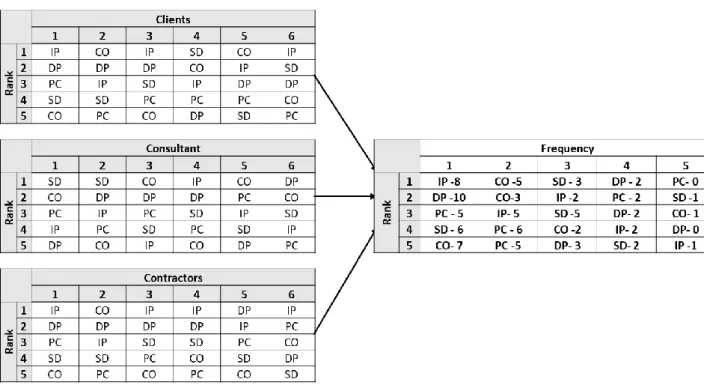
8.4.2. Rank Order Analysis ... 135
8.4.3. Most Critical Factor of Delay to be Managed ... 137
8.4.4. Relationship Between Factors ... 142
8.4.5. Other Factors of Delay ... 144
8.5.2. Clients View of Proposition 1 ... 147
8.5.3. Consultant’s view of Proposition 1 ... 148
8.5.4. Contractor’s view of Proposition 1 ... 149
8.5.5. Overall view of Proposition 1 ... 150
8.6.1. Questions Based on Proposition Two ... 153
8.6.2. Clients View of Proposition 2 ... 153
8.6.3. Consultants View of Proposition 2 ... 155
8.6.4. Contractors View of Proposition 2 ... 157
8.6.5. Overall View of Proposition 2 ... 159
8.7.1. Questions Based on Proposition Three ... 160
8.7.2. Clients View of Proposition 3 ... 160
8.7.3. Consultants View of Proposition 3 ... 161
8.7.4. Contractors View of Proposition 3 ... 163
8.7.5. Overall View of Proposition 3 ... 164
8.8.1. Questions Based on Proposition Four ... 168
8.8.2. Clients View of Proposition 4 ... 168
8.8.3. Consultants View of Proposition 4 ... 169
8.8.4. Contractors View of Proposition 4 ... 170
8.9.1. Questions Based on Proposition Five ... 174
8.9.2. Clients View of Proposition 5 ... 176
8.9.3. Consultants View of Proposition 5 ... 178
8.9.4. Contractors View of Proposition 5 ... 182
8.9.5. Overall View of Proposition 5 ... 186
8.10.1. Questions Based on Proposition 6 ... 188
8.10.2. Clients View of Proposition 6 ... 188
8.10.3. Consultants View of Proposition 6... 190
8.10.4. Contractors View of Proposition 6 ... 192
8.10.5. Overall View of Proposition 6 ... 192
Chapter 9 Discussion ... 194
Chapter 10 Conclusions and Recommendations ... 212
10.2.1. Ranking of Factors of Delay ... 213
10.2.2. The Research Key Findings ... 214
10.2.3. Recommendations for the clients in the KSA public sector... 219
10.3.2. Contribution to Academia ... 221
10.3.3. Contribution for Policy Makers... 221
References ... 225
List of Tables
Table 1: Presents the summary of research Objectives, Research Questions, and research
Methodology employed in this research. ... 6
Table 2: Categorise causes of optimism bias into various categories (Flyvbjerg et al., 2003) 19 Table 3: Advantages and Disadvantages of using CPM ... 25
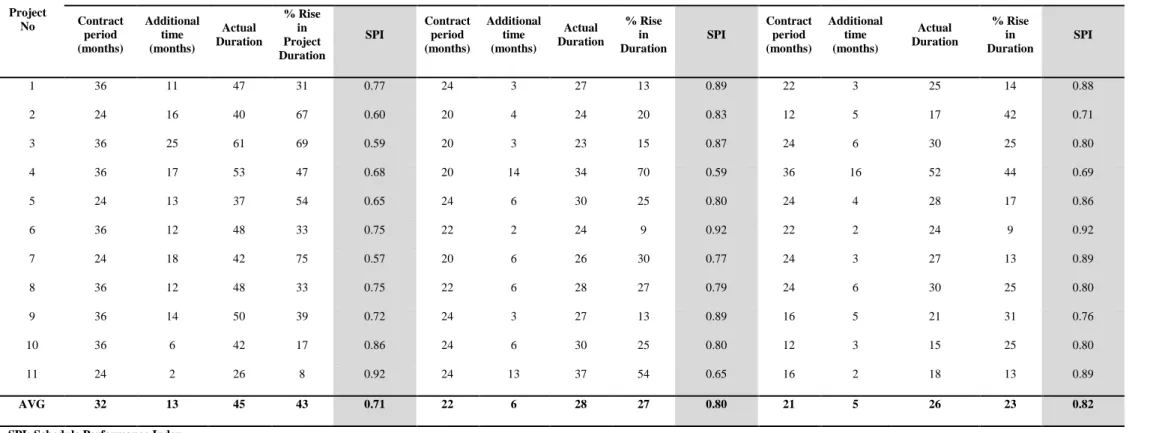
Table 4: Summarises the existing DAMs identified from the literature also the advantages/ disadvantages of each method. ... 30
Table 5: Top factors contributing to delays in KSA ... 36
Table 6: The benefits of BIM during design, construction, facilities and operations, and maintenance of a building project. ... 48
Table 7: Airport Central Utility Plant Details ... 51
Table 8: Benefits of BIM for delay management and agreements between authors ... 61
Table 9: Top five factors contributing to delays related to the client in KSA ... 63
Table 10: Mapping Delay Factors with the Benefits of BIM ... 63
Table 11: Presents the comparison of Pragmatism, Positivism/Objectivism and Interpretivism/Constructionism ... 75
Table 12: Categorise the Research Study Design Adapted from (Fellows and Liu, 2008). .... 81
Table 13: Empirical Design ... 84
Table 14: Source of Evidence strengths and weaknesses ... 90
Table 15: Sample Size Equally Distributed Quota ... 104
Table 16: Ministry of Health... 112
Table 17: Ministry of Education ... 113
Table 18: Ministry of Municipal and Rural Affair ... 114
Table 19: Rank Order of Client Related Cause of Delays in MOH Projects ... 115
Table 20: Rank Order of Client Related Cause of Delays in MOE Projects ... 118
Table 21: Rank Order of Client Related Cause of Delays in MOMRA Projects ... 121
Table 22: Rank Order of Client Related Cause of Delays in All Case Study Projects ... 123
Table 23: Comparison of Cost Variance for MOH, MOE and MOMRA Projects ... 125
Table 24: Comparison of Duration Variance for MOH, MOE and MOMRA Projects ... 126
Table 25: Distribution of Sampling ... 133
Table 26: Ranking of Factors of Delay by Clients, Consultants and Contractors ... 135
Table 27: Comparison of factors of delays ... 195
Table of Figures
Figure 1: Actual Research processes ... 9
Figure 2: Thesis Layout ... 10
Figure 3: Breakdown Structure of Risk (Sources: El-Sayegh, 2008) ... 15
Figure 4: Excusable and Non-excusable delay ... 28
Figure 5: BIM Evolution Ramp. ... 41
Figure 6: BIM, Oakland International Airport central utility plant, GA (Courtesy of Turner Construction Company). ... 52
Figure 7: Current status of BIM implementation (Source: Market Report, 2017) ... 53
Figure 8: Multiple-Case Studies Approach (Yin, 2014) ... 86
Figure 9: Case Study Research Process ... 105
Figure 10: Qualitative Data Analysis Process ... 108
Figure 11: Data Reduction Process ... 108
Figure 12: Rise in Duration in MOH Projects ... 116
Figure 13: Rise in Cost of MOH Project ... 117
Figure 14: Relationship Between Rising in Duration and Rise in Cost of MOH Projects .... 117
Figure 15: Rise in Duration in MOE Projects ... 119
Figure 16: Rise in Cost in MOE Projects... 119
Figure 17: Relationship Between Rising in Duration and Rise in Cost of MOE Projects... 120
Figure 18: Rise in Duration in MOMRA Projects ... 121
Figure 19: Rise in Cost in MOMRA Projects ... 122
Figure 20: Relationship Between Rising in Duration and Rise in Cost of MOMRA Projects ... 122
Figure 21: Data analysis process... 130
Figure 22: Inserting interviews in NVivo ... 131
Figure 23: Creating nodes in NVivo ... 131
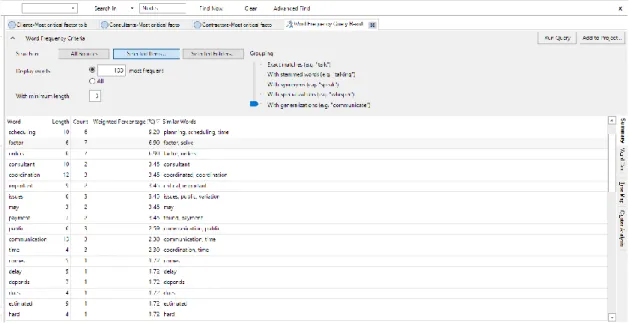
Figure 24: WFQR- Most Critical Factor of Delay to be Managed- the Client’s View ... 137
Figure 25: WFQR- Most Critical Factor- the Client’s View ... 138
Figure 26: A WFQR-Consultants-Most critical factor to be managed ... 139
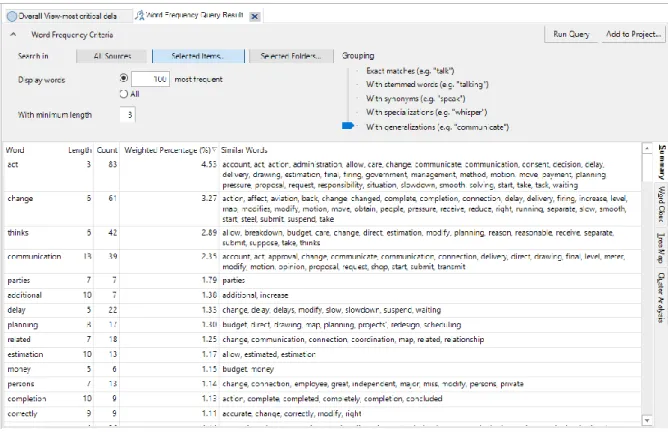
Figure 28: Overall View-most critical delay factor to be managed ... 141
Figure 29: Tree Map-Overall View- the most critical factor to be managed ... 142
Figure 30: Overall view- the relationship between the factors of delay ... 144
Figure 31: Overall View- Other factors of client related delays ... 146
Figure 32: Clients View on BIM assist in handling change orders ... 148
Figure 33: Consultants View on BIM assist in handling change orders ... 149
Figure 34: Contractors views of BIM assist in handling change orders ... 150
Figure 35: Overall view of Clients, Consultants and Contractors about the capability of BIM in a change order and progress payments. ... 152
Figure 36: Clients view- explore the diagram for error in scheduling and estimating ... 154
Figure 37: Clients View-Error in Scheduling ... 155
Figure 38: Consultants view- explore diagram of coding for error in scheduling and estimating ... 156
Figure 39: Consultants View-Error in Scheduling ... 157
Figure 40: Contractors view- explore diagram for coding of error in scheduling and estimating ... 158
Figure 41: Contractors View-Error in Scheduling ... 159
Figure 42: Tree map of overall view- error in scheduling ... 160
Figure 43: Clients View- Cost estimation and cost overruns ... 161
Figure 44: Tree map- Consultants view of cost estimation and reducing cost overrun ... 162
Figure 45: Tree map of Contractor's view of cost estimation and reducing cost overrun ... 164
Figure 46: Explore diagram- an overall view of cost estimating and reduce cost overrun ... 165
Figure 47: Source coding- explore diagram- an overall view of cost estimating and reduce cost overrun ... 166
Figure 48: Tree map- an overall view of cost estimation and reducing cost overrun ... 167
Figure 49: Clients View-Communication between clients and other stakeholders ... 169
Figure 50: Consultants View-Communication between clients and other stakeholders ... 170
Figure 51: Contractors View-Communication between clients and other stakeholders ... 171
Figure 52: Explore diagram- overall view -Communication between clients and other stakeholders... 172
Figure 53: Source diagram- overall view -communication between clients and other stakeholders... 173
Figure 55: Clients view, the relationship between visualisation and speed up of decision
making in BIM ... 176
Figure 56: Clients view of how BIM help to speed up the decision-making ... 177
Figure 57: Clients view of how BIM help to reduce delays through the visualisation of data ... 178
Figure 58: Consultants view, the relationship between visualisation and speed up of decision making in BIM ... 180
Figure 59: Consultants view-BIM help to speed up the decision-making ... 181
Figure 60: Consultants View-Reduce delays through the visualisation of data ... 182
Figure 61: Contractors view, the relationship between visualisation and speed up of decision making in BIM ... 184
Figure 62: Contractors view-BIM help to speed up the decision-making ... 185
Figure 63: Contractors Views-Reduce delays through the visualisation of data ... 186
Figure 64: Overall view of Clients, Consultants and Contractors ... 187
Figure 65: Clients view of reasons for optimism bias in construction projects ... 189
Figure 66: Consultants view- reasons for optimism bias in construction projects ... 191
Figure 67: Contractors view- reasons for optimism bias in construction projects ... 192
Figure 68: Overall view- reasons for optimism bias in construction projects ... 193
List of Publications
Alenazi, E.; Adamu, Z. (2017), 'Building Information Modelling for Construction Delay Management', World Academy of Science, Engineering and Technology, International Science Index 126, International Journal of Civil, Environmental, Structural, Construction and Architectural Engineering, 11(6), 823 - 834.
Chapter 1
Introduction
1.1. Background of the Research
The most significant public construction sector within the Gulf Cooperation Council (GCC) countries is that of the Kingdom of Saudi Arabia (KSA) (Deloitte, 2014 and 2017). KSA market recorded a Compound Annual Growth Rate (CAGR) of 10.06% from 2009 to 2013 (Deloitte, 2014), but the Saudi Arabia construction industry productivity is expected to reach through the period 2018-2022 forecasted CAGR of 10.4% with a value of US$ 7,755.7 billion in 2018 reaching to US$ 11,515.4 billion in 2022 (ReportLinker, 2018). According to Saudi Vision 2030, the kingdom of Saudi Arabia has planned to minimise the dependence on oil as revenue source and diversity in sources of economy. Moreover, the vision focused on developing the public sector such as education, health, infrastructure, leisure and tourism. The construction of critical infrastructure projects is one of the key future growth ambitions of the Saudi Vision 2030 (Tobergte and Curtis, 2016). As a result of a growing population, there is a need for more housing and enhanced national infrastructure, e.g. transportation networks. Development in investment sectors and tourism in the residential and infrastructure sectors are supporting the industry's expansion shortly. The Saudi government focuses on diversifying the country's economy, which will support the national construction sector (Tobergte and Curtis, 2016). Numerous projects have been constructed, e.g. King Abdullah stadium and King Khaled International Airport, Terminal 5, Riyadh 2012-2015 and some US$ 817 billion value of projects are under construction, e.g. the King Abdullah Economic City, Riyadh Metro, which costs US$ 70.31 billion and King Abdullah Petroleum Studies and Research Centre (Construction in Saudi Arabia report, 2017). Such projects underscore the importance of public sector funding in the Saudi construction industry.
Building construction projects have led to significant economic and social benefits for the government, contractors and the society as a whole in KSA. However, delays that prevail in those projects are substantial and pose considerable challenges to their implementation. The delay is described as the “time overrun either beyond completion date specified in a contract or beyond the date that parties agree upon for delivery of a project” (Assaf and Al-Hejji, 2006). The delay is a significant problem confronting KSA’s public sector construction projects. A study conducted by Assaf and Al-Hejji (2006), stated that about 70% of public projects were
delayed in KSA. Furthermore, according to a recent Deloitte’s report 2014, the total value of delayed building construction projects in KSA as of July 2014 stood at US$146 billion, causing pressures on the developmental drive of the oil-rich country. With the growing cases of delays occurring in publicly owned construction projects in KSA, there is a need for a further and significant investigation of this phenomenon.
Over the years, studies have been published on factors contributing to delays in KSA construction projects (AlKharashi and Skitmore, 2009; Assaf and Al-Hejji, 2006; Falqi, 2004; Al-Khalil and Al-Ghafly, 1999; Zain Al-abidien, 1983). Yet, they have not offered empirical theories or evidence on how this syndrome can be managed (Kim, Soibelman and Grobler, 2008). However, in the context of managing delays in the construction projects which is the focus of this study, various scholars (Eastman et al., 2011; Turk et al., 2014; Du et al., 2018) have highlighted inefficiencies resulting from manual paper-based processes as one of the critical reason causing project delays. Traditional project management processes are enormous paper-based including an accurate record of measurements, data entry, quantity take-offs, project scheduling, monitoring and cost control and management of contract documentation. Such manual tasks are error prone and could lead to project delays (Azhar, Nadeem, Mok, Leung, et al., 2008). Similar concerns are discussed by other authors such as Ashworth, (2010), who highlighted that various site-based activities such as site meetings, works inspections, record keeping and monitoring are done using paper-based processes. It is emphasised that how work and time pressures could lead to a compromise in quality, leading to potential delays. Another important reason for the faltering and/or delay of construction projects is known as “optimism bias” which occurs due to underestimating or overestimating the duration and costs of the construction project. Inaccurate estimations of construction projects lead to cost overruns and time delays, as the actual cost exceeds the expected cost and the construction also takes longer than planned time. According to several studies like (Kahneman (1979, 2003) and Kahneman and Lovallo 1993; Flyvbjerg et al. 2003), large infrastructure projects have been associated with higher likelihoods of cost overruns and delays. The projects’ tendencies to overruns have been described as project optimism bias. These studies recommended that optimism bias should be minimised in project estimates to deliver the projects on time. Therefore, there is an opportunity for an advanced technology-based project management technique, which can ensure the delivery of KSA’s public construction projects on time within the allocated budget.
The construction industry over the world has attained great innovation within project management during the previous three decades, by means of using Information Technology (IT) (Fischer and John, 2004; Liu, van Nederveen and Hertogh, 2017, Du et al., 2018). The newest and most promising of such advancements to be noted is Building Information Modelling (BIM) (Eastman et al., 2011). This modelling process has much functionality such as; 3D which is assists in projecting the visual design by a graphic illustration of the building systems and components; 4D which can generate the construction schedule and sequence; 5D used for cost information and estimation; as well as 6D which is used for as-built facility management. There are several viewpoints of BIM; and one view is that BIM can be described as a computer model that is developed to illustrate the project’s life-cycle from start to finish (Grilo and Jardim-Goncalves, 2010; Alreshidi et al. 2017). BIM is described by others like Babič, Podbreznik and Rebolj (2010) and Du et al., (2018) as a process which assists construction projects by enhancing efficiency and assisting in achieving projected objectives on time. BIM may, therefore, be implemented to obtain quicker design and construction resulting from the digital representation and management of building information over its whole life-cycle (Azhar, Hein and Sketo, 2008). BIM is hence the process and practice of virtual design and construction throughout a building’s life-cycle. It is a vehicle for sharing knowledge and enables communication among project stakeholders. It provides a significant platform for exchanging information digitally rather than paper-based exchanges.
Despite all of the BIM advantages that have been highlighted above, there is still a lack of research on delay management using BIM to mitigate the cost consequences of projects delay. Especially with regards to eliminating optimism bias and reducing the cost consequences that such delays have on Saudi public-sector projects. Therefore, there is a need for research in this field, specifically in determining which aspects could be transferred to the KSA construction industry, which continues to endure delays.
1.2. Statement of Problem and Research Justification
Diversification of the Saudi economy is crucial to Saudi Vision 2030, but this relies on the construction of critical infrastructure (Tobergte and Curtis, 2016), among which are construction projects valued at US$146 billion as of July 2014 (Deloitte, 2014). These projects often suffer from delays (AlKharashi and Skitmore, 2009; Assaf and Al-Hejji, 2006; Falqi, 2004; Al-Khalil and Al-Ghafly, 1999) and this issue has become a significant concern with adverse effects on the country’s economy. According to Falqi (2004) “The negative effects of
the delays are reflected in the cost of developments, the revenue from projects and the quality of those projects”. The quality of the work may also affect from the delay because trying to push the project activities forward to finish on time can lead to quality being neglected. As mentioned in the background of the study the Saudi Arabian government needs to accomplish many projects as part of its national development plans. However, only a few projects are accomplished on time and within the allocated budgeted (AlKharashi and Skitmore, 2009; EMAM et al., 2015). These delays are creating a very negative image of the construction industry throughout the world, and they impede the overall growth of the country (Callahan and Bramble, 2003). Although several studies are describing the issues of delays in construction projects worldwide, however, these studies have not managed those problems efficiently using the existing techniques. Therefore, to address this research gap, this study attempts to use a new approach to manage and reduce delays in construction projects through BIM, to reduce the cost consequences of project delay using KSA as a case study.
1.3. Research questions
Main Q: How BIM (process and technology) could be applied to analyse and manage delays in public sector construction projects of KSA?
Sub Q1: What are the main factors affecting time delays in the public-sector projects of KSA from a client perspective?
Sub Q2: What is the frequency and severity of the delay factors related to the clients in construction projects without BIM in KSA?
Sub Q3: Describe the main cost implications of delays triggered by clients in KSA public sector construction projects?
1.4. Aim and Objectives of the Study
This study is aimed at investigating the management and reduction of client-related delays in public sector construction projects through Building Information Modelling (BIM), especially with regards to eliminating optimism bias and reducing the cost consequences that such delays have on Saudi public-sector projects. To achieve this aim, the following objectives outlined:
1- To explore the essential benefits of BIM (technology and process) for the analysis and management of delays in public sector construction projects of KSA.
2- To investigate the main causes of delays related to the clients in public sector construction projects of KSA and use BIM process to manage them.
3- To identify the cost related consequences due to client-related delay and how using BIM can help avoid such cost overruns.
4- To develop recommendations to key stakeholders on using BIM to mitigate delays factors related to the clients in KSA construction projects public sector.
Table 1 shows a summary of research objectives mapped to each research questions and methods employed in this study.
Table 1: Presents the summary of research Objectives, Research Questions, and research Methodology employed in this research.
NO Research Questions Objectives Propositions Research
methods
1
Main Q: How BIM (process and technology) could be applied to analyse and manage
delays in public sector
construction projects of KSA?
To explore the essential benefits of BIM (technology and process) for the analysis and management of delays in public sector construction projects of KSA.
1- Using BIM in public sector construction projects would help to the analysis and management of delays in construction projects.
2- Using BIM will help to manage delays while reducing the errors of scheduling and estimating the time and cost associated with projects. 3- BIM in construction projects can help manage delays while advancing the current practice of cost estimation and resolving the issues of cost overruns that are linked to inaccurate scheduling and planning.
4- BIM in construction projects improves the visualisation of data and construction process that can help to mitigate the delay in progress payments and slowness in decision-making by the client. 5- Adopting BIM in construction projects can help to manage delays while advancing communication and coordination between client and other stakeholders.
6- BIM in construction projects provides more accurate scheduling that can help to mitigate underestimate of time and cost (Optimism Bias) in the public construction sector.
➢ Literature review ➢ Case study - Archival analysis - Interviews 2
Sub Q1: What are the main factors affecting time delays in the public-sector projects of
KSA from a client
perspective?
Sub Q2: What is the frequency and severity of the delay factors related to the clients in construction projects without BIM in KSA?
To investigate the main causes of delays related to the client in public sector construction projects of KSA to use BIM process to manage them.
➢ Literature review ➢ Case study - Archival analysis - Interviews 3
Sub Q3: Describe the main cost implications of delays triggered by clients in KSA
public sector construction
projects?
To identify the cost related consequences due to client-related delay and how using BIM can help avoid such cost overruns.
➢ Literature review ➢ Case study - Archival analysis - Interviews 4
To develop recommendations to key stakeholders on using BIM to mitigate delays factors related to the clients in KSA construction projects public sector. ➢ Literature review ➢ Case study - Archival analysis - Interviews
1.5. Benefits and Beneficiaries of Research
• This study would contribute to raising substantive awareness in terms of use of BIM 4D and 5D while exploring cross-disciplinary context into mitigating or managing the delays in KSA construction project. Nevertheless, not just in the construction sector, this study may penetrate BIM and construction project management communities to rethink the importance of BIM.
• This study fills the gap in the literature of delays in construction projects while developing a new literature of factors of client related delays, optimism bias in projects and establish how adopting BIM 4D and 5D can help to mitigate those delays in construction projects. Moreover, will be one of the first research projects focusing specifically on KSA context.
• Also, this study significantly contributes to the literature delay management, communication and skill management within the construction projects. It also brings a novel understanding of critical delay factors and the relationship between those factors. Furthermore, this research establishes the ranking of those delay factors that brings the potential for identifying the most critical delay factor require managing in the KSA construction projects.
• This research will be contributing to improving the communication process in the context of its contribution to a construction project while enhancing the skills of individuals who work on the project.
• This study may also influence other closely related industries in which BIM can be utilised as a project management tool for efficient planning and scheduling and managing delays.
• In the public-sector construction of KSA, it could contribute to remodelling existing regulations and encourage the decision maker about adopting 4D and 5D BIM, that can facilitate project efficiency and collaboration and coordination between the clients, consultants and contractors that ensure the reduction of optimism bias, cost and duration while bringing efficiency to project planning and scheduling.
1.6. Research Scope and the Research Methods Outline
This study was undertaken within the context of KSA public sector construction projects, which is composed of numerous clients/owners with various experiences, types of
thinking, processes, and backgrounds, in addition to having a range of opinions. The knowledge is developed jointly through the collaboration among the researchers and the participants, through the multi-realities which originate from observations and perceptions, leading to a shared opinion. Because of that, this study adopted a qualitative research philosophy through the adoption of constructivism as the ontological position and interpretivism as the epistemological position.
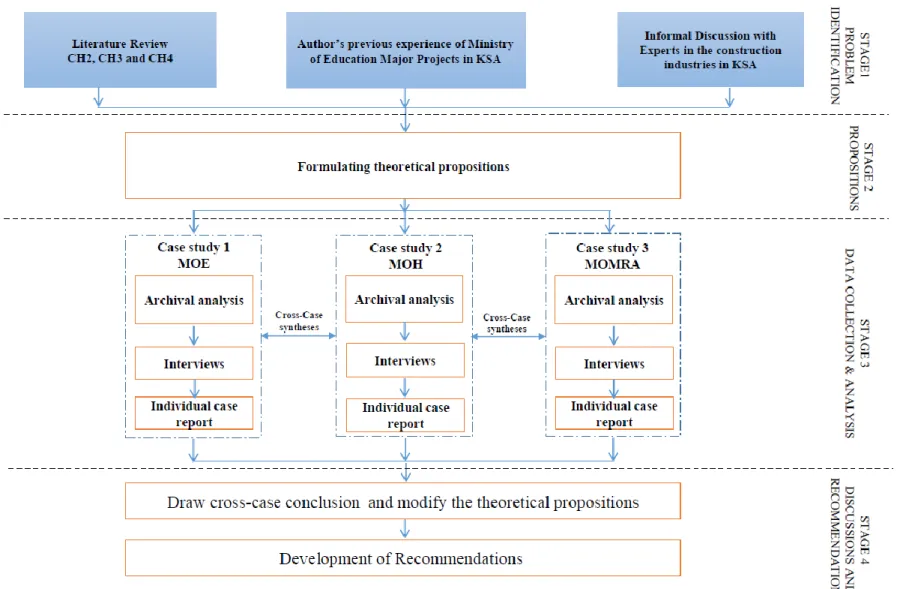
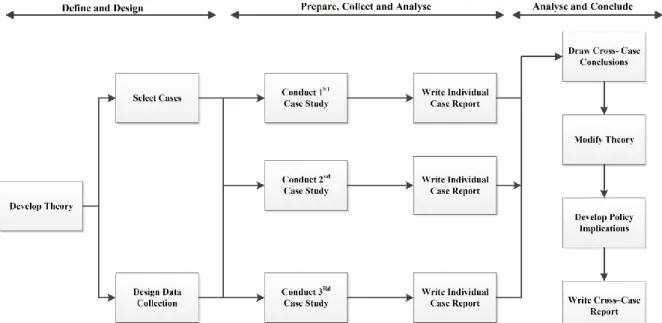
Figure 1 below presents outline the research methods. Four stages have been adopted to obtain the data in order to achieve the research aim and objectives. The data collection obtained from secondary and primary sources. The first stage is problem identification using secondary data from; literature review conducted, review of project delay documentation within KSA, author's previous experience of the MOE major project and informed discussion with experts. The second stage is developed theoretical Propositions managing delays using BIM. Those Propositions allow gathering qualitative data from public sector organisations in KSA such as MOE, MOH and MOMRA, using interviews and archive documents as presented in the third stage. Multiple case studies have been chosen to conduct the cross-case analysis through archive data that gives an opportunity for interviews analysis. The final stage based on the results of the data collected recommendation and conclusion has been developed.
1.7. Guide to the Thesis
Chapter1: Introduction
Chapter 3: Building Information Modelling (BIM) Chapter 2: Delay as a Risk in
Construction Projects
Chapter 4: BIM for Delay Management in Construction
Chapter 5: Research Methodology
Chapter 6: Data Analysis Tools and Techniques
Chapter 8: Interviews Analysis
Chapter7 : Documentations (Archival Analysis)
Chapter9: Results and Discussion
Chapter 10 Conclusions and Recommendations
This thesis contains ten Chapters; each Chapter begins with an introduction that outlining the main scope and the aim of the Chapter.
▪ Chapter 1 Introduction
The Chapter presents the research motivation. It starts with a brief background about the KSA economic and the construction, explains the main problem facing the completion of the construction projects, the importance of BIM and the increasing demand for its benefits. This is followed by the statement of problem and research justification. Then, the research aim and objectives of the study. Finally, the research scope and the research method outline.
▪ Chapter 2 Delay as a Risk in Construction Projects
This Chapter presents the existing literature review about the delay in the construction industry. It starts with an overview of risk management in construction. Then, the delay as a type of project risk, the definition of delay in construction projects. Also, the concept of optimism bias and its role in project delivery has been discussed. Moreover, this study explained the main types of delays in the construction industry and highlighted the current common delay analysis methods and techniques used in the construction industry. Finally, the previous research studies in construction delay globally and the Saudi context have been covered in order to identify the main delay factors in the construction industry.
▪ Chapter 3 Building Information Modelling (BIM)
The Chapter presents the current literature review about BIM within Architecture, Engineering and Construction (AEC) Industry It starts with a brief background of BIM and its definition. This is followed by, the development of BIM as technology and Process. Then, application, adoption and implementation as well as the current status of BIM in the AEC Industry. Moreover, this Chapter highlighted the benefits of adopting BIM within construction projects. Also, this chapter discussed the emerging opportunities that could advance BIM such as using Big data and analytics and machine learning. Finally, the main challenges in using BIM has been discussed.
▪ Chapter 4 BIM for Delay Management in Construction Projects
This Chapter presents a focused discussion on the role of BIM in managing construction delays. It deals specifically with the role of BIM technologies and processes in the management of construction delays. In particular, it focuses on various features of BIM
technologies and processes, including the use of BIM for scheduling, constructability options, and for drawing coordination and how it could help to address various communication and coordination factors causing delays. The main critical factors contributing to construction delays in KSA across different studies have been identified. Consequently, this study identified five Critical Delay Factors (CDF) that can be managed through BIM. Subsequently, the CDF and the different potential ways of managing them have been developed.
▪ Chapter 5 Research Methodology
This Chapter provides a summary of the research philosophy and approach, the data collection methods and tools. This Chapter is structured with an initial outline of the philosophical stance that has influenced the research, followed by a description of the research design and approach. To conclude, data collection and analysis techniques are presented.
▪ Chapter 6 Data Analysis Tools and Techniques
This Chapter continues while acquiring the philosophical perspective that is discussed in Chapter 5 and follows the research design and approach. This Chapter also discusses the data collection and data analysis tools and techniques in further details such as the type of generalisation, study Propositions, demographics, sampling strategy, Unit-of-Analysis for interviews and documentation data, its instruments, demography and data analysis tools and techniques.
▪ Chapter 7 Documentations (Archival Analysis)
This Chapter focuses on the document analysis of data gathered from the three case studies such as Ministry of Health (MOH), Document Analysis Ministry of Education (MOE), Document Analysis Ministry of Municipal and Rural Affair (MOMRA). The goal of this Chapter is to identify and rank the types of delays and to investigate the relationship between the types of delay and the increase in the cost and duration of the completed projects. Finally, the outcomes are generalised for each case study with further generalisations being extended in the cross-case analysis.
▪ Chapter 8 Interviews Analysis
This Chapter focus on the interviews analysis of the data collected through interviews. This Chapter is consequently divided into four sections. Each section discusses the outcome of interviews data through analysing the content. It starts with an overview of the data analysis
process. Followed by the interview questionnaire design, then, the participants’ information. The second section investigated the factors of delays in public sector construction projects. and the ranking of five client-related factors. Section three is set to measure the six Propositions discussed. The final section presents the reasons behind the optimism bias in those specific projects discussed in case studies and the potential of using BIM in the construction projects to overcome this issue.
▪ Chapter 9 Results and Discussion
This Chapter focus on the overall results of this study. The results and the main findings related to the ranking of delays and the Propositions of this study is critically discussed in this Chapter. The findings from the literature review, document analysis and interviews analysis are discussed for comparative analysis to identify the similarities and differences of results. The results from this Chapter are taken to conclude the main findings of this study.
▪ Chapter 10 Conclusions and Recommendations
The Chapter presents how the aim and the objectives have been achieved. It has divided into four sections; introduction, ranking of factors of delay, Propositions of the study, original contributions of this study and recommendation.
Chapter 2
Delay as a Risk in Construction Projects
2.1. Introduction
This Chapter focus on the delay as a type of risk in the construction industry. This study is more related to the specific risks associated with delays in delivering construction projects promptly, as well as the effect of delay on the cost of the projects. Also, the concept of optimism bias and its role in project delivery has been discussed. Moreover, this study explained the main types of delays in the construction industry and highlighted the current common delay analysis methods and techniques used. Finally, the previous research studies in construction delay globally and the Saudi context have been covered in order to identify the main delay factors in the construction industry.
2.2. Overview of Risk Management in Construction
Rose and Hillson (2004) described a project as a unique and transitory effort, which commences changes to form a product, or facility, which addresses specific objectives employing different resources in set limitations. The resources included are material as well as human ones. Human resources for construction projects are not restricted to the design team, contractors, subcontractors, estimators, consulting engineers and other stakeholders. The presence of multiple interests in the execution of projects often leads to complications. Generally, no project is free of risks. Alberto (2011) described risk as a combination of the likelihood of an event occurring and the magnitude of the impact incurred. Based on this description of risk, two fundamental elements exist the occurrence of incidence and the extent of its effect. El-Sayegh (2008) suggested that construction projects are susceptible to more inherent risks due to the conflicting interest of the parties which include owners, suppliers, contractors, sub-contractors and designers. Although eliminating risk in construction projects is not possible, successful projects are those that manage risk efficiently (Zou, Zhang and Wang, 2007). The concept of risk is associated with uncertainties, and this is often due to an inadequate supply of data and information. It is argued that necessary hoarding information on construction projects result in misrepresentation and interpretation; this, in turn, restricts the flow of information (Elvin, 2007). Consequently, litigations and failures in construction projects are mostly due to the mistrust and miscommunication created by self-sustaining information. Preventing or minimising uncertainties requires multi-disciplinary techniques
for defining the design and construction of activities, as well as dependencies among the methods used in the projects (Elvin, 2007).
Conventionally, factors that influence risks in construction projects originate from socio-economic elements such as the environment, public safety, the economy, relationships among organisations, stakeholders’ views and perceptions, as well as technological challenges. El-Sayegh (2008) stated that risks in projects are split into two groups, relative to their origin; these include external and internal risks, as illustrated in Figure 3. The external risks comprise those which are beyond the control of the project management, while internal risks are those which are associated with the projects; these are often classified under management control. The internal risks are further split into sub-groups as sources of risk and include designers, contractors and owners. This study is more related to the specific risks associated with delays in delivering construction projects promptly, as well as the effect of delay on the cost of the projects.
Internal Risks
Project Risks
Owner Desi gners Contractors
Sub-Contractors Suppliers
External Risks
Political Social &
Cultural Economic Natural Others
Del ayed payment to cotractors Unreasonably Imposed Ti ght Schedule Improper interventi on Lack of Scope Definit ion Del ay in Obtaining Si te Acces s Breach of Cont ract Sudden Bankruptcy Defecti ve Desi gn Deficiency in Drawings Changes in Desi gn Docum ents not Issued on Time Const ruction Accidents Poor Qual irt
Low Productivit y
Technical Problems Cont ract ors Incompetence Lack of Departure of Quaki fied St aff
Poor Performance Breach of Cont ract Material Qual ity Problems Del ay of Material Suppl y War Threat s
Labour Stri kes
Changes in Laws Corruption & Bribes Del ay in Approvals
Crimi nal Acts Subs tance
Abuse Conflicts Due to Differences in Culture
Infi lat ion Currency Fl uctuation Shortage i n Material Avai labl e Shortage i n Manpower Avai labl e Shortage i n Equipment Avai labl e Unexpect ed Inclement Weather Unforeseen Si te Condi tion Del ay in Resolving Cont ract ual Issues
Del ay in Resolving Liti gati on Unfairnes s in Tendering Local Protect ionism Diffi cult y in Cl aim ing Insurance
Figure 3: Breakdown Structure of Risk (Sources: El-Sayegh, 2008) 2.2.1. Delay As a Type of Project Risk
Construction projects are distinctive and are viewed as inherently risky because of the involvement of several parties, each with individual concerns. Risks in the construction
industry vary in nature and have the potential to have undesirable consequences (Hossen, Kang and Kim, 2015). Therefore, systematic and practical risk control measures are required to control and address risks if the execution of the project is to be successful. The indicators of success in construction projects are quantified by time, cost and quality, which illustrate the performance of the construction parties concerned (AlKharashi and Skitmore, 2009). The parties involved strive to deliver construction projects on time without compromising on quality (Chan and Chan, 2004). Uncertainties exist inherently at various stages of construction projects. Of the three indicators mentioned above, time for the completion of projects ultimately plays a crucial role. However, other performance indicators can also efficiently measure the success of a project cycle.
A delay in the schedule is often described as a scenario whereby there is an overrun of time, especially in the completion of a specified contract beyond an agreed date. This is perceived as a common challenge in all construction projects (Assaf and Al-Hejji, 2006). Delays in schedules can lead to loss of income for the utility, raise costs for the contractor due to the extended work period, and result in extra cost for materials and labour. Therefore, to execute any project successfully, appropriate recognition and evaluation of the factors which influence delays are worth considering. In addition to these factors, weather conditions, increases in inflation, frequent changes in designs by clients, and changes in government regulations are other causes of delays in construction projects, especially in Saudi Arabia (Ali, Al-Sulaihi and Al-Gahtani, 2012). Against these backdrops, BIM, as a technologically driven solution, is a tool developed recently. This can be used to manage client changes to the design and inflation-related delays by forecasting design changes and predicting inflation.
2.3. The Concept of Delay in Construction Projects
Anyone of the factors discussed above which prevents a contractor from meeting a project deadline is regarded as a construction delay. According to Aibinu and Odeyinka (2006), delays are characteristic of the construction industry, and almost all construction industries in the world are prone to them. This indicates that delays in construction projects are common, but such delays will increase project costs since a delay will result in an interest charge on the construction loan. Along with the overall expense of the project, the cost of labour will also increase as labourers are hired on either a per day allowance or a monthly fixed salary; there is also the ongoing inflation of material costs to consider.
According to AlKharashi and Skitmore, (2009) delays can occur for some reasons, but the Major types of delay are critical or non-critical, and excusable and non-excusable. These are discussed in detail in Section 2.8 below. However, according to Toor and Ogunlana (2008), although the concept of delay is prevalent, it results in significant penalties and hinders the processes concerned with a project’s execution. The financial penalty for failing to meet project deadline reduces the amount of profit that the construction company has estimated. Moreover, along with the cost, delays may also hinder the contractor in maintaining quality because delays in such projects are incredibly stressful for employers. As increasing pressure is put on managers or the contractor, labourers are often overburdened with an unmanageable amount of work, making it increasingly difficult to work quickly and maintain the quality of the project (Ellis and Thomas, 2002).
According to Falqi (2004), time is money so, ultimately, delays in projects are seen, not just regarding time lost, but they also equate to a loss of money and quality. This includes lost capital and revenue, an increase in market risk, an increase in material costs, along with overall inefficiency and production delays. On the other hand, if a project is completed on time, then it will benefit the industry in the form of profit, market growth, customers’ trust, and increasing employee confidence (Assaf and Al-Hejji, 2006).
As previously mentioned, project success for all interested parties is measured by three interrelated factors, which are inextricably linked with the success of the relationship and communication between the construction parties involved, mainly the owner and the contractor. It can be argued that all parties have the same goal: to complete projects by a specified time, achieve optimal standards, and work economically to achieve the desired outcome (Assaf and Al-Hejji, 2006). From a stakeholder’s perspective, the profitability of a construction project is directly underpinned by the duration and performance of the contract. For project owners, profits or benefits that are lost come from being unable to make use of the project at the agreed date while the contractor is hit with surcharges as a result of a prolonged stay on site (Sambasivan and Soon, 2007). Another important reason for the faltering and/or delay of construction projects is known as “optimism bias” which occurs due to underestimating or overestimating the duration and costs of the construction project. This concept is discussed in more detail below.
2.4. The Concept of Optimism Bias and Its Role in Project Delivery 2.4.1. Optimism Bias in Psychology
One indication of cognition is the capability to anticipate what will occur in the future. This is a critical skill in decision-making as it allows an individual to prepare an action, thus avoiding harm or gaining a reward. Since such future projections are essential, sometimes vitally so, it might be expected that humans have a clear, accurate and unbiased sense of foresight. However, this is not so as human beings often exhibit surprising bias when predicting what might happen to them in the future by underestimating the likelihood of adverse events or overestimating the likelihood of positive ones (Sharot, 2011). For example, humans tend to overestimate their life expectancy, their success in the job market, and their children talents. This consistent, pervasive and powerful tendency is called “the optimism bias” and is defined by Sharot (2011) as the difference between expectation and the actual outcome.
2.4.2. Optimism Bias in the Construction Industry
Optimism bias in the construction industry was defined by Macdonald (2002) as the tendency to underestimate a project’s costs and duration and to overestimate its benefits; it can be calculated as the difference (expressed as a percentage) between the appraisal estimate and the final outcome. Thus, optimism bias is a measure, first, of the extent to which the actual cost and duration of a project exceed those estimated and, second the degree to which the project’s benefits that are actually delivered fall short of the benefits that were first estimated. A study conducted by Mott MacDonald (2002) to review the outcomes of large public procurement projects in the UK over a 20-year period. The study aimed to offer guidance to the public sector on how to reduce excessive optimism in project estimates, and it demonstrated apparently high levels of optimism in project estimates where the costs and duration times were underestimated while benefits were overestimated. The study also highlighted identified project risk areas that resulted in increased costs and overruns regarding time. The study recommended that optimism bias should be minimised in project estimates to deliver the projects on time and within the allocated budget.
2.5. Major Challenges Faced by Construction Projects are Cost Overruns and Time Delays
Inaccurate estimations of construction projects lead to time delays and cost overruns, as the actual cost jumps the expected number and the construction also takes longer than originally required time. According to several studies like (Kahneman (1979, 2003) and Kahneman and Lovallo 1993; Flyvbjerg et al. 2003), large infrastructure projects have been associated with higher chances of overruns and delays. The projects’ tendencies to overrun have been labelled as project optimism bias. For instance, Flyvbjerg et al. (2003) explored 258 projects in 20 countries and five continents, of which nine out ten projects had to deal with cost overruns and time delays. Therefore, Flyvbjerg (2005) grouped reasons for time delays and cost overruns under the umbrella of technical, psychological and political-economic explanations. They are presented below in Table 2 and later discussed in the following sections.
Table 2: Categorise causes of optimism bias into various categories (Flyvbjerg et al., 2003)
causes of optimism bias Example
Technical causes
Inadequate information regarding data, forecast and latest or unverified technology.
Change in the scale of the project or an insufficient business case. Poor documentation shows weak management.
Psychological causes People and organisations tend to support positive evaluations or appraisal optimism.
The overconfidence of project promoters in projects outcomes.
Economic Causes Construction companies and consultants gain benefits in developing projects.
Political-Institutional causes
Institution actors and power holders and may lie on purpose for the interest of their projects.
2.5.1. Technical Explanations
As previously discussed, the technical explanations for delays and overruns comprise of flawed forecasting, insufficient data and misjudgements due to numerous reasons like lack of experience in forecasting the cost of infrastructure or for some particular infrastructures. Moreover, some fundamental issues may also be present in the prediction of the future. Another issue becoming the focus of academic literature is the technical explanations for cost overruns and delays in transport infrastructure, which is inspired by Flyvbjerg, Skamris Holm
and Buhl, (2004). This is followed by Flyvbjerg, Bruzelius and van Wee, (2008) whose central area of concern is urban transport projects.
2.5.2. Psychological Explanations
‘Planning fallacy’ is one of the foremost psychological explanations that have the systematic tendency to misinterpret the results of planned actions in an extremely positive manner. Hence, this planning fallacy leads to ‘‘Optimism Bias’’ in infrastructure project planning by underestimating costs, completion times and risk factors, while overestimating the benefits of planned actions. Kahneman, (1973); Kahneman, (2002) study covered this psychological explanation of planning fallacy while the detailed explanation of overruns and delays was thoroughly explored in the work of Kahneman and Lovallo, (1993). Planning fallacy basically occurs because of one’s biased perception of the whole project, for instance, ‘delusional optimism’ in the processing of information causes errors rather than giving accurate results. This over-optimism can be avoided or even sorted out by investigating the technical and political-economic explanations.
To enhance the forecast accuracy of planned projects, Kahneman, (2002) came up with the concept of Reference Class Forecasting. This concept helps in decision-making under uncertainty as it is believed that planned projects are way more similar to projects already executed in the past than usually assumed. Thus, it facilitates the improvement of accuracy forecast. While working on a planned project, merely focusing on its particular elements is not enough to get an overall idea of success until an outside view is also taken into consideration, which in this case would be the results of similar past projects.
According to the report of Bent Flyvbjerg in association with COWI, (2004) in which they sophisticated a practical way of Reference Class Forecasting for the UK Treasury, they have given ideas for determining the accuracy of projects resources. To obtain accurate forecasts of individual project principal costs they support the use of precise, experimental based optimism bias uplifts. This study also formed benchmark uplifts by providing a chart of probability distributions of cost overruns for different categories of the project under consideration.
This chart assists the project planners and promoters in selecting the uplift that fulfils their requirement of the higher level of risk of cost overrun that they are ready to take. The report suggests that the planner is eager to take the high risk of cost overrun should use the 50th
percentile uplift, whereas, the ones interested in staying on the safe side should take the 80th
percentile. The reason being that the 80th percentile matches up with an acceptable cost
overrun risk of 20 per cent. The higher the optimism bias uplift is, the lower the level of risk of its cost overrun gets. The percentiles mentioned to here can be considered as one minus the level of risk that the project planner wishes to be accepted.
The report states different optimism uplifts for various projects like for road projects; it ranges from 15% at the 50th percentile to 32% at the 80th percentile. The railway projects that also include urban transport, the uplift is higher than the road. It ranges from 40% to 57% between 50th and 80th percentile respectively. Uplifts that are fixed link range from 23% to 55%. There are also some project planners that do not prefer cost overruns at all. For those planners, the report proposes the application of optimism bias uplifts by the UK Department for Transport that is supported by the American Planning Association:
• creating a practical financial plan as a standard, and not prioritising the over-optimistic budgeting as a routine;
• introducing economic motivations to eliminate cost overruns, for example, through the use of co-financing for project cost increases where possible;
• adequately formed requirements for risk evaluation and high-quality cost at the business stage;
• The outline of independent assessment. 2.5.3. Political Economy Explanations
Political economy explanations deal with the issue of delays and cost overruns from a different angle. This is the current explanation that highlights the odds that delays and cost overruns might be due to the supply of wrong information purposefully. This is done by project planners and promoters to get quick approval of the project so that they can begin it without any objections.
The planners misinform timescales and cost or benefit projections by making it seem a successful project or free of defect. The two main areas are cost side and demand side. Flyvbjerg et al. (2004) deal with the cost side while Flyvbjerg, (2005) focuses the demand side which leads to the expectations regarding future benefits.
Between the years 1927 and 1998, a study on 258 transport infrastructure projects was conducted by Flyvbjerg, Skamris and Buhl, (2003). The study concluded that apparently, no learning was taking place from past many decades and nor was there any check and balance being run on the cost underestimation and cost overruns. The report further explores the equilibrium which has been created between the more appealing benefits and limited constraints for underestimated cost and increase. This may have caused the project promoters to wrongly assume that the cost underestimation pays off more than actual expenditure. Furthermore, cost underestimation is basically used to make projects appear cheaper than they originally are, so they can win the approval from the bosses to begin projects (Flyvbjerg et al., 2003).
A sufficient context has been provided by Flyvbjerg, Garbuio and Lovallo, (2009) which examines the optimism bias as the consequence of ‘delusion’ and ‘deception’. Under delusion falls the ‘planning fallacy’ (as discussed earlier) and ‘anchoring and adjustment’. The latter discusses the reluctance of project planners to reconsider the initial estimates, even though they are well aware of its inaccuracy. Their unwillingness may also be caused due to the negative implications that if cost estimates are higher during planning, then there are lesser chances of the project being executed. Political and agency sources of cost overruns are explained by the idea of systematic ‘deception’. They analyse the critical problem and sources of strategic deception. This deception leads to many problems, especially as it creates a barrier between the project and its founders who are the taxpayers. The mediators usually are the building contractors, consultants, local government officials and national bodies. Various sources of deception occur at each level of the project that comprises of, miscommunication of information, risk preferences and differences in self-interest, different time horizons and finally scattered or dissimilar accountability
2.6. Optimism Bias in KSA Construction Projects
There are numbers of studies indicating projects in KSA are over-budget and over-time (Zain Al-abidien 1983; Al-Khalil and Al-Ghafly, 1999; Falqi, 2004; Assaf and Al-Hejji, 2006; AlKharashi and Skitmore, 2009). It is understood that all major construction projects are exposed to considerable risk, which should be treated as a norm, rather than as an exception. However, it is hypothesised here that the project planner, while in full consideration of risks, does not adequately consider contingencies costs in initial budgeting. The theory of optimism