1535-9778/11/$12.00 doi:10.1128/EC.00073-10
Copyright © 2011, American Society for Microbiology. All Rights Reserved.
Genomewide Expression Profile Analysis of the
Candida glabrata
Pdr1 Regulon
䌤
†
Kelly E. Caudle,
1,2‡ Katherine S. Barker,
1,3Nathan P. Wiederhold,
4Lijing Xu,
5Ramin Homayouni,
5and P. David Rogers
1,2,3,6*
Children’s Foundation Research Center, Le Bonheur Children’s Hospital, Memphis, Tennessee 381031; Department of
Pharmaceutical Sciences, College of Pharmacy, University of Tennessee Health Science Center, Memphis, Tennessee 381632;
Department of Clinical Pharmacy, College of Pharmacy, University of Tennessee Health Science Center, Memphis, Tennessee 381633; Department of Pharmacotherapy, School of Pharmacy, University of Texas Health Science Center,
San Antonio, Texas 782294; Bioinformatics Program, College of Arts and Sciences, University of Memphis,
Memphis, Tennessee 381525; and Department of Pediatrics, College of Medicine, University of
Tennessee Health Science Center, Memphis, Tennessee 381636
Received 23 March 1010/Accepted 15 December 2010
The ABC transporters Candida glabrata Cdr1 (CgCdr1), CgPdh1, and CgSnq2 are known to mediate azole
resistance in the pathogenic fungusC. glabrata. Activating mutations inCgPDR1, a zinc cluster transcription factor,
result in constitutive upregulation of these ABC transporter genes but to various degrees. We examined the
genomewide gene expression profiles of two matched azole-susceptible and -resistantC. glabrataclinical isolate
pairs. Of the differentially expressed genes identified in the gene expression profiles for these two matched pairs,
there were 28 genes commonly upregulated withCgCDR1in both isolate sets includingYOR1,LCB5,RTA1,POG1,
HFD1, and several members of theFLOgene family of flocculation genes. We then sequencedCgPDR1from each
susceptible and resistant isolate and found two novel activating mutations that conferred increased resistance when
they were expressed in a common background strain in whichCgPDR1had been disrupted. Microarray analysis
comparing these reengineered strains to their respective parent strains identified a set of commonly differentially
expressed genes, includingCgCDR1,YOR1, andYIM1, as well as genes uniquely regulated by specific mutations. Our
results demonstrate that while CgPdr1 activates a broad repertoire of genes, specific activating mutations result in the activation of discrete subsets of this repertoire.
Over the past 2 decades, there has been an increase in Candidainfections caused by non-albicansspecies, with Can-dida glabratabeing the second most common cause of mucosal and invasive fungal infections in humans (24). Development of high-level resistance to the azoles, the most widely used anti-fungal class for treatment of Candida infections, has been reported in C. glabrata oral and bloodstream isolates from head and neck radiation patients, stem cell transplant patients, and human immunodeficiency virus (HIV) patients (2, 25, 27). Furthermore, the development of azole resistance has been implicated in the fluconazole treatment failure and death of a patient suffering fromC. glabratacandidemia (18).
Studies to determine the mechanisms of high-level azole resistance inC. glabratahave demonstrated frequent constitu-tive overexpression of the ATP-binding cassette (ABC) trans-portersC. glabrata CDR1(CgCDR1),CgPDH1, andCgSNQ2, all of which contribute to this phenotype (21, 25, 27, 32, 36). These transporters are regulated by the zinc binuclear cluster transcription factor CgPdr1, a single-gene homolog of
Saccha-romyces cerevisiaePdr1 (ScPdrl) and ScPdr3 transcription fac-tors (35, 36). CgPDR1, CgCDR1, CgPDH1, and CgSNQ2 all contain at least one pleiotropic drug response element se-quence (PDRE) in their promoters, suggesting that CgPdr1 may regulate its own expression, as well as that of the trans-porters, through binding these regulatory elements (32, 35). Recently, it was shown thatC. glabrataPdr1 (andS. cerevisiae Pdr1) directly binds to fluconazole, resulting in activation of drug efflux pumps, a mechanism similar to regulation of mul-tidrug resistance (MDR) by the pregnane X receptor (PXR), a nuclear receptor, in vertebrates (30). Furthermore, single point mutations in the putative functional domains ofCgPDR1result in increased transcription ofCgCDR1,CgPDH1, andCgSNQ2 as well as increased resistance to azoles (9, 33, 35). A recent study demonstrated a high variability in these mutations and showed that the CgPdr1 activating mutations have an effect on not only azole susceptibility but also virulence (9). Collectively, these studies indicate that CgPdr1 is uniquely important to the ability ofC. glabratato not only resist antifungal therapy but also cause disease.
With these aforementioned studies in mind, we endeavored to delineate genes of the CgPdr1 regulon by first identifying matched isolate pairs whose resistant isolates carry activating mutations inCgPDR1that conferred resistance to fluconazole. We then identified genes that are differentially expressed in the presence of two unique mutations, one residing in the putative activation domain and one near the putative inhibitory do-main. Our results demonstrate that while CgPdr1 activates a * Corresponding author. Mailing address: Children’s Foundation
Research Center, Room 304 West Patient Tower, Le Bonheur Chil-dren’s Hospital, 50 North Dunlap Street, Memphis, TN 38103. Phone: (901) 287-5387. Fax: (901) 287-5036. E-mail: [email protected].
‡ Present address: University of Cincinnati, James L. Winkle Col-lege of Pharmacy, 3225 Eden Avenue, P.O. Box 670004, Cincinnati, OH 45267.
† Supplemental material for this article may be found at http://ec .asm.org/.
䌤Published ahead of print on 30 December 2010.
373
on September 8, 2020 by guest
http://ec.asm.org/
broad repertoire of genes, specific activating mutations result in the activation of discrete subsets of this repertoire.
MATERIALS AND METHODS
Antifungal agent.Fluconazole was obtained from MP Biomedicals (Solon, OH). Stock solutions of 10 mg/ml were made in dimethyl sulfoxide (DMSO; Sigma, St. Louis, MO) and stored at⫺20°C.
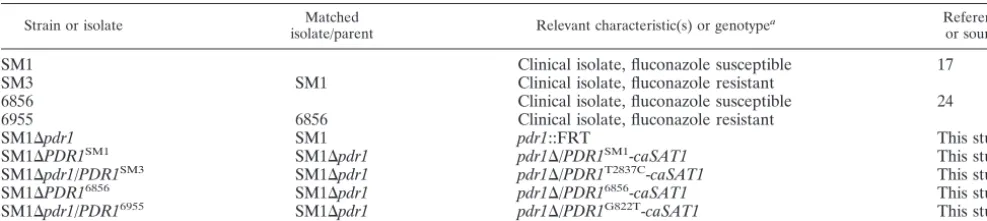
Strains and growth media.The isolates and strains used in this study are listed in Table 1. Both of these matched fluconazole-susceptible and -resistant clinical isolate sets have been described previously (18, 25, 31). All isolates/strains used in these studies were grown in YPD (1% yeast extract, 2% peptone, and 1% dextrose) broth at 30°C and stored as 20% glycerol stocks at⫺80°C. One ShotEscherichia coli
TOP10 chemically competent cells (Invitrogen, Carlsbad, CA) were used as a host for plasmid construction and propagation. These strains were grown in Luria-Ber-tani (LB) broth or on LB plates supplemented with 100g/ml ampicillin (Sigma) or 50g/ml kanamycin (Fisher BioReagents, Fair Lawn, NJ) when required.
Plasmid constructions.All primer sequences are listed in Table 2. ACgPDR1
deletion construct was generated as follows. An SacII-SacI fragment containing the last 50 nucleotides of theCgPDR1open reading frame (ORF) followed by the next⬃900 nucleotides immediately downstream was amplified from C. glabrataisolate SM1 genomic DNA using primers CgPDR1C and CgPDR1D, and an ApaI-XhoI fragment containing⬃900 nucleotides immediately upstream of theCgPDR1 ORF followed by the first 50 nucleotides of the ORF was amplified fromC. glabrataisolate SM1 genomic DNA using primers CgPDR1A and CgPDR1B. The SacII-SacI downstream fragment was first cloned into pSFS2 containing theSAT1flipper cassette (28) to generate pPDR1CDS2. Subsequently, the ApaI-XhoI upstream fragment was cloned into pPDR1CDS2 to generate pPDR1S2. For expression of the variousCgPDR1alleles, theCgPDR1
ORF plus⬃500 bp upstream and⬃500 bp downstream was amplified from eachC. glabrataisolate with primers CgPDR1E and CgPDR1F usingPfuDNA polymerase (Stratagene, LaJolla, CA) and cloned as a KpnI-ApaI fragment into plasmid pPDR1CDS2 to generate pPDR1SM1S2 (containing the SM1CgPDR1 allele), pPDR1SM3S2 (containing the SM3CgPDR1allele), pPDR16856S2 (containing the 6856CgPDR1allele), and pPDR16955S2 (containing the 6955PDR1allele).
PDR1gene disruption and replacement by the SAT1-flipper method.Gene disruption and replacement were performed via theSAT1-flipper method as previously described (26).C. glabratacells were transformed by the lithium acetate method (1) using about 1g of DNA. Transformants were selected on YPD agar containing 200g/ml nourseothricin (Nou200) as described previously (26). The
correct genomic integration was confirmed by Southern hybridization. Subsequently, correct integrants were grown in YPD medium for 6 to 24 h in order to induce expression of the flipper recombinase (FLPgene). Individual colonies were replica plated on both YPD agar and YPD-Nou200agar plates to select for cells in which
successful excision of theSAT1flipper cassette had taken place; further confirmation of cassette excision was performed by Southern hybridization.
Isolation of genomic DNA and Southern hybridization.Genomic DNA fromC. glabratawas isolated as previously described (20). For confirmation by Southern hybridization, approximately 10g of genomic DNA was digested with the appro-priate restriction enzymes, separated on a 1% agarose gel containing ethidium bromide, transferred by vacuum blotting onto a nylon membrane and fixed by UV cross-linking. Hybridization was performed with an Amersham ECL Direct Nucleic Acid Labeling and Detection System (GE Healthcare, Little Chalfont Buckingham-shire, United Kingdom) as per the manufacturer’s instructions.
Drug susceptibility tests.Microdilution broth susceptibility testing was per-formed in duplicate according to the CLSI M27-A3 method (4) in RPMI 1640 growth medium (Sigma) buffered with morpholinepropanesulfonic acid (MOPS; Sigma). Microtiter trays containing serial dilutions of fluconazole were inocu-lated and incubated at 37°C, and the MIC was read at 24 and 48 h. The MIC was defined as the lowest concentration of drug that causes a significant decrease in turbidity (⬎50%) compared to growth of the control.Candida kruseiATCC 6258 served as the quality control isolate.
Growth conditions for gene expression analysis.A single colony of each strain was grown overnight in YPD medium. Cells were then grown to mid-log phase (optical density at 600 nm [OD600] of 0.6 to 1.0) in 200 ml of YPD medium and were
harvested by centrifugation at 3,500⫻xgat 4°C for 5 min. The medium was removed by aspiration, and the cell pellets were stored at⫺80°C until RNA preparation.
RNA preparation, cRNA synthesis, and hybridization for microarrays.Total RNA was isolated using the hot phenol method (28) and as previously reported (36). cRNA synthesis and hybridization for microarray were previously described (36). Two independent microarray experiments were performed for each comparison.
Microarray data analysis.The scaled gene expression values from GCOS software were processed and analyzed using GeneSpring, version 7.2, software (Agilent Technologies). Probe sets were removed from analysis if they were called absent by the Affymetrix criterion and displayed an absolute value below 20 in all experiments. The expression value of each gene was normalized to the median expression of all genes in each chip as well as to the median expression of that gene across all chips in the study. Pairwise comparison of gene expression was performed for each matched experiment. Genes were considered to be differentially expressed if their change in expression was at least 1.5-fold in both independent experiments.
Quantitative real-time RT-PCR.Three sets of independently obtained RNA samples were used for quantitative real-time reverse transcription-PCR (RT-PCR) analysis. Quantitative real-time RT-PCR was conducted as previously described (36). Statistical analysis was performed using Microsoft Office Excel 2007. Relative changes were compared using a Student’sttest. The statistical significance threshold was fixed at an␣of⫺0.05.
Sequence analysis ofC. glabrata PDR1.CgPDR1coding sequences were am-plified by PCR (PfuDNA polymerase; Stratagene) ofC. glabratagenomic DNA using the primers PDR1seqF and PDR1seqR (Table 2). Products were cloned into pCR-BLUNTII-TOPO using a Zero Blunt TOPO PCR Cloning Kit (Invit-rogen) and transferred intoE. coliTOP10 cells with selection on LB agar plates containing 50g/ml kanamycin. Plasmid DNA was purified (QIAprep; Qiagen; Germantown, MD) and sequenced on an ABI Model 3130XL Genetic Analyzer using the universal primers M13R and T7 and a set of 10 primers (Table 2) that span both strands of theCgPDR1coding sequence. The sequencing was per-formed using three sets of clones derived from three independent PCRs for each strain/isolate sequenced.
Microarray data accession number.Data files for each scanned chip were submitted to the Gene Expression Omnibus database (www.ncbi.nlm.nih.gov /geo/). The accession number for the series is GSE24168.
RESULTS
Identification ofPDR1mutations in azole-resistant clinical
isolates. As overexpression of CgPDR1 and several efflux
pump genes regulated by CgPdr1 (CgCDR1, CgPDH1, and TABLE 1. C. glabrataisolates/strains used in this study
Strain or isolate Matched
isolate/parent Relevant characteristic(s) or genotype
a Reference
or source
SM1 Clinical isolate, fluconazole susceptible 17
SM3 SM1 Clinical isolate, fluconazole resistant
6856 Clinical isolate, fluconazole susceptible 24
6955 6856 Clinical isolate, fluconazole resistant
SM1⌬pdr1 SM1 pdr1::FRT This study
SM1⌬PDR1SM1 SM1⌬pdr1 pdr1⌬/PDR1SM1-caSAT1 This study
SM1⌬pdr1/PDR1SM3 SM1⌬pdr1 pdr1⌬/PDR1T2837C-caSAT1 This study
SM1⌬PDR16856 SM1⌬pdr1 pdr1⌬/PDR16856-caSAT1 This study
SM1⌬pdr1/PDR16955 SM1⌬pdr1 pdr1⌬/PDR1G822T-caSAT1 This study
acaSAT1,C. albicans-adapted nourseothricin resistance marker.
on September 8, 2020 by guest
http://ec.asm.org/
CgSNQ2) have previously been shown to be a mechanism of high-level azole resistance (2, 27, 32, 35), we first examined expression of these genes by real-time RT-PCR in the two matched pairs of azole-resistant and -susceptibleC. glabrata clinical isolates. As has been observed in other azole-resistant clinical isolates (9), we observed distinctly different expression patterns forCgCDR1, CgPDH1, and CgSNQ2in both of the azole-resistant isolates we examined (Fig. 1). CgCDR1 was upregulated in both resistant isolates, but CgPDH1 and CgSNQ2were upregulated only in isolate SM3.
Next, we sequenced the CgPDR1 gene from each isolate. Both resistant isolates contained nucleotide changes in CgPDR1compared to their corresponding susceptible isolates. Isolate SM3 contained a T2837C mutation which is predicted to result in the amino acid substitution L946S, located in the putative transcriptional activation domain of CgPdr1, an as-sumption based on similarity with ScPdr1 and ScPdr3 (36). Isolate 6955 contained a G822T mutation which is predicted to result in the amino acid substitution K274N, located near the putative inhibitory domain (36) (Fig. 2).
TABLE 2. Primers used in this study
Primer function and primer or
gene name Primer
a Amplicon
size (bp)
Plasmid construction
CgPDR1A F, 5⬘-AAACATTTCCTCATAGGGCCCATCTTTTACTT-3⬘ 1,080
CgPDR1B R, 5⬘-ATTACATTTTATTTTCCTCGAGCTACAGCTA-3⬘
CgPDR1C F, 5⬘-CACTTATAACCGCGGAACTTTAGATGAGTTT-3⬘ 1,000
CgPDR1D R, 5⬘-AACCCGATACTGAGCTCTTAAGTAAGGACT-3⬘
CgPDR1E F, 5⬘-ATAATTGTGGGTACCACTAGGTATTAGGTC-3⬘ 4,295
CgPDR1F R, 5⬘-TATAATAAATGGGCCCATCAACGAAGGTAG-3⬘
Quantitative real-time PCR expression analysis
18S rRNA F, 5⬘-TCGGCACCTTACGAGAAATCA-3⬘ 52
R, 5⬘-CGACCATACTCCCCCCAGA-3⬘
CgPDR1 F, 5⬘-TTTGACTCTGTTATGAGCGATTACG-3⬘ 51
R, 5⬘-TTCGGATTTTTCTGTGACAATGG-3⬘
CgCDR1 F, 5⬘-CATACAAGAAACACCAAAGTCGGT-3⬘ 71
R, 5⬘-GAGACACGCTAACGTTCACCAC-3⬘
CgPDH1 F, 5⬘-ACGAGGAGGAAGACGACTACGA-3⬘ 63
R, 5⬘-CTTTACTGGAGAACTCATCGCTGT-3⬘
CgSNQ2 F, 5⬘-CGTCCTATGTCTTCCTTACACCATT-3⬘ 57
R, 5⬘-TTTGAACCGCTTTTGTCTCTGA-3⬘
YOR1 F, 5⬘-CCATCGGTGCTTGTGTAATGTTA-3⬘ 68
R, 5⬘-TTGAGAGGCGTGGAAAAAATG-3⬘
YIM1 F, 5⬘-CAAGAAATGGACCCCCGAGT-3⬘ 51
R, 5⬘-TGCGTGGAAGCACCATATAC-3⬘
YNL134c F, 5⬘-ACTGCTGGTGCTGTTCTTCACTC-3⬘ 52
R, 5⬘-GCTCCCATTTCAAGTCAAGGC-3⬘
RTA1 F, 5⬘-TCCTGTTTGTCATTAGGGTTAGGG-3⬘ 51
R, 5⬘-TGGCAATTTTGTTCTTATTCCTCAG-3⬘
RPN4 F, 5⬘-AGCCAGTATGCTGACCCGAG-3⬘ 52
R, 5⬘-CACCGCCACATCGCCC-3⬘
ERG3 F, 5⬘-AAGCGTGTGAACAAGGAC-3⬘ 68
R, 5⬘-GCGTAGGTCTTCTCTGTGA-3⬘
ERG4 F, 5⬘-GGCTGTACGCTAACGCTTGTG-3⬘ 51
R, 5⬘-TTCGTAAGCCATATCCCAAGTTG-3⬘
ERG11 F, 5⬘-CCCACCTACTGACTTCACCT-3⬘ 55
R, 5⬘-GATCTTAGCAGGGGCAGTTG-3⬘
EPA1 F, 5⬘-AACCGCAAGAAAATCCTCCT-3⬘ 60
R, 5⬘-GGACTGGAAGTGGGGTATGA-3⬘
SequencingCgPDR1
CgPDR1seq F, 5⬘-GGTAAAGTCATTCTTTAGCTACG-3⬘ 3,393
R, 5⬘-TACAGGCTATGCACACTGTCT-3⬘
CgPDR1seqA1 F, 5⬘-GAAACTCCTATGTCCTCAACA-3⬘
CgPDR1seqA2 F, 5⬘-AAACTGATGAAAGAGACCT-3⬘
CgPDR1seqA3 F, 5⬘-ACATCTGTTGCTTCTTCTTGA-3⬘
CgPDR1seqA4 F, 5⬘-TAAAGAAGATACAGCAGCAGC-3⬘
CgPDR1seqA5 F, 5⬘-TCTACCTCCGATGCTTCTA-3⬘
CgPDR1seqB1 R, 5⬘-TACAGGAAGGCATTGACTTG-3⬘
CgPDR1seqB2 R, 5⬘-TCTGCCATATTGATTAGCCT-3⬘
CgPDR1seqB3 R, 5⬘-TTCAAAACCATAGTATTCGTCG-3⬘
CgPDR1seqB4 R, 5⬘-TGGCTCATAAAGGTGAACAC-3⬘
CgPDR1seqB5 R, 5⬘-CAGAAAGACCTCTATGGCAT-3⬘
a
F, forward; R, reverse. Restriction sites introduced into primers are underlined.
on September 8, 2020 by guest
http://ec.asm.org/
T2837C and G822T are activating mutations in CgPDR1,
and each confers increased resistance to fluconazole.Single
point mutations inCgPDR1inC. glabratahave previously been shown to play a role in azole resistance (9, 35). Therefore, to test whether the L946S and K274N substitutions in CgPdr1 are responsible for the increase in the fluconazole MICs for iso-lates SM3 and 6955, respectively, we expressed the mutated CgPDR1from SM3 and 6955 in the isolate SM1 background. For this purpose, we deleted CgPDR1 from isolate SM1 to generate strain SM1⌬pdr1(26). The mutatedCgPDR1alleles,
PDR1T2837C and PDR1G822T, were then introduced
individu-ally into the CgPDR1 locus in strain SM1⌬pdr1 to generate strains SM1⌬pdr1/PDR1SM3and SM1⌬pdr1/PDR16955. We also
created corresponding control strains by introducingCgPDR1 alleles from the susceptible isolates SM1 and 6856 to generate strains SM1⌬pdr1/PDR1SM1 and SM1⌬pdr1/PDR16856.
Re-placement of the differentCgPDR1mutations was verified by sequencing the clonedCgPDR1ORF PCR product as detailed in the Materials and Methods section.
Introduction of the twoCgPDR1mutations into the suscep-tible background (SM1⌬pdr1) resulted in fluconazole MICs equivalent to those of the strains from which eachCgPDR1was originally identified (Table 3). Specifically, introduction of
PDR1T2837C resulted in a fluconazole MIC of 64g/ml, and
introduction ofPDR1G822Tresulted in a fluconazole MIC of 16
g/ml, whereas, the fluconazole MICs for SM1⌬pdr1/PDR1SM1
and SM1⌬pdr1/PDR16856 were measured as 2 g/ml and 1
g/ml, respectively (Table 3). As introduction of theCgPDR1 mutated alleles in the SM1 isolate background resulted in increased fluconazole MICs compared to introduction of the
alleles from isolates SM1 and 6856 in the same background, theseCgPDR1activating mutations are responsible for confer-ring decreased susceptibility to fluconazole in theseC. glabrata isolates.
Genes differentially expressed in matched sets of clinical
isolates.In order to determine which genes are differentially
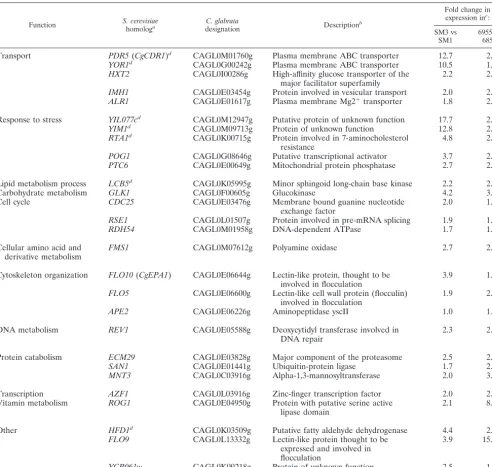
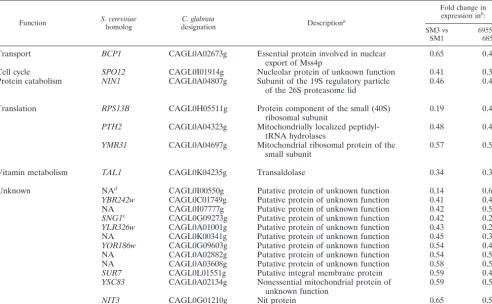
expressed in the presence of these activating mutations, we first compared the gene expression profiles of the resistant isolates to those of their respective susceptible matched isolates by microarray analysis. There were 539 upregulated genes (see Table S1A in the supplemental material) and 552 downregulated genes (see Table S2A) in isolate SM3 com-pared to isolate SM1 and 468 upregulated genes (see Table S3A) and 509 downregulated genes (see Table S4A) in iso-late 6955 compared to isoiso-late 6856. There were 28 genes commonly upregulated and 22 downregulated in both clin-ical sets (Tables 4 and 5).
Identification of putativeCgPDR1target genes.In order to
identify putative CgPDR1 target genes whose expression is affected by these activating mutations, we compared gene ex-pression profiles of SM1⌬pdr1/PDR1SM3 and SM1⌬pdr1/
PDR16955 to those of SM1⌬pdr1/PDR1SM1 and SM1⌬pdr1/
PDR16856, respectively. There were 133 genes upregulated in
the strain expressing the SM3 allele,PDR1T2837C (see Table
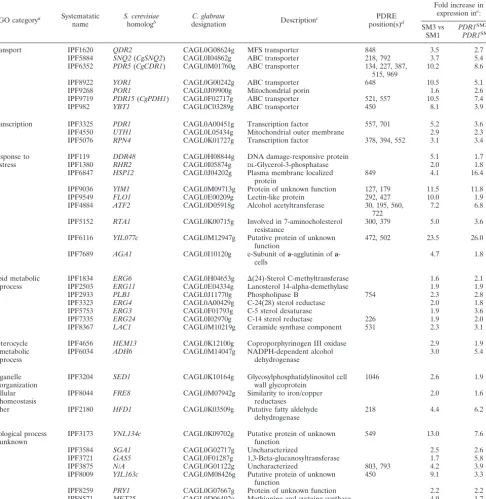
1SB in the supplemental material), and of these genes 38 were also upregulated in isolate SM3 compared to isolate SM1 (Ta-ble 6). Thirty-two genes were upregulated in the reconstituted strain expressing the 6955 allelePDR1G822T(Table S3B), and
of these genes only seven were also upregulated in isolate 6955 compared to isolate 6856 (Table 7). Likewise, 676 genes were downregulated in the strain expressing PDR1T2837C (Table
S2B), and of these genes 51 were also downregulated in isolate SM3 compared to isolate SM1. Sixty-five genes were down-regulated in the strain expressingPDR1G822T(Table S4B), and
of these, nine were also downregulated in isolate 6955 com-FIG. 1. Quantitative real-time RT-PCR analysis of CgPDR1,
CgCDR1,CgPDH1, andCgSNQ2in isolate SM3 versus (vs) SM1 and in isolate 6955 versus 6856. Data are shown as means⫾standard error. Relative changes were compared using a Student’sttest. Gene expres-sion values marked with an asterisk are statistically significant (P⬍
0.05) in all three experiments.
FIG. 2. Location of gain-of-function mutations found in previous studies (9, 32, 33, 36) and in the present study (in bold). The putative DNA-binding domain (DBD) and middle homology region (MHR) were previously found by Pfam analysis (9). The putative transcriptional activation domain (AD) and inhibitory domain (ID) were previously inferred by similarity with Pdr1 and Pdr3 fromS. cerevisiae(36). The region with diagonal lines corresponds to the xenobiotics binding domain (XBD) (30).
TABLE 3. Fluconazole MICs for isolates/strains used in this study
Isolate or strain name MIC (g/ml)
SM1... 2
SM1⌬pdr1... 0.5 SM3...64
SM1⌬pdr1/PDR1SM1... 2
SM1⌬pdr1/PDR1SM3...64
6856... 1
6955...16
SM1⌬pdr1/PDR16856... 1
SM1⌬pdr1/PDR16955...16
on September 8, 2020 by guest
http://ec.asm.org/
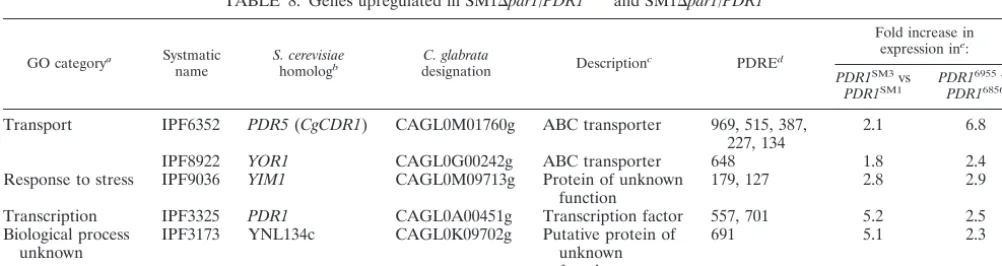
pared to isolate 6856. We defined putative CgPdr1 target genes to be those that were upregulated in not only the transformants but also the clinical isolate sets. These are summarized in Tables 6 and 7. Genes upregulated in both SM1⌬pdr1/ PDR1SM3and SM1⌬pdr1/PDR16955are summarized in Table
8. As seen for isolate SM3 compared to SM1, real-time RT-PCR confirmed upregulation of CgCDR1, CgPDH1, and CgSNQ2 in SM1⌬pdr1/PDR1SM3 compared to expression in
SM1⌬pdr1/PDR1SM1. Also, as expected, real-time RT-PCR
confirmed upregulation of CgCDR1 but not CgPDH1 and CgSNQ2 in SM1⌬pdr1/PDR16955 compared to expression in
SM1⌬pdr1/PDR16856 (Fig. 3A). Also confirmed was the
up-regulation ofYOR1,YIM1, andYNL134cin both SM1⌬pdr1/ PDR1SM3 compared to SM1⌬pdr1/PDR1SM1 and SM1⌬pdr1/
PDR16955compared to SM1⌬pdr1/PDR16856(Fig. 3B).RPN4
and RTA1 were confirmed to be uniquely upregulated in SM1⌬pdr1/PDR1SM3 compared to expression in SM1⌬pdr1/
PDR1SM1 (Fig. 3B), whereas EPA1 was confirmed to be
uniquely upregulated in SM1⌬pdr1/PDR16955 compared to
SM1⌬pdr1/PDR16856(Fig. 3B).
Taking advantage of the evolutionary relatedness ofC. gla-bratatoS. cerevisiae, we searched the promoter region (defined TABLE 4. Genes upregulated by at least 1.5-fold in both clinical isolate sets
Function S. cerevisiae
homologa
C. glabrata
designation Description
b
Fold change in expression inc
:
SM3 vs SM1
6955 vs 6856
Transport PDR5(CgCDR1)d CAGL0M01760g Plasma membrane ABC transporter 12.7 2.0
YOR1d CAGL0G00242g Plasma membrane ABC transporter 10.5 1.8
HXT2 CAGL0I00286g High-affinity glucose transporter of the major facilitator superfamily
2.2 2.0
IMH1 CAGL0E03454g Protein involved in vesicular transport 2.0 2.4
ALR1 CAGL0E01617g Plasma membrane Mg2⫹transporter 1.8 2.5
Response to stress YIL077cd CAGL0M12947g Putative protein of unknown function 17.7 2.5
YIM1d CAGL0M09713g Protein of unknown function 12.8 2.5
RTA1d CAGL0K00715g Protein involved in 7-aminocholesterol resistance
4.8 2.2
POG1 CAGL0G08646g Putative transcriptional activator 3.7 2.1
PTC6 CAGL0E00649g Mitochondrial protein phosphatase 2.7 2.1
Lipid metabolism process LCB5d CAGL0K05995g Minor sphingoid long-chain base kinase 2.2 2.0
Carbohydrate metabolism GLK1 CAGL0F00605g Glucokinase 4.2 3.0
Cell cycle CDC25 CAGL0E03476g Membrane bound guanine nucleotide
exchange factor
2.0 1.8
RSE1 CAGL0L01507g Protein involved in pre-mRNA splicing 1.9 1.7
RDH54 CAGL0M01958g DNA-dependent ATPase 1.7 1.6
Cellular amino acid and derivative metabolism
FMS1 CAGL0M07612g Polyamine oxidase 2.7 2.6
Cytoskeleton organization FLO10(CgEPA1) CAGL0E06644g Lectin-like protein, thought to be involved in flocculation
3.9 1.9
FLO5 CAGL0E06600g Lectin-like cell wall protein (flocculin) involved in flocculation
1.9 2.6
APE2 CAGL0E06226g Aminopeptidase yscII 1.0 1.5
DNA metabolism REV1 CAGL0E05588g Deoxycytidyl transferase involved in DNA repair
2.3 2.2
Protein catabolism ECM29 CAGL0E03828g Major component of the proteasome 2.5 2.4
SAN1 CAGL0E01441g Ubiquitin-protein ligase 1.7 2.0
MNT3 CAGL0C03916g Alpha-1,3-mannosyltransferase 2.0 3.0
Transcription AZF1 CAGL0L03916g Zinc-finger transcription factor 2.0 2.2
Vitamin metabolism ROG1 CAGL0E04950g Protein with putative serine active lipase domain
2.1 8.8
Other HFD1d CAGL0K03509g Putative fatty aldehyde dehydrogenase 4.4 2.3
FLO9 CAGL0L13332g Lectin-like protein thought to be expressed and involved in flocculation
3.9 15.9
YCR061w CAGL0K09218g Protein of unknown function 2.5 1.6
aParentheses indicate a previously namedC. glabratagene.
bDescriptions ofS. cerevisiaehomologs from theSaccharomycesGenome Database (http://www.yeastgenome.org).
cFold change defined as the average ratio of gene expression levels in the isolates compared in two independent microarray experiments. dGenes also upregulated in the laboratory-derived fluconazole resistant isolate F15 (35).
on September 8, 2020 by guest
http://ec.asm.org/
for this purpose as 1,000 bp immediately upstream from the start codon of the ORF) of each gene listed in Tables 6 and 7 for a match to the consensusS. cerevisiaePDRE (TCCRYGSR). Twenty-two of the 38 genes in Table 6 and 4 of the 7 genes in Table 7 contained at least one consensus sequence, suggesting that they may be direct targets of CgPdr1.
DISCUSSION
C. glabrataPdr1 is the single-gene homolog of twoS. cerevi-siaezinc cluster transcription factors ScPdr1 and ScPdr3, which regulate the expression of genes involved in multidrug resis-tance. ScPdr1 and ScPdr3 act by binding to PDREs in the promoters of target genes (14). Furthermore, it as been found that ScPdr1 is constitutively bound to its target DNA (8). InS. cerevisiae, activating mutations in Pdr1 and Pdr3 can result in decreased susceptibility to fluconazole by upregulation of mul-tidrug efflux pumps (14). In C. glabrata, CgPdr1 has been shown to regulate to various degrees the expression of the ABC transporter genesCgCDR1,CgPDH1, andCgSNQ2and has been shown to be responsible for azole resistance in this organism (21, 26, 28, 33, 36). Moreover, a recent study inves-tigated the incidence ofCgPDR1mutations in a large collec-tion of fluconazole-resistant clinical isolates and identified 57 distinct single amino acid substitutions. However, it was con-cluded that although CgPDR1 regulates CgCDR1, CgPDH1,
and CgSNQ2, these genes are not always coordinately ex-pressed in fluconazole-resistant clinical isolates, suggesting that these genes are differentially regulated depending on the mutation (9). Of note, this study was the first to address the fitness cost of these mutations. Using engineered isogenic strains with uniqueCgPDR1mutations, this study also found that the amino acid substitutions inCgPDR1that were tested enhanced virulence and ultimately led to fluconazole failure in mouse models (9).
In previous studies, 12 distinct experimentally confirmed activating CgPdr1 mutations from fluconazole-resistant iso-lates were identified that lead to constitutive upregulation of ABC transporter genes as well as decreased susceptibility to fluconazole (9, 32, 33, 36). Three of these mutations were found in the putative inhibitory domain, four were found in the xenobiotic binding domain, and five were found in the putative activation domain of CgPdr1. Two novel activating mutations resulting in amino acid substitutions in CgPdr1 were identified in the present study, one near the putative inhibitory domain (K274N) and one in the putative activation domain (L946S). These mutatedCgPDR1alleles not only cause upregulation of CgCDR1when expressed in a susceptible wild-type isolate but also result in the same fluconazole MIC as the original isolate from which the mutated allele was identified. Interestingly, when examined collectively, activating mutations identified to TABLE 5. Genes downregulated by at least 1.5-fold in both clinical isolate sets
Function S. cerevisiae
homolog
C. glabrata
designation Description
a
Fold change in expression inb
:
SM3 vs SM1
6955 vs 6856
Transport BCP1 CAGL0A02673g Essential protein involved in nuclear export of Mss4p
0.65 0.42
Cell cycle SPO12 CAGL0I01914g Nucleolar protein of unknown function 0.41 0.36
Protein catabolism NIN1 CAGL0A04807g Subunit of the 19S regulatory particle of the 26S proteasome lid
0.46 0.44
Translation RPS13B CAGL0H05511g Protein component of the small (40S) ribosomal subunit
0.19 0.45
PTH2 CAGL0A04323g Mitochondrially localized peptidyl-tRNA hydrolases
0.48 0.46
YMR31 CAGL0A04697g Mitochondrial ribosomal protein of the small subunit
0.57 0.50
Vitamin metabolism TAL1 CAGL0K04235g Transaldolase 0.34 0.31
Unknown NAd CAGL0I00550g Putative protein of unknown function 0.14 0.60
YBR242w CAGL0C01749g Putative protein of unknown function 0.41 0.44
NA CAGL0I07777g Putative protein of unknown function 0.42 0.50
SNG1c CAGL0G09273g Putative protein of unknown function 0.42 0.29
YLR326w CAGL0A01001g Putative protein of unknown function 0.43 0.22
NA CAGL0K00341g Putative protein of unknown function 0.45 0.34
YOR186w CAGL0G09603g Putative protein of unknown function 0.54 0.46
NA CAGL0A02882g Putative protein of unknown function 0.54 0.52
NA CAGL0A03608g Putative protein of unknown function 0.58 0.51
SUR7 CAGL0L01551g Putative integral membrane protein 0.59 0.46
YSC83 CAGL0A02134g Nonessential mitochondrial protein of unknown function
0.59 0.51
NIT3 CAGL0G01210g Nit protein 0.65 0.59
aDescriptions ofS. cerevisiaehomologs from theSaccharomycesGenome Database (http://www.yeastgenome.org).
bFold change defined as the average ratio of gene expression in the isolates compared in two independent microarray experiments. cGenes also downregulated in the laboratory-derived fluconazole-resistant isolate F15 (35).
dNA, not applicable.
on September 8, 2020 by guest
http://ec.asm.org/
date demonstrate various patterns of ABC transporter expres-sion. For example, in one of the previous studies, one activat-ing mutation led to the overexpression of CgSNQ2 but not CgCDR1andCgPDH1(32). The L946S amino acid substitu-tion resulted in upregulasubstitu-tion of CgCDR1, CgPDH1, and CgSNQ2while the K274N amino acid substitution resulted in
upregulation of onlyCgCDR1. These findings suggest that dif-ferent amino acid substitutions in CgPdr1 result in the activa-tion of differentCgPDR1target genes. Like Pdr1 inS. cerevi-siae, CgPdr1 may bind constitutively to the promoters of a repertoire of genes and activate a subset of them, depending on the mechanism by which Pdr1 is activated (8).
TABLE 6. Genes upregulated in SM1⌬pdr1/PDR1SM3compared to SM1⌬pdr1/PDR1SM1and SM3 compared to SM1
GO categorya Systematatic name
S. cerevisiae
homologb
C. glabrata
designation Description
c PDRE
position(s)d
Fold increase in expression ine
:
SM3 vs SM1
PDR1SM3vs
PDR1SM1
Transport IPF1620 QDR2 CAGL0G08624g MFS transporter 848 3.5 2.7
IPF5884 SNQ2(CgSNQ2) CAGL0I04862g ABC transporter 218, 792 3.7 5.4
IPF6352 PDR5(CgCDR1) CAGL0M01760g ABC transporter 134, 227, 387, 515, 969
10.2 8.6
IPF8922 YOR1 CAGL0G00242g ABC transporter 648 10.5 5.1
IPF9268 POR1 CAGL0J09900g Mitochondrial porin 1.6 2.6
IPF9719 PDR15(CgPDH1) CAGL0F02717g ABC transporter 521, 557 10.5 7.4
IPF982 YBT1 CAGL0C03289g ABC transporter 450 8.1 3.9
Transcription IPF3325 PDR1 CAGL0A00451g Transcription factor 557, 701 5.2 3.6
IPF4550 UTH1 CAGL0L05434g Mitochondrial outer membrane 2.9 2.3
IPF5076 RPN4 CAGL0K01727g Transcription factor 378, 394, 552 3.1 3.4
Response to stress
IPF119 DDR48 CAGL0H08844g DNA damage-responsive protein 5.1 1.7
IPF1380 RHR2 CAGL0I05874g DL-Glycerol-3-phosphatase 2.0 1.8
IPF6847 HSP12 CAGL0J04202g Plasma membrane localized protein
849 4.1 16.4
IPF9036 YIM1 CAGL0M09713g Protein of unknown function 127, 179 11.5 11.8
IPF9549 FLO1 CAGL0E00209g Lectin-like protein 292, 427 10.0 1.9
IPF4884 ATF2 CAGL0D05918g Alcohol acetyltransferase 30, 195, 560, 722
7.2 6.8
IPF5152 RTA1 CAGL0K00715g Involved in 7-aminocholesterol resistance
300, 379 5.0 3.6
IPF6116 YIL077c CAGL0M12947g Putative protein of unknown function
472, 502 23.5 26.0
IPF7689 AGA1 CAGL0I10120g e-Subunit ofa-agglutinin ofa -cells
4.7 1.8
Lipid metabolic process
IPF1834 ERG6 CAGL0H04653g ⌬(24)-Sterol C-methyltransferase 1.6 2.1
IPF2503 ERG11 CAGL0E04334g Lanosterol 14-alpha-demethylase 1.9 1.9
IPF2933 PLB1 CAGL0J11770g Phospholipase B 754 2.3 2.8
IPF3323 ERG4 CAGL0A00429g C-24(28) sterol reductase 2.0 1.8
IPF5753 ERG3 CAGL0F01793g C-5 sterol desaturase 1.9 3.6
IPF7335 ERG24 CAGL0I02970g C-14 sterol reductase 226 1.9 2.0
IPF8367 LAC1 CAGL0M10219g Ceramide synthase component 531 2.3 3.1
Heterocycle metabolic process
IPF4656 HEM13 CAGL0K12100g Coproporphyrinogen III oxidase 2.9 1.9
IPF6034 ADH6 CAGL0M14047g NADPH-dependent alcohol
dehydrogenase
3.0 5.4
Organelle organization
IPF3204 SED1 CAGL0K10164g Glycosylphosphatidylinositol cell wall glycoprotein
1046 2.6 1.9
Cellular homeostasis
IPF8044 FRE8 CAGL0M07942g Similarity to iron/copper reductases
2.0 1.6
Other IPF2180 HFD1 CAGL0K03509g Putative fatty aldehyde
dehydrogenase
218 4.4 6.2
Biological process unknown
IPF3173 YNL134c CAGL0K09702g Putative protein of unknown function
549 13.0 7.6
IPF3584 SGA1 CAGL0G02717g Uncharacterized 2.5 2.6
IPF3721 GAS5 CAGL0F01287g 1,3-Beta-glucanosyltransferase 1.7 5.8
IPF3875 N/A CAGL0G01122g Uncharacterized 803, 793 4.2 3.9
IPF8009 YJL163c CAGL0M08426g Putative protein of unknown function
450 9.1 3.3
IPF8259 PRY1 CAGL0G07667g Protein of unknown function 2.2 2.2
IPF8571 MET25 CAGL0D06402g Methionine and cysteine synthase 4.9 1.7
a
Gene Ontology categories ofS. cerevisiaehomologs (SaccharomycesGenome Database关http://www.yeastgenome.org兴). b
Parentheses indicate a previously namedC. glabratagene. c
Description ofS. cerevisiaehomologs (http://www.yeastgenome.org). d
Promoter regions (1,000 bp) were searched for matches to theS. cerevisiaePDRE consensus TCCRYGSR. Numbers indicate the distance (in bp) upstream of the ATG start codon of the PDRE.
e
Fold change defined as the average ratio of gene expression levels in the isolates/strains compared in two independent microarray experiments.
on September 8, 2020 by guest
http://ec.asm.org/
Using genomewide gene expression analysis of these two unique mutations in the same background strain, we were able to identify putative genes of the CgPdr1 regulon. Surprisingly onlyCgCDR1,YOR1,YIM1,CgPDR1, andYNL134cwere all upregulated in the presence of both of these two mutations (Table 8; Fig. 3A and B). In S. cerevisiae, YOR1 encodes an ABC transporter that is involved in oligomycin resistance (15), andYIM1andYNL134cencode proteins of unknown function; however, both genes may play a role in the stress response to DNA-damaging drugs (3, 17). All five of these genes contain at least one PDRE in their promoters, suggesting that CgPdr1 may regulate their expression through binding these regulatory elements. Of note,CgCDR1, YOR1, andYIM1were also up-regulated in both matched sets of clinical isolates. Further studies are needed to determine if these genes contribute to fluconazole resistance.
As CgPdr1 is an ortholog of the ScPdr1 and ScPdr3 paralogs,
it is important to compare the ScPdr1 and ScPdr3 gene targets to the genes found in the present study to be controlled by CgPdr1. Previously, analysis has been performed to determine the transcriptional targets of Pdr1 and Pdr3 in S. cerevisiae (19). Strains expressing an artificially activated Pdr1 (or Pdr3) chimera, consisting of the DNA-binding domain of either ScPdr1 or ScPdr3 fused to the transactivation domain of VP16, were compared to their wild-type parent strains for changes in their transcriptomes. Such comparisons revealed 7 genes that were induced by Pdr1 alone, 35 genes that were induced by Pdr3, and an additional 31 genes that were commonly induced by Pdr1 and Pdr3. Of these 73S. cerevisiae genes induced by ScPdr1 and/or ScPdr3, 10 were orthologs of genes identified as being differentially expressed by CgPdr1 in the present study. These were the ScPdr1 targets ScRPN4 and ScRTA1, the ScPdr3 target geneScSNG1, and a number of genes controlled by both ScPdr1 and ScPdr3 (ScHSP12, ScLAC1, ScPDR5, TABLE 7. Genes upregulated in SM1⌬pdr1/PDR16955compared to SM1⌬pdr1/PDR16856and 6955 compared to 6856
GO categorya Systmatic name
S. cerevisiae
homologb
C. glabrata
designation Description
c PDRE
position(s)d
Fold increase in expression ine
:
6955 vs 6856
PDR16955
vs
PDR16856
Transport IPF6352 PDR5(CgCDR1) CAGL0M01760g ABC transporter 969, 515, 387, 227, 134
2.1 6.8
IPF8922 YOR1 CAGL0G00242g ABC transporter 648 1.8 2.4
Response to stress
IPF9036 YIM1 CAGL0M09713g Protein of unknown function
179, 127 2.8 2.9
RNA metabolic process
IPF7412 PRP39 CAGL0L01441g U1 snRNP protein involved in splicing
1.7 1.6
Other IPF5973 FLO10(CgEPA1) CAGL0E06644g Lectin-like protein 571 1.9 3.3
IPF6033 FLO5 CAGL0M14069g Lectin-like cell wall protein (flocculin)
2.1 1.6
IPF5979 FLO5 CAGL0E06600g Lectin-like cell wall protein (flocculin)
2.6 1.5
a
Gene Ontology ofS. cerevisiaehomologs (SaccharomycesGenome Database关http://www.yeastgenome.org兴). b
Parentheses indicate a previously namedC. glabratagene. c
Descriptions ofS. cerevisiaehomologs (http://www.yeastgenome.org). d
Promoter regions (1,000 bp) were searched for matches to theS. cerevisiaePDRE consensus TCCRYGSR. Numbers indicate the distance (in bp) upstream of the ATG start codon of the PDRE.
e
Fold change defined as the average ratio of gene expression levels in the compared isolates/strains in two independent microarray experiments.
TABLE 8. Genes upregulated in SM1⌬pdr1/PDR1SM3and SM1⌬pdr1/PDR16955
GO categorya Systmatic name
S. cerevisiae
homologb
C. glabrata
designation Description
c PDREd
Fold increase in expression ine
:
PDR1SM3vs
PDR1SM1
PDR16955vs
PDR16856
Transport IPF6352 PDR5(CgCDR1) CAGL0M01760g ABC transporter 969, 515, 387, 227, 134
2.1 6.8
IPF8922 YOR1 CAGL0G00242g ABC transporter 648 1.8 2.4
Response to stress IPF9036 YIM1 CAGL0M09713g Protein of unknown function
179, 127 2.8 2.9
Transcription IPF3325 PDR1 CAGL0A00451g Transcription factor 557, 701 5.2 2.5
Biological process unknown
IPF3173 YNL134c CAGL0K09702g Putative protein of unknown function
691 5.1 2.3
a
Gene Ontology ofS. cerevisiaehomologs (SaccharomycesGenome Database关http://www.yeastgenome.org兴). b
Parentheses indicate a previously namedC. glabratagene. c
Descriptions ofS. cerevisiaehomologs (http://www.yeastgenome.org). d
Promoter regions (1,000 bp) were searched for matches to theS. cerevisiaePDRE consensus TCCRYGSR. Numbers indicate the distance (in bp) upstream of the ATG start codon of the PDRE.
e
Fold change defined as the average ratio of gene expression levels in the compared strains in duplicate microarray experiments.
on September 8, 2020 by guest
http://ec.asm.org/
ScPDR15,ScSNQ2, ScYOR1, andScYCR061W). It should be noted that whileScSNG1expression was induced in a ScPdr3-dependent manner,CgSNG1was actually found to be down-regulated by an activated CgPdr1. Interestingly, of the small number of genes held in common between the CgPdr1 and ScPdr1/ScPdr3 transcriptional targets, onlyPDR5,PDR15, and SNQ2 are genes which encode proteins known to mediate fluconazole resistance.
Previously, we examined the gene expression profile of a set of susceptible and laboratory-derived fluconazole-resistantC. glabratastrains (35). In that analysis, we identified genes upregulated and downregulated in the laboratory-de-rived fluconazole-resistant strain F15, which carries a CgPdr1 allele with a P927L amino acid substitution. This mutation is located in the same putative activation domain as the L946S substitution found in isolate SM3. Interestingly, there were 28 genes uniquely upregulated due to the SM3 and F15 mutations but only 4 genes uniquely upregulated due to the 6955 and F15 mutations, suggesting that the location of the mutation may be important in the target gene expression. Furthermore, we iden-tified 28 genes upregulated in both of the matched sets of clinical isolates. Of these 28 genes, 7 genes,CgCDR1,HFD1, RTA1, YIL077c,LCB5,YOR1, and YIM1, were also upregu-lated in strain F15. Likewise, of the 19 genes found to be downregulated in both of the matched clinical isolate pairs, only 1 gene,SNG1, was also found to be downregulated in strain F15.
Table 6 summarizes both genes found to be upregulated due to the L946S amino acid substitution and genes found to be upregulated in the resistant isolate SM3 compared to the sus-ceptible isolate SM1. Interestingly, there were several ABC transporters coregulated withCgCDR1by CgPdr1, including CgSNQ2, CgPDH1, YOR1, and YBT1. Also upregulated was the major facilitator superfamily (MFS) transporter, QDR2. All of these transporters contain at least one PDRE in their promoter region. The role of CgCdr1, CgPdh1, and CgSnq2 in azole resistance is well established inC. glabrata(12, 32, 35). The role ofYBT1andQDR2in fluconazole resistance has yet to be studied inC. glabrata.
Surprisingly, several genes encoding proteins involved in the ergosterol biosynthetic pathway were also found to be CgPdr1 dependent unique to theCgPDR1activating mutation in iso-late SM3, including ERG11 and four enzymes downstream
from Erg11p in this biosynthetic pathway encoded by the genes ERG6,ERG3, andERG4. While quantitative real-time PCR confirmed that levels of expression for these genes were within the range observed by microarray analysis, these changes were modest and were not statistically significant (data not shown). InCandida albicans and S. cerevisiae, the overexpression of ERG11, which encodes lanosterol demethylase, the target of azole antifungals, can contribute to fluconazole resistance (7, 16). Overexpression ofERG11inS. cerevisiaeandC. albicans has been attributed to activating mutations in the transcription factor gene UPC2 (7, 11, 37). No studies have conclusively demonstrated constitutive overexpression of ERG11 in a C. glabrataclinical resistant isolate. A previous study showed an increase in ERG11 mRNA in a fluconazole-resistant isolate compared to its susceptible parent that was due to duplication of the entire chromosome containing theERG11gene; how-ever, loss of the duplicated chromosome was seen when the isolate was grown in fluconazole-free medium (19). Further study will be needed to determine if these ergosterol biosyn-thesis genes are directly or indirectly regulated by this hyper-active CgPDR1 allele and if this modest increase in ERG11 contributes to azole resistance in this isolate.
Other genes found to be unique to this activating mutation included theS. cerevisiaehomolog of the transcription factor RPN4which also contains two PDREs in its promoter. This was confirmed by quantitative real-time PCR (Fig. 3B). InS. cerevisiae,RPN4is a transcription factor whose expression is dependent on ScPdr1 and ScPdr3 and regulates expression of proteosome genes.RPN4is also required for normal cell tol-erance to various cytotoxic compounds including cyclohexi-mide, a known ABC transporter substrate (23). Together, these findings suggest that the proteosome may be influenced by CgPdr1 via RPN4 expression; however, its role in azole resistance has not been elucidated. Lastly, other genes found to be unique to this activating mutation included the homologs of theS. cerevisiaegenes that encode proteins involved in stress response such as DDR48, HSP12, YIM1, FLO1, ATF2, and RTA1. As with YIM1, RTA1 is also upregulated in both matched pairs of clinical isolates. InS. cerevisiae,RTA1, which is also known to be regulated by ScPdr1 and ScPdr3, encodes a protein member of the fungal lipid-translocating exporter family and is involved in 7-aminocholesterol resistance; how-ever, the role ofRTA1in azole resistance has not been studied FIG. 3. Quantitative real-time RT-PCR analysis of selected genes identified as being differentially expressed by microarray analysis in SM1⌬pdr1/PDR1SM3compared to SM1⌬pdr1/PDR1SM1(set 1) and in SM1⌬pdr1/PDR16955compared to SM1⌬pdr1/PDR16856(set 2). Data are
shown as means⫾standard error. Relative changes were compared using a Student’sttest (n⫽3). Gene expression values marked with an asterisk are statistically significant (P⬍0.05). (A) Known azole resistance genes. (B) Upregulated genes common to both activatingPDR1mutations and unique to both the SM3 mutation (T2837C) and to the 6955 mutation (G822T).
on September 8, 2020 by guest
http://ec.asm.org/
inS. cerevisiaeorC. glabrata. InC. albicans, overexpression of RTA2, which encodes anS. cerevisiaehomolog ofRTA1, in aC. albicans strain with deletions of CDR1, CDR2, and MDR1 conferred increased resistance to azoles, suggesting a role for this protein family in azole resistance (13).
Recently, it was shown that C. glabrata strains expressing hyperactiveCgPDR1 alleles were more virulent in mice than the C. glabrata strains expressing wild-type alleles (9). Our study has also allowed for the identification of CgPdr1 targets that may play a role in virulence. Of note,PLB1, the homolog of the S. cerevisiae gene that encodes phospholipase B, was upregulated in azole-resistant isolate SM3 and also found to be specific to the SM3CgPDR1mutation when expressed in SM1. Moreover,PLB1contains a PDRE in its promoter. InC. albi-cans, phospholipase B activity is involved in the spread of the organism from the gastrointestinal tract as well as in hematog-enous dissemination (6, 22). To date, no published studies have analyzed the role ofPLB1inC. glabrata; however, one study did find an association between phospholipase B activity and persistentC. glabratacandidemia (3a).
Consistent with the idea that adhesion ofC. glabratato host epithelial tissue plays an important role in virulence, the genes FLO1, FLO5, andFLO10 were found to be CgPdr1-depen-dent. TheC. glabrata FLOgenes are homologs ofS. cerevisiae genes encoding proteins involved in cell adhesion (10). Only FLO1 and FLO10 contain PDREs in their promoters. InS. cerevisiae,FLO1,FLO5, andFLO10are all involved in cell-cell adhesion (flocculation). Although FLO10 in S. cerevisiae is involved in flocculation, in C. glabrata this gene (named CgEPA1) is required for efficientin vitroadherence to human epithelial cells proving a role for CgEPA1 in adherence to abiotic materials (5).FLO5has been reported as a member of the EPA family of adhesion proteins inC. glabrata; however, its role in adherence has not been directly studied. Interestingly, among genes found to be upregulated uniquely by the 6955 CgPDR1hyperactive allele wasCgEPA1. This was verified by real-time RT-PCR (Fig. 3B). Adhesion proteins inC. albicans have been shown to confer distinct adhesion profiles toward human proteins and cells (29). This may explain the difference in adhesion gene expression levels in our study as these isolates were isolated from different human tissues, SM3 was isolated from the blood, and 6955 was isolated from the oral mucosa. While the manuscript was under review, Tsai et al. reported the investigation by microarray analysis of seven paired azole-resistant and -susceptible C. glabrata oropharyngeal isolates from hematopoietic stem cell transplant recipients (34). All seven resistant isolates carried nonsynonymous mutations in CgPDR1occurring in one of three domains, five of which were verified to be activating mutations directly influencing azole resistance. While different isolate pairs with mutations in the same domain exhibited different transcriptional profiles, the authors identified 19 genes that were upregulated in the ma-jority of resistant isolates. Interestingly, 11 of these genes were also among those found in our study to be upregulated by the SM3CgPDR1hyperactive allele (CgCDR1,CgPDH1,CgSNQ2, YOR1, YBT1, ATF2, HFD1, RTA1, ERG4, RPN4, and CgPDR1), whereas only two were found to be upregulated by the 6955 CgPDR1 hyperactive allele (CgCDR1 and YOR1). While the commonly upregulated genes found among these seven isolates and those regulated by the SM3CgPDR1
hyper-active allele suggest that these are, indeed, Pdr1 target genes, the differences observed in those regulated by the 6955 Cg-PDR1hyperactive allele suggest that this mutation results in a very different effect on Pdr1 function. Tsai et al. went on to show that five of the activatingCgPDR1 mutations when ex-pressed in a common background strain differentially regu-lated the expression ofCgPDR1,CgCDR1,CgPDH1,CgSNQ2, andYOR1. This is consistent with the variable expression levels of these genes that we observed in strains carrying the SM3 and 6955CgPDR1hyperactive alleles as well as with similar vari-able expression levels among activating alleles originally ob-served by Ferrari et al. (9).
ACKNOWLEDGMENTS
This research was funded by NIH NIAID grant R01AI058145. We thank Qing Zhang for her assistance in the laboratory. We are grateful to Shelley Magill and Spencer Redding for providing the clinical isolates used in this study.
We have no financial or commercial conflicts of interest to declare.
REFERENCES
1.Ausubel, F., et al.1997. Current protocols in molecular biology. Wiley, New York, NY.
2.Bennett, J. E., K. Izumikawa, and K. A. Marr.2004. Mechanism of increased fluconazole resistance inCandida glabrataduring prophylaxis. Antimicrob. Agents Chemother.48:1773–1777.
3.Birrell, G. W., et al.2002. Transcriptional response ofSaccharomyces cerevi-siae to DNA-damaging agents does not identify the genes that protect against these agents. Proc. Natl. Acad. Sci. U. S. A.99:8778–8783. 3a.Clancy, C. J., M. A. Ghannoum, and M. H. Nguyen.1998. Abstr. 36th Annu.
Meet. Infect. Dis. Soc. Am., abstr. 317.
4.Clinical and Laboratory Standards Institute.2008. Reference method for broth dilution antifungal susceptibility testing of yeasts; approved method M27-A3. Clinical and Laboratory Standards Institute, Wayne, PA. 5.Cormack, B. P., N. Ghori, and S. Falkow.1999. An adhesin of the yeast
pathogenCandida glabratamediating adherence to human epithelial cells. Science285:578–582.
6.Dolan, J. W., et al.2004.Candida albicansPLD I activity is required for full virulence. Med. Mycol.42:439–447.
7.Dunkel, N., et al.2008. A gain-of-function mutation in the transcription factor Upc2p causes upregulation of ergosterol biosynthesis genes and in-creased fluconazole resistance in a clinicalCandida albicansisolate. Eu-karyot. Cell7:1180–1190.
8.Fardeau, V., et al.2007. The central role of PDR1 in the foundation of yeast drug resistance. J. Biol. Chem.282:5063–5074.
9.Ferrari, S., et al.2009. Gain of function mutations in CgPDR1 ofCandida glabratanot only mediate antifungal resistance but also enhance virulence. PLoS Pathog.5:e1000268.
10.Guo, B., C. A. Styles, Q. Feng, and G. R. Fink.2000. ASaccharomycesgene family involved in invasive growth, cell-cell adhesion, and mating. Proc. Natl. Acad. Sci. U. S. A.97:12158–12163.
11.Heilmann, C. J., S. Schneider, K. S. Barker, P. D. Rogers, and J. Morschhauser.2010. An A643T mutation in the transcription factor Upc2p causes constitutiveERG11upregulation and increased fluconazole resis-tance inCandida albicans. Antimicrob. Agents Chemother.54:353–359. 12.Izumikawa, K., H. Kakeya, H. F. Tsai, B. Grimberg, and J. E. Bennett.2003.
Function ofCandida glabrataABC transporter gene, PDH1. Yeast20:249– 261.
13.Jia, X. M., et al.2008. RTA2, a novel gene involved in azole resistance in
Candida albicans. Biochem. Biophys. Res. Commun.373:631–636. 14.Katzmann, D. J., T. C. Hallstrom, Y. Mahe, and W. S. Moye-Rowley.1996.
Multiple Pdr1p/Pdr3p binding sites are essential for normal expression of the ATP binding cassette transporter protein-encoding gene PDR5. J. Biol. Chem.271:23049–23054.
15.Katzmann, D. J., et al.1995. Expression of an ATP-binding cassette trans-porter-encoding gene (YOR1) is required for oligomycin resistance in Sac-charomyces cerevisiae. Mol. Cell. Biol.15:6875–6883.
16.Kontoyiannis, D. P., N. Sagar, and K. D. Hirschi.1999. Overexpression of Erg11p by the regulatable GAL1 promoter confers fluconazole resistance in
Saccharomyces cerevisiae. Antimicrob. Agents Chemother.43:2798–2800. 17.Lee, M. W., et al.2007. Global protein expression profiling of budding yeast
in response to DNA damage. Yeast24:145–154.
18.Magill, S. S., C. Shields, C. L. Sears, M. Choti, and W. G. Merz.2006. Triazole cross-resistance among Candida spp.: case report, occurrence among bloodstream isolates, and implications for antifungal therapy. J. Clin. Microbiol.44:529–535.
on September 8, 2020 by guest
http://ec.asm.org/
19.Marichal, P., et al.1997. Molecular biological characterization of an azole-resistantCandida glabrataisolate. Antimicrob. Agents Chemother.41:2229– 2237.
20.Millon, L., et al.1994. Fluconazole-resistant recurrent oral candidiasis in human immunodeficiency virus-positive patients: persistence ofCandida al-bicansstrains with the same genotype. J. Clin. Microbiol.32:1115–1118. 21.Miyazaki, H., et al.1998. Fluconazole resistance associated with drug efflux
and increased transcription of a drug transporter gene, PDH1, inCandida glabrata. Antimicrob. Agents Chemother.42:1695–1701.
22.Mukherjee, P. K., et al.2001. Reintroduction of the PLB1 gene intoCandida albicansrestores virulence in vivo. Microbiology147:2585–2597.
23.Owsianik, G., L. Balzi l, and M. Ghislain.2002. Control of 26S proteasome expression by transcription factors regulating multidrug resistance in Sac-charomyces cerevisiae. Mol. Microbiol.43:1295–1308.
24.Perlroth, J., B. Choi, and B. Spellberg.2007. Nosocomial fungal infections: epidemiology, diagnosis, and treatment. Med. Mycol.45:321–346. 25.Redding, S. W., et al.2003. Multiple patterns of resistance to fluconazole in
Candida glabrata isolates from a patient with oropharyngeal candidiasis receiving head and neck radiation. J. Clin. Microbiol.41:619–622. 26.Reuss, O., A. Vik, R. Kolter, and J. Morschhauser.2004. The SAT1 flipper,
an optimized tool for gene disruption inCandida albicans. Gene341:119– 127.
27.Sanglard, D., F. Ischer, D. Calabrese, P. A. Majcherczyk, and J. Bille.1999. The ATP binding cassette transporter gene CgCDR1 fromCandida glabrata
is involved in the resistance of clinical isolates to azole antifungal agents. Antimicrob. Agents Chemother.43:2753–2765.
28.Schmitt, M. E., T. A. Brown, and B. L. Trumpower.1990. A rapid and simple method for preparation of RNA fromSaccharomyces cerevisiae. Nucleic Acids Res.18:3091–3092.
29.Sheppard, D. C., et al.2004. Functional and structural diversity in the Als protein family ofCandida albicans. J. Biol. Chem.279:30480–30489. 30.Thakur, J. K., et al.2008. A nuclear receptor-like pathway regulating
mul-tidrug resistance in fungi. Nature452:604–609.
31.Thompson, G. R., III, et al.2008. Development of caspofungin resistance following prolonged therapy for invasive candidiasis secondary toCandida glabratainfection. Antimicrob. Agents Chemother.52:3783–3785. 32.Torelli, R., et al.2008. The ATP-binding cassette transporter-encoding gene
CgSNQ2 is contributing to the CgPDR1-dependent azole resistance of Can-dida glabrata. Mol. Microbiol.68:186–201.
33.Tsai, H. F., A. A. Krol, K. E. Sarti, and J. E. Bennett.2006.Candida glabrata
PDR1, a transcriptional regulator of a pleiotropic drug resistance network, mediates azole resistance in clinical isolates and petite mutants. Antimicrob. Agents Chemother.50:1384–1392.
34.Tsai, H. F., et al.2010. Microarray and molecular analyses of the azole resistance mechanism inCandida glabrataoropharyngeal isolates. Antimi-crob. Agents Chemother.54:3308–3317.
35.Vermitsky, J. P., et al.2006. Pdr1 regulates multidrug resistance inCandida glabrata: gene disruption and genome-wide expression studies. Mol. Micro-biol.61:704–722.
36.Vermitsky, J. P., and T. D. Edlind.2004. Azole resistance inCandida glabrata: coordinate upregulation of multidrug transporters and evidence for a Pdr1-like transcription factor. Antimicrob. Agents Chemother.48: 3773–3781.
37.Wilcox, L. J., et al.2002. Transcriptional profiling identifies two members of the ATP-binding cassette transporter superfamily required for sterol uptake in yeast. J. Biol. Chem.277:32466–32472.