Article
Challenges and Opportunities for Mainstreaming Climate Change Adaptation into WaSH Development Planning in Ghana
Salley Alhassan *, Wade Hadwen 1 1 [email protected]
* Correspondence: [email protected]; Tel.: +233208386986
Abstract:
Climate change threatens water, sanitation and hygiene (WaSH) facilities and services, as these are intimately linked to the water cycle and are vulnerable to changes in the quantity and quality of available water resources. Floods and droughts, which pollute and reduce water delivery respectively, have now become a perennial issue to deal with in the northern regions of the country, including the Bolgatanga Municipality. This study aimed to assess the degree to which climate change adaptation measures are mainstreamed into the WaSH development planning process in Ghana. Stakeholders from government and non-government agencies were interviewed to gain perspectives on the threat of climate change, the inclusion of climate change in WaSH planning and the barriers preventing mainstreaming. In general, despite awareness and concern about climate change, adaptation measures have been regarded to be far away from the immediate concerns of WaSH development planning. Most of the current measures are reactive and respond to environmental issues rather than to climate change stressors. In essence, stakeholders expressed the view that the adaptive capacity of the Municipality was low and that mainstreaming has not yet occurred. Despite the lack of progress, there are great opportunities for mainstreaming climate change adaptation into planning through increasing awareness and capacity, legislative and institutional changes and the development of participatory systems to provide early warning systems and disaster risk analyses that will inform future planning.
Keywords: climate change; adaptation; WaSH; policy; sustainability; development 1. Introduction
Climate change has become one of the major issues threatening sustainable development all around the world. Changes to weather patterns, including the reliability and predictability of seasonal rainfall and the impacts of extreme events, now place unprecedented pressures on water resources, especially in flood- and drought-prone regions of the globe. These growing water resource challenges make sustainable development objectives, especially those directly relating to water, such as the water, sanitation and hygiene (WaSH) targets, even more difficult to achieve (Hadwen et al. 2015, UN 2015). Importantly, the impacts of climate change are as severe in African countries than in any other region of the world (Urama & Ozor, 2010), because African countries have weak climate change responses and adaptation strategies. There is widespread evidence that freshwater bodies are shrinking and losing their quality due to the current changing climate (African Development Bank, 2000). These changes make communities that depend on surface water incredibly vulnerable. Whilst significant levels of investment in WASH in sub-Saharan Africa has achieved incredible results during the Millennium Development Goal (MDG) period, the pressure of climate change threatens to undo previous interventions and hamper the continued progress that is required to satisfy the Sustainable Development Goal (SDG) agenda (UN 2015).
The impacts of climate related disasters are well documented. For example, in recent years, the three northern regions of Ghana have experienced extreme climate change pressures such as droughts,
floods and heavy storms. In 2007, these three regions experienced a serious flood disaster which claimed 31 lives, displaced about 102,250 people, destroyed 39 dams, 45 schools, 58 bridges and culverts in the Upper East Region alone (NADMO-UER, 2008) and WaSH facilities such as public toilets and household latrines were also damaged. Furthermore, another series of floods in 2010 displaced 34,553 people and destroyed 5,512 houses (NADMO-UER, 2010). These pressures exacerbate the increasing poverty levels encountered in these areas (Yaro, 2010) and threaten the attainment of development goals.
The future projections for the climate in northern Ghana paints a grim picture; temperatures will rise by 2.1-2.4oC and annual rainfall figures are expected to decrease by 1.1% by 2020 and 20.5% by 2080 (World Bank Group, 2011). These changes will directly and negatively impact the water cycle and, by association, the lives and livelihoods of people, especially the poor and the vulnerable in society. Even with these recent events and the gloomy future projections for the climate, measures and strategies put in place to mitigate and adapt to climate change in Ghana appear to be ad-hoc (reactive) and largely in response to emergencies. As a result, the long-term consequences of climate change, and the associated anticipatory adaptation that is required to respond to these changes, are barely considered. Incorporation of adaptation measures into plans, programmes, projects and budgets can reduce the adverse impacts of climate change on the sustainability of development programmes and projects (MEST, 2010). In this way, development interventions can become resilient and this is described as climate-proofing by CARE International. In a similar way, people’s adaptive capacities, particularly through their WaSH practices, can be improved and their vulnerability levels reduced through the integration of climate change adaptation into development plans (Füssel, 2007). Accordingly, there is a need to plan appropriately and pragmatically to embrace a development pathway that ensures resilience and incorporates climate change adaptation issues into all aspects of WaSH Sector development planning. Like many other developing countries, the challenge now lies with moving away from focusing solely on disaster and emergency WaSH relief, towards a forward-thinking strategic approach to WaSH development that is climate resilient (Hadwen et al. 2016). To date, integration of climate change into development programmes in Ghana has only been considered at the National level. At the local level, it is not clear how or if district authorities are mainstreaming climate change adaptation measures into development plans. As Nelson & Agbey, (2005) noted, climate change adaptation and its integration has only become a recent issue for policy-makers and planners in Ghana and its mainstreaming remains a challenge. Given this context, this research paper aims to explore the extent to which climate change adaptation measures are being mainstreamed into the WaSH development plans for sustainable development for the Bolgatanga Municipal Assembly, in northern Ghana and, on the basis of these findings, to develop an approach which will aid in the conceptualization and mainstreaming of climate change adaptation into future WaSH policy, planning and implementation in the region.
2. Materials and Methods
Case Study Area- Bolgatanga Municipality in Perspective
solutions to these problems. Part of the challenge is in identifying the main sources of water supply for communities and simultaneously examining aspects of their quality and quantity and threats to their safety in the context of consumptive use.
Ghana is divided into ten (10) regions which include Greater Accra, Ashanti, Brong Ahafo, Central, Western, Volta, Upper East, and Upper West regions. Governance takes place at the National, regional and district levels (Bussell et al., 2014).
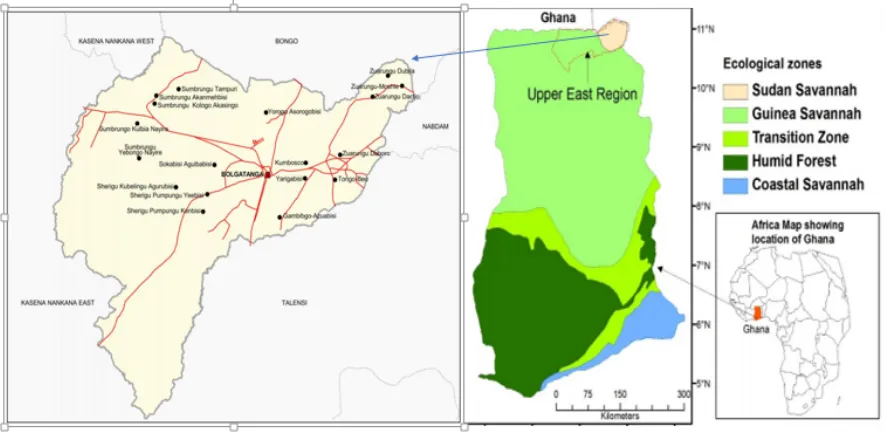
Bolgatanga is the regional capital as well as the administrative capital of the Upper East region (see figure 1). It is located within latitudes 10o30’ and 1o55’ North and longitudes 1o00’ West with a total land area of 1,620 km2 (Braimah et al., 2014). It shares boundaries up north with Bongo District, down south with Talensi District, to the east with Nabdam District and to the west with Kassena-Nankana East District (Braimah et al., 2014).
Figure 1: A Map of Bolgatanga Municipality
Source: Ghana Statistical Service, (2014)
Bolgatanga Municipality has three (3) Zonal Councils namely: Bolgatanga, Zuarungu and Sumbrungu-Sherigu Councils and 37 unit committees and electoral areas with two parliamentary candidates (GSS, 2014). There are 37 elected assembly members and 16 government appointed assembly members. Currently, only three assembly members are females with two elected and one government appointed.
usually high due to the low humidity (GSS, 2014). The region falls within the onchocerciasis and “Meningitis Belt” of Africa but has been declared a suitable place for farming and settlement by the UNDP (GSS, 2014).
Water Supply in the Bolgatanga Municipality
In general terms, surface water and groundwater sources are the main sources of water supply in Ghana (Gyasi et al., 2010). The surface water supply includes rivers, streams and lakes while the groundwater supply includes hand-dug wells, boreholes and pipe borne water (Gyasi et al., 2010). Critically, the water supply system in the urban areas and cities is quite different from the water supply system in the rural areas. While the households in the urban areas and cities rely mainly on a piped water supply system, the rural areas depend largely on boreholes and hand dug wells (GSS, 2014). This system is also true within the Bolgatanga Municipality, which consists of three urban areas and a considerable number of scattered villages and hamlets. Thus, households in the core of the three urban areas (Zuarungu, Sumbrungo and Bolgatanga) depend largely on piped water, supplied and managed by Ghana Water Company Limited. In contrast, households in the peri-urban areas depend on boreholes and hand-dug wells, as these areas are not yet connected to the piped water system. It is important to point out that in Zuarungu and Sumbrungo, there are Small Town Water Systems serving these two areas.
In rural areas, surface water (streams and rivers) and groundwater (borehole and hand-dug well) are the main sources of water to communities. Traditionally, communities in rural areas depended largely on surface water from streams and rivers, but there is a growing trend for more use of and reliance on borehole water in rural areas. This trend is, in part, due to the efforts of the government of Ghana led by Community Water and Sanitation Agency (CWSA) and the benevolence of NGOs and individuals, such that most villages in the Municipality now have boreholes. Evidence suggests that this trend, away from the use of surface water sources, has reduced the incidence of water-related diseases in the Municipality (IFAD, 2006). However, it also must be noted that, the villages are still vulnerable to water shortages and water-related diseases due to the vagaries of the weather. Given these seasonal changes in water source quality and availability, most households depend on a mix of surface and groundwater supply systems depending on the geographical location.
Sanitation in the Bolgatanga Municipality
In addition, some people within these communities resort to open defecation practices. This has remained a challenge in the Municipality, which is currently attracting attention from the government of Ghana led by the Ministry of Local Government and Rural Development and international bodies such as UNICEF (MWRWH & MLGRD, 2012). While this problem has been the main topic for discussion at various stakeholder meetings, open defecation is still widespread and is considered to be one of the major pollutant in water sources. As a result, policies are often designed to tackle water supply and sanitation situations simultaneously. This is evident when the Government of Ghana implemented a policy in 1993 aimed to ensure the sustainability of water and sanitation facilities provided through a demand responsive approach (Schäfer et al, 2009).
Approach
To assess and understand stakeholder perspectives around climate change threats and mainstreaming into WaSH policy, planning and implementation, we targeted 10 key stakeholders, from institutions responsible for water management, disaster preparedness, and environmental management from the Bolgatanga Municipality, for interviews using a semi-structured interview guide (see table 1)
Table 1: Institutions Interviewed
Municipal Assembly Staff
Heads of Departments Responsible for Water Resources Management and Sanitation Delivery
NGOs in WASH Delivery
• Municipal Budget Officer (MBO) • Municipal
Planning Officer (MPO)
• Ghana Water Company Limited (GWCL) • Community Water and Sanitation Agency
(CWSA)
• Water Resources Commission (WRC) • Environmental Health and Sanitation Unit
(EHSU)
• Environmental Protection Agency (EPA)
• National Disaster Management Organization (NADMO)
• Water Aid
• Water Vision Technology
3. Results
3.1 Stakeholder Views of WaSH in Bolgatanga Municipality
All 10 stakeholders indicated that water is available to both urban and rural households in the Bolgatanga Municipality. This implies that peri-urban and rural households travel only a short distance to access water compared to previously where they had to travel long distances to access water. On closer examination, stakeholders indicated that household members travel an average distance of 100-500 meters to access water. However, in some rural areas in the Municipality, household members still travel longer distances to access water, particularly in those communities that depend on surface water sources. This has implications for accessibility (and equality), quantity, quality and human health in the villages, as some households may be without the required quantity and quality of water, at least from time to time. In analysing such a situation, Howard & Bartram (2003), indicated that if one has to travel between 100 and 1000m ( or 5-30 minutes total collection time) to access water, then the access is basic and the quantity of water to be collected will be low (unlikely to exceed to 20 l/c/d) and that the level of health concern will be at medium and quality will be difficult to assure.
Though rural areas have less access to improved sanitation than communities in urban areas (Bolgatanga Municipal Assembly, 2015), one of the stakeholders emphasised that the whole Municipality is challenged with access to improved sanitation. This person’s view was that it is not simply a divide between rural and urban: unimproved sanitation is widespread and used by many people in the Municipality. The stakeholders also indicated that most households in the Municipality dispose of their solid waste at an open public dump side. Urban areas have big refuse bins placed for refuse collection while in the rural areas some households bury their refuse in a pit. The use of the open public dump sites is practiced more in the rural areas than urban areas probably due to the lack of availability of refuse containers in the rural areas. It has been estimated that only one in every 100 households have access to a refuse container (GSS, 2014). The other method of solid waste disposal mentioned is burning.
3.2 Stakeholder views of Climate Change in Bolgatanga Municipality
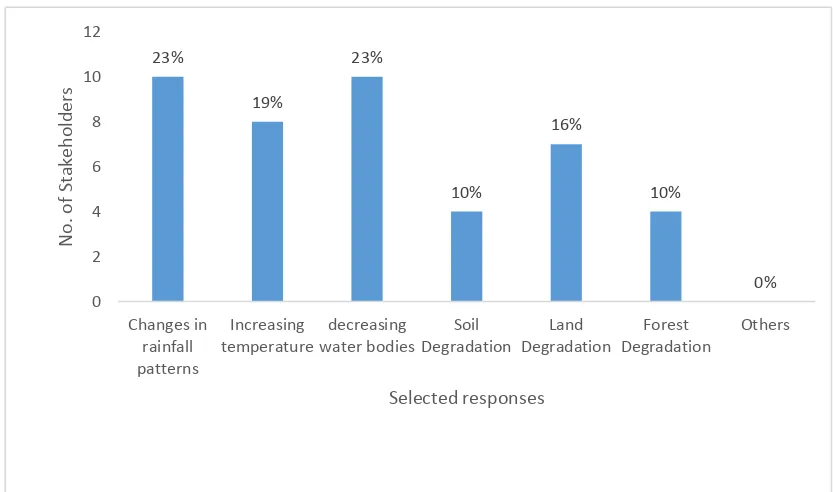
Figure 2: Perspectives on changing climatic conditions in the Bolgatanga Municipality, as indicated by interviewed stakeholders.
The stakeholders indicated that land, forest and soil degradation represent some significant climate-related stressors which have also been experienced over the past years (Figure 2). This confirms the assertion that the vulnerability of an area to climate change exigencies is due to a number of inter-related factors such as reliance on rain-fed agriculture, less-developed water resources, land degradation and weak institutions (World Bank, 2011).
3.3 Sensitivity of Water Resources to Climate Change
Tributaries of the White Volta Basin and the Sisili River drain the Bolgatanga Municipality. The Yarigatanga River catchment, a sub-basin of the White Volta Basin, is the main source of water supply to the urban households in the Municipality. Thus, the Vea Dam is used to store water for consumers in the Bolgatanga Municipality (Ofosu et al., 2014). Since the predominant sources of water in the basin are rainfall water, streams, rivers, lakes and groundwater (Megan, 2013), it is important to know how the current changes in the climatic condition of the Municipality may threaten these water bodies that replenish the White Volta Basin.
The stakeholders agreed that the surface water sources including rivers and streams are shrinking in size (Table 1), which in turns affects the water level in the Basin and in the Vea Dam. It was also revealed that the Red Volta and Sissili rivers, both tributaries of the White Volta River, dry up for approximately two months a year due to drought (Matthews, 2013).
23%
19%
23%
10%
16%
10%
0%
0 2 4 6 8 10 12
Changes in rainfall patterns
Increasing temperature
decreasing water bodies
Soil Degradation
Land Degradation
Forest Degradation
Others
No. of
Stakeholders
Table 1: The Impact of Climate Change on Water Resources
Stakeholders Responses Themes
Municipal
Planning Unit
Water sources drying up more than before and addition to climate change, dry season farming is also a contributory factor. 13 boreholes dried.
water drying up
Municipal
Budget Unit
Water sources drying up rapidly. water drying up
EPA Most of the rivers and dams that were hitherto not drying now dry up quickly. Farming activities along riverbanks and building in water ways.
water drying up
NADMO Some water bodies dry out during the dry season. Unplanned building structures and cultivation of crops.
water drying up
WRC Excessive variation between water availability during the dry season and rainy season.
water drying up
EHSU The water sources are now drying up quickly water drying up CWSA The high temperature being experienced are drying up
the water bodies.
water drying up
GWCL Water bodies are drying up. Groundwater is particularly more vulnerable.
water drying up
Water Vision
Technology
Both surface and underground water bodies are depleting.
depleting water bodies
Rural Aid
Reduced water levels especially during the dry season when water in the rivers and dams are used for dry season vegetable production.
water drying up
The stakeholders indicated that compounding the impacts of drought is the excessive use of water from rivers and streams for irrigation, particularly during the dry seasons (Table 1). The stakeholders mentioned that dry season farming is widespread in the Municipality, sometimes in response to the low crop yield during the major farming season. The stakeholders added that this is also a livelihood adaptation and coping mechanism that has been adopted by farmers in the Municipality, to diversify their activities and provide for their families. However, dry season farming is difficult and the only option is to farm along the rivers, using water from rivers for irrigation (Ghana News Agency, 2014). Sometimes these farming operations significantly alter the river channel, as ditches are dug into the riverbed and pumps are used to water farms situated at the riverbanks.
dried up and many more are becoming dysfunctional; this is widely attributed to the impacts of climate change. It was added that in the past it could take only forty (40) pumps to fill-up a 40 litre bucket, but with the current drought conditions, 60 pumps are now required. This supports the view that the groundwater table in the Municipality was dropping (Zango et al., 2014). The Rural Aid responded that more than half of water resources in the Municipality were not able to contain water all year round and this situation is expected to worsen further with climate change.
Beyond the impacts on water sources for WaSH, stakeholders also expressed the view that climate change is also impacting on food production, as farming is the channel through which climate change affects food security (UNDP-UNEP, 2011). This was evident when CWSA said in an interview that; “Once water bodies are drying up, this will have negative impact on irrigation practices and subsequently our effort towards achieving food security” (Bolgatanga CWSA, 2016)
What makes this problem particularly challenging is the fact that the majority of people in the Municipality are smallholder farmers who depend on small and medium-sized irrigation dams for farming, rearing of livestock and other domestic activities (Asante, 2009). As the population of the Municipality grows due to migration and natural growth, there will be corresponding growth in demand for food along with competition over land and water bodies that support farming enterprises. This competition will be intensified due to the climate change impacts on water resources in the Municipality. Social adaptation responses to the water security problem include changing livelihoods, such that farming people in the Municipality may resort to alternative livelihoods like charcoal production, sand weaning and petty trading. Another coping strategy is that many young people migrate to work as labourers with other farmers in the Southern part of Ghana, which receives more rains than the Northern part. Other youth have also migrated to the cities to engage in urban petty jobs.
3.4 The Sensitivity of Social infrastructure to Climate Change
Table 21: The Impact of Climate Change on Social Infrastructure
Stakeholders Responses Sub-themes Main issues
Municipal
Planning Unit
Most houses in the rural areas are built with mud and roofed with local materials. These buildings are easily destroyed when there are floods or heavy downpour
floods or heavy downpour issues • Floods • heavy downpours
• long dry spells Municipal
Budget Unit
there are reported cases of schools roofing sheet and sign boards been removed off by heavy windstorms
heavy windstorms issues EPA Most of the buildings in the area have their
roof been ripped off because of increase in wind speed and intensity. Flash floods also destroy homes
heavy wind speed and intensity and flash floods NADMO Flooding have become an annual ritual
affecting the municipality. Homes and schools in flood prone areas are affected anytime there are heavy downpours
flood issues
WRC high demand for water especially during dry season, affects the sustainability of social infrastructure such as water facilities
dry season issues
EHSU heavy windstorms destroy roof of some toilets in the municipality
heavy windstorm issues CWSA every year many households suffer
damages during floods
flood issues
GWCL most local houses are worn out by the excessive downpours and floods
flood issues
Water Vision Technology
social infrastructure such as schools, community health post and homes are in danger due to the changes in climate
climate change issues
Rural Aid Rural infrastructure especially houses made of mud and roofed with thatch are the most affected when there are heavy rains
3.5 Climate Change and Environment
It could be inferred from the participant responses that climate change has already had an immense impact on the environment in the Municipality. In general, the stakeholders indicated that impacts on ecosystems, including filthy environments, bushfires and deforestation are the environmental issues resulting from climate change in the Municipality. The stakeholders further stated that the impact of climate change on the natural ecosystem is of great concern. In addition, interviewees expressed the view that climate change had led to the rapid depletion of natural resources due to farming activities, overgrazing, improper solid and liquid waste disposals, illegal mining and other anthropogenic activities around the Volta Basin. As mentioned by one of the stakeholders,
“Due to the impact of climate change, people have turned to exploiting the ecosystem there by depleting natural resources” (Bolgatanga Municipal WRC, 2016)
In response to these changes and the growing threat of climate change, the White Volta Basin Authority has taken measures to protect the basin from bushfires, illegal logging and encroachment (WRC, 2008). These actions also reinforce the strong commitment through the SDGs, especially SDG target 6.6, which aims to protect and restore water-related ecosystems (Osborn et al., 2015). 3.5 Climate change Adaptation Initiatives in the Bolgatanga Municipality
Climate change is predicted to have severe consequences on all sectors of the economy, particularly in Africa (Fankhauser & Burton, 2011) because most livelihood activities in Africa are predicated on natural resources (Osman-Elasha & Downing, 2007). In addition, climate change has a direct impact on water resources and services for all economic, social and environmental functions that water supports (UNICEF, 2014). Climate change affects water resources in the forms of floods, drought and pollution. As stated by the stakeholders, the Bolgatanga Municipality has already experienced droughts and floods over the years and continues to be vulnerable to these water-related disasters. These events will affect the supply and delivery of water, sanitation and hygiene services. Significantly, the uncertainties of the climatic conditions will aggravate existing problems in the WaSH sector.
on awareness campaigns and adaptation strategies. In particular, GWCL and WRC have participated in climate change discussions that have focused on the impacts of climate change on water resources and climate adaptation measures such as riverbank restoration. This shows that these institutions have some basic knowledge of climate change, its impacts and risks, as well as some relevant adaptation and mitigation measures. It is, therefore, not surprsing that the stakeholders expressed a strong understanding of climate change. Indeed, they variously defined climate change as; inconsistencies in weather patterns over an observed period of time; changes in the weather conditions; the unpredictable variation in the weather pattern due to increased global temperature basically resulting from anthropogenic factors; rise in temperatures and the changes in the rainfall patterns among others.
3.6 Vulnerability Assessment
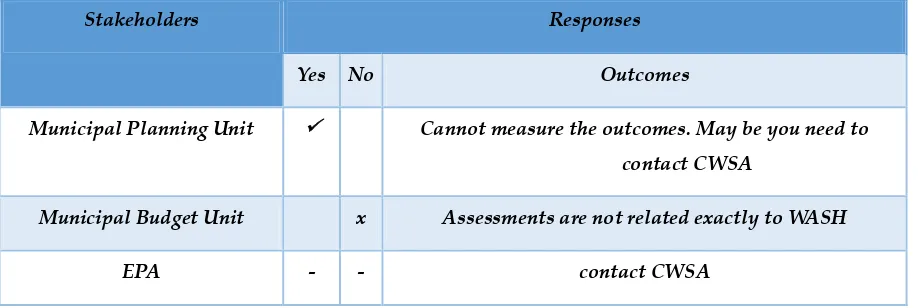
Climate change vulnerability assessments predict both the current and future effects of climate change, the vulnerabilities of communities and ecosystems to these effects, and the measures that support adaptation to all the impacts (GIZ, 2007). Climate change vulnerability assessment is crucial in designing adaptation measures, particularly in communities where livelihoods are predicated on natural resources such as water and ecosystem resources. The failure to undertake vulnerability assessments will affect capacities to adapt to climate change impacts. This is clearly the case in the Bolgatanga Municipality, as it is evident that vulnerability assessment and WASH delivery in the Municipality remains a great challenge. While some of the stakeholders indicated that climate change vulnerability has not been assessed, others are uncertain about whether this activity has been carried out (Table 3). They advised that departments directly involved in WASH activities should be contacted for further information on climate change vulnerability assessment. The stakeholders who agreed that climate change vulnerability assessment had been carried out, could not measure or articulate the outcome of the assessment (Table 3). This can be juxtaposed with Oates et al. (2011), who stated that integrating climate change adaptation into mainstream development policy at the local level is less of a priority than the National level initiatives. In a related way, UNDP-UNEP (2011), suggested that awareness and institutional capacity building are key entry points to begin climate change mainstreaming. It is important to note that support for institutional capacity, particularly for mainstreaming cross-cutting issues such as climate change, is yet to be achieved in the Bolgatanga Municipality.
Table 3: Vulnerability Assessment of Climate Change and WASH in the Municipality
Stakeholders Responses
Yes No Outcomes
Municipal Planning Unit Cannot measure the outcomes. May be you need to contact CWSA
Municipal Budget Unit x Assessments are not related exactly to WASH
NADMO The public now know the need to protect the environment
WRC Development of WASH strategic plan marketing for the municipality by an NGO. WRC have developed
an IWRM plan for the white Volta basin
EHSU - - I cannot be able to vividly mention whether there has
been any vulnerability assessment in the
municipality
CWSA - - contact NADMO
GWCL x
Water Vision Technology x
Rural Aid x
3.7 Adaptation Programmes and Projects
The main adaptation programmes cited by stakeholders included the opening of drainages, dredging and rehabilitation of dams, clean-up campaigns and use of drought resistant crops. These measures are implemented by the Bolgatanga Municipal Assembly in response to the current threats, including the impacts of climate change. In addition, the Environmental Protection Agency (EPA) has implemented related programmes of work which seek to diversify livelihoods from traditional agriculture to other ventures, restore riparian buffer zones and tree planting activities. Some of these activities, like riverbank restoration and riverbank alternative livelihood support are also undertaken, separately, by the Water Resources Commission (WRC). Despite these efforts towards addressing and adapting to climate change, there are still gaps to be addressed mainly because the programmes and projects lack proper coordination at the assembly level. While some stakeholders could not mention any adaptation measures put in place by the Municipal Assembly as a whole, others felt that coordination of these programmes at the assembly level was either poor or non-existent.
Questions regarding the resourcing of adaptation programmes revealed that the main source of funding for adaptation activities for the Municipal assembly were from the Internally Generated Funds (IGF), whereas funding for the decentralised departments and their activities were mostly from donor agencies. This leads to some lack of coordination in adaptation rersponse. For example, there was no alternative livelihood programme implemented by the Municipal Assembly to adapt to climate change, whereas programmes in this space were promoted by institutions such as WRC and EPA and mainly sponsored under development assistance.
3.8 Mainstreaming Adaptation Policies into WASH Development Planning
strengthening the capacity of institutions is critical to achieving successful mainstreaming of climate change adaptation issues into policy planning (Huq & Ayers 2008). . Interestingly, there is evidence of this strengthening occurring in Bolgatanga, with stakeholders who attended more climate change capacity building programmes indicating that they have begun to incorporate climate change adaptation measures into their planning processes. However, it is also important to note that some stakeholders are not fully aware of the adaptation measures being implemented – many of them said that the Municipal Assembly should be contacted regarding climate change adaptation issues. This might be attributed to a lack of institutional coordination and collaboration, particularly at the Municipal level. The risks associated with poorly coordinated approaches to adaptation are that maladaptive measures may be implemented, as the actions at one level might have negative consequences at other levels of the system.
Though institutional capacity is important for mainstreaming climate change adaptation into policy planning, it is not limited to only capacity building. It is also important to develop and strengthenthe structures for institutions to handle climate change issues. The necessary institutional arrangements required for mainstreaming climate change have not yet been implemented by the Municipal Assembly. In addition, it is clear that climate change issues are added to existing roles and responsibilities, as neither the Assembly nor the decentralised departments had a desk officer or focal person in charge of climate change issues.
The stakeholder from Water Vision Technology agreed with the assertion that climate change was absent in the budget and hence tried to differentiate between environmental concerns and climate change issues. The institution emphasised that it is hard to dissociate climate change adaptation measures from measures pursued to improve the environment and added that the difference depends on the reasons behind the development of these measures. Hence, adaptation measures are intended to mitigate particular impacts of climate change and increase resilience against some forms of vulnerabilities. On the other hand, environmental measures are targeted at tackling particular environmental issues such as land degradation, which may not be specifically caused by climate change. It is important to add that climate change is likely to make environmental problems worse, which in turn suggests that mainstreaming is still required.
Although some of the stakeholders indicated that they incorporate climate change into their action plans, there had not been any vulnerability assessment or impact assessment of these projects. There could be many reasons for this inaction. As indicated by the Planning Unit, the tree planting and public education on water pollution initiatives were not fully implemented because funds were not flowing regularly and this has slowed progress substantially. It was also revealed that there was no assessment to determine the impacts of these initiatives in the Municipality.
3.9 Mainstreaming Climate change: Challenges and Prospects in the Bolgatanga Municipality
A number of challenges regarding the mainstreaming of climate adaptation into WASH development planning were identified during the stakeholder interviews. These comprised the non-existence of institutional structures and constitutional support, lack of coordination and collaboration, inadequate information on the districts vulnerability to climate change, inadequate early warning system strategies and the trivializing of climate change issues. These challenges arise because different institutions are responsible for different aspects of the environment without proper institutional coordination at the decision making and policy implementation levels. All of these issues highlight how Ghana’s climate change adaptation behaviour is typical of a developing country with poor adaptive capacity and low political influence and will. Nevertheless, there has been a series of inter-institutional dialogues and discussions, often organised by external institutions including UNDP and Care International (Bussell, et al., 2014). These dialogues provide a common platform to discuss the impact of climate change in the Northern part of Ghana and represent an opportunity for building understanding and capacity and this is an important first step towards mainstreaming.
3.9.1 Limited information on the Municipality’s vulnerability to climate change effects
critical in enabling adaptation and building resilience (UNFCCC, 2006, IPCC, 2014). Without these processes, climate change adaptation actions become reactionary and not at all mainstreamed. 3.9.2 Non-existence of institutional structures and statutory support at the Municipal level
Establishing institutional structures is key in advancing the mainstreaming of climate change adaptation. In the NMTDPF, cross-cutting issues such as gender and disability have been identified, together with climate change, to be mainstreamed into the District Medium Term Development Plans (DMTDP). While gender and disability have been mainstreamed into the administrative structures of the Assembly, climate change is yet to receive such support. EHSU and CWSA suggested that the Municipal Assembly needs to have a climate change desk officer to promote and coordinate climate change issues. Furthermore, there has not been any statutory support for the mainstreaming of climate change and this is not only at the district levels but the National level as well (Water Aid, 2010). In the Bolgatanga Municipal Action Plans, there have been no specific funds allocated to support climate change adaptation programmes. This is, in part, due to the fact that the Assembly, by law, is not obliged to devote any funds to climate change. As a result, mainstreaming climate change issues into development planning is left as a choice in the Municipal development planning agenda. EHSU and CWSA contended that without a law obliging the District Assemblies to include climate change issues and threats, this will remain an issue for discussion without concrete actions to address it. The GWCL indicated that statutory support should be created to allow the district assemblies to commit a percentage of the District Assembly Common Fund (DACF) to fund climate change adaptation, just like the two percent allocation currently permissible for disability projects. GWCL added that unless this is done climate change issues will always be underestimated and will remain under resourced at the district level.
3.9.3 Inadequate early warning systems strategy
It is very important to share meteorological information, including climate change projections to communicate reliable information on weather conditions and threats. This is very relevant for monitoring specific climate change stressors such as floods and drought and enables the preparation of early warning measures necessary for households and farmers. An example of this comes from NADMO, who mentioned that every year, at the beginning of the rainy season, they sensitize communities in the Municipality about potential risks such as floods. This was confirmed by the Municipal Planning Unit in a similar claim that households are usually informed through announcements on radio stations particularly about the opening of the Bagre Dam Spillway in Burkina Faso, so that they can prepare against the potential risks.
3.9.4 Shifting the responsibility forclimate change issues
From the interviews, it could be inferred that for some stakeholders, climate change adaptation issues were viewed as someone else’s responsibility. It was common to record comments such as “contact Municipal Assembly”, “refer to Municipal Assembly” for information regarding climate change in the Municipality. This issue could be as a result of poor coordination and collaboration between departments in the Municipality. As Water Vision Technology puts it;
“Collaboration is only seen at review meetings and that is when we seem to share information to each other” (Water Vision Technology, 2016).
In contrast, the Water Resources Commission (WRC) emphasises the need for collaboration with other Ministries, Departments and Agencies as integrated water resources management affects various aspects of the society (WRC, 2008). It also emphasised the need for effective collaboration especially with key stakeholder in their operational areas.
Notwithstanding the challenges recounted above, there are prospects for incorporating climate change into WASH development planning in the Bolgatanga Municipal Assembly. From the view of the stakeholders, these prospects include capacity building, vulnerability assessments, environmental impact assessments and institutional reform to integrate and mainstream climate change adaptation.
3.9.5 Capacity Building
The understanding of climate change adaptation by policy makers is essential in mainstreaming these issues into programmes. The stakeholders indicated that there should be training programmes for all the staff in the Municipal Assembly and other non-state actors such as NGOs. This is required to build their capacity not only on issues relating to climate change but also around how to effectively integrate climate change adaptation into WASH development planning.
3.9.6 Vulnerability and Disaster Risk Assessments
Despite the recognition of extreme events and the threat that climate change poses, it is clear that vulnerability or disaster risk assessments in the Municipality have not been carried out. Most stakeholders emphasised the need to carry out a thorough vulnerability or disaster risk assessment, ahead of developing strategies to mainstream climate change adaptation into planning. In this regard, such an undertaking would underpin the design of policies that will reduce the impacts of disasters, pollution and destruction of WASH facilities.
3.9.6 Institutionalising Climate Change Adaptation within Governance Structures
been taken and to adopt one that will most likely be successful for achieving the climate change adaptation mainstreaming.
4. Discussion and Conclusion
4.1 The status of WaSH in Bolgatanga Municipality
Water supply, sanitation and hygiene delivery continue to remain a challenge in the Bolgatanga Municipality. At present, service provision can only be described as basic. Although water supply has improved in recent times, there remain growing concerns around the quality and quantity of water with extreme events, fueled by climate change, representing a huge challenge for the Municipality. In addition to the climate change pressures, the main sources of water in the Municipality are vulnerable to pollution mainly from farming activities around the White Volta Basin, open defecation and poor faecal management and siltation of the Vea Dam. These activities continue to represent a threat in the WaSH sector and they are exacerbated by the changes in climate. Despite the urgency and scale of these challenges, it is clear that the Municipality has weak responsive mechanisms. This is compounded by the lack of human, financial and socio-political capacity to adapt to these climate change exigencies.
4.2 Climate change adaptation initiatives
Adaptation initiatives identified by the stakeholders to be related to climate change adaptation included clean-up exercises, opening of blocked drainages, dredging and rehabilitation of dams, use of drought resistant crops, riparian buffer zone restoration, riverbank protection, diversification of livelihoods from traditional agriculture to other ventures. All of these measures have been reactive and have not been implemented on the basis of the Municipality’s prevailing and increasing vulnerability to floods and droughts.
The capacity of both governmental and non-governmental institutions to respond to climate change impacts and threats in Ghana remains weak. Though there have been several climate change capacity training programmes, there is no evidence of climate change mainstreaming in the Municipal Action Plan.
4.3 Challenges and Prospects
by external donors. There is a growing concern that the sustainability of these projects, or lack thereof, will become a problem after the sponsors have left. On the basis of suggestions from the key stakeholders in the WASH sector interviewed in this study, the following strategies are recommended to support the mainstreaming of climate change adaptation into WASH development planning for the Bolgatanga Municipality.
4.3.1 Capacity Building
As indicated by Huq and Ayers, (2008) the mainstreaming process should begin with building awareness and capacities of all stakeholders involved in the management of resources in the municipality. Therefore, it is recommended that the local government should organise training sessions on climate change adaptation for Municipal Assembly staff, decentralised departments, NGOs and community elders. Through these training workshops, stakeholders will be trained on how to effectively mainstream climate change issues at the local levels which are then harmonised and coordinated at the regional level and up into the National plans i.e. the NMTDPF. This will ensure a move away from the traditional top-down approach to the mainstreaming of cross-cutting issues including climate change.
4.3.2 Institutionalising and coordination of climate change
There are currently virtually no structures put in place to mainstream climate change and mainstreaming cannot take place in an institutional vacuum. Therefore, it is recommended that administrative and governance structures through the Ministry of Local Government and Rural Development (MLGRD) should create desk offices for climate change particularly at the district levels that will be in-charge of integrating and coordinating climate change adaptation issues across all sectors of the Assembly. The desk officers will ensure effective collaboration between the various stakeholders including governmental, non-governmental and decentralised departments.
4.3.3 Legislative support for mainstreaming climate change
At the National level, climate change has been incorporated into the National development policy. The approach to this incorporation has been top-down in nature and at the local level, there is no legislative support for mainstreaming climate change. Therefore, it is recommended that the government, through legislation, should oblige MMDAs to allocate a certain percentage of their revenue or the DACF to fund climate adaptation initiatives.
4.3.4 Establishing Early Warning Systems and Disaster Risk Readiness
4.3.5 Integrating participatory approach to development planning
To reduce local vulnerability participatory approaches are required, as this enables the identification and selection of appropriate adaptation measures (GIZ, 2012). This approach contextualises and complements the development of policies from a bottom-up perspective. To address this, MMDAs should adopt a participatory approach which will ensure that indigenous knowledge regarding climate change impacts are captured and integrated into WASH development planning. Ultimately, the sustainability of WASH services and infrastructure in Bolgatanga Municipality will rely on the mainstreaming of climate change adaptation and greater shared understanding of the challenges that lie ahead.
4.4 Moving towards mainstreaming
There are two ways of mainstreaming adaptation processes, namely: 1. an autonomous process of adaptation, and 2. adaptation through planning (Schipper et al., 2010). For the autonomous process, two aspects of climate change are considered: adaptation and mitigation (Barker, 2007). In this study, the emphasis is on the adaptation element. Easterling et al., (2004) and Barker, (2007) described adaptation to be either reactive or proactive. In this regard, adaptation is controlled by the characteristics of the system’s vulnerability. In addition, vulnerability is also a function of the system’s adaptive capacity, sensitivity and exposure.
Source: Authors construct, (2016)
WaSH development planning is a decision-making process involving a wide range of activities, at different institutional scales and across different developmental stages (Figure 2). At the National level, planning comprises policy formulation, development of National policies such as the Ghana Shared Growth Development Agenda (GSGDA) prepared by the National Development Planning Commission (NDPC), preparation of National budget by the Ministry of Finance and Economic Planning (MoFEP) and preparation of other sectors plans and budgets. Similarly, work plans prepared by the districts are coordinated at the regional level in a manner that will ensure they are well-matched with National policy guidelines. Work plans at the district level are also developed to
SUSTAINABLE
WASH
DEVELOPMENT
CLIMATE CHANGE IMPACTS
e.g. floods, droughts etc.
ADAPTATION MITIGATION
VULNERABILITY
ADAPTIVE
CAPACITY
EXPOSURE SENSITIVITY
Characteristics of a
system e.g. arid or MAINSTREAMING
ADAPTATION
NATIONAL LEVEL
National policy
frameworks
REGIONAL LEVEL
Coordination and
DISTRICT/MUNICIPAL
LEVEL
District/Municipal level
RESOURCES;
Human, social,
natural, financial,
Characteristics of a
system e.g. water,
Anticipatory
adaptation
fit into the NDPC guidelines. With procedures provided by the Secretariat of the District Assembly Common Fund, the district composite budgets are developed (Bolgatanga Municipal Assembly, 2014). The process of mainstreaming includes the integration of climate change adaptation issues into WaSH sector policies, plans and budgets at these National and municipal levels (Lebel et al., 2012). Once this has been achieved, the coordination and harmonization processes will need to take place at the regional level. To this end, the black arrows and lines in the conceptual model shows the relationship between policy at multiple levels and adaptation actions and how mainstreaming these policies will support better adaptation outcomes (more anticipatory actions shown in bigger box).
4.5 Conclusion
Climate change adaptation strategies are yet to be mainstreamed into the development plan of the Bolgatanga Municipality, even though climate change is clearly one of the most threatening and cross-cutting issues in the Municipality. Our research has highlighted the views of stakeholders, which suggests that the Municipality’s vulnerability to climate change is recognized as being high, while its adaptive capacity remains low. Further to this, most adaptive initiatives that have been executed to date have targeted environmental problems rather than climate change threats, per se. As a result, the Municipality’s strategy to combat climate change has been reactive and focused on non-climatic threats. These approaches have come at the expense of efforts to mainstream climate change adaptation at the Municipality’s level.
The reasons for the lack of mainstreaming at present include lack of institutional capacity, lack of institutional coordination and collaboration, no statutory support for mainstreaming climate adaptation, inadequate knowledge on climate change and its stressors/hazards. As a result, the current WASH development planning process in the Municipality cannot readily ensure adaptability, which is essential for climate change adaptation. Notwithstanding these challenges, the Municipality has prospects for mainstreaming climate adaptation into development planning. For example, there is a wealth of indigenous knowledge on climate, including extreme events, which is not yet exploited. There remains an opportunity to influence the yet to be finalised Medium Term Development Plan (MTDP) for the Municipal Assembly to ensure that climate change adaptation and WASH issues are mainstreamed to achieve a wide range of development objectives. Learning from recent experiences around mainstreaming gender and disability issues into planning processes, an optimistic view should be taken towards mainstreaming climate change into Ghana’s planning policies in the near future. Successful mainstreaming of climate change will also support improved outcomes across multiple sectors as well as achievement of the sustainable development goals.
Acknowledgments:
I would like to thank AUSAID for offering me this scholarship to study in Australia. Many thanks to IWC educational team especially Dr Brian McIntosh, Mr Peter Wegener, Dr Karen Benn and everyone at IWC.
I would also like to thank the staff of the Bolgatanga Municipal Assembly, WRC, GWCL, CWSA, EPA, EHSU, NADMO and Water Vision Technology who took time off their busy schedule to respond to the range of questions asked.
Interview Guide for Municipal Assembly Staff, Heads of Departments/Agencies and NGOs
MAINSTREAMING CLIMATE CHANGE ADAPTATION INTO THE WASH SECTOR PLANS FOR SUSTAINABLE DEVELOPMENT IN THE BOLGATANGA MUNICIPALITY
Date of Interview: ... Contact number ………..
Section A: Current State of Water supply, Sanitation and Hygiene in Bolgatanga Municipality
1. What are the main sources of water supply in the
Municipality?………. 2. Is water available to people’s homes? How far do some people have to go get
water?... 3. Do any of the water sources in the municipality dry out? If yes, when and for how long?...
a. Are the available water sources of sufficient quality for
drinking?... b. Are some of the water sources more polluted or contaminated than
others?... 4. What are the issues (threats/pressures) relating to water quantity and quality for people?
………
5. What types of sanitation are used by people in the Municipality?... 6. Are there areas or group of people that do not have adequate access to improved
sanitation?... 7. What is the normal practice of solid waste disposal for the affected population?
a. Refuse pit? b. Public dump? c. Bins?
d. Others?……… Section B: Vulnerability of the Municipality to Climate Change
1. What are some of the changes the Municipality experienced since the past ten years? (Use the following as prompts)
a. Rainfall patterns? (Droughts, floods and disease outbreak) b. Temperature?
c. Water bodies? (Rivers, streams, dams etc.) d. Soil Degradation?
e. Land Degradation? f. Forest Degradation?
g. Others?... 2. Describe the impact of climate change on the following in your municipality;
e. The environment... Section C: Adaptation Initiatives
1. Within the last four (4) years, have you attended any programme on climate change?...
a. If yes, how many programmes?... b. Briefly state what you have learnt from the programme(s)?... 2. What is your understanding regarding climate change?... 3. Has there been any assessment of the vulnerability of climate change and WASH in the
Municipality?... a. If yes, briefly state the outcomes/findings (ask for a copy if available)………… b. If no, explain why?... 4. Does the municipality have a disaster risk reduction (e.g. flood? Draught? Or disease
outbreak?) strategy?...
a. If yes, briefly describe the strategy (ask for a copy if available)……… 5. What adaptation programmes and projects have been put in place by the Municipal
Assembly over the past years (may be 5 years or more)?...
6. Are there other programmes and projects that have been carried out by other organisation other than the Municipal Assembly?...
Organisation Focus area Adaptation initiatives Duration of
programme/project 1.
2.
7. Were the initiatives coordinated by the assembly? If yes, how was it
coordinated?………..
8. Are there any funds allocated for tackling climate change threats as and when they occur? Could you please mention
examples?... Section D. Mainstreaming of Adaptation Policies
1. Do you incorporate climate change issues in Water resources management in the Municipal Medium Term Development Plan? What climate change issues have been captured in the Municipal Development
Plans?... a. If yes, could you please give examples? (Ask for the copy of MMTDP if
available)……… b. If no, give reasons
why?... 2. Describe the funding arrangements for these initiatives……….……. 3. Has the initiative been fully implemented? What percentage? Could you explain
4. Has the initiative had any effect on the vulnerability level of the
Municipality?... 5. Could you please mention the challenges and prospects for mainstreaming climate change
into development planning in the municipality?...
a. So far what has worked well?... b. Could you explain why things worked well……….. c. So far what has not
well?... d. Could you explain why things did not work well?... e. What measures needs to be put in place?... Reference
African Development Bank. (2000). African Development Bank African Development Fund Policy for Integrated Water Resources, (March).
Asante, K. (2009).Assessing the Potential Impacts of Climate change on Irrigation Water Use in the Upper East Region of Ghana; A Case Study of Vea and Tono irrigation dams.MSc Thesis, Water Resources Engineering and Management, Civil Engineering Department, KNUST, Ghana. 13 -55pp.
Atanga, A. R. (2013). Mainstreaming Climate Change Adaptation into Development Planning for Sustainable Development in the Kassena-Nankana West District, 148.
http://doi.org/10.1017/CBO9781107415324.004
Barker, T. (2007). Climate Change 2007 : An Assessment of the Intergovernmental Panel on Climate Change. Change, 446(November), 12–17. http://doi.org/10.1256/004316502320517344
Berg, B. L. (2001). Qualitative research methods for the social sciences. Qualitative Research (Vol. Seventh Ed). http://doi.org/10.2307/1317652
Bhattacherjee, A. (2012). Social Science Research: principles, methods, and practices. Health research policy and systems / BioMed Central (Vol. 9). http://doi.org/10.1186/1478-4505-9-2
Bolgatanga Municipal Assembly. (2015). REPUBLIC OF GHANA THE COMPOSITE BUDGET Of the BOLGATANGA MUNICIPAL ASSEMBLY For the 2015 FISCAL YEAR, 0–60.
Biswas, A. K., Varis, O. & Tortajada, C. (2005). Integrated water resources management in south and south-east Asia. Oxford University Press, New Delhi, 2005.
Biswas, A. K. (2008). Integrated water resources management: is it working? Water Resources Development 24 (1), 5–22.
Braimah, M. M., Abdul-rahaman, I., Sekyere, D. O.-, Momori, P. H., Abdul-mohammed, A., & Dordah, G. A. (2014). International Journal of Pure & Applied Bioscience A Study into the Causes of Floods and its Socio-economic Effects on the People of Sawaba in the Bolgatanga Municipality , Upper East , Ghana, 2(1), 189–195.
http://doi.org/10.1191/1478088706qp063oa
Bussell, J., Colligan, A., Agnihotri, Z. C., Koob, A., & Wald, R. (2014). Institutional Capacity for Natural Disaster: Case studies in Africa, (May), 216.
Creswell, J. W. (2009). Research Design: Qualitative, Quantitative and Mixed Approaches. Research Design: Qualitative, Quantitative, and Mixed Methods Approaches. http://doi.org/10.2307/1523157 DARA. (2013). Risk Reduction Index in West Africa, (September), 181–204.
Füssel, H. M. (2007). Vulnerability: A generally applicable conceptual framework for climate change research. Global Environmental Change, 17(2), 155–167.
http://doi.org/10.1016/j.gloenvcha.2006.05.002
Easterling, W. E., Hurd, B. H., & Smith, J. B. (2004). Coping with global climate change: The role of adaptation in the United States. Occupational Medicine (Oxford, England), 61, 1–40.
http://doi.org/10.1093/occmed/kqr050
Füssel, H.-M. (2010). REVIEW AND QUANTITATIVE ANALYSIS OF INDICES OF CLIMATE CHANGE EXPOSURE, ADAPTIVE CAPACITY, SENSITIVITY, AND IMPACTS. North. GIZ. (2007). Vulnerability assessments: Experiences of GIZ with Vulnerability Assessments at the
local level. GIZ, 85–107. http://doi.org/10.1016/B978-012370897-7/50008-6
GIZ. (2012). Mainstreaming Climate Change Adaptation in National Policies, Strategies and Action Plans, 59.
GSS. (2014). 2010 Population and Housing Census, District Analytical report.
Gyasi, O., Schiffer, E., & Mccarthy, N. (2010). Community Needs Assessment and Local Water Governance Appraisal in the Upper East Region , Draft Report.
Hadwen, W.L., MacDonald, M.C., Kearton, A., Elliott, M., Chan, T. and Shields, K. (2016) Developing climate resilient WaSH in the Pacific. Final Report and Adaptation
Decision Making Framework from the DFAT-funded PACCWASH Project. 80pp. Brisbane, Australia.
Hadwen, W. L., Powell, B., MacDonald, M. C., Elliott, M., Chan, T., Gernjak, W., & Aalbersberg, W. G. L. (2015). Putting WASH in the water cycle: climate change, water resources and the future of water, sanitation and hygiene challenges in Pacific Island Countries. Journal of Water, Sanitation and Hygiene for Development, 5(2), 183. http://doi.org/10.2166/washdev.2015.133 Howard, G., & Bartram, J. (2003). Domestic Water Quantity , Service Level and Health. World Health Organization, 39. http://doi.org/10.1128/JB.187.23.8156
Huq, S., & Ayers, J. (2008). Taking steps: mainstreaming national adaptation. Iied. Retrieved from http://pubs.iied.org/pdfs/17040IIED.pdf
http://www.ifad.org/evaluation/public_html/eksyst/doc/prj/region/pa/ghana/gh_lacos.pdf IPCC (2007). Impact, Adaptation and Vulnerability. Contribution of Working Group II to the
Fourth Assessment Report of the Intergovernmental panel on Climate Change. Cambridge
IPCC. (2014). Summary for Policy Makers. Climate Change 2014: Impacts, Adaptation and Vulnerability - Contributions of the Working Group II to the Fifth Assessment Report, 1–32.
http://doi.org/10.1016/j.renene.2009.11.012
Lebel, L., Li, L., Krittasudthacheewa, C., Juntopas, M., Vijitpan, T., Uchiyama, T., & Krawanchid, D. (2012). Mainstreaming climate change adaptation into development planning. Bangkok: Adaptation Knowledge Platform and Stockholm Environment Institute, 8. Retrieved from http://www.indiaenvironmentportal.org.in/files/file/mainstreaming climate
change_2.pdf\npapers3://publication/uuid/DCEA35B4-9D82-47D7-AD91-2C1B1D825A3A Marshall, C., & Rossman, G. B. (2011). Designing qualitative research (5th ed., Vol. 40, p. 321).
SAGE.
Matthews, M. (2013). The Volta Convention: An Effective Tool for Transboundary Water Resource Management in an Era of Impending Climate Change and Devastating Natural Disasters? Ministry of Environment Science and Technology (2010). Ghana Goes for Green Growth;
National engagement on climate change. Ministry of Environment, Science and Technology, Republic of Ghana, November 2010.
MWRWH & MLGRD. (2012). National Strategy for Community Participation in Management of Urban Wash Services. Journal of Chemical Information and Modeling (Vol. 53).
National Disaster Management Organization-Upper East Region (2008). Annual Report. Bolgatanga. National Disaster Management Organization-Upper East Region (2010). Annual Report. Bolgatanga. Nelson, W., & Agbey, S. N. D. (2005). in the context of Climate Change mean the risk that Climate
Change will cause a decline in the well being of poor people and poor countries . This means the degree to which a system is susceptible to , or unable to cope with , adverse effects of climate c, 19.
Ninkuu, M., Adetunde, L., Nsoh, A., Guri, M., & Asare, A. (2015). Assessment of Bacteriological Quality of Tono and Vea Dams Water in the Upper East Region, Ghana. British Microbiology Research Journal, 7(1), 10–17. http://doi.org/10.9734/BMRJ/2015/14746
Oates N., D. Conway and R. Calow (2011). The ‘mainstreaming’ approach to climate change adaptation: insights from Ethiopia’s water sector. Background Note. Overseas Development Institute.
Ofosu, E. A., Zaag, P. Van Der, Giesen, N. Van De, Odai, S. N., & Amanor, R. (2014). Analysis of Upscaling of Irrigation Development in the White Volta sub-Basin. Jenrm, I(1), 36–43.
Understanding the transformational challenge for developed countries. Universal Sustainable Development Goals, (May), 1–24. Retrieved from
https://sustainabledevelopment.un.org/index.php?page=view&type=400&nr=1684&menu=35 Osman-Elasha, B., & Downing, T. (2007). Lessons Learned in Preparing National Adaptation
Programmes of Action in Eastern and Southern Africa.
Schäfer, A. I., Rossiter, H. M. A., Owusu, P. A., Richards, B. S., & Awuah, E. (2009). Physico-chemical water quality in Ghana: Prospects for water supply technology implementation. Desalination, 248(1-3), 193–203. http://doi.org/10.1016/j.desal.2008.05.055
Schipper, L., Liu, W., Krawanchid, D., & Chanthy, S. (2010). Review of climate change adaptation methods and tools. MRC Technical Paper, (34), 86.
UNDP. (2012). Mainstreaming Climate Change in National Development Processes and UN Country Programming Mainstreaming Climate Change in National Development Processes and UN Country Programming.
UNDP-UNEP Poverty-Environment Initiative. (2011). Mainstreaming Climate Change Adaptation into Development Planning: A Guide for Practitioners, 1–86.
UNEP-UNDP. (2012). National Climate Change Adaptation Strategy, (May, 2011).
UNFCCC. (2006). United Nations Framework Convention on Climate Change Handbook. (D. B. and N. Meyer-Ohlendorf, C. Schlosser-Allera, & P. Steel, Eds.)Journal of Chemical Information and Modeling (Vol. 53). Bonn: UNFCCC. http://doi.org/10.1017/CBO9781107415324.004 UNICEF/GWP. (2015). WASH Climate Resilient Development, 27.
http://doi.org/http://www.unicef.org/wash/files/Strategic_Framework_WEB.PDF
UNICEF/WHO. (2008). A Snapshot of Drinking Water and Sanitation in Africa, 1–20. Retrieved from
http://www.wssinfo.org/fileadmin/user_upload/resources/1251454622-A_Snapshot_of_Drinking_Water_in_Africa_Eng.pdf
Urama, K. C., & Ozor, N. (2010). IMPACTS OF CLIMATE CHANGE ON WATER RESOURCES IN AFRICA : the Role of Adaptation, (December), 1–29.
Water Aid. (2010). WaterAid in Ghana Country Strategy 2010-2015. Accra. Retrieved from file:///C:/Users/jcslmft/Downloads/WaterAid-uganda-country-strategy-2011-2016.pdf WHO, (2013). World Health Statistics 2013. World Health Organization, Geneva, Switzerland. WHO/UNICEF. (2010). World Health Organization and UNICEF 2010. World Health Organisation,
1(October 2004), 60. Retrieved from
http://whqlibdoc.who.int/publications/2010/9789241563956_eng_full_text.pdf WHO/UNICEF. (2012). D inking Water. Update. http://doi.org/978-924-1503279 World Bank Group. (2011). Disaster Risk Management Programs for Priority Countries.
WSP. (2015). Water Supply and Sanitation in Ghana:Turning Finance into Services for 2015 and Beyond, 32.
Yaro, J. A. (2010). The Social Dimensions of Adaptation to Climate Change in Ghana The Social Dimensions of Adaptation to Climate Change in Ghana. Environment, (decemBer).