
Genetic analysis of a plasmid encoding haemocin production in Haemophilus paragallinarum
8
0
0
Full text
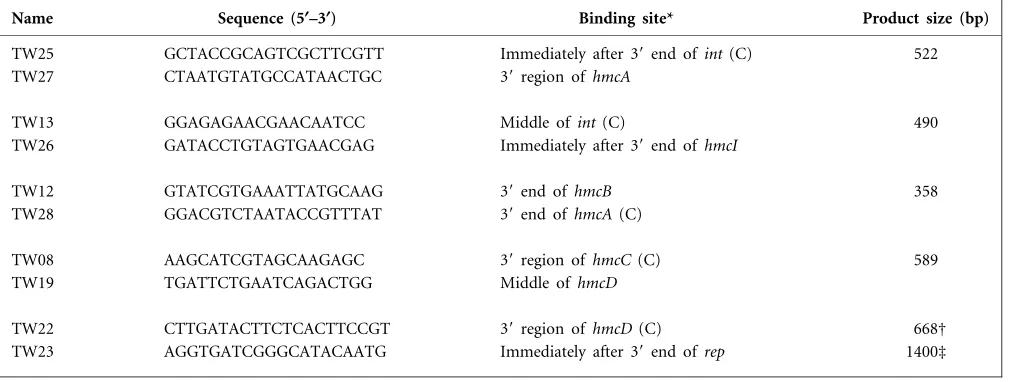
(2) T. D. Terry and others pLO1 (Lenz et al., 1994). DH5alpir, a lysogen of DH5a containing the pir gene of plasmid R6K, was the host for transformations of plasmid pCVD442 (Donnenberg & Kaper, 1991), which contains the R6K replicon. The H. paragallinarum strains used in this study are listed in Table 3; the other avian bacteria used are listed in Table 4. All the bacteria of avian origin used in this study were obtained from the culture collection at the Animal Research Institute, Brisbane, Australia. The panel of 11 Gram-positive commensal bacteria (Table 4) was isolated from the sinus cavity of healthy chickens; all other isolates were obtained from chickens suffering respiratory disease. The bacteria of avian origin, including the H. paragallinarum strains, were cultured in Test medium supplemented with chicken serum and reduced NAD (TM/SN) (Reid & Blackall, 1987), either in liquid culture or on agar plates made with the addition of 15 g agar l21. DNA techniques. Restriction and DNA modification enzymes were purchased from New England Biolabs. Taq polymerase for PCR was purchased from Fisher Biotech. Molecular biology methods were as described in Sambrook et al. (1989). DNA sequencing, analysis and annotation of plasmid p250.. A 1?7 kb HindIII fragment of p250 and a 4?2 kb PstI/EcoRV fragment were cloned into pUC19 and sequenced using universal M13 forward and reverse primers. Oligonucleotides were designed at the ends of the cloned fragments. Initially, purified plasmid p250 was used as a template in further sequencing reactions. However, the quality of sequence data obtained was very poor so the oligonucleotide primers were used to amplify the sections of the plasmid from a midiprep (Qiagen) of plasmid p250, and the PCR product was used as the sequencing template. For each sequencing reaction, three PCRs were pooled in order to minimize the effect of Taq errors on sequence accuracy. After each round of sequencing, new primers were designed until a complete double-stranded sequence of the plasmid was obtained. ABI Prism Big Dye Primer Cycle Sequencing Ready Reaction with AmpliTaq DNA polymerase FS9 (PE Applied Biosystems) was used for DNA sequencing. Following 2-propanol precipitation, samples were sent to the Australian Genome Research Facility (AGRF) for automated sequencing using an ABI 373A automatic sequencer (PE Applied Biosystems).. Sequence data were aligned in Sequencher (Gene Codes Corporation) and annotated using MacVector version 7.0 (Accelrys Inc.). ORFs were identified using MacVector and gene identities assigned using searches against the nucleotide and protein databases at NCBI using the tBLAST-n algorithm (Altschul et al., 1997). Similarity between ORFs was calculated using BLAST analysis of two sequences with filters off. Southern blotting. Bacterial genomic DNA was isolated as des-. cribed by Ausubel et al. (1994). Restriction endonuclease (HindIII)digested genomic DNA was separated on 0?7 % agarose gels and transferred to GeneScreen Hybridization Transfer membrane (NEN Life Science Products) by capillary action essentially as described in Sambrook et al. (1989). A DNA fragment including the hmcI gene was amplified from p250 using primers TW25 and TW27 (Table 1). Blots were hybridized with the digoxigenin (DIG)-labelled PCR product for 16 h at 65 uC. Washes and detection were carried out (using the DIG DNA Labelling and Detection Kit, Roche) as recommended by the manufacturer. Conjugation of plasmids into H. paragallinarum. A sponta-. neous nalidixic-acid-resistant mutant of H. paragallinarum strain 221, termed 221Nal, was isolated by plating an overnight liquid culture onto TM/SN plates containing 5 mg nalidixic acid ml21. A 4 kb EcoRV/PstI fragment of p250 was cloned into the EcoRV and PstI sites of plasmid pLO1, generating plasmid pLO1/5E. H. paragallinarum 221Nal and E. coli S17.1lpir/pLO1/5E were grown to mid-exponential phase in supplemented TM/SN broth containing 5 mg nalidixic acid ml21 and LB supplemented with 50 mg kanamycin ml21 respectively. One millilitre of each culture was centrifuged at 8000 g, the supernatant removed and cells washed in 1 ml 10 mM MgSO4, before being resuspended in a final volume of 300 ml of 10 mM MgSO4. 221Nal cells (100 ml) were mixed with 30 ml of S17.1lpir/pLO1/5E or 30 ml of 10 mM MgSO4. Each mix was pipetted onto a TM/SN plate, and the plates were briefly airdried. Plates were incubated overnight at 37 uC in 5 % CO2. Cells were scraped off into 1 ml TM/SN and serial dilutions were plated on TM/SN plates containing 5 mg nalidixic acid ml21 and 50 mg kanamycin ml21. Plates were incubated for 24–36 h at 37 uC in 5 % CO2. Kanamycin- and nalidixic-acid-resistant colonies were subcultured once and then used to set up 10 ml overnight broth. Table 1. Oligonucleotide primer pairs used in PCR Name. Sequence (5§–3§). Binding site*. Product size (bp). TW25 TW27. GCTACCGCAGTCGCTTCGTT CTAATGTATGCCATAACTGC. Immediately after 39 end of int (C) 39 region of hmcA. 522. TW13 TW26. GGAGAGAACGAACAATCC GATACCTGTAGTGAACGAG. Middle of int (C) Immediately after 39 end of hmcI. 490. TW12 TW28. GTATCGTGAAATTATGCAAG GGACGTCTAATACCGTTTAT. 39 end of hmcB 39 end of hmcA (C). 358. TW08 TW19. AAGCATCGTAGCAAGAGC TGATTCTGAATCAGACTGG. 39 region of hmcC (C) Middle of hmcD. 589. TW22 TW23. CTTGATACTTCTCACTTCCGT AGGTGATCGGGCATACAATG. 39 region of hmcD (C) Immediately after 39 end of rep. 668D 1400d. *(C), binds to reverse strand. DProduct from strain HP250. dProduct from all other haemocin-producing strains. 3178. Microbiology 149.
(3) Haemophilus paragallinarum haemocins cultures in supplemented TMB containing 5 mg nalidixic acid ml21 and 50 mg kanamycin ml21. Plasmids were extracted from the overnight culture using a miniprep method (Sambrook et al., 1989) and digested with PstI and HindIII. An H. paragallinarum-specific PCR (Chen et al., 1996) was used to confirm that the cells harbouring plasmids were H. paragallinarum. Haemocin production and susceptibility assays. E. coli strains. and bacterial strains of avian origin were grown to mid-exponential phase in LB and TM/SN broth respectively. Confluent lawns of strains were made by pouring 1, 10 or 100 ml of culture in 4 ml of TM/SN top agar (0?7 %) at 42 uC onto TM/SN plates. After cooling, 5 ml of culture or filter-sterilized (0?22 mm filter) culture supernatant was spotted onto the lawn and allowed to dry. After overnight incubation at 37 uC in 5 % CO2, the agar plates were examined for clear zones around the test strains, indicative of haemocin production. Haemocin activity was scored as follows: no killing (2) (resistant); lighter zone of test strain around H. paragallinarum culture (+) (sensitive); inhibition of growth of test strain of <1 mm (++) (sensitive); inhibition>1 mm (+++) (highly sensitive). Sterile culture supernatants were treated with proteinase K (1 mg ml21) at 37 uC for 1?5 h. To test if the haemocin protein was heat stable, sterile culture supernatants were incubated at 37, 48 or 65 uC for 1?5 h or boiled for 20 min. Partial purification of haemocin. Strain HP250 was inoculated. into 3 ml TM/SN broth and grown for 8 h; then the culture was added to 400 ml TM/SN broth and incubated at 37 uC with shaking overnight. Cells were pelleted by centrifugation for 10 min at 2700 g, and the haemocin was partially purified exactly as described by Venezia et al. (1977). Haemocin extracts were loaded onto 4–20 % Nu-PAGE Novex Bistris gels (Invitrogen) in MES buffer. SeeBlue Pre-Stained protein standards (Invitrogen) were included on the gel. An overlay assay was used to locate the haemocin protein on the gel. Gels were fixed in 50 % methanol, washed for 1 h in distilled water and placed on a 10 cm diameter LB agar plate containing 50 mg streptomycin ml21. An overlay consisting of 6 ml LB top agar (0?7 % agar, 42 uC) containing 50 mg streptomycin ml21 and 30 ml of a 0?5 OD600 culture of S17.1lpir cells was poured over the gel and allowed to set. Plates were incubated overnight at 37 uC.. RESULTS Sequence analysis and genetic organization of plasmid p250 The genetic map of plasmid p250 is shown in Fig. 1. The plasmid is 6286 bp in size and detailed analysis of the sequence revealed a haemocin operon (hmc), a putative integrase (int) and a putative replication (repB) protein (see Table 2). The haemocin operon is homologous to the H. influenzae haemocin operon (Murley et al., 1997, 1998) and contains the hmcDCBA and I genes, responsible for haemocin production, processing, export and immunity. Approximately 1 kb of DNA sequence obtained has no homology with any DNA or translated protein in the GenBank database. Two very small ORFs were found in this region (5986–6072, 29 aa long; 6035–6124, 30 aa) but these may not be functional. In addition, three direct repeats (22 bp each) and an inverted repeat (15 bp each) were identified in this region. The lack of large ORFs and the presence of inverted repeats suggests that the origin of replication for plasmid p250 may be located in this region. http://mic.sgmjournals.org. Fig. 1. Schematic map of plasmid p250 and construction of plasmid pLO1/5E. White arrows indicate putative ORFs, [] indicates direct repeats, AB indicates inverted repeats, ua indicates primer binding sites. The black arc inside the map marks the section in pLO1/5E derived from p250.. Physical characterization of the haemocin protein, HmcA The predicted H. paragallinarum HmcA protein is 90 aa in length and is highly similar (85 % identity/95 % similarity) to the Haemophilus influenzae HmcA protein (AAC46225). Murley et al. (1998) identified a putative double-glycine leader sequence characteristic of class II bacteriocin proteins (Havarstein et al., 1994; Klaenhammer, 1993) in H. influenzae HmcA. Whilst the H. influenzae and H. paragallinarum HmcA proteins closely match both the Grampositive and Gram-negative double-glycine leader sequence motifs (Michiels et al., 2001), the predicted leader sequence is 50 aa long, which is considerably longer than that of 3179.
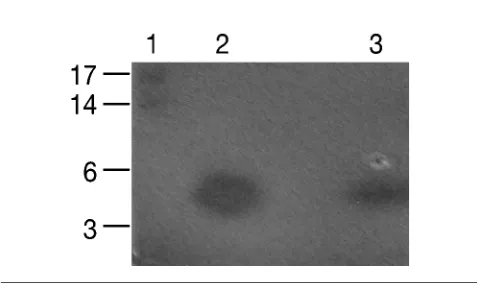
(4) T. D. Terry and others. Table 2. Summary of genes found on the p250 plasmid of H. paragallinarum Gene repB int hmcA* hmcBD hmcCd hmcD hmcI. Nearest homology. Protein accession no.. Putative function. Protein similarity (%). Protein size (aa/kDa). Mannheimia varigena Franciscella tularensis Haemophilus influenzae H. influenzae H. influenzae H. influenzae H. influenzae. CAC85833 AAD17308 AAC46225 AAC46224 AAC46223 AAC46222 AAC46221. Replication protein Integrase Structural protein ABC transporter Haemocin processing Unknown Immunity protein. 72 59 95 93 88 89 88. 326/38?8 293/33?7 90/9?7 235/27?2 198/22?7 292/33?7 104/12?5. *Full-length hmcA ORF, with ATG start codon. DStart codon ATG in H. influenzae, TTG in H. paragallinarum. dGTG start codon in both H. influenzae and H. paragallinarum.. other double-glycine leader sequences (typically 15–20 aa). Cleavage at this site results in a 40 aa mature protein. Analysis of the H. paragallinarum HmcA protein using SignalP (Nielsen et al., 1997) identified a conventional, 19 aa long, leader, resulting in a 71 aa mature protein. Partially purified haemocin was prepared from an HP250 culture supernatant and analysed by SDS-PAGE followed by an overlay assay to determine the location of the protein (Fig. 2). The active protein has an estimated molecular mass of 4?5 kDa, which closely corresponds to the predicted mass (4439?78 Da) for the 40 aa mature protein resulting from cleavage after the double glycine leader sequence. To test whether the haemocin agent was protein-based, H. paragallinarum culture supernatants were treated with Proteinase K. Haemocin function was eliminated, indicating that the haemocin activity is mediated by a protein. In common with other bacteriocins, the haemocin activity of sterile culture supernatants was retained after incubation at 37, 48 and 65 uC for 1?5 h and boiling for 20 min.. Fig. 2. MES-buffered SDS PAGE of the partially purified haemocin overlaid with a lawn of E. coli S17.1lpir showing zone of inhibition. Lane 1, Pre-stained standards (kDa); lane 2, 13 ml haemocin extract; lane 3, 2?5 ml haemocin extract. 3180. Haemocin production by H. paragallinarum strains A panel of strains, representing the reference strains for the Kume (Blackall et al., 1990a; Kume et al., 1983) and Page (Blackall et al., 1990b) serotyping schemes were tested for haemocin production (Table 3). Of the 11 reference strains tested, all produced haemocin except strain 221. Strain 221 was also found to be sensitive to killing by haemocin from strain HP250, indicating that 221 has neither the genes for haemocin production nor immunity. The lack of haemocin and immunity genes in strain 221 was confirmed by PCR and Southern blotting (Fig. 3). Southern blotting also confirmed that strain 221 did not contain the repB gene (data not shown). A panel of eight Australian field isolates of H. paragallinarum (selected to represent the known serological diversity present in Australian poultry) were all found to produce haemocins with the exception of isolate HP31 (Table 3). The lack of haemocin and immunity genes in HP31 was confirmed by PCR (data not shown) and the strain was found to be sensitive to killing by haemocin from strain HP250. When combined with the two Australian serovar reference strains (Table 3), we found nine of 10 Australian H. paragallinarum strains produce haemocin. In strain HP250, the haemocin genes are found on a plasmid. All the other haemocin-producing strains do not have plasmids, indicating that the genes are most probably chromosomally encoded. All of the 11 reference strains tested (Table 3) except 221 gave a 490 bp PCR product with primers TW13 and TW26 (which bind within and immediately after the end of the integrase gene respectively), a 358 bp product with primers TW12 and TW28 (which bind within hmcB and hmcA respectively), and a 589 bp product with primers TW08 and TW19 (which bind within hmcC and hmcD respectively) (data not shown). PCR using primers TW22 and TW23 (which bind within hmcD and immediately downstream of the putative replication protein respectively) gave a 668 bp product from purified p250 and strain HP250, but in the other 10 haemocin-producing Microbiology 149.
(5) Haemophilus paragallinarum haemocins. (a). 1 2 3 4 5 6 7 8 9 10 11 12 13 14 15. (b). 1. 2. 3. 1.6 kb 1.0 kb 6.1 kb. 0.5 kb. Fig. 3. (a) PCR amplification of H. paragallinarum strains using primers TW22 and TW23, binding hmcD and just outside the repB gene respectively. Lanes: 1, 1 kb ladder (Invitrogen); 2, negative control; 3, p250; 4, HP250; 5, 0083; 6, 0222; 7, Modesto; 8, HP14; 9, HP19; 10, 2403; 11, 221; 12, E-3C; 13, SA-3; 14, H-18; 15, 2671. (b) Southern blot of chromosomal DNA of H. paragallinarum strains 2403 (lane 1), 221 (lane 2) and E-3C (lane 3) digested with HindIII and probed with a digoxigenin-labelled PCR product containing the hmcI (immunity) gene.. strains a 1?4 kb fragment was obtained. This fragment was sequenced from strain 0083. The insertion consists of a 736 bp DNA sequence flanked by a 4 bp direct repeat. Table 3. Haemocin activity in H. paragallinarum strains Strain 0083D 221d 2403d E-3Cd HP14d 0222D 2761d H-18d ModestoDd SA-3d HP60d HP250 HP19 HP179 HP31 HP93 HP177 HP221 HP285 HP192. Source country. Kume serovar. Haemocin activity*. USA Japan Germany Brazil Australia USA Germany Japan USA South Africa Australia Taiwan Australia Australia Australia Australia Australia Australia Australia Australia. A-1 A-1 A-2 A-3 A-4 B-1 B-1 C-1 C-2 C-3 C-4 A§ A-4 A-4 C-2 C-2 C-2 C-2 C-2 C-4. + 2 +++ + +++ + ++ ++ +++ + ++ +++ +++ ++ 2 ++ ++ ++ ++ ++. *2, No killing; +, lighter zone of E. coli S17.1 cells around H. paragallinarum culture; ++, inhibition of <1 mm; +++, inhibition of >1 mm. DReference strain for the Page serotyping scheme. dReference strain for the Kume serotyping scheme. §Kume serovar unknown. http://mic.sgmjournals.org. (TTGA). The DNA sequence is highly similar (83 % identity) to the sequence of the putative integrase found in p250. However, the C-terminal region of the integrase protein is not included in the insertion, and there are two frame-shifts within the sequence. The longest ORF with an ATG initiation codon is 175 aa compared to the integrase coding sequence of 293 aa. Hence it is unlikely that this gene is functional. Effect of H. paragallinarum haemocins on commensal and pathogenic chicken respiratory tract organisms To assess whether haemocin production may have a role in colonization of the chicken respiratory tract, the ability of H. paragallinarum strains expressing haemocins to kill commensal and pathogenic chicken respiratory tract organisms was assessed (Table 4). All five Pasteurella gallinarum isolates were resistant to haemocin killing whereas all five avian Pasteurella haemolytica isolates tested were sensitive to haemocin killing. The effect of haemocins on Pasteurella multocida strains varied: four strains were resistant, three strains were sensitive, and one strain highly sensitive to haemocin-mediated killing. In contrast, commensal Gramnegative organisms (Pasteurella avium, Pasteurella volantium and Pasteurella species A) were found to be sensitive to haemocin-mediated killing. A panel of 11 different Grampositive strains, isolated from the sinus of healthy chickens, were all resistant to haemocin-mediated killing. Function of the putative origin of replication of p250 in E. coli To test if the putative origin of replication (ori) between the integrase and repB genes in p250 was functional in E. coli, a large PstI/EcoRV fragment of the plasmid (Fig. 1) encoding part of the integrase, the putative ori region, repB, hmcD 3181.
(6) T. D. Terry and others. Table 4. Haemocin sensitivity of organisms that colonize the chicken respiratory tract Bacterial strain Gram-negative chicken pathogens Pasteurella gallinarum BR242, BR244, BR249, BR250, BR251 P. haemolytica BR252, BR248, BR243, BR246, BR247 P. multocida PM88 PM83, PM120, PM151 PM63, PM64, PM67, PM76 Gram-negative commensal organisms P. avium ATCC 29546, HP63 P. volantium HP37, HP63 Pasteurella species A HP23, HP119 Gram-positive commensal organisms BR263, BR264, BR265, BR266, BR267, BR268, BR269, BR270, BR271, BR272, BR273. Haemocin sensitivity*. DISCUSSION 2 ++ +++ + 2. + + + 2. *2, No killing; +, lighter zone in test strains around H. paragallinarum culture; ++, inhibition of <1 mm; +++, inhibition of >1 mm.. and hmcC was cloned into plasmid pCVD442, which contains a pir-dependent oriR6K, and is maintained in DH5alpir cells. The resulting plasmid, pCVD5E, was electroporated into E. coli DH5a cells and plated on LB agar supplemented with 100 mg ampicillin ml21. No ampicillin-resistant colonies were found, indicating that the putative ori region is not functional in E. coli. Construction of an E. coli–H. paragallinarum shuttle vector The PstI/EcoRV fragment containing the putative p250 origin of replication (Fig. 1) was cloned into plasmid pLO1, resulting in a kanamycin-resistant plasmid with a ColE1based origin of replication, pLO1/5E (Fig. 1). Plasmid pLO1/5E was transformed into the conjugative E. coli donor strain S17.1lpir and the resulting strain was used in a conjugation with nalidixic-acid-resistant 221Nal (haemocinnegative) H. paragallinarum cells. After overnight conjugation followed by a 36 h incubation on TM/SN plates containing both nalidixic acid and kanamycin, numerous colonies were obtained on plates from conjugations where 221Nal was mixed with the E. coli donor strain harbouring pLO1/5E, but no colonies were obtained on plates from the 221Nal- or S17.1lpir/pLO1/5E-only controls. Nalidixicacid- and kanamycin-resistant colonies were subcultured once and were confirmed as H. paragallinarum cells by PCR and the absence of growth on LB agar plates. Plasmids with 3182. the identical restriction pattern to pLO1/5E were extracted from all five colonies tested, indicating that pLO1/5E can be transferred into H. paragallinarum strain 221Nal by conjugation and stably maintained under antibiotic selection.. Plasmid p250 contains seven ORFs, five of which are highly similar to the haemocin production locus of H. influenzae. The presence of both the haemocin structural gene and the haemocin immunity gene, which protects cells from destruction by haemocin, ensures that the plasmid is maintained. Any cells that have lost the plasmid in a population of HP250 would be destroyed by haemocin secreted by plasmid-containing cells. In all other strains of H. paragallinarum tested, except 221 and HP31, which lacked haemocin, the haemocin locus appears to be located on the bacterial chromosome. The integrase region of the plasmid is also included in the chromosomal insertion of the haemocin locus, suggesting that at some stage the p250 plasmid has either integrated into the H. paragallinarum chromosome in most strains, or been excised from the chromosome in strain HP250. In H. influenzae, the haemocin locus is also found on the bacterial chromosome of type b stains. In a survey of type b strains, 93 %, representing 25 of 29 unique electrophoretic types (ETs) found to be clonally distinct by multilocus enzyme electrophoresis (MLEE) produced haemocin, and only type b strains from highly divergent ETs did not produce haemocins (LiPuma et al., 1990). Although these four non-haemocin-producing ETs represent genetically highly divergent strains, ETs that are closely related to these divergent ETs do produce haemocin, so in H. influenzae there is no clear correlation between extent of genetic divergence and haemocin production. There is no evidence that either strain 221 or isolate HP31 represent an unusual genotype of H. paragallinarum. Australian isolates of H. paragallinarum have a limited genetic diversity, with the 10 isolates, including HP31, examined by restriction endonuclease analysis showing very limited pattern variation as compared with a selection of 15 overseas isolates (Blackall et al., 1991). In an MLEE study involving 118 strains and isolates, all 49 Australian isolates (HP31 was not examined) and strain 221 were allocated to the dominant MLEE Cluster A, which consisted of 85 isolates from six continents that formed seven ETs (Bowles et al., 1993). The mechanism of action of the haemocin protein is unknown. Early work by Streker et al. (1978, 1981) indicated that the haemocin of H. influenzae caused elongation of sensitive H. influenzae cells and inhibited DNA synthesis but not RNA or protein synthesis. The proposed 4?4 kDa (40 aa) mature haemocin protein has a predicted pI of 11?29 and has six Lys or Arg residues. The haemocin is heat stable, but activity is destroyed by proteinase K. There are four Cys residues in the mature protein that may contribute to the retention of activity after heating. Mature HmcA Microbiology 149.
(7) Haemophilus paragallinarum haemocins. has a molecular mass of approximately 4?5 kDa, consistent with cleavage after the double-glycine motif. Initiation of translation at the ATG start codon assigned by Murley et al. (1998) would result in an unusually long (50 aa) leader sequence. In H. paragallinarum, there is an additional potential start codon for the hmcA gene 30 bp upstream of this codon, which is not found in H. influenzae. Murley et al. (1998) suggested that the H. influenzae hmcA gene could be initiated from a GTG codon downstream of the ATG, resulting in a 27 aa leader peptide. In H. paragallinarum, the equivalent codon is CTA and it is not known if this codon can function as a start codon in H. paragallinarum. Little is known about how the HmcI protein product confers immunity to haemocin-mediated killing. The H. paragallinarum HmcI is a small (104 aa) protein, highly similar to the HmcI protein from H. influenzae (80 % identity, 88 % similarity) and, like the HmcA protein, is highly positively charged (20 % Lys or Arg), with a predicted pI of 9?74. The H. influenzae HmcI ORF is 105 aa in length. However, there is an alternative Met initiation codon located upstream of both the H. influenzae and H. paragallinarum ORFs, giving an HmcI protein of 119 or 118 aa in length, respectively. However this ORF may not be functional, as the start codon is 4 bp upstream of the RNA transcript start determined by Murley et al. (1997). Both the H. influenzae and H. paragallinarum HmcI proteins have identical KHKRKAKK Lys-rich motifs. The HmcI proteins also share homology with an uncharacterized protein from Mesorhizobium loti (31 % identity, 53 % similarity, NP 108470). Murley et al. (1997) identified a s70 210 region but could not identify a 235 region upstream of the H. influenzae hmcI transcription start site and showed that the HmcI protein could be expressed from this promoter in E. coli and provide protection from haemocin-mediated killing. However, when the H. paragallinarum hmcI gene was cloned into the same vector (pGEM-T Easy, Promega) the resulting plasmid was unable to protect against haemocinmediated killing (data not shown), suggesting that the H. paragallinarum hmcI gene does not have a promoter immediately upstream. Differences in the s70 210 region identified by Murley et al. (1997) (TAAAAAT) and the same region of the H. paragallinarum sequence (TAAATTT) or the as-yet-unidentified 235 region of the gene may account for the lack of expression from the H. paragallinarum construct in E. coli. We tested a number of close relatives of H. paragallinarum, all members of the family Pasteurellaceae, for sensitivity to the H. paragallinarum haemocin. While one of the phylogenetically most closely related species to H. paragallinarum was uniformly resistant to the haemocin (P. gallinarum) other close relatives were sensitive (e.g. P. avium, P. volantium and Pasteurella species A). Hence, from the small number of strains tested here there appears to be no underlying phylogenetic association in the family Pasteurellaceae in terms of sensitivity to the H. paragallinarum haemocin. http://mic.sgmjournals.org. The haemocin produced by H. paragallinarum may play a role in enhancing colonization of the sinus of the chicken. We found that isolates of P. avium, P. volantium and Pasteurella species A, all non-pathogenic Gram-negative bacteria that are commonly found in the upper respiratory tract of chickens suffering from respiratory disease due to other agents (Blackall et al., 1997), were sensitive to the H. paragallinarum haemocin. Similarly, around 50 % of the isolates of the primary pathogen P. multocida and all five isolates of the secondary pathogen P. haemolytica we tested were sensitive to the haemocin. The 11 Gram-positive commensal bacteria isolated from healthy chickens that we examined were selected to represent a cross-section of the different normal flora present in the healthy chicken sinus and included isolates that appeared to be members of the genera Micrococcus, Staphylococcus and Streptococcus. All of these Gram-positive bacteria were resistant to the haemocin. When the sinus of a healthy chicken is cultured, the resultant organisms tend to be dominated by Gram-positive bacteria, while cultures of sinuses of chickens suffering respiratory disease tend to be dominated by Gram-negative organisms. Our results for the activity of the H. paragallinarum haemocin would tend to suggest that the haemocin may aid H. paragallinarum in colonizing the sinus of the chicken by helping to inhibit the growth of some of the other Gram-negative bacteria that are associated with respiratory disease in chickens. The putative integrase gene found in plasmid p250 is also found in all haemocin-producing strains tested, including those that encode the haemocin operon on the chromosome. Downstream of the integrase are two 17 bp inverted repeats (AATCCCCGTGATTATTA) separated by 11 bp of unknown function. The integrase gene may be involved in the integration of the haemocin operon into the H. paragallinarum chromosome. An additional ‘remnant’ integrase is located between the repB and hmcD genes in strains where the haemocin operon is chromosomally located. Plasmid p250 replication appears to be mediated by a replication initiation protein (RepB). The plasmid includes an ORF for a putative 326 aa protein which is closely related to plasmid RepB-like replication proteins from Mannheimia varigena (54 % identity, 72 % similarity) and the plasmid pFA3 replication protein from Neisseria gonorrhoeae (54 % identity, 72 % similarity). The RepB family of replication proteins possess nicking-closing (topoisomerase I)-like activity and are involved in initiation of plasmid replication via the theta mechanism (del Solar et al., 1998). The non-coding region in plasmid p250 between the repB and int genes is 1074 bp in length. This region includes three adjacent 22 nucleotide repeats (GGTATAGAAAAATGCGGTCAAT), similar to those of repeat-containing (iteron) origins of DNA replication, and may function as binding sites for the RepB protein (del Solar et al., 1998). The presence of a RepB homologue and iteron-type repeats suggests that p250 replicates by a theta mechanism. There is also a 15 bp inverted repeat (TAAAATCCGTCATTC 3183.
(8) T. D. Terry and others. separated by 21 bp) of unknown function in the non-coding region of p250.. Chen, X., Miflin, J. K., Zhang, P. & Blackall, P. J. (1996).. The p250 replication origin does not function in E. coli. However, an E. coli–H. paragallinarum shuttle vector has been developed and can be readily transferred by conjugation into H. paragallinarum strain 221Nal. This is believed to be the first report of a shuttle vector system for H. paragallinarum and will facilitate the genetic manipulation of H. paragallinarum to investigate pathogenesis of the organism.. del Solar, G., Giraldo, R., Ruiz-Echevarria, M. J., Espinosa, M. & Diaz-Orejas, R. (1998). Replication and control of circular bacterial. ACKNOWLEDGEMENTS. Development and application of DNA probes and PCR tests for Haemophilus paragallinarum. Avian Dis 40, 398–407.. plasmids. Microbiol Mol Biol Rev 62, 434–464. Donnenberg, M. S. & Kaper, J. B. (1991). Construction of an eae. deletion mutant of enteropathogenic Escherichia coli by using a positive-selection suicide vector. Infect Immun 59, 4310–4317. Havarstein, L. S., Holo, H. & Nes, I. F. (1994). The leader peptide of colicin V shares consensus sequences with leader peptides that are common among peptide bacteriocins produced by Gram-positive bacteria. Microbiology 140, 2383–2389. Klaenhammer, T. R. (1993). Genetics of bacteriocins produced by lactic acid bacteria. FEMS Microbiol Rev 12, 39–85. Kume, K., Sawata, A., Nakai, T. & Matsumoto, M. (1983). Serological. Plasmid pCVD442 and E. coli strain DH5alpir were the kind gift of Professor Michael S. Donnenberg and plasmid pLO1 was obtained from Professor Alistair G. McEwan. Work in the Jennings laboratory and Dr Tamsin Terry’s position was supported by an ARC Linkage Grant LP0218929 and Bioproperties (Australia) Pty Ltd.. classification of Haemophilus paragallinarum with a hemagglutinin system. J Clin Microbiol 17, 958–964. Lenz, O., Schwartz, E., Dernedde, J., Eitinger, M. & Friedrich, B. (1994). The Alcaligenes eutrophus H16 hoxX gene participates in. hydrogenase regulation. J Bacteriol 176, 4385–4393. LiPuma, J. J., Richman, H. & Stull, T. L. (1990). Haemocin, the. REFERENCES. bacteriocin produced by Haemophilus influenzae: species distribution and role in colonization. Infect Immun 58, 1600–1605. Michiels, J., Dirix, G., Vanderleyden, J. & Xi, C. (2001). Processing. Altschul, S. F., Madden, T. L., Schaffer, A. A., Zhang, J., Zhang, Z., Miller, W. & Lipman, D. J. (1997). Gapped BLAST and PSI-BLAST: a. and export of peptide pheromones and bacteriocins in Gramnegative bacteria. Trends Microbiol 9, 164–168.. new generation of protein database search programs. Nucleic Acids Res 25, 3389–3402.. Murley, Y. M., Edlind, T. D., Pozsgay, J. M. & LiPuma, J. J. (1997).. Ausubel, F. M. (1994). Current Protocols in Molecular Biology. New. Cloning and characterization of the haemocin immunity gene of Haemophilus influenzae. J Bacteriol 179, 1684–1689.. York: Wiley.. Murley, Y. M., Edlind, T. D., Plett, P. A. & LiPuma, J. J. (1998).. Blackall, P. J. (1988). Antimicrobial drug resistance and the. occurrence of plasmids in Haemophilus paragallinarum. Avian Dis 32, 742–747.. Cloning of the haemocin locus of Haemophilus influenzae type b and assessment of the role of haemocin in virulence. Microbiology 144, 2531–2538.. Blackall, P. J., Eaves, L. E. & Rogers, D. G. (1990a). Proposal of a. Nielsen, H., Engelbrecht, J., Brunak, S. & von Heijne, G. (1997).. new serovar and altered nomenclature for Haemophilus paragallinarum in the Kume hemagglutinin scheme. J Clin Microbiol 28, 1185–1187.. A neural network method for identification of prokaryotic and eukaryotic signal peptides and prediction of their cleavage sites. Int J Neural Syst 8, 581–599.. Blackall, P. J., Eaves, L. E. & Aus, G. (1990b). Serotyping of. Reid, G. G. & Blackall, P. J. (1987). Comparison of adjuvants for an. Haemophilus paragallinarum by the Page scheme: comparison of the use of agglutination and hemagglutination-inhibition tests. Avian Dis 34, 643–645.. Sambrook, J., Fritsch, E. F. & Maniatis, T. (1989). Molecular Cloning:. Blackall, P. J., Eaves, L. E. & Morrow, C. J. (1991). Comparison of. Haemophilus paragallinarum isolates by restriction endonuclease analysis of chromosomal DNA. Vet Microbiol 27, 39–47. Blackall, P. J., Matsumoto, M. & Yamamoto, R. (1997). Infectious. inactivated infectious coryza vaccine. Avian Dis 31, 59–63. a Laboratory Manual, 2nd edn. Cold Spring Harbor, NY: Cold Spring Harbor Laboratory. Simon, R., Priefer, U. & Puhler, A. (1983). A broad host range. mobilization system for in vivo genetic engineering: transposon mutagenesis in Gram-negative bacteria. Bio/Technology 1, 784–791.. coryza. In Diseases of Poultry, pp. 179–190. Edited by B. W. B. Calnek, H. J. Barnes, C. W. Beard, L. R. McDougald & Y. M. Saif. Ames, Iowa: Iowa State University Press.. Streker, R. G., Venezia, R. A. & Robertson, R. G. (1978). Mode of. Bowles, R., Blackall, P. J., Terzol, H. R. & Sandoval, V. E. (1993).. Streker, R. G., Venezia, R. A. & Robertson, R. G. (1981). Interaction. An assessment of the genetic diversity of Australian and overseas isolates of Haemophilus paragallinarum by multilocus enzyme electrophoresis. XIIth World Veterinary Poultry Congress, p. 148.. of haemocin with Escherichia coli. Antimicrob Agents Chemother 19, 668–671.. Bragg, R. R., Coetzee, L. & Verschoor, J. A. (1993). Plasmid-encoded. NAD independence in some South African isolates of Haemophilus paragallinarum. Onderstepoort J Vet Res 60, 147–152.. 3184. action of the Haemophilus bactericidal factor. Antimicrob Agents Chemother 13, 527–532.. Venezia, R. A., Matusiak, P. M. & Robertson, R. G. (1977).. Bactericidal factor produced by Haemophilus influenzae b: partial purification of the factor and transfer of its genetic determinant. Antimicrob Agents Chemother 11, 735–742.. Microbiology 149.
(9)
Figure
![Fig. 1.uprimer binding sites. The black arc inside the map marks the [] indi-cates direct repeats, Schematic map of plasmid p250 and construction ofplasmid pLO1/5E](https://thumb-us.123doks.com/thumbv2/123dok_us/1059551.1606354/3.595.312.552.70.475/uprimer-binding-inside-repeats-schematic-plasmid-construction-ofplasmid.webp)

+2

Related documents
