involvement in the treatment of patients
under the age of 18
Marja J Verhoef,
PhD*
Costa Papadopoulos,
MHA, CHE**
* Department of Community Health Sciences, 3330 Hospital Drive NW, Calgary, Alberta, Canada T2N 4N1. Phone (403) 220-7813. Fax (403) 270-7307. E-mail: [email protected]
** Manager, Professional Affairs & Health Policy, Canadian Chiropractic Association, 1396 Eglinton Avenue West, Toronto, Ontario M6C 2E4.
© JCCA 1999.
Background: There is limited information about the degree of Canadian chiropractors’ involvement in treating patients under the age of 18.
Study Objective: To determine how frequently and for what reasons chiropractors treat patients under the age of 18.
Methods: A cross-sectional survey of a random sample of 1,200 Canadian chiropractors. In addition to completing a questionnaire, chiropractors were asked to keep a diary for one month indicating how many children under the age of 18 they had seen and for what reason.
Results: Fifty-nine percent completed the questionnaire and 48% the diaries. Almost all
chiropractors were involved in treating patients under the age of 18. The older the patients, the more likely chiropractors were to treat them. The diary data show consistently lower involvement in treating patients under age 18 than the questionnaires. Differences were
smaller, the older the patient. Questionnaire and diary data show that chiropractors see these patients mostly for musculoskeletal conditions. However, chiropractors overestimated the frequency of treating children with colic, menstrual complaints and immune system conditions on the questionnaire. Major geographic differences were found. Eighty-six percent of chiropractors expressed interest in more training in this field.
Conclusion: These data provide important baseline data for further studies and suggest the importance of further training.
Contexte : Il existe peu de données concernant les interventions pratiquées par les chiropraticiens au Canada auprès des patients âgés de moins de 18 ans.
Objectif : L’étude vise à déterminer la fréquence des interventions pratiquées par des chiropraticiens et les motifs justifiant le traitement de patients âgés de moins de 18 ans.
Méthode : L’analyse repose sur une étude
transversale d’un échantillon de 1 200 chiropraticiens pratiquant au Canada, choisis au hasard. En plus de remplir un questionnaire, les chiropraticiens devaient tenir, pour une durée d’un mois, un registre dans lequel ils indiquaient le nombre des patients de moins de 18 ans qu’ils avaient vus et les motifs pour lesquels ils avaient été consultés.
Résultats : Cinquante-neuf pour-cent des chiropraticiens choisis pour l’étude ont rempli le questionnaire et quarante-huit pour-cent d’entre eux ont tenu le registre. La plupart des chiropraticiens ont eu à traiter des patients de moins de 18 ans. Plus ces derniers étaient âgés, plus les chiropraticiens étaient portés à les traiter. Les données inscrites dans les registres révèlent de façon générale une tendance moins marquée à traiter les patients âgés de moins de 18 ans que ne le laissent croire les questionnaires. Plus les patients sont âgés, moins les différences sont prononcées. Les
A review of the pertinent literature has shown that there is a lack of information about the extent of chiropractic treat-ment for patients under the age of 18 and the reasons for treating these patients. This type of information is useful for the planning and development of chiropractic services for patients under the age of 18 and would provide impor-tant baseline information for studies of the efficacy and safety of chiropractic treatment for these patients.
A study by Spigelblatt et al., conducted in 1992 in a pediatric outpatient clinic of a university hospital in Que-bec showed that 11% of the children had consulted one or more alternative practitioners.1 Thirty-six percent of these
had used chiropractic. The five most important reasons for seeking chiropractic treatment consisted of ENT, respira-tory problems, musculoskeletal problems, gastrointestinal problems and prevention. Exact percentages of seeking chiropractic treatment for these reasons were not reported. Coulter2 described a profile of chiropractic patients based
on a random sample of chiropractic patients collected in 1977. He found that 3.4% of the patients was under the age of 18 (0.2% less than 3, 0.9% between ages 3 and 12, and 2.3% between ages 13 and 17). Coulter noted that neck and shoulder problems were the most frequently reported com-plaints among patients aged 3 to 17 (unpublished manu-script). A study conducted in The United States among children attending a Chiropractic College Teaching Clinic in Oregon found that 42% of the patients presented with
musculoskeletal problems, 20% with non-musculoskeletal complaints, and 33% for a general physical examination.3
No explanation was provided for the remaining 5%. The data collected in these studies are limited because they are out-of-date, have used a very selective population of patients or did not examine the use of chiropractic treat-ment of patients under the age of 18 from the perspective of chiropractors. Therefore, the purpose of this study is to assess how frequently and for what reasons Canadian chiropractors treat patients under the age of 18.
Methods
The study was a cross-sectional survey of a random sam-ple of 1200 Canadian chiropractors. As a result of the variation in the number of chiropractors in each of the provinces, a disproportional random sample, stratified by province was drawn from the membership list of the Cana-dian Chiropractic Association. All chiropractors practising in the Atlantic provinces were included due to the small number of practising chiropractors in these provinces, while chiropractors in Ontario were undersampled due to the large number of practising chiropractors in this prov-ince. This resulted in the following sample sizes: BC (239), Prairie Provinces (239), Ontario (316), Quebec (315), and Atlantic Provinces (91).
Chiropractors in the sample were mailed a 4 page ques-tionnaire assessing demographic and practice variables
surestimé, dans les questionnaires, la fréquence des interventions pratiquées chez les enfants pour des coliques, des troubles menstruels ou des affections du système immunitaire. On a observé de fortes différences géographiques. Quatre-vingt-six pour-cent des
chiropraticiens ont exprimé le désir de recevoir plus de formation dans ce domaine.
Conclusion : Les données obtenues constituent une excellente base pour effectuer d’autres études et révèlent l’importance d’une formation plus poussée.
(JACC 1999; 43(1):50–57)
M O T S C L É S : chiropratique, pédiatrie, traitement.
(JCCA 1999; 43(1):50–57)
(including estimates of the number of patients under the age of 18 seen per month in different age categories and conditions or complaints presented by patients under the age of 18), training received specific to patients under the age of 18 and referrals made for patients under the age of 18. A list of possible conditions presented to chiropractors was based on a question used in the NBCE Survey of Chiropractic Practice.4 To this list we have added the
pro-vision of preventive care, which was defined as treating patients to increase overall health, therefore, preventing illness from occurring.5 The questionnaire was developed
with the assistance of the CCA and was pretested by 60 chiropractors (40 English, 20 French). These chiropractors were mailed a draft questionnaire and asked to respond to the questionnaire. At several points, they were asked to choose between different wordings or whether particular questions were clear. Ten chiropractors were randomly selected from those who responded to the pretest question-naire and were interviewed by phone to further discuss clarity and complexity of the different elements of the questionnaire. Several modifications were made in the questionnaire based on the pretesting process.
Given potential recall bias in estimating the number of patients under the age of 18 seen in an average month and the problems they presented, chiropractors were also asked to complete a diary during the month following completion of the questionnaire to record each different patient under the age of 18 seen, their age, the presenting condition, and whether they treated the patient.
Chiro-practors were sent a reminder card two weeks after the first mail-out and a new questionnaire six weeks after the re-minder card.
SPSS/X6 software was used to analyze the data. Data
analysis was predominantly descriptive, consisting of fre-quency distributions and summary measures (percentages, medians, means and standard deviations), and chi-squared and t-tests, as appropriate, to assess characteristics of chiropractors treating patients under the age of 18. To avoid sampling bias due to disproportional provincial sam-ples, the provincial samples were weighted when present-ing the data as national aggregates.
Results
Response rates
Of the 1,200 chiropractors, 34 had moved and could not be reached and 67 were not eligible due to (semi-) retirement, not being in active practice, maternity leave or other leave of absence. Of the 1,099 practising chiropractors, 643 (59%) completed the questionnaire. Of the 525 (48%) di-ary cards that were returned, 35 were not useable. Some of these appeared incomplete, some covered all chiropractors working in the practice rather than only patients seen by the chiropractor involved in the study, and some summa-rized the information.
Response rates were highest in the Atlantic provinces (64%) and the Prairie provinces (62%), followed by BC (57%), and lowest in Ontario (49%) and Quebec (46%).
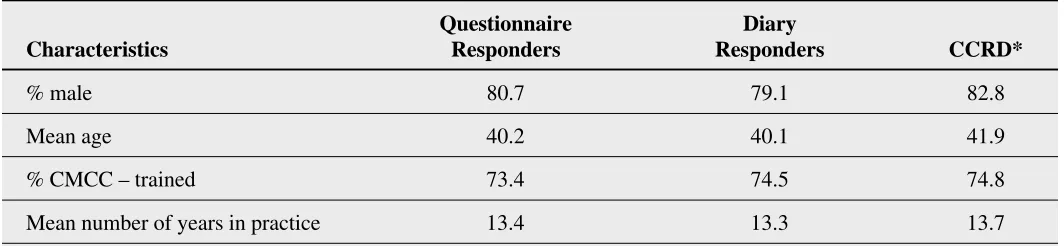
Table 1
Comparison of Characteristics of Study Participants with Characteristics Collected in the Canadian Chiropractic Resources Databank (CCRD)
Questionnaire Diary
Characteristics Responders Responders CCRD*
% male 80.7 79.1 82.8
Mean age 40.2 40.1 41.9
% CMCC – trained 73.4 74.5 74.8 Mean number of years in practice 13.4 13.3 13.7
Description of the study participants
Socio-demographic characteristics of chiropractors who returned the questionnaire and of those who completed the diary cards are presented in Table 1. There were no signifi-cant differences (p > .05 for all) between these two groups with respect to the characteristics listed in Table 1. These socio-demographic characteristics are comparable to those collected for the Canadian Chiropractic Resources Databank,7 which had a 70% response rate and covered the
period of August 1995 to July 1996 (Table 1).
However, significant differences between the two study groups existed in province of practice. Chiropractors in BC were most likely to return the diary card (85%) fol-lowed by the Prairie provinces (78%), the Atlantic prov-inces (76%), Ontario (72%), and Quebec (68%).
Forty-five percent of chiropractors indicated they have received formal post-graduate training specific to the treat-ment of patients under the age of 18. The most common types of formal training were seminars or courses organ-ized by Provincial Associations (43.1%), International Chiropractic Association pediatric seminars or courses (39.5%), and seminars or courses offered by a US Chiro-practic College (28.8%). Far more chiropractors (71.2%) indicated to have received informal training specific to the treatment of patients under the age of 18. The most com-mon informal types of training were academic (reading/ journals, 76.4%), conferences (43.0%) and personal con-sults (37.9%). A large majority of chiropractors (86.1%) indicated that they were interested in receiving more training.
Treatment of patients under the age of 18
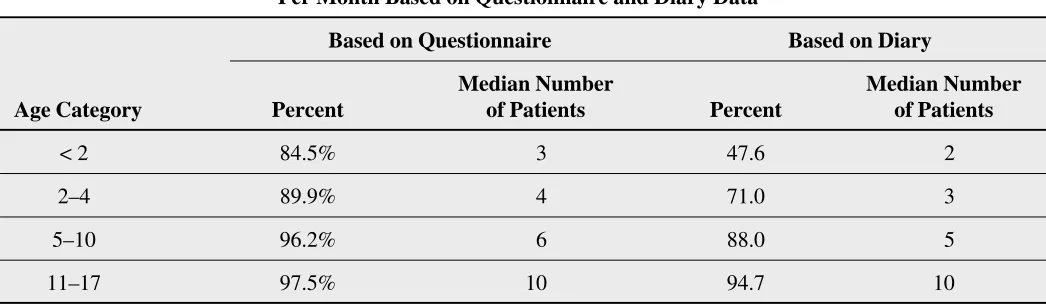
Table 2 presents the degree to which chiropractors per-ceive they treat patients under the age of 18 and shows that chiropractors were most likely to treat the older patients in this age group. The table shows the median number of patients seen per month rather than the mean because the distribution of number of patients seen was very skewed. The most common reason they gave for not treating pa-tients under the age of 18 was that this type of patient did not present to the chiropractor’s practice.
Analysis of the data collected by the diary cards showed that fewer chiropractors indicated to see patients under the age of 18 than reported on the questionnaire (Table 2). However, the discrepancy was larger in the younger age categories than the older age groups. Fewer patients were seen in the lowest age groups based on the diary data than based on the questionnaire data.
Determinants of treating patients under the age of 18
Statistically significant regional differences were found with respect to treating patients under the age of eleven using the data recorded on the diaries (Table 3).
Chiropractors treating patients under the age of 18 were significantly younger and more likely to have received formal or informal training specific to treatment of patients under the age of 18 than those not treating these patients. The differences between chiropractors in different age and training groups were greatest for the youngest age catego-ries.
Female chiropractors were significantly more likely to
Table 2
Percentage of Chiropractors Treating Patients in Various Age Groups Per Month Based on Questionnaire and Diary Data
Based on Questionnaire Based on Diary
Median Number Median Number
Age Category Percent of Patients Percent of Patients
< 2 84.5% 3 47.6 2
2–4 89.9% 4 71.0 3
5–10 96.2% 6 88.0 5
Table 3
Percentage of Chiropractors Treating Patients Under the Age of 18 by Region Based on Diary Data
Age Prairie Atlantic
Category BC Provinces Ontario Quebec Provinces p-value
< 2 34.5 62.1 38.9 70.4 22.7 p < .00
2–4 54.3 71.6 72.0 89.8 40.9 p < .001
5–10 81.9 90.5 88.5 93.9 63.6 p < .001
11–17 97.4 95.7 92.9 94.9 95.5 p = .61
Table 4
Percentage of Chiropractors Treating Various Conditions In Patients Under 18 Years of Age Per Month Based on Questionnaire and on Diary Data
Based on Based on Median Number
Questionnaire Diary of
Patients/Month**
Condition Percent Rank Percent Rank (Based on diary)
Musculoskeletal 96.8 1 90.8 1 6
Headache 89.5 2 53.7 2 2
Muscular (sprains/strains) 89.1 3 39.1 3 2
Asthma 60.5 6 28.2 4 1
Articular/joint conditions* 82.9 4 27.4 5 1 Otitis media 51.8 7 26.4 6 2 Gait/posture 77.6 5 18.9 7 1
Enuresis 31.3 14 18.0 8 1
Gastrointestinal 37.2 11 17.0 9 1 Hyperactivity 34.2 13 17.0 10 1
Colic 46.1 8 15.1 12 1
Menstrual complaints 44.8 9 2.3 21 1 Immune system 43.4 10 7.6 14 2
* Excluding temporomandibular joint disorders.
treat patients under the age of 5 than male chiropractors. No differences were found with respect to patients age 5 and older.
School of graduation and number of years in practice were only significantly related to the treatment of patients under the age of 2. Chiropractors treating these patients tended to have graduated from Palmer College of Chiro-practic rather than the Canadian Memorial College of Chiropractic, and to have fewer years in practice than chiropractors who did not treat these patients.
Conditions of patients under the age of 18 treated by chiropractors
The diary cards showed that together, 490 chiropractors saw 10,464 patients under the age of 18. This means that on average chiropractors saw 21 different patients under the age of 18 per month. Thirty-five percent presented with musculoskeletal problems, 24.3% for preventive reasons, 7.0% with headaches, 5.2% with otitis media, 4.8% with muscular conditions (strains/sprains), and 23.3% with a range of other conditions.
The top three conditions in patients under the age of 2 were prevention (31.3%), colic (16.1%), and otitis media (16.1%); in patients between the age of 2 and 4, they were prevention (42.1%), musculoskeletal problems (21.0%), and otitis media (18.0%); in patients between the ages of 5 and 10, they were prevention (37.1%), musculoskeletal problems (31.4%), and otitis media (7.1%); and in patients between the ages of 11 and 17, musculoskeletal problems (52.5%), prevention (17.6%), and headaches (11.4%).
Table 4 presents the 10 conditions most often treated by chiropractors as based on the questionnaire data as well as on the diary data. Chiropractors who indicated on the ques-tionnaire to sometimes (1 or 2/month), often (1–2/week), or routinely (daily) be presented with each of these condi-tions were included in Table 4. The median number of patients seen for each of the conditions by chiropractors who completed the diary card is included as well. Again, the data show that the questionnaire data overestimate the frequency with which conditions are presented within a one month time period. Although comparison of diary and questionnaire data shows general agreement, in ranking there are some differences. Enuresis and hyperactivity were perceived to be relatively less frequent than is indi-cated on the diaries (rank 14 and 13 versus 8 and 10 respec-tively). Menstrual complaints, conditions of the immune
system and colic were perceived to be relatively more fre-quent than indicated on the diaries (rank 9, 10 and 8 versus 21, 14 and 12 respectively).
In addition to the health problems identified before, the list of problems also included prevention. On the question-naire, 74.9% of chiropractors perceived they manage pa-tients under the age of 18 for preventive reasons at least once a month while 12.3% said they never treat these pa-tients, 12.8% manage these patients less than once a month. On the diary cards, 67% indicated to see these patients (median: 5 patients per month). On the diaries, 92.8% of chiropractors indicated that they treated patients who presented for preventive reasons, and 7.2% indicated that they saw these patients, but did not treat them.
No significant differences between completers and non-completers of the diaries were found when comparing treatment of the different age groups and the different con-ditions as based on the questionnaire data.
Treatment modalities
When asked about the top three treatment modalities, vir-tually all chiropractors (98.5%) indicated that spinal ma-nipulation was among the top three, followed by exercises/ stretching (63.2%), soft tissue treatment (47.0%), ergo-nomic/postural counselling (40.5%) and nutritional coun-selling (24.9%). Other treatments were considered to belong to the top three treatments by less than 12% of chiropractors.
Prevention/maintenance and supportive care
In response to the question whether in general chiropractors treat patients for preventive/maintenance care (defined as treating patients with chiropractic care to increase overall health, therefore preventing illness from occurring)5 or supportive care (defined as treating patients
with chiropractic care to maintain benefits derived from previous chiropractic treatment, therefore, preventing a re-occurrence of the initial health problem for which initial chiropractic treatment was sought),5 82.7% indicated to
this type of care were significantly more likely to be younger (p = .03), female (p = .007), have graduated from Palmer College of Chiropractic (p = .008) and to have re-ceived formal or informal training specific to the treatment of patients under 18 years of age (p < .001) than those not providing preventive/maintenance care.
The provision of supportive care was related to gender (p = .001) and formal and informal training (p = <.001).
Referring behaviour
Eighty-one percent of chiropractors indicated to refer pa-tients under the age of 18 to other health practitioners (mostly general practitioners, medical specialists and naturopaths). The most common reasons for referral were concomitant care, confirmation of the diagnosis and lack of treatment response.
Discussion
The results of this study show that almost all Canadian chiropractors were involved in the treatment of patients under the age of 18. The older these patients were, the more likely chiropractors were to see them. The question-naire as well as the diary data indicated that chiropractors were more likely to treat musculoskeletal conditions than non-musculoskeletal conditions, possibly with the excep-tion of prevenexcep-tion. The preponderance of treating muscu-loskeletal conditions in patients under the age of 18 found in our study is consistent with previous studies of this pa-tient group.2,3 This is also reflected in research on adult
patients.8
The type of data collected by the questionnaires reflect perceptions of practice, whereas the diary cards reflect actual recorded patient ages and conditions. Some chiropractors indicated to have used their office records for the completion of the diary cards. While office records and diary keeping may be subject to bias in reporting,9
questionnaires are known to be subject to recall bias and subjective recall. Further research would be required to examine the differences between both types of data in more detail.
Mootz et al.9 report that previous studies relating
pa-tients have shown that musculoskeletal conditions usually dominate different data sources, and that chiropractors of-ten overestimate non-musculoskeletal conditions. The lat-ter is confirmed in the current study (Table 4). It could be that the large number of musculoskeletal cases actually
seen may recede in memory, making the unusual cases seem more prominent.9 The occurrence of
musculoskel-etal conditions in this study appears to be somewhat less predominant than in studies relating to adult patients. This may mean that patients under the age of 18 are more likely to present with non-musculoskeletal conditions. This is an interesting finding which could be further explored.
The percentage of chiropractors treating patients for preventive reasons, which is not very different in the ques-tionnaire and diary data, is fairly high. This finding war-rants further study as well.
Considerable regional variation was found with respect to treatment of patients under the age of 18. Regional vari-ation in the use of chiropractic has been identified be-fore8,10,11 and can be due to several factors including the
historical and political setting, the acceptance of chiro-practic by the medical community, by the general public and the availability of chiropractors. In regions where use of chiropractic is common, treatment of patients under the age of 18 appears to be more common as well, with the exception of Quebec. Whereas chiropractic in Quebec is not as common as in the Prairie provinces or BC, treatment of patients under the age of 18, is more common than in any of the other regions. The reason for this needs to be further explored.
While many chiropractors have received informal train-ing pertaintrain-ing to treatment of patients under the age of 18 after they graduated, less than half had received formal training. In addition, a high percentage of chiropractors indicated a desire for more training in this area.
A substantial number of chiropractors refer patients to other health care professionals. Although we assessed the reasons for doing so, it was beyond the study objectives to assess for what specific conditions they referred patients under the age of 18. However, this result appears to indi-cate chiropractors’ willingness to be partners in health care.
A limitation of the study is the modest response rate, which may be due to the amount of work involved in par-ticipating in the study. The response rate is lower than that reported for a national survey conducted in 1996,12 but
much higher than reported in a recent national survey of US chiropractors (30%),13 and may reflect the continuing
finding that chiropractors who completed the diary cards do not significantly differ from those who did not with respect to their perception of treating patients under the age of 18 is comforting. However, it is still possible that the 59% who responded to the questionnaire differs from the 41% who did not. So the results must be interpreted with some caution.
This study provides important baseline information for future studies regarding chiropractic involvement in treat-ment of patients under the age of 18 and also regarding assessing safety and efficacy of chiropractic treatment for these patients. These studies will be important because statements about the efficacy and safety of chiropractic for patients under the age of 18 have been made in the litera-ture14,15 for which there is no empirical evidence.
Acknowledgement
This study was funded with a grant from the Canadian Chiropractic Association.
References
1 Spigelblatt L, Laine-Ammara G, Pless IB, Guyver A. The use of alternative medicine by children. Pediatrics 1994; 94:811–814.
2 Coulter ID. The chiropractic patient: A social profile. J Can Chiropr Assoc 1985; 29:25–28.
3 Nyiendo J, Olsen E. Visit characteristics of 217 children attending a chiropractic college teaching clinic. J Man Phys Ther 1988; 11:78–84.
4 National Board of Chiropractic Examiners. Job analysis of chiropractic: A project report, survey analysis and
summary of the practice of chiropractic within the United States. Greeley, CO: National Board of Chiropractic Examiners, 1993.
5 Henderson D, Chapman-Smith D, Mior S, Vernon H. Clinical guidelines for chiropractic practice in Canada. J Can Chiropr Assoc 1994; 38 (Supplement).
6 SPSS/X User’s Guide. 2nd Edition. Chicago: SPSS Inc., 1986.
7 Papadopoulos C. Summary Report. Canadian Chiropractic Resources Databank (CCRD). Canadian Chiropractic Association, Toronto, Ontario, 1997.
8 Hurwitz EL, Coulter ID, Adams A, Genovese BJ, Shekelle PG. Use of chiropractic services from 1985 through 1991 in the United States and Canada. Am J Public Hlth 1988; 88:771–776.
9 Mootz RD, Coulter ID, Hansen DT. Health services research related to chiropractic: Review and recommendations for research prioritization by the chiropractic profession. J Man Phys Ther 1997; 20:201–217.
10 Berger E. The Canadian Health Monitor Survey. Toronto: Price Waterhouse, Survey No. 4, 1990, p. 8.
11 Millar WJ. Use of alternative health care practitioners by Canadians. Can J Public Health 1997; 88:154–158. 12 Hay DA. A mail survey of health care professionals: An
analysis of the response. J Can Chiropr Assoc 1996; 40:162–168.
13 Hawk C, Byrd L, Jansen RD. Survey of the use of complementary/alternative health care practices by US chiropractors. Alter Ther Health Med 1998; 4:103–104. 14 A Statement by the Chairmen of the Departments of
Pediatrics of Pediatric Hospitals in Canada. Children and chiropractors. Can J Ped 1995; 2:V–VI.