Translational Research in Pediatrics IV:
Solid Tissue Collection and Processing
Carolina Gillio-Meina, PhD,a,b H. Ronald Zielke, PhD,c Douglas D. Fraser, MD, PhDa,b,d,e,f,gaTranslational Research Centre, London, Ontario, Canada; bChildren’s Health Research Institute, London, Ontario,
Canada; cPediatrics, University of Maryland, Baltimore,
Maryland; dCentre for Critical Illness Research, eCritical
Care Medicine and Pediatrics, fClinical Neurologic Sciences,
and gPhysiology and Pharmacology, Western University,
London, Ontario, Canada
Drs Gillio-Meina and Zielke contributed to drafting the review and revised the manuscript; and Dr Fraser conceptualized and initiated the review, contributed to drafting the review, and revised the manuscript. All authors approved the fi nal manuscript as submitted.
DOI: 10.1542/peds.2015-0490 Accepted for publication Oct 5, 2015
Address correspondence to Douglas D. Fraser, MD, PhD, Paediatric Critical Care Medicine, Room C2-843, Children’s Hospital, London Health Sciences Centre, 800 Commissioners Rd East, London, ON, Canada, N6A 5W9. E-mail: [email protected] PEDIATRICS (ISSN Numbers: Print, 0031-4005; Online, 1098-4275).
Copyright © 2016 by the American Academy of Pediatrics
FINANCIAL DISCLOSURE: The authors have indicated they have no fi nancial relationships relevant to this article to disclose.
FUNDING: Drs Gillio-Meina and Fraser are supported by the Children’s Health Foundation (http:// www. childhealth. ca) and the Lawson Health Research Institute (http:// www. lawsonresearch. com).
POTENTIAL CONFLICT OF INTEREST: The authors have indicated they have no potential confl icts of interest to disclose.
Human tissue experiments are imperative for health research. Solid tissue is an invaluable substrate to understand the molecular and cellular mechanisms underlying childhood diseases. Tissue samples can be collected from subjects across the developmental spectrum, from fetal to late adolescent stages. Children with diseases can also live into adulthood, which may necessitate collection of tissue in later life. In the present review, which is the fourth in a series on tissue sampling and
biobanking for child-health studies,1–3
we describe issues that arise from the collection, processing, and storage of solid tissues. Our goals were to highlight the ethical standards for solid tissue collection from children and the various factors affecting tissue
integrity. In addition, we reviewed newer methods for determining tissue quality.
ETHICS STANDARDS FOR SOLID TISSUE
RESEARCH
Tissue retrieval for research purposes can be complicated by concerns for the individual’s legitimate ethical rights, religious beliefs, and emotional well-being. Biobanks typically have a well-organized informed consent system, whereas the consent standards for archival tissues can be variable. Published ethical guidelines for biobanks suggest the following: (1) that children, as soon as mentally capable, should be asked to assent to research; (2) that biobanks collecting non-postmortem tissue should
abstract
Solid tissues are critical for child-health research. Specimens are commonly
obtained at the time of biopsy/surgery or postmortem. Research tissues
can also be obtained at the time of organ retrieval for donation or from
tissue that would otherwise have been discarded. Navigating the ethics of
solid tissue collection from children is challenging, and optimal handling
practices are imperative to maximize tissue quality. Fresh biopsy/surgical
specimens can be affected by a variety of factors, including age, gender,
BMI, relative humidity, freeze/thaw steps, and tissue fixation solutions.
Postmortem tissues are also vulnerable to agonal factors, body storage
temperature, and postmortem intervals. Nonoptimal tissue handling
practices result in nucleotide degradation, decreased protein stability,
artificial posttranslational protein modifications, and altered lipid
concentrations. Tissue pH and tryptophan levels are 2 methods to judge the
quality of solid tissue collected for research purposes; however, the RNA
integrity number, together with analyses of housekeeping genes, is the new
standard. A comprehensive clinical data set accompanying all tissue samples
is imperative. In this review, we examined: the ethical standards relating to
solid tissue procurement from children; potential sources of solid tissues;
optimal practices for solid tissue processing, handling, and storage; and
reliable markers of solid tissue quality.
make an effort to recontact young adults for re-consent once they are capable of providing it; and (3) that minors, when permitted by law, withdraw their samples and clinical data regardless of their parents’
consent.4–6 Broad consent to cover
unexpected studies is ideal, but if the research changes significantly from the original protocol, ethics committees should decide whether
re-consent is necessary.4 Archived
tissues should be anonymized and consented for by the patients and/ or their legal guardian. Internal resource committees should approve
access to specimens.7
Acquiring parental/guardian consent for tissues is often difficult due to fear and/or grieving, but many still consent because they believe that tissue research may be useful for the development of
new drugs and treatments8 and/or
because of a wish to prevent others
from similar painful situations.9
Obtaining consent from relatives after a child dies requires biobank staff to have sensitivity and training to avoid coercion and exacerbating distress. Tissue procurement via percutaneous needle biopsy, as opposed to full open autopsy, may be of greater acceptability to parents/ guardians, but this approach can
introduce sampling errors.10 In
addition, obtaining consent for tissues to be used in research must be coordinated with organ procurement organizations.
Although predeath autopsy
permission for research tissues may be obtained during the informed consent process,11,12 the institutional
review board in accordance with law requires postmortem confirmation of the permission from the research participant’s legally authorized
representative.13–15
Additional issues to be considered by biobanks include the following: recruiting properly qualified professionals with religious and cultural knowledge to participate
on research ethics committees (ie, pediatricians, lawyers, community members); access to larger numbers of shared control cases; standardized protocols between laboratories; and procedures for handling genetic information, incidental findings in DNA studies, and ownership rights.
Recent advances in human tissue engineering and organoids require
unique guidelines and procedures.16
The moral status of interfering with the beginning of life when using human embryonic stem and fetal cells is always questioned. Acquired tissues should only be used for the informed research purpose, and parents often consent only to autologous use with respect to a child’s tissues. Researchers are encouraged to educate the public about their work, although it is challenging to provide details about the tissue engineering process to a lay audience.
Internationally, human tissue research is controlled by federal regulations, and studies require approval by research ethics committees or institutions’ review boards.12–14,17–23 Different
approaches for informed consent and/or assent should be implemented in child research according to the targeted age
(from fetal to adolescent stages).6
Several guidelines are available for access, use, legal rights, handling genetic information, and the sharing of biological samples
for research purposes.24–28 In
addition, the Genetic Privacy Act
and Commentary,29,30 the Genetic
Information Nondiscrimination Act,31
and the Health Insurance Portability and Accountability Act (termed
the Privacy Rule)32 were created
to regulate genetic information and individual identifiable health information release. Commercial biobanks have raised significant ethical and legal issues, prompting several countries to create
comprehensive regulations through
mechanisms such as licensure.33
SOURCES AND TYPES OF SOLID
TISSUES COLLECTED
Sources of solid tissue for child-health research include local collections, biobanks, and archived tissues collected as normal clinical practice by pathology laboratories. With the development of newer technologies to identify and quantify molecular biomarkers, including DNA microarrays, quantitative polymerase chain reaction (PCR), and mass spectrometry, biobanking is critical for many disease investigations, whereas archived tissue has been mainly used to detect rare diseases or
to investigate specific populations.34
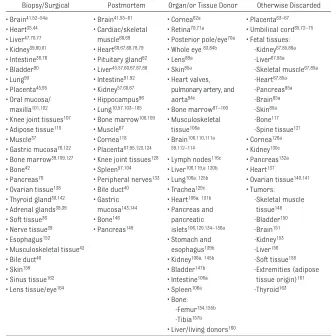
A variety of solid tissues have been collected for health research (Table 1). Biopsy/surgical specimens are collected to test histopathologic features35–38; to determine
pathogenic mediators36,39–41; to
obtain a definitive diagnosis of different syndromes, disorders, or diseases37,42,43; to test the safety of
different techniques44,45; to study
the role of toxic elements46; and to
diagnosis new or rare diseases.47
Biopsy/surgical specimens reflect the tissue in vivo state, but collection is hampered by accessibility, limited volume, or because the sampled area may not fully represent the disease.10,48 Pediatric tissue is also
required in studies on the normal
development of the human.49–51
Fresh tissues can be used for engineering and regenerative
medicine.165 Donor somatic cells
screening of therapeutic and toxic effects of chemicals, and personalized
medicine.166
Lack of accessibility of fresh tissue makes postmortem tissue an important alternative. Postmortem tissue has been used for studies
on morphology167–171; to study
the mechanical properties of different organs167,168; to validate
new techniques172–174; to correlate
morphology with microbiology
findings103; to report new or rare
diseases175; to study the molecular
mechanisms95,123 to determine
toxic element exposure87; to
determine a definitive disease diagnosis88,96,104,176; and to
detect infectious agents.10,68
The use of postmortem tissue is often hampered, however, by agonal factors, postmortem intervals (PMIs), and storage conditions that contribute to tissue
degradation.177,178
Solid tissues can be derived from living patient organ donors, as well as from deceased patients, resulting
from neurologic or cardiac death.179–
183 Recovery of donor medical
information before the donor tissue
procurement is ideal,184 particularly
in preregistered cases, and it can be supplemented with archived medical records. Importantly, the case must meet the collection criteria of the tissue bank. Exclusion criteria will vary according to project and may include drug usage, cancer, psychiatric illnesses, and extended PMI. Obtaining consent for tissue procurement is often the initial focus (if not acquired in advance), followed by tissue retrieval.
Tissue quality, physiology, and function are critical for tissue donation, as is the patient’s medical condition at the time of death and the patient’s location (termed
geographical limitation).179 The
viability of the tissues is measured in hours from the moment of retrieval, which is a time critical for successful transplantation or
research.20 For example, ocular
tissue must be recovered within 12 hours of cardiocirculatory death for transplantation, but it can be used for research within 15 to 24 hours
of cardiocirculatory death.179 Tissue
banks often interact permanently with universities, hospitals, medical centers, and support foundations, and they offer a variety of organs/tissues
for child-health research.180–183
Tissue that would otherwise have been discarded, including placentas and umbilical cords, can be obtained for research purposes because their collection poses little risk to the
patients.185–187 The placenta has
been used in child-health research to
investigate preeclampsia,188 maternal
obesity,63 endocrine disruptors,189
attention-deficit/hyperactivity
disorder,64 Smith-Lemli-Opitz
syndrome,190 and vertical virus
transmissions.65,66 Blood drawn
from umbilical cord veins has been
used for regenerative medicine72
and stem cell research.191,192 Other
discarded tissues include the aborted fetus,193,194 bone,117 spine,121
ovary,140,141 and skin,195 and extra
tissue fragments from surgical removal/biopsies of neoplasms that are not appropriate for diagnostic
procedures.8,196
Future tissue sources may include donor tissue not suitable for transplantation due to an extended postrecovery interval, age, abnormal macroscopic results, long ICU stay, or a positive result on the donor’s serologic test (eg, HIV, hepatitis B
TABLE 1 Examples of Solid Tissues Used in Health Research
Biopsy/Surgical Postmortem Organ/or Tissue Donor Otherwise Discarded • Brain41,52–54a
• Heart35,44 • Liver47,76,77 • Kidney39,80,81 • Intestine38,76 • Bladder90 • Lung93 • Placenta45,95 • Oral mucosa/
maxilla101,102 • Knee joint tissues107 • Adipose tissue115 • Muscle37
• Gastric mucosa76,122 • Bone marrow39,109,127 • Bone42
• Pancreas76 • Ovarian tissue138 • Thyroid gland38,142 • Adrenal glands38,39 • Soft tissue36 • Nerve tissue39 • Esophagus152
• Musculoskeletal tissue42 • Bile duct40
• Skin159 • Sinus tissue162 • Lens tissue/eye164
• Brain41,55–61 • Cardiac/skeletal
muscle68,69 • Heart60,67,68,78,79 • Pituitary gland82 • Liver45,57,60,67,87,88 • Intestine91,92 • Kidney57,60,67 • Hippocampus96 • Lung10,57,103–105 • Bone marrow108,109 • Muscle67 • Cornea118 • Placenta67,95,123,124 • Knee joint tissues128 • Spleen57,104 • Peripheral nerves133 • Bile duct40 • Gastric
mucosa143,144 • Bone146 • Pancreas149
• Cornea62a • Retina70,71a • Posterior pole/eye70a • Whole eye 83,84b • Lens89a • Skin85a • Heart valves,
pulmonary artery, and aorta94c
• Bone marrow97–100 • Musculoskeletal
tissue106a • Brain106,110,111a
59,112–114 • Lymph nodes116c • Liver106,119,a120b • Lung106a, 125b • Trachea129c • Heart106a,131b • Pancreas and
pancreatic islets106,120,134–136a • Stomach and
esophagus139b • Kidney106a,145b • Bladder147b • Intestine106a • Spleen106a • Bone: -Femur154,155b -Tibia157b • Liver/living donors160
• Placenta63–67 • Umbilical cord65,72–75 • Fetal tissues: -Kidney67,85,86a -Liver67,85a -Skeletal muscle67,85a -Heart67,85a -Pancreas85a -Brain85a -Skin85a -Bone117 -Spine tissue121 • Cornea126a • Kidney130c • Pancreas132a • Heart137
• Ovarian tissue140,141 • Tumors:
- Skeletal muscle tissue148 -Bladder150 -Brain151 -Kidney153 -Liver156 -Soft tissue158 - Extremities (adipose
tissue origin)161 -Thyroid163
a References in which research was conducted by using organs/tissues from children/fetus and adults. b References in which research was conducted by using adult organs/tissues only.
or C). These latter tissues include cornea,126 kidney,130 and pancreas.132
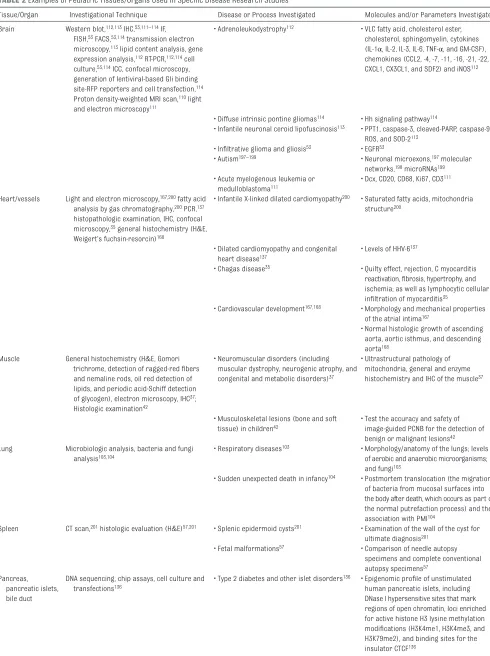
Table 2 summarizes examples of pediatric tissues/organs and the analytical techniques used in research studies.
FRESH, FRESH FROZEN, AND FIXED
TISSUES
Fresh, fresh frozen, and fixed tissues are amenable to several investigative methods, including tissue
engineering, microarray analysis, PCR, receptor autoradiography, proteomics, chromatography, immunochemistry, and protein
sequencing (Table 3).207–209
Fresh tissue is used for tissue engineering research and organoid formation, following digestion of extracellular matrix and cell isolation
in a sterile environment.166 When
isolated cells are reprogrammed to stem cells and the end point is differentiation to specific cell lineages, specific media conditions must be used. Because tissue function often relies on several cell types in a specific 3-dimensional order, the development of novel culture environments using biomaterials and bioreactors is imperative to maintain selected
aspects of native tissue.166
Mechanical stimuli, extracellular matrix components, or even long-term cell culture conditions are extremely important for the
development of an organoid.166
Fresh frozen tissue preserves biomolecules in an intact state and provides a high yield of quality DNA
and RNA.225,226 Due to the small
sample size of fresh frozen tissue, however, it is often difficult to correlate biochemical experiments with histologic/pathologic
examinations.225 Regardless of the
tissue origin (either biopsy/surgical or postmortem), snap-freezing with storage at –80°C or below are ideal to maintain the integrity of biochemical molecules.207,210,227
Tissue samples are often fixed in formaldehyde or formalin before being embedded in paraffin wax for sectioning and subsequent histologic examination. Fixed tissue is most commonly used for protein localization and morphology studies. Paraffin blocks have been successfully used to isolate both DNA and RNA when optimal fixation and
extraction methods were used.228
However, fixation of solid tissue can degrade and damage DNA and RNA,225,229 thus interfering with
gene expression, mutation, and polymorphism studies. For better quality tissue, fixation should be conducted as soon as possible after
collection,209 and the samples should
be immediately embedded in paraffin
blocks.229 DNA can be isolated from
fixed tissue that has not yet been
embedded,225 but the DNA is of less
quality compared with DNA isolated from frozen tissue.
FACTORS INFLUENCING SOLID TISSUE
QUALITY
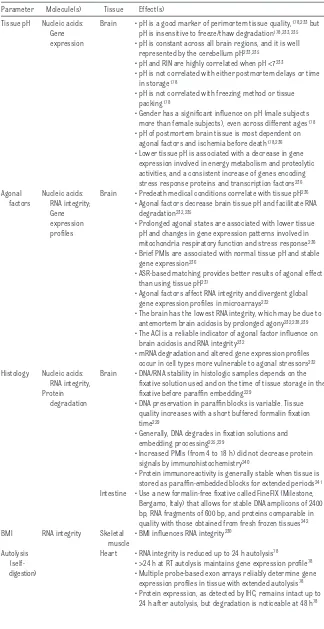
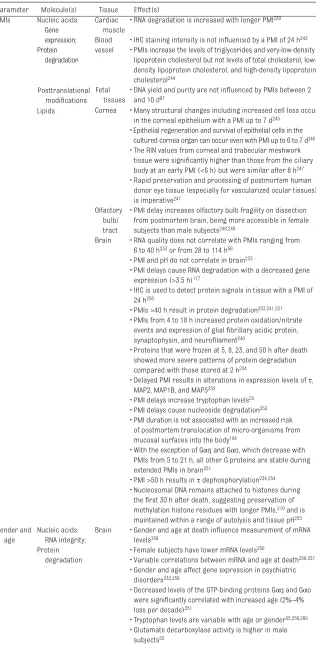
Many factors affect the quality of tissue directly or indirectly by interfering with protein stability and nucleotide yield or quality.67,177,230–234 The parameters
affecting solid tissue qualities are summarized in Table 4.
Gender and Age
Female gender and increased age at death are 2 factors that influence
total tissue messenger RNA levels256
and alter specific gene expression
profiles.258 Although both factors are
reportedly important determinants of tissue quality,232,258 other research
has shown that brain RNA integrity is not influenced by gender or age <50 years (H.R.Z., unpublished observations).
Agonal Factors
Agonal factors include coma, pyrexia, hypoxia, seizures, dehydration, hypoglycemia, multiple organ
failure, prolonged death, head injury, respiratory arrest, and neurotoxic substance ingestion; these factors can change global gene expression via signaling pathways (ie, the stress response and apoptosis) with
activation of acid ribonucleases.232,258
Consequently, there is variability of RNA integrity and divergence in gene expression profiles.232,258 Individuals
who suffered prolonged agonal states (ie, respiratory arrest, multiorgan failure, coma) have decreased gene expression for energy metabolism proteins and proteolytic activities, and increased expression of genes encoding stress response proteins and transcription factors. In contrast, those who experienced rapid deaths (ie, trauma, cardiac events, asphyxia) have limited alterations in gene
expression.236 Agonal factors, such
as coma and hypoxia, can markedly affect the RNA quality and have a major impact on gene expression
profiles in microarray analyses.232
The activation of ribonucleases during the terminal phase may introduce large divergences of global gene expression profiles in microarrays compared with gender, age, postmortem delays, or diagnoses
of psychiatric disorders.232
A sudden or prolonged death can affect tissue quality, resulting in the creation of the agonal factor score
(AFS).232 Each agonal condition is
scored 1 if present or 0 if absent.
Agonal duration is also rated.261
Individual scores of the agonal conditions and agonal duration are summed to provide the final AFS for each sample. A lower AFS is associated with high-quality tissue.233 The AFS has the practical
limitation of its inability to assess each anatomic region separately, resulting in the development of an agonal stress rating system that evaluates the degree of stress based
on gene expression data.237 The
TABLE 2 Examples of Pediatric Tissues/Organs Used in Specifi c Disease Research Studies
Tissue/Organ Investigational Technique Disease or Process Investigated Molecules and/or Parameters Investigated Brain Western blot,112,113 IHC,53,111–114 IF,
FISH,53 FACS,53,114 transmission electron microscopy,113 lipid content analysis, gene expression analysis,112 RT-PCR,112,114 cell culture,53,114 ICC, confocal microscopy, generation of lentiviral-based Gli binding site-RFP reporters and cell transfection,114 Proton density-weighted MRI scan,110 light and electron microscopy111
• Adrenoleukodystrophy112 • VLC fatty acid, cholesterol ester, cholesterol, sphingomyelin, cytokines (IL-1α, IL-2, IL-3, IL-6, TNF-α, and GM-CSF), chemokines (CCL2, -4, -7, -11, -16, -21, -22, CXCL1, CX3CL1, and SDF2) and iNOS112
• Diffuse intrinsic pontine gliomas114 • Hh signaling pathway114
• Infantile neuronal ceroid lipofuscinosis113 • PPT1, caspase-3, cleaved-PARP, caspase-9, ROS, and SOD-2113
• Infi ltrative glioma and gliosis53 • EGFR53
• Autism197–199 • Neuronal microexons,197 molecular networks,198 microRNAs199 • Acute myelogenous leukemia or
medulloblastoma111
• Dcx, CD20, CD68, Ki67, CD3111 Heart/vessels Light and electron microscopy,167,200 fatty acid
analysis by gas chromatography,200 PCR,137 histopathologic examination, IHC, confocal microscopy,35 general histochemistry (H&E, Weigert’s fuchsin-resorcin)168
• Infantile X-linked dilated cardiomyopathy200 • Saturated fatty acids, mitochondria structure200
• Dilated cardiomyopathy and congenital heart disease137
• Levels of HHV-6137
• Chagas disease35 • Quilty effect, rejection, C myocarditis reactivation, fi brosis, hypertrophy, and ischemia; as well as lymphocytic cellular infi ltration of myocarditis35
• Cardiovascular development167,168 • Morphology and mechanical properties of the atrial intima167
• Normal histologic growth of ascending aorta, aortic isthmus, and descending aorta168
Muscle General histochemistry (H&E, Gomori trichrome, detection of ragged-red fi bers
and nemaline rods, oil red detection of lipids, and periodic acid-Schiff detection of glycogen), electron microscopy, IHC37; Histologic examination42
• Neuromuscular disorders (including muscular dystrophy, neurogenic atrophy, and congenital and metabolic disorders)37
• Ultrastructural pathology of mitochondria, general and enzyme histochemistry and IHC of the muscle37
• Musculoskeletal lesions (bone and soft tissue) in children42
• Test the accuracy and safety of image-guided PCNB for the detection of benign or malignant lesions42 Lung Microbiologic analysis, bacteria and fungi
analysis103,104
• Respiratory diseases103 • Morphology/anatomy of the lungs; levels of aerobic and anaerobic microorganisms; and fungi103
• Sudden unexpected death in infancy104 • Postmortem translocation (the migration of bacteria from mucosal surfaces into the body after death, which occurs as part of the normal putrefaction process) and the association with PMI104
Spleen CT scan,201 histologic evaluation (H&E)57,201 • Splenic epidermoid cysts201 • Examination of the wall of the cyst for ultimate diagnosis201
• Fetal malformations57 • Comparison of needle autopsy specimens and complete conventional autopsy specimens57
Pancreas,
pancreatic islets, bile duct
DNA sequencing, chip assays, cell culture and transfections136
Tissue/Organ Investigational Technique Disease or Process Investigated Molecules and/or Parameters Investigated • Type 2 diabetes106 • Multiple TCF7L2 splicing forms106 5′ RACE and analysis of splicing forms,
RT-PCR106 IHC, western blot40
• Pancreaticobiliary maljunction and bile duct dilatation40
• P-MLC20 and MLCK pathway40 Liver Genotyping, QuantiGene Plex 2.0 assay
(Affymetrix Ltd, High Wycombe, UK)119; Q-FISH telomere quantifi cation method160
• Hyperbilirubinemia and prediction of UGT1A1-mediated drug metabolism and toxicity119
• Genetic polymorphisms on UGT1A1 transcription; enhanced transcription by CAR, PXR, GR, HNF1α, and HNF4α119 • Pediatric living donor160 • Telomere length160
Intestine RT-PCR202 • Oral drug absorption and hepatic drug excretion202
• Hepatic and intestinal drug transporters MRP2, OATP1B1, OATP1B3, OATP2B1, and MDR1202
Stomach Histologic evaluation (H&E, and Giemsa staining),13 C-UBT, RUT, fqPCR122
• Gastritis122 • Levels of Helicobacter pylori122 Cornea Graft failure62a • Endothelial disease62 • Success rate of penetrating keratoplasty
and corneal graft survival62b Retina, posterior
pole
HPLC70; • Macular degeneration70 • CoQ10 levels70
IHC71 • Retinopathy and choroidopathy71 • Choroidal endothelial Tbdn and choroid vascular Tbdn71
Lens IHC, slit lamp biomicroscopy, tryptic digest tandem mass spectrometry
protein sequencing, Aβ fl uoro-ELISA and Aβ immunoblotting, light and electron microscopy, immunogold electron microscopy89
• Down syndrome and Alzheimer’s disease89 • Aβ accumulation, amyloid formation, and fi ber cell cytoplasmic Aβ aggregates89
Kidney Doppler ultrasonography, histopathologic diagnosis203; IHC39; Histologic evaluation
(H&E)57
• Kidney disease203 • Comparison of outpatient and inpatient renal biopsies: accuracy, safety, and risks of complications203
• Pediatric solid tumors39 • HA117, P-gp39
• Fetal malformations57 • Limitations of needle autopsies from a complete conventional autopsy57 Bladder Histologic evaluation (H&E, and Masson’s
trichrome staining), ultrasonography150
• Bladder plate polyposis150 • Examination of novel technique of SUPER and UAAC. Evaluation on polyp recurrence, bladder tumor, urinary continence, and social dryness150
Lymph nodes Node weight, ultrasound, pathologic examination204
• Acquired immune defi ciency syndrome204 • CD4+ T-cell2 count and HIV viral load, fecal calprotectin, and bowel ultrasound, with the latter evaluating bowel wall thickness and mesenteric lymph nodes204 Bone marrow PCR, PCR-RFLP, histologic evaluation (Giemsa
staining), bone marrow culture205
• Visceral leishmaniasis205 • Leishmania DNA205 Skin Histologic evaluation (H&E),
immunoperoxidase206
• Primary cutaneous plasmacytosis206 • Search for cell infi ltration of dermis, clusters of B-lymphocytes CD20 reactive, and expression of κ light chains and λ light chains to diagnosis rare disease206 Placenta Placental weights, pathologic examination
(thrombosis present, leukocytes infi ltration, infarction)95
• Stillbirth95 • Placental abnormalities including thrombosis present, placental infarction, leukocyte infi ltration, and chorioamnionitis95
MeDIP, human CpG island plus promoter microarray analysis, bisulfi te sequencing
PCR188
• Preeclampsia188 • Aberrant or altered patterns of DNA methylation and the distribution of CpG nucleotides in genes such as CAPN2, EPHX2, ADORA2B, SOX7, CXCL1, and CDX1188 Umbilical cord blood Generation of iPSCs, transfection, RT-PCR, IF
fl ow cytometry73
• Acquired immune defi ciency syndrome73 • Anti-HIV genes including a CCR5 short hairpin RNA and human/rhesus chimeric TRIM5α gene; also, pluripotency markers OCT4, SOX2, NANOG, and SSEA473 HPLC and detection by an API 2000 (American
Petroleum Institute [API], Washington, DC) electrospray triple quadrupole mass spectrometer, a gel permeation chromatography column for lipid content analysis189
• Exposure to endocrine disruptors during pregnancy and infancy189
• Levels of non-POPs (including MEHP, OP, and 4-NP), and PBDEs189
assessment of tissue quality and is useful for identifying anatomic regions that exhibit different stress
outcomes.237
Postmortem Intervals
A PMI is defined as the difference between the time of death and the time of tissue preservation (eg, frozen, fixed).184 After death,
bodies are placed at 4°C for variable times before sample collection. Traditionally, PMIs can range from
6 to 72 hours,262 depending on the
period of time that parents wish to remain with their deceased child, with 1 to 6 hours as the minimum time to access the body for tissue collection.184 High-quality tissue
is generally associated with low PMIs.233,263,264 Longer PMIs alter the
tissue quality at the molecular level. Postmortem tissue can maintain gene expression profiles in heart tissue for
at least 24 hours,78 whereas longer
PMIs result in greater epithelial cell loss in cornea tissue.245 Delays in
PMI can also affect protein stability, particularly receptors and cytosolic proteins.251,253,265 PMI delays >40
hours result in posttranslational modifications and decrease protein immunoreactivity in human
degenerative diseases.241,254,266,267
Longer PMIs are associated with
oxidation/nitration events.240
Other Factors Affecting Solid Tissue
Quality
After death, the time to tissue collection, extraction, and processing, as well as tissue storage protocols
and temperatures, are critical factors affecting tissue quality (Table 5). For example, brain RNA and protein degradation associated with postmortem delay is dependent
on the storage temperature.210,234,268
INDICATORS OF TISSUE QUALITY
Solid tissue quality control is imperative for child-health research studies. Several methods have been used to ensure solid tissue quality. Some factors (ie, gender) that lead to bias can be statistically controlled by using matched designs, match-pairing of patients with disease and control subjects with the same values of factors, and/or by adding the factors as covariates in the analysis.256
Tissue/Organ Investigational Technique Disease or Process Investigated Molecules and/or Parameters Investigated Fetal tissues:
Kidney, Heart, Liver, Muscle, Brain, Skin, Pancreas
Locked nucleic acid probe-Southern, CpG methylation analysis85
• Congenital myotonic dystrophy type 185 • Expanded CTG repeat and methylation at the CTCF-binding sites85
• Polycystic kidney disease86 • Structural proteins vinculin, α-actinin, and β1-integrin; focal adhesion proteins including FAK, c-Src, paxillin, and p130cas; and fi brocystin-186
Cell adhesion assays, migration assays, western blots, IHC86c; MRI,172,173
ultrasound172
• Prenatal ventriculomegaly172 • Images to compare postmortem examination, both by traditional neuropathologic examination and postmortem MRI, with antenatal MRI for diagnosis172
• Major pathologic lesions associated with death173
• Images to compare minimally invasive autopsy (a postmortem investigation with no incisions or dissection, with MRI and postmortem blood sampling via needle puncture) with conventional autopsy for detection of cause of death173
ADORA2B, adenosine A2B receptor; CAPN2, calpain-2 catalytic subunit 2; CAR, androstane receptor; CCL, chemokine (C-C motif) ligand; CD3, cluster of differentiation 3; CD4, cluster of differentiation 4; CD20, cluster of differentiation 20; CD68, cluster of differentiation 68; CoQ10, coenzyme Q10; CpG, C–phosphate–G (cytosine nucleotide sites); 13C-UBT, 13C-urea breath
test; c-Src, Proto-oncogene tyrosine-protein kinase Src; CTCF, CCCTC-binding factor; CXCL1, the chemokine (C-X-C motif) ligand 1; DCX, doublecortin; EGFR, epidermal growth factor receptor; EPHX2, epoxide hydrolase 2; FACS, fl uorescence-activated cell sorting; FAK, focal adhesion kinase; FISH, fl uorescence in situ hybridization; fqPCR, fl uorescent quantitative PCR; Gli-RFP reporter, Gli luciferase reporter; GM-CSF, granulocyte-macrophage colony-stimulating factor; GR, glucocorticoid receptor; ICC, immunocytochemistry; IF, immunofl uorescence; IHC, immunohistochemistry; IL, interleukin; iNOS, inducible nitric oxide synthase; HA117, a novel multidrug resistance gene; H&E, hematoxylin and eosin; Hh, Hedgehog; HHV-6, human herpesvirus 6; HIV-1, HIV type 1; HNF1α, hepatocyte nuclear factor 1α; HNF4α, hepatocyte nuclear factor 4α; HPLC, high-performance liquid chromatography; iPSCs, induced pluripotent stem cells; Ki67, antigen identifi ed by monoclonal antibody; MDR1, multidrug resistance 1; MeDIP, methylated DNA immunoprecipitation; MEHP, mono-2-ethylhexylphthalate; MLCK, myosin light-chain kinase; MRP2, multidrug resistance protein 2; NANOG, homeobox protein NANOG; non-POPs, non–persistent organic pollutants; 4-NP, 4-nonylphenol; OATP1B1, organic anion transporting polypeptide 1B1; OATP1B3, organic anion transporting polypeptide 1B3; OATP2B1, organic anion transporting polypeptide 2B1; OCT4, octamer-binding transcription factor 4; OP, octylphenol; p130Cas, Crk-associated substrate; PARP, poly (ADP-ribose) polymerase; PBDEs, polybrominated diphenyl ethers; PCNB, percutaneous core needle biopsy; P-gp, permeability glycoprotein; P-MLC20, phosphorylated myosin regulatory light chain; PPT1, palmitoyl protein thioesterase-1; PXR, pregnane X receptor; Q-FISH, quantitative fl uorescence in situ hybridization; ROS, reactive oxygen species; SDF2, stromal cell–derived factor 2; SOD-2, superoxide dismutase-2; SOX2, sex determining region Y-box 2; SOX7, SRY-related HMG-box 7; SSEA4, stage-specifi c embryonic antigen-4; SUPER, sub-urothelial polyp enucleation resection; RT-PCR, reverse transcription PCR; RUT, rapid urease test; Tbdn, Tubedown; TCF7L2, transcription factor 7-like 2; TNF, tumor necrosis factor; UAAC, urothelial auto-augmentation cystoplasty; UGT1A1, UDP-glucuronosyltransferase 1A1; VLC, very long chain fatty acids.
a Defi ned as regraft or, in the absence of regraft, a cloudy cornea in which there was loss of central graft clarity suffi cient to compromise vision for a minimum of 3 consecutive months. b CD4+ T cells refer to cells that express the surface protein CD4.
c For kidney tissue only.
RNA Integrity
RNA integrity is an important indicator of tissue quality. The most common and sensitive method used for determination of total RNA quality, with high reproducibility and with impartial measurements, is microfluidic chip-based capillary electrophoresis270,271 using a
Bioanalyzer (Agilent Technologies, Santa Clara, CA) or Experion (Bio-Rad Laboratories, Munich, Germany) instrument. Using electrophoretic data, an RNA integrity number (RIN) or RNA quality index is generated, taking into account the 18S/28S ribosomal RNA peaks, as well as background and degradation products. The RIN can range from undetectable to 10, with undetectable being completely degraded and 10
being mostly intact RNA233; RIN
values ≤6 are usually considered
insufficient for RNA studies.210
RNA integrity can be influenced by degradation, tissue type, BMI, and by other tissue quality markers, including pH, PMI, agonal factors, and relative humidity of the processing laboratory.230–233 In some tissues,
RNA degradation increases with
longer PMIs.177,230 Prolonged agonal
factors, such as coma and hypoxia,
together with a pH ≤5.9, can also
affect the RNA integrity and have a
major impact on gene expression.232
RNA quality is reduced in a time-dependent manner at a relative
humidity ≥31%231 and with freeze/
thaw cycles.233
RNA quality control is imperative when gene expression analysis is performed by using postmortem tissues, with quantitative data checked for the influence of antemortem and postmortem
parameters.230 The RIN values
are used to identify samples that
should be excluded from analyses and to distinguish similar biological
replicates.230 RNA preservation may
be useful in RNA expression studies of individual subjects due to possible divergence of RIN and PMI values, as well as regional tissue differences in
RIN.210 Housekeeping genes must be
carefully chosen and monitored to obtain normalization.
Importantly, RIN values should serve only as a guide to determine if the tissue appears of sufficient quality to commence actual studies of gene expression. In addition to the RIN, RNA integrity has been previously tested by using northern
blot hybridization,272–275 quantitative
in situ hybridization,274–276 and
quantitative reverse transcription
PCR.273 For microarrays, several
RNA integrity indicators, as well as the percent present call (percentage of the total number of probe sets detected as present on the array),
have been used.232
Protein Integrity
Tryptophan, an essential amino acid in protein biosynthesis and a biochemical precursor for the biogenic amines, increases with longer PMI and is considered a good indicator of tissue quality.55 Elevated
tryptophan levels indicate protein degradation and alterations in enzyme activity. Tissue tryptophan levels also reflect freezing/packaging methods, in which lower levels are associated with dry ice storage temperatures and aluminum packing
methods.55 Although the reason for
selective preservation is unknown, protein integrity may vary depending on the specific protein, cellular localization, protein posttranslational modification stage, and protein function.210
Tissue pH
Tissue pH values ≥6.4 are
associated with higher quality samples.178,233,236,277 The pH of the
tissue can be directly correlated with
TABLE 3 Types of Analyses Conducted With Biopsy/Surgical and Postmortem Tissues
Molecules Analyses Tissue Studies
DNA Immunoblotting, IHC, immunoprecipitation assay
Fresh or frozen Nucleosome preservation and histone modifi cations210,211
DNA sequencing Frozen or formalin-fi xed
Detection of mutations and CAG repeats210,212
DNA microarrays Frozen DNA polymorphisms59,210
RNA PCR Fresh or frozen Differential gene expression studies,56 Large-scale profi ling of transcriptional
activity,213 Transcriptome expression patterns214
Microarrays Formalin-fi xed In situ hybridization Formalin-fi xed Proteins Western blot analysis,
2-dimensional gel electrophoresis, 2-dimensional DIGE using a range of pH, ELISA, mass spectrometry
Fresh or frozen Differential protein expression,215,216 Protein–protein interactions,217
Transcription factor translocations216
Protein sequencing Fresh or frozen Toponomics218 IHC Formalin-fi xed Protein localization216 Receptor autoradiography Fresh or frozen Receptor detection207,219
Lipids HPLC Frozen Detection of glucosylceramide and other lipids storage220
Metal concentrations (ICPMS) Heavy metals detection221 Thin layer chromatography Determination of lipid classes,222
separation of phospholipids and neutral lipid subclasses, and unesterifi ed and esterifi ed fatty acids from total lipid extract223
Gas liquid chromatography
For fatty acid methyl ester detection108,223 Iodine uptake method Plasmalogens, plasmenyethanolamine,
agonal states (prolonged versus brief death) and with differential gene expression patterns. A prolonged terminal phase is associated with a significantly lower brain pH
compared with that of rapid death.178
Subjects with pH ≤5.9 exhibit specific
changes in gene expression.236 Tissue
pH does not correlate with PMI, time in storage, freezing method, or tissue packing, but it can be
influenced by gender.178 Brain tissue
pH has been shown to be remarkably consistent across different anatomic regions.178,233,235 In animals, there is
a rapid drop of brain tissue pH within
10 minutes after death,261 followed
by a period of pH stability for 24
to 36 hours.235 Because pH is not a
reliable indicator of storage delays and temperature fluctuations that directly affect tissue quality, pH is a better indicator of premortem events than postmortem events.
NUCLEOTIDE ISOLATION
Fresh or frozen tissues are an ideal source for DNA and RNA (Table 6). When RNA isolation is the end point, working in a ribonuclease-free environment should be done to avoid introducing ribonucleases into the
sample.18 Fresh solid tissues are best
placed in liquid nitrogen or dry ice. Tissue samples can also be stored at 21°C in an RNA stabilization solution (ie, RNAlater solution, Thermo Fisher
Scientific, Waltham, MA).278
DNA is relatively resistant to PMIs, but it is vulnerable to degradation in solutions, particularly fixatives
used for tissue preservation.229 Thus,
better DNA yield is obtained from solid tissue stored at –80°C. Isolation of high-quality DNA can be obtained by using QIAamp Micro Qiagen
(Qiagen Inc, Valencia, CA).229
Two methods to isolate tissue are laser cutting and laser capture microdissection. Laser cutting is used to isolate large areas, particularly from hard tissues. In contrast, laser capture microdissection is
TABLE 4 Parameters Affecting Tissue Quality of Biopsy/Surgical and Postmortem Tissues Parameter Molecule(s) Tissue Effect(s)
Tissue pH Nucleic acids: Gene
expression
Brain • pH is a good marker of perimortem tissue quality,178,233 but pH is insensitive to freeze/thaw degradation178,233,235 • pH is constant across all brain regions, and it is well
represented by the cerebellum pH233,235 • pH and RIN are highly correlated when pH <7233
• pH is not correlated with either postmortem delays or time in storage178
• pH is not correlated with freezing method or tissue packing178
• Gender has a signifi cant infl uence on pH (male subjects more than female subjects), even across different ages178 • pH of postmortem brain tissue is most dependent on
agonal factors and ischemia before death178,236 • Lower tissue pH is associated with a decrease in gene
expression involved in energy metabolism and proteolytic activities, and a consistent increase of genes encoding stress response proteins and transcription factors236 Agonal
factors
Nucleic acids: RNA integrity;
Gene expression profi les
Brain • Predeath medical conditions correlate with tissue pH236 • Agonal factors decrease brain tissue pH and facilitate RNA
degradation232,235
• Prolonged agonal states are associated with lower tissue pH and changes in gene expression patterns involved in mitochondria respiratory function and stress response236 • Brief PMIs are associated with normal tissue pH and stable
gene expression236
• ASR-based matching provides better results of agonal effect than using tissue pH237
• Agonal factors affect RNA integrity and divergent global gene expression profi les in microarrays232
• The brain has the lowest RNA integrity, which may be due to antemortem brain acidosis by prolonged agony232,238,239 • The ACI is a reliable indicator of agonal factor infl uence on
brain acidosis and RNA integrity232
• mRNA degradation and altered gene expression profi les occur in cell types more vulnerable to agonal stressors232 Histology Nucleic acids:
RNA integrity, Protein degradation
Brain • DNA/RNA stability in histologic samples depends on the fi xative solution used and on the time of tissue storage in the fi xative before paraffi n embedding229
• DNA preservation in paraffi n blocks is variable. Tissue quality increases with a short buffered formalin fi xation time229
• Generally, DNA degrades in fi xation solutions and embedding processing225,229
• Increased PMIs (from 4 to 18 h) did not decrease protein signals by immunohistochemistry240
• Protein immunoreactivity is generally stable when tissue is stored as paraffi n-embedded blocks for extended periods241 Intestine • Use a new formalin-free fi xative called FineFIX (Milestone,
Bergamo, Italy) that allows for stable DNA amplicons of 2400 bp, RNA fragments of 600 bp, and proteins comparable in quality with those obtained from fresh frozen tissues242 BMI RNA integrity Skeletal
muscle
• BMI infl uences RNA integrity230 Autolysis
(self-digestion)
Heart • RNA integrity is reduced up to 24 h autolysis78
• >24 h at RT autolysis maintains gene expression profi le78 • Multiple probe-based exon arrays reliably determine gene
expression profi les in tissue with extended autolysis78 • Protein expression, as detected by IHC, remains intact up to
gentle, and it can isolate small areas or even single cells. The latter method does not alter or damage cellular morphology and preserves biomolecule integrity, making the technique useful for collecting RNA/ DNA from small numbers of cells in
tissue regions of interest.225 When
laser capture microdissection is combined with quantitative PCR, changes in region-specific gene
expression can be detected.231
The effect of environmental humidity on RNA quality requires that a relative humidity be maintained at or below 23% for high efficiency of capture and the collection of high-quality RNA.
Microarray analysis of postmortem tissue is a vital tool to investigate gene expression patterns. Microarrays such as GeneChip Human Exon 1.0 ST Array
(Affymetrix Ltd, High Wycombe, UK) provide reliable results over a wide range of RINs (from 1–8.5) to help
determine RNA quality.56 A reliable
and specific parameter used with microarrays is the present call or the percentage of probe sets with signal detection above background probe
levels.232 The average correlation
index is another tool developed to evaluate agonal factors and RNA integrity on the basis of the similarity of gene expression profiles for each microarray among a total set of
microarray data.232
PROTEIN ISOLATION
Protein levels derived from solid tissues (Table 7) can be affected by storage temperature >4°C and PMI delays >40 hours. Bidimensional gel electrophoresis, western blot analysis, and mass spectrometry are useful tools for identifying protein degradation in postmortem
tissues.234 Immunohistochemistry
studies on postmortem tissue have shown stable signal intensity for several proteins during a PMI of 24 hours.250
Parameter Molecule(s) Tissue Effect(s) PMIs Nucleic acids:
Gene expression; Protein degradation
Cardiac muscle
• RNA degradation is increased with longer PMI230 Blood
vessel
• IHC staining intensity is not infl uenced by a PMI of 24 h243 • PMIs increase the levels of triglycerides and very-low-density
lipoprotein cholesterol but not levels of total cholesterol, low-density lipoprotein cholesterol, and high-low-density lipoprotein cholesterol244
Posttranslational modifi cations
Fetal tissues
• DNA yield and purity are not infl uenced by PMIs between 2 and 10 d67
Lipids Cornea • Many structural changes including increased cell loss occur in the corneal epithelium with a PMI up to 7 d245
• Epithelial regeneration and survival of epithelial cells in the cultured cornea organ can occur even with PMI up to 6 to 7 d246 • The RIN values from corneal and trabecular meshwork
tissue were signifi cantly higher than those from the ciliary body at an early PMI (<6 h) but were similar after 8 h247 • Rapid preservation and processing of postmortem human
donor eye tissue (especially for vascularized ocular tissues) is imperative247
Olfactory bulb/
tract
• PMI delay increases olfactory bulb fragility on dissection from postmortem brain, being more accessible in female subjects than male subjects248,249
Brain • RNA quality does not correlate with PMIs ranging from 6 to 40 h233 or from 28 to 114 h56
• PMI and pH do not correlate in brain233
• PMI delays cause RNA degradation with a decreased gene expression (>3.5 h)177
• IHC is used to detect protein signals in tissue with a PMI of 24 h250
• PMIs >40 h result in protein degradation233,241,251 • PMIs from 4 to 18 h increased protein oxidation/nitrate
events and expression of glial fi brillary acidic protein, synaptophysin, and neurofi lament240
• Proteins that were frozen at 5, 8, 23, and 50 h after death showed more severe patterns of protein degradation compared with those stored at 2 h234
• Delayed PMI results in alterations in expression levels of τ, MAP2, MAP1B, and MAP5252
• PMI delays increase tryptophan levels55 • PMI delays cause nucleoside degradation253 • PMI duration is not associated with an increased risk
of postmortem translocation of micro-organisms from mucosal surfaces into the body104
• With the exception of Gαq and Gαo, which decrease with PMIs from 5 to 21 h, all other G proteins are stable during extended PMIs in brain251
• PMI >50 h results in τ dephosphorylation234,254 • Nucleosomal DNA remains attached to histones during
the fi rst 30 h after death, suggesting preservation of methylation histone residues with longer PMIs,210 and is maintained within a range of autolysis and tissue pH255 Gender and
age
Nucleic acids: RNA integrity; Protein degradation
Brain • Gender and age at death infl uence measurement of mRNA levels256
• Female subjects have lower mRNA levels256
• Variable correlations between mRNA and age at death256,257 • Gender and age affect gene expression in psychiatric
disorders232,258
• Decreased levels of the GTP-binding proteins Gαq and Gαo were signifi cantly correlated with increased age (2%–4% loss per decade)251
• Tryptophan levels are variable with age or gender55,259,260 • Glutamate decarboxylase activity is higher in male
subjects55
Tissue microarray can be a low-cost, high-throughput technique to investigate protein expression.43,243,289,290 In addition,
proteomic methods can be used to investigate tissue quality, and they include 2-dimensional polyacrylamide gel electrophoresis matrix-assisted laser desorption/ ionization time-of-light291,292 and
surface-enhanced laser desorption ionization time-of-flight mass spectrometry. These latter
methods can be used to detect different patterns of protein susceptibility to PMI and storage
temperature.293
LIPID ISOLATION
Lipids can be isolated from fresh or frozen tissue (Table 7) by sample homogenization in an organic solvent at 4°C followed by an extraction
protocol.288,294 Extracts can be stored
frozen at –80°C until analysis.287
Different lipid subtypes can be successfully quantified by using mass spectrometric detection coupled with either gas, liquid, or
thin-layer chromatography.108,222,223,295
Tandem mass spectrometry with
a lipid database296 can be used to
discriminate among chemical lipid variants with identical masses due to the identical number of acylic
carbons and double bonds.287
Matrix-assisted laser desorption/ ionization mass spectrometry permits the direct scanning of tissue slides, and it thus identifies the precise localization of different lipids in the tissue.297
STORAGE PROCEDURES
Tissue samples can be cryopreserved, in either a –80°C freezer or in
liquid nitrogen (–170°C), or fixed in formalin and embedded in paraffin (Tables 6 and 7). Choosing the optimal storage protocol depends on the study end point. Embedding in paraffin is a relatively inexpensive technique with histologic morphology of high quality, but
genetic material may be damaged.18
Cryopreservation is ideal for extraction of high-quality DNA, RNA, and protein, and it is a good storage method for morphologic studies,
but it is expensive.18 Specimens
should be quick-frozen either in a dry ice/isobutane mix, between chilled aluminum plates or in liquid nitrogen vapor to avoid ice crystal formation. The samples should be on a flat surface to avoid distortion. Frozen specimens are best stored in heat-sealed plastic. It is desirable to use bar coding to identify the case number and tissue sample, and tissue from multiple donors with a specific disorder should be stored in different freezers if >1 freezer is available. Freezers should be equipped with an alarm system to avoid catastrophic failure and nucleotide degradation. The inner-chamber temperature
Parameter Molecule(s) Tissue Effect(s) Relative
humidity
Nucleic acids: RNA quality
Brain • RNA quality is reduced by the relative humidity at ≥31%231 • RNA is stable with a low relative humidity (6%–23%) when
extracted with LCM, stained, and fi xed231
• Relative humidity must be maintained at ≤23% to facilitate LCM high-effi ciency capture231
ACI, the average correlation index; ASR, agonal stress rating; GTP, guanosine triphosphate; IHC, immunohistochemistry; LCM, laser microdissection; MAP, microtubule-associated proteins; mRNA, messenger RNA; RT, room temperature. TABLE 4 Continued
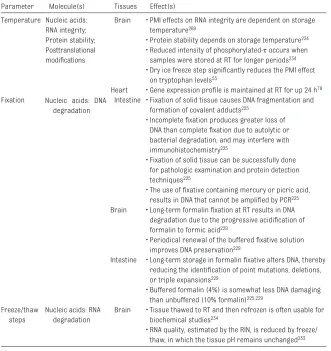
TABLE 5 Solid Tissue Storage and Processing Parameter Molecule(s) Tissues Effect(s) Temperature Nucleic acids:
RNA integrity; Protein stability; Posttranslational modifi cations
Brain • PMI effects on RNA integrity are dependent on storage temperature269
• Protein stability depends on storage temperature234 • Reduced intensity of phosphorylated-τ occurs when
samples were stored at RT for longer periods234 • Dry ice freeze step signifi cantly reduces the PMI effect
on tryptophan levels55
Heart • Gene expression profi le is maintained at RT for up 24 h78 Fixation Nucleic acids: DNA
degradation
Intestine • Fixation of solid tissue causes DNA fragmentation and formation of covalent adducts225
• Incomplete fi xation produces greater loss of DNA than complete fi xation due to autolytic or bacterial degradation, and may interfere with immunohistochemistry225
• Fixation of solid tissue can be successfully done for pathologic examination and protein detection techniques225
• The use of fi xative containing mercury or picric acid, results in DNA that cannot be amplifi ed by PCR225 Brain • Long-term formalin fi xation at RT results in DNA
degradation due to the progressive acidifi cation of formalin to formic acid229
• Periodical renewal of the buffered fi xative solution improves DNA preservation229
Intestine • Long-term storage in formalin fi xative alters DNA, thereby reducing the identifi cation of point mutations, deletions, or triple expansions229
• Buffered formalin (4%) is somewhat less DNA damaging than unbuffered (10% formalin)225,229
Freeze/thaw steps
Nucleic acids: RNA degradation
Brain • Tissue thawed to RT and then refrozen is often usable for biochemical studies234
of the freezer should be monitored at least weekly and recorded in a log.18 The benefits of the freezer are
the ability to store many samples in a relatively small storage space, with ease of access, and fewer infrastructure requirements. The disadvantages of freezers include high cost, fragility of the equipment,
and the dependence on energy.18
Liquid nitrogen storage provides better preservation of samples, independent of energy, but requires constant maintenance of the nitrogen level and is associated with a
greater difficultly of accessing the
samples.18
TISSUE DISTRIBUTION
A trained pathologist or technician may be necessary to identify and section tissue. For some specific conditions/diseases and tissues/ organs, a systemic evaluation of the tissue by a pathologist might be necessary to confirm diagnosis before distribution for research. Efforts need to be taken to prevent thawing of the tissue during the sampling procedure. Different approaches will be necessary to section the frozen tissue, including chipping, sawing, or use of a dental drill to excise tissues from large sections (ie, coronal brain section). The sample should be heat-sealed under vacuum in plastic and immediately placed in a –80°C freezer until it is packaged for shipping. Tissues are packed in inner and outer pouches consisting of an amber translucent Teflon-Kapton (Dupont, Circleville, OH)material and then heat-sealed after packaging. The pack is vacuum-sealed within a plastic bag and placed in a disposable
transport box containing dry ice.298
Commercial companies now offer a large variety of containers for
temperature-sensitive shipments.299
β-ray sterilized plastic bags and
vacuum sealing of fresh excised specimens at surgical theaters, followed by time-controlled
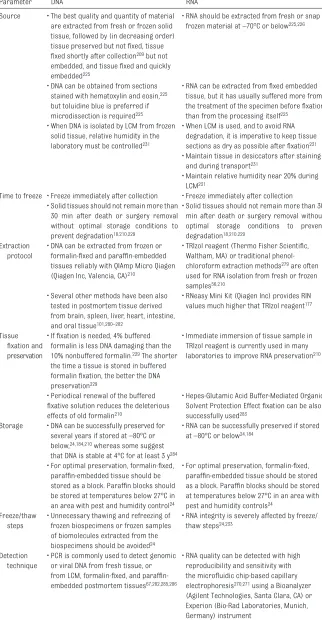
TABLE 6 Sample Processing and Storage Tips for DNA/RNA
Parameter DNA RNA
Source • The best quality and quantity of material are extracted from fresh or frozen solid tissue, followed by (in decreasing order) tissue preserved but not fi xed, tissue fi xed shortly after collection209 but not embedded, and tissue fi xed and quickly embedded225
• RNA should be extracted from fresh or snap frozen material at –70°C or below225,226
• DNA can be obtained from sections stained with hematoxylin and eosin,225 but toluidine blue is preferred if microdissection is required225
• RNA can be extracted from fi xed embedded tissue, but it has usually suffered more from the treatment of the specimen before fi xation than from the processing itself225
• When DNA is isolated by LCM from frozen solid tissue, relative humidity in the laboratory must be controlled231
• When LCM is used, and to avoid RNA degradation, it is imperative to keep tissue sections as dry as possible after fi xation231 • Maintain tissue in desiccators after staining
and during transport231
• Maintain relative humidity near 20% during LCM231
Time to freeze • Freeze immediately after collection • Freeze immediately after collection • Solid tissues should not remain more than
30 min after death or surgery removal without optimal storage conditions to prevent degradation18,210,229
• Solid tissues should not remain more than 30 min after death or surgery removal without optimal storage conditions to prevent degradation18,210,229
Extraction protocol
• DNA can be extracted from frozen or formalin-fi xed and paraffi n-embedded tissues reliably with QIAmp Micro Qiagen (Qiagen Inc, Valencia, CA)210
• TRIzol reagent (Thermo Fisher Scientifi c, Waltham, MA) or traditional phenol-chloroform extraction methods279 are often used for RNA isolation from fresh or frozen samples56,210
• Several other methods have been also tested in postmortem tissue derived from brain, spleen, liver, heart, intestine, and oral tissue101,280–282
• RNeasy Mini Kit (Qiagen Inc) provides RIN values much higher that TRIzol reagent177
Tissue fi xation and
preservation
• If fi xation is needed, 4% buffered formalin is less DNA damaging than the 10% nonbuffered formalin.229 The shorter the time a tissue is stored in buffered formalin fi xation, the better the DNA preservation229
• Immediate immersion of tissue sample in TRIzol reagent is currently used in many laboratories to improve RNA preservation210
• Periodical renewal of the buffered fi xative solution reduces the deleterious effects of old formalin210
• Hepes-Glutamic Acid Buffer-Mediated Organic Solvent Protection Effect fi xation can be also successfully used283
Storage • DNA can be successfully preserved for several years if stored at –80°C or below,24,184,210 whereas some suggest that DNA is stable at 4°C for at least 3 y284
• RNA can be successfully preserved if stored at –80°C or below24,184
• For optimal preservation, formalin-fi xed, paraffi n-embedded tissue should be stored as a block. Paraffi n blocks should be stored at temperatures below 27°C in an area with pest and humidity control24
• For optimal preservation, formalin-fi xed, paraffi n-embedded tissue should be stored as a block. Paraffi n blocks should be stored at temperatures below 27°C in an area with pest and humidity controls24
Freeze/thaw steps
• Unnecessary thawing and refreezing of frozen biospecimens or frozen samples of biomolecules extracted from the biospecimens should be avoided24
• RNA integrity is severely affected by freeze/ thaw steps24,233
Detection technique
• PCR is commonly used to detect genomic or viral DNA from fresh tissue, or from LCM, formalifi xed, and paraffi n-embedded postmortem tissues67,282,285,286
• RNA quality can be detected with high reproducibility and sensitivity with the microfl uidic chip-based capillary electrophoresis270,271 using a Bioanalyzer (Agilent Technologies, Santa Clara, CA) or Experion (Bio-Rad Laboratories, Munich, Germany) instrument
transferring at 4°C to the pathology laboratory, do not affect morphology, nucleic acids, proteins, or cell viability.300–303 Antifreeze solution
E/P20 (containing 20% ethylene glycol and propylene glycol) preserves cells and DNA integrity derived from human blood tissue and
bone marrow.304 Generic insulated
shipping containers with appropriate grams of wet ice for the given time interval are used for cornea shipping (≤8°C).305
After death, RNA integrity is influenced by the PMI, which is enhanced by higher storage
temperatures.268 The levels of
proteins and posttranslational modifications are also dramatically affected at higher temperatures
such as 4°C to 21°C.234 Preservation
of protein samples at 21°C for >12 hours decreases biochemical
reliability. In addition, thawed tissue stored at 21°C and then refrozen is no longer usable for
biochemical studies.234 Overall,
optimal storage conditions should be obtained for solid tissues by 30 minutes (for DNA or RNA) or 2 hours (for protein) after death to
prevent degradation.18,234 PMIs are
often longer for medical examiner cases or for those who die at home or in hospice care. Best practices for collection, transport, and processing of solid tissues for nucleotide and protein isolation have been provided by the International Society for Biological and Environmental
Repositories306 and the National
Cancer Institute.24,184
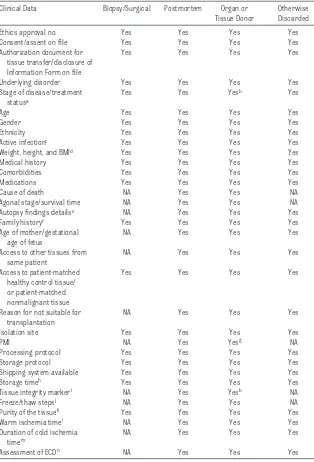
TISSUE LINKAGES TO CLINICAL DATA
Research using solid tissues must be linked back to the patient and his or
her disease. Thus, accurate recording of clinical data and the specifics of tissue collection are essential. Table 8 outlines the recommended minimal clinical data set.
TRANSMISSION OF GENETIC TESTING
RESULTS TO FAMILIES
Thresholds have been established for reporting genetic testing results to study participants, with 3 key criteria: (1) the risk for the disease should be significant (variants with greater penetrance or associated with younger age of onset should receive priority); (2) the disease should have important health implications (ie, fatal or substantial morbidity); and (3) proven therapeutic or preventive interventions should be available. In addition, the genetic results should come only from certified laboratories.307,308
CONCLUSIONS
This review summarizes pertinent issues regarding the procurement and storage of solid tissues from children. Due to the variability in collection method, site, time, and storage conditions of tissues, it is imperative to understand the factors affecting tissue quality. Standardization of methods of collection and linked clinical information will aid reliable research results. Minimal quality control measures for solid tissue
are required for each study,184
which may include a search of donor information, record of agonal states, standardization of PMIs, standardization of sample collection and storage processes, histologic reviews of samples to assess proper biospecimen identification, and the use of best practices for molecule isolation. Translational research on solid tissues will contribute to new diagnostics and therapeutics in child diseases.
TABLE 7 Sample Processing and Storage Tips for Protein and Lipids
Parameter Proteins Lipids
Source of material
• Proteins should be extracted from fresh or snap frozen material at –70°C or below184,210,234
• Lipids should be extracted from fresh or snap frozen material at –20°C108 or –80°C223,287 Time to freeze • Freeze immediately after isolation.
Samples derived postmortem should be frozen (at –80°C) short after death (maximum 2 h) for optimal results in protein studies and to avoid protein degradation210,234
• Freeze immediately after isolation. Samples derived postmortem should be frozen (at –20°C to –80°C) shortly after death (maximum 6–8 h) for optimal results in lipids studies108
Extraction protocol
• General buffer for protein extraction and/or homogenization can be used with fresh or frozen samples233,234,265,267
• Lipids can be extracted with the method of Folch et al108,223,288
• Lipid extracts are dried in a vacuum evaporator at ≤40°C and dissolved in solvent for later analysis or storage108
Tissue fi xation and
preservation
• For optimal preservation, formalin-fi xed, parafformalin-fi n-embedded tissue should be stored as a block24
• After extraction, lipids extracts are dissolved in solvent for storage108
Storage • Protein can be preserved for several years for proteomics if samples are stored at –80°C or below24,184
• Lipids can be successfully preserved for several years if stored at –80°C or below24,184,287
• Paraffi n blocks should be stored at temperatures below 27°C in an area with pest and humidity controls24 Freeze/thaw
steps
• Unnecessary thawing/refreezing of solid tissues or isolated biomolecules should be avoided24
• Unnecessary thawing and refreezing of frozen biospecimens or frozen samples of biomolecules extracted from the biospecimens should be avoided24
Detection technique
• When IHC is used to detect proteins in solid tissues, antigen retrieval may be required to unveil proteins225
• TLC and a specifi c solvent system are used to separate individual lipid classes222