Analysis of Multiple Keys for Variable Data
Length in Multinode
Network for Encryption
Ajay Kakkar
ECED, Thapar University, Punjab, India [email protected]
Dr. M.L Singh
Electronics Technology, Guru Nanak Dev University, Punjab, India
Dr. P.K.Bansal
Ex- Professor, Thapar University, Punjab, India
Abstract:
Data security of the model depends upon the combination of keys. The processing speed, latency, S-Boxes, accuracy and key length have been used to determine the strength of the model. The paper deals with the above mentioned parameters for wireless model having multiple nodes. The results have been obtained by using MATLAB 7.3.
Key words: Encryption, Keys, S-Boxes, Security.
1 Introduction:
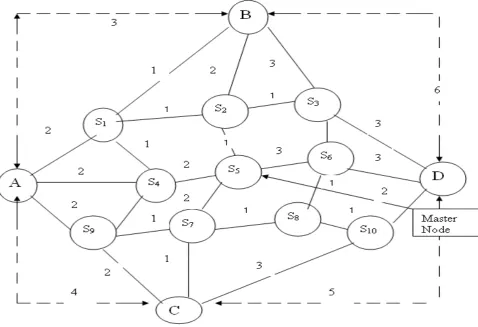
Encryption is also used to protect data during transmission, it is quite obvious that it has being transferred via various networks such as internet, e-commerce, mobile cell phones, etc. During the transmission it might be intercepted by the hacker. Data security is related with both, physical and wireless security. The main motive of the hacker’s is to destroy the wireless security, means to generate the virtual attacks because all the systems are based upon the wireless that provides the freedom of mobility to the users [1-3].In order to protect the data from the hacker we proposed a new approach in which the encryption will take place by using multiple keys. These keys are capable to encrypt the data even if they are of variable lengths. By using the above scheme the encryption time is reduced significantly. More over it also reduces the heat dissipation by the machine in the process. Security level of a model is determined from hacking and processing time [4-5]. We consider a 10 node heterogeneous multinode network in which nodes are to be deployed over a unit area. Here
D
C
B
A
,
,
,
are the stations andS
1,
S
2,
S
3,
S
4,
S
5,
S
6,
S
7,
S
8,
S
9,
S
10are the intermediate nodes [6-7]. Weassume that
S
5is the master node and capable to re route and store the data in case of hazards. It has beenprotected by five multiple keys say
a
,
b
,
c
,
d
,
e
all are having different failure rates, while remaining nodes arecovered by two keys
a
,
b
. The security level of the individual station w.r.t has been determined by using equation 1.(
)
(
1
)
(
2
)
...(
1
)
)
2
(
1
1 ( ) 2 ( )2 , 1 2 2 1 1
−
+
−
−
⋅
−
+
−
−
=
− − + − −a t+TbT T t a bT
e
b
e
bT
e
b
e
bT
s
Here
T
1,
T
2 are the encryption times fora
,
b
respectively. Similarly we can find out the securityFigure 1: Multinode Network with various nodes
1.1 Problem:
In case of encryption techniques, we are aware that the keys are used to encrypt and decrypt the data. If same keys are used for both the process then it known as symmetrical key cryptography, on the other hand if different keys are used for the task then it will called of unsymmetrical key cryptography [4]. We are taking the case that if key has to transmit from the source to transmitter then it could be done over a secure path. In real cases secure path do not exits if so then send the data over the same path, there is no need of encryption in that case. Therefore, need to have secured channel and can be achieved by using S-boxes and multiple keys.
1.2 Organization:
The rest of this paper is organized as follows: Section 2 describes the model that we used to experimentally determine the paths and strength of multiple keys against attacks. Section 3 shows experimental results, i.e calculation of security level by using multiple S- boxes/ key lengths. Finally, in Section 4, we draw some final conclusions and propose future work.
2 Model:
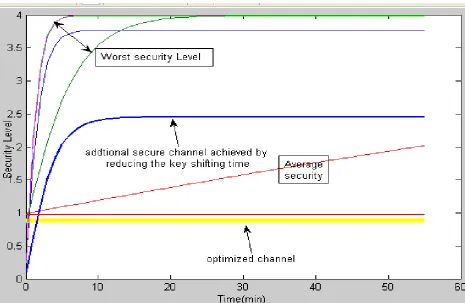
Figure 2.1: Worst, average and optimized channels are achieved by using multiple keys
3 Experimental Results:
Encryption process is based upon the Count (∑ (Data, Key, Compression, Padding))/36*36 ≤ 1. The database needs at least a mechanism which restricts the sum of all the parameters less than or equal to 1. Increasing from the limit creates a burden over the system also it permits the facility to the hacker to go for no. of attacks [8]. For n data lengths, the count lies n ≤ (Encryption Key) ≤ N-n
Table 3.1: Analysis of key strength on the basis of various parameters
Operation Latency Energy Consumption Compression
Factor
Initial Permutation Encryption
Key Size Round
Functions
8 8 22.32 µs 22.32 µs 0.21 43
8 16 34.23 µs 34.23 µs 0.29 54
16 8 15.55 µs 15.55 µs 0.32 76
16 16 21.25µs 21.25µs 0.34 89
Decryption Key
Size(Bits)
Round Functions
8 8 24.18 µs 24.18 µs 0.21 32
8 16 36.67 µs 36.67 µs 0.29 42
16 8 19.10 µs 19.10 µs 0.32 45
16 16 22.10µs 22.10µs 0.34 62
1
2
3
4
S1
S3
0
10
20
30
40
50
Se rie s
Va
lu
e
Encryption
Series1
Series2
Series3
Series4
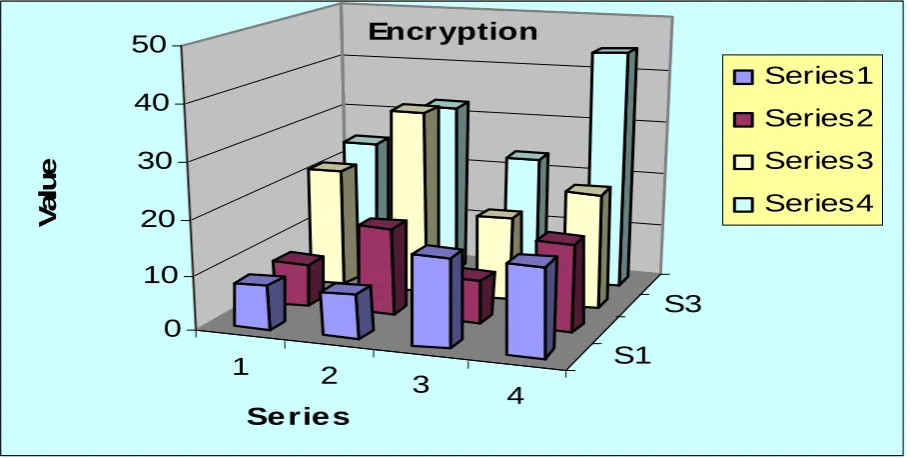
Figure 3.1: encryption strength of keys by considering initial permutation
Here eight S-Boxes are used in which they strength of the keys are determined. The failure rate of 1st key high and the failure rate of second key is less. In the last attempt optimized and reliable combination is shown. In this combination the secured S-5 has been achieved.
Table 3.2: Failure Rate of 1st key is varied from (0.01-0.13); FR of 2nd key decreases (0.8-0.11)
a b
1
T
T
2 a b1
T
T
2 a b1
T
T
21
S
0.01 0.8 10 501
S
0.12 0.8 10 501
S
0.11 0.8 10 502
S
0.01 0.7 10 50S
2 0.12 0.7 10 50S
2 0.11 0.7 10 503
S
0.01 0.6 10 503
S
0.12 0.6 10 503
S
0.11 0.6 10 504
S
0.01 0.5 10 50S
4 0.12 0.5 10 50S
4 0.11 0.5 10 506
S
0.01 0.3 10 506
S
0.12 0.3 10 506
S
0.11 0.3 10 507
S
0.01 0.2 10 50S
7 0.12 0.2 10 50S
7 0.11 0.2 10 508
S
0.01 0.1 10 508
S
0.12 0.1 10 508
S
0.11 0.1 10 50Table 3.2: Failure Rate of 1st key is varied from (0.01-0.13); FR of 2nd key decreases (0.8-0.11)
a B
1
T
T
2 a b1
T
T
2 a b1
T
T
21
S
0.14 0.8 10 501
S
0.15 0.8 10 501
S
0.1 0.5 10 502
S
0.14 0.7 10 50S
2 0.15 0.7 10 50S
2 0.1 0.4 10 503
S
0.14 0.6 10 503
S
0.15 0.6 10 503
S
0.1 0.3 10 504
S
0.14 0.5 10 50S
4 0.15 0.5 10 50S
4 0.1 0.4 10 506
S
0.14 0.3 10 506
S
0.15 0.3 10 506
S
0.1 0.4 10 507
S
0.14 0.2 10 50S
7 0.15 0.2 10 50S
7 0.1 0.3 10 508
S
0.14 0.1 10 508
S
0.15 0.1 10 508
S
0.1 0.4 10 50of node. The data statistics are used to make recovery mechanisms active. These are used to recover the data in faculty nodes.
5 Conclusion and Future Scope:
The efficient selection of key size and number of keys and S-Boxes results in optimized and secured network. Re-routing of the data also provide the secured communication. The work can be extended if number of keys is increases and the time shifting time is reduced.
References:
[1] C. Karlof and D. Wagner, “Secure routing in wireless sensor networks: attacks and countermeasures, 1st IEEE international
workshop on sensor network protocols and applications, May, 2003.
[2] Donggang Liu and Peng Ning, “Establishing pair wise keys in Distributed Networks,” CCS,s 03, USA, ACM, October 27-31, 2003.
[3] G. McGraw, Software Security: Building Security In. Addison Wesley, 2006.
[4] Jong Tae Park, Jae Wook Nah, and Wee Hyuk Lee, “Dynamic Path Management with Resilience Constraints under Multiple Link Failures in MPLS/GMPLS Networks” IEEE Transactions on Dependable and Secure Computing, Vol. 5, No. 3, July-September 2008, pp. 143-154.
[5] L. Eschenauer and V.D.Gligor, “A key management scheme for distributed sensor networks” Proceedings of 9th ACM conference on computer and communications security, November 2002, pp. 41-47
[6] R. Agrawal, J. Kiernan, R. Srikant, and Y. Xu, “Order-Preserving Encryption for Numeric Data,” Proc. 2004 ACM Sigmod Conference, 2004.
[7] Ruth M. Davis, “The Data Encryption Standard” Proceedings of Conference on Computer Security and the Data Encryption Standard, National Bureau of Standards, Gaithersburg, MD, Feb. 15, 1977, NBS Special Publication 500-27, pp 5-9.
[8] Subbarao V. Wunnava, “Data Encryption Performance and Evaluation Schemes” Proceedings IEEE Southeastcon 2002, pp 234-238.
[9] W. Stallings, “Cryptography and Network Security: principles and practices, prentice Hall, 2nd edition, 1999.