
CORE COMPONENTS OF ANALYTICAL METHOD VALIDATION FOR SMALL MOLECULES: AN OVERVIEW
11
0
0
Full text
(2) Subhash Chandra Bose. Kotte et al. IRJP 2012, 3 (5) ANALYTICAL METHOD DEVELOPMENT Analytical chemistry compacts with methods for identification, separation, and quantification of the chemical components of natural and synthetic components11. The choice of analytical methodology is based on many considerations, such as chemical properties of the analyte and its concentration12, sample matrix, the rapidity and cost of the analysis, type of measurements i.e., quantitative or qualitative and the number of samples. A qualitative method yields information of the chemical identity of the species in the sample. A quantitative method provides numerical information regarding the relative amounts of one or more of the analytes in the sample. Method validation is the process used to confirm that the analytical procedure employed for a specific test is suitable for its intended use. Results from method validation can be used to judge the quality, reliability and consistency of analytical results; it is an integral part of any good analytical practice. The following steps are common to most types of projects: a) Method development plan definition, b) Background information gathering, c) Laboratory method development, it includes various stages namely sample preparation, specific analytical method, detection and data processing and d) Generation of test procedure. The most widely used methods for quantitative determination of drugs and metabolites in biological matrices such as blood, serum, plasma, or urine includes Gas chromatography (GC), High-performance liquid chromatography (HPLC)13,14, Thin layer chromatography (TLC), evaporative light-scattering detection (ELSD)15 combined GC and LC mass spectrometric (MS) procedures such as LC-MS16,17, LC-MS-MS18,19, GCMS20,21, and GC-MSMS. Defined peaks may be quantified directly or fractions containing the solutes can be collected for analysis by other means. However, the much wider use of light-scattering detectors in the last few years has changed the perspective greatly. Liquid chromatography can be categorized on the basis of the mechanism of interaction of the solute with the stationary phase as: adsorption chromatography (liquid-solid chromatography), partition chromatography (liquid-liquid chromatography), ion-exchange chromatography (IEC), size exclusion chromatography (SEC) and affinity chromatography. Early work in liquid chromatography was based on highly polar stationary phases, and nonpolar solvents served as mobile phases, this type of chromatography is now referred to normal-phase liquid chromatography (NPLC)22. Chromatography on bare silica is an example of normalphase chromatography. In reversed-phase high performance liquid chromatography (RP-HPLC), the stationary phase is nonpolar23,24, often a hydrocarbon, and the mobile phase is relatively polar25. In RP-HPLC, the most polar component is eluted first, because it is relatively most soluble in the mobile phase. HPLC-UV diode-array detection (DAD)26,27 and HPLC-MS techniques take advantage of chromatography as a separation method and DAD or MS as identification and quantification methods. The HPLC equipment consists of a high-pressure solvent delivery system, a sample auto injector, a separation column, a detector (UV or DAD) a computer to control the system and display results. Ultra performance liquid chromatography (UPLC) is a recent technique in liquid chromatography, which enables significant reductions in separation time, solvent. consumption and analysis time as compared to the conventional HPLC28,29. Sample preparation The purpose of sample preparation is to create a processed sample that leads to better analytical results compared with the initial sample. The prepared sample should be an aliquot relatively free of interferences that is compatible with the HPLC method and that will not damage the column30. The main sample preparation techniques are liquid-liquid extraction (LLE) 31,32 and solid-phase extraction (SPE)33. In these methods the analyte of interest was separated from sample matrix, so that as few potentially interfering species as possible are carried through to the analytical separation stage. Detection After the chromatographic separation, the analyte of interest is detected by using suitable detectors. Some commercial detectors used in LC are: ultraviolet (UV) detectors34, fluorescence detectors, electrochemical detectors, refractive index (RI) detectors, Evaporative Light Scattering Detection (ELSD) and mass spectrometry (MS) detectors. The choice of detector depends on the sample and the purpose of the analysis. The UV detectors are the most common HPLC detectors since they are robust, cheap, easy to handle, and since many solutes absorb light in this frequency range35,36. The ordinary UV detector measures the absorbance at one single wavelength at the time. A diode-array detector (DAD) can measure several wavelengths at the same time, and since no parts are moved to change wavelength or to scan, there are no mechanical errors or drift with time. DAD detectors have been proposed for various applications, such as preliminary identification of a steroidal glycoside in seed37, peptide mapping38, assay of sulfamethazine in animal tissues39, or identification of pesticides in human biological fluids40. HPLC with a mass spectrometer detector (LCMS)41,42 showed superior sensitivity and selectivity compared to HPLC-UV methods43. Mass Spectrometry Mass spectrometry (MS) is a powerful analytical tool that can supply both structural information about compounds and quantitative data relating to mass. Under optimum conditions, it can provide the molecular weight; the empirical formula and often the complete structure of an unknown compound in addition to giving a measure of the amount present44. For some years it was necessary to volatilize the sample in the ion source of the instrument before ionizing it by electron-impact or chemical-ionization techniques, but recently methods have been developed for producing ions from materials in the condensed phase (e.g. by fast-atom bombardment techniques). There are several types of ion sources, which utilize different ionization techniques for creating charged species. Three popular ionization techniques are: electrospray ionization (ESI) [45], atmospheric pressure chemical ionization (APCI) and matrix-assisted laser desorption (MALDI). Electrospray is the most widely used ionization technique when performing LC-MS46-49. PARAMETERS AND TESTS Analytical methods should be validated through laboratory tests “Validation of an analytical procedure is the process by which it is established, by laboratory studies, that the performance characteristics of the procedures meet the requirements for the intended analytical applications”50. Unfortunately, some of the definitions vary between the different organizations. Therefore, laboratories should have a Page 2.
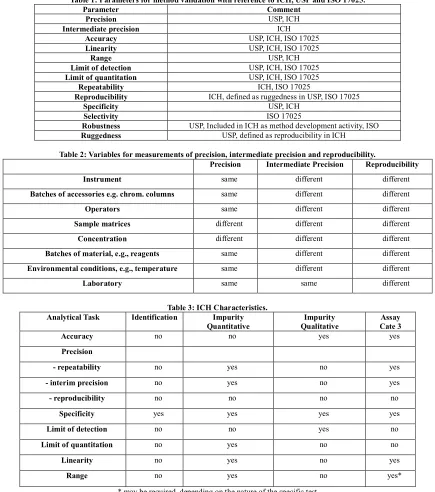
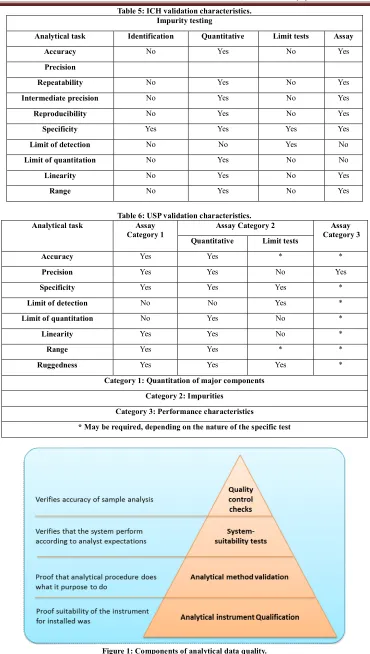
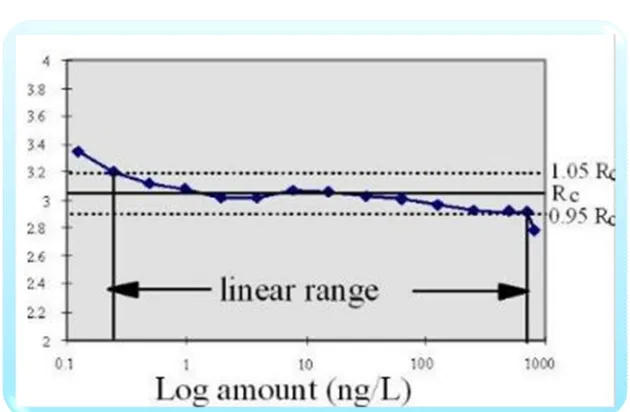
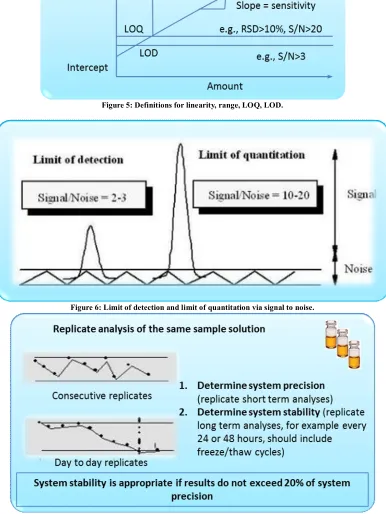
(3) Subhash Chandra Bose. Kotte et al. IRJP 2012, 3 (5) glossary with definitions on their understanding of the terms. In an attempt to standardize, representatives from the industry and regulatory agencies from the United States, Europe and Japan defined parameters, requirements and methodology for analytical methods validation through the ICH. The parameters, as defined by the ICH and other organizations and authors, are summarized in Table 1 and are described briefly in the following paragraphs51-53. The preparation and execution should follow a validation protocol, preferably written in a step-by-step instruction format. Possible parameters for a complete method validation are listed as: Precision, Accuracy, Linearity, Range, Ruggedness, Robustness, Limit of detection, Limit of quantitation54, Selectivity and Specificity. This proposed procedure assumes that the instrument has been selected and the method has been developed. It meets criteria such as ease of use; ability to be automated and to be controlled by computer systems; costs per analysis; sample throughput; turnaround time; and environmental, health and safety requirements. Precision Precision of an analytical procedure as the closeness of agreement (degree of scatter) between a series of measurements obtained from multiple sampling of the same homogeneous sample under the prescribed conditions. Precision may be considered at three levels: repeatability55, intermediate precision and reproducibility. Repeatability expresses the precision under the same operating conditions over a short interval of time. Repeatability is also termed intra-assay precision. Intermediate precision expresses variations within laboratories, such as different days, different analysts, different equipment, and so forth. Reproducibility expresses the precision between laboratories (collaborative studies usually applied to standardization of methodology). Accuracy and Recovery The accuracy of an analytical procedure as the closeness of agreement between the conventional true value or an accepted reference value and the value found56. Accuracy can also be described as the extent to which test results generated by the method and the true value agree. Typical variations affecting a method’s reproducibility Table 2 summarizes factors that should be the same, or different, for precision, intermediate precision and reproducibility. Linearity and Calibration Curve Linearity of an analytical procedure as its ability (within a given range) to obtain test results that are directly proportional to the concentration (amount) of analyte in the sample. Linearity may be demonstrated directly on the test substance (by dilution of a standard stock solution) or by separately weighing synthetic mixtures of the test product components. Linearity is determined by a series of five to six injections of five or more standards whose concentrations span 80–120 percent of the expected concentration range. The response should be directly proportional to the concentrations of the analytes or proportional by means of a well-defined mathematical calculation. A linear regression equation applied to the results should have an intercept not significantly different from zero. If a significant nonzero intercept is obtained, it should be demonstrated that this has no effect on the accuracy of the method. Figure 3& 4 shows a comparison of the two graphical evaluations using HPLC.. Plotting the sensitivity (response/amount) gives clear indication of the linear range. Plotting the amount on a logarithmic scale has a significant advantage for wide linear ranges. Rc = Line of constant response. Range The range of an analytical procedure as the interval from the upper to the lower concentration of analyte in the sample for which it has been demonstrated that the analytical procedure has a suitable level of precision, accuracy and linearity. For assay tests, the ICH requires the minimum specified range to be 80 to 120 percent of the test concentration, and for the determination of an impurity, the range to extend from the limit of quantitation, or from 50 percent of the specification of each impurity, whichever is greater, to 120 percent of the specification. Ruggedness Ruggedness is not addressed in the ICH documents. Its definition has been replaced by reproducibility, which has the same meaning. Ruggedness is defined by the USP as the degree of reproducibility of results obtained under a variety of conditions, such as different laboratories, analysts, instruments, environmental conditions, operators and materials. Ruggedness is a measure of the reproducibility of test results under normal, expected operational conditions from laboratory to laboratory and from analyst to analyst. Ruggedness is determined by the analysis of aliquots from homogeneous lots in different laboratories. Robustness The robustness of an analytical procedure as a measure of its capacity to remain unaffected by small, but deliberate variations in method parameters57. It provides an indication of the procedure’s reliability during normal usage. Robustness tests examine the effect that operational parameters have on the analysis results. For the determination of a method’s robustness, a number of method parameters, such as pH, flow rate, column temperature, injection volume, detection wavelength or mobile phase composition, are varied within a realistic range, and the quantitative influence of the variables is determined. If the influence of the parameter is within a previously specified tolerance, the parameter is said to be within the method’s robustness range. Limit of Detection The detection limit of an individual analytical procedure as the lowest amount of analyte in a sample which can be detected but not necessarily quantitated as an exact value. (Figure: 5). The limit of detection (LOD) is the point at which a measured value is larger than the uncertainty associated with it. It is the lowest concentration of analyte in a sample that can be detected but not necessarily quantified. The limit of detection is frequently confused with the sensitivity of the method. The sensitivity of an analytical method is the capability of the method to discriminate small differences in concentration or mass of the test analyte. In practical terms, sensitivity is the slope of the calibration curve that is obtained by plotting the response against the analyte concentration or mass58,59. Limit of Quantitation The limit of quantitation (LOQ) of an individual analytical procedure as the lowest amount of analyte in a sample which can be quantitatively determined with suitable precision and accuracy. The quantitation limit is a parameter of quantitative assays for low levels of compounds in sample matrices, and is used particularly for the determination of impurities or degradation products. Page 3.
(4) Subhash Chandra Bose. Kotte et al. IRJP 2012, 3 (5) The quantitation limit is generally determined by the analysis of samples with known concentrations of analyte and by establishing the minimum level at which the analyte can be quantified with acceptable accuracy and precision. If the required precision of the method at the limit of quantitation has been specified, 5 or 6 samples with decreasing amounts of the analyte are injected six times. The amounts range from the known LOD as determined above to 20 times the LOD. (Figure: 6). Selectivity Selectivity is the ability to measure accurately and specifically the analyte in the presence of components that may be expected to be present in the sample matrix. Specificity for an assay ensures that the signal measured comes from the substance of interest, and that there is no interference from excipient and/or degradation products and/or impurities60. Specificity Specificity is the ability to assess unequivocally the analyte in the presence of components which may be expected to be present. Typically, these might include impurities, degradants, matrix, etc. Lack of specificity of an individual analytical procedure may be compensated by other supporting analytical procedure(s). This definition has the following implications: IDENTIFICATION: To ensure the identity of an analyte. PURITY TESTS: To ensure that all the analytical procedures performed allow an accurate statement of the content of impurities of an analyte, i.e., related substances test, heavy metals, residual solvents content, etc. ASSAY (Content or Potency): To provide an exact result this allows an accurate statement on the content or potency of the analyte in a sample. Only specificity is needed for an identification test. However, the full range of specificity, accuracy, linearity, range, limit of detection (LOD)61, limit of quantitation (LOQ)62, precision, and robustness testing is needed for more-complex methods such as quantitative impurity methods. Stability Chemical compounds can decompose prior to chromatographic investigations, for example, during the preparation of the sample solutions, extraction, cleanup, phase transfer or storage of prepared vials (in refrigerators or in an automatic sampler). Under these circumstances, method development should investigate the stability of the analytes and standards. It is a measure of the bias in assay results generated during a preselected time interval, for example, every hour up to 46 hours, using a single solution. (Figure: 7). Stability testing is important for estimating the allowed time span between sample collection and sample analysis. It is also important to evaluate an analytical method’s ability to measure drug products in the presence of its degradation products. Experiments should be conducted under real sample storage conditions because the stability of drug substances is a function of the storage conditions, the chemical properties of the drug, the matrix, and the container system stability. The studies should evaluate the stability of the analytes during sample collection and handling after typical storage scenarios such as long term storage (when frozen at intended storage temperatures), short term storage (during a series of sample analyses at room temperature), and after freeze and thaw cycles. Conditions used in stability experiments should reflect situations likely to be encountered during actual sample handling, storage and analysis.. In addition "diode array" detectors allow for the determination of the relative purity factor typically called: Peak Purity. The retention time precision is important, because not only is retention time the primary method for peak identification, but also variations can indicate problems within the LC system (i.e. with the piston seals, check valves etc.). Use of a column oven can overcome laboratory temperature variations, which is the most common cause of retention time drift. The most dominant factor controlling the repeatability of peak area is the auto sampler’s precision, though the effect of noise and integration parameters will become more significant with small peaks. METHOD VALIDATION PROCESS For an efficient validation process, it is of utmost importance to specify the right validation parameters and acceptance criteria. The more parameters, the more time it will take to validate. The more stringent the specifications or acceptance limits, the more often the equipment has to be recalibrated, and probably also prequalified, to meet the higher specifications at any one time. It is not always essential to validate every analytical performance parameter, but it is necessary to define which ones are required. The proposed procedure assumes that the type of instrument has been selected and the method has been developed. It meets criteria such as ease of use; ability to be automated and to be controlled by computer systems; costs per analysis; sample throughput; turnaround time; and environmental, health and safety requirements. The validation parameters depend on the analytical task and the scope of the method. For example, both the USP and the ICH contain chapters on validation procedures for different analytical tasks, both of which are included to provide some ideas on what type of validations are required for different tasks (see Tables 3 and 4). For example, according to the ICH, accuracy, any type of precision and limits of detection and quantitation are not required if the analytical task is identification. For assays in USP category 1, the major component or active ingredient to be measured is normally present at high concentrations; therefore, validation of limits of detection and quantitation is not necessary. International Conference on Harmonization (ICH) of Technical Requirements for the Registration of Pharmaceuticals for Human Use, Validation of analytical procedures: definitions and terminology, Geneva (1996) Lifecycle Concept As with equipment qualifications or computer system validations, method validation is not a single event. It begins when somebody wants to implement a new method in a laboratory and ends when the method is no longer in use. The process is broken down in phases because of the length of time and complexity. Validation Planning Successful validation requires the cooperative efforts of several departments of an organization including regulatory affairs, quality assurance, quality control and analytical development. Therefore, it is important that the process follows a well-defined validation master plan for analytical methods. The plan documents a company’s approach and steps for method validation and serves two purposes. When implemented correctly, it ensures consistent and efficient execution of validation projects. In addition, it answers an inspector’s questions regarding the company’s approach for all aspects of analytical method validation. The master plan is Page 4.
(5) Subhash Chandra Bose. Kotte et al. IRJP 2012, 3 (5) also an ideal training tool for all employees affected by method validation. The master plan should include: 1. Purpose and scope 2. Glossary 3. Responsibilities, such as user departments, management, QA 4. Method performance characteristics and approaches for testing 5. Steps for method validation 6. Selection of tests and acceptance criteria 7. Approach and parameters for system suitability testing 8. Modification and revalidation of methods 9. Verification of compendial and standard methods 10. Transfer of analytical methods 11. List of required Standard Operating Procedures 12. Approval process, documentation and archiving 13. Templates for project plans, test protocols and validation reports For each individual validation project a project plan should be developed. It outlines what is to be done in order to get a specific method or procedure validated. This plan should be derived from the master plan. The plan should include a time table with specific tasks, deliverables and owners. Revalidation Most likely some method parameters have to be changed or adjusted during the life of the method if the method performance criteria fall outside their acceptance criteria. The question is whether such change requires revalidation. In order to clarify these question upfront, operating ranges should be defined for each method, either based on experience with similar methods or else investigated during method development. These ranges should be verified during method validation in robustness studies and should be part of the method characteristics. Availability of such operating ranges makes it easier to decide when a method should be revalidated. A revalidation is necessary whenever a method is changed, and the new parameter lies outside the operating range. If, for example, the operating range of the column temperature has been specified to be between 30 and 40°C, the method should be revalidated if, for whatever reason, the new operating parameter is 41°C. Revalidation is also required if the scope of the method has been changed or extended, for example, if the sample matrix changes or if operating conditions change. Furthermore, revalidation is necessary if the intention is to use instruments with different characteristics, and these new characteristics have not been covered by the initial validation. For example, an HPLC method may have been developed and validated on a pump with a delay volume of 5 mL, but the new pump has a delay volume of only 0.5 mL. Scope and Method Specifications The scope of the method and its validation criteria should be defined early in the process. Defining a scope is a cooperative effort of several departments including business development, analytical development, quality control and quality assurance. Selecting Validation Parameters and Limits For an efficient validation process, it is important to specify the right validation parameters and acceptance criteria. The method’s performance parameters and limits should be based on the intended use of the method. It is not always necessary to validate all analytical parameters available for a specific technique. For example, if the method is to be used for qualitative trace level analysis, there is no need to test and. validate the method’s limit of quantitation, or the linearity over the full dynamic range of the equipment. The more parameters, the more time it will take to validate. It is not always essential to validate every analytical performance parameter, but it is necessary to define the ones that are required. The selection of validation parameters and acceptance criteria should be based on business, regulatory and client requirements and should be justified and documented. Both the USP63 and the ICH contained parameters to be validated for different analytical tasks (Table: 6). ICH defines different types of analytical procedures to be validated: · Identification test · Quantitation tests for impurities content · Limit test for the control of impurities · Quantitative tests of the active ingredient or other main components of the drug According to the ICH, accuracy, any type of precision and limits of detection and quantitation are not required if the analytical task is for identification purposes. For assays in USP Category 1, the major component or active ingredient to be measured is normally present at high concentrations; therefore, validation of limits of detection and quantitation is not necessary. Testing for Performance Characteristics Once tests and acceptance criteria have been defined, experiments for testing should be thoroughly prepared, executed and documented according to a validation protocol. Preparation Good preparation work is important for efficient experiment execution. Most important are the use of qualified material, qualified equipment, trained people and well documented procedures. Any chemicals used to determine critical validation parameters, such as reagents and reference standards, should be available in sufficient quantities, accurately identified, sufficiently stable and checked for exact composition and purity according to specifications. Any other materials and consumables, for example, chromatographic columns, should be new and qualified to meet the column’s performance criteria. This ensures that one set of consumables can be used for most experiments and avoid unpleasant surprises during method validation. Analytical equipment should be clearly defined, well characterized, qualified or calibrated to make sure that it meets the functional and performance specifications as required by the analytical method. The selected equipment should have average performance rather than selecting best performing equipment. Otherwise there may be problems with intermediate precision and reproducibility studies to meet acceptance criteria with different equipment. Operators should be sufficiently familiar with the technique and equipment. This will allow them to identify and diagnose unforeseen problems more easily and to run the entire process more efficiently. Test Execution There are no official guidelines for the sequence of validation testing. The optimal sequence may depend on the method itself, for a liquid chromatographic method; the following sequence has proven to be useful: 1. Specificity/selectivity 2. Repeatability of retention times and peak areas 3. Linearity, limit of quantitation, limit of detection, range 4. Accuracy at different concentrations Page 5.
(6) Subhash Chandra Bose. Kotte et al. IRJP 2012, 3 (5) 5. Intermediate precision 6. Reproducibility The more time-consuming experiments, such as intermediate precision and reproducibility, are included towards the end. Some of the parameters, as listed under points 2-4, can be measured in combined experiments. Developing a Quality Control Plan for Routine Analysis The objective of analytical method validation is not only to ensure valid analytical data during initial use of the method but during its entire lifetime. Appropriate checks should be included in the routine sample analysis to verify that the method and the system perform as initially specified at the time of sample analysis. Checks do not need to cover all initial tests but should focus on the most critical performance characteristics, especially those that are most likely to change over time. Such check procedures for execution should be developed and documented as part of the method validation processes because information about the critical items is probably most readily available at this time. Common on-going tests are system suitability tests (SST) and the analysis of quality control samples. For chromatographic methods system suitability tests are described in Pharmacopeias21, 25 and typically include resolution between two peaks, repeatability of peak areas, tailing factor, and number of theoretical plates. System suitability testing is recommended as a component of any analytical procedure, not just those that involve chromatographic techniques. Validation of Non-routine Methods for sample analysis Frequently, a specific method is used for only a few sample analyses. In this case, the validation may take much more time than the sample analysis and may be considered inefficient, because the cost per sample will increase significantly. The answer is quite simple: Any analysis is worthwhile only if the data are sufficiently accurate; otherwise, sample analysis is pointless. The suitability of an analysis method for its intended use is a prerequisite to obtaining accurate data; therefore, only validated methods should be used to acquire meaningful data. However, depending on the situation, the validation efforts can be reduced for non-routine methods. The CITAG/ EURACHEM guide64 includes a chapter on how to treat non-routine methods. The recommendation is to reduce the validation cost by using generic methods, for example, methods that are broadly applicable. A generic method could, for example, be based on capillary gas chromatography or on reversed phase gradient HPLC. With little or no modification, the method can be applied to a large number of samples. The performance parameters should have been validated on typical samples characterized by sample matrix, compound types and concentration range. If, for example, a new compound with a similar structure in the same matrix is to be analyzed, the validation will require only a few key experiments. The documentation of such generic methods should be designed to easily accommodate small changes relating to individual steps, such as sample preparation, sample analysis or data evaluation. The method’s operating procedure should define the checks that need to be carried out for a novel analyte in order to establish that the analysis is valid. Detailed documentation of all experimental parameters is important to ensure that the work can be repeated in precisely the same manner at any later date. CONCLUSION Recent development in pharmaceutical and biotechnological field generates a cumulative demand for analytical methods.. Rapid and accurate quantification of the substrate and drug product is important in the process development. Improvements in analytical instrumentation leads to development of new techniques like isocratic and gradient RP-HPLC, which evolved as the primary techniques for the analysis of nonvolatile APIs and impurities. These analytical methods are critical elements of pharmaceutical development so it is very important to develop efficient and accurately validated analytical methods to develop safe and effective drugs. Reproducible quality HPLC results can only be obtained if attention has been paid to the method development, validation and the system's suitability to carry out the analysis. REFERENCES 1. LGC In-House Method Validation: A Guide for Chemical Laboratories. ISBN 0-94892-618-X, LGC, Teddington, UK, 2003. U.S. FDA – Guidance for Industry (draft): Analytical Procedures and 2. Methods Validation: Chemistry, Manufacturing, and Controls and Documentation, 2000; 65 (169): 52776-52777. 3. U.S. FDA – Guidance for Industry, Bioanalytical Method Validation 2001. 4. ICH Q2A, Validation of Analytical Procedures: Definitions and Terminology, Geneva, 1995; in 2005 incorporated in Q2 (R1). 5. ICH Q2B, Validation of Analytical Procedures: Text and Methodology, adopted in 1996; Geneva Q2B, in 2005 incorporated in Q2 (R1). 6. IUPAC Technical Report, Harmonized Guidelines for SingleLaboratory Validation of Methods of Analysis, Pure Appl. Chem., 2002; 74 (5): 835/855. 7. Eurachem – The Fitness for Purpose of Analytical Methods A Laboratory Guide to Method Validation and Related Topics; 1998. 8. L. Huber, Validation and Qualification in Analytical Laboratories, Informa Healthcare, New York, USA, 1998, Second revision 2007. 9. AOAC, How to Meet ISO 17025 Requirements for Methods Verification; 2007. 10. CT Viswanathan et al. Workshop/Conference Report - Quantitative Bioanalytical Methods Validation and Implementation: Best Practices for Chromatographic and Ligand Binding Assays. AAPS Journal 2007; 9(1): E30-E42. 11. Skoog DA, West DM, Holler FJ Fundamentals of analytical chemistry. (8th Edn.), Fort Worth: Saunders College Pub. 1996. 12. Song HH, Choi KS, Kim CW, Kwon YE Pharmacokinetic Profiles of Two Branded Formulations of Piroxicam 20mg in Healthy Korean Volunteers by a Rapid Isocratic HPLC Method. J Bioequiv Availab. 2009; 1: 074-079. 13. Chitlange SS, Chaturvedi KK, Wankhede SB., Development and Validation of Spectrophotometric and HPLC Method for the Simultaneous Estimation of Salbutamol Sulphate and Prednisolone in Tablet Dosage Form. J Anal Bioanal Techniques. 2011; 2:117. 14. Maithani M, Singh R, Development and Validation of a StabilityIndicating HPLC Method for the Simultaneous Determination of Salbutamol Sulphate and Theophylline in Pharmaceutical Dosage Forms. J Anal Bioanal Techniques. 2011; 1:116. 15. Charlesworth JM., Evaporative analyzer as a mass detector for liquid chromatography: Anal Chem. 1978; 50: 1414-1420. 16. Bai L, Ma Z, Yang G, Yang J, Cheng J., A Simple HPLC Method for the Separation of Colistimethate Sodium and Colistin Sulphate. J Chromatograph Separat Techniq. 2011; 1:105. 17. Saber AL, Amin AS., Utility of Ion-Pair and Charge Transfer Complexation for Spectrophotometric Determination of Domperidone and Doxycycline in Bulk and Pharmaceutical Formulations. J Anal Bioanal Techniques. 2011; 1:113. 18. Junior EA, Duarte LF, Pereira R, Pozzebon JM, Tosetti D, et al., Gabapentin Bioequivalence Study: Quantification by Liquid Chromatography Coupled to Mass Spectrometry. J Bioequiv Availab. 2011; 3: 187-190. 19. Babu ARS, Thippeswamy B, Vinod AB., Determination of Tacrolimus in Rat Whole Blood Utilizing Triple Quadrupole LC/MS. J Anal Bioanal Techniques. 2011; 2:118. 20. Hsieh CL, Wang HE, Ker YB, Peng CC, Chen KC, et al., GC/MS Determination of N-butyl-N-(3-carboxypropyl) Nitrosamine (BCPN) in Bladder Cancers - The Skewed Molecular Interaction Caused Retention Time Shift. J Anal Bioanal Techniques. 2011; 1:115. 21. Ekeberg D, Norli HR, Stene C, Devle H, Bergaust L., Identification of Brominated Flame Retardants in Sediment and Soil by Cyclohexane. Page 6.
(7) Subhash Chandra Bose. Kotte et al. IRJP 2012, 3 (5) 22. 23.. 24.. 25. 26. 27.. 28.. 29.. 30.. 31.. 32. 33.. 34.. 35. 36.. 37. 38. 39. 40. 41.. 42. 43.. Extraction and Gas Chromatography Mass Spectrometry. J Chromatograph Separat Techniq. 2010; 1:102. Skoog DA, Leary JJ. Principles of Instrumental Analysis. Harcourt Brace College Publishers. 1992. Subbaiah PR, Kumudhavalli MV, Saravanan C, Kumar M, Chandira RM., Method Development and Validation for estimation of Moxifloxacin HCl in tablet dosage form by RP-HPLC method. Pharm Anal Acta. 2010; 1:109. Sultana N, Arayne MS, Naveed S., RP-HPLC Method for Simultaneous Determination of Captopril and Diuretics: Application in Pharmaceutical Dosage Forms and Human Serum. J Chromatograph Separat Techniq. 2011; 2:109. Krstulovic AM, Brown PR., Reversed-phase high-performance liquid chromatography: theory, practice, and biomedical applications. New York: Wiley-Interscience publication; 1982. Sawant L, Prabhakar B, Pandita N., Quantitative HPLC Analysis of Ascorbic Acid and Gallic Acid in Phyllanthus Emblica. J Anal Bioanal Techniques. 2010; 1:111. El-Sayed AAY, Mohamed KM, Hilal MA, Mohamed SA, AboulHagag KE, et al. Development and Validation of High-Performance Liquid Chromatography-Diode Array Detector Method for the Determination of Tramadol in Human Saliva. J Chromatograph Separat Techniq. 2011; 2:114. Reddy YR, Kumar KK, Reddy MRP, Mukkanti K., Rapid Simultaneous Determination of Sumatriptan Succinate and Naproxen Sodium in Combined Tablets by Validated Ultra Performance Liquid Chromatographic Method. J Anal Bioanal Techniques. 2011; 2:121. Naveen Kumar Reddy G, Rajendra Prasad VVS, Maiti NJ, Nayak D, Prashant Kumar M., Development and Validation of a Stability Indicating UPLC Method for Determination of Moxifloxacin Hydrochloride in Pharmaceutical Formulations. Pharm Anal Acta. 2011; 2:142. Nanjwade BK, Patel DJ, Parikh KA, Nanjwade VK, Manvi FV. Development and Characterization of Solid-Lipid Microparticles of Highly Insoluble Drug Sirolimus. J Bioequiv Availab. 2011; 3: 011015. Yi SJ, Shin HS, Yoon SH, Yu KS, Jang IJ, et al., Quantification of Ticlopidine in Human Plasma Using Protein Precipitation and Liquid Chromatography Coupled with Tandem Mass Spectrometry. J Bioanal Biomed. 2011; 3: 059-063. Rajender G, Narayana NGB, Liquid Chromatography-Tandem Mass Spectrometry Method for Determination of Paclitaxel in Human Plasma. Pharm Anal Acta. 2010; 1:101. Yang G, Liu Y, Liu H, Yang C, Bai L, et al., Preparation of a Novel Emulsion-Templated MIP Monolith and its Application for on Line Assay of Nifedipine in Human Plasma. J Chromatograph Separat Techniq. 2010; 1:103. Moreno RA, Sverdloff CE, Oliveira RA, Oliveira SE, Borges DC, et al., Comparative bioavailability and pharmacodynamic aspects of cyclobenzaprine and caffeine in healthy subjects and the effect on drowsiness intensity. J Bioequiv Availab. 2009; 1: 086-092. Puri A, Mehdi B, Panda NB, Dhawan GDPS., Estimation of Pharmacokinetics of Propofol in Indian Pateints by HPLC Method. J Anal Bioanal Techniques. 2011; 2:120. Remsberg CM, Yáñez JA, Vega-Villa KR, Davies NM, Andrews PK, et al., HPLC-UV Analysis of Phloretin in Biological Fluids and Application to Pre-Clinical Pharmacokinetic Studies. J Chromatograph Separat Techniq. 2010; 1:101. Sarker SD, Lafont R, Girault JP, Sik V, Dinan L., Pharmaceutical Biology. 1998; 36: 202-206. Sievert P, Hancock WS., New methods in peptide mapping for the characterization of proteins, CRC press, Inc., New York. 1996. Furusawa N., Determining the procedure for routine residue monitoring of sulfamethazine in edible animal tissues. Biomed Chromatogr. 2001; 15: 235-239. Guiochon G, Katti A., Preparative Liquid Chromatography. Chromatographia. 1987; 24: 165. Bao Y, Li C, Shen H, Nan F., Determination of saikosaponin derivatives in Radix bupleuri and in pharmaceuticals of the chinese multiherb remedy xiaochaihu-tang using liquid chromatographic tandem mass spectrometry. Anal Chem. 2004; 76: 4208-4216. Liu L, Cheng Y, Zhang H., Phytochemical analysis of antiatherogenic constituents of Xue-Fu-Zhu-Yu-Tang using HPLC-DADESI-MS. Chem Pharm Bull. 2004; 52: 1295-1301. Liu SJ, Liu ZX, Ju WZ, Zhou L, Chen M, et al., Development and Validation of a Liquid Chromatographic/ Mass Spectrometric Method for the Determination of Saikosaponin a in Rat Plasma and its Application to Pharmacokinetic Study. J Anal Bioanal Techniques. 2010; 1:104.. 44. Mahatthanatrakul W, Pradabsang C, Sriwiriyajan S, Ridtitid W, Wongnawa M., Bioequivalence of a Generic Quetiapine (Ketipinor) in Healthy Male Volunteers. J Bioequiv Availab. 2011; 3: 108-113. 45. Yasuhara A, Tanaka Y, Makishima M, Suzuki S, Shibamoto T., LCMS Analysis of Low Molecular Weight Carbonyl Compounds as 2,4Dinitrophenylhydrazones Using Negative Ion Mode Electronspray Ionization Mass Spectrometry. J Chromatograph Separat Techniq. 2011; 2:108. 46. Ghosh C, Shinde CP, Chakraborty BS., Ionization Polarity as a Cause of Matrix Effects, its Removal and Estimation in ESI-LC-MS/MS Bio-analysis. J Anal Bioanal Techniques. 2010; 1:106. 47. Ghosh C, Gaur S, Singh A, Shinde CP, Chakraborty BS., Estimation of Nevirapine from Human Plasma by LC-ESI-MS/MS: a Pharmacokinetic Application. J Bioequiv Availab. 2011; 3: 020-025. 48. Ding MJ, Yuan LH, Li Y, Wang S, Wu XL, et al., Pharmacokinetics and Bioequivalence Study of Simvastatin Orally Disintegrating Tablets in Chinese Healthy Volunteers by LC-ESI-MS/MS. J Bioequiv Availab. 2011; 3: 032-037. 49. Ghosh C, Gaur S, Shinde CP, Chakraborty B., A Systematic Approach to Overcome the Matrix Effect during LC-ESI-MS/MS Analysis by different Sample Extraction Techniques. J Bioequiv Availab. 2011; 3: 122-127. 50. Validation of compedial Assays-Guidelines Pharmacopeial Convention, Rockvilie, MD, 1985. 51. Chandrashekhar N, Patel HR, Karvekar MD, Suresh BAR., Simultaneous Estimation of Aceclofenac, Paracetamol and Tizanidine in Their Combined Dosage Forms by Spectrophotometric and RPHPLC Method. J Anal Bioanal Techniques. 2011; 2:123. 52. Sonawane LV, Bari SB., Development and Validation of RP-HPLC Method for The Simultaneous Estimation of Amoxicillin Trihydrate and Bromhexine Hydrochloride from Oily Suspension. Pharm Anal Acta. 2010; 1:107. 53. Balderas-Acata JI, Ríos-Rogríguez Bueno EP, del Castillo-García S, Espinosa-Martínez C, Burke-Fraga V, et al., Bioavailability of Two Coated-Tablet Formulations of a Single Dose of Pantoprazole 40 mg: An Open-Label, Randomized, Two-Period Crossover, Comparison in Healthy Mexican Adult Volunteers. J Bioequiv Availab. 2011; 3: 077081. 54. Susantakumar P, Gaur A, Sharma P., Comparative Pharmacokinetics, Safety and Tolerability Evaluation of Acyclovir IR 800 Mg Tablet in Healthy Indian Adult Volunteers under Fasting and Non-fasting Conditions. J Bioequiv Availab. 2011; 3: 128-138. 55. Bari SB, Jain PS, Bakshi AR, Surana SJ., HPTLC Method Validation for simultaneous determination of Tamsulosin Hydrochloride and Finasteride in Bulk and Pharmaceutical Dosage Form. J Anal Bioanal Techniques. 2011; 2:119. 56. Haider M., Development and Validation of a Stability Indicating HPLC Method for the Estimation of Butamirate Citrate and Benzoic Acid in Pharmaceutical Products. J Chromatograph Separat Techniq. 2011; 2:111. 57. Fayyad MK, Misha AK, Yousef Al-Musaimi OI., Effect of Temperature, Wavelength, pH, Ion Pair Reagents and Organic Modifi ers' Concentration on the Elution of Cystatin C. Stability of Mobile Phase. J Anal Bioanal Techniques. 2010; 1:103. 58. Jain PS, Tatiya AU, Bagul SA, Surana SJ., Development and Validation of a Method for Densitometric Analysis of 6-Gingerol in Herbal extracts and Polyherbal Formulation. J Anal Bioanal Techniques. 2011; 2:124. 59. Sakurada T, Zusi S, Kobayashi E, Satoh N, Ueda S., Simultaneous Determination of Morphine, Morphine Glucuronides (M3G, M6G) and Oxycodone in Human Plasma by High-performance Liquid Chromatography. J Anal Bioanal Techniques. 2010; 1:101. 60. Liu Y, Hou S, Wang L, Yang S., Development and Validation of a Liquid Chromatography Method for the Analysis of Paromomycin Sulfate and its Impurities. J Anal Bioanal Techniques. 2010; 1:102. 61. Salvi VS, Sathe PA, Rege PV., Determination of Tinidazole and Ciprofloxacin Hydrochloride in Single Formulation Tablet using Differential Pulse Polarography. J Anal Bioanal Techniques. 2010; 1:110. 62. Rao BU, Nikalje AP., Determination of Glipizide, Glibenlamide and Glimeperide in a Tablet Dosage Form in the Presence of Metformin Hydrochloride by Ion Pair -Reversed Phase Liquid Chromatographic Technique. J Anal Bioanal Techniques. 2010; 1:105. 63. USP 32 – NF 27, General Chapter 1225, Validation of Compendial Methods, 2009. 64. CITAC/EURACHEM, Working Group, International guide to quality in analytical chemistry: An aid to accreditation, 2002.. Page 7.
(8) Subhash Chandra Bose. Kotte et al. IRJP 2012, 3 (5) Table 1: Parameters for method validation with reference to ICH, USP and ISO 17025. Parameter Comment USP, ICH Precision ICH Intermediate precision USP, ICH, ISO 17025 Accuracy USP, ICH, ISO 17025 Linearity USP, ICH Range USP, ICH, ISO 17025 Limit of detection USP, ICH, ISO 17025 Limit of quantitation ICH, ISO 17025 Repeatability ICH, defined as ruggedness in USP, ISO 17025 Reproducibility USP, ICH Specificity ISO 17025 Selectivity USP, Included in ICH as method development activity, ISO Robustness USP, defined as reproducibility in ICH Ruggedness Table 2: Variables for measurements of precision, intermediate precision and reproducibility. Precision Intermediate Precision Reproducibility Instrument. same. different. different. Batches of accessories e.g. chrom. columns. same. different. different. Operators. same. different. different. Sample matrices. different. different. different. Concentration. different. different. different. Batches of material, e.g., reagents. same. different. different. Environmental conditions, e.g., temperature. same. different. different. Laboratory. same. same. different. Table 3: ICH Characteristics. Identification Impurity Quantitative no no. Analytical Task Accuracy. Impurity Qualitative yes. Assay Cate 3 yes. Precision - repeatability. no. yes. no. yes. - interim precision. no. yes. no. yes. - reproducibility. no. no. no. no. Specificity. yes. yes. yes. yes. Limit of detection. no. no. yes. no. Limit of quantitation. no. yes. no. no. Linearity. no. yes. no. yes. Range. no. yes. no. yes*. * may be required, depending on the nature of the specific test Analytical Task Accuracy. Table 4: USP Characteristics. Assay Cat 2 Category 1 quantitative yes yes. Cat 3 qualitative *. Assay Cate 3 *. Precision. yes. yes. no. yes. Specificity. yes. yes. yes. *. Limit of detection. no. no. yes. *. Limit of quantitation. no. yes. no. *. Linearity. yes. yes. no. *. Range. yes. yes. *. *. Ruggedness. yes. yes. yes. *. * may be required, depending on the nature of the specific test. Page 8.
(9) Subhash Chandra Bose. Kotte et al. IRJP 2012, 3 (5) Table 5: ICH validation characteristics. Impurity testing Analytical task. Identification. Quantitative. Limit tests. Assay. Accuracy. No. Yes. No. Yes. Repeatability. No. Yes. No. Yes. Intermediate precision. No. Yes. No. Yes. Reproducibility. No. Yes. No. Yes. Specificity. Yes. Yes. Yes. Yes. Limit of detection. No. No. Yes. No. Limit of quantitation. No. Yes. No. No. Linearity. No. Yes. No. Yes. Range. No. Yes. No. Yes. Precision. Analytical task. Accuracy. Table 6: USP validation characteristics. Assay Assay Category 2 Category 1 Quantitative Limit tests Yes. Yes. Assay Category 3. *. *. Precision. Yes. Yes. No. Yes. Specificity. Yes. Yes. Yes. *. Limit of detection. No. No. Yes. *. Limit of quantitation. No. Yes. No. *. Linearity. Yes. Yes. No. *. Range. Yes. Yes. *. *. Ruggedness. Yes. Yes. Yes. *. Category 1: Quantitation of major components Category 2: Impurities Category 3: Performance characteristics * May be required, depending on the nature of the specific test. Figure 1: Components of analytical data quality.. Page 9.
(10) Subhash Chandra Bose. Kotte et al. IRJP 2012, 3 (5). Figure 2: Validation parameters of an Analytical method.. Figure 3: Graphical presentations of linearity plot using HPLC.. Figure 4: Graphical presentations of linearity plot using HPLC.. Page 10.
(11) Subhash Chandra Bose. Kotte et al. IRJP 2012, 3 (5). Figure 5: Definitions for linearity, range, LOQ, LOD.. Figure 6: Limit of detection and limit of quantitation via signal to noise.. Figure 7: Schematics of stability testing.. Page 11.
(12)
Figure
Related documents
The comparison test showed that the short-term cognitive therapy and behavioral activation therapy in effect on the symptoms of GAD there is a significant difference
Consequently, it will not be permissible for the Bank to execute the Murabahah transaction on the same item with the customer, who was actually agent of bank but due to
We used a thematic analysis [50] to summarize respondents ’ major thoughts and concerns about post-mortem needle biop- sies, including acceptable motivations for conducting
Using modelled incidence and mortality for tuberculosis and patient-incurred cost estimates, we investigated three intervention scenarios: improved treatment of
Robotic drilling rigs that are lowered onto the sea floor from multi-purpose research vessels and that retrieve cores from the sub-bottom by remote control from the ship (Fig. 1)
To further explore the specific molecular mechanism by which HSF1 promotes proliferation and inhibits apoptosis in pancreatic cancer cells, we compared the expression
BATs imbued with HTCFs collected from glaucomatous patients exhibited a greater proportion of myo fi - broblasts as well as increased collagen contraction/remodeling compared to
Disruption of the php2 ⫹ gene decreases gene expression levels and renders cells unable to down-regulate pcl1 ⫹ , sdh4 ⫹ , and isa1 ⫹ mRNA levels in response to iron
