
RECENT TRENDS IN DPI TECHNOLOGY
8
0
0
Full text
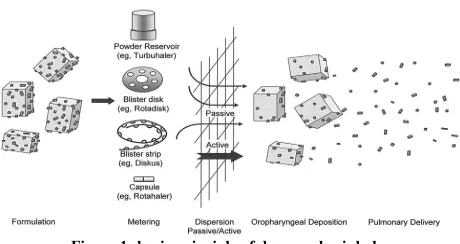
(2) Taneja Ruchi et al. IRJP 2012, 3 (11) PRINCIPLE. either particle–particle or particle–equipment. The force acts at imperfections in the crystal surface, initiating crack propagation through the particle. As the size of the particle decreases, the number of imperfections decreases, thereby making the task of reducing particle size more difficult.. Figure 1: basic principle of dry powder inhaler. The formulation typically consists of micronized drug blended with larger carrier particles, dispensed by a metering system. An active or passive dispersion system entrains the particles into the patient’s airways, where drug particles separate from the carrier particles and are carried into the lung. Various dispersion mechanisms have been adopted for DPIs. While most DPIs are breath-activated, relying on inhalation for aerosol generation, several power-assisted devices (pneumatic, impact force, and vibratory) have been developed or are currently under development. These devices are being considered for the delivery of systemically active drugs that have narrow therapeutic windows. POWDER AND AEROSOL PHYSICS/PHYSICOCHEMICAL CHARACTERIZATION 1. Crystallinity and Polymorphism 2. Moisture Content and Hygroscopicity 3. Particle Size 4. Aerodynamic Diameter and Dynamic Shape Factor 5. Fine-Particle Fraction 6. Polydispersity 7. Particle Sizing Techniques 8. Surface Area and Morphology. FORMULATION The primary factor influencing the manufacture of DPI powders is the need to produce material that can penetrate into the lung. Development of various approaches to the controlled production of fine particles, primarily depending on the nature of the drug. Of the processes micronization and blending and, more recently, spray drying are used most often. Problems such as poor flow ability, fill ability, and dispersibility can be minimized by blending with larger, less cohesive excipients particles such as lactose or pelletization of the individual drug particles. Controlled crystallization or precipitation Crystallization, or precipitation, is the process by which particles are produced from solution of the material in a suitable solvent. The formation of a stable, crystalline material is normally the target of this final step. In the production of materials for use in DPI products, however, the particle size of the crystallized product is normally too large. Subsequent reduction in particle size is then necessary and can significantly alter the physical nature of the material. Micronization Micronization is a high-energy particle-size reduction technique that can convert coarse-diameter particles into particles of less than 5 mm in diameter. Different types of equipment can micronize particles, for example, jet or fluid energy mills and ball mills. All techniques involve applying a force on the particle, typically in the form of a collision,. Figure-2 Micronization A: jet mill. B: pin mill. C: ball mill. Blending The most commonly used method for improving the flowability, fillability, and dispersibility of small cohesive particles is blending the drug with excipient particles, most commonly lactose, of considerably larger particle size. The objective of the mixing process is to produce an ordered powder in which the small particles attach themselves to the surface of larger ‘‘carrier’’ particles. During formulation feasibility, the blends are made by mortar and pestle and/or geometric mixing in a tumbling blender. For high-volume production, the process generally involves a high-shear mixer. The final product performance of a powder blend in a DPI is ultimately dependent on the individual drug and carrier properties as well on the process by which they are blended. secondary processing may be required to ensure that carrier particles behave consistently from batch to batch. Steps that involve transport or storage of the finished blend should be monitored closely to avoid segregation, which occurs when the drug separates from the carrier or when carriers of different sizes separate. Segregation can be minimized by the careful selection of formulation and process equipment. For example, hopper design can play a significant role in minimizing segregation. Pelletization The process involves deliberate agglomeration of the fine drug material into less cohesive, larger units. Pelletization is usually achieved by vibratory sieving or any process that tumbles powder. The resultant pellets must be used in a system capable of deaggregating to an appropriate particle size for aerosol drug delivery. Secondary Processing The technique generally used to minimize the degree of change in crystallinity of the milled product is to eliminate the water or other solvents from the product, usually by packaging the material within a suitable barrier (for example, aluminum foil laminate). Other techniques include the production of a 100% crystalline material, which may eliminate the effects of moisture. This technique, however, may require a secondary production stage of annealing or a quarantine period to allow the product to equilibrate under controlled storage conditions. Spray Drying Spray drying involves converting the atomized liquid droplets into dry powders by hot air. This one-step process is capable of making particles of size suitable for inhalation. The particle size and size distribution of the powder can be manipulated by the concentration of the feed solution, the spray temperature, cyclone efficiency, and chemical nature of the feed. Page 28.
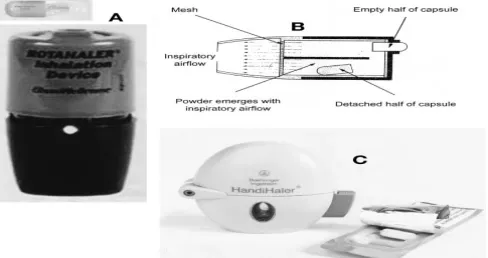
(3) Taneja Ruchi et al. IRJP 2012, 3 (11) A typical first step involves creating a solution of the excipients and drug. Dissolving the excipients and drug ensures a uniform distribution of all the excipients and the active drug in the finished powder in contrast to the heterogeneous nature of blended powders. The solution is then atomized and mixed with a drying medium, usually air, or an inert gas if the feed consists of an organic solvent. The solvent is evaporated and removed from the drug solids9. Recent techniques in the spray drying process· Spray Freeze-Drying · Spray Drying for Hydrophobic Drugs. Lyophilization In lyophilization, the solvent (usually water) is frozen and then removed by sublimation in a vacuum environment. The low temperature maintained during the entire process minimizes thermal degradation of the drug compound. the drying process can be divided into primary and secondary phases. During the primary phase, the drug solution is filled into vials and then placed within a temperature-controlled drying chamber. There, the solution is frozen according to physiochemical principles as the shelf temperature is lowered to below freezing. The shelf temperature is subsequently increased but maintained below the freezing point. A vacuum is applied to the chamber to sublimate the solvent. During the secondary drying phase, the remainder of the solvent is removed at an elevated but still subfreezing temperature Supercritical fluid Technology Extraction by supercritical fluids, carbon dioxide and propane in particular, is currently being investigated as a means of controlling the size and shape of particles for inhalation. Supercritical fluids are liquids above their critical pressure and temperature. Precipitation of the particles occurs by two methods involving atomization of a feed: 1) Rapid expansion of supercritical solutions containing dissolved drug. 2) Gas antisolvent recrystallization. Recent techniques in the supercritical fluid technology The second technique, SEDS (solution-enhanced dispersion by supercritical fluids), has been scaled up successfully for an inhalation application to pilot plant manufacture. The resultant solvent-free particles are less cohesive than micronized material as high crystallinity is achieved, leading to decreased charging effects FILLING AND PACKAGING Package dose metering can be accomplished by weight or by volume. Dry powders developed for DPIs are formulated to deliver a specific dose of drug per a given unit of drug powder. Drug powders can be packaged either in unit dose or in reservoir systems2 each of which has certain advantages Dosing system Unit-dose Multidose. Reservoir. Table-1 primary packaging for dpi drug formulation Advantages Disadvantages Simpler, cheaper device, less prone to malfunction More convenient for the patient Multidose and dose titration easy to implement Convenient—no separate unit-dose blisters to worry about. UNIT-DOSE DEVICES With a single-dose DPI, a powder-containing capsule is placed in a holder inside the DPI, the capsule is openedwithin the device, and then the powder is inhaled. The spent capsule must be discarded after use and a new capsule inserted for the next dose. The concept of the first capsule-based device (the Spinhaler) was first described inthe early 1970s, by Bell and colleagues, who had developed this device for the administration of powdered sodium cromoglycate. the drug mixture, which often includes a bulk carrier to aid powder flow, is pre-filled into a hard gelatin capsule and loaded into the device. After activation of the device, which pierces the capsule, the patient inhales the dose, which is dispensed from the vibrating capsule by means of inspired air.. Figure 3 Examples of unit-dose dry powder inhalers (DPIS). A: rotahaler and rotacap (contains albuterol). B: diagram of rotahaler. C: spiriva handihaler. Unit-dose devices are not patient-friendly and are not easy to use, several introductions of single-dose DPIs have occurred over the last few years using similar designs (eg, Foradil Aerolizer, made by Novartis/Schering-Plough, and Spiriva HandiHaler, made by Boehringer ngelheim/Pfizer) With the recently introduced Spiriva Handihaler it is too early to evaluate the degree of patient acceptance of this device, although it is complex and requires at least 7 distinct steps to deliver the dose. For some patients, 2 inhalations are required to completely empty the capsule and achieve the therapeutic dose, which adds to the degree of complexity for the patient when using this device MULTI-DOSE DEVICES The development of multi dose DPIs was pioneered by the AB Draco company (now a division of AstraZeneca), with their Turbuhaler. This device was truly the first metered-dose powder delivery system. The drug formulation is contained within a storage reservoir and can be dispensed into the dosing chamber by a simple back-and-forth twisting action on the base of the device. The device is capable of working at a moderate flow rate and also delivers carrier-free articles as well as lactose-based formulations.. Patient must handle and load individual unit-dose packages into the device before dosing The device becomes more complex because means to load multiple doses are required Also, means for displaying number of doses left are required. Powder not generally well protected after reservoir is opened; physical and/or chemical characteristics may deteriorate with time. Biological contamination. Page 29.
(4) Taneja Ruchi et al. IRJP 2012, 3 (11). Figure-6 Diskus powder inhalers Figure-4 Turbuhaler11. In the late 1980s Glaxo developed the Diskhaler,19 which was used to deliver a range of drugs, including albuterol, beclomethasone, salmeterol, fluticasone, and the anti-viral agent zanamivir. This device uses a circular disk that contains either 4 or 8 powder doses, which typically would be sufficient drug for 1–2 days of treatment; the empty disk is then discarded and a new disk is inserted in the device. The doses are maintained in separate aluminum blister reservoirs until just before inspiration. On priming the device, the aluminum blister is pierced and its contents drop into the dosing chamber. This device had limited commercial success, primarily because it held only a few doses per disk and was perceived as very cumbersome to load1. Figure-5 Diskhaler. Further improvements in patient convenience and ease of use were incorporated into the next generation of multi dose DPI, called the Diskus. This product was introduced in the late 1990s. Initially it delivered salmeterol or fluticasone, but in 2001 a version was released that contains a combination salmeterol-plus-fluticasone formulation (Advair Diskus). This is a true multi-dose device; it contains 60 doses (one month’s therapy) in a foil-foil aluminum strip that is indexed, and the dose blister is only opened just prior to patient inspiration. Consistent performance,5 broad patient acceptance, and the growing use of combination therapy (long-acting agonist plus inhaled corticosteroid) for asthma have allowed the Diskus to become the accepted standard multi-dose powder delivery device1.. RESERVOIR SYSTEMS Reservoir systems offer the advantage of variable dosing, generate less waste, are less expensive to manufacture, and are simpler to use than unit-dose systems. Relying on a metering system contained within the delivery device, they may be less precise in their drug delivery. Because the drug reservoir must be accessed repeatedly, these systems encounter an increased difficulty in maintaining moisture level. Maintaining a highly flowable drug powder in this system may also lead to greater drug formulation challenges POWDER INHALER DEVICES Recent inventions of the powder inhaler device are aimed at improving the inhaler’s dispersion efficiency and reducing the resistance of the device as well as decoupling powder dispersion from the patient’s inspiratory effort in order to deliver accurate and flexible dosages for different patient’s needs9. InnovaTM and SoloTM The InnovaTM (Inhale Therapeutic Systems, San Carlos, California, U.S.A., Fig. 3) inhaler device is a unit dose inhaler that has been designed for long-term use. It is powered by a stored bolus of compressed air and is designed to generate aerosol independent of patient’s inspiratory effort. Atransparent holding chamber enables patients to view the aerosol to assure proper dosing. Further, the device is designed to have the capability to fluidize and extract up to 90% of the dose from the reservoir, thus minimizing wasteand enhancing the accuracy and precision of the dosage. The SoloTM device from Inhale Therapeutic Systems is a patient-driven unit dose inhaler. It has a built-in flow control to maximize the reproducibility of dose to patient. It is designed for short-term use and when large drug dosages are preferred. Figure-7 InnovaTM from Inhale Therapeutic Systems. Page 30.
(5) Taneja Ruchi et al. IRJP 2012, 3 (11) SkyePharma mDPI SkyePharma multidose pocket-sized inhaler features an ‘‘intelligent’’ single dose counter to count the dose dispensed and remained in the inhaler. The built-in locking mechanism also allows no ‘‘tailoff’’ effect toward the last doses from the inhaler.. Figure-10 (A) Hovione SA Flow Caps dry powder device. (B) Photograph showing the dispersion of powders within the capsule. Figure-8 Skye Pharma mDPI. Bead inhaler technology Elan Pharmaceuticals has developed the Spiros S2 inhaler which features the use of beads to disperse the powders on inhalation. Still under development, the results from testing· show that Spiros S2 is a high dispersion efficiency inhaler· capable of delivering drugs at relatively low inspiratory flow· rates 30L/min and 60L/min. Twisthaler The Twisthaler (Schering-Plough, Kenilworth, New Jersey, U.S.A., features specially designed nozzle geometry that creates an airflow pattern which carries the small particles out of the device via the fluted chimney, while the larger particles or agglomerates will be spun into a centrifugal pattern and deagglomerated into fine particles for inhalation. The design optimizes the deagglomeration of powders, but at the same time minimizes drug caught in the inhaler nozzle and mouthpiece.. Figure-9 Twisthaler. Hovine FlowCaps Hovine FlowCaps (Hovione SA, Loures, Portugal ) is a capsule–powder inhaler. Instead of the traditional needle piercing, the capsule is pierced by two blades, giving rise to a narrow slit across each end of the capsule. The tube-shaped inhaler receives the capsule(s) at one end. Upon inhalation, the air is mainly entrained into the inhaler tube inlets, with only a little air entering the capsules. The powder gets fluidized and experiences turbulence within the capsule befor emptying from the device.. TwinCaps TwinCaps was developed specifically for high dose, acute and short chronic treatments. A very simple inhaler, suited for emergency use or in situations where minimal usage are available. TwinCaps is factory filled, low cost and is disposable. TwinCaps is approved in Japan for the delivery of Inavir (laninamivir), Daiichi Sankyo´s long acting neuraminidase inhibitor for the treatment of influenza. Contains two factory-filled doses in pre-formed cavities Extremely easy to use Foil-pouched for moisture protection 5. Figure-11 Twin Caps. HANDLING OF DPI DEVICES Dry-powder inhalers (DPIs), including Aerolizer, Diskus, Handihaler, and Turbuhaler, are flowdependent devices and require minimal patient-device coordination. A recent large observational study by Molimard et al5 reported patients’ handling of their inhaler devices in a primary care setting. The study showed that DPI devices were better handled than MDI devices, and there were differences in the handling of the various DPI devices. The present study was conducted to evaluate patients’ proper handling of their usual inhaler devices (MDI, Turbuhaler, Diskus, and Aerolizer) during actual pulmonary specialty practice. The study describes that DPI devices had significantly lower rates of incorrect handling, when compared with the MDI device. An MDI device is inherently more difficult to use and needs proper coordination, regardless of the quality of the inhaler technique education the patient has received3 RECENT TREND A recent patent discloses pretreatment of the patient with the nebulized lidocaine or a lidocaine-like compound to improve airway tolerance and deposition of the agent in the lungs and to make such deposition more safe, efficacious, controllable and predictable. The method of the invention is especially useful for enhancement of deposition of immunosuppressive agents in the lung(s) of transplant patients, improved Page 31.
(6) Taneja Ruchi et al. IRJP 2012, 3 (11) tolerance of the drugs by reducing cough, and improving pulmonary drug deposition. A patent by Microdrug AG disclosed medical DPIs containing an accurately metered dose of a glucagon-like peptide-1 medicament in a moisture tight and high barrier seal container for pulmonary administration and alternatively, the product may contain a dose of insulin with one or more biologically acceptable stabilizing excipients. Stabilized pharmaceutical formulation, as disclosed by Sanofi-Aventis Pharma Limited, uses a porous adsorbent and a sealed package having over wrap, to protect DPI product in a solid state, in the presence of a reducing sugar. A method of preparing a powder for use in a dry powder inhaler comprising: (a) mixing carrier particles of a size suitable for use in dry powder inhalers with particles of additive material, so that the particles of additive material become attached to the surfaces of the carrier particles; and then (b) mixing active particles with the carrier particles and additive material from step (a) was disclosed. It allows active particles to adhere to the surfaces of the carrier particles and/or additive material, a surface active material used to promote the release of the active particles from the carrier particles on actuation of the inhaler. An invention related to a refinement of the processing of particles that are to form a dry powder formulation to be administered to the lung using a inhaler device and providing the processing of particles of active material and particles of carrier material in the presence of additive material to provide a powder composition which exhibits excellent powder properties and is economical for production has been disclosed. Hydrophobic and hydrophilic amino acids (dipeptides, tripeptides, derivatives and salts) as stabilizers in freezedried interferon-y DPIs for transpulmonary administration were disclosed in the invention. Ventura disclosed enhanced dosing efficiency of DPI compositions prepared by simple jet milling and spray drying techniques, of much higher delivered dose of pharmaceutically active agents, small molecules, proteins, carbohydrates or mixtures thereof , having controlled size distribution, with tap density of at least 0.5 g/cc, were used. The patents based on DPIs with improved drug delivery efficiency were increasing day by day claiming delivery of therapeutic agents both for local and systemic delivery indicative of DPIs will be most promising dosage forms. FUTURE DEVELOPMENTS Despite this extensive history, and in part fuelled by a need for alternative pulmonary delivery methods, as the MDI is undergoing environmental challenge, innovative ways to deliver drugs to the lungs continue to be pursued today. the goal of de-aggregating highly cohesive powder for delivery to the lung in a powdered form is a challenging one.30 The small dose size required for many of these potent drugs is a confounding factor in developing optimal DPIs. Much interest has been focused recently on developing delivery systems that de-aggregate the powder, as this effectively minimizes formulation-development work. Some of these systems are extremely complex in operation and may prove difficult to achieve in everyday operations. In addition, some designs that have already been achieved (eg, Inhance device for the delivery of 1 mg or 3 mg of inhaled insulin, Nektar Therapeutics, San Carlos, California) are probably too bulky to be fully portable. A multi-dose reservoir device is now under review with the United States Food and Drug Administration for the delivery. of formoterol (Foradil Certihaler, Skye-Pharma, San Diego, California; Novartis, East Hanover, New Jersey).36 This would be a major advance, as it would provide a second longacting agonist in a multidose powder form. In addition, the first use of an active DPI is currently being sought for the delivery of pulmonary insulin (Exubera, Pfizer/SanofiAventis, licensed from Nektar Therapeutics). The device uses an air pump system that disperses the insulin powder into a spacer chamber, from which the patient can then inhales.. Figure-12 Nektar PDS (“pulmonary delivery system”). NOVEL DPIS Various novel formulations have been disclosed or are in advanced stage of development to overcome the known constraints of DPIs and to achieve desired properties for efficient livery of wide variety of therapeutic agents . Various novel approaches disclosed for enhancing the delivery to lungs via DPIs and efficacy of drug by increasing pulmonary residence time, educing clearance and their method of production have been described in the subsequent paragraphs. LIPOSOME AND LIPID BASED DPI Liposomal drug encapsulation has been shown to be promising in sustaining the drug residence time within lung, improving therapeutic index, and delaying systemic dilution and thereby, reducing side effects. Delivery of various therapeutic agents along with lipid compositions can be given to treat pulmonary disorders. Delivery of various therapeutic agents along with lipid compositions can be given to treat pulmonary disorders. Delivery of corticosteroid for asthma, ribonucleotides for respiratory influenza, amphiphatic drugs and their salts for tumor, aminoglycosides (Tobramycin Sulphate, Amikacin Sulphate) and other antibiotics (Ciprofloxacin) for local pulmonary infections and cystic fibrosis [90], has been reported using liposome technology. In liposomal DPI formulations, drug encapsulated liposomes are homogenized, dispersed into carrier and converted into DPI by spray and / or freeze drying. On inhalation, drug encapsulated liposomes get rehydrated in lung and release drug over a period of time. Liposome-encapsulated opioid analgesic agents delivered by the pulmonary route provide local or systemic analgesia superior to that produced by the solution form of these agents administered by parentral (intravenous, intramuscular, or subcutaneous injection) or oral routes. High dose pharmaceutical liposome aerosol composition comprising about 12-30 mg/ml of a drug and about 130-375 mg of a phospholipid/ml starting reservoir concentration has been disclosed. A high dose drug liposome aerosol composition containing phospholipids may contain cyclosporine-A, budesonide, anti-fungal compounds, antibiotic compounds, anti-viral compounds, and anti-cancer compounds for delivery to lung. Page 32.
(7) Taneja Ruchi et al. IRJP 2012, 3 (11) Another invention claimed a process of preparation and method for the delivery of pharmaceutical agent in the form of nanocochleates. Cochleates are derived from liposomes, which are suspended in an aqueous two-phase polymer solution, enabling the differential partitioning of polar molecule based-structure by phase separation. The liposome containing two-phase polymer solution, treated with positively charged molecules, forms a cochleate precipitate of a particle size less than 1 μm. Novel lipid-based cochleate delivery system were used to achieve efficient systemic and mucosal delivery of pharmaceutical agents. Another set of inventions relate to proliposome powder compositions of a biologically active compound in particulate dispersion in a lipid for inhalation. A process of manufacture of proliposome powder comprising a single phase discrete particles of a biologically active component together with a lipid or mixture of lipids having a phase transition temperature of below 37°C for inhalation has been described . A DPI formulation comprising a lipid component and an active agent having a liquid phase transition temperature of less than or equal to 37°C on hydration and a liquid phase transition temperature of greater than 57°C in dry form. On inhalation the drug spontaneously encapsulates into lipid inside lungs. The disclosed formulation is useful in treatment of anthrax infection on inhalation. In 2004, a disclosure of phospholipid based powders for rapid absorption of the delivered active agent has been made. Emitted dose and lung deposition of the DPI formulation were claimed to be independent of device resistance and inspiratory flow rates. These inventions also claim reductions in the flow rate dependence in lung deposition and improvements in patient reproducibility. A novel lipid particle formulation for the sustained release and delivery of steroids into deep lung was disclosed. The formulation of this invention claims prolonged release of the drug, improved therapeutic ratio, lower toxicity, reduced systemic side effects, and stability for several months. The formulation is in particular suitable for treatment of interstitial lung diseases MICRO AND NANOPARTICULATE DPI COMPOSITIONS In the last decade, microparticle and nanoparticle based drug delivery systems have been developed with the goal of better management of diverse clinical conditions. Because polymers used in particulate drug delivery system development are biodegradable and biocompatible, they have been the most commonly used drug carriers. Use of Ultrafine particles containing cellulose ethers and active drug comprising at least 80% of the powder in the particle size range of 0.5 to 10 μm, has been claimed to deliver the drug to lower airways with sustained release of medicament . A delivery of aerosols containing small particles comprising an aerosol of vaporized drug condensed into particles, having a MMAD between 10 nm and 1μm for inhalation therapy has been claimed. Another patent comprising of powder formulation containing nanoparticles for aerosol delivery to the lungs was disclosed. Respirable particles carrying active principles or diagnostics in nanoparticle form were produced by mixing the nanoparticles with liquid carrier, then forming the resultant mixture into respirable particles. The respirable particles were produced by spray-drying or freeze spray drying followed by comminution, for delivery to the lungs via DPIs. Active principles were covalently attached, adsorbed or incorporated to nanoparticles. The drug loading depends on. the functional groups of the biomaterials and on the drug release requirements. Gelatin or other protein based nanoparticles were incorporated into the carrier particles. Abundant functional groups, such as carboxyl and amino groups, on the particle surface enable easy modification and the covalent binding of drugs. Poly butylcyanoacrylate or other synthetic nanoparticles may be incorporated into the carrier particles. DPIs for pulmonary delivery made up of a biologically active substance in crystal form and a biocompatible, electrostatic aggregation-inhibiting substance both having particle diameter of 0.5 to 8 μm having excellent safety, stability, and pulmonary delivery performance has been disclosed. Microspheres produced by contacting an aqueous solution of a macromolecule and a polymer having a high surface area to volume ratio by heating of the solution producing microspheres of defined dimensions (0.1 μm -10.0 μm) for inhalation therapy. This invention also discloses preparation of microspheres without use of spray drying or milling processes. A composition of micronized particles suitable for inhalation comprising an active pharmaceutical substance prepared by solubilizing a poly- L (-) lactide, having a molecular weight in the range from about 1000 to about 10,000, with an active pharmaceutical substance was disclosed. After removing the solvent, the particles were jet milled to an average diameter of about 1 μm to about 10 μm4 DELIVERY OF PROTEINS, PEPTIDES AND MACROMOLECULES FOR LOCAL AND SYSTEMIC DELIVERY USING DPIS A number of companies are in advanced clinical trials with inhaled insulin, and a variety of large and small molecules are under investigation as inhaled formulations for systemic applications. Recent advances in the development of particle technologies and devices now make it possible to formulate, stabilize, and accurately deliver almost any drug to the lungs. More than 25 inhalation drugs in the market for treatment of lung diseases are all absorbed to some extent into the body, most of them quickly, and with very high systemic bioavailabilities. A patent on pulmonary malarial vaccine relates to particulate compositions comprising nanoparticulates for pulmonary delivery, which provide sustained release of antigens, preferably DNA and/or peptide and/or protein antigens has been developed. Aggregate nanoparticles are in the aerodynamic range of 1-5 microns diameter and fly deep into the lungs. As the aggregate particles degrade in the body, MSP-1 and AMA-1 proteins are released into the blood stimulating a humoural immune response. A medicated composition, which contains an active ingredient – meglumine complexes of fungicidal polyene macrolide antibiotics and treatment method utilizing these compositions is described. These compounds possess fungicidal and protistocidal activity and are useful in the treatment of candidosis and aspergillosis. Meglumine complexes of amphotericin B and mycoheptine can be used for treating most systemic mycoses by way of oral and inhalation administration as well as by instillation in treatment of leishmaniasis, schistosomiasis, lambliasis and trichomoniasisis covered under the scope of this patent. An invention disclosing methods and compositions for pulmonary delivery of insulin, methods and compositions for the aerosolization using dry powder and systemic delivery of insulin provides rapid absorption of insulin into blood circulation while avoiding subcutaneous injection. Page 33.
(8) Taneja Ruchi et al. IRJP 2012, 3 (11) Surprisingly, it has been found that inhaled dry insulin powders are deposited in the alveolar regions of the lungs and rapidly absorbed through the epithelial cells of the alveolar region into blood circulation. Thus, pulmonary delivery of insulin powders can be an effective alternative to administration by subcutaneous injection Method for administration of growth hormone via pulmonary delivery was disclosed claiming delivery of growth hormone deficiency or a non-growth hormone deficiency disorder treatable with human growth hormone (hGH), which comprises hGH administering to the deep lungs. The pharmaceutical composition of hGH may contain buffers, amino acids, bulking agent, carrier, excipient, antioxidants mono-, di-, and polysaccharides; sugar alcohols, other polyols, surfactants, amino acids alone or combination at about 50% to about 90% by weight of the pharmaceutical composition. An invention discloses a non-invasive system and method for delivering apolipoprotein and amphiphatic compounds into the blood stream following pulmonary administration. The additives used, were from the group of saline, surfactant/phospholipids, benzalkonium chloride, calcium chloride, and sodium citrate. The invention also claims the treatment of cardiovascular disease as well Alzheimer's disease4 CONCLUSION Despite this extensive history, and in part fuelled by a need for alternative pulmonary delivery methods, as the MDI is undergoing environmental challenge, innovative ways to deliver drugs to the lungs continue to be pursued today. the goal of de-aggregating highly cohesive powder for delivery to the lung in a powdered form is a challenging one.30 The small dose size required for many of these potent drugs is a. confounding factor in developing optimal DPIs. The patents based on DPIs with improved drug delivery efficiency were increasing day by day claiming delivery of therapeutic agents both for local and systemic delivery indicative of DPIs will be most promising dosage forms. REFERENCES 1. Atkins J Paul 2005 “Dry Powder Inhalers: An Overview” respiratory care october [cited 2012 feb 15 ] VOL 50 NO 10 P. No. 1304-1310. 2. Aulton E. Michal ,2007, “Aulton Pharmaceutics” 3rd Edition Elsevier Publications P. No. 546-54 3. Basheer Y Khassawneh MD et al ,2008 “Handling of Inhaler Devices in Actual Pulmonary Practice:Metered-Dose Inhaler Versus Dry Powder Inhalers” respiratory care [cited 2012 feb 15] VOL 53 NO 3 P. No. 324328. 4. Chougule B Mahavir (2007) “Development of Dry Powder Inhalers” Recent Patents on Drug Delivery & Formulation 2007 ,Bentham Science Publishers Ltd. P.No. 11-19. 5. Dry Powder Inhaler Devices Twin Caps [cited 29 Feb 2012] Available at <www.hovione.com/inhale> 6. Dry powder inhaler [cited 29 Feb 2012] Available at < http://en.wikipedia.org/wiki/Dry_powder_inhaler> 7. DRAFT GUIDANCE “Metered Dose Inhaler (MDI) and Dry Powder Inhaler (DPI),1998, Drug Products” U.S. Department of Health and Human Services Food and Drug Administration Center for Drug Evaluation and Research (CDER)P. No. 4 8. Fink B James ,2000, “Metered-Dose Inhalers, Dry Powder Inhalers, and Transitions” respiratory care VOL 45 NO 6 P. No. 623-634. 9. Swarbrick James 2007 “ Encyclopedia of Pharmaceutical Technology” Third Edition VOL. 1 Pharmaceutical Tech, Inc. Pinehurst, North Carolinia, USA P.No. 1428-1434. 10. Telko J Martin and Hickey J Anthony ,2005,“Dry Powder Inhaler Formulation” RESPIRATORY CARE SEPTEMBER 2005 VOL 50 NO 9 P. No. 1209-1222. 11. Turbuhaler [cited 29 Feb 2012] Available at <http://www.google.co.in/imgres?q=turbuhaler&hl=en&sa=X&sout=0& tbm=isch&prmd=imvns&tbnid=kauwnu2P1vsbQM:&imgrefurl=> [cWinfield J.A. & Richards E. (2004) “ Pharmaceutical Practice” Churchill Livingstone Publications P. No. 242-245.. Source of support: Nil, Conflict of interest: None Declared. IRJP is an official publication of Moksha Publishing House. Website: www.mokshaph.com. All rights reserved.. Page 34.
(9)
Figure
Related documents
Results of the survey are categorized into the following four areas: primary method used to conduct student evaluations, Internet collection of student evaluation data,
Different configurations of hybrid model combining wavelet analysis and artificial neural network for time series forecasting of monthly precipitation have been developed and
_ommissioned jointly by the Barlow Endowment for Music Composition at Brigham Young University and the Buffalo Philharmonic Orchestra, Lukas Foss's flute concerto
We have loved them during life, let us not abandon them until we have conducted them, by our prayers, into the House of the Lord.. Jesus, have mercy on the
For the poorest farmers in eastern India, then, the benefits of groundwater irrigation have come through three routes: in large part, through purchased pump irrigation and, in a
UPnP Control Point (DLNA) Device Discovery HTTP Server (DLNA, Chormecast, AirPlay Photo/Video) RTSP Server (AirPlay Audio) Streaming Server.. Figure 11: Simplified
96 This analytical framework is a more effective method to address the “multifaceted nature of inequality.” 97 It is a way to “assess and assist in modifying laws, policies
Love-Politics: Lesbian Wedding Practices in Canada and the United States from the 1920s to the 1970s
14 When black, Latina, and white women like Sandy and June organized wedding ceremonies, they “imagine[d] a world ordered by love, by a radical embrace of difference.”
