Original Research Article
Awareness regarding risk factors of low back pain among medical
students in Punjab
Aman Dev Singh
1, Ritu Rochwani
2*, Ishan Sagar
1, Riya
1INTRODUCTION
Low back pain (LBP) is an important public health problem and is associated with substantial financial costs and loss of quality of life.1-5 The 2010 global burden of disease study estimated that low back pain is among the top 10 diseases and injuries that account for the highest number of DALYs worldwide. It is difficult to estimate the incidence of low back pain as the incidence of first-ever episodes of low back pain is already high by early adulthood and symptoms tend to recur over time. The lifetime prevalence of non-specific (common) low back
pain is estimated at 60-70% in industrialized countries (one-year prevalence 15-45%, adult incidence 5% per year).6 Several risk factors have been identified including occupational posture, depressive moods, obesity, body height and age, gender, lifestyle, psychosocial profile, social support but the causes of the onset of low back pain remain obscure and diagnosis difficult to make.6-8 Hospital workers seem to have higher rates of LBP compared to the general population due to physical and emotional factors involved in their occupation, such as stress.9 With the increase use of computers and laptops the physical activity is decreased among undergraduate students. Bad postural habits during study may also
ABSTRACT
Background: Occupational health hazards are very common. With promotion of industrial life, the prevalence of low back pain has increased markedly during the past decades. Many factors at work could predispose people to develop musculoskeletal disorders. The goals of a medical school are to produce competent, professional doctors and promote health care of society. But during the period of medical training, students are exposed to stress, study problems, long training hours in hospital wards and clinics. In addition to the increasing use of computers in teaching and learning.
Methods: This cross-sectional study will be carried out among medical students of new final year (n=145) in government medical college in Patiala Punjab during the period April 2018. Data collected from the students were analyzed and frequencies and percentage were presented for categorical variables.
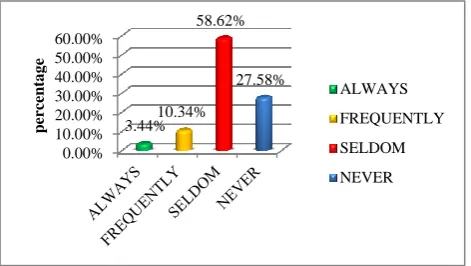
Results: Most of the students 68.27% had experienced back pain in 12 months period (excluding the premenstrual pain. Among 68.27% students 3.4% students suffered low back pain always, 10.34 % students suffered pain frequently and 58.62% students suffered pain seldom.
Conclusions: There was high prevalence of LBP among medical students and many risk factors like lack of exercise, physical activities, carrying bag packs were present and it highlight a need for behavior change communication, education, counseling, and restructuring of the medical curriculum.
Keywords: Low back pain, Medical students, Physical activity
1
Department ofCommunity Medicine, Government Medical College, Patiala, Punjab, India
2Department ofCommunity Medicine, East Point College of Medical Sciences and Research Center, Bangalore,
Karnataka, India
Received: 23 July 2019
Revised: 04 September 2019
Accepted: 05 September 2019
*Correspondence:
Dr. Ritu Rochwani,
E-mail: [email protected]
Copyright: © the author(s), publisher and licensee Medip Academy. This is an open-access article distributed under the terms of the Creative Commons Attribution Non-Commercial License, which permits unrestricted non-commercial use, distribution, and reproduction in any medium, provided the original work is properly cited.
contribute to the prevalence of back pain.10 Medical schools tend to have time-consuming curricula, possibly perpetuating a sedentary lifestyle, and a high prevalence of LBP among medical students.11 Prevention of back pain in youth may contribute to prevention of back pain in adulthood.12,13 This study was carried out to investigate the prevalence of low back pain in a multidimensional job related environment such as the hospital, and to identify possible risk factors for low back pain in such an environment.
Aim
The aim of the present study was to find the prevalence of low back pain among undergraduate students and to identify risk factors associated with low back pain (LBP).
METHODS
The present study was a cross sectional study which was conducted in month of April 2018 among new final year students (MBBS) of government medical college, Patiala. Students who had given consent to participate been included and students who had met with accident or undergone any surgery after joining the medical studies were excluded. Taking 47.5% as the expected prevalence rate of LBP at a 95% confidence level, the required sample size was calculated to be 145 medical students to yield prevalence estimate with 9% precision.6
Verbal consent from the students was taken before hand. A pretested, structured questionnaire was administered to assess their awareness about low back pain and risk factors and preventive measures. Staff of Community Medicine department helped in invigilating the session and use of mobile phone was strictly restricted during session. The students were given 30 minutes to complete the questionnaires.
The questionnaire consisted of three parts. Part one was about medical student’s personal information including age, sex, body weight, height and BMI. Part two was
about awareness regarding back pain and its risk factor. In this section, students were asked to select the correct answer from 11 true or false statements, Part three consist of practices of medical students in their daily work which may be the risk factor for low back pain. This section included 23 questions related to the physical activity, sitting posture, travelling, watching television or mobile or laptop. The subjects were required to choose from four descriptions (never, seldom, frequently, or always) that best illustrated their usual practices. Data collected from the students were entered in Microsoft excel sheet. The statistical analysis was done by using Epi Info 7.
Frequencies and percentage were presented for
categorical variables.
RESULTS
Low back pain is a very frequently occurring phenomenon all over the world. LBP has great impact causing severe long term physical disability and give rise to huge costs for the society. In present study out of the total 145 students 78 (53.79%) were females and 67 (46.20%) were males. The mean height, weight, and body mass index (BMI) of the participant were 167.54 cm, 53.1 kg, and 23.22. Most of the students were in age group of 19-25 years with mean age of 20 years. Most of them (84%) residing at hostel.
Table 1 shows awareness regarding low back pain and its risk factors and preventive measures among medical students. Life style plays a vital role in development of low back pain. Sedentary lifestyle, lack of regular exercise increases risks for occurrence of low back pain and increase the likely severity of the pain. In present study 57.9% students knew sedentary type of life style and heavy workload (66.89%) is associated with back pain. Almost all 98.62% students were aware that exercise is a preventive measure for development of low back pain and 90.34% students knew that good body posture during sitting and standing can prevent the development of low back pain. Students also stated that obesity (96.55%), lack of sleep (59.31%), smoking (53%) are also the risk factor for back pain.
Table 1: Awareness regarding risk factors of back pain among medical students (n=145).
Sr.
No. Risk factors of low back pain
No. of students
responded (Yes) %
No. of students
responded (No) %
1 Sports activity 114 78.62 31 21.38
2 Prolong standing 131 90.34 14 9.66
3 Obesity 140 96.55 5 3.45
4 Lack of sleep 86 59.31 59 40.69
5 Public transport 113 77.93 32 22.07
6 Habits for sitting too long on laptop or PC or
television 140 96.55 5 3.45
Preventive factors
7 Aware about good body posture is for sitting 131 90.34 14 9.66
Figure 1shows that most of the students 68.27% (n=105) had experienced back pain in 12 months period (excluding the premenstrual pain). The point prevalence was 9.6% (n=14). Among 68.27% students 3.4% (n=5) students suffered low back pain always, 10.34% (n=15) students suffered pain frequently and 58.62% (n=85) students suffered pain seldom.
Figure 1: Frequency of experience low back pain.
Table 2 shows presence of risk factors for low back pain among medical students. About 34.48% students had family history of lower back pain. Only one had habit of drinking alcohol and none had habit of smoking. Long hours of standing and sitting in a chair that does not support the back well can cause development of back pain. Only 24.14% students were using chair with lumber support and 60% students were using study table for reading.
Table 3 shows frequencies of activities which may be the cause of back pain. About 11% students always, 48% students frequently followed the forward bending posture, 72% students were continuous sit for long 1-5 hours for studies, 18% students always watched T.V., 14% students always worked on laptops in their free time. On soft mattress the body follows the curve of sagged mattress and the spine is not aligned correctly and will not relieve back pain and 36% percent students used soft mattress for rest and sleep.
Table 2: Presence of risk factors associated with low back pain among medical students.
Sr.
No. Questions
No. of students
responded (No) %
No. of students
responded (Yes) %
1 Habits of smoking 145 100 0 0
2 Habits of drinking alcohol 144 99.31 1 0.69
3 Using chair with lumber support 110 75.86 35 24.14
4 family history of low back pain 50 34.48 95 65.52
Table 3: Frequencies of activities which may be risk for development of back pain.
Activities %
Always Frequently Seldom Rare
Perform weight lifting 1 14 35 57
Carrying backpacks or college bags 62 32 3 3
Watching television for long duration 18 31 46 5
Working on PC or laptop for long duration 14 27 50 9
Driving 11 39 29 21
Travelling by public transport 10 54 32 4
Wearing heels 1 7 37 55
Sit and stand with forward bending body
posture 11 48 33 8
Table 4: Frequencies of activities which may prevent from development of back pain.
Activities %
Always Frequently Seldom Rare
Doing physical exercise 8 28 59 5
Playing outdoor games 5 28 57 10
Doing yoga 2 12 37 49
Carrying heavy backpacks can cause youngster to develop serious spinal deformities and use of public transport for long time has a major impact on health. In present study 62% students always carried backpacks with them and 37.24% students frequently used public
transport for travelling and ten percent students were always use public transport for travelling.
Wearing high heels for long time alter the alignment of spine and are a potential risk for development of low
0.00% 10.00% 20.00% 30.00% 40.00% 50.00% 60.00%
3.44% 10.34% 58.62%
27.58%
p
er
ce
n
ta
g
e
back pain. In our study only 2 student always and 10 students frequently wore high heel and 55.17% students never wore high heels.
Table 4 shows that physical exercise, outdoor games and yoga helps to increase strength of muscles and muscle groups and helping the body to maintain proper upright posture and movement. In present study only 8% students were doing physical exercise, 5% students were playing outdoor games and majority (57%) students were seldom going for playing outdoor games. Only 2% students practiced yoga and only 1% students were performing weight lifting always to make them fit.
DISCUSSION
Low back pain is a very common health problem worldwide and a major cause of disability-affecting performance at work and general well-being. Medical college tends to have time-consuming curricula, possibly perpetuating a sedentary lifestyle, and a high prevalence of LBP among medical students. So the purpose of this study was to find out the prevalence of low back pain and its associated risk factors among medical students. In present study 9.6% students were suffering from low back pain at the time of survey and 68.27% student’s experienced low back pain in last 12 months. Among 68.27% students, 3.4% students suffered low back pain always and 10.34% students suffered pain frequently and 58.62% students suffered pain seldom. But in a study by Shah36.84% respondents experienced pain always.10 In a study by Sanya found twelve month prevalence of 47.8% among hospital workers, Wong found 56.9% prevalence of low back pain among health care workers.5,11 Aggarwal found the twelve months prevalence of LBP among the medical students was 47.5% (n=76) with a prevalence of 32.5% at the time of data collection.6 In present study females (53.79%)were more effected and 34.48% students had family history of low back pain similar finding was observed by Sanya who found females 63.5% were more effected and 75% students had family history.5 Forward bending posture during sitting or standing is not a normal position of body and it causes our muscles to work harder. Bad body posture can lead to chronic back pain. The present study shows that 59% students followed forward bending posture while sitting. In a study by Wong found that 62.0% respondent has bad body posture.11 The early onset of low back pain in young adults is a condition which should not be ignored. A prolonged lifetime exposure to risk factors increases the chance of spinal deformities. In our study 62% students always and 32% students frequently carried heavy bag packs with them. About 10% students always and 54% students frequently used public transport for travelling, only 8% were doing physical exercise always, 2% were practicing yoga and 5% were always playing outdoor games. In a study by Aggarwal found that 88.13% (n=141) carry bag pack 48.75% students use public transport.6 The focus on preventing chronic disease is increasing worldwide, which identifies the importance of
promoting healthy lifestyles by addressing risk factors in general practice.
CONCLUSION
Occupational exposure appears to be an important factor associated with the development of LBP. Medical students hectic study curriculum and busy schedules make their lives sedentary devoid of any physical activities like jogging, exercises, yoga, sports, outdoor games, etc. From the present study, it can be concluded that majority of the students were aware regarding the back pain and the risk factors associated with back pain but not up to the mark hence the present study recommended that there should be behavior change communication sessions regarding good healthy life style like adoption of yoga, playing out door games, presence of gym at colleges, meditation and yoga sessions at regular interval.
Limitations
The study was confined to a small number of subjects, which resulted in reduced power in statistical analysis. No standardized tools were available; therefore we prepared a tool for the purpose of this study. Severity of low back pain, duration of pain and different measures for relief of pain was not assessed.
Funding: No funding sources Conflict of interest: None declared
Ethical approval: The study was approved by the Institutional Ethics Committee
REFERENCES
1. Salameh AD. Prevalence and risk factors of low back pain among nurses in Sudayr region. Europ Scientific J. 2013;9(33):198-205.
2. Majra JP. Do our medical colleges inculcate health promoting lifestyle among medical students: a pilot study from two medical colleges from southern India. Int J Prevent Med. 2013;4(4):425-9.
3. Dajah SA, Daghdi AA. Prevalence and risk factors of low back pain among nurses in sudayr region. Europ Scientific J. 2013;9(33):1-5.
4. Laura P, Annette PU, Deborah IN, Marilyn AF, James L, Woo TS, et al. Estimating the global burden of low back pain attributable to combined occupational exposures. Am J Industr Med. 2005;48(6):459-69.
5. Sanya AO, Omokhodion FO, Ogwumlke OO. Risk factors for low back pain among hospital workers in Ibadan, Oyo state, Nigeria. Journal of the Niger Societ Physiotherap. 2005;5(2):31-4.
6. Nupur A, Tanu A, Jugal K, Gopal KI. Low back
pain and associated risk factors among
7. Low back pain- world health organization. Available at: https://www.who.int/medicines/areas /priority_medicines/Ch6_24LBP.pdf. Accessed on 17 July 2019.
8. Alarcos C, Gerold, Martin W, Peter D, Wilfried J, Sjef VDL, et al. ICF core sets for low back pain. J Rehabil Med. 2004;44:69-74.
9. Schneider S, Randoll D, Buchner M. Why do women have back pain more than men? A representative prevalence study in the Federal Republic of Germany. Clin J Pain. 2006;22:738-47. 10. Shah S, Dave B. Prevalence of low back pain and its
associated risk factors among doctors in Surat. Int J Health Sci Res. 2012;2(1):91-102.
11. Wong TS, Teo N, Kyaw MO. Prevalence and risk factors associated with low back pain among health
care providers in a district hospital. Malays Orthopaed J. 2010;4(2):23-8.
12. Kamran H, Ayaz AM, Masood J, Sidra U, Sara U,
13. Saroona H. Back pain- are health care
undergraduates at risk? Iran J Public Health. 2013;42( 8):819-25.
14. Debbie EF, Ian S, Michel R, Lucien A. Risk factors for the development of low back pain in adolescence. Am J Epidemiol. 2001;154(1):30-6.