Review Article
Tinea capitis treatment and management
Ali Alzahrani
1*, Ali Alshafie
2, Faisal Murayr
3, Mushari Alkhaldi
4, Mousa Ghazwani
5,
Nareman Shamlan
6, Sultan Bakri
7, Saad Almugbel
8, Ahmad Alqadheb
9, Sharaf Albelihshi
10INTRODUCTION
Tinea capitis is perceived mainly in preadolescent children and is infrequent in adults. The infection has a global distribution.1 Griseofulvin is the systemic
treatment with the longest clinical track record. It has proven to be safe, is relatively inexpensive, comes in both tablet and suspension preparations, and is generally obtainable. Though, it has a bitter taste, ought to be taken with meals for better absorption, and needs to be
ABSTRACT
Griseofulvin has been the normal treatment for tinea capitis. However, newer antifungal agents, mainly terbinafine, are increasingly being used due to the short period of treatment and more reliable absorption rates. We pursued to compare the efficacy of oral terbinafine and oral griseofulvin in the treatment and management of tinea capitis. A systematic search of PubMed and the Cochrane Library was conducted up to July 2017 to recognize relevant trials. We also searched for additional trials included in published systematic reviews and bibliographies of all relevant studies comparing terbinafine and griseofulvin in the treatment and management of tinea capitis in immunocompetent patients. Five studies comprising 2035 subjects were included. There was no significant difference in efficacy between griseofulvin (mean duration of treatment 8 weeks, range 6-12 weeks) and terbinafine (mean duration of treatment 4 weeks, range 2-6 weeks); odds ratio=1.2 favoring terbinafine (95% confidence interval [CI]=0.79-1.9; p=0.4). Subgroup analysis revealed that terbinafine was more efficacious than griseofulvin in treating Trichophyton
species (1.7; 95% CI=1.28-2.1; p<0.001) and griseofulvin was more efficacious than terbinafine in treating
Microsporum species (0.4; 95% CI=0.3-0.7; p<0.001). Both griseofulvin and terbinafine demonstrated good safety profiles in the studies. The present meta-analysis recommends that terbinafine is more efficacious than griseofulvin in treating tinea capitis caused by Trichophyton species, while griseofulvin is more efficacious than terbinafine in treating tinea capitis caused by Microsporum species.
Keywords: Griseofulvin, Terbinafine, Antifungal, Tinea capitis, Trichophyton, Microsporum
1King Abduaziz University, Rabigh, KSA 2
National Guard Hospital, Jeddah, KSA
3Medical University of Gdansk, Poland 4Medical University of Warsaw, Poland
5University of Warmia And Mazury, Olsztyn, Poland 6
Batterjee Medical Collage, Jeddah, KSA
7Prince Mohammad Bin Nasser, Jazan, KSA
8Imam Muhammad ibn Saud Islamic University, Riyadh, KSA
9Department of Family Medicine, Security Forces Hospital, Riyadh, KSA 10
Ibn Sina National College, Jeddah, KSA
Received: 13 May 2018
Accepted: 01 June 2018
*Correspondence:
Dr. Ali Alzahrani,
E-mail: [email protected]
Copyright: © the author(s), publisher and licensee Medip Academy. This is an open-access article distributed under the terms of the Creative Commons Attribution Non-Commercial License, which permits unrestricted non-commercial use, distribution, and reproduction in any medium, provided the original work is properly cited.
continued for a rather long duration typically two months. In addition to efficacy and safety, the ease of managing the antifungal medication is significant in children. A planning with a satisfying taste and necessitating a shorter period of treatment is possible to improve compliance.2
Newer antifungal medications, for example, terbinafine, itraconazole, and fluconazole, are increasingly being used due to their short period of treatment, more reliable absorption rates, and longer periods of retention in infected tissues. Though, these medications are commonly more expensive. Terbinafine has been compared with griseofulvin in the treatment of tinea capitis in multiple studies.
METHODS
Search methodology
A systematic search of PubMed and the Cochrane Library was conducted up to July 2017 to recognize relevant trials. We also searched for additional trials included in published systematic reviews and bibliographies of all relevant studies.
Inclusion criteria
Only randomized controlled trials (RCT) were included. The subjects were immunocompetent children and adults with a diagnosis of tinea capitis confirmed by the presence of dermatophytes by direct microscopy, culture, or both. The primary outcome measure was the complete cure rate. Complete cure is defined as the achievement of both clinical and mycological cure. The secondary outcome measures were:
Mycological cure rate (defined as the absence of dermatophytes on direct microscopy and culture) Frequency and severity of adverse effects
Clinical cure rate (defined as the resolution of clinical symptoms and signs, eg, pruritus, erythema, scaling, edema, papules, and pustules)
Data collection
Two reviewers screened abstracts according to predefined study inclusion criteria. Full text articles were retrieved and reviewed if a decision on inclusion could not be made solely based on the abstract. Any disagreements were resolved by consensus between the two reviewers.
Data analysis
All analyses were performed using software STATA 10. Pooling of treatment effect was accomplished by means of a random effects model.3 Odds ratio (OR) was
the I2 index, which is a measure of the extent of heterogeneity of effect measures among the studies, to complement the test for heterogeneity for this meta-analysis.4 A subgroup analysis based on dermatophyte genus (Trichophyton and Microsporum) was similarly completed.
RESULTS
The search yielded 6 RCT comparing terbinafine and griseofulvin. One open study was excluded from the analysis as no data on the cure rates from each type of treatment were provided.5 Five studies comparing terbinafine and griseofulvin and comprising 2035 subjects were analyzed and their characteristics are listed in Table 1.
The majority of the pathogens were Trichophyton
species. One study was comprised entirely of
Microsporum species.7 It included more Trichophyton
compared with Microsporum species and T tonsurans and M canis were the predominant pathogens in their respective genus. All the studies reported complete cure rates, which reported the mycological cure rate. The duration of griseofulvin was 6 or 8 weeks except for one study (12 weeks).7 The duration of terbinafine in two studies was 4 weeks; one study was 3 weeks; one study was 6 weeks; and another was 6 to 12 weeks.6-10 All used daily dosing of the drugs. Nevertheless, there were differences in the dosing of terbinafine and griseofulvin amid diverse studies and these are detailed in the legend of Table 1.
The results are summarized in Table 2. In the study by Lipozencic et al, subjects treated with terbinafine were subgrouped into numerous treatment durations (between 6-12 weeks); the cure rate at 16 weeks tended paradoxically to decline with increased duration of terbinafine treatment, while this was not statistically significant.7 Only the group treated with 6 weeks of terbinafine, which is similar in duration to other studies, is comprised in the pooled analysis for comparison with griseofulvin. The total number of subjects was 2094. The average duration of griseofulvin treatment among the 5 studies was 8 weeks and for terbinafine was 4 weeks. The time of assessment of cure was 12 weeks from the start of the study for 3 studies; 16 weeks for one study; and 10 weeks for another study.6-10 The cure rates for griseofulvin and terbinafine different widely, from 40% to 91% and 44% to 93%, respectively.
Table 1: Characteristics of studies.
Study N Age
(year) Trichophytonspecies, (%) Microsporumspecies, (%) Griseofulvin Griseofulvin 2 Terbinafine Terbinafine 3
Dosing Duration (wk) Dosing Duration (wk)
Haroon6 105 2-65 99 1 Gc 8 Ta 4
Lipozencic7 134 7.7 mean 0 100 Ga 12 Ta 6-12
Elewski8 1549 4-12 65 34 Gd 6 Tb 6
Fuller9 147 2-16 84 14 Gb 8 Ta 4
Gupta10 100 5.8
mean 100 0 Ga 6 Ta 3
Ga, 20 mg/kg/d; Gb, 10 mg/kg/d; Gc, 125 mg/d (<20 kg), 250 mg/d (20-40 kg), 500 mg/d (>40 kg); Gd, 125 mg/d (<14 kg), 250 mg/d (14-23 kg), 500 mg/d (>23 kg); Ta, 62.5 mg/d (10-20 kg), 125 mg/d (20-40 kg), 250 mg/d (>40 kg); Tb, 125 mg/d (<25 kg), 187.5 mg/d (25-35 kg), 250 mg/d (>35 kg).
Table 2: Results of studies included.
Study N Assessment (wk) No. cured with
griseofulvin
No. not cured with griseofulvin
No. cured with terbinafine
No. not cured with terbinafine
Cure rate of griseofulvin,%
Cure rate of terbinafine,%
Haroon6 105 12 39 10 52 4 80 93
Lipozencic7 65 16 25 5 22 13 85 63
Elewski8 1286 10 170 264 384 468 40 44
Fuller9 147 12 40 30 44 33 56 56
Table 3: Total data analysis.
Study OR 95% CI Weight (%)
Haroon6 3.3 0.9-11.4 14.23
Lipozencic7 0.3 0.1-1.1 14.77
Elewski8 1.3 1.0-1.6 35.35
Fuller9 1.0 0.5-1.9 24.24
Gupta10 1.4 0.29-6.4 11.41
Total 1.2 0.79-1.9 100
Table 4: Studies including Trichophyton infected cases only.
Study OR 95% CI Weight (%)
Haroon6 3.3 1.0-11.4 3.74
Elewski8 1.6 1.2-2.1 79.62
Fuller9 1.4 0.7-2.6 14.28
Gupta10 1.4 0.3-6.4 2.36
Total 1.7 1.28-2.1 100
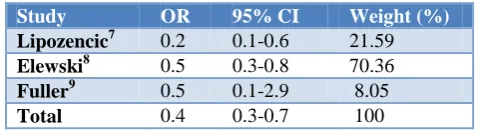
Table 5: Studies including Microsporum infected cases only.
Study OR 95% CI Weight (%)
Lipozencic7 0.2 0.1-0.6 21.59
Elewski8 0.5 0.3-0.8 70.36
Fuller9 0.5 0.1-2.9 8.05
Total 0.4 0.3-0.7 100
A subgroup analysis was performed to compare the complete cure rates of griseofulvin and terbinafine in
Trichophyton species (Table 4). In the study by Elewski, only data for T tonsurans and T violaceum, which together constitute 98.4% to 99.4% of all Trichophyton
cases, are available.8 The total number of subjects was 1388 and Table 4 shows the pooled data analysis from 4 studies. The pooled OR significantly favors terbinafine (1.7; 95% CI=1.28-2.1; p<0.001) and the test for heterogeneity is not significant (p=0.71).
Table 5 shows another subgroup analysis was completed to compare the complete cure rates of terbinafine and griseofulvin in Microsporum species. In the study by Lipozencic et al, all patients treated with terbinafine (which varies from 6-12 weeks) were included.7 In the study by Elewski et al, only data for M. canis, which constitutes 85.5% to 88.5% of all Microsporum cases, are available.8 The total number of subjects was 426 and Table 5 shows the pooled data analysis from 3 studies. The pooled OR significantly favors griseofulvin (0.4; 95% CI=0.3-0.7; p<0.001) and the test for heterogeneity is not significant (p=0.5).
DISCUSSION
Terbinafine is a fungicidal tertiary allylamine that inhibits
epoxidase, causing a toxic accumulation of squalene in the fungal cytoplasm that kills the fungus. Terbinafine is extensively metabolized in the liver and almost 80% of an managed dose is evacuated in the urine as metabolites.11,12 Inducers of the cytochrome P450 system, for example, rifampin, might increase the metabolism of terbinafine and the converse can arise with inhibitors of the cytochrome P450 system, such as cimetidine.11,12 Rare cases of liver failure have happened with the use of terbinafine and a metabolic idiosyncratic reaction has been suggested to be the essential mechanism.13,14 Thus, the manufacturer has recommended obtaining serum transaminase levels before treatment for all patients, particularly those with pre-existing hepatic impairment, those on concurrent hepatotoxic medications, and alcoholics.15 In patients with renal impairment (i.e., creatinine clearance of ≤50 mL/min), the usage of terbinafine is not suggested as clearance of the drug can be reduced significantly. Terbinafine has established a good safety profile and is a good alternative to griseofulvin for treatment of tinea capitis in children. The benefit is its shorter duration of treatment of 4 weeks on average, in contrast to 6 to 8 weeks for griseofulvin. Alternatively, it is more expensive and is not obtainable in suspension or liquid formulation. A new pediatric formulation contains of terbinafine hydrochloride miniature granules that can be sprinkled over food and swallowed easily.8 The granules are approximately 2.1 mm in diameter and are film coated to mask the taste, facilitating its administration to children.
Griseofulvin is resulting from Penicillium griseofulvum. It is fungistatic, arresting mitosis at the metaphase stage of microtubule spindle formation, by this means arresting cell division and impairing fungal cell wall synthesis in actively growing fungi. Griseofulvin has been the standard of care and is approved for treatment of tinea capitis in most countries.16 It has attended as a standard for comparison with the newer antifungal agents. The benefits of griseofulvin are that it is inexpensive and the suspension formulation enables detailed treating in children. Fleece et al investigated 6 RCT and found comparable effectiveness amid the two drugs (OR=0.86 favoring terbinafine; 95% CI=0.57-1.27).17 When 5 studies with Trichophyton species as the predominant pathogen were examined, the outcomes nearly favored terbinafine (OR=0.65; 95% CI=0.42-1.01). A Cochrane review of systemic antifungal treatment for tinea capitis in children examined RCT, the authors found that terbinafine for 4 weeks and griseofulvin for 8 weeks showed similar efficacy in 5 studies involving 539 participants (risk ratio=1.11 favoring terbinafine; 95% CI=0.96-1.29).18 In the subgroup analysis of
Trichophyton infected cases that involved 382
(mean duration of treatment 4 weeks, range 2-6 weeks) and griseofulvin (mean duration of treatment 8 weeks, range 6-12 weeks). In the pooled analysis Trichophyton
species were the predominant (≥65%) pathogenic dermatophyte, terbinafine was more effective than griseofulvin, but the difference was not statistically significant. A previous study that involved only
Microsporum species found that the cure rate for
griseofulvin inclined to be higher than for terbinafine.7 Another study found that terbinafine was significantly better than griseofulvin in achieving mycologic, clinical, and complete cure rates among patients with T. tonsurans
infection, and griseofulvin was significantly better than terbinafine in mycological and clinical cure rates between patients with M. canis infection.8 A subgroup analysis based on dermatophyte genus was consequently performed in this review. Regarding Trichophyton
infection, available data from 4 studies revealed that terbinafine was more efficacious than griseofulvin. Conversely, subgroup analysis involving 3 studies showed that griseofulvin was more efficacious than terbinafine in treating tinea capitis caused by
Microsporum species.
Both griseofulvin and terbinafine have established good safety profiles and this is in concordance with previous meta-analyses.19,20 As only one case of reversible neutropenia has so far been reported, and as hepatotoxicity is very rare and might arise both in patients with and without pre-existing liver disease, we do not believe routine pretreatment and intermittent laboratory investigations during the 4-week treatment period are essential in healthy patients. Patients and parents should, nevertheless, be informed of the very small risk of severe hepatotoxicity and advised to stop the medication and seek medical attention once possible if signs of hepatocellular injury and cholestasis develop, for example, jaundice, nausea, dark urine, pale stools and abdominal discomfort.
CONCLUSION
The present meta-analysis recommends that terbinafine is more efficacious than griseofulvin in treating tinea capitis caused by Trichophyton species, while griseofulvin is more efficacious than terbinafine in treating tinea capitis caused by Microsporum species.
Funding: No funding sources Conflict of interest: None declared Ethical approval: Not required
REFERENCES
1. Rayala BZ, Morrell DS. Common Skin Conditions in Children: Skin Infections. FP Essent. 2017;453:26-32.
2. Mirmirani P, Tucker LY. Epidemiologic trends in pediatric tinea capitis: a population-based study
from Kaiser Permanente Northern California. J Am Acad Dermatol. 2013;69(6):916-21.
3. DerSimonian R, Laird N. Meta-analysis in clinical trials. Control Clin Trials. 1986;7:177-88.
4. Higgins JP, Thompson SG, Deeks JJ, Altman DG. Measuring inconsistency in meta-analyses. BMJ. 2003;327:557-60.
5. Rademaker M, Havill S. Griseofulvin and terbinafine in the treatment of tinea capitis in children. N Z Med J. 1998;111:55-7.
6. Haroon TS, Hussain I, Aman S, Nagi AH, Ahmad I, Zahid M, et al. A randomized double-blind comparative study of terbinafine and griseofulvin in tinea capitis. J Dermatolog Treat. 1995;6:167-9. 7. Lipozencic J, Skerlev M, Orofino-Costa R, Zaitz
VC, Horvath A, Chouela E, et al. A randomized, double-blind, parallel-group, duration-finding study of oral terbinafine and open-label, high-dose griseofulvin in children with tinea capitis due to
Microsporum species. Br J Dermatol.
2002;146:816-23.
8. Elewski BE, Caceres HW, DeLeon L, El Shimy S, Hunter JA, Korotkiy N, et al. Terbinafine hydrochloride oral granules versus oral griseofulvin suspension in children with tinea capitis: results of two randomized, investigator-blinded, multicenter, international, controlled trials. J Am Acad Dermatol. 2008;59:41-54.
9. Fuller LC, Smith CH, Cerio R, Marsden RA, Midgley G, Beard AL, et al. A randomized comparison of 4 weeks of terbinafine vs 8 weeks of griseofulvin for the treatment of tinea capitis. Br J Dermatol. 2001;144:321-7.
10. Gupta KA, Adam P, Dlova N, Lynde CW, Hofstader S, Morar N, et al. Therapeutic options for the treatment of tinea capitis caused by
Trichophyton species: griseofulvin versus the new oral antifungal agents, terbinafine, itraconazole, and fluconazole. Pediatr Dermatol. 2001;18:433-8. 11. Gupta AK, Saunder DN, Shear NH. Antifungal
agents: an overview, part II. J Am Acad Dermatol. 1994;30:911-33.
12. Balfour JA, Faulds D. Terbinafine: a review of its pharmacodynamic and pharmacokinetic properties, and therapeutic potential in superficial mycoses. Drugs. 1992;43:259-84.
13. Perveze Z, Johnson MW, Rubin RA, Sellers M, Zayas C, Jones JL, et al. Terbinafine-induced hepatic failure requiring liver transplantation. Liver Transpl. 2007;13:162-4.
14. Agarwal K, Manas DM, Hudson M. Terbinafine and fulminant hepatic failure. N Engl J Med. 1999;340:1292-3.
15. Product Information: Lamisil, terbinafine. Novartis Pharmaceuticals Corp, East Hanover, NJ, 2005. 16. Bennett ML, Fleischer AB, Loveless JW, Feldman
17. Fleece D, Gaughan JP, Aronoff SC. Griseofulvin versus terbinafine in the treatment of tinea capitis: a meta-analysis of randomized, clinical trials. Pediatrics. 2004;114:1312-5.
18. Gonzalez U, Seaton T, Bergus G, Jacobson J, Martı´nez-Monzo´n C. Systemic antifungal therapy for tinea capitis in children. Cochrane Database Syst Rev. 2007;4:CD004685.
19. Bagyalakshmi R, Senthilvelan B, Therese KL, Murugusundram S, Madhavan HN. Application of polymerase chain reaction (PCR) and PCR based restriction fragment length polymorphism for detection and identification of dermatophytes from
dermatological specimens. Indian J Dermatol. 2008;53:15-20.
20. Gonza´lez U, Seaton T, Bergus G, Jacobson J, Martı´nez-Monzo´n C. Systemic antifungal therapy for tinea capitis in children. Cochrane Database Syst Rev. 2007;(4):CD004685.