Review Article
Early detection and prevention of oral cancer: an appraisal
Swati Agrawal
1*, Vrinda Saxena
2, Swapnil Jain
1, Vijayta Sharva
1,
Shibani Sarangi
3, Chandrahas Thakur
4INTRODUCTION
Oral cancers (OC) represent the majority of head and neck cancers with more than half million patients being
affected each year worldwide.1 Oral squamous cell
carcinoma (SCC) is the sixth commonest cancer worldwide, accounting for approximately 4% of all cancers. SCC of the oral cavity may comprise up to 50% of all cancers in developing and underdeveloped countries, and its prognosis is poor.2 Therefore, an improvement in the prevention and control of oral cancer is of critical importance. This may be achieved by reducing the risk through avoidance of tobacco and
alcohol, recognizing and treating premalignant lesions and detecting developed OC at an early stage.3
Tobacco use, in any form, and alcohol use are the major risk factors for oral cancer. With dietary deficiencies, these factors cause more than 90 percent of OC. Preventing tobacco and alcohol use and increasing the consumption of fruits and vegetables can potentially
prevent the vast majority of OC.4 When primary
prevention fails, early detection through screening and relatively inexpensive treatment can avert most deaths. This review ruled out web of causation and web of prevention including early detection and prevention to be
ABSTRACT
Oral cancers (OC) represent the majority of head and neck cancers with more than half million patients being affected each year worldwide. Oral squamous cell carcinoma is the sixth commonest cancer worldwide, accounting for approximately 4% of all cancers. Therefore, an improvement in the prevention and control of oral cancer is of critical importance. This may be achieved by reducing the risk through avoidance of tobacco and alcohol, recognizing and treating premalignant lesions and detecting developed OC at an early stage. Data search for the present review was done electronically. Electronic search was conducted using databases such as Pubmed and Medline, Cochrane library, articles published in peer-reviewed journals, text books, grey literature and from sites of World Health Organization, Centre For Diseases Control Report, Global Adult Tobacco Survey and Global Youth Tobacco Survey reports. This review ruled out web of causation and web of prevention including early detection and prevention to be an ideal strategy to reduce the prevalence of oral cancer and its impact on quality of life. Screening and early detection in population at risk have been proposed to decrease both morbidity and mortality associated with the oral cancer.
Keywords: Early detection, Prevention of oral cancer, Oral cancer
1Department of Public Health Dentistry, Peoples Dental Academy, Bhopal, Madhya Pradesh, India
2
Department of Public Health Dentistry, Government Dental College, Indore, Madhya Pradesh, India 3Department of Oral Surgery, Pacific Dental College, Udaipur, Rajasthan, India
4BDS, Triveni Dental College, Bilaspur, Chhattisgarh, India
Received: 23 October 2019
Revised: 04 December 2019
Accepted: 06 December 2019
*Correspondence:
Dr. Swati Agrawal,
E-mail: [email protected]
Copyright: © the author(s), publisher and licensee Medip Academy. This is an open-access article distributed under the terms of the Creative Commons Attribution Non-Commercial License, which permits unrestricted non-commercial use, distribution, and reproduction in any medium, provided the original work is properly cited.
an ideal strategy to reduce the prevalence of oral cancer and its impact on quality of life. However, oral cancer continues to be a major cancer in the Indian subcontinent.5
METHODS
Search methods
Data search for the present was done electronically. Electronic search was conducted using Databases such as Pubmed and Medline, Cochrane library, articles published in peer-reviewed journals, text books, grey literature and from sites of Government agencies such as World Health Organization, Centre For Diseases Control Report, Global Adult Tobacco Survey (GATS) and Gyts survey reports. The collected documents include original
articles, reviews, short reports, letter to editor and editorials that focusses on prevalence of oral cancer, its early diagnosis and prevention .
Selection criteria
Studies on burden of oral cancer, screening for oral cancer or early diagnosis using visual examination, toluidine blue and preventive measures to curb it.
Data collection and analysis
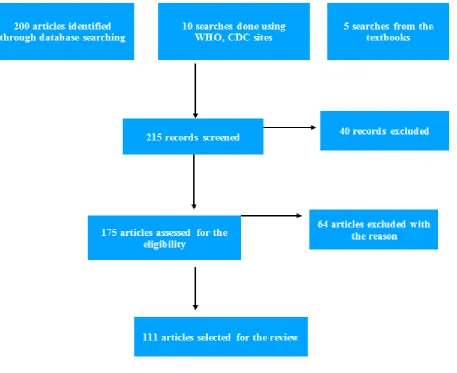
All the articles collected were analysed according to the inclusion criteria which includes, prevalence, causes, early diagnosis and prevention of oral cancer. Studies not meeting the inclusion criteria are excluded (Figure 1).
Figure 1: Methodology.
EPIDEMIOLOGY OF ORAL CANCER
Cancer is one of the major threats to public health in the developed world and increasingly in the developing world. In developed countries cancer is the second most common cause of death. According to the World Health Report 2004, cancer accounted for 7.1 million deaths in 2003 and it is estimated the overall number of new cases
will rise by 50% in the next 20 years. In south-central Asia, cancer of the oral cavity ranks among the three most common types of cancer. In India, the age standardized incidence rate of oral cancer is 12.6 per 100,000 population.6
Incidence of oral cancer increases by age. The commonest age is the fifth decade of life.8 Cancer in the
tongue is the most common type of cancer and the common site is buccal mucosa and gingiva.9
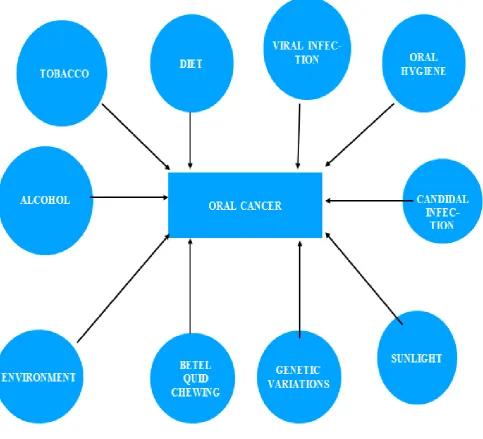
Figure 2: Web of causation.
ETIOLOGY OF ORAL CANCER
Tobacco andtobacco products
Presently, it has been estimated that tobacco usage causes more than five million deaths worldwide, which is expected to rise up to more than eight million per year by 2030.10 As per the latest nationally representative GATS, India had 275 million current tobacco users in the year 2009-2010 (over 35 per cent of adults), majority of them used smokeless tobacco (164 million) and 42 million used both forms of tobacco.11 2-3% growth per annum of tobacco consumption in India and by 2020 it is predicted that it will account for 13% of all deaths in India two-forms. Tobacco is available in two-forms smoked and smokeless form.
Chemical constituents of tobacco
The most harmful compounds in smokeless tobacco are tobacco-specific nitrosamines and their levels are directly related to the risk of cancer. Smokeless tobacco has nicotine as an important constituent that causes
addiction.12Tobacco smoke contains many chemicals that
are harmful to both smokers and nonsmokers.13 Of the more than 7,000 chemicals in tobacco smoke, at least 250 are known to be harmful, including hydrogen cyanide,
carbon monoxide, and ammonia.14
Betel quid chewing
potent stimulator for collagen synthesis in human fibroblasts culture leading to excessive accumulation of collagen, leading to fibrosis. The high serum copper levels may also lead to generate high levels of free radicals by metal-catalysed Haber-Weiss reaction and this can be one of the reasons for the carcinogenesis in tobacco and areca nut users.15
Alcohol
Moderate to heavy alcohol consumption is associated with higher risks of certain head and neck cancers. Alcohol may increase the risk of cancer, including: metabolizing ethanol in alcoholic drinks to acetaldehyde, acetaldehyde can damage both DNA and proteins generating reactive oxygen species, which can damage DNA, proteins, and lipids in the body through a process called oxidation.16
Diet
According to World Health Organization reports, 35–55%
of human cancers and approximately 15% of
oropharyngeal cancers can be attributed to dietary deficiencies or imbalances.17
The relationship between nutrition and cancer has to be approached from two different points of views. The direct effect of carcinogens presents in food and food additives. In vivo synthesis of carcinogens caused by changes in metabolism due to altered dietary habits. These add up to effects of diet on energy balance, risk of obesity, hormonal, and metabolic responses related to energy balance.18
Genetic variations
Tumor cell chromosomes and alterations in these chromosomes resulted in conversion of normal to malignant proliferation.19 Chromosomal instability is a
common feature of human tumors including oral cancer.20
Approx. two-third of all head and neck cancer cells contain a deleted region located in chromosome 9p21-22.21
Environmental factors
External environment
Involuntary exposure to many carcinogens in the environment, including microorganisms, radiations and many xeno chemicals, may account for the recent growing incidence of cancer and therefore that the risk attributable to environmental carcinogen may be far higher than it is usually agreed.22
Internal environment
Poor oral hygiene with tobacco and alcohol consumption can destroy the integrity of the oral cavity. Improper toothbrushing and cleaning of adjacent soft tissues can leads to pre-malignant lesions. Use of chewing sticks or neem twigs leads to infrequent tooth cleaning is a prime cause of oral cancer.23
Sunlight
Cancer of lip is the most common cancer. There is a strong association between exposure of sunlight and risk of lip cancer.24
Viral infection
The majority of oral viral infections manifesting as oral diseases or cancers are caused by human herpesviruses and human papillomavirus.25
Candidal infection
Candida and carcinogenesis is related to oral and
oesophageal carcinoma. Candida might induce oral
squamous cell carcinoma by directly producing carcinogenic compounds, for example, nitrosamines.26 Point mutations thus induced may activate specific oncogenes and initiate the development of oral cancer.27
CONFOUNDING FACTORS
Iron metabolism is important to maintain the health of oral mucosa, and many disease states, including cancers, are associated with Iron depletion. Serum Iron content can be a predictor for the progression of OSMF.
Vitamin C deficiency may reduce the availability of intracellular iron. Vitamin C is also necessary to convert folic acid to its active metabolite, folic acid. Deficiency of vitamin C can leads to oral cancer. Low socio-economic status may reflect exposure to harmful physical environments and agents which could increase the risk for oral cancer. Household income may have a direct impact on the housing and living environment which in turn affects health. It may also determine access to health services, social facilities and to the affordability of quality food.
These factors affect health and could potentially explain the association with increased oral cancer risk.28
PREVENTION OF ORAL CANCER
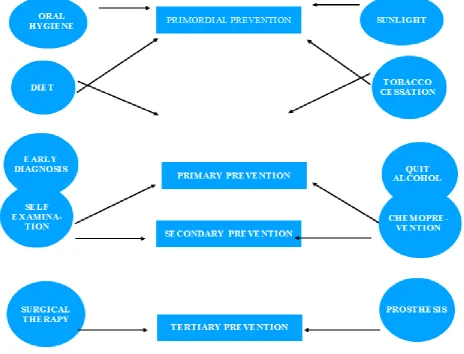
Figure 3: Web of prevention.
Primordial prevention
Primordial prevention, a new concept, is receiving special attention in the prevention of chronic diseases. This is primary prevention in its purest sense, that is, prevention of emergence or development of risk factors in countries or population group in which they have not yet appeared.
In primordial prevention, efforts are directed towards discouraging children from adopting harmful lifestyles.
The main intervention in primordial prevention is through individual and mass education.
It aims to prevent the occurrence of the risk factors themselves by optimizing lifestyles that are associated with bad oral hygiene, improper diet, alcohol consumption, tobacco chewing and smoking. Such strategy requires tackling the roots of oral cancer risk factors by health promotion, healthy public policies, and improved physical environments conducive to healthy lifestyles throughout the whole course of life, from conception to older age. Very substantial health gains can be made for relatively modest expenditures on interventions.
Primary prevention
Primary prevention focuses on avoidance of known etiological factors and alterations in lifestyle to prevent cancer developing in the first place. This is particularly important because oral cancer is one of the few cancers with a high potential for prevention.
MODE OF INTERVENTION
Health promotion
It involves health education programs related to oral hygiene practices involving habit counselling and self-examination of oral mucosa.
Monthly self-examination routine
Specific protection
It includes tobacco cessation counselling and diet counselling.
Tobacco cessation
Tobacco cessation is an essential component for reducing the mortality and morbidity related to tobacco use, as the lack of it may lead to an additional 160 million global deaths among smokers by 2050.
Because effective tobacco dependence treatments are available, every patient who uses tobacco should be offered at least one of these treatments are behaviour counselling and nicotine replacement therapy or pharmacological agents.
Behaviour counselling
Intensive counselling by a specialist increases quit rates additionally by 4-7% compared to normal. Relapse prevention strategies given individually suggest increased cessation rates by about 1.5-2%.
Prochaska and Di Clemente have described a series of stages through which people pass in making changes in their behaviours. At each stage a person is thinking and feeling differently about the problem behaviour and finds that different processes and interventions help them move on to the next stage.
The 5 A’s is a brief intervention method (or approach in counselling), used to guide the clinician in tobacco cessation counselling. This method can be effective and only takes 5-15 minutes.
The 5 major steps in this intervention are ask, advise, assess, assist and arrange.30
Diet
Among the dietary factors influencing cancer growth, with regard to the head and neck and especially oral SCC, fibre, antioxidants (β- carotene, tea, fresh fruits, and vegetables), animal fat, frying or broiling protein foods, and micronutrients (vitamin C, E, and K, zinc, folate) offer the best hopes for growth inhibition.
Antioxidants
Antioxidants can inhibit or decrease the production of components, which can induce cancer caused from frying or broiling protein and foods that generate heterocyclic amines.
Consumption of six food items (i.e., milk, meat, cheese, carrots, green vegetables and fruits) was inversely and significantly correlated with development of oral cancer. Besides antioxidants, the beverage tea can act as an
antioxidant and inhibit the carcinogenic effect of cigarette and tobacco, oesophagus or lung.
Energy balance and fat food diet
Essential fatty acids such as fish oil and vegetables rich in n-3 polyunsaturated fatty acids must be incorporated into diet and have a protective effect against cancer. Dietary factors associated with reduced risk of oral cancer include herbal tea, apple, margarine, milk, and citrus fruit or juice.
Micronutrients
Micronutrients like vitamin C, E, β-carotene, lycopene, folate, and zinc have important roles in carcinogenesis. Vitamin E and β-carotene can also cause regression of oral leukoplakia.31
Sunlight (actinic radiation)
The incidence of lower lip cancer is higher in Caucasians in sunnier climates, and fair-skinned people are advised to wear sunscreen to prevent actinic damage.32
SECONDARY PREVENTION
Secondary cancer prevention refers to early diagnostic and treatment of patients with oral premalignant lesions and screening the population at risk and asymptomatic.33 Mode of intervention is early diagnosis and prompt treatment.
Early diagnosis
Secondary prevention of cancer, or screening, involves the use of examinations and tests to detect a cancer as early as possible, before signs and symptoms would cause a patient to seek care. In some cases, the disease can be detected in a premalignant state (e.g., leukoplakia of the mouth,).34
Toludine blue staining and cytology can be used for early diagnosis of lesions. These cellulo-morphological changes can be maintained and regularly updated on the annual basis in the process of detection of life threatening health hazards.35
Prompt treatment
Chemoprevention
to inhibit, suppress or control the incidence of carcinogenesis.37
Topical and systemic use of chemo preventive agents is an attractive alternative that reduces toxic effects.38
COMMONLY TRIED CHEMOPREVENTIVES IN ORAL CANCER
Vitamin A and other retinoids, beta-carotene, vitamin E, dietary agents and newer agents.
Retinoids
Retinoids have been widely studied as chemo preventive agents. They have been shown to induce apoptosis, to suppress carcinogenesis, to decrease growth rate of epithelial cells, and to reduce free radicals.
Vitamin A
Vitamin A deficiency causes a change in the differentiation pathway, resulting in epithelial hyperplasia and squamous metaplasia. The mechanism underlying the chemo preventative effects of vitamin A and its derivatives is the restored expression of retinoic acid receptor-beta mRNA, which promotes normal tissue growth and differentiation.
Beta carotene
Beta carotene is a naturally occurring, nontoxic carotenoid with biologic properties that may be suitable against oral leukoplakia. Results of some trials indicate that beta carotene has substantial activity in oral pre-malignancy.
Vitamin E
Alpha-tocopherol is the only form of vitamin E that is actively maintained in human body. Vitamin E (alpha-tocopherol) is a potent antioxidant that neutralizes free oxygen radicals and inhibits 2 carcinogenic nitrosamine formation.
Dietary agents
A variety of grains, cereals, nuts, soya products, olives, beverages confer a protective effect against cancer. In particular, natural products consist of a wide variety of biologically active phytochemicals including phenolics, flavonoids, carotenoids, alkaloids and nitrogen containing as well as organosulfur compounds, which have been shown to suppress early and late stages of carcinogenesis.
Recently, the bioactive triterpene, lupeol, commonly found in fruits like fig, mango, etc., has attracted interest in the context of chemoprevention as its efficacy in inhibition of in vivo and in vitro cancer growth.
Curcumin
A spice widely used in Indian cuisine, has been identified to show considerable anti-tumor effects. It is a yellow pigment that is present in the rhizome of turmeric (Curcuma longa L.) and related species and is one of the most extensively investigated phytochemicals, with regard to chemo preventive potential.
Gingerol
A phenolic substance that is responsible for the spicy taste of ginger (Zingiber officinale) was reported to inhibit tumor promotion and PMA-induced ornithine decarboxylase activity and tumor necrosis factor production.
Newer agents
Potential new targets for chemoprevention, which are under consideration in oral cancer, include the following: H-ras gene, epidermal growth factor receptor inhibitors,
p53 gene, COX-2 inhibitors, NF-KB.39
TERTIARY PREVENTION
Tertiary prevention aims at the terminal stages. Mode of intervention is disability limitation and rehabilitation. Pain control and palliative care are major strategies of tertiary prevention.40
Early-stage (I and II) oral SCC can be treated with surgery or radiation. In advanced- stage (III and IV) oral SCC, a combination of surgery and radiation therapy provides the best survival rate, although this increases the complications and morbidity.41
DISABILITY LIMITATION
Surgery
Elective neck dissection to remove lymph nodes may be considered in selected cases, such as patients with stage I tongue cancer and stage II OC at other oral sites, who may be at high risk of microscopic but not clinically evident involvement of the neck nodes. Postoperative radiotherapy is indicated in patients with positive or involved resected margins who are not candidates for re-excision.3
Rehabilitation
In the field of reconstruction, the development of microvascular surgery and the use of osseo-integrated implants have allowed great improvements in function and esthetics. Microvascular free-tissue flaps allow the transfer of skin, fat, muscle, bone or any combination of these to primarily reconstruct the post ablative defect. The radial forearm flap has become the workhorse flap for
osseomyocutaneous flaps used for mandibular reconstruction.
The success of osseo-integrated implants, in both non-vascularized and non-vascularized bone grafts in patients with cancer, is well-substantiated.42Implants have been placed successfully even in irradiated tissues.43 Certainly, however, the goal of providing patients who have oral cancer with teeth and the ability to manage a normal diet now is achievable.44
ORAL CANCER AND QUALITY OF LIFE
The clinical manifestations of oral cancer and effects of treatment can lead to negative effects on the quality of life of the patient. Oral cancer has many physical, psychosocial and financial implications all of which can have large effects on the patients quality of life. Awareness of these impacts and their complexity can be used by health care providers to ensure to information and resources.45
Physical impact
Treatment of oral cancer has adverse effects on the face, speech, voice and swallowing. Impairments can be attributed to the effects of the tumor itself or procedures before or during cancer treatment such as tracheostomy, pain from mucositis, xerostomia, amputation of oral structures or fibrosis due to radiation treatment.46 Self-esteem can be affected when normal facial appearance or communication ability is altered by oral cancer treatment.47
Esthetics impact
Oral cancer treatment may include surgery that involves removing large areas of facial features. Altered facial appearance can cause social isolation and psychological distress. Reconstructive surgery may be necessary to help the patient recover facial features and functions.48
Speech impact
Speech is usually affected by chemotherapy and radiation therapy. Typically, the severity is mild to moderate and is related primarily to treatment of the tongue, teeth, palate and lips. Patients with oral cancer may have trouble articulating speech rapidly when experiencing symptoms such as dry mouth or pain due to mucositis.49
Voice impact
Voice quality in patients with oral cancer can be severely affected by different factors including impairment of vocal fold mobility, altered tongue anatomy and chronic laryngeal edema.
As a result, the patient’s voice can become strained, wheezy or harsh.49
Swallowing impact
Dysphagia is a common result of oral cancer treatment. Patients with oral cancer have a higher risk of aspirating while eating due to the impact on efficiency and safety of swallowing.48
Psychosocial impact
Oral cancer represents a psychosocial challenge not only for patients but also for their family and diagnosing provider. Government institutions, nonprofit organization and internet forum are some of the available resources to assist patients with attaining balance in their lives at diagnosis, during treatment and through survivorship (Figure 4).
CONCLUSION
Cancer is a worldwide problem and oral cancer is one of the most prevalent cancers and one of the 10th familiar causes of death with a complex etiology. Despite advances in cancer treatment, the survival rates of patients suffering from head and neck cancer has not improved substantially. The data emphasize the necessity of early detection of the disease as survival is influenced by the extent of the disease at the time of diagnosis. Mortality and morbidity of oral cancer can be significantly reduced if detected in early stages. Screening and early detection in population at risk have been proposed to decrease both morbidity and mortality associated with the oral cancer. Findings suggest that the key to prevent oral cancer is to educate the mass in the primary level to quit the etiological factors. It can be concluded that tobacco cessation and nutritional intervention is one of the most valuable means of cancer prevention.
Funding: No funding sources Conflict of interest: None declared Ethical approval: Not required
REFERENCES
1. Corso GD, Villa A, Tarsitano A, Gohel A. Current trends in oral cancer: a review. Cancer Cell and Microenvironment. 2016;3:1332.
2. Daftary DK. The situation in high risk areas of the world. In: Johnson NW, ed. Risk Markers for Oral Diseases. Cambridge, Cambridge Uni- versity Press; 1990: 2.
3. Joseph BK. Oral cancer: prevention and detection. Med Principles Pract. 2002;11(1):32–5.
4. Sankaranarayanan R, Ramadas K, Thara S,
Muwonge R, Thomas G, et al. Long term effect of visual screening on oral cancer incidence and mortality in a randomized trial in Kerala, India. Oral Oncol. 2013;49(4):314-21.
5. Sankarnarayanan R, Ramadas K, Amarsinghe H,
Subramanian S, Johnson N, Gelband H, et al. Oral Cancer: Prevention, Early Detection, and Treatment.
Cancer Disease Control Priorities. 3rd ed.
Washington (DC): The International Bank for Reconstruction and Development / The World Bank; 2015: Chapter 5.
6. Peterson PE. Strengthening the prevention of oral cancer: the WHO perspective. Community Dent Oral Epidemiol. 2005;33:397–9.
7. Gupta S, Singh R, Gupta OP, Tripathi A.
Prevalence of oral cancer and pre‐cancerous lesions and the association with numerous risk factors in North India: A hospital based study. Natl J Maxillofac Surg. 2014;5(2):142-8.
8. Coelho KR. Challenges of the Oral cancer burden in India. J Cancer Epidemiol. 2012:701932.
9. Varshitha A. Prevalence of oral cancer in India. AJ
Pharm Sci Res. 2015;7(10):845-8.
10. Mathers CD, Loncar D. Projections of global
mortality and burden of disease from 2002 to 2030. PLoS Med. 2006;3(11):442.
11. Centre of disease control. Tobacco Use: Targeting the nation’s Leading killer. Available at: Tobacco
Use: Targeting the Nation's Leading
Killerwww.cdc.gov/chronicdisease/resources/.../toba cco_ aag_2011_508.pdf. Accessed on 05 August 2018.
12. International Agency for Research on Cancer. Lyon,
France: World Health Organization International Agency for Research on Cancer; IARC Monographs on the Evaluation of Carcinogenic Risks to Humans; 2007. Smokeless Tobacco and Some Tobacco-SpecificN-Nitrosamines.
13. Muir CS, Zaridze DG. Smokeless tobacco and
cancer. An overview. Lyon, France: IARC Scientific Publications; 1986: 35-44.
14. Muir CS, Zaridze DG. Smokeless tobacco and
cancer: An overview. Lyon, France: IARC Scientific Publications ; 1986: 35-44.
15. Nair U, Bartsch H, Nair J. Alert for an epidemic of
oral cancer due to use of the betel quid substitutes gutkha and pan masala: a review of agents and
causative mechanisms. Mutagenesis.
2004;19(4):251-62.
16. Alcohol and cancer risk fact sheet. National Cancer
Institute. Available at: www.cancer.gov. Accessed on 05 August 2018.
17. Blackburn GL, Copeland T. Diet and breast cancer.
J Women Health. 2003;12:183-92.
18. Taghavi N, Yazdi I. Type of food and risk of oral cancer. Arch Iran Med. 2007;10(2): 227-32.
19. Boveri T. On the issue of development of malignant
tumours. Jena: Gustav Fischer; 1914.
20. Reshmi SC, Gollin SM. Chromosomal instability in
oral cancer cells. J Dent Res. 2005;84:107–17. 21. Sidransky D. Molecular genetics of head and neck
cancer. Curr Opin Oncol. 1995;7:229–33.
22. Irigaray P, Newby JA, Clapp R, Hardell L, Howard
V, Montagnier L, et al. Lifestyle-related factors and environmental agents causing cancer: an overview. Biomed Pharmacother. 2007;61(10):640-58.
23. Oji C, Chukwuneke F. Poor oral hygiene may be the
24. Lindqvist C, Teppo L. Epidemiological evaluation of sunlight as a risk factor of lip cancer. BR J Cancer. 1978;37(6):983-9.
25. Speicher DJ, Amador VR, Dittmer DP, Cyriaque
JW, Goodman MT, Moscicki AB. Viral infections associated with oral cancers and diseases in the context of HIV: Workshop 3B. Oral Dis. 2016;22(1):181-92.
26. Hooper SJ, Wilson MJ, Crean SJ. Exploring the link
between microorganisms and oral cancer: a systemic review of the literature. Head Neck. 2009;31:1228– 39.
27. Archer MC. Chemical carcinogenesis. In: Tannock
IF, Hill RP, eds. The basic science of oncology. New York: Pergamon Press; 1987: 89-105.
28. Conway DI, Petticrew M, Marlborough H, Berthiller
J, Hashibe M, Macpherson LM. Socioeconomic inequalities and oral cancer risk: a systematic review and meta-analysis of case-control studies. Int J Cancer. 2008;122(12):2811-9.
29. Oral Cancer Self Examination. Dental Hygienists: your partners in oral health. Available at: www.odha.on.ca. Accessed on 05 August 2018. 30. Manual for Tobacco Cessation. Directorate General
of Health Services Ministry of Health and Family Welfare Government of India November; 2005. 31. Taghavi N, Yazdi I. Type of food and risk of oral
cancer. Arch Iran Med. 2007;10(2):227-32.
32. Ogden GR, Macluskey M. An Overview of the
prevention of oral cancer and diagnostic markers of malignant Change: 1. Prevention. Dental Update March; 2000.
33. Scrobota I, Vlad SV, Filip GA. Current trends in oral cancer chemoprevention. Oral Cancer, 2016. Available at: www.avidscience.com. Accessed on
34. Eddy DM. Secondary prevention of cancer: an
overview. Bull World Health Organ.
1986;64(3):421-9.
35. Mendes SF, Ramos GO, Rivero ERC, Modolo F,
Grando LJ, Meurer MI. Review article techniques for precancerous lesion diagnosis. Hindawi J Oncol. 2011:326094.
36. Fotedar V, Fotedar S, Seam RK, Gupta MK. Oral Cancer and Chemoprevention. Intl J Pharma Sci Invent. 2013;2(2):16-20.
37. Bodhade AS, Dive AM. Chemoprevention of
premalignant and malignant lesions of oral cavity: recent trends. Eur J Dent. 2013;7(2):246-50.
38. Mangalath U, Aslam SA, Khadar AHKA, Francis
PG, Mikacha MSK, Kalathinga JH. Recent trends in prevention of oral cancer. J Int Soc Prevent Community Dent. 2014;4(3):131-8.
39. Robert A , Remy H. Current management of oral cancer A multidisciplinary approach. JADA. 2001;132:19-23.
40. Foster RD, Anthony JP, Sharma A, Pogrel MA.
Vascularized bone flaps versus nonvascularized bone grafts for mandibular reconstruction: an outcome analysis of primary bone union and
endosseous implant success. Head Neck.
1999;2(1):66-71.
41. Larsen PE. Placement of dental implants in the irradiated mandible: a protocol involving adjunctive hyperbaric oxygen. J Oral Maxillofac Surg. 1997;55:967-71.
42. Abendstein H, Nordgren M, Boysen M, Jannert M, Silander E, Ahlner-Elmqvist M, et al. Quality of life and head and neck cancer: a 5 year prospective study. Laryngoscope. 2005;115:2183-92.
43. So WK, Chan RJ, Chan DN, Hughes BG, Chair SY,
Choi KC, et al. Quality-of-life among head and neck cancer survivors at one year after treatment a systematic review. Eur J Cancer. 2012;48:2391-408.
44. Chen SC, Huang BS, Lin CY. Depression and
predictors in Taiwanese survivors with oral cancer. Asian Pac J Cancer Prev. 2013;14:4571-6.
45. Collins SL. Controversies in multimodality therapy for head and neck cancer: clinical and biologic perspectives. In: Thawley SE, Panje WR, Batsakis MD, eds. Comprehensive management of head and neck tumors. Philadelphia: W.B. Saunders Co; 1999: 251-255.
46. Funk GF, Karnell LH, Christensen AJ. Long-term
health-related quality of life in survivors of head and neck cancer. Arch Otolaryngol Head Neck Surg. 2012;138:123-33.
47. Cooper JS, Fu K, Marks J, Silverman S. Late effects
of radiation therapy in the head and neck region. Int J Radiat Oncol Biol Phys. 1995;31:1141-64.
48. Payakachat N, Ounpraseuth S, Suen JY. Late
complications and long-term quality of life for survivors (>5 years) with history of head and neck cancer. Head Neck. 2013;35:819-25.
49. Valdez JA, Bernnan NT. Impact of oral cancer on quality of life. Dent clin N Am. 2018;62:143-54. 50. Schnaper N, Kellner TK. Phychosocial effect of
cancer on the patient and the family. In: Peterson DE, Elias EG, Sonis ST, eds. Head and neck management of the cancer patient. Boston: Martinus Nijhoff Publishing; 1986: 503-507.