Chandana K, et al. J Sci Res Pharm, 2019;8(5):54-61 World Inventia Publishers
J
ournal of
S
cientific
R
esearch in
P
harmacy
http://www.jsrponline.com/Vol. 8, Issue 5, 2019 ISSN: 2277-9469 USA CODEN: JSRPCJ
Review Article
ANTI-OBESITY THERAPY: A REVIEW
Chandana Kamili a *, Sai Krishna K.V.S a, Abbulu Konda a, Rama Mohan Reddy Tummaluru a, Ravi Shankar Kakaraparthi b,
Uma Maheshwararao Vattikutti c
* a Department of Pharmacology, CMR College of Pharmacy, Hyderabad- 501401, Telangana, INDIA.
b Department of Pharmacology, Sri Sai Aditya Institute of Pharmaceutical Sciences and Research, Surampalem, Andra pradesh, INDIA.
c Department of Pharmacognosy, TRR College of Pharmacy, Hyderabad- 500079, Telangana, INDIA.
Received on: 29-03-2019; Revised and Accepted on: 08-05-2019
ABSTRACT
O
besity is a represent major health threat of our society. Based on estimations by the World Health Organization,approximately 300 million people will be obese in 2035. In 2015 alone there were more than 1.6 million fatalities attributable to hyperglycemia and diabetes. From the beginning of the 19th century, a variety of drugs have been evaluated to decrease body weight. The list of evaluated drugs includes, among many others, sheep-derived thyroid extracts, mitochondrial uncouplers, amphetamines, serotonergics, lipase inhibitors, and a variety of hormones produced and secreted by the gastrointestinal tract or adipose tissue. Unfortunately, when used as a single hormone therapy, most of these drugs are underwhelming in their efficacy or safety, and placebo-subtracted weight loss attributed to such therapy is typically not more than 10%. In 2009, the generation of a single molecule with agonism at the receptors for glucagon and the glucagon-like peptide 1 broke new ground in obesity pharmacology. Several other unimolecular dual agonists have subsequently been developed, and, based on their preclinical success, these molecules illuminate the path to a new and more fruitful era in obesity pharmacology. In this review, we focus on the historical pharmacological approaches to treat obesity led to the discovery of unimolecular polypharmacology.
KEYWORDS: Obesity, Body weight, Glucagon-like peptide 1.
INTRODUCTION
Obesity:
Obesity is characterized by an excess of body fat resulting from a chronic surplus in energy intake over energy expenditure. In the progression of obesity, the lipid deposition in adipose tissue can exceed the storage capacity of adipocytes, resulting in elevated circulating concentrations and inappropriate accumulation in multiple tissues, most notably liver and skeletal muscle.
Fat deposits in such ectopic tissues are unhealthy and can initiate tissue inflammation, endoplasmic reticulum (ER) stress, and endothelial dysfunction, accelerating the development of obesity associated pathologies, such as insulin resistance and type 2 diabetes (T2D) [1].
* Corresponding author:
Dr. Chandana Kamili
Associate professor,
Department of Pharmacology,
CMR College of Pharmacy, Hyderabad- 501401, Telangana, INDIA.
* E-Mail: [email protected]
DOI:https://doi.org/10.5281/zenodo.2677998
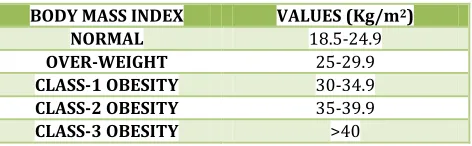
Body Mass Index: According to National Institute of Health
Table No. 1: Values of Body Mass Index
BODY MASS INDEX VALUES (Kg/m2)
NORMAL 18.5-24.9
OVER-WEIGHT 25-29.9
CLASS-1 OBESITY 30-34.9
CLASS-2 OBESITY 35-39.9
CLASS-3 OBESITY >40
The ever-growing prevalence, obesity and diabetes represent major health threats of our society. Based on estimations by the World Health Organization, approximately 300 million people will be obese in 2035.
In 2015 alone there were more than 1.6 million fatalities attributable to hyperglycemia and diabetes. In addition, treatment of these diseases places anenormous burden on our health care system.As a result, the development of pharmacotherapies to tackle this lifethreatening pandemic is of utmost importance.
The list of evaluated drugs includes, among many others, sheep-derived thyroid extracts, mitochondrial un-couplers, amphetamines, serotonergics, lipase inhibitors, and a
variety of hormones produced and secreted by the GI tract or adipose tissue.
Fig. 1: The proportion of people who will be obese looks set to continue increasing: by 2035 around four out of ten who will be obese
In the United States alone, about a quarter of a million adults prematurely die every year due to the consequences of excess body weight [2].
The global burden that obesity and diabetes places upon our health care systems demands the development of effective, safe, and sustainable treatment options to combat this sizable and growing public dilemma.
The drug approval process directed by the FDA or the European Medicines Agency has continually evolved and is currently separated into several distinct clinical phases.
Phase I is typically performed in healthy volunteers with a specific focus on tolerability, pharmacokinetics, and acute measures of safety.
Phase II progresses to assess drug efficacy and safety in the first cohorts of carefully selected and well characterized patients.
The phase III clinical studies aim to confirm sustained efficacy and longer-term safety, in large-scale multicenter patient trials. Once a drug is registered yet subsequent to commercialization, phase IV studies are often employed to further assess effects in even larger-scale, chronic studies.
Although historical weight-loss drugs failed to meet expectations, there has been important progress in recent years in the emergence of novel therapeutics. In particular, peptide-based agonism at the glucagon-like peptide 1 (GLP-1) receptor (GLP-1R) has demonstrated meaningful reduction in body weight and serves as a other key metabolic hormones has been integrated to single molecular entities. Several purposefully designed, unimolecular multiagonists have recently been reported, with the first occurring in 2009 [3].
Causes of Obesity:
Inactivity Drugs
Diets Medical conditions
Pregnency Genetics
Lack of sleep Family Lifestyle
Age
Fig. 2: Cause of Obesity
Complications of Obesity:
If you are obese you are at risk to have one or more of a great number of obesity health problems. including:
Type 2 diabetes.
High blood pressure.
Stroke.
Heart disease.
Gallbladder disease.
Osteoarthritis.
poor wound healing.
Sleep apnea,( dangerous sleep disorder in which breathing repeatedly stops and starts).
Metabolic syndrome.
Cancer
Depression.
In this review, we present the achievements and the disappointments in modern weight-loss pharmacology and discuss the emergence of these unimolecular multiagonists as a promising path to a new era.
Bariatric Surgery: A Bench Mark for Efficacy:
Bariatric surgery: Surgery on the stomach and/or intestines to help a person with extreme obesity lose weight. Bariatric surgery is an option for people who have a body mass index (BMI) above 40. An example of restrictive surgery is adjustable gastric banding also called lap band surgery .
As of today, bariatric surgery remains the most effective way to sizably lower body weight. Among the commonly used procedures are:
Roux-en-Y gastric bypass (RYGB).
Vertical sleeve gastrectomy (VSG).
Adjustable gastric banding.
The continued refinement through the last decade in surgical techniques and improvement in laparoscopic procedures has resulted in enhanced recovery, fewer adverse outcomes, and hospitalization routinely required for typically no more than 1 to 2 days [4].
Bariatric surgery is rapidly gaining in popularity, and large-scale follow-up studies dependent on the surgical procedure, demonstrating sustained weight loss of 13%–27%, with follow-up for as much as 15 years.
Fig. 3: Types of bariatric surgeries
Rapid improvement in glycemic control after RYGB or VSG is observed within a few days following surgery, and notably prior to clinically relevant weight loss.
The observation that RYGB and VSG lead increased postprandial GLP-1 secretion has widely resulted in the hypothesis that enhanced GLP-1 action contributes to reduced food intake, weight loss, and improved glucose metabolism typically observed after these surgical procedures.
These data suggest that enhanced GLP-1 action alone cannot explain the metabolic benefits of this surgery. Consistent with this notion, singular inhibition of either GLP-1 or PYY alone does not affect food intake in humans following RYGB.
Whereas the molecular mechanisms underlying the improvement in energy and glucose metabolism by bariatric surgery are not fully understood, surgery is the only currently available intervention that achieves sustained weight loss and correction of T2D.
The Chronology of Modern Weight-Loss Pharmacology:
Modern weight-loss pharmacology begins near the end of the 19th century, where growing industrialization and change in lifestyle propelled a persistently increasing demand for drugs to control body weight.
Eager to satisfy a generation that was yearning for a pill to melt away fat mass within a (few) blink(s) of an eye, a
variety of weight-lowering drugs were evaluated during the first half of the 20th century.
Reflective of the complex nature of systemic energy regulation, the mode of action underlying these drugs ranged from central modulation of hunger and satiety, to limiting intestinal nutrient transport, and to direct manipulation of energy expenditure.
Fig. 5: Time line of pharmacotherapies used to treat obesity from 1900 until today
Thyroid Hormones:
The thyroid gland has been known for centuries for its ability to increase metabolic rate. There are clinical reports that date from the 1890s on the weight-lowering effect of sheep-derived thyroid extracts [5].
Apart from decreasing body weight and body fatmass via stimulation of energy expenditure, thyroid hormone also improves hepatic lipid metabolism. It can decrease lowdensity lipoprotein (LDL) cholesterol via enhanced reverse cholesterol transport and clearance of LDL via the liver [6].
Relative to wild-type controls, T3 stimulation of metabolic rate is only blunted by about 50% in mice lacking TRa. Treatment of rats and nonhuman primates with the
TRb-selective agonist KB-141 further increased metabolic rate and decreased cholesterol and body weight, without affecting heart rate [7].
Administration of T3 increases metabolic rate in a variety of species, including mice and humans [8].
Due to its ability to lower body weight and to improve lipid metabolism, thyroid hormone also became one of the major active constituents of the famous rainbow pills.
Leptin deficiency leads to severe obesity, however, in humans it’s usually find high levels of leptin associated with leptin-resistance state. T3 administration in obese rats promotes weight loss and diminishes serum levels and gene expression of leptin and other adipokines.
Fig. 6: Mechanism of action of thyroid hormones with leptin
Amphetamines:
Amphetamine is a central nervous system stimulant that is used in the treatment of attention deficit hyperactivity disorder, narcolepsy, and obesity.
In the 1940s, amphetamines gained rapid popularity given their appetite-suppressing effect, and the FDA approved
the use of methamphetamine desoxyephedrine (tradenames Hydrin and Desoxyn) for the treatment of obesity in 1947 [9].
Mechanism of action:
especially dopamine, from CNS nerve terminals. This leads to an increase in metabolic rate and stimulation of anorectic hypothalamic neurocircuits and other brain areas.
In the hypothalamus, monoaminergic neurons project from the arcuate nucleus to the median eminence, and amphetamine stimulation of monoamine release inhibits food intake via stimulation of proopiomelanocortin (POMC) neuronal activity, whereas neurons expressing neuropeptide Y (NPY)/agouti-related peptide (AgRP) are inhibited.
Dose: One 5mg tablet should be taken one/half-nr before each meal.
Treament should not exceed afew weeks in duration.
Amphetamine Congeners:
Like other amphetamines, the congeners act as sympathomimetics to stimulate the release of monoamines, especially dopamine and/or norepinephrine from CNS nerve terminals.
Phenmetrazine;
Phenmetrazine was approved by the FDA for the treatment of obesity in 1956 and was commercialized under the trade name Preludin.
Mechanism of action:
Preludin has sympathomimetic properties similar to that of ephedrine and amphetamine and thus inhibits food intake by stimulating the release of norepinephrine and dopamine from CNS nerve terminals [10].
Dose:
Preludin was commonly administered thrice daily in an amount of 25 mg, and, when given in adjunct to a calorierestricted diet, placebo-subtracted weight loss induced by preludin is typically about ;0.5 kg/wk with significant improvement of blood glucose after 4–6 weeks of treatment [11].
There is at least one reported case of fatal phenmetrazine poisoning. Due to its euphoric effect, phenmetrazine enjoyed great popularity in the mid 1950s and was misused for recreational purposes before its commercialization was discontinued.
Phentermine and Topiramate (QSYMIA):
The combination of phentermine and topiramate is used together with diet and exercise to treat obesity. This medication is sometimes used to treat obesity that may be related to diabetes, high cholesterol, or high blood pressure.
Qsymia was approved in 2012 by FDA for the treatment of obesity.
Mechanism of action:
Phentermine: Mediates release of catecholamine's in
hypothalamus → reduced appetite; decreased food consumption.
Topiramate: Precise mechanism unknown.
Dose: start 3.75mg/23mg daily for 14 days; increase to 7.5mg/46mg once daily.
After 12 weeks, < 3% weight loss → discontinue.
Orlistat :
Orlistat is a lipase inhibitor that limits the availability of fatty acids for absorption by inhibiting gastrointestinal lipase activity [12].
Mechanism of action:
Orlistat inhibits gastric and pancreatic lipases, decreasing the breakdown of dietary fat into smaller molecules.Orlistat decreases fat absorption by about 30%.The loss of calories from decreased absorption of fat is the main cause of weight loss.
Administered orally with each meal that contains fat. It has minimal systemic absorption and is mainly excreted in the feces. No dosage adjustments are required in patients with renal or hepatic dysfunction.
Adverse effects:
GI symptoms, such as oily spotting.
flatulence with discharge.
fecal urgency.
increased defecation.
Pancreatitis and liver injury (Rare).
Lorcaserin:
Lorcaserin (Belviq) is a selective serotonin 2C agonist, which has often been referred to as third-generation 5-HT– based anti-obesity pharmacology [13].
Mechanism of action:
Presumably involves activation of hypothalamic POMC neurons, without impacting energy expenditure [14].
This stimulates pro- opio melano cortin neurons, which activate melano cortin receptors, causing a decrease in appetite.
Adverse effects
• Headache, dizziness, fatigue • Nausea, dry mouth
• Constipation • Backache
Dose:10 mg twice daily.
Glucagon Like Peptide 1 Monoagonism to Multimode Incretin based Pharmacology:
Historical pharmacotherapies to treat obesity and T2D were often based on the exogenous supplementation of tissue homogenates or extracts obtained and isolated from experimental animals.
An examples include the use of sheep-derived thyroid extracts to lower body weight or the famous studies showing that administration of pancreatic extracts lowers blood glucose in diabetic dogs and Rabbits [15].
Although a series of groundbreaking discoveries are based on the exogenous supplementation of native hormones, such strategy did not translate into a pharmacotherapy capable of satisfactorily decreasing body weight.
GLP-1 monoagonism to multimode incretin based pharmacology is divided into 2 types:
Optimized Glucagon-Like Peptide 1 Monoagonists.
Optimized Glucagon-Like Peptide 1 Monoagonists:
A common approach to improve the metabolic benefits of a drug is through refinement of pharmacokinetics.
In the second half of the last century, a set of complementary chemical and biochemical methods emerged, such as solid-phase peptide synthesis, that provided for the first time the ability to produce and structurally refine macromolecules for therapeutic purposes.
Given the seminal importance of insulin, it emerged as a first target for production of the human form of the hormone, prolonged pharmacology following a single injection. similar technology has been applied to deliver GLP-1 in quantity, quality, and with structural refinement to support therapeutic application.
The progression of GLP-1 pharmacology to singlemolecule polyagonists that possess additional hormone action of differentiated mechanism has been repeatedly reported.
Secreted from intestinal L-cells upon exposure to food, GLP-1 acts at the pancreas to enhances. Beyond its role as an insulin secretagogue, GLP-1 agonism can lead to decreases in body weight via central-mediated inhibition of food intake [16].
Additionally, it can decrease hepatic glucose output via inhibition of gluconeogenesis improve insulin sensitivity in skeletal muscle 2005), slow gastric emptying, improve cardiac performance [17].
The ability of GLP-1 receptor agonism to lower body weight and improve glucose metabolism has been well confirmed in numerous preclinical and clinical studies.
The most rapid inactivation of GLP-1 is mediated by the dipeptidylpeptidase IV (DPP-IV), which cleaves a dipeptide from the N terminus of the native peptide to yield an inactive GLP-19–36 amide or GLP-19–37.
Once structurally optimized for improved bioavailability and sustained action, a variety of GLP-1 analogs has advanced to regulatory approval. These medicines include:
Exenatide .
Lixisenatide.
Liraglutide .
Dulaglutide.
Albiglutide .
Semaglutide.
Fig. 7: Schematic of the GLP-1 derivatives approved by the FDA for the treatment of diabetes.
Co-Administration Of Single Hormones:
Most single-hormone pharmacotherapies evaluated for the treatment of obesity show limited efficacy to lower body weight, typically less than 5% and rarely more that 10% relative to placebo-controlled comparison treatment.
Ideally, the combinatorial approach would synergistically improve metabolism to a greater degree than the sum of the individual therapies alone like the use of Qysmia (combination of phentermine and topiramate), combination of leptin with the amylin analog named pramlintide.
The combination of leptin with amylin, FGF21, or exendin-4 improved weight loss synergistically Other preclinically evaluated GLP-1–based combination therapies include the salmon calcitonin with exendin-4, GLP-1 with PYY exenatide with CCK and liraglutide with an melanocortin 4 receptor agonist (setmelanotide, RM-493) (18), which has recently been shown to correct obesity in POMC-deficient humans in diet-induced obese rodents when compared with treatment with the respective monotherapies.
Glucagon Like Peptide 1 / Glucose Dependent Insulinotropic Polypeptide Coagonism:
Another unexpected controversial approach was the development of a molecule with dual agonism at the receptors for GLP-1 and the GIP, with the primary indication treatment of glucose intolerance [19].
The 42-amino-acid peptideGIP is produced by K-cells in the duodenum and jejunum and is released into the general circulation upon stimulation by dietary nutrients, and especially lipids.
Although the insulinotropic action of GIP renders this peptide an attractive pharmacological target, GIP agonism has long been regarded as a causal factor implicated in the development of obesity and insulin resistance.
The view of GIP as a putative obesogenic factor was supported by reports that circulating levels of GIP are positively correlated with body weight, and are typically elevated in genetically- and diet-induced obese mice and obese humans [20].
Fig. 8: Schematic on the principle and metabolic action of GLP-1/glucagon, GLP-1/GIP, and GLP-1/GIP/glucagon.
The obesogenic nature of GIP is seemingly also supported by in vitro studies showing that GIP has lipogenic and adipogenic effects on adipocytes through mechanisms that include stimulation of adipogenesis inhibition of lipolysis and stimulation of denovo lipogenesis.
Consistent with these biochemical properties, a series of studies embellished the belief of GIP as a lipogenic hormone as blocking its action either through targeted ablation of GIP-producing K-cells, genetic ablation of the GIP receptor or through immunoneutralization diminished body weight gain, and improved glucose metabolism in mice chronically exposed to a HFD.
Notably, selective genetic ablation of the GIP receptor in b-cells decreases postprandial insulin levels in chow-fed mice, but does not protect them from obesity when exposed to high-fat feeding.
The anti-obesogenic effect in inhibition of GIP action the intake of food will decrease and the patient will lose weight gradually for 3 months.
In preclinical evaluation in diet-induced obese and diabetic, leptin-deficient db/db mice, each of these coagonists demonstrated superior weight-lowering relative to pharmacokinetically GLP 1 monoagonists.
CONCLUSION
S
o we come full circle with more than a century of experiences in search of medicinal agents that can provide the magnitude of metabolic improvement and weight lowering thathas been demonstrated in the last decade with bariatric surgeries.
It is a daunting challenge, exacerbated by the enormity of the public need and the growing realization of the personal and public consequences of chronic obesity. We can take confidence that we have never been better equipped scientifically to address the challenge, and medicinal advances in individually addressing cholesterol, glucose, and blood pressure are examples of what is possible.
It seems inevitable that more than one solution will emerge and that each of them will require more than one mechanism of action.
Possibly, what is most transformative in the emerging trend championed with peptide-based therapeutics is not the polyagonism, as combination therapy is a common feature in treating multiple chronic diseases.
The obesity disease can be cured with normal available drugs in market where the multiagonism and incretin hormones are added for the better synergistic effect for obesity.
REFERENCES:
1. Hotamisligil GS, Shargill NS, and Spiegelman BM. 1993. 2. Allison DB, Fontaine KR, Manson JE, Stevens J, and
VanItallie TB. Annual 1999.
3. deaths attributable to obesity in the United States. JAMA 282:1530-1538
5. McCone JF. Thyroid extract in obesity, with report of a case. Pac Rec Med Sur 1897;12:288–289.
6. Baxter JD and Webb P. Thyroid hormone mimetics: potential applications in atherosclerosis, obesity and type 2 diabetes. Nat Rev Drug Discov 2009;8:308-320. 7. Grover GJ, Mellstrom K, and Malm J. Development of the
thyroid hormone receptor beta-subtype agonist KB-141: a strategy for body weight reduction and lipid lowering with minimal cardiac side effects. Cardiovasc Drug Rev
2005;23:133-148.
8. Barbe P, Larrouy D. Triiodothyronine-mediated up-regulation of UCP2 and UCP3 mRNA expression in human skeletal muscle without coordinated induction of mitochondrial respiratory chain genes. FASEB J 2001;15: 13-15.
9. Colman E. Dinitrophenol and obesity: an early twentieth-century regulatory dilemma. Regul Toxicol Pharmacol
2007;48:115-117.
10. Ressler C. Treatment of obesity with phenmetrazine hydrochloride, a new anorexiant. J Am Med Assoc 1957; 165:135-138.
11. Robillard R. Preludin treatment of obesity in diabetes mellitus; preliminary report. Can Med Assoc J
1957;76:938–940.
12. Drent ML, Larsson I. Orlistat (Ro 18-0647), a lipase inhibitor, in the treatment of human obesity: a multiple dose. 1995.
13. Burke LK and Heisler LK. 5-Hydroxytryptamine medications for the treatment of obesity. 2015.
14. McCone JF. Thyroid extract in obesity, with report of a case. Pac Rec 1897.
15. Mojsov S, Weir GC, and Habener JF. Insulinotropin: glucagon-like peptide I (7- 37) co-encoded in the glucagon gene is a potent stimulator of insulin release in the perfused rat pancreas. 1987.
16. Willms B, Werner J, Holst JJ, Orskov C, Creutzfeldt W, and Nauck MA. Gastric emptying, glucose responses, and insulin secretion after a liquid test meal: effects of exogenous glucagon-like peptide-1 (GLP-1)-(7-36) amide. 1996.
17. Clemmensen C, Chabenne J. GLP-1/glucagon coagonism restores leptin responsiveness in obese mice chronically maintained on an obesogenic diet.
18. Finan B, Ma T, Ottaway N, Müller TD. Unimolecular dual incretins maximize metabolic benefits in rodents, monkeys, and humans.
19. Creutzfeldt W, Ebert R, Willms B, Frerichs H, and Brown JC. Gastric inhibitory polypeptide (GIP) and insulin in obesity: increased response to stimulation and defective feedback control of serum levels. 1978.
20. Edvinsson L. New drugs in migraine telcagepant and topiramate. 2010.
How to cite this article:
Chandana K, et al. ANTI-OBESITY THERAPY: A REVIEW. J Sci Res Pharm 2019;8(5):54-61.
DOI:https://doi.org/10.5281/zenodo.2677998