~ 31 ~ WWJMRD 2017; 3(1): 31-37
www.wwjmrd.com Impact Factor MJIF: 4.25 e-ISSN: 2454-6615
Lamaan Sami Assistant Professor, Department of commerce, Aligarh Muslim University, Aligarh, Uttar Pradesh, India
Correspondence: Lamaan Sami Assistant Professor, Department of commerce, Aligarh Muslim University, Aligarh, Uttar Pradesh, India
Rural Development through Microfinance: A Case
Study of Uttar Pradesh
Lamaan Sami
Abstract
The present paper examines the impact of microfinance on rural development in Uttar Pradesh. A sample of 138 respondents from the villages of four districts namely Aligarh, Meerut, Etah, and Hathras has been selected and data is collected through personal interview and questionnaires. Poverty eradication, women empowerment, employment generation are the variables of rural development that have been taken in the present study. Simple linear regression has been used as the statistical tool to measure the impact of microfinance on rural development. The analysis of the data shows that there is a significant impact of microfinance in Poverty eradication, women empowerment, and employment generation among rural respondents in the selected districts of Uttar Pradesh.
Keywords: microfinance, poverty, women empowerment, employment
Introduction
In India, more than 65% population is living in rural areas even after than sixty eight years of independence (Census, 2011). They are directly or indirectly depend upon agriculture to earn their livelihood, meaning thereby poverty, and unemployment, are the offshoots of their dependency on agriculture. Since independence, government has taken several initiatives from time to time to tackle the scarce of mass poverty. Nationalization of major commercial banks in 1969 and 1980, establishment of Regional Rural Banks (RRBs), poverty alleviation programmes like Integrated Rural Development Programme (IRDP), Training of Rural Youth for Self Employment (TRYSEM), Rashtriya Mahila Kosh (RMK) were the initiatives that have been taken by the government to address the problem of mass poverty and unemployment. But all such initiatives didn’t bring any fruitful results. Thereafter, National Agricultural Bank for Rural Development (NABARD) launched microfinance under the name of SHG- Bank Linkage Programme in the year 1992 for generation of employment and eradication of poverty. Today, it became the world’s largest microfinance program and it shows drastic results (Khan, 2014).
Microfinance
Microfinance refers to small scale financial services for both credits and deposits- that are provided to people who farm or fish or herd; operate small or microenterprises where goods are produced, recycled, repaired or traded; provide services; work for wages or commissions; gain income from renting out small amounts of land, vehicles, draft animals, or machinery and tools; and to other individuals and local groups in developing countries, in both rural and urban areas (Robinson, 1998).
NABARD (1999) has defined microfinance as the provision of thrift, credit and other
financial services and products of very small amounts to the poor in rural, semi-urban or urban areas for enabling them to raise their income levels and improve living standards.
Rural Development
The concept of rural development addresses itself to various rural problems like widespread poverty, unemployment, illiteracy, exploitation, inequitable distribution of land, poor health conditions etc. and signifies that various facets of rural development are integrally connected (Desai, 1996). Rural development is a national necessity and indispensible because 68 percent of India's population is living in rural areas and directly or indirectly depends on
agriculture (Singh, 1986). The main mission and goal of rural development is to eradicate rural poverty which would lead to significantly better living conditions (Moseley, 2003).
Components of Rural Development
There are several components of Rural Development but the present study takes the following components.
Poverty Eradication
Employment Generation
Women Empowerment
Literature Review
Das (2004) in his article observed microfinance as a tool to eradicate poverty from the world having self-realization and self-initiative as the offshoots. The study highlighted that microfinance provides easy access of credit to poor rather than cheap credit. The author further explored that credit must be provided for production and consumption purposes because expecting income generating activities from a person who does not have food and cloth is meaningless. Chowdhury, Alam, Ghosh, Dipak and Wright (2005) empirically examined the impact of micro-credit on poverty in Bangladesh through a household-level survey which was carried on 954 micro-credit recipients of Grameen Bank, the Bangladesh Rural Advancement Committee (BRAC) and the Association of Social Advancement. The main finding of the study was that the poverty rates were still high, i.e., about 45 per cent even after eight years of microfinance programme. The authors suggested that microcredit organizations should reconsider and adapt their micro-credit technologies to improve the long-run poverty reduction capacity of micro-credit programme. Hermes, Lensink & Meesters (2008) in their paper investigated the outreach and efficiency of MFIs in developing countries since 1997-2007. Data have been collected for 435 MFIs from Mix Market by applying stochastic frontier analysis (SFA). The study revealed that outreach has been negatively related to efficiency of MFIs. The authors suggested that efficiency may only be achieved if MFIs focused less on the poor. Khan (2014) in his
research titled, “A Synoptical View of Microfinance in
India” found that microfinance has shown drastic results in only southern part of the nation and has failed to cover regions (Eastern and Central) having maximum poor population. Moreover, the author revealed major challenges like high rates of interest, dropouts and migration of members to another groups, lack of micro-insurance, concentration of MFIs in southern region, low size of loan, poor quality of products produced by SHGs etc. Sami & Khan (2015) in their study analyzed the impact of microfinance on poverty eradication in Aligarh District of Uttar Pradesh. A sample of 109 respondents has been selected from the villages of Aligarh District. Data has been
collected through questionnaires from ten villages of Aligarh District. Paired t-test has been used as the statistical tool to measure the impact of microfinance on poverty eradication. The analysis of the data shows that there is a significant impact of microfinance on poverty eradication among rural respondents of Aligarh District.
Objectives of the study
1. To discuss the concept of microfinance in brief.
2. To analyze the impact of microfinance on poverty
eradication in Uttar Pradesh.
3. To examine the impact of microfinance on women
empowerment in Uttar Pradesh.
4. To find out the impact of microfinance on employment
generation in Uttar Pradesh.
Hypotheses of the Study
H01: There is no significant impact of microfinance on
poverty eradication of the respondents of the respondents in Uttar Pradesh.
Ha1: There is a significant impact of microfinance on
poverty eradication of the respondents in Uttar Pradesh.
H02: There is no significant impact of microfinance on
women empowerment of the respondents in Uttar Pradesh.
Ha2: There is a significant impact of microfinance on
women empowerment of the respondents in Uttar Pradesh.
H03: There is no significant impact of microfinance on
employment generation of the respondents in Uttar Pradesh.
Ha3: There is a significant impact of microfinance on
employment generation of the respondents in Uttar Pradesh.
Research Methodology
Sample Size: The size of the sample is 138 respondents
taken from four districts of Uttar Pradesh.
Statistical Tools: Various statistical tools such as mean,
standard deviation and linear regression have been used to analyze the results through SPSS 19.
Demographic Profile of the Respondents
Before proceeding further, it is necessary to describe the sample in terms of demographics like age, type of family, educational status, source of income etc. Table 1 to 4 highlights the demographic characteristics of the sample respondents.
Age of the Respondents
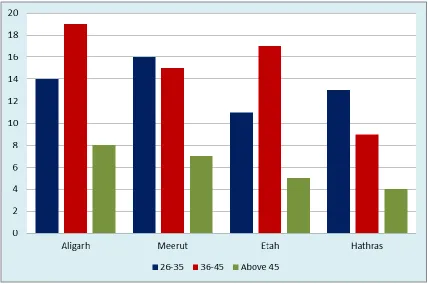
Table 1 and figure 1 highlight the age of the respondents. It has been found that 54 respondents belong to the age group of 26-35 years whereas 60 belong to the group of 36-45 years. Besides, 24 respondents in the state were found more than 45 years of age.
Table 1: Age of the Respondents
Age of Respondents Districts
Aligarh Meerut Etah Hathras Uttar Pradesh
26-35 14 16 11 13 54
36-45 19 15 17 9 60
Above 45 8 7 5 4 24
~ 33 ~
Fig 1: Shows the age of the respondents
Type of family of the Respondents
Table 2 and figure 2 highlight the type of family of the respondents. Out of 138 respondents, 107 respondents told
that they have joint family system while 31 respondents have nuclear family system.
Table 2: Type of family of the Respondents
Type of family Districts
Aligarh Meerut Etah Hathras Uttar Pradesh
Joint 31 29 26 21 107
Nuclear 10 9 7 5 31
Total 41 38 33 26 138
Educational Status of the Respondents
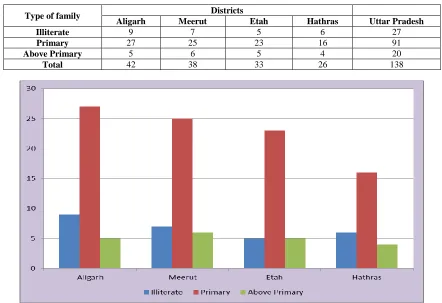
Table 3 and figure 3 educational statuses of the respondents in the state of Uttar Pradesh. 27 were found illiterate
whereas 91 got education upto primary level. Further, 20 respondents reported that they have education more than primary.
Table 3: Educational Status of the Respondents
Type of family Districts
Aligarh Meerut Etah Hathras Uttar Pradesh
Illiterate 9 7 5 6 27
Primary 27 25 23 16 91
Above Primary 5 6 5 4 20
Total 42 38 33 26 138
Fig 3: Shows the Educational Status of the Respondents
Source of Income of the Respondents
Table 4 and figure 4 shows the source of income of the respondents. 78 respondents reported that they depend on agriculture whereas 60 were found to be engaged in other
tasks. In the district of Aligarh, 24 were depending on agriculture and 17 were depending on other tasks. Further, in 21 were depending on agriculture in Meerut.
Table 4: Source of Income of the Respondents
Type of family Districts
Aligarh Meerut Etah Hathras Uttar Pradesh
Agriculture 24 21 19 14 78
Others 17 17 14 12 60
Total 41 38 33 26 138
~ 35 ~
Hypothesis Testing Hypothesis 1
H01: There is no significant impact of microfinance on
poverty eradication in Uttar Pradesh.
Ha1: There is a significant impact of microfinance on
poverty eradication in Uttar Pradesh.
The impact of microfinance on poverty eradication in Uttar
Pradesh has been measured by applying linear regression. The independent variable is microfinance and dependent variable is poverty. Here the null hypotheses is that there is no significant impact of microfinance on poverty and the alternative hypothesis states that there is a significant impact of microfinance on poverty of the respondents in Uttar Pradesh.
Table 5: Regression Analysis of Microfinance and Poverty Eradication
Model R R Square Adjusted R Square Standard Error
1 0.814a 0.760 0.759 0.46759
a. Predictors: (Constant), Microfinance
Table 5 shows the regression analysis of microfinance and poverty. R square shows the amount of variation in one variable (poverty) that is accounted by another variable (microfinance). The above table shows the value of R square is 0.760. It means 76 percent variation in poverty
eradication is explained by the microfinance programme
and the rest of the variation (1-R2) is an unexplained
variation in poverty eradication due to variables that has not been considered in this model.
Table 6: Coefficientsof Microfinance and Poverty
Model-1 Unstandardized Coefficients Standardized Coefficients t Sig.
B Std. Error
(Constant) microfinance
1.014 1.094 0.147 0.883
0.699 1.026 0.814 39.295 0.000 a. Dependent Variable: Poverty
Table 6 shows the values of unstandardized and
standardized beta coefficients, and t value. An
unstandardized beta coefficient gives a measure of contribution of each variable to the model. A larger value indicates that a unit change in the predictor variable has a larger impact on the criterion variable. The results show that the value of unstandardized beta coefficients is 0.699 which is an indication of positive impact of microfinance on poverty. Besides, this impact is strong and statistically significant as the significant value is 0.000 which is less than 0.05 at 95 percent confidence interval. Therefore, the null hypothesis is rejected and it can be said that there is a significant impact of microfinance on poverty of the respondents in Uttar Pradesh.
Hypothesis 2
H02: There is no significant impact of microfinance on
women empowerment in Uttar Pradesh.
Ha2: There is a significant impact of microfinance on
women empowerment in Uttar Pradesh.
The impact of microfinance on women empowerment in Uttar Pradesh has been measured by applying linear regression. The independent variable is microfinance and dependent variable is women empowerment. The null hypotheses is that there is no significant impact of microfinance on women empowerment of the respondents and the alternative hypothesis states that there is a
significant impact of microfinance on women
empowerment of the respondents in Uttar Pradesh.
Table 7: Regression Analysis of Microfinance and Women Empowerment
Model R R Square Adjusted R Square Standard Error
0.816a 0.788 0.788 0.51609
a. Predictors: (Constant), Microfinance
Table 7 shows the regression analysis of microfinance and women empowerment. R square shows the amount of variation in one variable (women empowerment) that is accounted by another variable (microfinance). The above table shows the value of R square is 0.788. It means 78.8
percent variation in women empowerment is explained by the microfinance programme and the rest of the variation
(1-R2) is an unexplained variation in women empowerment
of the respondents due to variables that has not been considered in this model.
Table 8: Coefficientsof Microfinance and Women Empowerment
Model-2 Unstandardized Coefficients Standardized Coefficients t Sig.
B Std. Error (Constant)
microfinance
0.097 0.984 0.651 0.535
0.743 0.635 0.816 71.017 0.0072
a. Dependent Variable: Women Empowerment
Table 8 shows the values of unstandardized and
standardized beta coefficients and t value. An
unstandardized beta coefficient gives a measure of contribution of each variable to the model. A larger value
on women empowerment. Besides, this impact is strong and statistically significant as the value significant value is 0.000 which is less than 0.05 at 95 percent confidence interval. Therefore, the null hypothesis is rejected and it can be said that there is a significant impact of microfinance on women empowerment of the respondents in Uttar Pradesh.
Hypothesis 3
H03: There is no significant impact of microfinance on
employment generation in Uttar Pradesh.
Ha3: There is a significant impact of microfinance on
employment generation in Uttar Pradesh.
The impact of microfinance on employment generation in Uttar Pradesh has been measured by applying linear regression. The independent variable is microfinance and dependent variable is education. The null hypothesis is that there is no significant impact of microfinance on employment generation of the respondents in Uttar Pradesh and alternative hypothesis states that there is a significant impact of microfinance on employment generation of the respondents in Uttar Pradesh.
Table 9: Regression Analysis of Microfinance and Employment Generation
Model R R Square Adjusted R Square Standard Error
3 0.882a 0.822 0.822 1.0046
a. Predictors: (Constant), Microfinance
Table 9 shows the regression analysis of microfinance and poverty. R square shows the amount of variation in one variable (poverty) that is accounted by another variable (microfinance). The above table shows the value of R
square is 0.822. It means 82.2 percent variation in respondent’s employment is explained by the microfinance
programme and the rest of the variation (1-R2) is an
unexplained variation.
Table 10: Coefficientsof Microfinance and Employment Generation
Model-3 Unstandardized Coefficients Standardized Coefficients t Sig.
B Std. Error
(Constant) microfinance
2.238 1.097 1.554 0.747
0.811 1.341 0.882 12.467 0.009
a. Dependent Variable: Employment Generation
Table 10 shows the values of unstandardized and
standardized beta coefficients, and t value. An
unstandardized beta coefficient gives a measure of contribution of each variable to the model. A larger value indicates that a unit change in the predictor variable has a larger impact on the criterion variable. The results show that the value of unstandardized beta coefficients is 0.811 which is an indication of positive impact of microfinance
on employment generation. Besides, this impact is strong and statistically significant as the significant value is 0.009 which is less than 0.05 at 95 percent confidence interval. Therefore, the null hypothesis is rejected and it can be said that there is a significant impact of microfinance on employment generation of the respondents in Uttar Pradesh.
Table 11: Summary of Hypothesis Tested
No HYPOTHESES Sig. Value Results
1 There is no significant impact of microfinance on poverty eradication in Uttar Pradesh. 0.000 Rejected
2 There is no significant impact of microfinance on women empowerment in Uttar Pradesh. 0.0072 Rejected
3 There is no significant impact of microfinance on employment generation in Uttar Pradesh. 0.009 Rejected
Summary of Hypothesis Tested
Table 11 shows the Summary of Hypothesis Tested. All the three hypotheses have been rejected since significant value in all is less than 0.05. Hence, microfinance has a significant impact on poverty eradication, women empowerment, and employment generation in Uttar Pradesh.
Conclusion
Microfinance is the provision of thrift, credit and other financial services and products of very small amounts to the poor in rural, semi-urban or urban areas for enabling them to raise their income levels and improve living standards. The present study examines the impact of microfinance on rural development in Uttar Pradesh. Since, rural development is a comprehensive term, therefore poverty eradication, women empowerment, employment generation have been taken as the variables of rural development in the study. A sample of 138 respondents from the villages of four districts namely Aligarh, Meerut,
Etah, and Hathras has been selected and data is collected through personal interview and questionnaires. Simple linear regression has been used as the statistical tool to analyze the results through SPSS 19. The analysis of the data shows that there is a significant impact of microfinance in poverty eradication, women empowerment, and employment generation among rural respondents in the selected districts of Uttar Pradesh.
References
1. Chowdhury, M. Jahangir Alam; Ghosh, Dipak; &
Wright, Robert E. (2005).The Impact of Micro-credit on Poverty: Evidence from Bangladesh. Progress in Development Studies, Vol. 5, No. 4, pp. 298-309.
2. Das R.M. (2004). Microfinance Through SHGs- A
Boon for Rural Poor. Krukshetra, Vol. 52, No-4, 43-44.
3. Hermes, N. Lensink, R. & Meesters, A.(2008).
~ 37 ~
4. Khan, A. (2014). A Synoptical View of Microfinance
in India. Golden Research Thoughts, Vol.4, Issue 3, 2-9.
5. Moseley, M. J. (2003). Rural Development: Principles
and Practice (Ed.). London: Sage Publications. 5-6.
6. Nair, A. (2005). Sustainability of Microfinance Self
Help Groups in India: Would Federating Help? Vol. 3516. World Bank Policy Research Working Paper-free PDF.
7. NABARD (1999). Task Force on Supportive Policy
and Regulatory Framework for microfinance. Mumbai. (http://nabard.org).
8. Robinson, M. (1998). Microfinance: The Paradigm
Shift from Credit Delivery to Sustainable Financial Intermediation. Strategic Issues in Microfinance. (Eds.). Aldershot: Ashgate Publishing.
9. Sami, L. & Khan, A. (2015). Impact of Microfinance
on Poverty Eradication: An Empirical Analysis of Aligarh District, Uttar Pradesh. Indian Streams Research Journal, Volume 5, Issue 2, 1-13.
10. Singh, K. (1986) Rural development: Principles,
Policies and Management, New Delhi: Sage
Publications. 165.
11. Yunus, M. (2004). Grameen Bank, Microcredit and
Millennium Development Goals. Economic and political Weekly.Vol.25, No 15. 4077-80.
12. http://econ.worldbank.org