R E V I E W
Open Access
3C and 3C-based techniques: the powerful
tools for spatial genome organization
deciphering
Jinlei Han
1, Zhiliang Zhang
1and Kai Wang
1,2*Abstract
It is well known that the chromosomes are organized in the nucleus and this spatial arrangement of genome play a
crucial role in gene regulation and genome stability. Different techniques have been developed and applied to uncover
the intrinsic mechanism of genome architecture, especially the chromosome conformation capture (3C) and 3C-derived
methods. 3C and 3C-derived techniques provide us approaches to perform high-throughput chromatin architecture
assays at the genome scale. However, the advantage and disadvantage of current methodologies of C-technologies
have not been discussed extensively. In this review, we described and compared the methodologies of C-technologies
used in genome organization studies with an emphasis on Hi-C method. We also discussed the crucial challenges facing
current genome architecture studies based on 3C and 3C-derived technologies and the direction of future technologies
to address currently outstanding questions in the field. These latest news contribute to our current understanding of
genome structure, and provide a comprehensive reference for researchers to choose the appropriate method in future
application. We consider that these constantly improving technologies will offer a finer and more accurate contact
profiles of entire genome and ultimately reveal specific molecular machines govern its shape and function.
Keywords:
Chromosome conformation capture (3C), Topologically associating domains (TADs), Hi-C, C-technologies,
Chromosome territory
Background
During the higher eukaryotic cell cycle, the spatial volumes
of each chromosome are not random but are organized
into specific patterns, in which individual chromosomes
occupy defined, mutually exclusive regions of the nuclear
volume that represent a structural unit referred to as a
chromosome territory (CT) [
1–4
]. With extensive effort,
the spatial organizations of individual chromosomes and
the entire genome, with resolutions down to 1kbp, have
been described [
5–12
]. It has now been widely accepted
that genome architecture is a crucial aspect of gene
regula-tion and genome stability [
1
,
5
,
13–20
] because the highly
ordered chromatin arrangement facilitates communication
between genes and their regulatory elements [
21–26
].
Early studies of genomic conformation were largely based
on cytological techniques, such as fluorescence in situ
hybridization (FISH), which allows direct evaluation of the
proximity between genetic loci using probes. Observations
of genome architecture by FISH have revealed the existence
of CTs [
27–29
], looping out from CTs [
30–32
], and the
ten-dency for clustering of active chromatin domains [
33
,
34
].
While this method has been a widely used tool to study
topography of chromosomes or DNA fragments of interest
in individual cells, and allow us to determine how the
chro-mosomes are organized by directly viewing their position
with microscopy [
35
,
36
]. However, technical limitations
such as low throughput, low resolution and probe sequence
specificity make it unsuitable for elaborate genome-wide
studies of chromosomal topology [
37–39
]. Recently,
chromosome conformation capture (3C) and 3C-based
techniques using high-throughput sequencing data have
emerged as powerful tools to reconstruct the spatial
top-ology at regional, whole chromosome and genome levels
[
40–45
]. These techniques have become the most effective
* Correspondence:[email protected]
1Key Laboratory of Genetics, Breeding and Multiple Utilization of Corps,
Ministry of Education, Fujian Provincial Key Laboratory of Haixia Applied Plant Systems Biology, Center for Genomics and Biotechnology, Fujian Agriculture and Forestry University, Fuzhou, Fujian, China
2National Engineering Research Center of Sugarcane, Fujian Agriculture and
Forestry University, Fuzhou, China
way to elucidate the functional impact and the potential
mechanisms establishing and maintaining spatial genome
organization. In this review, we describe and compare the
methodologies used to study genome architecture, with an
emphasis on recently developed key approaches including
3C and its derivatives. We discuss the crucial challenges
facing current 3D studies based on 3C technologies and the
direction of future technologies to address currently
out-standing questions in the field.
The methodologies of 3C and
3C-derived technologies
The strategy of 3C to discover genomic architecture is
based on quantifying the frequencies of contacts
be-tween distal DNA segments in cell populations [
46
]. In
contrast to cytogenetic approaches, 3C-based genomics
strategies yield incomparable information-rich data
describing genome topology at the genome-wide level,
enabling more systematic genome topology studies at a
higher resolution and throughput and providing deep
in-sights into genome architecture and its impact on
gen-ome function. Thus, 3C technologies are revolutionizing
our ability to explore genome organization from specific
loci up to the whole genome.
The principal steps of 3C and 3C-based experiments
are theoretically similar and have following principal
steps: crosslink chromatin using a fixative agent in
solu-tion, most often formaldehyde, to create covalent bonds
between DNA fragments bridged by proteins; isolate and
digest the chromatin using a restriction enzyme such as
HindIII [
46
],
BglII [
47
],
EcoRI [
48
],
AciI [
49
], or
DpnII
[
50
,
51
] at a low concentration to create pairs of
cross-linked DNA fragments that are distant in linear distance
but close in space; re-ligate the sticky ends of
cross-linked DNA fragments to form chimeric molecules;
reverse the crosslinks to obtain 3C templates; and finally,
interrogate the rearranged DNA fragments by PCR or
sequencing technologies (Fig.
1
). Eventually, 3D
confor-mations at the regional, chromosome and
whole-genome levels can be inferred by calculating the number
of ligation junctions between genomic loci (Fig.
1
). To
describe in more detail and to facilitate comparisons
among different methods, we describe current 3C and
3C-based approaches below.
Chromosome conformation capture (3C)
3C technology was developed to detect ligation junctions
by PCR followed by gel electrophoresis (Fig.
1
) [
45
]. The
first 3C assay inferred the 3D conformation of yeast
chromosome III and showed that it forms a contorted
ring [
46
]. Next, this method was adapted for mammalian
systems. 3C technology confirmed the existence of
chro-matin loops, which confer spatial contact between DNA
fragments such as regulatory DNA elements and their
target genes [
47
,
52–57
] or the start and end of a gene
[
58
]. Remarkably, this chromatin loop is dynamic based
on transcriptional state changes [
48
,
58
], implying that
this structure is associated with genomic function.
Although 3C provides a method for visualizing the
genome at high resolution, some shortcomings remain,
including the requirement for PCR primers designed to
amplify regions of interest. For this reason, 3C can be
used only to detect spatial relationships between known
DNA sequences. Obviously, the
“
one versus one
”
(Fig.
2a
)
throughput of this method limits its application to
genome-scale assays. In addition, it can detect contact
only in a limited range (not exceeding a few hundred
ki-lobases) [
59
]. To overcome these limitations, several
3C-derived methods have been developed to generate higher
throughput chromatin interaction data.
Chromosome conformation capture-on-Chip (4C)
4C technology was developed by combining 3C with
microarray [
60
,
61
] or, more recently, next-generation
sequencing (NGS) technologies [
62
,
63
]. This method is
able to assess chromatin interactions between one
gen-omic locus of interest (referred to as bait or viewpoint)
and all other genomic loci (one versus all) (Fig.
2b
). In
4C experiments, small DNA circles are created by
cleav-ing with a second restriction enzyme and re-ligatcleav-ing 3C
DNA templates. Then, inverse PCR using bait-specific
primers is applied to amplify any interacting fragments.
Finally, the interacting fragments are evaluated using
mi-croarrays or NGS (Fig.
1
).
4C was originally applied to elucidate the DNA
con-tact maps of the
β-globin and
Rad23a
genes [
60
], which
showed that the housekeeping gene
Rad23a
tends to
interact with other active regions on the chromosomes
and that its contact maps were conserved in various
tis-sues [
60
]. By contrast, the contact maps for the
erythroid-specific gene
β-globin changed depending on
its expression status. More specifically,
β-globin contacts
other active regions in erythroid cells, whereas it
con-tacts inactive regions in the fetal brain, where this gene
is silent. Subsequently, a series of 4C experiments were
carried out and have shown changes in gene regulation
and interaction profiles during differentiation and
devel-opment [
64
] and that chromosome conformation is
rela-tively stable in a given cell type [
65
]. Furthermore, 4C
has also been used to identify chromosomal
rearrange-ments [
66
] and uncover disease mechanisms [
67
].
Chromosome conformation capture
carbon copy (5C)
Another variant of 3C is 5C [
69
,
70
]. It is analogous
to 3C technology but is a
“
many versus many
”
method (Fig.
2c
), allowing the simultaneous
detec-tion of millions of interacdetec-tions through the use of
thousands of primers in a single assay. The main
difference between 3C and 5C is the strategy for
primer
design.
5C
primers
have
a
universal
sequence (usually T7 and T3) appended to the 5
′
ends. This change, combined with multiplex PCR
amplification and sequencing, allows researchers to
detect contact events within a particular locus
(Fig.
1
). Thus, in contrast to 3C, 5C has a higher
throughput and a lower bias. The improvements
due to this higher-throughput scale have been
dem-onstrated by its application in the study of the
hu-man
β-globin locus [
69
], human
α-globin locus [
71
],
and human HOXA
–
D gene clusters [
72–74
]. In
addition, 5C provided the first evidence of the
exist-ence of topologically associating domains (TADs) by
X chromosome analysis [
75
]. However, 5C is still
limited in terms of the size of the genomic region
that can be assayed because of the DNA sequence
requirement of interested regions, as well as the
quantitatively inestimable PCR duplication.
Chromatin interaction analysis by paired-end tag
sequencing (ChIA-PET)
Another 3C-based technology is ChIA-PET, which
com-bines chromatin immunoprecipitation (ChIP) with
3C-type analysis to study genome-wide long-range
chroma-tin interactions bound by one specific protein [
76–78
].
The key features of ChIA-PET technology are that the
interaction sites are enriched by ChIP using a specific
antibody after chromatin digestion, as in a ChIP
experi-ment. Then, DNA sequences tethered together and to
the protein of interest are connected through proximity
ligation with oligonucleotide DNA linkers, the sequence of
which contains restriction sites for digestion in the next step
(Fig.
1
). After high-throughput sequencing and
bioinformat-ics analysis, an interactome map of the specific protein
bind-ing sites is achieved (Fig.
2d
). Thus, ChIA-PET has been
applied efficiently to study sites bound with specific
tran-scription factors [
76
,
78
,
79
]. For example, some proteins,
such as RAD21, SMC3, CTCF and ZNF143, that are
im-portant for the formation of a 3D chromatin structure were
discovered with ChlA-PET analysis [
80
]. Another advantage
is that ChIA-PET has relatively low levels of library
com-plexity compared with other 3C techniques; therefore,
interactions that are identified with an extremely low
num-ber of reads are usually considered significant [
76
,
78
].
Recently, an improved method, HiChIP was developed and
it can improve over 10-fiold of the yield of chromatin
inter-acting reads but with 100-fold lower requirement than that
of ChIA-PET [
81
]. Results generated from HiChIP of
cohesin achieved multiscale genome intact map with greater
signal-to-background rations than that of in situ Hi-c [
81
].
More important is that the sustain high-confidence results
are achieved from low cell number input, which will
facilitate the investigation of chromatin conformation at
cell- or tissue-specific aspects.
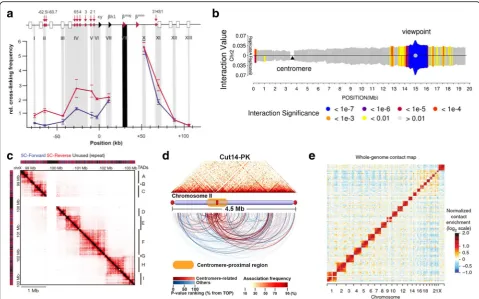
Fig. 2Representative output of 3C, 4C, 5C, ChIA-PET and Hi-C analysis.aA profile of 3C experiment for the murineβ-globin locus showing looping and interaction between the Locus Control Region (LCR) and the expressingβmajgene (reproduced from [47] with permission from Elsevier, ©2002). The murineβ-globin locus contains hypersensitive sites (HS, red arrows and ellipses), an LCR being comprised of 5’HS1–6, globin genes includingεy,βh1,βmajandβmin(triangles), and olfactory receptor (OR) genes (white boxes). The x-axis represents position in the locus, and y-axis represents relative cross-linking frequency for theβmajgene (black shading) with the rest of restriction fragments (gray shading). In erythroid cells,βmajis active (red line), and the LCR come in close spatial proximity with the gene. However, the gene is silent in brain cells (blue line), and no such situation is observed. In 3C assay, primers are designed for restriction fragments of interest. Then, the spatial information between restriction fragments (one vs one) can be achieved by assessing the amplification efficiency.b4C interactome ofFIS2gene on chromosome 2 in Arabidopsis(reproduced from [18] with permission from CC BY 2.0 license).FIS2is defined as a viewpoint, and the genome is queried for positions that contact this site in space (one vs all). The results showed that chromosomal interactions have been centred around the viewpoint.c
Interaction map of 5C assay for the 4.5-Mbp region containingXistin undifferentiated mouse embryonic stem cells (reproduced from [75] with permission from Nature Publishing Group, ©2012). 5C analyses showed discrete self-associating chromosomal domains occurring at the sub-megabase scale (TADs A–I). 5C experiment requires a mix of 3C templates and thousands of primers (5C-Forward and 5C-Reverse) to allow concurrent determination of interactions between multiple fragments (many vs many).dVisualization of ChIA-PET associations mediated by Cut14-Pk (condensin) on chromosome II in fission yeast (reproduced from [139] with permission from Nature Publishing Group, ©2016). ChIA-PET offers the results of chromatin interactions exclusively to those fragments bound by protein of interest (all vs all mediated by specific protein).e
Hi-C
The development of high-throughput sequencing
tech-nology promoted the emergence of a series of
“
all versus
all
”
methods (Fig.
2e
). Of these, Hi-C was the first to be
developed that does not depend on specific primers and
generates genome-wide contact maps [
82
,
83
]. In Hi-C
experiments, the first step is to generate contact
seg-ments as with 3C, but the procedure is slightly different
from that described above (Fig.
1
). After restriction
en-zyme digestion, the sticky ends are filled in with
biotin-labeled nucleotides followed by blunt-end ligation. The
expected contacting DNAs are sheared and then purified
in a biotin pull-down experiment using streptavidin
beads to ensure that only biotinylated junctions are
se-lected for further high-throughput sequencing and
com-putational analysis (Fig.
1
).
The strategy of Hi-C data analysis is thus different
from above methods due to the massive parallel NGS
data obtained. The basic data analysis typically involves
the following aspects [
84
–
86
].
Read mapping
Paired-end reads are independently aligned to the
corresponding reference genome. Given that effective
sequence fragments used for sequencing are normally
chimeras, which come from two or more chromatin loci,
massive reads are discontinuous in the genome [
87
].
Considering this situation, various methods have been
proposed to improve data-use efficiency during the
map-ping stage, including a pre-truncation process [
88
],
itera-tive mapping [
89
], or allowing split alignments [
87
].
Read filtering
First, the mapping results are filtered at the level of
reads and fragments, and only reads with information
about chromatin conformation are included. Generally,
valid reads are a limited distance from the nearest
restriction site, and valid pairs will fall within distinct
re-striction fragments, which correspond to an interaction
between DNA fragments. Then, the remaining read pairs
are further filtered to discard PCR duplicates. Here, all
uninformative reads are excluded.
Establishment of the contact matrix
For this step, the genome is divided into
non-overlapping bins, each filtered read pair is assigned
to a specific bin pair, the count of read pairs in the
corresponding bin pair aggregated, and eventually, a
contact matrix is created. Rows and columns of the
contact matrix represent bins across the genome,
and each entry contains the number of read pairs
that reflects bin
–
bin interactions.
Normalization
Because of biases, such as GC content, the mappability,
and the frequency of restriction sites, normalization (such
as explicit-factor correction methods or matrix
balancing-based methods) is essential to correct the raw contact
matrix [
89–91
]. Once normalization is completed, one
can generate a contact heatmap and infer genome-wide
proximity information. Meanwhile, some tools have been
developed to visualize Hi-C and other conformation
cap-ture data [
92
,
93
]. These help researchers intuitively
ob-serve long-range genomic interactions.
In the original Hi-C study, two types of chromatin
compartments (A and B) were identified, each of which
has different functional and structural properties [
82
].
The former is enriched in genes and sites with active
histone marks, such as H3K36me3, or DNase I
hyper-sensitivity. By contrast, B compartments are enriched
with inactive histone marks, such as H3K27me3, and
contain few genes and DNase I hypersensitivity sites.
Thereafter, other domain types (TAD and sub-TAD)
were also identified [
87
,
94
]. In addition, several polymer
models have been showed by Hi-C data, including the
fractal globule model [
82
], random loop model [
95
],
dy-namic loop model [
96
] and strings and binders switch
model [
97
], to explain the underlying biophysical
princi-ples governing chromatin packing. For chromosome
po-sitioning, the previously observed Rabl configuration of
chromosomes was confirmed once again, with the
re-sults showing clustering of the centromeres and
cluster-ing of the telomeres [
98
]. Due to its robust and powerful
topology profiling at the genome scale, Hi-C has recently
been applied extensively in genome conformation
re-search [
86
,
99
–
102
]. It is also important to mention that
Hi-C can also assist in chromosomal rearrangements,
genome assembly and haplotyping [
16
,
103
–
111
].
Although Hi-C is a satisfactory technique for
determin-ing genome-wide chromatin interaction maps with
relatively few biases compared with other existing
C-methods, the acquisition of a reliable contact map with
high-resolution still requires sufficient sequencing depth.
Ordinarily, there is a direct relationship between mapping
resolution and sequencing depth for Hi-C assay [
82
]. For
example, generating contact profiles with resolution from
40 kbp to 1 kbp in the human genome requires hundreds
of millions to multiple billion paired-end reads [
112
].
Thus, the cost and computational resources are certainly
prohibitively expensive for most laboratories, which has
seriously dampened the popularity of Hi-C.
Other 3C-based strategies
(UMI) to derive quantitative and targeted chromosomal
contact profiling [
113
]. In this approach, initial 3C
ligation products are sonicated, and one end of each
sonicated fragment is ligated to a sequencing adapter,
generating a UMI. Using a bait-specific primer and a
universal adaptor primer, physical linkage fragments can
be amplified, sequenced and quantified. UMI-4C can
eliminate PCR duplicates during data analysis based on
the UMI and allows multiple baits (with a suggested
number of 20
–
50 baits) to be selected [
113
].
Capture-C combines 3C, oligonucleotide capture
tech-nology and NGS to generate genome-wide contact
pro-files from hundreds of selected loci at a time [
114
]. In
this method, 3C DNAs are sonicated, and paired-end
se-quencing adaptors are added. The resulting library is
then enriched for junction fragments of interest by
hybridization to biotinylated capture probes and
strepta-vidin pull-down. Finally, the captured DNAs are
ampli-fied and sequenced, and the interaction maps are
produced by corresponding bioinformatics methods. The
Capture-C strategy can be used to enrich Hi-C libraries,
and accordingly a new technique, known as Capture
Hi-C (Hi-CHi-Hi-C), was developed [
115
]. This method enables
deep sequencing of target fragments, excluding
unin-formative background [
115
,
116
].
Subsequently, using an improved oligonucleotide capture
strategy, Davies et al. re-designed the Capture-C protocol
and developed another method, called next generation (NG)
Capture-C [
117
]. NG Capture-C has higher assay sensitivity
and resolution than Capture-C, and its sensitivity allows the
analysis of weak long-range interactions. In addition,
mul-tiple 3C libraries from different cell types or different
experi-mental conditions can be processed simultaneously in a
single reaction by pooling differently indexed samples, which
significantly increases throughput, removes experimental
variation and allows the subtractive analysis of chromosome
conformation from different samples.
Researchers have also developed DNase Hi-C technology
[
102
]. Compared with Hi-C, the key difference is that DNase
Hi-C uses DNase I rather than restriction enzymes for
frag-menting crosslinked chromatin, leading to better genome
coverage and resolution than Hi-C. Furthermore, the
coup-ling of DNase Hi-C with DNA-capture technology, targeted
DNase Hi-C has also been proposed and applied to
characterize the 3D organization of large intergenic
noncod-ing RNA promoters in different human cell lines [
102
].
Similarly, micro-C [
118
] and an updated micro-C XL
ver-sion [
119
] uses micrococcal nuclease (MNase) to fragment
chromatin, enabling the analysis of chromosome
conform-ation at nucleosome resolution.
Further considerations for 3C technologies
Researchers have been working to improve the resolution
of 3C technologies to clarify the specific relationship
between genomic conformation and function. However,
some challenges have been encountered in this process,
indicating that resolution can be affected by many factors
[
120
]. The most important limiting factor is the selection
of the first restriction enzyme, which determines the
max-imum resolution of 3C experiments because contacts
be-tween DNA fragments can be detected only at restriction
enzyme cut sites. If two restriction enzymes, four-cutter
and six-cutter, are compared, the former will yield a
16-fold higher resolution library (256 bp vs. 4096 bp) in
humans. However, we should also take into account that
the distribution of restriction sites is not uniform in the
genome, resulting in different resolutions at different
gen-omic regions. A further increase in resolution can be
achieved by substituting restriction enzymes with MNase
[
118
] or DNase I [
102
], which can cut at any site along the
genome and can theoretically generate single base pair
resolution. After the restriction enzyme to be used in the
3C experiment is chosen, the resolution of the contact
maps is further affected by sequencing depth. When it is
insufficient to explore contacts at the level of individual
restriction fragments, the resolution will be determined by
an appropriate bin size. In addition, research on the 3D
conformation of repeat regions in the genome is difficult
and is mainly because sequence information in this region
is often incomplete, and thus sequencing-based 3C
methods cannot effectively handle data mapping in this
area. Another experimental factor that may impact the
output of 3C study is the bias caused potentially by the
crosslinking agent. Because crosslinking treatment
in-appropriately will crosslink the fibers, which are in close
physical proximity rather than directly interacting [
121
].
Therefore, the consideration that to isolate native nuclei
in an isotonic buffer to retain the native chromosome
loops will properly present the native chromosome
con-formation [
121
,
122
]. Moreover, comparative study of
3C-type experiments with FISH indicated that 3C-3C-type
experi-ments or FISH alone must be interpreted with caution
when studying chromatin architecture [
39
], thus
cross-validation of Hi-C with FISH [
123
] or visible data achieved
with super-resolution microscope [
10
,
124
] still need to be
considered. Resemble the concept of native chromosome
loops, that joint assays will present crucial information for
fully understanding chromatin organization.
vs. all protocol described as Genome Architecture
Map-ping (GAM) to dissect the nuclear architecture [
127
].
Instead of a strong reliance on digestion and ligation as
above 3C technologies, this method combines ultrathin
cryosectioning, laser microdissection, DNA sequencing,
and statistical inference of co-segregation to detect
inter-acting DNA fragments, which significantly expands our
ability to explore chromatin spatial organization. Using
this tool, they have succeeded in constructing the 3D
chromatin structures of mouse embryonic stem cells,
and unequivocally found some triplet contacts between
super-enhancers [
127
].
Due to the heterogeneity between cells [
128
], it cannot
be overlooked for the impact on data statistical processing
regarding these data derived from millions of cells.
There-fore, the established 3D genome modeling can represent
only an average state of whole cell populations. Thus, one
promising challenge is the development of strategies that
analyze genomic 3D structure in single- or low-cell
sam-ples. Benefiting from the progresses of single-cell
sequen-cing technology [
129–131
], Hi-C assays based on single or
low-cell samples have been fulfilled and presented the
chromatin structure diversities cell versus cell [
132
–
138
].
A prospective idea is that, by combining with other
single-cell data of chromatin states, including transcriptome,
DNA methylome, and histone modification, single-cell
Hi-C assay will be possible to build a comprehensive
pic-ture for the interplay between chromatin folding and its
states inside of single cell.
Conclusions
C-technologies, especially Hi-C have heralded the advent
of other methods that together offer tantalizing prospects
for visualizing the abstract 3D structure of the genome.
With the advent of other aspects such as high-throughput
and long sequencing reads, single cell sequencing and
other type of epigenomics data might provide us more
insights on the 3D genome and reveal fundamental
princi-ples underlying genome structure and function.
Abbreviations
3C:Chromosome conformation capture; 4C: Chromosome Conformation Capture-on-Chip; 5C: Chromosome conformation capture carbon copy; ChIA-PET: Chromatin Interaction Analysis by Paired-End Tag Sequencing; cHi-C: Capture Hi-C; ChIP: Chromatin immunoprecipitation; CT: Chromosome territory; FISH: Fluorescence in situ hybridization; GAM: Genome architecture mapping; MNase: Micrococcal nuclease; NG: Next generation; NGS: Next-generation sequencing; TADs: Topologically associating domains; UMI: Unique molecular identifier
Acknowledgments
The authors apologize to all those authors whose work they were unable to describe owing to space constraints. The authors thank members of the laboratory for their input and feedback on the manuscript.
Funding
KW was funded by the National Natural Science Foundation of China (31771862, 31471170 and 31628013).
Availability of data and materials
Not applicable.
Author’s contributions
JH and KW conceived the study and drafted the manuscript. ZZ commented and revised the manuscript. All authors read and approved the final manuscript.
Ethics approval and consent to participate
Not applicable.
Consent for publication
Not applicable.
Competing interests
The authors declare that they have no competing interests.
Publisher
’
s Note
Springer Nature remains neutral with regard to jurisdictional claims in published maps and institutional affiliations.
Received: 30 November 2017 Accepted: 2 March 2018
References
1. Cremer T, Cremer C. Chromosome territories, nuclear architecture and gene regulation in mammalian cells. Nat Rev Genet. 2001;2(4):292–301. 2. Parada L, Misteli T. Chromosome positioning in the interphase nucleus.
Trends Cell Biol. 2002;12(9):425–32.
3. Meaburn KJ, Tom M. Cell biology: chromosome territories. Nature. 2007; 445(7126):379–81.
4. Grob S, Grossniklaus U. Chromosome conformation capture-based studies reveal novel features of plant nuclear architecture. Curr Opin Plant Biol. 2017;36:149–57.
5. Hakim O, Misteli T. SnapShot: chromosome confirmation capture. Cell. 2012; 148(5):1068. e1061–1062
6. Fraser J, Williamson I, Bickmore WA, Dostie J. An overview of genome organization and how we got there: from FISH to hi-C. Microbiol Mol Biol Rev. 2015;79(3):347–72.
7. Heard E. 3D solutions to complex gene regulation. Nat Rev Mol Cell Biol. 2016;17(12):739.
8. Krijger PH, de Laat W. Regulation of disease-associated gene expression in the 3D genome. Nat Rev Mol Cell Biol. 2016;17(12):771–82.
9. Schmitt AD, Hu M, Ren B. Genome-wide mapping and analysis of chromosome architecture. Nat Rev Mol Cell Biol. 2016;17(12):743–55. 10. Schmid VJ, Cremer M, Cremer T. Quantitative analyses of the 3D nuclear
landscape recorded with super-resolved fluorescence microscopy. Methods. 2017;123:33–46.
11. Bonev B, Cavalli G. Organization and function of the 3D genome. Nat Rev Genet. 2016;17(11):661–78.
12. Feng S, Cokus SJ, Schubert V, Zhai J, Pellegrini M, Jacobsen SE. Genome-wide hi-C analyses in wild-type and mutants reveal high-resolution chromatin interactions in Arabidopsis. Mol Cell. 2014;55(5):694–707.
13. Bickmore W, Vansteensel B. Genome architecture: domain Organization of Interphase Chromosomes. Cell. 2013;152(6):1270–84.
14. Osorio J. Chromatin: moving a TAD closer to unravelling chromosome architecture. Nat Rev Genet. 2016;17(1):3–3.
15. Dekker J, Mirny L. The 3D genome as moderator of chromosomal communication. Cell. 2016;164(6):1110–21.
16. Makova KD, Hardison RC. The effects of chromatin organization on variation in mutation rates in the genome. Nat Rev Genet. 2015; 16(4):213–23.
17. Dixon JR, Jung I, Selvaraj S, Shen Y, Antosiewicz-Bourget JE, Lee AY, Ye Z, Kim A, Rajagopal N, Xie W, et al. Chromatin architecture reorganization during stem cell differentiation. Nature. 2015; 518(7539):331–6.
19. Shen Y, Yue F, McCleary DF, Ye Z, Edsall L, Kuan S, Wagner U, Dixon J, Lee L, Lobanenkov VV, et al. A map of the cis-regulatory sequences in the mouse genome. Nature. 2012;488(7409):116–20.
20. Francastel C, Schübeler D, Martin DI, Groudine M. Nuclear compartmentalization and gene activity. Nat Rev Mol Cell Biol. 2000;1(2):137–43.
21. Wasserman WW, Sandelin A. Applied bioinformatics for the identification of regulatory elements. Nat Rev Genet. 2004;5(4):276–87.
22. Branco MR, Pombo A. Chromosome organization: new facts, new models. Trends Cell Biol. 2007;17(3):127–34.
23. Won H, De la Torre-Ubieta L, Stein JL, Parikshak NN, Huang J, Opland CK, Gandal MJ, Sutton GJ, Hormozdiari F, Lu D, et al. Chromosome conformation elucidates regulatory relationships in developing human brain. Nature. 2016;538(7626):523–7.
24. Taberlay PC, Achinger-Kawecka J, Lun AT, Buske FA, Sabir K, Gould CM, Zotenko E, Bert SA, Giles KA, Bauer DC, et al. Three-dimensional disorganisation of the cancer genome occurs coincident with long range genetic and epigenetic alterations. Genome Res. 2016;26(6):719–31. 25. Dekker J. Mapping the 3D genome: aiming for consilience. Nat Rev Mol Cell
Biol. 2016;17(12):741–2.
26. Moissiard G, Cokus SJ, Cary J, Feng S, Billi AC, Stroud H, Husmann D, Zhan Y, Lajoie BR, McCord RP, et al. MORC family ATPases required for heterochromatin condensation and gene silencing. Science. 2012; 336(6087):1448–51.
27. Cremer T, Cremer C. Rise, fall and resurrection of chromosome territories: a historical perspective. Part I. The rise of chromosome territories. Eur J Histochem. 2006;50(3):161–76.
28. Muller I, Boyle S, Singer RH, Bickmore WA, Chubb JR. Stable morphology, but dynamic internal reorganisation, of interphase human chromosomes in living cells. PLoS One. 2010;5(7):e11560.
29. Edelmann P, Bornfleth H, Zink D, Cremer T, Cremer C. Morphology and dynamics of chromosome territories in living cells. Biochim Biophys Acta. 2001;1551(1):M29–39.
30. Mahy NL, Perry PE, Bickmore WA. Gene density and transcription influence the localization of chromatin outside of chromosome territories detectable by FISH. J Cell Biol. 2002;159(5):753–63.
31. Chambeyron S, Bickmore WA. Chromatin decondensation and nuclear reorganization of the HoxB locus upon induction of transcription. Genes Dev. 2004;18(10):1119–30.
32. Boyle S, Rodesch MJ, Halvensleben HA, Jeddeloh JA, Bickmore WA. Fluorescence in situ hybridization with high-complexity repeat-free oligonucleotide probes generated by massively parallel synthesis. Chromosom Res. 2011;19(7):901–9.
33. Shopland LS, Lynch CR, Peterson KA, Thornton K, Kepper N, Hase J, Stein S, Vincent S, Molloy KR, Kreth G, et al. Folding and organization of a contiguous chromosome region according to the gene distribution pattern in primary genomic sequence. J Cell Biol. 2006;174(1):27–38.
34. Brown JM, Green J, das Neves RP, Wallace HAC, Smith AJH, Hughes J, Gray N, Taylor S, Wood WG, Higgs DR, et al. Association between active genes occurs at nuclear speckles and is modulated by chromatin environment. J Cell Biol. 2008;182(6):1083–97.
35. Cremer T, Cremer M, Dietzel S, Müller S, Solovei I, Fakan S. Chromosome territories–a functional nuclear landscape. Curr Opin Cell Biol. 2006;18(3):307–16. 36. van Steensel B, Dekker J. Genomics tools for unraveling chromosome
architecture. Nat Biotechnol. 2010;28(10):1089–95.
37. Rego EH, Shao L, Macklin JJ, Winoto L, Johansson GA, Kamps-Hughes N, Davidson MW, Gustafsson MG. Nonlinear structured-illumination microscopy with a photoswitchable protein reveals cellular structures at 50-nm resolution. Proc Natl Acad Sci. 2011;109(3):E135–43.
38. Hu M, Deng K, Qin Z, Liu JS. Understanding spatial organizations of chromosomes via statistical analysis of hi-C data. Quant Biol. 2013;1(2):156–74. 39. Williamson I, Berlivet S, Eskeland R, Boyle S, Illingworth RS, Paquette D,
Dostie J, Bickmore WA. Spatial genome organization: contrasting views from chromosome conformation capture and fluorescence in situ hybridization. Genes Dev. 2014;28(24):2778–91.
40. Sati S, Cavalli G. Chromosome conformation capture technologies and their impact in understanding genome function. Chromosoma. 2017;126(1):33–44.
41. Ramani V, Shendure J, Duan Z. Understanding spatial genome organization: methods and insights. Genomics Proteomics Bioinformatics. 2016;14(1):7–20. 42. Risca VI, Greenleaf WJ. Unraveling the 3D genome: genomics tools for
multiscale exploration. Trends Genet. 2015;31(7):357–72.
43. Wang C, Liu C, Roqueiro D, Grimm D, Schwab R, Becker C, Lanz C, Weigel D. Genome-wide analysis of local chromatin packing in Arabidopsis thaliana. Genome Res. 2014;
44. Lesne A, Riposo J, Roger P, Cournac A, Mozziconacci J. 3D genome reconstruction from chromosomal contacts. Nat Meth. 2014;11(11):1141–3. 45. Louwers M, Splinter E, van Driel R, de Laat W, Stam M. Studying physical
chromatin interactions in plants using chromosome conformation capture (3C). Nat Protoc. 2009;4(8):1216–29.
46. Dekker J, Rippe K, Dekker M, Kleckner N. Capturing chromosome conformation. Science. 2002;295(5558):1306–11.
47. Tolhuis B, Palstra RJ, Splinter E, Grosveld F, Laat WD. Looping and interaction between hypersensitive sites in the active beta-globin locus. Mol Cell. 2002;10(6):1453–65.
48. Robert-Jan P, Bas T, Erik S, Rian N, Frank G, Wouter DL. The ß-globin nuclear compartment in development and erythroid differentiation. Nat Genet. 2003;35(2):190–4.
49. Miele A, Bystricky K, Dekker J. Yeast silent mating type loci form heterochromatic clusters through silencer protein-dependent long-range interactions. PLoS Genet. 2009;5(5):e1000478.
50. Sue Mei TW, French JD, Proudfoot NJ, Brown MA. Dynamic interactions between the promoter and terminator regions of the mammalian BRCA1 gene. Proc Natl Acad Sci U S A. 2008;105(13):5160–5.
51. Comet I, Schuettengruber B, Sexton T, Cavalli G. A chromatin insulator driving three-dimensional Polycomb response element (PRE) contacts and Polycomb association with the chromatin fiber. Proc Natl Acad Sci U S A. 2011;108(6):2294–9.
52. Murrell A, Heeson S, Reik W. Interaction between differentially methylated regions partitions the imprinted genes Igf2 and H19 into parent-specific chromatin loops. Nat Genet. 2004;36(8):889–93.
53. Spilianakis CG, Lalioti MD, Town T, Lee GR, Flavell RA. Interchromosomal associations between alternatively expressed loci. Nature. 2005;435(7042):637–45. 54. Erik S, Helen H, Jurgen K, Robert-Jan P, Petra K, Frank G, Niels G, Wouter DL.
CTCF mediates long-range chromatin looping and local histone modification in the beta-globin locus. Genes Dev. 2006;20(2):178. 55. Douglas V, De GM, Sloane-Stanley JA, Wood WG, Higgs DR. Long-range
chromosomal interactions regulate the timing of the transition between poised and active gene expression. EMBO J. 2007;26(8):2041–51. 56. Nele G, Smith EM, Tabuchi TM, Koch CM, Ian D, Stamatoyannopoulos
JA, Job D. Cell-type-specific long-range looping interactions identify distant regulatory elements of the CFTR gene. Nucleic Acids Res. 2010; 38(13):4325–36.
57. Dekker J, Marti-Renom MA, Mirny LA. Exploring the three-dimensional organization of genomes: interpreting chromatin interaction data. Nat Rev Genet. 2013;14(6):390–403.
58. O'Sullivan JM, Tan-Wong SM, Morillon A, Lee B, Coles J, Mellor J, Proudfoot NJ. Gene loops juxtapose promoters and terminators in yeast. Nat Genet. 2004;36(9):1014–8.
59. Simonis M, Kooren J, De LW. An evaluation of 3C-based methods to capture DNA interactions. Nat Methods. 2007;4(11):895–901.
60. Marieke S, Petra K, Erik S, Yuri M, Rob W, Elzo DW, Bas VS, Wouter DL. Nuclear organization of active and inactive chromatin domains uncovered by chromosome conformation capture-on-chip (4C). Nat Genet. 2006;38(11):1348–54.
61. Zhao Z, Tavoosidana G, Sjolinder M, Gondor A, Mariano P, Wang S, Kanduri C, Lezcano M, Sandhu KS, Singh U, et al. Circular chromosome conformation capture (4C) uncovers extensive networks of epigenetically regulated intra-and interchromosomal interactions. Nat Genet. 2006;38(11):1341–7. 62. Splinter E, Wit ED, Nora EP, Klous P, Werken HJGVD, Zhu Y, Kaaij LJT,
Ijcken WV, Gribnau J, Heard E. The inactive X chromosome adopts a unique three-dimensional conformation that is dependent on Xist RNA. Genes Dev. 2011;25(13):1371–83.
63. van de Werken HJ, Landan G, Holwerda SJ, Hoichman M, Klous P, Chachik R, Splinter E, Valdes-Quezada C, Oz Y, Bouwman BA, et al. Robust 4C-seq data analysis to screen for regulatory DNA interactions. Nat Methods. 2012;9(10):969–72. 64. Andrey G, Montavon T, Mascrez B, Gonzalez F, Noordermeer D, Leleu
M, Trono D, Spitz F, Duboule D. A switch between topological domains underlies HoxD genes collinearity in mouse limbs. Science. 2013; 340(6137):1234167.
66. Simonis M, Klous P, Homminga I, Galjaard RJ, Rijkers EJ, Grosveld F, Meijerink JP, de Laat W. High-resolution identification of balanced and complex chromosomal rearrangements by 4C technology. Nat Methods. 2009;6(11):837–42.
67. Groschel S, Sanders MA, Hoogenboezem R, de Wit E, Bouwman BA, Erpelinck C, van der Velden VH, Havermans M, Avellino R, van Lom K, et al. A single oncogenic enhancer rearrangement causes concomitant EVI1 and GATA2 deregulation in leukemia. Cell. 2014;157(2):369–81.
68. Stadhouders R, Kolovos P, Brouwer R, Zuin J, van den Heuvel A, Kockx C, Palstra RJ, Wendt KS, Grosveld F, van Ijcken W, et al. Multiplexed chromosome conformation capture sequencing for rapid genome-scale high-resolution detection of long-range chromatin interactions. Nat Protoc. 2013;8(3):509–24.
69. Dostie J, Richmond TA, Arnaout RA, Selzer RR, Lee WL, Honan TA, Rubio ED, Krumm A, Lamb J, Nusbaum C, et al. Chromosome conformation capture carbon copy (5C): a massively parallel solution for mapping interactions between genomic elements. Genome Res. 2006;16(10):1299–309. 70. Dostie J, Dekker J. Mapping networks of physical interactions between
genomic elements using 5C technology. Nat Protoc. 2007;2(4):988–1002. 71. Baù D, Sanyal A, Lajoie BR, Capriotti E, Byron M, Lawrence JB, Dekker J,
Marti-Renom MA. The three-dimensional folding of the a-globin gene domain reveals formation of chromatin globules. Nat Struct Mol Biol. 2011; 18(1):107–14.
72. Fraser J, Rousseau M, Shenker S, Ferraiuolo MA, Hayashizaki Y, Blanchette M, Dostie J. Chromatin conformation signatures of cellular differentiation. Genome Biol. 2009;10(4):1–18.
73. Ferraiuolo MA, Mathieu R, Carol M, Solomon S, Wang XQD, Michelle N, Mathieu B, Josée D. The three-dimensional architecture of Hox cluster silencing. Nucleic Acids Res. 2010;38(21):7472–84.
74. Wang KC, Yang YW, Bo L, Amartya S, Ryan CZ, Yong C, Lajoie BR, Angeline P, Flynn RA, Gupta RA. A long noncoding RNA maintains active chromatin to coordinate homeotic gene expression. Nature. 2011; 472(7341):120–4.
75. Nora EP, Lajoie BR, Schulz EG, Giorgetti L, Okamoto I, Servant N, Piolot T, van Berkum NL, Meisig J, Sedat J, et al. Spatial partitioning of the regulatory landscape of the X-inactivation Centre. Nature. 2012; 485(7398):381–5.
76. Fullwood MJ, Liu MH, Pan YF, Liu J, Xu H, Mohamed YB, Orlov YL, Velkov S, Ho A, Mei PH, et al. An oestrogen-receptor-alpha-bound human chromatin interactome. Nature. 2009;462(7269):58–64.
77. Li G, Fullwood MJ, Han X, Mulawadi FH, Velkov S, Vega V, Ariyaratne PN, Mohamed YB, Ooi HS, Tennakoon C. ChIA-PET tool for comprehensive chromatin interaction analysis with paired-end tag sequencing. Genome Biol. 2010;11(2):1–13.
78. Li X, Luo OJ, Wang P, Zheng M, Wang D, Piecuch E, Zhu JJ, Tian SZ, Tang Z, Li G, et al. Long-read ChIA-PET for base-pair-resolution mapping of haplotype-specific chromatin interactions. Nat Protocols. 2017;12(5):899–915. 79. Handoko L, Xu H, Li G, Ngan CY, Chew E, Schnapp M, Lee CW, Ye C, Ping
JL, Mulawadi F, et al. CTCF-mediated functional chromatin interactome in pluripotent cells. Nat Genet. 2011;43(7):630–8.
80. Heidari N, Phanstiel DH, He C, Grubert F, Jahanbani F, Kasowski M, Zhang MQ, Snyder MP. Genome-wide map of regulatory interactions in the human genome. Genome Res. 2014;24(12):1905–17.
81. Mumbach MR, Rubin AJ, Flynn RA, Dai C, Khavari PA, Greenleaf WJ, Chang HY. HiChIP: efficient and sensitive analysis of protein-directed genome architecture. Nat Methods. 2016;13(11):919–22.
82. Lieberman-Aiden E, Dekker J. Comprehensive mapping of long-range interactions reveals folding principles of the human genome. Science. 2009; 326(5950):289–93.
83. van Berkum NL, Lieberman-Aiden E, Williams L, Imakaev M, Gnirke A, Mirny LA, Dekker J, Lander ES. Hi-C: a method to study the three-dimensional architecture of genomes. J Vis Exp. 2010;39:e1869.
84. Ay F, Noble WS. Analysis methods for studying the 3D architecture of the genome. Genome Biol. 2015;16:183.
85. Lajoie BR, Dekker J, Kaplan N. The Hitchhiker’s guide to hi-C analysis: practical guidelines. Methods (San Diego, Calif). 2015;72:65–75. 86. Forcato M, Nicoletti C, Pal K, Livi CM, Ferrari F, Bicciato S. Comparison of
computational methods for hi-C data analysis. Nat Meth. 2017;14(7):679–85. 87. Rao SS, Huntley MH, Durand NC, Stamenova EK, Bochkov ID, Robinson JT,
Sanborn AL, Machol I, Omer AD, Lander ES, et al. A 3D map of the human genome at Kilobase resolution reveals principles of chromatin looping. Cell. 2014;159(7):1665–80.
88. Wingett S, Ewels P, Furlan-Magaril M, Nagano T, Schoenfelder S, Fraser P, Andrews S. HiCUP: pipeline for mapping and processing hi-C data. F1000Res. 2015;4:1310.
89. Imakaev M, Fudenberg G, McCord RP, Naumova N, Goloborodko A, Lajoie BR, Dekker J, Mirny LA. Iterative correction of hi-C data reveals hallmarks of chromosome organization. Nat Methods. 2012;9(10):999–1003.
90. Yaffe E, Tanay A. Probabilistic modeling of hi-C contact maps eliminates systematic biases to characterize global chromosomal architecture. Nat Genet. 2011;43(11):1059–65.
91. Hu M, Deng K, Selvaraj S, Qin Z, Ren B, Liu JS. HiCNorm: removing biases in hi-C data via Poisson regression. Bioinformatics. 2012;28(23):3131–3. 92. Asbury TM, Mitman M, Tang J, Zheng WJ. Genome3D: a viewer-model
framework for integrating and visualizing multi-scale epigenomic information within a three-dimensional genome. BMC Bioinformatics. 2010;11:444. 93. Zhou X, Lowdon RF, Li D, Lawson HA, Madden PA, Costello JF, Wang T.
Exploring long-range genome interactions using the WashU epigenome browser. Nat Methods. 2013;10(5):375–6.
94. Dixon JR, Selvaraj S, Yue F, Kim A, Li Y, Shen Y, Hu M, Liu JS, Ren B. Topological domains in mammalian genomes identified by analysis of chromatin interactions. Nature. 2012;485(7398):376–80.
95. Mateos-Langerak J, Bohn M, de Leeuw W, Giromus O, Manders EM, Verschure PJ, Indemans MH, Gierman HJ, Heermann DW, van Driel R, et al. Spatially confined folding of chromatin in the interphase nucleus. Proc Natl Acad Sci U S A. 2009;106(10):3812–7.
96. Bohn M, Heermann DW. Diffusion-driven looping provides a consistent framework for chromatin organization. PLoS One. 2010;5(8):521–6. 97. Barbieri M, Chotalia M, Fraser J, Lavitas LM, Dostie J, Pombo A,
Nicodemi M. Complexity of chromatin folding is captured by the strings and binders switch model. Proc Natl Acad Sci U S A. 2012; 109(40):16173–8.
98. Duan Z, Andronescu M, Schutz K, McIlwain S, Kim YJ, Lee C, Shendure J, Fields S, Blau CA, Noble WS. A three-dimensional model of the yeast genome. Nature. 2010;465(7296):363–7.
99. Le TB, Imakaev MV, Mirny LA, Laub MT. High-resolution mapping of the spatial organization of a bacterial chromosome. Science. 2013;342(6159):731–4. 100. Jin F, Li Y, Dixon JR, Selvaraj S, Ye Z, Lee AY, Yen CA, Schmitt AD, Espinoza
CA, Ren B. A high-resolution map of the three-dimensional chromatin interactome in human cells. Nature. 2013;503(7475):290–4.
101. Ay F, Bunnik EM, Varoquaux N, Bol SM, Prudhomme J, Vert JP, Noble WS, Le Roch KG. Three-dimensional modeling of the P. Falciparum genome during the erythrocytic cycle reveals a strong connection between genome architecture and gene expression. Genome Res. 2014;24(6):974–88. 102. Ma W, Ay F, Lee C, Gulsoy G, Deng X, Cook S, Hesson J, Cavanaugh C,
Ware CB, Krumm A, et al. Fine-scale chromatin interaction maps reveal the cis-regulatory landscape of human lincRNA genes. Nat Methods. 2015;12(1):71–8.
103. Burton JN, Adey A, Patwardhan RP, Qiu R, Kitzman JO, Shendure J. Chromosome-scale scaffolding of de novo genome assemblies based on chromatin interactions. Nat Biotechnol. 2013;31(12):1119–25.
104. Selvaraj S, RD J, Bansal V, Ren B. Whole-genome haplotype reconstruction using proximity-ligation and shotgun sequencing. Nat Biotechnol. 2013; 31(12):1111–8.
105. Dudchenko O, Batra SS, Omer AD, Nyquist SK, Hoeger M, Durand NC, Shamim MS, Machol I, Lander ES, Aiden AP, et al. De novo assembly of the Aedes aegypti genome using hi-C yields chromosome-length scaffolds. Science. 2017;356(6333):92–5.
106. Avni R, Nave M, Barad O. Wild emmer genome architecture and diversity elucidate wheat evolution and domestication. Science. 2017;357(6346):93–7. 107. Jarvis DE, Ho YS, Lightfoot DJ, Schmockel SM, Li B, Borm TJ, Ohyanagi H,
Mineta K, Michell CT, Saber N, et al. The genome of Chenopodium quinoa. Nature. 2017;542(7641):307–12.
108. Mascher M, Gundlach H, Himmelbach A, et al. A chromosome conformation capture ordered sequence of the barley genome. Nature. 2017;544(7651): 427–433.
109. Wu P, Li T, Li R, Jia L, Zhu P, Liu Y, Chen Q, Tang D, Yu Y, Li C. 3D genome of multiple myeloma reveals spatial genome disorganization associated with copy number variations. Nat Commun. 2017;8:1937.
110. Harewood L, Kishore K, Eldridge MD, Wingett S, Pearson D,
111. Aymard F, Aguirrebengoa M, Guillou E, Javierre BM, Bugler B, Arnould C, Rocher V, Iacovoni JS, Biernacka A, Skrzypczak M, et al. Genome-wide mapping of long-range contacts unveils clustering of DNA double-strand breaks at damaged active genes. Nat Struct Mol Biol. 2017;24(4):353–61.
112. Servant N, Varoquaux N, Lajoie BR, Viara E, Chen CJ, Vert JP, Heard E, Dekker J, Barillot E. HiC-pro: an optimized and flexible pipeline for hi-C data processing. Genome Biol. 2015;16:259.
113. Schwartzman O, Mukamel Z, Oded-Elkayam N, Olivares-Chauvet P, Lubling Y, Landan G, Izraeli S, Tanay A. UMI-4C for quantitative and targeted chromosomal contact profiling. Nat Methods. 2016;13(8):685–91. 114. Hughes JR, Roberts N, McGowan S, Hay D, Giannoulatou E, Lynch M,
De Gobbi M, Taylor S, Gibbons R, Higgs DR. Analysis of hundreds of cis-regulatory landscapes at high resolution in a single, high-throughput experiment. Nat Genet. 2014;46(2):205–12.
115. Mifsud B, Tavares-Cadete F, Young AN, Sugar R, Schoenfelder S, Ferreira L, Wingett SW, Andrews S, Grey W, Ewels PA, et al. Mapping long-range promoter contacts in human cells with high-resolution capture hi-C. Nat Genet. 2015;47(6):598–606.
116. Jager R, Migliorini G, Henrion M, Kandaswamy R, Speedy HE, Heindl A, Whiffin N, Carnicer MJ, Broome L, Dryden N, et al. Capture hi-C identifies the chromatin interactome of colorectal cancer risk loci. Nat Commun. 2015;6:6178.
117. Davies JO, Telenius JM, McGowan SJ, Roberts NA, Taylor S, Higgs DR, Hughes JR. Multiplexed analysis of chromosome conformation at vastly improved sensitivity. Nat Methods. 2016;13(1):74–80.
118. Hsieh TH, Weiner A, Lajoie B, Dekker J, Friedman N, Rando OJ. Mapping nucleosome resolution chromosome folding in yeast by micro-C. Cell. 2015; 162(1):108–19.
119. Hsieh TS, Fudenberg G, Goloborodko A, Rando OJ. Micro-C XL: assaying chromosome conformation from the nucleosome to the entire genome. Nat Methods. 2016;13(12):1009–11.
120. Davies JO, Oudelaar AM, Higgs DR, Hughes JR. How best to identify chromosomal interactions: a comparison of approaches. Nat Methods. 2017; 14(2):125–34.
121. Brant L, Georgomanolis T, Nikolic M, Brackley CA, Kolovos P, van Ijcken W, Grosveld FG, Marenduzzo D, Papantonis A. Exploiting native forces to capture chromosome conformation in mammalian cell nuclei. Mol Syst Biol. 2016;12(12):891.
122. Rusk N. Genomics: native chromosome conformation. Nat Meth. 2017;14(2):105. 123. Fudenberg G, Imakaev M. FISH-ing for captured contacts: towards
reconciling FISH and 3C. Nat Meth. 2017;14(7):673–8. advance online publication
124. Ou HD, Phan S, Deerinck TJ, Thor A, Ellisman MH, O’Shea CC. ChromEMT: visualizing 3D chromatin structure and compaction in interphase and mitotic cells. Science. 2017;357(6349):eaag0025.
125. Wijchers PJ, de Laat W. Genome organization influences partner selection for chromosomal rearrangements. Trends Genet. 2011;27(2):63–71. 126. Ay F, Vu TH, Zeitz MJ, Varoquaux N, Carette JE, Vert JP, Hoffman AR, Noble
WS. Identifying multi-locus chromatin contacts in human cells using tethered multiple 3C. BMC Genomics. 2015;16:121.
127. Beagrie RA, Scialdone A, Schueler M, Kraemer DC, Chotalia M, Xie SQ, Barbieri M, de Santiago I, Lavitas LM, Branco MR, et al. Complex multi-enhancer contacts captured by genome architecture mapping. Nature. 2017;543(7646):519–24. 128. Nitzan R, Young JW, Uri A, Swain PS, Elowitz MB. Gene regulation at the
single-cell level. Science. 2005;307(5717):1962–5.
129. Navin N, Kendall J, Troge J, Andrews P, Rodgers L, McIndoo J, Cook K, Stepansky A, Levy D, Esposito D, et al. Tumour evolution inferred by single-cell sequencing. Nature. 2011;472(7341):90–4.
130. De Souza N. Single-cell methods. Nat Methods. 2011;9(1):35. 131. Chi KR. Singled out for sequencing. Nat Methods. 2014;11(1):13–7. 132. Nagano T, Lubling Y, Stevens TJ, Schoenfelder S, Yaffe E, Dean W, Laue ED,
Tanay A, Fraser P. Single-cell hi-C reveals cell-to-cell variability in chromosome structure. Nature. 2013;502(7469):59–64.
133. Stevens TJ, Lando D, Basu S, Atkinson LP, Cao Y, Lee SF, Leeb M, Wohlfahrt KJ, Boucher W, O'Shaughnessykirwan A. 3D structures of individual mammalian genomes studied by single-cell hi-C. Nature. 2017;544(7648):59. 134. Flyamer IM, Gassler J, Imakaev M, Brandão HB, Ulianov SV, Abdennur N,
Razin SV, Mirny LA, Tachibana-Konwalski K. Single-nucleus Hi-C reveals unique chromatin reorganization at oocyte-to-zygote transition. Nature. 2017;544(7648):110–4. advance online publication
135. Nagano T, Lubling Y, Várnai C, Dudley C, Leung W, Baran Y, Mendelson Cohen N, Wingett S, Fraser P, Tanay A. Cell-cycle dynamics of chromosomal organization at single-cell resolution. Nature. 2017;547(7661):61–7. 136. Du Z, Zheng H, Huang B, Ma R, Wu J, Zhang X, He J, Xiang Y, Wang Q, Li Y,
et al. Allelic reprogramming of 3D chromatin architecture during early mammalian development. Nature. 2017;547(7662):232–5.
137. Nagano T, Lubling Y, Yaffe E, Wingett SW, Dean W, Tanay A, Fraser P. Single-cell hi-C for genome-wide detection of chromatin interactions that occur simultaneously in a single cell. Nat Protocols. 2015;10(12):1986–2003. 138. Ke Y, Xu Y, Chen X, Feng S, Liu Z, Sun Y, Yao X, Li F, Zhu W, Gao L, et al. 3D
chromatin structures of mature gametes and structural reprogramming during mammalian embryogenesis. Cell. 2017;170(2):367–81. e320 139. Kim KD, Tanizawa H, Iwasaki O, Noma K. Transcription factors mediate
condensin recruitment and global chromosomal organization in fission yeast. Nat Genet. 2016;48(10):1242–52.
• We accept pre-submission inquiries
• Our selector tool helps you to find the most relevant journal
• We provide round the clock customer support
• Convenient online submission
• Thorough peer review
• Inclusion in PubMed and all major indexing services
• Maximum visibility for your research
Submit your manuscript at www.biomedcentral.com/submit