
R E V I E W
Open Access
A review of material development in the
field of carbon capture and the application
of membrane-based processes in power
plants and energy-intensive industries
Xuezhong He
Abstract
This review highlights recent developments and future perspectives on CO2capture from power plants and
energy-intensive industries to reduce CO2emissions. Different types of membrane materials for CO2capture were reviewed
in terms of material performance, energy efficiency, and cost. With regard to gas separation membrane technology, only three types of membranes have been demonstrated at pilot scale. Therefore, this work paid particular
attention to recent development of membrane materials such as fixed-site-carrier membranes and ultrathin nanocomposite membranes. The required high-performance membranes with CO2permeance of 3 m
3
(STP)/ (m2h bar) and high CO2/N2selectivity (> 40) were identified as the future direction of material development.
Moreover, novel energy-efficient process development for CO2capture in power plant and process industry are
discussed; the MTR patented air sweeping process is considered one of the most energy-efficient processes for post-combustion CO2capture. In the last part, CO2/CH4selectivity of > 30 was pointed out to be the requirement
of energy-efficient membrane system for CO2removal from natural gas and biogas. Finally, significant
improvements on membrane material performance, module, and process efficiency are still needed for membrane technology to be competitive in CO2capture.
Keywords:CO2capture, Membrane, Flue gas, Post-combustion, Natural gas, Biogas
Introduction
The International Energy Outlook [79] (IEO2011) reference case reported that world energy-related carbon dioxide (CO2) emissions would increase to 35.2 billion metric tons in 2020 and 43.2 billion metric tons in 2035. Control of an-thropogenic emissions of greenhouse gases (GHG), especially CO2, is one of the most challenging environmental issues re-lated to global climate change. Three different solutions can be employed to reduce CO2emissions, i.e., improving energy efficiency, switching to use less carbon-intensive and renew-able energy, and carbon capture and storage (CCS). Among them, CCS is considered as one of the most promising way which can continuously use fossil fuels without causing sig-nificant increase of CO2emissions. The main applications of CCS are likely to be at large CO2point sources: fossil fuel
power plants and energy-intensive industries such as iron/ steel manufacture, refinery, cement factory, and natural gas and biogas plants [1]. Among them, fossil fuel power plants are responsible for the largest CO2 emissions, and post-combustion power plants are being the main contribu-tors which need to be firstly tackled. Moreover, CO2removal from natural gas or biogas is also mandatory as the acid gas can cause pipeline corrosion during gas transportation. CO2 capture from exhaust gases in cement factory receives par-ticular attention as CO2is also a byproduct in a cement pro-duction process and cannot be avoided.
Different technologies such as chemical and physical ab-sorption, membrane separation, physical adab-sorption, cryo-genic distillation, and chemical looping can be used for CO2capture in various processes [76]. The conventional chemical absorption is a mature technology for CO2 sep-aration, but is also energy intensive and high cost, which can result in a large incremental cost and a significant Correspondence:[email protected]
Department of Chemical Engineering, Norwegian University of Science and Technology, N-7491 Trondheim, Norway
environmental impact. Membrane technology has already been commercialized and documented as a competitive technology for selected gas separation processes such as air separation and natural gas sweetening during the last two or three decades. Great effort has been recently placed on CO2capture using gas separation membranes, and examples are found in the literature [16, 22, 27, 28, 32,33,50,77,101,127,137,158]. However, there are still challenges on the applications of membranes for CO2 cap-ture related to (1) the limitation of membrane separation performance (the trade-off of gas permeance and selectiv-ity of most polymeric membranes) and (2) the poor mem-brane stability and short lifetime when exposing to a gas stream containing the impurities of acid gases such as SO2, NOx. Thus, high-performance membranes with low material cost and high stability should be developed. MTR (Mem-brane Technology & Research, Inc.) tested their high perme-able ultrathin Polaris™ membranes for CO2 capture in a 1-MW coal-fired power plant with a large pilot system. Moreover, high-performance fixed-site-carrier (FSC) mem-branes were developed by the NanoGLOWA project (EU FP6) for CO2 separation. A small pilot-scale system was tested in 2011 for CO2 capture from flue gas at Sines coal-fired power plant in Portugal (developed by the Membrane Research team (Memfo) at NTNU), and the stable performance over 6 months was reported [138], and their latest pilot system with 20-m2hollow fibers were tested for CO2capture in Norcem cement factory [51]. In addition, a 10-m2 PolyActive® membrane module developed by Helmholtz-Zentrum Geesthacht was also tested for CO2 capture [119]. Those efforts have brought membrane tech-nology for post-combustion CO2capture to a higher TRL (technology readiness levels). Moreover, some emerging sep-aration technologies based on the novel solvents of ionic liq-uids (high CO2solubility) and microporous materials (solid adsorbents) of zeolite, metal organic frameworks (MOFs), and metal oxides (chemical looping cycle) have been recently developed for CO2capture and showed a nice potential and cost reduction benefit [17,26, 67,76,95, 136, 162,164]. It should be noted that those advanced materials are mostly in the early research phase, and material cost together with upscaling issue need to be further investigated. In this work, the main focus is to provide an overview of the latest devel-opment and progress of membrane materials (especially some membranes at high TRL) and membrane-based pro-cesses for CO2capture from power plants and energy-inten-sive industries (e.g., cement factory, biogas, and natural gas plants).
Membrane materials for CO2capture
Each membrane material has its own advantages and challenges related to material cost, separation perform-ance, and lifetime. Development of advanced membrane materials to increase cost-effectiveness is crucial to bring
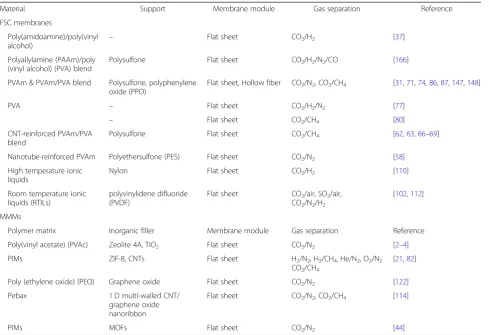
down CO2 capture cost. Different membranes such as polymer membranes, microporous organic polymers (MOPs), FSC membranes, mixed matrix membranes (MMMs), carbon molecular sieve membranes (CMSMs), and inorganic (ceramic, metallic, zeolites) membranes can be used for CO2-related separation [76]. Each mem-brane material possesses its own separation property, thermal and chemical stability and mechanical strength. In general, most polymer membranes show good separ-ation performance and relatively low cost, but a rela-tively low membrane stability by exposure to acid gases and adverse conditions (high temperature and pressure). Inorganic membranes can be operated in these adverse conditions, but module construction and sealing for high-temperature application are quite challenging, and production cost is usually much higher compared to polymer membranes. Novel membrane materials espe-cially FSC and MMMs (summarized in Table 1) attract great interest in the membrane community, which are based on either an enhanced facilitated transport mech-anism or combination of both polymeric and inorganic material properties. Thus, choosing a suitable membrane material for a specific application mainly depends on membrane material properties, feed gas composition and flow rate, process operating conditions, and separation requirements [123]. Recently, membrane performance has been significantly improved owning to the great ef-fort that has been taken from the membrane commu-nity. Wang et al. [151] summarized the status of single-stage membrane performance in the upper bound plots for CO2/N2 and CO2/CH4, and most ultrathin polymer membranes stayed closer to both upper bounds compared to the commercial polymers, which indicated the great potential for carbon capture applications. It should be noted that some membranes like the MTR Polaris™membranes and the FSC membranes (patented by NTNU) have already been demonstrated at pilot scale [51,106] and are quite promising for CO2capture from flue gas due to their high performance and good stability when exposed to a flue gas containing the impurities of SO2and NOx.
Polymer membranes
organic compounds (VOCs) recovery and hydrocarbon re-covery from natural gas. Commercial polymeric gas separ-ation membranes are mostly made from cellulose acetate (UOP, GMS, NATCO), polysulfone (Air Products), and polyimides (Praxair), polyphenylene oxide (Parker-Hanni-fin), and polydimethylsiloxane (GKSS, MTR).
Gas permeability and selectivity are the two key pa-rameters for the characterization of separation perform-ance of dense polymer membranes, which should be as high as possible to achieve separation requirements at a low cost. However, gas permeability is mainly dependent on a thermodynamic factor (solubility (S) of penetrates in a membrane) and a kinetic factor (diffusivity (D) of the gas species transport through a membrane) [7]. Thus, there is a trade-off between permeability and se-lectivity in the dense polymer membranes as reported by Robeson [129]. The polymer membranes based on a solution-diffusion (S-D) transport mechanism cannot surpass the Robeson upper bound to achieve a higher permeability/selectivity combination unless the mem-branes involve other transport mechanisms such as mo-lecular sieving and facilitated transport, or have large porosity and fractional free volume (FFV).
Microporous organic polymers
Strong interests have been put on the development of microporous organic polymers due to its large surface area. The representative MOPs include thermally rearranged (TR) polymers [35,57,85,115,116] and polymers of intrin-sic microporosity (PIMs) [5, 18–20, 36, 104, 144, 160]. Polyimide-based TR polymers with an average pore size 0.4–0.9 nm and a narrow pore size distribution was firstly prepared by Park et al. [116], which presented a molecular sieving transport mechanism for gas permeation. The flex-ible structures provided the feasibility and the easiness for module construction. Moreover, TR polymer membranes were also found to exhibit excellent gas separation perform-ance for CO2-related separation processes, for examples, CO2/CH4separation in high-pressure natural gas sweeten-ing process [35,115] and high temperature H2/CO2 separ-ation in pre-combustion process [57]. However, most of the efforts are still focused on the development of lab-scale films of TR membranes, only a few literature reported that fabrication of hollow fiber TR membranes [84, 92, 154]. Kim et al. prepared their lab-scale TR-PBO (polybenzoxa-zole) hollow fiber membranes with a CO2 permeance of 1938 GPU (1GPU = 2.736 × 10⁻³m3(STP)/(m2h bar)) [84],
Table 1Representative FSC membranes and MMMs for gas separation
Material Support Membrane module Gas separation Reference
FSC membranes
Poly(amidoamine)/poly(vinyl
alcohol) –
Flat sheet CO2/H2 [37]
Polyallylamine (PAAm)/poly (vinyl alcohol) (PVA) blend
Polysulfone Flat sheet CO2/H2/N2/CO [166]
PVAm & PVAm/PVA blend Polysulfone, polyphenylene oxide (PPO)
Flat sheet, Hollow fiber CO2/N2, CO2/CH4 [31,71,74,86,87,147,148]
PVA – Flat sheet CO2/H2/N2 [77]
– Flat sheet CO2/CH4 [80]
CNT-reinforced PVAm/PVA blend
Polysulfone Flat sheet CO2/CH4 [62,63,66–69]
Nanotube-reinforced PVAm Polyethersulfone (PES) Flat-sheet CO2/N2 [58]
High temperature ionic liquids
Nylon Flat sheet CO2/H2 [110]
Room temperature ionic liquids (RTILs)
polyvinylidene difluoride (PVDF)
Flat sheet CO2/air, SO2/air,
CO2/N2/H2
[102,112]
MMMs
Polymer matrix Inorganic filler Membrane module Gas separation Reference
Poly(vinyl acetate) (PVAc) Zeolite 4A, TiO2 Flat sheet CO2/N2 [2–4]
PIMs ZIF-8, CNTs Flat sheet H2/N2, H2/CH4, He/N2, O2/N2
CO2/CH4
[21,82]
Poly (ethylene oxide) (PEO) Graphene oxide Flat sheet CO2/N2 [122]
Pebax 1 D multi-walled CNT/ graphene oxide nanoribbon
Flat sheet CO2/N2, CO2/CH4 [114]
but the CO2/N2 selectivity of 13 should be further im-proved. Woo et al. reported a superior CO2permeance of ~ 2500 GPU with a moderate CO2/N2selectivity of 16 of the TR-PBO hollow fibers with ultrathin defect-free skin layer [154], which might be suitable for bulk CO2removal from flue gas.
Another type of microporous polymer materials of PIMs attracted great interest due to their relatively slow physical aging, high gas permeability, and high selectivity compared to poly(1-trimethylsilyl-1-propyne) (PTMSP) membranes that initially formed microporous structures are rapidly cor-rupted [36]. PIMs showed a high surface area (600–900 m2/ g) as reported by Budd et al. [18] and a high fractional free volume (22–24% [105]) which is comparable to that of PTMSP membranes (32–34.3% [109, 120]). Du et al. re-ported that PIMs functionalized with CO2-philic pendant tetrazole groups (TZPIMs) can further improve CO2 perme-ance by increasing CO2 solubility due to the strong inter-action between CO2and N-containing organic heterocyclic groups [36]. Their results indicated that CO2/N2separation performance of TZPIMs can potentially surpass the Robeson upper bound. Moreover, a systematic review on preparation, characterization, and application of PIMs has been con-ducted by McKeown [104]. They pointed out that composite membranes consisting of PIMs and other polymers can present higher gas separation performance.
Fixed-site-carrier membranes
FSC membranes for CO2separation attracted great atten-tion due to the high CO2 permeance and selectivities of CO2over other gas species (e.g., N2and O2). The carriers (amino functional group, -NH2) are chemically bonded onto the polymer main chain. Thus, the FSC membranes usually present a higher stability compared to supported liquid membrane (SLM) and emulsion liquid membrane (ELM). Tong et al. conducted a review on facilitated trans-port membranes related to transtrans-port mechanism and
materials [145]. The gas transport through a facilitated transport membrane is illustrated in Fig.1, where the CO2 molecules react with amino functional groups when water is available, and pass through FSC membranes based on the combination of S-D and facilitated transport (FT) mechanism, while the non-reactive gas molecules (e.g., N2, O2) can only transport via S-D mechanism as docu-mented by Kim et al. [86]. The gas permeate flux of the reactive component A(such as CO2) will be the sum of both solution-diffusion and carrier-mediated diffusion (i.e., facilitated transport), which can be expressed as fol-lows [86,117]:
JA¼DlA cA;0−cA;1
þDACl cAC;0−cAC;1
ð3Þ
whereDAandDACare diffusion coefficient of the Fickian
diffusion and the carrier-mediated (complex) diffusion,
re-spectively. l is the thickness of the selective layer. Feed
pressure is crucial to get high flux by enhancing the con-tribution from both S-D and FT. However, after the
car-rier saturation, further increasing feed CO2 partial
pressure will not enhance the FT contribution. Thus, the trade-off between energy consumption and reduced mem-brane area (with increased flux) should be identified to de-termine the optimal operating condition [75]. A moderate feed pressure (e.g., 2.5–3 bar) was recommended as the optimal operating condition for the FSC membranes [64].
Table 1 shows some representative facilitated transport
membranes that have been reported in the literature. Among them, the polyvinyl amine (PVAm)-based FSC membranes patented by the Memfo team at NTNU shows
the highest CO2permeance (up to 5 m3(STP)/(m2·h·bar))
and CO2/N2 (> 500) selectivity under humidified
condi-tions [87]. This membrane is extremely promising for
post-combustion CO2 capture where flue gas is usually
water vapor saturated [61, 64, 87]. A pilot flat-sheet FSC
membrane system has been tested in EDP’s power plant in
Sines (Portugal) in 2011, and the membranes showed a stable performance over 6 months [52]. Later on, the
hol-low fiber FSC membranes were tested at Sintef CO2lab at
Tiller (Norway) with a 9.5% CO2contained flue gas
pro-duced from a propane burner [74]. They reported that
single-stage membrane system (area 8.4 m2) can achieve
> 60% permeate CO2purity at a feed and permeate
pres-sure of 2 bar and 0.2 bar, respectively, and the system also
showed quite fast response when changing feed CO2
com-position. The reported pilot FSC membrane system pro-vided great flexibility on testing the influence of process operating parameters, especially temperature. However, the challenges related to the optimization of module and process should be further investigated. In addition, mater-ial development by introducing other support and more
effective multi-amines and aminoacids with higher CO2
reaction kinetics and loading capacity is crucial to further improve membrane performance. Han et al. recently re-ported a nanotube reinforced 2-(1-piperazinyl) ethylamine sarcosinate blend with PVAm composite membrane with
1451 GPU CO2permeance and 165 CO2/N2selectivity at
65 °C [58], which will be very promising if such perform-ance can be achieved in field testing.
Mixed matrix membranes
Rigid permeable or impermeable particles are dispersed in a continuous polymeric phase to form MMMs to present interesting materials for improving separation performance of common polymer membranes [6]. Two types of inorganic fillers can be added into polymer matrix such as microporous fillers (e.g., carbon molecu-lar sieves, zeolite) and nonporous nanoparticles (e.g., SiO2, TiO2). MMMs with microporous fillers could im-prove selectivity based on molecular sieving or surface flow transport mechanism, and it might also get an in-creased permeability if the preferred solid phase has a higher diffusion coefficient. While MMMs made by add-ing nonporous nanoparticles can improve gas permeabil-ity due to the increase of free volume. Chung et al. [25] reported that the properties for both polymer materials and inorganic fillers could affect the morphology and separation performance of MMMs. The rigid structure glassy polymers with high selectivity are more suitable for polymer matrix compared to rubbery polymers. However, the adhesion between glassy polymer phase and inorganic filler phase is a challenging issue for prep-aration of MMMs. Moreover, the thermal and chemical stabilities of MMMs are mainly dependent on physical property of a polymer matrix, which may suffer from the acid gases of SO2 or NOx that are usually involved in flue gas. MMMs normally present an enhanced mechan-ical strength compared to pure polymer membranes, and a reduced cost compared to pure inorganic mem-branes. However, the main challenge for preparation of
MMMs is to choose proper materials for both polymeric and inorganic phases to get a high gas separation per-formance and good compatibility. Examples for selection of polymer and inorganic filler for making CO2selective MMMs are reviewed in the literature [76,149], and only the latest MMM materials are listed in Table1. Recently,
the PIMs/MOF MMMs with CO2 permeance of 1740
GPU and enhanced selectivity (70%) and mechanical strength were reported by Ghalei et al. [44]; they con-cluded that membranes can be further optimized for economical CO2capture.
Carbon molecular sieve membranes
CMSMs are usually prepared by carbonization of polymeric precursors such as polyimide [10,141,142], polyacrylonitile (PAN) [29], poly(phthalazinone ether sulfone ketone) [163], poly(phenylene oxide) [91, 161], and cellulose derivatives [65, 68, 72, 73, 90, 99]. CMSMs present high mechanical strength and moderate modulus due to their graphitic or turbostratic structure compared to graphitized fibers [130]. The separation mechanism of CMSMs is based on kinetic diameter difference in the gas molecules. CO2has a smaller kinetic diameter compared to O2, N2, and CH4. The hollow fiber polyimide derived carbon membranes developed by Georgia Tech have been reported for different types of gas separations (e.g., CO2/CH4 and olefin/paraffin [134, 135, 155]). The issues related to high precursor cost and low gas permeance need to be further addressed. The cellulose acetate (CA)-based hollow fiber carbon membranes were developed by NTNU for biogas upgrading, natural gas sweetening, and H2separation [47, 53, 54, 97]. The main advantages of this type of carbon membrane are the low cost of CA precursor and the carbonization processability. However, it still has the challenges on (1) keeping deacety-lated CA fibers straight during the drying process; (2) in-creasing gas permeance; and (3) reducing membrane aging due to the pore blockage of water vapor adsorption at rela-tive humidity (RH) > 30%.
Their investigation results showed a promising applica-tion of carbon membranes in energy-related processes. Recently, high flux ceramic supported carbon mem-branes with a high CO2 permeance of 0.6 m3(STP)/ (m2·h·bar) and CO2/CH4selectivity of 30 were developed by Richter et al. [128], which can be potentially used for CO2removal from natural gas. However, the membrane cost and upscaling need to be further investigated.
CO2capture from power plant
The world fossil fuel power plants emit about two billion tons of CO2per year which should be significantly re-duced according to the Kyoto protocol. CCS is one of the most promising options for the reduction of CO2 emissions. Different techniques such as physical absorp-tion (e.g., Selexol, Rectisol), chemical absorpabsorp-tion (e.g., MEA, MDEA), physical adsorption (e.g., molecular sieves, metal organic frameworks), and gas separation membranes can be used to CO2capture from flue gas in power plants. Among them, amine absorption has been widely used in for CO2 removal and considered to be the most mature technology. However, conventional amine absorption is an energy-intensive and high-cost process, which results in the large incremental costs of electricity generation. National Energy Technology Laboratory (NETL) estimated that amine unit will in-crease the cost of electricity production by 70% [38]. As an alternative, gas separation membranes and/or hybrid systems (e.g., membrane contactor, membrane-cryogenic process) for carbon capture, as illustrated in Fig. 2[73], may have potentials to bring down the CO2capture cost in this application.
Gas separation membrane system
Yang et al. reviewed the progress of CO2 separation using membrane technology, and they concluded that membrane process is energy-saving, space-saving, easy to scale-up, and can be a promising technology for CO2 separation [158]. Strong effort has been put on the
development of high-performance membranes (high CO2 permeance and relatively good selectivities over other gas molecules) with good long-term stability for CO2 capture, and some ultrathin nanocomposite and FSC membranes showed great potentials [16, 17, 50,70, 77,78,107,124,139,140,158].
The Polaris® membranes developed by MTR has been demonstrated at pilot-scale for CO2capture from a nat-ural gas combined cycle power plant [23]. A 20 ton/day skid was tested to validate the advanced modules (mul-ti-tube and plate-and-frame) designed for low-pressure drop and small footprint, and the system showed quite stable performance over ca. 1000 h [106]. Moreover, MTR patented their process by feeding high CO2 con-tent air stream (air as sweep gas in the permeate side of the 2nd stage membrane unit) into the boiler to increase the CO2 concentration in the flue gas [9], which can greatly reduce the required membrane area and energy consumption for this application.
It is worth noting that process design is crucial to im-prove the overall energy efficiency of the whole process with the integration of CO2capture unit. Many research work on technology feasibility analysis based on air sweeping process were reported. However, the influences of CO2-contained air on the boiler operation should be further tested. It is worth noting that gas permeance of Polaris membranes has been significantly improved at lab-scale. Further pilot demonstration (field testing) is required to prove the performance at larger scale.
The large EU project NanoGLOWA (including 27 partners from European companies, universities, insti-tutes and power plants) launched in 2006 was aiming at developing high-performance membranes for CO2 cap-ture from flue gas in post-combustion power plants. A small pilot-scale plate-and-frame module was installed in EDP’s power plant in Sines (Portugal) to test the working of membranes in a real flue gas in 2011, and the membranes showed a stable performance over 6 months [52]. Recently, this type of membrane was
demonstrated for CO2 capture in the real flue gas from a propane burner at SINTEF Tiller plant (Trondheim, Norway) [74] and Norcem cement factory [51]. Two semi-commercial hollow fiber modules coated with PVAm selective layer (membrane area of 8.4 m2) were performed in parallel in a single-stage process. The test-ing results indicated that a 60 vol% CO2 purity was achieved in the permeate stream from a feed flue gas with 9.5 vol% CO2[74]. In December 2016, Air Products Ltd. licensed the PVAm-based FSC membranes for post-combustion CO2 capture and will bring the tech-nology to commercialization in the near future [48].
The PolyActive™ membranes developed by Helmholtz-Zentrum Geesthacht were tested for CO2capture from real flue gas using a pilot module with a membrane area of 12.5 m2 [119]. The membrane system also showed stable performance over 740 h continuously, and they also reported that membrane processes was well suitable for post combus-tion CO2capture, and a CO2purity of 68.2 mol% in the per-meate and a recovery of 42.7% can be achieved at the tested condition in a single-stage process. A two-stage pilot mem-brane system should be demonstrated to document the tech-nology feasibility related to the energy consumption and the required membrane area. The engineering challenge on upscaling of envelop module needs to be addressed.
It should be remembered that techno-economic feasibil-ity analysis should be conducted before bringing any type of membranes into commercial application. He et al. inves-tigated the application of hollow fiber carbon membranes for CO2capture from flue gas [59]. They reported a capital cost of $100/tonne CO2avoided for carbon membrane sys-tem, which was higher than a traditional chemical method of MEA ($59/tonne CO2 avoided reported by Rao and Rubin [125]), but the referred carbon membranes had a clear potential of further optimization. Merkel et al. [107] reported that membrane with a CO2/N2 selectivity above 50 and a CO2permeance of 4000 GPU could offer a cap-ture cost below $15/tonne CO2, which is lower than US Department of Energy’s (DOE) target goal ($20/tonne CO2). They also pointed out that improving membrane permeance is more important than increasing selectivity (if selectivity > 30) to further reduce the cost of CO2capture from flue gas [107]. He et al. [64,70] and Hussain et al. [78] conducted process feasibility analysis by HYSYS integrated with an in-house membrane program (ChemBrane, devel-oped by Grainger [46]) to investigate the influence of process parameters on energy demand and flue gas pro-cessing cost using a novel CO2-selective FSC membrane. Their simulation results showed that membrane process using the high-performance FSC membranes was feasible for CO2capture to achieve > 90% CO2recovery and high CO2 purity above 90%, even from a flue gas with a low CO2 concentration (~ 10%). Ramasubramanian et al. re-ported a CO2 capture cost of $25/tonne CO2 using an
assumed membrane performance of CO2 permeance of 3000 GPU (~ 8.2 m3(STP)/(m2h bar)) and CO2/N2 select-ivity of 140 [124]. More recently, membrane properties
re-quired for post-combustion carbon capture were
systematically investigated [132,133], and a permeance of at least 3 m3(STP)/(m2h bar) with high selectivity should be achieved to be competitive to MEA absorption system. Even though the required high-performance membrane has not yet been achieved, their investigations emphasized quantitatively the need of improving the present membrane performance to realize a purely membrane-based process for CO2capture. Moreover, the CO2capture cost for mem-brane system is significantly dependent on the required CO2 capture ratio. It is reported that membrane-based post-combustion CO2capture can benefit from lower CO2 capture ratio with a 55% cost reduction [131], and CO2 capture ratios lower than 90% would significantly improve the competitiveness of membrane-based carbon capture and lead to large cost reduction [132]. However, the overall benefit should be further investigated through the whole value chain. Therefore, the environmentally friendly tech-nology with further improved membrane performance and properly selected process parameters and separation re-quirement (especially CO2capture ratio) can be a promis-ing candidate for post-combustion CO2capture.
Gas-liquid membrane contactor
from flues gas using a membrane contactor composed by porous polypropylene hollow fiber membranes and a dedi-cated absorption liquid (CORAL) [42]. Their results indi-cated that membrane contactor could be a promising candidate for CO2capture from flue gases in post-combus-tion power plants. Moreover, Dai et al. [27,28] reported to
use ionic liquid-based membrane contactor for
pre-combustion CO2capture; the porous PTFE membrane and nonporous Teflon-PP (polypropylene) composite mem-branes were considered to be the most suitable memmem-branes in this application. Even though the mass transfer resistance increases in membrane contactors particularly when mem-branes are wetted, the numerous advantages such as signifi-cantly increased interfacial area can potentially offset the disadvantages and makes membrane contactors to be prom-ising in CO2capture [165].
CO2capture from industry
CO2emissions from industrial sectors such as steel/iron production, cement factory, and gas production plants contribute more than 10% of total CO2emissions. CO2 removal from natural gas and biogas is mandatory to in-crease methane purity and avoid pipeline corrosion. Moreover, CCS is the only solution to reduce CO2
emis-sions from cement factory as 50% of CO2 is the
by-product of a cement production process. Thus, CO2 capture from those energy-intensive industries should also be implemented.
CO2removal from natural gas
Natural gas (NG) is becoming one of the most attractive growing fuels for world primary energy consumption due to its availability and versatility. NG is a less carbon-intensive and cleaner energy source compared to the other fossil fuels of coal and crude oil. However, raw natural gas in reservoirs or/and wells usually contains considerable amount of light and heavy hydrocarbons (HHCs), as well as the impurities such as water, H2S, CO2, N2, and helium. Natural gas sweet-ening is mandatory in any natural gas plants to remove the acid gases of H2S and CO2to meet the legal requirements and gas grid specifications. Different technologies such as chemical absorption [83], pressure swing adsorption (PSA) [81,143], and membranes [2,12,43,62,63,66–69,93,96] have been reported for CO2removal from natural gas. Deci-sion on which technology used for CO2removal from nat-ural gas is mainly dependent on process conditions and the raw natural gas composition. Conventional chemical (amine) absorption is well known and implemented in industrial pro-cesses, and still considered as the state-of-the-art technology for CO2capture. However, membrane systems possess many advantages such as small footprint, low capital, and operating costs are environmentally friendly and exhibit their process flexibility [11], which show a great potential for natural gas sweetening even though it has only a 5% of the market today.
Commercial membranes for natural gas sweetening are usually made from cellulose acetate and polyimide and have a typical CO2/CH4 selectivity of 15~30 [13]. Membrane systems are preferred for high CO2 con-centration gas streams (enhanced gas recovery plant, ca. 50% CO2, and high pressure), and amine units are preferred for relatively low-concentration gas streams. Moreover, membrane systems are also favorable to be used for processing small gas flows because of their simple flow schemes (typically in offshore platforms, < 6000 Nm3/h), while amine units are more complex and require careful, well-monitored operating proce-dures, as documented by Baker et al. [8]. Although common polymer membranes for natural gas sweet-ening are still cellulose acetate/triacetate and poly-imide, the novel, high-performance FSC membranes and carbon membranes showed nice potentials for CO2/CH4separation [32, 33, 55, 69].
High-pressure operation is one of the most challenging issues related to natural gas sweetening with membrane systems since membrane plasticization and compaction are found to be a well-known phenomenon in most polymer membranes [40,152]. For the FSC membranes, carrier saturation at a high CO2concentration or partial pressure will additionally cause the reductions of CO2 permeance and CO2/CH4selectivity. The potential strat-egies to overcome membrane plasticization are cross-linking of membrane material [153] and fabrication of mechanical strong membranes with enhanced proper-ties, e.g., mixed matrix membrane by adding inorganic fillers into the polymer matrix. Adams et al. prepared a 50% (vol.) Zeolite 4A/poly (vinyl acetate) MMM with in-crease separation performance for CO2/CH4 separation [2]. Their results showed a promising application for high-pressure natural gas sweetening. He et al. reported that CNTs reinforced PVAm/PVA blend FSC membrane presented a good CO2/CH4 separation performance at high pressure up to 40 bar [62,63,67–69], which showed a nice potential application for CO2removal from natural gas. There are, however, still challenges to maintain the separation performance at higher pressure > 40 bar (espe-cially > 80 bar in subsea process), which can be potentially addressed by employing high-performance (to exceed the Robeson CO2/CH4upper bound) carbon membranes with high mechanical strength to tolerate high pressure without losing separation performance.
with a CO2permeance of 0.3 m3(STP)/(m2h bar) and a CO2/CH4 selectivity of 40 is comparable to that of amine process [118]. Although the purity of sweet gas with membrane system is a little low, it can still achieve the sales gas standards (< 2% CO2in natural gas). It was also reported that two-stage membrane systems with a membrane unit cost < $60/m2membrane area was viable for CO2removal from a CO2content (10 vol%) natural gas [66]. Moreover, membrane system presents a small footprint and flexibility, and is easy to maintain, which is crucial for subsea and offshore natural gas production. It should be noted that membranes for natural gas sweet-ening is one of the most promising application related to the market and economic benefit.
CO2removal from biogas
Biogas is usually produced from anaerobic digestion of wastes such as sewage sludge, animal manure, and or-ganic fraction of household, which is mainly composed of methane (CH4) and carbon dioxide (CO2) and may also contain VOCs, H2O, H2S, and NH3. Biogas has a potential of high energy due to the presence of high pur-ity methane. However, depending on the end usage, a specific biogas treatment (i.e., biogas upgrading, defined as CO2removal from raw biogas) should be conducted to increase the calorific value of biogas. Therefore, it is crucial to identify energy-efficient technology for CO2 removal from biogas at a low CH4 loss. The common techniques for biogas upgrading include water scrub-bing, PSA, chemical absorption (e.g., amines), and gas separation membranes. The selection of suitable tech-nology is mainly dependent on plant condition, such as the availability of low price of thermal energy, electricity and water, as well as the plant capacity. In the European region, water scrubbing is the most prevailing technol-ogy at biogas plants (40%), and membrane has 4% of the market today [113]. Most biogas plants in Sweden are using PSA even though CH4loss is high (3–10%). The biogas plants using water scrubbing technology can get high purity CH4 (> 99 vol%), but also produces a lot of wastewater and has high power demands. The amine scrubbing technology presents high selectivity to pro-duce high purity methane, but the process is energy-in-tensive and environmentally unfriendly due to the needs of organic solvents of amines. Comparing to other state-of-the-art technologies, gas separation membrane processes present more energy- and space-saving and lower environmental impacts and are preferable for small-scale biogas plants < 1000 m3(STP)/h [108]. The commercial SEPURAN® membranes developed by EVO-NIK for biogas upgrading have low-energy requirements and low maintenance costs. The main challenge is to get high CH4 purity and low CH4loss simultaneously. The latest reported single-stage polyimide membrane system
can only reach CH4purity of 80.7 vol% with a high CH4 loss of 24%, which is unacceptable in any biogas produc-tion plants [111]. Using a multi-stage membrane system in series can get high purity CH4, but CH4loss will be higher. A CH4loss to atmosphere of more than 4% leads to a non-sustainable process according to carbon footprint life cycle assessment[126], which is negative related to economy and environment impact due to the high global warming potential (GWP) of methane. Therefore, seeking a high CO2/CH4selective membrane (at least > 30) is cru-cial to reduce CH4loss, simplify process design, and re-duce energy consumption. The cellulose-derived hollow fiber carbon membranes have been reported for CO2/CH4 separation and presented a high CO2/CH4selectivity over 100 [53,72], which showed the potential for CO2removal from biogas. The techno-economic feasibility analysis also proved that carbon membrane can be a competitive tech-nology for biogas upgrading compared to amine absorp-tion [60]. Moreover, several carbon membrane modules (each one has the area of 2 m2) were exposed to a real bio-gas (63 vol% CH4, 1 ppm H2S, balance CO2) over 200 days at a biogas plant in Southern Norway. The biogas with 10 Nm3/h was fed into these modules at 20 bar. A high purity methane of 96 vol% and a CH4recovery of 98% was achieved [56], and the membranes showed stable perform-ance over the testing period, which is considered at TRL 5. Although the reported pilot system can produce high purity biomethane as vehicle fuels, there are still chal-lenges related to uniform packing of hollow fiber carbon membranes. Moreover, the brittleness of hollow fibers remained a challenge for module upscaling. Future re-searches should focus on improving mechanical properties and gas permeance, which directs to the development of asymmetric flexible hollow fiber carbon membranes or supported carbon membranes.
CO2capture from cement factory
Cement factory is pursuing solutions for carbon capture from high CO2content flue gas (ca. 17 vol% wet base) as it represents 7% of global anthropogenic CO2emissions. Application of CO2capture in cement kilns would have great potential to reduce CO2 emission from these in-dustries but will naturally influence cement production cost. Thus, the European cement industry (through Hei-delbergCement) is taking big interest in low-cost CO2 capture technologies.
membranes, solid adsorbent) were tested on site to docu-ment the process feasibility [14]. There, the first
pilot-scale membrane system using PVAm-based
flat-sheet FSC membranes was tested for CO2 capture from a 17 vol% (wet base) CO2flue gas in cement factory. Although many challenges related to process and module design were revealed, and it was also difficult to achieve a stable operation of membrane system, a CO2purity up to 72% was achieved for short periods when all process pa-rameters were well controlled in the single-stage FSC membrane system [49]. The membrane efficiency of the plate-and-frame module was quite low, and the designed system suffered significant water condensation/corrosion issues. Thus, the hollow fiber FSC membrane modules with total membrane area of ca. 20 m2were constructed by the joint force from Air Products and Chemicals, Inc., in 2016 [51]. In that project, the pilot FSC membrane sys-tem was evaluated at TRL 5. The syssys-tem was tested over 6 months at different conditions, and stable performance was found even at a high NOx and SO2loading (average 100 ppm and 5 ppm, respectively) flue gas. They reported that stable permeate CO2purity of 65% over the accumu-lated 24 days was achieved. The techno-economic feasibil-ity analysis was also reported to achieve 80% CO2 recovery and > 90% CO2 purity. However, the designed two-stage membrane system was difficult to achieve spe-cific CO2 purity (> 95%) requirement (especially the low O2limitation) for enhanced oil/gas recovery (EOR/EGR). The potential solutions are to introduce a third-stage membrane unit or a low-temperature liquefaction unit. It should also be remembered that proper pre-treatment processes (e.g., particle filtering, water condensation) are always required to protect membrane system for CO2 cap-ture in cement factory.
CO2capture from iron/steel making industry
Recently, CO2 capture from power generation has re-ceived a lot of attention as described in the section
“CO2 capture from power plant”. However, only a few
studies reported on CO2capture in iron/steel manufac-ture industries [39, 45, 100, 150]. The previous large
European projects, Ultra Low CO2 Steelmaking
(ULCOS) focused on the development of new steel pro-duction technology that could drastically cut CO2 emis-sions to 50% by the year 2030 (base year 2004), and membrane system was chosen for investigation of CO2 capture from nitrogen free blast furnace (NFBF) exhaust gases (N2/CO2/CO/H2: 10%/36%/47%/7%). Lie et al. re-ported that PVAm/PVA blend FSC membranes can be-come a potential candidate for CO2 capture from flue gas in steelmaking industry with 15.0–17.5 €/tonnes CO2 [100]. Recently, Roussanaly et al. reported on the simulation of different membranes for CO2capture from steel industry with a 30%CO2in feed gas, and a relatively
low CO2capture cost was identified compared to carbon capture in other processes [131]. However, it should be noted that the feed gas only contains CO2 and N2 in their study, while CO, H2 are neglected which usually existed. Thus, further investigation with more accurate feed gas composition should be conducted to document the economic feasibility.
Future perspectives
The deployment of CO2capture in power plants and process industries is crucial to reduce CO2emissions, and several technologies should be alternatively employed depending on flue gas composition, plant location, and separation require-ment. Amine absorption is still considered as the most ma-ture technology today for large- or full-scale applications and developing next generation advanced solvents should be pur-sued to reduce energy consumption. Gas separation mem-branes, especially ultrathin polymeric and FSC memmem-branes, for post-combustion CO2 capture were demonstrated at pilot-scale with stable performance over long-term period and considered as the most technology regarding to the en-vironmental impact and energy efficiency. However, mem-brane performance should be further improved to reduce CO2 capture cost down to $20/tonne CO2. Moreover, process design need to be carefully considered to make a right choice, and a two/multi-stage system is usually required to achieve high CO2capture ratio and CO2purity simultan-eously. Nevertheless, membrane systems, which require no chemicals, are easy to scale up and have a relatively low-energy demand and could be an environmentally friendly technology for CO2capture from power plants and other energy-intensive process industries in the future.
Acknowledgements
The author is grateful to the anonymous reviewers for their helpful comments and suggestions.
Funding
The work was supported by the CO2Hing project (#267615) of the Research Council of Norway (Norges forskningsråd).
Availability of data and materials
Data sharing is not applicable to this article as no datasets were generated or analyzed during the current study.
Author’s contribution
The author wrote, read, and approved the final manuscript.
Competing interests
The author declares that he has no competing interests.
Publisher’s Note
Received: 23 July 2018 Accepted: 17 October 2018
References
1. Abanades JC, Akai M, Benson S, al, e., 2005. IPCC Special Report Carbon Dioxide Capture and Storage: Summary for Policymakers.http://www.ipcc. ch/pdf/special-reports/srccs/srccs_summaryforpolicymakers.pdf. Accessed 12 Sept 2018.
2. Adams RT, Lee JS, Bae T-H, Ward JK, Johnson JR, Jones CW, Nair S, Koros WJ (2011) CO2–CH4permeation in high zeolite 4A loading mixed matrix
membranes. J Membr Sci 367(1–2):197–203
3. Ahmad J, Hägg M-B (2013) Preparation and characterization of polyvinyl acetate/zeolite 4A mixed matrix membrane for gas separation. J Membr Sci 427(0):73–84
4. Ahmad J, Hågg MB (2013) Polyvinyl acetate/titanium dioxide
nanocomposite membranes for gas separation. J Membr Sci 445:200–210 5. Ahn J, Chung W-J, Pinnau I, Song J, Du N, Robertson GP, Guiver MD (2010)
Gas transport behavior of mixed-matrix membranes composed of silica nanoparticles in a polymer of intrinsic microporosity (PIM-1). J Membr Sci 346(2):280–287
6. Aroon MA, Ismail AF, Matsuura T, Montazer-Rahmati MM (2010) Performance studies of mixed matrix membranes for gas separation: a review. Sep Purif Technol 75(3):229–242
7. Baker R (2004) Membrane technology and applications, 2nd edn. McGraw-Hill Wiley.https://doi.org/10.1002/0470020393
8. Baker RW, Lokhandwala K (2008) Natural gas processing with membranes: an overview. Ind Eng Chem Res 47(7):2109–2121
9. Baker RW, Wijmans JG, Merkel TC, Lin H, Daniels R, Thompson S (2009) Gas separation process using membranes with permeate sweep to remove CO2
from combustion gases Membrane Technology & Research, Inc, US 10. Barsema JN, van der Vegt NFA, Koops GH, Wessling M (2005)
Ag-functionalized carbon molecular-sieve membranes based on
polyelectrolyte/polyimide blend precursors. Adv Funct Mater 15(1):69–75 11. Bernardo P, Drioli E (2010) Membrane gas separation progresses for process
intensification strategy in the petrochemical industry. Petrol Chem 50(4): 271–282
12. Bhide BD, Stern SA (1993) Membrane processes for the removal of acid gases from natural gas. II. Effects of operating conditions, economic parameters, and membrane properties. J Membr Sci 81(3):239–252 13. Bhide BD, Voskericyan A, Stern SA (1998) Hybrid processes for the removal
of acid gases from natural gas. J Membr Sci 140(1):27–49
14. Bjerge L-M, Brevik P (2014) CO2capture in the cement industry, Norcem
CO2capture project (Norway). Energy Procedia 63:6455–6463
15. Bottino A, Capannelli G, Comite A, Di Felice R, Firpo R (2008) CO2removal
from a gas stream by membrane contactor. Sep Purif Technol 59(1):85–90 16. Bredesen R, Jordal K, Bolland O (2004) High-temperature membranes in
power generation with CO2capture. Chem Eng Process 43(9):1129–1158
17. Brunetti A, Scura F, Barbieri G, Drioli E (2010) Membrane technologies for CO2separation. J Membr Sci 359(1–2):115–125
18. Budd PM, Elabas ES, Ghanem BS, Makhseed S, McKeown NB, Msayib KJ, Tattershall CE, Wang D (2004) Solution-processed, organophilic membrane derived from a polymer of intrinsic microporosity. Adv Mater 16(5):456–459 19. Budd PM, McKeown NB, Ghanem BS, Msayib KJ, Fritsch D, Starannikova L,
Belov N, Sanfirova O, Yampolskii Y, Shantarovich V (2008) Gas permeation parameters and other physicochemical properties of a polymer of intrinsic microporosity: Polybenzodioxane PIM-1. J Membr Sci 325(2):851–860 20. Budd PM, Msayib KJ, Tattershall CE, Ghanem BS, Reynolds KJ, McKeown NB,
Fritsch D (2005) Gas separation membranes from polymers of intrinsic microporosity. J Membr Sci 251(1–2):263–269
21. Bushell AF, Attfield MP, Mason CR, Budd PM, Yampolskii Y, Starannikova L, Rebrov A, Bazzarelli F, Bernardo P, Carolus Jansen J, LančM, Friess K, Shantarovich V, Gustov V, Isaeva V (2013) Gas permeation parameters of mixed matrix membranes based on the polymer of intrinsic microporosity PIM-1 and the zeolitic imidazolate framework ZIF-8. J Membr Sci 427(0):48– 62
22. Carapellucci R, Milazzo A (2003) Membrane systems for CO2capture and
their integration with gas turbine plants Proceedings of the Institution of Mechanical Engineers, Part A. J Power Energy 217(5):505–517
23. Casillas, C., Chan, K., Fulton, D., Kaschemekat, J., Kniep, J., Ly, J., Merkel, T., Nguyen, V., Sun, Z., Wang, X., Wei, X., White, S., 2015. Pilot testing of a
membrane system for post-combustion CO2capture, NETL CO2capture
technology meeting Pittsburgh
24. Chabanon E, Roizard D, Favre E (2011) Membrane contactors for Postcombustion carbon dioxide capture: a comparative study of wetting resistance on long time scales. Ind Eng Chem Res 50(13):8237–8244 25. Chung T-S, Jiang LY, Li Y, Kulprathipanja S (2007) Mixed matrix membranes
(MMMs) comprising organic polymers with dispersed inorganic fillers for gas separation. Prog Polym Sci 32(4):483–507
26. D'Alessandro DM, Smit B, Long JR (2010) Carbon dioxide capture: prospects for new materials. Angew Chem Int Ed 49(35):6058–6082
27. Dai Z, Ansaloni L, Deng L (2016a) Precombustion CO2capture in polymeric
hollow fiber membrane contactors using ionic liquids: porous membrane versus nonporous composite membrane. Ind Eng Chem Res 55(20):5983–5992 28. Dai Z, Noble RD, Gin DL, Zhang X, Deng L (2016b) Combination of ionic
liquids with membrane technology: a new approach for CO2separation. J
Membr Sci 497:1–20
29. David LIB, Ismail AF (2003) Influence of the thermastabilization process and soak time during pyrolysis process on the polyacrylonitrile carbon membranes for O2/N2separation. J Membr Sci 213(1–2):285–291
30. deMontigny D, Tontiwachwuthikul P, Chakma A (2006) Using polypropylene and polytetrafluoroethylene membranes in a membrane contactor for CO2
absorption. J Membr Sci 277(1–2):99–107
31. Deng L (2009) Development of novel PVAm/PVA blend FSC membrane for CO2capture. Norwegian University of Science and Technology, Trondheim
32. Deng L, Kim T-J, Hägg M-B (2009a) Facilitated transport of CO2in novel
PVAm/PVA blend membrane. J Membr Sci 340(1–2):154–163 33. Deng L, Kim T-J, Sandru M, Hägg M-B (2009b) PVA/PVAm blend FSC
membrane for natural gas sweetening. Proceedings of the 1st annual gas processing symposium, Doha, pp 247–255
34. Dindore VY, Brilman DWF, Feron PHM, Versteeg GF (2004) CO2absorption at
elevated pressures using a hollow fiber membrane contactor. J Membr Sci 235(1–2):99–109
35. Do YS, Lee WH, Seong JG, Kim JS, Wang HH, Doherty CM, Hill AJ, Lee YM (2016) Thermally rearranged (TR) bismaleimide-based network polymers for gas separation membranes. Chem Commun 52(93):13556–13559 36. Du N, Park HB, Robertson GP, Dal-Cin MM, Visser T, Scoles L, Guiver MD
(2011) Polymer nanosieve membranes for CO2-capture applications. Nat
Mater 10(5):372–375
37. Duan S, Taniguchi I, Kai T, Kazama S (2012) Poly(amidoamine) dendrimer/ poly(vinyl alcohol) hybrid membranes for CO2capture. J Membr Sci 423–
424(0):107–112
38. Elwell, L.C., Grant, W.S., 2006. Technology options for capturing CO2.http:// www.powermag.com/coal/Technology-options-for-capturing-CO2_582.html. Accessed 12 Sept 2018
39. Farla JC, Hendriks CA, Blok K (1995) Carbon dioxide recovery from industrial processes. Clim Chang 24:439–461
40. Favre E (2011) Membrane processes and postcombustion carbon dioxide capture: challenges and prospects. Chem Eng J 171(3):782–793 41. Favvas EP, Katsaros FK, Papageorgiou SK, Sapalidis AA, Mitropoulos AC
(2017) A review of the latest development of polyimide based membranes for CO2separations. React Funct Polym 120:104–130
42. Feron PHM, Jansen AE (2002) CO2separation with polyolefin membrane
contactors and dedicated absorption liquids: performances and prospects. Sep Purif Technol 27(3):231–242
43. Freeman B, Yampolskii Y (2010) Membrane gas separation. Wiley, Hoboken 44. Ghalei B, Sakurai K, Kinoshita Y, Wakimoto K, Isfahani AP, Song Q, Doitomi K,
Furukawa S, Hirao H, Kusuda H, Kitagawa S, Sivaniah E (2017) Enhanced selectivity in mixed matrix membranes for CO2capture through
efficient dispersion of amine-functionalized MOF nanoparticles. Nature Energy 2:17086
45. Gielen D (2003) CO2removal in the iron and steel industry. Energy Convers
Manag 44(7):1027–1037
46. Grainger, D., 2007. Development of carbon membranes for hydrogen recovery, Department of Chemical Engineering Norwegian University of Science and technology, Trondheim
47. Grainger D, Hägg M-B (2007) Evaluation of cellulose-derived carbon molecular sieve membranes for hydrogen separation from light hydrocarbons. J Membr Sci 306(1–2):307–317
48. Hägg MB (2017) One step closer to bringing CO2capture technology to the
49. Hägg M-B, He X, Sarfaraz V, Sandru M, Kim T-J (2015) CO2capture using a
membrane pilot process at cement factory, in Brevik Norway- lessons learnt. The 8th Trondheim CCS conference (TCCS8), Trondheim
50. Hagg MB, Lindbrathen A (2005) CO2capture from natural gas fired power
plants by using membrane technology. Ind Eng Chem Res 44(20):7668–7675 51. Hägg MB, Lindbråthen A, He X, Nodeland SG, Cantero T (2017) Pilot
demonstration-reporting on CO2capture from a cement plant using hollow
Fiber process. Energy Procedia 114:6150–6165
52. Hägg MB, Sandru M, Kim TJ, Capala W, Huijbers M (2012) Report on pilot scale testing and further development of a facilitated transport membrane for CO2capture from power plants. Euromembrane, London
53. Haider S, Lindbråthen A, Hägg M-B (2016) Techno-economical evaluation of membrane based biogas upgrading system: a comparison between polymeric membrane and carbon membrane technology. Green Energy Environ 1(3):222–234
54. Haider S, Lindbråthen A, Lie JA, Andersen ICT, Hägg M-B (2017) CO2
separation with carbon membranes in high pressure and elevated temperature applications. Sep Purif Technol 52(2):156–116 55. Haider S, Lindbråthen A, Lie JA, Andersen ICT, Hägg M-B (2018a) CO2
separation with carbon membranes in high pressure and elevated temperature applications. Sep Purif Technol 190:177–189
56. Haider S, Lindbråthen A, Lie JA, Carstensen PV, Johannessen T, Hägg M-B (2018b) Vehicle fuel from biogas with carbon membranes; a comparison between simulation predictions and actual field demonstration. Green Energy Environ 3(3):266–276
57. Han SH, Kwon HJ, Kim KY, Seong JG, Park CH, Kim S, Doherty CM, Thornton AW, Hill AJ, Lozano AE, Berchtold KA, Lee YM (2012) Tuning microcavities in thermally rearranged polymer membranes for CO2 capture. Phys Chem Chem Phys 14(13):4365–4373
58. Han Y, Wu D, Ho WSW (2018) Nanotube-reinforced facilitated transport membrane for CO2/N2separation with vacuum operation. J Membr Sci. https://doi.org/10.1016/j.memsci.2018.08.061
59. He, X., 2011. Development of hollow fiber carbon membranes for CO2
separation, Department of Chemical Engineering Norwegian University of Science and Technology, Trondheim
60. He X, Chu Y, Lindbråthen A, Hillestad M, Hägg M-B (2018) Carbon molecular sieve membranes for biogas upgrading: techno-economic feasibility analysis. J Clean Prod 194:584–593
61. He X, Fu C, Hägg M-B (2015) Membrane system design and process feasibility analysis for CO2capture from flue gas with a fixed-site-carrier
membrane. Chem Eng J 268(0):1–9
62. He X, Hägg M-B (2012c) Membranes for environmentally friendly energy processes. Membranes 2(4):706–726
63. He X, Hägg M-B (2012d) Structural, kinetic and performance characterization of hollow fiber carbon membranes. J Membr Sci 390–391(0):23–31 64. He X, Hägg M-B (2014) Energy efficient process for CO2capture from flue
gas with novel fixed-site-carrier membranes. Energy Procedia 63(0):174–185 65. He X, Hägg M-B (2011) Optimization of carbonization process for
preparation of high performance hollow fiber carbon membranes. Ind Eng Chem Res 50(13):8065–8072
66. He X, Hägg M-B, Kim T-J (2014a) Hybrid FSC membrane for CO2removal
from natural gas: experimental, process simulation, and economic feasibility analysis. AIChE J 60(12):4174–4184
67. He X, Hägg MB (2012a) Hybrid fixed-site-carrier membranes for CO2/CH4
separation, Euromembrane 2012. UK, London
68. He X, Hägg MB (2012b) Hybrid fixed–site–carrier membranes for CO2/CH4
separation. Proc Eng 44(0):118–119
69. He X, Kim T-J, Hägg M-B (2014b) Hybrid fixed-site-carrier membranes for CO2removal from high pressure natural gas: membrane optimization and
process condition investigation. J Membr Sci 470(0):266–274 70. He X, Kim T-J, Hägg MB (2013) CO2capture with membranes: process
design and feasibility analysis, TCCS-7. Trondheim, Norway 71. He X, Kim T-J, Uddin MW, Hägg M-B (2013a) CO2Removal from High
Pressure Natural Gas with Hybrid Fixed-site-carrier Membranes: Membrane Material Development. AIChE Annual Meeting 2013, San Francisco 72. He X, Lie JA, Sheridan E, Hagg M-B (2011) Preparation and characterization
of hollow Fiber carbon membranes from cellulose acetate precursors. Ind Eng Chem Res 50(4):2080–2087
73. He X, Lie JA, Sheridan E, Hägg M-B (2009) CO2capture by hollow fibre
carbon membranes: experiments and process simulations. Energy Procedia 1(1):261–268
74. He X, Lindbråthen A, Kim T-J, Hägg M-B (2017a) Pilot testing on fixed-site-carrier membranes for CO2 capture from flue gas. IJGGC 64:323–332 75. He X, Nieto DR, Lindbråthen A, Hägg M-B (2017b) Membrane system design
for CO2capture, process systems and materials for CO2capture. Wiley, pp
249–281
76. He X, Yu Q, Hägg M-B (2013b) CO2Capture. In: Hoek EMV, Tarabara VV,
editors. Encyclopedia of Membrane Science and Technology. Wiley 77. Huang J, Zou J, Ho WSW (2008) Carbon dioxide capture using a CO2-selective
facilitated transport membrane. Ind Eng Chem Res 47(4):1261–1267 78. Hussain A, Hägg M-B (2010) A feasibility study of CO2capture from flue gas
by a facilitated transport membrane. J Membr Sci 359(1–2):140–148 79. International Energy Outlook 2011.https://www.iea.org/publications/
freepublications/publication/WEO2011_WEB.pdf. Accessed 30 Aug 2018. 80. Jahan Z, Niazi MBK, Hägg M-B, Gregersen ØW (2018) Cellulose nanocrystal/
PVA nanocomposite membranes for CO2/CH4 separation at high pressure. J Membr Sci 554:275–281
81. Keefer, B., Doman, D., 2000. Flow regulated pressure swing adsorption system. WO/1997/039821, US
82. Khan MM, Filiz V, Bengtson G, Shishatskiy S, Rahman MM, Lillepaerg J, Abetz V (2013) Enhanced gas permeability by fabricating mixed matrix
membranes of functionalized multiwalled carbon nanotubes and polymers of intrinsic microporosity (PIM). J Membr Sci 436(0):109–120
83. Kidnay AJ, Parrish W (2006) Fundamentals of natural gas processing. CRC Press, Boca Raton
84. Kim S, Han SH, Lee YM (2012) Thermally rearranged (TR) polybenzoxazole hollow fiber membranes for CO2 capture. J Membr Sci 403–404(0):169–178 85. Kim S, Lee Y (2012) Thermally rearranged (TR) polymer membranes with
nanoengineered cavities tuned for CO2 separation. J Nanopart Res 14(7):1–11 86. Kim T-J, Li B, Hägg M-B (2004) Novel fixed-site–carrier polyvinylamine
membrane for carbon dioxide capture. J Polym Sci B Polym Phys 42(23): 4326–4336
87. Kim T-J, Vrålstad H, Sandru M, Hägg M-B (2013) Separation performance of PVAm composite membrane for CO2 capture at various pH levels. J Membr Sci 428(0):218–224
88. Kiyono M, Williams PJ, Koros WJ (2010) Effect of pyrolysis atmosphere on separation performance of carbon molecular sieve membranes. J Membr Sci 359(1–2):2–10
89. Koh D-Y, McCool BA, Deckman HW, Lively RP (2016) Reverse osmosis molecular differentiation of organic liquids using carbon molecular sieve membranes. Science 353(6301):804–807
90. Koresh JE, Soffer A (1983) Molecular sieve carbon membrane part I: presentation of a new device for gas mixture separation. Separ Sci Technol 18:723–734
91. Lee H-J, Suda H, Haraya K, Moon S-H (2007) Gas permeation properties of carbon molecular sieving membranes derived from the polymer blend of polyphenylene oxide (PPO)/polyvinylpyrrolidone (PVP). J Membr Sci 296(1– 2):139–146
92. Lee S, Binns M, Lee JH, Moon J-H, Yeo J-g, Yeo Y-K, Lee YM, Kim J-K (2017) Membrane separation process for CO2 capture from mixed gases using TR and XTR hollow fiber membranes: process modeling and experiments. J Membr Sci 541:224–234
93. Li F, Li Y, Chung T-S, Kawi S (2010a) Facilitated transport by hybrid POSS®– Matrimid®–Zn2+ nanocomposite membranes for the separation of natural gas. J Membr Sci 356(1–2):14–21
94. Li J-L, Chen B-H (2005) Review of CO2 absorption using chemical solvents in hollow fiber membrane contactors. Sep Purif Technol 41(2):109–122 95. Li J, Zhang H, Gao Z, Fu J, Ao W, Dai J (2017) CO2capture with chemical
looping combustion of gaseous fuels: an overview. Energ Fuel 31(4):3475–3524 96. Li S, Carreon MA, Zhang Y, Funke HH, Noble RD, Falconer JL (2010b) Scale-up
of SAPO-34 membranes for CO2/CH4separation. J Membr Sci 352(1–2):7–13
97. Lie, J.A., 2005. Synthesis, performance and regeneration of carbon membranes for biogas upgrading-a future energy carrier, Department of Chemical Engineering Norwegian University of Science and technology, Trondheim
98. Lie JA, Hagg M-B (2005) Carbon membranes from cellulose and metal loaded cellulose. Carbon 43(12):2600–2607
99. Lie JA, Hagg M-B (2006) Carbon membranes from cellulose: synthesis, performance and regeneration. J Membr Sci 284(1–2):79–86 100. Lie JA, Vassbotn T, Hägg M-B, Grainger D, Kim T-J, Mejdell T (2007)
Optimization of a membrane process for CO2capture in the steelmaking
101. Lin H, Freeman BD (2005) Materials selection guidelines for membranes that remove CO2from gas mixtures. J Mol Struct 739(1–3):57–74
102. Luis P, Neves LA, Afonso CAM, Coelhoso IM, Crespo JG, Garea A, Irabien A (2009) Facilitated transport of CO2and SO2through supported ionic liquid
membranes (SILMs). Desalination 245(1–3):485–493
103. Mansourizadeh A, Ismail AF (2009) Hollow fiber gas–liquid membrane contactors for acid gas capture: a review. J Hazard Mater 171(1–3):38–53 104. McKeown NB (2012) Polymers of intrinsic microporosity. ISRN Mater Sci 2012:16 105. McKeown NB, Budd PM, Msayib KJ, Ghanem BS, Kingston HJ, Tattershall CE,
Makhseed S, Reynolds KJ, Fritsch D (2005) Polymers of intrinsic microporosity (PIMs): bridging the void between microporous and polymeric materials. Chem Eur J 11(9):2610–2620
106. Merkel, T., 2016. PILOT TESTING OF A MEMBRANE SYSTEM FOR POST-COMBUSTION CO2CAPTURE-Final report.https://www.osti.gov/scitech/ servlets/purl/1337555. (Accessed 1 July 2018)
107. Merkel TC, Lin H, Wei X, Baker R (2010) Power plant post-combustion carbon dioxide capture: an opportunity for membranes. J Membr Sci 359(1– 2):126–139
108. Miltner M, Makaruk A, Harasek M (2017) Review on available biogas upgrading technologies and innovations towards advanced solutions. J Clean Prod 161:1329–1337
109. Morisato A, Shen HC, Sankar SS, Freeman BD, Pinnau I, Casillas CG (1996) Polymer characterization and gas permeability of poly(1-trimethylsilyl-1-propyne) [PTMSP], poly(1-phenyl-1-poly(1-trimethylsilyl-1-propyne) [PPP], and PTMSP/PPP blends. J Polym Sci B Polym Phys 34(13):2209–2222
110. Myers C, Pennline H, Luebke D, Ilconich J, Dixon JK, Maginn EJ, Brennecke JF (2008) High temperature separation of carbon dioxide/hydrogen mixtures using facilitated supported ionic liquid membranes. J Membr Sci 322(1):28–31
111. Nemestóthy N, Bakonyi P, Szentgyörgyi E, Kumar G, Nguyen DD, Chang SW, Kim S-H, Bélafi-Bakó K (2018) Evaluation of a membrane permeation system for biogas upgrading using model and real gaseous mixtures: the effect of operating conditions on separation behaviour, methane recovery and process stability. J Clean Prod 185:44–51
112. Neves LA, Nemestóthy N, Alves VD, Cserjési P, Bélafi-Bakó K, Coelhoso IM (2009) Separation of biohydrogen by supported ionic liquid membranes. Desalination 240(1–3):311–315
113. Niesner J, Jecha D, Stehlik P (2013) Biogas upgrading techniques: state of art review in european region. Chem Eng Trans 35:517–522
114. Pan X, Zhang J, Xue Q, Li X, Ding D, Zhu L, Guo T (2017) Mixed matrix membranes with excellent CO2capture induced by Nano-carbon hybrids.
ChemNanoMat 3(8):560–568
115. Park HB, Han SH, Jung CH, Lee YM, Hill AJ (2010) Thermally rearranged (TR) polymer membranes for CO2separation. J Membr Sci 359(1–2):11–24
116. Park HB, Jung CH, Lee YM, Hill AJ, Pas SJ, Mudie ST, Van Wagner E, Freeman BD, Cookson DJ (2007) Polymers with cavities tuned for fast selective transport of small molecules and ions. Science 318(5848):254–258 117. Paul DR, Jampol'skij JP (1994) Polymeric gas separation membranes. CRC
Press, Boca Raton Fla
118. Peters L, Hussain A, Follmann M, Melin T, Hägg MB (2011) CO2removal from
natural gas by employing amine absorption and membrane technology—a technical and economical analysis. Chem Eng J 172(2–3):952–960
119. Pohlmann J, Bram M, Wilkner K, Brinkmann T (2016) Pilot scale separation of CO2from power plant flue gases by membrane technology. IJGGC 53:56–64
120. Pope DS, Koros WJ, Hopfenberg HB (1994) Sorption and dilation of poly(1-(trimethylsilyl)-1-propyne) by carbon dioxide and methane. Macromolecules 27(20):5839–5844
121. Qi Z, Cussler EL (1985) Microporous hollow fibers for gas absorption I Mass transfer in the liquid. J Membr Sci 23(3):321–332
122. Quan S, Li SW, Xiao YC, Shao L (2017) CO2-selective mixed matrix
membranes (MMMs) containing graphene oxide (GO) for enhancing sustainable CO2capture. IJGGC 56:22–29
123. Ramasubramanian K, Ho WSW (2011) Recent developments on membranes for post-combustion carbon capture. Curr Opin Chem Eng 1(1):47–54
124. Ramasubramanian K, Verweij H, Winston Ho WS (2012) Membrane processes for carbon capture from coal-fired power plant flue gas: a modeling and cost study. J Membr Sci 421–422(0):299–310 125. Rao AB, Rubin ES (2002) A technical, economic, and environmental
assessment of amine-based CO2capture technology for power plant
greenhouse gas control. Environ Sci Technol 36(20):4467–4475
126. Ravina M, Genon G (2015) Global and local emissions of a biogas plant considering the production of biomethane as an alternative end-use solution. J Clean Prod 102:115–126
127. Reijerkerk SR (2010) Polyether based block copolymer membranes for CO2
separation [PhD]. University of Twente, Enschede, p 245
128. Richter H, Voss H, Kaltenborn N, Kämnitz S, Wollbrink A, Feldhoff A, Caro J, Roitsch S, Voigt I (2017) High-flux carbon molecular sieve membranes for gas separation. Angew Chem Int Ed 56(27):7760–7763
129. Robeson LM (2008) The upper bound revisited. J Membr Sci 320(1–2): 390–400
130. Rodríguez-Reinoso F, Marsh H (2000) Sciences of carbon materials. Universidad de Alicante, Alicante
131. Roussanaly S, Anantharaman R (2017) Cost-optimal CO2capture ratio
for membrane-based capture from different CO2sources. Chem Eng J
327:618–628
132. Roussanaly S, Anantharaman R, Lindqvist K, Hagen B (2018) A new approach to the identification of high-potential materials for cost-efficient membrane-based post-combustion CO2capture. Sustainable Energy Fuels
2(6):1225–1243
133. Roussanaly S, Anantharaman R, Lindqvist K, Zhai H, Rubin E (2016) Membrane properties required for post-combustion CO2 capture at coal-fired power plants. J Membr Sci 511:250–264
134. Rungta M, Wenz GB, Zhang C, Xu L, Qiu W, Adams JS, Koros WJ (2017) Carbon molecular sieve structure development and membrane performance relationships. Carbon 115:237–248
135. Rungta M, Xu L, Koros WJ (2012) Carbon molecular sieve dense film membranes derived from Matrimid® for ethylene/ethane separation. Carbon 50(4):1488–1502
136. Samanta A, Zhao A, Shimizu GKH, Sarkar P, Gupta R (2011) Post-combustion CO2capture using solid sorbents: a review. Ind Eng Chem
Res 51(4):1438–1463
137. Sandru M, Haukebø SH, Hägg M-B (2010) Composite hollow fiber membranes for CO2capture. J Membr Sci 346(1):172–186
138. Sandru M, Kim T-J, Capala W, Huijbers M, Hägg M-B (2013) Pilot scale testing of polymeric membranes for CO2 capture from coal fired power plants. Energy Procedia 37:6473–6480
139. Scholes CA, Ho MT, Wiley DE, Stevens GW, Kentish SE (2013) Cost competitive membrane—cryogenic post-combustion carbon capture. IJGGC 17(0):341–348
140. Shao P, Dal-Cin MM, Guiver MD, Kumar A (2013) Simulation of membrane-based CO2capture in a coal-fired power plant. J Membr
Sci 427(0):451–459
141. Steel KM, Koros WJ (2003) Investigation of porosity of carbon materials and related effects on gas separation properties. Carbon 41(2):253–266 142. Suda H, Haraya K (1997) Gas permeation through micropores of carbon
molecular sieve membranes derived from Kapton polyimide. J Phys Chem B 101(20):3988–3994
143. Tagliabue M, Rizzo C, Onorati NB, Gambarotta EF, Carati A, Bazzano F (2012) Regenerability of zeolites as adsorbents for natural gas sweetening: a case-study. Fuel 93(0):238–244
144. Thomas S, Pinnau I, Du N, Guiver MD (2009) Pure- and mixed-gas permeation properties of a microporous spirobisindane-based ladder polymer (PIM-1). J Membr Sci 333(1–2):125–131
145. Tong Z, Ho WSW (2017) Facilitated transport membranes for CO2 separation and capture. Separ Sci Technol 52(2):156–167
146. Tseng H-H, Itta AK (2012) Modification of carbon molecular sieve membrane structure by self-assisted deposition carbon segment for gas separation. J Membr Sci 389(0):223–233
147. Uddin MW, Hägg M-B (2012a) Effect of monoethylene glycol and triethylene glycol contamination on CO2/CH4separation of a facilitated
transport membrane for natural gas sweetening. J Membr Sci 423–424(0):150–158
148. Uddin MW, Hägg M-B (2012b) Natural gas sweetening—the effect on CO2–CH4
separation after exposing a facilitated transport membrane to hydrogen sulfide and higher hydrocarbons. J Membr Sci 423–424(0):143–149
149. Vinoba M, Bhagiyalakshmi M, Alqaheem Y, Alomair AA, Pérez A, Rana MS (2017) Recent progress of fillers in mixed matrix membranes for CO2 separation: a review. Sep Purif Technol 188:431–450
150. Wang C, Ryman C, Dahl J (2009) Potential CO2emission reduction for BF–
151. Wang M, Zhao J, Wang X, Liu A, Gleason KK (2017) Recent progress on submicron gas-selective polymeric membranes. J Mater Chem A 5(19):8860–8886 152. Wind JD, Paul DR, Koros WJ (2004) Natural gas permeation in polyimide
membranes. J Membr Sci 228(2):227–236
153. Wind JD, Staudt-Bickel C, Paul DR, Koros WJ (2002) The effects of crosslinking chemistry on CO2 plasticization of polyimide gas separation membranes. Ind Eng Chem Res 41(24):6139–6148
154. Woo KT, Lee J, Dong G, Kim JS, Do YS, Hung W-S, Lee K-R, Barbieri G, Drioli E, Lee YM (2015) Fabrication of thermally rearranged (TR) polybenzoxazole hollow fiber membranes with superior CO2/N2 separation performance. J Membr Sci 490:129–138
155. Xu L, Rungta M, Brayden MK, Martinez MV, Stears BA, Barbay GA, Koros WJ (2012a) Olefins-selective asymmetric carbon molecular sieve hollow fiber membranes for hybrid membrane-distillation processes for olefin/paraffin separations. J Membr Sci 423–424:314–323
156. Xu L, Rungta M, Brayden MK, Martinez MV, Stears BA, Barbay GA, Koros WJ (2012b) Olefins-selective asymmetric carbon molecular sieve hollow fiber membranes for hybrid membrane-distillation processes for olefin/paraffin separations. J Membr Sci 423–424(0):314–323
157. Xu L, Rungta M, Koros WJ (2011) Matrimid® derived carbon molecular sieve hollow fiber membranes for ethylene/ethane separation. J Membr Sci 380(1–2):138–147
158. Yang H, Xu Z, Fan M, Gupta R, Slimane RB, Bland AE, Wright I (2008) Progress in carbon dioxide separation and capture: a review. J Environ Sci 20:14–27
159. Yeon S-H, Lee K-S, Sea B, Park Y-I, Lee K-H (2005) Application of pilot-scale membrane contactor hybrid system for removal of carbon dioxide from flue gas. J Membr Sci 257(1–2):156–160
160. Yong WF, Li FY, Xiao YC, Chung TS, Tong YW (2013) High performance PIM-1/Matrimid hollow fiber membranes for CO2/CH4, O2/N2and CO2/N2
separation. J Membr Sci 443(0):156–169
161. Yoshimune M, Fujiwara I, Haraya K (2007) Carbon molecular sieve membranes derived from trimethylsilyl substituted poly(phenylene oxide) for gas separation. Carbon 45(3):553–560
162. Yu C-H, Huang C-H, Tan C-S (2012) A review of CO2capture by absorption
and adsorption. Aerosol Air Qual Res 12(5):745–769
163. Zhang B, Wang T, Zhang S, Qiu J, Jian X (2006) Preparation and
characterization of carbon membranes made from poly(phthalazinone ether sulfone ketone). Carbon 44(13):2764–2769
164. Zhang X, Zhang X, Dong H, Zhao Z, Zhang S, Huang Y (2012) Carbon capture with ionic liquids: overview and progress. Energy Environ Sci 5(5): 6668–6681
165. Zhao S, Feron PHM, Deng L, Favre E, Chabanon E, Yan S, Hou J, Chen V, Qi H (2016) Status and progress of membrane contactors in post-combustion carbon capture: a state-of-the-art review of new developments. J Membr Sci 511:180–206
166. Zou J, Ho WSW (2006) CO2-selective polymeric membranes containing

![Fig. 2 Process flow diagram of post-combustion carbon capture [73]](https://thumb-us.123doks.com/thumbv2/123dok_us/326285.1525097/6.595.58.539.573.716/fig-process-flow-diagram-post-combustion-carbon-capture.webp)